Australia’s peak Jewish organisation, the Executive Council of Australian Jewry (ECAJ), has voiced strong support for the nation’s Indian and Hindu communities after they were subjected to public vilification and attacks on places of worship.
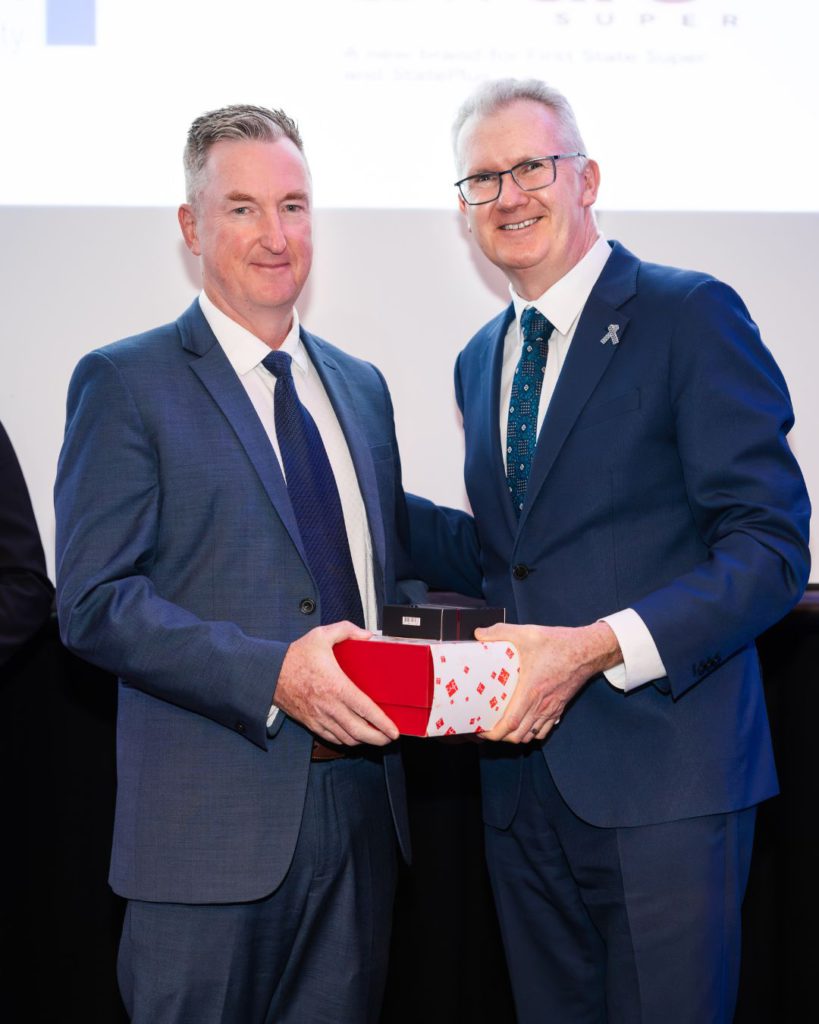
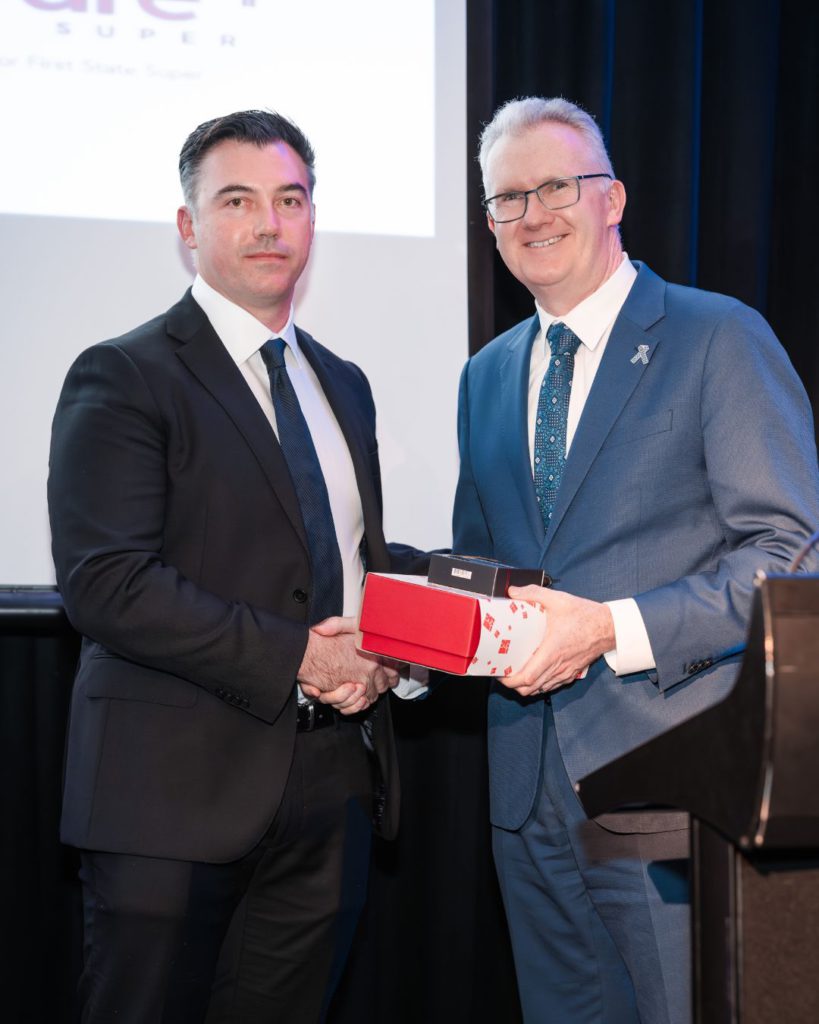
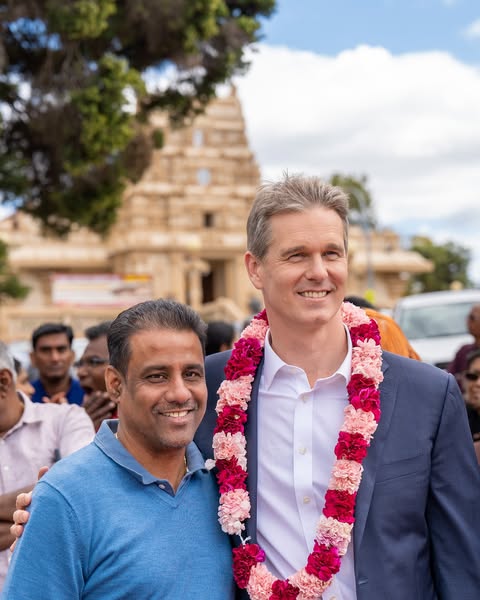
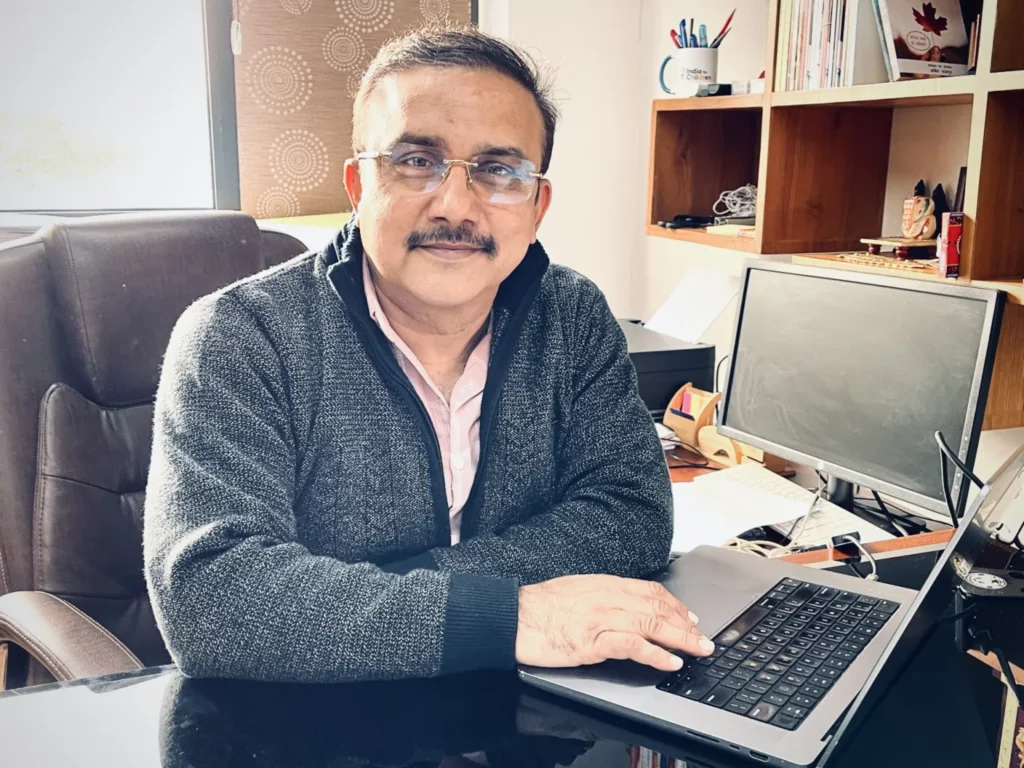
ECAJ President Daniel Aghion said in a statement that the communities had made an “outsize contribution” to Australia’s economy and society for generations.
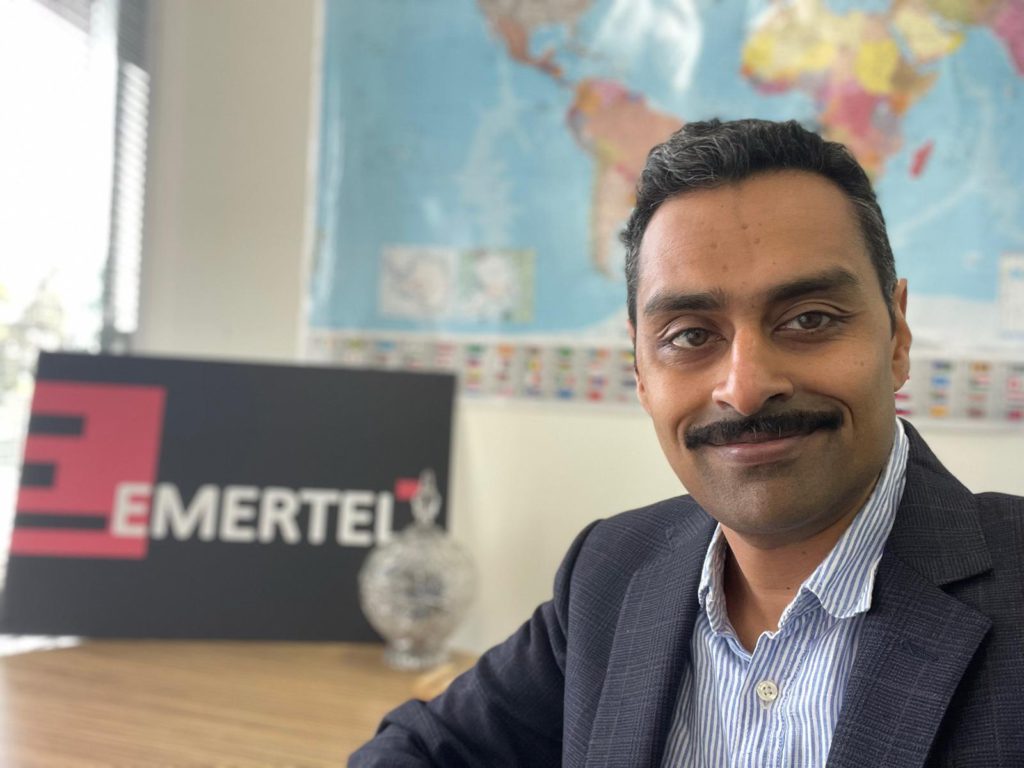
ECAJ President Daniel Aghion (Image: Supplied)
“They are hard-working, family-oriented and peace-loving communities, and it is a national disgrace that they have been publicly vilified from any quarter,” he said.
“We empathise completely with what they are going through, and we stand shoulder to shoulder with them.”
Mr Aghion warned that the rise in hate crimes and hostility towards ethnic and religious groups was eroding Australia’s social cohesion.
(Image: The Australia Today archive)
“It was not so long ago that hate crimes against places of worship, and other hate-filled behaviour against entire ethnic and religious communities, were unthinkable in Australia, and it is sobering to reflect on how often this occurs now,” he said.
“Ultimately, the deterioration in social cohesion makes all Australians less safe than we used to be.”
The ECAJ called on political and community leaders to unite in support of the Indian and Hindu communities and to denounce all forms of racial and religious hatred as “a blight on our nation’s dignity.”
Support our Journalism
No-nonsense journalism. No paywalls. Whether you’re in Australia, the UK, Canada, the USA, or India, you can support The Australia Today by taking a paid subscription via Patreon or donating via PayPal — and help keep honest, fearless journalism alive.
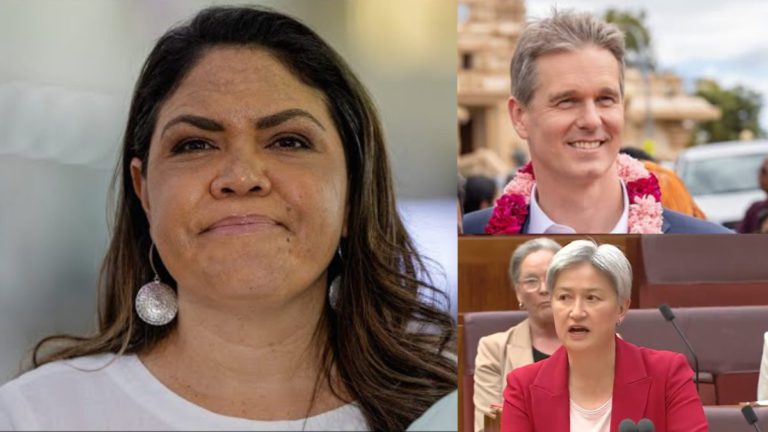
The Liberal Party is facing mounting turmoil after Senator Jacinta Nampijinpa Price’s remarks about Indian migrants ignited a storm of criticism, sparking infighting within party ranks, and urgent attempts to repair relations with one of Australia’s fastest-growing communities.
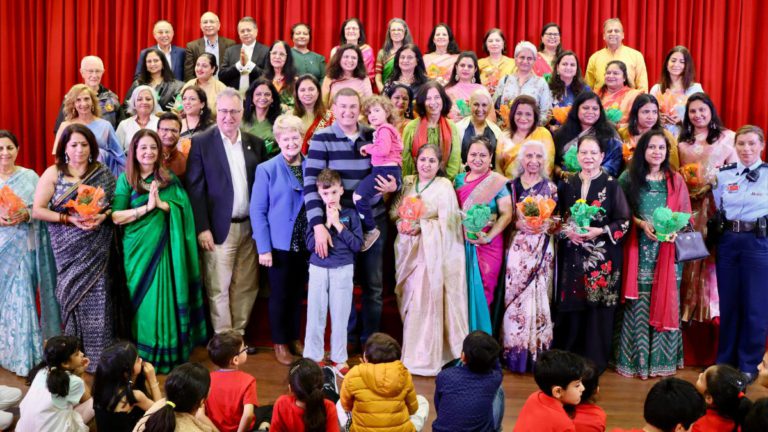
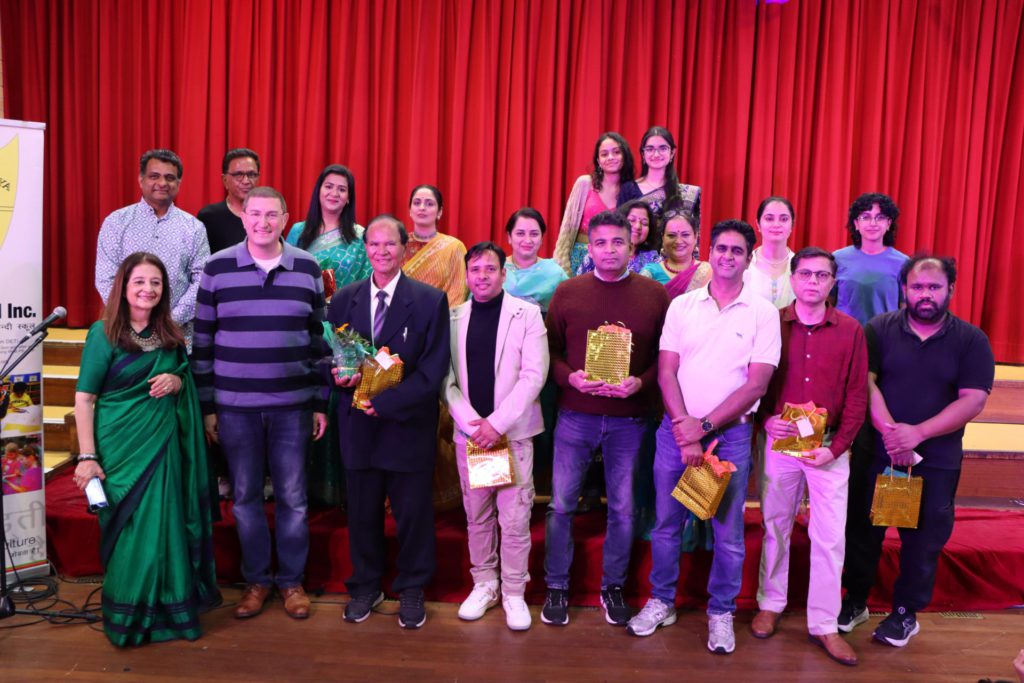
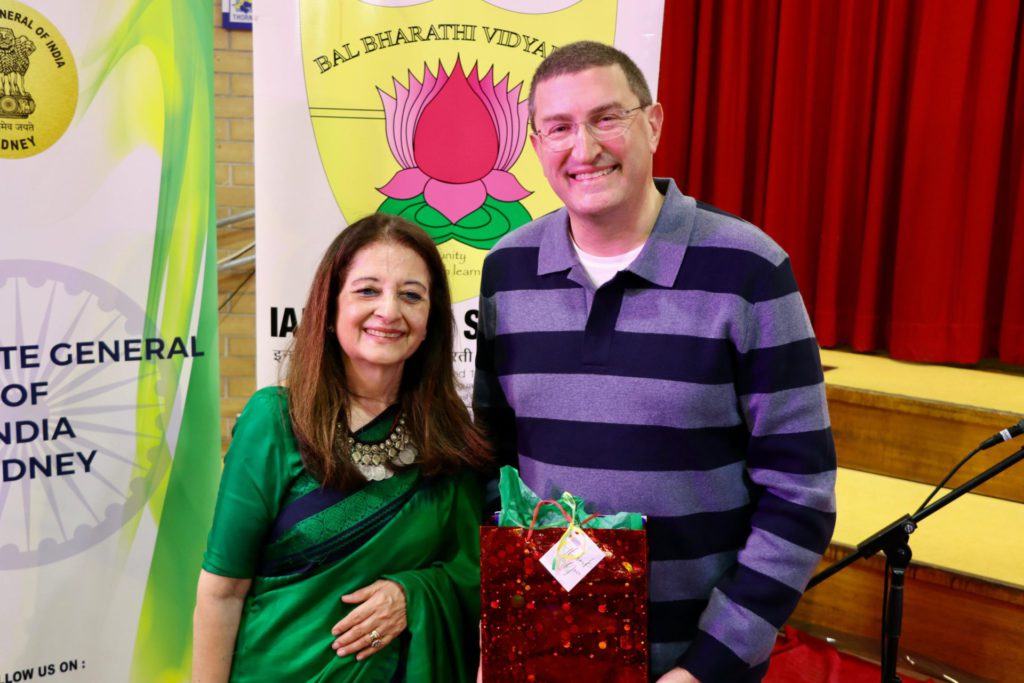
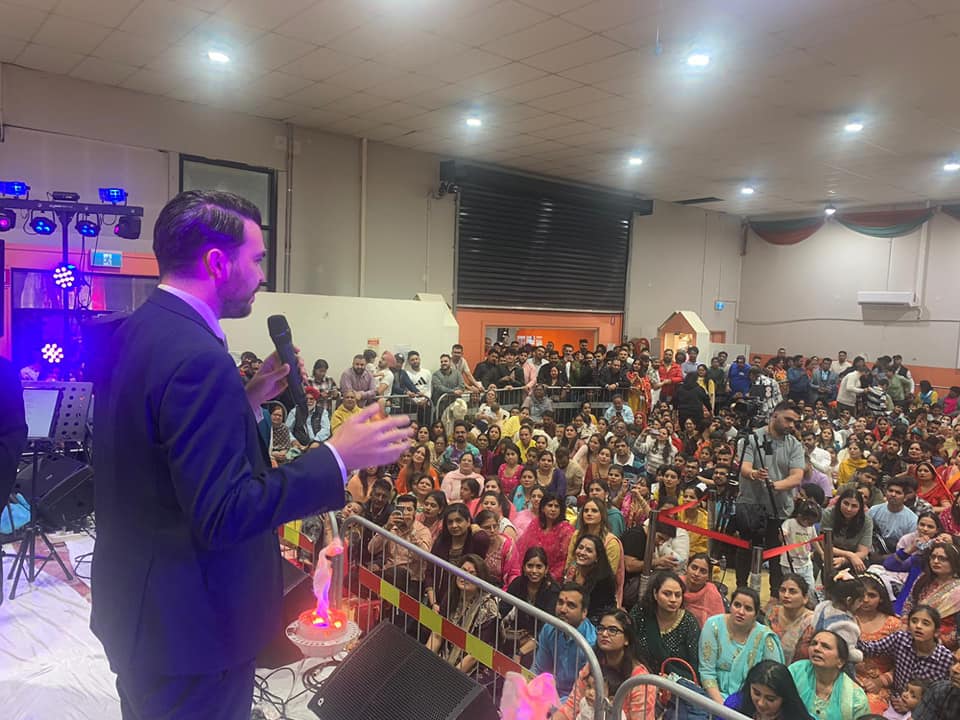
The controversy deepened when Shadow Attorney-General Julian Leeser issued an unreserved apology to the Indian community in his electorate. In a Facebook post, Leeser shared a video of a speech he delivered to students and families at the IABBV Hindi School in Westleigh, north-west Sydney.
“My colleague Jacinta Price said something this week that I want to apologise unreservedly for,” he told the audience.
“As my leader Sussan Ley said, she was wrong to say it, and she has walked back those remarks and I am pleased that she has.”
Leeser praised Indian Australians as “nothing short of extraordinary” and stressed that political allegiance should not determine respect for their contribution. “Let me say very clearly, the contribution of Indian Australians to this country is fantastic. The Indian community is fantastic. And you know what? India, like Australia, is a democracy.
“There are Indians that vote Labor, there are Indians that vote Liberal, there are Indians that vote Greens. I don’t care how you vote. I care about the contribution you make to this country, and I know it is a fantastic contribution, and I want you to keep making it.”
He added that in his Berowra electorate, home to about 8300 people of Indian origin, he wished there were more.
“The reason I wish I had more is very simple. The Indian diaspora in this country, the contribution of that diaspora, is nothing short of extraordinary. And I see it in my community every day.”
Leeser pointed to Indian Australians volunteering in schools, community groups and emergency services. “It’s people volunteering for the P&Cs, it’s people getting involved in the SES and the RFS, it’s people getting involved in the local sports team… people in the local rotary clubs,” he said.
For Leeser, the community embodies Australia’s promise of fairness and opportunity.
“It has always been sacrosanct that it doesn’t matter where you were born, who your parents were. And if you work hard and play by the rules, there is a place for you in this country. There is a very special place, in my view, for the Indian Australian community.”
Speaking with Peta Credlin on Sky News Australia, the Shadow Minister for Defence Industry and Defence Personnel, Jacinta Price, clarified comments she made on the ABC last week that linked migration from India with Labor’s electoral advantage.
“There is a concern with the Indian community and only because there has been large numbers and we can see that reflected in the way that the community votes for Labor,”
she said in the ABC interview.
The remarks provoked outrage among Indian Australians and unease inside the Coalition. Price said she regretted the way her words had been interpreted but refused to issue an apology.
“The regret that I have is that I wasn’t clearer in terms of my comments on the ABC,” she told Credlin.
“I spoke to The Australia Today, an Indian-Australian media outlet in order to make those clarifications and had a very lovely conversation with them after they reached out to me.”
Today I spoke with the Editor of leading multicultural online news outlet @TheAusToday to address concerns from an interview earlier this week.
I want to be clear: I deeply value Australia’s Indian community. My words were never meant to disparage anyone, and I recognise the… pic.twitter.com/pJZQKDKyUz
Instead, Price shifted focus to her broader argument that Australia’s high migration levels are unsustainable.
“Mass migration is of huge concern. And it does apply pressure on Australian families, on our infrastructure, on hospitals, schools, our housing.”
She argued that Labor aggressively courts migrant communities, just as it does Indigenous voters, while Liberal colleagues had been quick to side with what she described as “left-wing media pressure.”
“Another thing that disappointed me was the fact that some of my colleagues chose to ignore those elements of this entire argument. But instead adopted the left-wing media’s approach to applying pressure to me instead of pointing out those very facts.”
Price also accused Liberal MP Alex Hawke of berating one of her staff after her ABC comments, alleging he had warned of consequences if she did not apologise.
“My concern is that my colleague did berate my staffer and which was the reason for why I contacted him in the first instance… to bring another colleague circumstances into the picture was certainly viewed as a threat.”
Hawke rejected this characterisation, saying:
“I didn’t berate anybody… I rang somebody at random and said can I speak to your boss?”
Andrew Clennell reported on Sky News Sunday Agenda that Alex Hawke contacted me following my comments on the ABC last Wednesday afternoon – that we had a conversation.
Let me be absolutely clear: Alex Hawke did not call me, text me, or WhatsApp me at that point.
Meanwhile, Liberal Leader Sussan Ley has been criticised by the Indian community for her handling of the episode. While she has publicly said Price’s comments were “wrong” and would not be repeated, she has declined to apologise on Price’s behalf, refusing three times when asked over the weekend. Price, for her part, has urged Ley to demand an apology from Hawke.
“I’m a Liberal woman. And Liberal women need to be able to feel like they’re being supported wholeheartedly.”
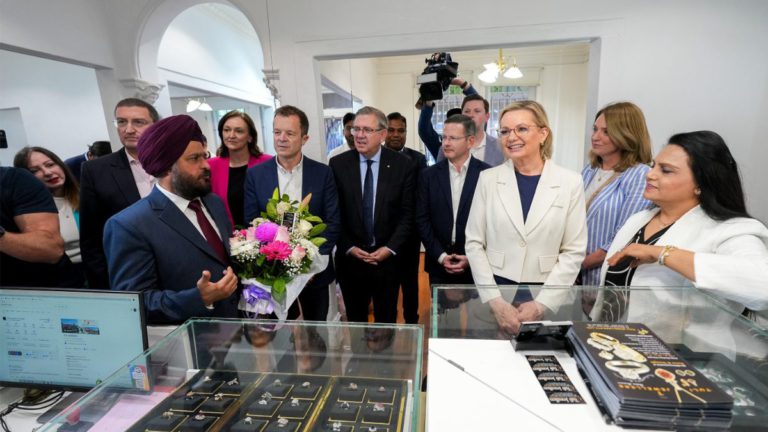
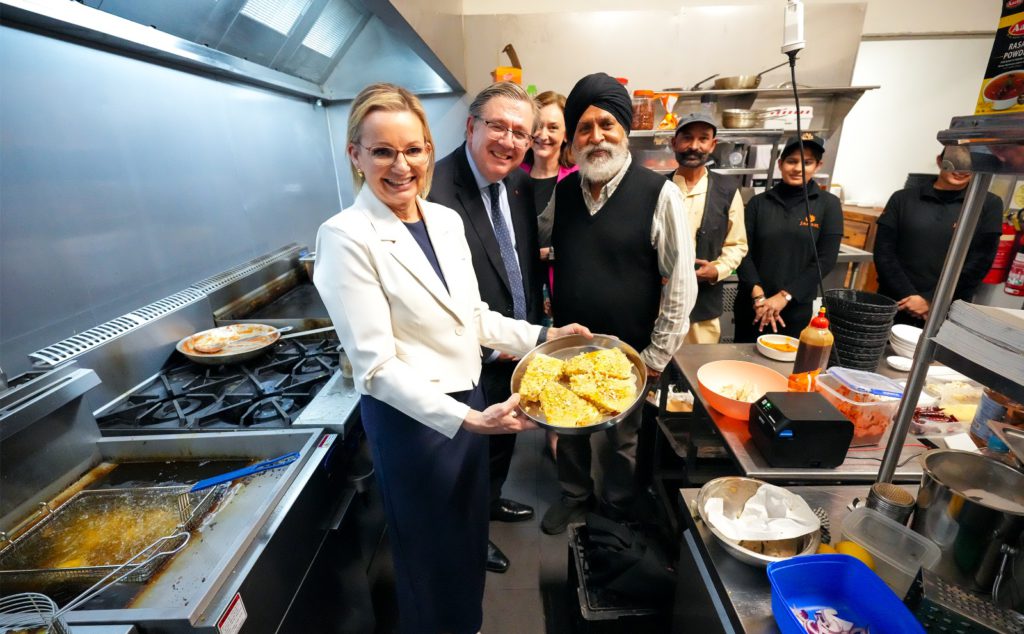
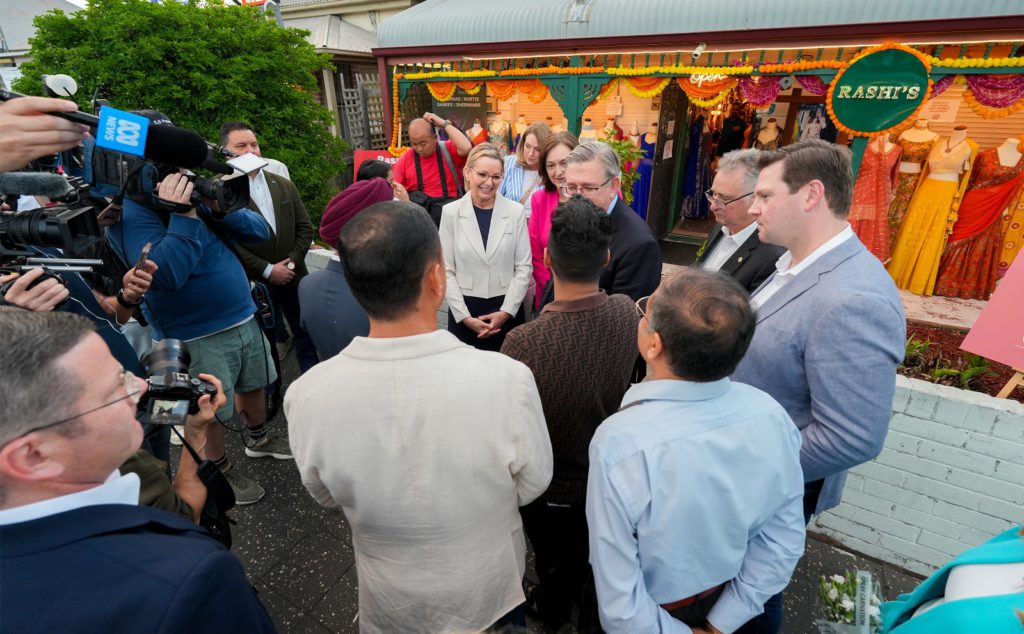
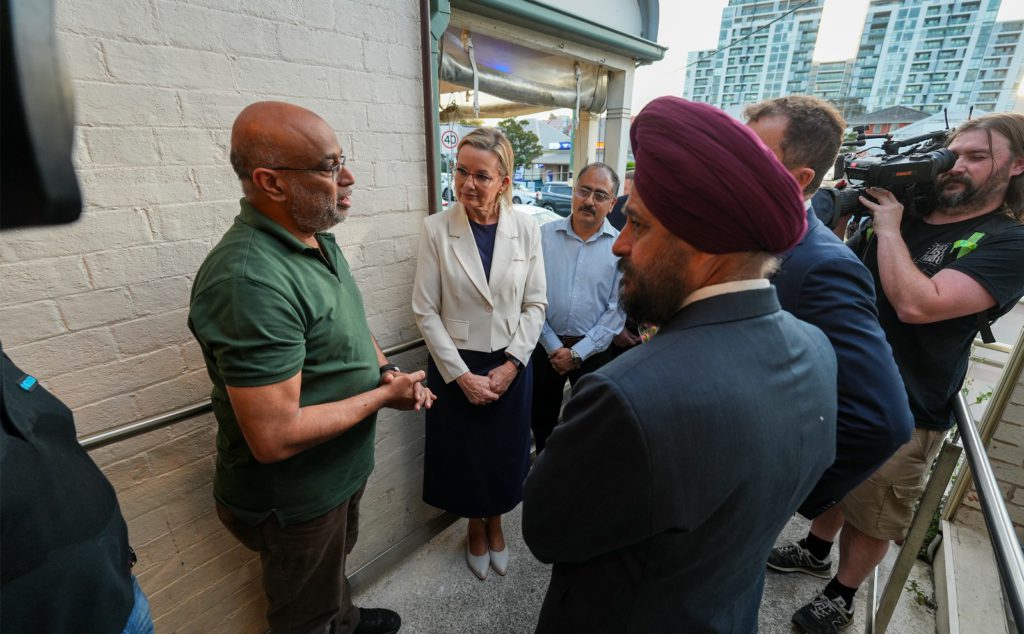
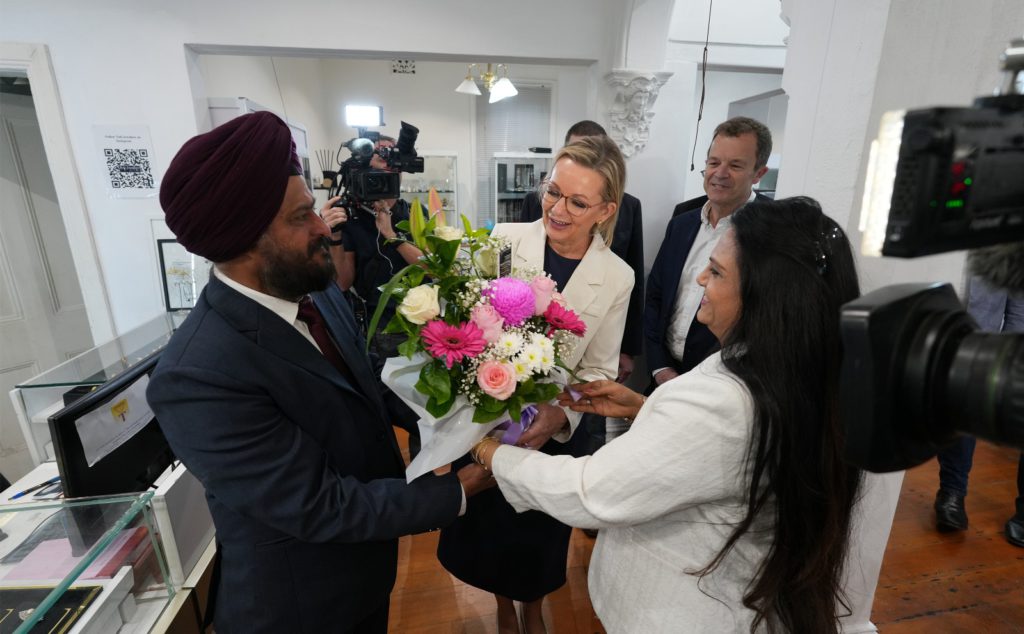
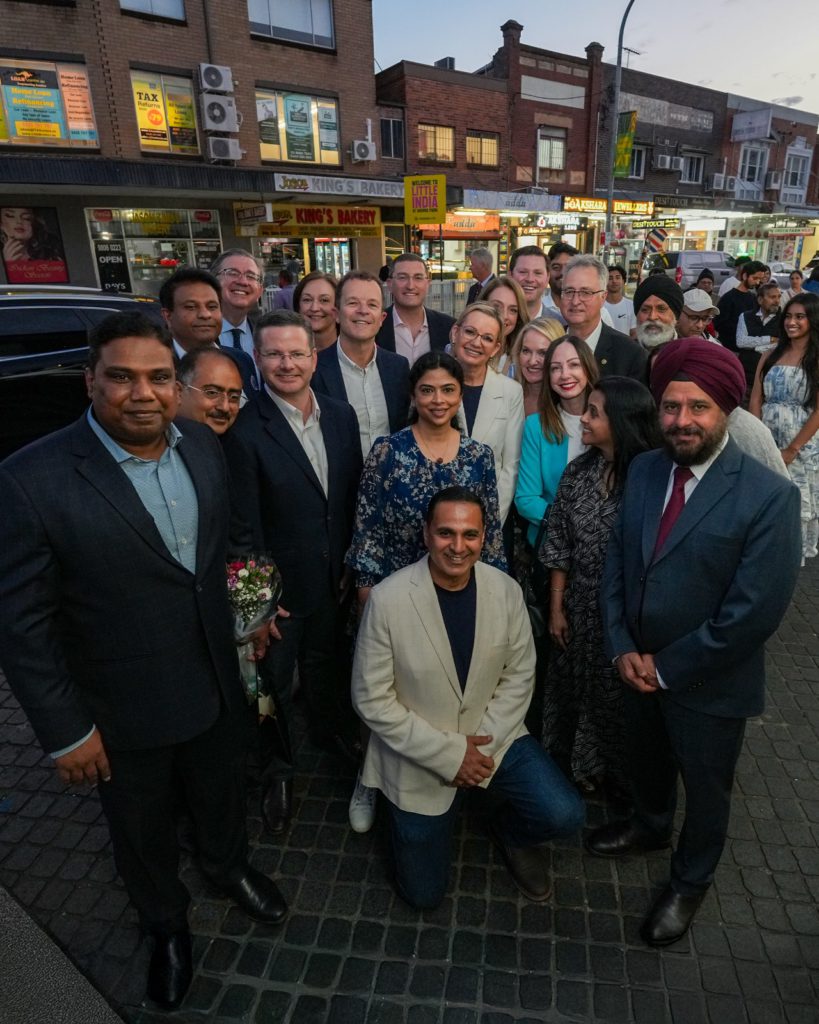
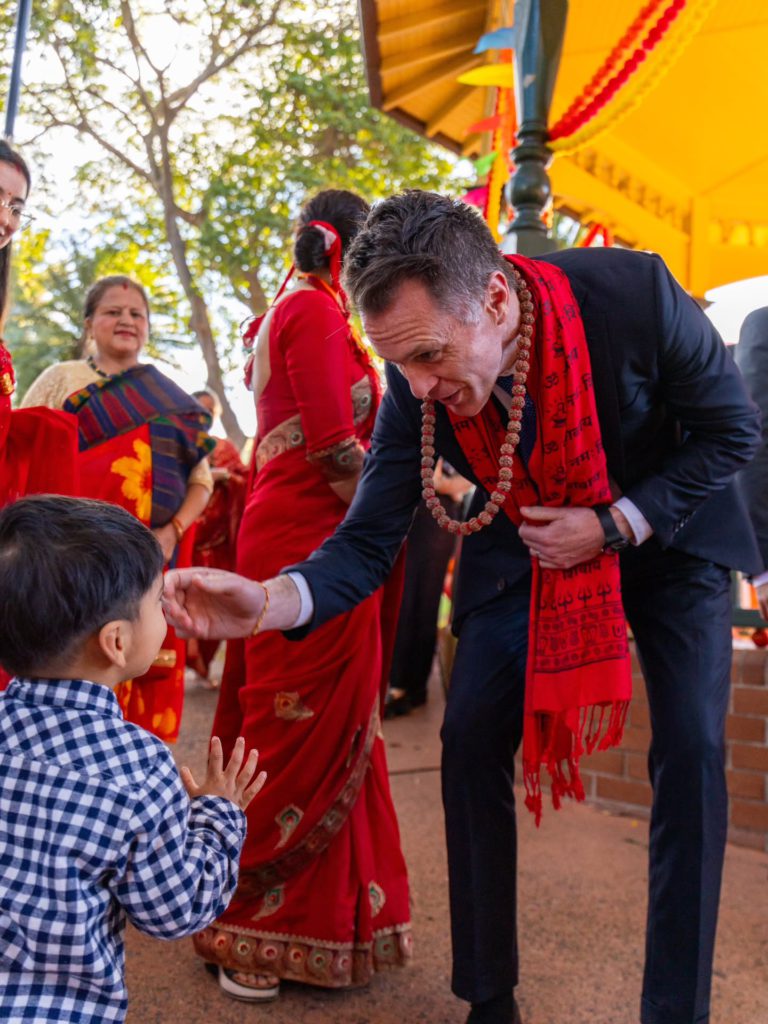
In an attempt to stem the damage, Ley, Leeser, immigration spokesman Paul Scarr and NSW Senator Maria Kovacic toured western Sydney’s “Little India” precinct on Sunday night, speaking with business owners and community members.
But the fallout continues to test Ley’s leadership, with the affair being read as a wider struggle over the Liberal Party’s relationship with migrant communities.
As Credlin noted to Price during the interview, the Indian community in particular is seen by many political strategists as naturally aligned with Liberal values: small business, family, rule of law, and English proficiency.
“These are just the sort of Australians that the Liberal Party should be absolutely going out of their way to make friends with.”
Price agreed, but reiterated her concern that the scale of migration — not its source — is her primary focus.
“Look, absolutely. It’s not about who is coming in – it’s about how many migrants are coming and the pressure. The fact that we simply can’t provide for such great numbers.”
Support our Journalism
No-nonsense journalism. No paywalls. Whether you’re in Australia, the UK, Canada, the USA, or India, you can support The Australia Today by taking a paid subscription via Patreon or donating via PayPal — and help keep honest, fearless journalism alive.
A 31-year-old American woman is set to appear before the New South Wales Bail Division Court today after allegedly attempting to smuggle 20 kilograms of cocaine into Australia hidden in her luggage.
AFP Superintendent Morgen Blunden said the cocaine haul could have equated to more than 100,000 street-level deals.
“The AFP and ABF are still regularly finding and arresting people willing to risk decades in jail by trafficking illicit drugs through our airports,” Supt Blunden said.
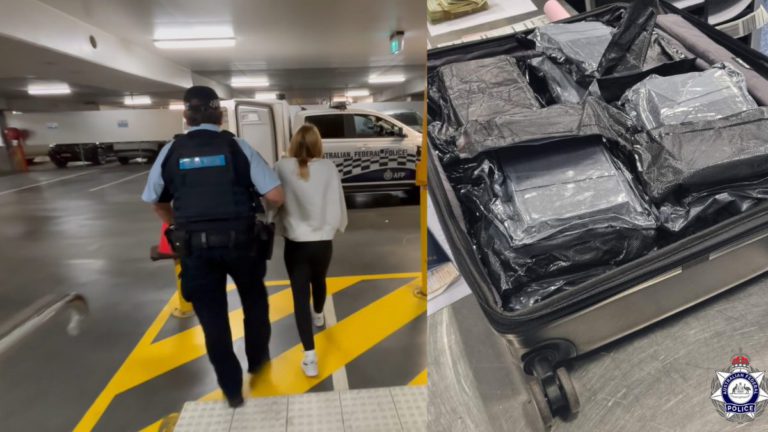
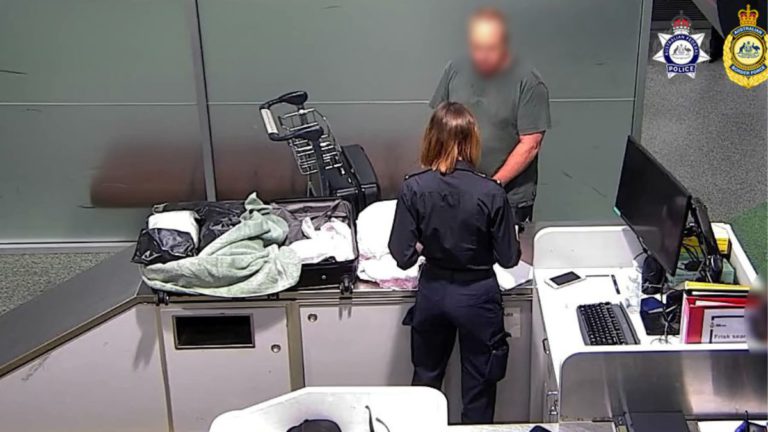
Australian Border Force (ABF) officers stopped the woman on arrival at Sydney Airport from Los Angeles yesterday, conducting a baggage examination that uncovered 14 vacuum-sealed bags containing a white substance. Tests returned a presumptive positive result for cocaine, with an estimated street value of $6.5 million.
Australian Federal Police (AFP) officers arrested the woman and charged her with importing a commercial quantity of a border-controlled drug, an offence carrying a maximum penalty of life imprisonment.
ABF Superintendent Elke West praised the officers’ vigilance, noting the seizure was a result of intelligence-led operations and close collaboration between agencies.
“Our skilled approach to targeting and assessing potential passenger threats continues to catch sneaky crooks,” Supt West said.
Authorities said the case highlights the ongoing efforts to disrupt international drug trafficking networks and prevent illicit substances from reaching Australian streets.
Support our Journalism
No-nonsense journalism. No paywalls. Whether you’re in Australia, the UK, Canada, the USA, or India, you can support The Australia Today by taking a paid subscription via Patreon or donating via PayPal — and help keep honest, fearless journalism alive.
He ordered a non-parole period of 33 years. Given her age (50) and the 676 days she’s already spent in detention, this means Patterson will not be eligible to apply for parole until 2056, when she is in her 80s.
Erin Patterson’s story is now one of the most well-known true crime cases in Australia. Nine weeks ago, a jury found her guilty of poisoning her lunch guests in July 2023 at her home in Leongatha with foraged death-cap mushrooms she had baked into individual servings of Beef Wellington.
In sentencing, Justice Beale said he had no hesitation in finding Patterson’s offending falls into the “worst category” of murder and attempted murder.
So after months of media frenzy and myriad headlines, the sentencing now bookends the case, pending any appeal. Here’s how the judge reached his decision and what happens now.
A lengthy prison term
The life sentence was as expected, given Patterson’s lawyer, Colin Mandy, did not oppose the prosecution’s bid for the maximum sentence for murder in Victoria.
The matter that exercised the judge’s mind, principally, in considering the sentence was the length of the non-parole period. The standard such period for murder in Victoria is 20 years.
If there’s more than one victim, however, the minimum non-parole period increases to 25 years.
While it’s possible to sentence a murderer to life without parole, it is very unusual.
In 2019, the judge who gave a life sentence to James Gargasoulas, the man who drove down Bourke Street Mall in Melbourne, killing six people, set a non-parole period of 46 years.
What did the judge consider?
The factors taken into account in sentencing relate to the nature of the crime and the personal circumstances of the person convicted.
The final outcome is informed by principles that vary only slightly across Australia’s states and territories.
The main one here, arguably, was denunciation: the sentence needs to reinforce in the public mind the abhorrence of her conduct.
Indeed, there was no plea of guilty, and no remorse from Patterson at any time.
Moreover, when considering a non-parole period, a judge takes into account what is referred to as “proportionality”. This can be a limiting feature where there is lesser culpability, but an exacerbating feature where there are multiple deaths.
One might refer to it colloquially as a person receiving their “just deserts”.
In this instance, the judge was mindful of the fact there were four victims.
He was also mindful of Patterson’s “harsh” prison conditions, telling the court:
you have effectively been held in continuous solitary confinement for the last 15 months and at the very least there is a substantial chance that for your protection you will continue to be held in solitary confinement for years to come.
Deterrence, as a regular feature of the sentencing exercise, in this case becomes a companion to denunciation.
Rehabilitation was always unlikely to have any impact on the sentence, given the life term. There was no submission by defence counsel that his client had a diagnosed mental disorder or would benefit from any form of an ongoing remediation or restorative program.
Huge personal tolls
What dominated the submissions at the pre-sentence hearing in August were the victim impact statements.
In Victoria, such statements have been in place since 1994, but it has only been since 2005 that the court has been required to take account of the impact of the crime on any victim when sentencing.
In the Patterson pre-sentence hearing, the sole survivor of the meal, Ian Wilkinson, read his own statement and described the loss of his wife Heather. He said he felt “only half alive without her”.
Patterson’s estranged husband Simon did not attend the pre-sentence hearing, so his statement was read to the judge by a family member. His children, he wrote:
have […] been robbed of hope for the kind of relationship with their mother that every child naturally yearns for.
The Wilkinsons’ daughter, Ruth Dubois, also addressed the judge with her own statement. She highlighted the wider victims of the crimes, namely medical staff, investigators, shop owners (who had had their names scrutinised), mushroom growers, the health department and taxpayers.
“I am horrified,” she said, “that our family is even associated, through no choice of our own, with such destructive behaviour towards the community”.
Will there be an appeal?
Patterson’s counsel has 28 days in which to appeal. An appeal would either be against conviction or the sentence or both.
In relation to an appeal against conviction, defence counsel would need to establish that the trial judge made a mistake in admitting (or ruling out) certain evidence or failing to properly explain the defence case.
The former, a mistake about evidence, is the more common appeal ground.
Less likely is the latter appeal ground because it would be difficult for defence counsel to assert that his client’s case was given too little regard by the judge, given the amount of time (almost two days) Justice Beale devoted to explaining the defence case to the jury.
When appealing the length of the non-parole period, either counsel can argue the duration was either manifestly inadequate (a prosecution submission) or manifestly excessive (a defence submission). It remains to be seen if either side will pursue this option.
Whatever the case, there would not be too many observers surprised by the judge’s final determination.
No-nonsense journalism. No paywalls. Whether you’re in Australia, the UK, Canada, the USA, or India, you can support The Australia Today by taking a paid subscription via Patreon or donating via PayPal — and help keep honest, fearless journalism alive.
The United Kingdom has, in recent months, witnessed mass anti-immigrant protests – a turbulent outpouring of anger that, while definitely being marred by some xenophobic rhetoric, is, at the same time, rooted in grievances the state has long failed to address. At its core lies a simmering resentment that has been building for decades, rooted in the state’s abject failure to confront uncomfortable truths, chief among these are the grooming gang scandals — most infamously in Rotherham, Rochdale, and Telford — where men of predominantly Pakistani heritage orchestrated systemic abuse of vulnerable British girls, some no older than ten.
Baroness Louise Casey’s 2025 audit confirmed what had long been whispered: in towns across Greater Manchester, West Yorkshire, and South Yorkshire, Pakistani-heritage men were disproportionately represented in such cases, with over 4,200 instances recorded in recent years. Yet, the language deployed while referring to those involved — “Asian grooming gangs” or “South Asian men” — was carefully chosen, blurring specificity and casting a shadow over Indian, Bangladeshi, and other Asian communities, who often find themselves unfairly tarred with the same brush, despite not being involved in these atrocities.
Massive protests all over Britain today to close the borders due to mass immigration.
It Is also a grave disservice to communities like Indian Muslims, who in fact embody the sharpest rebuttal to the so-called “Muslim problem” narrative. Not only have Indian Muslims consistently avoided any association with grooming gang scandals or demands for Sharia enforcement, but they also model civic integration in striking ways.
Recognizing and maintaining this crucial distinction isn’t political correctness, it’s accuracy. There have been instances of friction between the Muslim communities from India and Pakistan as well – a very good example is a recent video from the eve of India’s Independence Day in East London, where a Muslim girl of Indian origin, dressed in a hijab and carrying the Indian flag, was harassed and jostled by a group of Pakistani men.
Viral Video: Pakistani Muslims caught harassing and heckling Indian Muslim women who were holding Indian Flags on the streets of UK.
Moreover, phrases like “Asian grooming gangs” and “South Asian men” also reflect poorly on the larger Indian community in the United Kingdom as well, who are anything but a liability. A new report by a British think tank, Policy Exchange, says Indian-origin people in that country lead all ethnic minority groups on all socio-economic and developmental parameters, often doing as better, if not more, than the resident white population.
At nearly two million strong, they are the most successful ethnic minority in the UK, with more than 40% working in professional sectors, 71% having their own homes, and their businesses contributing upwards of £37 billion to the economy and sustaining more than 170,000 jobs.
British Indian Diaspora's Contributions to the UK
British Indians are hardworking and contribute immensely to Britain.
From the economy and healthcare to technology and employment, British Indians contribute 6.5% of the GDP and we are only 2.5% of the UK population.
This is not a community plotting to impose Sharia law or carve out enclaves of separatism. It is, in fact, one of the most integrated and aspirational immigrant groups in Britain — a living proof that the story of immigration is not a singular tale of strain and resentment, but also one of success and contribution.
Across the Atlantic, the United States is also experiencing a surge of anti-immigrant sentiment, though of a distinctly different variety. There, the rhetoric is less about cultural imposition and more about economic anxiety — immigrants framed as competitors for jobs, housing, and social benefits. Border politics dominate the conversation, with record numbers of crossings at the southern frontier fuelling claims that the system is “out of control.” Politicians from both the parties have capitalized on these fears, though in different registers: Republicans warn of a nation being “overrun,” while Democrats struggle to balance humanitarian commitments with voter unease in swing states.
The discussion around immigration in the US is completely different, where the commentators are struggling to differentiate between illegal immigrants jumping the fence in search of greener pastures and highly-skilled, educated individuals legally relocating and becoming net contributors to the economy. Yet the narrative of scarcity and threat has proven far more persuasive in the age of populism, turning immigration into a litmus test for what it means to be American in the 21st century.
Therefore, it is essential to not group every immigrant story together — America’s debates around immigration are fundamentally different, often driven by questions of economics rather than criminal or cultural grievances. And here’s where Indian Americans also defy the clichés: in 2023, households headed by Indian Americans had a median annual income of $151,200, notably exceeding the national median for non-Hispanic White households, which stood at $89,050. The picture is just as commanding on an individual level: median personal earnings for Indian-American adults hit $85,300, versus roughly $52,400 for Asians as a whole.
In short, far from being spectators in America’s success story, Indian Americans are writing it — one statistical bracket at a time. Yet, despite their clear contributions, even influential figures like Elon Musk or Vivek Ramaswamy face backlash from the cultural right for asserting that legal, contributing immigrants are as American as anybody else. The uproar says more about insecurity than identity — and the real debate isn’t about who immigrants are, but who gets to belong.
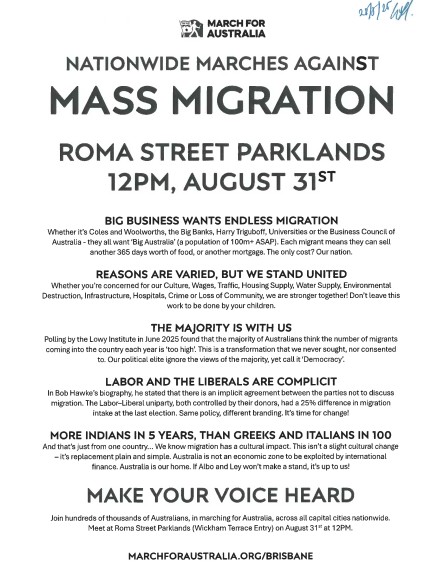
Across the Pacific, Australia has also been shaken by its own wave of anti-immigrant fervor — quite similar in flavor to the anti-immigrant sentiment in the United States. On August 31, under the banner of “March for Australia,” an estimated 52,000 people poured onto the streets in cities such as Sydney, Melbourne, and Perth. What began as rallies framed around concerns over housing shortages, infrastructure strain, and population growth quickly spiraled into something darker.
In many locations, far-right activists, including elements tied to the National Socialist Network, infiltrated the protests, transforming them into breeding grounds for xenophobic sloganeering and occasional clashes. Indian migrants, who have been an intrinsic part of Australia’s skilled workforce and student population, found themselves singled out in the protester’s manifesto sending ripples of unease through one of Australia’s most successful diaspora communities.
The backlash, however, was swift and unequivocal. Leaders across the political spectrum condemned the protests, making clear that such extremism did not reflect the values of a modern, multicultural nation. Home Affairs Minister Tony Burke set the tone when he declared: “There is no place in our country for people who seek to divide and undermine our social cohesion. Nothing could be less Australian.” Prime Minister Anthony Albanese and other senior figures echoed this message, reaffirming the centrality of immigration to the Australian story.
‘This is not the Australia we know’: Senator Wong calls out Neo-Nazism and anti-immigration rallies@SenatorWong said that the nation’s strength lies in its multiculturalism, with more than 300 ancestries represented and nearly half of Australians either born overseas or with a… pic.twitter.com/sjR7gKbgiW
The Indian government, meanwhile, moved quickly to reassure its citizens, with the Ministry of External Affairs emphasizing that the welfare of the diaspora in Australia remained a diplomatic priority. This dual response — domestic condemnation and international vigilance — highlighted both the resilience of Australia’s democratic institutions and the continuing importance of the Indian community in sustaining the country’s prosperity and global outlook.
🇮🇳🤝🇦🇺 @MEAIndia Spokesperson Randhir Jaiswal has reaffirmed India–Australia ties and backed #multicultural values following anti-immigrant protests on 31 Aug. 🫱🏻🫲🏾 Diversity & respect are non-negotiable. 📞 Stay safe; report incidents to local #police and Indian missions.
This is the key distinction that keeps getting blurred: in the UK and parts of Western Europe, the anti-immigrant anger is being driven primarily by specific failures of policy in safeguarding and asylum management, such as, child-exploitation scandals and rows over migrant hotels; whereas in the US and Australia, the temperature rises mostly around economics, borders and housing.
In Britain, a single local crime can nationalize outrage because it lands atop a decade of institutional failings: the Rotherham–Rochdale–Telford scandals; new cases such as the Epping hotel incident; and a sense that authorities tiptoed for years around hard facts to avoid accusations of prejudice. The right approach is to talk accurately about the offender profiles that certain investigations uncovered, and stop laundering specificity into a catch-all term that punishes bystanders.
Meanwhile, the UK’s protest geography — outside asylum hotels — reflects anger at policy choices: prolonged hotel use (tens of thousands still in rooms), opaque local consultations, and isolated but high-salience crimes that become symbols for a system that looks both expensive and unsafe.
In Western Europe, immigration salience tracks asylum surges and security fears: EU first-time asylum applications passed 900,000 in 2024 before easing in 2025; populist parties from Germany’s AfD to France’s RN have converted these concerns into polling gains by linking migration to disorder, housing pressure and national identity. Contrast that with the United States, where the fight is dominated by border metrics and labour markets: U.S. Customs and Border Protection (CBP) now touts historic-low encounters after sharp policy shifts, yet the politics remain fierce because voters perceive strain in housing, cities and services regardless of the month-to-month numbers.
Australia sits closer to the US template: the “March for Australia” rallies folded housing and infrastructure anxiety into an anti-immigration message — and were condemned by senior ministers and civil society as divisive and, in parts, hijacked by extremists. Through all of this, one line should be bright: it is essential to not smear Indians (or “South Asians” at large) to avoid naming specific offender cohorts.
The point is to insist on accuracy over euphemism – when authorities are precise about who offends (and where), victims are better protected, offenders face accountability without collective blame, and the public debate stops punishing communities who are largely law-abiding, productive and clearly not the ones agitating for parallel legal orders. Moreover, immigration debates across continents might seem to be similar on the surface, but their roots differ profoundly. What unites them is the danger of lazy generalisations — because when blame is blurred, justice is denied, and the innocent are made to pay for the sins they did not commit.
Contributing Author: Omer Ghazi is a proponent of religious reform and identifies himself as “an Indic Muslim exploring Vedic knowledge and cultural heritage through music”. He extensively writes on geo-politics, history and culture and his book “The Cosmic Dance” is a collection of his poems. When he is not writing columns, he enjoys playing drums and performing raps.
Disclaimer: The opinions expressed within this article are the author’s personal opinions. The Australia Today is not responsible for the accuracy, completeness, suitability, or validity of any information in this article. The information, facts, or opinions appearing in the article do not reflect the views of The Australia Today, and The Australia Today News does not assume any responsibility or liability for the same.
Support our Journalism
No-nonsense journalism. No paywalls. Whether you’re in Australia, the UK, Canada, the USA, or India, you can support The Australia Today by taking a paid subscription via Patreon or donating via PayPal — and help keep honest, fearless journalism alive.
Liberal leader Sussan Ley has moved to shore up ties with Indian-Australian voters, visiting Harris Park’s Little India precinct with colleagues Julian Leeser and Senator Paul Scarr in a week dominated by fallout from Senator Jacinta Nampijinpa Price’s comments about Indian migrants and fresh tensions inside the Coalition.
Ley’s outreach comes as Indian-owned businesses and community groups demand respect and clarity from federal politicians following anti-immigration rallies that singled out the Indian diaspora.
Ley has publicly branded Price’s remarks “wrong” and said they won’t be repeated, attempting to contain the damage on ABC’s Insiders. But she stopped short of calling for a formal apology. Price had suggested the Albanese government was prioritising migrants from India for electoral gain — a claim she later described as a “misstep,” while resisting calls to apologise. Senior Liberals, including former minister Alex Hawke, urged Price to say sorry, arguing many Indian-Australians were hurt by the comments.
During Ley’s Harris Park visit, local dynamics were mixed. One business association said the meeting was constructive; another group said they were disappointed of the Opposition Leader unless Price apologised, underscoring the political risk the Coalition faces in multicultural heartlands.
The controversy has also exposed internal strains. Price accused Manager of Opposition Business in the House, Hawke, of “cowardly and inappropriate” conduct toward her staff as the backlash grew, while Ley urged the party to “move on” and refocus on policy.
Andrew Clennell reported on Sky News Sunday Agenda that Alex Hawke contacted me following my comments on the ABC last Wednesday afternoon – that we had a conversation.
Let me be absolutely clear: Alex Hawke did not call me, text me, or WhatsApp me at that point.
Price has maintained that her concerns are about “mass migration” capacity rather than ethnicity, but The Australia Today and other outlets reported she falsely claimed a government focus on Indian migrants, prompting cross-party criticism.
Why Harris Park matters
Harris Park — formally recognised as “Little India” and celebrated by both Australian and Indian leaders during PM Narendra Modi’s 2023 visit — is a symbolic hub for Indian-Australian small businesses and community life. A local gateway project and long-running cultural branding have elevated the precinct into a touchstone for diaspora engagement.
Scarr and Leeser’s roles
Senator Paul Scarr, the LNP’s Shadow Minister for Immigration and Multicultural Affairs, has taken a high-profile stance defending the community.
Senator Scarr told The Australia Today, “We had a wonderful visit to Little India in Harris Park. I am very close to the Indian Queensland community. This was the first opportunity to connect with the community in Sydney.”
“I could see the same values on display. Hard work building up successful family businesses. Giving back to the community – always helping fellow Australians in need.”
“The Indian Australian community is such a blessing for our beautiful country,” he added.
Earlier, He condemned “vile” anti-migration rallies that targeted Indians and called the Indian diaspora a “great blessing” to Australia in a Senate speech — framing respect and unity as non-negotiable.
Julian Leeser, a senior Liberal from Sydney’s north-west, has been part of a wider Opposition effort to rebuild relationships with migrant communities through roundtables and precinct visits.
The Australia Today reported extensively on the anti-immigration rallies and on Price’s remarks, capturing community concerns about rhetoric that paints Indian-Australians as a political wedge.
Those reports amplified calls from community leaders — and some Liberals — for a reset in tone and for practical engagement on issues Indian-Australian families prioritise: small-business growth, public safety, education and the India–Australia partnership.
The road ahead for the Coalition
Ley has acknowledged the Coalition’s need to reconnect with multicultural voters after the election wipe-out and to avoid alienating rhetoric. Her Harris Park stop, flanked by Scarr and Leeser, is the clearest signal yet of a targeted outreach strategy. Whether it succeeds may hinge on two immediate tests:
A decisive, unifying message to Indian-Australians that rejects dog-whistles and focuses on policy, and
Internal discipline, so outreach efforts aren’t undermined by rolling controversies.
For the Indian-Australian community — now a decisive presence in key NSW and Victorian seats — the expectation is simple: respect, stability and concrete policies over identity-based point-scoring.
Ley’s reception in Little India suggests that trust can still be won — but not without clear accountability for words spoken and a sustained, good-faith presence on the ground.
Support our Journalism
No-nonsense journalism. No paywalls. Whether you’re in Australia, the UK, Canada, the USA, or India, you can support The Australia Today by taking a paid subscription via Patreon or donating via PayPal — and help keep honest, fearless journalism alive.
Canada-based Indian-origin media personality Nitin Chopra has sounded the alarm over the blatant online sale of doda—a banned opiate made from crushed poppy husks—through Facebook Marketplace.
Sharing a screenshot of a listing allegedly from Brampton, a hub of the Punjabi diaspora, Chopra wrote:
“These people are selling on FB Marketplace openly & illegally. How do our law enforcement catch & punish them for this illegal activity?”
Alert: These people are selling on fb marketplace openly & illegally.
The warning has revived concerns about the return of a drug once openly available in Canada’s Punjabi community.
For years, doda—commonly brewed into tea or milk—was the substance of choice for many, particularly taxi drivers, truck drivers and farm labourers from Punjab working in Canada.
Prior to 2010, it was sold almost casually in local meat shops in the Greater Toronto Area (GTA), until Health Canada formally declared it illegal.
In court proceedings that year, Justice Bruce Durno described doda as “more harmful than marijuana or other ‘soft’ drugs” and “highly addictive,” recommending harsher sentences for offenders, closer to those for cocaine.
Despite the ban, the underground trade flourished, with gangs—many linked to Punjabi networks in British Columbia—trafficking the drug. At one stage, “dial-for-dope” hotlines allowed users to order doda for street-corner delivery. Now, the marketplace has shifted online, with Facebook posts allegedly making the substance more accessible than ever.
Chopra’s public appeal has sparked renewed calls for Canadian law enforcement to crack down on the online drug trade before it fuels a fresh wave of addiction in the community.
Support our Journalism
No-nonsense journalism. No paywalls. Whether you’re in Australia, the UK, Canada, the USA, or India, you can support The Australia Today by taking a paid subscription via Patreon or donating via PayPal — and help keep honest, fearless journalism alive.
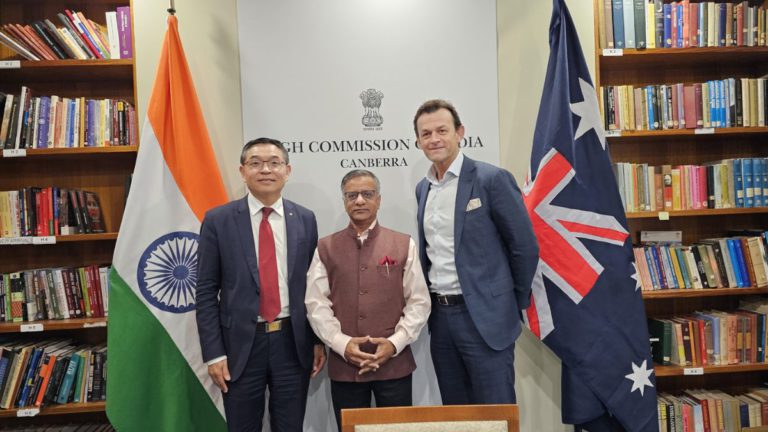
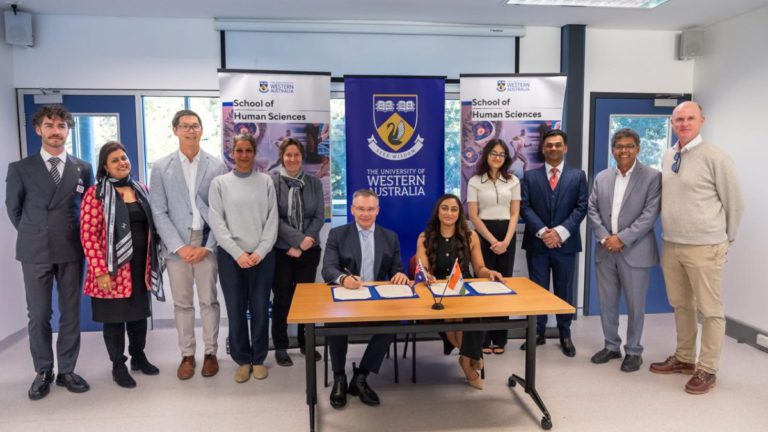
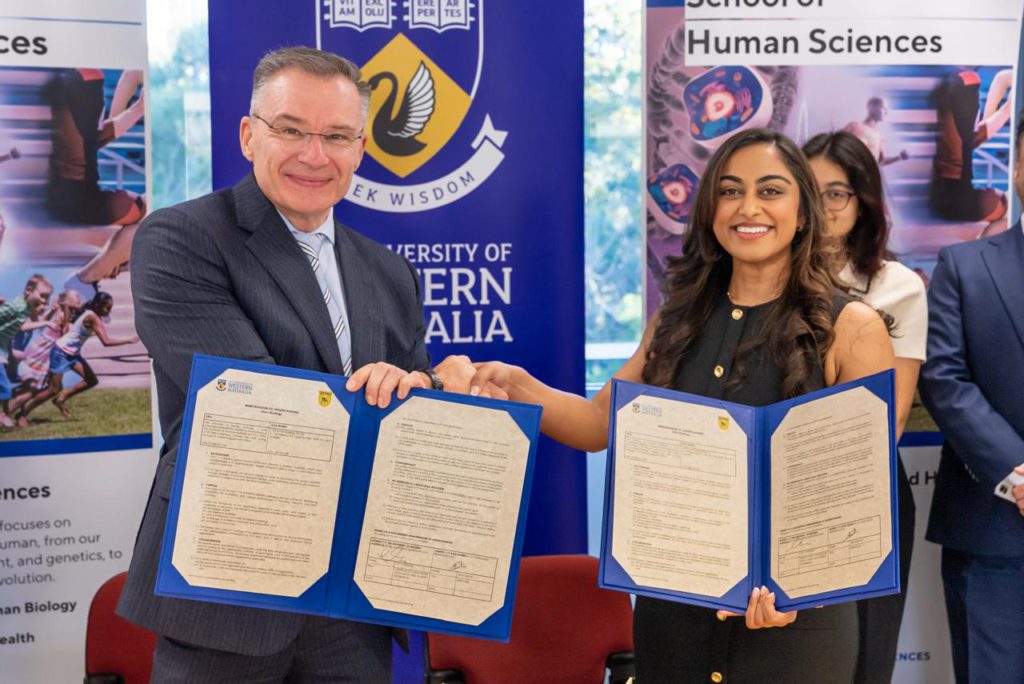
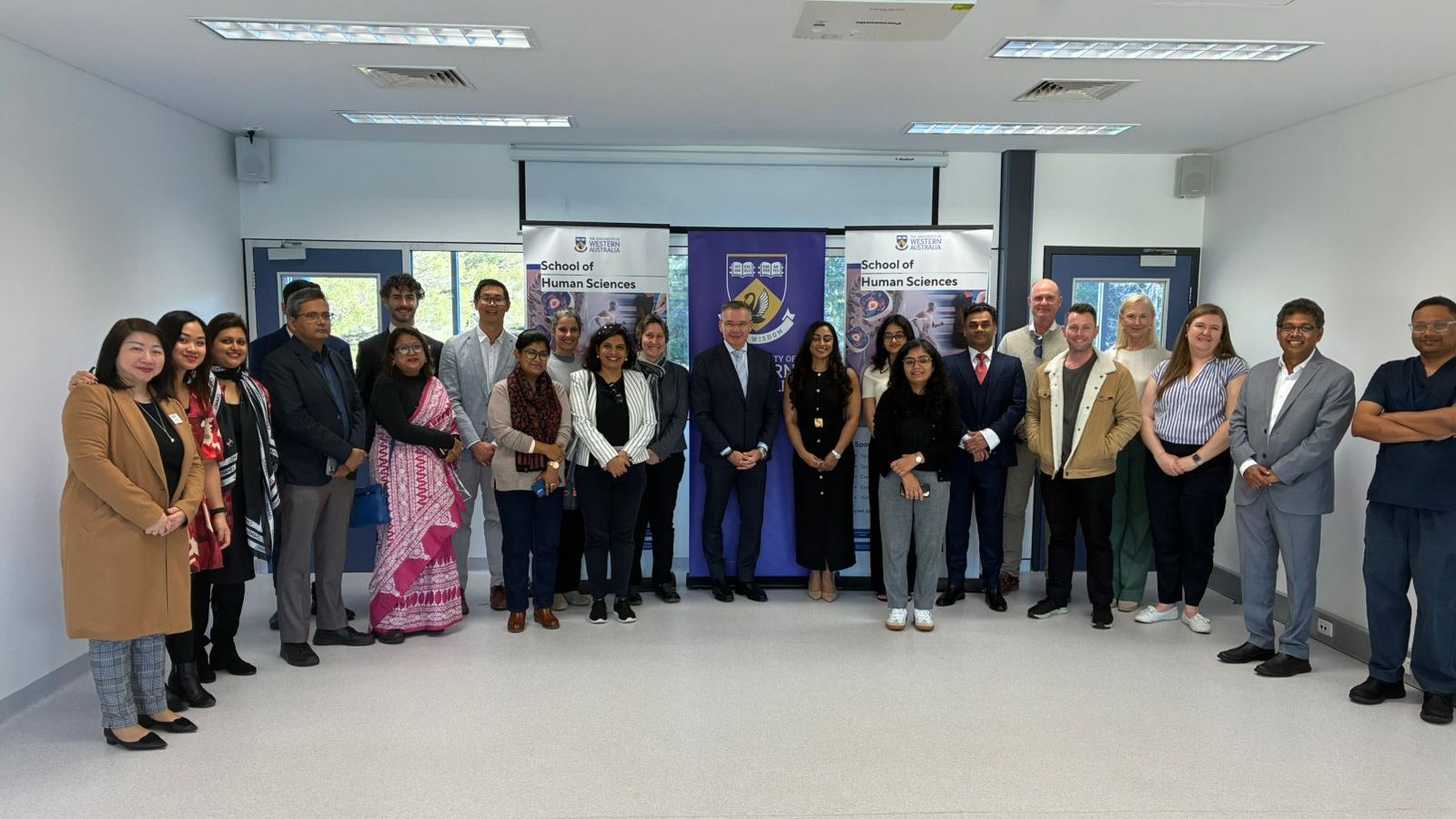
The High Commissioner of India, Gopal Baglay, recently met with a University of Wollongong (UOW) delegation at the Indian High Commission in Canberra to discuss expanding academic collaboration.
The delegation included Vice-Chancellor Prof. G.Q., Max Lu AO, Director of Government and Community Relations Canio Fierravanti, and UOW Global Brand Ambassador and Australian cricket legend Adam Gilchrist.
Prof. Lu briefed the High Commissioner on UOW’s growing footprint in India, outlining ongoing academic activities and future plans. Key areas of research cooperation highlighted were material sciences, renewable energy, artificial intelligence, nursing, and early childhood education.
High Commissioner Baglay emphasised the central role of education in strengthening the India–Australia Comprehensive Strategic Partnership. He noted that knowledge partnerships not only drive innovation and skills development but also deepen the people-to-people ties that underpin bilateral relations.
The High Commissioner commended Prof. Lu’s leadership and praised UOW for its pioneering role in establishing a presence in India. UOW became the second foreign university to set up a campus in India with the launch of its GIFT City campus in Gujarat in 2024.
Support our Journalism
No-nonsense journalism. No paywalls. Whether you’re in Australia, the UK, Canada, the USA, or India, you can support The Australia Today by taking a paid subscription via Patreon or donating via PayPal — and help keep honest, fearless journalism alive.
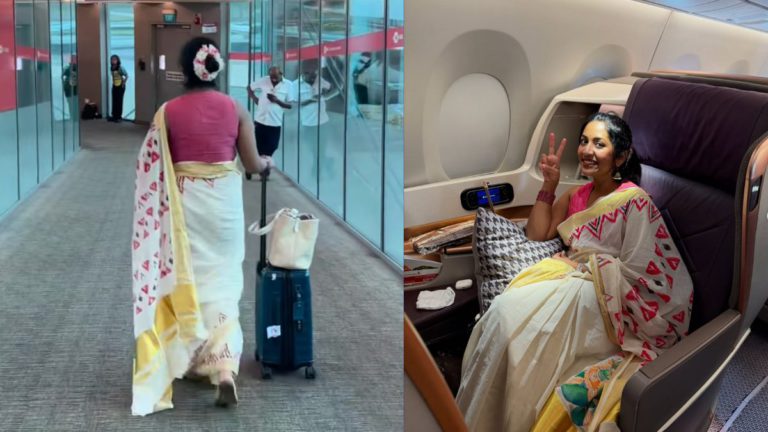
Popular Malayalam actor Navya Nair, who travelled to Australia recently for ‘Onam’ celebrations organised by the Malayali Association of Victoria, was fined over AUD 1,980 at Melbourne International Airport after carrying a jasmine gajra in her handbag.
While jasmine garlands are a festive staple in South India, Australian law takes a zero-tolerance approach to bringing plant materials into the country.
Image Source: Navya Nair (Instagram)
Under the Australian Department of Agriculture, Fisheries and Forestry’s biosecurity regulations, fresh flowers, fruits, vegetables, seeds, and other plant matter are strictly prohibited unless declared and inspected.
Breaches can attract hefty on-the-spot fines of up to AUD 2,664 to prevent the entry of pests and diseases.
Navya recounted in an Instagram post that the gajra, just 15 cm long, was gifted by her father before her journey.
“Before I came here, it was my father who bought jasmine for me. He cut it into two parts and gave it to me. He asked me to wear one in my hair from Kochi to Singapore, since it would wither by the time I reached.”
“He told me to keep the second one in my handbag so I could wear it on the onward journey from Singapore. I put it in my carry bag,”
Her oversight proved costly. “What I did was against the law. It was a mistake I made unknowingly. However, ignorance is no excuse. For bringing a 15 cm jasmine string, officials asked me to pay a fine of AUD 1,980″.
“A mistake is a mistake, though it was not intentional. They told me the fine must be paid within 28 days,”
she added.
Navya took the incident sportingly, later posting a video collage of herself wearing the jasmine gajra with the tongue-in-cheek caption: “A show-off right before paying the fine.”
The actor, a two-time recipient of the Kerala State Film Award for Best Actress, debuted in Sibi Malayil’s Ishtam (2001) and has since delivered acclaimed performances across Malayalam, Tamil, and Kannada films.
No-nonsense journalism. No paywalls. Whether you’re in Australia, the UK, Canada, the USA, or India, you can support The Australia Today by taking a paid subscription via Patreon or donating via PayPal — and help keep honest, fearless journalism alive.
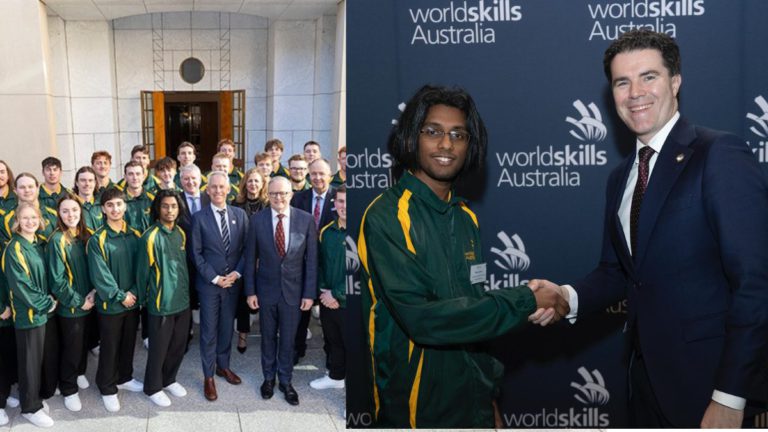
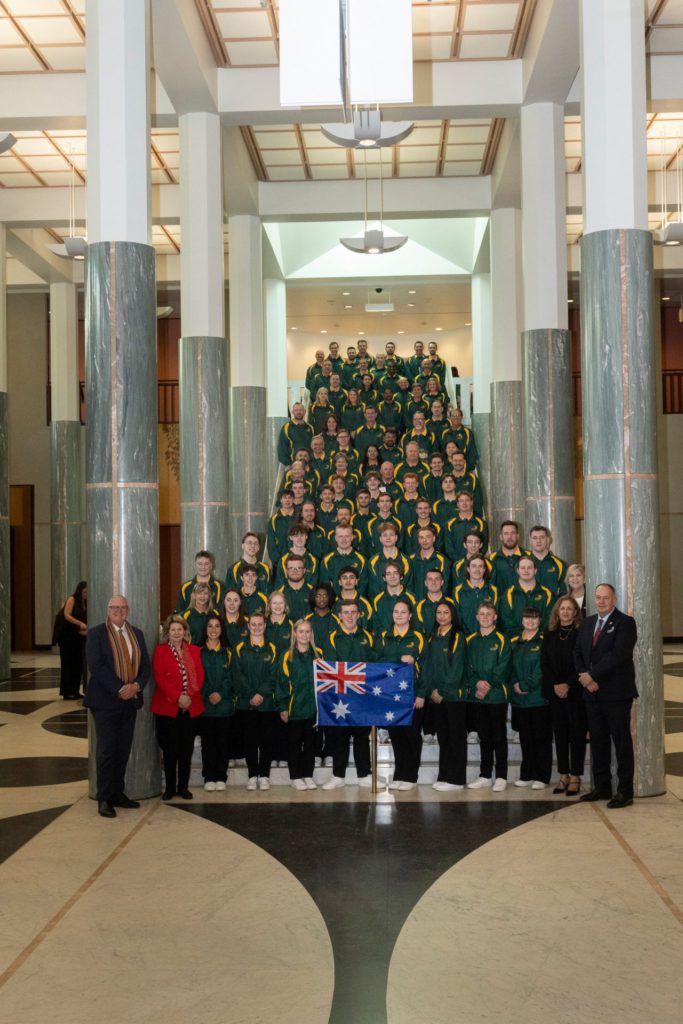
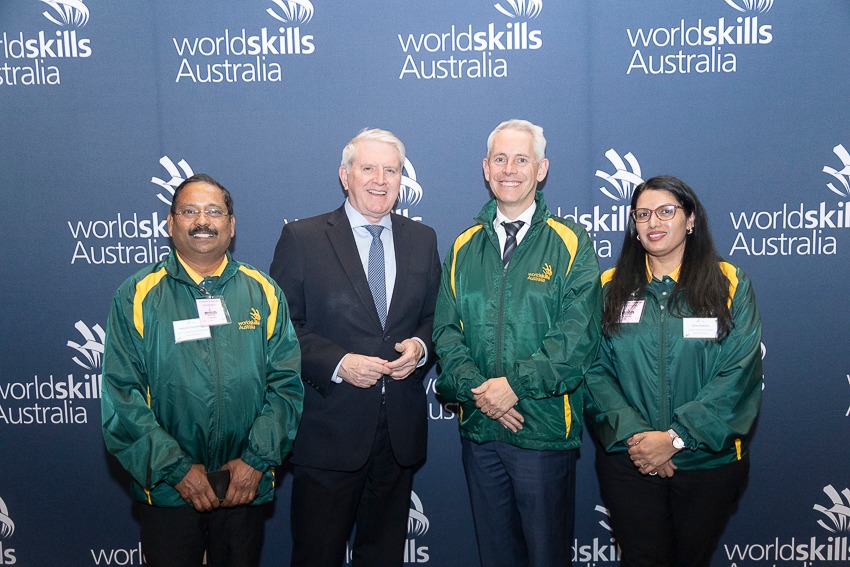
Australia’s best young apprentices, trainees, and professionals have officially begun their journey to the world stage, with the launch of the 2026 Team Australia Training Squad at Parliament House in Canberra.
Image: Members of 2026 Team Australia (Source: Facebook – WorldSkills Australia)
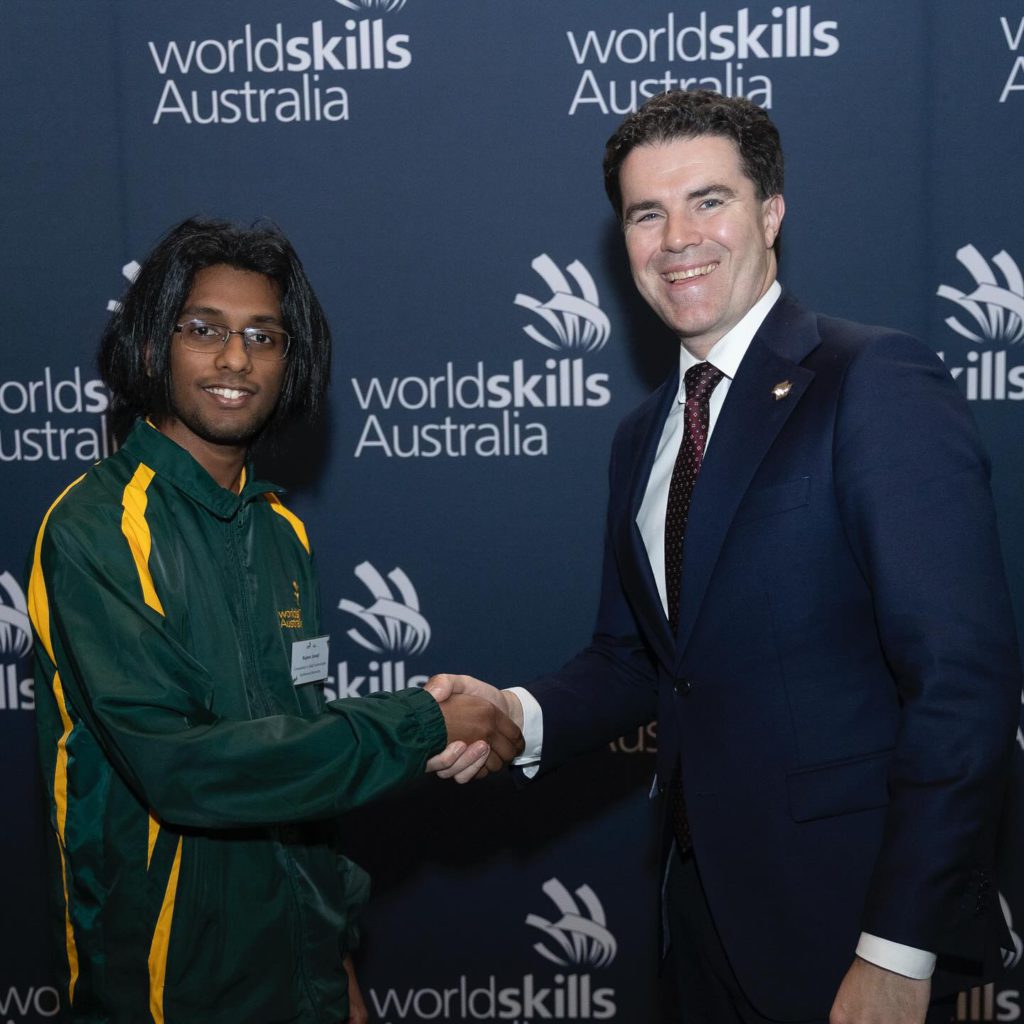
Among them is Point Cook’s Rajeev Jawaji, a second-year student at Melbourne’s RMIT University, who has qualified to compete in web technologies at the 48th WorldSkills International Competition, to be held in Shanghai, China, from 22–27 September 2026.
Rajeev has been fascinated by programming since Year 8, drawn in by a love of robotics and gaming that quickly grew into a passion for coding and web development.
Image: Point Cook’s Rajeev Jawaji WITH Tim Watts MP (Source: Facebook – WorldSkills Australia)
Local MP Tim Watts congratulated him, saying the community would be “cheering him on” as he trained for the world’s largest international skills competition.
WorldSkills brings together more than 80 countries to showcase over 60 trades and skills, often referred to as the “Olympics of skills.” Competitors face rigorous assessments of their technical expertise, problem-solving ability, teamwork, and leadership.
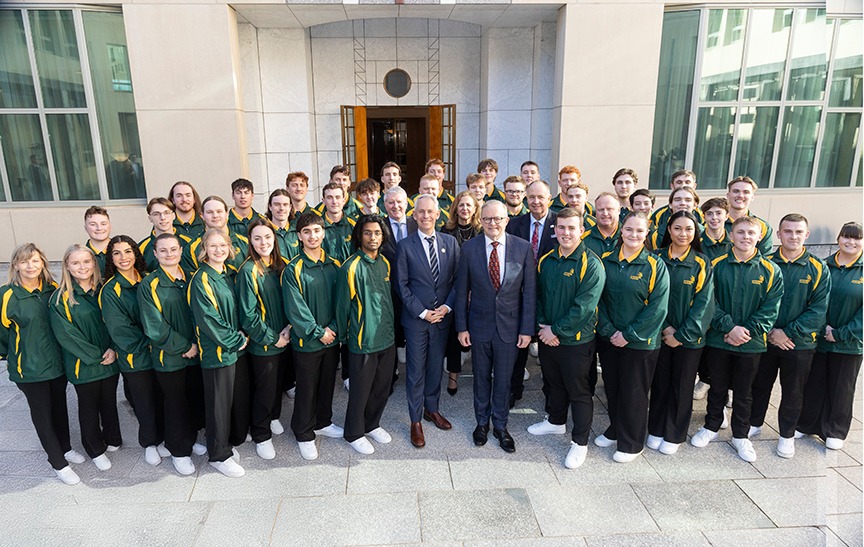
Image: Members of 2026 Team Australia Training Squad (Source: Facebook – WorldSkills Australia)
This year’s Team Australia, known as the Skillaroos, consists of 39 competitors and 35 experts. They were recognised at the launch by Prime Minister Anthony Albanese and Minister for Skills and Training Andrew Giles, who praised their dedication and talent.
Image: Members of 2026 Team Australia with Prime Minister Anthony Albanese (Source: Facebook – WorldSkills Australia)
The squad recently completed a development camp at the Canberra Institute of Technology, focusing on high-performance training, resilience, and team-building. Guest speakers included former Wallabies captain Stirling Mortlock and resilience coach Annie Harvey.
WorldSkills Australia, which has operated since 1981, describes the competition as a platform to celebrate vocational excellence and open career-boosting pathways for young Australians.
As the countdown to Shanghai begins, the Skillaroos will spend the next year honing their skills, representing not just their trades but the future of Australia’s workforce.
Support our Journalism
No-nonsense journalism. No paywalls. Whether you’re in Australia, the UK, Canada, the USA, or India, you can support The Australia Today by taking a paid subscription via Patreon or donating via PayPal — and help keep honest, fearless journalism alive.
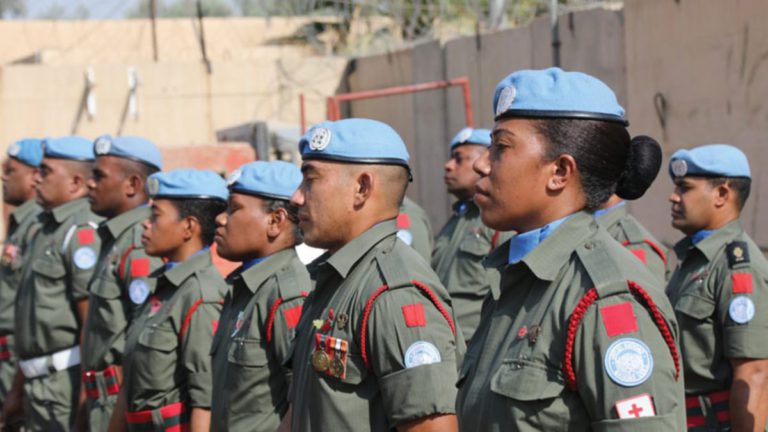
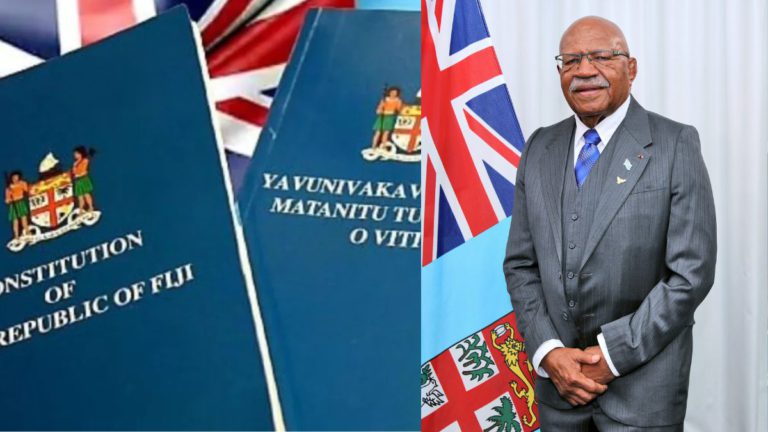
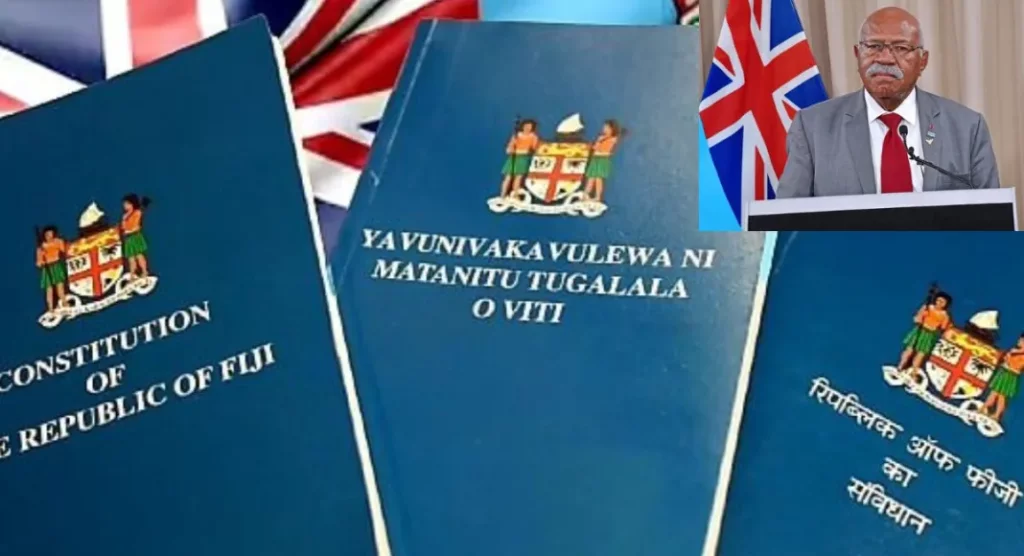
For over four decades, Fiji’s peacekeepers have stood guard in some of the world’s most dangerous flashpoints — places where the risks were high, the comforts few, and the gratitude fleeting. Since 1978, more than 50,000 Fijians have worn the blue helmet of the United Nations or the terracotta beret of the Multinational Force & Observers in the Sinai Desert.
It is indeed a proud record. But here’s the uncomfortable truth: for over 45 years, Fiji has been the highest per capita contributor to UN peacekeeping anywhere in the world — and we’ve done it largely at our own expense.
Every mission, every deployment, every soldier on foreign soil is partly paid for by the taxes of ordinary Fijians — families already battling the daily grind of rising living costs, unemployment, under-resourced health services, surging crime, and the relentless threats of climate change. UN reimbursements arrive months, even years late, while our own communities wait for security and services that never come.
We do not have bottomless pockets or limitless manpower. Every uniformed officer we send abroad is one less securing our borders, intercepting drugs, or helping communities withstand cyclones and floods. Every dollar spent on distant battlefields is a dollar stripped from better policing, cyber defences, and climate adaptation at home.
The Minister for Defence and Veteran Affairs recently announced work on a new National Peacekeeping Strategy. That may be a good thing. But if it amounts to little more than a rubber stamp for the status quo, it will be meaningless — a squandered opportunity to put Fiji’s security priorities back where they belong: at home and in our region.
From scattered commitments to strategic focus
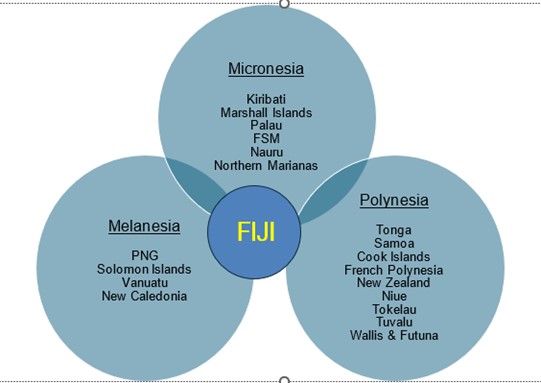
Fiji is not just another Pacific Island. We are the region’s hub — strategically placed, economically influential, and with a moral duty to lead. Yet for too long we have scattered our resources across conflicts half a world away, chasing international kudos while our own backyard has become more vulnerable. The world has changed, and so must we.
The recent National Security & Defence Review (NSDR) delivered a clear message: our foreign policy and military deployments must be recalibrated to put our region first. This is not a minor course correction — it is a strategic necessity and a moral imperative.
By doing so, Fiji can drive the Prime Minister’s vision of the Pacific as an Ocean of Peace — not just a slogan, but a reality built on unity, trust, and collective resilience. That means using our central position to lead coordinated security, humanitarian assistance, and development efforts; heading off regional disputes before they ignite; dismantling transnational crime networks; and protecting our ocean as a zone of cooperation rather than confrontation.
Fiji as the regional hub. Image: SUPPLIED
Drawing the Line — Clear Priorities, No Apologies
Our security priorities must be clear:
Fiji first.
Protect Pacific stability.
Deliver rapid humanitarian aid in our neighbourhood.
Only commit troops to missions where Fiji has a direct diplomatic or economic interest.
Anything less will erode our influence, drain our resources, and undermine the stability we claim to champion.
Fiji’s international credibility will not be measured by how long we have soldiers manning outposts in the Sinai desert or the Golan Heights. It will be measured by whether we have the courage to adapt — to protect our people, focus our forces on real threats, and lead the Pacific toward a shared future of peace and security.
Our soldiers have paid their dues to the world — some with their lives. Now it is the government’s turn to pay its dues to them, and to the nation they swore to defend.
God bless Fiji and its people.
This article was first published on Wansolwara News and has been republished with permission.
Contributing Author: Jim Sanday is a former commissioned officer of the pre-coup Royal Fiji Military Forces. During his military service he commanded Fiji battalions in Lebanon and the Sinai. Mr Sanday led the recently completed National Security & Defence Review and co-authored the National Security Strategy 2025-2009 that was approved by Cabinet on 3 June 2025.
Support our Journalism
No-nonsense journalism. No paywalls. Whether you’re in Australia, the UK, Canada, the USA, or India, you can support The Australia Today by taking a paid subscription via Patreon or donating via PayPal — and help keep honest, fearless journalism alive.
A Rockingham man who bombarded government offices with more than 1100 harassing phone calls in less than two months has been sentenced in the Perth District Court.
It is reported that the 46-year-old man labelled staff as everything from ‘terrorists’ and ‘scabs’ to ‘cowards’.
The man was found guilty of two counts of using a carriage service to menace, harass or offend, contrary to section 474.17(1) of the Criminal Code (Cth).
AFP Inspector Shona Davis said the nuisance calls disrupted operations and distressed staff.
“These types of calls – many of which contained abusive and highly insulting language – can be extremely upsetting and concerning to the people who answer them, and a waste of resources for the offices targeted.”
Insp Davis added that the judge acknowledged the significant impact the campaign of harassment had on the functioning of government offices.
“The AFP has a zero-tolerance policy when it comes to any form of harassment and will prosecute anyone caught breaking the law in such a way.”
The Australian Federal Police (AFP) charged the man in February 2022 after uncovering that in November 2021 he had made nearly 500 abusive calls to a Federal Minister’s office.
Just weeks later, in December, he placed more than 650 offensive and repetitive calls to a Federal Government department.
The man received 12 months’ imprisonment for each offence, to be served concurrently, but was released on a 12-month good behaviour recognisance order after the court considered the 42 days he spent in custody following his 2022 arrest.
Support our Journalism
No-nonsense journalism. No paywalls. Whether you’re in Australia, the UK, Canada, the USA, or India, you can support The Australia Today by taking a paid subscription via Patreon or donating via PayPal — and help keep honest, fearless journalism alive.
Mathematics has been the broccoli of school subjects for generations of Australian teenagers.
Often pushed aside, dreaded, or even feared, nearly one third of students opt out of any senior maths courses.
This has serious implications for Australia’s future. As an Australian Academy of Science report warned on Thursday, we need people with maths skills to support a whole range of careers in science. This includes agricultural science, artificial intelligence, data science, biotechnology and climate science.
The skills we gain during school mathematics – problem-solving, pattern-finding, reasoning logically, and computational thinking – are essential to the work of many STEM careers.
The challenge is turning maths from broccoli to the ingredient every student wants on their plate for their future. So, what can we do?
What has been happening with high school maths?
Across Australia, there has been a decline in students studying maths in years 11 and 12 since the 1990s. Today, only 8.4% of Australian high school students study the most difficult level of maths.
There are diverse reasons explaining why students opt out of maths during school.
Research shows parents’ attitudes towards maths can predict the attitudes their children will have towards the subject.
This means we need to be careful as parents. If we have negative attitudes towards maths due to our own anxieties or past struggles, this can affect our children’s attitudes and performance too.
Instead, parents should try to focus on the positive aspects of maths.
For example, this is a subject where you learn about the mechanics of the world, rather than a subject to be endured before moving to the “fun” stuff. Maths can come alive once we notice how we use it in sports, art, cooking, travel, money management and games.
Parents can also be curious co-learners with their children – we never need to have all the answers ourselves. But showing interest, having a growth mindset (a belief you can improve your abilities through effort), and asking questions can support students’ positive attitudes and performance in maths.
You can also talk to your child about why mastering maths is central to a wide range of occupations, from coding to trades, retail, nursing, animation and architecture.
What should schools do?
Research suggests 20% of 15-year-old boys and 33% of 15-year-old girls do not think maths will be relevant to their future.
So we need a new approach to careers advice in schools. Students need adequate support from informed adults to make accurate judgements about career pathways – emphasising how maths can help.
On top of this, schools could consider the ways in which mathematics is celebrated and promoted in schools. While music, drama, and sport days are regular features of the school calendar, maths is rarely included. Exciting maths competitions and maths days are prime opportunities to show students how important maths is in our world.
What about teachers?
Some of us may remember maths lessons as rather dry with a focus on lots of questions and whether something was “wrong” or “right”.
So teachers who make maths engaging for students and maximise opportunities for success are crucial.
Teachers should also provide step-by-step support to students (what educators call “scaffolding”), so young people experience a sense of achievement and success with maths. Success builds motivation, creating an upward spiral of positive maths experiences.
What can governments do?
The alarm bells over maths participation have been raised for 30 years, with government funding supporting research into this phenomenon.
So while governments should continue to support research into this matter, they should prioritise translating it into practical strategies for schools and teachers.
Some evidence-based approaches include:
high-expectation teaching, where teachers set ambitious goals, create supportive classrooms, and believe all students can achieve
relevance interventions, where teachers show students the practical implications of their learning
No-nonsense journalism. No paywalls. Whether you’re in Australia, the UK, Canada, the USA, or India, you can support The Australia Today by taking a paid subscription via Patreon or donating via PayPal — and help keep honest, fearless journalism alive.
One of the things of which I’m proudest in my nine years in Parliament is the friendship I have developed with the Australian Indian community.
I have been the co-chair of the Parliamentary Friends of India since 2016, when I was first elected as the Member for Berowra.
Every day in that role has been a privilege.
India is the great hope for democracy in our region. It is the world’s largest democracy with a commitment to the rule of law and individual freedom that is a beacon for other countries to follow. Our shared traditions and values and interests underpin the relationship.
Speaking as a local member, I adore my Indian community, part of a 1 million strong Indian Australian diaspora.
Everywhere I go across my electorate, I see Indian Australians serving on P&C committees and sporting clubs, the RFS and SES, organising community events, and running businesses of every conceivable size.
The Indian community is law abiding, civic-minded and unfailingly committed to the wellbeing of our country. They put service before self. We as a nation are lucky to have been enriched by their decision to become part of our nation.
In my community of Berowra, I campaigned side by side with the Indian community to establish a memorial to those Australians of Indian origin who served in AIF in the First World War.
These are individuals who fought against racist barriers to join the Australian Imperial Force, in the service of the country they love. Some of them made the supreme sacrifice. Their service should be honoured and remembered.
The love I have for the Indian community is shared by my friends and colleagues across the Liberal party.
It was the Morrison Coalition Government that signed the Comprehensive Strategic Partnership between India and Australia. It was the same Coalition government that signed the Economic Cooperation and Trade Agreement with India in 2022. It was the Coalition that revived the Quad. These are partnerships that have brought our nations closer and enriched both sides. But they are part of a broader pattern, because it was the Coalition government that championed a complete step-up across the board in Australia’s relationship with India.
These are achievements that I am proud of as a Liberal.
For me, supporting the Australian Indian community is in my DNA – and it is in my DNA because I am a Liberal. Liberal philosophy emphasises treating the individual with dignity and respect – regardless of their background or origin. It emphasises opportunity, plurality, freedom of religion, prizes the character and quality of the individual and celebrates individual success.
Sussan Ley has often spoken about the modern Liberal Party, and when she does I think of my own background. I have often pointed out that I am Jewish, educated in an Anglican School, who worked at a Catholic University and whose best friend is a Muslim. I have been a passionate supporter of Aboriginal and Torres Strait Islander communities, and I am proud to represent some of the largest Persian, Chinese and Indian communities in Australia.
These are things that are possible because I am a Liberal, because our political philosophy supports individuals regardless of colour or creed, because we value family, hard work, success and love for our country.
And when I speak to Australian Indian communities across Sydney, I see those same values reflected at me. I see people who value family, hard work, success, individual freedom and service to our community and our country. This is something that brings us all together and deserves to be celebrated. It’s why I will always stand with our Indian Australian community.
Contributing Author: Julian Leeser MP is the Shadow Attorney-General, Shadow Minister for the Arts, and Federal Member for Berowra.
Support our Journalism
No-nonsense journalism. No paywalls. Whether you’re in Australia, the UK, Canada, the USA, or India, you can support The Australia Today by taking a paid subscription via Patreon or donating via PayPal — and help keep honest, fearless journalism alive.
A 20-year-old Indian student, Abhigyan Patel, was confirmed dead after drowning at Bean Point Beach on Anna Maria Island, Florida, over the Labour Day weekend.
Patel was last seen swimming with another man shortly before 7 p.m. on Sunday. While his companion was rescued, Patel was swept away by strong currents. He was visiting the island with four fellow students from a Lakeland aviation school.
Mayor Mark Short said the decision followed several recent rescues and two fatalities in August alone.
“The currents here are powerful, and even though the water may appear calm, it can quickly sweep swimmers away,” said Sgt. Russell Schnering of the Manatee County Sheriff’s Office Marine Unit.
Search teams covered nearly 172 square miles, with aerial and sea patrols braving 10-knot winds and one-foot seas. Cmdr. Fredrick Pugh of the Coast Guard Sector St. Petersburg offered condolences to Patel’s family and thanked the rescue crews for their relentless efforts.
Support our Journalism
No-nonsense journalism. No paywalls. Whether you’re in Australia, the UK, Canada, the USA, or India, you can support The Australia Today by taking a paid subscription via Patreon or donating via PayPal — and help keep honest, fearless journalism alive.
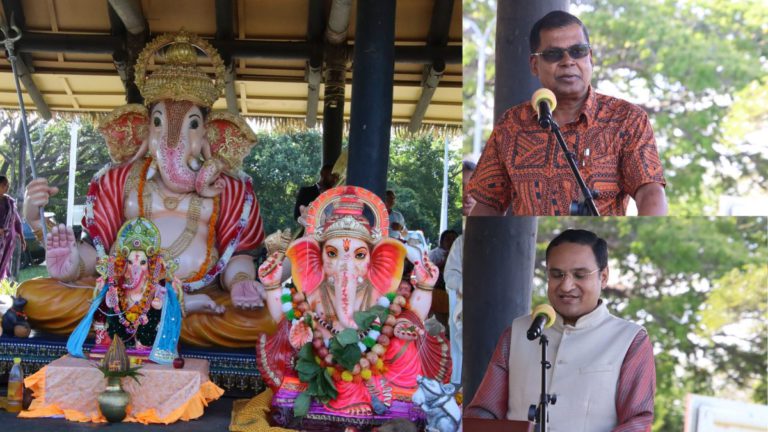
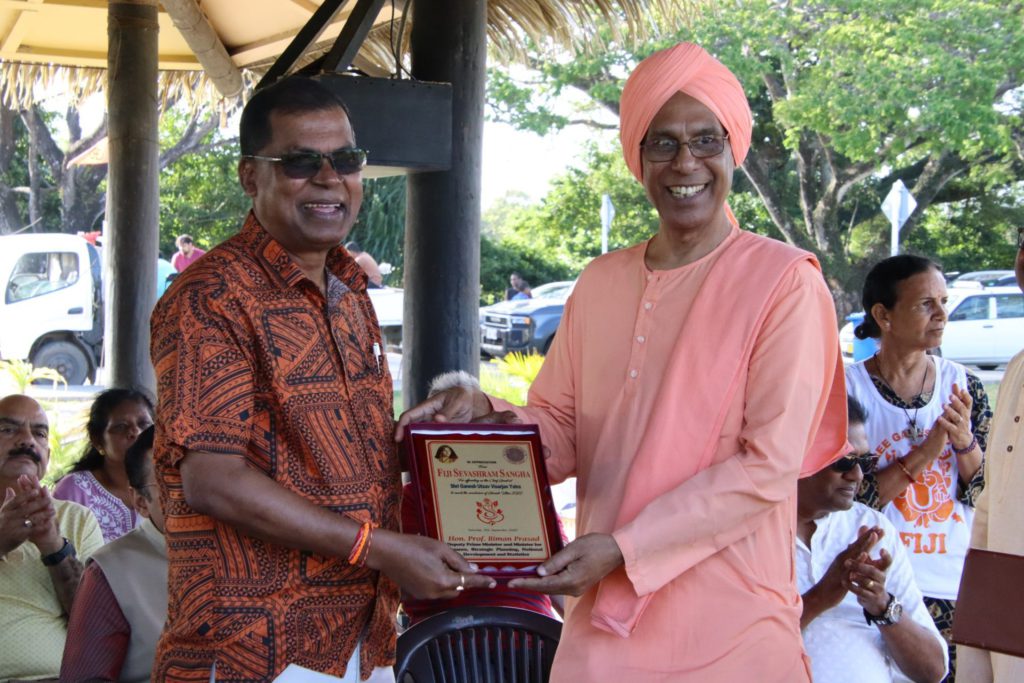
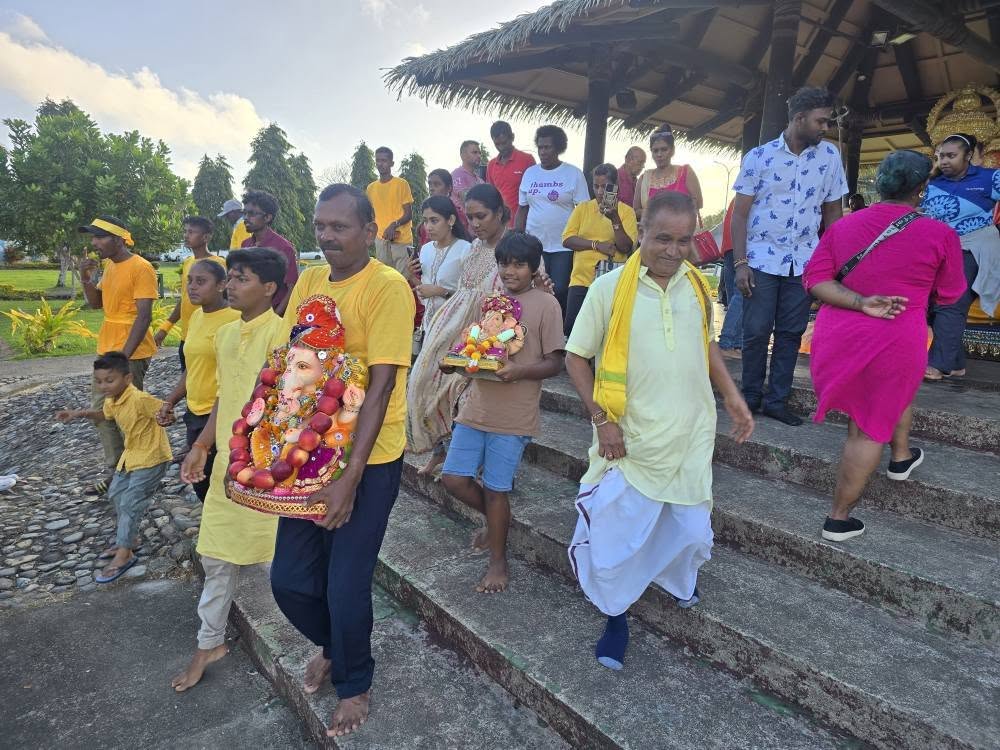
Fiji’s Deputy Prime Minister and Minister for Finance, Prof. Biman Prasad, has described the Ganesh Utsav Visarjan Yatra as a powerful reminder of Fiji’s unity and shared cultural values.
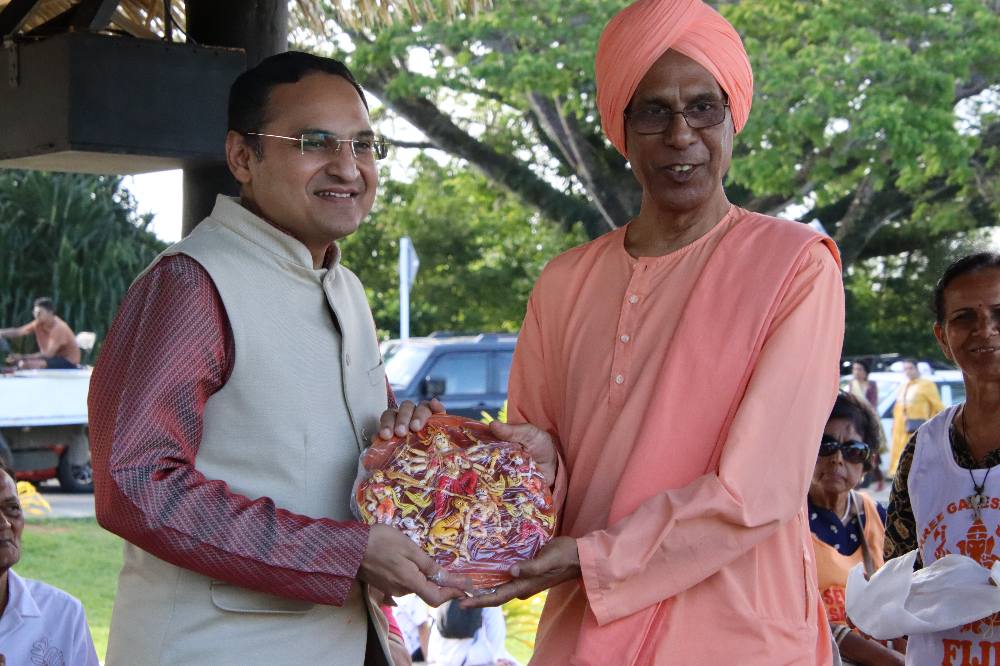
Image: Fiji’s Deputy Prime Minister and Minister for Finance, Prof. Biman Prasad, at the Ganesh Utsav Visarjan Yatra in My Suva Park (Source: Facebook – Ministry of Finance, Fiji)
Speaking at My Suva Park during the event, Prof. Prasad said the gathering highlights the nation’s ability to come together as one people to celebrate, practice, and understand their traditions.
“This is what truly unites our country.”
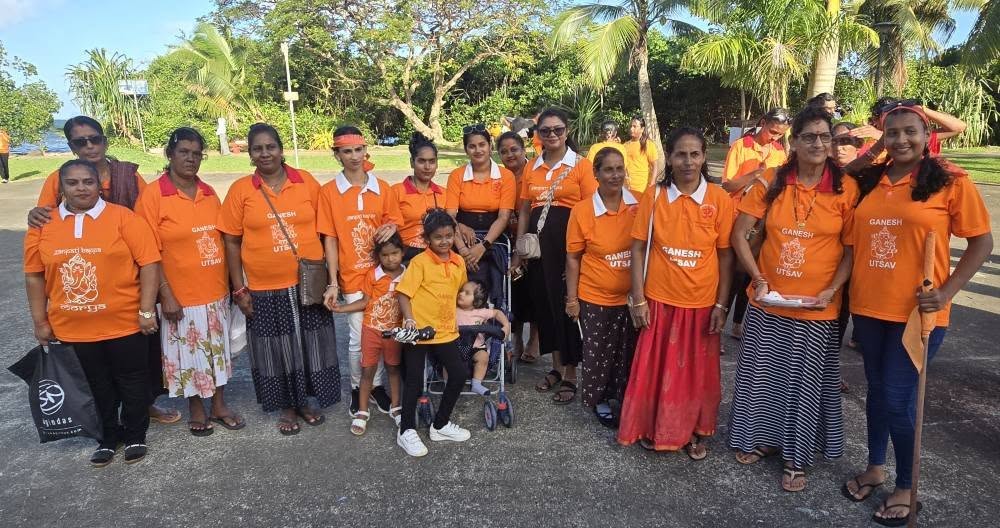
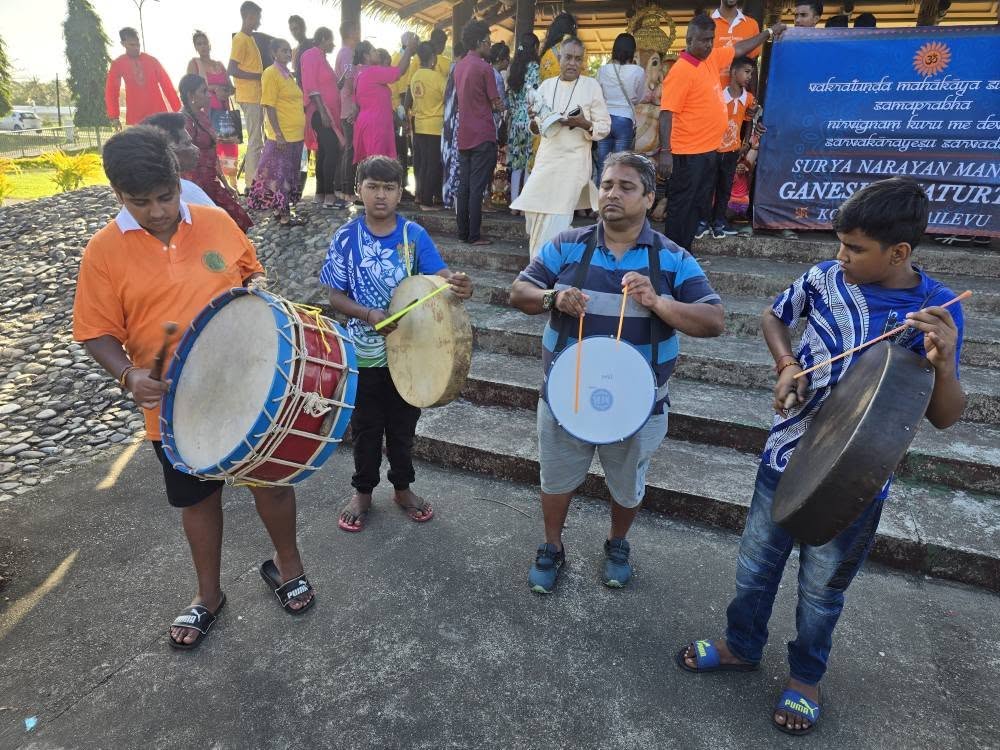
Image: Ganesh Utsav Visarjan Yatra, My Suva Park (Source: Facebook – Ministry of Finance, Fiji)
Prof. Prasad also emphasised the significance of Lord Ganesh as a source of wisdom, prosperity, and remover of obstacles, noting that the teachings of Ganesh carry deep meaning when observed with devotion.
“Beyond the religious celebration, Ganesh Utsav brings our people together in unity and understanding.”
Image: Ganesh Utsav Visarjan Yatra, My Suva Park (Source: Facebook – Ministry of Finance, Fiji)
Highlighting the festival’s long history in Fiji, he said it has consistently brought together people from all communities and backgrounds, making it one of the country’s most popular annual events.
Image: Indian High Commissioner to Fiji, Suneet Mehta, at the Image: Ganesh Utsav Visarjan Yatra, My Suva Park (Source: Facebook – Ministry of Finance, Fiji)
The Indian High Commissioner to Fiji, Suneet Mehta, also participated in the event, underlining the strong cultural and diplomatic ties between Fiji and India.
Image: Ganesh Utsav Visarjan Yatra, My Suva Park (Source: Facebook – Ministry of Finance, Fiji)
The Deputy Prime Minister reaffirmed the government’s commitment to promoting unity, inclusivity, and respect for all faiths.
“This celebration strengthens our bond as Fijians, and further deepens the links between Fiji and India.”
Image: Ganesh Utsav Visarjan Yatra, My Suva Park (Source: Facebook – Ministry of Finance, Fiji)
The Ganesh Utsav Visarjan Yatra concluded at My Suva Park, attracting hundreds of devotees and community members to celebrate faith, culture, and fellowship.
Support our Journalism
No-nonsense journalism. No paywalls. Whether you’re in Australia, the UK, Canada, the USA, or India, you can support The Australia Today by taking a paid subscription via Patreon or donating via PayPal — and help keep honest, fearless journalism alive.
The subpoena orders Naveet Kaur, CEO of White Hawk Carriers, to provide all relevant documents and evidence for inspection and copying by Assistant Attorney General Victoria Butler on 26 September 2025 at 9:00 a.m.
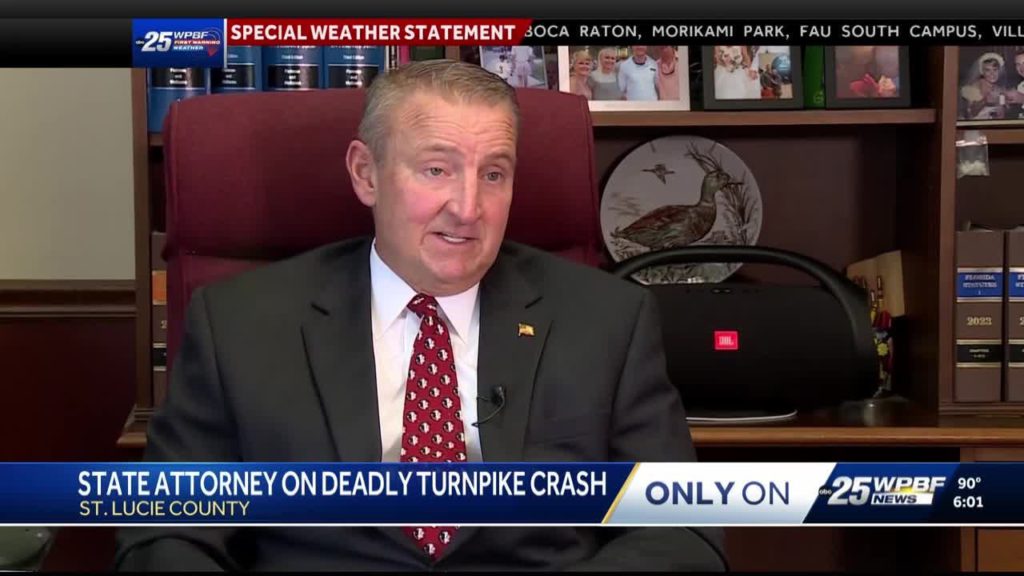
This morning, my office issued civil and criminal subpoenas to the employer of the illegal alien who made an illegal U-turn and killed three people in St Lucie County.
We also sent legal demands to California and Washington to find out why he was issued a CDL in the first place. pic.twitter.com/KCx2kL3WGu
— Attorney General James Uthmeier (@AGJamesUthmeier) September 4, 2025
Uthmeier said his office is targeting Singh’s employer, White Hawk Carriers, to investigate how he was hired and licensed. “We’re going to use every legal tool at our disposal to fight back and protect our citizens,” Uthmeier told reporters.
“This guy did not know how to speak English, he could not read road signs, and he never should have received that CDL license in the first place.”
Image: A bodycam image shows Harjinder Singh signing paperwork on a New Mexico State Police vehicle after being pulled over for speeding on July 3, 2025 (Source: New Mexico State Police bodycam)
Authorities allege Singh, 28, attempted an illegal U-turn on 12 August near Fort Pierce, causing his trailer to jackknife and collide with a minivan, killing all three passengers inside.
“Three innocent people were killed in Florida because Gavin Newsom’s California Department of Motor Vehicles issued an illegal alien a Commercial Driver’s License—this state of governance is asinine,” said Assistant Secretary Tricia McLaughlin.
Dashcam footage of the crash, which has since gone viral, shows Singh calmly parking his truck moments after the impact.
BREAKING: The Department of Homeland Security has just confirmed to me that ICE is seriously considering immigration enforcement at Truck Weigh Stations across America.
This follows a criminal alien truck driver killing three Americans in Florida when he executed an illegal… pic.twitter.com/0lnMFcAyGe
Singh, who officials allege crossed the U.S.-Mexico border illegally in 2018 before securing temporary work papers in 2021, held commercial driver’s licences in California and Washington despite limited English skills.
Singh and his brother Harneet Singh, 25, escaped unharmed and later allegedly fled Florida, flying to California on 13 August. A nationwide manhunt ensued, with the U.S. Marshals Service capturing Harjinder Singh in Stockton on 16 August.
Federal officials confirmed an Immigration and Customs Enforcement (ICE) detainer was issued on 16 August to ensure Singh remains in custody after his state prosecution. Meanwhile, the U.S. has suspended new truck driver work visas, citing safety concerns.
Image: Harjinder Singh has been charged with killing three people in a fatal crash on the Florida Turnpike, (Source: DHS – X)
Singh was arrested in Stockton, California, extradited to Florida, and charged with three counts of vehicular homicide. If convicted, he faces up to 45 years in prison.
Support our Journalism
No-nonsense journalism. No paywalls. Whether you’re in Australia, the UK, Canada, the USA, or India, you can support The Australia Today by taking a paid subscription via Patreon or donating via PayPal — and help keep honest, fearless journalism alive.
“The classic maxim of foreign policy is: unite your friends and divide your adversaries,” as former Treasury Secretary Larry Summers said on Bloomberg Television’s Wall Street Week. He further added,
“We have pursued policies that have managed to unite our adversaries and divide our friends.”
This maxim gains more urgency when viewed from the context of postcolonial nations living in close proximity. While it is true that we cannot choose our neighbourhood, nourishing and cultivating relationships with them is certainly a matter of choice. It is a choice that sometimes needs opportune timing, as the one provided by President Donald Trump.
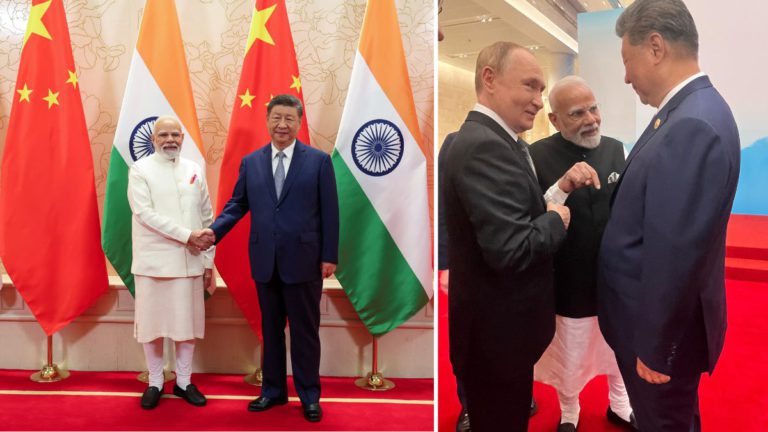
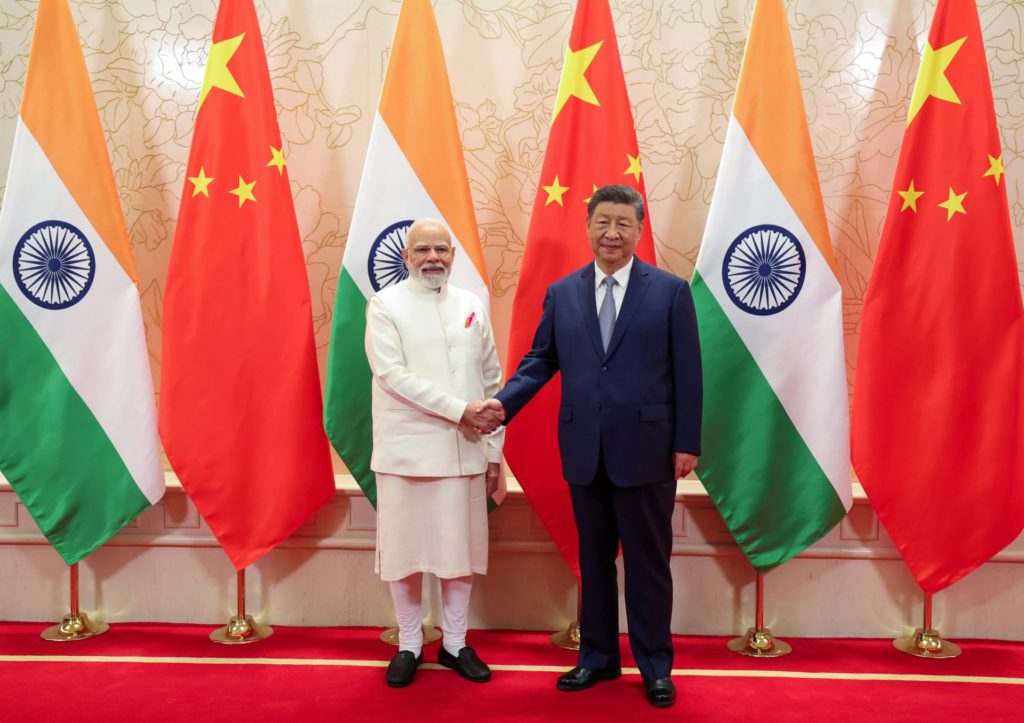
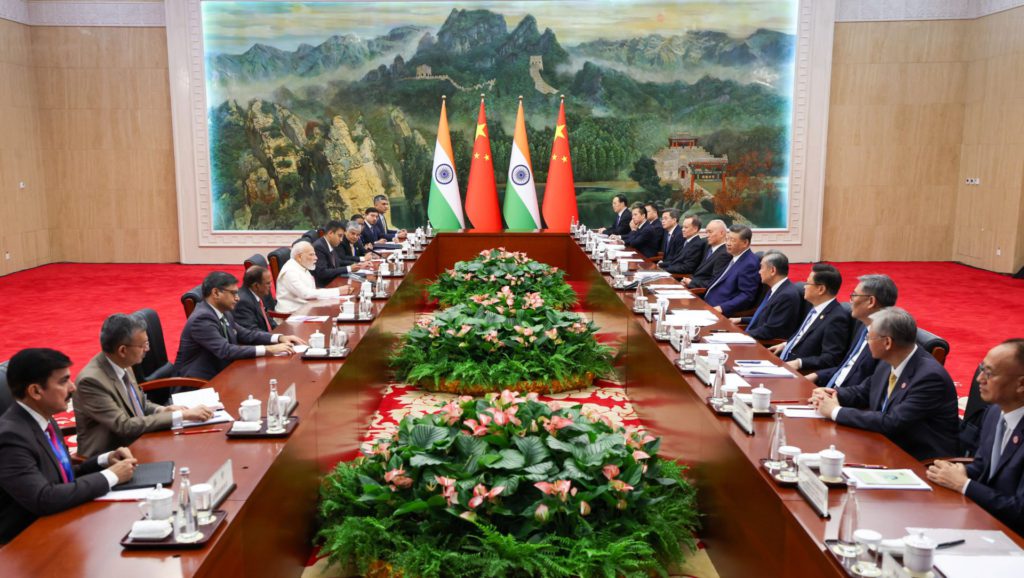
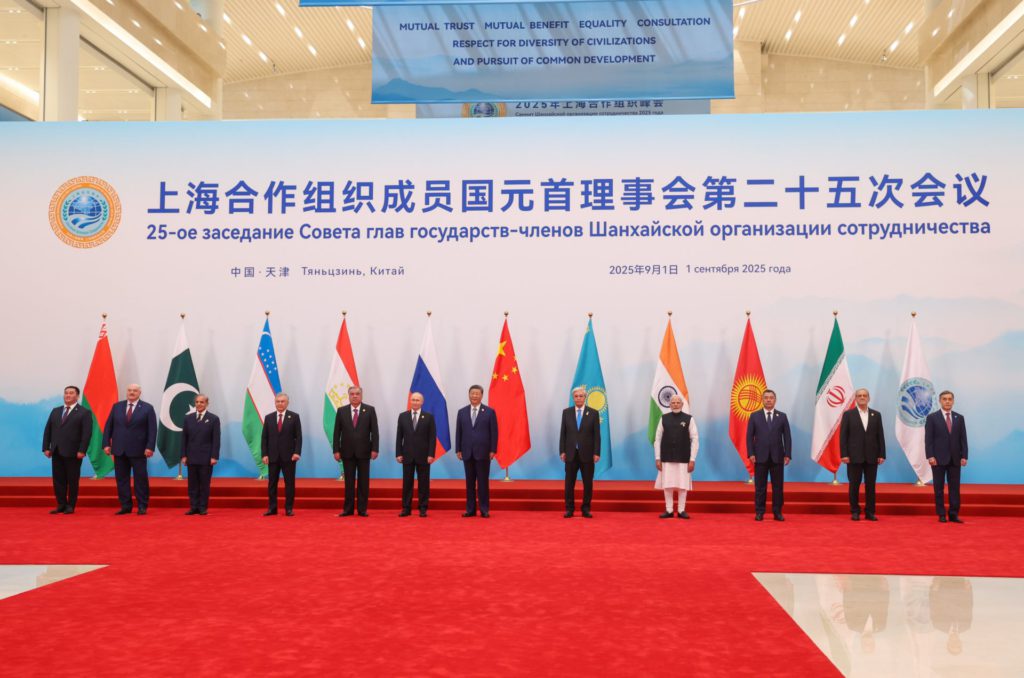
In politics, timing plays an important role. There are times when you go to war with your neighbour, and then there are times when you may decide to enter into a romantic relationship, even if it accounts for just a flirtation. There are also times, as witnessed in the recently concluded Shanghai Cooperation Organisation (SCO) leaders’ summit in Tianjin between 31 August and 1 September 2025, when the Elephant and the Dragon seemed to be preparing the stage for their dance. As the Chinese President, Xi Jinping, reiterated,
“it was vital to be friends, a good neighbour, and [for] the dragon and the elephant to come together.”
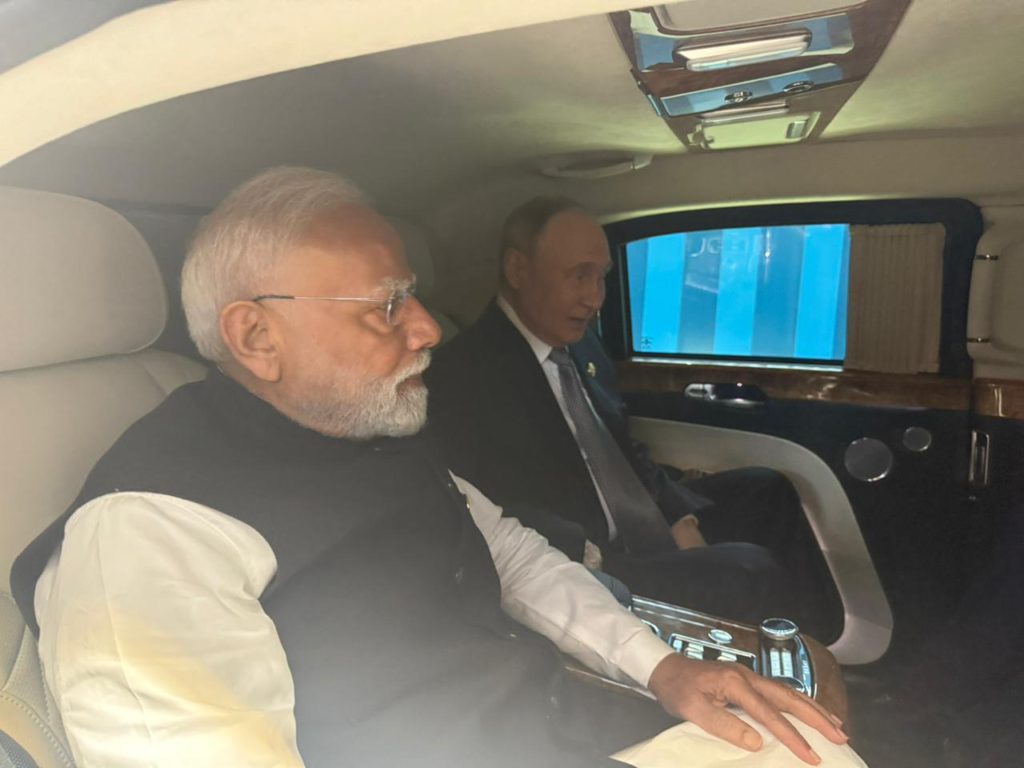
Modi’s meeting with Jinping at this summit could qualify as a powerful script for any bestselling work of fiction. For fiction always challenges the limits of our imagination. Who would have imagined this meeting between two of the world’s most powerful leaders, and that too after a long gap of seven years? In fiction as in politics, partners can change at the blink of an eye. Because no one stays long enough. Because some nothings change into somethings. Because bitterness can be swallowed when the hunter and the prey are on a battlefield.
Trump, who loves to steal the global spotlight, has apparently been replaced by Modi and Jinping recently. Just a few weeks before the 2024 US elections, Trump declared, “To me, the most beautiful word in the dictionary is tariff.” The tyranny of tariffs has turned out to be his nemesis. No wonder then that Van Jones, the American political commentator, claimed on CNN, analysing the timing of the emergence of this new romance between India, China, and Russia: “that image of Xi Jinping with Putin, with Modi, with the leader of Iran, and the leader of North Korea, should send a chill down the spine of every American.”
While pretending that all is well with the state of affairs in the US, Trump wrote on his Truth Social platform last Friday:
“Looks like we’ve lost India and Russia to deepest, darkest China. May they have a long and prosperous future together!”
Trump’s thuggish demeanour and his unquenchable desire to win the Nobel Peace Prize have ultimately made the United States a subject of global ridicule. He has turned out to be both dictator and clown, always changing the face of his enemy from China to Russia, and now to India. High on a dose of political ignorance, what Trump is eventually doing is by no means geopolitics; rather, it amounts to self-checkmate. His miscalculated move, stoked with his puerility, has brought together a new global alliance: China, India, and Russia. Perhaps, it is too early to predict the longevity of this alliance, but these are promising signs of the apertures of a new global geopolitical order. Dr Shashi Tharoor, the Congress MP, has a point when he predicts,
“A few years from now, if New Delhi finds itself in the embrace of China and Russia and alienated from America, might there be a new blame game in Washington DC, with finger-pointing American pundits angrily asking the question, ‘Who lost India?’”
Tharoor is right for many reasons. One can already see the way India made it clear that it would keep buying oil from Russia, a transaction on which Trump has already levied punitive tariffs. A seasoned diplomat, Tharoor knows well that India cannot be pressurised to change its national interest. While some see his statement as problematic, deviating from the party lines he belongs to, one needs to appreciate his astounding ability to be persuasive and insightful when it comes to international affairs. Nationalism does not have a prescribed lens; rather, what matters more is the ability to keep the nation’s interest above everything else. Exactly the reason why Modi also outrightly refused any US mediation in ending the India-Pakistan war – something that Trump would have never imagined.
And this is also what we witnessed in the SCO leaders’ summit. It pictured three nations that harbour a third of the world’s population, robust manufacturing power, and rich mineral resources. It also needs to be pointed out that these three nations “account for roughly a quarter of global gross domestic product.” That is why this new alliance is already seen as a “troublesome” one by Trump’s trade adviser, Peter Navarro, who tried to find fault lines in Modi’s meeting with the two biggest authoritarian dictators:
“I’m not sure what he is thinking, particularly since India has been in a cold war and sometimes a hot war with China for decades. So we hope that the Indian leader comes around to seeing that he needs to be with us and Europe and Ukraine and not with Russia on this, and he needs to stop buying the oil.”
Trump’s disastrous tariff policy has eventually opened new diplomatic frontiers. In losing India, the US may also lose its strategic partner in Asia. What it fails to recognise is that the triangular friendship of India-China-Russia could be the harbinger of a new culture of impunity, which also means that the US could no longer dictate lessons of patriotism and friendship on its own terms. If the news of Trump’s four phone calls to Modi going unanswered is true, then a new script of a new geopolitical order is about to unfold.
One needs to remember that “truth is the child of time, not of authority”, and that “the world is divided into winners and losers, not autocrats and democrats.” While the US may have lost India, it is also a moment for the Asian powers to dismantle White hegemony. Even with the risk of infuriating its western allies, both India and China have a lot to gain from each other: “Much of India’s manufacturing, which Modi is trying to boost, is reliant on materials and rare earths from China. China, meanwhile, stands to gain economically if it regains access to India’s market.”
Support our Journalism
No-nonsense journalism. No paywalls. Whether you’re in Australia, the UK, Canada, the USA, or India, you can support The Australia Today by taking a paid subscription via Patreon or donating via PayPal — and help keep honest, fearless journalism alive.
A 62-year-old Gold Coast man faced Brisbane Arrest Court on 6 September 2025 after allegedly attempting to smuggle about 35 kilograms of methamphetamine into Australia hidden in his luggage.
The man was stopped by Australian Border Force (ABF) officers on arrival from Los Angeles at Brisbane Airport on 5 September.
A baggage examination allegedly uncovered 12 plastic-sealed bags of a white crystallised substance in his suitcases.
Image: Man charged after 35kg of meth allegedly located in luggage at Brisbane Airport (Source: AFP)
AFP Detective Acting Superintendent Shane Scott said the seizure highlighted the constant vigilance of airport border operations.
“Our borders at airports are patrolled actively and diligently … this seizure stops millions of dollars from reaching criminals’ pockets.”
ABF Commander Operations Queensland Troy Sokoloff said the case was a clear warning.
“Methamphetamine destroys lives and families … if you attempt to smuggle drugs into Australia, you will be caught.”
Presumptive testing returned a positive result for methamphetamine, with an estimated street value of $11.4 million — equivalent to about 17,500 individual street-level deals.
Australian Federal Police (AFP) officers arrested the man and charged him with importing a commercial quantity of a border-controlled drug, an offence that carries a maximum penalty of life imprisonment.
Support our Journalism
No-nonsense journalism. No paywalls. Whether you’re in Australia, the UK, Canada, the USA, or India, you can support The Australia Today by taking a paid subscription via Patreon or donating via PayPal — and help keep honest, fearless journalism alive.
I don’t like that the prepper community will now be made to look nuts again […] There is zero reason to shoot at police […] We may disagree with some laws but we are also not the law.
So, now is a good time to take a step back and think about what prepping looks like in contemporary Australia, and what it means for our culture more generally.
Who are the people actively living for the end times? Are sovereign citizens the same as survivalists? Are survivalists different from preppers? And what precisely do people mean when they talk about “The End of the Word as We Know It”?
Image: Prepping (Photo: Tom Doig)
One of us, Tom Doig, has conducted in-depth interviews with 50 preppers across six countries: Australia, India, Indonesia, New Zealand, Sweden and the United States. The other, Jordan McKenzie, is a sociologist whose research areas include dystopian emotions, climate anxiety and doomsday prepping.
We have found that people’s identities, beliefs and everyday practices in this realm sprawl and overlap. It makes sense to differentiate between climate-crisis preppers, religious-fundamentalist preppers and magnetic pole shift preppers (those preparing for catastrophic earthquakes and tsunamis caused by Earth’s magnetic poles suddenly reversing). Yet people can – and do – identify with multiple categories at once, with varying degrees of engagement and seriousness.
Australian preppers exist across the political and class spectrum. Left-wing climate preppers envision ever-increasing floods, bushfires and droughts. More conspiratorial preppers are influenced by various movements – from the anti-vaccination movement that grew during COVID, to chemtrails or secret digital surveillance. Religious preppers tend to be motivated by apocalyptic and end-of-days scenarios.
While far-right, conspiratorial and anti-government (anti the concept of government, not simply anti this government) preppers are a real problem in Australia, they are comparatively rare compared with the US, from where much of the apocalyptic “culture” is imported.
Prepping in Australia is distinctive: less about guns and militias, more about food, water and community. This difference matters, because the threats most Australians imagine are not urban shootouts or civil war. Increasingly, they imagine frequent floods, bushfires, heatwaves and supply-chain breakdowns.
The most “common-sense” form of prepping is basic civil-defence preparedness. Luis Merlo, a Brisbane suburban dad who works as a welder, preps to avoid getting caught out in the next big flood, as he was in 2009. “We lost power for three days,” he said. “I didn’t even have a torch.” He had watched prepper videos but felt unprepared. “And I cursed myself! I thought, ‘How could you let this happen?’”
Other threat scenarios are more baroque. One prepper, “Guy” (not his real name) said he was “working on fitness and my health and getting ready for the shit storm that’s coming”. He worried about “the threats of WW3 and the like”. Guy sent Tom a link to a YouTube video with the title “EMERGENCY BROADCAST – Worldwide Soft Coup Imminent!”.
Many people in this space reject, or resent, having the labels “prepper”, “survivalist” and “sovereign citizen” applied to them, seeing the terms as cliches or harmful stereotypes. Nevertheless, we suggest that four distinct groups can be identified in an Australian context.
In Australia, preppers increasingly imagine floods, bushfires, heatwaves and supply-chain breakdowns – not urban shootouts or civil war. Tom Doig
Preppers, survivalists and sovereign citizens
It’s hard to estimate how many preppers there are in Australia – partly because the term itself is hard to define, and partly because no quantitative studies have been made.
While roughly 10% of Australians make basic disaster preparations, only a much smaller proportion would qualify as fully fledged preppers. By comparison, 6% of US citizens self-identify as preppers; the figure in Australia is likely to be significantly lower.
Many preppers are secretive or paranoid about their activities and don’t readily admit to being preppers. There are 40,500 members of the Australian Preppers Facebook group (founded by Dezi Freeman’s neighbour, Stephen Mallett). And there are 10,900 members of the “Australian preppers no conspiracies allowed” Facebook group.
Preppers can be defined as people who expect to experience some form of major disruption – from a natural disaster to widespread societal collapse – within their lifetime, and who are taking active steps to prepare for that eventuality.
Many of these scenarios have nothing to do with a malevolent government; rather, preppers often see the state as lacking the capacity to protect its citizens. UK-based geographer Kezia Barker argues
prepping is driven not by a paranoia assumed of survivalists that ‘the government is coming for me’, but by the belief that ‘the government isn’t coming for me’.
Preppers are also more likely to stay put in a disaster scenario – to “bug in” – and hunker down with supplies. Depending on money and motivation, preppers can store smaller or larger amounts of food, water and tools for an imagined catastrophe; in some cases, they invest in actual bunkers.
Preppers can imagine the “the end” as a discrete event, or as an ongoing process, or as both at the same time – that is, ruptures within a longer trajectory of decline and collapse.
For example, Te Wehi Ratana, a Māori climate activist and prepper in Aotearoa New Zealand, admitted “such a huge part of me is waiting for the apocalypse to happen”. When asked, “When is the collapse going to begin?” he responded, “It’s already begun, man!”
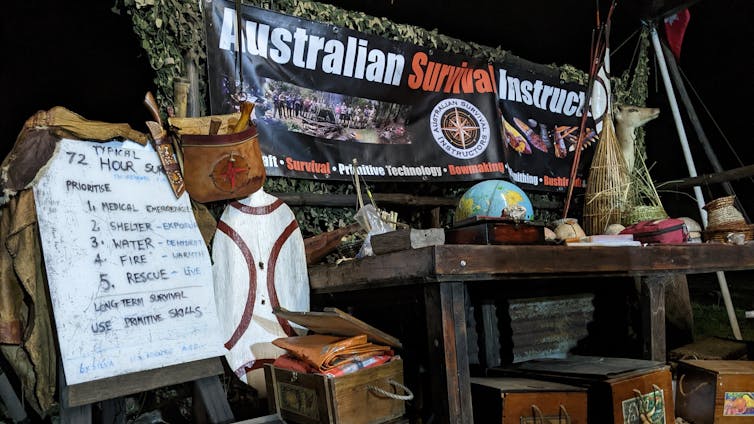
Maddie Aliprandi from Aussie Survival Instructors is one of many small-‘s’ survivalists, focused on bushcraft – and not dying. Tom Diog
Small-“S” survivalists practise bushcraft: shelter-building, fire-building, path-finding, food-foraging. Think scouts; think Alone Australia. At its simplest, this is about going out into the wilderness and not dying.
When newspaper articles quote survival experts saying Dezi Freeman could last for “several weeks” in Victoria’s mountain country, they’re talking about small-“S” survivalism. These practices aren’t ideological in and of themselves, although survival skills can be deployed for a variety of ends, from pig-hunting to “bugging out”.
Big-“S” survivalism is a far-right, anti-government philosophy that originated in postwar US culture, as part of the militia movement. These kinds of survivalists see the future as dystopian, if not apocalyptic. The state is the primary threat. In the face of perceived governmental oppression and “tyranny” – exemplified by conflicts such as the siege of Waco, Texas – survivalist groups believe they need to “bear arms” in self-defence.
Survivalism has a view of history with echoes of colonialism: it fetishises the idea of “surviving” in nature, outside of industrial society.
Sovereign citizens are anti-authority and anti-law. They believe Australia’s laws don’t apply to them (or only apply selectively). They sometimes generate and attempt to enforce their own pseudolaws, or cite archaic legal jargon out of context. For example, “Bunnings Karen” is a sovereign citizen who quoted the Magna Carta as an excuse to not wear a face mask during COVID lockdowns.
Sovereign citizens have a tendency towards confrontation, especially directed at police officers, as the most obvious embodiment of “the law”. The “SovCit” movement originated in the US in the 1970s; it is a reasonably new group in Australia, where it has grown rapidly since COVID.
The divide between preppers, survivalists and sovereign citizens can be understood through each group’s relationship with the nation state.
While preppers may be inclined to work with the state in an emergency, sovereign citizens and (in some cases) Survivalists see their practices as in ideological opposition to the state. Attitudes towards the use of violence are arguably key here.
For sovereign citizens, the authority of the state is fundamentally illegitimate, so acts of violence against state representatives (such as the police, but also the courts, politicians and state bureaucracy) are both justified and ethical.
“You cannot prep in prison…”
On Stephen Mallet’s Australian Preppers page, the chat about Dezi Freeman has been heated, to put it mildly. People are already suggesting the shooting was a “false flag” operation. One anonymous user claimed the whole event is “100% psyop” masterminded by “the gruberment”, with “new gun laws incoming” as a result.
Other preppers are expressing more measured views. “It’s one thing to home school, grow your own food and mind your own business,” they wrote; “it’s another when you think that the common laws […] of the land you live on don’t apply to you and go about breaching those laws.”
But one user’s comments best sum up the tensions within these subcultures:
I love prepping but this group is not about that, is it. You’re sovereign citizens by the sounds. I’m out. You’re nut jobs […]
Prepping in Australia vs the US
In the US, prepping is inextricably tied to gun ownership and use. The figure of the armed prepper is central to how threats (urban crime, civil unrest), safety (self-defence), freedom (Second Amendment rights – or, the constitutional “right to bear arms”, as interpreted by the NRA), and even “the good life” (guns are fun for the whole family!) are imagined.
But in Australia, where gun ownership is comparatively rare and tightly controlled, this imported discourse sits awkwardly. Yes, some Australian preppers echo US rhetoric — especially online. But many go out of their way to distance themselves from it, preferring a more communal, less militarised approach.
For example, the advice from the Australian People’s Survival League is focused on collaboration and prosocial behaviours; more akin to a backup State Emergency Services than a militia. John Scarinci, secretary general of the League, has speculated that a full-scale societal collapse would give rise to “The Marauder Effect” – individuals with caches of weapons disregarding the law and preying on fellow citizens to survive.
“We don’t promote that side of things,” Scarinci said. “We don’t promote breaking the law as a prepper. It’s a great way to potentially land yourself in jail. We are not America. We’re Australia. It’s something to be proud of here.”
In the US, preppers, survivalists and sovereign citizens all tend to prioritise weapons for the simple fact that in a SHTF (shit hits the fan) scenario, those with resources such as food, medicine and shelter are vulnerable to everyone else with a gun. (There are more guns than people in the US.)
In Australia, the comparative lack of guns – less than one tenth of US rates – and radically different ideological connection to guns means those in the prepper and survivalist communities tend to see things differently.
This is an important difference between preppers and sovereign citizens. While preppers are likely to feel the state would fail to protect or provide for them in a SHTF scenario, sovereign citizens oppose the legitimacy and legality of the state altogether. They exist in opposition to the nation state and, in extreme cases, are willing to use violence in an attempt to destroy it.
Crucially, US-style visions of societal collapse, often mediated via Hollywood movies and TV series like 28 Days Later, The Walking Dead and The Last of Us fixate on “urban chaos”. Densely populated areas experience disasters and/or run out of food, before quickly devolving into civil war scenarios, with desperate citizens taking up arms and attacking each other. In this context, “zombies” function as a metaphor for the unprepared masses who become threats to more organised – and, by implication, more deserving of life – preppers.
These narratives are legible within the US, where riots and armed uprisings (such as the January 6 Capitol insurrection) are relatively common occurrences. But they are also imported to Anglosphere countries such as Australia, where some preppers will parrot sentiments about needing to get out of the city “before it’s too late”; (a recent Guardian article on preppers quotes a Facebook comment that “traffic jams and gunfire don’t mix”). This flies in the face of Australian lived experience, where riots and shootings are comparably rare events.
This contradiction came to a head in the 2022 Wieambilla shootings, where the Train family — described in media as “Doomsday Preppers” — murdered two police officers (Matthew Arnold and Rachel McCrow) and a civilian (Alan Dare). Brothers Gareth and Nathaniel Train, and Gareth’s wife Stacey Train, were conspiracy theorists and religious fundamentalists; they ambushed the police officers who had visited the property to investigate a missing persons report about Nathaniel Train.
Their motivations, however, had more to do with far-right religious radicalisation from an online US preacher than with mainstream Australian prepping culture.
Meanwhile, Tom Doig met a senior police officer in Tennessee in 2024, “Joel”, who didn’t see anything wrong with the Trains stockpiling weapons, even after the fatal shootings. He seemed to think the Wieambilla tragedy was just “one of those things”: regrettable, but unavoidable. “Just in general, everybody has a right to bear arms!” he laughed, “there’s no issue with preppers. It’s kind of accepted here. People have a right to do what they wanna do. Until they’re buying high-grade explosives […]”
German sociologist Max Weber argued (Politics as a Vocation) that the state is defined by its monopoly of legitimate violence. This means the group (there can be only one) able to use violence and be deemed legitimate gets to be the state. Only the state can have police, prisons and armies – and when non-state actors use violence, they must be punished to maintain the state’s monopoly of power.
While Dezi Freeman remains at large, his ability to escape arrest presents a very public challenge to state authority, which could inspire others to do the same.
Ultimately, undermining the authority of the state is how sovereign citizens can seek to establish their own rules and regulations.
Slow emergencies
The Dezi Freeman story has already become a mirror for our wider anxieties about social polarisation and state power. The task of figuring out what to do with these anxieties leads many to prepping and other forms of future oriented actions.
Prepping in Australia shades into something more mainstream: ordinary households storing extra food, checking their emergency kits or drawing on community networks during a blackout. These practices speak to a growing sense of climate anxiety, but also to possibilities for resilience and solidarity.
The real question, perhaps, is not whether Freeman is hiding underground – but how the rest of us will prepare for the slow emergencies already unfolding above ground.
No-nonsense journalism. No paywalls. Whether you’re in Australia, the UK, Canada, the USA, or India, you can support The Australia Today by taking a paid subscription via Patreon or donating via PayPal — and help keep honest, fearless journalism alive.
Two Nepalese women, best friends for more than 14 years, were killed on Thursday night after stopping to help an injured kangaroo on the Hume Freeway in Melbourne’s north.
Image: Sarla Khadka and Areeza Suwal (Source: Facebook)
Emergency services were called to Craigieburn just after 7.30pm following reports that two pedestrians had been struck. It was reported that a 30-year-old woman from Beveridge died at the scene, while her friend, a 30-year-old woman from Thomastown, was airlifted to hospital but later died.
Image: Sarla Khadka (Source: Facebook)
7News has revealed the identity of the victims as Sarla Khadka and Areeza Suwal who worked as nurses at Melbourne’s Alfred Hospital and had been on their way to celebrate a birthday.
Just hours earlier, Khadka had shared a heartfelt Facebook post calling Suwal her “sister” and lifelong confidante.
Victoria Police said the women had struck a kangaroo while driving towards the city and stopped to assist it when another vehicle swerved to avoid their car and hit them at high speed. The driver remained at the scene and is assisting police.
Road Policing Assistant Commissioner Glenn Weir described the crash as “terrible for all involved,” warning of the dangers of leaving vehicles on dark, high-speed roads. “It’s inherently dangerous to be on the roadway, particularly at night and in drizzly conditions,” he said.
Image: Accident scene (Source: 9News screenshot)
Wildlife rescue groups urged motorists to contact trained responders rather than stopping on busy roads. “People get distressed when they see an animal on the roadside, but it’s safer to call rescue organisations,” a WIRES spokesperson said.
Victoria Police said 203 people had died on the state’s roads so far this year, which is 11 more than at the same time last year.
Support our Journalism
No-nonsense journalism. No paywalls. Whether you’re in Australia, the UK, Canada, the USA, or India, you can support The Australia Today by taking a paid subscription via Patreon or donating via PayPal — and help keep honest, fearless journalism alive.
The report highlights that these groups continue to operate from within Canada, raising funds, spreading propaganda, and planning violent acts targeting India.
“Khalistani extremist groups supporting violent means to establish an independent state within Punjab, India are suspected of raising funds in a number of countries, including Canada. These groups previously had an extensive fundraising network in Canada but now appear to consist of smaller pockets of individuals with allegiance to the cause but seemingly no particular affiliation to a specific group.”
This acknowledgment follows years of concerns raised by India about the activities of Khalistani elements on Canadian soil.
The assessment reveals that Khalistani groups, such as Babbar Khalsa International and the International Sikh Youth Federation, are active in fundraising and promoting their separatist agenda. While their activities are primarily focused on India, the report underscores the potential implications for Canadian national security.
“Khalistani violent extremist groups have also been known to use networks to solicit donations from diaspora communities to raise and move funds, including through NPOs. Despite these observations, it is estimated that revenue generation through NPO abuse represents a relatively small percentage of operational budgets of terrorist groups overall.”
In response to these findings, Canada is enhancing its Anti-Money Laundering and Anti-Terrorist Financing (AML/ATF) Regime, which involves over 13 federal departments and agencies, as well as provincial and municipal counterparts. The regime collaborates with more than 38,000 Canadian businesses to prevent, detect, and disrupt financial crimes.
The report also highlights the abuse of non-profit and charitable activities as a prominent financing method used by terrorist groups, including Khalistani extremists. While revenue generation through non-profit abuse represents a relatively small percentage of operational budgets of terrorist groups overall, it remains a concern for Canadian authorities.
This development is expected to influence Canada’s approach to counterterrorism and its international relations, particularly with India, as both nations address the challenges posed by politically motivated violent extremism.
Support our Journalism
No-nonsense journalism. No paywalls. Whether you’re in Australia, the UK, Canada, the USA, or India, you can support The Australia Today by taking a paid subscription via Patreon or donating via PayPal — and help keep honest, fearless journalism alive.
The participation of Prime Minister Narendra Modi in the SCO Summit in Beijing should be viewed as the result of endeavours by both India and China to recalibrate their relationship following a tense phase in their bilateral ties. Under the leadership of Xi Jinping, President of China, the SCO Council of Heads of State convened at the Meijiang International Convention and Exhibition Center.
The SCO, established in 2001 by China, Russia, and four Central Asian nations, has expanded to ten member states and aims to bolster the unity of the Global South. Photos of Prime Minister Narendra Modi strolling next to Xi Jinping and Vladimir Putin captured attention, evoking notions of alignment, strategic friendship, and a united display of power.
🇷🇺🇮🇳🇨🇳 President of Russia Vladimir Putin, Prime Minister of India Narendra Modi, and President of China Xi Jinping just before the start of the #SCO Summit
However, looks can be deceptive. Bilateral optics can generate impressions, but these are not the same as strategy. Interactions with Xi and Putin reaffirmed that India continues to follow strategic autonomy and multilateralism. But by skipping the Chinese military parade which had Putin and North Korea’s supreme leader Kim Jong-Un in attendance, New Delhi also signalled that as a major global power itself it was not taking sides.
The meeting between Narendra Modi and Xi Jinping in Tianjin during the SCO leaders’ summit sparked considerable speculation and excitement. This was comprehensible. This was Modi’s first visit to China since the clash between Indian and Chinese troops along the border in 2020.
(Image: X – @narendramodi)
The Galwan 2020 clash resulted in the deaths of 20 Indian and several Chinese soldiers (the number of Chinese fatalities remains unconfirmed, though official Chinese figures place the death toll at four) in hand-to-hand combat. It severed ties between the two nations and led to heavy militarization of the Himalayan border by both sides.
China–India relations from the late 1980s until the 2020 clash appeared to adhere to an implicit formula. The two parties aimed to compartmentalise contentious aspects of their relationship, particularly their unresolved border disputes.
Nonetheless, through this latest thaw, India has communicated its red lines to Beijing in a clear and emphatic manner. Modi and Xi have placed significant focus on the border issue in their discussions.
(Image: X – @narendramodi)
The former proposed a stable relationship between the two nations founded on ‘mutual respect, mutual interest, and mutual sensitivity.’ He emphasised that peace along the Line of Actual Control (LoAC) will influence the course of the India-China relationship. Although disengagement has occurred along the LAC in eastern Ladakh, de-escalation has not yet taken place. Approximately more than 50,000 troops remain stationed on both sides of the LoAC in this area.
After U.S. President Donald Trump placed a punitive 50% tariff on Indian goods, said to be in response to India’s Russian oil imports, some western analysts suggest that Xi and Modi are trying to align against Western pressure. Trump’s actions damaged the U.S. relationship with New Delhi, which had been carefully developed over decades and was expected by Washington to serve as a regional counterbalance to Beijing.
India continues to deal with Pakistan’s presence on the SCO stage. After the attack in Pahalgam on April 22, which brought the matter to greater prominence, Modi mentioned the topic of cross-border terrorism to Xi in Tianjin.
(Image: X – @narendramodi)
At the SCO meeting in July, S. Jaishankar reminded China that the main aim of the multilateral group was to fight terrorism, separatism, and extremism. It was suspected that encrypted apps and Huawei smartphones, which are banned, were helping terrorists involved in the Pahalgam terror attack communicate with their handlers across the border.
In the past few months, China has permitted Indian pilgrims to travel to Hindu and Buddhist sites in Tibet, and both nations have removed reciprocal tourist visa limitations. However, other long-term aggravations remain in the connexion.
The topic of Taiwan was brought up at the media briefing following the Modi-Xi SCO summit. Instead of taking a defensive position, India has consistently asserted that it is fully entitled to develop economic, technological, and cultural relations with Taiwan. Furthermore, this statement is cryptic in that it asserts India has not changed its stance on the Taiwan issue without reiterating its commitment to ‘One-China’.
(Image: X – @narendramodi)
During the Tianjin summit, Modi emphasized India’s non-negotiable boundaries to China. This meeting also conveyed a message to the US and served as a reply to Trump’s rapid-fire tariffs on India. By having PM Modi share a ride with Vladimir Putin, New Delhi has conveyed to Washington that it will reinforce its commitment to strategic autonomy and will not retreat.
Contributing author: Dr Pooja Kapoor is Associate Professor (Political Science and International Relations) at Bennett University
Disclaimer: The opinions expressed within this article are the author’s personal opinions. The Australia Today is not responsible for the accuracy, completeness, suitability, or validity of any information in this article. The information, facts, or opinions appearing in the article do not reflect the views of The Australia Today, and The Australia Today News does not assume any responsibility or liability for the same.
Support our Journalism
No-nonsense journalism. No paywalls. Whether you’re in Australia, the UK, Canada, the USA, or India, you can support The Australia Today by taking a paid subscription via Patreon or donating via PayPal — and help keep honest, fearless journalism alive.
India has voiced concern over recent anti-immigrant protests in Australia that singled out the Indian community, while highlighting the support extended by Australian authorities and leaders.
Image Source: X
At a weekly media briefing, Randhir Jaiswal, Official Spokesperson for India’s Ministry of External Affairs, responded to questions about demonstrations held across several Australian cities on 31 August, which featured posters targeting Indians.
We are all aware that anti-immigrant protests happened in many cities across #Australia on August 31. Our High Commissions and Consulate Generals were in regular touch with the Australian government, as also with our community members in this regard.
“Our High Commissioner and Consulates General in Australia were in regular touch with both the Australian government and community members before and during the protests,” Jaiswal said.
“The Australian authorities formally acknowledged that such protests could be concerning for Australia’s diverse communities.”
He noted that senior leaders and politicians from both government and opposition parties had publicly reaffirmed Australia’s multicultural identity and recognised the significant contributions of the Indian-Australian community to the nation’s progress and development.
Image source: X
Jaiswal added that India remains committed to safeguarding the welfare of its citizens abroad. “Diversity is strength.”
“Our people-to-people ties with Australia are a key part of our comprehensive strategic partnership, and we continue to engage closely with both the Australian government and diaspora organisations on these developments.”
The Albanese government has condemned anti-Indian migration campaigns, describing the “March for Australia” rallies as far-right activism rooted in racism and ethnocentrism, and emphasised that such views have no place in the country. The rallies targeted Indian-born residents, who now account for over 3% of Australia’s population.
Support our Journalism
No-nonsense journalism. No paywalls. Whether you’re in Australia, the UK, Canada, the USA, or India, you can support The Australia Today by taking a paid subscription via Patreon or donating via PayPal — and help keep honest, fearless journalism alive.
Victoria Police have posted a record $1 million reward for information leading to the arrest of Dezi Freeman, the fugitive accused of murdering two police officers during a warrant operation at Porepunkah on 26 August.
The unprecedented bounty is aimed at shaking loose fresh intelligence as the search enters its second week.
Detective Inspector Dean Thomas, Homicide Squad, said, “While the offering of a reward for a murder investigation is not unusual in itself, what sets this apart is that this reward is for arrest and not conviction – and it is the largest reward ever offered for an arrest in Victoria.
“This figure recognises the seriousness of this violent offending and our commitment to locating Freeman as soon as possible so that he is no longer a risk to the broader community.
“Our aim in offering this reward is that it will lead someone out there, who may not have been willing to come forward until this time, to contact police.”
“There is no doubt that up to a million dollars is a life-changing amount of money for anyone and has the potential to completely change their circumstances
Freeman — also known as Desmond Filby — allegedly opened fire on officers at his rural property, killing Detective Leading Senior Constable Neal Thompson and Senior Constable Vadim De Waart, and wounding a third officer who is recovering.
He fled into the surrounding bushland and is considered armed and dangerous. Police say there have been no confirmed sightings since.
Massive search, few leads
The hunt has drawn about 450 officers and specialist resources, with air surveillance and rough weather complicating operations across steep terrain. Investigators say Freeman may be receiving assistance or shelter and have urged anyone helping him to stop and come forward. “People know where he is,” a senior officer said earlier in the week.
Police are also probing whether the fugitive could be hiding in remote structures such as mineshafts or bunkers in the Alpine region. Authorities stressed that members of the public should not approach Freeman under any circumstances and should pass on information to Crime Stoppers.
Community in mourning
The killings have devastated the North-East community and the wider force. Funeral arrangements are underway: Senior Constable De Waart is being farewelled today, with Detective Thompson’s service scheduled for 8 September at the Victoria Police Academy, both with full police honours.
How the public can help
Report any sighting, dashcam footage, or relevant information to Crime Stoppers immediately.
Do not attempt to make contact with the suspect.
If you know someone providing assistance, encourage them to speak to police.
Victoria Police say the $1 million reward — the largest of its kind in the state — will be paid for information that leads to Freeman’s arrest. Tips continue to pour in after earlier public appeals, with detectives reviewing a “remarkable” volume of new material.
This is a developing story. The Australia Today will update as new details are confirmed by authorities.
Support our Journalism
No-nonsense journalism. No paywalls. Whether you’re in Australia, the UK, Canada, the USA, or India, you can support The Australia Today by taking a paid subscription via Patreon or donating via PayPal — and help keep honest, fearless journalism alive.
Liberal Senator Jacinta Nampijinpa Price has sought to reassure Indian-Australians after her comments on migration drew criticism and concern, particularly in the wake of an anti-mass migration rally where the community was singled out.
In an exclusive interview with The Australia Today’s editor Pallavi Jain, Senator Price stressed that her remarks were not intended to disparage Indian-Australians, who she described as “a hugely successful diaspora” that has made “a massive contribution” to Australia in business, culture, and skills.
“My comments were never intended to be disparaging towards our Indian community, I absolutely acknowledge the fact that the Indian community has made a massive contribution to Australia more broadly.”
“I cherish our Indian community. I have absolutely no ill will toward Indian Australians in general,” Price said, adding that her own family has Indian heritage and that she has worked closely with Indian businesses and families throughout her political career.
“My children have Indian heritage themselves and one of my sons actually spent seven weeks on exchange at the Doon School in Dehradun when he was younger.”
Senator Price clarified that her concerns were directed at mass migration’s pressure on housing and infrastructure, not at specific migrant groups. She condemned recent extremist rallies, saying: “Any kind of discrimination in any form is unwarranted and it should be condemned and called out.”
“I certainly did do that with regard to the marches, the march that took place this weekend and the marchers that occurred prior to that that were the pro-Palestinian marches, the extremism is not welcome in Australia and certainly singling out of particular communities. Again, I support our Indian community wholeheartedly.”
Labor’s record mass migration program has smashed housing supply, sent rents soaring, and left families without a plan. Australians deserve managed migration and a real housing solution, not chaos. Watch my speech: pic.twitter.com/NuhKRycMSF
On calls for an apology, Price said she had already clarified her remarks but emphasised her ongoing commitment to unity:
“I certainly do not want the Indian community to feel like I have any ill will… I want to continue to work closely with my friends right across the board.”
The Australia Today presented Senator Price with its internal poll findings, which showed 60% of Indian-Australians would vote Liberal, 33% Labor, 6% Greens and 3% others. The results challenged her earlier reference to a report suggesting Indians overwhelmingly back Labor, highlighting instead that Indian-Australians, like other Australians, vote on policies rather than as a single bloc.
Senator Price acknowledged the diversity of political opinion within the diaspora, drawing parallels with Indigenous representation. “Not all Indian Australians think the same or vote the same,” she said, welcoming The Australia Today’s polling which showed many Indian-Australians support the Coalition.
“For me going forward, I will certainly keep that in mind. I suppose I never really started out these conversations with the concept that all Indian Australians all thought the same or voted as a block because I understand how that feels as somebody coming from the Indigenous community that is viewed in that particular way.”
Highlighting the vital role Indian-Australians play in filling workforce gaps, Price praised their contribution in communities such as Alice Springs:
“In the community of Alice Springs where I am from we are richer for the fact that we have a wonderful contributing Indian community that I count amongst friends of my own. So, yes, that’s the truth of the situation.”
Concluding with a call for unity, Price assured the community that “for every person that says something disparaging, there are many, many, many more that will stand alongside our wonderful Indian community.”
“The overall sentiment is that we are respectful of all of those that come to our country and want to work cohesively with one another around the country. You can be assured that there is, for every person that says something disparaging, there are many, many, many more that will stand alongside our wonderful Indian community.”
WATCH: #Exclusive: Senator Jacinta Nampijinpa Price talking about Indian Australians
Support our Journalism
No-nonsense journalism. No paywalls. Whether you’re in Australia, the UK, Canada, the USA, or India, you can support The Australia Today by taking a paid subscription via Patreon or donating via PayPal — and help keep honest, fearless journalism alive.
Atlassian, the Australian team collaboration and productivity software company behind Jira, Confluence, and Loom, on Wednesday inaugurated its new research and development (R&D) centre in India’s technology capital, Bengaluru.
The inauguration was marked by a ribbon-cutting ceremony attended by Philip Green AO, Australia’s High Commissioner to India, and Mukund Narayanamurti, Minister Commercial and Head of Austrade South Asia.
Spanning over 200,000 square feet, the facility is four times larger than the company’s previous Bengaluru office, reflecting Atlassian’s growing commitment to India as a strategic hub for innovation.
Image: The inauguration was marked by a ribbon-cutting ceremony attended by Philip Green AO, Australia’s High Commissioner to India, and Mukund Narayanamurti, Minister Commercial and Head of Austrade South Asia (Source: Austrade South Asia – LinkedIn)
The Bengaluru campus is now Atlassian’s third global R&D centre, after Australia and the United States, and houses 1,200 employees — nearly half of its Indian workforce. India has become a cornerstone of Atlassian’s global growth, with more than 2,500 employees across the country, making it the company’s largest workforce outside of Australia and the US.
The Bengaluru team leads high-value product development, including Atlassian’s fastest-growing offering, Service Management, which has generated over AUD 6.3 billion in sales since 2018. Nearly 75% of Atlassian’s Indian employees work in R&D roles, contributing to strategic areas such as enterprise search, commerce, data residency, and customer success.
The new R&D centre has been designed to support Atlassian’s “Team Anywhere” policy, a distributed-first approach enabling employees to work from wherever they are most effective. The campus features flexible workstations, collaborative zones, wellness areas, and cutting-edge technology to facilitate seamless collaboration across time zones.
Initiatives such as the Australia India Business Exchange (AIBX) and the Australia India Innovation Network (AIIN) underscore the growing collaboration between Australia and India in technology and innovation.
Since entering the Indian market in 2018 with a modest team of 60, Atlassian has rapidly expanded its presence in Bengaluru, reflecting both the company’s global ambition and India’s rising importance in the technology landscape.
Support our Journalism
No-nonsense journalism. No paywalls. Whether you’re in Australia, the UK, Canada, the USA, or India, you can support The Australia Today by taking a paid subscription via Patreon or donating via PayPal — and help keep honest, fearless journalism alive.
A fresh political storm has erupted over reports the Albanese government is preparing to repatriate another group of wives and children of Islamic State fighters from Syria, with the opposition demanding transparency and warning of security risks.
The Australian reported that more than a dozen women, children and young men are set to be evacuated from Al Roj camp in Syria and brought to New South Wales and Victoria before Christmas in a top-secret mission.
Prime Minister Anthony Albanese rejected the claims during parliamentary question time, insisting, “Those reports are not accurate,” a line echoed by Foreign Minister Penny Wong. However, a senior NSW Police officer confirmed discussions about repatriation were taking place.
File image: Former prime minister Tony Abbott (Source: X)
Former prime minister Tony Abbott weighed into the debate, declaring that spouses of ISIS fighters had “no moral right to come back” to Australia. He accused Albanese of “being cute with the truth” by denying the government’s role while police prepared to receive the group.
“People who have rejected our country and its values have, effectively, surrendered its citizenship,” Abbott told Sky News. He urged the opposition to table legislation stripping citizenship and residency from anyone who joined a declared terrorist organisation.
Abbott, who in 2014 committed Australia to join US-led strikes against Islamic State, described ISIS as a “gruesome and barbarous terrorist group” and said there was “not the slightest bit of hard evidence” that the women had recanted their extremist beliefs.
“Obviously, these people who left Australia to join Islamic state, a gruesome barbarous terrorist group have effectively rejected our country its values and citizenship and I don’t believe they have any moral right to come back.”
Opposition Leader Sussan Ley declared, “The first duty of government is to keep Australians safe.”
“Labor’s decision to bring ISIS-linked individuals back here puts that at risk. The Coalition will always put the safety and cohesion of our communities first.”
The first duty of government is to keep Australians safe.
Labor’s decision to bring ISIS-linked individuals back here puts that at risk.
The Coalition will always put the safety and cohesion of our communities first. pic.twitter.com/CmeecWLLCp
Opposition home affairs spokesman Andrew Hastie was equally blunt, saying the women had “betrayed” their country and that most Australians would say “good riddance.”
“I don’t think Australians want people who’ve betrayed their country and potentially pose a security risk coming back,” he said.
“The government needs to come clean and tell the Australian people exactly what’s happening.”
The controversy follows the 2022 return of 13 children and four mothers from Syria, which triggered backlash in western Sydney and forced Labor to shelve further missions until after the federal election.
Support our Journalism
No-nonsense journalism. No paywalls. Whether you’re in Australia, the UK, Canada, the USA, or India, you can support The Australia Today by taking a paid subscription via Patreon or donating via PayPal — and help keep honest, fearless journalism alive.
By Melissa Parris, Maggie McAlinden, and Uma Jogulu
Pathways to resolving Australia’s skills shortage were a key discussion point at the government’s recent economic reform roundtable. One of those discussions specifically focused on the need to streamline skills recognition for qualified migrants.
The Productivity Commission has highlighted the continuing mismatch for many migrants between their skills and qualifications and their level of employment over the past decade.
In research commissioned by non-profit Settlement Services International last year, Deloitte Access Economics put a number to that mismatch. They found that if permanent migrants worked in jobs matching their skills at the same rate as their Australian-born counterparts, A$70 billion could be added to the economy over the next 10 years.
That calculation was based on recent permanent migrants across the skilled, family and humanitarian pathways, with 44% working in jobs below their skill level.
To investigate the drivers of this mismatch, we interviewed permanent skilled migrants with high-level professional qualifications about their experiences entering the labour force.
Given qualifications are one of the key factors for acceptance via the skilled migration program, it would be reasonable to assume the same skills mismatch is less common for skilled migrants. However, a CEDA report found almost one in four permanent skilled migrants were working in a job beneath their skill level.
In some industries, that figure is even higher. For example, only 50% of overseas-born qualified engineers in Australia’s labour force actually work in engineering. Instead, many are driving taxis, Ubers or stacking supermarket shelves. Why is this the case?
Formal recognition of overseas qualifications and experience is important, but our research found skilled migrants also experienced language discrimination from potential employers, which contributes to their underemployment.
Your communication skills ‘aren’t up to scratch’
Our research shows job interviews are often where this discrimination is first experienced. Migrants’ lack of success in these interviews is often cloaked in terms of “communication problems” by the Australian employers. For example, a male accountant from Singapore said:
The next thing I heard from the recruitment company that brought me in was to say I have communication problems; my communication skills aren’t up to scratch […] And I say, ‘What part?’ ‘They said that you had to repeat.’ And I recall, he [the interviewer] asked a question and probably [because of] my accent, and he didn’t get it and I had to say it again.
Australia has welcomed an increasingly diverse migrant population over the past decade. The largest regional groupings are Southern and Central Asia (including India, Pakistan and Nepal) and Northeast Asia (including China, Hong Kong and South Korea).
However, skilled migrants from culturally and racially marginalised backgrounds often don’t even make it to the interview stage. A female skilled migrant from India who was working in healthcare said:
I have a very Thai sounding name, so they look at your name and they assume you don’t speak English. I’ve had calls where they’ve approached me to invite me for an interview and they’re like, ‘Oh, your English is very good.’
Our research found that everyday discrimination continued to limit skilled migrants’ abilities to undertake work aligned with their skills and qualifications, even after obtaining their first job.
Again, language differences appeared to be a more “acceptable” way for prejudices to be expressed. A female IT professional from Malaysia spoke about her early workplace experience:
They were very condescending [in a way that showed] they think they are so much better than us. In the beginning, [my manager] just always pretended that she does not understand my English.
Such biases (whether conscious or unconscious) are undermining the very productivity benefits that Australia is seeking to gain through the skilled migration program.
Australia has always been multilingual. Today, more than 100 migrant languages are regularly spoken in Australian homes. Varieties of English are also in daily use (Aboriginal, Irish, Singaporean, Malaysian, to name a few).
Being able to communicate successfully with people who speak different varieties of English is a basic skill in Australian society. Therefore, locating the source of linguistic bias in our settlement and employment processes and addressing it will benefit all members of the community.
Linguistic prejudice is rooted in power structures which dictate how the language and values of powerful groups dominate others. If we happen by chance to be members of the powerful groups, we probably have prejudices and biases that serve these groups and our own interests.
In our study, linguistic bias manifested as concerns about communication, which formed barriers to employment for the skilled migrants. Action is needed at governmental and industry levels to ensure education for all individuals who play a role in recruitment.
However, we all have a role to play – and a benefit to gain – through reviewing and challenging our own linguistic biases.
No-nonsense journalism. No paywalls. Whether you’re in Australia, the UK, Canada, the USA, or India, you can support The Australia Today by taking a paid subscription via Patreon or donating via PayPal — and help keep honest, fearless journalism alive.
Fiji will officially open its first resident embassy in Israel on 17 September, with Prime Minister Sitiveni Ligamamada Rabuka leading a high-level delegation to Jerusalem for the inauguration.
The move, confirmed by Israel’s Ministry of Foreign Affairs, marks a strategic step in strengthening bilateral ties across security, agriculture, climate resilience, trade, innovation, and people-to-people links. An advance team led by Fiji’s Permanent Representative to the United Nations, Filipo Tarakinikini, is already in Jerusalem finalising preparations.
“This mission is about constructive engagement,” Prime Minister Rabuka said.
“An embassy is not a blanket endorsement of another country’s policies; it is a bridge that allows Fiji to work directly with partners, share our Pacific perspectives, and pursue practical cooperation that benefits our people.”
During the visit, Fijian ministers and officials will meet Israeli counterparts to progress initiatives including maritime and border security, training, technology exchange, and modern agricultural practices. Israel has previously pledged support for Fiji’s patrol vessel capabilities as part of its wider efforts to combat transnational crime.
Minister for Information Lynda Tabuya emphasised that outcomes from the mission would focus on “practical benefits” for Fijians, particularly in climate-smart agriculture and digital services. Minister for Home Affairs Pio Tikoduadua added that talks on security would centre on “training, technology exchange, and operational cooperation to make Fiji safer and more secure.”
Israel has offered financial assistance to support countries relocating embassies to Jerusalem, in line with its cabinet policy.
Rabuka said the embassy would strengthen Fiji’s longstanding friendship with Israel while serving as “a forward-looking step, a bridge of cooperation that advances Fiji’s interests, supports our values, and fosters dialogue and peace.”
Support our Journalism
No-nonsense journalism. No paywalls. Whether you’re in Australia, the UK, Canada, the USA, or India, you can support The Australia Today by taking a paid subscription via Patreon or donating via PayPal — and help keep honest, fearless journalism alive.
The Save Youth Save Future Foundation, a prominent Kashmiri non-governmental organisation, unveiled a groundbreaking research report on unmarked and unidentified graves in the Kashmir Valley, shedding light on a long-contested and sensitive issue.
More than 60% of unmarked graves in terrorism-affected Kashmir districts belong to foreign terrorists, nearly 30% to local terrorists, and only 0.2% (nine graves) to civilians, challenging claims of widespread civilian killings.
Titled “Unraveling the Truth: A Critical Study of Unmarked and Unidentified Graves in Kashmir Valley”, the report was launched at the Press Club of India in an event attended by media representatives, scholars, intellectuals, and eminent citizens.
Wajahat Farooq Bhat, Chairman of the Foundation, described the research as a step towards truth and societal stability:
“These graves have long been enveloped in mystery and conjecture. Through empirical evidence and thorough analysis, we aim to promote an informed dialogue that supports peace and stability in the Kashmir Valley.”
The discussion highlighted the importance of transparency and dialogue in addressing historical and social complexities in the region.
The study, conducted over six years by the Foundation’s researchers and volunteers, documented nearly 4,500 unmarked graves across Baramulla, Kupwara, Bandipora, and Ganderbal districts.
The study provides detailed evidence regarding the origins of these graves and the involvement of both local and foreign terrorists, challenging misinformation and offering clarity on a highly sensitive matter.
Anika Nazir, principal researcher on the project, highlighted the human dimension of the study:
“This report goes beyond statistics. It captures personal narratives, provides closure for families, and addresses a deeply significant issue with sensitivity and precision.”
The event’s chief guest, Wajahat Habibullah, former Chief Information Commissioner of India, commended the Foundation’s initiative:
“This study is a commendable endeavour to clarify a complex and emotionally charged issue. Truth is essential for healing wounds and fostering a peaceful future.”
Senior journalist Rishi Suri of The Daily Milap echoed the sentiment, noting that the report could restore dignity for affected families and chart a constructive path forward for the region.
The launch concluded with an interactive question-and-answer session, reflecting the Foundation’s commitment to informed debate and community engagement. Observers said the report represents a crucial milestone in understanding the Kashmir Valley’s unmarked graves and offers a framework for policy and societal healing.
Speakers lauded the Save Youth Save Future Foundation for its dedication to research, advocacy, and promoting peace and social empowerment in the region.
Support our Journalism
No-nonsense journalism. No paywalls. Whether you’re in Australia, the UK, Canada, the USA, or India, you can support The Australia Today by taking a paid subscription via Patreon or donating via PayPal — and help keep honest, fearless journalism alive.
Prime Minister Anthony Albanese has praised the volunteers of Street Side Medics for their work supporting Australians experiencing homelessness, pledging continued federal support for the organisation’s mission.
Speaking at the Street Side Medics fundraising gala, Albanese acknowledged the presence of distinguished guests, including Her Excellency the Governor of New South Wales and former Prime Minister Scott Morrison, and highlighted the organisation’s growth since its founding in 2020 by Dr Daniel Nour.
The Prime Minister Albanese said:
“The volunteer doctors, nurses and social workers – the heartbeat of this great organisation – are making sure the most vulnerable in our community don’t fall through the cracks.”
The Prime Minister noted the barriers people experiencing homelessness face in accessing healthcare, from lack of health education to distrust of the system, and praised Street Side Medics for breaking down those barriers through daily medical care including immunisations, pathology, nutritional advice and minor surgeries.
PM Albanese also reaffirmed the government’s commitment to tackling homelessness, highlighting the $2.6 million in federal funding over four years for Street Side Medics, as well as broader initiatives under the $9.3 billion, five-year National Agreement on Social Housing and Homelessness, which aims to support states and territories in delivering homelessness services and building 55,000 social and affordable homes.
“This is a tribute to the hard work of a dedicated organisation focused on lifting people up, and should be a source of immense pride,” Albanese said.
“The work you do together is one of the greatest examples of the Australian tradition of giving back, and it is one that I am proud to support tonight – and into the future.”
The gala marked a new chapter for Street Side Medics, which recently expanded into Victoria and is now taking its mission nationwide, aiming to provide healthcare and social support to more Australians in need.
Support our Journalism
No-nonsense journalism. No paywalls. Whether you’re in Australia, the UK, Canada, the USA, or India, you can support The Australia Today by taking a paid subscription via Patreon or donating via PayPal — and help keep honest, fearless journalism alive.
AFP Sergeant Aaron Cox and Inspector Peter Murphy, part of the Vanuatu–Australia Police Partnership, were in Port Vila’s central business district when the quake hit. With buildings collapsing and debris littering the streets, the officers immediately sprang into action, rescuing injured civilians just 50 metres from a major building collapse at Rue de Pasteur and Kumul Highway.
Despite compromised telecommunications and disrupted electricity and water supplies, Sergeant Cox and Inspector Murphy helped triage and treat casualties, using makeshift splints, slings, and bandages, while evacuating people away from the waterfront amid fears of a tsunami.
At one point, Inspector Murphy responded to a gas leak in a nearby building, clearing the public from danger before entering the damaged structure to assist local authorities in shutting off the gas and preventing further loss of life.
Image: Aftermath of the 7.3 magnitude earthquake that devastated Port Vila, Vanuatu, in December 2024 (Source: AFP – Facebook)
In the days and months following the disaster, the officers, along with other AFP members and the Pacific Police Support Group, worked alongside the Vanuatu Police Force in an extensive response and recovery effort.
For their courage under extreme pressure, Sergeant Cox and Inspector Murphy received the National Police Bravery Award from the Police Federation of Australia in Canberra last night.
AFP Deputy Commissioner Lesa Gale praised the officers’ actions as life-saving. “Their extraordinary contributions, alongside the bravery of the Vanuatu Police Force, in what was an extremely complex and deteriorating environment came at great personal risk. They truly embody the very best of the AFP,” she said.
Deputy Commissioner Gale also acknowledged the efforts of Vanuatu police, emergency services, and volunteers, and extended condolences to the victims of the earthquake, expressing hope for the recovery of those injured.
Support our Journalism
No-nonsense journalism. No paywalls. Whether you’re in Australia, the UK, Canada, the USA, or India, you can support The Australia Today by taking a paid subscription via Patreon or donating via PayPal — and help keep honest, fearless journalism alive.
Prime Minister Anthony Albanese has held a phone call with U.S. President Donald Trump focused on expanding Australia–U.S. cooperation in critical minerals, trade and “shared security interests,” according to a statement from the PM’s office.
Mr Albanese described the discussion as “warm and constructive.”
The conversation — the leaders’ fourth call since Mr Trump’s return to the White House — comes as Canberra seeks to parlay Australia’s mineral endowments into deeper industrial and security links with Washington. Officials are also working to line up a face-to-face meeting when Mr Albanese travels to New York for the UN General Assembly later this month, though no meeting has been confirmed.
Tonight I had another warm and constructive conversation with President @realDonaldTrump.
We discussed our trade and economic relationship as well as areas for growth including critical minerals.
We also discussed shared US-Australia security interests.
Australia is one of the world’s largest suppliers of lithium and rare earths used in batteries, defence and clean-tech. The Trump administration has elevated the issue in recent months — including moves to boost U.S. critical-minerals supply and reduce reliance on strategic competitors — while Canberra has flagged steps such as creating a strategic reserve to harden supply chains.
Diplomatically, the call follows Deputy Prime Minister Richard Marles’ meetings in Washington with U.S. Vice-President JD Vance, underscoring continued engagement despite frictions over tariffs and the ongoing policy review of the AUKUS submarine program. Reuters reports the Trump administration has pressed allies, including Australia, to lift defence spending while reassessing AUKUS implementation.
Mr Albanese’s government has been positioning critical minerals as a pillar of Australia’s economic security and a lever in negotiations over U.S. trade measures. Australian outlets have reported that the strategy aims to secure tariff relief and accelerate joint investment in downstream processing.
Domestic commentary has zeroed in on the absence of an in-person leaders’ meeting to date, after an earlier plan to meet on the G7 sidelines fell through. The government maintains the relationship is “strong” and says a meeting will occur “when mutually convenient.”
Mr Albanese is expected in New York for the UNGA in mid-September, with officials attempting to convert the latest call into a bilateral meeting. In parallel, Canberra and Washington are likely to detail next steps on critical minerals collaboration, including financing, offtake and standards, as both governments try to speed secure supply chains for defence and clean-energy industries.
Support our Journalism
No-nonsense journalism. No paywalls. Whether you’re in Australia, the UK, Canada, the USA, or India, you can support The Australia Today by taking a paid subscription via Patreon or donating via PayPal — and help keep honest, fearless journalism alive.
University representatives say Adelaide University will not remove face-to-face lectures but “rework” the traditional format in line with research on how students learn. This could include quizzes, group discussions or self-paced-learning modules. Whether lectures are on-campus or online will vary by course and discipline.
Students say in-person lectures are needed for “community and connection” while the tertiary education union has warned about the “death of campus life”.
Many other Australian universities, including the University of Southern Queensland where I teach, no longer rely solely on in-person lectures for teaching.
What does this mean for students and teachers?
The history of the lecture
Lectures can be traced back to ancient Greece, where their purpose was to debate thoughts and transmit knowledge in a culture that relied heavily on the spoken word.
Lectures then became the cornerstone of universities in medieval times, where teachers would read to students directly from texts.
More recent decades saw the lecture becoming a key part of student learning and engagement at universities, together with laboratory or tutorial sessions, depending on the discipline.
But times have changed
Technology now means people don’t have to be physically on campus to hear a lecture.
At the same time, university students have also changed. For students who enrol full-time and spend most of their week on campus, attending a regular lecture in person is straightforward. But many students today live far from campus. They may also have significant work or caring responsibilities, or disability which makes it challenging to attend in person.
About 40% of domestic undergraduate students are Indigenous, from a low socioeconomic background, from a rural or regional area, or have a disability. We also know a growing number of students are balancing paid work and study.
How do students learn?
The lecture is based on the idea the teacher has all the knowledge, and transmits this to students, who soak this up largely passively. We now know there are more effective and equitable ways to teach and engage students.
For example, research suggests students should be able to refer to a lecture or tutorial in a way and at a time that suits them. This allows them to adjust the speed, or listen and relisten to the recording while making notes.
Data on how students learn (called learning analytics) also suggests videos should only be in short chunks, so students stay engaged with learning.
My as-yet unpublished research indicates Australian university students studying online value recorded content (such as videos from lecturers) because it’s flexible and supports their busy lives and personal circumstances.
Online tutorials and recordings can also help students with different learning styles, disabilities and English as a second language. For example, a student with attention-deficit/hyperactivity disorder may not be able to sit in a lecture hall for 55 minutes without breaks.
What about making friends and group work?
Students tell us making friends while studying is important. They also value a sense of belonging with their peers, teachers and institution.
One of the key concerns about losing in-person lectures is that learning may become an isolating and impersonal experience.
This is why any learning – whether in-person, online or a mix – should focus on what researchers call “social and collaborative engagement”. This encourages students to interact with each other and their teacher, work together, solve problems and build connections.
There are many ways teachers can facilitate this, particularly for online learners. This can include structured social time at the start of tutorials, using chat functions and break-out rooms online for group work and discussions or online bulletin boards and forums.
Just as teachers no longer wear gowns to class, universities are changing as we work out where and how we can best reach and engage with our students, wherever and however they choose to join us.
No-nonsense journalism. No paywalls. Whether you’re in Australia, the UK, Canada, the USA, or India, you can support The Australia Today by taking a paid subscription via Patreon or donating via PayPal — and help keep honest, fearless journalism alive.
Liberal senator Jacinta Nampijinpa Price has doubled down on her inflammatory remarks about Indian Australians, saying she does not believe she has anything to apologise for after claiming the Albanese government was deliberately bringing in migrants from “particular countries” to boost Labor’s vote.
On Thursday, Senator Price, who is the opposition’s defence industry spokeswoman, rejected calls to apologise.
“I don’t believe I have anything to apologise about.”
On Wednesday, Price told the ABC’s Afternoon Briefing that the government was focusing on “more Labor-leaning” migrant communities, specifically naming the Indian community. She later issued a statement walking back the claim, acknowledging that Australia has a “longstanding and bipartisan non-discriminatory migration policy” and describing suggestions otherwise as “a mistake.”
Thursday morning, she said she is “Proud to Stand for All Australians.”
“In recent days, there has been discussion about my comments on migration. I want to set the record straight. When I raise concerns about Labor’s mass migration agenda, it’s about the numbers – not about any community.
“Indian migrants, who have come to Australia, have a strong record of integration, embracing our values, working hard in many fields of endeavour, and joining the league of cherished and loyal Australian citizens. My own children share Indian ancestry, and I have strong friendships within the Indian and Sikh communities in the Northern Territory. I deeply value these connections.
“My concern, as it is for millions of Australians, is Labor’s uncontrolled, unplanned, and unsustainable migration. Labor’s mass migration agenda – an issue of numbers – continues to cause pressures on housing, infrastructure and services.
“I want a better life for all families whether you’re a migrant, a resident, or a citizen, regardless of your background. But a better life for all families, better housing, better infrastructure and better services requires the restoration of controlled, planned, and sustainable migration.”
“In the context of discussing the marches that took place on the weekend, it was the ABC interviewer who pushed the issue, who brought up the issue of anti-Indian migration… What I did was point out the fact that, yes, Indian migrants are the second-largest migrant group to this country, and soon to be the largest.”
A transcript of the ABC interview shows Price first raised the false claim herself, saying the government was seeking migrants “from particular countries over others.” Asked whether she meant Labor was running a migration program to bring in voters sympathetic to its ideas, Price answered: “Absolutely.” When pressed twice on which groups she meant, Price referred to migrants “that are more Labor-leaning” before naming the Indian community.
Special Envoy for the Indian Ocean, Tim Watts MP, condemned Opposition behaviour in Parliament, saying Senator Jacinta Price “owes Indian Australians an apology” for spreading a baseless conspiracy theory about the community.
He criticised multiple Coalition Shadow Ministers and Senators for crossing the floor to vote with One Nation on immigration, calling it “proof the Coalition is incapable of representing modern Australia.”
Senator Price refuses to apologise for spreading a baseless conspiracy theory about Indian Australians.
Multiple Coalition Shadow Ministers and Senators cross the floor and vote with One Nation on immigration.
The Coalition is incapable of representing modern Australia.
Julian Hill, Assistant Minister for Multicultural Affairs, said that
“Senator Jacinta Price should APOLOGISE for anti-Indian comments and dog whistling.”
“The Liberals have learnt nothing from the election, when Australians rejected the politics of hate and division. Australia does not have a race-based migration system, and nor should it, he added.”
Her remarks have created a political headache for Opposition Leader Sussan Ley, who said Price had “corrected her comments.”
Ms Ley issued a video statement to The Australia Today saying she values the Indian Australian community.
The storm also prompted concern from Liberal frontbencher Julian Leeser, Co-chair of the Parliamentary Friends of India. While avoiding direct criticism, Leeser said Indian Australians were a “wonderful community” widely engaged in civic life and service.
Labor MP Andrew Charlton condemned Price’s remarks as “an outrageous slur,” pointing out that Indian Australians are among the country’s most successful migrant groups. “They are doctors, engineers, small business owners, carers and innovators,” he said.
“To suggest they are here at the invitation of Labor for votes is insulting and false.”
Home Affairs Minister Tony Burke rejected the claim that immigration policy is race-based, saying: “We do not have a race-based migration system, nor should we. At every citizenship ceremony I go to, it’s rare anyone cheers more loudly than the Indian community. We are lucky they have chosen us.”
Industry Minister Ed Husic suggested the ABC’s fact-checking team would have “so much work to do” after Price’s appearance.
In parliament, Leader of the Government in the Senate Penny Wong issued a pointed rebuke of hate, violence and division. “This is not the Australia we know,” she said, stressing that the nation’s strength lies in its multiculturalism, with more than 300 ancestries represented and nearly half of Australians either born overseas or with a parent born overseas.
Support our Journalism
No-nonsense journalism. No paywalls. Whether you’re in Australia, the UK, Canada, the USA, or India, you can support The Australia Today by taking a paid subscription via Patreon or donating via PayPal — and help keep honest, fearless journalism alive.
A Darwin newspaper delivery driver who ran over three people as they slept on a suburban road — killing one and seriously injuring two others — has avoided prison time for fleeing the scene.
International student Aryan Aryan, 22-year-old, pleaded guilty to one count of hit-and-run causing death and two counts of hit-and-run causing serious harm.
As per ABC News, the court heard Aryan struck the victims — a woman and two men — while delivering papers on Trower Road in Brinkin around 1:50am on April 19, 2025.
Acting Judge Giles O’Brien-Hartcher said Aryan then reversed over them, illuminating their bodies in his headlights, in an attempt to see what he had hit.
The woman later died in hospital, and one of the men also died from complications linked to the crash.
Describing the injuries as “horrible, sickening and tragic,” Judge O’Brien-Hartcher accepted the initial strike was accidental and not motivated by malice. However, he said Aryan’s decision to reverse over the victims instead of checking another way increased his culpability.
Rather than helping, Aryan fled the scene and only returned 40 minutes later — after calling his father and a colleague — before eventually handing himself in 12 hours later.
The judge noted that although Aryan’s actions were “not reasonably justified,” they were informed by “shock and upset.”
It is reported by the ABC that the court also considered victim impact statements describing the families’ “intense sorrow and grief,” as well as character references from Aryan’s employer and the Sikh Association of the Northern Territory.
Judge O’Brien-Hartcher said Aryan had shown remorse and insight into his actions, adding that the victims’ outcomes would not have changed had he called police sooner.
Aryan was sentenced in the Darwin Local Court in July to four months’ home detention and a suspended prison term of seven months.
Support our Journalism
No-nonsense journalism. No paywalls. Whether you’re in Australia, the UK, Canada, the USA, or India, you can support The Australia Today by taking a paid subscription via Patreon or donating via PayPal — and help keep honest, fearless journalism alive.
Dr Angeline Achariya, an Indian-origin leader at the forefront of Australia’s agriculture and sustainable food sectors, has been named among the 24 women inducted into the 2025 Victorian Honour Roll of Women.
Dr Acharya’s recognition celebrates decades of leadership, innovation, and advocacy in industries traditionally dominated by men.
Image: Indian-origin agrifood leader Dr Angeline Achariya inducted into Victorian Honour Roll of Women (Source: LinkedIn)
In a statement Dr Achariya said she is “absolutely humbled and honoured” to be inducted into the 2025 Victorian Honour Roll of Women. Reflecting on her journey from childhood holidays on her grandparents’ farms in Fiji to leading global teams across multinationals such as Mars, Fonterra, Yum! Brands and Monash University, Dr Achariya said the recognition “belongs to everyone who believes that different perspectives create breakthrough results.”
“Australia welcomed my family’s dreams and provided the foundation for us to flourish… Our country’s greatest strength lies in embracing the diverse experiences we all bring to solving complex challenges.”
Dr Achariya has led and commercialised more than 1,200 global innovations and continues to champion inclusive leadership, mentorship and gender diversity in STEM.
With more than 20 years of experience driving change across major multinational companies, Dr Achariya has been instrumental in creating pathways that connect research and innovation to commercial and social impact.
She co-founded the Monash Food Innovation Centre, a world-first collaborative hub that unites industry, academia, and government to tackle pressing food system challenges. The centre has become a model for translating research into real-world solutions that improve sustainability, productivity, and resilience.
Dr Achariya’s influence extends across Australia’s agrifood sector. She serves on multiple advisory and governance boards, including Wine Australia, Industry Innovation and Science Australia, the Australian Institute of Food Science and Technology, and the Australian China Business Council’s Victorian Agribusiness Forum.
She also chairs the G100 Mission Million Asia Pacific chapter for Food Systems Innovation & Resilience and co-hosts the popular podcast Women Transforming Food, sharing insights on leadership, innovation, and sustainability.
Image: Indian-origin agrifood leader Dr Angeline Achariya inducted into Victorian Honour Roll of Women (Source: LinkedIn)
Beyond her professional achievements, Dr Achariya is a passionate advocate for gender diversity and equity in STEM. She mentors emerging leaders across science and technology, demonstrating how women can thrive in complex, global industries. Her work has earned her recognition as a Superstar of STEM in 2025 and Women of the Decade in 2024.
Image: Victorian Honour Roll of Women 2025 (Source: LinkedIn)
Minister for Women Natalie Hutchins observed, “The Honour Roll is proof that leadership takes many forms – from the classroom to the courtroom, from healthcare to community organising. It’s hard to be what you can’t see.”
“Every one of these women has made Victoria a better, fairer place. They’ve changed lives, inspired others and strengthened our state in ways that will last for generations.”
As an Indian-origin Australian, Dr Achariya represents the diversity and multicultural strength of Victoria, inspiring communities while breaking barriers in male-dominated fields. Her induction on the Victorian Honour Roll underscores the importance of celebrating women whose vision, dedication, and expertise shape the future of the state and beyond.
The Victorian Honour Roll of Women, established by the late Hon Joan Kirner AC, Victoria’s first female Premier, recognises women whose leadership and achievements make a lasting difference. Since its inception in 2001, more than 770 women have been honoured for their contributions across a wide range of fields, from law and healthcare to community service and innovation.
Support our Journalism
No-nonsense journalism. No paywalls. Whether you’re in Australia, the UK, Canada, the USA, or India, you can support The Australia Today by taking a paid subscription via Patreon or donating via PayPal — and help keep honest, fearless journalism alive.
A Victorian lawyer has become the first in Australia to face professional sanctions for using artificial intelligence in a court case, after submitting false citations generated by software that he failed to verify.
The solicitor, who cannot be named, was representing a husband in a family law dispute when Justice Amanda Humphreys asked for a list of prior cases. In a 19 July 2024 hearing, he provided a document later revealed to contain non-existent cases.
According to The Guardian, Justice Humphreys and her associates were unable to identify the citations, and when the matter returned to court, the lawyer admitted the list had been prepared using legal software with an AI element. He conceded he had not checked the accuracy of the information before handing it to the court.
The lawyer issued an “unconditional apology” and reimbursed the opposing solicitors for the costs of the adjourned hearing.
According to the report, Justice Humphreys accepted his apology but referred him to the Victorian Legal Services Board, emphasising the public interest in examining professional conduct, given the increasing use of AI in law.
Following the investigation, the board confirmed the lawyer’s practising certificate was varied on 19 August. According to The Guardian, the lawyer has been stripped of his right to operate as a principal lawyer, barred from handling trust money, and must now work only as an employee solicitor under two years of supervised practice with quarterly reporting.
“The board’s regulatory action in this matter demonstrates our commitment to ensuring legal practitioners who choose to use AI in their legal practice do so in a responsible way that is consistent with their obligations,”
a spokesperson said.
Since the case, more than 20 similar instances have been reported in Australian courts, including matters in New South Wales and Western Australia, where lawyers or self-represented litigants submitted AI-generated documents containing fake citations.
Legal regulators and courts are now grappling with how to manage the risks and responsibilities of using AI in legal practice, with growing calls for clear national guidelines.
Support our Journalism
No-nonsense journalism. No paywalls. Whether you’re in Australia, the UK, Canada, the USA, or India, you can support The Australia Today by taking a paid subscription via Patreon or donating via PayPal — and help keep honest, fearless journalism alive.
The Australian economy picked up strength in the June quarter as consumers opened their wallets, boosted by interest rate cuts earlier in the year.
New figures from the Australian Bureau of Statistics showed gross domestic product (GDP) grew by 0.6% in the June quarter and 1.8% over the year — the strongest outcome in two years and above market and economists’ expectations.
Treasurer Jim Chalmers said the report showed “a welcome and substantial pick-up in growth”. The increase followed growth of just 0.3% in the March quarter, which was heavily impacted by extreme weather events.
According to the Bureau, household spending provided the main lift, and government spending to a lesser extent. The overall result suggests the economy is starting to turn a corner after a run of weaker quarters.
Households are regaining confidence
Household consumption rose 0.9% — the strongest increase since December 2022 — contributing 0.4 percentage points to growth. Discretionary spending drove the gains, with recreation, transport and hospitality boosted by the Easter and ANZAC Day holidays, overseas travel, and strong event attendance. The rise suggests households are regaining confidence, helped by recent cash rate cuts.
Government spending added a further 0.2 percentage points, with increased spending on Medicare and pharmaceutical benefits, and defence.
Exports also helped: education and tourism services were strong, while iron ore and liquefied natural gas shipments to major Asian markets remained solid. Exports rose 1.7% and imports were up 1.4% in the quarter.
However, public investment in infrastructure such as roads and rail dropped 3.9% as large projects neared completion in several states, weighing on growth.
Interest rate cuts are flowing through
Looking ahead, the economy is starting to build some momentum. Household spending is lifting, helped by the Reserve Bank’s rate cuts in February and May. Lower repayments are giving families a little more breathing room, and this is flowing through to extra spending on travel, recreation and hospitality.
While many households remain cautious, the fact discretionary spending is picking up shows confidence is returning. It also suggests past interest rate cuts are starting to work their way through the economy, softening the squeeze from high rents and living costs.
Economic growth per person, known as per-capita GDP, has been soft in recent quarters but edged up 0.2% in the June quarter.
Chalmers said the outcome was “very encouraging, as some comparable economies such as Germany and Canada went backwards in the quarter”.
Markets expect the Reserve Bank to cut interest rates again, with at least one more cut possible later this year if the economy does not strengthen much further and inflation stays under control.
Running down savings
Perhaps the most telling number in the economic release is the household saving rate, which fell from 5.2% in March to 4.2% in June. This was because spending jumped 1.5%, while disposable income rose only 0.6%.
Although wages were stronger, income growth slowed as insurance payouts and social benefits eased after the cyclone-related spike earlier in the year.
Households had to dip into savings to keep spending — a sign they are feeling resilient enough to spend rather than hold back.
The global backdrop
Global conditions remain difficult and pose clear risks for Australia’s outlook. China’s slowdown, driven by a weak property sector and soft domestic demand, continues to weigh on Australia’s export outlook, while trade tensions add further uncertainty.
The United States has stayed relatively resilient, but Europe remains stuck in stagnation. For a small, open economy like Australia’s, these headwinds highlight the need for caution, as global demand and financial conditions will heavily influence growth prospects.
What it all means
Overall, the picture looks brighter than in recent quarters.
Families are still under pressure, yet the rise in spending suggests confidence is returning and lower interest rates are starting to help. For policymakers, the challenge is to keep the recovery moving without reigniting inflation. With exports and government demand steady, and households showing signs of life, there is now more reason to be hopeful about the months ahead.
No-nonsense journalism. No paywalls. Whether you’re in Australia, the UK, Canada, the USA, or India, you can support The Australia Today by taking a paid subscription via Patreon or donating via PayPal — and help keep honest, fearless journalism alive.
This week, the Liberal Party crossed a line. Senator Jacinta Price, a senior Liberal figure and Member of Parliament, said: “There is a concern with the Indian community, and only because there’s been large numbers, and we can see that reflected in the way the community votes for Labor.”
Her remarks went further, suggesting that the Indian community is here to collect welfare payments, and that Labor welcomes them for political gain. These comments were not condemned by the Leader of the Liberal Party, Susan Ley. The silence spoke volumes.
These claims are not only offensive, they are false. The Indian community is one of the most successful migrant groups in Australia. More than half of Indian Australians hold a bachelor’s degree or higher, and around 85 per cent are in the workforce — well above the national average. They are among the most highly educated and highly employed groups in the country. They are doctors, engineers, teachers, small business owners, carers, scientists and innovators. Their contributions enrich our economy and strengthen our communities every single day.
To suggest otherwise is an outrageous slur. It undermines the very fabric of our multicultural society.
In my community of Parramatta, where Indian Australians are an integral part of our story, the contribution of this diaspora is impossible to miss. They build businesses that create jobs. They volunteer in schools, temples, churches, mosques and sporting clubs. They bring colour, vibrancy and diversity to our streets. To them I say this: you are welcome, you are valued, and we are deeply grateful for all that you do.
I feel terrible that Indian Australians are receiving such a damaging message. They deserve to know that these views are not shared by the vast majority of Australians. We saw this again with the recent rally on Sunday, a rally that promoted division and exclusion. It did not reflect the views of most Australians. That is why Labor supported a motion in the Senate, calling on all parties to condemn racism and stand firmly against such displays of intolerance. The Liberals voted against it.
Taken together, a disturbing trend is emerging: a major political party in this country is drifting further towards extremism, targeting minority communities and attacking multiculturalism itself.
This is not who we are as Australians. The vast majority of Australians, across all backgrounds, understand that our diversity is a source of strength. We know that multiculturalism is not something to fear or undermine, but something to protect and cherish.
What the Liberal Party is doing is dangerous. It is divisive. And it is not the leadership Australia wants or deserves.
Now is the time for all fair-minded Australians to stand up. To defend multiculturalism. To support the communities that have given so much to our country. And to send a clear message: there is no place for racism in our politics, or in our future.
Support our Journalism
No-nonsense journalism. No paywalls. Whether you’re in Australia, the UK, Canada, the USA, or India, you can support The Australia Today by taking a paid subscription via Patreon or donating via PayPal — and help keep honest, fearless journalism alive.
Liberal Senator Jacinta Nampijinpa Price has ignited controversy after suggesting the Albanese government is deliberately encouraging migration from India and other “particular countries” to gain political advantage.
Senator Price’s comments, later walked back, have drawn criticism from across the political spectrum and alarm within multicultural communities already targeted by anti-immigration protests.
Image: Liberal Senator Jacinta Nampijinpa Price (Source: YouTube screenshot)
Appearing on ABC’s Afternoon Briefing, the shadow defence industry minister claimed Labor’s immigration policy was “ultimately about power” and shaped by the voting preferences of migrant communities.
“Of course there is a focus from this government to be getting [migrants] from particular countries over others.”
Pressed on which groups she meant, she singled out Indian Australians, saying their growing numbers were reflected in “the way the community votes for Labor.”
Jacinta Price makes false claims on #ABC saying Labor is apparently bringing in “large numbers” of Indian migrants bcoz she says they are “Labor leaning”🙄
Senator Price’s remarks came just days after far-right rallies across major cities targeted immigration levels, with Indian migrants singled out in promotional material. The rallies ended in violent clashes and charges against a prominent neo-Nazi.
For many Indian Australians, Price’s words reinforced the hostility felt at those protests. Labor MP Andrew Charlton, who represents the diverse seat of Parramatta,told The Australia Today that Senator Price’s claims amounted to “an outrageous slur.”
Charlton noted that the Indian community is one of the most successful migrant groups in Australia, with more than half holding a bachelor’s degree or higher and workforce participation well above the national average.
“They are doctors, engineers, small business owners, carers and innovators. To suggest they are here at the invitation of Labor for votes is insulting and false.”
Image: Labor MP Andrew Charlton at Sydney Murugan Temple (Source: Facebook)
Within an hour of the broadcast, Price issued a statement conceding her remarks were “a mistake.” “Australia maintains a longstanding and bipartisan non-discriminatory migration policy. Suggestions otherwise are a mistake,” she said:
“My remarks were made in a wide-ranging interview … where I sought to highlight issues of uncontrolled mass migration and ruptures to social cohesion.”
Home Affairs Minister Tony Burke flatly rejected the claims:
“We do not have a race-based migration system, nor should we. At every citizenship ceremony I go to, it’s rare that anyone cheers more loudly than the Indian community. We are lucky they have chosen us.”
Julian Hill, Asst Minister Citizenship, Customs & Multicultural Affairs, said that “Senator Jacinta Price should APOLOGISE for anti-Indian comments and dog whistling.”
“The Liberals have learnt nothing from the election, when Australians rejected the politics of hate and division. Australia does not have a race-based migration system and nor should it.”
Senator Jacinta Price should APOLOGISE for anti-Indian comments and dog whistling.
The Liberals have learnt nothing from the election, when Australians rejected the politics of hate and division.
Australia does not have a race-based migration system and nor should it. #auspol
Industry Minister Ed Husic, who appeared on the ABC immediately after Price, suggested the broadcaster’s fact-checking team would have “so much work to do” following her segment.
NSW Premier Chris Minns has said, “Indian Australians are a wonderful—and critical—part of NSW. The vile disinformation peddled at the weekend rallies is untrue, unfounded and not reflective of mainstream Australia.”
In parliament, Leader of the Government in the Senate Penny Wong delivered a powerful statement rejecting hate, violence and division. She said Australia’s strength lay in its multiculturalism, with more than 300 ancestries represented and nearly half of Australians either born overseas or with a parent born overseas. “This is not the Australia we know,” Senator Wong declared, stressing that the nation’s diversity should be a source of unity, not division.
My statement to the Senate today on the weekend's rallies & the attempts by the Liberal and National parties to divide Australians for political gain.
Australians know we are stronger together.
Australia is a great multicultural nation – that is who we are and I am proud of it. pic.twitter.com/0xCVTHzhhX
Price’s remarks also highlight growing divisions within the Coalition over how to respond to populist pressure on immigration. While some MPs have condemned recent anti-immigration protests, others have echoed concerns about “social cohesion” and housing pressures. Labor, meanwhile, has moved to present itself as the defender of multicultural Australia. It recently supported a Senate motion condemning racism after the weekend rallies — a motion the Coalition declined to back.
Tim Watts MP said that the Albanese government represents and reflects all of modern Australia.
“The Indian-Australian community will be baffled and hurt by Senator Price’s decision to single them out with this bizarre conspiracy theory.”
And we’ll stand by Indian-Australians as they are reduced to conspiracy theories by Coalition Shadow Ministers.
Apparently Sussan Ley’s Coalition haven’t learned from the election – it’s still the same old punching down on the migrant communities that make our country stronger.
For many observers, Price’s comments represent more than a personal misstep. They underscore how debates over migration are being weaponised in Australia’s increasingly polarised politics. As Charlton warned:
“A major political party is drifting further towards extremism, targeting minority communities and undermining multiculturalism itself. That is not who we are as Australians.”
In the wake of the ‘March for Australia’ rallies, Liberal leader Julian Leeser expressed concern about racism directed at Australia’s Indian community. Meanwhile, Opposition Deputy Leader Sussan Ley declined to censure her colleague, instead referring journalists to Price’s clarification.
Support our Journalism
No-nonsense journalism. No paywalls. Whether you’re in Australia, the UK, Canada, the USA, or India, you can support The Australia Today by taking a paid subscription via Patreon or donating via PayPal — and help keep honest, fearless journalism alive.
Leader of the Government in the Senate, Senator Penny Wong, has delivered a powerful statement in parliament rejecting hate, violence and division in Australia.
Addressing recent public displays of Neo-Nazism and anti-immigration rallies, Wong said such actions do not reflect Australian values.
“This is not the Australia we know and it is not the Australia we live in,” she said, adding that the nation’s strength lies in its multiculturalism, with more than 300 ancestries represented and nearly half of Australians either born overseas or with a parent born overseas.
My statement to the Senate today on the weekend's rallies & the attempts by the Liberal and National parties to divide Australians for political gain.
Australians know we are stronger together.
Australia is a great multicultural nation – that is who we are and I am proud of it. pic.twitter.com/0xCVTHzhhX
Wong urged Australians to “always choose unity, not division” and “stand together against hate,” stressing that the country is built on respect and inclusivity.
She also accused the Coalition of fuelling division for political gain by siding with Pauline Hanson and One Nation instead of backing modern Australia.
“Using migrants as a scapegoat for a housing crisis the Liberal Party presided over is an old Liberal tactic,” Wong said.
“Australians know we are strongest as a nation when we build each other up, not tear each other down.”
Her remarks concluded with a call to protect and nurture the multicultural fabric of the country:
“This is the Australia we must protect. This is the Australia we must nurture.”
Support our Journalism
No-nonsense journalism. No paywalls. Whether you’re in Australia, the UK, Canada, the USA, or India, you can support The Australia Today by taking a paid subscription via Patreon or donating via PayPal — and help keep honest, fearless journalism alive.
EduTech powerhouse LMExams has used a major higher-education gathering at Monash University to announce what it describes as a significant operating milestone: more than 12 million digital assessments completed across India and Malaysia.
Key points
LMExams says it has delivered more than 12 million digital assessments for 50+ universities and colleges in India and Malaysia
The company promotes a “paperlike but paperless” handwritten exam system
A panel with the Victorian Trade Commissioner to South Asia and Emertel’s CEO discussed integrity in the age of AI and Australia–India education links
The company was a Gold Sponsor of the 2025 Association for Tertiary Education Management (ATEM) conference, which organisers say drew leaders and practitioners in assessment and examinations management from more than 40 universities in Australia, New Zealand, Singapore and Malaysia.
LMExams says its tally equates to 200 million answer sheets, delivered with “zero data and time loss”, and claims associated environmental benefits of 25,000 trees saved.
‘Paperlike but paperless’ handwriting, aimed at AI-era integrity
The company is promoting what it calls a world-first “paperlike but paperless” handwritten assessment system: a purpose-built tablet and stylus paired with software that allows students to handwrite practice tests and formal exams without paper.
LMExams says the platform integrates with existing university systems, removes document-scanning workflows and avoids the complexity of running exams across hundreds or thousands of bring-your-own devices. It supports in-person, remote and hybrid delivery, and is designed to operate in power- and bandwidth-constrained settings.
With it, LMExams brings a unique ‘five Es’ value proposition to the Australian education spectrum
Equitable: Ensure every student, anywhere, can achieve effective learning outcomes, supported by analytics-driven insights into student performance and faculty feedback.
Equity: Deliver a fairer assessment model by combining handwriting as an integrity safeguard with technology designed to support unbiased evaluation.
Economics: Lower per-exam delivery costs by eliminating paper-based administration and maximising digital efficiencies.
Experience: Provide a secure, intuitive platform that requires minimal training and integrates with existing academic systems.
Enhancement: Boost exam-administrator productivity while creating new employment opportunities through technology-enabled workflows and support services.
Srikanth Ganesan, Chief Executive Officer, said, “Our goal at LMExams is to empower universities with smarter, more secure, and more student-friendly assessment solutions.”
“The ATEM Conference gave us an invaluable opportunity to connect directly with the people shaping assessment practices across Australia and New Zealand”
A conference panel featured Mr Ganesan, Michelle Wade, the Victorian Trade Commissioner to South Asia, and Sundar Iyer, chief executive of Melbourne-based go-to-market accelerator Emertel.
The discussion canvassed India’s role in ed-tech innovation, the case for digital handwriting as an integrity safeguard in the age of generative AI, and opportunities for Australia–India collaboration in education and assessment.
Sundar Iyer explained, Emertel connects global innovation with local needs. Australian universities are committed to providing assessments that are secure, sustainable, accessible to, and inclusive of every student.
“Through the partnership between Emertel and LMExams, we are able to offer Australian universities a world-first, AI-ready platform that uses handwriting as an integrity safeguard.
It meets Australian standards of privacy and data security and which sustainably delivers paperless exams at less than the price of a cup of coffee on a per student basis,”
Mr Iyer said.
Sundar Iyer, CEO Emertel
Conference organisers said more than 100 delegates attended the event. LMExams reported strong interest at its exhibition stand from academic administrators and assessment specialists looking to address academic integrity, operational efficiency and flexible delivery.
Victorian Trade Commissioner to South Asia Michelle Wade told delegates the Australia–India education corridor has significant headroom for growth, with Victoria remaining a leading destination for Indian undergraduate and postgraduate students.
Victorian Trade Commissioner to South Asia, Michelle Wade
She praised the tech leadership of Indian companies, especially LMExams and said deeper collaboration with Australian universities could yield breakthrough products and tangible value for learners and institutions.
What’s next
LMExams says its sponsorship, alongside Emertel’s participation, reflects a commitment to help Australian and New Zealand universities adopt more efficient, inclusive and secure assessment systems and to collaborate on “future-ready” models that balance scale with integrity.
Image Source: The Australia Today
The company says it will continue engaging with institutions interested in paperless handwriting as one approach to maintaining exam integrity in an AI-saturated learning environment.
Support our Journalism
No-nonsense journalism. No paywalls. Whether you’re in Australia, the UK, Canada, the USA, or India, you can support The Australia Today by taking a paid subscription via Patreon or donating via PayPal — and help keep honest, fearless journalism alive.
A Fijian man, Abdul Shafil, has been sentenced to eight months in prison after stealing butter from a supermarket.
Image: Abdul Shafil (Source: FijiVillage)
According to FijiVillage, on 7 August, Shafil took eight 500-gram packs of Rewa Butter, valued at $124.64. He later told the court he had intended to sell the butter to buy baby essentials for his child.
Image: Packs of Rewa Butter (Source: FijiVillage)
Magistrate Yogesh Prasad noted Shafil’s remorse and early guilty plea but said he declined to impose a suspended sentence, stressing that first-time offenders must understand the consequences of their actions.
Support our Journalism
No-nonsense journalism. No paywalls. Whether you’re in Australia, the UK, Canada, the USA, or India, you can support The Australia Today by taking a paid subscription via Patreon or donating via PayPal — and help keep honest, fearless journalism alive.
The University of Canberra and Cricket ACT have joined forces to deliver in-school cricket programs across Australia and India, creating new opportunities for aspiring young players on and off the field.
At the heart of the partnership is the flagship UC T-10 Cricket Challenge, a four-day carnival backed by year-round training camps and coaching sessions.
Image: Steven Connolly, Acting Consul-General of Australia, at the UC T-10 Cricket Challenge (Source: LinkedIn – Austrade South Asia)Image: Steven Connolly, Acting Consul-General of Australia, at the UC T-10 Cricket Challenge (Source: LinkedIn – Austrade South Asia)
Now in its second edition, the international school tournament has quickly gained momentum, giving emerging players a chance to experience global competition while exploring study pathways at the University of Canberra.
Image: Austrade’s Dr Monica Kennedy at the UC T-10 Cricket Challenge (Source: LinkedIn – Austrade South Asia)
This year’s Challenge drew 25 teams from 14 schools in India, with St Joseph’s Boys School, Bengaluru, and Vibgyor High School, Bengaluru, crowned champions.
With growing industry support and the presence of Australian Government representatives, including Acting Consul-General Steven Connolly and Austrade’s Dr Monica Kennedy, the tournament is being recognised as a first-of-its-kind initiative showcasing innovative leadership in sport and education.
Support our Journalism
No-nonsense journalism. No paywalls. Whether you’re in Australia, the UK, Canada, the USA, or India, you can support The Australia Today by taking a paid subscription via Patreon or donating via PayPal — and help keep honest, fearless journalism alive.
A 41-year-old man has been arrested and charged following the largest individual seizure of stolen goods uncovered during South Australia’s Operation Measure retail theft initiative.
Police carried out a search at a Royal Park property on Saturday, 30 August, uncovering around 2,500 items, including 1,700 unopened boxes of Lego, valued at $250,000. Officers believe the items were stolen from department stores across the metropolitan area and were likely intended for online resale.
The haul was so extensive that Water Operations officers were called in to remove three truckloads of goods from the premises.
The man faces charges of theft and unlawful possession and is due to appear in Port Adelaide Magistrates Court on 30 September 2025.
Image: Police seized Lego and toys worth $250,000 form a Royal Park address on August 30, 2025. (Source: South Australian Police)
Acting Assistant Commissioner Metropolitan Operations Service John De Candia said the arrest demonstrated the importance of collaboration between police and the retail industry.
“The size of the haul is significant and indicates the depth of the alleged offending we will allege has been taking place,” he said.
“Operation Measure will continue to target recidivist offenders we believe are responsible for the majority of the offending of this nature. This type of theft is not victimless. Those who purchase cheap goods from online sites are unwittingly facilitating this crime.”
Operation Measure combines police and retail industry efforts to identify theft patterns and target offenders, particularly those who use violence or threats. Since its inception, the operation has contributed to a decline in retail theft, with almost 6,000 offences linked to persons of interest and around 2,500 apprehensions.
Latest crime statistics for June show shoplifting offences in South Australia have fallen for the eighth consecutive period, declining six per cent from 18,343 to 17,225 offences.
Support our Journalism
No-nonsense journalism. No paywalls. Whether you’re in Australia, the UK, Canada, the USA, or India, you can support The Australia Today by taking a paid subscription via Patreon or donating via PayPal — and help keep honest, fearless journalism alive.
Fiji’s Prime Minister Sitiveni Rabuka and Deputy Prime Minister Prof. Biman Prasad have led national tributes following the death of Dr Isireli Biumaitotoya, a well-known Nadi-based medical practitioner and social media influencer, whose body was discovered at a residential property in what police are treating as a suspected homicide.
“I am deeply saddened by the untimely passing of the late Dr Isireli Biumaitotoya,” PM Rabuka said, recalling the doctor’s contribution at a Human Rights conference in Pacific Harbour.
“It is unchristian to go into violent reactions against somebody who differs from you… whether in sexual orientation, physical condition or whatever reason. To do so would be very unkind.”
DPM Prasad said he stood with the Prime Minister in condemning all forms of violence and discrimination. “I stand with Hon. Prime Minister Sitiveni Rabuka in strongly condemning all acts of violence, especially those targeted at individuals because of their sexual orientation, as in the tragic passing of the late Dr Isireli Biumaitotoya,” he said.
“Violence, discrimination and hate have no place in our communities. Every Fijian deserves dignity, respect and safety. Together, let us uphold compassion, inclusivity and equality.”
The Ministry of Health also expressed deep sadness, describing Dr Isireli Biumaitotoya’s death as a “significant loss to both the medical fraternity and the people of Fiji.”
Assistant Minister for Health Penioni Ravunawa said Dr Biumaitotoya’s passing was a “profound loss to the nation.”
The Ministry noted that the loss of any health professional reduces Fiji’s capacity to deliver quality healthcare, and urged respect, peace and understanding in the community.
Support our Journalism
No-nonsense journalism. No paywalls. Whether you’re in Australia, the UK, Canada, the USA, or India, you can support The Australia Today by taking a paid subscription via Patreon or donating via PayPal — and help keep honest, fearless journalism alive.
An Uber driver has been left with critical stab wounds at a Gold Coast shopping centre.
The 32-year-old woman was stabbed multiple times by her passenger after dropping him off at Westfield Coomera on Foxwell Rd about 1.25am.
7News reports that the Uber driver was stabbed in the neck and face, Queensland Ambulance Service said.
Shopping centre security rushed to help the woman, who was then taken to the Gold Coast University Hospital fighting for life.
The attacker is on the run, and investigations are ongoing.
Support our Journalism
No-nonsense journalism. No paywalls. Whether you’re in Australia, the UK, Canada, the USA, or India, you can support The Australia Today by taking a paid subscription via Patreon or donating via PayPal — and help keep honest, fearless journalism alive.
If there was any doubt about neo-Nazi leader Thomas Sewell’s racist and anti-democratic attitudes, they were dispelled on the morning of September 2 when he gatecrashed a press conference by Victorian Premier Jacinta Allan and Treasurer Jaclyn Symes. In disrupting the conference, Sewell yelled that Australians did not have the right to protest and made the false claim that 50,000 protesters attended the “March for Australia” rally in Melbourne over the weekend.
Image Source: The Australia Today
The press conference was abandoned, and Allan subsequently put out a statement saying she was unharmed and undeterred.
She added:
But this isn’t about me. It’s about all the other people in the community who Nazis target – like multicultural people, LGBTIQA+ people, First Peoples, and Jews.
The symbolism of Sewell’s actions went well beyond the disruption of a press conference. It was an attempt to insert a neo-Nazi presence into the democratic process, and served to underline what was really behind the weekend’s events.
Media misjudgments
There were omissions and misjudgments in the media’s coverage of last weekend’s so-called anti-immigration rallies in eight Australian capital cities, leaving an unintentionally sanitised account of what occurred.
The main misjudgment was to persist in using the organisers’ description of the rallies as “March for Australia” and “anti-immigration” after it had become obvious the emotional dynamo behind them was racism.
It is true that they were in part anti-immigration, and it was clear from the coverage that some, perhaps most, people joined in because they were genuinely opposed to immigration for reasons not connected with race, but to do with issues such as housing.
But the fact is that the leadership of the Melbourne rally was provided by the National Socialist Network, a neo-Nazi organisation, and it became clear as events unfolded, especially in Melbourne and Sydney, that the terms “anti-immigration” and “March for Australia” were merely a smokescreen.
It became even clearer when a phalanx of neo-Nazis attacked an Indigenous protest site called Camp Sovereignty in Kings Domain, Melbourne. That had nothing to do with immigration: it was all about racism.
It also became clear when the main speaker at the Melbourne rally was Sewell. As The Age and Sydney Morning Herald’s Michael Bachelard reported:
[…] to the extent there was any sign of organisation among the grab-bag of grievances ranging over the streets of Melbourne’s CBD, it was the National Socialist Network that provided it.
It was a similar story in Sydney, where Joel Davis, a leader in the National Socialist Network who has openly praised Adolf Hitler, addressed the rally there.
However, by adopting the ambiguous title “March for Australia” and claiming a focus on immigration, the organisers masked the racist impulse driving them. Racism is a defining characteristic of Nazism. The neo-Nazis took a leading role. It follows that these were primarily racist rallies.
There were sound reasons for the media to suspect their true nature, reasons grounded in good reporting prior to the event.
On August 29, the Sydney Morning Herald published a story seeking to establish who was behind them. A Facebook group had popped up on August 9, but when the Herald asked who was behind it, a spokesperson who would not be identified said there was no “overall organiser” but “a number of people” providing logistical and social media support.
Evasive, yes, but the racist nature of the enterprise was clear.
The Herald also reported that “Bec Freedom”, the online pseudonym for a woman who claimed to have lodged the protest application form with NSW Police, was heard on a livestream on August 11, instructing march promoters to use messaging about protecting Australian heritage, which she said meant “white heritage”.
That is racist by definition. The organisers, whose unwillingness to be identified should have added to the suspicion, disclaimed connections with the National Socialist Network. So they now have to explain how it was that the neo-Nazis took over the Melbourne rally and provided principal speakers both there and in Sydney.
Moreover, the organisers drew on the rhetoric of the “great replacement theory” in a flyer that singled out Indian immigrants, claiming that the reason for increased Indian migration to Australia is “replacement, plain and simple”.
This theory asserts that some Western elites are conspiring to replace white Americans and Europeans with people of non-European descent, particularly Asians and Africans.
It was invoked by the Australian white-supremacist terrorist Brenton Harrison Tarrant, who massacred 51 Muslims at prayer in Christchurch in 2019, and by Anders Breivik, who massacred 69 young people in Norway in 2011.
The failure to draw attention to this connection was another omission in the coverage of the weekend’s violence.
And a third was the failure to point out the contrast between the scale and orderliness of the huge pro-Palestine marches of August 3 2025, which attracted largely peaceful crowds estimated at 100,000 in Sydney and 25,000 in Melbourne, compared with the disorder generated by crowds estimated 15,000 in Sydney and 9,000, including 3,000 counter-protesters, in Melbourne last weekend.
Calling the rallies for what they are
Having said that, the focus of last weekend’s news coverage was rightly on what happened on the streets, and in that respect the coverage was comprehensive and, so far as it was possible to tell, accurate and impartial. The language used was proportional to the events and properly focused on the violence, which was a clear and present danger to public safety.
However, the way the media name things matters, and in this respect, there was enough evidence to call the rallies for what they were, rather than what the evasive and shadowy organisers said they were.
No-nonsense journalism. No paywalls. Whether you’re in Australia, the UK, Canada, the USA, or India, you can support The Australia Today by taking a paid subscription via Patreon or donating via PayPal — and help keep honest, fearless journalism alive.
Queensland Premier David Crisafulli has met with India’s Education Minister Dharmendra Pradhan to explore new opportunities for collaboration in higher education and training.
Mr Crisafulli said Queensland was eager to strengthen academic and skills partnerships with India.
Image Source: Supplied
“Queensland is open for learning and we are keen to grow this part of our economy by sharing our skills with one of the world’s fastest growing economies,”
Premier Crisafulli said.
He noted he was joined by representatives from 11 Queensland universities, including the Vice-Chancellors of the University of Queensland, QUT and Griffith University, to discuss how institutions could partner both in Australia and abroad.
According to Mr Crisafulli, Minister Pradhan “sees value in the prospect of Queensland universities and training providers growing with his country”.
Image Source: Supplied
“We are up for the challenge,”
he added.
In Mumbai, Premier Crisafulli launched ‘Taste of Queensland Week’, showcasing premium food and agricultural products to India’s booming gourmet market.
At India’s largest gourmet food destination, Food Square India, Mr Crisafulli joined celebrations featuring produce from nine Queensland companies, including avocados, Desi chickpeas, macadamias and Manuka honey.
The event highlights Queensland’s growing role in meeting India’s demand for high-quality, versatile and health-conscious ingredients.
The push builds on momentum created by the Australia–India Economic Cooperation and Trade Agreement, which has accelerated Queensland’s food and agriculture exports to India.
Speaking on LinkedIn during his trade mission, Mr Crisafulli underlined the strength of Queensland’s wider economic partnership with India.
“The Indian economy is growing rapidly, and Queensland’s natural resources are helping power that growth.”
He added, “It was great to meet with representatives from JSW Group, Tata Group and Reliance Industries Limited, which collectively employ hundreds of thousands of workers and support resource jobs right across Queensland.”
“We are here to prove we are a stable and reliable partner as they expand and invest in their future.”
In August, the Crisafulli Government launched the Queensland-India Trade and Investment Strategy 2025–2028, setting out clear priorities to grow ties in energy and resources, food and agriculture, life sciences, health innovation, sports technology and research.
Finance, Trade, Employment and Training Minister Ros Bates said the strategy was a blueprint for building deeper ties with Queensland’s fourth-largest trading partner and second-largest export market.
Image Source: Supplied
“A stronger trading relationship with India means more and better-paying jobs, and that is a central part of delivering Queenslanders the lifestyle they deserve,”
Ms Bates said.
Trade and Investment Queensland will lead the strategy’s rollout, working with exporters and investors to open new markets, attract investment and forge enduring partnerships.
Support our Journalism
No-nonsense journalism. No paywalls. Whether you’re in Australia, the UK, Canada, the USA, or India, you can support The Australia Today by taking a paid subscription via Patreon or donating via PayPal — and help keep honest, fearless journalism alive.
The Albanese Government will hold the 2025–26 Permanent Migration Program at 185,000 places, retaining the same headline settings as 2024–25 and keeping the focus on skilled migration after consultations with states and territories.
The decision favours policy continuity while other migration reforms (student visa integrity, work-rights changes and a redesigned skilled visa system) continue to roll out. While the Government has not altered the top-line cap, the under-the-hood settings matter for employers, states and families.
Here’s a concise guide to what’s locked in, what’s likely to continue, and what applicants should do now.
Planning level:185,000 permanent places (unchanged from 2024–25). Media and industry briefings indicate the weighting remains strongly skilled-led (~70%) with the rest in the family stream, mirroring 2024–25’s composition (Skilled ~132,200; Family ~52,500).
Program purpose (unchanged): address critical skills needs, support productivity and regional development, and reunite families.
What this means for key streams (based on 2024–25 settings continuing)
Employer-sponsored, State/Territory Nominated & Regional visas remain the engine room of the skilled intake. Processing continues to be steered by Direction No. 105 (from late 2023), which prioritises employer-sponsored and regional skilled applications. Expect similar prioritisation in 2025–26 unless a new Direction is issued.
Skilled Independent places are expected to remain tighter than pre-pandemic peaks as policy favours demand-driven pathways linked to jobs and regions. (See 2024–25 distribution for context.)
Family stream (notably Partner) stays largely demand-driven with indicative planning numbers each year; partner visas are processed to demand within overall program management.
Why maintain 185,000 now?
States and territories have argued for stability and a skilled focus to keep filling workforce shortages in health, engineering, tech, construction and regional services. The Government is therefore choosing predictability over large swings while it implements broader migration reforms flagged since late 2023.
Economic balance: Keeping the permanent intake steady supports long-run labour supply and productivity while the Government tightens temporary inflows (e.g., student-visa integrity measures) to bring net overseas migration down from post-pandemic highs. (Background on program’s role and 2024–25 composition provided above.)
What to watch in 2025–26
Occupation lists & skills assessments: Expect iterative calibration toward shortages verified by Jobs & Skills data, regional needs and major projects (housing, energy transition, health).
Processing priorities: Unless a new Ministerial Direction is published, Direction 105’s order (employer-sponsored/regional first) will keep shaping timelines. Applicants should structure strategies accordingly.
Program calibration mid-year: As in recent cycles, government can rebalance within the cap across Employer Sponsored/State Nominated/Regional/Family to respond to demand and service delivery.
Practical takeaways for applicants & employers
Employers: Where possible, anchor candidates to Employer Sponsored or Regional pathways—they’re consistently prioritised and more predictable under current directions.
Skilled migrants: Strengthen links to genuine job offers, regional roles, or state nomination. Independent routes remain competitive; evidence of employability in shortage fields is critical.
Families: Partner visas remain demand-driven; submit complete, decision-ready files to minimise processing delays.
Bottom line
For 2025–26, Canberra is choosing continuity: the 185,000 cap stays, and the skilled-first bias endures. That steadiness gives employers, states and families a clearer runway while broader migration reforms bed down. If you align to priority pathways (employer-sponsored, regional, state-nominated) and lodge decision-ready applications, the status quo can work in your favour.
Support our Journalism
No-nonsense journalism. No paywalls. Whether you’re in Australia, the UK, Canada, the USA, or India, you can support The Australia Today by taking a paid subscription via Patreon or donating via PayPal — and help keep honest, fearless journalism alive.
Victorian Premier Jacinta Allan was forced to abruptly end a morning press conference at Eades Park in West Melbourne after being confronted by notorious neo-Nazi leader Thomas Sewell, head of the extremist group National Socialist Network (NSN).
As Premier Allan, Treasurer Jaclyn Symes, and MP Sheena Watt answered questions, Sewell approached and began shouting inflammatory remarks, calling Allan a “coward” and dismissing Victoria Police as her “goons.” Security intervened swiftly, escorting the Premier and her team away from the scene.
Allan’s Defiant Response
Later, Allan released a statement describing the incident as unsurprising, asserting:
“It comes as no surprise that Nazis oppose me and my government. I wear that as a badge of honour.”
She emphasised that hate has no place in the state and reaffirmed her commitment to minority communities, particularly those often targeted by neo-Nazi ideology.
“But this isn’t about me. It’s about all the other people in the community who Nazis target – like multicultural people, LGBTIQA+ people, First Peoples, and Jews.
“They’re the Victorians who are on my mind right now, and they’re the Victorians who our anti-hate laws will protect when they come into force later this month.
“There is no place for hate in our state. Whoever you are, whoever you love, whoever you pray to – I’ll always fight for your right to belong.”
“As Premier, I’ll always be out and about in public fighting for you, like I am all day today. I am not afraid.
“We know how these goons operate. They whip up fear to divide our society.
“They will fail. Because Victorians are fair, and our values are strong.”
National Reaction and Taskforce Announcement
Prime Minister Anthony Albanese labelled the event “horrific” and expressed alarm at the growing visibility of extremist groups in public spaces. In response, Allan announced the formation of an anti-hate task force in collaboration with Victoria Police to address not just this incident, but the broader pattern of hate-based mobilisations.
She stressed that societal fractures—exploited by extremists—must be addressed holistically, through stronger social cohesion and economic inclusion.
This confrontation follows a series of worrying neo-Nazi incidents in Melbourne and beyond. Recent events include a violent neo-Nazi march through the CBD, attacks on Indigenous protest camps like Camp Sovereignty, and inflammatory hate displays—all linked to NSN leaders and activists.
Support our Journalism
No-nonsense journalism. No paywalls. Whether you’re in Australia, the UK, Canada, the USA, or India, you can support The Australia Today by taking a paid subscription via Patreon or donating via PayPal — and help keep honest, fearless journalism alive.
The story of minorities in Bangladesh is not one of occasional violence or sporadic discrimination; rather, it is a decades-long, systematic process of erasure. Beneath the surface of cultural festivals and token representation lies a hard and haunting truth: Hindus, indigenous peoples, Christians, and Buddhists in Bangladesh are being pushed toward extinction.
And that occurs not only through violence, but also through law, policy, and a national narratives that increasingly deny their place in the country’s social fabric, and their need and existence as an integral part of and participant in civic society.
The Silent Disappearance of Ethnic Communities
In 1947, the Hindus in East Bengal (which became Bangladesh in 1971) were nearly 30% of the total population. Today, they account for less than 8%. This demographic shrinkage is not the outcome of natural migration or economic upheaval, but it is the consequence of systematic hostility: repeated waves of communal violence, discriminatory legislation, official indifference, and a state-sanctioned narrative that falsely portrays minorities as outsiders. In truth, these communities are the sons and daughters of the soil, with ancestral ties to Bengal that predate the arrival of Islam in the region.
From Secular Ideals to Religious Supremacy
At its birth, Bangladesh envisioned a secular, inclusive future. The 1972 Constitution enshrined secularism and promised equality for all citizens. But that vision began to unravel quickly. The cruel murder of Bangladesh’s Father of the Nation, Bangabandhu Sheikh Mujibur Rahman, with his entire family and relatives on 15 August 1975, by a group of rebellious army officers, changed the political landscape and hence the ideology of the subsequent ruling parties. Secularism was the first principle to be slaughtered.
Image Source: Supplied
In 1988, a constitutional amendment declared Islam as the state religion. Since then, successive governments—whether through encouragement or complacency—have allowed political Islam to creep into public life. Blasphemy allegations followed by violence, land seizures, forced evictions, temple demolitions, forced conversions, and the targeting of indigenous communities, particularly in the Chittagong Hill Tracts, have become distressingly common and frequent.
These developments in Bangladesh are not unique. They mirror a global pattern of religious majoritarianism in Muslim-majority nations where unrestrained political power converges with fundamentalist ideologies. The results are invariably devastating for minorities.
A Global Pattern of Erasure
Consider Pakistan, where Hindus and Sikhs made up 15–20% of the population in 1947. Today, they constitute less than 2%. In provinces like Sindh and Punjab, forced conversions, abductions, and temple desecrations are common. Afghanistan, once home to over 100,000 Hindus and Sikhs in the 1970s, now has fewer than 100—driven out by discriminatory taxation (jizya), mob violence, and the systematic destruction of their places of worship.
In Iraq, the Christian population has collapsed from 1.5 million in 2003 to fewer than 200,000. Towns have been emptied, churches repurposed as military bases, and the Yazidis were subjected to genocide—mass killings, enslavement, rape, and destruction of temples. Egypt’s Coptic Christians, constituting 10% of the population, suffer constant harassment, church burnings, and displacement, while state policies and legal structures relegate them to second-class status.
In Iran, the Baháʼí and Zoroastrian communities are subjected to daily discrimination, denied access to education, employment, and burial grounds. Under Omar al-Bashir’s regime in Sudan, churches were razed and non-Muslims killed, leading to South Sudan’s secession. In Nigeria, Boko Haram and Fulani extremists have unleashed massacres and bombings upon northern Christian communities in a demographic war of attrition.
Turkey’s Armenian, Assyrian, and Greek Christian communities have been virtually eliminated since the Ottoman era. In Istanbul, the Greek population fell from about 100,000 in the 1950s to just a few thousand today. Jewish communities across the Middle East and North Africa, including in Iraq, Egypt, Libya, and Yemen, were expelled or destroyed after 1948 through state complicity and social violence.
This is not an isolated trend. It is a recurring, documented pattern: wherever a dominant Islamic identity fuses with unchallenged political power, pluralism is sacrificed.
Image Source: The Australia Today
Bangladesh: A Nation at the Edge
Bangladesh may not be a theocracy, but it is steadily advancing along this dangerous path. Even without the formal structure of a religious state, the country employs the same tools of religious erasure seen elsewhere.
Blasphemy allegations are used as political weapons to silence dissent and terrify minorities. This tool is being used very frequently at present across the country to simply persecute Hindus through mob violence, resulting in imprisonment without trial, killing or evicting them, where their properties, businesses and other belongings are being grabbed by the mob leaders. Grabbing of temple lands with impunity has become a common occurrence. Minority girls are abducted and forcibly converted—acts that are rarely prosecuted. Political participation is limited, and minority voters often face disenfranchisement. The growing cultural narrative frames Bangladesh as a nation belonging solely to one faith, slowly delegitimising the presence of others.
These are not signs of temporary “communal tension.” They are the machinery of long-term displacement. The infrastructure of erasure is being laid—through fear, intimidation, and silence.
Image Source: Supplied
A Fading Opportunity for Change
With each passing decade of inaction, the dream of an inclusive Bangladesh slips further away. Token representation at public events and multicultural festivals can no longer disguise the structural marginalisation being carried out in plain sight. Through neglect, silence, and complicity, the state has become an enabler.
Bangladesh now stands at a crossroads. It can choose to return to the secular, pluralistic ideals upon which it was founded, or it can follow the path that has already led other nations into religious apartheid and cultural extinction.
Will the World Wait Until It’s Too Late?
The question today is not whether minorities in Bangladesh are at risk. They are obviously at risk. The point is not “whether” but “how fast” the minorities in Bangladesh will be erased. And the question for the world is: Will it acknowledge the crisis only after these communities have vanished?
The erasure of religious and ethnic minorities in Bangladesh is not accidental—it is deliberate, and it is unfolding in slow motion. The international community, human rights defenders, and Bangladesh’s own civil society must recognise that this is a battle not just for minority rights, but for the soul and sustainability of the nation itself.
Author: Amal Datta, CPA, is the Director of the Australian Federation for Ethnic and Religious Minorities in Bangladesh (AFERMB) and a long-time human rights activist, advocating for the protection and representation of marginalised communities.
Disclaimer: The opinions expressed within this article are the author’s personal opinions. The Australia Today is not responsible for the accuracy, completeness, suitability, or validity of any information in this article. The information, facts, or opinions appearing in the article do not reflect the views of The Australia Today, and The Australia Today News does not assume any responsibility or liability for the same.
Support our Journalism
No-nonsense journalism. No paywalls. Whether you’re in Australia, the UK, Canada, the USA, or India, you can support The Australia Today by taking a paid subscription via Patreon or donating via PayPal — and help keep honest, fearless journalism alive.
According to local Indian media, speaking at an industry gathering in Mumbai, Goyal framed the plan as both a trade and workforce opportunity, hinting that Indian workers could be trained in Australia’s building standards before contributing to the massive housing rollout.
“I am in deep negotiation with my counterpart in Australia to create 1 million homes. A million homes in Australia would be at least a USD 500 billion opportunity.”
While the minister did not disclose details such as the location of the planned homes, Canberra’s financial role, or India’s precise stake in the project, he stressed that the scale of the opportunity demanded global partnerships.
Minister Goyal said he had already approached the United Arab Emirates, a significant investor in Indian real estate, to provide funding.
“I talked to Thani [bin Ahmed Al Zeyoudi, UAE Trade Minister] to see if we can do a partnership to help us fund this massive opportunity.”
The announcement comes against the backdrop of Australia’s deepening housing affordability crisis.
Data from the Australian Bureau of Statistics shows that 15,796 new dwellings were approved in July, well below the 20,000 per month benchmark required to meet the Albanese government’s pledge of 1.2 million new homes by 2029.
Approvals for apartments and medium-to-high-density housing fell sharply by 22.3 per cent in July, even as private sector house approvals inched up 1.1 per cent. Nationally, house prices have continued to rise, climbing 5.3 per cent over the past year, with the average Australian home now priced at $835,000.
Master Builders Australia has warned that the National Housing Accord is falling further behind schedule, with its latest forecasts showing a deepening shortfall in new home construction.
The report reveals that 180,500 homes are expected to be started in 2024–25, nearly 60,000 short of the Accord’s annual target of 240,000. Over the full five-year period, the shortfall has now widened to 180,200 homes compared with the 160,000 projected in April.
The organisation says rising costs, falling productivity, lengthy build times and workforce shortages are preventing builders from keeping pace with demand, despite strong willingness from the industry to deliver.
As Master Builders CEO Denita Wawn said in a statement: “Australian builders are keen to get on with the job, but under current conditions, the Accord’s 1.2 million home goal looks less achievable every day.”
“Without urgent action to fix productivity, approvals, costs and workforce shortages, the target will be missed.”
Minister Goyal’s remarks also reflect India’s push to expand trade and investment partnerships at a time when it faces external challenges.
The United States has recently imposed 50 per cent tariffs on Indian steel and aluminium, prompting New Delhi to seek fresh markets for its goods. Australia, a key partner in the Indo-Pacific, has publicly backed India in its trade tensions with Washington.
Both countries are already negotiating a free trade agreement, with Goyal indicating that India is also closing in on deals with Oman, New Zealand and the European Union by the end of the year. Emphasising that “countries around the world are looking up to India for tie-ups,” Minister Goyal urged the domestic industry to seize these opportunities.
“If we miss out, we will have only ourselves to blame”
Despite the headline-grabbing figure of one million homes, major questions remain unanswered. Neither the Australian government nor local industry stakeholders have confirmed the negotiations, and experts note that Australia’s building sector is already grappling with labour shortages, supply chain issues, and high borrowing costs.
For now, Goyal’s comments place the proposal at the intersection of India’s ambitions to export skilled labour, Australia’s urgent need for new housing, and the UAE’s appetite for global investment.
If realised, it would mark one of the largest international housing collaborations in recent history, but whether the plan moves beyond the negotiation stage remains to be seen.
Support our Journalism
No-nonsense journalism. No paywalls. Whether you’re in Australia, the UK, Canada, the USA, or India, you can support The Australia Today by taking a paid subscription via Patreon or donating via PayPal — and help keep honest, fearless journalism alive.
A Maryland couple visiting North Texas had a terrifying brush with death when an SUV ploughed through the front window of an Irving restaurant, striking them as they ate dinner.
The crash happened late evening at Mythri’s Indian Cuisine, when a Ford Bronco suddenly careened into the dining area.
Irving police say the driver mistakenly shifted the vehicle into drive instead of reverse.
Dramatic video shows Indian-American Raj and Kala Arivalahan seated in a booth when the SUV smashed through the glass, overturning their table and throwing them across the restaurant. Both suffered cuts and bruises but escaped serious injury.
“That time, the car came in, I fell down, she was pushed out the other side, and I was sliding on the floor,” Raj recalled to Fox4News. Kala said her first thought was for her husband:
“I couldn’t find him for a minute. I thought I lost him.”
Their son, Dr Thivijan Arivalahan, was on the phone with them when the crash occurred. “I just hear a lot of commotion happening,” he said.
The couple, who later returned to finish their meal, say they were fortunate to survive and now want businesses to install protective barriers in front of restaurants to prevent similar accidents. Raj urged:
“It should not happen to anybody in the future.”
Police confirmed paramedics treated the couple at the scene, and the driver has not been charged. The incident remains under investigation.
Support our Journalism
No-nonsense journalism. No paywalls. Whether you’re in Australia, the UK, Canada, the USA, or India, you can support The Australia Today by taking a paid subscription via Patreon or donating via PayPal — and help keep honest, fearless journalism alive.
Fiji’s Coalition Government has strongly rejected former Prime Minister Mahendra Chaudhry’s claim that the Supreme Court’s opinion makes the Indian community more vulnerable.
In a statement, the government emphasised that a referendum allows every community to participate equally in decision-making. Indo Fijians, like all minority groups, vote as full citizens, ensuring that any proposed constitutional change must gain broad national support. Discriminatory proposals, the government said, would not survive such scrutiny.
Image: Prime Minister S. Rabuka (Source: Facebook)
Prime Minister S. Rabuka also criticised Chaudhry for speaking on behalf of all Indo-Fijians without the mandate or numbers to do so.
While Chaudhry has advocated for change through political negotiations behind closed doors, the government argued that such backroom politics gives a small group of leaders disproportionate power, often stalling necessary reforms. The Prime Minister said:
“A referendum is the opposite of backroom politics. It is open, transparent, and gives the final say to the people themselves. That is real democracy. That is what the Coalition Government welcomes entirely,”
The government called on Chaudhry to move beyond traditional politics and recognise that Fiji could soon hold its first-ever referendum—a historic step that strengthens democracy for all communities.
“As your Prime Minister, I give my assurance to all Fijians that this process belongs to you,” the statement concluded.
Support our Journalism
No-nonsense journalism. No paywalls. Whether you’re in Australia, the UK, Canada, the USA, or India, you can support The Australia Today by taking a paid subscription via Patreon or donating via PayPal — and help keep honest, fearless journalism alive.
The Yuba County Sheriff’s Office has arrested a 25-year-old Olivehurst man after seizing a cache of weapons, drugs and cash during a joint operation with federal authorities.
Deputies executed a search on the 1400 block of English Way in Olivehurst, where they discovered seven assault rifles, eight handguns, about two pounds of opium, and $39,700 in cash.
The suspect, Kuldeep Singh, was taken into custody and booked on firearms and narcotics-related charges.
In a statement shared on social media, the Sheriff’s Office said the successful operation highlights its continued commitment to removing illegal firearms and dangerous drugs from Yuba County streets.
Authorities have not disclosed what led to the search warrant, but they described the bust as a substantial blow to local criminal activity.
Support our Journalism
No-nonsense journalism. No paywalls. Whether you’re in Australia, the UK, Canada, the USA, or India, you can support The Australia Today by taking a paid subscription via Patreon or donating via PayPal — and help keep honest, fearless journalism alive.
The Australian government today released a long-awaited report on a trial of automated tools for determining a person’s age.
So-called age assurance technology is expected to play a key role in enforcing the ban on social media accounts for under-16s that will come into effect in December this year.
The report suggests existing age assurance technology can be used to determine whether social media users are over 16. However, many details of how the technology might be used are still unclear – and concerns over privacy, security and reliability remain.
What did the trial find?
The core aim of the trial was to “understand if age assurance can be done without compromising Australian citizens’ privacy and security”. It also aimed to “inform consideration of best practice and potential regulatory approaches”.
The trial evaluated over 60 technologies, from 48 age assurance technology providers. It was designed to see “if the technologies as a whole work”, to provide a snapshot on the current “state of the art” of age assurance technologies.
The report’s key findings argue age assurance “can be done”. With some caveats, it said there are “no substantial technological limitations” to prevent using these systems to enforce the social media ban.
Some initial findings of the trial were released in June. At the time, other experts and I raised concerns about the limitations of the technology.
The new report provides more detail, but only reinforces these existing concerns.
The report’s findings show age estimation is possible with available technologies. However, it makes clear that errors of up to two or three years are common.
This means people as young as 13 or 14 could be estimated to be 16 years of age, and gain access to platforms when they should be blocked. And some 16- and 17-year-olds could be marked under age and restricted.
The technologies can also be more error-prone for young women, compared to young men, and for those with darker skin tones.
Many questions remain
Parents may be left with a false sense of security that these tools will keep their under-16 children from holding social media accounts. At the same time, users who are wrongly deemed under age may need to go through additional checks.
However, it is not yet clear how further age verification would work. We don’t know whether Australians will be able to verify age via third parties, such as linking to a digital government ID platform. The process may involve providing government-issued ID directly to technology companies.
Australian consumers have raised concerns about privacy implications of requests for ID, given the number of large-scale data breaches affecting large companies.
The report also found “concerning evidence” some age assurance providers were building tools to enable data tracing, with potential for data breaches.
The report also makes clear that there is no one-size-fits-all solution for age assurance. Individual social media companies will decide what approach they want to take to ensure young people are restricted from holding social media accounts.
Australians may face multiple requests for age assurance when using various social media platforms. It’s unclear whether a one-time assurance will be sufficient. Users may need to perform an age check with every sign-in.
With the social media ban looming, Australians are left with many unanswered questions. In the coming weeks, the government will release further guidance on the “reasonable steps” platforms must take to comply with the social media ban legislation.
This is when Australians will finally understand what will be expected of them, as well, to confirm their social media account access.
Lisa M. Given, Professor of Information Sciences & Director, Social Change Enabling Impact Platform, RMIT University
No-nonsense journalism. No paywalls. Whether you’re in Australia, the UK, Canada, the USA, or India, you can support The Australia Today by taking a paid subscription via Patreon or donating via PayPal — and help keep honest, fearless journalism alive.
A night of celebration has ended in tragedy for a western suburbs family after their popular Indian restaurant, RB Kitchen, was destroyed by fire in Croydon Park, Adelaide.
Image source: Facebook
Fire crews were called to the Days Rd venue just before 2.30am on Sunday, arriving to find heavy smoke pouring from the roof.
A night of celebration for a western suburbs family has ended in devastation. They had been celebrating their son's first birthday at home when their Indian restaurant went up in flames at Croydon Park. @msariovski#7NEWSpic.twitter.com/YkRo76MyzK
Despite their efforts, the blaze gutted the restaurant, which had built a large following on social media.
The owners had been celebrating their young son’s first birthday at home when they received the devastating news.
Authorities are investigating the cause of the fire.
Support our Journalism
No-nonsense journalism. No paywalls. Whether you’re in Australia, the UK, Canada, the USA, or India, you can support The Australia Today by taking a paid subscription via Patreon or donating via PayPal — and help keep honest, fearless journalism alive.
The port city of Tianjin has become the centre of global attention as leaders from across Asia, the Middle East, and beyond gather for the 2025 Shanghai Cooperation Organization (SCO) Summit — billed by Chinese officials as the grouping’s largest and most ambitious yet.
Indian Prime Minister Narendra Modi, Russian President Vladimir Putin, and Chinese President Xi Jinping held high-level discussions on the sidelines of the summit.
PM Modi later posted on social media:
“Interactions in Tianjin continue! Exchanging perspectives with President Putin and President Xi during the SCO Summit.”
Interactions in Tianjin continue! Exchanging perspectives with President Putin and President Xi during the SCO Summit. pic.twitter.com/K1eKVoHCvv
PM Modi has described the Pahalgam terror strike as “not only an attack on India, but an open challenge to countries and people believing in humanity.”
Expressing gratitude to nations that stood with India after the attack, PM Modi said terrorism, separatism, and extremism remain major threats to peace, prosperity, and stability worldwide.
He stressed that India has consistently called for unity in the fight against terrorism, warning that “no country and society can feel safe from this scourge.”
The SCO member states expressed “deepest sympathy and condolences to the families of the dead and the wounded” after the attack claimed 26 lives. They emphasised that perpetrators, organisers, and sponsors of such acts must be brought to justice.
Diplomatically, the condemnation of the Pahalgam attack marks a significant win for India, particularly as Pakistan — long accused of backing terrorism on Indian soil — is a member of the bloc and represented by Prime Minister Shehbaz Sharif.
After PM Modi’s speech, SCO leaders also underscored that using terrorist, separatist, or extremist groups for mercenary purposes is unacceptable. The SCO reaffirmed its condemnation of terrorism in all forms and called out “double standards” in the fight against terror, urging the international community to act against cross-border movements of terrorists.
Had a fruitful meeting with President Xi Jinping in Tianjin on the sidelines of the SCO Summit. We reviewed the positive momentum in India-China relations since our last meeting in Kazan. We agreed on the importance of maintaining peace and tranquility in border areas and… pic.twitter.com/HBYS5lhe9d
In his first visit to China in seven years, PM Modi told President Jinping that India remains committed to improving relations with its largest trading partner. According to Chinese state media, President Jinping responded by suggesting that China–India ties could become “stable and far-reaching” if both nations focused on partnership over rivalry.
The two countries remain economically intertwined yet geopolitically wary. India’s trade deficit with China hit a record US$99.2 billion this year, while tensions over their disputed Himalayan border have lingered since the deadly 2020 clashes that killed 20 Indian and four Chinese soldiers. A breakthrough meeting between President Xi and PM Modi in Russia last year paved the way for the current thaw, which both leaders reaffirmed in Tianjin.
After his bilateral meeting with President Jinping, PM Modi wrote: “Had a fruitful meeting with President Xi Jinping in Tianjin on the sidelines of the SCO Summit. We reviewed the positive momentum in India-China relations since our last meeting in Kazan.”
“We agreed on the importance of maintaining peace and tranquility in border areas and reaffirmed our commitment to cooperation based on mutual respect, mutual interest and mutual sensitivity.”
Had an excellent meeting with President Putin on the sidelines of the SCO Summit in Tianjin. Discussed ways to deepen bilateral cooperation in all sectors, including trade, fertilisers, space, security and culture. We exchanged views on regional and global developments, including… pic.twitter.com/DhTyqOysbf
PM Modi also posted that he had an “excellent meeting with President Putin on the sidelines of the SCO Summit in Tianjin,” where they explored ways to deepen cooperation across trade, fertilisers, space, security, and culture.
He added that they exchanged views on regional and global developments, including the peaceful resolution of the conflict in Ukraine, and reaffirmed that their “Special and Privileged Strategic Partnership remains a vital pillar of regional and global stability.”
The SCO, founded in 2001, has steadily grown into a powerful bloc that Beijing and Moscow see as a platform to counterbalance Western influence. This year’s summit carries additional weight, as tensions between Washington and Beijing rise, while Moscow continues to defend its invasion of Ukraine.
President Jinping used the opening session to frame the organisation as an antidote to global instability. Without naming the United States, he urged member states to “resist Cold War mentality and bullying practices,” adding that the SCO “has set a model for a new type of international relations” and will oppose all forms of external interference.
For India, PM Modi’s presence in Tianjin is particularly significant. He had skipped last year’s summit in Kazakhstan, but his return comes at a time when New Delhi’s relations with Washington are strained over trade, while ties with Beijing show tentative signs of recovery.
The Tianjin summit has drawn a wide spectrum of leaders, including Turkey’s President Tayyip Erdogan, Iran’s President Masoud Pezeshkian, Pakistan’s Prime Minister Shehbaz Sharif, and UN Secretary-General António Guterres. Leaders from observer and partner states such as Egypt, Saudi Arabia, Cambodia, and the Maldives are also in attendance, highlighting the SCO’s growing reach.
Trade has become a central theme of this year’s summit. Over the past five years, commerce between China and SCO members has surged, reaching a record US$512.4 billion in 2024. Xi is expected to highlight this economic momentum as evidence of China’s growing role as a stabilising force in global affairs.
Support our Journalism
No-nonsense journalism. No paywalls. Whether you’re in Australia, the UK, Canada, the USA, or India, you can support The Australia Today by taking a paid subscription via Patreon or donating via PayPal — and help keep honest, fearless journalism alive.
The Australian Government has announced the results of the random ballot for the Pacific Engagement Visa (PEV), with successful entrants now able to check their status through their ImmiAccount.
If selected, applicants will see their status marked as ‘Selected’ and will receive a Notification of Selection letter via email, which will also be accessible in their ImmiAccount. Applications must then be lodged by the deadline specified in the notification letter.
The PEV, a permanent residence visa, offers up to 3,000 places annually—including partners and dependent children—for nationals from 12 Pacific Island countries and Timor-Leste.
The program is designed to strengthen people-to-people ties, grow the Pacific and Timor-Leste diaspora in Australia, and foster deeper cultural, educational and business exchange across the region.
For the 2025 intake, allocations include: Papua New Guinea (1,350 places), Fiji (300), Timor-Leste (300), Samoa (150), Solomon Islands (150), Tonga (150), Vanuatu (150), Kiribati (100), Nauru (100), Federated States of Micronesia (50), and Palau (50). Tuvalu will also participate in the 2024–25 ballot.
The ballot system, which costs $25 to enter, is conducted electronically to ensure fair and transparent access. Those selected are then invited to apply for the Pacific Engagement (subclass 192) visa, provided they meet eligibility requirements.
Unsuccessful entrants will need to reapply in future ballots.
Support our Journalism
No-nonsense journalism. No paywalls. Whether you’re in Australia, the UK, Canada, the USA, or India, you can support The Australia Today by taking a paid subscription via Patreon or donating via PayPal — and help keep honest, fearless journalism alive.
India’s 15-year-old artistic skater Chaitra Deepika Pediredla has claimed three gold medals at the 2025 World Skate Pacific Cup (World Skate Oceania) held in Mount Warren, Queensland, from 28–31 August.
Representing Team India, Chaitra outperformed competitors from Australia, New Zealand, Japan, and Chinese Taipei, securing top honours in inline skating, pair skating, and couple dance skating.
(Image: Telugu Association of Australia Inc. (TAAI) – Facebbok)
With 47 medals already to her name across district, state, national and international events, Chaitra has become one of India’s brightest young sporting prospects. Her latest victory follows a gold at the 19th Asian Roller Skating Championships in China (2023) and podium finishes at the Taiwan Open International Roller Skating Championship (2025).
Born in Visakhapatnam and currently residing in Vijayawada, Chaitra is a Year 10 student.
Her mother P Lalitha Devi earlier said in an interview, “We are immensely proud of Chaitra’s dedication and hard work. Her passion for skating drives her to excellence. We will continue to support her every step of the way.”
(Image: Telugu Association of Australia Inc. (TAAI) – Facebbok)
Chaitra began skating at the age of five and trained under Panchada Satyanarayana (Satyam), a coach for Team India in artistic skating. By the age of 11, she had established herself on the national circuit. Since then, she has amassed an impressive 37 medals in India and China, including gold in pair skating at the Asian Roller Skating Championship in Beijing (2023).
The young champion said in an earlier interview that she has now set her sights on the Los Angeles 2028 Olympics, saying, “My aim is to bag a medal at the Los Angeles 2028 Olympics.”
Support our Journalism
No-nonsense journalism. No paywalls. Whether you’re in Australia, the UK, Canada, the USA, or India, you can support The Australia Today by taking a paid subscription via Patreon or donating via PayPal — and help keep honest, fearless journalism alive.
The University of Western Australia (UWA) has signed a Memorandum of Understanding (MoU) with Avid Sports, the sporting arm of AvidSys Group, in a strategic move to deepen India–Australia relations and create new global learning opportunities for students.
UWA Deputy Vice-Chancellor (Education and Student Experience), Professor Guy Littlefair, highlighted how the agreement aligns with the University’s 2030 Vision:
“This demonstrates UWA’s commitment to meaningful international collaboration and creating opportunities for students, researchers, and industry to work together in advancing global knowledge and skills.”
AvidSys Group is a multi-sector family investment house with business interests across mining, manufacturing, technology, healthcare, construction, infrastructure, media, and international sports. Through Avid Sports, the group has made its mark in India’s sporting landscape by acquiring and developing the Chennai Bulls Rugby Sevens franchise—the only foreign-owned team in the league.
Image Source: UWA
Avid Sports Director Sruti Simon emphasised the organisation’s vision for driving education and innovation through sport: “We are proud to partner with UWA to connect education, research, and industry.”
“By combining UWA’s expertise with our vision for sport in India, we can deliver meaningful opportunities for students and strengthen ties between our two nations.”
Under the leadership of renowned coach Ben Gollings, the Bulls clinched the inaugural Rugby Premier League championship in 2025, showcasing the group’s ambitions to professionalise rugby in India. The franchise aims to transform the sporting ecosystem through world-class infrastructure, elite training programs, youth development pathways, and community engagement initiatives.
The MoU, signed at UWA’s Crawley campus, marks the beginning of a strategic collaboration that will provide students in fields including sport science, business, marketing, and high-performance training with industry-led internships, practicums, and immersive experiences across India and Australia.
Professor Silvana Gaudieri, Head of UWA’s School of Human Sciences, called the collaboration a major step forward for bilateral cooperation: “This partnership combines UWA’s academic expertise in sport science and human performance with Avid Sports’ global networks.”
“Together, we will open new avenues for student-athlete development, research collaborations, and cultural exchange that benefit both nations.”
This partnership supports UWA’s historic expansion into India, with the University recently securing approval to establish International Branch Campuses in Mumbai and Chennai—making it the first Group of Eight (Go8) university to achieve this milestone.
Image Source: UWA
The MoU reflects UWA’s broader strategic engagement with India, which includes partnerships with major players like HCLTech to establish innovation hubs, and a collaboration with Avasara Academy to support scholarships for academically talented girls from disadvantaged backgrounds.
With its first Indian campuses set to launch in the next 18 months, UWA’s partnership with Avid Sports represents a cornerstone initiative in linking education with industry outcomes, creating a pipeline for global talent development, and reinforcing the growing synergy between India and Australia in sport, education, and business.
Support our Journalism
No-nonsense journalism. No paywalls. Whether you’re in Australia, the UK, Canada, the USA, or India, you can support The Australia Today by taking a paid subscription via Patreon or donating via PayPal — and help keep honest, fearless journalism alive.
A 21-year-old disability care worker has been spared jail after a tragic crash near Victor Harbor that killed her client and injured a colleague.
Pakistani-origin Mahnoor Malik pleaded guilty to causing death by careless driving and aggravated driving without due care after the September 2023 crash that claimed the life of 59-year-old grandmother Debbie Johnston.
It is reported by the ABC that the Adelaide Magistrates Court heard Malik mistakenly hit the accelerator instead of the brake while attempting a turn at the intersection of Port Elliot and Ocean roads. Driving a large van below the speed limit, she lost control and ploughed into vegetation before crashing into a tree.
Ms Johnston, who required a wheelchair and 24-hour care, was on a long-awaited family holiday when she was killed. ABC reports that a victim impact statement described her as a much-loved wife, mother and grandmother.
According to the ABC, Magistrate John Clover said Malik was inexperienced with large vehicles and had shown immediate remorse. He noted she collapsed in distress after the crash and made frank admissions to the police.
“The sentence cannot adequately reflect the value of Ms Johnston’s life, nor the impact her death has had on the family,”
he said.
Malik, who is in Australia on a student visa from Pakistan, was convicted and sentenced to 26 days in prison, but the term was suspended in favour of a 12-month good behaviour bond. She was fined $360 for injuring her colleague and disqualified from driving for an additional month.
Magistrate Clover, as per ABC, acknowledged Malik’s “deep remorse” and said the tragedy should not derail her career or migration goals.
Support our Journalism
No-nonsense journalism. No paywalls. Whether you’re in Australia, the UK, Canada, the USA, or India, you can support The Australia Today by taking a paid subscription via Patreon or donating via PayPal — and help keep honest, fearless journalism alive.
As a proud Indian-Australian, I find it disturbing to see forces undermining one of the world’s most peaceful and successful societies—Australia. Like many Western democracies, Australia today is caught between two extremes. On one side lies a leftist–Islamist alliance that seeks to undermine Western values from within, and on the other the racist far right, which blames migrants for the nation’s challenges.
The protests on 31 August across Australian cities are an expression of this malaise. Demonstrators earlier singled out Indian migrants in their manifesto even when Indians are among the most educated, highest-taxpaying, and lowest-crime communities in the country.
To scapegoat the Indian diaspora is not only unfair but dangerous and counter-productive. In fact the largest diaspora in Australia remains the British, not the Indian or Chinese, but no one is framing British migration as a national problem.
The October 2023 protests at the Sydney Opera House revealed how entrenched the Islamist–leftist alliance has become. Just two days after Hamas’s brutal terrorist massacre in Israel, anti-Semitic, pro-Palestinian groups illegally demonstrated against the Opera House being illuminated in Israel’s colours.
At that time, Israel had not even launched its counter-offensive. For an Indian-Australian who cherishes democratic freedoms, rule of law and secular values, it was distressing to see so many rewarding terrorism and parroting distorted narratives shaped by sections of academia and media.
Palestinians making Hitler proud today in Sydney, Australia. Yelling “Gas the Jews” while waving black Al-Qaeda flags. Focus on the flags, they reveal a lot about who is supporting Hamas. pic.twitter.com/90Ozqnr9Go
History matters here. Judaism is over 3,000 years old; Islam about 1,400. Over the past millennium, much of the Middle East and parts of Asia fell under Islamic conquest. This contributed to the annihilation of older civilisations such as Zoroastrian Persia, Hindu-Buddhist Afghanistan, and Byzantine Christianity. Constantinople—the Byzantine capital where much of the early Christian Bible was canonised—was renamed Istanbul after falling to the Ottomans in 1453. Millions perished or were forced into conversion in these waves of conquest. Yet this legacy is rarely confronted with the same urgency as European colonialism, though its impact was just as profound.
The consequences of this bloody history are visible even today. Islamist terrorism remains a global menace, from Boko Haram and Al-Shabab in Africa to Hamas, al-Qaeda, ISIS, Lashkar-e-Taiba, Jemaah Islamiyah and many others across the Middle East and Asia. Some of these groups receive open or tacit support from Islamic states such as Pakistan, Iran, and Qatar. Their violence is rooted in a doctrinal framework that divides the world into Dar al-Harb (“lands of war,” where Islam does not prevail) and Dar al-Islam (“lands under Muslim sovereignty”). The duty of jihad (holy war), in this interpretation, is to transform the former into the latter.
This was Sydney today: ISIS, al-Qaeda, the Iranian Ayatollah flag, and PLO banners—waving in perfect harmony at a pro-Palestinian march. Over 30,000 Islamo-Orcs flooding the streets, proudly holding up images of mass murderer Khamenei. Australia is done. And the rest of the West… pic.twitter.com/JKMZErltaX
Not all Muslims endorse this ideology. Indeed, millions reject it. But surveys show a statistically significant number continue to support violence in the name of religion. For instance in a Pew survey in 2013 – 2014, on the question of justifying suicide bombing in defence of Islam, around 14% of Muslims surveyed across various countries said it can be justified. In absolute numbers that would mean over a 100 million Muslims worldwide.
The survey findings on apostasy, blasphemy, homosexuality, as well as the preference for Sharia law over secular laws rooted in gender and religious equality, are even more extreme and deeply troubling.
According to Pew (Surveys in 2013-2014, no comprehensive Pew survey has been done on these subjects since then) support for punishments such as the death penalty for apostasy ranges as high as 86% in Egypt and 78% in Afghanistan. Similarly, overwhelming majorities (often above 90%) in Muslim-majority countries consider homosexuality morally wrong, and in many regions, majorities favor Sharia law as official state law — frequently paired with support for stoning, flogging, or execution.
This is why we have seen genocide and ethnic cleansing in places such as Sudan and Afghanistan, and why countries from Somalia to Qatar maintain legal codes prescribing death for apostasy or blasphemy. Islamist terrorism has also fueled violence in countries where Muslims are a minority, including Thailand, the Philippines, Russia, India, France, Britain, Spain, Sweden, Germany, and Kenya.
And who can forget the 9/11 terror attacks in the US, whose mastermind Osama Bin Laden was found living next door to an Army cantonement in Abbottabad, Pakistan or the Lindt Cafe terror attack in Sydney. What is urgently needed is an Islamic reformation akin to the one that reshaped Christianity in Europe five centuries ago. Without it, extremist doctrines will continue to find new recruits.
9/11 World Trade Center Terror attack; Picture Source: @Twitter State Department
Unfortunately, many Western leftists—hungry for an “oppressor versus victim” narrative after the decline of class-based ideology—have aligned with Islamists. This explains why atrocities such as the Partition of India, which led to the genocide of Hindus and Sikhs in Pakistan, the Armenian genocide, or today’s Christian–Muslim conflict in Central African Republic rarely receive the attention they deserve.
To raise these issues is to risk being smeared as “Islamophobic” or racist. This intellectual dishonesty does not protect anyone. On the contrary it endangers the lives of millions including Muslims who do not subscribe to Islamist ideology.
It is crucial, therefore, to remember facts. Jews made Jerusalem their capital around 1000 BCE under King David. Solomon built the First Temple, establishing the city as the spiritual heart of Judaism. Successive exiles followed due to attacks and invasions but Jews never abandoned their link to the land. Their claim to Israel is as deep and authentic as Indigenous Australians’ claim to this continent.
On the other hand, a sovereign state called ‘Palestine’ has never existed. The land was part of the Ottoman Empire until World War I, administered through districts such as Jerusalem, Beirut, and Damascus. After the Empire’s collapse with the defeat of the Central Powers, the Allies redrew boundaries and created new states. In 1922, the League of Nations established the British Mandate for Palestine—named after the Roman-era term long used by Europeans—which incorporated the Balfour Declaration, pledging a Jewish national home while safeguarding Arab rights.
The Ottoman Empire in 1875 under Sultan Abdulaziz (Image: Wikipedia By AbdurRahman AbdulMoneim – Own work, CC BY-SA 4.0, https://commons.wikimedia.org/w/index.php?curid=114585065)
In 1947, after the Holocaust and rising tensions, the UN proposed a two-state partition. Jewish leaders accepted; Arab leaders rejected it. That rejection and subsequent wars and terrorism against Israel, remain at the heart of today’s dispute. For context, about 21% of Israel’s citizens are Arabs (including Muslims, Christians and Druze), while Gaza has no Jewish population.
Hence the pro-Palestine rallies in Australia after the October 7, 2023 terror attacks, effectively rewarding terrorism, should be deeply troubling for anyone who cherishes Australian values. But instead of confronting the Islamist–leftist nexus honestly, some Australians choose to vent their anger against migrants, especially Indians.
This is misguided in the extreme. Indians bring with them the depth of a civilisation stretching back over 5,000 years and values that align with Australia’s own: respect for merit, hard work, scientific inquiry, democracy and secularism. To attack them is not only cowardly but self-defeating.
Indian diaspora at Diwali celebrations hosted by NSW Government (Image: Multicultural NSW)
More than a decade ago I argued that Australia should pursue a balanced immigration policy: attracting the best global talent, whose values are aligned with Australia’s liberal democratic values, while keeping numbers socially, economically, and environmentally sustainable.
Multiculturalism can be a great strength, but it should never mean blind acceptance of harmful practices or a fear of criticising them in the name of political correctness. All cultures have good and bad elements but pretending they are all equally good and bad without accountibility is delusional.
The real goal should be to absorb the good and discard the bad in every culture. The ability to self-critique and evolve is the mark of great nations. Australia proves this—once bound by the White Australia Policy, it has grown into one of the world’s most successful multicultural societies.
Image: Australian Parliament (Source: Anthony Albnaese – X)
Australia remains one of the best countries in the world. But preserving its strengths requires vigilance. Extremists on both the left and the right must be resisted. The Islamist–leftist alliance must be called out for legitimising terror and historical distortions. The far right must be confronted for scapegoating migrants most of whom strengthen rather than weaken the country.
Australia’s future depends on protecting its values—secularism, democracy, freedom of speech, equality, and rule of law. These are too precious to surrender to extremists of any stripe.
Disclaimer: The opinions expressed within this article are the author’s personal opinions. The Australia Today is not responsible for the accuracy, completeness, suitability, or validity of any information in this article. The information, facts, or opinions appearing in the article do not reflect the views of The Australia Today, and The Australia Today News does not assume any responsibility or liability for the same.
Support our Journalism
No-nonsense journalism. No paywalls. Whether you’re in Australia, the UK, Canada, the USA, or India, you can support The Australia Today by taking a paid subscription via Patreon or donating via PayPal — and help keep honest, fearless journalism alive.
The Finance Sector Union (FSU) has hit out at Bank of Queensland’s (BoQ) decision to slash 200 jobs, warning the move will gut its Australian workforce and push vital services offshore.
The cuts, linked to a new deal with global outsourcing giant CapGemini, will see 165 roles eliminated in BOQ’s contact centre — more than half of the division’s Australian staff. Another 20 roles will go in collections, with the remainder spread across retail, lending, and audit.
Union officials say the work will be shifted to CapGemini’s operations in India, raising concerns that customers calling the bank will no longer be speaking to local employees.
“This process has been planned in secret and then dumped on workers with no warning,” FSU National Secretary Julia Angrisano said.
“BOQ staff deserve honesty and respect, not to be blindsided about the future of their jobs.”
The union also warned that BOQ’s push into automation and artificial intelligence — overseen by CapGemini — threatens even more jobs, while diminishing customer service.
The bank’s latest move follows branch closures across Australia and comes just months after the Commonwealth Bank faced a backlash for outsourcing roles to its Indian subsidiary, weeks after axing 300 Australian jobs.
Earlier this year, the FSU accused CBA of acting in “bad faith” after advertising identical roles in India to those declared redundant in Australia, calling the move “shameful” and a breach of its enterprise agreement.
Support our Journalism
No-nonsense journalism. No paywalls. Whether you’re in Australia, the UK, Canada, the USA, or India, you can support The Australia Today by taking a paid subscription via Patreon or donating via PayPal — and help keep honest, fearless journalism alive.
A Pakistani-origin childcare worker who was already behind bars for indecently assaulting a four-year-old boy has been found guilty of sexually abusing a second boy at the same Canberra centre.
It is reported by ABC News that Muhammad Ali, 31-year-old, pleaded not guilty to two charges of committing an act of indecency on a four-year-old boy and a three-year-old girl at the centre in Belconnen.
An ACT Supreme Court jury found him guilty of the charge relating to the boy, but were unable to come to a majority verdict on the charge relating to the girl, ABC News reported.
It was earlier reported by the ABC that Ali, who finished high school in Pakistan before moving to Australia to do a Certificate IV in Project Management and obtaining a Diploma in Early Childhood Education, had a history of mental health issues.
Ali worked as a security guard before starting casual work in childcare in 2014, and admitted using illicit drugs (cocaine and oxycodone) to “cope with mental health and personal life circumstances relating to visa and his sexuality”, The Nightly reported.
The second trial heard that the four-year-old boy told police Ali had “squeezed” his penis, and that the girl said he had touched her genitals after her mother had noticed some swelling in the area when she was in the bath.
Ali’s case will return to court next week for a sentencing date to be arranged.
Support our Journalism
No-nonsense journalism. No paywalls. Whether you’re in Australia, the UK, Canada, the USA, or India, you can support The Australia Today by taking a paid subscription via Patreon or donating via PayPal — and help keep honest, fearless journalism alive.
The University of the South Pacific (USP) community has farewelled Vice-Chancellor and President Professor Pal Ahluwalia, who concludes his tenure this week before returning to Australia.
At a special farewell event, Professor Ahluwalia expressed gratitude and reflected on his journey leading the regional university.
Image Source: USP
“Feeling deeply humbled and emotional as I bid farewell to my tenure as Vice-Chancellor and President of The University of the South Pacific,” he said in a message shared on social media. “Today’s heartfelt farewell reminded me of the incredible journey we’ve shared.”
Image Source: USP
Describing the Pacific region as a “true classroom,” he acknowledged the impact of the region’s diverse cultures and communities on his personal and professional growth.
“I’ve learned so much from the wonderful people here, lessons in resilience, warmth, kindness and unity that I will carry with me forever,” he said.
Image Source: USP
He thanked the USP community for their support and friendship, adding: “I will miss you dearly, but I am truly grateful for this unique chapter in my life.”
Professor Ahluwalia signed off with a message of gratitude and hope: “Sota tale and Vinaka Vakalevu, #TeamUSP!”
Support our Journalism
No-nonsense journalism. No paywalls. Whether you’re in Australia, the UK, Canada, the USA, or India, you can support The Australia Today by taking a paid subscription via Patreon or donating via PayPal — and help keep honest, fearless journalism alive.
The Albanese government will pay Nauru more than $408 million to resettle hundreds of non-citizens caught up in the High Court’s landmark NZYQ ruling, after Home Affairs Minister Tony Burke signed a new memorandum of understanding (MOU) with Nauru President David Adeang.
The agreement, signed on 29 August during Mr Burke’s unannounced visit to the Pacific island nation, sets out undertakings for the proper treatment and long-term residence of people who no longer have a legal right to remain in Australia.
Under the deal, Nauru will issue further long-term visas to the group of more than 350 people, while Australia will provide almost $70 million annually to cover resettlement costs and bolster Nauru’s long-term economic resilience.
The group, known as the NZYQ cohort, had been held in indefinite immigration detention until the High Court ruled in 2023 that the practice was unlawful for those with no reasonable prospect of deportation. Many in the cohort have histories of violent offending, with some reoffending since being released.
President Adeang told Nauru’s parliament that the funds would flow into the Nauru Trust Fund to support “long-term economic resilience” as well as the operationalisation of the resettlement program. The agreement will come into effect once Nauru receives its first transferees.
Mr Burke, who also met with Nauru’s cabinet and parliament, said the MOU underlined a “fundamental element of a functioning visa system.” “Anyone who doesn’t have a valid visa should leave the country,” his statement read.
However, refugee advocates have criticised the deal, pointing to its lack of transparency and the government’s introduction of new legislation in Canberra last week that would strip non-citizens of procedural fairness when facing removal to a third country.
The Albanese government is currently working to transfer three members of the NZYQ cohort to Nauru, though the process has been delayed by ongoing legal challenges.
Support our Journalism
No-nonsense journalism. No paywalls. Whether you’re in Australia, the UK, Canada, the USA, or India, you can support The Australia Today by taking a paid subscription via Patreon or donating via PayPal — and help keep honest, fearless journalism alive.
Imagine a student working on an assignment and they are stuck. Their lecturer or tutor is not available. Or maybe they feel worried about looking silly if they ask for help. So they turn to ChatGPT for feedback instead.
In mere moments they will have an answer, which they can prompt for further clarification if they need.
They are not alone. Our research shows nearly half of surveyed Australian university students use generative artificial intelligence (AI) for feedback.
Our study
Between August and October 2024, my colleagues surveyed 6,960 students across four major Australian universities.
The participants studied a wide range of subjects including sciences, engineering and mathematics, health, humanities, business and law.
More than half (57%) were women, 72% were aged between 18 and 24 years. Nearly 90% were full-time students, 58% were domestic students, 61% were undergraduate and 92% were attending on campus activities as part of their studies.
Each of the universities invited its enrolled students to complete an online survey.
We wanted to understand how students use AI for learning, particularly if they have used AI for feedback, and what were their perceptions of the helpfulness and trustworthiness of feedback from both AI and teachers.
Students think AI feedback is helpful but not trustworthy
We found almost half of those surveyed (49%) were using AI for feedback to help them improve their university work. For example, this could involve typing questions into popular tools, such as ChatGPT. It could also involve getting suggestions for improving a piece of work, details of the strengths and weaknesses of the work, suggested text edits, and additional ideas.
These students told us they found both AI feedback and teacher feedback helpful: 84% rated AI feedback as helpful, while 82% said the same about their lecturers.
But there was a big gap when it came to trust. Some 90% of students considered their teacher’s feedback trustworthy, compared to just 60% for AI feedback.
As one student said,
[AI] offers immediate access to information, explanations, and creative ideas, which can be helpful for quick problem-solving and exploring new concepts.
Another student said teacher feedback was “more challenging but rewarding”. That was because
[AI] appears to confirm some thoughts I have, which makes me sceptical of how helpful it is.
AI provides volume, teachers have expertise
Our thematic analysis of students’ open-ended responses suggests AI and teachers serve different purposes.
Students reported they found AI less reliable and less specific. They also noted AI did not understand the assignment context as well as their teachers did.
However, AI was easier to access – students could ask for feedback multiple times without feeling like a burden.
The vulnerability factor
Research tells us students can feel vulnerable when seeking feedback from teachers. They may worry about being judged, feeling embarrassed, or damaging their academic relationships if their work is not of a high enough standard.
AI seems to remove this worry. One student described how “[AI] feedback feels safer and less judgmental”. Another student explained:
[AI] allows me to ask stupid questions that I’m too ashamed to ask my teacher.
But many students do not know AI can help
Half of the participants (50.3%) did not use AI for feedback purposes – 28% of this group simply did not know it was possible.
Other reasons included not trusting AI (28%) and having personal values that opposed the use of this kind of technology (23%).
This could create an equity issue. Students who are aware of AI’s capabilities have 24/7 access to some possibly useful feedback support, while others have none.
What this means for unis
As student participants said, AI can be useful in providing quick, accessible feedback for initial drafts.
Teachers excel at providing expert, contextualised guidance that develops deeper understanding. This makes it a bit like getting medical advice from a qualified doctor versus looking up symptoms on Google. Both might be helpful, but in different circumstances, and you know which one you would trust more with something serious.
For those universities trying to find a way to incorporate AI in their teaching and learning systems, one challenge will be creating opportunities and structures that enable educators to focus on their strengths. AI can complement them by presenting helpful, digestible information about student work that is easy to understand and is almost always accessible and free of personal judgement.
This suggests the future is not about choosing between AI and humans, it is about understanding how they can work together to support student learning more effectively.
This article draws upon research conducted by Michael Henderson from Monash University, Margaret Bearman and Jennifer Chung from Deakin University, Tim Fawns from Monash University, Simon Buckingham Shum from the University of Technology Sydney, Kelly E. Matthews from The University of Queensland and Jimena de Mello Heredia from Monash University.
No-nonsense journalism. No paywalls. Whether you’re in Australia, the UK, Canada, the USA, or India, you can support The Australia Today by taking a paid subscription via Patreon or donating via PayPal — and help keep honest, fearless journalism alive.
Federal Labor MP Julian Hill, Assistant Minister for Citizenship, Customs and Multicultural Affairs as well as Assistant Minister for International Education, has delivered a powerful speech at the Victorian Premier’s Multicultural Gala Dinner, describing multiculturalism as “Australia’s defining strength” and warning against the dangers of extremism and division.
Hill said that Australia’s human diversity was its greatest strength and particularly celebrated Victoria as the country’s most cosmopolitan state.
Hill’s speech centred on three key themes. He thanked multicultural community leaders and volunteers for their tireless efforts in helping migrants adapt to life in Australia, preserving cultural traditions, and sharing them across the wider community. He then cautioned that social cohesion must never be taken for granted, citing the impact of global conflicts, and foreign interference. Condemning rallies planned by neo-Nazi groups, he declared:
“They are not marches for Australia, they are marches against Australia. I will always stand up for multicultural Australia.”
He further praised Victorian Premier Jacinta Allan for her leadership, calling her “smart, kind, authentic, tough and thoroughly decent,” and reflected on her record as Australia’s longest-serving female Cabinet Minister before becoming Premier.
Premier Allan also used the platform to condemn weekend rallies in CBDs across the country, stressing that Victoria stood for inclusion and equality. She told the gathering:
“Here, everyone matters, everyone belongs, everyone is equal. Everyone deserves to be safe in our state and free of hate.”
When I spoke to hundreds of members of our multicultural community at a gala to celebrate them, I had to address the marches happening in CBDs around the country this weekend. I told these Victorians that here, everyone matters, everyone belongs, everyone is equal. Everyone… pic.twitter.com/9gwh2JqlNg
Hill urged Australians to remain proud and optimistic about the nation’s future. He said that the majority of Australians embrace diversity and had already rejected “the politics of fear, division, discrimination and toxic negativity” at the last federal election.
“An Australian to me is anyone committed to our country and our democratic institutions, and to that basic principle of mutual respect,” Hill said.
“Multicultural success takes leadership at all levels. Government alone is never enough. Thank you to every one of you here tonight for the work you do in bringing people together as Australians in this great nation of ours.”
Support our Journalism
No-nonsense journalism. No paywalls. Whether you’re in Australia, the UK, Canada, the USA, or India, you can support The Australia Today by taking a paid subscription via Patreon or donating via PayPal — and help keep honest, fearless journalism alive.
Indian-Australian teenager Jai Saxena is on the verge of rewriting AFL history. Entering his AFL draft year, the 18-year-old midfielder-forward has already attracted attention from across the country and could become the first player of Indian heritage to play at the elite level.
For Australia’s growing Indian community, Jai’s rise symbolises more than sporting talent—it represents a breakthrough in one of the nation’s most celebrated codes.
“My earliest memory of footy is watching Cyril Rioli light up the MCG in the 2015 Grand Final,” Jai told The Australia Today.
“From that moment I knew I wanted to be exactly like him—free, exciting, and entertaining fans. But what drives me every day is wanting to be the first to represent the Indian community on an AFL field and show that it can be done by us.”
Image: Jai Saxena of the Chargers is tackled by Kye Fincher of the Dragons during the 2025 Coates Talent League Boys Round 03 match between the Sandringham Dragons and the Oakleigh Chargers at Trevor Barker Beach Oval on April 12, 2025 in Melbourne, Australia (Source: Photo by Rob Lawson/AFL Photos)
Born in Melbourne to an Indian father who migrated from Delhi and an Australian-born mother of Indian heritage, Jai was immersed in the game from the time he could walk.
Jai’s uncle, a passionate Hawthorn supporter, bought him a club membership the day he was born. A small footy travelled everywhere with him, often becoming his constant companion in the backyard alongside the family’s German Shepherd.
Jai’s junior football journey began at Beverley Hills Football Club, where he won five premierships before adding another at North Ringwood. He progressed to state-level recognition with selection in the Vic All-Nations squad at just 16, marking him as one of Victoria’s best multicultural talents.
But the path has not always been smooth. After early setbacks—including being cut from Oakleigh Chargers’ pre-season squad—Jai’s resilience was tested. Instead of giving up, he worked harder, hiring a tackling coach, building his fitness, and forcing his way back into contention.
Image: Jai Saxena of the Chargers in action during the 2025 Coates Talent League Boys Round 03 match between the Sandringham Dragons and the Oakleigh Chargers at Trevor Barker Beach Oval on April 12, 2025 in Melbourne, Australia. (Source: Photo by Rob Lawson/AFL Photos)
By his final draft year, he had turned things around spectacularly: starring for Oakleigh Chargers in the Coates Talent League, representing Victoria Metro at the national carnival, and playing for Xavier College’s First XVIII. Jai’s efforts even earned him training sessions with Collingwood, bringing him a step closer to his dream.
“From my journey I’ve learnt there are many paths,” Jai said.
“For some it’s straightforward, but for me it was about getting cut, fighting back, and proving I belong. Discipline and trust—values I learnt as a young child—have kept me strong in my lowest times.”
Despite his growing profile, Jai remains deeply rooted in his Indian heritage. He actively supports multicultural football initiatives and hopes his story will inspire other young Australians from diverse backgrounds.
Jai’s father, reflecting on the journey, said:
“Jai has shown courage to pursue a sport where most kids have been much bigger than him. His resilience and commitment are admirable. As a father, I couldn’t be prouder—he is opening doors for future generations of Indian Australians.”
As draft day approaches, the teenager stands on the edge of history. Whether his name is called or not, Jai Saxena has already become a symbol of possibility for Indian Australians, and his journey is inspiring a community to dream bigger.
Support our Journalism
No-nonsense journalism. No paywalls. Whether you’re in Australia, the UK, Canada, the USA, or India, you can support The Australia Today by taking a paid subscription via Patreon or donating via PayPal — and help keep honest, fearless journalism alive.
A 37-year-old Indian-origin man, who was just weeks away from marrying his fiancée in India, has been killed in a devastating crash at Salisbury.
Despite desperate attempts to save him, the driver, identified as concrete truck driver Jagseer Boparai, died at the scene.
Mr Boparai’s car slammed into a tree and bus shelter before it ended up wrapped around a power pole.
Image: Concrete truck driver Jagseer Boparai died at the scene (Source: 7News Adelaide – Facebook – screenshot)
Emergency services were called to Cross Keys Road just after 2am on Saturday, 30 August, after a Honda sedan as per 7News Adelaide was seen allegedly speeding in a 50km/h zone struck a tree, bus stop and Stobie pole.
Mr Boparai’s devastated brother, cousin and friend visited the crash site hours later, where they were seen weeping inconsolably over the tragic loss.
Image: Concrete truck driver Jagseer Boparai’s devastated brother, cousin and friend visited the crash site hours later, (Source: 7News Adelaide – Facebook – screenshot)
It is reported that Mr Boparai had been saving and preparing to travel to India for his wedding, with his bride-to-be eagerly waiting to begin their new life together in Australia.
Major Crash investigators examined the scene, while SA Power Networks repaired the damaged Stobie pole. Cross Keys Road was closed for several hours but has since reopened.
Image: Concrete truck driver Jagseer Boparai’s car at the crash site hours later, (Source: 7News Adelaide – Facebook – screenshot)
The tragedy has also shattered the Salisbury community, where Mr Boparai lived.
‘I can’t imagine how his partner would feel,’ resident Duhsak Lal told Nine News.’They’re a few days or maybe months away from having the happiest moment of their life and now all that has been taken away.’
Nearby homes and businesses spent hours without power after the power pole was bent 90 degrees in the crash.
Police are urging anyone with dashcam footage or information about the crash to contact Crime Stoppers on 1800 333 000 or at www.crimestopperssa.com.au.
Support our Journalism
No-nonsense journalism. No paywalls. Whether you’re in Australia, the UK, Canada, the USA, or India, you can support The Australia Today by taking a paid subscription via Patreon or donating via PayPal — and help keep honest, fearless journalism alive.
Pakistani-origin MP Bisma Asif has condemned a racist rally held on 31 August, using her platform in Queensland Parliament to call for unity and highlight the strength of multicultural Australia.
Asif, who arrived in Australia without speaking English, used Urdu to challenge divisive rhetoric and advocate for inclusion and unity.
In the parliament, Asif directly from the “March for Australia” flyer targeting Indians and urged the Premier David Crisafulli to act:
“David Crisafulli and his government must show leadership and condemn this rally which is making people across our communities feel unsafe.”
Earlier, speaking against the “March for Australia” rally, Asif told media:
“Most people in our community, regardless of background, embrace our multicultural Australia. While tomorrow’s rally must be called out, it’s important to remember that people with these extreme views are a fringe minority.”
The 29-year-old Labor MP for Sandgate, who became the first Muslim elected to Queensland Parliament last year, spoke of her own migrant story and the values her family brought with them when they moved from Pakistan to Australia in 2004.
“My parents, Asif and Shabana, left everything they knew behind in search of a better life,” she said. “I was eight, and my sister Aamna was just four.”
Commenting on X, AusIntegrity said: “What is extremely troubling is that the use of a language other than English resulted in omission in capture or translation to Hansard. How dare the member engage in dog whistling in the highest office in Queensland.”
The use of a language other than English in parliament also meant that the Closed Caption subtitles and Hansard diction system failed pic.twitter.com/yPG753PByZ
Many others who support migration also argued that such theatrics by elected members risk fuelling negative sentiment towards migrants. While Australians are expected to remain open and accepting of newcomers and their cultures, some contend that migrants should also make an effort to adopt their new home’s language, customs and way of life.
Support our Journalism
No-nonsense journalism. No paywalls. Whether you’re in Australia, the UK, Canada, the USA, or India, you can support The Australia Today by taking a paid subscription via Patreon or donating via PayPal — and help keep honest, fearless journalism alive.
From images of fruit to claims of being “sugar-free”, manufacturers of baby and toddler foods try to convince parents their products are a healthy choice, convenient and good for their child’s development.
We studied the packaging of 210 foods for infants and toddlers found in New Zealand supermarkets. Every package featured claims, and many showed images of fruit and vegetables, which didn’t reflect the main ingredients used.
The first thousand days of a child’s life are critical. This is when their brains and bodies are growing faster than they will at any other time in their lives. Optimal nutrition is essential at this time for healthy growth, wellbeing, development and to shape eating patterns for life.
It’s also a time when parents are often busy – and industry knows this. Manufacturers play on convenience and use marketing to badge foods that don’t support good health as “nutritious”.
On-pack claims are a powerful marketing tool, and they are effective. They influence consumer perceptions, drive purchasing decisions and can create a health halo around products that don’t deserve it.
Cluttered with claims
The foods we studied had an average of between seven to eight claims on their packaging, with the worst offenders carrying up to 15 claims.
The most common claims were about ingredients that were not in the foods – “free from additives”, “free from colours”. This type of claim can distract parents from what is actually in the food, which could be a high sugar content or highly processed ingredients.
Other claims promoted the food as good for development or an easy choice, playing into parents’ desire to do what’s best for their child and to accommodate busy family lifestyles. Parents shouldn’t have to sift through all these claims to find the information they need to select a healthy option.
Of all the foods, 60% featured images of fruit and 40% displayed images of vegetables, but most didn’t contain any whole fruits and vegetables. Snack foods featuring vegetables often only contain tiny amounts of vegetable juice or powder, and foods featuring fruit images typically contain processed fruit sugars such as pastes and concentrates.
Of most concern was that one in five contained less than 5% fruit. Images of fruits and vegetables give parents and carers the perception of healthiness and influence their purchasing decisions. But should the industry selling these products be allowed to do this when they contain no whole fruits and vegetables at all?
Product names don’t match main ingredients
We also found product names to be misleading. In more than half of the savoury meals, the name did not reflect the main ingredients accurately. Meats or nutrient-dense ingredients such as spinach or legumes were often highlighted in the name but only present in small amounts.
It is a similar story across the Tasman. Australian researchers assessed 330 products available in supermarkets and also found prolific claims and inaccurate names dominating the packaging.
With an average of eight claims on Australian products and a third of foods touting names that don’t accurately reflect ingredients, it’s clear the current bi-national rules developed and administered by Food Standards Australia New Zealand (FSANZ) for on-pack marketing are not sufficient.
Unfortunately, many packaged infant and toddler foods in Australia and New Zealand do not support healthy eating habits. In Australia, only about a quarter of products were found to comply with World Health Organization nutritional recommendations. As yet unpublished research for New Zealand products found only about a third meet these standards. They shouldn’t be marketed as though they do.
We have an opportunity for reform. Earlier this year, food ministers in Australia and New Zealand asked FSANZ to review regulations around claims and names used on products to make sure they don’t mislead and enable caregivers to make informed choices.
This is a great first step. It’s now up to FSANZ to get the rules right. We need comprehensive changes to ensure these foods are marketed responsibly. At a minimum this must include:
no health, nutrition or related claims to be allowed on infant and toddler foods
images of fruits and vegetables only permitted where whole fruits and vegetables form a substantial part of the product
and product names that accurately reflect the ingredients of a product.
The authors acknowledge the following co-authors of research mentioned in this article: Berit Follong, Baylee Wilde and Maria Ferreria in New Zealand, and Andrea Schmidtke, Maree Scully, Rachael Jinnette and Linh Le in Australia.
No-nonsense journalism. No paywalls. Whether you’re in Australia, the UK, Canada, the USA, or India, you can support The Australia Today by taking a paid subscription via Patreon or donating via PayPal — and help keep honest, fearless journalism alive.
In India’s loudest season of opinion, the Rashtriya Swayamsevak Sangh (RSS) is both omnipresent and opaque. This week, its chief, Dr. Mohan Bhagwat, fielded the hardest questions—on temples and textbooks, Muslims and migration, demographics and diaspora—and, in doing so, gave observers a clearer map of where the organisation stands in 2025.
What follows is not a brief for or against the Sangh, but an attempt to separate signal from noise and assess how far this latest articulation might actually clear the air.
After Ayodhya, many expected a replay. Bhagwat’s line instead: the RSS will not spearhead movements for Kashi or Mathura; if citizens mobilise, swayamsevaks (RSS members) may join—but within law, dialogue, and restraint. He also framed the dispute as culturally exceptional—limited to Ayodhya, Kashi and Mathura—rather than an open-ended “reclamation” agenda.
For a group often caricatured as maximalist, that is a deliberately narrower, institution-respecting stance.
On schools and skilling, the RSS chief Bhagwat praised India’s New Education Policy’s thrust on mother-tongue learning, multi-lingual ability, and recovering indigenous knowledge without rejecting modernity. He backed integrating aspects of the gurukul tradition into mainstream schooling, while explicitly resisting the “make Sanskrit compulsory” caricature. The pitch is cultural confidence with pragmatic pedagogy, not a retreat from science or global readiness.
Dr. Bhagwat argued India should converge on a common, non-foreign link language while ensuring every Indian knows at least three languages: mother tongue, state language, and the national link. Agree or disagree, it’s a cohesive theory of nationhood through linguistic competence rather than compulsion. The practical test will be state capacity—teacher training, materials, and bridging across thousands of classrooms.
The RSS is routinely branded anti-Muslim. Bhagwat’s counter—the DNA of all Indians is the same—has been backed by outreach most visible in 2022, when he met Muslim intellectuals, visited a Delhi mosque and a madrasa, and amplified a “samvad” (dialogue) doctrine. Outreach does not erase every prejudice at the grassroots, but it provides a standard against which followers, affiliates, and critics alike can hold the organisation.
The headline-grabber was Bhagwat’s argument that Indian families should ideally have three children, justified as a hedge against below-replacement fertility and ageing pressures. He couched it alongside a long-standing RSS preference for a uniform population policy that applies equally across communities. The merits can and should be debated—on economics, women’s agency, climate, and urban capacity—but the position is now explicit, not whispered.
On illegal immigration—Bangladeshi and Rohingya influx—the RSS frame remains national security first. In policy terms, that aligns with tighter border management and due-process screening. The humanitarian counter-case (refugee, asylum norms) will continue to clash with this securitised lens, but at least the priors are on the table. (This stance has been consistent since the Rohingya crisis escalated in the late 2010s.)
Hindu, Hindavi, Bharatiya—what’s in a name?
Critics hear “Hindu Rashtra” and assume theocratic intent. Bhagwat’s repeated gloss is civilisational: “Hindu” as a cultural term for India’s long civilisational arc, not a template for second-class citizenship. You don’t have to buy the semantics to see the strategic shift—from majoritarian mobilisation toward a vocabulary of cultural identity that claims inclusivity as a core feature, not a grudging add-on. This sits in tension with hardliners, which is precisely the point of stating it publicly.
One more allegation that has not gone away is whether the BJP is the RSS’s political arm? The relationship is more nuanced. Ideological kinship is undeniable; personnel pipelines exist. Yet Bhagwat emphasised the party’s organisational autonomy—especially in appointments—and denies “remote control.” Practically, that keeps the Sangh’s leverage informal and deniable while allowing divergence in governance; analytically, it’s a reminder to judge policy on the government’s record, not only the Sangh’s worldview.
Taken together—law-first on temple disputes, education over agitation, semantics over sloganeering—this is an organisation leaning into institution-building after a decade of political dominance by its ideological sibling. Less theatre, more throughput: schools, service organisations, think-tanks, curriculum interventions. It’s the arc many mass movements take when they move from mobilisation to consolidation.
Outside India, the RSS’s closest analogue is not a party but a volunteer network:Hindu Swayamsevak Sangh (HSS).
It is registered as a cultural-educational nonprofit in Australia, the US and elsewhere, running weekend culture classes, service projects, and leadership camps. Supporters call it soft power; detractors see transnational nationalism. Either way, it is the RSS’s most durable overseas instrument—and a window into how “Vishwa Guru” rhetoric translates into volunteer hours.
Does this week’s articulation reduce communal temperature on the ground? That is ultimately an empirical question. If “no new movements,” “same DNA,” and “dialogue” are the standards, local cadres, online partisans, and affiliated outfits will need to act accordingly. Conversely, if hate speech spikes or vigilante violence goes unrebuked, the gap between doctrine and discipline will widen. The point of spelling out principles in public is precisely to be held accountable to them.
If the RSS vision “lands,” what would success look like in five years? Fewer communal flashpoints and faster court-led dispute resolution; measurable gains in foundational learning (especially in mother-tongue instruction); language proficiency that improves mobility rather than policing identity; a fertility debate governed by evidence and women’s choices, not panic; and diaspora networks that add to India’s global credibility without exporting domestic polarisation.
Measurable, not mystical: So, did Bhagwat’s Q&A silence critics?
Critics won’t be silenced by a speech, nor should they be. Healthy democracies argue—sometimes harshly—about identity and power. But this week’s articulation does two useful things. First, it narrows the scope of the hardest disputes (Kashi–Mathura) to law and dialogue, a material de-escalation in rhetoric compared to the 1990s. Second, it puts education—not agitation—at the centre of cultural renewal. These are not small pivots for an organisation built on mass mobilisation.
The unresolved parts are also clear. A “three children” ideal will meet resistance from economists, demographers, and women’s rights advocates; it will need to be argued with data, not destiny. The inclusivity claim must be matched by rapid, visible repudiation of bigotry at the periphery. And “no remote control” will convince more people when ideological distance produces policy distance—even occasionally.
Still, if the task is to reduce fog, Bhagwat’s answers mark progress: fewer dog whistles, more doctrine; fewer myths, more measurable. The RSS remains a cultural movement with political gravity, not a party with cultural cover.
For international readers, that distinction matters: one judges governments by governance and movements by the societies they help build. The Sangh said—again, and more clearly—what kind of society it thinks India can be. It’s now for India’s institutions, parties, civil society, and citizens to hold it to those words.
Author: Anurag Punetha is Consulting Editor of The Australia Today and Media Head of the Indira Gandhi National Centre for Arts, based in New Delhi, India.
Anurag Punetha; Image Source: The Australia Today
Disclaimer: The opinions expressed within this article are the author’s personal opinions. The Australia Today is not responsible for the accuracy, completeness, suitability, or validity of any information in this article. The information, facts, or opinions appearing in the article do not reflect the views of The Australia Today, and The Australia Today News does not assume any responsibility or liability for the same.
Support our Journalism
No-nonsense journalism. No paywalls. Whether you’re in Australia, the UK, Canada, the USA, or India, you can support The Australia Today by taking a paid subscription via Patreon or donating via PayPal — and help keep honest, fearless journalism alive.
Scammers are targeting Australians in every corner of the country, with Westpac revealing the postcodes that reported the highest number of scams over the past year.
Data from customer reports shows scams are hitting high-density and fast-growing areas hardest, with Sydney’s CBD (postcode 2000) topping the national list. Other suburbs heavily affected include Liverpool in Western Sydney, and Tarneit, Werribee, and Craigieburn in Melbourne.
Ben Young, Westpac’s Head of Fraud Prevention, said this was the second time the bank had highlighted the country’s scam hotspots.
“From fake investments to online deals, scammers are constantly adapting and using emotional triggers to exploit Australians.”
While larger states naturally report more scams, Western Australia and Queensland have the highest rates relative to population.
“Millions of dollars in scam attempts are stopped every month, but collaboration with telcos and digital platforms is key to tackling this problem at its source,” Young said.
“If something feels off, take a moment to check before you click, pay, or share your details—those few seconds could save thousands of dollars.”
The data shows a noticeable rise in scam activity in inner-city postcodes, particularly Sydney and Melbourne, driven partly by business email compromise and invoice scams targeting companies.
Despite an overall decline in financial losses from scams, investment scams, business email compromise, impersonation, romance, and threat & penalty scams remain the most damaging.
Tips to protect yourself from scams:
Never give personal or financial information to strangers.
Avoid clicking on links or attachments from unsolicited messages.
Verify sellers’ reputations before online purchases.
Always check invoice payment details via trusted contacts.
Be cautious of offers that seem too good to be true.
Never send money or gift cards to someone you haven’t met in person.
Ask friends or family if unsure about a request.
Support our Journalism
No-nonsense journalism. No paywalls. Whether you’re in Australia, the UK, Canada, the USA, or India, you can support The Australia Today by taking a paid subscription via Patreon or donating via PayPal — and help keep honest, fearless journalism alive.
Saurabh Anand, who survived a brutal machete attack at Central Square Shopping Centre in Melbourne’s west on 2 August, has been granted Permanant Residency by the Australian Government.
Saurabh thanked The Australia Today’s Editor, Jitarth Jai Bharadwaj, for supporting him and sharing his story with Australians during his difficult time.
Image: Saurabh Anand with the Editor of The Australia Today Jitarth Jai Bharadwaj (Source: The Australia Today)
Four teenagers, aged between 14 and 15, were charged over the incident with offences ranging from assault to robbery.
Mr Anand, who has lived, studied, and worked in Australia for the past seven years, had been working towards his permanent residency but was facing uncertainty after the attack as his temporary visa was set to expire on 26 August 2025.
However, with support from Federal MP Tim Watts office who is also his local MP, the Australian Government ordered a ministerial intervention to provide him with a new temporary visa on 15 August 2025.
Image: Saurabh Anand with Special Envoy for Indian Ocean Affairs Tim Watts (Source: The Australia Today)
Saurabh’s subclass 485 (Temporary Graduate) visa was renewed for two years under Section 195A of the Migration Act.
The Government committed to a follow-up ministerial intervention to provide Saurabh with permanent residency, once standard eligibility checks were finalised.
On Friday, 28 August 2025, Saurabh and Mr Watts joined Assistant Minister for Citizenship Julian Hill as he granted him permanent residency through ministerial intervention. This allows Saurabh to remain in Australia for medical treatment and focus on his recovery.
Mr Watts who is also the Special Envoy for Indian Ocean Affairs had earlier said that his community was horrified by what happened to Saurabh.
“His visa status was the last thing he should have to worry about after such a terrible incident and I’m relieved he now has the certainty to recover and thrive in Australia in the way our whole community wants him to.”
Assistant Minister for Citizenship Julian Hill had said earlier that nothing can undo the horrific injuries Mr Anand experienced at the hands of violent criminals and he wished him and his family well during this time of recovery.
Image: Saurabh Anand with Assistant Minister for Citizenship Julian Hill, Special Envoy for Indian Ocean Affairs Tim Watts and his mother Nitin Anand (Source: Supplied)
“It’s only fair to ensure Mr Anand can receive the care he needs here in Australia without having to worry about his visa status. He has lived, worked and studied in Australia for seven years and has skills that Australia needs. The advocacy of Tim Watts and others in the community has been a great support to Mr Anand and his family in this difficult time.”
Since the machete attack in July, Mr. Anand has received bipartisan backing, including visits and support from Victorian Liberal MP Moira Deeming, who also wrote to Home Affairs Minister Tony Burke on August 7 urging that he be given a bridging visa.
Image: Saurabh Anand’smother Nitin Anand with Special Envoy for Indian Ocean Affairs Tim Watts (Source: Supplied)
In an exclusive interview with The Australia Today, Mr Anand had shared his ordeal and the challenges that he was facing after the brutal attack.
Support our Journalism
No-nonsense journalism. No paywalls. Whether you’re in Australia, the UK, Canada, the USA, or India, you can support The Australia Today by taking a paid subscription via Patreon or donating via PayPal — and help keep honest, fearless journalism alive.
Attention-seeking Gurpatwant Singh Pannun of the India-banned extremist group Sikhs for Justice (SFJ) has openly expressed full support for 28-year-old Harjinder Singh, the illegal migrant and asylum-seeker truck driver charged with vehicular homicide in Florida.
Advocacy group Sikhs For Justice (SFJ), after meeting with trucker Harjinder Singh, held a special Sikh Prayer (Ardas) Ceremony outside the St. Lucie County Jail for the victims and families of deceased and for the fair judicial trial of Harjinder Singh. pic.twitter.com/FeFTn2lusZ
Singh faces three counts of vehicular homicide after attempting an illegal U-turn on the Florida Turnpike near Fort Pierce on 12 August, when a minivan slammed into his trailer, killing three passengers.
Dashcam footage of the crash has since gone viral, showing Singh calmly parking his truck moments after impact.
BREAKING: The Department of Homeland Security has just confirmed to me that ICE is seriously considering immigration enforcement at Truck Weigh Stations across America.
This follows a criminal alien truck driver killing three Americans in Florida when he executed an illegal… pic.twitter.com/0lnMFcAyGe
After reviewing the video evidence, authorities determined there was probable cause to charge Singh. He was arrested by US Marshals in California last week and flown back to Florida under escort by Lieutenant-Governor Jay Collins.
This week, New Mexico State Police also released bodycam footage of Singh being stopped in July, weeks before the fatal crash. In the video, Singh struggles with basic English while speaking to officers after being caught speeding, raising further questions about how he was allowed to hold a commercial driver’s license in both California and Washington.
The case has triggered a Change.org petition launched from Australia by members of the Punjabi community amassing more than three million signatures. The petition argues Singh should face a fair and proportionate sentence, calling the incident a “tragic accident — not a deliberate act.”
However, those familiar with the theatrics of SFJ and Pannun told The Australia Today that his announcement of a US$100,000 “blood money” offer for the crash victims is less about compassion and more a precursor to a global fundraising drive for the Khalistan movement.
The attorney for an undocumented man accused of making an illegal U-turn in a semi-truck says his humanitarian organization is pledging $100,000 to the families of the crash victims. https://t.co/Ple0ZCdGKF
Industry insiders note that trucking communities in the US, Canada, Australia, New Zealand, and the UK have historically been among the strongest supporters of SFJ as this in turn helps them to get residency via asylum routes.
Videos posted to his social media show the Florida truck driver, Harjinder Singh, taking part in events belonging to the group Sikhs for Justice (SFJ)
SFJ is an outlawed group in India and given sanctuary in USA and Canada. Now it's members are murdering Americans. pic.twitter.com/bEShBppfMX
Meanwhile, nearly 1,500 related petitions have since been started across nine countries, allegedly by supporters of Khalistan in Australia, Canada, and the US.
A rival petition demanding tougher measures, including deportation of Singh’s supporters, has drawn more than 74,000 signatures.
UPDATE: Harjinder Singh, an illegal alien from India who killed three innocent people, FAILED an English Language Proficiency assessment. Singh provided correct responses to just 2 of 12 verbal questions and only accurately identifying 1 of 4 highway traffic signs.
US officials say Singh, who entered the country illegally in 2018 before securing temporary work papers in 2021, failed a post-crash assessment on English proficiency and road signs. Federal law requires truck drivers to demonstrate sufficient English to communicate and understand traffic signs, and Transport Secretary Sean Duffy recently signed an order reinforcing these requirements.
DeSantis rejected suggestions Singh was being unfairly targeted, saying:
“He attempted a very reckless U-turn with a very massive truck knowing how very dangerous that is. So, the notion that somehow this guy wasn’t really at fault — they almost portray him as a victim … I don’t buy that.”
Image: State Attorney Tom Bakkedahl (Source: YouTube screenshot)
Meanwhile, the State Attorney Tom Bakkedahl who is in charge of prosecuting the truck driver accused of killing three people on Florida’s Turnpike says his office is moving “full steam ahead” with the case.
Bakkedahl told WPBF that Singh’s status as an undocumented immigrant has raised questions about how he obtained a California driver’s and commercial truck licence, and whether he fully understands English or U.S. road laws. He added that authorities are working with federal and California agencies to verify his background. Florida prosecutors are preparing three counts of vehicular homicide and emphasised that public petitions for leniency will not affect the legal process. Formal charges are expected to be filed swiftly, within 30 days.
“Quite frankly, I don’t care if they had 250 million signatures. We are going to follow the law and do our jobs as required.”
Image: Harjinder Singh has been charged with killing three people in a fatal crash on the Florida Turnpike, (Source: DHS – X)
Singh is currently being held in Florida on an Immigration and Customs Enforcement detainer and faces up to 45 years in prison if convicted.
Support our Journalism
No-nonsense journalism. No paywalls. Whether you’re in Australia, the UK, Canada, the USA, or India, you can support The Australia Today by taking a paid subscription via Patreon or donating via PayPal — and help keep honest, fearless journalism alive.
A chilling plan to hijack a commercial aircraft in Australia and force it to fly to a hostile Middle Eastern country has been thwarted, according to an exclusive report by The Australian.
The Australian Federal Police (AFP) and a joint counter-terrorism taskforce are investigating the alleged plot, with a suspect now in custody.
“The matter is before the court, with open-source reporting on this individual’s court case in July 2025. Suppression orders remain in place,” the AFP said in a statement.
Prime Minister Anthony Albanese has reportedly been briefed on the incident.
Health Minister Mark Butler described the report of a potential hijacking as something that “sends shivers down the spine of every Australian,” but urged caution. “There’s no threat to the Australian community, but there’s a suppression order on this for good reason. Investigations are still underway,” he said on Sunrise.
Opposition Senator Jane Hume said passengers should feel reassured that security agencies are “doing everything they possibly can” but pressed the government to release details of a recent security review following an earlier incident at Avalon Airport.
While speculation has emerged about whether the alleged plot was motivated by anti-Semitic or pro–Middle Eastern sentiment, security agencies have urged restraint until the investigation concludes.
The AFP continues to lead inquiries into the foiled hijacking attempt, with officials confirming the plot involved plans for the aircraft to refuel en route to the Middle East.
Authorities have assured the public there is no ongoing threat to aviation security.
Support our Journalism
No-nonsense journalism. No paywalls. Whether you’re in Australia, the UK, Canada, the USA, or India, you can support The Australia Today by taking a paid subscription via Patreon or donating via PayPal — and help keep honest, fearless journalism alive.
Police have seized about $580,000 in cash hidden in a shopping bag and charged a southern Tasmanian man as part of an ongoing crackdown on alleged drug syndicates.
AFP Detective Sergeant Nick Gibson said the taskforce was committed to preventing organised crime from funnelling illicit cash through Tasmania.
“Criminal networks can use unexplained cash to support other serious criminal activities,” he said.
“The AFP and our partners won’t stop until we have shut down your illegal and harmful activities.”
The Tasmania Joint Organised Crime Taskforce (JOCTF) — combining the resources of the AFP, Tasmania Police, and Australian Border Force — intercepted a 31-year-old man driving near Melton Mowbray on the Midland Highway on 17 August.
A search of his vehicle allegedly uncovered sealed plastic bags of cash concealed inside a cooler bag. Forensic examination confirmed the total value to be around $580,000.
The man appeared in Hobart Magistrates’ Court on 18 August charged with:
Dealing with property worth more than $100,000 reasonably suspected of being proceeds of crime, an offence carrying up to 20 years’ imprisonment; and
Failure to comply with a 3LA Order, which has a maximum penalty of 10 years.
Police also searched two southern Tasmanian properties allegedly linked to the man, seizing further cash and items of interest.
Tasmania Police Inspector Troy Morrisby said the seizures were part of a long-running investigation into the distribution of illicit drugs.
“This seizure of significant sums of money is the result of dedicated police work,” he said.
“We aim to make further inroads to disrupt the movement of drugs in our community.”
The man was granted bail and will reappear on 6 November. The investigation remains ongoing, and further arrests have not been ruled out.
Support our Journalism
No-nonsense journalism. No paywalls. Whether you’re in Australia, the UK, Canada, the USA, or India, you can support The Australia Today by taking a paid subscription via Patreon or donating via PayPal — and help keep honest, fearless journalism alive.
Australians have been shocked by the news two police officers were killed in rural Victoria when a 56-year-old man allegedly shot them before fleeing into the bush.
Another police officer was injured during the incident, which sparked fresh debate about Australia’s gun laws and who owns firearms.
That event led to sweeping changes to gun laws and significant restrictions on gun ownership.
It seems counter-intuitive that – against a background of measures that were meant to curb gun ownership and a landscape in which legislation has becomeconsistentlytighter – we now have more guns.
What do the stats say?
Although reliable pre-1996 statistics are not available, piecemeal data from that time suggests there were roughly three million firearms owned before the Port Arthur massacre.
That number now exceeds four million, according to estimates based on state and territory information.
And it is not just gun numbers on the rise but the number of people who are licensed to own them.
Again, pre-1996 figures are not available and not all states release historic or current information.
However, in New South Wales for instance, there were 180,663 licences in 2001, rising to just fewer than 260,000 in 2025.
In Queensland, there were around 150,000 licences in 2010, rising to more than 200,000 today.
Although gun ownership is more common in rural parts of the country, available statistics (patchy though they are) show most gun owners live in urban areas.
This mirrors the distribution of the Australian population in general: in other words, where there are more people, there are more guns.
Does this mean we are awash with firearm crime?
No. Although the number of gun licences and legally owned guns have been going up for decades, firearm misuse has been declining for even longer.
Firearm homicides, for example, started falling in the early 1980s, continued falling at the same rate after 1996, and remain stable and low.
Firearm suicides have followed a similar general pattern. Armed robbery with a firearm started falling in the early 1990s.
This suggests there is little relationship between levels of legal gun ownership in Australia and levels of firearm violence and misuse.
Who owns guns and why?
Legally, people can own firearms in Australia for “genuine reasons” including primary production, target shooting, hunting and collecting.
Some gun clubs, and a small amount of research, suggests women and youth are growing demographics in what is traditionally a white, older, male-dominated activity.
However, this is another area where reliable information is scarce.
The increase in guns and gun licenses in Australia is, in part, an unsurprising outcome of our growing population. Our 1996 population was around 18 million. Today it exceeds 27 million (a growth that exceeds the increase in the number of guns owned).
Again, though, statistics tell only part of the story. There are many unexplored nuances. For instance, anecdotal evidence – which is sometimes all we have to work with – suggests multiculturalism has played a role.
Some gun owners report they own guns because they were not permitted to do so in the authoritarian regime they migrated from. Others, although Australian born, say they come from culturally diverse backgrounds where hunting is a tradition that they take up to keep the practice alive for their children.
These stories hint that Australian gun ownership is being driven by a wide range of different influences – many of which remain largely invisible.
There is little Australian research into what motivates gun ownership.
Research from the United States, with its very different approach to firearms, may not apply here (for example, owning guns for self protection is explicitly prohibited in Australia but common in the US).
However, work from New Zealand indicates there are many reasons why people own guns, including learning or mastering new skills, participating in conservation activities, making social connections, historical interest and enjoyment of competitive sport.
Social and economic circumstances are likely to influence gun ownership.
For example, the sight of empty supermarket shelves during COVID and the realisation we cannot always rely on supply chains for fresh meat seems to have prompted an increase in hunting.
In a disrupted and uncertain world, where cost of living is a concern for so many, it is unsurprising that various forms of self-sufficiency – whether that is bread making, growing vegetables, fishing or hunting – are attracting interest.
The law of unintended consequences?
Alongside all these plausible explanations for rising gun ownership, there remains one thing that is not said: the approach Australia has long taken to “de-normalising” firearm ownership, is itself likely to have fuelled the rise in guns.
As any parent will know, the more you tell someone that they should not do or have something, the more enticing that thing becomes and the more determined they are to do or have it.
No-nonsense journalism. No paywalls. Whether you’re in Australia, the UK, Canada, the USA, or India, you can support The Australia Today by taking a paid subscription via Patreon or donating via PayPal — and help keep honest, fearless journalism alive.
Prime Minister Sitiveni Rabuka has welcomed a landmark Supreme Court ruling that paves the way for constitutional reform in Fiji, easing what judges described as an “unworkable” amendment process.
In an advisory opinion delivered after three days of hearings in Suva this month, the Court ruled that changes to the 2013 Constitution no longer require approval from 75% of registered voters. Instead, constitutional amendments must now secure a two-thirds majority in Parliament and be ratified by a simple majority of voters in a national referendum.
Chief Justice Salesi Temo affirmed that the 2013 Constitution remains the legally effective constitution of Fiji, despite acknowledging its controversial origins and lack of public endorsement. “It was imposed on the people, not chosen by them. That is therefore a democratic deficit,” Justice Temo said as per The Fiji Times. He noted, however, that three elections and more than 400 laws have been enacted under its framework, making it the basis of legal and political life.
The ruling resolves long-standing concerns that the amendment provisions made the Constitution “virtually unamendable,” by requiring the support of three-quarters of Parliament and three-quarters of all registered voters.
Image: Prime Minister Sitiveni Rabuka (Source: Facebook)
Prime Minister Rabuka said the Coalition Government sought clarity from the judiciary rather than imposing unilateral change. “This outcome reflects our commitment to the rule of law, and to inclusive, democratic decision making,” he said.
“A clear and democratic pathway is established, ensuring stability, continuity and transparency in constitutional reform. Your voice matters in shaping Fiji’s future, and together we will move forward with clarity and confidence.”
The Supreme Court also declared that Fiji’s previous 1997 Constitution is no longer valid. Calls for reform have been building since the 2013 Constitution was introduced by former leader Frank Bainimarama following the 2006 coup.
The Cabinet will now deliberate on the Court’s opinion before Prime Minister Rabuka announces the next steps for Fiji’s constitutional future.
Support our Journalism
No-nonsense journalism. No paywalls. Whether you’re in Australia, the UK, Canada, the USA, or India, you can support The Australia Today by taking a paid subscription via Patreon or donating via PayPal — and help keep honest, fearless journalism alive.
The new funding, delivered through the Regional Investment Corporation (RIC), will increase the total support available to more than $5 billion, ensuring farmers can continue to access loans that improve resilience, profitability, and climate readiness.
“Regional Australia grows our food, powers our economy and keeps our communities strong,” Mr Albanese said.
“That’s why we’re backing the people who drive it – from affordable housing and cheaper energy, to local manufacturing and secure jobs. When regional Australia is strong, the whole nation is strong.”
Regional Australia grows our food, powers our economy and keeps our communities strong.
That’s why we’re backing the people who drive it – from affordable housing and cheaper energy, to local manufacturing and secure jobs.
Since its establishment, RIC has supported more than 3,400 loans worth over $3.6 billion, helping farmers and drought-affected small businesses manage hardship and prepare for the future. The Government will also expand RIC’s loan scope to include projects that improve climate resilience, boost productivity, and support agriculture’s role in Australia’s net zero transition.
Mr Albanese said the decision was about giving certainty to regional communities. “I have seen firsthand the toll that extreme weather events like drought take on regional communities,” he said.
“This is about helping farmers to manage cost pressures and free up cash flow so they can continue producing the products we all rely on.”
File image: Minister for Agriculture, Fisheries and Forestry Julie Collins (Source: X)
Minister for Agriculture, Fisheries and Forestry Julie Collins said the announcement reinforced the Albanese Government’s commitment to concessional lending beyond 2026.
“We are committing to concessional loans over the long-term to give farmers certainty that there will always be support available, including those impacted by drought.”
The additional funding builds on the Government’s broader rural support and drought resilience initiatives designed to help farmers adapt to changing conditions and strengthen regional communities.
Support our Journalism
No-nonsense journalism. No paywalls. Whether you’re in Australia, the UK, Canada, the USA, or India, you can support The Australia Today by taking a paid subscription via Patreon or donating via PayPal — and help keep honest, fearless journalism alive.
This Sunday, thousands will take to the streets for the anti-immigration “March for Australia” rallies around the country.
On the day, people will have different reasons for protesting, and everyone has a right to protest – when it is done peacefully and legally.
But the loud voices behind these rallies are directing their anger at the wrong target.
It is not migrants, but the lack of government planning for growth, that has caused a rift in our society. This has given rise to a movement that wrongly tries to build a narrow vision of fear.
The targeting of our Indian community, in particular, is a shameful echo of the anti-immigrant sentiment once aimed at my own family.
Evan Mulholland is the Liberal Member for the Northern Metropolitan Region and the Shadow Minister for Multicultural Affairs.
In the 1950s, my Nonna and Nonno, Teresa and Domenico Caruso, arrived in Australia by boat from Italy with nothing but a suitcase. They were two among thousands who came to our shores, full of hope and ready to build a new life.
They worked incredibly hard to learn English, support their family, and build a home for themselves in Reservoir in Melbourne’s north. Their story is one that is shared by millions of Australians.
When they were granted their citizenship, they were the legal equal of any other Australian citizen, no matter their origin. It is this hope and aspiration that makes our nation and our state so special.
Their journey goes to show the powerful promise of Australia: that you can go from one generation arriving in Australia with nothing but a suitcase, to having your grandson represent the most multicultural region in the Victorian Parliament.
Evan Mulholland at an Indian event; Image Source: The Australia Today
Immigration has always been one of Victoria’s greatest economic and social strengths. Our economy has been strengthened by a steady flow of skilled migrants who fill critical labour shortages in vital sectors like technology, healthcare, and hospitality.
Without immigration, we would have fewer engineers to build our infrastructure, fewer programmers to drive our tech sector, or nurses to staff our hospitals. Recent government forecasts predict that Victoria will need over 350,000 new workers by 2026, a demand that can only be reasonably met through a well-managed and generous migration program.
These migrants don’t just fill jobs; they start businesses, pay taxes, participate actively in community and charitable endeavours, contributing to our state’s dynamic character.
The Allan Government is happy to reap these significant economic benefits, while they have completely failed to manage the consequences of population growth.
The social compact for our immigration program is being broken, not by migrants, but by governments that aren’t holding up their end of the bargain.
In the fast-growing suburbs of Melbourne, where many of our newest migrant families settle, roads are choked with traffic, schools are overflowing, and public transport is stretched to breaking point.
These communities are desperate for investment, but the government’s response has been to neglect these growth corridors in favour of headline-grabbing projects like the Suburban Rail Loop, which has seen costs blow out, just like every other Labor major project.
The starkest example of this misplaced blame was a recent viral Instagram reel by an Indian Australian showing the reality of a weekday morning at Tarneit Station in Melbourne’s West.
Hundreds of people were left on the platform, failing to get on a packed three-car V/Line regional train.
Instead of blaming Jacinta Allan and Labor, who for the last two elections have promised and failed to electrify this rail line, commenters chose to blame the commuters themselves, largely of Indian origin.
The Victorian Liberals and Nationals support a generous and sustainable immigration program. We believe in an immigration policy that not only welcomes new Victorians but also ensures they can thrive.
This means building the roads, schools, hospitals, and transport links that are desperately needed in our growth areas. It means planning for the future, not just reacting to the present.
The Allan Government’s failure to do this is not just a policy blunder, it is a failure of leadership that unfairly invites the blame to be placed on new arrivals for a crisis of the government’s own making.
The “March for Australia” rally is a protest against a scapegoat, not the real problem. The real problem is a government that has mismanaged our state’s growth and failed its citizens—both those who have been here for generations and those who have only just arrived.
We must reject the politics of division and fear. Our future success depends on our ability to embrace the benefits of immigration while holding our government accountable for providing the infrastructure that will ensure our state can continue to prosper for all of us.
Author: Evan Mulholland is the Liberal Member for the Northern Metropolitan Region and the Shadow Minister for Multicultural Affairs.
Disclaimer: The opinions expressed within this Op-ed are the author’s personal opinions. The Australia Today is not responsible for the accuracy, completeness, suitability, or validity of any information in this article. The information, facts, or opinions appearing in the article do not necessarily reflect the views of The Australia Today, and The Australia Today News does not assume any responsibility or liability for the same.
Support our Journalism
No-nonsense journalism. No paywalls. Whether you’re in Australia, the UK, Canada, the USA, or India, you can support The Australia Today by taking a paid subscription via Patreon or donating via PayPal — and help keep honest, fearless journalism alive.
Bollywood actor and Punjabi singer Diljit Dosanjh is set to make history as the first Indian artist to headline a stadium concert in Sydney, with his AURA 2025 tour bringing him to CommBank Stadium on 26 October.
Image: Diljit Dosanjh (Source: X)
The global sensation, who became the first Indian-born artist to perform at Coachella in 2023, will light up Parramatta with a one-night-only performance expected to draw thousands of fans from across Australia.
Image: City of Parramatta Lord Mayor Martin Zaiter (Source: Facebook)
City of Parramatta Lord Mayor Martin Zaiter said the event was a major win for the community. “City of Parramatta has worked hard to bring this global megastar to our city,” he said.
“The performance at CommBank Stadium by Diljit puts us on the international stage and adds to one of the biggest weekends the City has ever seen, with our largest street festival, Parramatta Lanes, happening at the same time.”
Zaiter said the partnership with Venues NSW would showcase Parramatta’s growing 24-hour economy and strengthen its billion-dollar events industry.
Known for hits such as G.O.A.T (236M views), Lover (123M) and Proper Patola (364M), Dosanjh has captivated audiences worldwide from Bollywood to Billboard, and now Sydney is next in line.
File image: NSW Minister for Sport Steve Kamper (Source: X)
NSW Minister for Sport Steve Kamper said the concert would be the perfect way to mark Diwali.
“We’re excited to have secured Diljit Dosanjh for his first ever stadium show in Sydney at CommBank Stadium this October.”
Image: City of Parramatta Lord Mayor Martin Zaiter with Member for Parramatta Donna Davis (Source: Facebook)
Member for Parramatta Donna Davis added that hosting Dosanjh highlights the deep cultural connection between Australia and India.
“This is more than just a concert – it’s a celebration of culture, community, and the deep ties between Australia and India.”
The Sydney show is part of Dosanjh’s six-stop Australian tour and is expected to be a sell-out.
Support our Journalism
No-nonsense journalism. No paywalls. Whether you’re in Australia, the UK, Canada, the USA, or India, you can support The Australia Today by taking a paid subscription via Patreon or donating via PayPal — and help keep honest, fearless journalism alive.
An Indian-origin candidate contesting the Waitākere Licensing Trust elections in West Auckland says repeated vandalism of his campaign hoardings is racially motivated after he was forced to replace them four times in just two days.
Gurdeep Talwar, president of the Waitakere Ethnic Board and an independent candidate for the Trust’s Lincoln Ward seat, told RNZ that the damage to boards at three Massey locations – Triangle Road, Keegan Drive and Don Buck Road – has cost him more than $2000.
“The vandalism started soon after we put up the billboards on Saturday, as was allowed per election rules,” Talwar told RNZ.
“By Monday morning – in under two days – we had to put them up again and again at these places more than four times. I have spent $2300 on publicity material to date, which has all gone to waste. Since there is no damage to other candidates’ billboards standing beside mine, I feel these are racially motivated attacks, as clearly I am being singled out.”
Image: Gurdeep Talwar has spent more than $2000 replacing campaign boards that have been vandalised. Photo: (Supplied to RNZ by Gurdeep Talwar)
Talwar, who also contested the 2022 local government elections, said vandalism of his signs was not new but this year’s incidents “seem particularly nasty”. He has lodged a formal complaint of wilful damage with police.
A police spokesperson confirmed to RNZ regarding the complaint and said it was still being assessed:
“Reports of wilful damage to billboards is not something new, and police will assess reports for any available lines of enquiry to hold offenders accountable.”
Auckland Council urged candidates to report all such cases to police. “Vandalism of candidates’ campaign material is unacceptable and disappointing,” said Megan Tyler, council’s director of policy, planning and governance.
“The cost of campaigning is covered by each candidate and vandalism places an unfair burden on some candidates over others. Voting is a far more productive and fair way of showing your preference.”
Electoral officer Dale Ofsoske acknowledged the problem but said little could be done to prevent it. “Vandalism of election signs is nothing new, and having run elections now for 40 years, it does happen every election,” he said.
“I put it down to the hurly-burly of an election campaign. The weather can also play a part, with strong winds damaging or flattening signs quite quickly.”
Talwar, however, insists that the pattern of targeted attacks on his boards raises deeper concerns about fairness and equality in the campaign process.
Local elections are being held in 2025 (9 September to 11 October 2025) to elect members of city, district and regional councils.
Support our Journalism
No-nonsense journalism. No paywalls. Whether you’re in Australia, the UK, Canada, the USA, or India, you can support The Australia Today by taking a paid subscription via Patreon or donating via PayPal — and help keep honest, fearless journalism alive.
New South Wales is setting its sights on becoming Australia’s tourism powerhouse, with the Minns Labor Government unveiling a bold new Visitor Economy Strategy designed to deliver $91 billion in annual visitor expenditure, 40,000 new hotel rooms, 8.5 million additional airline seats and 150,000 new jobs by 2035.
Launched after consultation with more than 500 stakeholders, the roadmap outlines how the state will compete on the global stage, attract greater investment, and ensure tourism growth benefits metropolitan, suburban and regional communities alike.
At its core, the strategy focuses on making it easier for visitors to come to NSW, elevating the state’s global profile, driving growth through a year-round calendar of major events, expanding immersive and culturally rich experiences, and harnessing data and insights to shape policy and marketing. Interim targets include generating $59 billion by 2026 and $71 billion by 2030, setting a staged path to the final $91 billion goal.
Premier Chris Minns said the state could not afford to “stand still” as other destinations invested heavily in their visitor economies. He said the plan was about bold, coordinated action to ensure NSW remained a national leader and a global competitor.
“We’re backing our strengths and unlocking new opportunities across Sydney, Western Sydney and regional NSW. This charts a bold path to more jobs, stronger communities and a thriving visitor economy that benefits the people of NSW.”
The Premier also stressed the importance of spreading tourism dollars beyond Sydney’s icons to regional areas that rely on visitor spending.
Jobs and Tourism Minister Steve Kamper said unlocking aviation and accommodation capacity was central to the strategy. He described the upcoming Western Sydney International and Newcastle Airports as “transformative” developments that would connect NSW to new global markets.
Kamper noted that the plan to attract 8.5 million new airline seats and 40,400 hotel rooms was ambitious but achievable with the right mix of government support and private sector partnerships.
“If we want to grow our visitor economy, we need to grow our capacity and we need to attract investment.”
He added that the new airports would fuel growth in tourism, trade and investment.
The government has already announced a series of initiatives to build early momentum. These include a $12.5 million NSW Take Off Fund and a $16 million Western Sydney International Take-Off Fund to secure more international flights, the Feel New in Sydney marketing campaign inviting Australians to rediscover the city, and partnerships with CommBank iQ to better understand visitor spending behaviour.
Extended trading hours and an increased cap on concerts and major events have also been introduced to support Sydney’s 24-hour economy. Destination NSW will lead the delivery of the overall strategy, working closely with industry partners.
Industry groups have welcomed the announcement. Tourism and Transport Forum CEO Margy Osmond said the ambitious goals were exciting but would only be realised through strong collaboration between government and industry. Business NSW CEO Daniel Hunter said the roadmap provided confidence for investors, noting that businesses would feel assured about committing to their own growth when government intent was clear.
NSW Tourism Association CEO Natalie Godward praised the plan’s inclusivity, highlighting the importance of smaller operators alongside major attractions. She said the strategy recognised the value of every part of the state, from family-run tourism businesses and passionate local guides to iconic destinations, and would provide a pathway for inclusive and sustainable growth.
With international competition intensifying, the strategy aims to not only grow visitor numbers but also encourage longer stays, repeat visits and greater spending across regional communities. The focus on immersive experiences and cultural tourism reflects shifting global traveller trends, while the emphasis on real-time data and insights positions NSW to respond swiftly to market changes.
For the Minns Government, the roadmap represents both an economic and cultural investment—one designed to bolster communities, create jobs and cement the state’s reputation as a global tourism leader. As Premier Minns put it: “This is about unlocking opportunities across our state and ensuring the benefits of growth are shared widely. A thriving visitor economy is about more than just numbers—it’s about strengthening communities and building a future where NSW stands tall on the global stage.”
Support our Journalism
No-nonsense journalism. No paywalls. Whether you’re in Australia, the UK, Canada, the USA, or India, you can support The Australia Today by taking a paid subscription via Patreon or donating via PayPal — and help keep honest, fearless journalism alive.
The Falepili Union is a migration-security deal. Security is broadly defined, per the Boe Declaration, but the crux of the deal is simple: “any partnership, arrangement or engagement with any other state or entity on security and defence-related matters” needs to be agreed with Australia (3.4) in return for Australia’s providing Tuvalu with a special migration pathway (3.1). Either party can walk away at any time (although there is a 12-month period until effect). This is the closest thing we have to a compact. Its climate angle is especially important to note, as Tuvalu is one of only a few Pacific island states at such extreme risk of total population displacement due to climate change (and therefore also presents low foreign geographic expansion risk vis-a-vis other states).
Each year from 2025, 280 places are to be allocated by random ballot under the treaty stream. As with the Pacific Engagement Visa (PEV), there is no minimum residency requirement for benefits and services (full comparison matrix here). However, Falepili visas differ from PEV visas (Tuvalu was part of the PEV ballot in 2024 but will not be in 2025) in three important respects. First, there are no maximum age or disability requirements. Second, ballot winners do not need to secure a job offer before a visa is granted. Third, it is not a “use it or lose it” (usually within five years) visa.
PEV and Falepili visas differ significantly from New Zealand’s equivalent, the Pacific Access Category (PAC), in at least one important additional dimension: cost. PAC visas cost at least (depending on applicant circumstances) NZ$1,389. For a first-time registration for a Tuvaluan (in Tuvalu), ballot entry (stage one) costs NZ$86. For ballot winners, the resident visa application (stage two) then costs NZ$1,280. By contrast, in Australia, stage-one ballot registrations cost A$25 and stage-two visa applications cost A$200 for Falepili and start at A$335 for the PEV (additional adults and children cost extra), which is equivalent to more than four weeks’ consumption back home for the median Tuvalu citizen. All these costs are significant — and sit on top of airfares and other relocation costs — but the associated New Zealand costs are more likely to constrain participation and getting started abroad.
The implications of this new Tuvalu visa stream for Australia, at least in terms of the usual migration discourse around housing, jobs and infrastructure, are trivial. 280 visas per year is a small fraction of a single percentage point of Australia’s annual permanent migration intake. The Falepili visa is also incredibly popular in Australia: only about 15% of people in Australia don’t want it expanded to more countries, or want it cut.
The potential implications for Tuvalu are, however, more important.
Tuvalu is a small island nation with a resident population of 10,643 at the last census in 2022. 280 citizens represent about 2.8% of the current resident population, less if eligible Tuvaluans abroad are included (over 3,000 in 2019, according to UNDESA’s International Migrant Stock database, excluding the 211 citizens reported to be in Australia). Concerns around a so-called brain drain, which I’ve written about before, don’t ever seem to go away, regardless of context. Since everyone seems to know about the Falepili visa, an enormous share of those who know applied, and given those selected in the ballot do not need job offers to apply for their visas, there should be little or no bias in favour of skilled workers.
Thus, the main concern is population decline, not losing skilled workers per se. If all residents wanted to leave, others estimate it would take between 30 years and 40 years for the total population to leave at a rate of 280 per year. This concern has generally not been realised for other countries with open labour market agreements, of which there are many, and there is high-quality research explaining why not everyone moves and why people return.
Tuvalu has a labour force participation rate of just under 25%. The remaining three quarters of the working age population are not working and not looking for paid work. A further 8% of the 25% participating are unemployed (seeking work) and more than 25% are informally employed — about the same as two decades ago. Tuvalu has a young population and almost one in five economically active young people (that is, people aged 15-24 participating in the labour force) are unemployed — almost triple the unemployment rate of the labour force as a whole. Good, well-paying jobs are not in high supply and are usually provided by the government (Tuvalu is an archetypical “MIRAB” economy, heavily reliant on external sources of income; for example, net foreign income is as high as GDP). Job scarcity and economic opportunities are the first-order issues. The fact that people can freely bring their families could be transformational for these young people.
How about current levels of well-being and the potential benefits for those who move? Median consumption in Tuvalu was A$3,887 per year in 2022, and the country’s basic-needs poverty line is A$2,688 per year. This is equivalent to about seven dollars a day. 21.5% of the population lives below this poverty line. Australia’s minimum wage (A$24.95 from 1 July this year) is more than three times this in a single hour (pre-tax and transfers) so we should expect large income gains for movers even at the lowest possible baseline. More than 60% of Pacific migrants in Australia, for whom migration through New Zealand has been the dominant pathway, do however settle in areas in the bottom two quintiles of relative socioeconomic disadvantage. As Stephen Howes noted in a recent submission, Tuvaluan PAC visa holders typically have weaker labour market outcomes in NZ, and it will be important to monitor the settlement outcomes of this new cohort in Australia carefully.
Will more Pacific countries seek to move beyond the PEV and secure the advantages of the Falepili visa and an increased quota? Time will tell.
Disclosure: This research was supported by the Pacific Research Program, with funding from the Department of Foreign Affairs and Trade. The views are those of the author only.
Contributing Author: Ryan Edwards is Deputy Director of the Development Policy Centre and a Fellow at the Crawford School of Public Policy. He leads Pacific migration research under the Pacific Research Program at the ANU.
Support our Journalism
No-nonsense journalism. No paywalls. Whether you’re in Australia, the UK, Canada, the USA, or India, you can support The Australia Today by taking a paid subscription via Patreon or donating via PayPal — and help keep honest, fearless journalism alive.
Image: $64 million worth of amphetamine seized by Border Force in Sydney (Source: AFP)
AFP Detective Superintendent Morgen Blunden said the bust highlighted how criminal networks often piggyback on genuine shipments.
“The AFP is attending Port Botany on a regular basis and has seized multiple shipments containing a range of drugs,” Det-Supt Blunden said.
On 20 August, officers targeted a container declared as “vegetable spring roll and more” using intelligence-led profiling. An x-ray scan revealed anomalies, and on unpacking the consignment, officers discovered 600 rolls of plastic film, each concealing around 1.5kg of amphetamine – with an estimated street value of more than $64 million.
Detector dogs gave a positive reaction, and testing confirmed the substance was amphetamine, also known as “speed.”
Image: $64 million worth of amphetamine seized by Border Force in Sydney (Source: AFP)
ABF Superintendent Jared Leighton praised the operation, calling it “a remarkable result.”
“Containers aren’t randomly selected for inspection; we use a sophisticated intelligence and risk assessment-based approach, which has proven to yield significant results,” Supt Leighton said.
“The scale of harm that would have been caused if these drugs landed in our community is unimaginable.”
The Australian Federal Police (AFP) took carriage of the matter, executing search warrants at a North Shore home and a Western Sydney warehouse.
Investigators later confirmed the shipment was a legitimate import that had been exploited by a transnational organised crime group.
Support our Journalism
No-nonsense journalism. No paywalls. Whether you’re in Australia, the UK, Canada, the USA, or India, you can support The Australia Today by taking a paid subscription via Patreon or donating via PayPal — and help keep honest, fearless journalism alive.
A large-scale hunt is underway for Dezi Freeman, the so-called sovereign citizen who allegedly killed two Victorian Police officers while they were attempting to execute a search warrant.
Freeman fled into the bushland surrounding the Porepunkah property in Victoria’s high country and remains on the run.
Police have described him as an experienced bushman who’s more at home in the mountainous area than they are.
With snow-capped peaks, fog and winter rain hampering the search in the treacherous terrain, what tactics and technology do police have at their disposal?
Police tried to issue a warrant at 80 Raynar Track, outside Porepunkah. Google Earth, CC BY-SA
Initial responses
In cases such as the Porepunkah killings, there are several distinct policing responses.
The first is primarily to prevent any further danger to the public and ensure officer safety.
After rendering assistance to the officers shot, police seek to contain and isolate the suspect. It was for this reason people from the local area were told to stay indoors and the local school was locked down.
Cordons are set up around the incident area to prevent the escape of Freeman and to stop members of the public entering the operational area.
Specialist police response
Responses to critical incidents such as this require specialist support.
Victoria Police has called in officers from the Special Operations Group (SOG) and Fugitive Squad in the hunt for Freeman.
The SOG is an elite squad that responds to armed offender and terrorism incidents and specialises in high-risk searches.
This team provides support to officers at violent confrontations – they’ll likely act as negotiators when Freeman is located.
The second arm of the police response is the homicide investigation into the deaths of the police officers.
For this, specialist units such as the homicide and armed crime squads have been deployed to investigate the lead-up and circumstances of the deaths, and gather all available evidence with a view to charging and prosecuting the suspect.
A police helicopter’s infrared system works by detecting heat radiation emitted by objects. This allows police to see heat sources, such as people or vehicles, in the dark or through fog.
Specialist vehicles including armoured Bearcats are also now in the search area.
These vehicles are bullet-resistant, blast-resistant and used in dangerous and hostile situations.
No-nonsense journalism. No paywalls. Whether you’re in Australia, the UK, Canada, the USA, or India, you can support The Australia Today by taking a paid subscription via Patreon or donating via PayPal — and help keep honest, fearless journalism alive.
US federal authorities are investigating a school shooting in Minneapolis that left two children dead and 17 others wounded as an anti-Catholic hate crime.
Image: 23-year-old Robin Westman (Source: YouTube screenshot – Robin W)
The victims, aged eight and ten, were killed when 23-year-old Robin Westman opened fire through the stained-glass windows of the church during a back-to-school Mass.
Federal officials have identified Westman as transgender and reported that suspect died from a self-inflicted gunshot wound.
Secretary Kristi Noem confirmed that the shooter was a 23-year-old man claiming to be transgender. She added that the attacker targeted children during their first morning Mass of the school year and had written disturbing phrases such as “For the Children,” “Where is your God?” and “Kill Donald Trump” on a rifle magazine. Calling the act “unthinkable,” Noem added,
“Our deepest prayers are with the children, parents, families, educators, and Christians everywhere. We mourn with them, we pray for healing, and we will never forget them.”
We have confirmation that the shooter at Annunciation Catholic School in Minneapolis, MN was a 23 year-old man, claiming to be transgender.
This deranged monster targeted our most vulnerable: young children praying in their first morning Mass of the school year. This deeply sick…
The FBI confirmed that the attack at Annunciation Church and Catholic School is being treated as an act of domestic terrorism.
“The FBI is investigating this shooting as an act of domestic terrorism and hate crime targeting Catholics,” FBI Director Kash Patel said in a post on X.
Updates on the shooting in Minneapolis, Minnesota:
The FBI is investigating this shooting as an act of domestic terrorism and hate crime targeting Catholics.
There were 2 fatalities, an 8-year-old and a 10-year-old. In addition, 14 children and 3 adults were injured.
— FBI Director Kash Patel (@FBIDirectorKash) August 27, 2025
Investigative Journalist Laura Loomer claimed that the Minnesota shooter had “Mashallah”, “Nuke India” and “Israel Must Fall” written on his gun, suggesting the attacker was influenced by “anti-Indian and anti-Jewish Islamic propaganda.”
Minnesota shooter had “Mashallah” and “Nuke India” written on his gun.
He also wrote “Israel Must Fall”.
Clearly influenced by anti-Indian and Anti-Jewish Islamic propaganda.
Not really a shocker to see a person like this living in Ilhan Omar’s district kill Catholics.… pic.twitter.com/e8decaVYCl
Police said Westman was armed with a rifle, shotgun and pistol, and fired dozens of rounds into the packed congregation of children and teachers. A smoke bomb was also recovered at the scene.
“This was a deliberate act of violence against innocent children and other people worshipping,” Minneapolis Police Chief Brian O’Hara told reporters.
“The sheer cruelty and cowardice of firing into a church full of children is absolutely incomprehensible.”
Image: Manifesto of Robin/Robert Westman (Source: X)
Authorities are examining online videos and handwritten journals linked to Westman, which allegedly include disturbing references to previous mass shootings, antisemitic messages, and drawings of the church’s interior. Investigators are working to establish a clear motive.
Minnesota Governor Tim Walz said President Donald Trump had conveyed condolences and ordered flags to be flown at half-mast. “This kind of evil should never happen,” Minneapolis Mayor Jacob Frey said, urging the community to resist hatred.
Minnesota is heartbroken.
From the officers responding, to the clergy and teachers providing comfort, to the hospital staff saving lives, we will get through this together.
It is reported that a steady stream of mourners gathered outside the church in the evening, laying flowers and holding candles in memory of the victims.
Pope Leo XIV, the first American pope, said he was “profoundly saddened” by the attack.
Support our Journalism
No-nonsense journalism. No paywalls. Whether you’re in Australia, the UK, Canada, the USA, or India, you can support The Australia Today by taking a paid subscription via Patreon or donating via PayPal — and help keep honest, fearless journalism alive.
Prime Minister Anthony Albanese has praised Australia as “the best country in the world” and told young Australians that “the best is yet to come” during his address at the National Leadership Forum in Parliament today.
We live in the best country in the world. And with the energy and ideas of young Australians, the best is yet to come.
That was my message to the young Australians at the National Leadership Forum in Parliament today. pic.twitter.com/gfC7KDcgCR
Established in 1997, the Forum has grown into one of Australia’s leading leadership development initiatives, bringing together a community committed to serving and encouraging the next generation of leaders.
Over the past 26 years, more than 2,700 emerging leaders from Australia and Pacific nations have participated, representing a wide range of intellectual, cultural, and religious backgrounds.
The Forum provides young leaders with a platform to explore the principles behind their words and actions, engage with peers and established leaders, and discuss ideas and values beyond the roles they hold. In 2021, it launched a new initiative driven by alumni of past Forums, further strengthening its network of emerging leaders.
Hosted and endorsed by a bipartisan group of Members of Parliament and Senators, the Forum is co-chaired by anchor parliamentarians from both major parties. Over the last two decades, it has become a hallmark event for young Australians, fostering dialogue, connection, and leadership rooted in values and compassion.
Support our Journalism
No-nonsense journalism. No paywalls. Whether you’re in Australia, the UK, Canada, the USA, or India, you can support The Australia Today by taking a paid subscription via Patreon or donating via PayPal — and help keep honest, fearless journalism alive.
Dramatic new video shows the moments before 36-year-old Gurpreet Singh armed with a machete was shot dead by police outside Crypto.com Arena in downtown Los Angeles, California, United States.
The incident occurred on 13 July 2025, when officers responded just after 9 a.m. to reports of a man in the middle of Figueroa Street and Olympic Boulevard waving a large knife at passersby.
Witnesses told 911 that Singh had stopped his car in the intersection, exited the vehicle, and began swinging the machete.
A brief pursuit ensued, ending near Figueroa and 12th streets, where Singh crashed and exited his car. He allegedly charged at the officers with the machete, prompting them to open fire.
It is reported that Singh was taken to a nearby hospital, where he later died.
The 2-foot-long machete was recovered and booked as evidence. The officers involved were identified as Central Area Police Officer IIs Michael Orozco and Nestor Espinoza Bojorquez.
No officers or bystanders were injured and the shooting remains under investigation.
Support our Journalism
No-nonsense journalism. No paywalls. Whether you’re in Australia, the UK, Canada, the USA, or India, you can support The Australia Today by taking a paid subscription via Patreon or donating via PayPal — and help keep honest, fearless journalism alive.
National Australia Bank (NAB) has confirmed the appointment of Inder Singh as its next Group Chief Financial Officer (CFO), effective March 2026. Singh joins the country’s largest business lender from QBE Insurance, where he has served as finance chief since 2018.
With over two decades of experience in financial services, Singh’s résumé includes senior roles in investment banking at Deutsche Bank and UBS, as well as a stint as Group M&A Director at Aviva in London.
At QBE, he rose to the group CFO position, previously holding leadership roles across financial planning, analysis, and corporate development.
NAB CEO Andrew Irvine highlighted Singh’s strengths in regulated sectors and his experience leading transformation initiatives:
“Inder has been working in a highly regulated and complicated sector. He has … been heavily involved in transformation and technology investment and initiatives.”
Inder Singh’s arrival marks a return to stability in NAB’s finance leadership. Since CFO Nathan Goonan’s exit earlier this year (he will transition to Westpac), Shaun Dooley has served as Acting CFO. Following Singh’s appointment, Dooley will revert to his former role as Chief Risk Officer in March 2026.
Market analysts received the appointment positively. Hebe Chen of Vantage Markets remarked that Singh’s global finance track record provides much-needed reassurance to investors facing margin pressures.
What Singh Brings to NAB
Robust experience in regulated, complex environments, particularly in insurance and investment banking.
A track record of driving transformation and technology investment, aligning with NAB’s modernisation goals.
Cross-sector versatility—having contributed to both institutional strategy and operational finance in Australia and overseas.
As NAB navigates challenges like margin squeeze, rising regulatory complexity, and demand for tech-driven services, Singh’s appointment is a strategic bet on enhancing performance through disciplined financial leadership. With his proven execution focus and strategic insight, Singh may well shape NAB’s next chapter in customer-centric growth and innovation.
Support our Journalism
No-nonsense journalism. No paywalls. Whether you’re in Australia, the UK, Canada, the USA, or India, you can support The Australia Today by taking a paid subscription via Patreon or donating via PayPal — and help keep honest, fearless journalism alive.
Sydney’s Nepalese community came together in a spectacular celebration of Teej on Tuesday, 26 August, as the Nepalese Hindu Society of Australia (NHSA) hosted Teej Mahotsav 2025 at Burwood Park.
Image: NSW Premier Chris Minns at the Nepalese Hindu Society of Australia (NHSA) hosted Teej Mahotsav 2025 at Burwood Park (Source: Facebook – Premier Chris Minns)
Premier Chris Minns joined the festival, praising the Nepalese community’s contribution to NSW. He said the festival was “the most vibrant congregation of music, colour, and culture.”
“The Nepalese population here has more than doubled in the past five years, and we are lucky to have such a hardworking, dedicated, and well-educated community.”
Image: Nepalese Hindu Society of Australia (NHSA) hosted Teej Mahotsav 2025 at Burwood Park (Source: Facebook – Premier Chris Minns)
Attendees were treated to performances by renowned Nepali actor Neeta Dhungana and local artist Madhavi Aryal Bista. Special guest Guru Mukunda Sharma Humagain, visiting from Nepal, performed the traditional Sandhya Aarati, adding a spiritual dimension to the day’s celebrations.
NHSA President Laxmi Bastakoti urged the community to participate in the festivities. “On behalf of the NHSA, I earnestly request all community members to attend this distinctive event, graced by NSW Premier Chris Minns and other dignitaries.”
“Your presence and support help us share Nepal’s rich culture with the broader Australian community.”
Image: NSW Premier Chris Minns at the Nepalese Hindu Society of Australia (NHSA) hosted Teej Mahotsav 2025 at Burwood Park (Source: Facebook – Premier Chris Minns)
Premier Minns added, “We want to see festivals like this happen year on year, and we are working with organisers to make this bigger and better in the years to come. Happy Teej Festival – see you all in 2026!”
Image: Nepalese Hindu Society of Australia (NHSA) hosted Teej Mahotsav 2025 at Burwood Park (Source: Facebook – Premier Chris Minns)
The festival’s program featured continuous culture-based recreational activities, including Shiva Puja and live Sandhya Aarati, offering attendees a blend of spiritual reverence and celebratory entertainment.
The festival ran from 10 am to 8 pm, featuring a full day of cultural, musical, and religious activities. It was supported by the Non-Resident Nepali Association (NRNA) and Burwood Council through its 2024 Community Grants Program.
Support our Journalism
No-nonsense journalism. No paywalls. Whether you’re in Australia, the UK, Canada, the USA, or India, you can support The Australia Today by taking a paid subscription via Patreon or donating via PayPal — and help keep honest, fearless journalism alive.
Fiji’s Lautoka High Court Judge Justice Aruna Aluthge today handed down sentences in the country’s biggest-ever drug case, where nine people were convicted over the importation of 4.1 tonnes of methamphetamine worth $2 billion.
Image: Justin Ho, David Heritage (Source: FijiVillage – Facebook)
According to FijiVillage, Justin Ho, identified as the mastermind of the operation, was sentenced to life imprisonment with a non-parole period of 30 years. His co-accused, David Heritage and Jale Aukerea, received 55 years and 50 years respectively, each with non-parole periods of 25 years.
Image: David Heritage, Jale Aukerea, Louie Logaivau, Sakiusa Tuva, Ratu Aporosa Davelevu, Ratu Osea Levula, Cathy Tuirabe and Viliame Colawaliku (Source: FijiVillage – Facebook)
Others sentenced include Louie Logaivau and Sakiusa Tuva, who each received 25 years with 18 years non-parole, while Ratu Aporosa Davelevu was jailed for 18 years with 12 years non-parole. Cathy Tuirabe was sentenced to 15 years with 14 years non-parole, Ratu Osea Levula to 17 years with 13 years non-parole, and Viliame Colawaliku to 15 years with 12 years non-parole.
Justice Aluthge stressed that this case was far from “run-of-the-mill,” calling it the largest drug bust in the Pacific. He said Ho had taken instructions from Australian drug kingpin Sam Amine and directed the movement of methamphetamine within Fiji.
“The illicit drug trade has badly affected Fiji’s national security and has had significant health impacts, including deaths,” Justice Aluthge said, adding that methamphetamine use has also fuelled the spread of HIV through injecting.
He noted there were no mitigating factors for Ho, while Heritage’s cooperation and lack of prior convictions were taken into account. Still, he emphasised that authorities must come down hard on drug traffickers to demonstrate Fiji’s zero-tolerance stance.
All nine were convicted of importing and possessing methamphetamine between November 2023 and January 2024 in Nadi.
Support our Journalism
No-nonsense journalism. No paywalls. Whether you’re in Australia, the UK, Canada, the USA, or India, you can support The Australia Today by taking a paid subscription via Patreon or donating via PayPal — and help keep honest, fearless journalism alive.
“For too long, past Administrations have allowed foreign students and other visa holders to remain in the U.S. virtually indefinitely, posing safety risks, costing untold taxpayer dollars, and disadvantaging U.S. citizens,” a DHS spokesperson said. “This new proposed rule would end that abuse once and for all.”
Since 1978, F-visa holders, such as international students, have been admitted for an unspecified “duration of status,” allowing them to remain in the country without time limits or routine vetting. Critics argue this has led to “forever students” who enrol repeatedly to prolong their stay.
Under the proposed change, foreign students and exchange visitors would be admitted for the duration of their academic or cultural programme, capped at four years.
Foreign media representatives would be granted an initial admission period of up to 240 days, with the possibility of an extension for a similar period, but no longer than the length of their assignment.
The rule would also require visa holders to apply to U.S. Citizenship and Immigration Services for extensions, enabling DHS to conduct regular assessments through its oversight systems SEVP and SEVIS. Officials argue this will improve access to critical information and reduce the number of people overstaying visas.
First proposed in 2020 during Trump’s presidency, the measure was withdrawn by the Biden Administration in 2021. The Trump Administration is now seeking to reintroduce it, insisting that the reform is necessary to protect U.S. taxpayers and restore proper checks on visa programmes.
Support our Journalism
No-nonsense journalism. No paywalls. Whether you’re in Australia, the UK, Canada, the USA, or India, you can support The Australia Today by taking a paid subscription via Patreon or donating via PayPal — and help keep honest, fearless journalism alive.
While the Indian-Australian Hindu community is mourning the loss of pilgrims to one of the most visited temples in the Indian Union Territory of Jammu and Kashmir, the state-controlled and taxpayer-funded ABC is busy running divisive propaganda. Taxpayers deserve facts, not propaganda — it’s Jammu and Kashmir, and anything less is a betrayal of public trust.
It would be elementary to point out that Australia’s taxpayers, including thousands of hardworking Indian-origin families, expect their national broadcaster to meet the highest standards of journalism. That is why ABC’s recent story headlined “At least 30 people killed in landslides and floods in India-controlled Kashmir” is both disappointing and unacceptable.
The region is called Jammu and Kashmir — a Union Territory of India. To label it “India-controlled Kashmir” is not only factually wrong, but also plays into a distorted narrative that undermines India’s sovereignty and the reality on the ground. Such terminology echoes propaganda lines rather than responsible journalism.
One must ask: how did this lapse escape basic editorial checks? Even if the piece was sourced from international news wires, ABC editors have a duty to fact-check and ensure accuracy before publication. This is not an isolated slip of the pen; it reflects a troubling decline in ABC’s editorial rigour, particularly when reporting on India and the Indian subcontinent.
For a publicly funded broadcaster, such mediocrity is indefensible. ABC’s funding comes not from abstract coffers, but from the contributions of Australians — including a large and growing Indian diaspora. When their identity, homeland and history are misrepresented, it alienates communities and erodes trust in public media.
It is time for Indian-Australians to voice their concerns clearly and formally. The ABC Board, the Office of the Media Ombudsman, the Minister for Communications, and ultimately the Prime Minister must be reminded that taxpayers will not tolerate biased or sloppy reporting under the guise of journalism.
Accuracy and fairness are not optional extras; they are the bedrock of journalism. If ABC cannot maintain these, then it risks losing the credibility that distinguishes a public broadcaster from mere opinion outlets.
The tragedy in Jammu and Kashmir — where dozens of lives were lost to landslides and floods — deserved sensitive, factual reporting. Instead, ABC diminished the gravity of the story with its careless framing. The people of Australia, and especially Indian-origin taxpayers, deserve much better.
Support our Journalism
No-nonsense journalism. No paywalls. Whether you’re in Australia, the UK, Canada, the USA, or India, you can support The Australia Today by taking a paid subscription via Patreon or donating via PayPal — and help keep honest, fearless journalism alive.