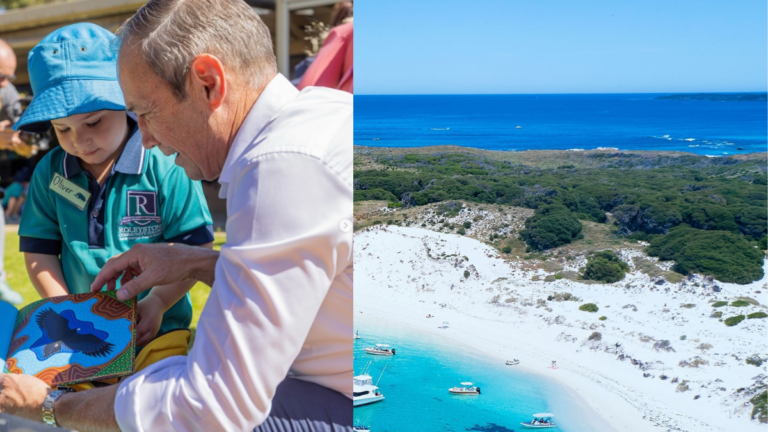
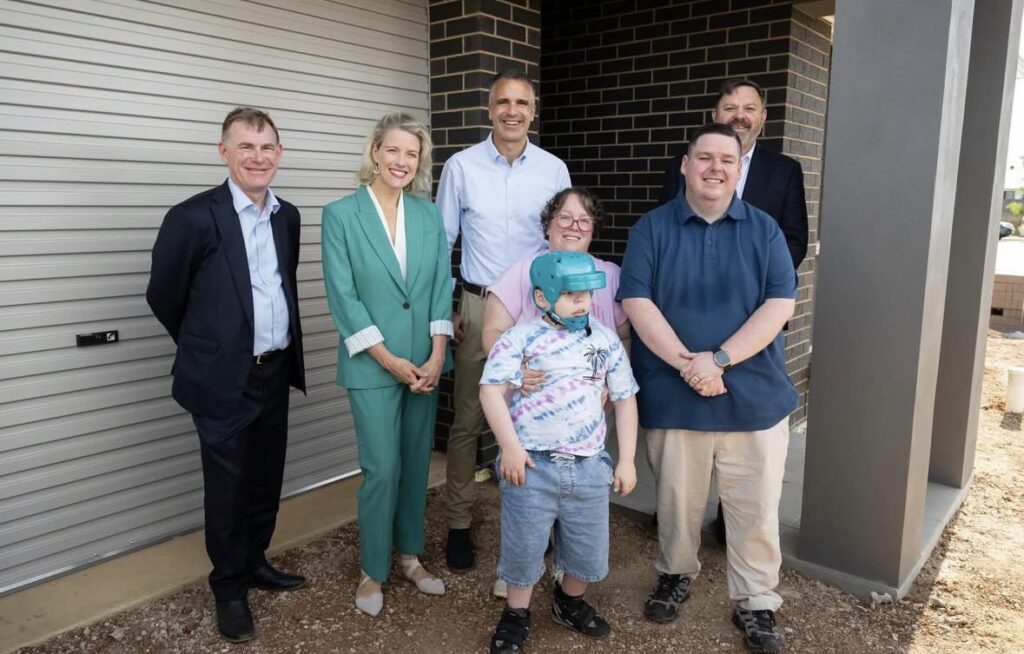
Now in its third year, the initiative makes overnight school camps on the island more accessible, offering eligible families savings of more than $150 per child for a three-night stay. Schools in low-income areas can receive up to 100 per cent subsidy for accommodation, bike hire from Pedal & Flipper Hire, and educational tours delivered by the Rottnest Voluntary Guides Association.
“Rottnest Island is iconically Western Australian, and I’m pleased that school students from across the State will have the opportunity to experience a school camp on the island,” Tourism Minister Reece Whitby said.
“Families with students participating in the program are saving more than $150 for a three-night camp. The Cook Government is proud to be able to offer the program again in 2026 and is just another way we’re providing targeted cost-of-living relief for WA families.”
Education Minister Sabine Winton emphasised the benefits for students beyond cost savings. “School camps on Rottnest Island give students the opportunity to build new friendships, experience different environments, and create lasting memories,” she said.
“The island offers so many opportunities to learn about the natural environment, our cultural history, as well as our military and maritime heritage. This initiative makes overnight camps more affordable, and I encourage eligible schools to apply for this unique opportunity in 2026.”
Fremantle MLA Simone McGurk added that the island’s infrastructure and educational programs make it an ideal setting for school groups. “Rottnest Island is one of Western Australia’s favourite holiday spots enjoyed every year by hundreds of thousands of locals as well as interstate and international visitors,” she said.
“The island is set up for school camps, with a range of accommodation options and opportunities for school children to learn about the island’s history.”
Since the program began, students from Perth and regional areas including the Wheatbelt, Mid West, Gascoyne, Goldfields-Esperance, and Great Southern have attended camps of up to three nights, benefiting from a combination of subsidies and discounts that make the experience more affordable.
Support our Journalism
No-nonsense journalism. No paywalls. Whether you’re in Australia, the UK, Canada, the USA, or India, you can support The Australia Today by taking a paid subscription via Patreon or donating via PayPal — and help keep honest, fearless journalism alive.
New South Wales is set to become the first jurisdiction in the country to end the use of good character references in the sentencing of convicted criminals.
The government will introduce a bill this week to amend the state’s sentencing laws. The amendment will stop people submitting references of their “good character” to lobby for more lenient sentences.
References attesting to the convicted criminal’s prospects for rehabilitation and their likelihood of reoffending will still be permitted.
The move acknowledges the potential re-traumatisation faced by victims when unsubstantiated character references from family and friends are submitted for consideration during sentencing hearings. Victims have stated the process can make them think the courts don’t care about or take seriously the harm they have experienced.
It’s a decision that aligns with expert evidence, so might other states follow suit?
What is a good character reference, exactly?
Good character references are letters presented to a court during the process of sentencing someone convicted of a crime. They are often provided by friends and family members, though references may be sought from employers, priests and other respected community members.
The references usually describe how the person is a valuable family or community member, has a good work record and no criminal history.
Character evidence can help a judge more fully understand the person they are sentencing and decide if they can be rehabilitated. Demonstrated prior good character enables the judge to ensure the appropriateness and fairness of the sentence.
Such references have promoted people being sentenced for sexual assault and rape as having “high moral values”, being a “kind-hearted, loving father” or having a “good work ethic”.
Since 2009, NSW hasn’t allowed good character references for child sexual offenders who used their position of influence to gain access to victims.
But two sexual abuse victims, Harrison James and Jarad Grice, have led a campaign for more substantial change. Called Your Reference Ain’t Relevant, the campaign protested against convicted child sex offenders being able to produce glowing character references to reduce their sentence.
What does the evidence say?
The Australian Law Reform Commission has been reviewing justice responses to sexual violence. In its 2025 final report, the commission said it received submissions describing the provision of good character references for convicted sexual violence offenders as a “problematic” practice.
The commission noted the NSW Sentencing Council was reviewing the use of character evidence. It said the outcome of the NSW process would inform any suggestions for future reforms at a national level.
The New South Wales Sentencing Council’s report was released on February 1. It recommended legislation to prevent the court from using evidence that goes solely to a finding of good character. This legislation, however, may permit the court to consider other relevant evidence in sentencing. https://www.youtube.com/embed/9ROzF1Vtyko?wmode=transparent&start=0
The report states “there is no settled definition of what good character is, or what it reflects”. The council said the concept “has been criticised as being vague and incoherent […] lacking a settled definition”.
The council’s recommendations go beyond child sexual offences. They apply to all convicted offenders.
And for NSW at least, they would overrule a 2001 High Court decision allowing character to be considered in providing “some leniency” in sentencing.
Will other states do the same?
A report by the Queensland Sentencing Advisory Commission into the sentencing of sexual assault and rape recommended that some types of good character evidence be limited. It said good character evidence should only be used to assist the court in deciding on the rehabilitation or the potential recidivism of the convicted criminal.
The report recommended that courts have the option, depending on the nature or seriousness of an offence, to disregard character references when determining sentencing.
In September 2025, Queensland parliament passed legislation addressing the recommendations. The references can now only be considered to inform a judge’s assessment of the likelihood of rehabilitation or recidivism.
But as some frontline sexual assault services submitted in consultations this left open ways to circumvent the rule. Friends and family could provide references mentioning the prospects of rehabilitation.
So while there’s some movement on the issue in Queensland, if the NSW recommendations are to lead the way in nationwide reform, the task will not be easy.
Significant differences exist between the states. This is because apart from Commonwealth offences, criminal law remains primarily a state matter. This has produced divergent offence labels, maximum penalties and sentencing regimes.
Even on the specific issue of character evidence in child sexual offence proceedings, there are substantial differences in laws and contexts across the country.
These contrasts in approach to legislating the use of good character references in sentencing will, as observed by the Law Council of Australia, likely result in similar cases attracting different outcomes in different states.
But sometimes it just takes one bold attempt at reform to inspire action in others. As advocates have succeeded in NSW, it’s likely others will attempt similar change. State and territory governments have been put on notice.
No-nonsense journalism. No paywalls. Whether you’re in Australia, the UK, Canada, the USA, or India, you can support The Australia Today by taking a paid subscription via Patreon or donating via PayPal — and help keep honest, fearless journalism alive.
While US toy giant Mattel has not released an “Albanese Barbie” despite online claims and viral videos suggesting otherwise.
The so-called “Albanese Barbie” is an AI-generated parody circulated by Australian political satire page The Snark Tank. Promoted with the slogan “pull my strings for empty promises”, the video caricatures Prime Minister Anthony Albanese and lampoons government positions on issues including Palestine and Israel, border security, national unity, housing affordability and hate speech.
Image Surce: The Australia Today
The fictional doll is described as “looking strong in the box and collapsing on contact with reality”, complete with a mock “blame the previous government” button.
The satire has surfaced amid heightened political and regulatory scrutiny of artificial intelligence platforms. Earlier this year, Albanese criticised Elon Musk’s social media platform X, accusing it of failing to uphold community standards and allowing its AI chatbot, Grok, to enable the creation of abhorrent sexual images without the consent of those depicted.
Image Surce: The Australia Today
Opposition Leader Sussan Ley backed the Prime Minister’s concerns, pledging bipartisan support for tougher action against AI systems that generate non-consensual images.
Following the criticism, X restricted Grok’s image generation and editing functions, limiting them largely to paying subscribers. Australia’s eSafety Commissioner, Julie Inman Grant, later announced an investigation into a surge in sexually explicit AI-generated material involving both adults and children, warning that technology companies have the capacity — and responsibility — to prevent misuse of their products.
Image Surce: The Australia Today
Concerns about AI manipulation have also been sharpened by earlier incidents involving the Prime Minister’s likeness. In 2025, a deepfake version of Albanese appeared in scam advertisements targeting Australians on YouTube, portraying him with an American accent and promising users earnings of up to $35 an hour through an alleged AI-driven cryptocurrency trading scheme.
The ads redirected viewers to a website posing as Canadian broadcaster CTV and urged them to invest $400 in a platform called AUFIRST to receive supposed monthly “dividends”. Similar fake investment promotions using manipulated audio and video of Albanese have previously circulated on Facebook.
Alongside the Albanese parody, The Snark Tank has released other AI-generated satirical content, including a fictional “Penny Wong Barbie”, marketed as coming “Now With Extra Moral Superiority!”.
Support our Journalism
No-nonsense journalism. No paywalls. Whether you’re in Australia, the UK, Canada, the USA, or India, you can support The Australia Today by taking a paid subscription via Patreon or donating via PayPal — and help keep honest, fearless journalism alive.
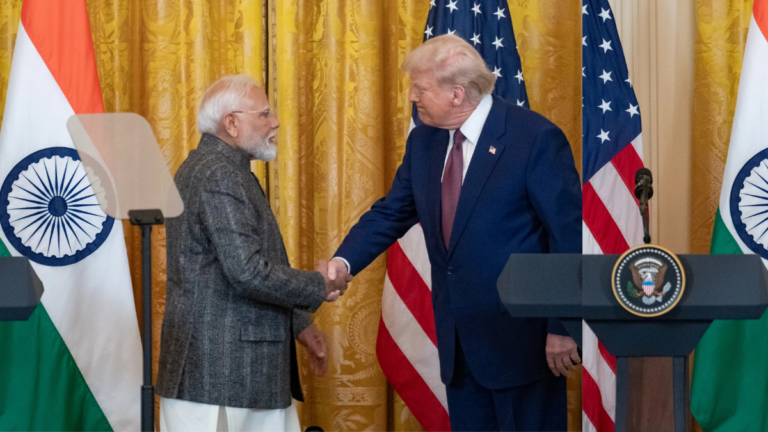
The United States and India have reached a landmark trade agreement that significantly resets bilateral economic relations, with the White House confirming the removal of an additional 25 per cent tariff on Indian imports imposed over New Delhi’s purchase of Russian oil.
The clarification, provided by a senior White House official to ANI on Monday (local time), follows an earlier announcement by Donald Trump that Washington would reduce reciprocal tariffs on Indian goods from 25 per cent to 18 per cent, effective immediately.
#WATCH | Senior White House official to ANI: U.S. will also drop the 25% additional tariff on Indian imports since India reduced purchases of Russian oil. ‘Yes, although the agreement is that India will cease, not just reduce, Russian oil purchases,” the official confirmed… pic.twitter.com/n4w4PBuhNI
The official confirmed that the removal of the additional 25 per cent tariff was conditional on India ceasing not merely reducing, its imports of Russian oil, underscoring the geopolitical stakes embedded in the agreement.
“Yes, although the agreement is that India will cease, not just reduce, Russian oil purchases,” the White House official said when asked whether the punitive tariffs would be lifted in exchange for changes to India’s energy sourcing.
Trump–Modi agreement reshapes trade and energy ties
President Trump announced the deal following a phone call with Narendra Modi, describing the Indian leader as “one of my greatest friends” and a “powerful and respected leader”.
In a post on Truth Social, Trump said the tariff reduction was granted “out of friendship and respect” for Modi and claimed the Prime Minister had agreed to stop buying Russian oil and significantly increase purchases from the United States.
"It was an Honor to speak with Prime Minister Modi, of India, this morning… He agreed to stop buying Russian Oil, and to buy much more from the United States and, potentially, Venezuela. This will help END THE WAR in Ukraine" – President Donald J. Trump 🇺🇸 pic.twitter.com/RD7PZ8S16z
“He agreed to stop buying Russian Oil, and to buy much more from the United States and, potentially, Venezuela,” Trump wrote, linking the agreement to broader efforts to end the war in Ukraine.
Trump also said India would move to reduce tariffs and non-tariff barriers against US products to zero and commit to purchasing more than US$500 billion worth of American energy, technology, agricultural products, coal and other goods over time.
Modi welcomes tariff relief for ‘Made in India’ goods
Prime Minister Modi welcomed the announcement, confirming that Made in India products will now face a reduced US tariff of 18 per cent, a move expected to strengthen India’s export competitiveness.
“Wonderful to speak with my dear friend President Trump today. Delighted that Made in India products will now have a reduced tariff of 18%,” Modi wrote on X, thanking Trump on behalf of India’s 1.4 billion people.
Wonderful to speak with my dear friend President Trump today. Delighted that Made in India products will now have a reduced tariff of 18%. Big thanks to President Trump on behalf of the 1.4 billion people of India for this wonderful announcement.
Modi said cooperation between the world’s two largest democracies would unlock vast opportunities for mutually beneficial growth and described Trump’s leadership as vital for global peace, stability and prosperity.
White House links tariff rollback directly to Russian oil
While the tariff reduction itself was welcomed by New Delhi, the White House confirmation added a critical caveat: India must fully cease Russian oil purchases, not simply scale them back.
The additional 25 per cent tariff had been imposed specifically in response to India’s increased imports of discounted Russian crude following Moscow’s invasion of Ukraine. The White House clarification makes clear that Washington expects a decisive shift in India’s energy strategy as part of the trade reset.
The confirmation removes ambiguity around the scope of the deal and signals that energy policy is now firmly embedded within the broader India–US economic and strategic relationship.
India gains competitive edge over regional exporters
Under the new tariff structure, India now enjoys lower US tariffs than most of its major regional export competitors, giving it a strategic advantage in global supply chains.
India’s 18 per cent tariff compares favourably with:
Indonesia at 19 per cent
Pakistan at 19 per cent
Bangladesh and Vietnam at 20 per cent
China, which continues to face tariffs of 34 per cent
Trade experts say the shift positions India as a more attractive alternative manufacturing and export hub, particularly in sectors such as textiles, pharmaceuticals, electronics and engineering goods.
Indian ministers hail ‘historic turning point’
India’s External Affairs Minister S. Jaishankar welcomed the agreement, saying it would boost job creation, spur economic growth and strengthen India’s Make in India initiative.
“This will create more jobs, spur growth and promote innovation in both economies,” Jaishankar said, describing a strong economic relationship as the foundation of the broader strategic partnership.
Commerce and Industry Minister Piyush Goyal called the deal a “historic turning point” that would unlock unprecedented opportunities for farmers, MSMEs, entrepreneurs and skilled workers.
“This is not just a trade deal — it will reshape India–US relations and accelerate our journey towards Viksit Bharat 2047,” Goyal said, noting the agreement would also deepen access to advanced US technologies.
Commerce Secretary Rajesh Agrawal said the agreement would unlock shared prosperity, innovation and growth for two natural democratic partners.
Strategic timing amid global trade realignment
The India–US agreement comes within days of New Delhi concluding a landmark free trade agreement with the European Union, reinforcing India’s push to diversify trade partnerships amid global economic uncertainty.
Taken together, the tariff reductions, energy commitments and market access concessions represent one of the most significant recalibrations of India–US economic ties in recent years.
President Trump framed the deal as proof of decisive leadership, saying: “Prime Minister Modi and I are two people that GET THINGS DONE.”
With the White House now confirming the removal of the additional 25 per cent tariff tied to Russian oil purchases, the agreement signals a deeper integration of trade, energy and geopolitics — reshaping the trajectory of India–US relations at a critical moment for the global economy.
Support our Journalism
No-nonsense journalism. No paywalls. Whether you’re in Australia, the UK, Canada, the USA, or India, you can support The Australia Today by taking a paid subscription via Patreon or donating via PayPal — and help keep honest, fearless journalism alive.
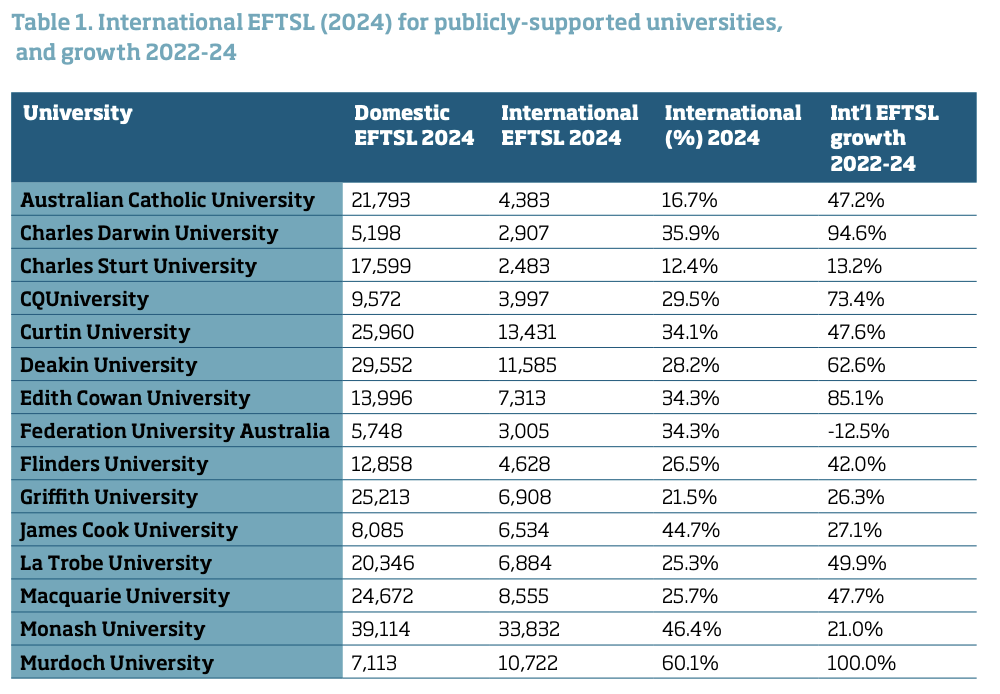
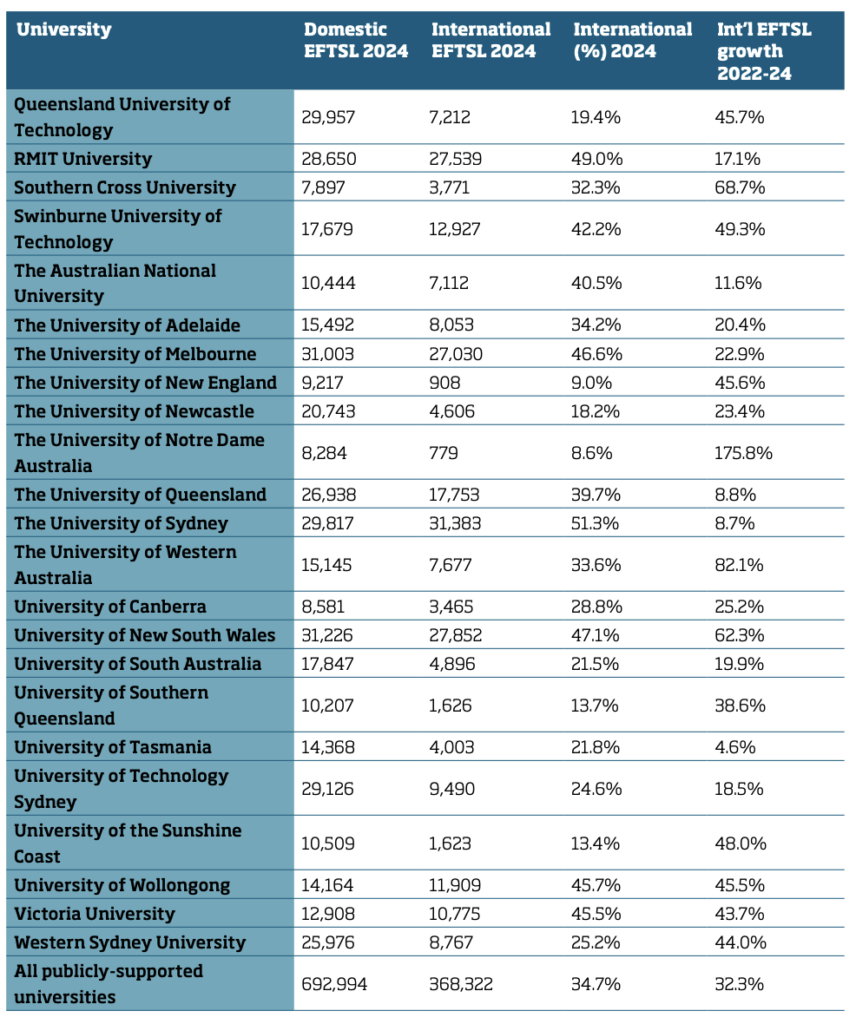
A sharp rise in first-year dropouts among international university students is triggering fresh scrutiny of Australia’s international education model, and intensifying a political fight over whether the student visa program is being used as a backdoor work pathway.
New analysis by Menzies Research Centre drawing on federal higher education data shows the national first-year attrition rate for commencing international undergraduate students at publicly supported universities climbed to 17.4% in 2023, up from 9.7% in 2018, equivalent to 14,873 students leaving their university within 12 months of starting.
The most striking figure sits at the top of the table: Central Queensland University (CQ University) recorded a 57.2% first-year attrition rate in 2023, meaning well over half of commencing international undergraduates discontinued their studies at the institution within their first year.
What the data shows, university by university
The same dataset highlights large differences across the sector, with some institutions recording attrition rates above one in three, while others sit below five per cent.
Here are selected first-year international undergraduate attrition rates for the 2023 cohort (with the number of students “attriting” reported alongside):
University
2023 first-year attrition rate
Number attriting (2023 cohort)
CQ University
57.2%
616
Flinders University
44.3%
354
The University of New England
45.5%
71
Australian Catholic University
34.4%
878
La Trobe University
33.5%
712
Federation University Australia
36.1%
238
Southern Cross University
37.6%
221
RMIT University
9.9%
828
Monash University
4.8%
402
The University of Melbourne
3.6%
140
The University of Sydney
4.7%
213
University of New South Wales
4.1%
233
The pattern is not simply “more international students equals more dropouts”. Some of the largest universities by international cohort size still record low first-year attrition, while several smaller or regional providers with capital-city campuses record far higher rates.
Why are first-year dropouts rising after arrival?
There is no single explanation, and intent is difficult to prove from attrition data alone. But the main drivers being debated publicly fall into three overlapping categories:
1) Cost-of-living pressure and accommodation shortages
Universities and student advocates have long pointed to financial stress, rental scarcity and the need to work more hours as major factors affecting student persistence — particularly for those arriving into a post-pandemic housing market with high rents and tight vacancy.
CQ University itself has acknowledged these pressures. In its 2023 annual report, the institution said international student retention had declined since the pandemic for reasons including personal financial difficulties, employment opportunities and accommodation shortages, alongside heightened competition and students switching providers early in their studies.
That account matters because it highlights a non-political reality: even “genuine” students can be pushed out of study by an expensive landing and a weak support network, especially in the first semester.
2) Provider-switching incentives and “course-hopping” allegations
A more contentious explanation is that a growing share of students may be enrolling at a university to secure entry, then discontinuing study once they have met minimum requirements — transitioning onto a bridging visa while seeking a cheaper pathway, often in vocational education.
A January 2026 report by the Menzies Research Centre argues the scale, concentration and timing of dropouts “strongly suggest” increasing misuse of the student visa system, particularly at lower-cost providers and capital-city branch campuses.
The report points to a steep increase in people on bridging visas while applying for a new student visa, reporting 107,274 temporary migrants in mid-2025 in that category, up from 13,034 in 2023 and describes long processing timelines that may allow extended work periods while applications and reviews progress.
Separately, public reporting has pointed to the growing load on the Administrative Review Tribunal, including official processing-time reporting indicating migration reviews can take long periods to finalise.
3) Education agent practices and aggressive “poaching”
A third factor sits between student intent and system design: recruitment practices.
The federal government has been moving to restrict incentives that encourage agents to shift students between providers soon after arrival. In 2024, Education Minister Jason Clare outlined legislative changes aimed at improving integrity in the international education sector, including measures that enable a ban on commissions paid to education agents for onshore student transfers.
More recently, reporting indicates the government has moved to prohibit commissions for certain onshore transfers, with the rule flagged to take effect from 31 March 2026.
The policy logic is straightforward: if money changes hands when a student switches providers, it can create an industry incentive to churn students and increase the risk that study becomes secondary to migration or work outcomes.
What CQ University’s 57.2% figure does — and doesn’t — prove
The CQ University rate is so high it has become a headline statistic — but it still needs careful handling.
Attrition measures leaving a provider, not necessarily leaving higher education entirely. Some students may transfer to another university, move into VET, defer for health or family reasons, or return home. Others may have arrived with unrealistic expectations about workload, English-language demands, or the balance between study and earning capacity.
What the data does demonstrate is concentration: a national problem that is disproportionately severe at a subset of institutions. That concentration is central to the policy debate, because it suggests that targeted interventions — rather than blunt caps or reputational damage to the entire sector — may be more effective.
It also highlights risk for universities themselves. International students are a major funding source across Australian higher education, and abrupt disengagement in the first year can destabilise teaching plans, student support services and finances — especially for universities that rely on rapid growth in international commencements.
At the same time, Australia’s international student presence is large and growing. Federal higher education statistics show a significant rise in onshore overseas students between 2023 and 2024, and overseas students make up a sizable share of onshore enrolments. That reality increases the stakes: if first-year dropouts keep rising, the reputational and regulatory consequences could extend well beyond a handful of providers.
The policy direction now appears to be moving on two tracks at once:
Integrity controls, aimed at reducing churn and discouraging visa gaming (including changes affecting agent commissions and provider transfers).
Student welfare and retention, focused on housing stress, financial hardship and early intervention support — the factors universities themselves cite as key drivers of discontinuation.
Whether Canberra can strike a balance, tightening loopholes without punishing legitimate students, will shape the next phase of Australia’s international education story.
Support our Journalism
No-nonsense journalism. No paywalls. Whether you’re in Australia, the UK, Canada, the USA, or India, you can support The Australia Today by taking a paid subscription via Patreon or donating via PayPal — and help keep honest, fearless journalism alive.
Victoria’s state election campaign has begun not with a new policy, but with unease — and that unease is increasingly visible in the posture of Premier Jacinta Allan as she confronts a markedly different opponent in Opposition Leader Jess Wilson.
After more than a decade in power, Labor is accustomed to framing elections as referendums on stability versus risk. What appears to have unsettled the government this time is not simply Liberal policy, but the political style, pace and credibility of its new leader — a factor that has begun to alter media narratives, voter engagement and internal Labor rhetoric.
A campaign launched on the defensive
Premier Allan’s speech to Labor colleagues this week formally launched the government’s election campaign, but its tone revealed more anxiety than confidence. Rather than unveiling a bold forward agenda, the Premier returned to familiar terrain: warnings of Liberal cuts, budget “black holes” and associations with political extremes.
Central to her argument was a claimed $11.2 billion funding gap under a Wilson-led government — a figure the Opposition strongly disputes. Allan’s repeated emphasis on cuts, chaos and instability echoed Labor’s long-running strategy against previous Liberal leaders. The difference this time is that Wilson does not neatly fit the caricature Labor has relied upon.
I have to call out the Liberal Leader’s hypocrisy when I see it. If you’re a political leader turning up to Pride on one day, and cosying up to One Nation on the next, then you’re not an ally. You’re just a Liberal. pic.twitter.com/j8H40gcfmK
The Premier’s rhetoric has sharpened noticeably since Wilson assumed the Liberal leadership in November. References to “misinformation conventions”, “cosying up to One Nation”, and a “Liberal National One Nation circus” mark a deliberate attempt to frame Wilson early as ideologically risky rather than reformist.
Yet critics argue the aggression reflects a government struggling to recalibrate its message against a leader who is neither internally divisive nor easily dismissed.
The misinformation flashpoint
That tension escalated during recent bushfire events, when the Premier suggested Wilson had remained in her office rather than visiting affected communities — a claim the Opposition labelled false and misleading.
Media scrutiny quickly followed, with journalists and community leaders questioning the accuracy of the assertion. Wilson countered by detailing her regional engagements and accusing the Premier of politicising disaster response.
The episode proved significant not because of its scale, but because of what it revealed. For a government that has often criticised misinformation in federal politics, the suggestion that it may have mischaracterised the Opposition Leader’s actions proved damaging. It reinforced a growing perception that Labor, under pressure, is leaning into attack rather than precision.
That tension spilled into a public dispute over bushfire management and Country Fire Authority (CFA) funding, further sharpening the contrast between the two leaders. The flashpoint came after the release of the CFA’s annual report, which Jess Wilson said exposed inconsistencies between the government’s public assurances and the reality facing frontline services during an active fire season.
Wilson accused the Premier of failing to be “honest with Victorians” about resourcing levels, arguing that communities and volunteers deserved clarity at a time when bushfire risks were intensifying across regional Victoria.
Premier Jacinta Allan strongly rejected the claims, accusing the Opposition of politicising natural disasters and misrepresenting CFA funding. The government maintains that overall emergency management funding has increased and says operational pressures during fire events should not be conflated with budget cuts. However, the exchange has fuelled wider media scrutiny, with commentators questioning whether Labor’s messaging aligns with official documents.
The spat has become emblematic of the broader campaign dynamic: Wilson leveraging transparency and regional credibility to build momentum, while Allan is forced onto the defensive, reinforcing perceptions of a government under pressure as bushfire season collides with an increasingly contested election year.
Political analysts note that such moments carry heightened risk late in a government’s lifecycle, when credibility — not just policy — becomes decisive.
Why Jess Wilson is gaining traction
Wilson’s rise has disrupted established assumptions about Victoria’s electoral dynamics. At 34, she represents generational change in a state where political leadership has long been dominated by older figures with deep factional roots.
Her approach has been markedly different from her predecessors. Rather than launching wholesale ideological battles, Wilson has focused on cost-of-living pressures, regional infrastructure, public safety and transparency — issues polling suggests resonate strongly in outer suburban and regional seats.
She has also embraced visibility. Frequent regional visits, direct media engagement and disciplined messaging have allowed her to project energy and accessibility, particularly in contrast to a government weighed down by record debt, infrastructure overruns and public sector fatigue.
Crucially, Wilson has avoided internal conflict. After years of Liberal leadership churn, her early consolidation of party unity has denied Labor one of its most effective attack lines.
Media tone and polling pressure
Recent media coverage reflects this shift. While Allan once enjoyed largely managerial scrutiny, reporting has increasingly focused on Labor’s vulnerabilities: falling primary vote, dissatisfaction over crime, frustration with service delivery, and exhaustion after 11 years of single-party rule.
Polling shows Labor’s primary support declining, particularly in mortgage-stressed outer suburban electorates. These are precisely the areas Wilson has targeted, framing the election as a choice between renewal and stagnation rather than ideology.
The Premier’s own campaign speech acknowledged headwinds — record debt, infrastructure blowouts and community concern over safety — but offered few new policy commitments to counter them. Instead, the emphasis was on defending Labor’s record and warning against change.
That strategy, analysts argue, risks underestimating an electorate increasingly open to listening to an alternative — even if it remains cautious about embracing it.
A contrast in leadership styles
The emerging contest is less about left versus right than about continuity versus change. Allan represents institutional experience and policy continuity; Wilson represents disruption, clarity and responsiveness.
Where the Premier leans on scale and incumbency, the Opposition Leader leans on relatability and pace. Where Labor emphasises fear of cuts, Wilson emphasises accountability and delivery.
The Premier’s intensified attacks suggest she recognises this contrast — and the danger it poses. Political veterans note that governments typically escalate rhetoric when they sense narrative control slipping.
An election still Labor’s to lose — but no longer routine
Labor remains the favourite. The Liberals must reclaim 16 seats to form government — a formidable task rarely achieved in Victoria. But the certainty that once surrounded Labor’s re-election has softened.
What has changed is not just polling, but momentum. Wilson has reframed the contest from inevitability to possibility. That alone marks a shift.
For Allan, the challenge is strategic as much as electoral: whether to continue prosecuting a campaign rooted in warning and attack, or to reassert leadership through renewed policy ambition and disciplined messaging.
As the campaign unfolds, one thing is clear. Victoria’s election is no longer a formality. And the Premier’s increasingly combative posture suggests she knows it.
Support our Journalism
No-nonsense journalism. No paywalls. Whether you’re in Australia, the UK, Canada, the USA, or India, you can support The Australia Today by taking a paid subscription via Patreon or donating via PayPal — and help keep honest, fearless journalism alive.
“I am humbled by this award and grateful to have worked alongside so many dedicated people across Australia’s transport and logistics sectors over many years,” Fiji Airways managing director and chief executive Paul Scurrah said after being appointed a Member of the Order of Australia (AM) in the 2026 Australia Day Honours.
Mr Scurrah is among 160 Australians recognised with the AM this year for his significant service to Australia’s transport, logistics and freight sectors. He has spent more than two decades leading large-scale organisations through periods of transformation, with a focus on safety, operational resilience, workforce engagement and customer service.
“Throughout his career, he has helped strengthen supply chain capability, modernise logistics operations, improve safety performance and support essential services that underpin economic activity and community wellbeing,” Fiji Airways said.
“His work has contributed to improved industry standards and ensured critical freight and logistics networks continued to operate reliably during times of disruption.”
Fiji Airways chairman Nalin Patel said the honour reflected both Mr Scurrah’s legacy in Australia and the leadership he now brings to Fiji’s national airline.
“Paul’s appointment as a Member of the Order of Australia is a well-deserved recognition of his contribution to industries fundamental to national and regional connectivity,” Mr Patel said.
“The Board is proud to have a leader of his calibre guiding Fiji Airways. His international experience and values-based leadership continue to strengthen the airline and position it for long-term, sustainable growth.”
Since joining Fiji Airways, Mr Scurrah has set the airline’s strategic direction, reinforced a strong safety culture and placed people and service excellence at the centre of operations. Under his leadership, the airline is pursuing its goal of becoming the World’s Happiest Airline while maintaining reliable global connectivity for Fiji.
“These industries are about connecting people, businesses and communities, and any contribution I’ve made has been the result of strong teams working with a shared sense of purpose. I am equally proud of the work we are doing at Fiji Airways, serving Fiji and connecting our islands to the world,” Mr Scurrah said.
In total, 680 people were recognised in the general division of the 2026 Australia Day Honours, including 10 Companions of the Order of Australia (AC), 38 Officers (AO), 160 Members (AM) and 472 recipients of the Medal of the Order (OAM).
The list includes people recommended to the Governor-General by the Council of the Order of Australia and organisations responsible for recommending meritorious, distinguished, and conspicuous honours.
“On my second Australia Day as your Governor-General, I am delighted to announce the Australia Day 2026 Honours List.” The Governor-General said.
“Throughout 2025, we celebrated the 50th anniversary of the Australian honours system and the people who for the past half century have epitomised the best of Australia.”
“The qualities and accomplishments of this year’s honourees reflect Australia’s values for service, community, kindness, curiosity, tenacity and care.”
“Congratulations to everyone recognised in the Australia Day 2026 Honours List. As the list so vividly showcases, so many Australians continue to give the best of themselves across many endeavours, in the interest of others. It is rewarding to see an increase in the number of awards, which reflects more nominations and recognition of the many Australians who inspire the best in all of us.”
Recipients of the honours will attend investiture ceremonies at Government House in their respective states and territories in the coming months, where they will formally receive the insignia of their awards.
Support our Journalism
No-nonsense journalism. No paywalls. Whether you’re in Australia, the UK, Canada, the USA, or India, you can support The Australia Today by taking a paid subscription via Patreon or donating via PayPal — and help keep honest, fearless journalism alive.
A warning from a former Canadian premier and renewed remarks by Australia’s former Prime Minister have converged this week to revive a difficult but increasingly urgent debate: whether Western democracies are confronting extremism consistently — or only when it suits domestic politics.
Ujjal Dosanjh, a former Canadian minister of health and the onetime attorney-general and premier of British Columbia, urged Australia to avoid what he described as Canada’s long-standing failure to deal honestly with extremist ideologies. In a post on X, Dosanjh said both Canada and Australia needed to pay close attention to Islamism and extremist Khalistani movements, warning that history had already shown the cost of complacency.
Dosanjh pointed directly to the 1985 bombing of Air India Flight 182, also known as the Kanishka bombing — the deadliest act of aviation terrorism before the September 11 attacks. The Boeing 747 exploded off the coast of Ireland after a bomb planted by Khalistani extremists detonated mid-air, killing all 329 people on board, most of them Canadian citizens. It remains the single largest mass murder in Canadian history.
More than four decades on, Dosanjh argued, Khalistani extremism should not be dismissed as a relic of the past. He warned that networks sympathetic to the ideology continue to operate openly in Canada, often shielded by official rhetoric that frames separatist activism as protected political expression.
His remarks comes ata time when former prime minister Scott Morrison has reignited a national conversation about extremism and religious oversight. In a series of public comments and a lengthy Facebook post, Morrison called on Islamic leaders to strengthen self-regulation mechanisms to prevent radicalisation, saying such steps were necessary to protect both Muslim Australians and the broader community.
Morrison rejected claims that his comments blamed Islam for terrorism, describing those accusations as a “straw man”. He said expectations placed on Islamic leadership were no different from those applied to other faiths, and warned that calls for unity were hollow if they avoided confronting how radicalisation takes root in Australia.
Speaking at an antisemitism conference in Israel earlier this week, Morrison said religious leaders needed stronger structures to help “keep the wolves from their flock”. Treating extremism as taboo, he argued, only allowed dangerous ideologies to flourish unchecked.
While acknowledging that extremism exists across the political spectrum — including on the far right and far left — Morrison maintained that Islamist extremism required “explicit and specific attention” because of its role in recent attacks and its global reach.
Dosanjh’s intervention adds a sharp international dimension to that debate. Critics say Canada’s repeated defence of Khalistan-related protests as free speech — even when some demonstrations are accused by India of glorifying violence or threatening diplomats — illustrates how selectively liberal democracies apply their principles. Indian Prime Minister Narendra Modi has raised these concerns directly with Canadian leaders, only to be met with assurances about freedom of expression and denials of official tolerance for violence.
Support our Journalism
No-nonsense journalism. No paywalls. Whether you’re in Australia, the UK, Canada, the USA, or India, you can support The Australia Today by taking a paid subscription via Patreon or donating via PayPal — and help keep honest, fearless journalism alive.
Race Discrimination Commissioner has reignited the Australia Day debate, arguing January 26 should not be celebrated because of its links to colonisation and the dispossession of First Nations people.
Indian-origin Giridharan Sivaraman made the comments during an SBS podcast discussion with Reconciliation Australia chief executive Karen Mundine and journalist John Paul Janke, saying the national day had become deeply divisive and wrapped in what he described as an “undercurrent of nationalism”.
He said debate around January 26 often descended into a “love it or leave it” mindset, where dissenting voices were shut down.
“On that day you’re expected to kiss the flag or go away,” he said, describing his own feelings as conflicted.
Mr Sivaraman said the date raised fundamental questions about what Australians were commemorating, arguing the country needed more honest discussion about its history.
“We’re all on stolen land, and we actually need truth-telling about the history of this land.”
He also criticised Australia’s institutions, claiming they were designed to privilege colonialism and “whiteness”, and said this legacy continued to shape whether people felt safe and represented within systems of power.
In comments later published by The Saturday Telegraph, Mr Sivaraman said he supported changing the date of Australia Day, arguing it had been “co-opted” by white supremacists.
He said January 26 marked the beginning of colonisation, which led to forced removals from Country, massacres, child removals and other injustices suffered by Aboriginal and Torres Strait Islander peoples.
“If our goal is a harmonious society, it would be a mark of respect to accept this is not a day to celebrate and choose a day that is less divisive.”
His remarks came against a backdrop of heightened tensions this year, with the anti-immigration ‘March for Australia’ held on January 26, and an attempted terror attack at an Invasion Day rally in Boorloo/Perth, where a device was thrown into a crowd of about 2,500 people, including children and Elders. The device failed to detonate.
The comments have drawn sharp criticism from conservative commentators.
Sky News host Freya Leach accused the commissioner of focusing on diversity and anti-racism training instead of practical skills, while fellow host James Macpherson called on Prime Minister Anthony Albanese to remove him, arguing his remarks undermined social cohesion.
Attorney-General Michelle Rowland defended Australia Day as a chance to “celebrate everything that unites us as a nation”, while Opposition legal affairs spokesperson Andrew Wallace labelled Mr Sivaraman’s comments “ill-informed”.
“To suggest Australia’s institutions are biased against people because of the colour of their skin is an outrageous slur,” Mr Wallace said, urging the commissioner to reconsider his remarks.
Support our Journalism
No-nonsense journalism. No paywalls. Whether you’re in Australia, the UK, Canada, the USA, or India, you can support The Australia Today by taking a paid subscription via Patreon or donating via PayPal — and help keep honest, fearless journalism alive.
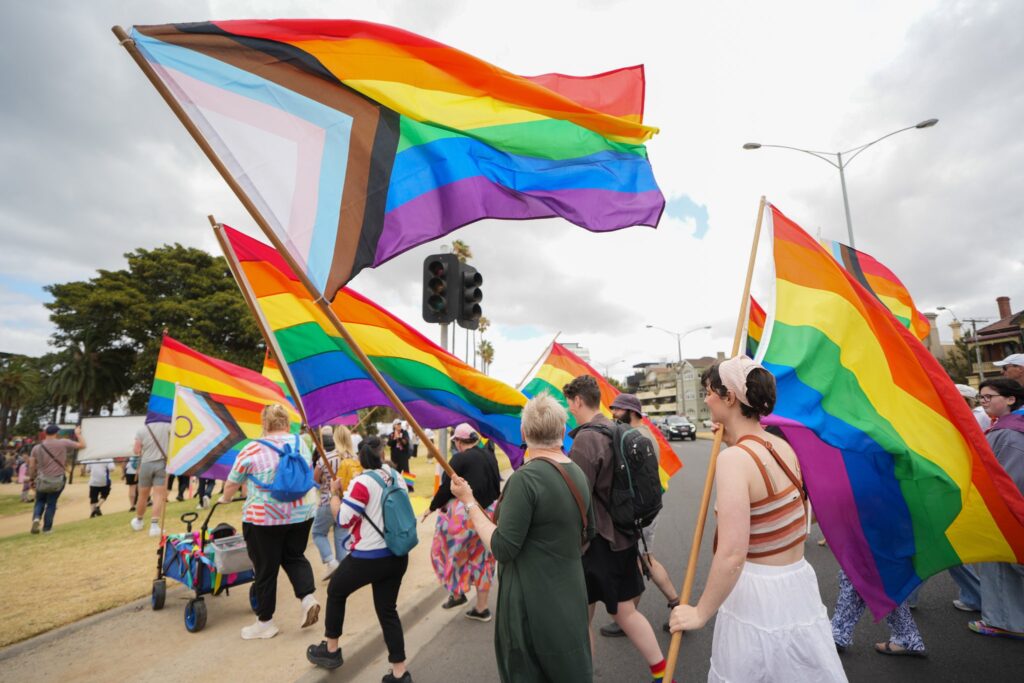
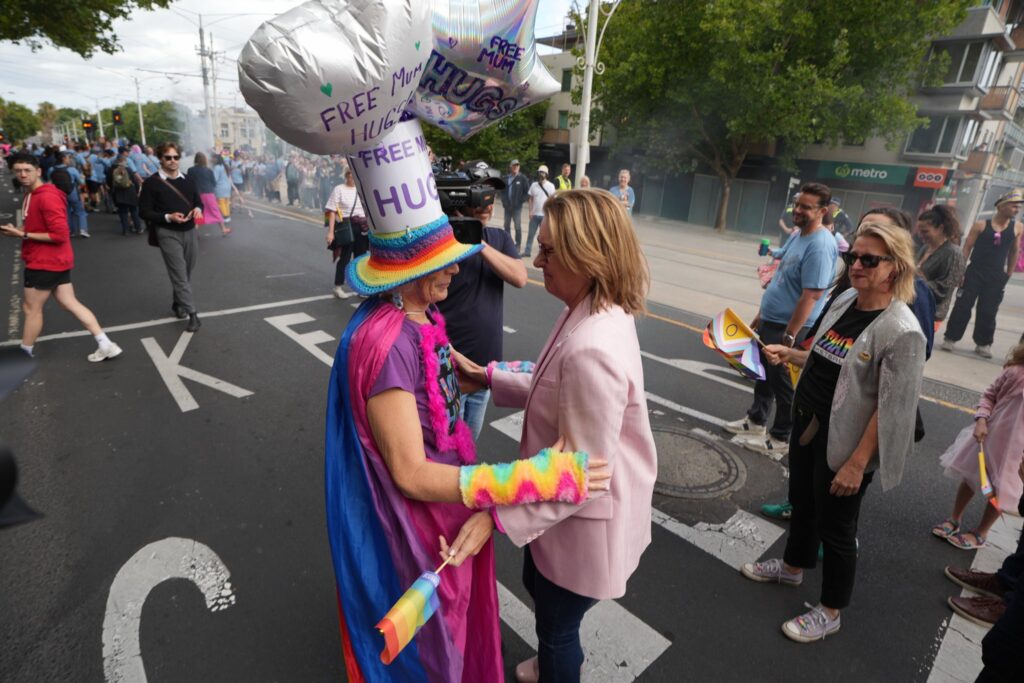
Victoria’s Labor Government has declared equality for LGBTIQA+ communities “non-negotiable” as Premier Jacinta Allan prepares to march alongside tens of thousands of Victorians at the 31st annual Midsumma Pride March.
With a record 28,000 people turning out last year, organisers expect an even bigger crowd in 2026, backed by $275,000 in state government funding.
Happy Pride to our LGBTIQA+ community. Proud to stand with you today and every day. pic.twitter.com/Y2hLWXW8NC
The Premier said the government was “proud to march alongside community and allies”, framing support for LGBTIQA+ Victorians as central to Labor’s identity.
“Supporting LGBTIQA+ communities in their struggle for equality is part of the soul of this Labor Government,” Ms Allan said, adding that equality in Victoria “is not negotiable under Labor”.
She pointed to a series of reforms delivered by the state, including a world-first apology for historical homophobic laws, the banning of conversion therapy, the legalisation of same-sex adoption and changes to make birth certificates fairer for trans and gender diverse people.
Image Source: Jacinta Allan/X
The government has also provided record funding for Pride events and LGBTIQA+ services and strengthened protections against vilification crimes — legislation the Premier noted was opposed by the Liberals when passed in 2025.
As debates over gender and sexuality intensify globally, Ms Allan aimed at what she described as rising hypocrisy and hard-right politics, warning that homophobia and transphobia remain active threats to progress in Victoria.
“If you’re a pollie turning up to Pride while cosying up to One Nation, Victorians see what you’re all about,” she said.
“Homophobia and transphobia are threats to LGBTIQA+ progress in this state — and so is hypocrisy.”
Image Source: Jacinta Allan/X
The Premier said her government would not waver by courting ultra-right support, promoting anti-trans figures to leadership roles, or placing Pride funding “on the chopping block” through spending cuts.
Minister for Equality Vicki Ward said the Pride March was more than a celebration, describing it as a vital moment for connection and solidarity across the state.
“Today’s march is an important opportunity for Victoria’s diverse rainbow communities to come together, celebrate who they are, and connect with each other — and for all Victorians to show their support, respect and love,” Ms Ward said.
Image Source: Jacinta Allan/X
The Midsumma Pride March is expected to once again fill Melbourne’s inner south with colour, music and political messages, as the government seeks to underline its stance that visibility, protection and equality for LGBTIQA+ Victorians remain core priorities.
Support our Journalism
No-nonsense journalism. No paywalls. Whether you’re in Australia, the UK, Canada, the USA, or India, you can support The Australia Today by taking a paid subscription via Patreon or donating via PayPal — and help keep honest, fearless journalism alive.
Pakistan has announced it will boycott its group-stage match against India at the upcoming ICC Men’s T20 World Cup, triggering a major political and sporting standoff just days before the tournament begins.
In a statement posted on X, the Government of Pakistan said it had approved the national team’s participation in the tournament but confirmed that the side “shall not take the field” for the match scheduled against India on February 15, 2026. No reason was provided for the decision.
The announcement comes despite Pakistan having named its squad last month for the tournament, which will be hosted jointly by India and Sri Lanka from February 7 to March 8. Pakistan and India are drawn together in Group A, alongside Namibia, the Netherlands and the United States.
The Government of the Islamic Republic of Pakistan grants approval to the Pakistan Cricket Team to participate in the ICC World T20 2026, however, the Pakistan Cricket Team shall not take the field in the match scheduled on 15th February 2026 against India.
The International Cricket Council responded within hours, warning that “selective participation” undermines the integrity of global tournaments and urging the Pakistan Cricket Board to find a resolution.
“Selective participation is difficult to reconcile with the fundamental premise of a global sporting event where all qualified teams are expected to compete on equal terms per the event schedule,” the ICC said, adding that such a move was “not in the interest of the global game or the welfare of fans worldwide”.
The ICC said it was awaiting formal communication from the PCB but stressed that all member nations share responsibility for the successful delivery of the tournament.
The decision has revived tensions surrounding the World Cup, following last month’s controversy involving Bangladesh. The ICC removed Bangladesh from the tournament after the Bangladesh Cricket Board refused to send its team to India, citing security concerns. After a three-week review process involving independent security assessments, the ICC concluded there was no credible threat and rejected requests to relocate matches. Scotland was subsequently named as Bangladesh’s replacement.
Pakistan’s stance comes despite a history of poor results against India in the T20 World Cup. The two sides have met eight times in the competition, with India holding a dominant 7–1 record. India also swept Pakistan in last year’s Asia Cup, including a comprehensive win in the final.
On the field, India enters the tournament in strong form, having recently defeated New Zealand 4–1 in a five-match T20I series. Pakistan, meanwhile, face mounting scrutiny after inconsistent performances and internal uncertainty ahead of the World Cup.
India is scheduled to open their campaign against the USA on February 7, followed by a match against the Netherlands on February 12. Pakistan’s opening fixture is against Namibia.
The ICC warned that Pakistan’s decision could have long-term consequences, noting that selective participation risks setting a precedent that could damage the neutrality and fairness of future events.
While the ICC acknowledged the role of governments in national policy decisions, it said it expects the PCB to “explore a mutually acceptable resolution that protects the interests of all stakeholders”.
With the tournament just days away, uncertainty now hangs over one of cricket’s most high-profile rivalries, raising fresh questions about the intersection of politics and sport on the global stage.
Support our Journalism
No-nonsense journalism. No paywalls. Whether you’re in Australia, the UK, Canada, the USA, or India, you can support The Australia Today by taking a paid subscription via Patreon or donating via PayPal — and help keep honest, fearless journalism alive.
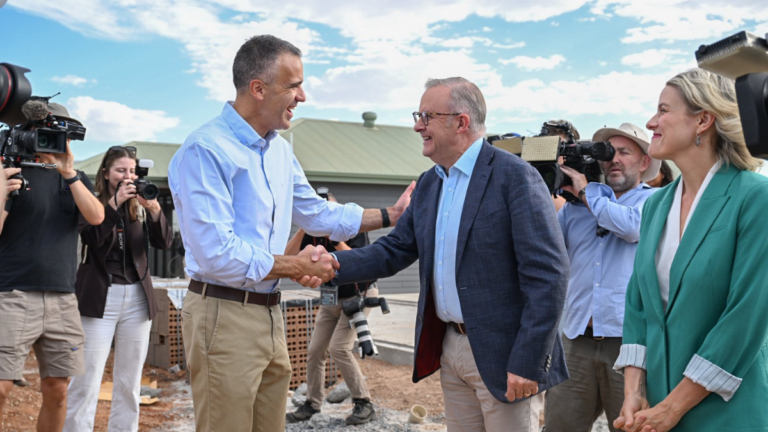
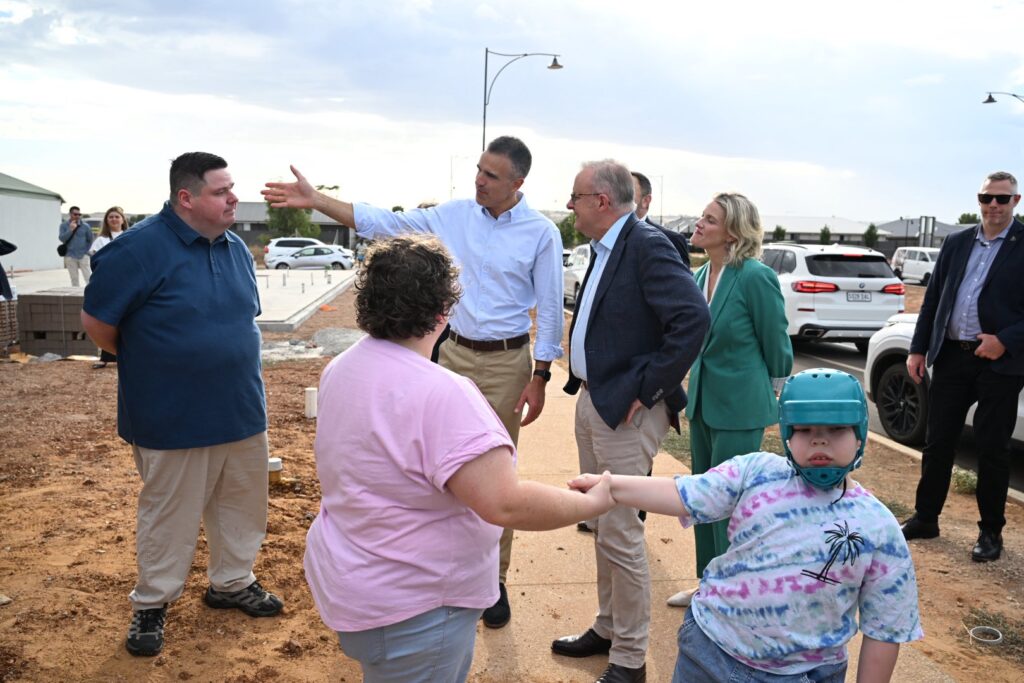
Labor governments in Canberra and Adelaide have struck an $801.5 million housing deal that will unlock 17,000 new homes in South Australia, with nearly 7,000 reserved for first home buyers — a move Prime Minister Anthony Albanese says is about making the great Australian dream achievable again.
“We’re determined to make it easier for young people and first home buyers to achieve the dream of owning a home,” Mr Albanese said, announcing the agreement with South Australian Premier Peter Malinauskas.
“Thanks to this agreement, thousands more South Australians will be getting the keys to their very own home.”
Image Source: Albo/X
The deal is a major milestone in the Albanese Government’s 2025 election commitment to help deliver 100,000 homes for first home buyers nationwide, in partnership with state governments and industry.
Under the South Australian agreement alone, 6,877 homes will be built specifically for first-home buyers, while a further 10,000 homes will be unlocked for other buyers, significantly boosting overall housing supply.
Premier Peter Malinauskas said the agreement would take the state’s housing push “to a new level”, building on what he described as record construction activity already underway.
“Our Government is throwing everything at building more homes for South Australians,” he said.
“There are already more homes under construction in the state than at any point in history — and now, thanks to our agreement with the Albanese Government, this work is about to reach a new level.”
Image Source: Albo/X
At the centre of the package is $667.9 million in Commonwealth support to unblock key infrastructure and development bottlenecks.
This includes a $300 million concessional loan to expand water infrastructure in Adelaide’s northern suburbs, directly unlocking around 4,000 homes, and a $50 million three-year concessional loan to deliver a first-home-buyer-only precinct of 400 homes within the Playford Alive urban renewal project.
A further $184 million concessional loan will support the delivery of more than 1,700 homes across multiple urban renewal sites in metropolitan Adelaide, while $133.6 million in matched grant funding from the Commonwealth and the state will deliver 750 additional dwellings for first-home buyers through other programs.
Construction will be fast-tracked, with the first homes expected to begin construction in 2026–27 and first home buyers moving in from 2027–28.
Image Source: Albo/X
Federal Housing Minister Clare O’Neil said the agreement put first home buyers “at the heart” of Labor’s housing agenda. “We said we’d make it easier for first home buyers to get into home ownership and that’s exactly what this deal does,” she said.
“When we build more homes, first home buyers benefit.”
Ms O’Neil said the South Australian deal was built on Labor’s broader $45 billion national housing plan, which includes planning and environmental approval reforms, incentives to train more tradies through Free TAFE and apprenticeship payments, the delivery of 55,000 social and affordable homes, and schemes such as the 5 per cent Deposit Scheme and the new Help to Buy shared-equity program.
South Australia’s Minister for Housing and Urban Development, Nick Champion, said the state’s policy momentum had positioned it to be the first to strike a deal under the Albanese Government’s 100,000-homes commitment.
“Numerous industry groups celebrate the Malinauskas Labor Government as a national leader in housing policy,” he said.
“That momentum, combined with the Albanese Government’s investment, will mean even more homes for South Australian first home buyers.”
While Labor used the announcement to draw a contrast with the Coalition — which opposed several of the government’s housing supply measures — Mr Albanese acknowledged the scale of the challenge ahead. “We know the housing market is tough,” he said.
“But we want Australians to know that Labor has got your back.”
Both governments conceded more work remains to address what they describe as a housing crisis “generations in the making”, but said the South Australian deal marked a significant step forward for first home buyers and the state’s housing supply.
Support our Journalism
No-nonsense journalism. No paywalls. Whether you’re in Australia, the UK, Canada, the USA, or India, you can support The Australia Today by taking a paid subscription via Patreon or donating via PayPal — and help keep honest, fearless journalism alive.
Carlos Alcaraz created history at Melbourne Park by winning the Australian Open men’s singles title, defeating Novak Djokovic 2–6, 6–2, 6–3, 7–5 in the final. The victory delivered Alcaraz his first Australian Open crown and marked one of the most significant milestones of his young career.
With the win, Alcaraz became the youngest men’s player in the Open Era to complete a career Grand Slam, having now claimed titles at the Australian Open, French Open, Wimbledon and US Open before the age of 23. The achievement placed him among a select group of players to have won all four major titles and highlighted the speed with which he has risen to the top of the sport.
Pic: X – @carlosalcarez
After losing the opening set, Alcaraz lifted his intensity and consistency, gradually asserting control with his aggressive baseline play, athletic court coverage and composure in key moments. He absorbed pressure in the fourth set and closed out the match with authority, showcasing maturity beyond his years on the sport’s biggest stage.
Despite the defeat, Novak Djokovic’s run to the final was another testament to his remarkable longevity and competitiveness. Reaching yet another Australian Open final further added to his unparalleled record at the tournament and reinforced his standing as one of the greatest players in tennis history. Djokovic once again demonstrated his ability to challenge the very best, even against a new generation of elite contenders.
Pic: X – @AustralianOpen
The final was widely viewed as a clash between generations, with Alcaraz’s victory symbolising a pivotal moment in men’s tennis. For Alcaraz, the Australian Open title represents a historic breakthrough and confirmation of his status as a dominant force of the present and future. For Djokovic, the journey to the final served as further evidence of his enduring excellence at the highest level of the game.
No-nonsense journalism. No paywalls. Whether you’re in Australia, the UK, Canada, the USA, or India, you can support The Australia Today by taking a paid subscription via Patreon or donating via PayPal — and help keep honest, fearless journalism alive.
Canada’s long-standing double standard on separatism has been thrust into the open, after senior leaders condemned outreach by Alberta independence activists to Washington while Ottawa continues to defend far more militant separatist activity on its own soil as free expression.
The contradiction emerged this week after reports that leaders of the Alberta Prosperity Project met several times with US State Department officials, seeking discussions on Alberta’s future should a referendum on separation ever succeed. The revelations sparked outrage among some provincial leaders, with British Columbia Premier David Eby branding the meetings “treason”.
There is an old word to describe going to a foreign power and asking for their assistance in breaking up a sovereign country — it’s treason.
“To go to a foreign country and ask for assistance in breaking up Canada — there’s an old-fashioned word for that, and that word is treason,” Eby said ahead of a first ministers’ meeting.
Yet Prime Minister Mark Carney and Alberta Premier Danielle Smith stopped short of endorsing that characterisation, limiting their response to calls for Washington to respect Canadian sovereignty. Carney said he had told US President Donald Trump to do exactly that, before shifting focus back to trade and infrastructure cooperation.
Canada expresses concern over US support to separatists in the country. PM Carney says US to respect Canada's sovereignty.pic.twitter.com/TvJVMp0ZzN
The fierce language directed at Alberta separatists has sharpened scrutiny of Ottawa’s tolerance — and at times defence — of Khalistan activism in Canada, including protests New Delhi has accused of glorifying violence and threatening Indian diplomats. For years, Canadian governments have framed such activity as protected political expression, even as India has repeatedly warned it crosses into extremism.
That contrast has not gone unnoticed internationally. Indian Prime Minister Narendra Modi has directly raised concerns with Canadian leaders, citing demonstrations that promote secessionism and, in some cases, celebrate the assassination of former Indian prime minister Indira Gandhi. Ottawa has responded by stressing freedom of speech, while insisting violence is not condoned.
The Alberta case, however, has triggered markedly different rhetoric at home. Ontario Premier Doug Ford called the reported US meetings “unacceptable” and “unethical”, warning that any separatist government — whether in Alberta or Quebec — would be a disaster for the country. New Brunswick Premier Susan Holt said she was confident Albertans would ultimately choose unity.
Smith defended her refusal to demonise the movement, arguing that about a million Albertans feel alienated after what she described as years of federal hostility towards the province’s resource sector. “I’m not going to marginalise a million of my fellow citizens when they have legitimate grievances,” she said.
Lawyer Jeff Rath, who attended the Washington meetings on behalf of the Alberta Prosperity Project, rejected suggestions of wrongdoing, saying the group was made up of private citizens with no authority to strike deals. US officials also downplayed the contacts, describing them as routine meetings with civil society and insisting no commitments were offered.
Constitutional lawyer Jeffrey Rath, a leading figure in Alberta’s independence movement receives a standing ovation at tonight’s independence rally. pic.twitter.com/B02dXpzcWs
Canada’s Criminal Code defines treason narrowly, focusing on violence or assisting an enemy at war — a threshold legal experts say the Alberta meetings clearly do not meet. Still, the political reaction has exposed a deeper inconsistency.
While separatist advocacy linked to India is routinely defended in Canada as free speech, even when it strains diplomatic ties, domestic separatist flirtations with Washington have prompted accusations of betrayal. As premiers and the prime minister urge unity at home, critics say Ottawa is now facing the consequences of a principle it has long applied selectively: that separatism is acceptable — until it threatens Canada itself.
Support our Journalism
No-nonsense journalism. No paywalls. Whether you’re in Australia, the UK, Canada, the USA, or India, you can support The Australia Today by taking a paid subscription via Patreon or donating via PayPal — and help keep honest, fearless journalism alive.
India’s economy continues to stand out on the global stage with robust growth and low inflation, a combination few major economies are currently showing. In the latest data, India’s GDP is expanding at around 7.4%, making it the fastest‑growing major economy in the G20. At the same time, India’s annual inflation remains unusually low at about 1.3%, reflecting restrained price pressures even amid strong demand.
In contrast, Australia’s inflation has climbed to about 3.8%, significantly higher than India’s, while its economic expansion remains modest at around 2.1% in recent growth data. This highlights a stark difference in macroeconomic dynamics between the two nations: India is growing faster with relatively low price increases, while Australia faces inflation alongside slower growth. The higher inflation reflects ongoing pressures in housing, services, and energy, even as growth remains slower than in emerging economies.
— Indian Tech & Infra (@IndianTechGuide) March 2, 2024
Other advanced economies are also facing challenges. Across the Atlantic, the United States economy is growing more slowly than India, with real GDP expanding at around 2–2.5%, depending on the period measured. Annual inflation in the US has eased but remains higher than India’s, at around 2.7%, reflecting ongoing moderate price pressures across consumer goods and services.
The United Kingdom also faces inflation above target, with annual consumer prices rising by about 3.4%, while its GDP growth is subdued compared with India and the US, generally running in the low single digits. The combination of still elevated inflation and modest growth presents a different challenge for the UK’s economy.
China’s economy is also showing signs of moderation, with GDP growth around 4.5%, while inflation remains low at roughly 1.8%, reflecting weaker domestic demand and ongoing adjustments in its property and manufacturing sectors.
This comparison highlights India’s unique position in the G20, achieving strong growth without triggering high inflation, while other major economies, including China, face either slower growth or rising price pressures.
Support our Journalism
No-nonsense journalism. No paywalls. Whether you’re in Australia, the UK, Canada, the USA, or India, you can support The Australia Today by taking a paid subscription via Patreon or donating via PayPal — and help keep honest, fearless journalism alive.
Australia’s preparations for the upcoming ICC Men’s T20 World Cup have suffered a significant setback, with captain Pat Cummins ruled out of the tournament. Steve Smith was overlooked despite a strong run of form, as a young and evolving squad continues to struggle in challenging subcontinent conditions against the Pakistan national cricket team, just weeks out from the global event.
Cummins will miss the World Cup as he continues his recovery from a persistent back injury that has sidelined him for much of the Australian summer. Selectors have opted not to rush the fast bowler back, instead calling up Sydney Sixers left-armer Ben Dwarshuis as a replacement. The decision brings an end to hopes that Cummins could return in time for the tournament in Sri Lanka and India.
Former Test opener Matt Renshaw, who made his T20 international debut in Pakistan earlier this week, has also been added to the 15-man squad, replacing Matt Short. Despite mounting calls for his inclusion following a blistering Big Bash League cameo, Smith was not selected, with the panel prioritising balance and adaptability over experience.
Selector Tony Dodemaide said Dwarshuis was chosen to suit the expected conditions. He told the left-armer’s ability to swing the ball, use variations and contribute down the order made him a strong fit for slow, spin-friendly pitches. Dodemaide also pointed to Renshaw’s versatility, noting his recent performances across formats and his value as a left-handed middle-order option as Australia prepares for heavy spin conditions in the pool stages.
Australia’s squad reshuffle comes as the team continues to grapple with the realities of subcontinent cricket. The largely youthful T20 side has found consistency hard to come by in its current series against Pakistan, losing the opening match and struggling to control games in conditions that favour slower bowlers and tactical batting. Against Pakistan’s disciplined bowling attack and sharp fielding, Australia’s batters have been exposed by variable bounce, slower surfaces and a lack of experience in pacing T20 innings on the subcontinent.
The struggles have raised questions about Australia’s readiness heading into the World Cup, particularly with several senior players either unavailable or returning from injury. While the squad boasts power hitters such as Glenn Maxwell and Marcus Stoinis, the team has at times appeared vulnerable against spin and under pressure during the middle overs — a phase that often decides matches in Sri Lanka and India.
Australia will play one further T20 international against Pakistan as part of the series, offering a final opportunity to adjust combinations and tactics before the World Cup begins. The tournament campaign opens against the Ireland national cricket team in Colombo on February 11, with conditions expected to test the squad’s adaptability from the outset.
With Cummins unavailable, Smith left out, and several younger players still finding their feet, Australia enters the World Cup in transition — hopeful that exposure against Pakistan and time in subcontinent conditions will harden a squad aiming to peak when it matters most.
Australian T20 World Cup squad: Mitch Marsh (capt), Xavier Bartlett, Cooper Connolly, Tim David, Ben Dwarshuis, Cameron Green, Nathan Ellis, Josh Hazlewood, Travis Head, Josh Inglis, Matt Kuhnemann, Glenn Maxwell, Matt Renshaw, Marcus Stoinis, Adam Zampa.
Support our Journalism
No-nonsense journalism. No paywalls. Whether you’re in Australia, the UK, Canada, the USA, or India, you can support The Australia Today by taking a paid subscription via Patreon or donating via PayPal — and help keep honest, fearless journalism alive.
Melbourne’s long-awaited $15 billion Metro Tunnel has entered its most significant phase, with new timetables coming into effect today and more than 1,200 additional train services each week beginning operation across parts of the metropolitan network.
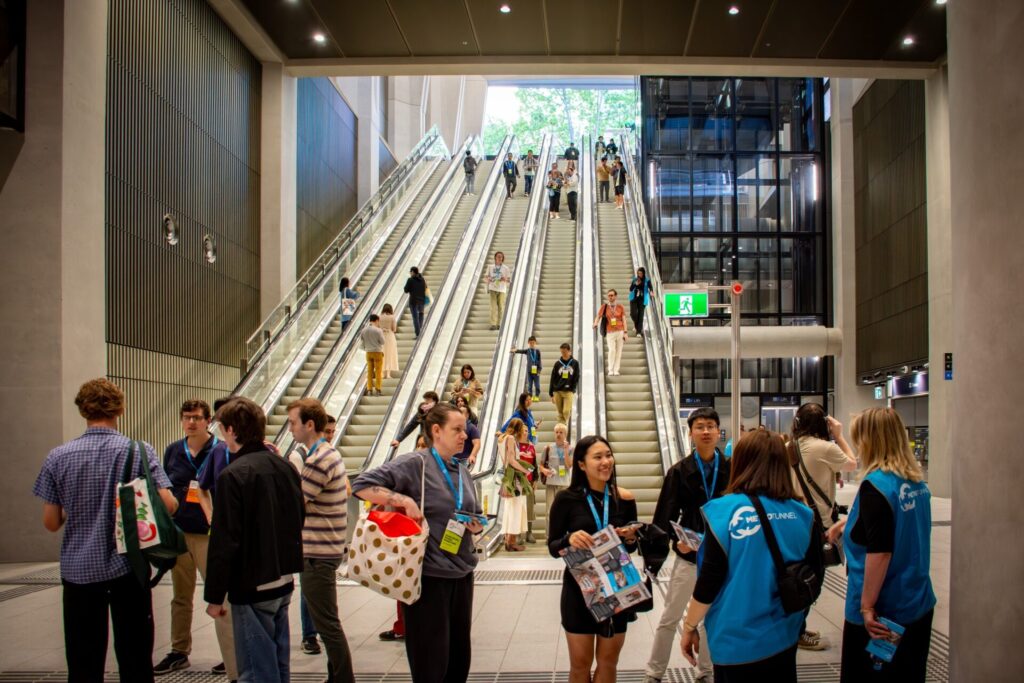
The change, described by the Victorian government as “the big switch”, marks the first time the tunnel is being fully utilised since it opened in November with limited services running through its five new underground stations. From today, multiple lines are operating under redesigned timetables intended to ease congestion and improve reliability as trains are permanently re-routed through the new tunnel.
Metro Tunnel has been in development since it was first announced in 2015, and its full activation represents the biggest reshaping of Melbourne’s rail network in decades.
Image Source: Metro Trains
One of the most significant changes affects the Frankston line, which, from today, runs exclusively through the City Loop. Frankston services will now travel via Parliament, Melbourne Central, Flagstaff, Southern Cross and Flinders Street, rather than continuing to Werribee or Williamstown.
The line now has its own dedicated City Loop tunnel, supported by a new timetable designed to improve reliability. A further 12 weekly services are expected to be added once level crossing removals on the line are completed later this year.
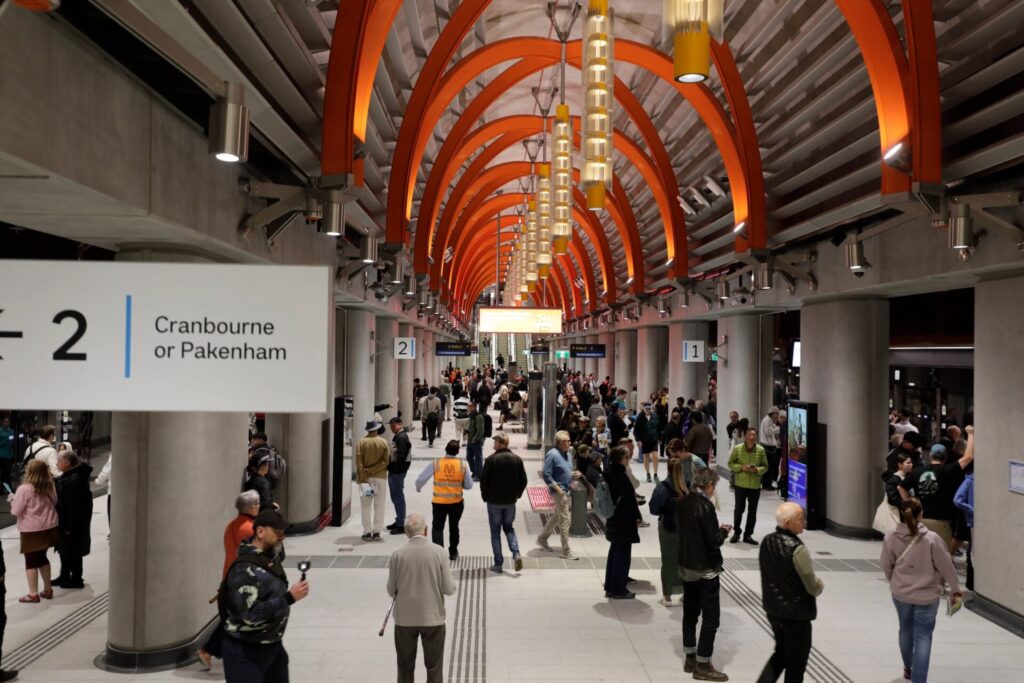
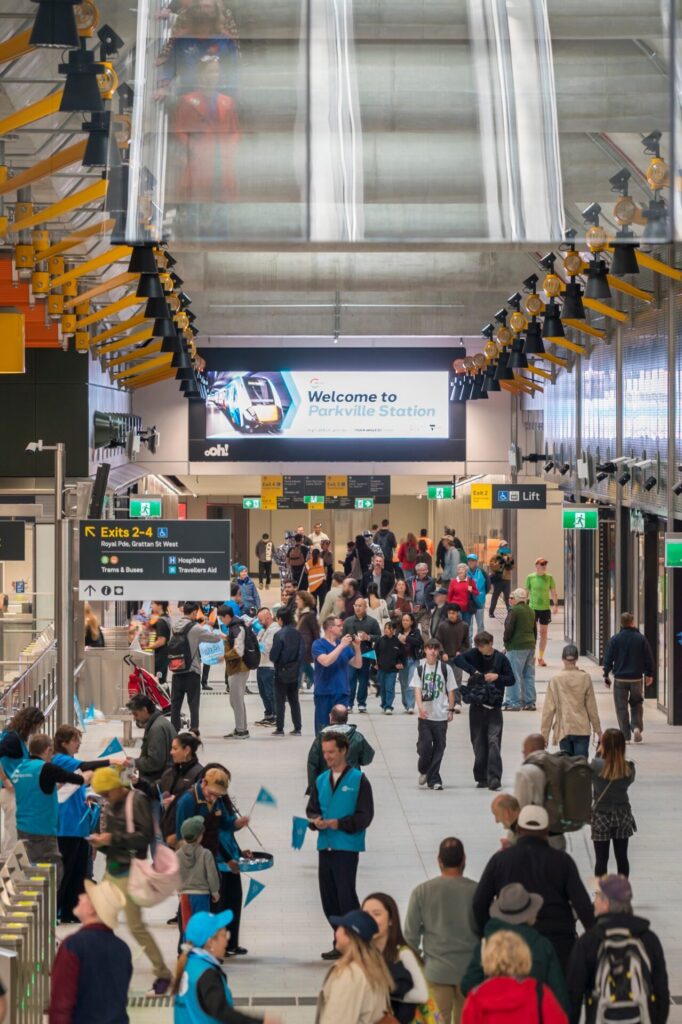
Major changes have also been introduced on the Cranbourne and Pakenham lines, which are now permanently routed through the Metro Tunnel. Trains on these lines run via the new underground stations at Town Hall, State Library and Parkville before connecting to the Sunbury line in Melbourne’s west. The reconfiguration is aimed at increasing capacity in the city’s fast-growing south-east and west, particularly during peak periods.
Image Source: Metro Trains
In the west, Werribee and Williamstown line services no longer interline with Frankston trains. These lines now operate independently, with revised timetables intended to reduce flow-on delays caused by congestion elsewhere in the network.
The Sunbury line has also been fully integrated into the Metro Tunnel for the first time, providing direct access to the new inner-city stations and improving cross-city travel without the need to change trains in the CBD.
Changes extend beyond metropolitan Melbourne, with adjustments to some V/Line services and connecting bus routes in both regional Victoria and inner-city areas to align with the new train schedules.
Image Source: Metro Trains
Despite the scale of the changes, not all commuters will see immediate benefits. Transport Users Association spokesperson Daniel Bowen said the impact of the “big switch” would vary significantly depending on where people live.
“They’ve really pitched it as ‘the big switch’. It is for some lines, but for other lines there’s actually no change at all,” Mr Bowen said. He noted that passengers in Melbourne’s eastern and north-eastern suburbs would see little immediate improvement, with some lines still running at 30- to 40-minute intervals during off-peak times, particularly on Sunday mornings.
Mr Bowen also highlighted differences in operating hours across the new stations, with Town Hall set to be the only Metro Tunnel station open during night network hours, while Parkville station, located near major universities and hospitals, will close overnight.
The new timetables have been years in the making. Department of Transport Victoria executive director of modal planning Stuart Johns said his team had gone through “hundreds if not thousands of iterations” to finalise the schedules.
He said the work had taken more than three years and relied on detailed modelling to anticipate population growth and travel demand well into the future.
“We’re looking right out to the 2050s to understand how Melbourne and Victoria will grow,” Mr Johns said, adding that the goal was to design a system that could be scaled up over time.
Image Source: Metro Trains
Mr Johns said data alone was not enough, explaining that practical judgement played a key role in shaping the final product. He said the first service locked into the new timetable was a Gippsland line train timed to ensure students could reliably reach school each morning.
After more than a decade of planning and construction, Mr Johns described today’s rollout as a rare career moment. “You only get one go at something like this in your entire career,” he said. “It’s been years of effort and years of excitement.”
While the government has promised that the Metro Tunnel will reduce crowding and improve reliability across the network, transport advocates say further upgrades will still be needed to deliver consistent, high-frequency services across all lines. For now, today’s switch represents the most substantial change to Melbourne’s train network in a generation, reshaping how hundreds of thousands of passengers move through the city each week.
Support our Journalism
No-nonsense journalism. No paywalls. Whether you’re in Australia, the UK, Canada, the USA, or India, you can support The Australia Today by taking a paid subscription via Patreon or donating via PayPal — and help keep honest, fearless journalism alive.
The Royal Australian and New Zealand College of Radiologists (RANZCR) has appointed Dr Rajiv Rattan as its new President, marking the start of a leadership term that RANZCR says will prioritise training, clinical practice and member engagement across radiology and radiation oncology in Australia and New Zealand.
Dr Rattan, a Sydney-based clinical radiologist with more than a decade of service to the College, was elected by RANZCR’s board of directors and will serve a two-year term starting 1 January 2026.
Building on a long track record of service
Dr Rattan has held several leadership roles within RANZCR, including Board Member, Dean of the Faculty of Clinical Radiology and NSW Branch Education Officer. In these roles, he helped support trainees and influence education standards, particularly through RANZCR’s Clinical Radiology Training Program and governance committees.
In accepting the presidency, Dr Rattan emphasised his commitment to strengthening the College’s role in supporting its members and advancing clinical standards. According to the organisation, he is focused on member fulfilment, resilience and innovation as central priorities for his term.
Dr Rajiv Rattan said his priorities as president are centred on advocacy, training standards and collaboration, telling members: “As your President, my vision is clear. We will continue to strongly advocate for our patients and for our profession.”
He described it as “a matter of great pride” that the College’s “training and assessment processes are amongst the best in the world.”
“We will continue to invest in training and education to ensure that our future generations continue to thrive in a world of innovation.”
RANZCR’s role in health care
Founded in 1935, RANZCR is the peak professional body representing clinical radiologists and radiation oncologists across Australia and New Zealand.
The College plays a critical role in setting standards for specialist training, professional development and clinical practice in imaging and cancer-focused therapy.
Its purpose is to “advance excellence in diagnostic, interventional and cancer care medicine” and to support practitioners throughout their careers, from early training through to ongoing professional practice.
Dr Rattan also pledged to “build on a culture of collaboration across disciplines, across borders and across the diverse communities that we serve,” while acknowledging pressure points including “the workforce pressures”, “the increasing demand for imaging as well as cancer treatment”, “the evolving models of care” and “the equity of access that we need to ensure across communities, whether a patient is in the metro or the rural or regional setting.”
He said he had seen “the strength of our community” in the way members “mentor, collaborate and celebrate each other’s successes,” and stressed member ownership of the College.
“Most importantly, I want you to be aware that this College belongs to you… Your ideas, your energy and your expertise will shape our future… All of us, we are the College.”
Training and standards at the forefront
RANZCR oversees rigorous training programmes for specialist medical practitioners, including a five-year curriculum for clinical radiology and structured pathways to fellowship status. Fellows of RANZCR (FRANZCR) are recognised as specialist radiologists and radiation oncologists, with eligibility for specialist registration in both Australia and New Zealand.
The College also sets benchmarks for clinical standards, continuing professional development and ethical practice, which are essential to maintaining high-quality diagnostic and therapeutic services across a range of healthcare settings.
Dr Rattan’s presidency begins at a time of significant technological change in imaging and cancer care, with ongoing updates to training, professional development requirements and global collaboration expected to feature prominently in RANZCR’s agenda.
His leadership will guide the organisation through developments that aim to deliver improved patient outcomes, greater educational support for specialists and continued advocacy for the radiology and oncology professions.
The College’s annual scientific meeting is scheduled for 22–24 October 2026 in Christchurch, reflecting RANZCR’s ongoing commitment to professional engagement and knowledge exchange across the region.
Support our Journalism
No-nonsense journalism. No paywalls. Whether you’re in Australia, the UK, Canada, the USA, or India, you can support The Australia Today by taking a paid subscription via Patreon or donating via PayPal — and help keep honest, fearless journalism alive.
Pauline Hanson has written to the National Disability Insurance Agency seeking an explanation over the apparent removal of the Australian flag and the Commonwealth Coat of Arms from official employee email signatures.
In a letter dated 30 January, the One Nation senator said she had been alerted to changes in NDIA email footers that no longer display national symbols, while retaining the Aboriginal and Torres Strait Islander flags.
The NDIA is the government agency responsible for delivering the National Disability Insurance Scheme (NDIS).
In her correspondence to NDIA chief executive Graeme Head AO, Senator Hanson described the move as a matter of “considerable concern” for many Australians, arguing that the agency had removed important national symbols from official communications.
She said the Australian flag and coat of arms represent “not only the Australian nation but every Australian citizen” and should be displayed prominently to foster national unity and identity.
Senator Hanson has asked the NDIA to confirm whether the national flag and coat of arms have been removed from official agency communications, to outline the agency’s position on displaying national symbols, and to detail any internal policy or ministerial direction that may have led to the change.
She also called on the agency to reassure Australians of its commitment to ensuring that official national symbols appear in government communications.
Posting on social media, Senator Hanson said she had sought a “please explain” from the NDIA and warned she would pursue the matter further if a response were not received.
“If I don’t receive a response over the next week, I’ll seek to get answers from them at Senate Estimates,” she wrote.
Email signatures circulated alongside her post show NDIA branding accompanied by the Aboriginal and Torres Strait Islander flags and an Acknowledgement of Country, without the Australian national flag or Commonwealth crest.
The NDIA has not publicly commented on the matter at the time of publication.
The issue comes amid ongoing political debate over the use of national symbols and cultural acknowledgements within government agencies, particularly those funded by taxpayers.
Senate Estimates hearings allow parliamentarians to question public service agencies directly on policy decisions, expenditure and administrative practices.
Support our Journalism
No-nonsense journalism. No paywalls. Whether you’re in Australia, the UK, Canada, the USA, or India, you can support The Australia Today by taking a paid subscription via Patreon or donating via PayPal — and help keep honest, fearless journalism alive.
National Cabinet has reached a landmark agreement to deliver record funding for public hospitals and secure the long-term sustainability of the National Disability Insurance Scheme, following a meeting in Sydney today.
The agreement commits the Commonwealth to $25 billion in additional funding for public hospitals, alongside a suite of structural reforms aimed at easing pressure on state health systems and stabilising NDIS growth, as demand continues to rise across Australia.
Record hospital funding over five years
Under the new National Health Reform Agreement Addendum, Commonwealth funding for state-run public hospitals will reach a record $219.6 billion between 2026–27 and 2030–31.
The $25 billion uplift represents three times the additional hospital funding delivered under the previous five-year agreement, reflecting growing hospital demand driven by population growth, ageing demographics, workforce shortages and rising complexity of care.
Image Source: PM&C Handout
The funding package includes:
$24.4 billion in hospital-based funding linked to estimated hospital activity over the five years
More than $600 million in additional Commonwealth investment is targeted at strengthening the public hospital system
While specific dollar amounts for each state and territory were not finalised at today’s meeting, funding will continue to be allocated under the existing activity-based funding model, which distributes Commonwealth contributions according to:
Population size
Hospital activity levels
Case complexity and service demand
How funding is expected to flow by jurisdiction
Based on historical funding shares under the National Health Reform Agreement, the largest allocations will flow to states with the highest population and hospital activity, with indicative distribution patterns as follows:
New South Wales – largest recipient due to population size and hospital throughput
Victoria – second-largest share, reflecting metropolitan and regional demand
Queensland – significant allocation tied to population growth and regional service delivery
Western Australia – higher per-capita costs due to geography and remoteness
South Australia and Tasmania – smaller absolute shares, but proportionally higher support per patient
Australian Capital Territory and Northern Territory – funding adjusted for cross-border care and remote service delivery
Final state and territory funding envelopes will be settled through bilateral agreements once hospital activity estimates are confirmed.
Reducing pressure on hospitals
The Commonwealth said the hospital funding boost will be complemented by continued investment in primary and community care, aimed at keeping patients out of emergency departments.
This includes:
137 Medicare Urgent Care Clinics
92 Medicare Mental Health Clinics
Expansion of bulk-billing incentives
Cheaper medicines under the PBS
Aged care reforms to reduce hospital admissions among older Australians
Major reforms to secure the future of the NDIS
National Cabinet also agreed on further reforms to stabilise the growth of the NDIS, acknowledging long-term cost pressures while reaffirming support for Australians with permanent and significant disability.
Key measures include:
State and territory NDIS contribution increases capped at 8 per cent from 1 July 2028, aligned with actual scheme growth
A national target to limit annual NDIS cost growth to between 5 and 6 per cent
$2 billion for the “Thriving Kids” program, matched by states, to deliver the first phase of foundational supports for children
Of the $2 billion commitment, the Commonwealth will contribute $1.4 billion, with states and territories funding the remainder.
Changes to disability supports for children
Under the reforms:
Children with permanent and significant disability, including those with high support needs related to developmental delay or autism, will remain eligible for the NDIS
From 1 October 2026, children with developmental delay or autism with low to moderate support needs will begin transitioning to Thriving Kids
Thriving Kids will be fully implemented by 1 January 2028
Children already in the NDIS before 1 January 2028 will continue under existing reassessment rules until that date.
The rollout timeline was extended following consultation with parents, clinicians, disability advocates, educators and state governments, to allow jurisdictions sufficient time to build services.
System-wide health reform
Beyond funding, the new agreement embeds reforms aimed at improving equity, efficiency and outcomes across Australia’s hospital and health system.
First Ministers said the combined health and disability reforms were necessary to ensure services remain accessible, high-quality and financially sustainable into the future.
Today’s outcomes statement has been agreed upon by all First Ministers and serves as the official record of decisions taken at the meeting.
Support our Journalism
No-nonsense journalism. No paywalls. Whether you’re in Australia, the UK, Canada, the USA, or India, you can support The Australia Today by taking a paid subscription via Patreon or donating via PayPal — and help keep honest, fearless journalism alive.
Indian tennis prodigy Jensi Kanabar has created history at Melbourne Park, becoming the first Indian female to win the Australian Open Asia-Pacific Elite 14 & Under title after a gritty three-set victory over Australia’s Musemma Cilek.
The 14-year-old staged an impressive comeback in Friday’s final, recovering from a set down to defeat the local favourite 3-6, 6-4, 6-1 in front of a partisan home crowd. Kanabar showed remarkable composure and resilience after trailing early, turning the momentum decisively in her favour as the match wore on.
With the victory, Kanabar became only the second Indian to lift the prestigious trophy, following Arnav Paparkar’s triumph in the boys’ category in 2024. Her win also marked a milestone moment for Indian women’s tennis at the junior international level.
Kanabar’s title run at the 2026 Australian Open Asia-Pacific Elite 14 & Under event was dominant from start to finish. She topped Group A in the round-robin stage with a perfect 3-0 record, winning all her matches in straight sets. Her campaign opened with a 6-4, 6-2 win over Nepal’s Shivali Gurung, followed by a 7-5, 6-4 victory against China’s Jinyu Zhou, before closing the group stage with a commanding 6-0, 6-1 win over New Zealand’s Jocelyn Ke.
Her confidence carried into the knockout rounds, where she delivered a composed performance in the semi-final against Japan’s Aoi Yoshida. Kanabar edged a tense first-set tiebreak before pulling away to secure a 7-6(3), 6-2 win and book her place in the final.
The Asia-Pacific Elite 14 & Under Trophy, launched in 2020 through a partnership between the Asian Tennis Federation and Tennis Australia, was paused during the Covid-19 pandemic before resuming in 2023. Kanabar’s victory adds to India’s growing presence in international junior tennis and highlights a strong pipeline of emerging talent.
Hailing from Junagadh in Gujarat, Kanabar is regarded as one of India’s most promising young players. She has previously held the No.1 ranking in the All India Tennis Association Girls Under-14 and Under-16 categories and, by early 2026, had already broken into the AITA women’s singles rankings.
Her rise has been marked by consistent success at both domestic and international levels. In September 2025, she won the GSPDP Asian Under-14 Junior Championship in Manila, defeating South Korea’s Lim Yerin in the final, and later made an immediate impact on the ITF junior circuit by claiming the ITF J30 Ahmedabad singles title on debut.
Kanabar has also begun transitioning to senior competition, qualifying for the main draw of an ITF W15 women’s tournament at just 14 years of age. Her Australian Open triumph is widely seen as another significant step in what is shaping up to be a promising international career.
Support our Journalism
No-nonsense journalism. No paywalls. Whether you’re in Australia, the UK, Canada, the USA, or India, you can support The Australia Today by taking a paid subscription via Patreon or donating via PayPal — and help keep honest, fearless journalism alive.
A Sydney-based Uber driver on an international student visa has been jailed after impersonating a lawyer and scamming a homebuyer out of more than $200,000 in a sophisticated property fraud.
Pardeep Pardeep, 28, an Indian national studying IT, was sentenced in Liverpool Local Court on Wednesday to two years’ imprisonment after pleading guilty to dishonestly obtaining property by deception and dealing with the proceeds of crime.
Most of the stolen money has not been recovered.
It is reported by SMH that Pardeep had initially pleaded not guilty but changed his plea on the day his contested hearing was due to begin in December. He will serve a non-parole period of 14 months, backdated to the date of his arrest, making him eligible for release in June. The court heard he was likely to be deported after serving his sentence.
The court was told the offending began in October 2024, when Pardeep obtained the details of a man who had engaged a Sydney law firm to assist with a property purchase. He then registered a nearly identical internet domain name and set up an email address closely resembling that of the firm’s principal solicitor, including an identical email signature.
Over several weeks, Pardeep exchanged emails with the victim while also registering a company with a similar name to the law firm. He opened a Westpac business account in the company’s name, appointing himself sole director and owner.
On November 13, the victim was persuaded to transfer $209,000 — including stamp duty — to the account for the home purchase. The scam was uncovered about a week later when the victim spoke directly with the real lawyer.
The court heard the victim was left under significant financial and psychological strain and has recovered only $900 of the money.
SMH reports that Pardeep’s lawyer, Ikbal Khan, argued his client should avoid full-time custody, claiming he had acted on the advice of another man and had “turned a blind eye” once the funds began arriving. Prosecutors disputed that account, telling the court police had investigated the alleged mastermind and found he was not involved.
The magistrate heard Pardeep used some of the stolen funds to buy gold bullion, posing for photographs with it and taking images of bank statements. CCTV footage showed him purchasing the gold. When questioned by police, he claimed the company was a transport business, but admitted it had no customers.
In sentencing, Magistrate Andrew Miller ordered Pardeep to repay $100,000 — the maximum restitution available in the Local Court — and said the offender had acted deliberately.
“He knew exactly what he was doing and failed to take responsibility,” Magistrate Miller said.
Support our Journalism
No-nonsense journalism. No paywalls. Whether you’re in Australia, the UK, Canada, the USA, or India, you can support The Australia Today by taking a paid subscription via Patreon or donating via PayPal — and help keep honest, fearless journalism alive.
Australian authorities are calling on schools to play a key role in protecting children as reports of forced marriage continue to climb.
The Australian Centre to Counter Child Exploitation (ACCCE), led by the AFP, says reports jumped almost 30 per cent last financial year, rising from 91 in 2023–24 to 118 in 2024–25. While the increase does not necessarily reflect a surge in offending, experts say it highlights the importance of school communities in spotting potential victims.
AFP Commander Human Exploitation Helen Schneider said school staff, parents, and students are uniquely positioned to identify subtle warning signs that may otherwise go unnoticed.
“As Australian school communities prepare to ring in a new year, it’s an exciting time for everyone involved,” Commander Schneider said.
“But in among that excitement, it’s also timely to raise awareness of the role these communities have to play in tackling the very real risk of forced marriage. It’s a crime that people often assume doesn’t happen here in Australia. But it can, and it does, it could be happening in your neighbourhood and your street.”
Forced marriage occurs when a person is married without freely and fully consenting, whether through coercion, threat, deception, or because they are incapable of understanding the nature of the marriage due to age or mental capacity. In Australia, the legal marriage age is 18, although 16- and 17-year-olds may marry with court approval, and only to an adult.
Commander Schneider described forced marriage as historically under-reported in Australia, partly due to a lack of awareness of warning signs. She said educators are often in the best position to notice changes in behaviour that could indicate a child is at risk.
“Because educators interact with their students day in and day out, they build an authentic picture of their personalities,” she said.
“This uniquely positions them to identify changes in behaviour that may seem subtle to an outsider, but could indicate a school-aged child is at risk of forced marriage.”
Indicators can include limited independence, constant monitoring by family members, concerns about overseas travel, or sudden shifts in domestic circumstances. Other warning signs are withdrawal from friends, mental health struggles such as anxiety or depression, declining school performance, fears of family violence, or older siblings who left school early or married young.
The ACCCE works with communities through its Human Exploitation Community Officer (HECO) program, engaging with schools and at-risk areas to provide guidance about rights and support services.
“People may not report this crime due to lack of awareness of their rights, distrust of law enforcement, or fear of retribution, especially when the perpetrators are family members or from their own community,” Commander Schneider said.
While most reported victims are young women and girls, forced marriage can affect anyone, regardless of religion, ethnicity, or gender. “If you suspect you, or someone you know at school, is being forced, threatened, coerced, or deceived into marriage, please do not hesitate to seek help,” she said.
Forced marriage has been illegal in Australia since 2013, with laws strengthened in 2019 to protect children under 16. It covers both legally recognised marriages and cultural or religious ceremonies, whether conducted in Australia or abroad.
No-nonsense journalism. No paywalls. Whether you’re in Australia, the UK, Canada, the USA, or India, you can support The Australia Today by taking a paid subscription via Patreon or donating via PayPal — and help keep honest, fearless journalism alive.
Health Minister Mark Butler says federal authorities are “monitoring [Nipah] very, very closely” after India confirmed fresh cases of the deadly virus, prompting heightened screening measures at airports in parts of Asia.
Speaking to ABC Radio National, Butler said Nipah did not spread like COVID-19 or influenza because it is not typically transmitted through the air. Instead, he said it usually requires “very close personal contact” and the exchange of bodily fluids — factors that can help limit wider outbreaks if containment is swift.
India has recorded two confirmed cases in the past month, with officials pointing to “timely containment” as contact tracing and monitoring ramped up. The development has sparked precautionary steps across the region, with some airports introducing extra health checks for travellers arriving from affected areas.
Butler said Australia has not changed its settings at this stage.
He told RN, adding the government would continue to track developments closely,
“We don’t have any advice at the moment to change our existing protocols for sick travellers who arrive in Australia.”
Nipah virus is a zoonotic disease, meaning it can spread from animals to humans. Global health authorities have previously linked outbreaks to fruit bats (flying foxes), with transmission occurring through contaminated food or close contact with infected people. Illness can range from fever and respiratory symptoms to severe encephalitis (brain inflammation).
The fatality rate has been reported at between 40 and 75 per cent in documented outbreaks, depending on factors such as healthcare access and the speed of detection. There is no vaccine currently available.
While the virus is considered less likely to spread widely than airborne diseases, public health experts treat any re-emergence seriously because small clusters can carry devastating consequences.
According to a release issued by the Indian Ministry of Health and Family Welfare.
The National Centre for Disease Control (NCDC) has only two confirmed cases of Nipah Virus Disease from the state of West Bengal from December last year to date.
Following confirmation of these two cases, the Government of India, in close coordination with the Government of West Bengal, promptly initiated comprehensive public health measures in accordance with established protocols.
A total of 196 contacts linked to the confirmed cases have been identified, traced, monitored, and tested. All traced contacts have been found asymptomatic and have tested negative for Nipah Virus Disease, the release read.
Enhanced surveillance, laboratory testing, and field investigations were undertaken through coordinated efforts by Indian Federal and State health agencies, ensuring the timely containment of cases. No additional Nipah Virus Disease cases have been detected so far.
The Indian Ministry of Health and Family Welfare advises the public and media to rely only on verified information released by official sources and to refrain from spreading unverified or speculative reports.
Australian authorities say they will continue to watch the situation and maintain existing border and public health processes for managing unwell travellers arriving by air.
Support our Journalism
No-nonsense journalism. No paywalls. Whether you’re in Australia, the UK, Canada, the USA, or India, you can support The Australia Today by taking a paid subscription via Patreon or donating via PayPal — and help keep honest, fearless journalism alive.
A 49-year-old Queensland man is due to appear in Brisbane Magistrates Court today after allegedly attempting to carry a large knife through airport security at Brisbane Domestic Airport.
The Australian Federal Police say the incident occurred on 10 December last year, when airport screening staff allegedly обнаружed the knife in the man’s carry-on luggage at a security checkpoint.
Security staff alerted the AFP, who attended the screening point. Police allege the man became aggressive and resisted arrest before he was detained.
AFP Detective Superintendent Anthony Conway said police worked closely with airport security to maintain safety at the airport.
“Brisbane Airport’s screening processes are strict for a reason and there is a zero-tolerance policy for anyone attempting to take prohibited items onto a flight,” he said.
“Airport security and the AFP worked together to prevent a potential threat to the travelling public and airport workers.”
The man has been charged with carrying a weapon through a screening point, obstructing a Commonwealth official, and public nuisance.
The charge of carrying a weapon through a screening point carries a maximum penalty of seven years’ imprisonment, while the obstruction offence carries a maximum of two years. The public nuisance charge carries a maximum penalty of six months’ jail.
Support our Journalism
No-nonsense journalism. No paywalls. Whether you’re in Australia, the UK, Canada, the USA, or India, you can support The Australia Today by taking a paid subscription via Patreon or donating via PayPal — and help keep honest, fearless journalism alive.
The Victorian Government has announced the next phase of what it says is Australia’s largest urban renewal project, with seven public housing towers set to be redeveloped across Melbourne’s inner suburbs.
Housing and Building Minister Harriet Shing said the towers, located across six estates in Albert Park, Flemington, Kensington, North Melbourne, Prahran and St Kilda, were nearing the end of their useful lives and no longer met modern building standards.
The towers have been criticised for poor noise insulation, limited energy efficiency and ventilation, lack of private open space, and shortcomings in accessibility, sustainability and seismic safety.
Under the High-Rise Redevelopment Program, all 44 high-rise public housing towers across 39 hectares of inner-city Melbourne are to be demolished and replaced with new homes. The government says the redevelopments will triple housing capacity across the sites and deliver energy-efficient and accessible dwellings.
Residents living in the seven towers will begin relocating from July, with each household assigned a dedicated relocations officer to assist with the move. The government says residents will be prioritised to remain in their local area if they choose, and will receive support with address changes and connections to schools, services and infrastructure.
Homes Victoria will also launch a peer-support initiative, the Hand in Hand Community Support Program, which will link residents who have already relocated with those still living in the towers, offering information and reassurance during the relocation process.
Redevelopments are already underway at several high-rise estates, including Carlton, Flemington, North Melbourne, South Yarra and Richmond, with demolition progressing at Carlton’s Elgin Towers. New public housing projects are also being built in Port Melbourne, South Yarra, Prahran and Flemington, including the Barak Beacon estate, which is due for completion later this year.
The government says more than 11,300 public housing homes are underway or complete across Victoria as part of a $6.3 billion investment, with more than 5,000 households already moved into newly built properties.
Minister Shing said replacing the ageing towers was necessary to ensure public housing residents had safe and suitable homes into the future.
Support our Journalism
No-nonsense journalism. No paywalls. Whether you’re in Australia, the UK, Canada, the USA, or India, you can support The Australia Today by taking a paid subscription via Patreon or donating via PayPal — and help keep honest, fearless journalism alive.
A newly released book is reigniting one of literature’s most enduring debates, claiming William Shakespeare was not the man history remembers, but a Black, Jewish woman.
In The Real Shakespeare: Emilia Bassano Willoughby, author Irene Coslet argues the legendary playwright’s works were written by Emilia Bassano, a dark-skinned English poet of Jewish heritage who lived during the Elizabethan era.
The book challenges the long-held image of Shakespeare as a white man from Stratford-upon-Avon, suggesting generations of scholars have overlooked historical records pointing to Bassano as the true author behind the famous plays and poems.
According to the book’s description, Coslet draws on a fresh examination of archival documents to support her theory, presenting what she says is extensive evidence that Bassano penned the Shakespearean canon.
Image Source: Supplied
The argument goes beyond authorship, placing Bassano within the broader social and political context of the time. The book claims feminism already existed in Elizabethan and Jacobean England and suggests the works traditionally attributed to Shakespeare defended women’s rights and perspectives. It also explores Bassano’s reported connections to the royal court, including Queen Elizabeth I.
Shakespeare, who lived from 1564 to 1616, is widely regarded as the most influential writer in the English language, with his plays and poetry still taught and performed worldwide. His life has long been scrutinised, fuelling alternative theories about whether he was a front for another writer.
Official records state Shakespeare married Anne Hathaway at 18 and had three children — Susanna, Hamnet and Judith — details often cited by scholars who reject claims of alternative authorship.
Coslet’s book, set for release on March 30, is the latest addition to a long line of works questioning who really wrote the words that shaped English literature.
Support our Journalism
No-nonsense journalism. No paywalls. Whether you’re in Australia, the UK, Canada, the USA, or India, you can support The Australia Today by taking a paid subscription via Patreon or donating via PayPal — and help keep honest, fearless journalism alive.
Mikayla Smith, who pleaded guilty to charges connected with the assault of an Indian-Australian community leader near Westfield Parramatta in Sydney, has been sentenced to an aggregate term of three years’ imprisonment, commencing on 28 August 2025 and expiring on 27 August 2028, with a non-parole period of one year. She will be eligible for release on parole on 27 August 2026.
The assault occurred in November 2025, when the victim, a prominent community leader, was attacked near the Parramatta shopping centre, resulting in injuries. Smith pleaded guilty to common assault and assault occasioning actual bodily harm in relation to this incident.
The sentence, imposed on 28 January 2026 at Bankstown Local Court, also took into account other matters before the court, including previous offences and breaches of court orders. Smith appeared via video conference from custody and was legally represented during the proceedings.
Indian community leaders have welcomed the outcome, stressing that violence have no place in Australia’s multicultural society and must be met with firm consequences through the justice system.
Support our Journalism
No-nonsense journalism. No paywalls. Whether you’re in Australia, the UK, Canada, the USA, or India, you can support The Australia Today by taking a paid subscription via Patreon or donating via PayPal — and help keep honest, fearless journalism alive.
Two men have died after getting into trouble in the Never Never River at Gleniffer, north of Bellingen on the NSW Mid North Coast, in a tragedy that unfolded on the evening of Sunday, 25 January 2026.
Emergency services were called to John Locke Place about 6.45 pm after reports of people struggling in the water. NSW Police were told three men, all believed to be in their 30s, began to struggle shortly after entering the river. Two men were pulled from the water but could not be revived and were pronounced dead at the scene.
A third man, aged 33, was pulled from the water and taken to Coffs Harbour Health Campus with minor injuries, where he remains in a stable condition. A 31-year-old pregnant woman, believed to be a friend of the group, was also taken to the hospital after being treated for shock and is in a stable condition.
Police have established a crime scene and will prepare a report for the coroner.
While police have not publicly released the identities of the men, community members have identified them to The Australia Today as Sachin and Sahil.
Friends said the group had entered what they believed was shallow water before a sudden current swept the men away. Family and supporters say Sahil leaves behind a wife who is seven months pregnant. They also say Sachin’s fiancée attempted to help and was later hospitalised with serious injuries. The families have appealed for support, saying both men’s fathers are critically unwell and the households face significant financial strain. (These family details have not been confirmed by police.)
A GoFundMe fundraising appealhas also been established under the title “Support to repatriate Sachin & Sahil and help their families”, organised by Sunita, seeking community support to:
repatriate both bodies to India
cover repatriation and funeral costs
assist the families amid ongoing medical and financial pressures, including reported illness affecting both fathers and the hospitalisation of Sachin’s fiancée
The tragedy has renewed warnings about the risks at popular river swimming spots, even in areas locals often describe as calm. Media reports noted the Never Never River has grown in popularity as a destination for day-trippers and holidaymakers, particularly over summer and long weekends.
Authorities have repeatedly urged people visiting waterways to take precautions, including assessing conditions before entering, avoiding swimming after heavy rain or when water is fast-moving, and staying close to the bank in unfamiliar locations. They also advise groups to avoid entering the water late in the day, and to call 000 immediately if someone is in trouble.
Anyone who witnessed the incident or has information that may assist investigators is urged to contact police or Crime Stoppers.
If you or someone you know has been affected by this tragedy and needs support, help is available through Lifeline (13 11 14).
Support our Journalism
No-nonsense journalism. No paywalls. Whether you’re in Australia, the UK, Canada, the USA, or India, you can support The Australia Today by taking a paid subscription via Patreon or donating via PayPal — and help keep honest, fearless journalism alive.
Melbourne’s Vivekanand Society of Australia has announced a new $11,000 Swami Vivekananda Scholarship to be presented to a deserving young person at Yuwa Diwas 2027 on 23 January 2027.
The scholarship was revealed during Yuwa Diwas 2026, a community cultural evening that brought together families, youth performers and guests under the theme “Imprisoned by Freedom” — a program that asked audiences to reflect on how freedom works in real life, shaped by laws, responsibility and the choices people make.
Image Source: The Australia Today/ Happy Photography
Civic freedom with values and responsibility
The evening began with a meet-and-greet before formal proceedings opened with the Australian and Indian national anthems, a moment organisers said reflected the closeness of Australia Day and India’s Republic Day period and the shared democratic ideals behind both.
A traditional lamp-lighting ceremony followed, along with acknowledgements of chief guests and community leaders.
Image Source: The Australia Today/ Happy PhotographyImage Source: The Australia Today/ Happy Photography
The theme for the night explored the idea that freedom is often spoken about as personal choice, but that communities function through agreed boundaries — and that a deeper sense of freedom can also be understood as an inner state grounded in discipline, compassion and spiritual growth.
Message focused on youth wellbeing and leadership
Yogesh Bhatt, Founder and President of the Vivekanand Society of Australia, delivered a keynote message that blended cultural reflection with a direct appeal to young people and families.
He spoke about courage and steadfastness as markers of inner strength. He referenced Swami Vivekananda’s role in taking Indian philosophical ideas to the world, arguing that freedom of thought and dignity sit at the centre of that legacy.
Image Source: The Australia Today/ Happy PhotographyImage Source: The Australia Today/ Happy PhotographyImage Source: The Australia Today/ Happy PhotographyImage Source: The Australia Today/ Happy Photography
Mr Bhatt also urged young people to feel safe speaking up about concerns, and encouraged families to keep communication open — particularly in the context of online risks and the pressures young people can face.
India’s Consul General in Melbourne, Anish Rajan, praised the organisers’ hard work and noted the importance of programs aimed at building values, discipline and cultural confidence in children.
Image Source: The Australia Today/ Happy Moment Photography
Victorian Opposition Leader Jess Wilson MP also addressed the event, acknowledging the Indian community’s contribution to the state and describing the night as a distinctive cultural fixture that brings together creativity, youth expression and community pride.
Image Source: The Australia Today/ Happy Moments Photography
Performances and competitions showcased youth talent
The cultural program featured a mix of classical, devotional, patriotic and contemporary items, including dance and theatre-style presentations designed to connect back to the theme.
Image Source: The Australia Today/ Happy Photography
Young participants were also recognised through multiple competitions spanning short film, photography, painting and fancy dress, with awards presented on the night. The society also acknowledged its children’s learning group and presented its Yuva of the Year 2025 award to Aashini Rastogi.
Scholarship announcement positioned as a major next step
The standout announcement was the $11,000 Swami Vivekananda Scholarship, which organisers described as a major investment in youth development and a “bumper surprise” for the community.
Image Source: The Australia Today/ Happy PhotographyImage Source: The Australia Today/ Happy PhotographyImage Source: The Australia Today/ Happy PhotographyImage Source: The Australia Today/ Happy Photography
The scholarship will be awarded at Yuwa Diwas 2027 (23 January 2027), with organisers saying further details — including how to register interest — will be released soon through the society’s official communications.
The Vivekanand Society also encouraged young people to continue creating and sharing content tied to the broader message of the program: that freedom works best when it is matched with responsibility, and guided by values that strengthen both individuals and the wider community.
Support our Journalism
No-nonsense journalism. No paywalls. Whether you’re in Australia, the UK, Canada, the USA, or India, you can support The Australia Today by taking a paid subscription via Patreon or donating via PayPal — and help keep honest, fearless journalism alive.
Small business owners in Fiji’s Northern Division say the rapid expansion of major Viti Levu–based companies is reshaping the local business landscape, leaving long-established Northern enterprises struggling to compete for space, customers and survival.
The story is the same in the two major centres of Savusavu and Labasa. While buyers and consumers are happy with the extra choice, variety and competition, small business shop owners who have served the market for decades worry about their future survival.
Thakorlal Gulabdas, owner of Gulabdas Limited in Savusavu, revealed that several local businesses have had their store spaces taken over by well-known Viti Levu-based companies expanding into the town.
“The arrival of these Viti Levu giants has created tough competition and is impacting our business. They come with a charm and appeal that local businesses are unable to compete with.”
After more than 50 years in hardware, Gulabdas Ltd is feeling the impact of nationally renowned businesses and large chains moving into the town in recent years, with concerns that smaller enterprises with decades of history in Savusavu may be pushed out.
Mr Gulabdas shared that most of the original business owners have now opted to step back and lease their properties to the new businesses, instead of competing with them.
This is especially the case where the younger generation is not interested in continuing the business. Some of the bigger businesses that have expanded their branches to Savusavu include Courts, Harrisons, S. Nagindas, Jack’s of Fiji and Fresh Choice Supermarket.
Similar sentiments were expressed by Prakash Chand, owner of Moon Enterprises, who said the arrival of big players has severely impacted small, local businesses.
“Business was, in fact, better for us during the COVID-19 period. Recently, we have seen a significant decline in our sales,” said Mr Chand, who owns a small second-hand apparel store.
High rental rates in Labasa forced him to relocate his business before eventually moving to Savusavu in 2013. He called on the Government to step up support for small businesses like his, which are struggling to stay afloat in the competitive market.
“With the current level of sales and our ongoing expenses, we are left with little to no savings.”
Meanwhile, Chhaganlal Store, which has served the Savusavu community for six decades, described its business as “on and off”.
“Before, we used to know that government pay week meant busier days, but now it doesn’t make much difference. It’s basically the same — it keeps fluctuating,” said Susana Koroi, who has been an employee of Chhaganlal Store for 30 years.
She noted that business dynamics have changed significantly since the COVID-19 pandemic.
The drop in sales reported by Northern businesses comes in the wake of post-pandemic developments, highlighted by the rapid expansion of major Viti Levu companies into the region. Shamila Bi of Labasa, who operates a small footwear store, said the situation is no different there.
The Damodar City Complex in the heart of Labasa has been welcomed by residents, but according to Ms Bi, it has “truly been a major business killer” for small businesses like hers.
She said that as more well-known businesses from Viti Levu enter the Labasa market, it will become even harder for small operators. As more big names stake their claim in the Northern Division, local businesses are being forced to step up just to stay in the game.
This article was first published on Wansolwara News and has been republished with permission.
Support our Journalism
No-nonsense journalism. No paywalls. Whether you’re in Australia, the UK, Canada, the USA, or India, you can support The Australia Today by taking a paid subscription via Patreon or donating via PayPal — and help keep honest, fearless journalism alive.
Over the last decade, there has been a growing emphasis on the power of local leaders and coalitions as drivers of developmental change. The Australian government’s 2023 International Development Policy emphasises supporting “local coalitions to achieve positive systemic change” (p. 32). Coalitions are a key component of “locally led development” — as local drivers of change in their own social and political environments. DFAT’s recent Guidance Note on Locally Led Development pinpoints supporting local leaders and coalitions as a key commitment of the Australian aid program.
We also see this recognition of the potential role of local leaders and coalitions in driving developmental change in DFAT’s investments in the Pacific and Southeast Asia. A range of programs focus on supporting the emergence of local leaders, coalitions or collective action to drive reform.
For instance, Coalitions for Change in the Philippines identifies policy reforms ripe for change and brings together reform-minded individuals to act collectively to achieve change. The Voice Inc. in Papua New Guinea also identifies reform-minded individuals and connects them with others to identify and progress reform on areas they see as priorities. The Asia Foundation’s Democratic Resilience program in Indonesia supports the emergence of coalitions at the subnational level to engage with policymakers to improve service delivery. And Balance of Power in the Pacific works sensitively to progress women’s political participation by working with allies to get issues of women’s leadership on the agenda.
This collection of investments (those above, and others) appears to add up to an emerging strategy or “bet” that DFAT is pursuing in its development assistance portfolio: that supporting local leaders and coalitions can advance developmental change. This sits alongside other strategies, such as building the institutional capacity of the state, support to civil society, multilateral investments, and so on. And yet each program also takes unique approaches to how coalitions and collective action are thought about and supported — there is diversity within the overarching bet.
While Coalitions for Change starts with a reform issue that appears “ripe” for change and builds a “fit-for-purpose” coalition from there, The Voice Inc. starts with reform-minded people and identifies reform topics that those leaders prioritise. This may or may not align with DFAT’s identified reform priorities in-country. Programs such as Balance of Power, Women Leading and Influencing and the Vanuatu Skills Partnership begin from a more specific starting point, focused on issues of gender equity, women’s leadership and growing the national skills base respectively. In addition, some programs support coalitions in a more hands-off way, while others are in themselves local leaders and part of the coalition. Some are focused on achieving policy change while others are working towards social-norm changes.
What is interesting is that while these programs have all, to varying degrees, captured learning from their own experience, there has not been any aggregate learning across programs. Given the significant investments in “leaders” and “coalitions” across the aid portfolio, as well as possible growth in this area as a result of policy commitments to greater support for locally led development, it seems like an opportune moment to reflect on what is being learned at a portfolio level.
This seeks to address a challenge within the Australian aid program I’ve written about earlier on Devpolicy Blog, related to a lack of institutional incentives to capture learning about different strategies for how change happens. Picking up on this, Cameron Hill has also pointed to an absence of explicit reflection on how change happens at the country level within Development Partnership Plans. It is also notable that the International Development Policy (p. 49) makes a commitment to strengthening the evidence base underpinning programming and to enhance evaluation and learning, including through increasing sectoral and thematic reviews.
To address this in one small way, the Centre for Human Security and Social Change at La Trobe University, in collaboration with DFAT, is commencing a learning journey on Coalitions and Local Leaders for Change (CALL4Change Learning Journey). This brings together six DFAT investments to collectively unpack the diversity of approaches to local leaders and coalitions; how they are supported by an external aid program; and what is being learned about their contribution to developmental change in different contexts and working on different issues.
Running over two years, our research will document the diversity and common themes in the ways programs operate, as well as how local leaders and coalitions experience support from external actors. The research will produce a mapping of DFAT investments in this space (also available as a briefing paper) and draw out good practice recommendations to inform the design, implementation and evaluation of programs supporting local leaders and coalitions. The programs involved include: Balance of Power in Fiji, Tonga and Vanuatu; Coalitions for Change in the Philippines; Reclaiming Civic Space to Promote Democratic Resilience Program in Indonesia; The Voice Inc. in PNG; Vanuatu Skills Partnership; and Women Leading and Influencing, which covers the Pacific region.
The learning journey approach, building on the Institute for Development Studies’ use of this methodology in the Knowledge, Evidence and Learning for Development Program, offers the opportunity for the practitioners involved to shape the focus of the research as learning emerges. This aims to address a gap in the Australian international development ecosystem, identified in a Devpolicy blog by Graham Teskey, between practitioners and academics engaging on ideas, concepts and theories.
By bringing together a range of coalition programs, as well as a mix of practitioners, policymakers and researchers, we hope the collaboration will nurture greater curiosity in local leaders and coalitions as a pathway to change. Not only should this provide a better understanding of the diverse ways in which change can happen, but also inform decisions about what role programming supporting local leaders and coalitions can play within a spread of strategies for change being pursued within the aid program.
Disclosures: The research is being undertaken with the support of the Australian Government. The views represent those of the author only.
Contributing Author: Lisa Denney is a principal research fellow and Director of the Centre for Human Security and Social Change at La Trobe University and a research associate with ODI.
This oped was first published onthe Devpolicy Blogand is republished here with the kind permission of the editor(s). The Devpolicy Blog is based at the Development Policy Centre, Crawford School of Public Policy, College of Law, Governance and Policy, The Australian National University.Posts on the Devpolicy Blog are licensed under a Creative Commons Attribution-NonCommercial-ShareAlike 4.0 International License unless otherwise noted.
Support our Journalism
No-nonsense journalism. No paywalls. Whether you’re in Australia, the UK, Canada, the USA, or India, you can support The Australia Today by taking a paid subscription via Patreon or donating via PayPal — and help keep honest, fearless journalism alive.
A 26-year-old man from the NSW South Coast is expected to appear in Nowra Local Court today, accused of attempting to import a marketable quantity of the powerful synthetic opioid nitazenes into Australia.
The investigation began in November last year after Australian Border Force officers intercepted a consignment from the United Kingdom containing about three grams of nitazenes, allegedly disguised as small round blue pills marked with letters and numbers. The package was addressed to a location on the South Coast, prompting a referral to the Australian Federal Police.
AFP investigators identified a local man as the alleged intended recipient and executed a search warrant at his South Nowra workplace in December, seizing a mobile phone that allegedly contained tracking screenshots and encrypted messages. Further searches of a vehicle and a Nowra home uncovered a yellow tablet, postal and heat-seal packaging with residue, clip-seal bags, a bag containing a white crystalline substance and a laptop.
The man has been charged with importing a marketable quantity of a border-controlled drug, an offence that carries a maximum penalty of 25 years’ imprisonment.
AFP Detective Superintendent Morgen Blunden said nitazenes were exceptionally potent and posed a serious risk to life even in small amounts, while ABF Acting Superintendent Naryl Brown warned that seemingly minor mail importations could have devastating consequences if not detected at the border.
Support our Journalism
No-nonsense journalism. No paywalls. Whether you’re in Australia, the UK, Canada, the USA, or India, you can support The Australia Today by taking a paid subscription via Patreon or donating via PayPal — and help keep honest, fearless journalism alive.
By Yaqoot Fatima, Danielle Wilson, Jasneek Chawla, and Nisreen Aouira
For many families, the holidays mean sleep routines go out the window. Bedtimes drift later, screens stay on into the late evening, sleep-ins become the norm.
But as term time rolls around, parents start to dread what’s coming – getting overtired, half-asleep kids up, dressed and out the door on time.
We are experts in sleep health. With a little planning and patience, you can bring sleep back into your routine without turning bedtime into a nightmare.
The science behind holiday sleep drift
During the school term, children’s sleep–wake cycles are usually regulated by fixed daily schedules and predictable bedtimes. These play an important role in stabilising circadian rhythms (the internal body clock). On school days, children are typically exposed to morning daylight and structured indoor lighting, both of which help set the body clock.
During holidays, children are more likely to have increased evening exposure to screens and artificial lighting, which can delay melatonin release – the hormone that promotes sleep.
Understandably, sleep also becomes less regular. This in turn can weaken daily signals which help regulate sleep timing, making it harder to maintain a stable sleep–wake pattern.
What are the signs my child’s sleep is ‘out of whack’?
A child’s sleep schedule may be considered “out of whack” when their sleep timing becomes inconsistent and starts to affect how they function during the day.
Common signs include frequent late bedtimes, difficulty falling asleep, difficulty waking in the morning, and feeling groggy or tired during the day.
You may also notice changes in mood and behaviour, such as irritability, emotional outbursts, reduced concentration or increased restlessness and hyperactivity.
Large day-to-day shifts in sleep and wake times (especially during school holidays) can also be a sign their body clock is out of sync and their sleep schedule needs attention.
Why is it important to have a healthy sleep routine?
If you think about how you feel after a bad or broken night’s sleep, it’s probably not hard to understand why we need a healthy sleep routine.
For children, the stakes are even higher. Sleep supports brain development, consolidates learning, processes emotions and allows the body to recover.
When sleep routines are disrupted children may struggle with concentration and memory, have mood swings and behavioural difficulties, and find it harder to regulate emotions. All these factors can affect school performance and social relationships.
Here’s how to get back into a sleep routine.
1. Have regular bed and wake times
Start by setting a regular bedtime and wake time every day, including weekends, to ensure children get the right amount of sleep for their age. For primary school children, this means around nine to eleven hours a night.
If your child has been staying up later over the holidays, gradually bring bedtime earlier by 15-30 minutes every few nights until it’s back in line with their regular schedule. Do the same for wake time if your child has been sleeping in. Earlier wakings can be encouraged with exposure to daylight in the bedroom and a healthy breakfast to help realign their bodily rhythms.
Napping during the day should be avoided, as naps can interfere with nighttime sleep.
2. Have a wind-down routine
Going to bed earlier may be challenging for some children. A calming bedtime routine of relaxing activities may help some children sleep more easily. A warm bath or shower, soft music, reading a book or cuddling with a caregiver may provide comfort.
If they find it difficult to fall asleep, suggest they come out of their bedroom for a short time (such as 15 to 20 minutes) to do a quiet activity (such as reading or drawing – no screens!). This may help them feel sleepy before returning to bed.
3. Make bedrooms quiet and dark
The sleep environment matters too. A quiet, dark, comfortable space where children feel safe helps tell the brain it’s time to sleep.
Simple reward systems, such as sticker charts, can reinforce routines for younger children. This can show kids sleep is a positive and predictable part of their day.
Do the same things yourself
And don’t forget the role of parents. Good sleep habits also need to be modelled by parents. When older children see their parents maintaining consistent bedtimes and calm wind-down routines, they’re more likely to follow suit.
It won’t be perfect overnight.
Re-establishing healthy sleep patterns may take a week or two.
So start, and stay consistent, and you’ll make back-to-school mornings calmer and easier for everyone.
No-nonsense journalism. No paywalls. Whether you’re in Australia, the UK, Canada, the USA, or India, you can support The Australia Today by taking a paid subscription via Patreon or donating via PayPal — and help keep honest, fearless journalism alive.
More than 1,100 properties near Victoria’s Otways bushfire zone have been placed under evacuation warnings, with authorities urging residents to leave before sunset ahead of forecast extreme conditions on Tuesday, January 27.
The warning area spans communities south and east of the Carlisle River fire, including Gellibrand, Kawarren, Beech Forest, Forrest, Barongarook and surrounding parts of the Great Otway National Park, with authorities also cautioning the fire may threaten coastal communities further east if conditions worsen.
Fire officials said the blaze remains not contained and is unlikely to be brought under control before Tuesday’s heat and wind arrive, creating the risk of rapid and unpredictable fire spread. Colac deputy incident controller Alistair Drayton urged residents to enact their bushfire plans and leave early, warning that Tuesday’s conditions could see fire behaviour escalate quickly.
Fire size, timeline and what authorities expect next
The Carlisle River fire has been burning in the Otway Ranges since January 10 and has grown to about 9,400 hectares, with authorities warning it could expand further as temperatures rise. State Response Controller Jason Heffernan said favourable conditions on Monday would assist crews, but not enough to contain the fire before Tuesday, when temperatures in the area were forecast to reach as high as 44°C.
Impact assessment teams were expected to enter parts of the fireground as conditions allow to confirm whether any homes or buildings have been destroyed, amid warnings that losses were possible given the size and proximity of the fire to communities.
Evacuation routes, closures and relief support
Authorities advised people leaving the affected area to detour inland, with evacuation routes including Birregurra–Forrest Road and Forrest–Apollo Bay Road towards Colac, while noting conditions and road access may change. Police and SES crews have been doorknocking, but warned they may not reach every property in time, reinforcing the message that residents should not wait for a knock on the door.
Visitor sites in the Great Otway National Park and nearby state forests were closed until further notice, and motorists were urged to monitor official warnings and transport updates as the situation evolves.
Statewide total fire ban and smoke concerns
Victoria also faces a statewide Total Fire Ban on Tuesday, with fire agencies warning that dangerous conditions will not be limited to the Otways and that other existing fires could flare.
Health officials have also warned of very poor to extremely poor air quality in parts of the state due to smoke, with conditions expected to shift through the day as atmospheric conditions change. Residents—particularly those with respiratory conditions—have been urged to follow health advice and stay informed through official channels.
Support our Journalism
No-nonsense journalism. No paywalls. Whether you’re in Australia, the UK, Canada, the USA, or India, you can support The Australia Today by taking a paid subscription via Patreon or donating via PayPal — and help keep honest, fearless journalism alive.
Prime Minister Anthony Albanese has marked Australia Day with a call for national unity, describing the occasion as a powerful reminder of why Australia remains “the best country on earth”.
We began Australia Day with a Smoking Ceremony, honouring the world’s oldest continuing culture. pic.twitter.com/KdtoSuxVXN
As millions of Australians celebrated with citizenship ceremonies, barbecues and community events, PM Albanese highlighted the importance of welcoming new citizens into what he called the Australian family.
Speaking ahead of the national holiday, PM Albanese said Australia Day offered a chance to reflect on shared values and common bonds. He noted that Australians are united whether they are citizens by birth or by choice, whether their ancestors have cared for the land for tens of thousands of years or they are pledging their loyalty to Australia for the first time.
Welcoming new citizens into the Australian family is one of the most meaningful ways to mark Australia Day.
Today I met Michael Odutola and his family. Michael came to Australia to contribute to cancer research, and his work is already helping improve lives across our community.… pic.twitter.com/DXgcUAhzkA
Across the country, about 18,000 people were expected to become Australian citizens on January 26, hailing from nations including India, New Zealand, Turkey, the United States, Nigeria, Malaysia, Nepal and the United Kingdom.
In Canberra, the centrepiece of celebrations was the National Citizenship and Flag Raising Ceremony on Lake Burley Griffin. The event, attended by the Prime Minister, Governor-General Sam Mostyn and the Australian of the Year recipients, featured a helicopter flypast, a bomber fly-over and a 21-gun salute.
Following the official proceedings, crowds gathered at Regatta Point for a free public celebration, including a barbecue, live music and entertainment.
PM Albanese told new citizens that becoming Australian carried both privilege and responsibility, saying the citizenship pledge reflected the country’s respect for common humanity. He thanked those who had chosen to embrace Australia’s values and democratic traditions.
Governor-General Mostyn also welcomed the new Australians, telling them the country was now their home, and the home of their children and future generations. She said Australia’s values were now theirs, just as their personal stories had become part of the nation’s evolving story.
Ms Mostyn said many new citizens were drawn to Australia by its stable democracy and its values of acceptance, freedom, unity and kindness, describing the nation’s democratic system as one admired around the world. She acknowledged the foundations of Australia’s modern democracy in the world’s oldest continuing cultures, its institutions of government and decades of multicultural migration.
Support our Journalism
No-nonsense journalism. No paywalls. Whether you’re in Australia, the UK, Canada, the USA, or India, you can support The Australia Today by taking a paid subscription via Patreon or donating via PayPal — and help keep honest, fearless journalism alive.
India is marking its 77th Republic Day, commemorating the day the Constitution came into force on January 26, 1950, laying the foundation for the world’s largest democracy.
On the eve of the national celebration, President Droupadi Murmu urged citizens to deepen their patriotic spirit and work collectively with a “Nation First” resolve to further strengthen the Republic. Extending her greetings to the nation, she expressed hope that people’s lives would be filled with happiness, peace, security and harmony.
LIVE: President Droupadi Murmu's Address to the Nation on the eve of the 77th Republic Day https://t.co/OwtMfqeoGj
Republic Day celebrations in India are traditionally highlighted by a grand ceremonial parade along Kartavya Path near India Gate in New Delhi, showcasing the country’s cultural diversity, military strength and democratic values.
The milestone comes as India continues to consolidate its position as the world’s fastest-growing major economy, steadily advancing towards its ambition of becoming the third-largest economy globally despite ongoing international uncertainties.
The spirit of Republic Day was also felt overseas, with more than a hundred people gathering at India House in Suva to mark the occasion. The event featured the unfurling of the Indian national flag, cultural performances and patriotic addresses.
Addressing the gathering, Indian High Commissioner to Fiji Suneet Mehta said Republic Day serves as a powerful reminder of the Constitution, which provides dignity and pride to Indians both at home and across the diaspora. He also conveyed a message from President Murmu, expressing her hope that the day would bring happiness, peace and prosperity to people and their families.
Mehta highlighted India’s progress across key sectors, including infrastructure, digital markets, healthcare, defence, renewable energy and climate action. He also paid tribute to the Girmityas who travelled to Fiji, acknowledging their enduring contribution to the development of the Indian and Indo-Fijian communities.
Extending his warm wishes, the High Commissioner congratulated Indians and people of Indian origin in Fiji and around the world, wishing everyone a very happy Republic Day.
Support our Journalism
No-nonsense journalism. No paywalls. Whether you’re in Australia, the UK, Canada, the USA, or India, you can support The Australia Today by taking a paid subscription via Patreon or donating via PayPal — and help keep honest, fearless journalism alive.
What is the India Stack? It is a collection of open application programming interfaces (APIs) and digital public goods that form India’s foundational digital infrastructure. Together, its components enable governments, businesses and individuals to interact and conduct transactions digitally. Components such as Aadhaar (identity), UPI (payments), DigiLocker (documents), e-Sign (digital signature), e-KYC (know your customer), DBT (direct benefit transfer) and the Ayushman Bharat Digital Mission (healthcare) enable paperless, presence-less and cashless transactions and services for citizens, businesses and developers.
The Indian approach
The India Stack is a framework designed to accelerate India’s digital transformation and enhance financial inclusion. Although the project carries the name “India”, its vision is not limited to a single country; it can be applied in developed, developing and emerging economies alike.
Conceptualised early this century, the Stack was first implemented in 2009 through the Aadhaar unique identity programme. It provides a secure, interoperable platform for service delivery, leveraging technology and data to reach citizens at scale.
How does the India Stack work?
The India Stack operates through five layers:
The Cashless Layer supports an interoperable payments network owned and operated by the National Payments Corporation of India (NPCI). It includes platforms such as IMPS, which enables immediate electronic bank-to-bank transfers, and UPI, an instant real-time payment system for individuals and businesses. UPI surged during the Covid period and has since grown rapidly. Other platforms, including AEPS (Aadhaar Enabled Payment System) and APB (Aadhaar Payment Bridge), reduce the cost and risk of financial transactions.
The Paperless Layer enables real-time storage and retrieval of information. Owned by the Department of Electronics & Information Technology, it includes e-Sign, e-KYC and DigiLocker.
The Presence-less Layer provides unique digital biometric identities (Aadhaar) via open APIs, enabling real-time, anytime, anywhere verification without physical documents—reducing fraud and simplifying access to digital services.
The Consent Layer empowers individuals to control their personal data through secure, consent-based sharing. It features electronic data consent (EDC) with time- and purpose-bound limits, a consent artefact for transparency, and regulated entities such as account aggregators (AAs) to manage data flows. For example, when seeking a loan, an individual or entity can consent—via an AA—to share bank statements. The AA securely retrieves the data from the bank and shares it with the lender strictly under the permissions specified in the consent artefact.
The Commerce Layer is driven by the Open Network for Digital Commerce (ONDC), a Section 8 not-for-profit company. It uses open protocols for interoperability, standardised operations (inventory and cataloguing), strong data-privacy norms and a consent-based framework. By lowering entry barriers for MSMEs and neighbourhood kirana (grocery) stores, it promotes competition and curbs monopolistic tendencies. This layer is built on India’s digital public infrastructure, using Aadhaar, UPI, DigiLocker and the Consent Layer.
India’s experience with the India Stack
Hundreds of millions of Indian citizens and residents have onboarded components of the Stack-built digital public infrastructure to access secure financial, healthcare, education and other services. Key deliverables include:
End-to-end service delivery to citizens
A clear focus on improving everyday lives
Outcomes shaped by years of innovation
Paperless and cashless service provision
The Stack has catalysed innovation and startups that leverage digital technology to address societal challenges and broaden access to services. Its impact is evident across several outcomes:
Financial inclusion: The Stack plays a crucial role by enabling digital banking, payments and financial services, bringing previously unbanked or underbanked populations into the formal system.
Access to services: Citizens can access government, financial, healthcare and education services digitally, improving convenience and accountability.
Entrepreneurship and innovation: Open APIs have spurred a vibrant tech ecosystem, allowing startups and businesses to build atop shared infrastructure.
Reduced corruption: Through DBT and digital subsidies, government benefits now reach recipients’ bank accounts directly, reducing leakages and intermediary-driven corruption.
India’s model is increasingly replicated globally, with the Stack serving as a blueprint for inclusive growth and digital transformation in other developing countries. While challenges remain—particularly around data privacy, cybersecurity, digital inclusion and regulatory oversight—the India Stack has delivered tangible benefits at scale and is assisting partner nations in building their own digital public infrastructure for inclusive growth.
Support our Journalism
No-nonsense journalism. No paywalls. Whether you’re in Australia, the UK, Canada, the USA, or India, you can support The Australia Today by taking a paid subscription via Patreon or donating via PayPal — and help keep honest, fearless journalism alive.
Farah Madon’s appointment as a Member of the Order of Australia (AM) in the 2026 Australia Day Honours shines a light on a career that has steadily influenced how buildings are designed for accessibility, dignity and inclusion.
Recognised for significant service to architecture and to people with disability, Madon has played a pivotal role in setting national benchmarks for Specialist Disability Accommodation (SDA). As lead author of the National Disability Insurance Scheme’s SDA Design Standard, she helped establish minimum design requirements for new housing supporting people with extreme functional impairment—standards now embedded across the sector.
Beyond policy and practice, Madon’s work has been grounded in long-term community engagement. For more than 15 years, she has volunteered as a community representative on Penrith City Council’s Access Committee, ensuring that accessibility principles are informed by lived experience rather than theory alone.
Her honour forms part of a wide-ranging Australia Day 2026 Honours List that reflects the country’s diversity and strong migrant contribution. Announced by Governor-General Sam Mostyn, the list recognises 949 Australians—more than 200 more than last year—for service across fields including science, medicine, education, public service and community leadership.
“This year’s honourees reflect Australia’s values of service, community, kindness, curiosity, tenacity and care,” the Governor-General said. “Congratulations to everyone recognised in the Australia Day 2026 Honours List, which showcases Australians giving the best of themselves in the interest of others.”
The 2026 list includes 680 recipients in the General Division of the Order of Australia, 22 awards in the Military Division, 187 meritorious awards, and 60 distinguished and conspicuous awards. Honourees will attend investiture ceremonies at Government House in their respective states and territories in the months ahead.
Support our Journalism
No-nonsense journalism. No paywalls. Whether you’re in Australia, the UK, Canada, the USA, or India, you can support The Australia Today by taking a paid subscription via Patreon or donating via PayPal — and help keep honest, fearless journalism alive.
Dr Ravin Sadhai of Bacchus Marsh has been awarded the Medal of the Order of Australia (OAM) in the General Division for his outstanding contributions to medicine and his local community.
Dr Sadhai, a general practitioner at Bacchus Marsh Medical Centre since 2007 and a GP since 1995, has been a driving force in community health initiatives.
He founded and continues to serve as Master of Ceremonies for The Pub Clinic since 2008, and more recently, The Ladies Lounge in 2023, programmes designed to make healthcare accessible and engaging for residents.
The announcement forms part of the Australia Day 2026 Honours List, which recognises 949 Australians for their service across a range of fields, an increase of more than 200 recipients from last year.
Governor-General Sam Mostyn highlighted that the list reflects the values of service, community, kindness, curiosity, tenacity, and care that Australians embody.
Dr Sadhai, along with other honourees, will receive his award at a forthcoming investiture ceremony at Government House in Victoria.
Support our Journalism
No-nonsense journalism. No paywalls. Whether you’re in Australia, the UK, Canada, the USA, or India, you can support The Australia Today by taking a paid subscription via Patreon or donating via PayPal — and help keep honest, fearless journalism alive.
The Governor-General has announced the Australia Day 2026 Honours List, recognising 949 Australians for their outstanding contributions to community, service, and public life. Among them is Mr Bharat Nepal of Lalor Park, NSW, who has been awarded the Medal of the Order of Australia (OAM) in the General Division for his service to the Nepali community of New South Wales and to mental health.
Mr Nepal is the founding president of Australian Nepali Public Link Inc, a role he has held since 2012, and continues to serve as the organisation’s public officer and advisor. In the health sector, he has worked with NSW Health in various roles since 2003, including as a Health Education Officer, Mental Health First Aid Instructor, counsellor, researcher, and advocate. He also co-convened the South Asian Suicide Prevention Summit 2024 at Western Sydney University and serves as a Justice of the Peace.
“This year’s honourees reflect Australia’s values of service, community, kindness, curiosity, tenacity and care,” the Governor-General said. “Congratulations to everyone recognised in the Australia Day 2026 Honours List, which showcases Australians giving the best of themselves in the interest of others.”
The Australia Day 2026 Honours List includes 680 recipients in the General Division of the Order of Australia, 22 awards in the Military Division, 187 meritorious awards, and 60 distinguished and conspicuous awards. Recipients will attend investiture ceremonies at Government House in their respective states or territories in the coming months to receive their insignia.
Support our Journalism
No-nonsense journalism. No paywalls. Whether you’re in Australia, the UK, Canada, the USA, or India, you can support The Australia Today by taking a paid subscription via Patreon or donating via PayPal — and help keep honest, fearless journalism alive.
Australia Day 2026 Honours List offers a compelling portrait of our nation shaped by migration, with Australians from diverse backgrounds recognised for service spanning science, medicine, education, public service and community leadership.
Announced by Governor-General Sam Mostyn, the list honours 949 Australians—more than 200 more than last year—reflecting what she described as values of service, kindness, curiosity, tenacity and care. Among the recipients, migrant awardees stand out for transforming global experience into lasting national impact.
Image: Dr Ravinder Anand (Source: Supplied)
Dr Ravinder Raj Anand AM has been recognised for significant service to earth science and mineral resources, particularly through pioneering work in regolith exploration and applied geochemistry. Based in Western Australia, Dr Anand played a central role over several decades at the Commonwealth Scientific and Industrial Research Organisation, where his leadership and research reshaped how mineral deposits are discovered beneath Australia’s vast cover. His influence extended through national research collaborations, industry partnerships and academia, including long-standing service as an Adjunct Professor at Curtin University. With more than 300 publications and international accolades, his work has strengthened Australia’s global standing in mineral exploration science.
Image: Prof. Prem Ramburuth (Source: AAUN )
Emeritus Professor Prem Ramburuth AM has been honoured for significant service to tertiary education, particularly through building international partnerships. Based in New South Wales, she has held senior leadership and governance roles at the University of New South Wales, including President of the Academic Board and member of the Vice-Chancellor’s Executive Team. Her contribution has extended well beyond Australia through capacity building and governance work across Africa and global collaborations via the PLuS Alliance, linking UNSW with King’s College London and Arizona State University. Her career reflects a sustained commitment to education as a bridge between nations and cultures.
Image: Dipak Sanghvi (Source: Ambulance Victoria)
Mr Dipak Sanghvi AM has been recognised for significant service to community health through decades of governance and advisory leadership. In Victoria, he has played a pivotal role at Monash Health, serving as a director and later chair, while also contributing to ambulance services, pharmacy leadership and public policy. Alongside his health governance work, he has been a long-standing leader within the Australian Indian community, supporting charitable, cultural and faith-based organisations and promoting inclusive health outcomes.
Image: Dr Kunwarjit Singh Sangla (Source: Supplied)
Dr Kunwarjit Singh Sangla AM has been appointed for significant service to endocrinology and to rural and Aboriginal and Torres Strait Islander communities across Queensland. As Medical Director of Medical Services at the Townsville Hospital and Health Service, and through extensive outreach with regional hospitals and the Royal Flying Doctor Service, Dr Sangla has delivered specialist care to some of the state’s most remote communities. His career combines clinical excellence, system leadership and deep commitment to equitable healthcare.
Image: Mukund Narayana Murti (Source: Supplied)
Mr Mukund Narayana Murti PSM has been recognised for outstanding public service through strengthening Australia’s trade and investment relationships with Southeast Asia. Through leadership roles with the Australian Trade and Investment Commission, he played a pivotal role in developing and implementing Invested: Australia’s Southeast Asia Economic Strategy to 2040, undertaking extensive consultations and market engagements that have opened new opportunities for Australian exporters and investors.
Image: Dr Rondhir (Ron) Jithoo (Source: ADF – Instagram)
Dr Rondhir Jithoo OAM, a Melbourne-based neurosurgeon, has been awarded for service to neurosurgery through public and private practice, medical education, defence medicine and international outreach. He has served as a consultant neurosurgeon at Alfred Health and held senior roles at Epworth Hospital, while also contributing to surgical training through the Royal Australasian College of Surgeons. His distinguished service with the Australian Defence Force, including deployment with allied forces overseas, underscores a career that bridges medicine, service and international cooperation.
Image: Prof. Nagarajah (Source: Supplied)
Emeritus Professor Chesney Romesh Nagarajah OAM has been honoured for distinguished service to tertiary education and engineering. Affiliated with Swinburne University of Technology for nearly four decades, he played a pioneering role in robotics and mechatronics education and led innovative research in intelligent sensing and non-contact inspection. His work has influenced engineering education, research capability and industry engagement nationally and internationally.
Image: Shyam Ratan Das (Source: Supplied)
Mr Shyam Ratan Das OAM has been recognised for long-standing service to the Indian community of Queensland. Over more than three decades, he has held leadership roles across cultural, business, mental health and media organisations, strengthening community cohesion and multicultural engagement. His work spans peak bodies, grassroots organisations and advocacy initiatives promoting wellbeing and inclusion.
Image: Tausif Khan (Source: Supplied)
Mr Tausif Khan OAM has been honoured for extensive service to multicultural and Indian community life in Queensland. Through leadership roles in community organisations, trade and cultural associations, and ethnic broadcasting, he has played a key role in fostering intercultural understanding and supporting major community events over several decades.
Image: Palanichamy Thevar (Source: Supplied)
Mr Palanichamy Ochathevar Thevar OAM has been recognised for longstanding service to the Tamil and Indian communities of Queensland. His leadership across community, youth and civic organisations, combined with professional contributions in social work and education, has supported cultural continuity, social inclusion and community wellbeing.
Mr Selliah Nalliah OAM has been awarded for service to the Tamil and Hindu communities in Victoria. Through decades of voluntary leadership across senior citizens’ groups, religious organisations and local government advisory bodies, he has contributed to cultural preservation, positive ageing and community participation.
Image: Bharat Nepal of Lalor Park, NSW (Source: Supplied)
Mr Bharat Nepal OAM has been recognised for service to the Nepali community of New South Wales and to mental health. As a community leader and health advocate, his work with multicultural mental health initiatives, suicide prevention and health education has strengthened support systems for vulnerable communities.
Image: Dr Ravin Sadhai (Source: Supplied)
Dr Ravin Sadhai OAM has been honoured for service to medicine and the Bacchus Marsh community in Victoria. A long-serving general practitioner, he has been a driving force behind innovative, community-focused health initiatives designed to make healthcare accessible, engaging and responsive to local needs.
Chinthaka Indunil Samaraweera Atukorala OAM has been recognised for service to the multicultural community of the Shepparton district. Through leadership at the Ethnic Council of Shepparton and District and extensive involvement in emergency management, youth development, faith and sport, he has played a central role in strengthening inclusion and social cohesion in regional Victoria.
Image: Satwant Singh Calais (Source: Supplied)
Mr Satwant Singh Calais of Oatlands, New South Wales, has been awarded the Medal of the Order of Australia (OAM) in the General Division for service to the Sikh community. He is a co-founder of Sikh Youth Australia (SYA), established in 1999 to address a lack of organised resources and support for young Sikhs across the country. He has served as president of the non-profit organisation since 2008, helping it grow into a national platform dedicated to leadership development, cultural preservation and community service.
Image: Farah Madon with Stuart Robert MP, Minister for the National Disability Insurance Scheme (Source: VAA)
Ms Farah Madon has been appointed a Member of the Order of Australia (AM) in the 2026 Australia Day Honours for her significant contribution to architecture and disability inclusion. She played a key role in setting national standards for Specialist Disability Accommodation as lead author of the NDIS SDA Design Standard. Madon has also spent more than 15 years volunteering on Penrith City Council’s Access Committee, grounding policy in lived experience.
Taken together, these honours reflect a shared national story: migrants and Australians of migrant heritage are not only participants in Australian life, but leaders shaping its future. From science beneath the soil to care in remote communities, from universities and hospitals to regional towns and multicultural organisations, their contributions underscore how global journeys continue to enrich Australia’s civic, cultural and professional landscape.
Recipients will receive their awards at investiture ceremonies across Australia in the coming months.
Support our Journalism
No-nonsense journalism. No paywalls. Whether you’re in Australia, the UK, Canada, the USA, or India, you can support The Australia Today by taking a paid subscription via Patreon or donating via PayPal — and help keep honest, fearless journalism alive.
Queensland-based community stalwart Shyam Ratan Das has been awarded the Medal of the Order of Australia (OAM) in the General Division for his long-standing service to the Indian community.
The honour was announced as part of the Australia Day 2026 Honours List, unveiled by the Governor-General Sam Mostyn, recognising 949 Australians for their contributions across community service, leadership, defence and professional excellence.
Mr Das has spent more than three decades in leadership and volunteer roles spanning cultural, business, mental health and media organisations. He has played a key role in strengthening community cohesion and promoting multicultural engagement in Queensland.
His service includes serving as chair of the Council of Indian Federations of Australia from 2021 to 2022 after assisting with its foundation in 2020, and as president of the Federation of Indian Communities of Queensland between 2020 and 2022. He has also been an adviser to the federation and previously served multiple terms as an executive member.
Within the wider Indian Australian community, Mr Das has held senior positions including president of the Brisbane Indian Lions Club, director of the Gandhi Salt March initiative, and committee member of the Australian Indian Heritage War Memorial and the Gandhi Memorial Centre Brisbane. His leadership has also extended to roles with the Bengali Society of Queensland and the Australia India Society.
Beyond cultural organisations, Mr Das has been active in mental health advocacy as chairman of the Power of Us Suicide Prevention Network and as an ambassador for the Mental Health Foundation of Australia. He also serves as a director with ethnic broadcaster Radio 4EB and has contributed to peace-building initiatives through the Universal Peace Federation of Australia.
In the tourism sector, he has been managing director of Target Travel and Tours in Brisbane since 2002, following an earlier career with Pan American World Airways in India. His contributions have previously been recognised internationally, including the Glory of India (Bharat Gaurav Samman) Award in 2012.
Announcing the honours, the Governor-General said the 2026 list reflected “Australia’s values for service, community, kindness, curiosity, tenacity and care”, noting a significant increase in awards compared with last year.
The Australia Day 2026 Honours List includes 680 recipients in the General Division of the Order of Australia, along with military, meritorious, and distinguished and conspicuous service awards. Recipients will attend investiture ceremonies at Government House in their respective states and territories in the coming months to receive their insignia.
Support our Journalism
No-nonsense journalism. No paywalls. Whether you’re in Australia, the UK, Canada, the USA, or India, you can support The Australia Today by taking a paid subscription via Patreon or donating via PayPal — and help keep honest, fearless journalism alive.
Mr Mukund Narayana Murti of Victoria has been awarded the Public Service Medal (PSM) for his outstanding contributions to strengthening Australia’s trade and investment relationships with Southeast Asia.
Mr Narayana Murti played a pivotal role in developing and implementing Invested: Australia’s Southeast Asia Economic Strategy to 2040, a landmark government initiative aimed at boosting trade and economic ties across the region. His work has been described as unique and significant, with efforts spanning 45 market visits and over 750 consultations and investment missions involving business champions and key stakeholders.
Through his leadership at the Australian Trade and Investment Commission (Austrade), Mr Narayana Murti helped shape ambitious policy proposals, build whole-of-government consensus, and secure funding and resources critical to the Strategy. His efforts have opened new opportunities for Australian exporters and strengthened the nation’s economic and strategic engagement with Southeast Asia.
Highly respected by colleagues and government leaders alike, Mr Narayana Murti is celebrated for his tenacity, integrity, and dedication to public service.
The award forms part of the Australia Day 2026 Honours List, which recognises 949 Australians for outstanding service across the Order of Australia, meritorious awards, and distinguished and conspicuous service. Speaking on the announcement, Governor-General Sam Mostyn said: “Throughout 2025, we celebrated the 50th anniversary of the Australian honours system and the people who for the past half century have epitomised the best of Australia. The qualities and accomplishments of this year’s honourees reflect Australia’s values for service, community, kindness, curiosity, tenacity and care.”
“So many Australians continue to give the best of themselves across many endeavours, in the interest of others, and it is rewarding to see more people recognised this year for their contributions,” she added.
Recipients of the awards will attend investiture ceremonies at Government House in their respective state or territory in the coming months to receive the insignia of their award.
Support our Journalism
No-nonsense journalism. No paywalls. Whether you’re in Australia, the UK, Canada, the USA, or India, you can support The Australia Today by taking a paid subscription via Patreon or donating via PayPal — and help keep honest, fearless journalism alive.
Emeritus Professor Prem Ramburuth has been appointed a Member of the Order of Australia (AM) in the General Division for significant service to tertiary education, particularly through the building of international partnerships.
The honour, announced as part of the Australia Day 2026 Honours List, recognises Professor Ramburuth’s decades-long contribution to higher education leadership, governance and global engagement, spanning Australia, Africa, Asia and beyond.
Based in Lane Cove, New South Wales, Professor Ramburuth has held a wide range of senior academic and governance roles at The University of New South Wales, where she is currently Emeritus Professor of International Business. Her leadership positions have included President of the Academic Board, member of the Vice-Chancellor’s Executive Team and Council, and chair or member of more than 30 university committees.
She has also been instrumental in strengthening UNSW’s global footprint, serving as Academic Lead for Africa through the Institute for Global Development and the PLuS Alliance, a partnership linking UNSW with King’s College London and Arizona State University.
Beyond UNSW, Professor Ramburuth has played a major role in advancing higher education across Africa. She has served since 2016 as Visiting Professor at Gulu University, where she has led capacity building, research and teacher training programs, and advised on academic governance and quality assurance. She is also an executive board member of the Australia Africa Universities Network.
Her national service includes membership of the expert panel of the Tertiary Education Quality and Standards Agency and ongoing roles with the Sir John Monash Foundation selection and review panels.
From 2012 to 2019, Professor Ramburuth served as Director and Chair of the Academic Board at the National Institute of Dramatic Art, contributing to governance and academic standards at one of Australia’s leading arts institutions.
A prolific scholar, she has co-edited major academic texts published by Cambridge University Press and other international publishers, authored more than 40 peer-reviewed journal articles, and delivered more than 100 conference presentations worldwide. Her work has earned numerous awards, including national recognition for outstanding contribution to student learning and multiple teaching excellence honours at UNSW.
The Australia Day 2026 Honours List was announced by Governor-General Sam Mostyn and recognises 949 Australians, an increase of more than 200 awards compared with last year.
“On my second Australia Day as your Governor-General, I am delighted to announce the Australia Day 2026 Honours List,” Ms Mostyn said. “The qualities and accomplishments of this year’s honourees reflect Australia’s values for service, community, kindness, curiosity, tenacity and care.”
In total, the list includes 680 recipients in the General Division of the Order of Australia, 22 awards in the Military Division, 187 meritorious awards and 60 distinguished and conspicuous awards. Recipients will attend investiture ceremonies at Government House in their respective states and territories in the coming months.
Support our Journalism
No-nonsense journalism. No paywalls. Whether you’re in Australia, the UK, Canada, the USA, or India, you can support The Australia Today by taking a paid subscription via Patreon or donating via PayPal — and help keep honest, fearless journalism alive.
Western Australia–based geoscientist Dr Ravinder Raj Anand has been appointed a Member of the Order of Australia (AM) in the General Division in the Australia Day 2026 Honours List, recognising a career that has helped reshape mineral exploration and geochemistry in Australia and internationally.
Dr Anand was recognised for significant service to earth science and mineral resources, particularly for his pioneering work in regolith exploration and applied geochemistry—fields critical to finding mineral deposits concealed beneath Australia’s vast cover of soil and weathered rock.
Over several decades, Dr Anand played a central role at Commonwealth Scientific and Industrial Research Organisation (CSIRO), where he held senior leadership and research positions including Chief Research Scientist, Senior Principal Research Scientist and Group Leader in regolith geoscience. His work underpinned major advances in exploration methods now widely used by the minerals industry.
Beyond CSIRO, Dr Anand provided national leadership through the Cooperative Research Centre for Landscape Environments and Mineral Exploration, where he served on the executive committee and led flagship programs focused on mineral exploration in areas of cover. He also guided long-running industry collaborations through the Australian Minerals Industry Research Association, heading major predictive geochemistry projects for more than a decade.
An internationally respected scientist, Dr Anand has authored or co-authored more than 300 publications, including influential monographs, peer-reviewed papers and technical reports. He is a Fellow of both the The Australian Institute of Mining and Metallurgy and the Australasian Institute of Geoscientists, and served as a Distinguished Lecturer and Fellow of the Association of Applied Geochemists.
His contribution to education has been equally enduring. Dr Anand has been an Adjunct Professor at Curtin University since 2001 and previously held academic appointments in Australia and India, mentoring generations of geoscientists.
The AM adds to an already distinguished list of accolades, including CSIRO’s Mineral Resources Lifetime Achievement Award, the International Association of Applied Geochemists’ Gold Medal for outstanding scientific achievement, and the Geological Society of Australia’s Gibb Maitland Medal.
The Australia Day 2026 Honours List was announced by Governor-General Sam Mostyn, who said the awards reflect “Australia’s values for service, community, kindness, curiosity, tenacity and care”.
This year’s list recognises 949 Australians, marking a significant increase on previous years and highlighting the growing breadth of service across science, community and public life. Recipients, including Dr Anand, will attend investiture ceremonies at Government House in their respective states and territories in coming months.
Support our Journalism
No-nonsense journalism. No paywalls. Whether you’re in Australia, the UK, Canada, the USA, or India, you can support The Australia Today by taking a paid subscription via Patreon or donating via PayPal — and help keep honest, fearless journalism alive.
A long-serving champion of multicultural inclusion in regional Victoria has been recognised with a Medal of the Order of Australia (OAM) as part of the Australia Day 2026 Honours List.
Shepparton community leader Chinthaka Indunil Samaraweera Atukorala received the OAM in the General Division for service to the multicultural community of the Shepparton district, following more than a decade of work across community development, emergency management, youth leadership and sport.
The award was announced as part of the national honours list unveiled by Governor-General Sam Mostyn, which recognises 949 Australians this year — an increase of more than 200 recipients compared with Australia Day 2025.
Based in regional Victoria, Mr Atukorala has played a central role in strengthening multicultural engagement through his leadership at the Ethnic Council of Shepparton and District, where he has served as chief executive officer since 2023, following several earlier roles focused on strategic engagement, youth leadership and culturally connected communities.
His contribution extends across multiple levels of government and community organisations, including advisory roles with Greater Shepparton City Council during the COVID-19 pandemic, membership of the Victorian Multicultural Commission’s Regional Advisory Council, and long-standing involvement with emergency recovery and community safety committees across the Goulburn Valley and Mitchell Shire.
Beyond civic leadership, Mr Atukorala has also been a prominent figure in faith, education and sport. He founded and continues to serve as president of the Buddhist Association of the Goulburn Valley, has supported local schools and Rotary initiatives, and has been a strong advocate for inclusion through cricket and Australian rules football, including ambassador roles with Cricket Australia and the Australian Football League.
Over the years, his work has earned widespread recognition, including being named Citizen of the Year in both Shepparton and Greater Shepparton, induction into the Victorian Multicultural Honour Roll, and multiple state and national awards for volunteering, diversity and community leadership.
Announcing the honours, Governor-General Mostyn said the 2026 list reflected the core values of Australian society.
“The qualities and accomplishments of this year’s honourees reflect Australia’s values for service, community, kindness, curiosity, tenacity and care,” she said in a statement.
The Australia Day 2026 Honours List includes 680 recipients in the General Division of the Order of Australia, alongside military, meritorious, distinguished and conspicuous service awards. Recipients will attend investiture ceremonies at Government House in their respective states and territories in the coming months to formally receive their insignia.
For regional Shepparton, the recognition of Mr Atukorala highlights the impact of sustained grassroots leadership in building inclusive, resilient and connected communities.
Support our Journalism
No-nonsense journalism. No paywalls. Whether you’re in Australia, the UK, Canada, the USA, or India, you can support The Australia Today by taking a paid subscription via Patreon or donating via PayPal — and help keep honest, fearless journalism alive.
A senior Queensland doctor with decades of service to rural and Indigenous communities has been appointed a Member of the Order of Australia (AM) as part of the Australia Day 2026 Honours List.
Dr Kunwarjit Singh Sangla, based in Queensland, was recognised for significant service to endocrinology and to rural and Aboriginal and Torres Strait Islander communities across the state.
Dr Sangla is Medical Director of Medical Services at Townsville Hospital and Health Service and a pre-eminent staff specialist in internal medicine, obstetric medicine and endocrinology. Over his career, he has also held a range of senior leadership roles, including deputy executive director of medical services, medical director of rural services, and chair of multiple governance committees spanning ethics, credentialing and medication management.
Beyond hospital leadership, Dr Sangla has delivered specialist care to some of Queensland’s most remote communities. He has served as a visiting specialist with Aboriginal and Torres Strait Islander health services in Mackay, Mount Isa and Townsville, supported regional hospitals in Bowen and Emerald, and worked with the Royal Flying Doctor Service in locations including Camooweal, Burketown and Dajarra.
An adjunct professor of medicine at James Cook University, Dr Sangla has also contributed at a state level through Queensland Health’s Quality Use of Medication Committee and the State-wide Diabetes Network. His professional achievements include receiving the Royal Australasian College of Physicians’ Rural Services Medal in 2015 and multiple innovation and excellence awards in recent years for digitising healthcare and improving safety and quality.
Dr Sangla’s honour was announced as part of the Australia Day 2026 Honours List, unveiled by Governor-General Sam Mostyn. The list recognises 949 Australians across the Order of Australia, meritorious awards, and distinguished and conspicuous service—an increase of more than 200 awards compared with last year.
“On my second Australia Day as your Governor-General, I am delighted to announce the Australia Day 2026 Honours List,” Ms Mostyn said. She noted that 2025 marked the 50th anniversary of the Australian honours system, celebrating Australians who “epitomise the best of Australia”.
“The qualities and accomplishments of this year’s honourees reflect Australia’s values for service, community, kindness, curiosity, tenacity and care,” she said, adding that the expanded list reflected more nominations and broader recognition of Australians contributing in the interests of others.
The 2026 honours include 680 recipients in the General Division of the Order of Australia, 22 in the Military Division, 187 meritorious awards and 60 distinguished and conspicuous awards. Recipients will attend investiture ceremonies at Government House in their respective states and territories in the coming months.
Support our Journalism
No-nonsense journalism. No paywalls. Whether you’re in Australia, the UK, Canada, the USA, or India, you can support The Australia Today by taking a paid subscription via Patreon or donating via PayPal — and help keep honest, fearless journalism alive.
Brisbane’s Indian community has celebrated one of its long-standing advocates, Mr Tausif Khan, who has been awarded the Medal of the Order of Australia (OAM) in the General Division for his extensive service.
Mr Khan has played a pivotal role in fostering multicultural connections across Queensland. He served as President of the India Australia Society of Queensland from 2009 to 2016, and has held numerous leadership roles, including Treasurer and Committee Member. His contributions extend to broader multicultural engagement as Chair of the India Trade Centre (1992–2008) and Associate Member of the Chinese Club of Queensland (1990–2004).
An active supporter of cultural festivals, Mr Khan helped organise events such as the Indo Oz Multicultural Festival in 2011, Milan Mandup Brisbane in 1997, and the India Fairs at the World Expo in 1988 and Chinatown Mall throughout the 1990s. He was also Vice Convenor of Indian Community Broadcasting on Brisbane’s 4EB radio from 1986 to 1992.
The announcement comes as part of the Australia Day 2026 Honours List, recognising 949 Australians for their service and contributions to the community, marking an increase of over 200 awards from last year. Governor-General Sam Mostyn said the list celebrates Australians whose work reflects the nation’s values of service, kindness, curiosity, and care.
Recipients will receive their awards at investiture ceremonies across Australia in the coming months.
Support our Journalism
No-nonsense journalism. No paywalls. Whether you’re in Australia, the UK, Canada, the USA, or India, you can support The Australia Today by taking a paid subscription via Patreon or donating via PayPal — and help keep honest, fearless journalism alive.
Melbourne-based neurosurgeon Dr Rondhir (Ron) Jithoo has been awarded a Medal of the Order of Australia (OAM) in the General Division for his decades-long service to neurosurgery, as part of the Australia Day 2026 Honours List announced by Governor-General Sam Mostyn.
Dr Jithoo, who is based in Kew, Victoria, has played a prominent role in public and private healthcare, medical education, defence medicine and international surgical outreach. He has served as a consultant neurosurgeon at Alfred Health since 2010 and previously held leadership roles including Acting Head of Neurosurgery and Surgical Training Supervisor.
His career also includes senior positions at Epworth Hospital, where he was Deputy Chair of Neurosciences and a member of the Clinical Audit Committee, as well as teaching on the Definitive Surgical Trauma Course with the International Association of Trauma Societies for two decades.
Dr Jithoo has made significant contributions to surgical standards and training through the Royal Australasian College of Surgeons, serving as a postgraduate examiner, audit committee member and regional representative. He is also Chief Medical Officer at Mulgrave Private Hospital and continues to practise across several Victorian and interstate hospitals, including Royal Darwin Hospital.
Beyond civilian medicine, Dr Jithoo has had a distinguished career with the Australian Defence Force. He served as a reserve combat neurosurgeon with a US Army forward surgical team during Operation OKRA in the Middle East and holds the rank of Wing Commander in the Royal Australian Air Force Specialist Reserve. His defence roles have included advisory appointments to the Chief of Army and representation at NATO medical officers’ conferences.
His national and international impact extends to health policy and diplomacy, with appointments as a statutory adviser to the Federal Health Minister on traumatic brain injury, a member of the Veterans’ Review Board, and lead neurosurgeon for the Royal Australasian College of Surgeons and the Department of Foreign Affairs and Trade’s Fiji Surgical Program.
The Australia Day 2026 Honours List recognises 949 Australians — more than 200 additional recipients compared with last year — across the Order of Australia, meritorious awards and distinguished and conspicuous service honours.
“On my second Australia Day as your Governor-General, I am delighted to announce the Australia Day 2026 Honours List,” Ms Mostyn said, noting the 50th anniversary of the Australian honours system was marked throughout 2025.
“The qualities and accomplishments of this year’s honourees reflect Australia’s values for service, community, kindness, curiosity, tenacity and care.”
Recipients will attend investiture ceremonies at Government House in their respective states and territories in coming months to formally receive their insignia.
Support our Journalism
No-nonsense journalism. No paywalls. Whether you’re in Australia, the UK, Canada, the USA, or India, you can support The Australia Today by taking a paid subscription via Patreon or donating via PayPal — and help keep honest, fearless journalism alive.
A long-standing advocate for Sikh youth and multicultural engagement, Mr Satwant Singh Calais, New South Wales, has been awarded the Medal of the Order of Australia (OAM) in the General Division for service to the Sikh community.
Mr Calais is a co-founder of Sikh Youth Australia (SYA), established in 1999 to address a lack of organised resources and support for young Sikhs across the country. He has served as president of the non-profit organisation since 2008, helping it grow into a national platform dedicated to leadership development, cultural preservation and community service.
Under his leadership, SYA has launched several flagship initiatives, including the Sikh to Give and Culture Care programs in 2012, which focus on social responsibility, wellbeing and engagement in multicultural Australia. In 2019, he also played a key role in organising the Divine Steps Multicultural Music Festival, bringing together communities through music and cultural exchange.
Image: Satwant Singh Calais and SYA volunteers with Governor General Sam Mostyn (Source: Supplied)
Beyond SYA, Mr Calais continues to support Sikh institutions through his role as chief patron and benefactor of the Australian Sikh Association at Glenwood Gurdwara. He is also a co-founder of the Young Sikh Professionals Network, established in 2012 to mentor and connect emerging professionals within the community.
Professionally, Mr Calais has balanced community service with a successful career in property and consultancy. He has been managing director of the Gregory Hills Development Company since 2012 and previously served as principal of Calais Consultants between 2005 and 2011.
Sikh Youth Australia, founded by a group of young Sikhs determined to make a difference, has evolved into a vibrant organisation running camps, workshops, seminars and cultural festivals throughout the year. Its mission centres on empowering Sikh youth through leadership programs, life-skills development, spiritual education and community participation, while promoting love, peace and understanding in Australia’s multicultural society.
The OAM recognises Mr Calais’s sustained contribution to nurturing confident, socially engaged Sikh Australians and preserving Sikh values, traditions and cultural heritage for future generations.
The announcement comes as part of the Australia Day 2026 Honours List, recognising 949 Australians for their service and contributions to the community, marking an increase of over 200 awards from last year. Governor-General Sam Mostyn said the list celebrates Australians whose work reflects the nation’s values of service, kindness, curiosity, and care.
Recipients will receive their awards at investiture ceremonies across Australia in the coming months.
Support our Journalism
No-nonsense journalism. No paywalls. Whether you’re in Australia, the UK, Canada, the USA, or India, you can support The Australia Today by taking a paid subscription via Patreon or donating via PayPal — and help keep honest, fearless journalism alive.
Inala’s Palanichamy Ochathevar Thevar has been awarded the Medal of the Order of Australia (OAM) in the General Division for his longstanding service to the Tamil and Indian communities of Queensland.
Mr Thevar has held numerous leadership roles in community organisations over decades, including serving as foundation president of the Brisbane Tamil Association, president of the Tamil Association of Queensland, and advisor and president of the Federation of Indian Communities of Queensland. He has also been actively involved with youth and civic groups such as the Police Citizen & Youth Club in Inala and the United Nations Associations of Australia, Queensland.
In addition to his community work, Mr Thevar has contributed professionally as a social worker and lecturer, including roles with West Moreton Health, Australian Red Cross, Micah Projects, Ventacare Anam Cara, and the Australian Institute of Professional Counsellors. His service has been recognised with the Local Hero Award at the Queensland Day Community Awards and an Australian Government Volunteer Award.
The announcement forms part of the Australia Day 2026 Honours List, which recognises 949 Australians for their service across a wide range of fields. Governor-General Sam Mostyn said the list reflects “Australia’s values for service, community, kindness, curiosity, tenacity and care,” noting an increase of over 200 awards compared with last year.
Recipients, including Mr Thevar, will attend investiture ceremonies at Government House in their respective states and territories in the coming months to receive their insignia.
Support our Journalism
No-nonsense journalism. No paywalls. Whether you’re in Australia, the UK, Canada, the USA, or India, you can support The Australia Today by taking a paid subscription via Patreon or donating via PayPal — and help keep honest, fearless journalism alive.
Prominent Victorian community health advocate Mr Dipak Sanghvi has been appointed a Member of the Order of Australia (AM) in the General Division for his significant service to community health through decades of governance, board and advisory roles.
The honour was announced as part of the Australia Day 2026 Honours List, unveiled by Governor-General Sam Mostyn, which recognises 949 Australians for their contributions to the nation — more than 200 additional recipients compared with last year.
Mr Sanghvi has played a central leadership role at Monash Health, where he has served as a director since 2015 and chair since 2018. He currently chairs the organisation’s Aboriginal Health Strategic Partnership Committee and Remuneration Committee, and remains a member of its Community Advisory Committee.
Beyond Monash Health, Mr Sanghvi has been a board member of Ambulance Victoria since 2022 and previously chaired Musculoskeletal Australia from 2016 to 2023. His public policy experience includes advisory work on alcohol, drug and tobacco misuse for the Victorian Government.
A long-time leader in the pharmacy sector, Mr Sanghvi held senior positions with the Pharmacy Guild of Australia, including Victorian branch president and national councillor, and is an honorary life member. His contribution to pharmacy also spans decades with Amcal Australia, where he was vice-chairman and is a 2019 Hall of Fame inductee.
His business leadership has included chairing Member Benefits Australia and Gold Cross Products and Services, along with board roles across health, legal and small business organisations. Within the Australian Indian community, Mr Sanghvi has served as chair of the Board of Trustees at Pushtimarg Victoria and as a trustee of the Australian Indian Benevolent and Charitable Trust, while also supporting arts and cultural organisations in Victoria.
The Governor-General said the 2026 Honours List reflected Australia’s values of “service, community, kindness, curiosity, tenacity and care”, noting the increase in awards followed a rise in nominations recognising Australians who inspire others.
In total, the Australia Day 2026 Honours List includes 680 recipients in the General Division of the Order of Australia, 22 in the Military Division, 187 meritorious awards and 60 distinguished and conspicuous awards. Recipients will attend investiture ceremonies at Government House in their respective states and territories in the coming months.
Support our Journalism
No-nonsense journalism. No paywalls. Whether you’re in Australia, the UK, Canada, the USA, or India, you can support The Australia Today by taking a paid subscription via Patreon or donating via PayPal — and help keep honest, fearless journalism alive.
Emeritus Prof. Chesney Romesh Nagarajah has been awarded the Medal of the Order of Australia (OAM) in the General Division for his distinguished service to tertiary education, as part of the Australia Day 2026 Honours List.
Professor Nagarajah’s career spans nearly four decades, marked by major contributions to engineering education, research and innovation. He has been affiliated with Swinburne University of Technology since 1987, serving as Professor of Mechanical Engineering from 2004 to 2019 and as Head of the Mechanical Engineering Department between 2003 and 2006. He was appointed Emeritus Professor in 2019.
Widely regarded as a pioneer in his field, Professor Nagarajah developed Swinburne’s Robotics and Mechatronics undergraduate degree in 1995 and later led the Non-Contact Inspection Research Group. His research record includes several international patents and more than 150 published journal, conference and technical papers focusing on intelligent sensing and non-contact inspection.
Beyond the university sector, he has played a significant national role through the Australian Research Council, contributing as a lead investigator or investigator on six funded research projects since 2002 and completing more than 60 detailed peer-review assessments. He is a Fellow of Engineers Australia and the Institution of Mechanical Engineers.
In 2018, Swinburne recognised his lifetime contribution with its Vice-Chancellor’s Lifetime Achievement Award.
The Governor-General, Sam Mostyn, announced the Australia Day 2026 Honours List, which recognises 949 Australians — more than 200 additional recipients compared with last year.
“Throughout 2025, we celebrated the 50th anniversary of the Australian honours system and the people who for the past half century have epitomised the best of Australia,” the Governor-General said.
“The qualities and accomplishments of this year’s honourees reflect Australia’s values of service, community, kindness, curiosity, tenacity and care.”
The list includes 680 recipients in the General Division of the Order of Australia, alongside military, meritorious, and distinguished and conspicuous service awards. Honourees will attend investiture ceremonies at Government House in their respective states and territories in the coming months.
Support our Journalism
No-nonsense journalism. No paywalls. Whether you’re in Australia, the UK, Canada, the USA, or India, you can support The Australia Today by taking a paid subscription via Patreon or donating via PayPal — and help keep honest, fearless journalism alive.
Mr Selliah Nalliah of Wheelers Hill has been awarded the Medal of the Order of Australia (OAM) in the General Division for his longstanding service to the Tamil and Hindu communities in Victoria.
Mr Nalliah has held leadership roles across multiple community organisations, including serving as President and Secretary of the Tamil Senior Citizens Fellowship (Victoria) Inc, Vice President and Honorary Secretary of the Hindu Society of Victoria Inc, and Secretary of the Tamil Senior Citizens Saiva Funeral Services Association. He has also contributed to the City of Monash’s Positive Ageing Reference Group and serves as Patron of the Chavakachcheri Hindu College Old Students Association Victoria Inc.
Professionally, Mr Nalliah is a Fellow of the Institute of Public Accountants Australia and a member of the UK’s Institute of Financial Accountants. He worked with the Australian Taxation Office from 1988 to 2012 and has been recognised with multiple awards, including the Bruce Volunteer Recognition Award (2024) and community service awards from Victorian Tamil organisations.
The announcement comes as part of the Australia Day 2026 Honours List, which recognises 949 Australians for their service, achievements, and contributions to society. This year’s list includes 680 recipients in the General Division of the Order of Australia, along with military, meritorious, and distinguished awards.
The Governor-General, marking his second Australia Day in office, said the honourees “reflect Australia’s values of service, community, kindness, curiosity, tenacity and care” and praised the increase in awards, noting it highlights the many Australians “who inspire the best in all of us.”
Recipients will attend investiture ceremonies at their state or territory Government House in the coming months to receive their awards.
Support our Journalism
No-nonsense journalism. No paywalls. Whether you’re in Australia, the UK, Canada, the USA, or India, you can support The Australia Today by taking a paid subscription via Patreon or donating via PayPal — and help keep honest, fearless journalism alive.
Camels first brought to Australia from India to open up the nation’s interior have become an urgent modern-day problem, as large feral herds surge into Northern Territory communities in search of water during an intense dry spell.
It is reported that in remote parts of Central Australia, hundreds of camels—some weighing several hundred kilograms—have been pushing into townships, damaging vital infrastructure and leaving residents fearful and isolated. The situation has been particularly severe at Mount Liebig, about 320 kilometres west of Alice Springs, where repeated incursions have caused widespread destruction.
Local authorities say at least 11 homes in the community have been left without running water after camels tore taps from walls, smashed fences and damaged air-conditioning units while attempting to access water. Some animals have collapsed and died within the settlement, forcing council workers to remove carcasses from the streets.
MacDonnell Regional Council chief executive Belinda Urquhart told news.com.au the conditions on the ground were extreme, with temperatures hovering around 45 degrees Celsius and essential services under strain.
Residents, she said, were frightened to leave their homes as large groups of camels moved through streets in search of water. Contractors working in the region have reported seeing “camel trains” stretching for kilometres, with up to 1,000 animals heading towards populated areas.
Northern Territory Lands, Planning and Environment Minister Josh Burgoyne has renewed calls for Commonwealth support to manage the growing feral camel population, warning current funding arrangements are set to expire in June. He has flagged the need for another large-scale culling program, similar to the federally backed effort undertaken in the late 2000s.
While the NT government is working with landholders and the Central Land Council to manage the animals, Mr Burgoyne said the scale of the problem required coordinated action across all levels of government. He plans to raise the issue with federal Indigenous Australians Minister Malarndirri McCarthy and Environment Minister Murray Watt.
The NT housing department is meanwhile racing to restore water supplies to affected homes.
Image: Feral camels in the Northern Territory have moved into communities (Source: NT Government)
Camels were first imported to Australia in the 1840s, many from India, to support exploration and transport across the arid interior. Handled by cameleers from Afghanistan and regions of what is now Pakistan and India, the animals were central to the development of inland Australia, carrying supplies, guiding expeditions and helping construct major infrastructure such as the Overland Telegraph Line and the Goldfields Water Supply Scheme.
Today, their descendants number more than one million nationwide, with over 40 per cent of the Northern Territory now inhabited by feral camels. The NT government maintains that aerial culling remains the most effective and humane method of population control in remote areas.
Between 2009 and 2013, the Australian Feral Camel Management Project culled about 160,000 animals at a cost of $19 million, involving 20 partner organisations. A subsequent report recommended ongoing federal involvement to prevent the problem from escalating again—a warning that now appears increasingly prescient as communities grapple with an outback legacy gone wild.
Support our Journalism
No-nonsense journalism. No paywalls. Whether you’re in Australia, the UK, Canada, the USA, or India, you can support The Australia Today by taking a paid subscription via Patreon or donating via PayPal — and help keep honest, fearless journalism alive.
India’s relations with countries of the Global South have deep roots in shared histories, common struggles, and mutual aspirations for development and self-reliance. Over the years, India’s role has evolved from being a leader in the Non-Aligned Movement (NAM) to becoming a pivotal player in contemporary South–South cooperation.
India’s partnership with the Global South was propelled to a new level by Prime Minister Narendra Modi when he organised the first Voice of the Global South Summit (VOGSS) on 12–13 January 2023, within a few weeks of India taking over the Presidency of the G20. This summit was followed by another later in the year and a third in 2024.
In addition to articulating the interests, priorities and aspirations of the Global South through several VOGSS meetings and raising these issues at all relevant fora, India also “walks the talk” by extending all possible assistance to countries of the Global South.
Background
India’s role within the Global South is pivotal, leveraging its growing economic power, democratic framework, and strategic geopolitical positioning to advocate for more equitable global governance.
India’s development assistance programmes to members of the Global South underscore its role as a partner in progress. Through the Indian Technical and Economic Cooperation (ITEC) programme, India has provided training, capacity-building and technical assistance to more than 160 countries. This programme covers a wide range of areas, including healthcare, education, agriculture and information technology, thereby contributing significantly to human resource development across the Global South.
The policy of “Vasudhaiva Kutumbakam” (the world is one family)
The spirit of “Vasudhaiva Kutumbakam” has served as the guiding philosophy of India’s foreign policy for more than a decade. This principle found its fullest expression during India’s chairmanship of the G20 in 2023, when it adopted the motto “One Earth, One Family, One Future” for its Presidency and ensured that decisions emerging from the deliberations reflected this commitment.
Current status
In recent years, India’s Global South partnership has matured into a core pillar of its foreign policy. One of the most consequential achievements of India’s G20 Presidency was the inclusion of the African Union—a body comprising 54 African countries—as a full-fledged member of the G20. This issue had remained unresolved for many years, and it fell to India, with its strong commitment to the interests of the Global South, to bring it to fruition by forging the requisite consensus.
India has been able to significantly enhance its engagement with the Global South as its economy has expanded rapidly in recent years. When Prime Minister Modi assumed office in 2014, India’s economy was the 10th largest in the world. Today, it is the fourth largest, with projections indicating that it could become the third largest by 2027. India is currently the fastest-growing major economy, with GDP growth registering an impressive 8.2 per cent in the last quarter. The economy is expected to expand from around US$4 trillion today to more than US$10 trillion by 2035.
India’s increased economic strength has, inter alia, enhanced its capacity to play a more active role in global affairs and to extend a helping hand in times of need. During the Covid-19 pandemic, India supplied medicines and vaccines—most of them gratis—to several partners, particularly from the Global South. India provided medicines to more than 150 countries and supplied over 300 million vaccine doses under its Vaccine Maitri (Vaccine Friendship) initiative to more than 100 countries.
Its economic heft also enabled India to assist Sri Lanka to the tune of US$4.5 billion when the latter’s coffers were empty in 2022, and to support Afghanistan, the Maldives and others with financial assistance, food supplies and medicines when these countries had their backs to the wall. This has further allowed India to emerge as a first responder in times of need, particularly when calamities such as earthquakes and floods have struck in its neighbourhood and beyond.
Key pillars of engagement
India’s Global South partnership today is defined by four distinct areas of cooperation:
A. Digital Public Infrastructure (DPI) and the India Stack India has moved from domestic achievements to global outreach.
Fintech diplomacy: UPI (Unified Payments Interface) is now operational or in pilot stages across several Global South nations, including Namibia, Sri Lanka and parts of South-East Asia.
Social Impact Fund: India’s US$25 million commitment to a Social Impact Fund is helping smaller nations build their own digital identity (Aadhaar-like) and payment systems to promote financial inclusion.
B. Health and pharmaceutical leadership Reaffirming its position as the “pharmacy of the world”, India has evolved from supplying medicines and vaccines during the Covid-19 pandemic to building long-term health resilience.
Generic medicines: Providing affordable, high-quality generic drugs to countries in Africa and the Caribbean.
Regulatory capacity: India is actively training drug regulators in Global South countries to help them establish robust pharmaceutical safety standards.
C. The Global Development Compact Proposed by Prime Minister Modi in late 2024, this compact focuses on:
Trade for development: Reducing barriers for least developed countries (LDCs).
Concessional finance: Offering project-specific grants rather than the “debt-trap” loans often associated with some other major powers.
D. Climate justice and energy transition India champions the principle of “common but differentiated responsibilities” (CBDR).
International Solar Alliance (International Solar Alliance): With 121 member countries—many from the Global South—the ISA underscores India’s commitment to tackling climate change and promoting renewable energy.
Mission LiFE (Lifestyle for Environment): India encourages a shift towards sustainable consumption, a narrative that resonates strongly with developing nations that are not the primary contributors to climate change yet suffer its worst impacts.
Conclusion
India’s engagement with the Global South has evolved significantly, reflecting its growing economic power, strategic interests and ambition to play a leading role on the global stage. Its proactive outreach underscores a commitment to a multipolar world in which developing nations have a meaningful voice in global affairs.
As both a leader and a partner, India continues to shape the future of the Global South. Through sustained cooperation, mutual respect and shared aspirations, India and the Global South can together navigate the challenges and opportunities of the 21st century.
Support our Journalism
No-nonsense journalism. No paywalls. Whether you’re in Australia, the UK, Canada, the USA, or India, you can support The Australia Today by taking a paid subscription via Patreon or donating via PayPal — and help keep honest, fearless journalism alive.
Work is finished, and you’re tired and hungry. Maybe you’re rushing home or to daycare pickup.
You know you should be cooking dinner from scratch for the healthiest choice but that isn’t going to happen for a variety of reasons. You just need something quick and easy.
Then, you remember those headlines about trans fats in some packaged convenience foods and you start to worry.
If this feels familiar, here’s what you need to know.
Unsaturated fats are liquid at room temperature. Saturated fats are solid at room temperature. It’s the saturated fats that are associated with health concerns as they can raise LDL (aka “bad”) cholesterol and increase inflammation.
Trans fats are technically unsaturated fats. But a slight difference in their molecular arrangement means they act more like saturated fats – in foods and the body.
Which foods have trans fats?
Small amounts of trans fats occur naturally in some animal foods, such as red meat and dairy. They can also be created when oils are heated to very high temperatures, such as with commercial deep-frying.
But most trans fats in our diets are “industrial” trans fats. These are made when unsaturated fats are deliberately turned into trans fats by a process called hydrogenation. This makes them act more like saturated fats – improving shelf life, taste and texture.
Industrial trans fats can be ingredients in pre-packaged foods such as shelf-stable cakes, pastries, fried savoury snacks and some frozen foods.
Why should we be cutting down on trans fats?
Initially, industrial trans fats were regarded as an innovation as they allowed manufacturers to replace expensive, unhealthy saturated fats.
But we now know trans fats don’t just act like saturated fats in foods. They also act like saturated fats in the body, raising LDL cholesterol and causing inflammation. This ultimately increases the risk of cardiovascular diseases (such as heart attacks and strokes) even if you don’t eat much of them.
The World Health Organization (WHO) recommends we keep trans fats to less than 1% of our total energy intake (which is about 2.2 grams per day if you are eating a standard 8,000 kilojoule diet). That means eating less than about four 300g serves of frozen lasagne a day.
Some countries have introduced regulations to limit the levels of trans fats allowed in foods. The WHO recommends foods contain no more than 2g of trans fats per 100g of total fats. This hasn’t happened in Australia despite some calls for it.
Because “industrial” trans fats are typically found in prepackaged discretionary foods (such as shelf-stable pastries, cakes and biscuits) and convenience foods (such as frozen meals), it’s tempting to revert to the simplified “just eat fresh whole foods and cook from scratch” style of recommendation.
But cooking from scratch may not be realistic
However, for many people, cooking every meal from scratch isn’t practical, affordable or enjoyable. But there are practical and meaningful ways to eat less trans fats even when eating convenience and discretionary foods, without changing your whole lifestyle or becoming a chef.
When shopping for snacks, frozen or other pre-packaged convenience products, check the labels for trans fats. But this can be a bit tricky as they’re not always mentioned, or may be called something else.
In Australia, it’s not mandatory to include trans fats on food labels, unless a manufacturer makes nutrition or health claim about fats or cholesterol. If this is the case, trans fat needs to be listed on the nutrition information panel.
The rest of the time, the trans fat content does not have to be listed, but manufacturers might declare it voluntarily.
You can also look for “hydrogenated” or “partially hydrogenated” in the ingredients list.
However, manufacturers only have to declare hydrogenation if a specific vegetable oil is listed. If the ingredient is generic “vegetable oil”, the manufacturer doesn’t have to specify whether that oil has been hydrogenated.
So, for certainty, look for products that specifically list the unsaturated fats they use as ingredients (for instance, canola oil, sunflower oil or olive oil), as these would have to include the extra detail.
Don’t stress about cooking with oils at home, as they don’t get hot enough to produce a meaningful amount of trans fats. Most margarines and shortenings in Australia have now been reformulated to have little to no trans fats.
If you are ordering takeaways or fast foods, deep frying at high temperatures can lead to a modest increase in trans fats. Choosing outlets that use liquid vegetable oils reduces this risk. Most fast-food chains in Australia use high-oleic canola oils or blends that don’t contain trans fats.
We don’t need to turn into chefs overnight
At the end of the day, trans fats are not necessary, nor are they health-promoting.
But we don’t need to overhaul our lives, cook every meal from scratch or track every gram of fat we eat.
With a little bit of label-reading, a few simple swaps, and a general pattern of choosing foods made with plant-based oils instead of solid fats can give you the confidence you are minimising your exposure to trans fats.
No-nonsense journalism. No paywalls. Whether you’re in Australia, the UK, Canada, the USA, or India, you can support The Australia Today by taking a paid subscription via Patreon or donating via PayPal — and help keep honest, fearless journalism alive.
Fiji’s fast-food chain DMC has announced it will remove all beef items from its menu following concerns about food preparation practices and calls for greater transparency from consumer advocates.
The decision comes after the Consumer Council of Fiji revealed that some DMC outlets were using the same cooking oil for beef and chicken products, as well as non-meat items such as fries. The practice raised concerns among consumers whose religious or cultural beliefs restrict the consumption of beef.
In a public statement, DMC management said the move was taken after ongoing feedback from customers and the wider community. The company said removing beef was intended to better reflect Fiji’s cultural diversity and to build consumer confidence.
DMC also acknowledged limitations in its current operations, explaining that due to machinery and power constraints, certain items — including fries, chicken nuggets, wings, popcorn, kebabs and patties — are cooked using the same oil. Other chicken products, it said, are prepared separately.
The company said it was committed to being open with customers about how food is prepared and confirmed it is exploring options to improve its facilities. These include investing in additional equipment and increasing power capacity to allow greater separation of cooking processes, including the use of dedicated oil for vegetarian items.
The Consumer Council of Fiji welcomed DMC’s response, saying its primary concern is transparency and informed consumer choice. Chief Executive Officer Seema Shandil said the Council does not seek to dictate what businesses sell, but expects clear and accurate disclosure where food preparation methods may affect religious or cultural decisions.
Ms Shandil stressed that the issue is not limited to one operator and noted that similar practices may exist across the food service industry. DMC, she said, was referenced because a specific tip-off was received and the chain serves a large number of customers nationwide.
“In a culturally diverse country like Fiji, transparency is not optional,” Ms Shandil said, urging all restaurant operators to review their practices and take corrective action proactively.
Meanwhile, the Shree Sanatan Dharm Pratinidhi Sabha of Fiji has announced plans to introduce a certification scheme for vegetarian products, aimed at helping consumers identify food that meets Sanatan dietary standards. Sabha leaders said the initiative would encourage ethical business practices and greater respect for religious values.
Support our Journalism
No-nonsense journalism. No paywalls. Whether you’re in Australia, the UK, Canada, the USA, or India, you can support The Australia Today by taking a paid subscription via Patreon or donating via PayPal — and help keep honest, fearless journalism alive.
Melbourne’s Dawoodi Bohra community have joined local councils and emergency services in Victoria’s fire-affected north to deliver supplies and support recovery hubs, as regional towns begin the long clean-up after a fortnight of destructive bushfires.
Volunteers travelled to communities including Yea and Longwood to assist relief efforts, working alongside local recovery coordinators to distribute non-perishable essentials such as bottled water, protein snacks and medical rehydration supplies. The effort was organised under the community’s global Project Rise banner, which supports humanitarian and resilience initiatives internationally.
Image Source: The Australia Today
“When you see the impact of these fires on families in Yea and Longwood, you realise the importance of coming together,” said Mustafa Poonawala, a volunteer involved in the local response.
“This isn’t just about providing supplies; it’s about standing side-by-side with our fellow Victorians during a very difficult time.”
Image Source: The Australia Today
The support comes as fire-impacted councils across the north and north-east continue to manage ongoing relief and recovery needs. Victoria declared a State of Disaster earlier this month as multiple major fires burned across large parts of the state, with authorities warning conditions were among the most dangerous since the 2019–20 Black Summer.
The Longwood fire event, which spread across multiple shires, has been one of the largest and most complex incidents, with Murrindindi Shire Council reporting the Longwood fire footprint stretching across 144,000 hectares and impacting communities through Murrindindi and neighbouring local government areas.
Image Source: The Australia Today
Across Victoria, the damage bill has been severe. Public reporting in recent days has put the number of destroyed or damaged buildings at close to 900, while emergency agencies and councils have warned that assessments will continue as areas become safe to enter.
In towns such as Ruffy, residents have described returning to streetscapes where only a handful of buildings remain standing, as communities begin the process of rebuilding homes, sheds and local infrastructure.
Image Source: The Australia Today
Local government and emergency management agencies have established information hubs and pop-up services to link affected residents to grants, temporary accommodation, insurance support and mental health services, while also coordinating donated goods and volunteer assistance.
The Dawoodi Bohra volunteers said their local response was designed to complement those formal arrangements, providing practical items that are immediately useful in staging areas and recovery centres. Their work also reflects a broader surge of community-led support across the state, as faith groups, charities and local businesses mobilise to deliver meals, supplies and donations for evacuees and frontline workers.
The Dawoodi Bohra community in Australia is relatively small but has an established record of civic and charitable participation, including food drives and community support programs delivered through Project Rise. A profile of the community noted it includes hundreds of families nationally and has run multiple Victorian initiatives under the Project Rise umbrella.
Project Rise, launched in 2018, describes its mission as strengthening community resilience and supporting those facing hardship, with programs spanning food security, health, environmental work and emergency relief.
As recovery continues, councils and emergency services are urging donations to be coordinated through official channels, and for volunteers to register via recognised organisations to avoid duplicating efforts and to ensure help reaches the areas of greatest need.
Residents seeking updates on local conditions and support services have been advised to monitor official emergency channels and council recovery pages, which are continuing to publish information hub locations, community briefings and available assistance.
Support our Journalism
No-nonsense journalism. No paywalls. Whether you’re in Australia, the UK, Canada, the USA, or India, you can support The Australia Today by taking a paid subscription via Patreon or donating via PayPal — and help keep honest, fearless journalism alive.
Members of Australia’s Indian community have gathered in Melbourne to farewell India’s High Commissioner to Australia, Gopal Baglay, at an event hosted by the Indian Australian Diaspora Foundation (IADF), as community leaders praised his accessibility and his focus on people-to-people ties.
Organisers said the evening was convened by the IADF under the leadership of its director Jay Shah, continuing the foundation’s recent pattern of public-facing forums aimed at connecting diaspora communities with diplomatic, political and civic leadership.
Image Source: The Australia Today
The farewell also welcomed Anish Rajan, the newly appointed Consul General of India in Melbourne, who attended as a special guest.
In remarks shared with attendees, Mr Rajan reflected on his earlier posting alongside Mr Baglay and spoke of the guidance he received during the early stages of his career, describing the outgoing High Commissioner as a mentor figure whose counsel had shaped his diplomatic approach.
Anish Rajan, Consul General of India in Melbourne
Mr Baglay, who took up his role as High Commissioner in January 2024, used his farewell address to reflect on his time in Australia, describing his posting as personally satisfying while noting that the bilateral relationship still had further ground to cover.
India’s High Commissioner to Australia, Gopal Baglay; Image Source: The Australia Today
Attendees said the High Commissioner underscored that India–Australia ties are increasingly defined not only by government-to-government engagement but by the day-to-day links between communities, universities, businesses and families across both countries.
The address included a Hindi poem by Dr Harivansh Rai Bachchan, which attendees said was offered as a reflection on purpose, perseverance and direction in public life.
Image Source: The Australia Today Image Source: The Australia Today Image Source: The Australia Today Image Source: The Australia Today Image Source: The Australia Today
In a vote of thanks delivered on behalf of the foundation, the organisers thanked Mr Baglay for his calm, direct engagement with the diaspora and his willingness to support community initiatives. The remarks also acknowledged prominent business leader Mr Shah’s role in convening the farewell, recognised businessperson Jaideep Sharma for assistance behind the scenes, and acknowledged the Hindu Council of Australia for its support, and Vijay Dhiman and Harshad Kale for backing the event.
Image Source: The Australia Today Image Source: The Australia Today Image Source: The Australia Today Image Source: The Australia Today Image Source: The Australia Today Image Source: The Australia Today Image Source: The Australia Today Image Source: The Australia Today
The farewell came as Mr Baglay continued a series of formal engagements in Canberra, including a call on Governor-General Sam Mostyn at Government House, listed on the Governor-General’s official program.
Image Source: The Australia Today
While farewells are a routine part of diplomatic life, community leaders said the gathering reflected the way diaspora organisations have become an informal bridge in the India–Australia relationship—building networks, hosting public conversations and reinforcing cultural connections for Indian-Australians across the country.
Image Source: The Australia Today Image Source: The Australia Today Image Source: The Australia Today Image Source: The Australia Today
Support our Journalism
No-nonsense journalism. No paywalls. Whether you’re in Australia, the UK, Canada, the USA, or India, you can support The Australia Today by taking a paid subscription via Patreon or donating via PayPal — and help keep honest, fearless journalism alive.
India’s cultural and civilizational heritage is her gift to the world. An understanding of what is our culture and civilisation would take us into a historical journey into our past.
Any serious discussion must begin with E.H. Carr. In ‘What is History’ Carr concludes:
“History is a continuous process of interaction between the historian and his facts, an unending dialogue between the present and past, a dynamic, dialectical process, which cannot be limited by mere empiricism or love of facts alone”.
Another aspect is the inter-linkage between culture and imperialism in the 19th century. Dr. Edward W. Said noted in his seminal work on ‘Culture and Imperialism’:
“Partly because of empire, all cultures are involved in one another; none is single and pure, all are hybrid, heterogeneous, differentiated and un-monolithic”.
This is an excellent definition of our own culture.
Efforts were made to belittle or downgrade our heritage after the arrival of the Dutch, Portuguese, French and British to India. This was the age of colonialism and imperialism. Dr. Said noted the notion of inferior races helped fuel the imperial acquisition of territory during this period. The culture of imperialism entailed venerating the colonialist’s culture to the exclusion of other cultures, a notion completely antithetical to the Indian approach.
One of the most authoritative works of A.L. Basham ‘The Wonder that was India’ rejects the earlier Western interpretation that Indian civilisation is un-political, spiritual and unchanging i.e. Indian civilisation itself is static and non-dynamic. Basham demonstrates that India has a dynamic civilisation and cultural heritage. India’s oral traditions also had an important contribution.
The civilisation that developed in the Valleys of the two great river systems, the Indus and the Ganges, although in a sharply demarcated geographical region due to the Himalayas, was never an isolated civilisation. Settlers and traders came to India from the land and sea routes from East and West. As a great maritime power, Indians also travelled East and West.
This resulted in the development of a complex pattern of multi-dimensional culture, demonstrated in art and cultural traditions from Ancient to Modern India, whether the dancing Buddha’s of the Gandharva school of art which was strongly influenced by the Greeks to the great temples of North and South India.
The Aryan period saw the development of Vedic literature as well as the Puranas. The earliest literary source was the Rig Veda and the two epics, the Ramayana and the Mahabharata.
Ancient Indian architecture and sculpture was dynamic, not static. Due to cross fertilisation of culture, India’s ancient culture did not perish with the coming of Muslim invaders.
Ancient Indian culture was severely impacted by invasions from Muslim invaders from 10th century onwards. These invasions destroyed many elements of our ancient culture. They resulted in barbaric acts such as attacks on temples, including multiple attacks and destruction of the famous Somnath temple.
Later the Indo Islamic Mughal architecture and miniature paintings evolved as an example of India’s syncretic culture. The most fascinating aspect of medieval history is the development of the Indo-Islamic style in art and architecture, through adaptation of Indian resources, expertise, designs and motifs. What developed in Mughal times was an eclectic pattern of culture of which the Taj Mahal remains the finest example.
It is important to recognise that India’s culture and civilisation is a gift to its Diaspora. India is a multi-cultural state. With the contribution and partnership with its huge Diaspora, Indian culture has emerged as the force to connect, to build relations and to heal the ruptures created by history and politics.
It is internationally recognised that one of India’s significant global contributions has been its ancient cultural and civilisational partnerships. ‘Vasudhaiva Kutumbakam’ from the Maha Upanishads was among the first precursors of global citizenship as it is understood today.
‘Udara charitanama tu,
Vasudaiva kutumbakam’.
It means that it is only for the generous hearted that the world is one family. It forms the basis of UNESCO’s ongoing dialogue between cultures, religions and civilisations.
India’s vibrant cultural and civilisational heritage, through her Diaspora has spread worldwide. It serves as a powerful reminder that India’s values of tolerance, inclusiveness and cross fertilisation of cultures which are an intrinsic part of our civilisation, are more relevant than ever before in the emerging, chaotic global disorder.
Cultural diplomacy now plays an important role in the dissemination of these values. Indian arts, culture and spiritualism have attracted people from all around the world for centuries.
Indian spirituality has had a global presence for centuries. One of its important manifestations in today’s world is the large number of Yoga centres spread across the world. At the personal initiative of PM Modi soon after his first election in 2014, the UN General Assembly recognised 21st June as International Day of Yoga. It has been
Culture and cultural diplomacy have emerged as the force to connect, to build bilateral relations and to heal the raptures created by history and politics.
Most challenging is how do we preserve that culture? It is a living culture and can only survive if nurtured and strengthened by successive generations including our Diaspora. Indeed, unless we present our civilisation and cultural heritage in a manner which is both comprehensible and attractive to young India, this heritage cannot survive.
Our composite culture is our gift to the world. It reflects the evolution of our own history, the manner in which India seamlessly absorbed other cultures but never lost her own.
I had recently visited Vishwa Bharati University, Shantiniketan and read Gurudev’s inspirational message at the entrance which still resonates today.
Gurudev said:
“India represents the wealth of mind which is for all.
We acknowledge India’s obligation to offer to others the hospitality of her best culture
And India’s right to accept from others their best.”
We have done so and will continue to do so for generations to come. That is why we are Bharat that is India.
Support our Journalism
No-nonsense journalism. No paywalls. Whether you’re in Australia, the UK, Canada, the USA, or India, you can support The Australia Today by taking a paid subscription via Patreon or donating via PayPal — and help keep honest, fearless journalism alive.
Three Victorian men are due to face the NSW Local Court today after allegedly attempting to smuggle more than 42kg of illicit drugs into Australia on an international flight.
Australian Border Force officers intercepted the trio on arrival from Thailand at Sydney Airport on Friday afternoon, subjecting their luggage to x-ray screening before conducting a search.
Officers allegedly uncovered dozens of shrink-wrapped bricks containing a white substance inside the suitcases. Presumptive testing returned positive results for heroin and methamphetamine, with investigators alleging the haul comprised about 34kg of heroin and 8kg of methamphetamine.
AFP Detective Superintendent Morgen Blunden said the alleged attempt highlighted the brazen tactics used by organised crime.
“Australian airports are not gateways for drug importations,” he said. “Anyone attempting to conceal illicit substances and enter our country will be caught and prosecuted.”
Authorities estimate the heroin alone had a street value of about $17 million, with the potential for roughly 170,000 street-level deals. The methamphetamine is estimated to be worth a further $7.4 million, equating to around 80,000 street-level deals.
The matter was referred to the Australian Federal Police, with officers arresting a 22-year-old man from Narre Warren, a 22-year-old from Berwick and a 22-year-old from Wheelers Hill at the airport. The seized packages have been sent for further forensic testing.
ABF Acting Superintendent Neil Singh said criminal syndicates routinely exploit vulnerable people in pursuit of profit.
“The Australian border is our most critical national asset,” he said. “Our officers will continue to work around the clock to ensure it remains a hostile environment for those doing the wrong thing.”
Each man has been charged with importing a commercial quantity of a border-controlled drug and possessing a commercial quantity of a border-controlled drug, offences that carry a maximum penalty of life imprisonment. They are expected to appear before the NSW Local Court Bail Division.
Support our Journalism
No-nonsense journalism. No paywalls. Whether you’re in Australia, the UK, Canada, the USA, or India, you can support The Australia Today by taking a paid subscription via Patreon or donating via PayPal — and help keep honest, fearless journalism alive.
The tragic events in the Bay of Plenty this week are a stark reminder that landslides remain the deadliest of the many natural hazards New Zealand faces.
On Thursday morning, a large landslide swept through the Mount Maunganui Beachside Holiday Park at the base of Mauao, triggering a major rescue and recovery operation that will continue through the weekend.
Hours earlier, two people were killed when a separate landslide struck a home in the Tauranga suburb of Welcome Bay. As of Friday evening, six people remain missing at Mount Maunganui.
These events occurred at the tail end of a weak La Niña cycle, which typically brings wetter conditions to northern New Zealand. At the same time, unusually warm sea-surface temperatures have been loading the atmosphere with extra moisture, helping to fuel heavier downpours.
In parts of northern New Zealand, more than 200 millimetres of rain fell within 24 hours in the lead-up to last week’s events – well above the typical thresholds known to trigger landslides.
Regions such as the Bay of Plenty, Coromandel, Northland and Tairāwhiti are especially vulnerable to intense rainfall, which weakens surface soils and the highly weathered rock beneath them, allowing shallow landslides to detach and flow downslope. https://www.facebook.com/plugins/post.php?href=https%3A%2F%2Fwww.facebook.com%2FNZCivilDefence%2Fposts%2Fpfbid02rLF7pRV5rfmUpgoLCmwrh2qHt8eHngELNBq9bTzuUDSRMYM7YvFinXW1QwwujY5sl&show_text=true&width=500
Most landslides in New Zealand are triggered by heavy rainfall, through a complex interplay of intrinsic factors – such as slope angle, soil and rock strength, and vegetation cover – and extrinsic factors, including rainfall intensity and how wet the ground already is from prior rainfall when a storm arrives.
Much of this risk is invisible, accumulating quietly beneath the surface until a sudden collapse occurs.
This helps explain why landslides have long proved so dangerous. Since written records began in 1843, they have been responsible for more deaths than earthquakes and volcanic eruptions combined.
Much of New Zealand’s steep, geologically young landscape is pockmarked by the evidence of millions of past landslides, most occurring on pasture and remote areas, far from people.
When landscapes tell a story
At Mount Maunganui, the shape of the land itself tells a story. The surrounding hill slopes are riddled with the scars of past landslides, revealing a landscape that has been repeatedly reshaped by slope failure over time.
New high-resolution mapping now allows scientists to see this in unprecedented detail. A 2024 LiDAR-derived digital elevation model, which effectively strips away vegetation to reveal the bare land surface, shows numerous landslide features across the slopes.
Many cluster along the coastal cliffs, but two particularly large ancient landslides can be seen directly above the holiday park.
A high-resolution elevation map of Mauao and surrounding land at Mount Maunganui, drawn from Land Information New Zealand data, showing landslide features. Two ancient landslides, or paleolandslides, above the campground site are labelled L1 and L2. Author provided, CC BY-NC-ND
These older slips left behind prominent head scarps – steep, crescent-shaped breaks in the hillside – indicating where large volumes of material once detached and flowed downslope onto flatter ground below.
Subsurface evidence reinforces this picture. A geotechnical investigation carried out in 2000, near the northern end of the campground’s toilet block, found a 0.7 metre layer of colluvium – loose debris deposited by earlier landslides and erosion – buried beneath the surface.
In other words, the site itself sits atop the remnants of past slope failures.
This image provides two views of the slopes above the campground at Mauao (Mount Maunganui). On the left (A) is a 2023 aerial photo showing the steep hillside and the location of earlier ground testing. On the right (B) is a detailed elevation map revealing two ancient landslides (L1 and L2) hidden in the landscape. The star marks the approximate starting point of the January 22 landslide. Author provided, CC BY-NC-ND
The January 22 landslide appears to have initiated in the narrow zone between the two earlier slips. This is a particularly vulnerable position: when neighbouring landslides occur, the remaining wedge of land between them can lose lateral support, becoming unstable, like a rocky headland jutting out from a cliff face.
Over long timescales, this kind of progressive slope collapse is a normal part of landscape evolution. But when it unfolds in populated areas, it can turn an ancient geological process into a human disaster.
From prediction to prevention
Predicting how far a landslide will travel, and which areas it might inundate, is critically important – but it remains an inexact science.
At its simplest, this can involve rough rules of thumb that estimate how far a landslide is likely to run based on slope height and angle. More sophisticated approaches use advanced computer models, such as Rapid Mass Movement Simulation (RAMMS) which simulate how landslide material might flow across the landscape.
These models were used, for example, to assess landslide risk at Muriwai, Auckland, following Cyclone Gabrielle.
By adjusting inputs such as rainfall intensity and soil properties, scientists can explore a range of possible scenarios, generating estimates of how far future landslides could travel, how deep the debris might be, and which properties could be affected.
The results can then be translated into landslide hazard maps, showing areas of higher and lower risk under different rainfall conditions. These maps are not predictions of exactly what will happen, but they provide crucial guidance for land-use planning, emergency management and public awareness.
New Zealand has made major progress in mapping floodplains, and most councils now provide publicly accessible flood hazard maps that influence building rules and help communities understand their exposure.
In the future, developing similarly detailed and widely available maps for landslide hazards would be a logical – potentially life-saving – next step.
No-nonsense journalism. No paywalls. Whether you’re in Australia, the UK, Canada, the USA, or India, you can support The Australia Today by taking a paid subscription via Patreon or donating via PayPal — and help keep honest, fearless journalism alive.
AFL chief executive Andrew Dillon will travel to India this weekend as the league deepens its push to build a foothold in one of the world’s largest sporting markets, with meetings planned across sport, media and business in a trip designed to test what “footy in India” could look like at scale.
The week-long visit will include a stop in Mumbai, with the AFL’s head of strategy, Walter Lee, also joining the delegation. AFL figures are expected to meet a range of Indian sports administrators and business leaders as the league seeks partnerships, pathways and commercial insight in a country where global sports consumption has accelerated alongside rapid growth in digital audiences.
While the AFL has long maintained small international programs, India has moved into sharper focus due to its large population size, young demographic profile, and the reach of mobile-first sports content. The AFL’s premise is straightforward: even modest growth in participation, viewership and community engagement can translate into meaningful scale in a market of more than a billion people—particularly when paired with the large Indian diaspora in Australia.
Participation in Australian rules in India has risen sharply, from approximately 150 players nationwide to more than 20,000 across 11 states. This figure, which the league is using internally as evidence that the sport can travel when local pathways are resourced and visible, is a notable increase.
The India trip is the latest marker in a broader AFL strategy that has combined offshore participation programs, targeted broadcast experimentation and diaspora engagement. In 2025, the AFL backed alternate-language broadcasts—most notably Hindi coverage—aimed at lowering barriers for new audiences and signalling that the league is prepared to invest in cultural accessibility, not just export a product. The league has flagged plans to repeat Hindi commentary offerings in 2026.
The AFL has also launched and promoted AFL Desi, a content and community handle created to connect South Asian audiences—both in Australia and abroad—with the sport through culturally tailored storytelling, simplified explainers and community-led promotion.
The league’s India work sits alongside its wider multicultural participation agenda at home. In 2025, the AFL launched a Cultural Diversity Action Plan, aiming to grow participation and strengthen pathways for communities that have historically been underrepresented in the code—an effort the league has positioned as both a participation priority and a long-term sustainability strategy.
On the elite side, the AFL has also pointed to emerging representation as a signal that pathways are developing. Collingwood’s selection of Jai Saxena through the club’s Next Generation Academy system was promoted as a milestone, with the club describing him as only the second dual-Indian heritage player drafted to the AFL.
The AFL’s international approach has typically relied on incremental steps—participation programs, academy tours and broadcast tests—rather than headline-grabbing exhibition matches. The league revived its US Draft Combine and has continued offshore academy travel, presenting these as part of a broader pipeline strategy rather than isolated events.
What remains unclear is how quickly the AFL expects India to shift from an “emerging participation” market into a meaningful commercial one. The league has not publicly committed to an India-based competition, franchise model, or touring match, and observers note that India’s sports market is intensely competitive, dominated by cricket and increasingly shaped by global football, basketball and combat sports content.
However, the AFL’s view—reflected in its recent multilingual broadcast experiments and diaspora-facing content strategy—is that a long runway matters more than immediate returns. The India visit is expected to inform next steps, including which partnerships are viable, how the game can be presented to new audiences, and where investment would yield genuine participation rather than one-off promotional spikes.
For the AFL, the near-term objective appears to be establishing sustained presence: building relationships with Indian sports decision-makers, improving the quality and consistency of local participation pathways, and expanding culturally relevant coverage that can be consumed in both India and Australia. The longer-term ambition—making Australian rules recognisable beyond its traditional heartlands—will depend on whether those foundations can translate into repeatable growth.
Support our Journalism
No-nonsense journalism. No paywalls. Whether you’re in Australia, the UK, Canada, the USA, or India, you can support The Australia Today by taking a paid subscription via Patreon or donating via PayPal — and help keep honest, fearless journalism alive.
A major police operation remains underway in the NSW Central West after three people were shot dead and a fourth seriously injured in the small town of Lake Cargelligo, with police issuing an urgent public appeal to help locate a man wanted on a murder warrant.
NSW Police said emergency services were first called about 4.30pm on Thursday, 22 January 2026, to reports of a shooting on Bokhara Street, where officers found a 25-year-old woman and a 32-year-old man inside a vehicle with gunshot wounds. Both died at the scene.
A short time later, police were called to a second location on Walker Street, where a 50-year-old woman was found with gunshot wounds and died at the scene. A 19-year-old man was also shot and was taken to hospital in a serious but stable condition.
Suspect named; residents warned not to approach
On Friday morning, NSW Police identified Julian Ingram, also known as “Pierpoint”, as the man wanted on an outstanding murder warrant, and warned the public not to approach him.
Police described Mr Ingram as being of Aboriginal/Torres Strait Islander appearance, about 165–170cm tall, of medium build, with short dark hair and brown eyes.
He was last seen driving a Ford Ranger utility with NSW registration DM-07-GZ, described as having council signage, a metal tray back, high-visibility markings on the side and an emergency light bar on the roof.
Police have urged anyone who sees him to call Triple Zero (000) immediately and not to engage.
The shootings triggered a rapid escalation of police resources, with specialist officers and aerial support deployed as investigators attempt to track the suspect and establish what led to the violence.
The ABC reported a large-scale search extending beyond the township, with police warning residents to remain indoors as officers look for both the suspect and the vehicle.
Police have also appealed for public assistance, asking anyone in the area who may have dashcam footage, CCTV, mobile phone videos, photos or screenshots relevant to the incident to provide it to investigators via the NSW Police public upload portal.
While investigators have not publicly outlined a motive, police comments reported by media outlets indicate a domestic violence-related line of inquiry is being examined, with authorities emphasising the seriousness of the incident and the risk posed while the suspect remains at large.
Community on edge in a town of 1,400
Lake Cargelligo, around 550–570 kilometres west of Sydney, is a close-knit community of about 1,430 residents (2021 Census). In small towns, violent incidents can reverberate quickly, with residents reporting widespread anxiety as police cordons and patrols restrict movement and local services are disrupted.
Authorities have repeatedly urged locals to prioritise safety, remain vigilant and report suspicious activity, while the investigation proceeds across multiple scenes.
NSW Police have asked anyone with information about the suspect’s whereabouts to contact Crime Stoppers on 1800 333 000, and anyone who sees the wanted man to call 000.
Investigators are also seeking any relevant footage from the Lake Cargelligo area through the NSW Police evidence upload link.
This is a developing story. Authorities have warned timings and operational details may change as the search continues.
Support our Journalism
No-nonsense journalism. No paywalls. Whether you’re in Australia, the UK, Canada, the USA, or India, you can support The Australia Today by taking a paid subscription via Patreon or donating via PayPal — and help keep honest, fearless journalism alive.
Colin Hay, the frontman of Men at Work, has strongly objected to his iconic song Down Under being used at anti-immigration rallies in Australia, making it clear that the track does not represent the views being promoted at those events.
In a blunt message, Hay said he strenuously disapproves of “any unauthorised, unlicensed use of Down Under, for any ‘March for Australia’ events”. The Scottish-born singer, who migrated to Australia as a teenager, said the song does not belong to those who attempt to “sow xenophobia within the fabric of our great land, our great people”. He stressed that Down Under was written reflecting Australia’s character and diversity, not hostility towards migrants or outsiders.
“Go write your own song, leave mine alone,” posted the co-songwriter of the iconic track, clearly telling those pushing such messages that they should create their own material rather than repurposing a song whose meaning they fundamentally misunderstand.
He underscored the point by identifying himself as an immigrant, reminding audiences that migration is central to both his personal story and Australia’s national identity.
Image: Men at Work – X
Hay’s remarks leave little room for ambiguity: he does not consent to his work being associated with movements that contradict the spirit in which it was created.
Support our Journalism
No-nonsense journalism. No paywalls. Whether you’re in Australia, the UK, Canada, the USA, or India, you can support The Australia Today by taking a paid subscription via Patreon or donating via PayPal — and help keep honest, fearless journalism alive.
The Bhutanese community in Canberra has come together in grief and solidarity after a four-year-old boy was killed in a sudden and devastating car crash, leaving his young parents heartbroken and facing unimaginable loss.
In a statement, the Association of Bhutanese in Australia’s Capital (ABAC Bhutan) said the tragedy had shattered the lives of the child’s parents, who lost their only son “in one unimaginable moment”.
“Our hearts are shattered by the tragic news from yesterday in Canberra, where a beautiful four-year-old boy lost his precious life,” the statement said.
“Two young parents lost the light of their lives, their laughter, their future, their everything.”
The family, who are living in Australia on temporary resident visas, are mourning far from their extended relatives and are now faced with funeral arrangements and unexpected expenses during what ABAC described as “the most painful time of their lives”.
Leaders within the tight-knit Bhutanese community in Canberra have called for unity and compassion, urging people to support the grieving parents in any way they can.
“As Bhutanese in Canberra, this is a moment for us to come together as one family,” the statement said.
“No words can heal their pain, but our small acts of kindness and collective support can help ease their burden and let them know they are not alone.”
A fundraising appeal has been launched through GoFundMe to help cover funeral and related costs, with organisers stressing that every contribution, no matter how small, will make a difference.
Members of the community have since gathered to pay their respects, as the family said their final goodbyes to the young boy.
“May the innocent soul rest in eternal peace, and may the parents find strength through the love and compassion of our community,” the statement said.
Support our Journalism
No-nonsense journalism. No paywalls. Whether you’re in Australia, the UK, Canada, the USA, or India, you can support The Australia Today by taking a paid subscription via Patreon or donating via PayPal — and help keep honest, fearless journalism alive.
A Sri Lankan man who caused a tragic car crash that killed his mother and young daughter will not be deported from Australia, after a tribunal accepted his promise not to harm his ex-wife again.
It is reported by news.com.au that Tharanga Ehalape-Gamage, 42, had his five-year resident return visa cancelled following his conviction for two charges of dangerous driving causing death and one charge of causing serious injury. In April 2019, he veered onto the wrong side of the road while driving in Victoria, leading to a crash that claimed the lives of his five-year-old daughter and 70-year-old mother. He was jailed for three years in 2022.
The visa cancellation, automatically triggered under the Migration Act due to his prison sentence of more than 12 months, was appealed.
Daily Mail reports that on Monday, Administrative Review Tribunal member John Rau SC overturned the cancellation.
“After careful consideration, I have come to the view that it is marginally more likely that the applicant will not commit further acts of family violence,” Mr Rau said, adding that he was taking Ehalape-Gamage “at his word.”
As per media reports, Ehalape-Gamage, who first arrived in Australia with his then-wife in 2012, has a history of domestic violence. Court records detailed multiple assaults on his ex-wife, including dragging her by the hair and repeatedly punching her, as well as attacking her in the bathroom, leaving her with a bloodied nose and impaired vision.
Despite this, his ex-wife submitted a letter to the tribunal expressing support for reconciliation, and Ehalape-Gamage intends to live with her and their son in Adelaide.
Mr Rau acknowledged the severity of both the fatal crash and the family violence, describing the latter as “far more problematic.” He said that while there remains a moderate risk of future violence, Ehalape-Gamage has shown insight into his past behaviour and a desire to act constructively towards his family.
Home Affairs Minister Tony Burke issued a statement to Daily Mail saying a brief was being prepared for ministerial reconsideration of the case, noting the government’s firm stance on visa holders with histories of domestic violence.
The Immigration Minister retains the power to intervene and reinstate the original visa cancellation decision.
Support our Journalism
No-nonsense journalism. No paywalls. Whether you’re in Australia, the UK, Canada, the USA, or India, you can support The Australia Today by taking a paid subscription via Patreon or donating via PayPal — and help keep honest, fearless journalism alive.
A PhD student affiliated with Australia’s national science agency, CSIRO, has appeared in the Brisbane Magistrates Court charged with planning a terrorist act, in a case that has drawn immediate police opposition to his bail application.
Sepehr Saryazdi, whose research status as a doctoral candidate at CSIRO has been reported by the media, is facing a single count of acting in preparation for, or planning, a terrorist act under Commonwealth law. He appeared in court on Thursday, where he applied for bail with the assistance of a Legal Aid duty lawyer, the Courier Mail reported.
Queensland Police, who arrested Saryazdi and charged him with the federal offence, have formally opposed his bail application, underscoring the seriousness with which authorities are treating the allegations.
Further details about the specifics of the alleged plot have not been publicly disclosed at this stage, as the matter continues to proceed through the Queensland legal system. The case is being watched closely, given the involvement of a research student at one of Australia’s leading science institutions and the gravity of the charges.
CSIRO has not issued a public statement regarding the matter at the time of reporting. Proceedings will continue in the Brisbane Magistrates Court as bail considerations and further legal steps unfold.
Note: This article will be updated as more information becomes available from court reports or official statements.
Support our Journalism
No-nonsense journalism. No paywalls. Whether you’re in Australia, the UK, Canada, the USA, or India, you can support The Australia Today by taking a paid subscription via Patreon or donating via PayPal — and help keep honest, fearless journalism alive.
A teenage girl has been seriously injured after being stabbed 11 times outside her family’s Melbourne home in what police are describing as a targeted attack.
As per news.com.au report, the 18-year-old victim is the daughter of Dr Philip Michael, a respected ear, nose and throat specialist who operates private practices in Berwick and at several Melbourne hospitals.
The attack occurred early Wednesday morning in Kew, as the teenager returned from a night out. Police say the assailant, an 18-year-old man known to the victim, was waiting in bushes near the family home before confronting her. She was rushed to hospital with life-threatening injuries and is now reported to be in stable condition.
Victoria Police confirmed to that the suspected attacker was later found dead in Antwerp, western Victoria, at 6.15am. Authorities believe the two knew each other, potentially through school, and are not seeking anyone else in connection with the incident.
Superintendent Wayne Cheesman described the attack as “truly shocking,” saying the teenager had been “minding her own business” when she was confronted.
Forensic teams spent Wednesday examining the scene, dusting the family’s blue Porsche for fingerprints and collecting evidence from the driveway, where blood had been spattered.
Support our Journalism
No-nonsense journalism. No paywalls. Whether you’re in Australia, the UK, Canada, the USA, or India, you can support The Australia Today by taking a paid subscription via Patreon or donating via PayPal — and help keep honest, fearless journalism alive.
When we look to Bondi, we see it not just as a beach, but as a part of our promise to the world. A welcoming embrace. That famous crescent of sand and water where there is room for everyone.
On this National Day of Mourning, we wrap our arms around the Jewish community. pic.twitter.com/Z74TU71Di6
And yet there on that most fateful of evenings, our hearts were collectively shattered.
The terrorist attack was anything but random. It was antisemitic. Jewish Australians were targeted because they were Jewish.
Today we stand in solidarity with their families. And to affirm the shared values of unity, compassion, and resilience that define Australia.
Today we share their grief. A grief with no ending, only a beginning.
Grief is love wrapped around an absence. The imagined silhouette in the doorway. The longed-for footsteps in the hallway that never come.
It is the voice desperately held on to as it passes into the realm of memory.
It is the unanswerable desire for one more conversation, one more embrace, even just one more glimpse. It is the glow that shines, bereft, through the cracks of broken hearts.
That is the love those 15 souls inspired. That is the love they created.
Today, Australia marks a National Day of Mourning.
We honour the 15 innocent lives taken in the Bondi Beach terrorist attack, and stand with their families, loved ones and the Bondi Chabad community.
Love is the light that brightens our days and lifts our hearts, yet in grief we feel its weight.
And for that weight to be felt like this by a community that has carried such a burden of suffering across generations is a cruelty beyond measure.
As we look back on those most difficult days, when the lighting of each candle in the menorah felt like an act of defiance in the face of evil, we return to the messages of Chanukah.
The message of hope, of resilience, and of the need to keep sending the glow of those candles out into the world.
Because that is the light that will win.
Note:This op‑ed was originally published in The Daily Telegraph on Thursday, 22 January 2026, and is republished here from a Prime Minister’s media release.
Support our Journalism
No-nonsense journalism. No paywalls. Whether you’re in Australia, the UK, Canada, the USA, or India, you can support The Australia Today by taking a paid subscription via Patreon or donating via PayPal — and help keep honest, fearless journalism alive.
After announcing her retirement, Indian-origin NASA astronaut Sunita Williams, renowned for her record-setting missions aboard the International Space Station (ISS), has visited Delhi to deliver an inspiring lecture titled “The Making of an Astronaut: Sunita Williams’ Story.”
Williams shared her experiences from Expeditions 71 and 72, offering students and faculty a unique glimpse into life in space.
Addressing a packed audience, Williams reflected on the excitement and challenges of human spaceflight. “Every new project has its ups and downs, but each one teaches us something and prepares us better for what comes next,” she said, emphasising how observation and simplicity often solve complex problems in space missions.
Williams invited students to imagine life without gravity, explaining how microgravity provides insights into materials, medicine, and human behaviour.
“When you take gravity away, you start to understand ourselves and the universe better.”
The lecture inaugurated the Prof VN Vazirani Institute Lecture, established in memory of the late Prof V. N. Vazirani by his sons Vijay and Umesh Vazirani. Following the talk, Williams participated in a fireside chat moderated by Prof Shilpi Sharma, discussing her childhood, her discipline as a student-athlete, teamwork, and the unique challenges of long-duration space missions.
Sharing a lighter moment from orbit, she recalled how opening a package of Indian food became memorable because she shared it with her crewmates. “Food has a way of bringing people together, even in space,” she said.
Ms. Sunita L. Williams, #NASA astronaut (ret.) & U.S. Navy captain (ret.), delivered a talk titled "The Making of an #Astronaut: Sunita Williams' Story" at #IITDelhi on January 20, 2026. A large number of students, faculty, and staff members attended the talk.
Earlier in the day, Williams met IIT Delhi Director Prof. Banerjee, who highlighted the institute’s growing footprint in space technology and collaborations with ISRO.
Williams, 60, retired from NASA on December 27, 2025, after a 27-year career during which she completed three ISS missions, logged 608 days in space, performed nine spacewalks totalling over 62 hours, and became the first person to run a marathon in orbit. Born to a Gujarati father and Slovenian mother, she has inspired generations with her pioneering contributions to human space exploration.
NASA Administrator Jared Isaacman praised her as “a trailblazer in human spaceflight, paving the way for commercial missions and future exploration to the Moon and Mars.”
During her visit, Williams also engaged in an interactive session at the American Center in New Delhi, sharing stories from her career, including the extended nine-month mission that tested endurance and teamwork in space.
Support our Journalism
No-nonsense journalism. No paywalls. Whether you’re in Australia, the UK, Canada, the USA, or India, you can support The Australia Today by taking a paid subscription via Patreon or donating via PayPal — and help keep honest, fearless journalism alive.
When Giordano Bruno was burned at the stake in 1600 for challenging the biblical belief that the Earth sat at the centre of the universe, he could not have imagined a future in which the descendants of Europeans—whose civilisation was shaped by such sacrifices—would become so fearful, compromised, or morally confused that they would hesitate to even name radical Islam when Islamist terrorists murder civilians in cold blood.
Yet that is precisely where we find ourselves. Many Australians were genuinely shocked to watch the country’s Home Affairs Minister, Tony Burke, decline in an interview to utter the words “radical Islam” when discussing Islamist-motivated violence in a recent interview on the ABC. The refusal was defended as a matter of sensitivity or community cohesion, but for many it symbolised something far more troubling: a political class so paralysed by fear or ideology that it cannot even name the problem it claims to be confronting.
Australian Home Affairs Minister Tony Burke says that we should not use the term “Islamist terrorism” because Islamist terrorism has no connection to Islam as a religious faith.
Tony Burke is noticeably reluctant to condemn Islamist extremism because suburbs like Lakemba in his… pic.twitter.com/Ir7SYzdbhz
That concern has not been confined to niche voices. Former prime minister Tony Abbott has openly accused the Albanese government of being “absolutely terrified” to confront radical Islam, particularly in the aftermath of the Bondi terror attack. He has warned that governments which refuse to name extremist ideology, or hold radical elements accountable, create the conditions in which antisemitism and political violence are allowed to metastasise under the cover of moral confusion.
Freedom of speech has been a cornerstone of Western civilisation. It is not merely an abstract ideal; it is the foundation upon which scientific inquiry, social reform, women’s rights, and liberal democracy were built—advances that have benefited the entire world. Today, that freedom is under serious threat in the West, including in Australia.
Freedom of speech is, at its core, the freedom to disagree—and yes, even to offend. Any person with a functioning brain understands a few basic distinctions that are now being deliberately blurred.
First, there is a clear and obvious difference between criticising ideas, ideologies, religions, gods, prophets, cultures, or traditions—which are not human beings—and harassing, threatening, or bullying individuals, which is never acceptable and should never be excused.
Second, there is an equally obvious difference between criticism and explicit calls for violence. Chanting slogans such as “death to the IDF,” “death to Zionists,” or “death to anyone” is not political critique; it is incitement. Pretending otherwise is intellectual dishonesty.
Palestinians making Hitler proud today in Sydney, Australia. Yelling “Gas the Jews” while waving black Al-Qaeda flags. Focus on the flags, they reveal a lot about who is supporting Hamas. pic.twitter.com/90Ozqnr9Go
By the same standard, any verse or doctrine—whether found in religious texts or elsewhere—that incites violence against a particular community, including non-believers, cannot be exempt from scrutiny and must be treated no differently under the law.
Third, it is self-evident that when people criticise a particular ideology or movement, they are not referring to every individual associated with a broad community. When one speaks of white supremacists, no reasonable person demands repeated disclaimers that “not all white people” are being discussed. That understanding is taken for granted—yet it is selectively suspended when it comes to Islam.
It must also be said, plainly and without apology, that not all belief systems, cultures, or ideologies are equally good or equally bad. Civilised societies progress by keeping what is good and rejecting what is harmful. Moral relativism has never built a free society.
Secularism means the separation of religion and the state. In a secular country, people are free to practise whatever faith they choose—but they cannot expect others to automatically respect, revere, or refrain from criticising their gods, prophets, scriptures, or beliefs. That expectation is incompatible with a secular democracy.
AI Image
The proper response to offensive ideas or even bigotry is not censorship, intimidation, or speech policing, but open debate, scrutiny, and argument. Suppressing discussion does not defeat extremism; it shields it from challenge.
Australia’s political leadership has already done significant damage by blurring the line between critical free speech and incitement to violence. It is time to reverse that damage.
The problem we face is not some vague or imagined prejudice, but radical Islam—an ideology that openly conflicts with liberal democratic values. The need of the hour is an Islamic reformation, something many Muslim reformers themselves have long argued for. Encouragingly, there are early signs of this in countries such as the UAE and even Saudi Arabia. But in the West, the truth has been so relentlessly obfuscated that even acknowledging the problem is treated as taboo.
Doing identity politics to protect a vote bank after a terror attack that shocked the nation is unacceptable. Moral clarity should not disappear the moment it becomes uncomfortable.
As reformist Muslim thinker Maajid Nawaz has rightly said:
“No people are beneath dignity, and no idea is beyond scrutiny.”
That principle is the very essence of a free society—and abandoning it would betray everything figures like Giordano Bruno died for.
Support our Journalism
No-nonsense journalism. No paywalls. Whether you’re in Australia, the UK, Canada, the USA, or India, you can support The Australia Today by taking a paid subscription via Patreon or donating via PayPal — and help keep honest, fearless journalism alive.
The funding, provided through the Supporting Women in Business Grants 2025/26, will support two organisations: Unkya Local Aboriginal Land Council and The Social Outcomes Lab. Their programs target Aboriginal, migrant and refugee women, helping them start or grow micro and small businesses.
Minister for Women Jodie Harrison said the grants were a vital boost for aspiring female entrepreneurs. “I’ve met many women across New South Wales who have shared fantastic ideas for a small business – they just need a bit of support to get them off the ground,” she said.
“These grants are one of the ways the government is partnering with local organisations, to provide women with additional help, such as business training plus mentoring, so they feel confident and have the right guidance to grow their idea into a thriving business.”
Minister for Small Business Janelle Saffin emphasised the wider economic benefits. “These grants are about backing women who are creating opportunity not just for themselves, but for their families, their communities and their local economies,” she said. “I’m especially pleased to see funding going to an Aboriginal-led organisation on the North Coast, where women are driving economic strength while preserving culture and community connection.”
“Supporting a migrant women-led organisation recognises the incredible contribution migrant women make to our small business sector, often overcoming significant barriers to build successful enterprises.”
Unkya Local Aboriginal Land Council will deliver the “Empowering Nyamis in Business and Culture” program in the Nambucca Valley, Bellingen Shire and Coffs Harbour. CEO Michele Donovan said the initiative would combine cultural knowledge with practical business skills. “Aboriginal women will gain skills, confidence and resources needed to start or grow micro and small businesses, from ideation to a developed product or business which will showcase the Gumbaynggirr Cultural experience for tourists who visit our region,” Donovan said.
Meanwhile, The Social Outcomes Lab’s “Business incubator for migrant women foodpreneurs” program will run in Cumberland, Campbelltown, Parramatta and Queanbeyan-Palerang. Managing Director Nazia Ahmed said the program would transform lives while strengthening social cohesion. “It will support culturally and linguistically diverse women to build sustainable food businesses through practical training, confidence-building, and access to professional networks and investment pathways,” Ahmed said.
Small businesses are the lifeblood of New South Wales, making up 97 per cent of all businesses in the state and employing 1.7 million people. But women are still underrepresented, making up only 34 per cent of small business owners, according to the 2021 Census. The grants aim to address that imbalance and boost female participation in entrepreneurship and business leadership.
Harrison said the program reflects the Minns Government’s broader commitment to empowering women across the state. “Women-run businesses, especially micro-businesses, are on the rise, and the Minns Government is working hard to help women fulfil their ambitions of running their own business,” she said.
Support our Journalism
No-nonsense journalism. No paywalls. Whether you’re in Australia, the UK, Canada, the USA, or India, you can support The Australia Today by taking a paid subscription via Patreon or donating via PayPal — and help keep honest, fearless journalism alive.
About 40 activists from Second Sons Canada club unfurled a black banner reading “Indian trucks kill Canucks” on an overpass in Orillia, Ontario, on Saturday, drawing condemnation while reigniting debate over road safety and trucking regulation.
The group said on X that the demonstration was intended to highlight what it described as an “ongoing and growing problem on Canadian roadways”, pointing to a series of fatal crashes involving heavy vehicles.
The banner featured two white crosses and echoed slogans the group has used at previous actions, including a December protest at Niagara Falls where members wore Santa hats and called for “remigration”.
Police did not report any arrests.
Indian Trucks Kill Canucks.
This past Saturday members of Second Sons Canada gathered in Orillia, Ontario, to draw awareness to an on-going and growing problem on Canadian roadways.
Canadians are being killed and maimed in record numbers in transport truck collisions. This is… pic.twitter.com/4sZj19OM7f
Provincial authorities in Canada have moved to scrutinise heavy-vehicle safety. Quebec’s Chief Coroner last year ordered a public inquiry into fatal crashes involving commercial motor vehicles after data showed 100 of the 379 road deaths in 2024 involved a heavy vehicle — a 35 per cent increase year-on-year. The inquiry, ordered by Public Security Minister Ian Lafrenière, is examining whether systemic issues contributed to the deaths, with recommendations to follow.
Industry groups argue the problem lies with regulation and labour practices rather than nationality. The Canadian Trucking Alliance has warned that the so-called “Driver Inc.” model — an illegal worker misclassification scheme — undermines safety and fair competition by pressuring drivers and skirting oversight.
Johanne Couture, a board member of the Owner-Operator Independent Drivers Association, told LandLine.Media the model can be used to exploit foreign entrants, funnelling them through poor-quality training. “They’re just teaching them to pass the test,” she said, warning the practice is “affecting safety on our roads” and can amount to labour trafficking.
Support our Journalism
No-nonsense journalism. No paywalls. Whether you’re in Australia, the UK, Canada, the USA, or India, you can support The Australia Today by taking a paid subscription via Patreon or donating via PayPal — and help keep honest, fearless journalism alive.
Tobacco retailers and wholesalers across Victoria have been urged to apply for a licence, with less than two weeks to go before tough new enforcement powers come into force as part of the Allan Labor Government’s crackdown on illicit tobacco and organised crime.
From 1 February 2026, it will be illegal to sell tobacco in Victoria without a licence, as the state steps up efforts to dismantle the black market and the criminal networks behind it. Enforcement will be backed by close co-operation between the regulator, Victoria Police and other authorities.
Minister for Casino, Gaming and Liquor Regulation Enver Erdogan said businesses must lodge their applications by 31 January to avoid being locked out of the market when licensing becomes mandatory.
More than 3,300 applications have already been lodged with Tobacco Licensing Victoria since the scheme opened on 1 July, with a surge expected as the deadline approaches.
Under the new rules, anyone selling tobacco — including supermarkets, convenience stores, liquor outlets, petrol stations and online retailers — must hold a valid licence. Businesses that apply before 1 February will be allowed to continue trading while their applications are assessed, but those who apply on or after that date will have to wait until a licence is granted before selling any tobacco.
Representative image: Shop (Source: CANVA)
Licensing inspectors will be on the ground from 1 February to ensure compliance and take action against offenders. Penalties are severe, with individuals facing fines of up to $170,948 or up to five years’ jail for selling tobacco without a licence, while businesses could be fined more than $854,000. Selling illicit tobacco carries even harsher penalties, including fines of up to $366,318 or up to 15 years in prison, and business penalties exceeding $1.8 million.
Licences will only be issued to people deemed fit and proper, with the regulator able to refuse applications based on a person’s history or known associates. Tobacco Licensing Victoria will also have expanded powers to suspend or cancel licences, seize illegal products and take court action, working closely with police to target serious and organised crime.
The new regime is backed by $46 million in funding from the Victorian Budget 2025/26 to establish the regulator and strengthen enforcement.
Mr Erdogan said the reforms were designed to protect legitimate businesses and choke off criminal activity. He said Victoria was “working to smoke out illicit tobacco operators, with tough penalties for anyone selling illicit tobacco or selling tobacco without a licence from February”, and urged lawful retailers to act quickly so the crackdown could continue without disruption.
Support our Journalism
No-nonsense journalism. No paywalls. Whether you’re in Australia, the UK, Canada, the USA, or India, you can support The Australia Today by taking a paid subscription via Patreon or donating via PayPal — and help keep honest, fearless journalism alive.
Prime Minister Anthony Albanese has praised the passage of tougher hate speech provisions and new firearms measures as the strongest reforms of their kind in Australia, after Parliament was urgently recalled following the Bondi attack.
Speaking at Parliament House on Wednesday, Albanese said the legislation, which cleared the Senate late on Tuesday night, struck a balance between urgency and consensus, delivering “real things done” in the face of a divided upper house.
The Prime Minister said the government moved quickly to act on recommendations from the Special Envoy on Antisemitism, Jillian Segal, although not all proposals — including a racial vilification provision — secured the numbers needed to pass.
“What we were able to do, though, was to get, with the support of the Greens, the strengthening of firearms laws and with the support of the Liberals and some crossbenchers as well, support for strengthening the provisions on hate speech,” he said.
“Not as strong as we originally put forward, but no doubt the strongest hate laws that have ever been put in place in Australia have now been achieved. That is a good thing.”
Albanese linked the reforms directly to the Bondi attack, saying “terrorists had hate in their hearts, but they had guns in their hands”, arguing the government had acted with “urgency and unity” to address both.
He said the government worked closely with Jewish community leaders and legal experts in drafting the laws, acknowledging the role of the Executive Council of Australian Jewry and thanking public servants who worked through the Christmas–New Year period to finalise the package.
The Prime Minister also called for national unity ahead of a Day of Mourning, encouraging Australians to mark the occasion with candles, flags at half-mast and participation in local commemorations.
Asked about criticism from former prime minister Scott Morrison, who accused him of shifting blame, Albanese dismissed the remarks and said Labor had consistently led reforms on discrimination and hate speech.
On firearms, Albanese criticised Queensland’s refusal to participate in the national gun buyback scheme, saying uniform national laws were in the interests of all Australians. He confirmed the Commonwealth was already funding the bulk of a nationwide firearms register overhaul, describing it as “absurd” that some states still relied on paper records.
The Prime Minister rejected suggestions Australians were less safe because some measures did not pass, saying the new laws would improve safety immediately. He also defended safeguards in the legislation, noting advice from security agencies including ASIO would inform decisions under the new regime.
Pressed on future reforms — including broader racial or religious vilification laws — Albanese said the government would now focus on implementing what had passed, arguing the Senate’s arithmetic made further progress difficult in the short term.
Support our Journalism
No-nonsense journalism. No paywalls. Whether you’re in Australia, the UK, Canada, the USA, or India, you can support The Australia Today by taking a paid subscription via Patreon or donating via PayPal — and help keep honest, fearless journalism alive.
A 61-year-old South Australian man has been charged after investigators alleged he imported performance and image-enhancing drugs through an Adelaide medical clinic despite being prohibited from practising medicine.
Australian Border Force investigators said the probe began in October 2025 when air cargo officers examined three international consignments addressed to a Woodville clinic and allegedly found vials of anabolic and androgenic steroids.
Further intelligence checks identified 11 more parcels sent to the same name and address. Investigators allege the recipient was recorded as a general practitioner but was banned from practising and did not hold a medical licence.
On 25 November 2025, ABF investigators, assisted by South Australia Police, executed search warrants at the man’s business and home. At the medical centre, officers allegedly seized 242 vials of liquid steroids, about $21,000 in cash, electronic devices and packaging materials. At the residential address, they allegedly located a further 107 vials and bottles of peptides and anabolic substances, along with a mobile phone and computer.
The man was arrested and charged with importing Tier 1 goods, namely steroids, contrary to the Customs Act 1901. He is due to appear in the Adelaide Magistrates Court on Wednesday.
ABF Acting Inspector Michael Foster said officers used intelligence-led screening to disrupt illicit imports. “PIEDs are regulated in Australia for good reasons. Steroids can seriously damage your health, and anyone distributing them without proper authority is putting people at risk,” he said.
He warned that the ABF applies risk-based targeting across air cargo, mail and sea freight, adding that “illegal shortcuts” carry real risks and consequences.
The Australian Health Practitioner Regulation Agency has issued a public warning about the cancelled and prohibited practitioner, saying he cannot provide any health services and remains under investigation. Ahpra chief executive Justin Untersteiner said registered doctors must meet strict safety and quality standards, and anyone offering health services or products illegally puts customers at serious risk.
Support our Journalism
No-nonsense journalism. No paywalls. Whether you’re in Australia, the UK, Canada, the USA, or India, you can support The Australia Today by taking a paid subscription via Patreon or donating via PayPal — and help keep honest, fearless journalism alive.
While period pain and heavy menstrual bleeding are common, they’re often dealt with privately. Yet they take a profound toll on a person’s health – and finances.
Now, our new study has calculated how much these menstrual symptoms cost the broader Australian economy.
Our study was based on a survey of 1,796 Australian working women and is published today in The Australian Journal of Social Issues. We found period pain and heavy bleeding costs the Australian economy about A$14 billion every year in lost productivity.
Women aged 35–44 reported significantly higher lost productivity than their younger counterparts.
Our findings highlight the substantial economic rationale for government and workplace policies to help people manage menstrual symptoms.
Periods can be debilitating
In Australia, girls experience their first period (menarche) around 12 years of age.
Periods (menstruation) typically happen every 21–34 days. Most women (and those who menstruate) have regular periods until around 45–55 years of age. Then, menstrual cycles become less regular before stopping altogether at menopause.
Most women will experience around 400–600 periods over their lifetime, unless their menstrual cycles are suppressed by hormonal contraception.
Two common causes of problematic periods are dysmenorrhea (period pain) and heavy menstrual bleeding.
The most common type of period pain (primary dysmenorrhea) affects around 90% of young women under 25 in Australia.
This type of period pain is often worst during the first two days of bleeding. It is primarily caused by high levels of prostaglandin hormones, which are responsible for cramps. Many women also feel fatigue, dizziness, back pain and headaches.
The stigma and taboo associated with menstruation means many women feel they must work very hard to conceal period problems at work. This labour is usually invisible and exhausting. Some women quit work altogether.
What we did and what we found
Our research aimed to investigate:
how common period pain and other menstrual symptoms are for Australian women in paid employment over 18 years and
the impact of menstruation on work productivity (via presenteeism and absenteeism).
Presenteeism accounts for productivity losses at work while an employee is present but not working at full capacity. It’s like going to work with a migraine: you might be physically present but you aren’t doing your best work.
Absenteeism is being away from work on paid or unpaid sick leave.
We collected data via an online survey of 1,796 Australian working women.
Survey participants were over 18, currently living in Australia and had had at least one period in the last three months. They were in paid employment (including self-employment) and/or volunteering for at least three months.
Our study found that 97% of women who responded had period pain in the last three months, and 75% said they always have period pain when menstruating. Previous research in Australia has found that over 90% of young women report period pain and around 71% worldwide.
Because of this we used more conservative estimates of 90% of women experiencing period pain (high) and 70% experiencing period pain (low) to calculate our range of economic figures for the population.
We estimated lost productivity in Australia associated with menstrual symptoms at A$7,176 per person annually, with an estimated total annual economic burden of $14.005 billion.
Together, presenteeism and absenteeism accounted for 46% of total productivity loss.
And remember, our study only looked at paid employment among full‑time and part‑time workers. The implications for unpaid labour, particularly women’s unpaid care work and its profound economic and social importance, demands further study (which we are progressing).
We also note that the impact of menstruation on the Australian economy is more complex than is established through our current data set, which doesn’t account for things such as the economy-wide costs of medical care and treatment.
In other words, our estimate is conservative.
Why does this matter?
Given the substantive economic impacts demonstrated through our study, menstrual symptom management in the workplace is not a private concern to be managed by individual workers.
Menstrual symptoms affect the broader economy and society. Workplace policies and guidelines are needed to support employees experiencing period pain, fatigue and associated symptoms.
At the workplace level, employers have an opportunity to start a dialogue with staff about changes to workplace conditions that could enhance employee productivity, health and wellbeing.
This could, for instance, include things such as reproductive leave (on top of the usual sick leave provisions), remote and hybrid work arrangements and flexible time management policies (including rest periods).
Our study findings also highlight the significant economic rationale for government to address this workplace issue with laws and policies.
Enshrining minimum standards for workplaces to support employees impacted by menstrual symptoms reduces the burden on individual workplaces to formulate policies and eliminates reliance on senior management’s interest.
If governments and employers want to increase productivity, our research shows the answer could be hiding in plain sight.
No-nonsense journalism. No paywalls. Whether you’re in Australia, the UK, Canada, the USA, or India, you can support The Australia Today by taking a paid subscription via Patreon or donating via PayPal — and help keep honest, fearless journalism alive.
Independent MP Bob Katter has accused the federal government of using gun control and hate-speech legislation as a diversion from what he described as systemic failures in migration, intelligence sharing and firearms licensing, following the passage of two contentious bills through parliament.
In a Facebook post, Katter said the new laws would further restrict “responsible gun owners” and risk freedom of speech, while doing nothing to prevent violent attacks such as the Bondi Junction stabbings.
He labelled the legislation a “Frankenstein”, arguing it focused on firearms ownership and speech rather than the causes of violent extremism. “None of these laws will do anything about preventing Bondi from occurring in the future,” he said.
The Queensland crossbencher claimed he and other MPs were prevented from fully debating the bills and said an amendment he proposed — to automatically revoke firearms from anyone placed on an intelligence watchlist — was rejected by Labor.
Katter placed primary responsibility for the attack on migration authorities, followed by intelligence agencies, arguing that dangerous individuals had been allowed to enter Australia and retain access to firearms despite security warnings. He criticised the Australian Security Intelligence Organisation, saying there was no effective mechanism to remove registered weapons once a person was placed on a watchlist.
He also blamed the NSW Labor government, claiming the attacker was issued a firearms licence after the election of Premier Chris Minns in 2023, despite a prior application dating back to 2015.
Image: Independent MP Bob Katter (Source: Facebook)
Central to the Katter’s comments was a renewed call for what he described as a policy of “no migration without assimilation”. He argued Australia should only accept migrants from societies that uphold the rule of law, democratic governance, religious freedom, egalitarian values and strong work ethics.
Katter claimed that a failure to enforce assimilation had led to radical enclaves, imported conflicts and rising antisemitism, asserting that such problems could not be solved through hate-speech legislation alone. He further alleged the Albanese government was encouraging high migration levels for electoral gain.
He also took aim at senior ministers, describing Home Affairs Minister Tony Burke and Foreign Minister Penny Wong as lacking independence in their decision-making.
The government has previously rejected claims that recent gun and hate-speech laws undermine civil liberties, arguing the measures are necessary to address extremism and community safety, while maintaining that Australia’s migration and security frameworks remain among the strongest in the world.
Support our Journalism
No-nonsense journalism. No paywalls. Whether you’re in Australia, the UK, Canada, the USA, or India, you can support The Australia Today by taking a paid subscription via Patreon or donating via PayPal — and help keep honest, fearless journalism alive.
A second man has been sentenced in a major mortgage fraud case after admitting to dishonestly securing millions of dollars in bank lending through false documents and misleading information.
The Serious Fraud Office said Bhachu fabricated documents relating to business income and cash gifts, and provided false details to banks and conveyancing solicitors to obtain loans totalling $2.86 million for three properties. Investigators also found he misrepresented who the true borrower was and the source of property deposits, and made false claims to gain control of properties for himself or others.
As per report, Bhachu left New Zealand in 2019 and was arrested when he returned in December 2023. In addition to home detention, the court imposed six months of standard release conditions.
Karen Chang said deliberately misleading lenders struck at the heart of the financial system.
“Banks were deceived about the borrower’s financial position and the level of risk involved,” she said. “That behaviour undermines confidence in the lending system and ultimately affects the ability of hard-working New Zealanders to secure finance for their own homes.”
Bhachu is the second person to be sentenced in the case. The first, Francis Peters, received nine months and two weeks’ home detention in August 2024 after admitting to four charges of obtaining by deception.
The Serious Fraud Office has charged six people in total, alleging they were involved in a coordinated scheme to fraudulently obtain credit and property. Authorities claim the group secured more than $8.6 million in lending and attempted to obtain a further $2.9 million.
Further charges have been laid against Christopher Peters, Robert Peters, Gerard Peters and Serene Peters in relation to an alleged $1.8 million investment fraud. Christopher and Robert Peters also face alternative forgery charges. Their trial is scheduled for February, while dates for the remaining defendants are yet to be confirmed.
Support our Journalism
No-nonsense journalism. No paywalls. Whether you’re in Australia, the UK, Canada, the USA, or India, you can support The Australia Today by taking a paid subscription via Patreon or donating via PayPal — and help keep honest, fearless journalism alive.
Drivers from a select group of countries will soon face mandatory testing before being issued a New South Wales driver’s licence, as the state moves to align its rules with the rest of the nation.
From February 1, 2026, motorists holding licences from 16 countries will be required to pass both knowledge and practical driving tests to obtain a NSW licence, regardless of their age. Under the current arrangements, only drivers under 25 from those countries must sit the exams.
The reform, announced by the NSW Government, brings New South Wales into line with all other Australian states and territories, which already apply similar testing requirements.
Authorities have stressed that existing road safety rules will remain unchanged. Drivers who rack up 13 demerit points will continue to face automatic disqualification from driving on NSW roads, irrespective of where their licence was originally issued.
The move follows earlier changes introduced in 2023, when visa holders from China, India, Pakistan and Nepal were required to pass a driving test if they stayed in the state for more than six months.
Despite the tougher stance, not all overseas drivers will be affected. Transport for NSW will continue to allow motorists from 28 recognised countries to exchange their overseas licences for a NSW licence without additional testing, with no changes made to that scheme.
At the national level, the body representing Australia’s transport agencies, Austroads, has temporarily paused assessments of new overseas authorities seeking recognition under the scheme. The pause follows the identification of areas where the assessment framework could be strengthened.
Officials say the latest changes are aimed at improving consistency and road safety, while ensuring licensing standards remain robust across jurisdictions.
Support our Journalism
No-nonsense journalism. No paywalls. Whether you’re in Australia, the UK, Canada, the USA, or India, you can support The Australia Today by taking a paid subscription via Patreon or donating via PayPal — and help keep honest, fearless journalism alive.
New Zealand has appointed its first-ever resident Defence Adviser to India, a move officials say underscores Wellington’s intent to strengthen security and defence cooperation with one of the world’s most strategically significant nations.
Commodore Andy Dowling will take up the newly created role at the New Zealand High Commission in New Delhi later this month, relocating from Australia with his wife, Claire. He is currently completing his term as Defence Adviser to Australia.
While New Zealand has previously accredited Defence Advisers to India, they were based in other countries. Commodore Dowling will be the first to serve full time and reside in New Delhi, marking a step-change in bilateral engagement.
The appointment follows a year of heightened defence and diplomatic activity between the two countries, including Prime Minister Christopher Luxon’s visit to India in March. That visit resulted in the signing of an India–New Zealand Memorandum of Understanding on Defence Cooperation, designed to formalise and expand regular defence engagement.
Maritime cooperation has been a key feature of the growing relationship. During the same period, New Zealand frigate HMNZS Te Kaha visited Mumbai while deployed on Combined Task Force 150 in the Western Indian Ocean. In 2025, New Zealand led the task force, with India as deputy commander, resulting in the seizure of around seven tonnes of narcotics over a three-month period.
Commodore Dowling said defence and security considerations were central to New Zealand’s engagement with India. He noted that India’s strategic outlook had shifted significantly over the past decade, moving from a predominantly domestic focus to a more outward-looking posture.
That shift accelerated with the evolution of India’s “Look East” policy into the “Act East” approach in 2014, prioritising strategic partnerships, regional connectivity and defence cooperation across the Indo-Pacific. India’s participation last year in Exercise Talisman Sabre for the first time highlighted that change, with New Delhi joining 19 other nations in the large-scale exercise hosted by Australia.
According to Commodore Dowling, the Indian Navy in particular has become increasingly active beyond the Indian Ocean, conducting joint exercises, port visits and deployments that now regularly include Australia and New Zealand.
Establishing a resident Defence Adviser in India, he said, would help ensure the relationship remains sustainable and strategic rather than episodic. “We won’t be turning up with a frigate every week,” he said, adding that a permanent presence would allow for consistent dialogue and the identification of practical areas for cooperation.
India, now the world’s third-largest economy, maintains one of the globe’s largest military forces, including a 1.3 million-strong army and a navy of about 250 vessels. Commodore Dowling said India held New Zealand in high regard, viewing it as a trusted and neutral partner.
He pointed to strong operational similarities between the two defence forces, including shared platforms such as P-8 maritime patrol aircraft, C-130J Hercules transport aircraft and naval aviation systems, as well as comparable training structures.
The New Delhi posting will run for three years. Commodore Dowling said the opportunity to establish a new role from the ground up was both rare and rewarding, describing the move as a professional privilege and a personal adventure he and his wife were keen to embrace.
Support our Journalism
No-nonsense journalism. No paywalls. Whether you’re in Australia, the UK, Canada, the USA, or India, you can support The Australia Today by taking a paid subscription via Patreon or donating via PayPal — and help keep honest, fearless journalism alive.
Australia’s federal parliament has passed new anti-hate speech and extremist organisation laws after an extended late-night vote, marking a major legislative response to the Bondi Beach terror attack in December 2025 that killed 15 people and heightened concerns about violent extremism and hate-driven ideology.
The Combatting Antisemitism, Hate and Extremism (Criminal and Migration Laws) Bill 2026 allows the government to designate and ban extremist groups that promote hatred or violence, strengthens powers to cancel or refuse visas for individuals spreading extremist views, and expands penalties for serious conduct linked to hate speech.
Passage through parliament
The legislation was fast-tracked through both the House of Representatives and the Senate during a special sitting called by Prime Minister Anthony Albanese to address concerns about security and social cohesion in the wake of the Bondi attack. Amendments were agreed to after negotiations with the Liberal Party, narrowing certain definitions and tightening parliamentary oversight to secure broader support.
In the Senate, the bill passed with a vote of approximately 38 to 22, reflecting deep divisions across party lines.
Supported by: Labor Party, most Liberal senators
Opposed by: The National Party of Australia, which broke ranks with its Coalition partners, citing concerns about civil liberties and free speech. Nationals senators voted against the bill after unsuccessful attempts to move amendments and demand further scrutiny.
Crossbench and other opposition: Greens senators and several others — including members of One Nation and independents — also voted against the legislation, expressing a range of objections from civil liberties impacts to broader policy concerns.
Notable dissent: Liberal Senator Alex Antic crossed the floor to vote against the bill, and several Nationals frontbenchers faced internal pressure for their opposition.
In the House of Representatives, where the governing Labor Party has a majority, the bill passed principally along party lines. The Nationals abstained in the lower house before formally opposing it in the Senate.
Political fallout and reactions
The passage of the legislation has stirred significant political debate and raised questions about civil liberties, free speech, and government process:
Government position: Prime Minister Albanese described the laws as among the strongest in Australian history, arguing they are essential to prevent radicalisation and safeguard communities. The government conceded that some original measures, such as proposed new offences for racial hatred, had to be watered down to secure passage.
Coalition dynamics: The split between the Liberals and Nationals highlighted tensions within the Coalition. Nationals leader David Littleproud criticised the rushed process and broad definitions in the bill, while Liberal leader Sussan Ley framed her party’s support as constructive adjustments focused on safety.
Civil liberties concerns: The Greens and some legal experts have warned that the laws could have unintended consequences for peaceful protest and political expression. Greens leader Larissa Waters labelled the legislation a threat to free speech, arguing key provisions remain overly broad.
Community response: Jewish community groups welcomed the crackdown on hate groups and extremist rhetoric, while other commentators called for further refinement and transparent oversight mechanisms.
Legal challenge: A legal challenge to the new laws is already being organised by a former neo-Nazi figure, who argues they infringe fundamental freedoms — a move likely to test the legislation’s constitutionality in the High Court.
The laws form part of a broader legislative response to the Bondi Beach attack, paired with new gun control measures and an ongoing Royal Commission on Antisemitism and Social Cohesion, established to examine national security and social harmony issues.
Critics and supporters agree the reforms represent one of the most significant shifts in Australia’s approach to hate speech and extremist conduct in recent history, balancing immediate security imperatives with ongoing debates over civil liberties and democratic rights.
Support our Journalism
No-nonsense journalism. No paywalls. Whether you’re in Australia, the UK, Canada, the USA, or India, you can support The Australia Today by taking a paid subscription via Patreon or donating via PayPal — and help keep honest, fearless journalism alive.
The Australian Federal Police has appointed Hilda Sirec APM as its new Deputy Commissioner for National Security, strengthening the organisation’s leadership as it confronts evolving domestic and global threats.
Announcing the appointment, AFP Commissioner Krissy Barrett said the promotion followed a rigorous selection process and underscored the AFP’s commitment to protecting Australia and its future. The role became vacant in October last year following the Commissioner’s own appointment.
Deputy Commissioner Sirec will oversee commands central to national security operations, working alongside Deputy Commissioner Crime Ian McCartney, Deputy Commissioner International and Specialist Capabilities Lesa Gale, Deputy Commissioner Scott Lee in his capacity as ACT Chief Police Officer, and Chief Operating Officer Katherine Van Gurp.
Commissioner Barrett said Deputy Commissioner Sirec brought “a wealth of experience, capability and leadership” to the senior executive team, noting her broad operational background and reputation across the national security community.
“Deputy Commissioner Sirec is highly regarded within the AFP and throughout Australia’s law enforcement and national security agencies,” she said.
“Her experience ranges from community policing through to the most complex investigations, and everything in between.”
With almost 25 years’ service at the Australian Federal Police, Deputy Commissioner Sirec has built deep expertise across counter-terrorism, organised crime, global operations, child protection, human trafficking and people smuggling. Most recently, she served as Assistant Commissioner, Southern Command, leading AFP operations across Victoria and Tasmania.
Her career includes leading Joint Counter Terrorism Teams in New South Wales, Queensland and the Northern Territory, as well as heading the Australian Centre to Counter Child Exploitation. She has also undertaken demanding overseas deployments, including to Ukraine following the downing of Malaysia Airlines flight MH17, to Afghanistan to help train and build capacity within the Afghan National Police, and a posting to Islamabad, Pakistan.
Commissioner Barrett said Deputy Commissioner Sirec’s leadership and professionalism would be critical as the AFP continues to respond to complex security challenges. “Importantly, she has consistently demonstrated exemplary leadership, and I am pleased to welcome her to the AFP Senior Executive Team,” she said.
Deputy Commissioner Sirec was awarded the Australian Police Medal in the 2019 Queen’s Birthday Honours List in recognition of her meritorious service and commitment to the Australian community.
Support our Journalism
No-nonsense journalism. No paywalls. Whether you’re in Australia, the UK, Canada, the USA, or India, you can support The Australia Today by taking a paid subscription via Patreon or donating via PayPal — and help keep honest, fearless journalism alive.
Former Prime Minister Scott Morrison has accused Prime Minister Anthony Albanese of failing to provide national leadership on antisemitism, claiming the government is attempting to deflect blame by criticising Coalition policies from 2018 to 2022.
In a statement posted on Facebook, Mr Morrison said the Prime Minister’s comments were a “pathetic” attempt to shift responsibility and strongly defended his own record, arguing Australia’s relationship with Israel was at a “high water mark” during his term in office.
He cited close personal engagement with successive Israeli prime ministers, the adoption of the IHRA definition of antisemitism, the designation of Islamist groups as terrorist organisations, support for Israel at the United Nations, recognition of Jerusalem as Israel’s capital, and enhanced counter-terrorism programs within Home Affairs. Mr Morrison also pointed to increased funding for Holocaust museums and additional security funding for Jewish community facilities.
Mr Morrison accused the Albanese government of abandoning more than seven decades of bipartisan policy on Israel and Palestinian statehood after winning office in May 2022, claiming it dismantled key security programs designed to protect vulnerable communities and removed senior security agency heads from the National Security Committee.
He was particularly critical of the government’s response to the October 7 terrorist attacks on Israel, saying it failed to demonstrate national leadership and allowed antisemitism to flourish domestically. Mr Morrison claimed antisemitic incidents increased fivefold, culminating in the extremist Islamist attack in Bondi in December, which he said left the Australian Jewish community devastated.
“Hamas never praised the actions of my government, but they did praise Mr Albanese’s government,” Mr Morrison said, referring to Hamas.
He said his support for the Jewish community and opposition to antisemitism were “instinctive” and grounded in lifelong beliefs, contrasting this with what he described as politically driven instincts guiding the current Prime Minister.
Mr Morrison confirmed he will travel to Jerusalem later this week at the invitation of the Israeli government to attend an international conference on antisemitism alongside global leaders, ministers and Israeli President Isaac Herzog. He also recalled visiting Israel shortly after the October 7 attacks with former UK prime minister Boris Johnson, describing the visit as a show of solidarity with Israel and Australia’s Jewish community.
The criticism was echoed and expanded by former prime minister Tony Abbott, who launched a sustained attack on the Albanese government over its newly passed hate speech laws, questioning whether the legislation would have any real impact on rising antisemitism.
Speaking to Sky News Australia, Mr Abbott said he had “no confidence” in the government’s willingness or capacity to confront what he described as Jew hatred, accusing it of treating antisemitism as a political problem rather than a moral evil.
“I just don’t trust this government when it comes to combating Jew hatred,” Mr Abbott said, backing comments by Opposition Leader Sussan Ley that the issue had been managed for political convenience rather than tackled decisively.
Mr Abbott questioned whether the hate speech laws, passed this week with Liberal Party support but opposed by the Nationals, clearly defined what constituted hate speech or explained how the measures would change behaviour. He warned that legislation drafted and passed quickly risked expanding government powers without delivering meaningful outcomes.
“The test is simple,” he said.
“Are these laws actually going to change the climate of antisemitism that has afflicted this country over the last two years?”
He also expressed concern that the government was effectively shifting responsibility to the courts, arguing judges needed clearer direction from Parliament. “Unelected and unaccountable judges need a much clearer statement from elected and accountable parliamentarians,” Mr Abbott said.
Mr Abbott went further, claiming the Albanese government was “absolutely terrified” to confront radical Islam, particularly in the wake of the Bondi attack, which he said was carried out in the name of extremist ideology. He criticised what he described as a reluctance to challenge community leaders and called for greater accountability.
The former prime minister also urged a reassessment of Australia’s immigration and multiculturalism policies, arguing authorities should more rigorously screen visa applicants for extremist views. He said individuals who openly supported the caliphate or Sharia law should not be granted long-term visas.
Mr Abbott said Australia had a right and duty to protect its cultural values, warning that bringing in large numbers of people hostile to those values risked social cohesion. He argued that clearer expectations were needed for those already living in Australia to actively uphold Australian values rather than merely paying them lip service.
Nationals Senator Matt Canavan has also criticised the legislation, citing what he described as significant flaws and signalling he would not support the bill.
The Albanese government has defended the hate speech laws as a necessary response to rising incidents of hate crime, arguing they strike an appropriate balance between protecting communities and safeguarding civil liberties.
Support our Journalism
No-nonsense journalism. No paywalls. Whether you’re in Australia, the UK, Canada, the USA, or India, you can support The Australia Today by taking a paid subscription via Patreon or donating via PayPal — and help keep honest, fearless journalism alive.
The 31-year-old, a director of a registered NDIS provider, was charged following a lengthy investigation by the Australian Government Fraud Fusion Taskforce, which brings together the Australian Federal Police, the National Disability Insurance Agency, the Australian Criminal Intelligence Commission and the NDIS Quality and Safeguards Commission.
Image: Sydney man charged with alleged $3.5 million NDIS fraud (Source: AFP)
Investigators allege the probe began in February 2025 after the ACIC detected anomalies in the man’s financial activity. It is alleged he was involved in laundering millions of dollars obtained through fraudulent NDIS claims.
Police claim the accused repeatedly withdrew large sums of cash from multiple bank accounts across different banks between 2022 and 2025, allegedly to assist himself and others to launder the suspected proceeds of crime. The funds are alleged to have come from NDIS claims submitted for supports and services that were never delivered to participants.
In December 2025, AFP officers and NDIA fraud investigators executed a search warrant at a Villawood home in Sydney’s south-west. During the search, police allegedly seized $35,000 in cash believed to be proceeds of crime, along with air guns and gel blasters.
The man was later issued with a court attendance notice and is expected to appear before Sydney’s Downing Centre Local Court today, charged with one count of dealing with money reasonably suspected to be proceeds of an indictable crime valued at $1 million or more, contrary to section 400.9(1AB) of the Criminal Code (Cth). The offence carries a maximum penalty of four years’ imprisonment.
The NDIS Quality and Safeguards Commission has issued a notice of intention to ban both the individual and the provider from operating within the Scheme. Investigations by the NDIA and the Commission are continuing, with further regulatory action anticipated.
AFP Detective Inspector Aidan Milner said authorities were determined to stop criminal exploitation of government programs designed to support vulnerable Australians.
“Fraud against Commonwealth programs is a key focus for the AFP and our partners, and we will be relentless in pursuing those who seek to exploit the welfare system,” Det Insp Milner said. “We will not stop pursuing groups who chop and change companies in a cynical effort to hide their criminal behaviour.”
NDIA chief executive Graeme Head said strong intelligence-sharing and collaboration across agencies were central to protecting NDIS participants. “Most providers do the right thing, but for the small number who don’t, they should expect a knock on the door,” he said.
NDIS Quality and Safeguards Commissioner Louise Glanville said fraud against the Scheme would not be tolerated. “By working together with our partners, we are removing bad actors and ensuring those who abuse the NDIS are held accountable,” she said.
ACIC national manager Chris Davey said the Fraud Fusion Taskforce played a critical role in disrupting organised crime targeting the disability sector.
The charge follows a broader national crackdown in November 2025, when taskforce agencies executed 33 search warrants across New South Wales, Queensland, Western Australia and South Australia, seizing more than 43 terabytes of data as part of an AFP-coordinated operation targeting serious financial crime and money laundering.
Support our Journalism
No-nonsense journalism. No paywalls. Whether you’re in Australia, the UK, Canada, the USA, or India, you can support The Australia Today by taking a paid subscription via Patreon or donating via PayPal — and help keep honest, fearless journalism alive.
Warning: This story contains language and visuals that may be distressing to some readers.
A family practising cricket at a public park in Sydney’s west has alleged they were subjected to racial abuse, threats and physical assault in an incident that has left children fearful of returning to public spaces.
According to Mr Singh*(name withheld on request), the incident occurred on Saturday, 3 January, around 12:30 pm, at the cricket nets at Doug Bollinger Reserve (also known as Best Road Reserve) in Seven Hills.
Mr Singh said he was practising cricket with his children inside the designated nets when, while he was bowling to his son, a man allegedly walked behind them with a dog. As Mr Singh’s back was turned, he said he was unaware of the man’s presence. The ball during practice, reportedly rolled near the man and the dog but did not make contact.
(Image: The Australia Today)
The man allegedly became aggressive and accused Mr Singh of deliberately attempting to hit his dog. Mr Singh said he calmly explained that the area was a designated cricket training facility and that members of the public should avoid walking through the nets while practice is in progress. However, he alleged the man continued to escalate the confrontation.
According to Mr Singh, the man then allegedly used abusive and racially offensive language, including telling the family, “You f… Indians, go back to India.” Mr Singh then began recording the interaction on his phone. He alleged that when the man noticed the recording, he denied making the remarks, but resumed aggressive behaviour once filming stopped.
Mr Singh further alleged that the man picked up a stick from the ground and walked towards him in a threatening manner. When recording resumed, the man allegedly dropped the stick.
(Image: The Australia Today)
After several minutes, the first man reportedly left the park. However, approximately five minutes later, a second, older man allegedly approached the family and began using abusive and racially offensive language.
According to Mr Singh, the man then walked towards him and physically pushed and struck him. In the video footage, the man can be heard directing explicit racial abuse at Mr Singh, saying: “Get back to your own country, you c—, we are in f— Australia.”
Mr Singh said he asked his children to call the police while the man continued to issue verbal and physical threats.
NSW Police arrived shortly afterwards, but both men had left the scene. Mr Singh said officers viewed the video recordings and advised that they would attempt to identify the individuals involved and register the matter.
The family said the incident has had a profound emotional impact, particularly on the children, who are now reportedly afraid to visit the park or even walk nearby. Mr Singh described the situation as deeply distressing, saying it is heartbreaking to see his children feel unsafe in a public recreational space.
The Australia Today reached out to NSW Police regarding the incident and was provided with a holding statement confirming police were called to a sports reserve in Best Road, Seven Hills, on 3 January 2026, following reports of an assault. Police said the two men involved were unable to be located and that the victim had not yet provided a statement.
Mr Singh told The Australia Today that he attended Blacktown Police Station in person on 12 January, where he was informed that police were unable to locate the two men and that no further action could be taken. He said he was not asked to provide a statement or advised on how to do so.
Following a further follow-up by The Australia Today, NSW Police subsequently contacted Mr Singh to obtain his statement.
*Name changed to protect the individual’s safety.
This story will be updated as and when this matter proceeds.
Support our Journalism
No-nonsense journalism. No paywalls. Whether you’re in Australia, the UK, Canada, the USA, or India, you can support The Australia Today by taking a paid subscription via Patreon or donating via PayPal — and help keep honest, fearless journalism alive.
The United States has expanded a visa bond pilot program that will require eligible short-term visitors from dozens of countries to post a financial bond before travelling, with implementation dates ranging from October 2025 to January 2026. In an update issued on January 8, 2026, the Department of State said the measure applies to certain nationals seeking B1/B2 visitor visas and is designed to address visa overstay rates identified by the Department of Homeland Security.
Under the program, applicants who are otherwise eligible for a visitor visa may be instructed by a consular officer to post a bond of US$5,000, US$10,000 or US$15,000, with the amount determined at the visa interview. The requirement is set out under section 221(g)(3) of the Immigration and Nationality Act and a temporary final rule establishing the pilot. Officials have stressed that posting a bond does not guarantee visa issuance.
Countries affected by the measure span several continents. In Africa, nationals of Algeria, Angola, Benin, Botswana, Burundi, Cabo Verde, the Central African Republic, Cote d’Ivoire, Djibouti, Gabon, The Gambia, Guinea, Guinea-Bissau, Malawi, Mauritania, Namibia, Nigeria, Sao Tome and Principe, Senegal, Tanzania, Togo, Uganda, Zambia and Zimbabwe are included, with start dates varying between August 2025 and January 2026.
In Asia, the policy applies to Bangladesh, Bhutan, Kyrgyzstan, Nepal, Tajikistan and Turkmenistan.
In North America and the Caribbean, Antigua and Barbuda, Cuba and Dominica are listed, while Venezuela is the sole South American country named.
In Oceania, Fiji, Tonga, Tuvalu and Vanuatu are covered. No European countries are currently subject to the visa bond requirement.
Applicants directed to post a bond must submit the Department of Homeland Security’s Form I-352 and complete payment through the US Government’s official online platform, Pay.gov. Authorities have warned applicants not to use third-party websites, noting that the government is not responsible for money paid outside its systems and that fees paid without a consular officer’s direction will not be refunded.
As a condition of the bond, visa holders must enter and exit the United States through designated ports of entry, including major airports such as John F. Kennedy International Airport, Los Angeles International Airport and Chicago O’Hare International Airport, as well as selected Canadian airports, with additional locations to be added on a rolling basis. Failure to comply may result in refused entry or a departure that is not properly recorded.
The bond will be cancelled and refunded automatically if the traveller departs the United States on or before the authorised date, does not travel before the visa expires, or is denied admission at the port of entry. Cases where bond conditions may have been breached, including overstays or attempts to adjust status, will be referred to U.S. Citizenship and Immigration Services for assessment.
Support our Journalism
No-nonsense journalism. No paywalls. Whether you’re in Australia, the UK, Canada, the USA, or India, you can support The Australia Today by taking a paid subscription via Patreon or donating via PayPal — and help keep honest, fearless journalism alive.
Ater was shot near the intersection of Brunswick and King William streets in Fitzroy just after midnight on January 3. A police officer stationed nearby heard two gunshots and rushed to the scene, where the teenager was found with critical injuries. Despite immediate first aid, he died at the scene, prompting an extensive homicide investigation.
On Monday, detectives arrested a 21-year-old man from Heidelberg at Melbourne Airport. He was interviewed and charged with one count of murder before appearing at Melbourne Magistrates’ Court, where he was remanded in custody until June.
Two other men — a 19-year-old from Heidelberg West and a 20-year-old from Bundoora — were charged with murder earlier this month. They have also been remanded and are scheduled to return to court in June.
Victoria Police have previously described the shooting as appearing to be targeted. Detectives are now working to determine whether it is connected to the stabbing of two men in Carlton’s busy Lygon Street precinct on New Year’s Eve, when a group allegedly armed with knives and machetes attacked two people outside a restaurant.
As part of the response, Crime Command detectives, regional police and specialist units — including Taskforce VIPER — have launched Operation Firelong to investigate both incidents and prevent further violence.
The death of Ater has sent shockwaves through the local community. His family has spoken publicly of their grief, describing him as a deeply loved eldest son whose loss has left a lasting void for his siblings and friends.
Police continue to appeal for information as the investigation remains active, urging anyone with relevant details or footage to contact authorities.
Support our Journalism
No-nonsense journalism. No paywalls. Whether you’re in Australia, the UK, Canada, the USA, or India, you can support The Australia Today by taking a paid subscription via Patreon or donating via PayPal — and help keep honest, fearless journalism alive.
The Government of India has appointed Muanpuii Saiawi (IFS: 2005) as the next High Commissioner of India to New Zealand. Currently serving as a Joint Secretary in the Ministry of External Affairs, Saiawi is expected to take up her new assignment shortly.
She will succeed Ms Neeta Bhushan, who has held the position since 2022. Bhushan, a career diplomat who joined the Indian Foreign Service in 1994, has served in Japan, Bangladesh, Germany, the UAE, and the United States, and has held key roles at headquarters, including Joint Secretary (Parliament & Coordination) and Additional Secretary (Central Europe).
Saiawi’s appointment comes as India and New Zealand work to deepen their bilateral ties, following the recent conclusion of Free Trade Agreement talks. Her exact date of assuming charge in New Zealand is yet to be confirmed.
Support our Journalism
No-nonsense journalism. No paywalls. Whether you’re in Australia, the UK, Canada, the USA, or India, you can support The Australia Today by taking a paid subscription via Patreon or donating via PayPal — and help keep honest, fearless journalism alive.
More of Victoria’s hard-to-recycle plastics – including soft plastics – will soon be kept out of landfill and turned into new products, following a $4 million investment from the Albanese Government, the Allan Labor Government and industry.
The funding will support four new projects that together will increase plastics recycling capacity by 16,700 tonnes a year, strengthening Victoria’s resource recovery sector while creating jobs across the state’s growing circular economy.
Federal Minister for the Environment and Water Murray Watt said the investment marked another step forward in Australia’s transition to a circular economy. He said new recycling infrastructure in Victoria would help tackle the ongoing challenge posed by plastics, recovering materials that would otherwise end up in landfill and keeping them in productive use. The projects, he added, demonstrated the Australian Government’s commitment to doubling circularity by 2035 through practical, on-the-ground action.
The projects receiving funding include Pact Recycling in Cheltenham, where the bagMUSTER program will recover and recycle agricultural bags used for seed, fertiliser, pesticides and stockfeed. In Dandenong, APR will upgrade its soft-plastics sorting capacity using infra-red technology developed in Norway to improve the recovery of end-of-life soft plastics. Australian Soft Plastics Recycling in Pakenham will expand its facilities to better recycle low-density polyethylene films such as pallet wrap from supermarket warehouses, while RE4ORM in Barnawartha will upgrade its plant to recover low-density plastics for reuse in manufacturing new recycled products.
The $3.5 million government contribution includes $1.75 million each from the Victorian and Australian governments through the Recycling Modernisation Fund, which provides a one-off boost to Australia’s ability to sort, process and remanufacture waste materials such as plastics, glass, tyres, paper and cardboard.
Victorian Minister for Environment Steve Dimopoulos said the projects reflected the state’s commitment to a cleaner future. By working closely with Canberra, he said, Victoria was building the infrastructure needed to divert more waste from landfill, protect the environment and create jobs across metropolitan and regional communities. From pallet wrap and soft plastics to agricultural feed bags, the projects would ensure more materials were recovered, reused and kept in circulation.
Across Australia, the Recycling Modernisation Fund represents more than $200 million in Australian Government investment, leveraging close to $1 billion nationally with states, territories and industry. In Victoria alone, the fund is supporting 27 projects with $79 million in joint funding, expected to add 328,000 tonnes of recycling capacity each year and drive more than $226 million in recycling infrastructure investment.
Attorney-General and Member for Isaacs Mark Dreyfus said the funding would help turn some of the state’s most difficult-to-recycle plastics into new products, while supporting local jobs and delivering better outcomes for the community and the environment.
Member for Southern Metropolitan Ryan Batchelor said strengthening recycling and recovery industries was about more than waste management. By backing innovative projects, he said, Victoria was turning waste into opportunity – creating jobs, supporting industry and cutting landfill at the same time.
From today, Round 6 of the Recycling Modernisation Fund will make a further $4 million in joint funding available to businesses, social enterprises, not-for-profit organisations and local councils, with applications closing on 1 July 2026 or once funding is fully allocated.
Support our Journalism
No-nonsense journalism. No paywalls. Whether you’re in Australia, the UK, Canada, the USA, or India, you can support The Australia Today by taking a paid subscription via Patreon or donating via PayPal — and help keep honest, fearless journalism alive.
Australian Border Force (ABF) officers have detained four high-priority unlawful non-citizens and issued strict departure conditions to a fifth during a major multi-agency operation across Far North Queensland targeting migrant worker exploitation, immigration non-compliance, and criminal syndicates profiting from illegal labour.
The six-day operation, conducted in Cairns, the Atherton Tablelands, and the Cassowary Coast, involved ABF officers alongside Queensland Police, the Department of Employment and Workplace Relations, and the Office of Industrial Relations. Joint agency teams carried out unannounced visits to private residences, remote farms, industrial worksites, and illegal tobacco outlets to locate offenders, safeguard exploited workers, and refer them to appropriate support services.
Among those detained was a suspected scam migration agent and his unlawful non-citizen partner in Innisfail, accused of charging vulnerable Pacific Australia Labour Mobility (PALM) scheme workers to lodge invalid Protection Visa applications—sometimes without their knowledge or consent. ABF officers also uncovered labour-hire intermediaries who reportedly encouraged PALM scheme workers to abandon approved employers, then exploited them through illegal cash-in-hand arrangements and overcrowded, unsanitary housing conditions likened to modern slavery.
In Dimbulah, ABF officers executed a pre-dawn warrant and detained an unlawful non-citizen, alleged to be facilitating illegal immigration assistance and trafficking workers to local businesses. Another individual, previously known to Queensland Police for using violence and coercion to force migrant workers into illegal work and substandard housing, was also removed from Australia.
ABF Commander John Taylor said the operation was part of a national crackdown on those exploiting vulnerable migrant workers for profit.
“Operations like this ensure Far North Queensland is not seen as a safe haven for migrant worker exploitation or visa abuse. We will not accept workers being exploited, placed in substandard housing, and then forced to pay for the privilege,” Commander Taylor said.
He added that intelligence allowed authorities to identify offenders and dismantle criminal networks.
“Regional communities like Mareeba and Innisfail don’t want exploitation happening in their backyard, and members of the public continue to play a critical role by reporting concerns and helping to disrupt this behaviour, particularly in the agricultural industry.”
Those found exploiting workers face severe consequences, including fines, civil prosecution, or public designation as a ‘prohibited employer.’ The operation sends a strong message that Australia will not tolerate abuse of its visa system or the mistreatment of vulnerable migrant workers.
Support our Journalism
No-nonsense journalism. No paywalls. Whether you’re in Australia, the UK, Canada, the USA, or India, you can support The Australia Today by taking a paid subscription via Patreon or donating via PayPal — and help keep honest, fearless journalism alive.
Hindu devotees are being urged to reconsider their spending priorities and channel more funds towards safeguarding temples, as incidents of theft and desecration at places of worship continue across Fiji.
As per a Fiji Sun report, Fiji’s Minister for Multi-Ethnic Affairs, Culture and Heritage, Charan Jeath Singh, said the protection of temples must be treated as a priority, particularly with a rise in attacks targeting Hindu religious sites.
Condemning recent acts of sacrilege, including break-ins and theft, Mr Singh said communities needed to take greater responsibility for the safety of their places of worship.
He drew a pointed comparison between the time and money spent on social kava gatherings and the lack of investment in basic security measures.
“During puja sessions, people struggle to remain focused for even an hour, yet some can sit and drink kava for more than four hours,” he said.
Mr Singh noted that extended kava sessions can cost close to $100 — money he said could instead be used to install closed-circuit television (CCTV) systems at temples.
He said temple committees were being advised to strengthen their own security arrangements, with CCTV cameras viewed as a practical deterrent and an important tool to help identify offenders.
“With these attacks increasing, every temple must take responsibility for its own safety,” he said.
On whether temples should move towards cashless donation systems, Mr Singh said the decision rested with individual committees and needed to be assessed on a case-by-case basis.
“Not every temple can go cashless because some devotees still prefer to donate in cash,” he said, adding that the key objective was to ensure temples remained safe and free from theft and abuse.
Mr Singh stressed that he was not opposed to kava consumption, but said sound financial management was essential to ensure timely security upgrades and reduce the risk of losses.
“I urge the Hindu community to be cautious and to seriously consider installing CCTV cameras to prevent theft,” he said.
The minister also called for unity across all races and religions, stating that greater tolerance and shared responsibility were crucial to preventing acts of sacrilege and preserving Fiji’s multicultural harmony.
“Values of love, respect and compassion must begin in our homes,” he said.
Meanwhile, concerns have been raised about whether surveillance cameras alone are enough. In a letter to the editor published in The Fiji Times, a reader inquired about the action taken against individuals arrested in 2025 for previous temple break-ins and vandalism.
The writer argued that while cameras can provide evidence, lasting protection of places of worship also requires clear consequences that deter repeat offences and maintain public confidence in the rule of law.
Support our Journalism
No-nonsense journalism. No paywalls. Whether you’re in Australia, the UK, Canada, the USA, or India, you can support The Australia Today by taking a paid subscription via Patreon or donating via PayPal — and help keep honest, fearless journalism alive.
Every few months, the Organisation of Islamic Cooperation briefly stirs from its institutional slumber to issue a statement on the so-called “self-determination” of Kashmir, less to influence reality and more to reassure itself of its own relevance. The latest such intervention came on the anniversary of the United Nations Commission for India and Pakistan resolution of 5 January 1949, with the OIC predictably demanding a reversal of all “unilateral measures” taken on 5 August 2019. The ritualism of the exercise is by now familiar: selective invocation of international law, studied silence on inconvenient facts, and a performative concern that carefully avoids engaging with the legal, political, or historical substance of the issue.
Before examining why this unsolicited advice is both misplaced and unnecessary, it is worth recalling why the Organisation of Islamic Cooperation never acquired the relevance it once imagined for itself. The OIC’s foundational flaw lies in its attempt to institutionalise the abstract and largely imaginary notion of a monolithic ummah, a concept that history has repeatedly tested and discarded.
Time and again, the world has demonstrated that imagined unity under a single book or ideological banner cannot endure across divergent cultures, languages, ethnicities, and political realities. When confronted with real-world pressures, people do not organise themselves around distant abstractions, but around tangible bonds of nationhood, shared history, and lived cultural experience. A person’s primary allegiance, quite naturally, remains with the society they inhabit and the state that governs them, not with a far-removed collective defined only by theological or political symbolism. It is this fundamental misreading of how human societies actually function that has condemned the OIC to ritualistic posturing rather than meaningful relevance.
Pic: OIC Facebook
History offers ample evidence of the failure of such imagined solidarities, and the subcontinent itself provides the most instructive example. The creation of Bangladesh was a direct rejection of the notion that a shared religious identity could override language, culture, and political dignity. Bengali Muslims rose against Pakistani military rule not despite the idea of a common ummah, but precisely because linguistic imperialism and cultural erasure proved intolerable.
A similar pattern is visible in contemporary Iran, where sustained public protests have challenged a theological dictatorship for their cultural autonomy, personal freedom, and civilisational identity, all in defiance of an imposed religious uniformity. The impulse is neither new nor confined to Islam. Marxism once promised a transnational brotherhood cutting across nations, languages, and civilisations, united by class consciousness rather than faith. That experiment, too, failed miserably under the weight of cultural reality, as societies repeatedly chose national, cultural, and civilisational affiliations over abstract ideological universalism. The lesson, repeated across time and geography, is unmistakable: imagined collectives rarely survive contact with lived human experience.
New reports from Iran reveal that at least 16,500 Iranians were killed during a two-day massacre following protests against the Tehran regime.
That’s one person executed every 10 seconds.
How can the world stay silent in front of this? What are you waiting for to speak up? pic.twitter.com/iYy29osQCx
This conceptual flaw explains why the Organisation of Islamic Cooperation has remained a chronically ineffective organisation despite boasting fifty-seven member states spread across four continents. In over five decades of existence, the OIC has failed to prevent wars between its own members, failed to protect Muslim populations from mass violence, and failed to deliver any tangible economic, political, or security integration.
From Palestine to Syria, Yemen to Libya, and Rohingya Muslims in Myanmar to Uyghurs in China, the organisation has oscillated between silence and sterile statements, carefully calibrated to avoid offending powerful patrons. It possesses neither enforcement mechanisms nor internal cohesion, largely because its members are divided by competing national interests, rival alliances, and conflicting geopolitical priorities. The result is an institution that excels at issuing communiqués but is structurally incapable of action.
Yet, having failed to acquire relevance through action, the Organisation of Islamic Cooperation predictably seeks to justify its existence through periodic ritualism—raking up Kashmir every few months before retreating into silence. In its latest statement, the OIC invoked the so-called “unilateral measures of 5 August 2019,” but conspicuously avoided engaging with the very United Nations resolutions it claims to uphold.
The Shimla Agreement, signed in 1972 following Pakistan’s decisive defeat in the 1971 war and the surrender of over 93,000 Pakistani prisoners of war to India, committed both countries to resolve all outstanding issues bilaterally, rendering earlier UN resolutions defunct. But for the sake of argument, even if one were to look at UN Security Council Resolution 47, it is absolutely clear on sequencing: it places the primary obligation on Pakistan to withdraw tribesmen and Pakistani nationals who entered Jammu and Kashmir to fight, and to prevent further intrusions or material support.
Screenshot: S/RES/47(1948)
One is therefore compelled to ask whether the OIC has ever demanded that Pakistan withdraw its forces from Pakistan-occupied Kashmir, dismantle terror infrastructure, or comply with the prerequisites laid down by international law. Or is the organisation content with selectively quoting legality while functioning as a convenient echo chamber for a terror-sponsoring state, attempting to manufacture pressure on India without addressing the original and continuing violation that rendered the dispute intractable in the first place?
Moreover, even if one were to momentarily accept the Organisation of Islamic Cooperation as a self-appointed gatekeeper of Muslim rights worldwide, its record exposes a striking amnesia and blatant double standards. In Iran, a murderous regime has killed thousands of protesters demanding basic freedoms, from women asserting autonomy over their dress to young people calling for music, expression, and a secular democratic order; the overwhelming majority of those killed were Muslims, yet the OIC’s response has been conspicuously muted. In Pakistan, daily reports of enforced disappearances, extrajudicial killings, and collective punishment against Baloch fighters and civilians, who are themselves Muslims, elicit little more than silence.
The plight of Uyghur Muslims in China, subjected to mass detention, cultural erasure, and coercive re-education, is met with studied indifference. Even within member states, when leaders such as Recep Tayyip Erdogan carry out sustained crackdowns on journalists, academics, and activists, many of whom are Muslims, the OIC looks the other way. This selective outrage reveals the truth: the organisation’s interventions are not guided by principle or concern for Muslim lives, but by expediency, alliances, and the convenience of targeting India while ignoring abuses that demand genuine moral courage.
There is also a responsibility that comes with appointing oneself as a custodian of a global community. If an organisation claims the moral authority to speak on discrimination faced by Muslims, it must also demonstrate the courage to confront and unequivocally condemn the heinous crimes committed in the name of that very community.
Tens of thousands of Christians have been slaughtered in Nigeria and Sudan by Islamist militias over the past decade, often with little more than a passing murmur from the Organisation of Islamic Cooperation. Forced conversions, targeted killings, and systematic intimidation of Hindus in Pakistan and Bangladesh have similarly failed to elicit sustained outrage or institutional accountability. Most glaringly, massacres of Jews, from the October 7 pogrom to the killings at Bondi Beach, have not been met with the kind of categorical, unambiguous condemnation one would expect from a body that claims to stand against injustice.
Rabbi Eli Schlanger being laid to rest after his murder in the Bondi terror attack (Pic: Israel in Australia Facebook)
Moral advocacy cannot be selective. One cannot demand global empathy while remaining silent, evasive, or apologetic when violence is perpetrated by those who claim to act in the name of the same faith. Without this willingness to own uncomfortable truths and condemn them loudly, the OIC’s claim to represent moral conscience rings hollow.
Therefore, the Organisation of Islamic Cooperation would do well to refrain from commenting on India’s internal matter of Kashmir, where Kashmiris today enjoy levels of dignity, security and civic life that remain conspicuously absent in Pakistan-occupied Kashmir. If the OIC seeks moral standing, it should begin by condemning the systematic atrocities inflicted on Muslims by murderous regimes in Iran and Pakistan, rather than selectively targeting democratic states.
It should also summon the courage to unequivocally denounce crimes committed against non-Muslims in the name of Islam, without evasions or qualifiers. It is understandable that such a course correction would be almost impossible for an organization that has repeatedly demonstrated moral hollowness and institutional spinelessness; in that context, disbandment may well be the most honest option. A non-existent organisation is preferable to one that is half-alive, selectively outraged, and perpetually complicit through silence.
Contributing Author: Omer Ghazi is a proponent of religious reform and extensively writes on geo-politics, history and culture.
Disclaimer: The opinions expressed within this article are the author’s personal opinions. The Australia Today is not responsible for the accuracy, completeness, suitability, or validity of any information in this article. The information, facts, or opinions appearing in the article do not reflect the views of The Australia Today, and The Australia Today News does not assume any responsibility or liability for the same.
Support our Journalism
No-nonsense journalism. No paywalls. Whether you’re in Australia, the UK, Canada, the USA, or India, you can support The Australia Today by taking a paid subscription via Patreon or donating via PayPal — and help keep honest, fearless journalism alive.
Gold Coast University Hospital has celebrated Dr Vikram Nedunchezhian for his outstanding dedication to patient care, awarding him both Intern and Resident Doctor of the Year in consecutive years.
The hospital’s Medical Education Unit recognises first- and second-year trainees at its annual end-of-year ceremony, and Vikram, a local Gold Coast native, claimed the top prize in both 2024 and 2025—a rare achievement.
For Vikram, the key to success is simple: treat everyone with respect. “Treat everyone around you with respect, no matter who they are,” he said, highlighting the importance of kindness alongside clinical expertise.
“Although knowledge and skills are fundamental to being a doctor, it’s the soft skills that truly set a doctor apart,” he added.
“Patients tend to connect with health professionals who approach them with a smile and give them their undivided attention.”
Currently a Resident in the hospital’s Medical Decision Unit, Vikram said he felt deeply honoured by the recognition.
“Words can’t express how grateful I am—this award reflects the incredible support of my friends, family, colleagues, and supervisors at Gold Coast Health.”
Support our Journalism
No-nonsense journalism. No paywalls. Whether you’re in Australia, the UK, Canada, the USA, or India, you can support The Australia Today by taking a paid subscription via Patreon or donating via PayPal — and help keep honest, fearless journalism alive.
A Sydney man accused of carrying out the deadly Bondi Beach terror attack has been granted access to a Muslim chaplain and provided with a copy of the Koran while being held in some of the state’s most secure correctional facilities.
24-year-old alleged terrorist Naveed Akram faces dozens of charges, including 15 counts of murder, after allegedly opening fire at a Jewish festival at Bondi Beach in December 2025, an attack authorities have described as Australia’s worst mass shooting since the Port Arthur massacre.
After initially being treated at Long Bay Hospital, he was transferred earlier this month to the High Risk Management Unit at Goulburn Supermax, where inmates are held under extreme security and isolation.
Media reports say that during his time at Long Bay, the accused requested to speak with a Muslim chaplain and was visited for about 10 to 15 minutes by a Sydney-based chaplain, a contractor with NSW Corrective Services.
It is reported that the chaplain was the only non-legal or medical visitor to have access to the accused while he was detained at Long Bay. He also reportedly asked for a copy of the Koran, a request that was approved by corrections authorities.
A Corrective Services NSW spokesperson said the department took the management of serious and terror-related offenders “incredibly seriously”, noting that chaplaincy services were available to inmates of all faiths under strict guidelines.
“Inmates classified as Category AA — the highest security rating in NSW — are subject to increased monitoring and restrictions,” the spokesperson said.
“They may also be designated Extreme High Risk Restricted or National Security Interest, which involves additional controls on movement, visits and communications.”
The spokesperson added that while chaplain access is permitted under specific conditions, the department could not comment to the media on the circumstances of individual prisoners.
A corrections source has previously described the unit at Goulburn as “a jail within a jail”, saying the accused was being held in near-total isolation because of the seriousness of the charges and the risk posed both to and from other inmates.
The December attack allegedly targeted a Hanukkah celebration, with investigators claiming the gunmen displayed an Islamic State flag shortly beforehand.
The accused’s father, Sajid Akram, was shot dead by police at the scene, while the younger man was seriously injured and taken into custody.
Support our Journalism
No-nonsense journalism. No paywalls. Whether you’re in Australia, the UK, Canada, the USA, or India, you can support The Australia Today by taking a paid subscription via Patreon or donating via PayPal — and help keep honest, fearless journalism alive.
US President Donald Trump has invited Prime Minister Anthony Albanese and Indian Prime Minister Narendra Modi to join a proposed international “Board of Peace”, as the White House pushes ahead with its plans to oversee the next phase of the Gaza ceasefire and the enclave’s reconstruction.
Draft documents for the new body, first reported by Bloomberg, have been circulated to a number of world leaders, including Canada’s Mark Carney, Türkiye’s Recep Tayyip Erdogan and Argentina’s Javier Milei. While the exact number of invitations remains unclear, reports suggest dozens of countries have been approached.
Under the draft charter, the board would be chaired by Trump and made up of serving national leaders, each holding a term of no more than three years. Membership could be extended beyond that period through a cash contribution of $US1 billion. A US official confirmed to Bloomberg that while countries could initially join without charge, the contribution would secure permanent membership and fund the board’s work.
A federal government spokesperson said Canberra welcomed US efforts towards a durable peace in Gaza and looked forward to discussions with the Trump administration on the proposal, adding that Australia would continue working with international partners to support the implementation of Washington’s Middle East peace plan.
India has also received a formal invitation. The US ambassador to India said Modi had been asked to participate in the board, describing it as a mechanism aimed at supporting effective governance and long-term stability in Gaza.
Honored to convey @POTUS invitation to Prime Minister @narendramodi to participate in the Board of Peace which will bring lasting peace to Gaza. The Board will support effective governance to achieve stability and prosperity! pic.twitter.com/HikLnXFFMp
The charter describes the Board of Peace as an international organisation intended to “promote stability, restore dependable and lawful governance, and secure enduring peace in areas affected or threatened by conflict”. Decisions would be taken by a majority vote of member states, but all would require the approval of the chair.
Beneath the board would sit an executive panel tasked with day-to-day oversight of Gaza’s transition. That group is expected to include US Secretary of State Marco Rubio, Middle East envoy Steve Witkoff, Trump’s son-in-law Jared Kushner, former British prime minister Tony Blair and World Bank president Ajay Banga. Former United Nations official Nickolay Mladenov has been nominated to serve as High Representative for Gaza.
Prime Minister Benjamin Netanyahu said elements of the plan had been announced without coordination with his government, objecting in particular to the inclusion of officials from Türkiye and Qatar, both of which have been outspoken critics of Israel’s conduct during the war.
The White House says the second phase of the Gaza ceasefire has begun and that the Board of Peace would play a central role in overseeing reconstruction and governance in the war-ravaged territory, where much of the infrastructure was destroyed following Hamas’s October 7, 2023, attack and Israel’s subsequent bombardment.
Support our Journalism
No-nonsense journalism. No paywalls. Whether you’re in Australia, the UK, Canada, the USA, or India, you can support The Australia Today by taking a paid subscription via Patreon or donating via PayPal — and help keep honest, fearless journalism alive.
Sandeep Singh, a 31-year-old truck driver from Punjab, India, was full of optimism just a week before his life was tragically cut short. Friends say Singh had recently started a new job and was eager to provide for his wife and children, who were still in India.
“He was beaming, so full of life and excitement about this opportunity,” said his friend Himanshu (Ash) Parmar, who has known Singh for several years. Parmar described Singh as a kind, dependable, and selfless person who always helped others quietly, without expecting anything in return.
Singh had hoped to settle permanently in New Zealand, buy a home, and provide a secure future for his family.
Tragedy struck in the early hours of Friday when Singh was involved in a two-vehicle collision on Te Rapa Rd in Beerescourt, western Hamilton. Emergency services found two people dead at the scene. Police have not yet released further details about the cause of the crash or the identities of the victims.
Parmar said the loss has left friends and family devastated. “We’re not angry, just heartbroken. He had so much ahead of him. No one should go to work at 12.30 in the morning and die,” he said.
Singh’s wife and children are travelling from India to New Zealand to be with friends and make arrangements for his final rites. To assist the family, Parmar created a Givealittle page to raise funds to cover repatriation costs and support Singh’s widow.
The fundraiser’s page highlights Singh’s character and the sudden nature of his death: “Sandeep carried with him the values of family, humility, and hard work. He was kind, dependable, and deeply caring — someone who showed up quietly for others and never asked for anything in return. This fundraiser will help his wife navigate this grief and the practical challenges that come with such a sudden tragedy.”
Parmar said the campaign will provide immediate financial support, helping the family with living costs in the weeks and months ahead while they mourn their loss.
Support our Journalism
No-nonsense journalism. No paywalls. Whether you’re in Australia, the UK, Canada, the USA, or India, you can support The Australia Today by taking a paid subscription via Patreon or donating via PayPal — and help keep honest, fearless journalism alive.