Australia is welcoming more migrants but they lack the skills to build more houses

0

By Brendan Coates and Trent Wiltshire

Australia has an acute shortage of housing. Renters across the country face steep rents rises and record-low vacancy rates.

At the same time, net overseas migration has surged to a record high of 518,100 in the past financial year as international students, working holiday-makers, and sponsored workers returned to Australia after our international borders reopened and fewer migrants departed.

The trouble is, very few migrants arriving in Australia come with the skills to build the extra homes we need.

Migrants are back but lack home building expertise

Migrants are less likely to work in construction than in most other industries. About 32% of Australian workers were foreign born, but only about 24% of workers in building and construction were born overseas.

And very few recent migrants work in construction. Migrants who arrived in Australia less than five years ago account for just 2.8% of the construction workforce, but account for 4.4% of all workers in Australia.

Most migrants who work in construction in Australia have been here for a long time. The largest migrant groups in construction are permanent skilled migrants (including their spouses and children), followed by New Zealand citizens (who can remain in Australia indefinitely on a temporary visa) and permanent family visa-holders (many of whom arrived in Australia long ago as the spouses of Australian citizens).

But among those migrant groups where we’re now seeing the biggest rebound in numbers – international students, international graduates and working holiday makers – relatively few work in construction. And just 0.5% of all construction workers are on a temporary skilled visa.

Changing this situation won’t be easy. After all, Australia rightly wants to attract highly skilled migrants who will make the biggest long-term contribution to the country.

That means selecting highly skilled migrants – mostly tertiary-trained professionals. However, the construction workforce is one of Australia’s least educated. Just 22% of Australia’s construction workforce hold a diploma-level qualification or higher – the least of any industry.

What the government should do

But there are steps the federal government can take to make Australia more attractive to skilled trades workers who can help build the homes we desperately need.

First, the government should make it easier for employers to sponsor skilled trades workers to get a visa.

It should abolish labour-market testing and reduce sponsorship fees for the new “Core Skills” temporary sponsored visa stream – for skilled workers earning between A$70,000 and A$135,000 a year – to encourage more skilled trades workers to migrate to Australia.

The introduction of labour-market testing and extra fees like the Skilling Australians Fund Levy are big reasons why the number of visas granted to temporary sponsored workers in construction has fallen from more than 9,000 in 2011-12 to just 4,021 in 2022-23.

The government should also extend its new streamlined, high-wage “Specialist Skills Pathway” sponsored visa stream to skilled trades workers.

That pathway will be offered to workers who earn at least $135,000 a year. Visas will be approved in a median time of just seven days. Yet skilled trades workers earning more than $135,000 won’t qualify for the new streamlined pathway.

Second, the government should streamline the skills and occupational licensing process for skilled trades workers.

Currently, overseas qualified tradespeople must have their skills assessed separately to qualify for a skilled visa and to be granted a licence by a state or territory to practise their trade once in Australia.

The recent Parkinson Migration Review showed how that process can cost more than $9,000 for some skilled trades and take up to 18 months.

The Albanese government should work with states and territories to better align these processes. And it should pursue greater mutual recognition of qualifications and licences with other countries for skilled trades, as recommended recently by the Productivity Commission.

Migration offers big benefits to Australia. But we’d benefit even more if it provided more of the skilled workers we need to help fix the housing shortage.

Brendan Coates, Program Director, Economic Policy, Grattan Institute and Trent Wiltshire, Deputy Program Director, Migration and Labour Markets, Grattan Institute

This article is republished from The Conversation under a Creative Commons license. Read the original article.

"The

Support Our Journalism

Global Indian Diaspora needs fair, non-hyphenated, and questioning journalism, packed with on-ground reporting. The Australia Today – with exceptional reporters, columnists, and editors – is doing just that. Sustaining this needs support from wonderful readers like you.

Whether you live in Australia, the United Kingdom, Canada, the United States of America, or India you can take a paid subscription by clicking Patreon. Buy an annual ‘The Australia Today Membership’ to support independent journalism and get special benefits.


Indian-Australian Dr Mandeep Kaur receives Rural Doctor in Training Award

0

Dr Mandeep Kaur, a junior doctor of Indian origin who grew up on a farm in remote NSW and went on to study Medicine in India, has received the inaugural Rural Doctors Association of Australia (RDAA) Rural Doctor in Training of the Year Award for 2023.

Dr Kaur was presented with the Award at the Rural Medicine Australia (RMA23) conference dinner in Hobart in October 2023.

Dr Kaur was raised in her family’s vineyard in Hillston, New South Wales (NSW), which is nearly 700 kilometres from Sydney.

After undertaking her medical studies in India, she trained as a junior doctor at Wagga Wagga Base Hospital before moving to St Vincent’s Hospital in Sydney in 2021 to commence Basic Physician Training.

Dr Kaur said in a statement:

“I’m really grateful to the RDAA for this award – I feel so honoured! I love Rural Medicine because of the breadth of clinical medicine you practice and the difference you can make while becoming a part of the community. Growing up in Hillston, I’ve always been aware of the challenges that rural patients can face, but value the opportunity to help those who often don’t have the same access to care as those in the city.”

Dr Kaur has helped develop a remote Rheumatology telehealth service for the Riverina region – making it much easier for patients to be able to access the additional specialist care they need without having to travel long distances.

She hopes that remote Rheumatology telehealth service will ultimately be rolled out more widely across rural and remote Australia.

Dr RT Lewandowski, RDAA President, said in a statement:

“Mandeep is the perfect example of someone who grew up rurally, and plans to return to rural Australia to work as a doctor in the future. Throughout her junior doctor years, Mandeep has been a tireless advocate for improving access to healthcare for rural Australians.”

Dr Kaur organised numerous initiatives to boost rural health research capacity including the
Murrumbidgee Regional Research Symposium at Wagga.

In addition, she was also a key contributor to various initiatives to support the well-being of junior
doctors particularly required during the peak years of the COVID pandemic. For her efforts, she was also named Resident of the Year at Wagga Wagga Base Hospital in 2020.

Dr Kaur is passionate about cardiology and is committed to a career in Rural Generalism.

Support Our Journalism

Global Indian Diaspora needs fair, non-hyphenated, and questioning journalism, packed with on-ground reporting. The Australia Today – with exceptional reporters, columnists, and editors – is doing just that. Sustaining this needs support from wonderful readers like you.

Whether you live in Australia, the United Kingdom, Canada, the United States of America, or India you can take a paid subscription by clicking Patreon. Buy an annual ‘The Australia Today Membership’ to support independent journalism and get special benefits.

“Friend indeed”: Australian Air Force helps deliver India’s $1 million relief aid to PNG

0

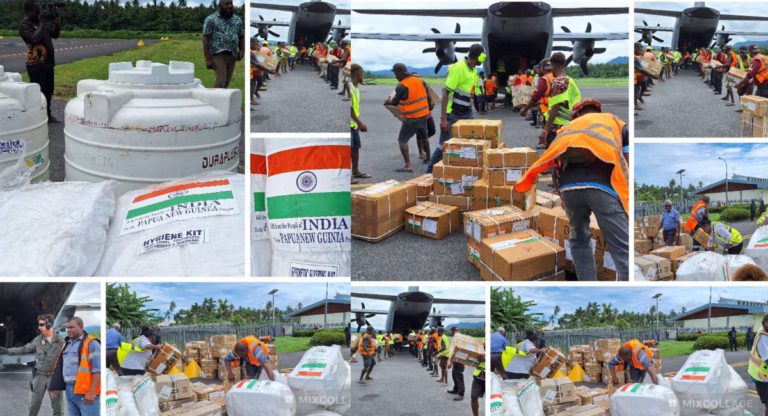
Following a devastating volcanic eruption of Mt Ulawun, India has sent emergency relief assistance worth US$ 1 million to Papua New Guinea (PNG).

This relief assistance was airlifted to Kimbe from Port Moresby by the Royal Australian Air Force (RAAF) for onward distribution within the West New Britain province.

Tweeting about this amazing international humanitarian assistance collaboration, Indian High Commission in PNG said: “A friend in need is a friend indeed!”

PNG’s Prime Minister James Marape expressed gratitude to India’s Prime Minister Narendra Modi for his country’s rapid and substantial response to the crisis.

The volcanic eruption prompted an urgent plea for assistance, to which India swiftly responded with a generous relief package.

India’s relief assistance comprises crucial supplies such as tents, sleeping mats, hygiene kits, meals ready to eat, and water storage tanks, catering to the immediate needs of the affected population.

Support Our Journalism

Global Indian Diaspora needs fair, non-hyphenated, and questioning journalism, packed with on-ground reporting. The Australia Today – with exceptional reporters, columnists, and editors – is doing just that. Sustaining this needs support from wonderful readers like you.

Whether you live in Australia, the United Kingdom, Canada, the United States of America, or India you can take a paid subscription by clicking Patreon. Buy an annual ‘The Australia Today Membership’ to support independent journalism and get special benefits.
100kg of meth concealed in window frames seized in Sydney

0

The AFP is investigating after about 100kg of methamphetamine was imported into Australia concealed within window frames.

Australian Border Force (ABF) officers detected the illicit drugs on 26 January 2024, during a routine examination of a shipping container, which had arrived in Sydney from Mexico. 

Image: Syd – Meth concealed in window frames (Source: AFP)

AFP Detective Superintendent Kristie Cressy said the AFP worked closely with the ABF and other partner agencies to ensure Australia remained a hostile environment for criminal syndicates. 

“Criminals may work hard to plan and execute elaborate schemes, but the AFP and its partner agencies work harder to detect and seize these concealments.”

Det-Supt Cressy added:

“This amount of methamphetamine could have been distributed in the Australian community as about 1,000,000 street deals worth an estimated $90 million. Methamphetamine, even in small amounts, causes immense harm to users, their loved ones, and the community around them, through the impact on the health care system and associated crime.”

Officers identified abnormalities when they x-rayed the contents of the consignment and further examination of the frames revealed a white powder concealed below the surface.

Tests of the powder returned a positive result to methamphetamine and ABF alerted the AFP.

Further forensic testing will be done to determine the purity of the methamphetamine.

Image: Syd – Meth concealed in window frames (Source: AFP)

ABF Superintendent Jared Leighton said the detection capabilities of the Australian Border Force ensured officers were able to act swiftly to stop these narcotics from entering the country.

“Criminal syndicates are constantly attempting new concealment methods, however our Border Force officers, along with our federal counterparts, have slammed the window shut on this import.”

Supt Leighton further observed:

“Ice’ is an extremely destructive illicit substance, and we are working 24/7 to ensure we stop this insidious drug from harming Australian families.”

No charges have been laid at this stage and the investigation continues.

AFP is urging anyone who has any knowledge or information to contact Crime Stoppers on 1800 333 000 or via crimestoppers.com.au.

*Source: ACIC Illicit Drug Calculator.

Support Our Journalism

Global Indian Diaspora needs fair, non-hyphenated, and questioning journalism, packed with on-ground reporting. The Australia Today – with exceptional reporters, columnists, and editors – is doing just that. Sustaining this needs support from wonderful readers like you.

Whether you live in Australia, the United Kingdom, Canada, the United States of America, or India you can take a paid subscription by clicking Patreon. Buy an annual ‘The Australia Today Membership’ to support independent journalism and get special benefits.

Is it too late for Biden to bow out in 2024?

0

By Thomas Gift

When Joe Biden took the oath of office in January 2021, many expected him to be the “placeholder president”. His mandate: heal the country’s wounds after four turbulent years of Donald Trump. Don’t try to be a transformative figure. Then hand the reins to a capable successor.

Fast forward to 2024 and there’s room for debate about the merits (and demerits) of Biden’s first-term legacy. But it’s Biden’s decision to run for re-election that’s become the major flashpoint for Democrats.

Polling collated by US political website FiveThirtyEight shows Biden with a dismal sub-40% approval rating. Former president Trump, the “inevitable” Republican nominee who has all punched his ticket to the general election with primary victories in Iowa and New Hampshire, has jumped into the lead in a head-to-head match against Biden in almost every swing state.

Many allies privately, and publicly, worry that Biden is at risk not only of overstaying his welcome, but of passing the baton to his twice-impeached rival that Biden himself pillories as an existential threat to democracy.

Is it too late for Biden to bow out in 2024? Technically, no. Biden could, for any reason, declare that he’s no longer seeking a second term.

If he did it before March, there would still be (some) time for other Democrats to get their name on many primary ballots, although deadlines for more than 30 states (amounting to roughly two-thirds of delegates) have already passed.

If it didn’t happen by then, his successor would be determined in a high-stakes fracas at the party’s convention scheduled for late August. Unless the Democrat party changed the rules, delegates pledged to Biden would enter the convention “uncommitted,” and so would lobby, and ultimately vote, on a replacement.

Practically, however, the odds of Biden changing course now look small. The two main reasons for pressing ahead haven’t changed since Biden announced his reelection bid last April. First, Biden is the only candidate who’s proven that he can beat Trump. Second, there’s no obvious heir apparent.

The only one who can beat Trump?

Biden has said explicitly said that “[Trump] is running so I have to run”. Although he says he’s not the only one who could topple Trump, Biden clearly feels that he has a significant upper hand. For one thing, he’s already proven he can do it.

There’s a reason why Biden earned the Democrat nomination in 2020. Biden’s blue-collar roots, resonance with moderate voters, and an ability to sell himself as the most “electable” Democrat ultimately gave him a come-from-behind win in those primaries.

In that general election, Democrats’ faith in him paid off. Biden tipped key swing states, including Michigan, Wisconsin, Arizona, and Pennsylvania — all of which had gone for Trump over Hillary Clinton in 2016.

Unlike in a typical election, 2024 is likely to be more a referendum on Trump than about the incumbent in the Oval Office. Biden is betting voters will prefer the devil they know. “Don’t compare me to the Almighty,” he says. “Compare me to the alternative”.

No heir apparent

The Democrats also don’t have a deep-bench of obvious successors. Biden sees himself as sparing the party from what would otherwise be a brutal nomination fight.

Whereas Trump has cruised to a commanding lead in the Republican primaries and squashed challenger and former governor of South Carolina, Nikki Haley, a contested Democrat primary would be punishing. The candidate who emerged would be battle-tested, but potentially too busy nursing wounds to pivot into the general election.

Four years ago, many envisioned the current vice president, Kamala Harris, as Biden’s natural heir. Few say that now. If Biden’s poll numbers have disappointed, Harris’s have been a catastrophe. Her recent approvals, at 37%, are the lowest of any first-term VP since Dan Quayle in the early 1990s.

Other familiar names who ran in 2020 — like US transportation secretary Pete Buttigieg or Minnesota senator Amy Klobuchar — could step in for Biden. But it’s not happenstance they lost to Biden in 2020. No one was able to unite Democrat moderates and progressives, much less win over Republicans and swing voters.

Some think California governor Gavin Newsom is already running a “shadow campaign” for the White House, while Michigan governor Gretchen Whitmer is also “happy to be interrogated” about a presidential bid. Yet many see Newsom as “too Hollywood,” while Whitmer hasn’t been vetted on a national stage.

New York representative Alexandria Ocasio-Cortez, too, has been rumoured as a potential fill-in for Biden. But a hard, populist leftist, without the cross-over appeal of left-wing Vermont senator Bernie Sanders, would almost certainly guarantee a Trump victory.

Experts have also speculated about the possibility of a “saviour” parachuting into the Democrat Convention, such as former first lady Michelle Obama or even legendary TV personality Oprah Winfrey. This seems more like the stuff of liberal fantasies.

No turning back

Biden had plenty of opportunities to gracefully ride into the sunset. He could have said that he’d accomplished everything he set out to accomplish. He could have cited his desire for a rising generation to be represented in politics.

Now, it seems, there’s no turning back. Eleven months from now, we’ll know if Biden made the strategically right decision. But if he misfires, it likely will be several years until we know the full effects of that choice.

A Trump sequel promises, at best, volatility and serious tests to US democratic norms and institutions. At worst, it promises a “revenge term” — the full-blown manifestation of the ugly underbelly that manifested itself on January 6 in the attack on the US Capitol.

With no back-up plan for exiting, Biden’s legacy, win or lose, will invariably be tied to whether he refused to be the “placeholder president”.

Thomas Gift, Associate Professor and Director of the Centre on US Politics, UCL

This article is republished from The Conversation under a Creative Commons license. Read the original article.

"The

Support Our Journalism

Global Indian Diaspora needs fair, non-hyphenated, and questioning journalism, packed with on-ground reporting. The Australia Today – with exceptional reporters, columnists, and editors – is doing just that. Sustaining this needs support from wonderful readers like you.

Whether you live in Australia, the United Kingdom, Canada, the United States of America, or India you can take a paid subscription by clicking Patreon. Buy an annual ‘The Australia Today Membership’ to support independent journalism and get special benefits.

Fiji hopeful of increased Indian investments in tourism, healthcare, and film-making

0

Fiji is looking forward to more investment opportunities from it’s long-term friend and well-wisher India.

The island nation is seeking investments particularly in tourism, healthcare infrastructure, and film-making.

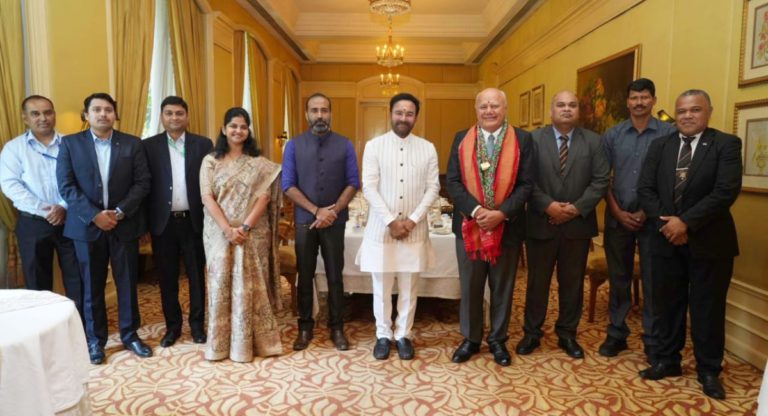
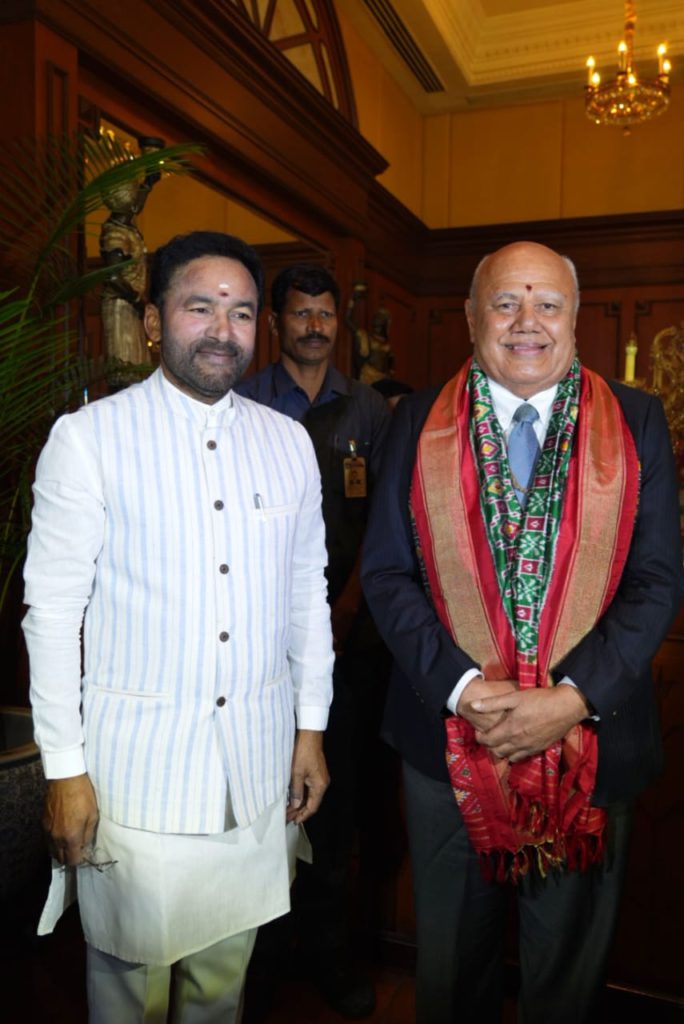
Image: Deputy Prime Minister and Minister for Tourism and Civil Aviation Viliame Gavoka with Union Minister For Culture, Tourism and DoNER G Kishan Reddy (Source: X/Picture: KRG Media)

Viliame Gavoka, Fiji’s Deputy Prime Minister and Minister for Tourism, and Civil Aviation, told FBC News after completing his official visit to India.

“The signs are very positive and I’ve linked them up to investors so that we can see some big brands here in Fiji. But as an indication of how they hold Fiji, people of India very high. Fiji is held in high esteem in India because they say our diaspora live in Fiji.”

During his trip, Mr Gavoka met G. Kishan Reddy, India’s Union Minister for Culture, Tourism, and DoNER and highlighted that an increased investment highlights the growing partnership between the two nations.

Mr Gavoka also engaged with various Indian entrepreneurs and is hopeful that there would be significant contributions from big brands such as Taj Hotels and Oberoi Groups to further bolster Fiji’s tourism and economy.

India’s links with Fiji commenced in 1879 when Indian labourers were brought here under indenture system to work on sugar-cane plantations. In 2023, 144th Girmit Day celebration was organized by the Fijian Government with Dr Rajkumar Ranjan Singh, India’s Minister of State for External Minister, as guest of honor.

In 2014, Prime Minister Narendra Modi visited Fiji and signed three MoUs and in 2023, Dr S. Jaishankar, External Affairs Minister, visited Fiji to attend the 12th World Hindi Conference held in Nadi.

Prior to Fiji’s independence in 1970, India had a post of Commissioner since 1948 to look after the interests of people of Indian origin. It was later upgraded to High Commissioner after Fiji’s independence in 1970.

P. S. Karthigeyan, the present High Commissioner of India to Fiji, told The Australia Today that he sees tremendous potential in the India-Fiji Commercial space, including in the tourism and hospitality segments.

“With regards to the discussions of the Hon’ble Deputy Prime Minister with major hospitality groups, during his recent visit to India, we are hopeful that the two sides would be able to quickly progress their discussions.”

India is considered a natural development partner of Fiji with Indian assistance extended to sectors such as regional solarisation, human resource development, higher education, and skills training. In fact, during the last five years, 123 Indo-Fijians have visited India under the Know India Programmes. 

Dr Sakul Kundra, Associate Professor and Dean (Research) at the Fiji National University (FNU), says tourism is one of the major industry for Fiji.

“Visitors are always welcome and given one of the best hospitality to make the visitor experience an memorable one. If the Tourists come from India, they can have the experience of paradise of the Pacific with pristine tourist destinations. The tourist stakeholders would be happy to welcome tourists beyond Australia and New Zealand.”

The University of the South Pacific (USP) associate professor in journalism Shailendra Bahadur Singh stated that the focus on India makes business sense as according to S&P Global India is expected to be the fastest growing major economy in the next three years and forecast to become the third largest economy in the world by 2030.

Dr Singh, the former editor of The Review and the Pacific Business magazines in Fiji, pointed out that India’s nominal GDP was USD 3.7 trillion in 2023 while Fiji was USD 4.8bn. So the impact that a vast economy like India can have on a small country like Fiji is immense.

He added that the trick is how to tap into the burgeoning Indian economy and identified tourism as an obvious area that had potential for Fiji.

“With India’s growing prosperity comes a growing appetite for international travel. In our neighborhood, Australia is riding the Indian tourism wave. India was Australia’s fourth largest source market in 2023, up from seventh. Fiji is just a hop away from Australia and the question for us is what are the ways and means to attract more Indian tourists.”

Indian citizens do not need a tourist visa when travelling to Fiji and a passport holder can stay in Fiji for a short period of time for 120 days. 

Dr Singh further observed that already there is growing Indian interest in Fiji, thanks to social media.

“Fiji has received fairly extensive free coverage by a succession of famous Indian YouTube vloggers with huge following in their home country. The vloggers have been captivated by the welcoming nature of Fijians, the natural beauty and uniqueness of Fiji and Fiji Indians’ ties to India. The vloggers are fascinated by a diaspora that has maintained its language, culture, religion and rituals despite 123 years and 11,600kms removed from India. What is perhaps needed is a focused approach by Fiji tourism to captiliase on the increasing Indian wanderlust and and the bonds and goodwill between two friendly countries, Fiji and India.”

Indian visitors contributed over $1.4 billion to the Australian economy and emerged at number 5 in Australia’s top international markets for the year ending September 2023 with 365,000 trips.

Support Our Journalism

Global Indian Diaspora needs fair, non-hyphenated, and questioning journalism, packed with on-ground reporting. The Australia Today – with exceptional reporters, columnists, and editors – is doing just that. Sustaining this needs support from wonderful readers like you.

Whether you live in Australia, the United Kingdom, Canada, the United States of America, or India you can take a paid subscription by clicking Patreon. Buy an annual ‘The Australia Today Membership’ to support independent journalism and get special benefits.

Pioneer Indian-Australian scientist improving climate and air quality predictions

0

Dr Ashok Luhar who works at CSIRO’s Climate Science Centre has been studying the impact of greenhouse gases and pollutants in our atmosphere for more than three decades.

He started working at CSIRO as a post-doctoral fellow in 1994 following another post-doctoral fellowship at NOAA, Oak Ridge (USA), and a Ph.D. from the University of Cambridge (UK) in Environmental Fluid Dynamics.

Dr Luhar’s pioneering work has helped improve climate models in Australia and around the world. He was a key contributor to the development of CSIRO’s TAPM air pollution model, widely used in Australia and New Zealand.

He also oversaw the early implementation of climate-chemistry capability in Australia’s ACCESS climate model.

Over the last 30 years, he has addressed topics that include ozone dry deposition, global climate-chemistry, regulatory air pollution dispersion modelling, air-sea exchange, urban landscape influences, biomass burning and smoke plume transport, and industrial air quality.

In 2019, Dr Luhar’s team developed a new way to account for ozone in computer simulations of the climate. He observed:

“Ozone is an air pollutant that is harmful to human health. And it has implications for plant ecosystems and the economy, as ozone damages plant stomata, damaging the leaves, and hence reduces productivity. Understanding how much ozone the ocean and land remove is important because it tells us how much is left in the atmosphere.”

Dr Luhar has published more than 65 refereed papers in scientific journals, and written several book chapters, conference papers, and client reports.

Support Our Journalism

Global Indian Diaspora needs fair, non-hyphenated, and questioning journalism, packed with on-ground reporting. The Australia Today – with exceptional reporters, columnists, and editors – is doing just that. Sustaining this needs support from wonderful readers like you.

Whether you live in Australia, the United Kingdom, Canada, the United States of America, or India you can take a paid subscription by clicking Patreon. Buy an annual ‘The Australia Today Membership’ to support independent journalism and get special benefits.
Know the double meaning of emojis to keep your kids safe in school

0

The AFP-led Australian Centre to Counter Child Exploitation (ACCCE) is urging parents to understand the double meaning of emojis and acronyms to help identify if their children are being targeted by online predators.

AFP Commander Human Exploitation Helen Schneider said with many students receiving their own tablets and mobile phones for the first time ahead of their return to school, now was the perfect time for parents to have a conversation with their children about their online communication.

Commander Schneider said the AFP was today releasing a list of emojis and acronyms to help parents understand the language often used by online predators, who use language to connect with youth.

“Emojis and acronyms are commonly used in online communication and are usually harmless fun, but some have double meanings that are well known and some that are not.”

Commander Schneider adds:

“Our recent experience has shown that in some situations emojis like the angry face emoji could be a sign that your child is the victim of online grooming. It is important to stress that in most cases it is probably nothing to worry about but having a healthy relationship with your children about their safety online can help you decide if there’s an issue.@

ThinkUKnow is an AFP-led resource that helps parents, carers, educators and children develop good online habits that protect children and deter offenders.

It provides factsheets, videos, presentations, guides, children’s picture book Jack Changes the Game, home learning and family activities to help with foster open discussions between children and their guardians.

Further, Commander Schneider observed:

“While we know parents often want to respect the privacy of their children, having honest and open conversations about what they communicate, and what is being communicated to them, could help prevent them falling victims to predators, many who pretend to be children or teens.”

She advcises:

“Electronic communication is constantly changing and it can be difficult for parents and carers to keep up. That’s why having a healthy dialogue with your children is the best defence you can have.@

Recent examples of emoji use

Emoji/slangContext
cid:image006.jpg@01DA455E.C9D0AEF0Most commonly seen by ACCCE in chats between offenders and victims of financial sextortion. Usually used multiple times within chats. Example:“I am sending your images now and they will go viral”
cid:image008.jpg@01DA455E.C9D0AEF0Seen by ACCCE in reports of online grooming. Example:“You will like this”
cid:image010.jpg@01DA455E.C9D0AEF0Seen by the ACCCE in a range of reports, usually used in the intended context.
cid:image011.jpg@01DA455E.C9D0AEF0Seen by ACCCE in reports of online grooming. Example:“Want to know what I’m doing?”

Glossary of emojis, emoticons and acronyms

Catch a caseWillingness to being arrested and charged for something, often used in relation to sexual desire for someone who is much younger/under age
CD9 or Code 9Parents are around
DNIDo not interact, especially as a warning of explicit/sexual content for under 18s
DM;HSDoesn’t matter; had sex
DPWD*** pictures welcome
Down in the DMUsing private messages (DM=Direct Message) on social media to ask for nude photos and/or to filter through people to find a sexual encounter
GNRNGet Naked Right Now
GNOCGet Naked On Camera
LMIRLLet’s meet in real life
LMPLike my pic
NIFOCNaked in front of computer
NP4NPNaked Pic For Naked Pic
P911Parent Alert
PIRParent in room
POSParent Over Shoulder
POVPoint of view, and often indicates that a video is supposed to be filmed as if you’re seeing through someone else’s eyes
Rule 34Any topic can be made into pornographic content
Snacc/SnackA person you find attractive
Sneaky LinkSeeing someone for sex but you want to keep the relationship quiet
SmashTo have casual sex
TDTMTalk dirty to me
1174Nude club
143I love you
9Parent watching

Emojis and their potential meanings

Porn (rhymes with corn), can be used to get around word restrictions on social media
Bottom
Feeling frisky or naughty
Desiring someone sexually (often used in response to nudes)
Nudes, which are often called “noods”
Used when sending or receiving nudes
Sexual activity
Spiciness eg. inappropriate or risqué content
Cuddles
Drunkenness, sexual arousal, or a grimace

Top tips for parents and carers

  • Keep your child’s personal information including full name and age private
  • Ensure the background of photos or videos doesn’t give away your address or location, (and don’t post your location or ‘check in’)
  • Avoid posting photos in school uniform
  • Only share images of your children with people you know and trust
  • For community accounts, consider having a closed group with approved members and ensure you have strong privacy settings in place.

This guide is meant to provide a broad overview because slang, acronyms, emojis and emoticons can have multiple meanings and be used in many different ways.

If you or someone you know is impacted by child sexual abuse and online exploitation, support services are available at www.accce.gov.au/support.

Support Our Journalism

Global Indian Diaspora needs fair, non-hyphenated, and questioning journalism, packed with on-ground reporting. The Australia Today – with exceptional reporters, columnists, and editors – is doing just that. Sustaining this needs support from wonderful readers like you.

Whether you live in Australia, the United Kingdom, Canada, the United States of America, or India you can take a paid subscription by clicking Patreon. Buy an annual ‘The Australia Today Membership’ to support independent journalism and get special benefits.
After a lifetime studying superannuation, here are 5 things I wish I knew earlier

0

By Susan Thorp

Amassing the wealth needed to support retirement by regular saving is a monumental test of personal planning and discipline. Fortunately for most Australian workers, the superannuation system can help.

Superannuation uses the carrot of tax incentives, and the sticks of compulsion and limited access, to make us save for retirement.

There are benefits to paying timely attention to your super early in your working life to get the most from this publicly mandated form of financial self-discipline.

I’ve been researching and thinking about superannuation for most of my career. Here’s what I wish I knew at the beginning of my working life.

1. Check you’re actually getting paid super

First, make sure you are getting your dues.

If you are working, your employer must contribute 11% of your earnings into your superannuation account. By July 2025 the rate will increase to 12%.

This mandatory payment (the “superannuation guarantee”) may look like yet another tax but it is an important part of your earnings (would you take an 11% pay cut?).

It is worth checking on, and worth reporting if it is not being paid.

The Australian Tax Office estimates there is a gap between the superannuation employers should pay and what they do pay of around 5% (or $A3.3 billion) every year.

Failing to pay is more common among the accommodation, food service and construction industries, as well as small businesses.

Don’t take your payslip at face value; cross-check your super account balance and the annual statement from your fund.

2. Have just one super account

Don’t make personal donations to the finance sector by having more than one superannuation account.

Two super accounts mean you are donating unnecessary administration fees, possibly redundant insurance premiums and suffering two times the confusion to manage your accounts.

The superannuation sector does not need your charity. If you have more than one super account, please consolidate them into just one today. You can do that relatively easily.

3. Be patient, and appreciate the power of compound interest

If you’re young now, retirement may feel a very distant problem not worth worrying about until later. But in a few decades you’re probably going to appreciate the way superannuation works.

As a person closing in on retirement, I admit I had no idea in my 20s how much my future, and the futures of those close to me, would depend on my superannuation savings.

Now I get it! Research shows the strict rules preventing us from withdrawing superannuation earlier are definitely costly to some people in preventing them from spending on things they really need. For many, however, it stops them spending on things that, in retrospect, they would rate as less important.

But each dollar we contribute in our 30s is worth around three times the dollars we contribute in our 50s. This is because of the advantages of time and compound interest (which is where you earn interest not just on the money initially invested, but on the interest as well; it’s where you earn “interest on your interest”).

For some, adding extra “voluntary” savings can build up retirement savings as a buffer against the periods of unemployment, disability or carer’s leave that most of us experience at some stage.

4. Count your blessings

If you are building superannuation savings, try to remember you’re among the lucky ones.

The benefits of super aren’t available to those who can’t work much (or at all). They face a more precarious reliance on public safety nets, like the Age Pension.

So aim to maintain your earning capacity, and pay particular attention to staying employable if you take breaks from work.

What’s more, superannuation savings are invested by (usually) skilled professionals at rates of return hard for individual investors to achieve outside the system.

Many larger superannuation funds offer members types of investments – such as infrastructure projects and commodities – that retail investors can’t access.

The Australian Prudential Regulation Authority (APRA) also checks on large funds’ investment strategies and performance.

5. Tough decisions lie ahead

The really hard work is ahead of you. The saving or “accumulation” phase of superannuation is mainly automatic for most workers. Even a series of non-decisions (defaults) will usually achieve a satisfactory outcome. A little intelligent activity will do even better.

However, at retirement we face the challenge of making that accumulated wealth cover our needs and wants over an uncertain number of remaining years. We also face variable returns on investments, a likely need for aged care and, in many cases, declining cognitive capacity.

It’s helpful to frame your early thinking about superannuation as a means to support these critical decades of consumption in later life.

At any age, when we review our financial management and think about what we wish we had known in the past, we should be realistic. Careful and conscientious people still make mistakes, procrastinate and suffer from bad luck. So if your super isn’t where you had hoped it would be by now, don’t beat yourself up about it.

Susan Thorp, Professor of Finance, University of Sydney

This article is republished from The Conversation under a Creative Commons license. Read the original article.

"The

Support Our Journalism

Global Indian Diaspora needs fair, non-hyphenated, and questioning journalism, packed with on-ground reporting. The Australia Today – with exceptional reporters, columnists, and editors – is doing just that. Sustaining this needs support from wonderful readers like you.

Whether you live in Australia, the United Kingdom, Canada, the United States of America, or India you can take a paid subscription by clicking Patreon. Buy an annual ‘The Australia Today Membership’ to support independent journalism and get special benefits.
Indian visitors contributed over $1.4 billion to the Australian economy

0

India has emerged at number 5 in Australia’s top international markets for the year ending September 2023 with 365,000 trips i.e. a total spend in Australia was $1.4 billion, 11% up on September 2019 levels. 

According to Australia’s leading provider of quality tourism intelligence across both international and domestic markets, Tourism Research Australia, New South Wales (NSW) has become Australia’s top destination for visitors from India.

NSW has been able to get back to its share of Indian visitors to Australia reaching the pre-COVID-19 levels.

Image: (centre) Steve Cox, CEO of Destination NSW (Source: X)

Steve Cox, CEO of Destination NSW, said in a post that “Half of all Indian visitors to Australia chose to visit NSW”:

“This is great news for the rebounding NSW visitor economy. India is one of our fastest growing inbound visitor markets with enormous potential for growth as we continue on our path to make NSW the premier visitor economy of the Asia Pacific by 2030.”

In the year ending September 2023, NSW welcomed 183,400 visitors from India who stayed more than seven million nights and injected over $488 million into the state’s visitor economy.

Mr Cox added:

“We look forward to welcoming many more Indian guests to NSW and to working collaboratively with industry to ensure that the experience they have here, keeps them coming back for more.”

Image: Sydney (Source: CANVA)

The top 4 main reasons for travel to Australia in the year ending September 2023:

  • Visiting friends and relatives with 2.3 million trips. 
  • Business travel with 681,000 trips. 
  • Holiday travel with 2.3 million trips. 
  • Education with 406,000 trips.

Overall, the proportion of trips to Australia for holiday purposes continued to increase from 35% in the year ending June 2023 to 37% in the year ending September 2023. This is the highest proportion since falling to 3% in the year ending March 2021 as a result of international border closures.   

In 2014, Destination NSW launched Jhappi Time (‘Hug Time’) tourism campaign specifically targeting the visiting friends and relatives market in India.

Jhappi Time campaign videos telling the stories of Indian families enjoying time with family and friends on holiday in NSW were released in Indian cinemas to create more interest.

Mr Cox is hopeful that “There is so much more to come, this is just the beginning.”

Support Our Journalism

Global Indian Diaspora needs fair, non-hyphenated, and questioning journalism, packed with on-ground reporting. The Australia Today – with exceptional reporters, columnists, and editors – is doing just that. Sustaining this needs support from wonderful readers like you.

Whether you live in Australia, the United Kingdom, Canada, the United States of America, or India you can take a paid subscription by clicking Patreon. Buy an annual ‘The Australia Today Membership’ to support independent journalism and get special benefits.
Medicare turns 40: Here are 3 reforms that can help meet our health needs

0

By Stephen Duckett

Forty years ago, Medicare as we know it today was born. It was the reincarnation of the Whitlam government’s Medibank, introduced in 1975 but dismantled in stages by the Fraser Liberal government.

Medibank was developed in the 1960s by health economists Dick Scotton and John Deeble, when disease prevalence was different and the politics of reform were diabolical.

But the nation has changed since 1984, and so have our health needs. Medicare is now struggling to ensure the access to health care for millions of Australians we were once promised.

Let’s look at how we got here – and three radical changes we need to keep the Medicare promise into the future: making it cheaper to see a GP; paying less for blood and imaging tests; and covering dental care.

Free hospital care, but you might pay to see a GP

One of my first jobs in the health system, in the days before Medicare and Medibank, was acting in charge of revenue collection for three public hospitals. A small subset of people could get free, albeit stigmatised, care.

We had bad debts, because some people couldn’t afford to pay their hospital bills and I was allowed by policy to recommend that some be written off. But for others I had to seek court authorisation to seize their wages to pay off their hospital debt.

Medibank changed that. Now all Australians can get public hospital care without any financial barrier.

But the financial barriers to seeing a GP or a private specialist (out of hospital) have remained. Doctors continue to charge what they like, with Medicare often only covering a portion of their fees. This has left many patients facing significant out-of-pocket payments.

When Medicare was designed, medical care was provided mostly by solo medical practitioners working in practices they owned. It was a one-to-one professional relationship, with the patient paying the practitioner for each service.

Over time, general practice evolved into group practices organised as partnerships. Next, they consolidated and corporatised. A handful of corporates now provide all private pathology (which tests blood and other tissues) and radiology (which provides imaging services) and a large proportion of GP care.

Corporates have not made the same inroads into most other specialties. But since the 1980s, states have reduced public hospital outpatient services. So patients are now more reliant on private medical specialists for care referred by their GP.

Much has changed, but cost of living pressures remain

Health-care needs have changed. As we live longer, we live with more diseases, many of which are chronic. The care required increasingly involves many different health providers and includes non-medical specialties such as podiatry, physiotherapy and psychology.

When Medicare was introduced, university education was offered for only a few of these professions. But their training has evolved and so too what they can do. This is particularly the case for nursing. It has evolved from an apprenticeship model to a profession with its own specialties. A subset – nurse practitioners – have the authority to diagnose and prescribe medication.

Broader technology trends have also had an impact on health care, as with all other sectors. Virtual care and telehealth proved their worth during the early years of the COVID pandemic, just as generative AI is beginning to show its promise now.

Medicare was first and foremost about efficiently removing financial barriers to access. It was introduced as part of an agreement with the Labor movement about reducing costs of living and, in particular, ensuring people could attend a doctor without having to worry about how they would pay for the visit.

However, about 1.2 million Australians deferred or missed out on seeing a GP because of cost in the 2022-23 financial year. Lower-income Australians have higher rates of missing out on care.

Medical fees aren’t regulated and so consumers face a lottery – not knowing whether a fee will be charged and having no control over that decision. Only about 52% of all Australians were always bulk-billed in 2022-23, down from 66% a year earlier.

So how can we get Medicare back on track towards its goal of universal health care for all Australians? Here are three radical reforms we should prioritise.

1. Make GP care affordable for all

Rebates are currently subject to political whim. The Liberal government (in office from 2013 to 2022) froze rebates, leading to increases in average out-of-pocket payments and reduced bulk-billing.

The first step in reducing costs as a barrier to GP care should be introduction of independent fee-setting.

Canadian Medicare – which was the model for Australia’s system – mostly has no out-of-pocket payments. Fees are set by negotiations, not politicians’ whims, and this is enshrined in legislation.

With independent fee-setting in place, a new scheme of “participating providers” should be introduced. Under such a scheme, practices would bulk-bill everyone, and participate in agreed quality-improvement programs.

If fees are set independently and fairly, extra billing over and above the fee is unjustifiable. Non-participating practices would not be eligible for Medicare benefits.

It’s anticipated the vast majority of practices would agree to participate. In Canada, the participation rate is roughly 100%, and bulk billing in Australia is still over 75%.

Participating practices should also be eligible for additional grants to employ other health professionals to provide a more comprehensive range of services – such as physiotherapists and psychologists – to meet the contemporary needs of a population with increasing chronic illness.

If successful, these changes would mean all Australians can access a GP and other primary care services without any out-of-pocket costs.

2. Deal with diagnostics

Despite the evolution of ownership and market structures, pathology and radiology services are still reimbursed by fees for each service (with complex rules about rebates when multiple tests are performed simultaneously).

But while both industries are expensive to set up and buy or lease equipment, the cost of processing an additional test or image is low and sometimes close to zero. This means Medicare pays pathology and radiology providers much more than the tests or images cost.

Both industries are also ripe for further technological change, with the quality of generative AI rapidly improving, and costs likely to further reduce.

The uncapped fee-for-service model for pathology and radiology needs to be replaced by one in which the benefits of technological change are shared between shareholders and taxpayers, rather than all accruing to the former.

This could be done by replacing fee-for-service payments with a payment model used in the corporate world. Private and public providers could be invited to tender to provide these services in certain areas, with conditions around geographic access, quality and no out-of-pocket payments for consumers.

The same model could also apply to other technology-intensive types of health care, such as radiotherapy for cancer.

These changes might be cost-neutral for government, and save consumers the $24 they currently pay out of pocket on every pathology test that is not currently bulk-billed and $122 on each non-bulk-billed diagnostic imaging test.

3. Cover dental care too

A major omission from Medicare from the start, and a source of continuing inequity, is oral health care. More than two million Australians missed out on oral health care because of cost in 2022-23.

A new scheme to slowly expand universal protection against the costs of oral health care should be phased in over the next decade. This would eventually mean all preventive and basic dental care would be available for everyone, with no out-of-pocket payments.

This would require a parallel expansion of the oral health workforce (dentists and oral health therapists) and development of new payment models based on a participating practice model rather than simply introducing another unregulated schedule of oral health fees paid via Medicare.

Innovation needs to be built into the Australian health system. However, the foundations for innovation must be based on Medicare’s founding principles of addressing financial barriers to provide universal and equitable health care to all Australians.

Stephen Duckett, Honorary Enterprise Professor, School of Population and Global Health, and Department of General Practice, The University of Melbourne

This article is republished from The Conversation under a Creative Commons license. Read the original article.

"The

Support Our Journalism

Global Indian Diaspora needs fair, non-hyphenated, and questioning journalism, packed with on-ground reporting. The Australia Today – with exceptional reporters, columnists, and editors – is doing just that. Sustaining this needs support from wonderful readers like you.

Whether you live in Australia, the United Kingdom, Canada, the United States of America, or India you can take a paid subscription by clicking Patreon. Buy an annual ‘The Australia Today Membership’ to support independent journalism and get special benefits.

23-year-old man dies after being swept into Yarra River

0

The body of a 23-year-old man has been found after search for the missing swimmer in Warrandyte, Melbourne’s northeast.

Victoria Police were called to Osbourne Rd, Warrandyte North, about 7.20am on Sunday after receiving reports that a man, who had been swimming in the Yarra River with three friends, had gone missing.

Police beleive that the Wantirna South man had been swept away by fast-moving rapids.

His friends raised the alarm when they noticed that the young man was no longer with them.

Local Police along with Air Wing, Search and Rescue Squad and State Emergency Service searched the surrounding area.

On Sunday afternoon Victoria Police confirmed a body had been found just before 1.30 pm.

The deceased is yet to be formally identified but is believed to be the Wantirna South man that went missing.

The death is not being treated as suspicious and a report will be prepared for the coroner.

The drowning of the young man comes just days after four people were pulled from the water at Phillip Island, in Victoria’s worst beach tragedy in nearly 20 years.

The drowning of the 23-year-old man brings the state drowning toll to 20, since the start of the summer period on December 1, 2023.

Support Our Journalism

Global Indian Diaspora needs fair, non-hyphenated, and questioning journalism, packed with on-ground reporting. The Australia Today – with exceptional reporters, columnists, and editors – is doing just that. Sustaining this needs support from wonderful readers like you.

Whether you live in Australia, the United Kingdom, Canada, the United States of America, or India you can take a paid subscription by clicking Patreon. Buy an annual ‘The Australia Today Membership’ to support independent journalism and get special benefits.

Global South must get equality in international cooperation decision-making

0

By Ambassador (Retd.) Asoke Mukerji

The voices and concerns of developing countries in the UN, collectively referred to as the “Global South”, prioritize peace, security, and development. These objectives require an integrated framework for international cooperation, with the Global South participating on an equal basis in its decision-making.

The collective identity of the Global South began to emerge at the UN General Assembly (UNGA) in December 1963, when developing countries initiated two significant amendments to the UN Charter of June 1945 for greater representation in the organs of the UN. These amendments expanded the number of elected members of the UN Security Council (UNSC) from 6 to 10, and the number of elected members of the UN Economic and Social Council (ECOSOC) from 18 to 27. In 1971, the Charter was amended again to increase the ECOSOC membership to 54, representing all geographical regions of the world.

In June 1964, the Global South created its platform in the UN, called the group of 77 developing countries (G-77). The G-77 sought structural reforms in the UN to support its priorities for socio-economic development. The UNGA responded by establishing the UN Development Programme (UNDP) in 1965. Today, the UNDP is active in 170 countries, most of which are in the Global South. It is the “face of the UN” on the ground, supporting a range of national socio-economic activities carried out in coordination with specialized agencies of the UN, impacting on all aspects of human endeavour.

In October 1967, the Charter of Algiers was adopted by the first ministerial meeting of the G-77. It advocated the creation of a New International Economic Order to accelerate the development of the Global South. In response, several developed countries expressed concern at the impact of rapid development on the environment. At the First UN Conference on the Human Environment in June 1972, Global South countries like India rejected these attempts to restrict development because of environmental protection, saying that “poverty is the biggest polluter”.

The UNGA recognized the “right to development” as an “inalienable human right” in 1986 through a voted resolution, opposed by some developed countries. In 1987, the UN’s Brundtland Commission tabled its report on “Sustainable Development”, converging the Global South’s demand for accelerated socio-economic development with the globally accepted goal of protecting the environment. Almost three decades later, in September 2015, the UNGA unanimously adopted Agenda 2030 on Sustainable Development, with its 17 Sustainable Development Goals (SDGs).

Agenda 2030 represents the consolidation of the Global South’s priorities. Two important “means of implementation” commitments to achieve the SDGs are an integral part of Agenda 2030. These are for the flow of financial resources from multilateral financial institutions, and transfers of appropriate technologies, to the Global South.

The concerns of the Global South today are reflected in the assessment by world leaders meeting at the UN’s SDG Summit in September 2023 that “the achievement of the SDGs in in peril” due to “numerous crises” facing the world. At the top of the list of crises is the impact of the unprecedented Covid-19 pandemic and a sharp escalation in violent conflicts, both of which have impacted adversely on huge numbers of people, particularly in the Global South.

When Agenda 2030 was adopted in 2015, 60 million people worldwide were affected by violent conflicts on the UNSC’s agenda. That figure ballooned to 314 million people in 2022, mainly in the Global South. In October 2022, the World Bank reported that the Covid pandemic had pushed an additional 90 million people, mainly in Global South countries, into the ranks of the 670 million people worldwide living below the poverty line of $2.15 a day.

Ongoing conflicts across Africa, Asia, and Europe, of which images of the wars in Ukraine and Gaza are visible on international media, have jeopardized Agenda 2030. These conflicts are attributable to an increasingly ineffective UNSC. Its five permanent members (P5) seek to maintain their dominant status given by their veto power, despite the fact that the P5 were party to the UNGA’s unanimous mandate of September 2005 for early reforms of the UNSC including on the question of the veto.

An ineffective UNSC has created space for the emergence of aggressive protectionism and militarism in developed countries, as unilateralism seeks to replace multilateralism. Despite strong opposition from entrenched protectionist interests in developed countries, over 100 Global South countries supported a Vaccine Waiver Initiative at the World Trade Organization in June 2022 to mitigate the Covid pandemic. In December 2023, 131 Global South countries voted to adopt a UNGA resolution condemning “the continued unilateral application and enforcement by certain Powers of unilateral coercive measures”, and rejected those measures, “with all their extraterritorial effects”.

India has coordinated the Global South’s response to these ongoing challenges by convening two virtual Voice of the Global South Summits in January and November 2023 during its Presidency of the G-20. 125 countries, including 47 from Africa, 31 from Asia, 29 from Latin America, 11 from Oceania, and 7 from Europe participated to express their concerns and seek solutions through reforming multilateral structures. At the New Delhi G-20 Summit on 9 September 2023, India announced the inclusion of the 55-nation African Union in the G-20 as its 21st member, dramatically expanding the composition and focus of the grouping in favour of the Global South.

The leaders of the Global South have sought to reform multilateral institutions to respond effectively to the challenges facing the world today. Their current focus is on the UN Summit of the Future in September 2024 in New York. The Global South’s objective will befor this Summit to mandate the convening of a UN General Conference in 2025. The outcomes of such a Conference, based on dialogue and diplomacy, can revitalize the United Nations, restoring the integrity of an integrated international framework for achieving the priorities of the Global South.

Contributing Author: Ambassador (Retd.) Asoke Mukerji, former Permanent Representative of India to the United Nations in New York.

Support Our Journalism

Global Indian Diaspora needs fair, non-hyphenated, and questioning journalism, packed with on-ground reporting. The Australia Today – with exceptional reporters, columnists, and editors – is doing just that. Sustaining this needs support from wonderful readers like you.

Whether you live in Australia, the United Kingdom, Canada, the United States of America, or India you can take a paid subscription by clicking Patreon. Buy an annual ‘The Australia Today Membership’ to support independent journalism and get special benefits.

How to watch dance

0

By Yvette Grant

Watching dance is watching an extraordinary and fleeting artistic creation that uses an instrument we all have: the human body. The dancing body communicates a unique sense of being human as it speaks to us through its bones, its muscles, its skin, its cells.

But have you ever been to a dance performance and wondered what it was all about? Or wanted to go see some dance, but been unsure of where to start?

For the uninitiated, dance can be difficult because, like music, it uses a non-verbal language. These basics can open the door to enjoying the beauty and complexity of this physical art.

1. Know the code

There are so many kinds of dance, and all have different ways of communicating – different codes.

For example, in ballet the body is vertical and straight and the legs and arms move around that erect centre. The emphasis is on lightness.

In contrast, in contemporary dance, the body contracts and bends and the movement is grounded and close to the floor.

https://youtube.com/watch?v=zxnra4q1ElA%3Fwmode%3Dtransparent%26start%3D0

And these are only two of the Western forms of dance. Every culture has their own dance form, and these all have their own codes.

Some performances are a blend of codes. For example, Bangarra Dance Theatre has created a style which blends traditional Indigenous Australian dance with Western contemporary dance and ballet.

Knowing the code means you know the building blocks, the rules, the frame for the performance. You have a benchmark for what to expect.

2. Do your research

If you’re going to see a ballet, there might be a story and you’ll be expected to know the story before you see the ballet – unlike plays where the excitement is the story being revealed on stage. Ballet companies will often publish this story on their website, or you can look up the work on Wikipedia.

https://youtube.com/watch?v=ojq1KdjjIcE%3Fwmode%3Dtransparent%26start%3D0

But much like conceptual art (imagine a painting with a small red splodge in the corner of a green background – what does it mean?), the ideas behind a lot of dance performances are not immediately obvious. They may be quite abstract.

In this case, reading what the choreographer says about the work before you see it, and knowing a bit about their other works, gives you a context and a way to make meaning of what you see. You can find interviews with choreographers in various online publications, on company websites, or look them up on YouTube.

3. It’s all about the movement

Story or no story, dance is ultimately about a body moving through space. The pleasure in watching dance comes in engaging with the patterns, the movement vocabulary and phrasing, and the energetic quality of the dancers.

You can appreciate the pattern a body makes moving high or low, traversing the whole stage or staying in one place. With more than one body on stage, you notice the patterns the group make much like noticing the changing configurations of a flock of birds.

https://youtube.com/watch?v=Qdn4LELnzpQ%3Fwmode%3Dtransparent%26start%3D0

Movement vocabulary is the collection of “body words”, or steps, that are repeated and form dance phrases. These can be unique to a performance or a choreographer. The way the vocabulary is arranged in terms of structure, space and timing creates the dance.

The energetic quality of the dancers – think soft, light and flowing versus powerful, attacking and weighty – can change the emotion of the dance and your interpretation.

4. There are no right and wrong answers

A dance performance is not a murder mystery. In watching dance, you are not trying to unlock a singular meaning.

Instead, you are engaging with and appreciating all the factors listed here as well as the other arts on display including the sound, the designs, the lighting and the costumes. You may find a different meaning or different elements to appreciate to other people.

The performance in this video from Chunky Move clearly has characters suggesting a narrative, but it is left up to the audience to interpret the action for themselves. The main meaning comes through the concept being explored which is depth of field.

https://youtube.com/watch?v=I0nJ8KwnoH4%3Fwmode%3Dtransparent%26start%3D0

5. Know the etiquette

Like most shows and exhibitions these days, what you wear is up to you. Even in state theatres and opera houses, some will wear ball gowns, others jeans.

In a traditional theatre setting, once seated, you are expected to watch the whole performance. Some dance performances might be in galleries and for these you can wander around and leave when you’re ready.

https://youtube.com/watch?v=4MEVVO8E8OQ%3Fwmode%3Dtransparent%26start%3D0

Applause is a bit tricky. Sometimes you can applaud during the performance, and sometimes not. Even seasoned dance watchers sometimes get it wrong. So, until you get the hang of it, just follow along. At the end of the performance, there may be multiple curtain calls or bows, especially if there is a large cast, and the audience is expected to continue applauding as long as the bowing continues. You can leave once the lights come up.

If you feel very enthusiastic about the performance, you may stand and applaud. If most of the audience does this, it’s called a standing ovation. But it also doesn’t matter if you are the only one standing.

Yvette Grant, PhD (Dance) Candidate and Dance History Tutor, The University of Melbourne

This article is republished from The Conversation under a Creative Commons license. Read the original article.

"The

Support Our Journalism

Global Indian Diaspora needs fair, non-hyphenated, and questioning journalism, packed with on-ground reporting. The Australia Today – with exceptional reporters, columnists, and editors – is doing just that. Sustaining this needs support from wonderful readers like you.

Whether you live in Australia, the United Kingdom, Canada, the United States of America, or India you can take a paid subscription by clicking Patreon. Buy an annual ‘The Australia Today Membership’ to support independent journalism and get special benefits.
India’s digital payment record 857 million transactions in FY 2023-24

0

In the realm of digital payments, India has witnessed a monumental shift, spearheaded by the Unified Payments Interface (UPI). As of December 2023, UPI recorded a staggering 857 million transactions in the current financial year, a testament to its dominant role in India’s digital payment landscape, commanding an impressive 62% market share in FY 2022-23. This surge in UPI transactions is a clear indicator of the country’s move towards a digitalized economy.

The growth trajectory of UPI is nothing short of remarkable. Starting with a modest base in the financial year (FY) 2017-18, UPI transactions stood at 9.2 million. This initial figure, though significant for its time, was just a glimpse of the potential of UPI. Over the next five years, these transactions witnessed an extraordinary increase, culminating in 837.5 million transactions by FY 2022-23.

This rapid growth represents a Compound Annual Growth Rate (CAGR) of 147%, a rate that signifies not just growth but a seismic shift in consumer behavior and technology adoption.

The remarkable aspect of this growth is not just in the number of transactions but also in their monetary value. In FY 2017-18, the total value of UPI transactions was USD 12 billion, a noteworthy figure for a nascent technology at that time. However, by FY 2022-23, this value had escalated to an astonishing USD 1671 billion. The CAGR of 168% in value terms is even more impressive than the transaction count, indicating that UPI is not only being used more frequently but also for higher-value transactions.

Behind this digital revolution are concerted efforts by the Indian government and the Reserve Bank of India (RBI). Government initiatives have been crucial, including incentive schemes for RuPay Debit cards and BHIM UPI transactions, advisories for improving payment infrastructure, the Pradhan Mantri Gramin Digital Saksharta Abhiyaan (PMGDISHA) for enhancing digital literacy in rural areas, and setting targets for digital transactions and merchant acquisitions for banks.
 
The RBI has complemented these efforts with awareness programs like Electronic Banking Awareness and Training (e-BAAT), Digital Payments Awareness Week. The RBI’s multimedia campaigns, particularly ‘RBI Says’ or ‘RBI Kehta Hai’, take a more broad-based approach to awareness. These campaigns, spread across various media channels, serve as a continuous source of information and reassurance to the public. 
 
RBI’s multifaceted approach to promoting digital payments is to increase the volume of transactions and equally empower every stratum of society with the knowledge and confidence to participate in India’s burgeoning digital economy. A significant innovation in this domain is the RBI’s approval for linking RuPay credit cards to UPI. This move enhances customer convenience by enabling cardless transactions and widening credit card acceptance, even at small merchant outlets equipped with QR codes.

Prime Minister Narendra Modi’s dedication to propelling India’s Digital Revolution vividly mirrors the country’s substantial progress in adopting and evolving its digital technological capabilities. His statements and initiatives work toward transforming India into a digitally empowered society and knowledge economy.

Addressing the B20 Summit in 2023, Modi emphasized that India has become a pivotal player in the digital revolution, particularly in the era of Industry 4.0. He highlighted India’s crucial role in constructing an efficient and trustworthy global supply chain, underlining the nation’s emerging prominence in the global digital landscape. The rapid increase in UPI transactions from 9.2 million to 837.5 million in just five years is not just a statistical achievement but a symbol of India’s evolving financial landscape.

The decrease in the year-on-year growth of banknotes in circulation, from 9.9% in FY 2021-22 to 7.8% in FY 2022-23 as per RBI data, further signifies the reducing reliance on cash and a growing inclination towards digital transactions.

The phenomenal growth of UPI transactions underlines the successful integration of technology in India’s financial sector. With the government and RBI’s continued focus on digital literacy and infrastructure, India is swiftly transitioning to a cashless, digital economy, embracing the digital future of finance with open arms.

Support Our Journalism

Global Indian Diaspora needs fair, non-hyphenated, and questioning journalism, packed with on-ground reporting. The Australia Today – with exceptional reporters, columnists, and editors – is doing just that. Sustaining this needs support from wonderful readers like you.

Whether you live in Australia, the United Kingdom, Canada, the United States of America, or India you can take a paid subscription by clicking Patreon. Buy an annual ‘The Australia Today Membership’ to support independent journalism and get special benefits.

Here’s how parents can prepare healthy lunchbox and keep costs down

0

By Clare Dix and Stella Boyd-Ford

Heading back to school is a time of great anticipation for many families, but it is not without challenges. One of the big challenges is preparing healthy, easy, affordable and appealing lunchboxes.

Lunchboxes are vital for supporting children’s energy levels throughout the school day, which in turn helps maintain their concentration.

What does a healthy lunchbox contain? How can you keep it fresh, while also keeping costs down?

Making a healthy lunchbox

A healthy well-balanced lunchbox should have four things:

1. food for energy: these foods have carbohydrates for energy to learn and play. This could be sandwiches, wraps, pasta or rice dishes

2. food for growth: these foods have protein to support growing bodies and minds. This could be lean meats, eggs, beans or dairy

3. food for health: these foods have vitamins and minerals to support healthy immune systems and include fruits and vegetables in a variety of colours

4. something to drink: water, milk or milk alternatives are the best choices. Do not give your children sugary drinks, including juice, cordial or energy drinks as they can lead to dental issues. If your child has trouble drinking plain water, try different bottles or cups. Some kids are more likely to drink from a strawed or spouted bottle. You can also try adding in a few drops of colourful fresh vegetable juice such as beetroot to make the water pink.

Choose snacks wisely

Most kids will eat a treat food over the core foods listed above (just like most adults!). These foods are fun and yummy but not the best choice for sustained energy and focus at school everyday.

So try and avoid snacks like fruit bars and straps, which are low in fibre, fluids, vitamins and minerals, and high in sugar. Also avoid dairy desserts such as custard pouches, biscuits, chocolate bars and muesli bars that are often high in fat and sugar and don’t need to be included in the lunchbox.

While homemade snacks like pikelets, scrolls or homemade dip are ideal and more cost effective, pre-packaged options can be a lifesaver for time-pressed parents.

When choosing packaged snacks, look for items under 600 kilojules per serving, low in saturated fat (less than 2 grams per serving) and containing fibre (more than 1 gram per serving).

Also look for nutrient-dense ingredients like low-fat dairy, wholegrains, fruits, vegetables, or beans to provide a more balanced snack selection. Good options include popcorn, dried fruit boxes, wholegrain crackers and cheese, mini rice cakes, tinned fruit cups and yoghurts without added sugars.

Keep lunch boxes easy

Try to make school food easy to handle and eat.

For younger children, cut up large pieces of fruit and vegetables, quarter sandwiches and choose things with easy-to-open packaging.

Involve your children in preparing and packing the lunchbox or show them the final product so they know its contents. This means the child is not surprised by the contents. They are also more likely to eat a meal they helped make.

Keep things fresh

Food can sit in lunchboxes for hours, so it’s important to keep it fresh. To help keep it as cool you can:

  • use an insulated lunchbox and ice pack. Pack the ice pack next to items prone to spoilage
  • if you are preparing the lunchbox the day before, store it in the fridge overnight
  • ask your kids to keep lunchboxes in their school bags, away from direct sunlight and heat
  • also consider freezing water bottles overnight to provide a cool and refreshing drink for hot days
  • if you know it’s going to be a particularly hot day or your child is going to be out and about with their lunch box, choose foods that don’t have to be kept cool. For example, baked beans, tetra pack milk, wholegrain crackers and diced fruit cups. Also consider uncut and whole raw fruit and vegetables such as an apple or orange, baby carrots, baby cucumbers or cherry tomatoes.

Keep costs down

There are several ways you can try to keep costs down when buying school lunch supplies:

  • follow the Australian Dietary Guidelines. A 2023 study suggests maintaining a healthy diet – along the lines of the guidelines – could save A$160 off a family of four’s fortnightly shopping bill
  • choose seasonal fruits and vegetables for the freshest items at lowest cost
  • take advantage of special deals or bulk purchases, especially for your child’s favourite snacks or things with a long shelf-life like canned or frozen foods
  • bake items such as scrolls or muesli bars and freeze in bulk when time allows. The One Handed Cooks have healthy recipes for all ages that are wallet and freezer friendly
  • use dinner leftovers as next-day lunches
  • keep an eye on your child’s lunchbox to see what they eat. They may eat less during lunchtime but need a snack later. Adjust the lunchbox contents based on their hunger level and have a post-school snack prepared to avoid unnecessary food waste.

For more ideas on managing lunchboxes, check out the Grow&Go Toolbox. Nutrition Australia also has some great suggestions for balancing your child’s lunchbox.

Clare Dix, Research Fellow in Nutrition & Dietetics, The University of Queensland and Stella Boyd-Ford, Research Fellow with the Grow&Go Toolbox, The University of Queensland

This article is republished from The Conversation under a Creative Commons license. Read the original article.

"The

Support Our Journalism

Global Indian Diaspora needs fair, non-hyphenated, and questioning journalism, packed with on-ground reporting. The Australia Today – with exceptional reporters, columnists, and editors – is doing just that. Sustaining this needs support from wonderful readers like you.

Whether you live in Australia, the United Kingdom, Canada, the United States of America, or India you can take a paid subscription by clicking Patreon. Buy an annual ‘The Australia Today Membership’ to support independent journalism and get special benefits.

Four Indian-Australians recognised with highest honours on Australia Day

0

Four Indian-Australians have been regnised in the 2024 Australia Day Honours List.

These include well-known academic Prof. Kuntatal Lahiri-Dutt (AO), former Australian High Commissioner to India Harinder Kaur Sidhu (AM), specialist surgeon and professor of surgery late Dr Sachint Kumar Lal (OAM), and paediatric gastroenterologist Dr Ramananda Kamath (OAM).

Prof. Kuntala Lahiri-Dutt has been awarded with the Officer of the Order of Australia (AO) in the General Division.

She has been recognised for distinguished service to natural resource management research and innovation, to gender equality, and to tertiary education.

Prof. Lahiri-Dutt works at the Australian National University (ANU) in Cnaberra. Her research is dedicated to the study of livelihoods and natural resource management, with focus on resource-dependent people, the conflicts arising out of contested rights, and community struggles to reclaim these rights.

Through her research, she has contributed to reframing the debates around informal, artisanal and small-scale (ASM) extractive practices of mineral-dependent communities of the Global South by bringing the moral economy of resource extractive livelihoods to the forefront.

Currently, Prof. Lahiri-Dutt is researching how coal dependent communities in India can hope to get justice from energy transition. She has also studied how water use practices of middle class, urban households are changing, and how feminists chart new ways of thinking about water as a resource.

Dr Sachint Lal has been awarded the Medal of the Order of Australia (OAM).

He has been recognised for his service to tertiary education and the community.

Dr Lal was born and raised in Patna, Bihar, and was ranked 22nd in the state in matriculation examination. He completed his MBBS in 1959 and went on to obtain a Master of Surgery in 1965. After graduating, Dr Lal moved to the United Kingdom in 1968 to achieve the prestigious Fellowship of the Royal College of Surgeons in 1973.

In 1977, Dr Lal and his family relocated to Australia. He was the founder of Hawkesbury Clinical School at the University of Notre Dame and also the head of the school between 2008 and 2022.

Dr Lal was also an active Rotarian for many years, serving as the President of the Penrith Valley Rotary Club between 1989 to 1990. In 1993, he was admitted as a Fellow of the Royal Australasian College of Surgeons (FRACS).

Dr Lal passed away on 7 October 2023 from complications of leukaemia. He was 88 years old.

Dr Ramananda Kamathhas been awarded the Medal of the Order of Australia (OAM).

He has been recognised for services to paediatric gastroenterology.

87-year-old Dr Kamath set-up the first department of paediatric gastroenterology in Australia at the Children’s Hospital Camperdown (now known as Westmead Children’s Hospital). In the 1970s, he also performed the earliest liver transplants in children in Australia.

Dr Kamath, a Konkani speaker, finished his MBBS at Madras University, and did an MD and DCH (Diploma in Child Health) at the prestigious CMC Vellore. After working in London and Malaysia, he moved to Australia with his Malaysian-born Indian-origin wife. He retired in 2003.

Harinder Kaur Sidhu has been appointed a Member of the Order of Australia (AM).

She has been recognised for her contributions to public administration and foreign affairs.

Ms Sidhu, who was born in Singapore to parents of Indian heritage, came to Australia when she was 10. She later studied economics and law at the University of Sydney.

Ms Sidhu was appointed as Australian High Commissioner to India in 2016 and later for New Zealand on 31 March 2022. She joined the Department of Foreign Affairs and Trade (DFAT) directly after graduating and is a well-known senior career officer. She was a senior public servant at the heart of two big public policy challenges: the first involved establishing Australia’s counter-terrorism frameworks in the aftermath of 9/11; the second was designing and delivering a policy solution to climate change.

Support Our Journalism

Global Indian Diaspora needs fair, non-hyphenated, and questioning journalism, packed with on-ground reporting. The Australia Today – with exceptional reporters, columnists, and editors – is doing just that. Sustaining this needs support from wonderful readers like you.

Whether you live in Australia, the United Kingdom, Canada, the United States of America, or India you can take a paid subscription by clicking Patreon. Buy an annual ‘The Australia Today Membership’ to support independent journalism and get special benefits.
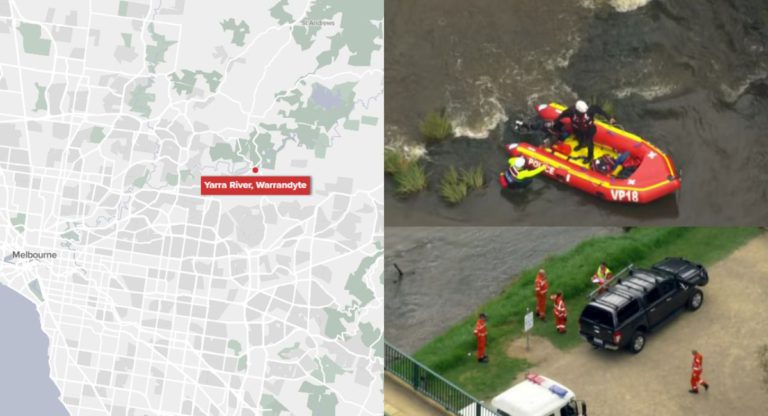
Man charged for allegedly stabbing a taxi and food delivery driver in Sydney

0

A 25-year-old man has been arrested and charged for allegedly stabbing a taxi and a food delivery driver in Redfern, Sydney, New South Wales. 

According to NSW Police, on Friday night, a a 38-year-old taxi driver was found with injuries to the chest and his hand. 

The taxi driver was treated at the crime scene by paramedics before being taken to St Vincent Hospital. 

Image source: Nine news screenshot

Police were told that a young man opened the front passenger door of the taxi and then allegedly stabbed the taxi driver.

Detective acting Superintendent Dean Johnstone told media:

“He’s then got out of the taxi and ran from the area. The taxi driver has indicated to us that it was a rather horrific ordeal that he had to go through”

Later, in a separate incident at about 12.20 am, NSW Police were called to Morehead Street in Redfern with reports of assault on a food delivery driver. 

Police found the delivery driver suffering from two puncture wounds to his back.

Paramedics were called to Redfern Police Station and they treated the delivery driver before being taken to St Vincent’s Hospital.

Detective acting Superintendent Johnstone added:

“These two gentlemen were actually performing work-related functions at the time of these attacks. These are two members of our community who have gone out there and are doing their job.”

Following inquiries, a 25-year-old man was arrested on Walker Street, Redfern, just before 2 pm on Saturday.

It was also revealed that CCTV images have captured this alleged attacker had earlier entered an apartment building.

Image source: Nine news screenshot

NSW Police has charged this man for the alleged “terrifying” assault on the taxi and food delivery driver.

He was charged with five counts of wounding a person with intent to cause grievous bodily harm, two counts of custody of a knife in a public place, assault occasioning actual bodily harm, affray, possessing a prohibited drug.

Police are yet to identify the motive as there had been no information to suggest any demands were made for property.

Support Our Journalism

Global Indian Diaspora needs fair, non-hyphenated, and questioning journalism, packed with on-ground reporting. The Australia Today – with exceptional reporters, columnists, and editors – is doing just that. Sustaining this needs support from wonderful readers like you.

Whether you live in Australia, the United Kingdom, Canada, the United States of America, or India you can take a paid subscription by clicking Patreon. Buy an annual ‘The Australia Today Membership’ to support independent journalism and get special benefits.
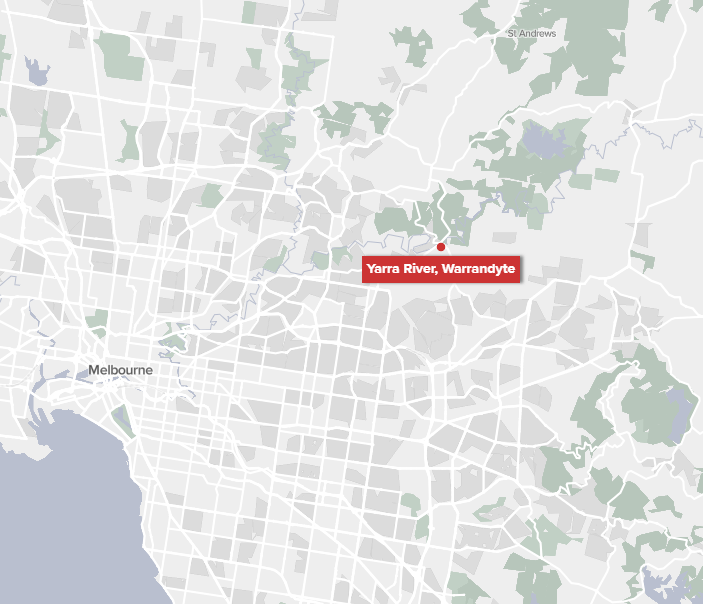
 

India planning to lead world’s green initiatives through solar expansion

0

India’s significant rise to the 7th position in the Global Climate Performance Index reflects the country’s dedicated and effective actions in tackling climate change. The drastic reduction in carbon emissions has positioned India as a global leader in environmental governance.

According to a report released during the global climate conference (COP-28) in Dubai, India not only improved one rank from the previous one, it also maintained its top 10 position for the fifth year in a row.

Under the leadership of Prime Minister Narendra Modi, a series of impactful initiatives have been launched, steering the country towards a greener and more sustainable future.

Renewable Energy Expansion

Central to this ascent has been India’s aggressive investment in renewable energy sources. The Modi government has significantly expanded solar and wind power capacities, reducing dependency on fossil fuels and cutting down greenhouse gas emissions. This shift towards renewable is a cornerstone in India’s climate strategy, reflecting a commitment to sustainable energy generation. According to information provided by the government, a total of 72.02 GW Solar power capacity projects have been installed in the country, so far.
 
National Electric Mobility Mission Plan

Embracing electric mobility, India has taken bold steps under the National Electric Mobility Mission Plan (NEMP) 2020. It aims to achieve national fuel security by promoting hybrid and electric vehicles in the country.

There is an ambitious target to achieve 6-7 million sales of hybrid and electric vehicles every year and the government aims to provide fiscal and monetary incentives to kick start this nascent technology.

International Solar Alliance Leadership

Prime Minister Narendra Modi has been pivotal in driving the International Solar Alliance (ISA), a global coalition aiming to harness solar energy effectively. By promoting solar technology in tropical countries, ISA is addressing both energy poverty and environmental concerns, marking a large milestone in global climate change mitigation.

The ISA, co-founded by India and France in 2015, aims to harness solar energy to reduce dependence on fossil fuels. The alliance, primarily involving countries located between the Tropics of Cancer and Capricorn, has grown steadily over the years. 

Policies to Combat Climate Change

India has committed to reducing emissions intensity of its GDP by 45% by 2030. The updated Nationally Determined Contribution (NDC) marks an important step towards achieving India’s long-term goal of reaching net-zero emissions by 2070.

Prime Minister Modi’s policies have been instrumental in ensuring that India not only meets but, in many cases, surpasses its international commitments. These policies focus on both mitigation strategies to reduce the effects of climate change and adaptation measures to manage the impacts.

Green Infrastructure Development

The development of green infrastructure is another area where the Modi government has excelled. Initiatives like smart cities and eco-friendly buildings are part of a larger plan to create sustainable urban environments that are resilient to climate-related challenges.

In addition to these, India’s reforestation and wildlife conservation efforts have contributed significantly to biodiversity and helped in carbon sequestration. These initiatives have contributed to maintaining overall ecological balance and reducing the impact of climate change.

India has also aligned with international climate agreements, notably the Paris Agreement, which offers a central position to achieving global climate goals.

Support Our Journalism

Global Indian Diaspora needs fair, non-hyphenated, and questioning journalism, packed with on-ground reporting. The Australia Today – with exceptional reporters, columnists, and editors – is doing just that. Sustaining this needs support from wonderful readers like you.

Whether you live in Australia, the United Kingdom, Canada, the United States of America, or India you can take a paid subscription by clicking Patreon. Buy an annual ‘The Australia Today Membership’ to support independent journalism and get special benefits.
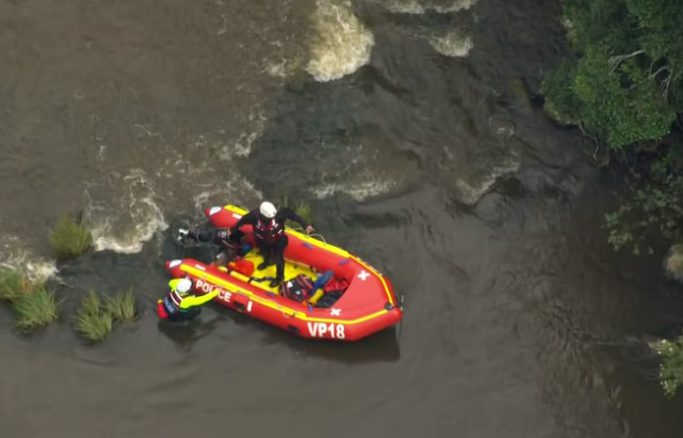
Canadian drug cartels damaging Fiji and Australia through meth

0

A new Postmedia investigation in Fiji has found Canadian drug cartels at the top of the transnational meth smuggling chain.

The report published in the Vancouver Sun and The Province reveals that the methamphetamine (meth) is ravaging people in Fiji is being shipped by air and sea from British Columbia in Canada.

The Director of the Fiji Police Narcotics Bureau, Superintendent Seru Neiko told Vancover Sun that they are unable to police Fiji’s borders, especially maritime border, as the drug consignments are dropped off at sea and then picked up and transported further to another destination.

Superintendent Neiko added that the authorities are seeing a rise in drugs coming up from Canada to Fiji.

In fact, Fijian authorities were so concerned about these illegal shipments from British Columbia that they contacted Royal Canadian Mounted Police (RCMP) representative in Canberra, Australia. This prompted a delegation to visit last summer that included Mounties and Canada Border Services agents.

Image: Director of the Fiji Police Narcotics Bureau, Superintendent Seru Neiko (Source: LinkedIn)

Earlier this month, Fiji Police found a record three tonnes of meth hidden in 797 plastic containers inside a house under construction for years in Namaka.

This shipment was likely destined for Australia.

The Fijian authorities believe that some meth is being “stacked” in Fiji — unloaded in containers to be transported at a later date.

In addition to Canada, drugs are also illegally shipped from the United States and Southeast Asia to Fiji, Australia, and New Zealand.

The crime fighting efforts of the AFP in 2023 has led to the seizure of tonnes of illegal drugs as part of efforts to combat serious organised crime activity in Australia.

Image: Operation Parkes (Source: AFP)

In June 2023, a joint AFP, ABF, VicPol, Royal Canadian Mounted Police, Canada Border Services Agency, New Zealand Police and New Zealand Customs Service investigation resulted in five men being charged with the alleged attempted importation of 2,900 litres of liquid meth. Canadian authorities also allegedly seized a total of 6,125 litres of liquid meth.

In July 2023, 174kg of ketamine with an estimated wholesale value of $6.9 million, was seized in Victoria in what was Australia’s largest seizure of the drug.

AFP Detective Superintendent Transnational Serious and Organised Crime Anthony Hall said in a statement that the AFP was aware of criminal syndicates evolving their methodology in attempt to bring harmful illicit substances into Australia and concealing ketamine within liquid concrete was no exception.

Image: Fiji’s Prime Minister Sitiveni Rabuka interacting with local farmers (Source: X)

Superintendent Neiko adds that locals dealers are selling small packets of meth and other types of drugs that is devastating Fiji.

Last year, during his tour of the Western Division, Fiji’s Prime Minister Sitiveni Rabuka urged community leaders to come together and combat the rising cases of illicit drug trade that have plagued the region.

Image: Dr Shailendra Bahadur Singh, Associate Professor and Head of Journalism at the University of the South Pacific (USP) in Suva (Source: Wansolwara)

Dr Shailendra Bahadur Singh, Associate Professor and Head of Journalism at the University of the South Pacific (USP) in Suva told The Australia Today that tmes have changed rapidly and Fiji is struggling to cope.

“When we were younger in the 70s-80s Fiji prided itself on not having a hard drugs problem. The worst we feared was marijuana, which seems rather quaint compared to what we are faced with nowadays, and the sheer scale of it.”

Dr Singh adds:

“I’m not aware of any research or stats about usage, but the feedback from the grapevine, especially taxi drivers, who cart users and dealers around, and other anecdotal evidence, suggest that we could be facing an epidemic. The question is whether enough is being done. For instance, baseline research to get at least some measure of how widespread usage is, among which age groups, etc., to base responses on.”

Image: Drug Free World Fiji founder Kalesi Volatabu at Sigatoka Police Station (Source: Drug Free World Fiji Facebook)

In 2023, Drug-Free World Fiji Founder Kalesi Volatabu has revealed that during a survey conducted in 2019, at least 1 out of 3 Fijian children on the streets were drug peddlers.

Fiji Village News has also highlighted how young teens have been seen injecting meth, sex workers and homeless youth share dirty needles, and some taxi and bus drivers are using the dangerous drug to work for days without sleeping.

The Drug Free World Fiji founder is also urging Fijian parents and guardians to educate their children on the effects of using drugs and also create a platform at home where their children can come to them for anything.

Support Our Journalism

Global Indian Diaspora needs fair, non-hyphenated, and questioning journalism, packed with on-ground reporting. The Australia Today – with exceptional reporters, columnists, and editors – is doing just that. Sustaining this needs support from wonderful readers like you.

Whether you live in Australia, the United Kingdom, Canada, the United States of America, or India you can take a paid subscription by clicking Patreon. Buy an annual ‘The Australia Today Membership’ to support independent journalism and get special benefits.
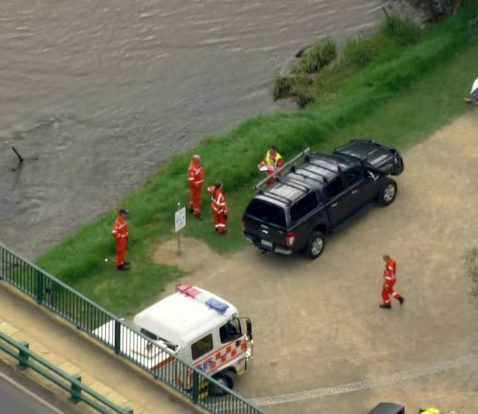
Did the BOM get it wrong on the hot, dry summer?

0

By Christian Jakob

What happened to the scorching El Niño summer we were bracing for? Why has the east coast of Australia been drenched while the north and west gets the heat?

For beachgoers, a wrong weather forecast is annoying. For farmers, it can be very expensive. And for northern Queensland residents surprised by flooding after Cyclone Jasper, it can be devastating. Small wonder there’s been plenty of criticism levelled at the Bureau of Meteorology and other forecasting agencies this summer.

The criticism is understandable. But is it fair? No. The reason is that weather forecasting is inherently not about certainty but probability. Our atmosphere and oceans do not behave in simple, easily predictable ways. They are non-linear, chaotic systems. That means we can only predict large weather features such as highs and lows or bands of storms with relative certainty and even then only for a few days in advance.

We want certainty – but we have to settle for probability

Let’s say you check your weather app and see your location has a 60% chance of rain at midday. What does this actually mean?

It means if this forecast was issued 100 times, you should get wet 60 times and stay dry 40 times.

To forecast rainfall for a whole season ahead, meteorologists generally calculate the chance of exceeding average conditions, rather than stating that we will have a dry or wet summer with certainty.

So if we predict a 25% chance of above-average rain during an El Niño summer, we would expect that one out of every four times we make this prediction, we would observe higher rainfall than the average.

So how then do we know if we are making good forecasts? Given that a 60% chance of rain can mean wet or dry, albeit with different odds, we certainly won’t be able to judge the forecast quality based on a single event. Instead, we assess many forecasts of 60% rain made in the past to see if the 60 to 40 split of wet and dry eventuated. If it did for this and all other possible probabilities, the forecasts work well.

This isn’t what we’d like. Many of us find probabilistic forecasts confusing. Intuitively, we would prefer to simplify them into absolute statements.

Take a picnic you have planned for tomorrow. If you read the statement “there will be thunderstorms at noon tomorrow at Picnic Spot,” you will feel confident it’s best to cancel the event. But the statement “there’s a 60% chance of thunderstorms at noon tomorrow at Picnic Spot” is far more accurate. The first gives false certainty, by vastly oversimplifying what we really know.

Let’s not forget, there is a 40% chance it will stay dry, which the first statement completely ignores. And if it does stay dry, how will your friends react to the cancelled picnic? How much risk are you willing to take?

When we criticise weather forecasts for their inaccuracy, we are usually being unfair. You can’t actually say a weather forecast was wrong if you experienced rain when the forecast was for a high chance of being dry. It’s simply not possible to tell from a single day or even a season how well our forecasts are working because of the nature of how our atmosphere and oceans behave. We’ve known about this for 60 years.

That is why the Bureau of Meteorology’s seasonal forecasts come in likelihoods, such as the rainfall outlook for October to December issued on September 28th. It predicted that “October to December rainfall was likely (60 to 80% chance) to be below median for much of Australia excluding most of central and northwestern WA and south-west Tasmania.” Note that the forecast had a 20-40% chance for the wetter than usual conditions which some parts of Australia ended up experiencing.

But beware: We can’t declare the success or failure of a likelihood forecast from a single season. What the likelihood gives us is the ability to make better decisions based on the best information we have.

Less than certain but far better than nothing

Given these constraints, how can we best use probabilistic forecasts in making decisions?

Here, weather and climate forecasting alone cannot provide the answers. The use and value of a particular forecast strongly depend on what decisions need to be made, our values, and what economic circumstances decisions are made in.

A very simple example is to assess how much it would cost to protect ourselves against, say, a flood, and the loss we would incur if we did not protect ourselves and then the event happened.

If the cost of protection is very low and the loss very large, the answer is simple: protect yourself all the time. High protection costs and low losses imply we should never protect ourselves. Both statements can be made without bringing in the forecast probability. But in the middle, it gets tricky. How much should you spend on a highly damaging event with a low probability of occurring?

Deterministic weather forecasts giving certainty are only possible for a week or two, and only for the large features of the weather. This means longer term forecasts and those for intense weather systems such as thunderstorms or tropical cyclones will only ever be possible by assessing how likely different outcomes are, and giving us a probability.

It’s fine to complain about the weather. But we can’t complain about the forecasting based on a single event. We want to know what’s coming our way, but the weather doesn’t work like that. We owe it to society to provide and use the best information we have to protect and save property and lives. There is too much at stake to keep it simple.

Christian Jakob, Director, ARC Centre of Excellence for the Weather of the 21st Century, Monash University

This article is republished from The Conversation under a Creative Commons license. Read the original article.

"The

Support Our Journalism

Global Indian Diaspora needs fair, non-hyphenated, and questioning journalism, packed with on-ground reporting. The Australia Today – with exceptional reporters, columnists, and editors – is doing just that. Sustaining this needs support from wonderful readers like you.

Whether you live in Australia, the United Kingdom, Canada, the United States of America, or India you can take a paid subscription by clicking Patreon. Buy an annual ‘The Australia Today Membership’ to support independent journalism and get special benefits.
Durga, Sajini, Nikhil, and Sandipan amongst Australian of the Year Award finalists

0

There are 34 people in the running to be named 2024 Australian of the Year, 2024 Senior Australian of the Year, 2024 Young Australian of the Year and 2024 Australia’s Local Hero, each selected from their state and territory.

The national nominees include community leaders, educators, volunteers environmental and animal advocates, medical researchers, changemakers, and community creators.

Prime Minister Anthony Albanese met the nominees in the morning and tweeted:

“The 2024 Australian of the Year nominees represent the best of our values: courage, compassion and kindness.”

National Australia Day Council CEO, Mark Fraser AO CVO, said the national nominees represent what inspires Australians and makes us proud.

“Each of the national nominees were nominated by a member of the public, someone who was inspired by their achievements or contributions and believed their story should be shared with all Australians.”

Image: Victoria’s Young Australian of the Year Bhakta Bahadur Bhattarai (credit NADC/Salty Dingo)

Victoria’s Young Australian of the Year Bhakta Bahadur Bhattarai‘s (better known as Durga) selfless actions are a constant source of care and connection among Wodonga’s multicultural community. 

Born and raised in a Bhutanese refugee camp in Nepal, Durga came to Australia with his family in 2012. He completed high school and then trained as a pharmacy assistant and registered nurse.  

Feeling lonely and isolated during his studies, Durga founded the Albury Wodonga Multicultural Community Events Inc in 2014. The organisation advocates for and showcases multicultural communities and organises help during difficult times.  

On top of his work as a nurse, Durga supplied homemade masks to the elderly and emergency food relief during the COVID-19 lockdowns. He also arranged multiple community wellbeing and entertainment programs, and has raised thousands of dollars for sick young people and disability support. 

Among several awards recognising his contributions, Durga was awarded the Meritorious Service Award from the Government of Victoria in 2019. 

Image: Tasmania’s Senior Australian of the Year Sajini Sumar (credit NADC/Salty Dingo)

Tasmania’s Senior Australian of the Year Sajini Sumar has championed the cause of migrant and culturally diverse women in Tasmania for decades, giving a voice to groups that are often silenced.  

Having lived and worked around the world as a registered nurse, Sajini has used her lived experience and cultural understanding to assist, support, and advocate for migrant women. 

She’s helped new migrants develop networks and delivered school workshops to promote cross-cultural understanding and harmony.  

In 2005, she co-founded the Multicultural Women’s Council of Tasmania as a platform to develop and support women – and she’s still lobbying and advocating for positive change.  

Due to her outstanding work, Sajini has been a recipient of many community awards, including being inducted into the Honour Roll of Women in 2005 for her service to multicultural affairs. 

In 2012, this ‘champion of multiculturalism’ was selected as a People of Australia ambassador to help promote multiculturalism and provide feedback to the Federal Government. 

Image: NSW’s Young Australian of the Year Nikhil Autar (credit NADC/Salty Dingo)

NSW’s Young Australian of the Year Nikhil Autar was diagnosed with leukaemia at the age of 17. He has undergone chemotherapy, bone marrow transplants, open heart surgery and survives a life-threatening chronic illness.  

As a cancer survivor who understands the importance of access for people with disability, Nikhil created Knia Maps – ‘Know In Advance Maps’ – which has plotted accessibility at major Sydney hospitals, universities, public venues and transport, plus hundreds of small businesses.  

Nikhil also founded Bheem Health, a social enterprise that provides low-cost medical devices for sick and vulnerable people. His first device, BheemUP, allows any bed to convert into a hospital bed. He’s now developing BheemSense, the world’s first sensor mat that tracks sleep phases and helps minimise pressure sores.  

Medical student Nikhil has raised almost $500,000 in grant funding and conducted cancer research. A blogger, disability advocate and motivational speaker, his diverse and inclusive hiring practices have given migrants, people with disabilities and student engineers their first jobs. 

Image: ACT Local Hero Nominee Sandipan Mitra (credit NADC/Salty Dingo)

ACT Local Hero Sandipan Mitra is a volunteer and advocate for diversity and multiculturalism. His journey from a childhood of extreme poverty to community leader is inspiring. A senior bank manager and dedicated father, Sandipan’s volunteer work celebrates diversity and tackles local community issues.  

Among his many initiatives, Sandipan helps children in need by employing low-cost tutors to provide free tuition, and partners with local senior care facilities to provide residents with opportunities for interaction.  

During the COVID lockdowns, Sandipan distributed food and supplies, provided essentials to international students and free meals to healthcare workers, organised online wellbeing seminars, and assisted vulnerable and elderly community members.  

His Stories That Matter event celebrated the lives of Canberra migrants and refugees. Sandipan also stood against the resurgence of racism during lockdowns. 

Sandipan and his team’s barbecues raise money for social causes such as the National Breast Cancer Foundation, Painaustralia and CARE Australia.  His many contributions foster unity, compassion and inclusivity among the ACT community. 

Image: Australian of the Year 2024

The winners of the Australian of the Year Awards will be announced at a ceremony at the National Arboretum in Canberra on January 25.

Support Our Journalism

Global Indian Diaspora needs fair, non-hyphenated, and questioning journalism, packed with on-ground reporting. The Australia Today – with exceptional reporters, columnists, and editors – is doing just that. Sustaining this needs support from wonderful readers like you.

Whether you live in Australia, the United Kingdom, Canada, the United States of America, or India you can take a paid subscription by clicking Patreon. Buy an annual ‘The Australia Today Membership’ to support independent journalism and get special benefits.

Indian-Australian Tennis Duo Rohan Bopanna and Matthew Ebden Clinch World No. 1 in Doubles

0

In a historic achievement for both Indian and Australian tennis, Rohan Bopanna and Matthew Ebden have secured the world number one spot in men’s doubles, according to the Pepperstone ATP Doubles Rankings.

The pair’s remarkable performance at the Australian Open 2024 has catapulted them to the top, marking a significant milestone in their careers.

At 43, Rohan Bopanna becomes the oldest player to attain the number one ranking in men’s doubles, a testament to his enduring skill and perseverance in the sport.

He told ausopen.com that achieving the feat at the Australian Open, the Grand Slam of Asia-Pacific, was especially meaningful.

Indian tennis star Rohan Bopanna; Image Source; Tennis Australia-Australian Open

In his 17th Australian Open appearance, the 43-year-old has advanced to the men’s doubles semifinals at Melbourne Park for the first time.

The enduring Indian had never previously progressed beyond the third round in a men’s doubles draw at the tournament.

“Initially I struggled with the conditions, because it can be extremely windy, which doesn’t suit my game,” Bopanna explained of his Australian Open record.

“Now that I’m more mature, I’ve figured I need to stay strong no matter what the conditions are.”

The Indian veteran, partnering with Matthew Ebden, advanced to the semi-finals of the Australian Open by defeating Argentina’s Maximo Gonzalez and Andres Molteni in straight sets. This victory not only extended their impressive run in Melbourne but also ensured Bopanna’s historic rise in the rankings.

Indian Rohan Bopanna and Australian Matt Ebden; Image Source; Tennis Australia-Australian Open

The Indian-Australian duo’s journey to the top has been marked by consistent performance and a remarkable understanding on the court. Their synergy was evident as they held their service games with confidence and navigated through a tie-breaker in the second set with strategic precision.

Bopanna, who entered the Australian Open at a career-high of World No. 3, fuelled by a title in Indian Wells and a runner-up finish at the US Open, has been a stalwart in men’s doubles for over two decades. His success at Melbourne Park, where he had never been beyond the third round in 16 prior appearances, is a remarkable addition to his already illustrious career.

Matthew Ebden ranked fourth, ascends to the world number two spot, further solidifying his standing as a formidable force in men’s doubles tennis. Ebden, who hails from Australia, has been a key player on the international circuit, and his partnership with Bopanna has proven to be a winning combination.

This achievement is not only a personal triumph for Bopanna and Ebden but also a significant moment for Indian and Australian tennis. Bopanna joins the elite group of Indian tennis players who have reached world number one in doubles, a list that includes Leander Paes, Mahesh Bhupathi, and Sania Mirza.

As the duo prepares for their upcoming semi-final clash against the team of Zhang Zhizhen and Tomas Machac, they carry the hopes and aspirations of their nations. Their ascendancy to the top of the world rankings is a source of inspiration, demonstrating that hard work, determination, and teamwork can lead to extraordinary achievements in the world of tennis.

Support Our Journalism

Global Indian Diaspora needs fair, non-hyphenated, and questioning journalism, packed with on-ground reporting. The Australia Today – with exceptional reporters, columnists, and editors – is doing just that. Sustaining this needs support from wonderful readers like you.

Whether you live in Australia, the United Kingdom, Canada, the United States of America, or India you can take a paid subscription by clicking Patreon. Buy an annual ‘The Australia Today Membership’ to support independent journalism and get special benefits.

Four Indian-origin people including two International Students died after drowning in Phillip Island

0

Three people died while another was airlifted to a hospital in critical condition on Wednesday afternoon after being pulled from an unpatrolled beach on Phillip Island near Melbourne (Victoria).

Now the fourth person a woman in her twenties has died in the hospital.

The Victims are:

Reema Sondhi
  • 23-year-old Jagjeet Singh from Clyde an Australian Permanent Resident of Indian origin who worked as a Nurse,
  • The second victim 43-year-old Reema Sondhi an Indian citizen on a visitor visa
  • The third victim 20-year-old Kirti Bedi an International Student studying at Federation University
  • and fourth Victim 20-year-old Suhani Anand was an International Student studying at Deakin University

Indian Consul General in Melbourne Dr Sushil Kumar told The Australia Today that he has reached out to the families and friends of victims.

“This is a very unfortunate incident involving people of Indian origin, our thoughts and prayers are with the families and friends of the victim.”

“Please reach out to the Indian Consulate as our officials are here to help and support in any way we can.”

Victoria Police said in a statement emergency services responded to four people in difficulty at Forrest Caves, a popular tourist destination on Phillip Island known for its sea caves on the island’s south-eastern coast, at about 3.30 pm.

The Visit Phillip Island tourism body notes that these caves are formed by erosion of the cliffs and are only accessible at low tides.

As per reports, three women and a man were pulled from the water and were unresponsive.

Lifeguards and paramedics responded by administering CPR on all four but three were pronounced deceased at the scene.

According to the Herald Sun, One man from the party of ten could be heard wailing:

“I told them not to go – I should have been there.”

Philip Island Drowning; Image Source/Courtesy; The Age/Justin McManus

An eyewitness told 7News it was a “horrible” situation:

“The family was really upset. There seemed to be a group of 10 people who came here for a really nice day. Obviously it turned to tragedy.”

The bodies were loaded into vans about 8 pm and the man cried as they drove off. 

Image: Paramedics carrying the bodies (Source: 7News screenshot)

Victoria Police adds that at this stage the deceased are believed to be a man in his 40s and two women in their 20s. A third woman, also believed to be in her 20s, has been taken to hospital in a critical condition.

Life-Saving Victoria state agency commander Kane Treloar told The Age the tragedy was the worst drowning incident to occur in Victoria in almost two decades.

Shadow Multicultural Minister Jason Woods posted “Very sad to hear that three people have died … My thoughts and prayers are with the woman in the hospital and the friends and family of the victims. I urge everyone to swim only between the flags, it’s not worth the risk.”

The deceased have not been formally identified and their deaths are not being treated as suspicious.

Victoria Police said a report would be prepared for the coroner about the non-suspicious deaths.

Support Our Journalism

Global Indian Diaspora needs fair, non-hyphenated, and questioning journalism, packed with on-ground reporting. The Australia Today – with exceptional reporters, columnists, and editors – is doing just that. Sustaining this needs support from wonderful readers like you.

Whether you live in Australia, the United Kingdom, Canada, the United States of America, or India you can take a paid subscription by clicking Patreon. Buy an annual ‘The Australia Today Membership’ to support independent journalism and get special benefits.

India’s diaspora leading global remittance list with record $125 Billion transfer

0

India has achieved a remarkable milestone in 2023 by leading the global remittance charts with a staggering $125 billion, as reported by the World Bank.

India’s position at the top of the global remittance charts reflects the strength and impact of its global diaspora, marking their economic contribution to their home country.

This is particularly notable considering the size and spread of the Indian diaspora, which constitutes a significant workforce in various countries, especially in Australia, Canada, the United States, the United Kingdom, Singapore, and the Gulf Cooperation Council nations.

According to the World Bank’s Migration and Development Brief released on December 18, 2023, the total remittance flow to low- and middle-income countries (LMIC) reached approximately $669 billion in 2023.

India’s share, amounting to $125 billion, registers a significant increase from the previous year’s figure of $111.22 billion. This growth elevates India’s contribution to South Asian remittances to 66% in 2023, up from 63% in 2022.
 
The United States, the United Kingdom, and Singapore emerge as the most significant contributors to India’s remittance inflow, collectively accounting for 36% of the total. The Gulf Cooperation Council (GCC) countries, particularly the United Arab Emirates, also play a substantial role, contributing 18% to India’s remittance inflow.

Australia was at 0.7% as per a survey conducted by the RBI for 2020-21 through Authorised Dealers (ADs) banks.

Several government initiatives have been pivotal in boosting these remittances. The linkage of India’s Unified Payments Interface (UPI) with Singapore’s payment systems and the cooperation between India and the UAE, which involves using local currencies for cross-border transactions, have significantly facilitated the flow of remittances.

India has also implemented non-residential deposit programs, attracting substantial foreign currency. As of September 2023, non-residential deposits in India amounted to $143 billion, witnessing an increase of $10 billion from the previous year, the World Bank report said.

The report indicates that remittance costs play a crucial role in these flows. South Asia, and particularly the remittance corridor between India and Malaysia, boasts the lowest remittance costs globally, standing at just 1.9%. This factor, along with strong labor markets and declining inflation in high-income source countries, has been instrumental in the surge of remittances to India.
 
However, the World Bank cautions about the potential risks, including the possibility of a decline in real income for migrants in 2024 due to global inflation and low growth prospects. Despite these concerns, remittances to low- and middle-income countries are expected to grow, albeit at a slower pace, in the coming years.

Most importantly, this report sheds light on the multifaceted impact of these financial inflows on the Indian economy. The significance of this phenomenon extends beyond mere monetary value; it reflects a complex interplay of global migration, economic policy, and the pivotal role of the Indian diaspora.

Support Our Journalism

Global Indian Diaspora needs fair, non-hyphenated, and questioning journalism, packed with on-ground reporting. The Australia Today – with exceptional reporters, columnists, and editors – is doing just that. Sustaining this needs support from wonderful readers like you.

Whether you live in Australia, the United Kingdom, Canada, the United States of America, or India you can take a paid subscription by clicking Patreon. Buy an annual ‘The Australia Today Membership’ to support independent journalism and get special benefits.

Sydney woman charged with $50,225 theft from international terminal

0

A Sydney woman is expected to appear before Downing Centre local court today (25 January 2024) charged with allegedly stealing $50,225 worth of luxury designer items from a shop at Sydney International Airport.

Image: Op Corinella – EC (Source: AFP)

AFP Detective Superintendent Morgen Blunden said the AFP was committed to the safety and security of all major Australian airports, irrespective of the crime type.

“This woman allegedly abused her position within the airport terminal for personal gain.”

Supt. Blunden added:

“The AFP has a positive working relationship with airport businesses to prevent, detect and respond to this type of activity. Due to the cooperation of the store, as well as our longstanding partnership with Sydney Airport Corporation, we were able to resolve this matter swiftly which is a testament to our working relationships.”

AFP officers commenced an investigation into the matter on 9 January, 2024, following a complaint from a luxury airport store involving the alleged theft of items by an employee.

Image: Op Corinella – EC (Source: AFP)

It will be alleged the Kingsgrove woman, 39, who was employed at the store, stole 15 items with an estimated value of $50,225.

Police executed a search warrant at the woman’s Kingsgrove home on 11 January, 2024, seizing four bracelets, three pens, two lighters, two bracelet keys, a pair of earrings, a wallet, a candle, a lighter and a men’s pendant.

Investigators also seized a Sydney Airport visitor pass, an Australian passport, and two electronic devices which will be subject to forensic examination and further investigation.

Image: Op Corinella – EC (Source: AFP)

Head of Security at Sydney Airport Graham White said the airport had zero-tolerance for crime, and especially criminal acts committed within the precinct.

“We’d like to thank the AFP for their commitment to resolving this matter swiftly, and our airport operations team and retail tenant for their collaborative efforts which contributed to the positive outcome.”

The woman was arrested and charged with larceny by clerks or servants, contrary to section 156 of the NSW Crimes Act 1900 (NSW), as applied by section 4(1) of the Commonwealth Places (Application of Laws) Act 1970 (Cth).

The offence carries a maximum penalty of 10 years’ imprisonment.

Support Our Journalism

Global Indian Diaspora needs fair, non-hyphenated, and questioning journalism, packed with on-ground reporting. The Australia Today – with exceptional reporters, columnists, and editors – is doing just that. Sustaining this needs support from wonderful readers like you.

Whether you live in Australia, the United Kingdom, Canada, the United States of America, or India you can take a paid subscription by clicking Patreon. Buy an annual ‘The Australia Today Membership’ to support independent journalism and get special benefits.

Why Australian workers’ true cost of living has climbed far faster than we’ve been told

0

By Peter Martin

Why is Prime Minister Anthony Albanese suddenly so keen to deliver extra cost-of-living relief – keen enough to summon Labor members of parliament to Canberra for a briefing on Wednesday, followed by a National Press Club address on Thursday?

One immediate reason is he is keen to make sure Labor wins the upcoming byelection in the outer-Melbourne electorate of Dunkley on March 2.

But the cost of living wouldn’t matter much for Dunkley – and it wouldn’t matter much for the rest of us – unless it was really biting.

And despite what the treasurer himself has been trying to tell us, it is biting.

Treasurer Jim Chalmers has been pointing out that in the June quarter and the September quarter (the three months to June and to September) real wages grew for the first time in years. By that he means that the wages index compiled by the Bureau of Statistics began growing faster than the consumer price index.

It’s better than growing more slowly, but it tells us next to nothing about what’s happening to buying power. Here’s why.

Why CPI understates today’s living costs

Way back in the late 1990s, more than a quarter of a century ago, the consumer price index (CPI) used to actually reflect the cost of living. It included all of the big costs incurred by households, including – importantly – mortgage interest payments. At the time, mortgages accounted for an average of $5 of every $100 each wage earner spent.

Then in September 1998, in response to representations from the Reserve Bank and the Treasury, the bureau changed the way it calculated the index. It excluded mortgage and other interest payments, in a decision it acknowledged would make the index worse at measuring living costs.

It still carries the warning on its website, saying the consumer price index is

not the conceptually ideal measure for assessing the changes in the purchasing power of the disposable incomes of households.

The index actually does a pretty good job of measuring changes in living costs at times when mortgage rates aren’t much changing. But at times when they are tumbling, it’ll overestimate living costs. And when mortgage rates are soaring – as they have been lately – it will way understate what’s happening to living costs.

We know by how much. For years, the bureau has also published a separate set of measures it pointedly calls “living cost indexes”. These do include mortgage and other interest charges, and for households headed by employees (for whom the buying power of wages matters) they are substantial.

Living costs are up 9%, rather than 5.4%

While the consumer price index (the one quoted by the treasurer) increased 5.4% in the year to September, the living cost index for households headed by wage earners climbed 9%.

For these working households, the price of food climbed 4.8% in the year to September, the price of electricity 14.5% and the price of mortgage interest charges 68%.

It’s the increases in mortgage rates that have made the increases in the other prices hurt so much.

The overall increase in prices faced by wage-earners – 9% – is way above the typical wage increase of 4%.

Bill Mitchell of the University of Newcastle points out that on this measure, the correct one, the buying power of wages has been falling for two and a half years. He says it puts the treasurer’s comments in a wholly different light.

Why we should distrust the CPI

Working Australians are right to distrust the consumer price index, which is something the Australian Council of Social Service warned the bureau about when it made the change.

Each month, the Melbourne Institute asks Australians whether their family finances have deteriorated over the previous year. Usually, about one-third of those surveyed say they have.

But for more than a year now, around 50% of those surveyed have been saying their finances have got worse. That’s a peak not seen since the global financial crisis, and one that has lasted longer.


Asked about family finances over the next 12 months, more than 30% say they’ll worsen further. It’s usually 20%.


Looked at from today’s perspective, the arguments put forward in 1997 for weakening the consumer price index as a measure of living costs are unimpressive.

Back then, the Treasury noted that many welfare recipients didn’t have mortgages and that a consumer price index that excluded them would better reflect their living costs.

The Reserve Bank argued interest rates were “conceptually different from other prices”. In any event, it wanted them excluded because it found it hard to use higher interest rates to bring down inflation if those higher rates pushed the measure of inflation up.

The change attracted little attention at the time, because mortgage rates weren’t moving much. By the time they did, the change had been bedded down.

But here’s some good news

For most of the time since the change, mortgage rates have either increased gradually or been cut, meaning the difference between what the consumer price index has been telling us and what’s been happening to us hasn’t been too stark. It’s been stark lately because interest rates have been rising quickly.

The good news – and there is good news – is that financial markets expect rates to begin falling this year, with the next move down.

Inflation as measured by the consumer price index (inflation excluding mortgage rates) is already falling.


We get the next official update on the consumer price index next week (and the update for the lesser-known living cost indexes a week after that).

It makes now a particularly good time to announce measures to address the cost-of-living crisis. We need them because we really are in something of a crisis. Things are a lot worse than the official index suggests.

And there’s a chance that soon they’ll begin to get better, allowing the prime minister to claim a win.

Peter Martin, Visiting Fellow, Crawford School of Public Policy, Australian National University

This article is republished from The Conversation under a Creative Commons license. Read the original article.

"The

Support Our Journalism

Global Indian Diaspora needs fair, non-hyphenated, and questioning journalism, packed with on-ground reporting. The Australia Today – with exceptional reporters, columnists, and editors – is doing just that. Sustaining this needs support from wonderful readers like you.

Whether you live in Australia, the United Kingdom, Canada, the United States of America, or India you can take a paid subscription by clicking Patreon. Buy an annual ‘The Australia Today Membership’ to support independent journalism and get special benefits.

Friend of India, Former Prime Minister Scott Morrison Announces Departure from Australian Politics

0

Scott Morrison, the former Prime Minister of Australia, has confirmed his resignation from politics, effective at the end of February. Morrison, who has been a member of parliament for the Liberal Party for over 16 years, announced his decision to leave to pursue new challenges in the global corporate sector and to spend more time with his family.

Morrison’s tenure in the Australian government, including nearly four years as Prime Minister, was marked by significant events and policy decisions. His administration faced critical challenges, notably the COVID-19 pandemic, which saw the introduction of the national cabinet and Australia receiving praise for its management of the crisis.

PM Narendra Modi and PM Scott Morrison; Picture Source: @SCOMO

During his time in office, Morrison was known for his strategic partnerships, notably forming the QUAD with the USA, India and Japan, and the AUKUS alliance with the United States and the United Kingdom in 2021.

In a message to his constituents and supporters, Morrison reflected on his journey in politics, stating,

“It has been a great honour to serve as the Member for Cook and as Prime Minister.”

He highlighted his commitment to making Australia a stronger, more secure, and more prosperous country.

Morrison’s tenure also saw a significant elevation in Australia-India relations, marking a shift in the bilateral ties between the two nations. Under Morrison’s leadership, Australia and India fostered a closer partnership, recognising the mutual benefits of a strong strategic, economic, and cultural relationship.

Prime Minister Scott Morrison attends the Australian Indian Community Centre in Aston to assist in unveiling a statue of Gandhi and is joined by the Consul-General to India, Minister Tudge and Assistant Minister Wood to unveil the statue on November 12, 2021. Picture: Adam Taylor

Morrison’s government actively worked towards strengthening diplomatic ties with India, a key player in the Indo-Pacific region. This was evident in the comprehensive strategic partnership agreement signed between Australia and India in 2020.

The agreement, a testament to Morrison’s foreign policy vision, encompassed various domains including defence, trade, maritime security, and technology. This pivotal move was aligned with Australia’s interest in a free, open, and inclusive Indo-Pacific and acknowledged India’s critical role in the region’s stability and prosperity.

Moreover, Morrison’s administration played a crucial role in enhancing trade relations with India. The push for increased economic engagement, including discussions around a bilateral free trade agreement, was aimed at diversifying Australia’s trade portfolio and tapping into one of the world’s fastest-growing economies. This focus not only boosted economic ties but also laid the foundation for long-term strategic cooperation.

PM Scott Morrison at Siva Vishnu Temple, Melbourne; Picture Source: Facebook @SCOMO

Another significant aspect of Morrison’s leadership was his attention to the Indian Australian community, one of the fastest-growing diaspora groups in Australia. His government recognised the immense contributions of Indian Australians in various fields, from business to medicine and cultural arts. Morrison’s administration took steps to celebrate and promote this diversity, understanding that the strength of Australia’s multicultural fabric lay in acknowledging and respecting its various communities.

Morrison himself often engaged with the Indian community in Australia, attending cultural events and festivals like Diwali, which demonstrated his commitment to multiculturalism and the importance he placed on the Indian diaspora as a bridge between the two countries. This engagement helped foster a sense of belonging and recognition among Indian Australians, further consolidating their role in Australia’s multicultural society.

Morrison’s retirement will trigger a by-election for his seat in the southern Sydney suburb of Cook. In his statement, Morrison expressed gratitude to his family, friends, local community, and party supporters in Cook for their support during his political career. He also thanked his staff and parliamentary colleagues for their friendship and support over the years.

Prime Minister Scott Morrison attending HCA Diwali in Canberra (Pic supplied by HCA
Prime Minister Scott Morrison attending HCA Diwali in Canberra (Pic supplied by HCA)

His departure from parliament is expected to create space for new political talent in the Liberal Party, with Morrison emphasising the opportunity for fresh energy and commitment to serve the local community. As Morrison transitions out of politics, his focus shifts towards new endeavours in the corporate world and more active involvement in his local church and community.

Morrison’s political career has been one of significant influence and impact, with his departure marking the end of an era in Australian politics. As he steps into the next chapter of his life, the nation looks back on his contributions and forward to the new leadership that will emerge in his wake.

Support Our Journalism

Global Indian Diaspora needs fair, non-hyphenated, and questioning journalism, packed with on-ground reporting. The Australia Today – with exceptional reporters, columnists, and editors – is doing just that. Sustaining this needs support from wonderful readers like you.

Whether you live in Australia, the United Kingdom, Canada, the United States of America, or India you can take a paid subscription by clicking Patreon. Buy an annual ‘The Australia Today Membership’ to support independent journalism and get special benefits.
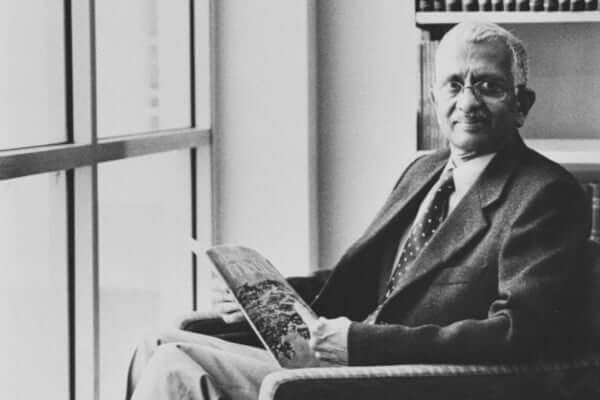
Australia’s population reaches 27 million amidst high inflation and cost of living crisis

0

Australia’s population has soared to 27 million according to the latest data from the Australian Bureau of Statistics (ABS).

As per experts, this rise in population has been fuelled by record immigration and has reached the mark early – more than 30 years earlier than originally predicted.

Australia had its largest ever population increase in 2023, growing by more than 641,000 last year.

November 2023 data from ABS forecasts Australia’s population to reach up to 45.9 million people by 2071.

New South Wales (NSW) has remained the most popular Australian destination for overseas migrants, with Victoria, Queensland, and South Australia following to lure overseas immigrants.

McCrindle social researcher Geoff Brailey told The New Daily that this increased migration is largely driven by workers filling labour gaps and the return of international students.

Brailey said Australia will need another 1.5 million houses in the next six years to keep up with demand.

According to Sustainable Population Australia, “many Australians are concerned about Australia’s ongoing population growth” and argue that stabilizing the “population at the lowest, soonest achievable peak  is the best outcome for the wellbeing of Australians.”

The failure to accurately forecast population growth has led to problems such as housing affordability, infrastructure congestion, environmental deterioration, climate impacts, and reduced quality of life.

ABS’ population projection is based on the estimated resident population and assumes growth since then of:

  • One birth every 1 minutes and 42 seconds.
  • One death every 2 minutes and 52 seconds.
  • One person arriving to live in Australia every 0 minutes and 45 seconds.
  • One Australian resident leaving to live overseas every 2 minutes and 43 seconds.
  • An overall total population increase of one person every 0 minutes and 50 seconds.

Support Our Journalism

Global Indian Diaspora needs fair, non-hyphenated, and questioning journalism, packed with on-ground reporting. The Australia Today – with exceptional reporters, columnists, and editors – is doing just that. Sustaining this needs support from wonderful readers like you.

Whether you live in Australia, the United Kingdom, Canada, the United States of America, or India you can take a paid subscription by clicking Patreon. Buy an annual ‘The Australia Today Membership’ to support independent journalism and get special benefits.

If you discover mould after moving into rental property? Here are your legal rights

0

By Rebecca Bentley and Tim Law

A startling number of Australian rental homes come with an unwanted housemate: mould.

If you discover mould in a rented home, who is responsible and what can you do if the landlord seems unwilling to fix it?

Find the cause

The landlord is responsible if the mould is caused by the structural condition of the property. This can include things like leaking pipes, gutters, roofs or windows.

Tenants are responsible for mould remediation if the way they occupy a home has promoted mould growth. For example, if they have not been using exhaust fans in bathrooms, have been failing to ventilate their home or have been storing wet clothes in a cupboard.

This means establishing the cause of the mould is crucial to working out who’s responsible for repairs.

Why are so many rentals mouldy?

Australia has a rental home mould problem chiefly because much of our housing hasn’t been built to suit our climate. Houses tend not to be built with sufficient consideration of:

  • efficient energy consumption to regulate indoor temperature
  • the orientation of homes
  • the use of double glazing and insulation to regulate temperature and humidity.

It is estimated that nearly 17% of privately rented homes and 22% of social housing dwelling require major repairs. This includes structural defects, such as large cracks in walls or leaking gutters, that can generate mould growth.

Tenant representatives have said in the past there is also a problem of weak enforcement of laws concerning the condition of rental homes.

Mould; Image Source @Canva

4 ways to cut mould risk

To reduce your mould risk, you need to manage indoor moisture and temperature. Try to:

  • keep the home well ventilated
  • open windows and use exhaust fans in the bathroom and kitchen
  • in humid climates, use air conditioning or a dehumidifier
  • in cold climate, use a dehumidifier (desiccant dehumidifiers might more appropriate in very cold places)
  • reduce moisture in the home by wiping up spills and condensation on surfaces
  • dry washing outside
  • if buying a dryer, opt for a condensing dryer instead of a conventional dryer (condensing driers put out much less vapour)
  • report any structural issues (such as leaking pipes or windows that don’t close properly) to the agent or landlord as soon as you notice them.

Rental minimum standards differ by state or territory

In New South Wales, adequate ventilation is one of the minimum standards properties must meet to be considered fit to live in.

If the rental provider has been notified about mould problems in the house but has failed to act, you might consider getting advice from the Tenants’ Union of NSW.

Its fact sheet on mould also explains what to do if you’d like to contact the NSW Civil and Administrative Tribunal to apply for repairs, rent reduction or compensation.

In Victoria, rental minimum standards say “all rooms must be free from mould and damp caused by or related to the building structure.”

The Tenants Victoria website has information on how to ask a landlord to fix a mould problem or structural problems leading to mould and how to apply to the Victorian Civil and Administrative Tribunal if the landlord fails to act.

In Queensland, it depends on when you signed the lease. If you signed after September 1 this year (after new standards were introduced) tenants should notify the landlords of mould as soon as they discover it.

If mould is a result of problems with the property and the landlord doesn’t undertake repairs, tenants can contact the Queensland Civil and Administrative Tribunal.

The guidelines in Western Australia say the landlord must ensure the premises is “in a reasonable state of cleanliness and a reasonable state of repair […] and must conduct any repairs within a reasonable period after the need for the repair arises.” And in Western Australia, mould caused by faults in gutters or other fixtures is the responsibility of the rental provider. Further information on what to do if a dispute over the premises can’t be resolved amicably is available on the state government website.

Mould; Image Source @Canva

In South Australia rental properties must be “reasonably free from mould or other irritants [and] reasonably free from the adverse effects of moisture or damp.” If a landlord refuses to fix something after being asked, the tenant can apply to the South Australian Civil and Administrative Tribunal.

In Tasmania, rental properties must be clean and in good repair when leased out. According to the Tasmanian government website on the issue,

‘Clean’ includes having no […] serious mould/rising damp issues.

If the tenant requests repairs and the landlord doesn’t act, the tenant can lodge a repair order with the Commisioner’s office.

In the Australian Capital Territory, the Tenants’ Union ACT has guidance on what to do if you discover mould in a property you rent.

In the Northern Territory, tenants may wish to seek advice from the Tenants’ Advice Service if there is a mould problem in a property they rent.

What policy change could help?

If the cause of indoor mould is related to the design and construction of the house, rental providers should act. However, tenants may not have the information they need to determine and substantiate this claim and can’t do much to get rental providers to act on mould if it’s not clear what’s causing it. Also, renters often worry asking for repairs could lead to a rent increase or eviction.

Solutions include strengthening tenant’s rights to compel landlords to investigate the cause of mould in a house (given that knowing the cause is essential to assign responsibility for repairs). There should also be more stringent enforcement of current minimum standards relating to mould in rental properties.

Given the scale of problems like mould in Australian homes, policymakers may wish to consider whether a parliamentary inquiry on home environments and health is needed.

This would give Australians a chance to speak about their experiences – something that could help policymakers improve regulation in the rental sector.

Rebecca Bentley, Professor of Social Epidemiology and Director of the Centre of Research Excellence in Healthy Housing at the Melbourne School of Population and Global Health, The University of Melbourne and Tim Law, Adjunct lecturer, Victoria University

This article is republished from The Conversation under a Creative Commons license. Read the original article.

Support Our Journalism

Global Indian Diaspora needs fair, non-hyphenated, and questioning journalism, packed with on-ground reporting. The Australia Today – with exceptional reporters, columnists, and editors – is doing just that. Sustaining this needs support from wonderful readers like you.

Whether you live in Australia, the United Kingdom, Canada, the United States of America, or India you can take a paid subscription by clicking Patreon. Buy an annual ‘The Australia Today Membership’ to support independent journalism and get special benefits.

India Surpasses Hong Kong to Become World’s Fourth-Largest Stock Market Powerhouse

0

By Shishu Ranjan and Ajit Jha 

If the year 2022 witnessed the Indian economy replacing the UK as the world’s fifth largest economy, the year 2023 saw India achieving a major milestone when its stock market valuation joined the ranks of stock market superpowers.

It stood just behind the US, China, and Japan in the stock market valuation; a great feat that marked Nifty and Sensex – India’s two stock market exchanges, touching new highs. While Nifty saw a growth of 18.5% in 2023, Sensex registered a growth of 17.3% this year.

As such, overall market values of listed companies in the Indian stock exchanges crossed the $4 trillion mark. It indicates the state of the country’s economy in the face of ongoing conflicts with global economic impact and high inflationary trend observed across the world economy.

However, to understand India’s stock exchange success and the health of the Indian economy, it is important to recap the world economic environment. The global economic outlook as updated by the International Monetary Fund (IMF) in October 2023 continues to highlight the challenging global scenario in which India is outshining all other nations. The global growth rate was expected to decline from 3.5% in 2022 to 3% in 2023. For India, the IMF projected an annual growth rate of 6.3%, which was lower than the 7.2% of realized growth rate in 2022.

The global inflation rate in 2023 was expected to decline to 6.9%. However, it is likely to remain outside the comfortable target rate until 2025 due to which all major central banks including the Federal Reserve and Bank of England have maintained higher base rate in order to reduce the market liquidity and subsequently, tapering general demand in the economy.

However, India has delivered better than expected quarterly growth rate in 2023. The Indian economy grew at 7.8% in Q2-23 and 7.6% in Q3-23 against an expected growth rate of 7.5% and 6.8% in Q2 and Q3, respectively. At the same time, India has been able to manage its annual average retail inflation by 6% and increase its industrial production (Q2-Q3) by 6.9%.

The strong performance by the Indian economy amid global economic challenges is behind the investor’s confidence in the Indian economy and the same is reflected in the Indian stock market. Just to highlight, Indian Stock Markets saw historic highs in the last week of December as the 30-share BSE index crossed 72,000 marks and the 50-share NSE index crossed 21,000 for the first time.

In 2023, India received a net Foreign Portfolio Investment (FPI) of $20.2 billion, the highest in emerging markets, and the total FPI is valued at $723 billion. The success of the Indian Stock market further increases with the fact that the Foreign Direct Investment (FDI) saw a decline of 16% in 2023 as it declined to $70.97 billion in 2023 from $84.84 billion in 2022.

The Covid19 led to a global economic recession when the world economy witnessed a negative growth rate (-3.1%). However, the high growth rate exhibited by India led global investors to turn to Indian companies for better returns on their investments. Global investors are looking for a more flexible option to invest, which is why, FPI increased in India as the Indian economy exhibited a strong performance.

The underlying factors for such a sustained high economic growth rate are many. First, political stability in India with the government led by Prime Minister Narendra Modi has been proactive in initiating market reforms such as the implementation of Goods and Services Tax (GST) to reduce the cascading of taxation, JAM (Jandhan – bank accounts with zero balance for all, Aadhar – a unique identification number, and Mobile) trinity to have universal financial inclusion, free rations for poor to reduce the acute poverty and malnutrition, Digital Payments (UPI) infrastructure for the formalization of the informal sector, Make in India to boost production capacity, Production Link Incentives (PLI) schemes for enhancing the export capacity in order to reduce the CAD (Current Account Deficit) and boost GDP, social welfare schemes, education & health reforms to improve India’s human resource capabilities, Skill India to upgrade the existing skills and several other government-sponsored schemes in last nine years. All these measures have helped India to unlock its growth potential and stability in the regime is expected to continue with the policy reforms in land and labour areas in the upcoming years.
 
Second, the union government led by PM Modi has increased its capital expenditure by 433% ($250 billion in 2023-24) when compared to Financial Year (FY) 2013-14 figure of $48 billion and a majority of the budgetary allocation is for the infrastructure development in rail, roads, airports, ports, hospitals, research institutes and capacity creation, which is further expected to crowd-in the private investment.

Post-COVID-19, the GDP data has indicated a strengthening of private investment in the economy as Q3 estimates put the Year-on-Year (YoY) growth rate at 7.8%. The high capital expenditure, government as well as private, has boosted domestic demand, which is reflected in the Private Final Consumption Expenditure and Government Final Consumption Expenditure share of 56.8% and 8.9%, respectively. The robust domestic demand isolates the Indian economy from external shocks and global economic challenges.

Third, despite an unprecedented increase in capital expenditure by the central government, the fiscal deficit is contracting and the government sticking to the fiscal consolidation path in budgetary estimates is strengthening the trust of external investors in the Indian economy. As per the data released by the government, India is most likely to achieve its fiscal deficit target of 5.9% in FY 2023-24 based on robust growth of 23.4% (up to Dec’23) in net direct tax collection and a growth of 11.9% in GST collection (up to Nov’23). These statistics help India to access cheaper investment funds, which are expected to have a positive effect on investment spending and GDP. Even with India’s Current Account, which is an account of Export less Import, recorded to be negative ($8.3 billion by Q3-2023), India has a robust foreign exchange reserve of $616 billion by the end of December 15, 2023.

Fourth, the Indian banking system has been in its healthiest state for a decade and a half, thanks to proactive measures taken by India’s central bank, the Reserve Bank of India. Better provisioning, timely write-off of bad loans, insolvency code in place to recover Non-Performing Assets (NPAs) and massive central government support to retail and business customers, especially MSMEs in the COVID-19 economic recession helped banks to reduce their bad loans and now, credit growth is pegged to be more than 15% for the FY 2023-24. Credit growth in such a global slowdown and tight monetary policy across the globe indicates robust economic activity within India and the availability of funds for consumption and investment expenditure, which is expected to have positive externalities for the global economy through integrated demand-supply management.

Lastly, the Indian economy is expected to have even better results for the remaining two quarters of FY 2023-24. Q4-23 is the quarter of Indian festivities and celebrations, which generally sees an uptick in private consumption. In addition, the last fortnight of December also sees high footfall of tourists, domestic as well as foreign, in various parts of India. This is expected to boost consumption expenditure.

Overall, 2023 has been a successful year for the Indian economy as it achieved a significant milestone for its capital market. India outperformed all expectations and the majority of economic indicators are in a healthy state. The near future also indicates high economic activity expected to strengthen the Indian growth story. All these factors contribute to the global confidence in the Indian economy and India is expected to continue to lead the global economy amid all challenges. 📈💹🌍

Contributing AUthor(s): Shishu Ranjan is the Vice President, of Barclays Bank, and; Ajit Jha is an Assistant Professor at Institute of Studies in Industrial Development (ISID), New Delhi.

Support Our Journalism

Global Indian Diaspora needs fair, non-hyphenated, and questioning journalism, packed with on-ground reporting. The Australia Today – with exceptional reporters, columnists, and editors – is doing just that. Sustaining this needs support from wonderful readers like you.

Whether you live in Australia, the United Kingdom, Canada, the United States of America, or India you can take a paid subscription by clicking Patreon. Buy an annual ‘The Australia Today Membership’ to support independent journalism and get special benefits.

Canada’s Justin Trudeau didn’t follow rule of law to deal with truckers protest

0

The Federal Court of Canada has ruled that that the Trudeau government’s use of the Emergencies Act to shut down the Freedom Convoy protests two years ago was “not justified.” 

Federal Court Justice Richard Mosley stated:

“I have concluded that the decision to issue the Proclamation does not bear the hallmarks of reasonableness – justification, transparency and intelligibility – and was not justified in relation to the relevant factual and legal constraints that were required to be taken into consideration.”

The Justice added:

“The decision to issue the Proclamation was unreasonable and led to infringement of Charter rights not justified under section 1.”

Pierre Poilievre, the Conservative leader who is running to be Prime Minister of Canada, posted that Trudeau “caused the crisis by dividing people. Then he violated Charter rights to illegally suppress citizens. As PM, I will unite our country for freedom.”

Deputy Prime Minister Chrystia Freeland told media that Trudeau government plans to appeal the decision:

“I would just like to take a moment to remind Canadians of how serious the situation was in our country when we took that decision. The public safety of Canadians was under threat. Our national security, which includes our national economic security, was under threat.”

The public inquiry led by Commissioner Paul Rouleau had earlier found that Trudeau government met the threshold to invoke the act.

The case was brought to the Federal Court by the representatives of both the Canadian Constitution Foundation and the Canadian Civil Liberties Association.

The Canadian Civil Liberties Association’s lawyer Ewa Krajewska said in a statement on social media:

“The Federal Court found that the decision to declare the Emergencies Act was ultra vires and unreasonable and that the measures violated the Charter.”

The protests gridlocked downtown Ottawa for three weeks and blockaded some key Canada-U.S. border crossings in early 2022 in opposition to COVID-19 vaccine mandates.

Support Our Journalism

Global Indian Diaspora needs fair, non-hyphenated, and questioning journalism, packed with on-ground reporting. The Australia Today – with exceptional reporters, columnists, and editors – is doing just that. Sustaining this needs support from wonderful readers like you.

Whether you live in Australia, the United Kingdom, Canada, the United States of America, or India you can take a paid subscription by clicking Patreon. Buy an annual ‘The Australia Today Membership’ to support independent journalism and get special benefits.
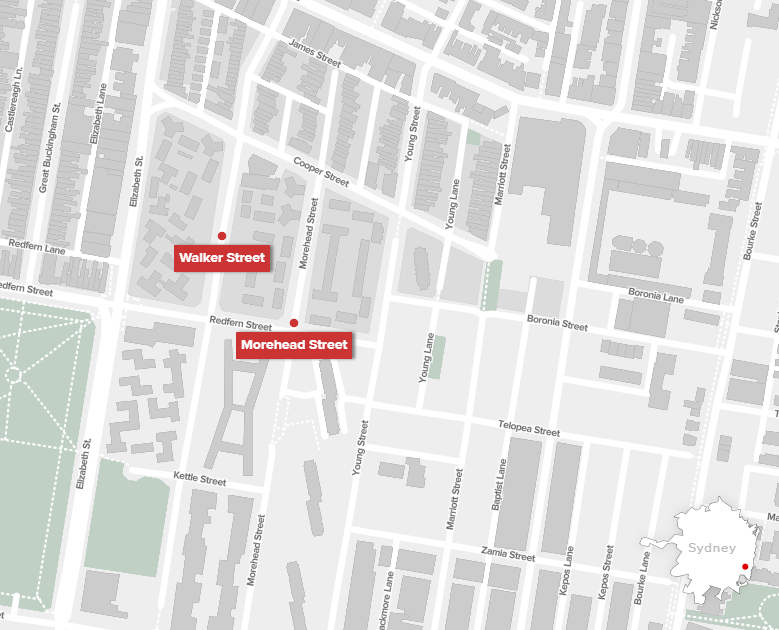
The Return of Sri Ram and Ayodhya’s Revival as a global tourist destination

0

By Om Prakash Dwivedi

Great civilization thrives on the elimination of inner evils, and not on the subjugation and exploitation of the external world. Precisely, what makes Sri Ram an iconic model for any civilization to emulate! No wonder, he is hailed as the Maryada Purushottam. To see Ram as a sectarian god is to undermine the quintessential spiritual outlook that he stands for. The consecration of the Ram temple is an outcome of the public will, nothing to do with the subjugation of other religions, but rather a series of cross-generational attempts to reclaim the subjugated and wounded site. It turned out to be a long healing process that made people understand the huge vandalizing done by colonising forces.

With the consecration of the Ram temple in Ayodhya on January 22, 2024, the creative process has just started. The 500-year-long waiting period finally ended at 12.05 pm, that auspicious occasion, when Prime Minister Narendra Modi entered the Ram Mandir with a silver “chhatri”, to the slogans of Jai Sri Ram, not just restricted to the precincts of the temple, but across India and overseas. Ram seems to have permeated the cosmos, such was the degree of this festivity and the subsequent consecration ceremony. This creative process was not coerced by the pathologies of power but rather through a popular will that witnessed the consecration ceremony of the Ram temple as a global festival; it is another matter that certain political parties decided to distance themselves from this grand ceremony, which is nothing more than a testimony of pseudo-secularism.

When the nation is celebrating this much-awaited moment, it is unfortunate to witness an outcry of what can be seen as nothing else than depressive tones. It is one thing to preach secularism but to remain blinded to the plurality of the electorate as well as of the democracy reeks of sickness. Of course, this virus of the mind is rooted in political mileage and has nothing to do with secularism. Secularism cannot be dictated by any predetermined ideologies – be it the left or the right. It is ironic that when the entire country has come together to celebrate the return of Sri Ram to his home in Ayodhya, there is a sense of desperation to orchestrate an Indian unity movement in some other parts of India, though with no success. In the present context, secularism seems to have been sold to the highest bidder for self-serving interests.

Amidst the euphoria that the public demonstrated for the Ram temple, Ayodhya has also revived itself from a place that was almost in an incognito mode to a site of vibrancy that has started getting immense national and international attraction. It is becoming a tourist destination for many Indians, no matter where they live. With the $10-billion makeover of a new airport, a revamped railway station, and better road connectivity, Ayodhya has seamlessly become the heart of the Bharatvarsha.

The remoulding of Ayodhya is subsequently a remoulding of the Uttar Pradesh CM, Adityanath Yogi. He is slowly transforming himself into an international figure. A strong and popular, political leader is not formed by sporadic demonstrations of public concern and disappearing into an unknown zone, rather s/he is the one who constantly stokes, promotes, and unites an emotional covenant across communities and regions. By turning Ayodhya into a spiritual destination, Yogi’s stature as a popular leader will only be accentuated. When social fragmentations coalesce giving way to popular will and celebrations, what one sees is the resurgence of a popular leader. When political expediency is divorced from public sentiments, alliances are needed, leading to the promotion, even the creation of weak leaders.

The story of Yogi’s reincarnation as an international leader has just started. Of course, it is rooted in the pitch he curated way back. In the 2023 Global Investor Summit in Uttar Pradesh, Yogi attracted an unprecedented investment of Rs 49,000 crore. As per the government records, Ayodhya witnessed a profit of Rs 254 crores, which accounts for a 131 per cent surge in exports, a figure that exceeds the Rs 110 crore profit in the previous fiscal year. This is a new Ayodhya, energised by the return of Sri Ram, committed to spiritual growth and economic diversification. The co-existence of spiritual ethos with the robust economy is the new mantra of the land of Ayodhya.

The combination of Modi-Yogi has rendered a new template for the religious template in India. It is estimated that Ayodhya will attract 50 million tourists every year. The curiosity looms large over Ayodhya’s transformation into a global tourist destination along the lines of the Vatican City or the Mecca. But this is just the beginning of a larger narrative of Bharatvarsh’s cultural revival.

Contributing Author: Om Prakash Dwivedi tweets @opdwivedi82. His interests lie in the field of postcolonial theory.

Disclaimer: The opinions expressed within this article are the personal opinions of the author. The Australia Today is not responsible for the accuracy, completeness, suitability, or validity of any information in this article. All information is provided on an as-is basis. The information, facts, or opinions appearing in the article do not reflect the views of The Australia Today and The Australia Today News does not assume any responsibility or liability for the same.

Support Our Journalism

Global Indian Diaspora needs fair, non-hyphenated, and questioning journalism, packed with on-ground reporting. The Australia Today – with exceptional reporters, columnists, and editors – is doing just that. Sustaining this needs support from wonderful readers like you.

Whether you live in Australia, the United Kingdom, Canada, the United States of America, or India you can take a paid subscription by clicking Patreon. Buy an annual ‘The Austral

Parents urged to be cautious while posting back-to-school photos on social media

0

The AFP-led Australian Centre to Counter Child Exploitation (ACCCE) is urging parents and carers to take privacy precautions before posting back-to-school photos online.

As the new school year begins many families take the opportunity to post happy snaps of their kids wearing their uniforms, at their school or with other identifying features.

AFP Commander Helen Schneider acknowledged sharing photos and milestones online was important for families, but that they should take a moment to think about who could access their images and importantly, what information could be found in their images.

“We have seen instances of otherwise innocent images being used in child exploitation material or offenders using information from photos, such as school uniforms, to identify and groom children.”

Commander Schneider adds:   

“While these incidents are rare, they do happen, which is why we are urging families to be proactive with online safety and keep their information safe as the 2024 school year gets underway. We are urging parents and carers to do a quick privacy check on their social media platforms before they post their back-to-school photos to add another layer of security. Parents can also easily edit the logos of their children’s uniforms to conceal where they attend school as an extra precaution.”

A privacy check-up should include the following:

  • Checking your privacy settings and making sure your social media accounts are secure and set to private or ‘friends only’
  • Checking the privacy settings on the device you are using
  • If another person is taking photos of your child, having a discussion around how the photos will be used and how they will be shared
  • Ensuring the background doesn’t give away your address or location. Don’t post your location or ‘check in’
  • Keeping your child’s uniform logo hidden
  • Keeping your child’s personal information including full name and age private.

Commander Schneider advises:

“Prevention is key to minimising inappropriate contact or the sharing of images online. ThinkUKnow.org.au is a great resource to help you develop good online habits that protect your children and deter offenders.”

Research conducted by the ACCCE in 2020 revealed only about half of parents talked to their children about online safety.

  • 21 per cent of participants think there is a likelihood that online child sexual exploitation can happen to their child.
  • 3 per cent listed online grooming as a concern. 
  • 21 per cent of participants felt online child exploitation is too repulsive and sickening to think about. 

ThinkUKnow has released a quick reference guide for parents and carers to better understand sharing content including images and videos on social media and how to take action.

The guide includes examples of what information can be found in an image and a safety checklist for posting online.

Support Our Journalism

Global Indian Diaspora needs fair, non-hyphenated, and questioning journalism, packed with on-ground reporting. The Australia Today – with exceptional reporters, columnists, and editors – is doing just that. Sustaining this needs support from wonderful readers like you.

Whether you live in Australia, the United Kingdom, Canada, the United States of America, or India you can take a paid subscription by clicking Patreon. Buy an annual ‘The Australia Today Membership’ to support independent journalism and get special benefits.

How will Japanese space technology help future lunar missions?

0

By Mariel Borowitz

Japan landed its Smart Lander for Investigating the Moon, or SLIM, craft on the surface of the Moon on Jan. 20, 2024. Despite a power issue with the lander, the event holds both political and technical importance. It’s Japan’s first lunar landing – making it only the fifth country in the world to successfully land on the Moon. This is a significant achievement and solidifies Japan’s position as a leader in space technology.

While the craft landed successfully on the lunar surface and deployed its rovers, SLIM’s solar cells were not functioning properly – meaning that the craft could likely only operate for a few hours.

I’m a scholar of international affairs who studies space. Like NASA and other space agencies, the Japan Aerospace Exploration Agency, or JAXA, wants to advance research and technology by demonstrating new techniques and collecting scientific data. The landing is also a part of something bigger – a growing global interest in lunar activity.

Precision technology

Japan’s achievement isn’t only symbolic – Japan is demonstrating a number of new technologies with the lander. The name, Smart Lander for Investigating the Moon, refers to the spacecraft’s new precision-landing technology.

https://youtube.com/watch?v=UEZO4jj7v0I%3Fwmode%3Dtransparent%26start%3D0

SLIM’s landing technology allowed it to detect and avoid potential obstacles.

This technology could assist future landings by allowing spacecraft to land in relatively small areas amid rocky or uneven terrain, rather than having to find large clearings. This ability will be particularly important in the future as countries focus on very specific areas of interest at the lunar south pole.

The lander also carried two small rovers, each of which will demonstrate a new technology for moving on the Moon.

Lunar Excursion Vehicle 1 includes a camera, as well as scientific equipment, and uses a hopping mechanism to maneuver on the Moon.

Lunar Excursion Vehicle 2, developed in a partnership among government, industry, and academia, is a sphere small enough to fit in the palm of your hand. Once on the surface, its two halves separate slightly, allowing it to roll around.

SLIM is designed to land within a 328-foot (100-meter) zone, far smaller than previous lunar landers which have had landing zones spanning multiple kilometers.

SLIM used a vision-based navigation system that took images of the lunar surface. Its system rapidly compared these images to crater patterns on lunar maps that JAXA developed with data from previous missions.

As countries identify areas that are most likely to hold useful resources, such as water in the form of ice, precision landing technology will allow agencies to avoid nearby hazards and reach these areas without incident.

International relations back on Earth

There is a geopolitical element to these activities. China, India and Japan – the three nations that have successfully landed on the Moon since 2000 – engage in regional competition across a number of areas, including space. In addition to regional considerations, these accomplishments help to establish nations as leaders on a global scale – capable of something that few nations have ever done.

Japan’s launch comes only six months after India’s Moon landing and just weeks after a failed attempt by a U.S. company, Astrobotic.

Both Russia and the private company iSpace made unsuccessful landing attempts in 2023. Japan’s success in landing on the Moon – even with solar panel issues shortening the timeline for the mission – demonstrates that JAXA is a major player in this global endeavor.

Despite recent setbacks, such as NASA announcing delays to its next Artemis mission, the U.S. is still a clear leader in space and lunar exploration. NASA has multiple spacecraft orbiting the Moon right now, and it’s already successfully launched the SLS rocket, which is capable of taking humans back to the Moon.

NASA is developing very large and complex systems internally – like the Gateway space station, planned to orbit near the Moon, and the infrastructure for the Artemis human Moon missions. It’s not uncommon for these large and complex efforts to experience some delays.

NASA has also turned many smaller-scale efforts over to commercial entities lately – like in the Commercial Lunar Payload Services program that supported Astrobotic’s attempt. This is a new approach that involves some risk, but provides the opportunity for commercial innovation and growth of the lunar economy while giving NASA the ability to focus on big, complex aspects of the mission.

With regard to the Moon, JAXA has partnered with the U.S. and taken on a very important component of the Artemis missions – the development of a pressurized lunar rover. This is a new and complex technology that will be critical to human missions on the Moon in coming years.

Mariel Borowitz, Associate Professor of International Affairs, Georgia Institute of Technology

This article is republished from The Conversation under a Creative Commons license. Read the original article.

Support Our Journalism

Global Indian Diaspora needs fair, non-hyphenated, and questioning journalism, packed with on-ground reporting. The Australia Today – with exceptional reporters, columnists, and editors – is doing just that. Sustaining this needs support from wonderful readers like you.

Whether you live in Australia, the United Kingdom, Canada, the United States of America, or India you can take a paid subscription by clicking Patreon. Buy an annual ‘The Australia Today Membership’ to support independent journalism and get special benefits.
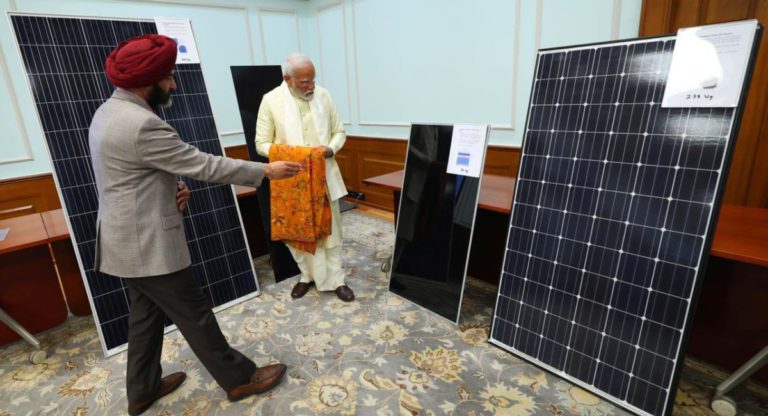
32-year-old Melbourne man sentenced for buying stolen data

0

A Melbourne man was sentenced on 19 January 2024 for using an online criminal marketplace to purchase stolen information.

The Endeavour Hills man, 32, was sentenced in the Melbourne County Court after pleading guilty on 16 January 2024.

An investigation began after the man was found using an invite-only website – known as Genesis Market – which sold login credentials, browsing history, autofill form data and other sensitive data from compromised devices.

Police conducted a search warrant at the man’s Endeavour Hills home on 5 April 2023 where they seized a laptop and mobile phone.

Subsequent forensic examination of the devices revealed he had purchased several ‘bots’ containing approximately 650 compromised credentials.

Each purchased bot contains either cookies (which are text files containing identifiable data), a digital fingerprint of a victim’s compromised credentials, or both. Such fingerprints can be used by criminals to mimic the victim’s access credentials to deceive websites into allowing access to victims’ accounts.

AFP Acting Assistant Commissioner Cyber Command Chris Goldsmid said cybercriminals were constantly looking for ways to exploit the community for financial gain.

“The rise of the internet age has created an environment ripe for online criminals to prey on vulnerable victims and access information. The public should take steps to protect themselves against this sort of crime including regularly changing passwords, ensuring they are unique to different accounts and enabling two-factor authentication.@

Acting Assistant Commissioner Goldsmid added:

“To anyone seeking to buy or sell stolen information online I want to warn you that we are working every day with our law enforcement partners, at home and abroad, and we will find you and ensure that you face justice. Just because you are behind closed doors and a computer screen does not mean you are anonymous.”

The man pleaded guilty to the following offences:

  • One count of possessing data with the intent to commit a computer offence, contrary to section 478.3(1) of the Criminal Code 1995 (Cth).

He was sentenced to a 12-month Community Corrections Order, with 150 community work hours to complete.

In sentencing the magistrate highlighted the serious nature of cybercrime offending, citing the significant disruptions that recent cyber-attacks on Melbourne Courts caused.

Genesis Market was shut down following an international investigation led by the FBI and assisted by the AFP, NSW Police Force, Victoria Police, Queensland Police Service and Western Australia Police Force.

At the time of the takedown, Genesis Market offered access to more than 1.5 million compromised computers – each containing information for dozens of accounts.

Support Our Journalism

Global Indian Diaspora needs fair, non-hyphenated, and questioning journalism, packed with on-ground reporting. The Australia Today – with exceptional reporters, columnists, and editors – is doing just that. Sustaining this needs support from wonderful readers like you.

Whether you live in Australia, the United Kingdom, Canada, the United States of America, or India you can take a paid subscription by clicking Patreon. Buy an annual ‘The Australia Today Membership’ to support independent journalism and get special benefits.
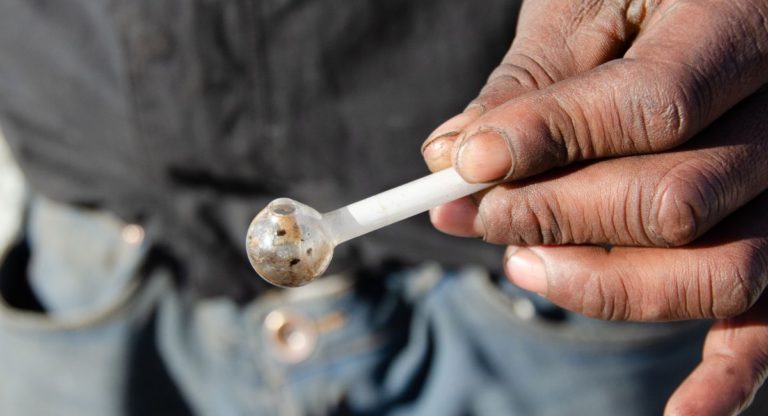
Australia plans to regulate ‘high-risk’ AI. Here’s how to do that successfully

0

By Lisa M. Given

The federal Minister for Industry and Science Ed Husic has announced the Australian government’s response to the Safe and Responsible AI in Australia consultation.

The response addresses feedback from last year’s consultation on artificial intelligence (AI). It received more than 500 submissions, noting “excitement for the opportunities” of AI tools, but also raising concerns about potential risks and Australians’ expectations for “regulatory safeguards to prevent harms”.

Instead of enacting a single AI regulatory law like the European Union has done, the Australian government plans to focus on high-risk areas of AI implementation – ones with the greatest potential for harm. This could include examples such as discrimination in the workplace, the justice system, surveillance or self-driving cars.

The government also plans to create a temporary expert advisory group to support the development of these guardrails.

How will we define ‘high-risk’ AI?

While this proportional response may be welcomed by some, focusing on high-risk areas with only a temporary advisory body raises significant questions:

  • how will high-risk areas be defined – and who makes that decision?
  • should low-risk AI applications face similar regulation, when some interventions (such as requiring watermarks for AI-generated content) could broadly combat misinformation?
  • without a permanent advisory board, how can organisations anticipate risks for new AI technologies and new applications of AI tools in the future?

Assessing “risk” in using new technologies is not new. We have many existing principles, guidelines, and regulations that can be adapted to address concerns about AI tools.

For example, many Australian sectors are already highly regulated to address safety concerns, such as vehicles and medical devices.

In all research involving people, Australian researchers must comply with national guidelines where risk assessment practices are well defined:

  • identifying the risks and who might be at risk of harm;
  • assessing the likelihood, severity and magnitude of risk;
  • considering strategies to minimise, mitigate, and/or manage risks;
  • identifying potential benefits, and who may benefit; and
  • weighing the risks and determining whether the risks are justified by potential benefits.

This risk assessment is done before research being done, with significant review and oversight by Human Research Ethics Committees. A similar approach could be used for AI risk assessment.

AI is already in our lives

One significant problem with AI regulation is that many tools are already used in Australian homes and workplaces, but without regulatory guardrails to manage risks.

A recent YouGov report found 90% of Australian workers used AI tools for daily tasks, despite serious limitations and flaws. AI tools can “hallucinate” and present fake information to users. The lack of transparency about training data raises concerns about bias and copyright infringement.

Consumers and organisations need guidance on appropriate adoption of AI tools to manage risks, but many uses are outside “high risk” areas.

Defining “high risk” settings is challenging. The concept of “risk” sits on a spectrum and is not absolute. Risk is not determined by a tool itself, or the setting where it is used. Risk arises from contextual factors that create potential for harm.

For example, while knitting needles pose little risk in everyday life, knitters are cautioned against carrying metal needles on airplanes. Airport security views these as “dangerous” tools and restricts their use in this setting to prevent harm.

To identify “high risk” settings we must understand how AI tools work. Knowing AI tools can lead to gender discrimination in hiring practices means all organisations must manage risk in recruitment. Not understanding the limitations of AI, like the American lawyer who trusted fake case law generated by ChatGPT, highlights the risk of human error in AI tool use.

Risks posed by people and organisations in using AI tools must be managed alongside risks posed by the technology itself.

Who will advise the government?

The government notes in its response that the expert advisory body on AI risks will need “diverse membership and expertise from across industry, academia, civil society and the legal profession”.

Within industry, membership should include various sectors (such as healthcare, banking, law enforcement) with representation from large organisations and small-to-medium enterprises.

Within academia, membership should include not just AI computing experts, but also social scientists with expertise in consumer and organisational behaviour. They can advise on risk analysis, ethics, and what people worry about when it comes to adopting new technology, including misinformation, trust and privacy concerns.

The government must also decide how to manage potential future AI risks. A permanent advisory body could manage risks for future technologies and for new uses of existing tools.

Such a body could also advise consumers and workplaces on AI applications at lower levels of risk, particularly where limited or no regulations are in place.

Misinformation is one key area where the limitations of AI tools are known, requiring people to have strong critical thinking and information literacy skills. For example, requiring transparency in the use of AI-generated images can ensure consumers are not misled.

Yet the government’s current focus for transparency is limited to “high-risk” settings. This is a start, but more advice – and more regulation – will be needed.

Lisa M. Given, Professor of Information Sciences & Director, Social Change Enabling Impact Platform, RMIT University

This article is republished from The Conversation under a Creative Commons license. Read the original article.

"The

Support Our Journalism

Global Indian Diaspora needs fair, non-hyphenated, and questioning journalism, packed with on-ground reporting. The Australia Today – with exceptional reporters, columnists, and editors – is doing just that. Sustaining this needs support from wonderful readers like you.

Whether you live in Australia, the United Kingdom, Canada, the United States of America, or India you can take a paid subscription by clicking Patreon. Buy an annual ‘The Australia Today Membership’ to support independent journalism and get special benefits.
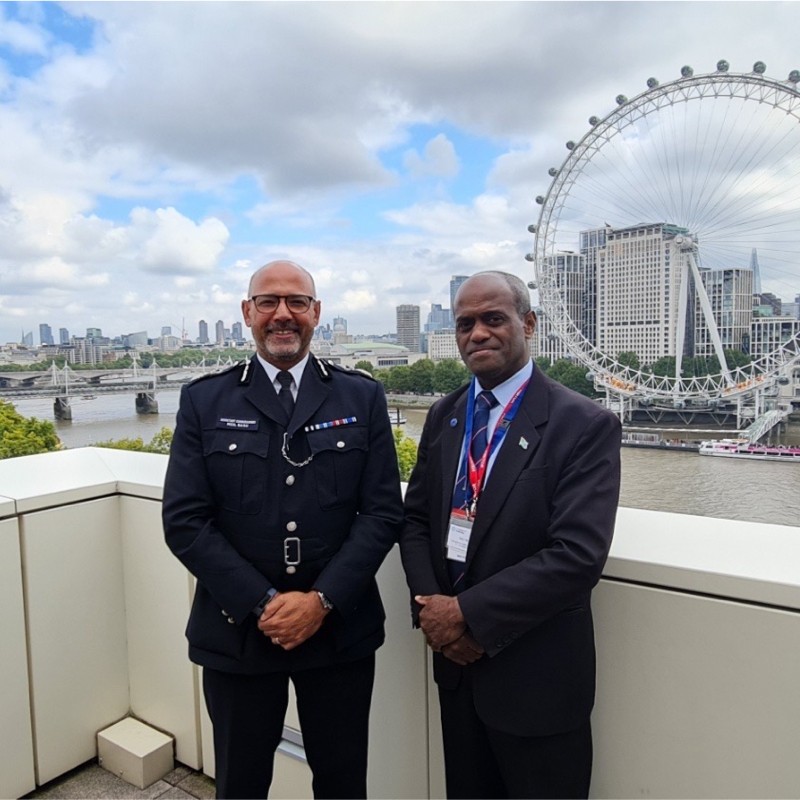
Ram Mandir: A Symbol of Indic Resilience, a Moment of Indigenous Uprising

0

By Omer Ghazi

Five hundred years ago, a certain historical wrong was committed on the Indian soil; an act of desecration of a religious site, a psychological assault on the psyche of a people and a recipe for a conflict that was about to consume generations to come.  Today, India, as a nation, stands at the verge of restoring its heritage and reversing the psychological annotations associated with it. This is the story of the struggle to build the pristine Ram Mandir in the birthplace of Lord Ram in Ayodhya.

Image: Ram Lalla sculpted by Arun Yogiraj / Dr Vikram Sampath on X

Mughal invader Babur’s disdain for India and everything Indian is not news for anybody. The disdain, at many occasions, translated into legislative discrimination as well as genocidal mania against the Hindu population. One needs to look no further than his autobiography Baburnama, wherein comes the blood-thirsty description of the killing of many ‘infidels’ and the apparent mass suicide of two or three hundred more. “They killed each other almost to the last by having one man hold a sword while the others willingly bent their necks… A tower of infidels’ skulls was erected on the hill on the northwest side of Chanderi”.

Desecration of one of the holiest sites of the Hindu faith and Indian culture while erecting a monument at its place in his own name was just an extension, in the same vein, to subdue the fallen populace at his disposal. It was not just a physical act of an edifice crumbling; it had huge cultural and psychological connotations. His commander, Mir Baqi, was in-charge of overseeing the operation, which was the beginning of a blood-soaked tale of communal violence spanning centuries.

Apart from archaeological excavations hinting at a “non-Islamic” structure below the Babri Masjid, this is extremely interesting that up until the 1940s, the mosque was referred to as Masjid-e-Janmsthan or “Mosque of the Birthplace”.

Image: Shri Ram Janmbhoomi Teerth Kshetra / X

After the establishment of the modern republic of India, the structure still remained a conflict to be resolved. Different political outfits attempted to become a part of the resolving process, and sometimes ended up raking communal tensions instead of moving towards a solution.

At the very core of the communal tensions surrounding the Ram Mandir lays the misunderstanding that Mughal Emperor Babur is, in any way or form, a symbol or leader of the Indian Muslims living in the country today. Babur, by his own admission, detested everything India and Indian, and would have held the same disdain for the Indians of today, converted or not, as he confessed to have for Indians of his day.

There are broadly two ways that a person can be associated with any historical figure, i.e., either genetically or ideologically. Babur was Uzbek, and his bloodline, barring a few individuals has mostly died out; hence, Indian Muslims today are not direct descendants of Babur. Moreover, ideologically, Babur was a zealot who believed in the desecration of holy sites and imposition of a theological rule, which is in complete contrast to the notion of the modern, secular, democratic republic that India is today; therefore, Indian Muslims, today, cannot have an ideological association with Babur either.

This, however, needs mentioning that Mughals arrived as invaders but, over time, settled down and made India their home and there are ideological icons from within the Mughal history that can be held in high esteem.

Aurangzeb and Dara Shikoh are two brothers that provide a very interesting ideological binary in this regard; Aurangzeb was a radical extremist who imposed Jizya on Hindus, ordered demolition of numerous temples and introduced multiple discriminatory legislations against the Hindu subjects. He also tortured and killed the 9th Sikh Guru Teg Bahadur and Maratha King Sambhaji Maharaj.

On the other hand, Dara Shikoh was deeply immersed in the cultural and intellectual traditions of the Indic civilisation. He admired the treasure troves of knowledge preserved in the Upanishads, which are the culmination of the Vedic teachings accumulated over generations. He translated the Upanishads from Sanskrit to Persian and, that is how, the aforesaid knowledge also made its way to the far corners of the Middle East and, subsequently, Europe.

Aurangzeb got Dara Shikoh executed and imprisoned his own father Shah Jahan. An Indian Muslim of today would find himself much more ideologically inclined towards the thought process of Dara Shikoh and certainly not Aurangzeb.

Once one realizes that an Indian Muslim is the ideological descendant of Dara Shikoh, it becomes all the more evident that the Pran Pratistha ceremony and returning of Ram Lalla to the Ram Mandir is a moment of celebration for all 1.4 billion individuals living on Indian soil, irrespective of personal faith. Even for those outside of the fold of organized religion or Hindu faith, it is a strong cultural resurgence and an indigenous uprising against the foreign forces that failed to subdue one people and could not break their spirit.

Moreover, the re-establishment of Ram Mandir at Ram Janmbhoomi is a pristine and august event, and must be treated as such. Of course, behind every cultural phenomenon lies politics and hence, this event is also not devoid of superficial exchanges and contemptible discourses around it. Several political outfits have attempted to score political brownie points through this issue, while some ideologues have made careers opposing the Ram Mandir altogether. There are certain high-decibel television debates taking place where demagogues are venting out their own frustration against the ‘other’ more than adding any value to the conversation. While a modern republic gives everyone the right to express their opinions, let’s not rob this event of its decorum and let’s celebrate with vigor, and astuteness, a moment that comes but once in centuries.

Contributing Author: Omer Ghazi is a proponent of religious reform and identifies himself as “an Indic Muslim exploring Vedic knowledge and cultural heritage through music”. He extensively writes on geo-politics, history and culture and his book “The Cosmic Dance” is a collection of his poems. When he is not writing columns, he enjoys playing drums and performing raps.

Support Our Journalism

Global Indian Diaspora needs fair, non-hyphenated, and questioning journalism, packed with on-ground reporting. The Australia Today – with exceptional reporters, columnists, and editors – is doing just that. Sustaining this needs support from wonderful readers like you.

Whether you live in Australia, the United Kingdom, Canada, the United States of America, or India you can take a paid subscription by clicking Patreon. Buy an annual ‘The Austral

Ayodhya’s Ram Mandir: The end of an exile

0

By Avatans Kumar

Prāna Pratishthā

The stage is set for the inauguration of the Grand Bhagawan Ram Mandir in Ayodhya, Uttar Pradesh, India, with Prāna Pratishthā – “establishing of breath” literally, or consecration – of Bhagawan Ram’s moorti, the presiding deity of the Mandir. India’s Prime Minister Narendra Modi will lead the ceremony on Monday, January 22, 2024, an auspicious day – Shukla Paksha Dwadadash of Paush māsa (12th day of the waxing moon in the month of Pausha) – of the Hindu calendar.

Prāna Pratishthā is a Hindu ritual that sanctifies the statues of Hindu deities by “establishing the breath.” The process brings an ordinary, lifeless statue to life and consecrates it into a deity. The deity becomes a living being once consecrated with the Prāna Pratishthā ritual. As a result, the deity must be honored daily with clothes, food offerings, etc. It must also sleep, bathe, and be woken up with accompanying rituals. After consecration, according to the Harvard University Pluralism Project, “the image must be honored daily as a divine embodiment, the divine guest in the temple.”

The ceremony is one of the most anticipated events in the history of post-colonial India and arguably the most important for Hindus in several generations. “It indicates civilizational awakening in Bharat and honoring of its ancient and Dharmic civilization,” is how Pandit Vamdev Shastri (Dr. David Frawley) described the upcoming event. Shastri is a U.S.-based Hindu/Dharmic scholar and a recipient of Padma Bhushan, one of the highest civilian awards by the government of the Republic of Bharat (India). PM Modi has personally appealed to people across the globe to light diyās, traditional earthen lamps, to mark the occasion.

Several thousand guests will witness the event from proximity, while tens of millions will watch it live on their preferred devices. In the U.S., several watch parties have been organized across the length and breadth of the country. The ceremony will also be live-streamed at the Times Square in New York City. “Sri Ram and Ramrajya stand at the core of India’s history, identity, and aspirations for the future,” said Shastri in an interview with one of India’s news channels.

According to tradition, Bhagwan Ram, his wife Mata Sita, and his brother Lakshmana were exiled (vanvāsa) for 14 years. That exile, however, was in the Treta Yuga, the second of the four Yugas – Satya, Treta, Dwapar, and Kali. The current exile lasted for almost 500 years, starting in 1528 CE.

Image Source: X/Twitter Shri Ram Janmbhoomi Teerth Kshetra

Hindu Temples: What Happened to Them?

Zahir ud-Din Muhammad Babur, a descendant of the Mongol conqueror Genghis Khan, was the founder (1526 CE) of the Mughal dynasty in India. Two years after establishing the Mughal Empire, he ordered a large mosque, later called Babari Masjid, built in the holy city of Ayodhya by destroying the existing Bhagwan Ram temple. Situated on the bank of the Saryu River, Ayodhya is considered the birthplace of Bhagwan Ram, one of the most revered “gods” of the billion-strong Hindus around the world. According to the legend, the destroyed temple commemorated Bhagwan Ram’s birthplace.

The Islamic invasion and subsequent colonization of the Indian subcontinent were prolonged and barbaric. Hindu persecution – forced conversionsslavery, and genocide, along with the destruction of Hindu temples is the hallmark of the Islamic invasion of India. Despite many Islamic scholars’ claim that destroying religious structures belonging to non-Islamic faiths is prohibited in Islam, abundant gleeful literature by Islamic Historians presents a completely divergent picture. “There developed a cult of but-shikan (idol-breaker), and from Mahmud Gaznavi to Auranghzeb, most Muslim rulers wanted to live up to this ideal,” writes Islamic scholar Ibn Khaldun Bharati. “When their power waned, and they could no longer walk into a temple to smash the idols, [poet Allama] Iqbal [of Sare jahan se achchha fame] lamented: But-shikan uthh gaye baki jo rahe butgar hain (The idol-breakers are long gone, leaving behind the idol makers).” 

As a consequence, several thousand Hindu, Jain, and Buddhist places of worship were destroyed and desecrated in the Indian subcontinent. In a two-volume book, Hindu Temples: What Happened to Them, Sita Ram Goel, Arun Shourie, Harsh Narain, Jay Dubashi, and Ram Swarup painstakingly list and examine thousands of Hindu temples destroyed, desecrated, and converted into mosques and khanqahs (Islamic religious place) in the Indian subcontinent. Flight of Deities and Rebirth of Temples is a diligent work by historian Meenakshi Jain that documents the heroic struggles of the subcontinental Hindus to protect their temples and deities from destruction and desecration

One of the glaring examples of this mindless destruction is in the southern outskirts of the capital city of New Delhi. Situated in the Qutb Minar complex, the Qubbat-ul-Islam Mosque was built after destroying more than two dozen temples. The Taliban of Afghanistan blew up the Bamiyan Buddha in 2001. The subcontinental landscape is littered with such examples of destruction and desecration inflicting acute transgenerational trauma among Indians. The fact that there is no sizeable Hindu temple more than a century or so old in the vicinity of the Indian capital city of New Delhi bears testimony to that trauma.

The Ram Janmabhoomi Dispute

The fact that the Babri Masjid was built at the site of an existing temple is borne out of archaeological evidence. Some of this evidence was collected during the archaeological exploration done under the supervision of the Indian court system. In her book Rama and Ayodhya, historian Meenakshi Jain has provided meticulous historical and literary evidence relating to Bhagwan Ram and the temple at Ayodhya. 

Indic tradition has been an oral tradition, and most of its intellectual capital and its itihāsa have been preserved primarily due to it. Several mnemonic techniques were developed to preserve the Vedic texts. These texts had several paths (recitation styles). In addition, several other methods involving intonation, meter, etc., were also used. These methods are in use even today. Itihāsa, on the other hand, was preserved through lok kathā (storytelling), nātya (dance), and many other art forms. Maharshi Valmiki, the composer of the Ramayana, himself mentions that Ram’s story was recited orally, even by Ram’s sons. 

We find Ramayana scenes carved on many temple structures and seals. One of the oldest Ramayana scenes is from the 2nd century BCE seal (The Battle for Rama by Meenakshi Jain). Mata Sita is shown throwing down her jewelry after being kidnapped by Ravana. A 3rd-century CE seal from Kashmir has ‘Ram Siya’ written in Brahmi script. Jain mentions several literary evidences, including in Persian, Arabic, and Urdu. Abu Fazl, the official historian of Akbar and the author of Akbarnama, mentions Ayodhya as the birthplace of Ram, and people celebrated Ram Navami in Ayodhya with a great deal of pomp and gaiety.  

Mandir at Last

Ending a nearly 500-year impasse, the five-justice bench of the Supreme Court of India on November 9, 2019, delivered its unanimous verdict to hand over the Sri Ram Janmabhoomi site to Hindus. Based on the report submitted by the Archaeological Survey of India, the Court declared that an underlying structure existed underneath the structure demolished by the Hindu karsevaks (volunteers) on December 6, 1992 and that the underlying structure was not Islamic.

As the Hindu Grand Ram Mandir prepares for its inauguration, it also signals the beginning of the healing process of a transgenerational trauma of the people of this “wounded civilization” (V.S. Naipaul). It also signals the start of reclaiming the Hindu heritage, one deity, one temple at a time!

This article was first published in India Currents and has been republished with the kind permission of the author/editor.

Contributing Author: Avatans Kumar is a columnist, public speaker, and activist. A JNU, New Delhi, and the University of Illinois at Urbana-Champaign alumnus, Avatans holds graduate degrees in Linguistics. Avatans is a recipient of the 2021 San Francisco Press Club’s Bay Area Journalism award.

Support Our Journalism

Global Indian Diaspora needs fair, non-hyphenated, and questioning journalism, packed with on-ground reporting. The Australia Today – with exceptional reporters, columnists, and editors – is doing just that. Sustaining this needs support from wonderful readers like you.

Whether you live in Australia, the United Kingdom, Canada, the United States of America, or India you can take a paid subscription by clicking Patreon. Buy an annual ‘The Australia Today Membership’ to support independent journalism and get special benefits.

What’s the best diet for healthy sleep?

0

By Erica Jansen

You probably already know that how you eat before bed affects your sleep. Maybe you’ve found yourself still lying awake at 2 a.m. after enjoying a cup of coffee with dessert. But did you know that your eating choices throughout the day may also affect your sleep at night?

In fact, more and more evidence shows that overall dietary patterns can affect sleep quality and contribute to insomnia.

I am a nutritional epidemiologist, and I’m trained to look at diets at the population level and how they affect health.

In the U.S., a large percentage of the population suffers from poor sleep quality and sleep disorders like insomnia and obstructive sleep apnea, a condition in which the upper airway becomes blocked and breathing stops during sleep. At the same time, most Americans eat far too much fatty and processed food, too little fiber and too few fruits and vegetables.

Although it is difficult to determine whether these two trends are causally linked to one another, more and more research points to linkages between sleep and diet and offers hints at the biological underpinnings of these relationships.

How diet and sleep quality can be intertwined

My colleagues and I wanted to get a deeper understanding of the possible link between sleep and diet in Americans who are 18 and older. So we analyzed whether people who follow the government’s Dietary Guidelines for Americans get more hours of sleep.

Using a nationally representative dataset of surveys collected from 2011 to 2016, we found that people who did not adhere to dietary recommendations such as consuming enough servings of fruits, vegetables, legumes and whole grains had shorter sleep duration.

In a separate study, we followed more than 1,000 young adults ages 21 to 30 who were enrolled in a web-based dietary intervention study designed to help them increase their daily servings of fruits and vegetables. We found that those who increased their fruit and vegetable consumption over a three-month period reported better sleep quality and reductions in insomnia symptoms.

Research conducted outside the U.S. by my group and others also shows that healthier overall dietary patterns are associated with better sleep quality and fewer insomnia symptoms. These include the Mediterranean diet – a diet rich in plant foods, olive oil and seafood, and low in red meat and added sugar – and anti-inflammatory diets. These are similar to the Mediterranean diet but include additional emphasis on certain components in the diet like flavonoids, a group of compounds found in plants, which are shown to lower inflammatory biomakers in the blood.

Parsing the foods and nutrients

Within overall healthy diet patterns, there are numerous individual foods and nutrients that may be linked to quality of sleep, with varying degrees of evidence.

For example, studies have linked consumption of fatty fish, dairy, kiwi fruit, tart cherries and other berries such as strawberries and blueberries with better sleep. One of the common pathways through which these foods may affect sleep is by providing melatonin, an important modulator of sleep and wake cycles in the brain. https://www.youtube.com/embed/Z7mNwDrr53c?wmode=transparent&start=82 Walnuts and almonds, as well as fruits like kiwis and bananas, provide natural sources of melatonin.

Fiber-rich foods like beans and oatmeal and certain protein sources – especially those that are high in the amino acid tryptophan, such as poultry – are also associated with higher-quality sleep. Individual nutrients that may be beneficial include magnesium, vitamin D, iron, omega-3 fatty acids and manganese. Some foods like salmon are sources of multiple nutrients.

Untangling the complexity

One important caveat with a lot of the research on individual foods, as well as diet patterns, is that most studies cannot easily disentangle the direction of the relationships.

In other words, it’s hard to know whether the association is a result of diet affecting sleep, or sleep affecting diet. The reality is that it is likely a cyclical relationship, where a healthy diet promotes good sleep quality, which in turn helps to reinforce good dietary habits.

With observational studies, there are also possible confounding factors, such as age and economic status, that may have important correlations with both sleep and diet.

Foods to avoid for sleep health

Aiming for higher intake of sleep-promoting foods isn’t necessarily enough to get better sleep. It’s also important to avoid certain foods that could be bad for sleep. Here are some of the main culprits:

Interestingly, our group has recently shown that toxicants in food or food packaging, like pesticides, mercury and phthalates – chemicals used to manufacture plastics – can affect sleep. Since toxicants can be found in both healthy and unhealthy foods, this research suggests that some foods can contain a mix of components that are both beneficial and harmful for sleep.

Timing of meals and gender considerations

The timing and consistency of eating, known as “chrononutrition” in the sleep research field, also very likely help to explain associations between healthy diets and good sleep.

In the U.S., eating at conventional meal times as opposed to random snacking has been associated with better sleep. In addition, late-night eating is typically associated with unhealthier food intake – such as processed snacks – and could cause more fragmented sleep.

A final and very interesting piece of this puzzle is that associations between diet and sleep often differ by gender. For example, it appears that the associations between healthy diet patterns and insomnia symptoms could be stronger among women. One reason for this could be gender differences in sleep. In particular, women are more likely than men to suffer from insomnia.

Keys to a good night’s sleep

Overall, there is not one magic food or drink that will improve your sleep. It’s better to focus on overall healthy dietary patterns throughout the day, with a higher proportion of calories consumed earlier in the day.

And, in addition to avoiding caffeine, alcohol and heavy meals in the two to three hours before bed, the last few hours of the day should include other good sleep hygiene practices.

These include disengaging from technology, reducing light exposure and creating a comfortable and relaxing environment for sleep. Moreover, allowing enough time to sleep and maintaining a consistent bedtime and wake time is essential.

Erica Jansen, Assistant Professor of Nutritional Sciences, University of Michigan

This article is republished from The Conversation under a Creative Commons license. Read the original article.

"The

Support Our Journalism

Global Indian Diaspora needs fair, non-hyphenated, and questioning journalism, packed with on-ground reporting. The Australia Today – with exceptional reporters, columnists, and editors – is doing just that. Sustaining this needs support from wonderful readers like you.

Whether you live in Australia, the United Kingdom, Canada, the United States of America, or India you can take a paid subscription by clicking Patreon. Buy an annual ‘The Australia Today Membership’ to support independent journalism and get special benefits.
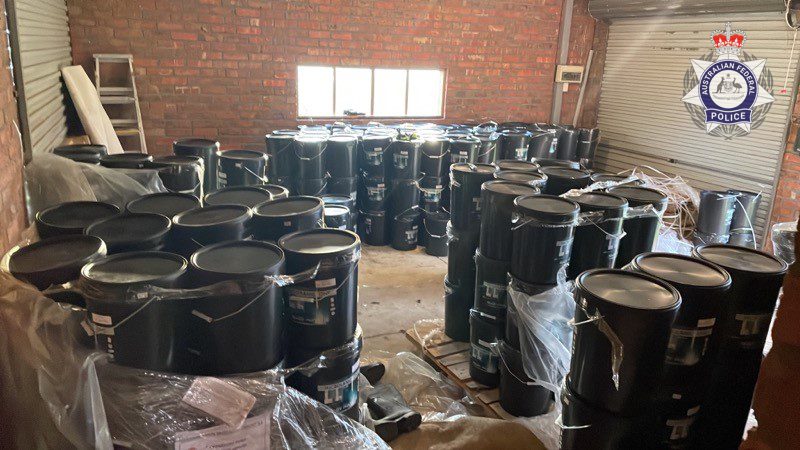
India’s nine and Australia’s one iconic dish emerge on top in world food rankings

0

India’s Garlic Naan, Butter Chicken, Tikka, Masala Chai, Mango Lassi, Lassi, Sweet Lassi, Garam Masala, and Basmati rice, along with Australia’s Macadamia Nuts, are in the top five amongst various food categories in the TasteAtlas 2023-24 Awards.

Butter Garlic Naan is at number 2 in the Breads and number 7 100 Best Dishes in the World categories.

Image: Butter Garlic Naan (Source: TasteAtlas)

Butter Garlic Naan is a traditional Indian flatbread and one of the most popular versions of naan. It’s made with flour, yeast, salt, sugar, and yogurt. Once the dough has been baked in a hot tandoor oven, the golden naan is taken out and brushed with butter or ghee, then topped with minced garlic.

Butter Chicken and Tikka are at numbers 3 and 4 in the Chicken Dishes category.

Image: Butter Chicken (Source: TasteAtlas)

Butter Chicken is the best-known of all Indian dishes and is a staple dish at most Indian restaurants. With a combination of roasted meat, plenty of spices, a rich gravy made with cream, tomatoes, and butter, this dish is best accompanied by naan bread and garnished with even more butter, coriander, or green chilis.

Image: Tikka (Source: TasteAtlas)

Indian tikka is a dish consisting of boneless meat, usually chicken, that is cut into smaller pieces and marinated in yogurt and traditional Indian spices such as turmeric, cumin, coriander, cayenne pepper, chili, garlic, and ginger. The meat is roasted over charcoal in a tandoor, the traditional cylindrical clay oven.

Masala Chai and Mango Lassi are at numbers 2 and 3 in the Non-Alcoholic Beverages category.

Image: Masala Chai (Source: TasteAtlas)

Masala Chai is an aromatic beverage that is made with a combination of sweetened black tea and milk that is spiced with a masala mix—which typically includes cardamom, ground ginger, cloves, cinnamon, and black peppercorns. In India, the drink is mainly prepared and sold at challah stalls, but modern interpretations of chai masala are enjoyed around the world. 

Image: Mango Lassi (Source: TasteAtlas)

Mango lassi is one of the most popular lassi varieties, consisting of yogurt (dahi) and fresh mango. It commonly includes cardamom, water, and sometimes sugar. The ingredients are combined until the drink is creamy and frothy. Mango lassi should always be served well-chilled. Among numerous types of lassis, this sweet mango version is the most common variety on the menus of Indian restaurants outside the country. 

Garam masala is at number 2 in Herbs and Spices and at number 1 in the Spice Blends and Seasoning categories.

Image: Garam Masala (Source: TasteAtlas)

Garam Masala is an intensely aromatic blend of ground spices such as cinnamon, cumin, cardamom, cloves, and peppercorns. The spices used in garam masala vary from region to region, but no combination of spices is believed to be more authentic than another.

Basmati is at number 1 in the Rice category.

Image: Basmati rice (Source: TasteAtlas)

Basmati is a long-grain rice variety and is characterized by its flavor and aroma, which is very nutty, floral, and slightly spicy. Once cooked, the grains remain individual and don’t stick to each other, which allows curry and similar stew and sauces to coat every grain. The longer the grain, the better the rice, and the best basmati grains have a slightly golden hue.

Mango Lassi, Lassi, and Sweet Lassi are at numbers 1, 4, and 5 in the Dairy Beverage category.

This traditional Indian yogurt-based drink is made of milk, sugar, and curd that is kept in clay pots. Lassi is often flavored with a variety of fresh herbs, different spices, fruits, and floral essences. It is typically mixed with ice and served as an accompaniment to hot and spicy dishes, as it provides refreshment for the palate and soothes the body, especially on hot summer days. Sweet lassi is called metha lassi and it often contains ginger, mint, rosewater, cardamom, and exotic fruits like mango.
Namkeen lassi is the salty version of lassi, typically flavored with ground black pepper, garlic, and roasted cumin seeds.

Macadamia nuts are at number 4 in the Nuts category.

Macadamia nuts have a high oil content and were originally consumed raw or roasted over hot coals. The Aborigines used stones for cracking the nuts, and some bitter varieties have been ground to a paste to make them edible. The oil from the nuts was also used for body painting and skin rejuvenation. Their taste is reminiscent of hazelnuts, but the texture is smoother and almost buttery. It is recommended to pair the nuts with white chocolate or coconut-based desserts.

Image: 100 Best Cuisines in the World (Source: TasteAtlas)

These rankings are out of 10,927 cataloged dishes, and 6,119 food products and ingredients, based on 395,205 (271,819 valid) dish ratings, and 115,660 (80,863 valid) food product ratings, these foods have recorded the best average ratings, per category.

Image: 100 Best Dishes in the World (Source: TasteAtlas)

Based on these ratings, the top 50 food items for each cuisine were extracted, and the best-rated cuisines in the world were ranked according to the average ratings of the best-rated dishes and food products of each country. 

In addition to these rankings, lists of the best food cities, best food regions, dishes, and food products by category, as well as lists of the most legendary restaurants and cookbooks have been published.

Support Our Journalism

Global Indian Diaspora needs fair, non-hyphenated, and questioning journalism, packed with on-ground reporting. The Australia Today – with exceptional reporters, columnists, and editors – is doing just that. Sustaining this needs support from wonderful readers like you.

Whether you live in Australia, the United Kingdom, Canada, the United States of America, or India you can take a paid subscription by clicking Patreon. Buy an annual ‘The Australia Today Membership’ to support independent journalism and get special benefits.
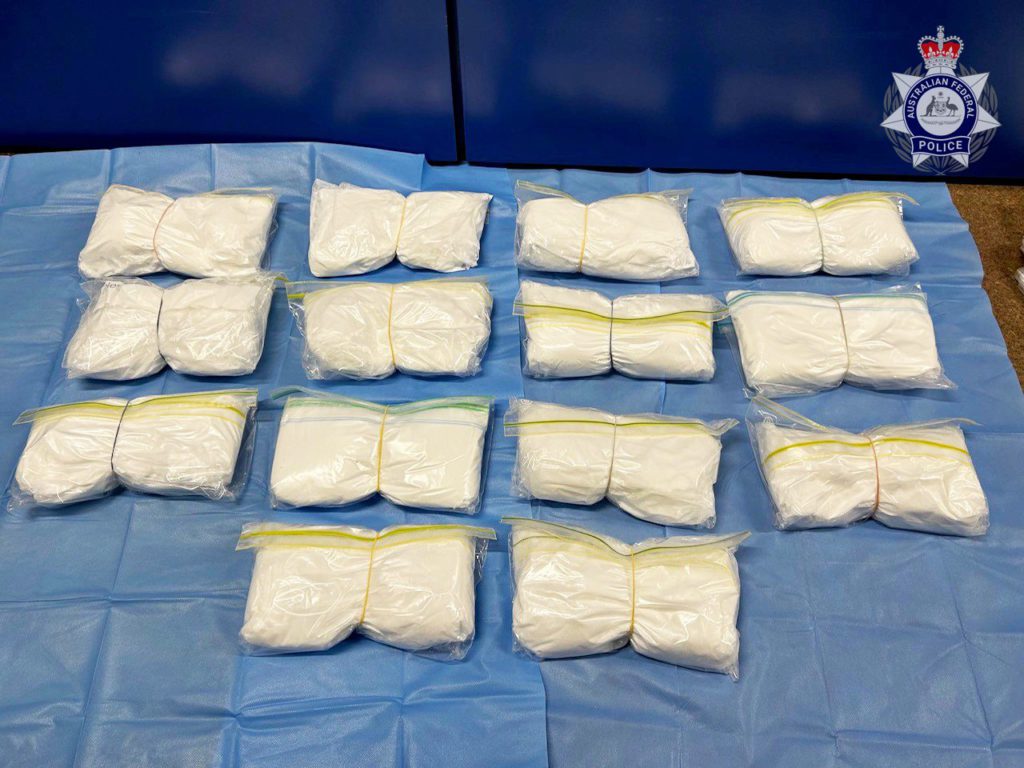
What is credential stuffing and how can I protect myself?

0

By David Tuffley

Cyber-skulduggery is becoming the bane of modern life. Australia’s prime minister has called it a “scourge”, and he is correct. In 2022–23, nearly 94,000 cyber crimes were reported in Australia, up 23% on the previous year.

In the latest high-profile attack, around 15,000 customers of alcohol retailer Dan Murphy, Mexican restaurant chain Guzman y Gomez, Event Cinemas, and home shopping network TVSN had their login credentials and credit card details used fraudulently to buy goods and services in what is known as a “credential stuffing” attack.

So what is credential stuffing – and how can you reduce the risk of it happening to you?

Re-using the same login details

Credential stuffing is a type of cyber attack where hackers use stolen usernames and passwords to gain unauthorised access to other online accounts.

In other words, they steal a set of login details for one site, and try it on another site to see if it works there too.

This is possible because many people use the same username and password combination across multiple websites.

It is common for people to use the same password for multiple accounts (even though this is very risky).

Some even use the same password for all their accounts. This means if one account is compromised, hackers can potentially access many (or all) their other accounts with the same credentials.

‘Brute force’ attacks

Hackers purchase job lots of login credentials (obtained from earlier data breaches) on the “dark web”.

They then use automated tools called “bots” to perform credential stuffing attacks. These tools can also be purchased on the dark web.

Bots are programs that perform tasks on the internet much faster and more efficiently than humans can.

In what is colourfully termed a “brute force” attack, hackers use bots to test millions of username and password combinations on different websites until they find a match. It’s easier and quicker than many people realise.

It is happening more often because the barrier to entry for would-be cybercriminals has never been lower. The dark web is readily accessible and the resources needed to launch attacks are available to anyone with cryptocurrency to spend and the will to cross over to the dark side.

How can you protect yourself from credential stuffing?

The best way is to never reuse passwords across multiple sites or apps. Always use a unique and strong password for each online account.

Choose a password or pass phrase that is at least 12 characters long, is complex, and hard to guess. It should include a mix of uppercase and lowercase letters, numbers, and symbols. Don’t use pet names, birthdays or anything else that can be found on social media.

You can use a password manager to generate unique passwords for all your accounts and store them securely. These use strong encryption and are generally regarded as pretty safe.

Another way to protect yourself from credential stuffing is to enable two-factor authentication (2FA) for your online accounts.

Two-factor authentication is a security feature that requires you to enter a code or use a device in addition to your password when you log in.

This adds an extra layer of protection in case your password is stolen. You can use an app, a text message, or a hardware device (such as a little “key” you plug into a computer) to receive your two-factor authentication code.

Monitor your online accounts regularly to look for any suspicious activity. You can also check if your email or password has been exposed in a data breach by using the website Have I Been Pwned.

You may be surprised by what you see. If you do discover your login details on there, use this as a timely warning to change your passwords as soon as possible.

Eternal vigilance

In today’s world of rising cyber crime, your best defence against credential stuffing and other forms of hacking is vigilance. Be proactive, not complacent about online security.

Use unique passwords and a password manager, enable two-factor authentication, monitor your accounts, and check breach notification sites (like Have I Been Pwned).

Remember, the recent attacks on Dan Murphy, Guzman y Gomez and others show how readily our online lives can be disrupted. Don’t let your credentials become another statistic. As you are reading this, the criminals are thinking up new ways to exploit our vulnerabilities.

By adopting good digital hygiene and effective security measures, we can take back control of our online identities.

David Tuffley, Senior Lecturer in Applied Ethics & CyberSecurity, Griffith University

This article is republished from The Conversation under a Creative Commons license. Read the original article.

"The

Support Our Journalism

Global Indian Diaspora needs fair, non-hyphenated, and questioning journalism, packed with on-ground reporting. The Australia Today – with exceptional reporters, columnists, and editors – is doing just that. Sustaining this needs support from wonderful readers like you.

Whether you live in Australia, the United Kingdom, Canada, the United States of America, or India you can take a paid subscription by clicking Patreon. Buy an annual ‘The Australia Today Membership’ to support independent journalism and get special benefits.
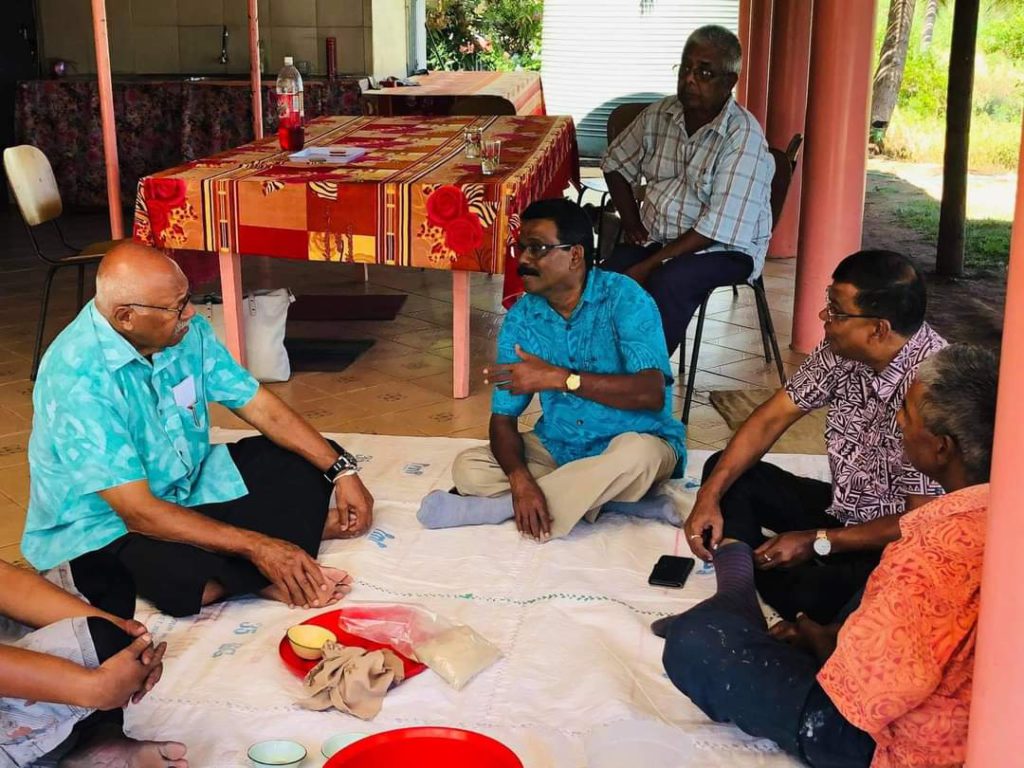
Ayodhya Ram Temple a resurrection of damaged national spirit: Sadhguru

0

Sadhguru, Founder of Isha Foundation, is coming to Australia. Catch Sadhguru’s exclusive interview with The Australia Today on the eve of his program in Sydney at the International Convention Centre.

How do you think spirituality is relevant in today’s fast-paced, technology-driven world, especially for the younger generation?

Sadhguru: Never before has a generation of people known the comforts and conveniences we have today. And yet, we cannot claim to be the most joyful or loving generation in history. A vast number of people live in states of constant stress and anxiety.

This is where Yoga and spirituality can play a vital role. The process of Yoga is the science of inner management. You create an inner possibility where being blissful, joyful and peaceful is of your own nature, and not because of something that happens around you. All human beings, without exception, are capable of turning into the architects of their own joy, the masters of their own destinies.

Sadhguru (Image: Isha Foundation)

It is essential that we empower our youth with this inner technology because youth means lots of energy. But unbridled energy without stability and direction is always dangerous and destructive. Only those who are stable can use whatever quality and talent they have to the fullest extent. If youth are a little more stable, this energy which you call as youth, could be put to better use for their own and for everyone’s wellbeing. So, before youth manages the country, the world and business, it is extremely important that they learn to manage themselves.

What is the significance of the Ayodhya Ram Temple?

Sadhguru: The Ram Temple is important because in many ways, for many people in the country, Rama is their spirit. So, this is not just another temple. Ram and Ramayan have been so much a part of the Indian ethos that it is almost like a resurrection of a damaged national spirit.

By honouring Rama, we acknowledge an important civilizational insight – one that views heroism not as conquest of the external, but the internal.

The fundamental ethos of this land recognizes mukti or liberation as the highest value. Rama epitomizes this ideal. As the Maryada Purushottam, which means a very superior human being, he reminds us that every human being can rise to become divine. This is the possibility that Yoga holds out to all, not just in our country, but the world.

Sadhguru (Image: Isha Foundation)

With your Rally for Rivers and Save Soil initiatives, you’ve highlighted environmental issues. What specific environmental challenges do you think are most pressing in Australia, and how can individuals contribute to solving them?

Sadhguru: Just a month ago, I was at the UNFCCC COP28 in the UAE. Fortunately, some very significant progress has been made at the conference. For the first time, soil is playing a crucial role in the Climate Action agenda. UAE’s Minister of Climate Change and Environment, Madam Mariam Almheiri, proposed the Emirates Declaration on Sustainable Agriculture, which aims to shift the focus of climate action towards soil and agriculture. This is what the Save Soil movement, which we have been working on for three decades, has been striving for.

Sadhguru (Image: Isha Foundation)


There is no way you can talk about climate change without referring to soil degradation because nearly forty percent of global warming can be handled if we revitalize soil. To call soil as soil, there has to be a minimum of 3% organic matter in it. But no nation in the world has that minimum.

Healthy soil is one of the best carbon sinks in the world, even better than the ocean in terms of square footage. If the soil is covered with vegetation and has organic matter, it absorbs the carbon from the atmosphere. At the same time, unhealthy soil, which is plowed and exposed to the Sun, is a source of emission of both carbon dioxide and methane. Unfortunately, soil has been overlooked in the climate change narrative until recently. But with the Save Soil movement, we successfully turned the world’s attention to soil.

So, the narrative around soil has shifted conclusively. I am very sure soil policies will be implemented. It is only a question of ensuring a quick pace, so that we turn around from the disaster before it is too late. If this needs to happen, you must keep up your voice to Save Soil in the coming few years so that the funding and action moves towards soil and agriculture.

Mental health has become a significant concern globally. What guidance does your approach to spirituality offer for those struggling with mental health issues?

Sadhguru: All human experience – peace, love, joy, blissfulness, agony, depression, ecstasy – has a chemical basis. Pharmacology is essentially trying to fix the chemical balance within the body by adding chemicals from outside. We must realize that taking chemicals from outside in the form of medications is necessary in an extreme situation, but working for an equanimous chemistry within ourselves is something that has to be brought into every individual’s life.

There is substantial scientific evidence today to show that the body is capable of producing various secretions which lead to different types of experiences within ourselves. The human body is capable of producing something called as endocannabinoids. When endocannabinoids are up, you naturally feel blissful all the time.

With Yogic practices – for example with the Inner Engineering practices that we offer – it has been established by studies by professors and scientists at Beth Israel Deaconess Medical Center, Rutgers and Indiana universities that the endocannabinoid secretion in the body goes up by 70 percent, which is higher than what is experienced during sexual orgasm or intense physical exercise. People are coming out of their depressive modes and other anxiety situations through Inner Engineering.

Sadhguru (Image: Isha Foundation)

This year, we will be launching a global movement called Conscious Planet. Its aim is to ensure that at least three billion people have a 12-15-minute practice that they can do every day for their inner wellbeing. Along with meditation and Yoga, we will offer a variety of things such as music and martial arts on our online platforms. People can choose based on their inclination but the idea is that human beings should start working for their wellbeing.

Yoga is gaining immense popularity in Australia. In your view, what is the essence of yoga, and how does it go beyond just physical well-being?

Sadhguru: The word “Yoga” fundamentally means “union,” but generally for most people today in the world, Yoga means asanas. Asanas are just a small preparatory aspect of Yoga. Yoga is not a practice, a particular action or posture – it is a way of being. When a person begins to experience everything as a part of oneself, one is in Yoga. Today, modern science proves to you beyond any doubt that the whole existence is just one energy manifesting itself in various forms. If this scientific fact becomes a living reality for you, that you begin to experience everything as one, then you are in Yoga. That is liberation, that is mukti, that is ultimate freedom.

Sadhguru (Image: Isha Foundation)

You often speak about the importance of diet in spiritual practice. What dietary advice would you give to Australians who are increasingly interested in wellness and spirituality?

Sadhguru: What kind of food you eat should depend not on what you think about it, or on your values and ethics, but on what the body needs. Try different foods and see how your body feels after eating the food. If your body feels very agile, energetic and nice, that means the body is happy. If the body feels lethargic and needs to be pumped up with caffeine or nicotine to stay awake, the body is not happy.

It takes a certain attention to learn to listen to your body. Once you have that, you know what to eat and what not to eat. In terms of the quality of food that is entering you, definitely vegetarian food is far better for the system than non-vegetarian food. We are not looking at it from a moral standpoint, but at what is suitable for the system – foods which would make you comfortable in the body. So, the kind of food with which your body is most at ease and will not struggle to get nourishment out of, that is the kind of food we should eat.

Sadhguru (Image: Isha Foundation)

Many people struggle to find their purpose or feel fulfilled. What advice do you have for those seeking a deeper sense of fulfillment in their lives?

Sadhguru: If you see your life as a precious life, what do you want to invest this life into? If you look at it this way, you will find something truly worthwhile to do. If you think in terms of how to earn a living, how to get this or that, then you will do something silly that you will regret.

So, it is important that without any kind of influence, you must stay by yourself somewhere, at least
or 2-3 days and look at “What is it that I want to invest this precious life into? What is it that will be worthwhile today and after fifty years for me to invest myself into?” You invest your life into that, whatever it is – however small or big. If you see that something is truly worthwhile and you invest your life in that, this will be a life of fulfillment.

How do you suggest one deals with the inevitable challenges and setbacks that life presents?

Sadhguru: There are no problems, only situations. It is all in how you approach them. The moment you label it as a problem, it will become a distress within you. How we conduct the situation around us is subject to various realities, but how we conduct the situation within ourselves is entirely up to us.

Sadhguru (Image: Isha Foundation)

No matter what the nature of the situation is, whether it is happening the way you want it or not, it is all about realizing that you are here to experience life. Without situations, you cannot experience life. They may be challenging, test the limits of your competence and really make you feel like you are in front of a wall, but when you manage to climb across or break through it, that is where your experience of life is enhanced. So, do not call anything a problem. This is a simple way to approach life – life is just a series of situations.

Life need not always happen the way you want it. The important thing is that you come through it joyfully, enriched by the experience of those situations, and in the end, you become a very enhanced and enriched life. That is all that matters.

Victoria Unveils State-of-the-Art Basketball Centre, Fuelling Aspirations and Boosting Local Economy

0

In a boost to basketball and local sports, the Allan Government has unveiled the new State Basketball Centre in Wantirna South, Victoria.

Premier Jacinta Allan and Minister for Tourism, Sport and Major Events Steve Dimopoulos officially opened the facility, heralding a new era for basketball players and fans across the state.

The Basketball Centre; Image Source-Supplied

Premier Jacinta Allan commented,

“We invest in projects like this because they create Victorian jobs, support fans and local communities, and give talented young people a better shot at success.”

Minister Steve Dimopoulos added, “Victorians love basketball more than any other state, and this investment means more Victorians can take part and dream of emulating their heroes around the world.”

The world-class centre, constructed with a heavy emphasis on local resources, features 18 indoor courts, including 12 new ones for community use. This expansion ensures that Victoria remains a leading hub for basketball, catering to various levels from NBL and WNBL matches to grass-roots competitions.

Jobs and Industry Minister Natalie Hutchins highlighted the project’s contribution to local employment and training, noting the significant use of Victorian resources and workforce in the construction.

Central to the development is a dedicated high-performance training and administration facility, which will be home to NBL team South-East Melbourne Phoenix and the WNBL’s Southside Flyers. These facilities will also support local sports organisations, fostering basketball’s growth in Victoria for future generations.

The Knox Regional Sports Park precinct has been enhanced with a new town square, complete with food and beverage outlets, and improved road access, making it more accessible to locals and visitors. The project, amounting to $132 million, received a $105 million investment from the Victorian Government and an additional $27 million from Knox City Council.

Premier-Jacinta-Allan-at-Basketball-Centre-Image-Source-Supplied

Development Victoria and ADCO Constructions prioritized local manufacturing in the construction, using locally produced steel and sourcing over 90 per cent of materials from within Victoria. The project created more than 500 construction jobs, with an additional 100 ongoing positions to support the centre’s operations.

Upgrades to the original six basketball courts and adjacent administrative and function spaces are in progress, with completion expected by mid-2024. This further investment cements Victoria’s status as Australia’s basketball heartland, a state where basketball participation has surged by more than four per cent annually since 2010.

The State Basketball Centre is set to host a major NBL game between the South-East Melbourne Phoenix and the Adelaide 36ers, showcasing its high-performance areas.

The Basketball-Centre-Image-Source-Supplied

Local representatives, including Jackson Taylor and Michael Galea, praised the centre for its expected positive impact on the community and local economy. Knox City Council Mayor Jude Dwight expressed pride in the region’s continued prominence in Australian basketball and the benefits the upgraded facilities will bring to locals of all backgrounds and abilities.

The State Basketball Centre stands as a testament to Victoria’s commitment to sports, community development, and economic growth, positioning the state as a leading destination for basketball enthusiasts and professionals alike.

Support Our Journalism

Global Indian Diaspora needs fair, non-hyphenated, and questioning journalism, packed with on-ground reporting. The Australia Today – with exceptional reporters, columnists, and editors – is doing just that. Sustaining this needs support from wonderful readers like you.

Whether you live in Australia, the United Kingdom, Canada, the United States of America, or India you can take a paid subscription by clicking Patreon. Buy an annual ‘The Australia Today Membership’ to support independent journalism and get special benefits.
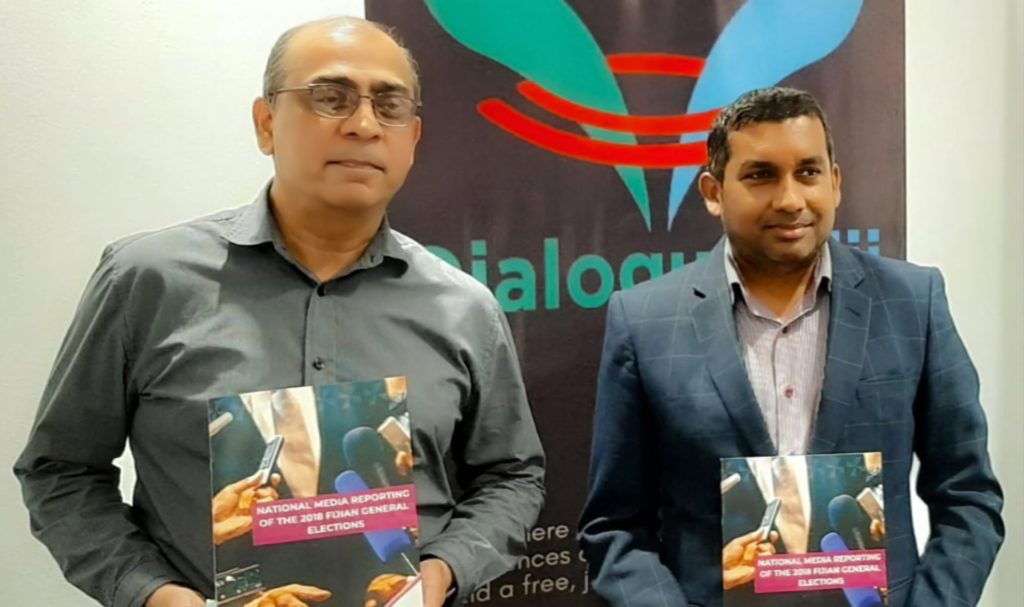
Hinduism becomes the third-largest religion in Australia

0

World Religion Day is coming up this weekend (21 January 2024) and according to the Australian Bureau of Statistics (ABS), Hinduism is the third top-followed religion in the country.

According to ABS, Hinduism has emerged as the third largest religion in the nation, after various denominations of Christianity and Islam, with 2.7 per cent of the Australian population belonging to the Hindu faith.

Hindus at Sri Durga Temple; Image Source; The Australia Today

Hinduism is the oldest and the third largest of the world’s major religions with globally nearly 1.2 billion followers.

Australia’s religious profile has been shaped by waves of migration and in the last Census Hinduism was seen as the fastest-growing religion in Australia.

The first Hindu migrants are believed to have arrived in Australia in the 19th century. Since the 1970s, New South Wales (NSW) and Victoria have had higher proportions of religious affiliation with Hinduism than other states and territories.

However, the state of Tasmania has also seen the highest growth rate in Hinduism since the 2016 Census. From 2016 to 2021, the proportion of people who are affiliated with Hinduism in Tasmania increased from 0.5% to 1.7% of the population. 

The bellow tile is rounded for understanding purposes by ABS.

Anglican and Catholicism have been, and are, the largest Christian denominations in Australia. ABS data shows the people identifying with Christianity in three categories – Catholic (20 per cent), Anglican (10 per cent), and Other Christians (14 per cent) – and it remains the top religion across all denominations. 

Islam is at second position with 3.1 per cent followed by Buddhism (2 per cent) and Sikhism (1 per cent). ABS notes that the median age for Hinduism is 31 years, Sikhism is 30, and Islam is 28.

NSW Labor commits to establish Hindu Cultural and Education Centre; Image Source: Supplied

The third Sunday in January is annually celebrated as World Religion Day. It was established by the National Spiritual Assembly of the Baha’is of the United States in 1950 as a way to encourage interfaith understanding.

Note: The article has been updated after Australian Bureau of Statistics (ABS)’ clarification that their social media team has incorrectly

Support Our Journalism

Global Indian Diaspora needs fair, non-hyphenated, and questioning journalism, packed with on-ground reporting. The Australia Today – with exceptional reporters, columnists, and editors – is doing just that. Sustaining this needs support from wonderful readers like you.

Whether you live in Australia, the United Kingdom, Canada, the United States of America, or India you can take a paid subscription by clicking Patreon. Buy an annual ‘The Australia Today Membership’ to support independent journalism and get special benefits.

 

Do you know how to protect your children from online sextortion?

0

The AFP-led Australian Centre to Counter Child Exploitation (ACCCE) is highlighting the warning signs of sextortion before school returns, to help parents and carers protect young people from the threat online.

Sextortion is a form of online blackmail where offenders trick or coerce someone into sending sexual images of themselves, before threatening to share the images unless their demands are met. These demands could be for money, more graphic content or sexual favours.

The most recent data from the ACCCE shows around 300 reports of sextortion targeting children each month.

AFP Commander Human Exploitation Helen Schneider said there were tell-tale signs of sextortion, which every parent and carer needed to know.

“Some warning signs include incoming friend requests from strangers or people pretending to be friends with your child, sudden sexualised questions, conversations, or photos from a random profile, who then ask for some in return.”

Warning signs for parents and carers:

  • Unsolicited friend or follow requests or random adds from people your child doesn’t know.
  • Sudden sexualised questions or conversation.
  • Instantly receiving sexual images from a fake profile who asks for the same from the child.
  • Getting a direct message on one app, then being asked to continue chatting on a different app.
  • Signs that English may be a second language of the person sending the messages.
  • The fake profile might say that their webcam or microphone are not working for video calls/chats to confirm their identity.
  • The fake profile says that they promise to delete your content.

Commander Schneider said there were serious safety and wellbeing concerns for children who were caught up in sextortion, with suicide and self-harm risks attributed to this offending both overseas and in Australia.

“We want parents and carers to be alert to the signs, report and seek help and guidance if they have been targeted by offenders. If your child is or has been a victim, it is important to stay calm and reassure them that it’s not their fault and that there is help available.”

If you know someone that has become a victim of sextortion, here is what to do:

  • Urge them to not send any more graphic content or pay as this will lead to more demands;
  • Take screenshots of the chat for a police report;
  • Block the fake profile and notify the platform administrators;
  • Report the crime to the ACCCE at www.accce.gov.au/sextortionhelp; and
  • Seek mental health support if required. Kids Helpline offers free and confidential sessions with counsellors.

The AFP-led ThinkUKnow program has developed a resource to help the community identify sextortion and how to get help. The Online blackmail and sexual extortion response kit aimed at young people aged 13 -17 is available from the ThinkUKnow and ACCCE websites.

The AFP and its partners are committed to stopping child exploitation and abuse, and the ACCCE is driving a collaborative national approach to combatting child abuse.

If you or someone you know is impacted by child sexual abuse and online exploitation, support services are available at www.accce.gov.au/support.

Support Our Journalism

Global Indian Diaspora needs fair, non-hyphenated, and questioning journalism, packed with on-ground reporting. The Australia Today – with exceptional reporters, columnists, and editors – is doing just that. Sustaining this needs support from wonderful readers like you.

Whether you live in Australia, the United Kingdom, Canada, the United States of America, or India you can take a paid subscription by clicking Patreon. Buy an annual ‘The Australia Today Membership’ to support independent journalism and get special benefits.
China’s population shrinks again and could more than halve – here’s what that means

0

By Xiujian Peng

China’s population has shrunk for the second year in a row.

The National Bureau of Statistics reports just 9.02 million births in 2023 – only half as many as in 2017. Set alongside China’s 11.1 million deaths in 2023, up 500,000 on 2022, it means China’s population shrank 2.08 million in 2023 after falling 850,000 in 2022. That’s a loss of about 3 million in two years.

The two consecutive declines are the first since the great famine of 1959-1961, and the trend is accelerating.

Updated low-scenario projections from a research team at Shanghai Academy of Social Sciences, one of the first to predict the 2022 turndown, have China’s population shrinking from its present 1.4 billion to just 525 million by 2100.

China’s working-age population is projected to fall to just 210 million by 2100 – a mere one-fifth of its peak in 2014.

Deaths climbing as births falling

The death rate is climbing as an inevitable result of the population ageing, and also an upsurge of COVID in the first few months of 2023.

The population is ageing mainly because the birth rate is falling.

China’s total fertility rate, the average number of births per woman, was fairly flat at about 1.66 between 1991 and 2017 under China’s one-child policy. But it then fell to 1.28 in 2020, to 1.08 in 2022 and is now around 1, which is way below the level of 2.1 generally thought necessary to sustain a population.

By way of comparison, Australia and the United States have fertility rates of 1.6. In 2023 South Korea has the world’s lowest rate, 0.72.


https://datawrapper.dwcdn.net/idC4X/1/


Births plummet despite three-child policy

China abandoned its one-child policy in 2016. In 2021 the country introduced a three-child policy, backed by tax and other incentives.

But births are continuing to fall. In part this is because of an established one-child norm, in part because the one-child policy cut the number of women of child-bearing age, and in part because economic pressures are making parenthood less attractive.

China’s National Bureau of Statistics says employees of enterprises work an average of 49 hours per week, more than nine hours per day. Women graduates earn less than men and are increasingly postponing having children.

The Year of the Dragon offers hope

One hope is that 2024 will see a bump in births, being the year of the dragon in Chinese astrology, a symbol of good fortune.

Some families may have chosen to postpone childbirth during the less auspicious year of the rabbit in 2023. At least one study has identified such an effect.

An older, more dependent population

The same research team at the Shanghai Academy of Social Sciences and the Centre for Policy Studies at Australia’s Victoria University have China’s population falling by more than one-half to around 525 million by 2100, a fall about 62 million bigger than previously forecast.

The working-age population is set to fall more sharply to 210 million.

We now expect the number of Chinese aged 65 and older to overtake the number of Chinese of traditional working age in 2077, three years earlier than previously.

By 2100 we expect every 100 Chinese of traditional working-age to have to support 137 elderly Chinese, up from just 21 at present.

Our central scenario assumes China’s fertility rate will recover, climbing slowly to 1.3. Our low scenario assumes it will decline further to 0.88 over the next decade and then gradually recover to 1.0 by 2050 before holding steady.


We have based our assumptions on observations of actual total fertility rates in China’s region and their downward trend. In 2022 these rates hit 1.26 in Japan, 1.04 in Singapore, 0.87 in Taiwan, 0.8 in Hong Kong and 0.78 in South Korea.

In none of these countries has fertility rebounded, despite government efforts. These trends point to what demographers call the “low-fertility trap” in which fertility becomes hard to lift once it falls below 1.5 or 1.4.

An earlier peak in world population

At present accounting for one-sixth of the world’s population, China’s accelerated decline will bring forward the day when the world’s population peaks.

Our updated forecast for China brings forward our forecast of when the world’s population will peak by one year to 2083, although there is much that is uncertain (including what will happen in India, now bigger than China, whose fertility rate has fallen below replacement level).

The accelerated decline in China’s population will weaken China’s economy and, through it, the world’s economy.

It will put downward pressure on Chinese consumer spending and upward pressure on wages and government spending. As the world’s second-largest economy, this weakness will present challenges to the world’s economic recovery.

Xiujian Peng, Senior Research Fellow, Centre of Policy Studies, Victoria University

This article is republished from The Conversation under a Creative Commons license. Read the original article.

"The

Support Our Journalism

Global Indian Diaspora needs fair, non-hyphenated, and questioning journalism, packed with on-ground reporting. The Australia Today – with exceptional reporters, columnists, and editors – is doing just that. Sustaining this needs support from wonderful readers like you.

Whether you live in Australia, the United Kingdom, Canada, the United States of America, or India you can take a paid subscription by clicking Patreon. Buy an annual ‘The Australia Today Membership’ to support independent journalism and get special benefits.
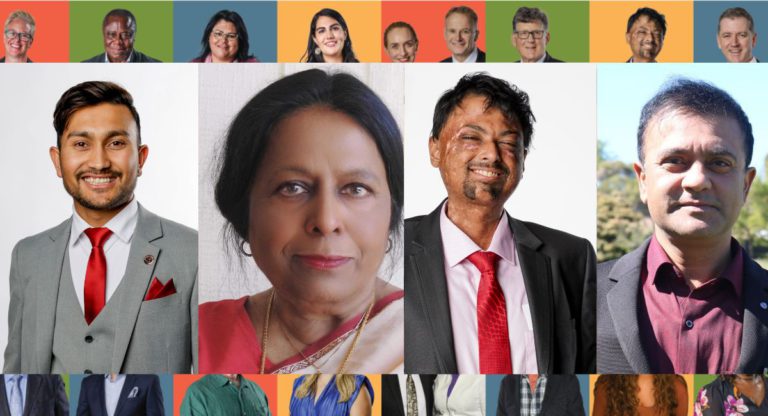
T20 to Remember with Double Super Over Drama: Rohit Sharma Shines, Afghanistan Responds

0

Following a record-breaking century by skipper Rohit Sharma and a fantastic batting effort by Afghanistan batters Rahmanullah Gurbaz, skipper Ibrahim Zadran and Gulbadin Naib, it took two Super Overs to separate both the sides as India beat Afghanistan by 11 runs after the match and the first Super Over ended in a tie here at Bengaluru during the third T20I on Wednesday.

Fun time; Image Source- X:Twitter @BCCI

India has secured the series 3-0.
In the chase of 213 runs, Afghanistan started off with positive intent, with openers Ibrahim Zadran and Rahmanullah Gurbaz scoring at a rate of nine runs per over.

Afghanistan reached the 50-run mark in 5.5 overs

They ended the powerplay at 51/0 in six overs, with Zadran (29*) and Gurbaz (22*) unbeaten. Afghanistan ended the first half of their innings with a bang, smashing Shivam Dube for 18 runs, including two fours and a six. Afghanistan was 85/0, with Gurbaz (44*) and Zadran (38*) unbeaten.
India got their first breakthrough in the next over, removing Gurbaz for 50 off 32 balls, with three fours and four sixes. Afghanistan was 93/1 in 11 overs.

With Zadran hitting Washington Sundar for a six, Afghanistan reached the 100-run mark in 12.1 overs.

Zadran reached his fifty in 41 balls, with four boundaries and a six.
Sundar helped India earn a comeback into the game, getting Zadran (50) and Azmatullah Omarzai (0) on successive deliveries, reducing Afghanistan to 107/3 in 12.4 overs.

Gulbadin Naib; Image Source; X:Twitter @ACBofficial

Mohammed Nabi and Gulbadin Naib kept hitting despite these two quick wickets. The duo hit Avesh Khan for 20 runs in the 14th over, with two sixes and a four. Nabi’s two sixes helped Afghanistan get 17 runs from Kuldeep’s next.

At the end of 15 overs, the match was even, at 145/3, with Nabi (19*) and Naib (20*) unbeaten.
Afghanistan reached the 150-run mark in 15.2 overs. Bishnoi’s 16th over was also hit for 17 runs, including two fours and a six by Nabi. Afghanistan needed 51 runs in four overs.

The all-rounder Nabi’s entertaining cameo off 34 in 16 balls, with two fours and three sixes is ended by Sundar. Afghanistan was 163/4 in 16.2 overs after Avesh Khan plucked a catch at deep point.
Karim Janat was run out for just two. Afghanistan was 167/5 in 17.1 overs. Wickets kept falling for Afghanistan as Najibullah Zadran was dismissed for five runs. Avesh Khan took the wicket while Virat took the catch. Afghanistan was 182/6 in 18.2 overs.

Afghanistan needed 19 runs in six overs. Smashing Mukesh Kumar for a four and a six, Naib brought down the equation to three runs in the final ball. The match ended in a tie, with Afghanistan finishing at 212/6, with Naib (55* in 23 balls, with four boundaries and four sixes) and Sharafuddin Ashraf (5*) unbeaten.

Fareed Ahmad strikes; Image Source; X:Twitter @ACBofficial

Sundar (3/18) was the pick of the bowlers for India. Avesh and Kuldeep took a wicket each.
Afghanistan batted first in the Super Over and set a target of 17 runs for India after the Super Over was bowled by Mukesh Kumar.

India managed to take the equation to two runs in one ball and the Super Over as well ended in a tie. Rinku was sent by Rohit to run on the final ball of the Azmatullah Omarzai bowled over, but only one run was made.

In the second Super Over, Rohit and Rinku Singh came out to bat against Fareed Ahmed. With a four and six by Rohit, India managed 11 runs but lost two wickets, taking the target to 12 runs. Ravi Bishnoi came to bowl for India and got Mohammed Nabi on the first ball. After a single, Bishnoi also removed Gurbaz, winning the game by 11 runs.

Earlier, a record-breaking century by skipper Rohit Sharma and a half-century by Rinku Singh helped India reach a massive 212/4 in 20 overs following an early loss of wickets against Afghanistan in the third T20I at Bengaluru on Wednesday.

Rohit Sharma; Image Source- X:Twitter @BCCI

Opting to bat first, India had a bad start as they lost opener Yashasvi Jaiswal and star batter Virat Kohli for a golden duck on back-to-back balls by Fareed Ahmed in the third over. Jaiswal’s catch was picked by Mohammed Nabi for just four runs while Ibrahim Zadran caught Virat at mid-off to reduce India to 18/2 in 2.4 overs.

Afghanistan was all over the India batters as Azmatullah Omarzai removed Shivam Dube for just one after being caught behind by Rahmanullah Gurbaz. In the fifth over, Sanju Samson was out for a golden duck after being caught by Nabi, giving Fareed his third wicket. India was 22/4 in 4.3 overs.
Then the pair of skipper Rohit and Rinku Singh joined forces to help India gain recovery.

At the end of the powerplay in six overs, India was 30/4, with Rinku (2*) and Rohit (13*) unbeaten.
The eighth over by Saleem Saifi gave away 14 runs, including two sixes by Rohit. India reached the 50-run mark in 8.4 overs.

Halfway through the innings, India was 61/4, with Rohit (27*) and Rinku (19*) unbeaten.
In the 12th and 13th overs, Rohit and Rinku gathered a lot of runs, Sharafuddin Ashraf and Qais Ahmad were smashed for 16 runs each, with Rohit hitting two fours and two sixes and Rinku getting a six.

India reached the 100-run mark in 13.2 overs.
Rohit reached his 30th T20I fifty in 41 balls, with five fours and three sixes.

At the end of 15 overs, India was 109/4, with Rohit (55*) and Rinku (36*) unbeaten. The 16th over by Saleem gave away 22 runs, including two fours and a six.

The 19th over bowled by Azmatullah yielded 22 runs for India, including two fours and a six by Rohit and a six by Rinku. Rohit brought up his 5th T20I century, most by a batter in the format.
The final over by Karim Janat leaked 36 runs as Rohit smashed a four and two sixes and Rinku’s three sixes came on the final three balls.

India finished at 212/4, with Rohit (121* in 69 balls, with 11 fours and eight sixes) and Rinku (69* in 39 balls, with two fours and six sixes) unbeaten. Both combined to form a 190-run partnership for the fifth wicket.

Support Our Journalism

Global Indian Diaspora needs fair, non-hyphenated, and questioning journalism, packed with on-ground reporting. The Australia Today – with exceptional reporters, columnists, and editors – is doing just that. Sustaining this needs support from wonderful readers like you.

Whether you live in Australia, the United Kingdom, Canada, the United States of America, or India you can take a paid subscription by clicking Patreon. Buy an annual ‘The Australia Today Membership’ to support independent journalism and get special benefits.

Have you taught your kids how to stay safe online? Here are some tips

0

The AFP has today released age appropriate conversations about online safety for kids aged from between five years old and 12 years old, and 13 years old and over.

The AFP is urging parents and carers to provide one of the most important life lessons to their children even before they start the 2024 school year – how to stay safe online.

Data shows just over half of parents and carers regularly discuss online safety at home but almost all children regularly use technology for educational purposes or entertainment.

Research conducted by the AFP-led Australian Centre to Counter Child Exploitation (ACCCE) reveals 87 per cent of children aged between four and seven years old are using the internet, and 16 per cent of those are unsupervised.

Only three per cent of participants who participated in the research listed online grooming as a concern.

The AFP-led ThinkUKnow program has released a range of age-based tips and content to help parents and carers keep children and young people safe online across all stages of development.

Children and young people may use smart devices such as tablets for educational purposes, watching videos, playing games and social interaction. Children and young people can readily access the internet and technology in public places, schools and at home.

AFP Commander Helen Schneider said parents and carers needed to begin regular conversations with their children about online safety during early childhood to help children and young people understand the challenges they may face online and how to get help and support.

“We are urging families to ‘have the talk – the online child safety talk’ this year. We know about 52 per cent of parents and carers talk to their children about online safety, which includes topics like online grooming and inappropriate contact online, but we are aiming to increase this in 2024.”

Commander Schneider added:

“The AFP is urging everyone to continue the chat throughout their child’s development and stages of life to ensure they are protected every step of the way.”

Commander Schneider said the ACCCE had received reports involving young children being able to access social networking, live streaming and instant messaging online.

“We have developed a range of age-appropriate resources through ThinkUKnow that help parents and carers navigate these conversations with their children, covering a range of online activities from video and image sharing, instant messaging and online gaming, along with using social media in a safe way.”

Commander Schneider said:

“ThinkUKnow is about providing Australians with the tools they need and empowering them to keep our community’s most vulnerable – our children – safe online.”

ThinkUKnow provides factsheets, videos, presentations, guides, children’s picture book Jack Changes the Game, home learning and family activities to help with these discussions including the following:

Under five years old

It is never too early to start teaching your child about online safety. Have these conversations as early as possible in an age-appropriate way.

  • Children in this age group are likely to be playing games and watching videos online.
  • Introduce and talk about what the internet is, and how it allows us to connect with other people.
  • “My phone is connected to the internet and I can send a photo from my phone to grandpa’s phone”
  • Supervision online is always recommended for young children. This looks different for every family, but it is important to be aware of what your child is doing online in case they need your help.
  • Implement strong privacy settings and consider parental controls on the devices your child uses. This can give you more control over what they do online, and limit the possibility of interaction with others.
  • Encourage your child to go to you if they see anything online that makes them scared or uncomfortable.

Resources

Between five years old and 12 years old

For this age group, continue building on the foundations of online safety.

  • Children in this age group are likely to be using the internet more, playing online games and watching videos. They may also be messaging with friends from school or family.
  • Research what apps, websites and games your child is using. Be aware of any that have a chat function that allows them to communicate with other people.
  • If you need to know more about an online game, one tip is to search online for videos of gameplay to get an idea of what it looks like and how it works.
  • Supervision is always recommended, and looks different for different families. Consider what works best for your child and your family circumstances.
  • Have open conversations with your child about what they do online, who they talk to and that if something goes wrong, they can go to you for help.
  • Implement privacy settings and parental controls, but balance this with regular check-ins and encourage critical thinking while online.

Resources

13 years and over

While older children may want to use their devices independently and want more privacy around their relationships and online interactions, it is still important to be engaged in their online activities.

  • Young people in this age group are likely to be playing online games, watching videos and using social networking platforms to interact with friends. 
  • Learn about the features of the apps, games and sites your child uses and the safety challenges so you can talk to them about implementing safety measures to keep them safe online.
  • Encourage ‘friends only’ or ‘private’ security settings.
  • If your child has public social media accounts, be aware of the privacy challenges and encourage your child to think critically about information sharing.
  • Your level of supervision or oversight may vary across this age group, however you should always stay in touch with what your child is doing online and encourage them to come to you for help and support.
  • Encourage your child to recognise safe or unsafe situations and inappropriate contact. This can empower them to make informed decisions, including when they are in unsupervised environments.

Resources

For all ages

Ensure your child knows that they can go to you for help and support if something goes wrong online.

If a child or young person is scared of how their parents or carers will react, they will be blamed for what happened, or have their device taken away, they may not seek help, making them more vulnerable to exploitation.

The ACCCE brings together specialist expertise and skills in a central hub, supporting investigations into online child sexual exploitation and developing prevention strategies focused on creating a safer online environment.

Members of the public who have information about people involved in child abuse are urged to contact the ACCCE. If you know abuse is happening right now or a child is at risk, call police immediately on 000.

If you or someone you know is impacted by child sexual abuse and online exploitation, support services are available.

Advice and support for parents and carers about how they can help protect children online can be found on the ThinkUKnow website, an AFP-led education program designed to prevent online child sexual exploitation.

For more information on the role of the ACCCE, what is online child sexual exploitation and how to report it visit the ACCCE website.

Support Our Journalism

Global Indian Diaspora needs fair, non-hyphenated, and questioning journalism, packed with on-ground reporting. The Australia Today – with exceptional reporters, columnists, and editors – is doing just that. Sustaining this needs support from wonderful readers like you.

Whether you live in Australia, the United Kingdom, Canada, the United States of America, or India you can take a paid subscription by clicking Patreon. Buy an annual ‘The Australia Today Membership’ to support independent journalism and get special benefits.
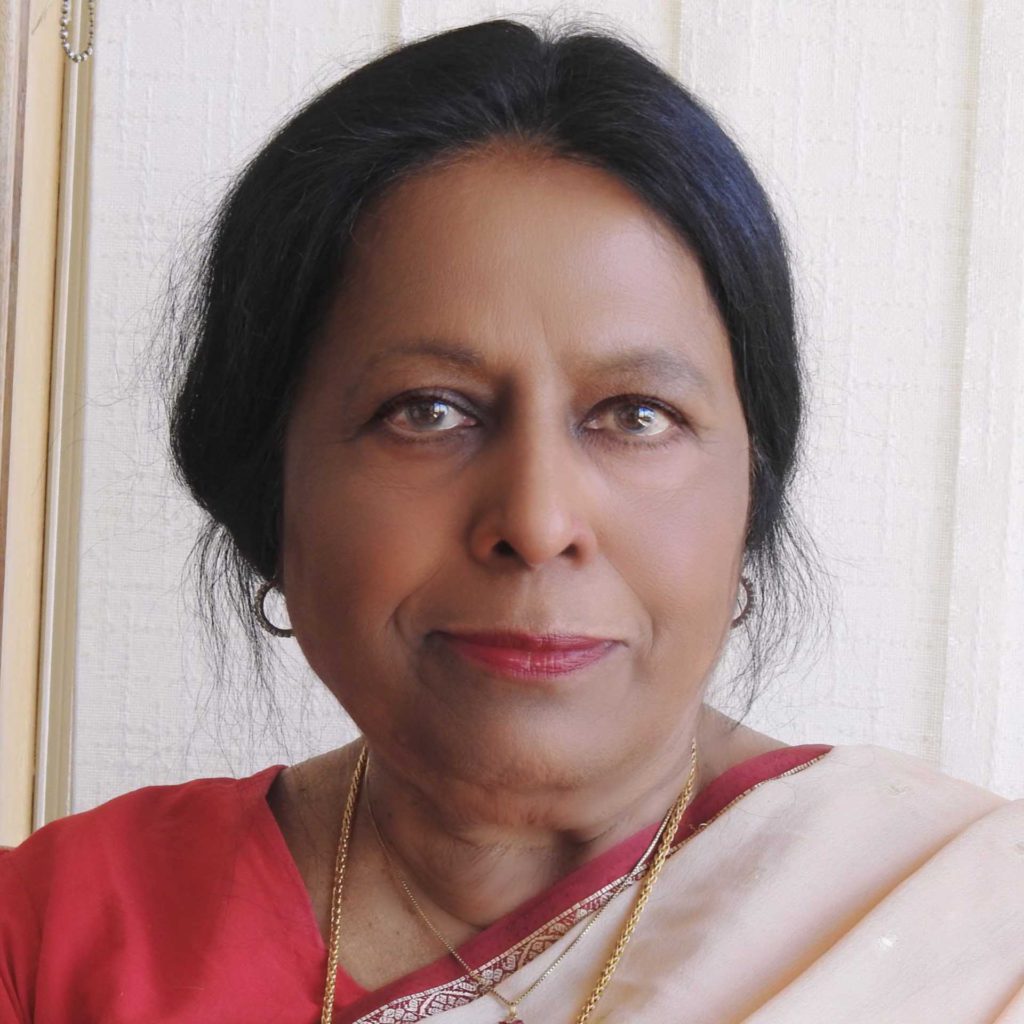
Can we cut road deaths to zero by 2050?

0

By Milad Haghani

Last year, 1,266 Australians died from road accidents involving at least one car and a driver, passenger, pedestrian or cyclist. The economic cost of Australian road trauma exceeds A$27 billion each year. That’s 1.8% of Australia’s GDP.

Australia has committed to an ambitious target of zero road deaths by 2050, known as Vision Zero. Originating in Sweden in the late 1990s, Vision Zero is based on a simple principle: no loss of life or serious injury on roads is acceptable.

But while we were making good progress at reducing road trauma, this has stalled in recent years, with Australian road deaths rising to levels not seen in nearly a decade.

If the current trend continues, meeting the Vision Zero target by 2050 appears impossible. So what’s going wrong?

Progress and setbacks

The journey towards reducing road trauma has had both progress and setbacks. In the early 1990s, roads were claiming more than 2,000 lives in Australia each year.

Over the years, we managed to significantly reduce this number. By 2020, the annual road toll had dropped to around 1,097, almost halving the figure from three decades prior.

However, recently, we’ve witnessed a worrying reversal: three consecutive years of increasing road deaths.

With more progress, it gets harder to improve

Over the years, through various safety initiatives and public awareness campaigns, we managed to significantly reduce road trauma. This includes measures such as seatbelt, helmet and child-seat laws, as well as regulations around speeding, drink-driving and phone use.

We also have safer cars and infrastructure now. Modern car features and technologies – such as auto-emergency braking, lane-keep assist, blind spot monitoring and airbags – are associated with a lower risk of road accidents and fatalities.

With the significant benefits we have gained from these measures, additional safety measures will naturally lead to smaller improvements. But the toll is actually worsening.

What role did the pandemic play?

For the first time in decades, we’ve seen a sustained increase in road deaths in Australia and other countries such as the United States.

During the pandemic, more people bought cars, perhaps to avoid public transport.

However, this alone doesn’t fully explain the rise in road deaths. With more people working from home, there has been a reduction in daily commutes. Plus, the increase in the number of vehicles has been modest relative to the rise in road deaths.

So the assumption that more people are dying because there are more cars is, at best, a partial explanation.

Risky driving behaviours

The post-pandemic data shows several indicators of declining road user behaviour and attitudes.

In New South Wales, for example, there has been a substantial increase in fines for minor speeding offences.

Across Australia, the number of fatal crashes in 60–70 km/h zones has been rising, from 241 associated deaths in 2020 to 315 in 2022. Speeding is likely to play a role, but it’s unclear to what extent.

This shows the number of road deaths in different speed limit areas. Australian Road Deaths Database

Remote and regional roads still pose a significantly higher risk of death, relative to their population. The road death risk is about six times higher in outer regional areas and nine times higher in remote areas compared to major cities.

This could be due to a number of factors: speeding, risk-taking behaviours and others such as poorer infrastructure, lower levels of enforcement, collisions with wildlife, long-trips and driver fatigue.

This shows the relative risk of death, based on the remoteness of the road. Australian Road Deaths Database

Deadly crashes involving drivers without valid licences have also risen. In 2019, 96 deaths were reported in crashes involving operators without a valid licence. This rose to 116 in 2020 and 128 in 2021.

The number of road deaths involving a cyclist or motorcyclist not wearing a helmet was 19 in 2019, but it jumped to 28 in 2020 and 2021, a 47% increase.

The proportion of road deaths with drugs detected in the operator’s system has been rising, from 14% for drivers and 11% for motorcyclists in 2015. In 2021, these numbers rose to 17% for drivers and 28% for motorcyclists.

Another worrying trend is the increased risk of road death for the 17–25 age group. This age group is now at the highest risk of fatality on our roads, surpassing the over-75 age group.

Improving road safety

For the foreseeable future, human drivers will continue to be the primary operators of vehicles, and human factors remain the biggest contributor to road trauma.

When it comes to saving lives on the roads, we need to monitor attitudes to road safety. One way is through regular surveys at state and national levels, tracking scores of behavioural indicators over time. Much like political parties using ongoing polls to track the political climate, regular tracking of the community road safety climate allows us to proactively address challenges emerging from user behaviour, rather than waiting for alarming statistics.

Australia has some of the most progressive road safety policies globally. But our ambitious targets demands focusing more on user behaviour. Road safety campaigns, delivered via TV and other media, can influence road safety behaviours, with tailored campaigns targeting the specific demographics and behaviours of concern. Intensifying investment in these campaigns could be a key strategy in achieving our road safety goals.

Milad Haghani, Senior Lecturer of Urban Mobility, Public Safety & Disaster Risk, UNSW Sydney

This article is republished from The Conversation under a Creative Commons license. Read the original article.

"The

Support Our Journalism

Global Indian Diaspora needs fair, non-hyphenated, and questioning journalism, packed with on-ground reporting. The Australia Today – with exceptional reporters, columnists, and editors – is doing just that. Sustaining this needs support from wonderful readers like you.

Whether you live in Australia, the United Kingdom, Canada, the United States of America, or India you can take a paid subscription by clicking Patreon. Buy an annual ‘The Australia Today Membership’ to support independent journalism and get special benefits.
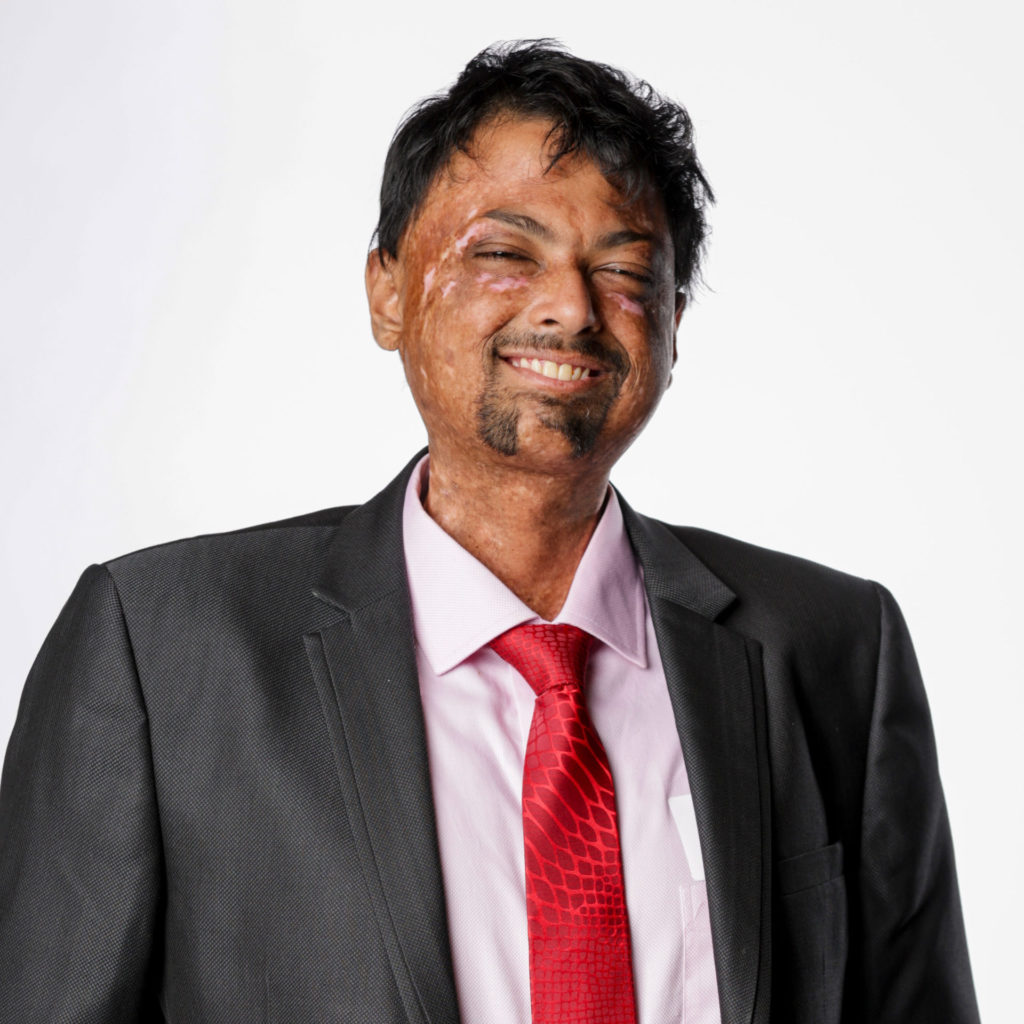
Fiji’s Defence and Security Review is a pivotal step towards stability

0

By Shailendra Bahadur Singh 

Home Affairs Minister Pio Tikoduadua’s national defence and security review initiative announced in December 2023 marks a bold and pivotal step in shaping a clear path for our nation’s stability. 

Especially when the nation has faced and continues to face internal security risks.

Under this prevailing situation, any initiative to mitigate the challenges in a planned and inclusive manner is to be welcomed, given that it is crucial for our future wellbeing as a country.

The review begins with public consultations in February next year, and is expected to end around six months later, in August.

The announcement of this review barely one year into the new government’s term underscores the high priority that Tikoduadua, a former military officer, has placed on this undertaking. 

Within the government, Tikoduadua oversees a crucial portfolio, with national security a fundamental responsibility, in that it is an essential requirement for sustainable development. Without national security, there can be no sustainable development, let alone progress or prosperity, as Fiji’s fractured history starkly demonstrates.

The Minister’s choice for the chair of the review committee is Jim Sanday, an eminently qualified candidate, who served as the former Republic of Fiji Military Forces chief of staff and is a retired public servant with the Australian Department of Defense.

Tikoduadua describes Sanday as a “distinguished figure” in the defence and security sector,  who brings a “wealth of expertise” and “uncompromising integrity to this pivotal role”. 

The review has the full blessing of Prime Minister Sitiveni Rabuka, who played a key role in Sanday’s appointment. Rabuka’s endorsement is a curious twist of fate, considering that the 1987 coup he executed led to Sanday’s removal from his chief of staff position.

Because this is a national defence and security review, the role of the military and the defining of its future directions are integral to the process. 

The military’s role is to defend and safeguard the national interest. The military serves as the last line of defence between societal order and anarchy in any country. Especially a country like Fiji. 

Therefore, the Fiji Military Forces Commander, Ro Jone Kalouniwai’s support for the review is a welcome sign.

Kalouniwai was present at the press briefing with Tikodudua. This show of solidarity and common purpose is important for public confidence given persistent reports of the military’s differences with the elected government over the future directions of the country. 

Kalouniwai told media that the review will provide a framework to help the military define its responsibilities and how it wants to modernise. He said the military has a strategic plan in place but it is not guided by a national security strategy. In this regard, the review addresses a major gap by enabling the military to review its strategic plan and align it to the national security framework.

In an ABC Pacific interview shortly after his appointment was made public, Sanday clarified that the review will not “interfere with the military’s command responsibilities”, which are already legislated.  

FIJI’S ACHILLES HEEL

While the specific details of the review are being finalised, Tikoduadua’s announcement provides some indications about its broader aims and objectives:

“To craft a national security strategy that not only outlines Fiji’s national interests and goals, but also integrates core values and principles, ensuring that the roles of government agencies resonate with the national ethos”.  This raises the question of what the ‘national ethos’ of Fiji is.

Another goal is to “identify and implement” legislative and regulatory reforms in defense and security, aligned to national values that reflect the heart and soul of Fiji.” Again, this may require revisiting and reexamining the values that constitute the ‘heart and soul’ of Fiji.

The review culminates with the Ministry designing a “Security Sector Reform and Governance Programme to align security agencies with government policies to ensure that these agencies operate in a manner that upholds and promotes cherished national values”.

These briefings indicate that a core priority of the review is addressing the lack of social cohesion in Fiji, which I have previously described as the country’s “Achilles heel”.

Mitigating social cohesion is Fiji’s biggest challenge in that more than 50 years after independence, we are still struggling with it. It is Fiji’s most damaging and complex problem with no overnight solution. Its resolution requires commitment from every sector in our nation.

In this context, the review can be seen as a systemic attempt to understand and collectively address what might be termed as Fiji’s vicious cycle — ethnic conflict and political instability resulting in military interventions. These factors, in turn, are interconnected with serious economic setbacks and decline that prevent Fiji from achieving its full potential.

Sanday alluded to this challenge in his ABC Pacific interview when he stated that he understood the relevance of Fiji’s socio-economic/cultural issues in relation to the review.

These issues lie at the heart of the country’s long-term ethno-political tensions, resulting in four socially and economically damaging coups between 1987-2006. While Fiji has escaped wide-scale societal violence so far, this cannot be taken for granted.

In this regard, the review is a much needed, long-overdue preemptive step to safeguard the nation.

COLONIALISM’S LINGERING EFFECT 

Depending on how far back we need to go, a root cause of Fiji’s conflict can be traced to colonialism, whereby the British rulers brought labourers from India to develop the sugar industry under the exploitative indenture system.

This system was largely designed for the economic benefit of the colonialists, with scant regard for the feelings of the native population, or the welfare of the immigrant labourers. Indigenous Fijians were not fully consulted about the scheme, while many migrant workers were tricked into it.

After toiling in slave-like conditions for five-plus years, the migrant workers were given the right to remain in the country, with the vast majority taking up the offer. This would eventually result in generational conflicts over ethnicity, demography, political power, and economic resources. 

Generally, the two major communities feel equally aggrieved and threatened: indigenous Fijians harbour concerns about their culture and land rights, and complain about economic  marginalisation in a modernising world, while Indo-Fijians feel unwanted, scapegoated, vilified and politically excluded.   

Dismissing or shouting down each community’s concerns and fears as irrational, or irrelevant, as in the past, has not been helpful. In this regard, the review’s consultative approach to take in the views and experiences of the people at large is both crucial and appropriate.

Furthermore, while differences between Fiji’s two major communities soak up most of the attention, it is not just about them. The review conceivably encompasses the concerns of Fiji’s other ethnic minorities, who have deep, historical roots in Fiji, and who contribute to the country. These minorities are caught in the maelstrom, and while their welfare is equally affected, they find their concerns drowned out due to their smaller numbers. It is then fitting that Sanday has urged everyone to come forward to share ideas on how to make Fiji a happier and more prosperous place for everybody. 

So, in essence, the review is a nation talking to itself and trying to come to terms with its conflicted history, to build a better future. It involves revisiting the past and learning from it, to avoid the same mistakes, and to escape the vicious cycle of political instability, military coups, and underdevelopment.

A COUNTRY IN DECLINE 

Fiji, mired in ethnic tensions and political differences culminating in four coups, fits the description of “fragile” or “vulnerable” society. 

News media ingeniously describe Fiji’s coups as “blood-less”, “short-lived”, “clean-up-campaign” or “coup-to-end all coups.”

The terminology is regrettable because it grossly underestimates the lingering, sustained and long-term damage of our coup culture.

Part of my PhD thesis, Rethinking journalism for supporting social cohesion and democracy: Case study of media performance in Fiji (2014), looked at the economic impact of conflict.

The coups, whether carried out in the name of indigenous rights, upholding multiracialism, or supporting a secular state, can be linked to a pervasive trend of serious and sustained decline that permeates virtually all levels of society, irrespective of ethnicity, with the poor bearing the brunt of it. 

This included investment falling from 25 per cent of the GDP in the 1970s to around 12 per cent in the post-coup periods, and for a time, meagre annual average growth of 1.6 per cent since 1996.   

Research by professors Biman Prasad and Paresh Narayan published in 2008 showed a 20-year infrastructure deficit of some $3.4 billion, partly due to persistent instability.  

Likewise, in his article published in 2013, Professor  Wadan Narsey estimated that by 2011, Fiji had lost $1,700 million because of the 2006 coup. This included $400 million in government revenue, which could have gone towards education, health, infrastructure, public debt repayments and so forth.

Cumulatively, these indicators reveal how Fiji’s precarious position has progressively worsened in recent decades, as reflected in unemployment figures, increased social problems and declining services and infrastructure.  

So, the coups may be ‘bloodless’ in terms of minimal body count, but they caused an economic bloodbath. The expression “death by a thousand cuts” comes to mind. We do not feel the pain immediately because after the initial shock, there are smaller hits that we absorb over the course of years and decades.  

In time, these repeated blows add up to inflict deeper wounds that are more difficult to heal, but we adjust to the pain and learn to live with it. In Fiji these wounds are manifest in the lack of services, dilapidated infrastructure, low life expectancy, lack of opportunities, economic stagnation, low employment, high crime, brain drain, lifestyle diseases and so forth.

Fiji’s situation gives true meaning to best-selling author Paul Collier’s words in his book, Guns, Wars and Votes: Democracy in Dangerous Places. Collier states that “wars and coups are not tea parties; they are development in reverse”.

A CONSULTATIVE PROCESS 

Given Fiji’s fragility, it is fitting that both Sanday and Tikoduadua are canvassing a wide spectrum of views in an attempt to address the situation. Tikoduadua stated that the review is a “civilian led process, not just a uniform process, that will look at Fiji in totality”, including the role of the military.

On his part, Sanday has stated that the review entails a consultation with the people of Fiji about the way forward. He described it as a “confidence-building” measure to create an acceptable framework for Fiji’s future stability. This is quite appropriate in that “confidence” and “stability” go together – you simply cannot have one without the other. 

The immediate and urgent need for confidence-building measures in Fiji is reflected in the mass outmigration of citizens, with reports of up to 50,000 Fijians leaving our shores in the 19 months to November, to work and live abroad. This in a population of less than one million. 

While there is a pull factor due to better working conditions in countries like Australia and New Zealand, the accelerated rate of migration requires re-examination of any  push factors and whether their impacts have increased or not. In this regard, the review could perhaps shed some light on the situation, and its pros and cons, in relation to economic security.

GIVING UP NOT AN OPTION 

Because of the diverse and complex fractures in Fijian society, achieving political stability has proven as elusive, as it is necessary for the health of the nation. 

At this juncture, decisive steps are needed to assess the situation, identify any risks and fault lines, and respond accordingly.

As an independent country since 1970, Fiji cannot go on blaming colonialism forever. As a nation, it is time to take responsibility for our own problems, and in this regard, the defence and security review is a step in the right direction.

As Tikoduadua has stated, the review “heralds a new chapter in Fiji’s journey towards a more secure and a vibrant future”.

Finding the right solutions won’t be easy, but giving up is not an option, considering what is at stake for the country and its people, including brighter prospects for future generations if we can get things right.

As Deputy Prime Minister and professor in economics Biman Prasad highlighted at the Australasian AID Conference in Canberra recently, “Development is the surest path to stability”, and “stability is the pathway to our prosperity”. 

This article was first published in The Fiji Times and has been republished here with the kind permission of the author.

Contributing Author: Dr Shailendra Bahadur Singh is an associate professor and head of the journalism program at The University of the South Pacific in Fiji. The views in this article are his own and do not reflect the position of The University of the South Pacific or Cook Island News.

Support Our Journalism

Global Indian Diaspora needs fair, non-hyphenated, and questioning journalism, packed with on-ground reporting. The Australia Today – with exceptional reporters, columnists, and editors – is doing just that. Sustaining this needs support from wonderful readers like you.

Whether you live in Australia, the United Kingdom, Canada, the United States of America, or India you can take a paid subscription by clicking Patreon. Buy an annual ‘The Australia Today Membership’ to support independent journalism and get special benefits.
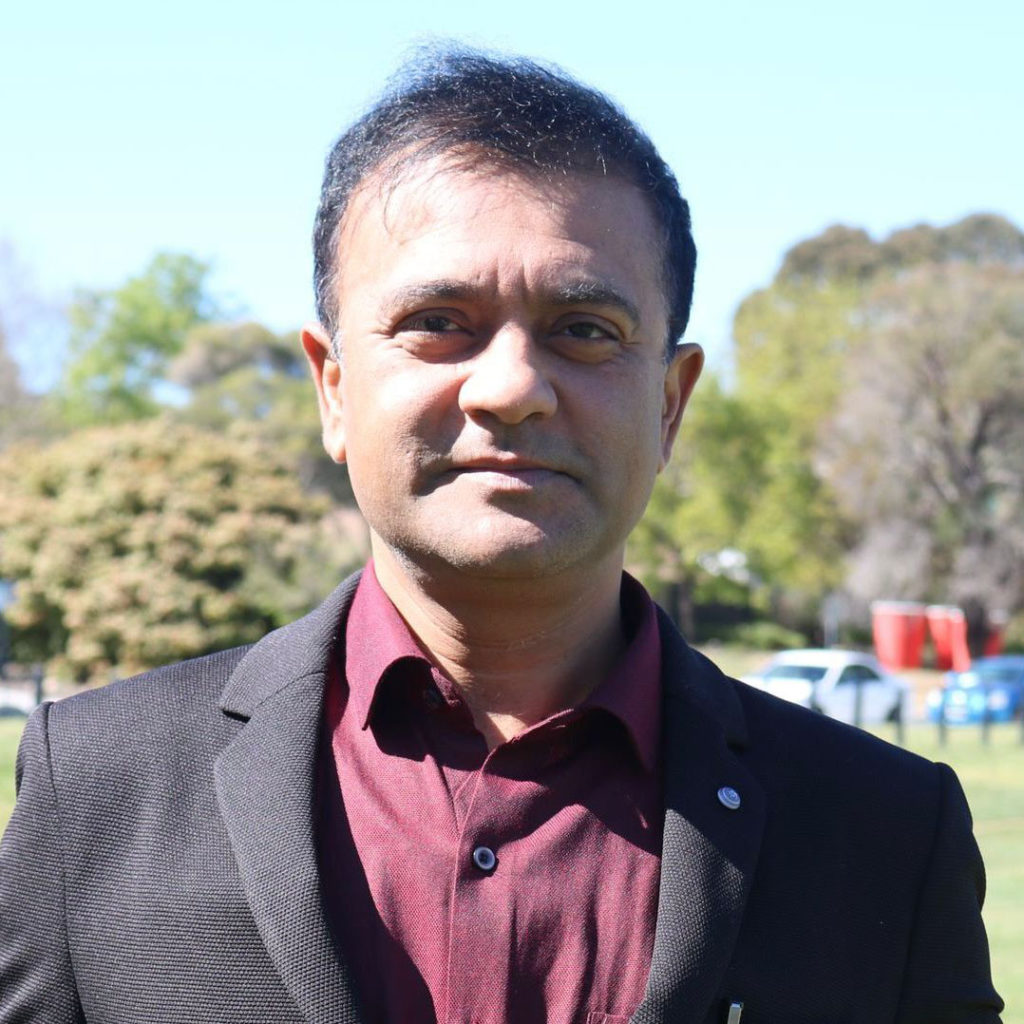
20-year-old woman critical after set alight in Shepparton

0

Victoria Police officers are investigating following an assault in Shepparton.

It is believed a woman was set alight by another woman on Middlesex Crescent, about 6.30pm on Monday.

A 20-year-old Shepparton woman was airlifted to hospital with serious injuries.

After fleeing the scene, a 33-year-old Shepparton woman was located nearby.

She was airlifted to hospital where she remains under police guard.

Police believe both women are known to each other.

Detectives from the Arson and Explosives Squad are also in attendance and police will work to determine the exact circumstances of what happened.

Anyone who witnessed the incident or with information is urged to contact Crime Stoppers on 1800 333 000 or www.crimestoppersvic.com.au

Support Our Journalism

Global Indian Diaspora needs fair, non-hyphenated, and questioning journalism, packed with on-ground reporting. The Australia Today – with exceptional reporters, columnists, and editors – is doing just that. Sustaining this needs support from wonderful readers like you.

Whether you live in Australia, the United Kingdom, Canada, the United States of America, or India you can take a paid subscription by clicking Patreon. Buy an annual ‘The Australia Today Membership’ to support independent journalism and get special benefits.

Small Victorian town of Walhalla converted into a Nepalese village for “Ice Road 2”

0

Hollywood actor Liam Neeson is set to reprise his role as a fearless truck driver turned rescue worker from the 2021 indie hit “The Ice Road.”

With director Jonathan Hensleigh, “The Ice Road 2: Road to the Sky” relocates its story from Canada in the original to Nepal in the sequel.

Joining Neeson in the cast are Australians Bernard Curry, Geoff Morrell, and Grace O’Sullivan.

For the sequel’s production, a small Victorian town has been converted into a Nepalese village to be used as the backdrop for some of the action scenes. Walhalla’s Star Hotel, the Walhalla Rotunda and the Fire Station Museum are among the buildings which have been given “cosmetic changes” to resemble a marketplace.  

It is reported that filming has begun in Walhalla as the backdrop for some of the picture’s action scenes. Servo Productions wrote a letter to Walhalla residents and businesses to inform them of filming:

“During preparations, you will notice cosmetic changes to Walhalla’s Star Hotel and other landmarks on Main Rd. Most notably at the Walhalla Rotunda, the Fire Station Museum and carpark off Right Hand Branch Rd. These changes will be temporary for the purpose filming and utmost care will be taken to protect heritage structures. The buildings will be returned to their original heritage colours shortly after filming has completed.”

The letter also advised there would be “stunts involving large vehicles, special effects and prop gun use” during filming.

While the film’s production budget was not disclosed, both the Australian federal and Victorian state governments have confirmed that they will be providing some financial assistance to the film through their Location Incentive scheme and the Victorian Screen Incentive and Regional Location Assistance Fund.

Victoria’s acting minister for creative industries Natalie Hutchins said that the production will inject over A$30 million into the state economy and will create nearly 600 employment opportunities.

It is further reported that the film will also make use of virtual production, volume screens, and technology at NantStudios and Docklands Studios Melbourne.

“The Ice Road 2: Road to the Sky” is a Code Entertainment, Shivhans, EMA production. Its producers are Code’s Al Corley, Bart Rosenblatt and Eugene Musso, along with Shivani Rawat of ShivHans and Hensleigh, as well as Lee Nelson and David Tish of Envision Media Arts (EMA).

Support Our Journalism

Global Indian Diaspora needs fair, non-hyphenated, and questioning journalism, packed with on-ground reporting. The Australia Today – with exceptional reporters, columnists, and editors – is doing just that. Sustaining this needs support from wonderful readers like you.

Whether you live in Australia, the United Kingdom, Canada, the United States of America, or India you can take a paid subscription by clicking Patreon. Buy an annual ‘The Australia Today Membership’ to support independent journalism and get special benefits.
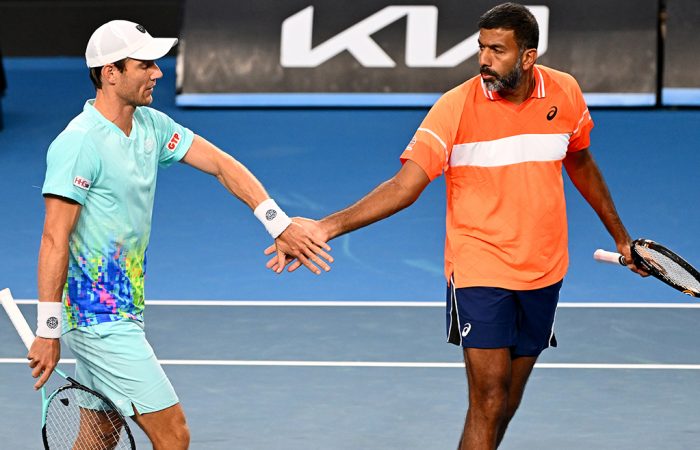
Donald Trump’s stroll to victory in Iowa was a foregone conclusion

0

By Emma Shortis and Liam Byrne

Of course, on the day of the first nominating contest for the 2024 US presidential election, there was a storm.

In Iowa over the weekend, blizzards described as “life-threatening” by the National Weather Service brought with them temperatures well below freezing, up to 25 centimetres of snow and ferocious winds.

In these terrible conditions on Monday night, Republicans in the Hawkeye state gathered to choose their preferred candidate for president of the United States. Polls had suggested for a long time that they had already made their choice – former President Donald Trump was set to win in a landslide. The only real question was who would snatch second place.

Iowa holds a caucus vote in presidential nominating contests, as opposed to most other states, which hold primary votes. In the Iowa caucuses, registered Republican voters gather in small groups in their local diners, schools and churches, hear from candidate representatives and each other, and vote privately for their preferred candidate.

As always in US electoral politics, turnout is the main game – which explains the focus on the weather and how it might impact voters’ willingness to turn up.

Iowa was always Trump’s for the taking

Trump, who led recent polls by double digits, did not feel the pressure to mount the type of intensive campaigning that might be expected of a nominee wanting to maximise turnout and make a statement in the first nominating contest.

Why would he? Even when he was not physically present in the state – which was a lot of the time – this contest was already all about Trump. Even when the focus was ostensibly on the other candidates, what Republican voters really wanted to know was how they felt about Trump and his many felonies and constitutional breaches, and how they could have the temerity to challenge someone who has come to dominate the Republican Party to such an unprecedented extent.

As the snow closed in and the roads iced over, those leading competitors – Nikki Haley, Ron DeSantis and Vivek Ramaswamy – scrambled to reschedule and relocate their campaign events in the final days before the caucus. But they were fighting more than just the weather.

As bitter as the campaigning between these candidates has been, it has been almost entirely aimed at each other. Not one of them has been prepared to make a substantive critique of Trump and what he stands for. Each has sought to cloak themselves in at least part of his political aura. And each was battling for second place.

In the end, the winner was declared before the caucuses had even finished. Just as predicted, Trump won Iowa by an overwhelming margin, with DeSantis and Haley neck and neck for second place.

The extent of Trump’s power over the party

While the result may have been a foregone conclusion, it is still significant.

The vote shows that the majority of Republican participants in Iowa were willing to publicly declare their support for a candidate who has incited an insurrection and been charged with 91 separate felonies, threatened violent retribution against his political opponents and promised to act as a dictator on “day one” of a potential second term in office. His speeches are also steeped in overt racism that once thrived only on the political fringes.

It is no longer possible to deny this political reality. This election is not like any other that has come before. It is not business as usual.

To an extent that is almost impossible to fathom, Trump continues to dominate the Republican Party. After the Iowa caucuses, it can no longer be said that he does so in spite of the multiple felony charges he faces, his disdain for democratic processes or his overt racism. Rather, it is because of all these factors that he has maintained the loyalty of a substantial, noisy and mobilised majority of the Republican base.

Some commentators hold out the forlorn hope that a Trump revival can still be averted. On current polling and performance, however, it is clear none of the other primary challengers are in a reasonable position to defeat him in the race for the nomination. Their only hope is that Trump may be tripped up by one of the multiple legal processes he is currently snared in. Though not impossible, nothing that has happened so far suggests this is likely.

But the size and extent of Trump’s victory in Iowa does not tell the whole story. Each of his challengers has defined their pitch for power largely in deference to Trump and have studiously avoided taking him on directly.

Haley, for instance, continues to pay obeisance to Trump’s accomplishments. Her recent refusal to name slavery as a fundamental cause of the US Civil War was not an act of historical ignorance. It was a signal sent to the Republican base that despite her previous positions on issues such as the Confederate flag, she is now willing to perpetuate and pander to the same racialised worldview as Trump.

DeSantis has frequently sought to position himself as the most activist anti-“woke” contender – a better Trump than Trump. Ramaswamy, meanwhile, has sought to present himself (with little success) as a sleeker, next-generation Trump.

What does Iowa portend for democracy itself?

The positioning around Iowa, and the result, consolidate dynamics that have been underway for some time. The Republican Party remains in the grip of Trump because he is the most effective avatar of a brand of racial revanchism with deep roots in the United States.

By mobilising against what they perceive as threats to the established social order, Trump’s conservative base has been determined to use the institutions of the American state to consolidate its positions of power. It can then impose its worldview on the entirety of the country. The overturning of Roe v Wade by the conservative-dominated Supreme Court is a good example.

This is an explicitly racialised and anti-democratic movement that intends to impose the will of the minority over the lives of the majority. Every single Republican candidate who polled in Iowa is seeking to be the standard bearer of this movement.

The primary contest still has a long way to run. If there is any lesson from US political history, it is to expect the unexpected.

But this election is not business as usual. The current trajectory is clear, and it is dangerous: dangerous for American democracy, and as a result, dangerous for the world.

This storm is only just beginning.

Emma Shortis, Adjunct Senior Fellow, School of Global, Urban and Social Studies, RMIT University and Liam Byrne, Honorary Fellow, School of Historical and Philosophical Studies, The University of Melbourne

This article is republished from The Conversation under a Creative Commons license. Read the original article.

Disclaimer: The opinions expressed within this article are the personal opinions of the author. The Australia Today is not responsible for the accuracy, completeness, suitability, or validity of any information in this article. All information is provided on an as-is basis. The information, facts, or opinions appearing in the article do not reflect the views of The Australia Today and The Australia Today News does not assume any responsibility or liability for the same.

Support Our Journalism

Global Indian Diaspora needs fair, non-hyphenated, and questioning journalism, packed with on-ground reporting. The Australia Today – with exceptional reporters, columnists, and editors – is doing just that. Sustaining this needs support from wonderful readers like you.

Whether you live in Australia, the United Kingdom, Canada, the United States of America, or India you can take a paid subscription by clicking Patreon. Buy an annual ‘The Australia Today Membership’ to support independent journalism and get special benefits.
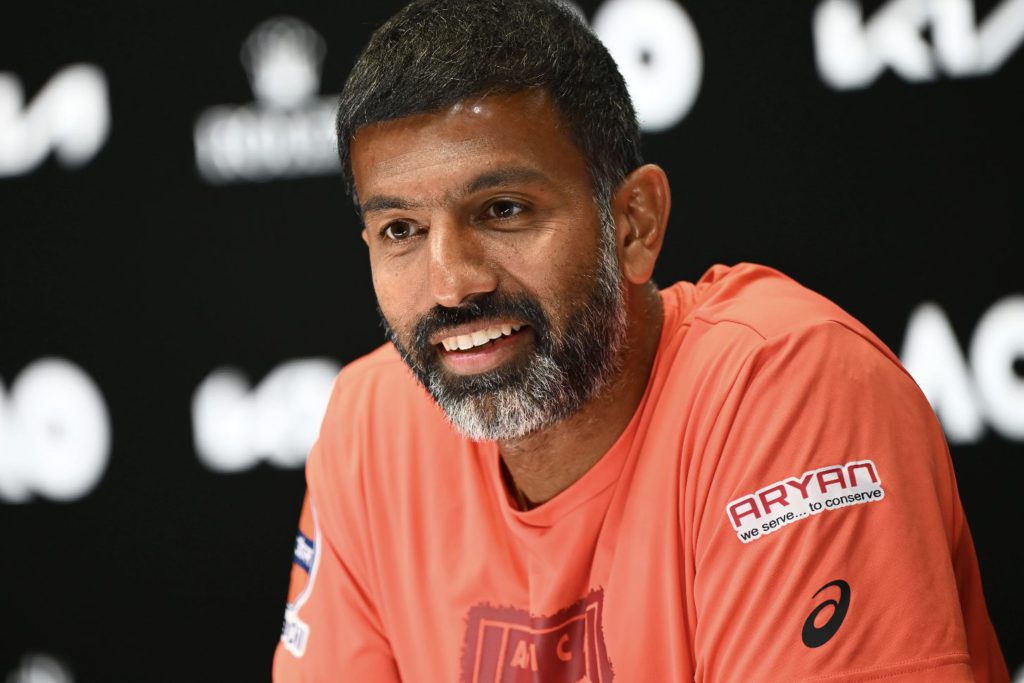
Indian Australian Sahil Panwar identified as tragic drowning victim at Kilcunda Surf Beach

0

In a heart-rending incident at Kilcunda Surf Beach, southeast of Melbourne, Sahil Panwar, a young man in his 20s, lost his life in a tragic drowning accident. The incident occurred around 8.30 pm on Friday, leaving his family and friends in profound grief.

Sahil, who was enjoying a swim with his friends, was swept out to sea while trying to retrieve his sunglasses.

Despite the desperate efforts of his friends and emergency services, Sahil was found unresponsive on the beach about an hour later. Paramedics rushed to the scene, but tragically, he was pronounced dead at the location.

The Indian Australian community is reeling from the news of Sahil’s untimely demise. He was known for his vibrant personality, infectious laughter, and zest for life. Living in Cranbourne East, 80km from the beach, Sahil was a beloved husband, son, brother, and friend.

He leaves behind his wife, with whom he had shared a happy life over the past four years.

In the wake of this tragedy, Sahil’s cousin, Sunil Kumar, has set up a GoFundMe page to support the family during this difficult time. The fund aims to cover the costs of repatriating Sahil’s body to his home country, India, and to help with funeral expenses. At the time of publication, over $32,000 had been raised.

Sahil’s death is part of a string of drownings that occurred in Victoria on Friday. Earlier in the day, a man was found deceased at Merri Creek in Coburg, and another man was pulled from the waters of Phillip Island but could not be revived. Additionally, a 51-year-old man died near Port Welshpool in Gippsland while freediving with friends.

Victoria Police have stated that Sahil’s death is not being treated as suspicious. They remind beach-goers that Kilcunda Surf Beach, known for its rips and rocks, demands caution, especially in surf conditions.

The local community and Sahil’s loved ones are mourning the loss of a young life taken too soon. His absence has created a void that his family and friends feel deeply.

The incident serves as a somber reminder of the unpredictable nature of the sea and the importance of water safety.

Support Our Journalism

Global Indian Diaspora needs fair, non-hyphenated, and questioning journalism, packed with on-ground reporting. The Australia Today – with exceptional reporters, columnists, and editors – is doing just that. Sustaining this needs support from wonderful readers like you.

Whether you live in Australia, the United Kingdom, Canada, the United States of America, or India you can take a paid subscription by clicking Patreon. Buy an annual ‘The Australia Today Membership’ to support independent journalism and get special benefits.

India’s Sumit Nagal Scripts History at Australian Open 2024, Defeats World No. 27 Alexander Bublik

0

India’s Sumit Nagal clinched the biggest win of his career at the Australian Open 2024. He ousted the world number 27 and 31st seed, Alexander Bublik, in a straight-set thriller, 6-4, 6-2, 7-6, marking a historic moment in Indian tennis.

This triumph has etched his name in history, as he becomes the first Indian (male or female) to defeat a seeded player at a Grand Slam since 1989.

The match, which spanned just over two hours, saw Nagal display a mix of aggressive baseline play and tactical acumen. His victory is even more remarkable considering it’s only his second Grand Slam main draw win.

Key Moments and Turning Points in Nagal vs. Bublik Match

The encounter with Bublik was a testament to Nagal’s improved gameplay and mental fortitude. The first set was a close affair, with Nagal breaking Bublik’s serve in the ninth game, thereby tilting the set in his favor. The second set saw Nagal capitalising on Bublik’s unforced errors, showcasing his ability to maintain pressure. The final set was a nail-biter, with Nagal saving two set points in the tie-break before clinching the match.

Nagal’s Performance Compared to Past Grand Slams

Compared to his previous Grand Slam outings, Nagal appeared more confident and physically fit. His ground strokes were more precise, and his serve, notably more effective. This performance marks a significant improvement from his first Grand Slam main draw win at the US Open 2020, where he showed promise but lacked consistency.

Tennis Community Reacts to Nagal’s Historic Win

The tennis world has been abuzz with praise for Nagal’s historic win. Former players and commentators have lauded his resilience and tactical prowess. Social media has been awash with congratulatory messages from fans and fellow athletes, recognising the significance of his victory for Indian tennis.

Nagal’s journey to the main draw was nothing short of a gritty battle. He secured his spot by defeating Slovakia’s Alex Molcan in the third round of qualifying, showcasing his perseverance and skill on the global stage. His win over Molcan, which came in straight sets, 6-4, 6-4, set the tone for his remarkable run in Melbourne.

Support Our Journalism

Global Indian Diaspora needs fair, non-hyphenated, and questioning journalism, packed with on-ground reporting. The Australia Today – with exceptional reporters, columnists, and editors – is doing just that. Sustaining this needs support from wonderful readers like you.

Whether you live in Australia, the United Kingdom, Canada, the United States of America, or India you can take a paid subscription by clicking Patreon. Buy an annual ‘The Australia Today Membership’ to support independent journalism and get special benefits.

NSW man charged with grooming a person to engage in sexual activity with child

0

A Lurnea man is expected to appear in Parramatta Local Court today (13 January 2024) charged with child abuse offences after allegedly grooming someone in an attempt to engage with sexual activity with a child.

The man, 59, was stopped by Australian Border Force (ABF) officers yesterday (12 January 2024) for a baggage examination after arriving in Sydney from the Philippines.

ABF officers examined the man’s mobile phone and allegedly found conversations discussing child abuse as well as child abuse material. The matter was referred to the AFP.

AFP officers interviewed the man and he allegedly admitted to engaging in the conversations.

The man was arrested and refused bail.

AFP Detective Acting Superintendent Nicole Kenny said the AFP, along with its law enforcement partners, remained committed to protecting children.

“Anyone who views this material is committing a crime. Our message to online offenders has not changed – if you procure, access and transmit child abuse material, you will be found, arrested and prosecuted. ”

D a/Superintendent Nicole Kenny observed:

“Whether the victim is in Australia or overseas – the AFP and its partners will work to keep our society’s most vulnerable – our children – safe from anyone who seeks to do them harm. This investigation remains ongoing and the AFP will work with international partners to help protect Australian children.”

ABF Acting Superintendent, Regional Investigations (NSW), Michael Mahony said ABF officers played a critical role at the border to protect the community, which included detecting and stopping the importation of illegal and abhorrent digital material featuring child victims both within Australia and abroad.

“We are dedicated to ensuring people seeking to deliberately import child abuse material into Australia are caught and will face the full consequences of their actions.”

A/g Supt Mohony said:

“ABF will continue to work closely with the Australian Federal Police and other law enforcement agencies, both locally and overseas, to detect and disrupt individuals that seek to import child abuse material.”

The man was charged with:

  • One count of “grooming” a person to make it easier to engage in sexual activity with a child outside Australia contrary to section 272.15A(1) of the Criminal Code (Cth); and
  • Two counts of using a carriage service to solicit child abuse material contrary to section 474.22(1)(a)(iv) of the Criminal Code (Cth).

The maximum penalty for the offences is 15 years imprisonment.

Support Our Journalism

Global Indian Diaspora needs fair, non-hyphenated, and questioning journalism, packed with on-ground reporting. The Australia Today – with exceptional reporters, columnists, and editors – is doing just that. Sustaining this needs support from wonderful readers like you.

Whether you live in Australia, the United Kingdom, Canada, the United States of America, or India you can take a paid subscription by clicking Patreon. Buy an annual ‘The Australia Today Membership’ to support independent journalism and get special benefits.

‘From Hindu Lite to Hindu’: A Journey Confronting Bias and Rediscovering Faith

0

By Nandini

As we are on the cusp of an extraordinary moment, a profound chapter that spans a struggle of over 500 years, I find myself looking back on my personal journey as a Hindu. 

Originating from a lineage of Punjabi refugees, I am the fifth generation of an Arya Samaji family, whose forebears faced the harrowing ordeal of escaping just in time from what eventually became Pakistan. Despite burying deep the traumatic scars of their past, they found safety and success in their new lives through courage, resilience, and stoicism.

Growing up in the genuinely secular atmosphere of military cantonments my upbringing was characterised by a diverse circle of friends from various faiths. Educated in missionary schools until the age of thirteen, our home, unlike those of Sikh and Christian friends, lacked formally designated worship but thrived on a continuous flow of narratives and anecdotes—a rich legacy passed down by my grandparents.

The stories ranged from the soft murmur of River Godavari to the mysteries of why Ram did not bless her on his journey to Lanka. They delved into the symbolism of Bhairon’s black dog, Nandi waiting faithfully for Shiva, and the tender caress bestowed upon our little squirrels for their role in our great epic. The wisdom of Ganesh, infused with humour, depth, and nuance, resonated deeply with my love for nature and animals.

My journey further unfolded through the pages of Amar Chitra Katha, leading to the Ramayan, Mahabharat, and eventually, much later, the Gita, which made one look at life, relationships, and goals, anew. 

There is no doubt that the Ram Janambhoomi Movement was that one unique moment in my generation, which not only stirred the depths of religious sentiments but also left an indelible mark on the socio-political landscape of India. It evoked strong emotions and ignited fervent public debates which spilt over among friends, family, and work acquaintances.

1.   Those who believed it was a temple that had been destroyed by an invader and the wrong of it had to be righted. 

2.   Those who thought bygones should be bygones even if there was a temple under the masjid.

3.   Those who said, ‘Give us proof’ and then we will give our opinion.

4.   And those like me, a handful, that’s being generous, only two in my circle who believed it would be given to us as a gesture of goodwill. After all, isn’t that the only way world-over how human ties are forged?

The logic is that if my forefathers had stolen and destroyed someone’s much-beloved family heirloom, the only way for me to build a relationship with their successors would be to return it to them with humility.

Needless to say, all sides laughed in our faces. Looking back one wonders which world I was living in!

Night after night, witnessing Syed Shahabuddin on television debates, a prominent member of the Babri Masjid Action Committee formed in 1986 in response to the unlocking of the masjid gates by Rajiv Gandhi’s government, shattered any illusion one might have harboured of grace and reconciliation. A realisation that dawned upon many of us who had been hitherto unaware of this uncompromising stance.

Their initial surprise was quickly followed by a surge of rage. They were actually baffled by the persistent determination and what they perceived as audacity on the part of the Hindu community to even entertain dreams of reclaiming their Ram Janmabhoomi. 

The unfolding events highlighted not just a clash of opinions but a deep-seated clash of convictions, unveiling the longstanding tension and complexities underlying the communal fabric of this nation.

The tipping point for me, from being a Hindu Lite to a committed Hindu came through a series of realisations. 

1.   Sonia Gandhi’s government and her National Advisory Council’s policies. 

For example –

The Right to Education Act, to say the least, shocked me to my bones. To get away with such discrimination towards a majority community or any community in a so-called ‘secular’ country was nothing less than a crime. Thankfully we escaped being condemned to the draconian Communal Violence Bill.

2.   Prime Minister Manmohan Singh’s statement that proved what we had only so far suspected.

3.   The fact that we are the ONLY community in this country that has no control over our places of worship, unlike the others.

4.   Biassed Media. The disdain, superciliousness, and offhand manner ‘star’ television anchors took when talking to Hindu intellectuals, seers, or anyone speaking on behalf of the faith versus the politeness they showed to Muslim and Christian counterparts. I would often ask myself, why and could think of no other reason except a deep-rooted self-hate. The same attitude was reflected in well-appointed living rooms where nowhere-ness is mistaken for cosmopolitanism and is now, somewhat diminishing.

5.   Reading and learning how Hindus received the raw end of the deal during Partition and worse, in Independent India.

6.   Through work took the opportunity to meet and hear people beyond my social milieu on construction and project sites who carried their faith unapologetically with no pressure to ‘fit in’ and say the right thing.

7.   Seeing some beautiful cities across the world succumb to the aggressiveness of one faith because of the laissez-faire of another. 

8.   Social Media. It opened a world of so many voices, opinions, and history.

It’s important to note that while the belief in the existence of a Ram Temple under the Babri Masjid was deeply ingrained in Hindu traditions and local narratives, in the protracted years of legal battles of the Ram Janambhoomi Movement a plethora of historical evidence also surfaced. A cadre of scholars, including the archaeologist KK Mohammad, intellectuals, and lawyers, collectively unravelled a revelation. 

It became glaringly apparent that there had been a systematic suppression of facts and the entire framework of Indian appeasement, operating under the guise of ‘Let them have it to keep peace’ with a substantial dollop of sheer cussedness was sustained by the passivity of individuals like me – Hindus in Name.

Reflecting on this around 2010 I resolved to no longer offer my metaphorical shoulder of silence and invisibility upon which, much of this edifice rested. 

************

It was in 2012 when I chanced upon a picture of Kailash Temple that left me mesmerised. For once I have no words to explain that intense feeling of connection and a desire to visit it at the earliest. 

Having lived and travelled all over India I have seen several temples over the years – big, small, beautiful, and imposing, simple yet unique but always as a respectful tourist not as a devotee. This, however, was something else altogether.

It took me seven years, December 2019 to finally pay obeisance. It felt like a homecoming!

Panoramic_view_of_Kailash_Temple_Ellora: Image Source: Wikimedia Commons

Nothing less than an architectural wonder, Kailash is forged from raw rock and radiates an undeniable aura of power! Amidst the multitude of sculptures within this sacred space, one creation that spoke to my spouse and I encapsulated the essence of one-upmanship in a union of equals – the fiery Shiv and his serene, harmonious Parvati. It’s a portrayal where he gently presses her foot even as she triumphs once again in the game of Chowka Bhara. The dynamics portrayed were strikingly relatable to us, and our board games, mirroring the delicate dance of competition and camaraderie that often defines relationships. 

Not only is there something for everyone in this faith but that precious commodity – deprecating humour. Just the kind of story my grandmother would have told me!

Thereafter Kashi in 2021. The loyal bull facing Gyanvapi Mandir with infinite patience heard me as I whispered in his ear “One step closer, dear Nandi!”

********

Garv Se Kaho Hum Hindu Hain.
The young have shown us how to be unapologetically comfortable in their skin.

What is more poignant is to witness people of an older generation who are suddenly galvanised having muzzled themselves for what they thought was a ‘greater good’ but got walked over instead, prising open a can of suppressed emotions and speaking up! 

It is crucial to acknowledge that ancient civilisations carry a collective and expansive elephantine memory, of both past allies and opponents.

This intricate tapestry of remembrance serves as a repository of experiences, a reminder that forgetting comes at a high cost. 

Perhaps, the reluctance to assert ourselves and speak up in the past was influenced by the unspoken fear linked to historical memories. 

Hence, I am determined now more than ever to not succumb to the pressures and compromises that the post-independence generation faced and leave a conundrum for the future.

To conserve, preserve and honour an ancient heritage – knowledge, faith, voice, platform and power are all important!

As Ajeet Bharti on X said it so well for all of us,
“Dharm gave us Ram. Rajniti gave us the Mandir”. 

The journey from Hindu Lite to Hindu!
Ram Mandir at Ram Janambhoomi in 2024.

Author: Nandini Bahri Dhanda is an Interior Architect. She has lived across sixteen states in India & travelled all over the world. Her interest in art, culture, history politics & above all a passion for communicating & chatting with people across the board, finds her voice in her blog.

Disclaimer: The review was first published on her blogspot, We have republished it with kind permission from the author. You can read the original copy at https://nandinibahri-dhanda.blogspot.com

Follow her on Twitter @NAN_DINI_

Support Our Journalism

Global Indian Diaspora needs fair, non-hyphenated, and questioning journalism, packed with on-ground reporting. The Australia Today – with exceptional reporters, columnists, and editors – is doing just that. Sustaining this needs support from wonderful readers like you.

Whether you live in Australia, the United Kingdom, Canada, the United States of America, or India you can take a paid subscription by clicking Patreon. Buy an annual ‘The Australia Today Membership’ to support independent journalism and get special benefits.
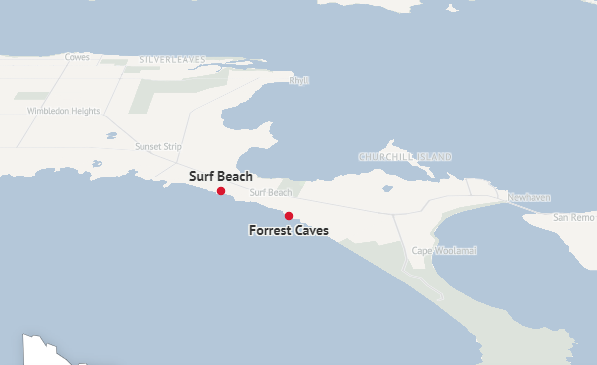
Do you want to Bridge Gender gap and support local women leaders like Australia Awards alumna Gayatri Pande? Here’s how

0

Gayatri Pande is an alumna from India who completed her Master of Environmental and Resource Economics at the Australian National University in 2021.

In 2022, Gayatri attended the Regional Alumni Workshop in Kathmandu, Nepal, where alumni had the opportunity to reconnect with one another, discuss career progress and share the ways they had helped their countries’ development.

At the workshop, Gayatri met Dr Madura Thivanka Pathirana, a professional in sustainable tourism and alumnus from Sri Lanka. This led to the pair co-authoring a research paper about sustainable tourism in Sri Lanka.

The paper was presented at the 14th International Conference on Business and Information (ICBI) 2023. It explores the potential of emphasising biodiversity to promote sustainable tourism in Sri Lanka. The paper adopts a unique lens of exploring this in the context of Indian tourist arrivals in the region. The paper is a prime example of regional cooperation and highlights the role of community-based tourism management in the region.

In 2023 Gayatri was also part of a multinational team, which included other RAW participants, that received a Women in Leadership Regional Alumni Grant to conduct a joint climate project. We recently contacted Gayatri to learn more about her continued contributions to development. Our questions and her responses follow below.

Image: Gayatri enjoying her time as a scholar in Australia (Source: Australia Awards)

How has the Australia Awards helped you to find new opportunities and grow your professional network? What benefits have you experienced from participating in the 2022 Regional Alumni Workshop?

Being a member of the Australia Awards alumni network has significantly broadened my horizons, both professionally and personally, providing numerous opportunities for collaborations and partnerships. Within just a year of participating in the workshop, I have had the privilege to collaborate with other Australia Awards alumni like Asfia Sultana [an Australia Awards alumna from Bangladesh who participated in the 2022 Workshop]. Currently, we are jointly working on a project supported by the Women in Leadership Regional Alumni Grant 2023, alongside other alumni from Sri Lanka and Nepal. Our collaborative efforts have enabled us to identify potential areas for future synergies and enhanced our understanding of the challenges and threats prevalent within the region.

During the 2022 Regional Alumni Workshop, I had a brief interaction with Dr Madura Thivanka, a passionate advocate for sustainable tourism. Our discussions revolved around issues related to biodiversity and the promotion of sustainable tourism in the region, leading us to recognise an opportunity for future collaboration. Following the conference, I reached out to him to develop a paper on this topic, and he promptly responded with valuable suggestions on how we could advance our work. Over the course of a few months, we successfully authored a paper that we presented at the ICBI 2023 event in Sri Lanka, hosted by the University of Kelaniya. This experience not only expanded my knowledge in the field but also provided the invaluable opportunity to collaborate with leaders like Dr Madura.

On a personal level, as an early career researcher, Australia Awards has proven to be a tremendous opportunity for learning, growth and active involvement in community leadership. I am continually inspired and encouraged to tackle challenges, fostering both personal and professional development.

Image: Gayatri (second from left at front) taking part in the 2022 Regional Alumni Workshop in Kathmandu, Nepal (Source: Australia Awards)

Can you tell us a bit more about your experience at the Regional Alumni Workshop?

The Regional Alumni Workshop 2022, held in Kathmandu, was the first workshop I attended after completing my master’s degree in 2021. Personally, it reminded me of the impact the Scholarship has had on my life and I felt grateful to share this experience with others in the region. The workshop focused on a crucial theme of leadership in both local and global contexts. Learning from the experiences of stellar alumni who shared detailed anecdotes of their leadership journey and created meaningful impacts in their areas of work was very inspiring. Professionally, my network expanded significantly as I interacted with alumni working on similar themes to mine. The workshop enriched my perspective on leadership and further inspired me to take more steps towards leadership in my local community while striving to be a global citizen.

Please describe the research paper you co-authored with Dr Madura.

The research paper is titled ‘Unlocking the Potential of Biodiversity for Promotion of Sustainable Tourism: Case of Indian Tourist Arrival to Knuckles Wildlife Conservations Region’. It focuses on the promotion of tourism in biodiverse regions in a manner that is sustainable and equitable. The paper identifies several pathways for driving conservation efforts while creating livelihood opportunities for the local community, through the promotion of a community-centric approach to tourism development. The paper is crucial in today’s context of globalisation, where tourist arrivals often lead to overcrowding and unsustainable tourism development. It is important for us to highlight tourist behaviour in this regard since it can put forth a case for sustainable tourism to the supply-side stakeholders. The acceptance of our paper at ICBI 2023 is crucial because the stellar panellists and audiences attending the conference can view our research, creating a wider reach for our findings.

Image: Gayatri with other alumni at 2022 Regional Alumni Workshop, Nepal (Source: Australia Awards)

You were part of a team of alumni which received a Women in Leadership Regional Alumni Grant. Can you tell us about the project you are conducting using the grant funds?

The Women in Leadership grant has been a gamechanger for me when it comes to advancing my work on sustainable food systems transformation. I have successfully conducted vulnerability assessments in remote villages of the western Himalayan region, which was highly rewarding both personally and professionally for me. Due to accessibility challenges, the region has been left behind in the current research landscape. The goal of my research is to identify the key vulnerabilities of the population residing in one of the most climate-vulnerable regions in the country and to present to relevant Forest Department officials a case for climate adaptation efforts in the region. I have completed my initial assessment and conducted stakeholder consultations and will be interacting with the Forest Department officials in the month of December to discuss the key findings.

How has your Australia Awards Scholarship helped enhance your career?

Australia Awards has given me the required skills to act on key environmental challenges in my country. My current work on developing a climate change adaptation and mitigation toolkit as part of the Women in Leadership grant project was inspired by the courses I took in environmental governance during my master’s degree. Through the Scholarship, I was able to create a strong skillset for my research, which informs every step in my professional journey. Beyond the education I received, being in a multicultural environment shaped me as a person, as I was able to learn from the experiences of other scholars. For example, I did not have a clear understanding of the impact that the rise in sea level has had on island nations until I became friends with people from Pacific Island nations. I learnt that the rise in sea level is more than a fleeting issue. It threatens the survival of many island nations and their cultural heritage.

You have already applied your new skillset to several projects. What do you plan to do next?

I will be commencing another community project in January 2024 that aims to develop the capacity of smallholder farmers in the western Himalayan region. The project is in partnership with the local agriculture universities in the Indian Himalayan state of Uttarakhand. The work is an extension of the vulnerability assessment I conducted during the Women in Leadership grant project. A key finding that emerged from the assessment was smallholder farmers’ lack of capacity to transform their food systems and address the climate change challenges in agriculture. Hence, to upskill the farmers, I will be conducting capacity building workshops that will inform farmers about regenerative agricultural practices, climate-resilient crop varieties and building resilience in the face of natural disasters. The project will help in closing the knowledge gap that I witnessed during my research, and allow farmers to realise the true value of their produce and reduce their losses in the face of natural disasters.

Applications are open until 31 January 2024 for the next Regional Alumni Workshop, to be held in Bhutan on 22-24 April 2024 with the theme of “Bridging the gender gap and supporting local women leaders”Details can be found here.

This interview was first published on the Australia Awards website and has been republished here with their kind permission.

Support Our Journalism

Global Indian Diaspora needs fair, non-hyphenated, and questioning journalism, packed with on-ground reporting. The Australia Today – with exceptional reporters, columnists, and editors – is doing just that. Sustaining this needs support from wonderful readers like you.

Whether you live in Australia, the United Kingdom, Canada, the United States of America, or India you can take a paid subscription by clicking Patreon. Buy an annual ‘The Australia Today Membership’ to support independent journalism and get special benefits.
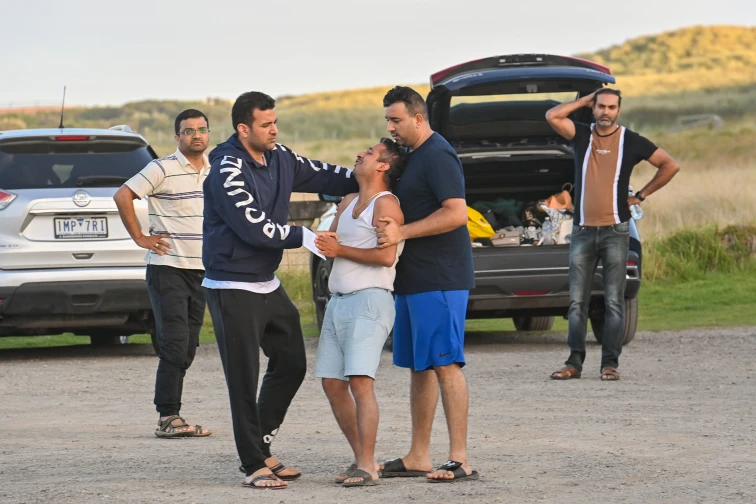
How to make sure pocket money teaches your kids financial skills

0

By Robyn McCormack

Giving kids pocket money can be a really challenging decision for families. It raises questions about when to start it, how much to give and whether it should be tied to chores.

As a finance researcher and parent, it’s also important to view pocket money as an educational opportunity. You can use it to teach children how to make informed financial decisions, set meaningful goals and develop responsible spending habits.

Here’s how you can approach it.

When should you start?

There is no one “right age” but you could reasonably consider pocket money when children start school and begin learning to add and subtract.

This means your child will be old enough to start grasping concepts like saving and spending.

As your child grows, you can move on from basic arithmetic and tailor your discussions to what your child is learning in maths.

How much should it be?

How much you give will depend on your family situation and finances.

A useful starting point is working out what the pocket money will be used for. Is it simply to give your child a bit of autonomy over spending (for example, buying an ice block from the canteen)?. Is it to try to save for something special? Or is it to be used for all entertainment, clothes and on-trend desires like fancy water bottles?

A long-held rule of thumb is giving $1 per week relating to your child’s age (so $5 for a five-year-old). But of course amounts tying pocket money to a child’s raw age may not work with today’s economic conditions. Three years ago, $10 bought a lot more than it does today.

Of course you will also need to consider pocket money within the context of your wider household budget. Down the track, there’s nothing wrong with talking to your child about adjusting their pocket money if your household budget needs changing.

Cash or direct debit?

When your child is little, giving them pocket money in cash is a good way to help them start to understand money. It’s something they can see and hold in their hands.

As they get older and the amounts get larger, direct debits will become more convenient and can teach them about handling their money online.

Since getting your hands on cash is difficult these days, when they’re young you can also give your kids pocket money electronically but give them monopoly money or a similar representative of what they have earned. You can then progress to a spreadsheet as they get older.

What about tying it to chores?

Many parents like to provide pocket money in exchange for chores as they feel it might instil a work ethic in their kids and the idea you don’t get money for nothing.

If you are tying pocket money to chores, be very clear about what will be done for what money and when chores need to be reviewed. Follow-through is important for this structure to be effective, so if they don’t do the work, they don’t get paid. You can also give them bonuses for jobs that are particularly well done.

Personally, I find this process to be more work for parents than it’s worth. I prefer the children to simply help around the house because it’s a core family value rather than tying it to finances.

The bigger picture

However you structure pocket money in your family, it’s important to consider it an opportunity to learn about finances.

You might start with simple discussions around “do I have enough money to buy this packet of textas and that toy car?” or “how many weeks until I can afford that book?”. Then as your child develops, you can introduce concepts such as cash flow, interest rates and banking products.

For example, cash flow lessons can start with talking about the importance of spending less than you earn.

Teaching kids about goals

Pocket money is also a fantastic way to help kids learn how to save. Help them set a realistic goal to save up for something that matters to them. A pair of sneakers they want or a particular video game is likely to be more achievable than a new bike. This will help motivate and challenge your child, without overwhelming them.

As your child gets older, you can introduce more sophisticated notions of saving and funds.

For example, when my child started high school we talked about setting up an emergency fund. As she was going to catch buses, we worked out the fund should be $50 (based on missing the bus and needing a taxi home). This became her new “baseline” before spending on non-essential items such as food from the school canteen.

Barefoot Investor author Scott Pape recommends starting with physical buckets with “splurge” for every day little things, “save” for big goals, “give” for acts of kindness and “grow” for investing.

Shopping skills

Once your child has their own money to spend, a trip to the shops takes on a whole new significance.

Smart shopping is not just about comparing prices or where to find the best bargains. It is also learning what is worth spending your money on and when.

You can talk to your child about what they value and their emotional responses around buying decisions. For example, “how long was it before the excitement of your new T-shirt wore off?” Or “Did you feel differently when you spent your money on going to that movie (an experience) versus that box of Lego (a tangible product)?”

There are lots of things to consider (and no perfect formula) when it comes to pocket money. But if it means you can integrate financial skills into everyday life, it’s a fantastic investment in your kids’ education.

Robyn McCormack, Marketing and Finance Academic, Bond University

This article is republished from The Conversation under a Creative Commons license. Read the original article.

"The

Support Our Journalism

Global Indian Diaspora needs fair, non-hyphenated, and questioning journalism, packed with on-ground reporting. The Australia Today – with exceptional reporters, columnists, and editors – is doing just that. Sustaining this needs support from wonderful readers like you.

Whether you live in Australia, the United Kingdom, Canada, the United States of America, or India you can take a paid subscription by clicking Patreon. Buy an annual ‘The Australia Today Membership’ to support independent journalism and get special benefits.

One-year-old Rishwika who died in her driveway remembered as “very sweet and cheeky”

0

In a tragic incident, a 1.5-year-old toddler Rishwika Salibindla has died after her father accidentally reversed over his SUV as he was leaving for the supermarket. 

Rishwika’s uncle Joseph Salibindla told The Daily Telegraph that she was a “very sweet and cheeky niece.” He described this as “a terrible accident” which allegedly occurred as the toddler’s dad was reversing out of the driveway on his way to the supermarket.

“It is just heartbreaking. We can’t believe what has happened.”

It is reported that Rishwika’s father 41-year-old Joseph Reddy Salibindla backed into her unknowingly in Sydney’s northwest on Friday just before 5.30 pm. 

Mr Salibindla had hopped into his Audi SUV to go to the local supermarket. He was unaware that his one-year-old daughter had followed him out the door.

It is reported that he allegedly reversed his SUV over Rishwika unaware that she was behind the vehicle. Mr Salibindla exited the vehicle to check only to find Rishwika covered in blood. 

Rishwika’s mother Sravanthi Thirumalareddy and her two brothers were inside the home at the time of the incident.

Mr Salibindla attempted to keep Rishwika alive until paramedics rushed to the scene. However, they were unable to save the little girl.

As the news spread, it was further reported that the mourning family members gathered at the scene shortly after the incident.

Rishwika’s mother spent hours looking at the scene of the tragic accident as family members and locals comforted the devastated mum. 

Her family members told 9News they were “completely heartbroken”:

“Her mother is inconsolable. It’s every family’s worst nightmare, but they come from a big church community and are supporting each other.”

GoFundMe organised by a friend of the family is also raising money for the “beautiful” little girl’s memorial.

“The family, relatives and friends are in great shock. Your generosity will support the family in funeral, memorial services and related expenses.”

After the incident, Rishwika’s distraught father was seen by witnesses sobbing into the arms of one of his relatives.

He was taken to Parramatta police station for mandatory testing, questioning, and assisting officers with their enquiries. 

No charges have been laid and investigations into the incident are ongoing.

Support Our Journalism

Global Indian Diaspora needs fair, non-hyphenated, and questioning journalism, packed with on-ground reporting. The Australia Today – with exceptional reporters, columnists, and editors – is doing just that. Sustaining this needs support from wonderful readers like you.

Whether you live in Australia, the United Kingdom, Canada, the United States of America, or India you can take a paid subscription by clicking Patreon. Buy an annual ‘The Australia Today Membership’ to support independent journalism and get special benefits.
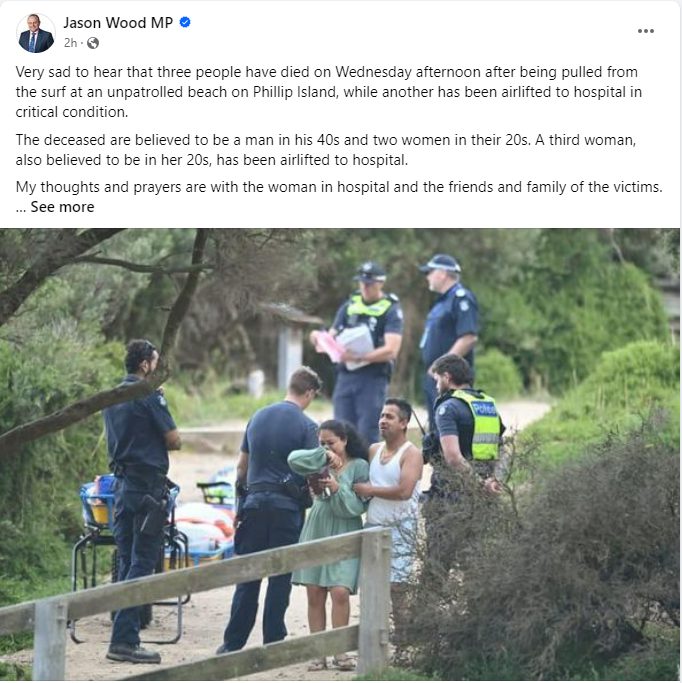
Five men arrested following series of suspicious arson attacks on tobacco stores

0

Police arrested five males yesterday connected to the Finks Outlaw Motorcycle Gang (OMCG) following a series of arson attacks over the last three weeks.

The joint investigation by the Echo, Lunar and VIPER taskforces and the Australian Federal Police is looking into a particular series of arson attacks, including:

  • A tobacco store on Lloyd Street in Moe which was targeted on Monday, 25 December,
  • A tobacco store on Main Street in Croydon which was targeted on Monday, 25 December,
  • A café on Lobelia Drive in Altona North which was targeted on Tuesday, 9 January, and
  • And a tobacco store on Pier Street in Altona targeted two nights in a row on Thursday, 11 January and Friday, 12 January.
  • A tobacco store in Sunshine which was targeted on Friday the 12 January

With assistance from the Special Operations Group, a 41-year-old Werribee man, believed to be a patched member of the Finks OMCG, was arrested at a Werribee address. He was charged with seven counts of criminal damage by fire and has been remanded into custody.

Investigators also arrested four other males being.

  • A 30-year-old Templestowe man believed to be a patched member of the Finks OMCG, arrested at Templestowe and charged with two counts of criminal Damage by fire (Arson) and remanded into custody.
  • A 32-year-old Albion man believed to be a patched member of the Finks OMCG, arrested at Albion and charged with six counts of criminal damage by fire (Arson) and one count of aggravated carjacking and remanded into custody.
  • A 37-year-old Point Cook man arrested at Point Cook and charged with five counts of criminal damage by fire (Arson) and remanded into custody.
  • A 17-year-old from Yarraville was arrested at Yarraville and interviewed for the offences of aggravated carjacking and two counts of criminal damage by fire (Arson) and released pending further enquiries.

In all six of the incident’s offenders have forced entry to each of the premises, before setting the properties alight.

Detective Inspector Graham Banks, Lunar Taskforce, said in a statement:

“We know people are concerned given these stores are still being set alight, but what I would say is we do know the people who are involved, and we are actively targeting those syndicates. Today’s arrests are testament to that – they are a strong demonstration of state and Commonwealth agencies coming together to target the issue of illicit tobacco in every way possible.”

He added:

“Those involved have a complete lack of regard for the harm they are inflicting on the community, and we think it’s only a matter of time before someone is killed or seriously hurt in these reckless incidents. While people’s lives remain at risk due to this heightened criminal activity, we will continue to target these organised crime syndicates and do everything we can to hold them accountable.”

Taskforce Lunar currently has 28 active arson investigations, which include tobacco stores, vehicles, gyms, restaurants and private addresses. 

Since October, the VIPER Taskforce has executed almost 70 warrants at tobacco stores across the state believed to be involved in the sale of illicit tobacco, resulting in the seizure of the following:

  • 108,722 e cigarettes (vapes) with a street valuation of $3.2M;
  • 3,205,298 cigarettes with duty excise evaded totalling $3.9M;
  • Over one of tonne loose-leaf tobacco with duty excise totalling evaded $1.9M;
  • At least 2 kg of cannabis;
  • At least 1kg of cocaine;
  • Almost $100K proceeds of crime;
  • Multiple weapons including ASP Batons and swords; and
  • Industrial tobacco manufacturing equipment.

A significant investigation into the series is underway with Taskforce Lunar drawing on a range of specialised resources from the Gang Crime Squad, Arson and Explosives Squad, Echo Taskforce, VIPER Taskforce, Criminal Proceeds Squad and Financial Crime Squad.

The taskforce is also working closely with regional police, as well as a range of external agencies such as the ABF, Australian Criminal Intelligence Commission (ACIC), AFP and ATO.

At this time, Taskforce Lunar investigators believe the current situation is as a result of criminal syndicates in conflict due to competition for profit derived from the illicit tobacco market.

The current conflict includes both the physical placement of illicit tobacco into stores, as well as demands for stores to sell the syndicate’s illicit product and to pay a ‘tax’ per week to operate.

Police believe the syndicates are comprised of personnel from Middle Eastern Organised Crime groups and Outlaw Motorcycle Gangs, who are then engaging local networked youth, street gangs and other low-level criminal to carry out the offending.

AFP Detective Inspector Chris Salmon observed:

“The AFP works closely with Victoria Police to disrupt organised crime, including outlaw motorcycle gangs to minimise the harm caused by their criminal ventures. This collaboration with our partner agencies ensures criminal gangs are held accountable for the illicit activities and crimes they commit.”

Investigators continue to appeal to anyone, especially store owners and staff, who has information about these incidents and who is responsible to come forward.

Anyone with information about these incidents or with further information about illicit tobacco is urged to contact Crime Stoppers on 1800 333 000 or submit a confidential crime report on the Crime Stoppers website.

Support Our Journalism

Global Indian Diaspora needs fair, non-hyphenated, and questioning journalism, packed with on-ground reporting. The Australia Today – with exceptional reporters, columnists, and editors – is doing just that. Sustaining this needs support from wonderful readers like you.

Whether you live in Australia, the United Kingdom, Canada, the United States of America, or India you can take a paid subscription by clicking Patreon. Buy an annual ‘The Australia Today Membership’ to support independent journalism and get special benefits.

More than 4 billion people are eligible to vote in elections in 2024. Is this democracy’s biggest test?

0

By Nicholas Reece

2024 is going to be democracy’s biggest year ever. In a remarkable milestone in human history, over four billion people – more than half of the world’s population across more than 40 countries – will go to the polls.

National elections will be held in the United States, India, Indonesia, Russia, the United Kingdom, Pakistan, Bangladesh, Taiwan, Mexico, and South Africa to name just a few. The European Union will also go to the polls. This busy calendar of elections is as extraordinary for the diversity of nations and peoples participating as it is for its huge scale.

It’s tempting to see this record as a triumph for democracy as the dominant organising principle for governing people in the modern world.
But a closer examination shows democracy is at risk on many fronts. While these challenges take different forms in different jurisdictions, some clear patterns emerge. 2024 is going to be a rugged year for democracy, but there is still cause for cautious optimism about its future.

Here’s a rundown of just some of the significant elections that will shape the world in 2024.

United States

The most high-stakes election of 2024 will be the US general election for the president, house of representatives and senate in November. For decades America has stood as the world’s most powerful democracy and a guarantor (if a flawed one) of democratic governments the world over.

Donald Trump is the likely Republican nominee. In his previous term as President he did more than any previous chief executive to undermine democracy according to a Varieties of Democracy (V-Dem) analysis.

Now he is promising to punish his political opponents, override the independence of the Department of Justice and extend presidential power into non-political areas of government administration.

This prompted President Joe Biden to warn that “Democracy is on the ballot” in the 2024 Presidential vote.

At this stage, US voters do not seem to care too much, with Trump ahead in many key opinion polls.

India and Indonesia

The rise of democracy in India and Indonesia, the world’s second and fourth most populous nations, has been a game changer for the global advancement of human freedoms. The sheer scale of the elections in these developing nations, with a combined population of 1.7 billion, is also a miracle in modern administration.

Indian Prime Minister Narendra Modi seems almost certain to be returned for a third term in an election to be likely held between April and May.

While Indonesian Defence Minister, Prabowo Subianto, is the clear frontrunner to become the next president of the world’s largest Muslim nation in February.

In both cases, there is the risk these “strongman” leaders will win power in free and fair elections but then oversee illiberal policies that put democratic institutions under strain.

United Kingdom and Europe

The UK is likely to go to a general election in the second half of 2024. Current polling suggests it will result in the first change of government in 14 years with victory for the Labour Party led by Keir Starmer.

If that happens, it will be a reminder of democracy’s ability to enable the transfer of political power between opposing interests without widespread bloodshed – something humankind has failed at for most of history.

Other elections in Europe will be a barometer of the standing of the populist far right.

The success of anti-Islam extremist Geert Wilders in elections in the Netherlands in November means many analysts are now predicting the far right will enjoy a surge in support in European parliament elections in June, as well as national elections in Austria, Belgium, Croatia and Finland.

Africa

National elections are occurring in a dozen countries in Africa this year including Rwanda, Ghana, Tunisia, South Sudan and Algeria. But most attention will be on the mid-year election in South Africa which will be the most important since the end of apartheid in 1994.

Current polls suggest that after three decades in power the African National Congress (ANC) will not be able to garner the necessary 50% of votes needed to govern in its own right, bringing to an end 30 years of one-party rule.

Bogus elections

Special mention must be made of the 2024 elections which will not be free and will not be fair.

Russia, Rwanda and Belarus are governed by tyrannical rulers who jail opponents and run bogus elections that deliver 90% majorities or higher.

Then there is the charade elections occurring in Bangladesh, Iran and Tunisia where leaders allow the opposition to compete, but not to win.

Will democracy pass these tests?

Elections are taking place against a backdrop of spreading illiberalism around the world, the weakening of independent institutions in some of the big democracies, and a creeping disillusionment in advanced democracies, especially among younger people, about the benefits of a democratic system.

But there is also reason for cautious optimism that the long arc of history continues to steer determinedly towards a more democratic world.

Democracy remains the model that most developing nations strive for. According to Freedom House, there were 69 electoral democracies in 1990 rising to 122 by 2014. It is telling that even dictators and despots feel the need to give themselves the appearance of a democratic mandate. And surveys of citizens in advanced democracies continue to show high levels of support for the ideals of democratic government.

“Government of the people, for the people, by the people” still holds significant advantages over all the other alternatives currently being tried. But in 2024 it will be tested mightily.

Nicholas Reece, Principal Fellow, Melbourne School of Government, The University of Melbourne

This article is republished from The Conversation under a Creative Commons license. Read the original article.

"The

Support Our Journalism

Global Indian Diaspora needs fair, non-hyphenated, and questioning journalism, packed with on-ground reporting. The Australia Today – with exceptional reporters, columnists, and editors – is doing just that. Sustaining this needs support from wonderful readers like you.

Whether you live in Australia, the United Kingdom, Canada, the United States of America, or India you can take a paid subscription by clicking Patreon. Buy an annual ‘The Australia Today Membership’ to support independent journalism and get special benefits.
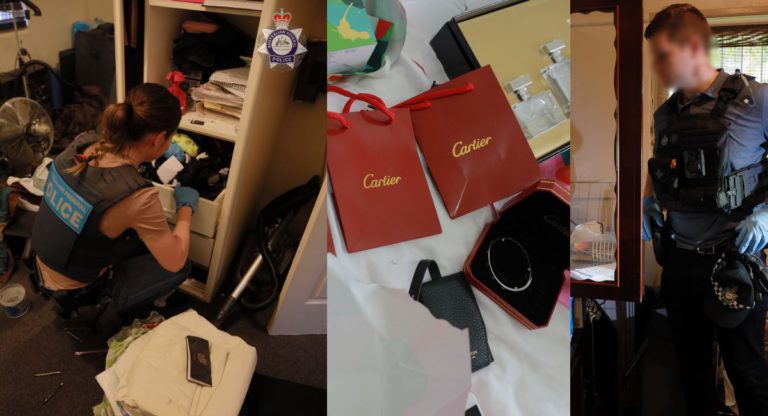
Aaron Finch Bids Farewell to BBL with a Winning Send-off Despite Duck

0

In a bittersweet culmination to his illustrious Big Bash League (BBL) career, Aaron Finch, the former Australian captain and T20 cricket stalwart, bid adieu to the league with a winning finish, despite falling for a third-ball duck.

The Melbourne Renegades, Finch’s team, marked his retirement with a significant victory over their local rivals, the Melbourne Stars, boosting their morale while denting the Stars’ finals aspirations.

The match at Marvel Stadium saw Finch, the Renegades’ all-time leading scorer, end his innings unceremoniously. Charging down the pitch, he lofted an easy catch to his long-time friend Glenn Maxwell at mid-off. Maxwell, in a gesture of respect, refrained from celebrating as Finch, acknowledged by the 41,205-strong crowd, took his final walk off the field, bat raised in salute.

Before the game, a tribute was paid to Finch’s contribution to the Renegades, with his team jersey number being officially retired.

Aaron Finch, Melbourne Renegades; Image Source XTwitter @RenegadesBBL

Finch’s impact on T20 cricket is undeniable. He retires as one of the greats of the BBL, holding records for the second-most runs, hundreds, fifties, and fours, as well as ranking fourth in sixes hit in the league.

Reflecting on his career, Finch, in a conversation with Fox Cricket, acknowledged the bittersweet nature of his retirement.

“This club is something I’ve put everything into, it’s sad that it’s over, but I’m also happy,” he said, recognising the bright future of the upcoming talents.

“I’m obviously well past my best, the young kids coming through are so good so I wanted to give them every opportunity, but it’s nice to go out with a win, especially against the Stars.”

The Renegades’ pursuit of the Stars’ target of 137 was initially rocky, especially during the Power Surge. However, the experience of Shaun Marsh, who remained unbeaten at 64 off 49 balls, alongside Jonathan Wells, ensured a steady path to victory with a 46-run partnership. This win elevated the Renegades from the bottom of the table.

Marsh’s performance was complemented by young talent Jake Fraser-McGurk, who showcased his potential with a brisk 42 off 31 balls, including a standout six over midwicket. The Renegades appeared in control at 1-74 at the halfway stage but momentarily stumbled during the Power Surge.

The Stars’ innings featured a top score of 38 by Hilton Cartwright but lacked substantial contributions from others. Glenn Maxwell, Finch’s former housemate and teammate, briefly lit up the match with a quick 20 off 10 balls but couldn’t sustain his momentum.

Shaun Marsh, Melbourne Renegades; Image Source XTwitter @RenegadesBBL

The match also saw impressive bowling performances. Tom Rogers and Kane Richardson each took early wickets for the Renegades, while West Indian spinner Akeal Hosein, playing in only his first of two BBL games for the team, capitalised on the pitch conditions with significant turn.

Finch’s retirement marks the end of an era for the Renegades and the BBL. His legacy, both as a player and a leader, will undoubtedly inspire future generations in Australian cricket. As Finch steps away from the BBL, he leaves behind a record of excellence and a standard for aspiring cricketers to emulate.

Support Our Journalism

Global Indian Diaspora needs fair, non-hyphenated, and questioning journalism, packed with on-ground reporting. The Australia Today – with exceptional reporters, columnists, and editors – is doing just that. Sustaining this needs support from wonderful readers like you.

Whether you live in Australia, the United Kingdom, Canada, the United States of America, or India you can take a paid subscription by clicking Patreon. Buy an annual ‘The Australia Today Membership’ to support independent journalism and get special benefits.
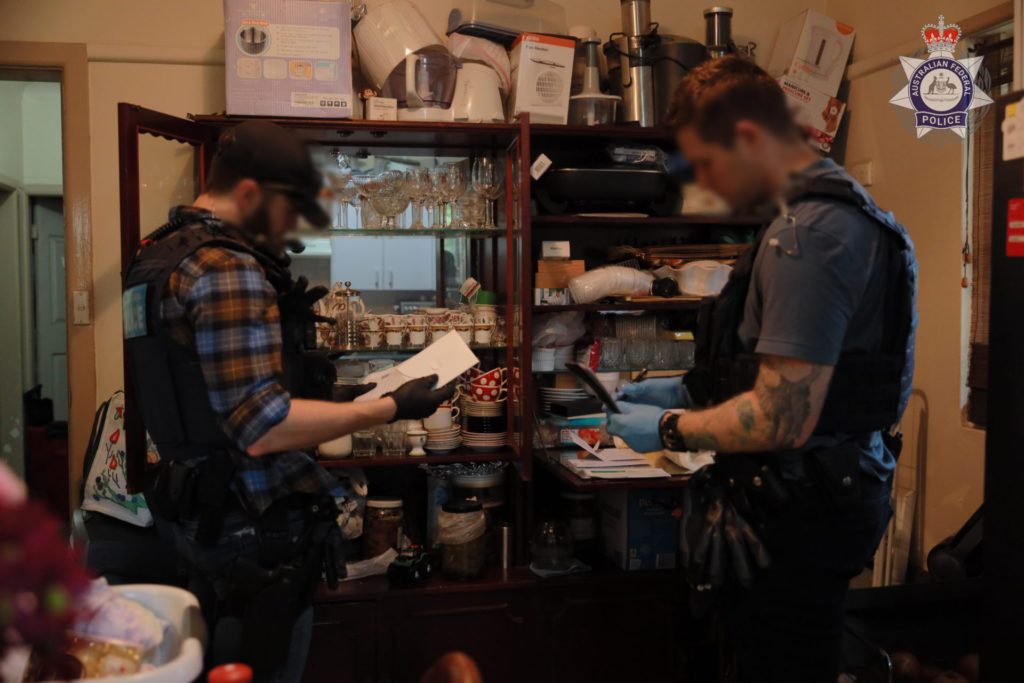
India trade deal a win for Australian exporters, cost of living relief and jobs

0

Since the Albanese Labor Government brought the Australia-India free trade agreement into force, trade with India, one of the world’s fastest growing economies, has surged significantly.

Agricultural exports to India are 50 per cent higher since the trade agreement came into force on 29 December 2022. This includes massive boosts in products like sheep meat, seafood, broad beans, citrus and almonds.

Image: Minister for Trade and Tourism, Senator Don Farrell (Source: DFAT – X)

Minister for Trade and Tourism Don Farrell said in a statement:

“India represents a massive opportunity for Australian business to diversify into new growing markets. In the year since this agreement came into effect, we have seen enormous gains for a range of Australian exporters, including our farmers, manufacturers, and our universities.”

He further added:

“This is a relationship we need to invest in and I look forward to working with India to take our trade agreement to the next level.”

Most of Australia’s industrial exports to India are up by around 30 per cent, with pharmaceuticals, wood and paper and cochlear implants leading the charge.

From 1 January 2024, Australian exports to India will be even more competitive, with more tariff cuts on high quality Australian products such as seafood, cherries, sandalwood and wine.

The trade agreement has strengthened Australia’s economic relationship with India, making it even easier to trade our goods and services with each other.

Ministers Piyush Goyal and Don Farrell (Pic: Twitter - @AusHCIndia)
Ministers Piyush Goyal and Don Farrell (Pic: Twitter – @AusHCIndia)

From January to September 2023, Australian Businesses claimed lower tariffs on $15.2 billion worth of exports to India.

At the same time, Australian businesses and households have saved over $145 million in duties on goods imported from India, on things like clothing, household linen, automotive and electrical parts.

The agreement has also helped ease supply-chain stresses for Australia’s manufacturing, resource and construction industries, by improving access to inputs such as tubes, pipes and off-road dump trucks.

Image: PM Albanese and PM Modi (Source: Twitter)

Australia and India are now working to conclude our next trade agreement, an ambitious Comprehensive Economic Cooperation Agreement (CECA).

This comprehensive trade agreement would allow us to go further in areas such as digital trade, and deliver commercially meaningful new market access for our exporters.

Support Our Journalism

Global Indian Diaspora needs fair, non-hyphenated, and questioning journalism, packed with on-ground reporting. The Australia Today – with exceptional reporters, columnists, and editors – is doing just that. Sustaining this needs support from wonderful readers like you.

Whether you live in Australia, the United Kingdom, Canada, the United States of America, or India you can take a paid subscription by clicking Patreon. Buy an annual ‘The Australia Today Membership’ to support independent journalism and get special benefits.

Dr Andrew Charlton takes ‘Australia’s Pivot to India’ to New Delhi

0

Chair of Parliamentary Friends of India, Dr Andrew Charlton, had a book release for his book ‘Australia’s Pivot to India’ in New Delhi. He is the first Federal Australian Parliamentarian to have written a book on the bilateral relationship and also have a book release in India. The book which was released in Australia in September last year was formally launched in India today at the Indian Habitat Centre in New Delhi. India’s Minister of Petroleum and Natural Gas and Housing and Urban Affairs Hardeep Singh Puri was the Chief Guest at the launch.

Minister Suri said that the book is a thoughtful and optimistic vision for the future. He mentioned that we need to build resilience into the economic relationship and added that we need a partnership on critical minerals.

The event was also included a conversation with Ashok Malik, Partner and Chair, India Practice Group, The Asia Group.

In the book Dr Charlton describes the growth of India and its impact on Australia and mentions that for Australia, India has emerged as a new partner offering hope for a more secure and balanced region.

In an earlier interview, Dr Charlton had told Pallavi Jain that India has become a global superpower and spoke about India’s importance for Australia. He also mentioned that many Australians don’t fully understand the breadth and depth of modern India and part of the reason for writing the book was to help breakdown some of the stereotypes about the country. He further emphasised the role of the Indian diaspora in deepening bilateral ties between Australia and India.

Dr Charlton said that India will play a major part in securing the Indo-Pacific and highlighted the fact that PM Anthony Albanese is the only Australian Prime Minister to have visited India twice in a year.

Dr Charlton is Federal MP from Parramatta which is home to one of the largest Indian diaspora communities in Australia. He has a Masters and Doctorate in Economics from Oxford University and is a Rhodes Scholar. He was Senior Economic Adviser to Prime Minister Kevin Rudd and G20 Sherpa from 2008 to 2010. Dr Charlton is also the founder of AlphaBeta, a strategy and analytics company acquired by Accenture in 2020. He was Managing Director of Accenture from 2020 to 2022 before being elected Federal Member for Parramatta.

The rapidly growing Indian diaspora is estimated to soon become the largest migrant group in Australia. This book celebrates the contribution of Indian Australians to the community and the nation.

Western Sydney University offers scholarship to Indian student to study impact of climate change on rice ecosystem

0

Western Sydney University (WSU) and Kerala Agricultural University (KAU) are expanding their collaboration by offering students an opportunity to pursue graduate studies in Australia.

KAU Vice Chancellor Dr B. Ashok said in a statement:

“The opportunity will help students to access facilities and resources in both Australia and India fostering knowledge and expertise exchange across various academic disciplines.”

Since 2019, WSU and KAU have had a Memorandum of Understanding (MOU) for Master’s and Doctoral programs thus enabling the implementation of a dual degree initiative.

The MOU between the two universities emphasizes student exchange programs and collaborative research on mutually relevant topics.

Dr Roy Stephen, Dean of Faculty at KAU, added:

“International collaborations can lead to increased research opportunities, allowing access to unique facilities, data, and methodologies that may not be available domestically.”

For 2024, Arindam Deb, a doctoral candidate at the College of Agriculture, Vellayani, received a dual degree opportunity from WSU and a scholarship of $31,500 per year.

Having already spent 18 months at KAU, Arindam will complete the remaining research at WSU and receive his doctoral degree from both KAU and WSU.

Arindam Deb has conducted research under the supervision of Dr M. Ameena, Professor in the Department of Agronomy, focusing on the impact of climate change on the rice ecosystem.

Dr Ashok handed over the offer letter for admission to the WSU in the presence of Dr Stephen, and Dr Ameena.

Western Sydney University (formerly the University of Western Sydney) is one of Australia’s leading institutions and has been ranked in the top 250 universities globally. Several Higher Education institutions in India have entered into an arrangement with Western Sydney University to offer HDR candidates the opportunity to undertake a Dual Award degree. 

Support Our Journalism

Global Indian Diaspora needs fair, non-hyphenated, and questioning journalism, packed with on-ground reporting. The Australia Today – with exceptional reporters, columnists, and editors – is doing just that. Sustaining this needs support from wonderful readers like you.

Whether you live in Australia, the United Kingdom, Canada, the United States of America, or India you can take a paid subscription by clicking Patreon. Buy an annual ‘The Australia Today Membership’ to support independent journalism and get special benefits.
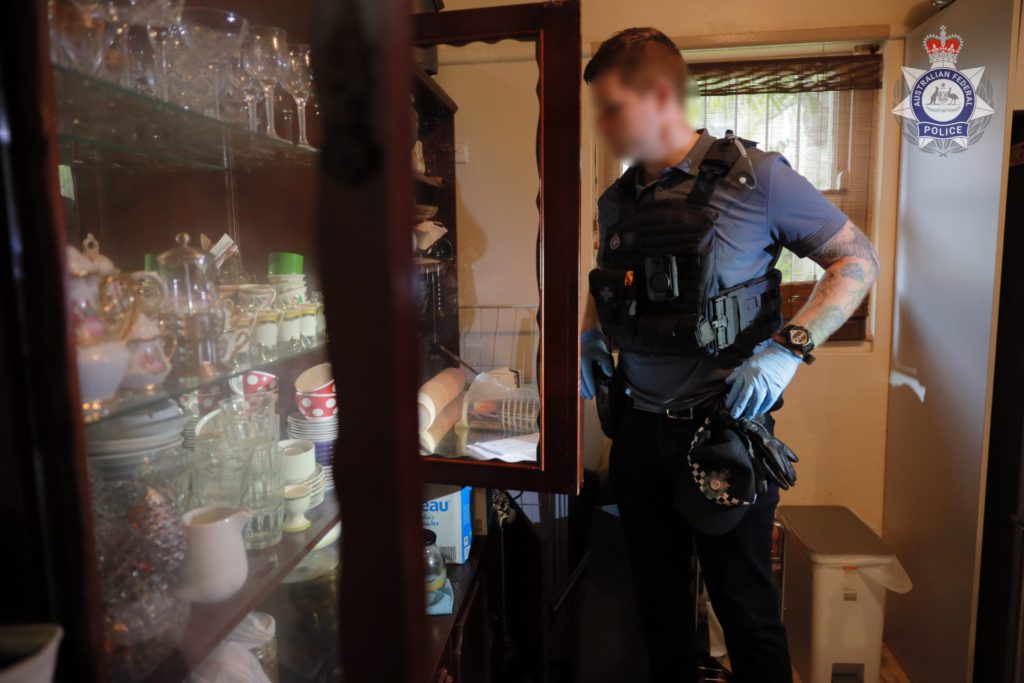
Yunesh Naidu killed in tragic truck crash in Melbourne’s South East

0

In a tragic incident on Wellington Road in Rowville, Melbourne’s south-east, 52-year-old father-of-two Yunesh Naidu was killed in a collision with a 30-tonne truck. The crash occurred at approximately 8:50 am on Thursday, only a kilometre from Mr Naidu’s home.

Mr Naidu, a supply chain director, was entering Wellington Road when the truck struck his Kia sedan. Reports suggest that the truck, driven by a 27-year-old Indian origin man from Dandenong, may have run a red light while travelling west down the highway.

Image Source: 7News

This led to the catastrophic collision, flipping Mr Naidu’s car upside down and trapping it beneath the truck. The truck continued to cause further destruction as it hit another vehicle and a pole before stopping.

No other injuries were reported in the incident, despite the truck impacting two additional cars and a traffic pole, which fell onto a Mercedes. The truck driver is now aiding the police with their investigation into the crash.

Authorities are also investigating whether the truck’s brakes were defective at the time of the accident.

Image Source: 7News
Image Source: 7News

This incident has added to the concerns about road safety in the area, as it is the second fatal accident within 12 hours on Victorian roads. A 22-year-old had earlier died in a separate incident in Fitzroy North, Melbourne’s inner-east after their car hit a pole and flipped several times.

The crash drew a significant response from emergency services, including multiple fire trucks, ambulances, and police units, leading to the closure of the road to manage the situation.

Friends of the truck driver, who moved from India to Australia over a decade ago, described him as an experienced driver. He is currently being questioned by police at Knox Police Station regarding the accident.

Mr Naidu’s death has deeply affected the community, highlighting the ongoing concerns over road safety and the need for vigilant driving practices.

Support Our Journalism

Global Indian Diaspora needs fair, non-hyphenated, and questioning journalism, packed with on-ground reporting. The Australia Today – with exceptional reporters, columnists, and editors – is doing just that. Sustaining this needs support from wonderful readers like you.

Whether you live in Australia, the United Kingdom, Canada, the United States of America, or India you can take a paid subscription by clicking Patreon. Buy an annual ‘The Australia Today Membership’ to support independent journalism and get special benefits.

A short history of the Australian Open – from a Perth Zoo sideshow to economic juggernaut

0

By Hunter Fujak

From relatively humble beginnings, the Australian Open has emerged as a centrepiece in both the global tennis and Australian sporting calendar. With the 2024 tournament approaching, the event is now a centurion – it’s been 101 years since it became a designated grand slam, and 119 years since the very first edition.

While the Australian Open is now firmly known as a Melbourne event, the tournament used to rotate across Australasia until 1972. Between 1905 and 1971, it was most often hosted in Sydney (17 times), Melbourne (16), Adelaide (15), Brisbane (seven), Perth (three), and across the ditch in New Zealand (once in Christchurch, once in Hastings).

These early tournaments were a far cry from the economic enterprise of the modern grand slam; the 1909 edition, for instance, was held in the Perth Zoo.

And even after the International Lawn Tennis Federation designated the Australian Open as one of the four grand slam tournaments in 1923, it lagged behind the others for quite some time. This was mainly due to Australia’s remoteness, the inconvenient timing of the tournament in December or January, the comparatively poor facilities and the low prize money.

In fact, the tournament did not really flourish until the 1980s – well into the “open era” of professional tennis.

The growth of the Australian Open since the 1980s has occurred in parallel to the development of Melbourne as a cosmopolitan city. Australia’s deindustrialisation and financial deregulation in the early 1970s saw Sydney rise as the commercial capital of the country, while Melbourne languished.

In response, Melbourne turned to sport and culture as a form of economic salvation, moving away from manufacturing and towards tourism, leisure and spectacle.

This resulted in significant infrastructure investment, including new grandstand capacity at Flemington racecourse and the installation of lights at the Melbourne Cricket Ground. Perhaps most significant was the building of Melbourne Park as a permanent facility for the Australian Open in 1988.

Despite controversy around the necessary rezoning of public lands to create Melbourne Park, the relocation from the grass courts of Kooyong tennis club was an immediate success. Total attendance increased from 140,000 to 266,436 in the first year.

The tournament has progressed by leaps and bounds since then. The 2023 tournament broke attendance records, with 839,192 people coming through the gates.

By the numbers

The modern Australian Open is a major contributor to the Australian economy, as well as a mammoth operational undertaking.

The 2023 tournament featured a total of 817 players from 68 nations and was reported on by more than 800 journalists and photographers from 52 nations. Incredibly, more than 12,000 staff from Tennis Australia, Melbourne & Olympic Parks and other related agencies helped stage the tournament.

Economically, over six million people have attended the Australian Open in the past decade, contributing an estimated A$2.71 billion (US$1.76 billion) to the Victorian state economy. In 2020, the last tournament before COVID, visitors booked 574,970 hotel night stays and spent on average A$209 per day.

The inherent cultural value of the Australian Open is apparent in annual surveying of local sentiment, with 99% of Victorians agreeing in 2022 “it is important for Victoria to host the Australian Open each year”.

Strong local support is important given the Victorian government invested A$972 million (US$629 million) of taxpayer funds to redevelop Melbourne Park between 2010 and 2019 to secure the Australian Open hosting rights through 2046.

Future challenges

The length of this deal is significant, given Saudi Arabia and other nations have become increasingly aggressive in attempting to rebrand themselves as global sporting powers by making bids to host prestigious events.

Notably, it has emerged in recent weeks that Saudi Arabia is exploring an investment in professional tennis that could, at minimum, jeopardise Australian Open lead–up events that are held across the country in early January.

The tennis tour has also entered a period of talent renewal following the retirements of generational players Roger Federer, Serena Williams and soon Rafael Nadal. As a result, the tournament is having to market new, less familiar faces to an Australian public. Hence, the focus on rising stars Coco Gauff, Carlos Alcaraz and Jannik Sinner on this year’s tournament website.

Perhaps the tournament’s biggest challenge, however, will be its longer-term adaption to climate change. Players have frequently cited the Australian Open as particularly taxing due to the heat, which can at times be extreme. The first heat policy was only introduced in 1998.

In response to this growing challenge, a more extensive, research-based extreme heat policy was introduced in 2019. The new heat stress measure, which can result in the suspension of play, considers four climate factors: air temperature, radiant heat, humidity and wind speed. It also takes into account the physiological differences between the adult players, wheelchair participants and junior athletes.

Severe heat is not just a risk for athletes, but attendees. During the 2014 tournament for instance, 970 attendees were treated for heat exhaustion on a single day when the temperatures hit 42 degrees. A ball kid also fainted.

Climate change poses challenges beyond heat. The Black Summer bushfires of 2019, for instance, brought several days of smoke that caused breathing problems among some players. In 2023, the tournament was suspended twice on a single day, first due to heat and then torrential rain.

Tournament organisers have added an extra day to this year’s tournament to become a 15-day event. This will not only help mitigate any weather-induced scheduling congestion, but will also reduce the number of late-night finishes, which have drawn the ire from players and fans.

This will no doubt help the tournament deal with short-term challenges, but further adaptation may be necessary to ensure its long-term success. If history is any indication, the Australian Open has proven itself open to change.

Hunter Fujak, Lecturer in Sport Management, Deakin University

This article is republished from The Conversation under a Creative Commons license. Read the original article.

"The

Support Our Journalism

Global Indian Diaspora needs fair, non-hyphenated, and questioning journalism, packed with on-ground reporting. The Australia Today – with exceptional reporters, columnists, and editors – is doing just that. Sustaining this needs support from wonderful readers like you.

Whether you live in Australia, the United Kingdom, Canada, the United States of America, or India you can take a paid subscription by clicking Patreon. Buy an annual ‘The Australia Today Membership’ to support independent journalism and get special benefits.

“New India breaking barriers” as Deakin becomes first foreign university to open campus in the country

0

In a historic first Deakin University has become the first foreign university to officially open a campus in India. This is also the first time that Deakin has opened an overseas campus.

(Image: Deakin Gift City / X)

In an exclusive interview, Chancellor of Deakin University, John Stanhope AM, Vice Chancellor, Prof Iain Martin and CEO of South Asia Ravneet Pawha spoke with Pallavi Jain about this milestone. Prof Martin also mentioned that studying in Deakin in India will cost around half the amount that it costs in Australia.

Chancellor Stanhope said that the relationship between India and Australia is getting closer and closer. He also mentioned that when you step into the Deakin campus in GIFT City it seems identical to the one in Melbourne.

Vice Chancellor Martin added that they could not have envisaged even a decade ago that India would be the first overseas campus for the University crediting this milestone to transformative changes in India. Ms Pawha said during the interaction that “New India is breaking barriers”

Deakin University, ranked in the top 1% of universities worldwide, has officially unveiled its India campus, opening India’s first-ever international branch campus. The initiative indicates the friendship, collaboration and commitment between the Indian and Australian Governments and Deakin University supporting the tangible realisation of knowledge exchange and educational excellence envisioned by the National Education Policy 2020.

Leading up to the official campus inauguration, Prime Minister of India, Narendra Modi, met with the Deakin delegation, and spoke about enhancing collaboration between government and academic institutions pertaining to cyber security, Deakin’s three-decade presence and engagement in India, and the upcoming campus inauguration alongside the Vibrant Gujarat Summit.

John Stanhope AM, Chancellor, Professor Iain Martin, Vice-Chancellor, and Ravneet Pawha, Vice-President (Global Alliances) and CEO (South Asia), represented Deakin at this landmark meeting.

“Australia setting up India’s first ever foreign university campus is a landmark moment in Australia-India relations. This opens a new chapter in our education ties, and this is only the beginning,” said, Australian High Commissioner to India, Philip Green OAM during his address at the inauguration event at the India campus in GIFT City, Gandhinagar, Gujarat.

Deakin’s GIFT City Campus, India gives local students access to Deakin’s postgraduate courses in business analytics and cyber security at half the cost of Australian international fees.

“Opening the world’s first international branch campus in India reflects our commitment to offering global education that empowers students to excel in the digital age. This is an investment in the future leaders who will uphold and strengthen the bond between our nations,” Professor Martin said.

Notably, Professor Iain Martin, also represented Australia, in a CEO round table with Prime Minister Modi, before the inauguration.

“Steadfast in our promise to give back to the community and change lives, two fully funded scholarships will be awarded to economically challenged students, underlining Deakin’s commitment to foster educational equity and nurture local talent.”

“Commemorating Deakin University’s 50th anniversary and 30 years in India, opening our campus in India magnifies these milestones,” Professor Martin added.

The campus features brand-new digital classrooms, libraries and cyber security labs, aimed at delivering an exceptional educational experience, while its digital integration with Deakin’s Australian campuses ensures students will have comprehensive access to essential learning resources.

As India’s workforce requirements expand and evolve within emerging technology sectors, Deakin University is set to expand its academic portfolio at the India campus, equipping students for global market leadership and positioning Deakin as an educational contributor to India’s growing digital workforce.

The campus will also serve as a startup incubator, nurturing entrepreneurial talent and innovation with specialised short courses and extensive support to elevate the regional startup landscape.

At the formal ceremony, Ms Ravneet Pawha, Deakin Vice-President (Global Alliances) and CEO (South Asia) expressed that it is an exciting time for cross-cultural education between Australia and India, and untapped global learning experiences.

“Our bold vision is for GIFT City is to be a regional hub in the future, attracting students from across the globe to India, and offering Australian students a unique opportunity to spend a trimester at Gujarat,” she said.

Following the launch, Deakin University kick-started its industry engagements with the inaugural Deakin University x IABCA Leadership Roundtable. The event brought together prominent figures from both Indian and Australian governments and industries for a participative dialogue on ‘Building Sustainable Futures across the Australia-India Corridor’, setting the stage for a series of strategic dialogues and partnerships for shared progress.

Speaking about this historic junction in Indo-Australian education relations, Ms Pawha said, “I commend the tireless efforts and support from both nations’ governments in realising this audacious project. This sets the stage for more innovative, expansive work in bilateral knowledge cooperation, envisioning a future where education knows no borders. I strongly encourage Indian students and professionals to embrace this opportunity and emerge as global pioneers in a tech-forward economy.”

The official Deakin University GIFT City Campus launch event, which occurred alongside the Vibrant Gujarat summit, was graced by distinguished guests from government, academia and industry including Deakin alumni Princess Jahnavi Kumari Mewar.

The opportunity to study at Deakin’s GIFT City Campus has seen a surge of interest, with potential students drawn to internationally accredited programs and unique internship opportunities within GIFT City’s industry network.

Priced at around 21 lakh rupees for the two-year course (fast-tracked to 18 months), the program will be delivered by local and international staff, along with guest lecturers from leading industry figures.

Deakin GIFT City Campus applications close on 31 March 2024, with classes scheduled to commence in July 2024.

Established in 1974, Deakin’s South Asia operations commenced in 1994 at New Delhi, India, making it one of the first overseas education providers to set up operations in this region.

Support Our Journalism

Global Indian Diaspora needs fair, non-hyphenated, and questioning journalism, packed with on-ground reporting. The Australia Today – with exceptional reporters, columnists, and editors – is doing just that. Sustaining this needs support from wonderful readers like you.

Whether you live in Australia, the United Kingdom, Canada, the United States of America, or India you can take a paid subscription by clicking Patreon. Buy an annual ‘The Australia Today Membership’ to support independent journalism and get special benefits.
Australia ranks 6th and India 80th in world’s most powerful passports

0

Six countries have claimed the top spot on the 2024 Henley Passport Index as the world’s most powerful passports with visa-free access to 194 destinations out of 227 around the world.

Australians enjoy access to 189 destinations and their passport is ranked at 6th position. The Australian government has announced an additional fee increase for passports, now costing $346, with a second price hike scheduled for 1 July 2024 that may take it to nearly $400.

France, Germany, Italy, Spain, Japan, and Singapore have showcased the strength of their passports as they maintained the top-place ranking.

South Korea, Finland, and Sweden have been ranked in second place followed by Austria, Denmark, Ireland, and the Netherlands at the third position.

The United Kingdom climbed two ranks to fourth place with visa-free access to 191 destinations.

The top ten most powerful passports in the world for 2024:

  1. France, Germany, Italy, Japan, Singapore, Spain (194 countries)
  2. Finland, South Korea, Sweden (193 countries)
  3. Austria, Denmark, Ireland, Netherlands (192 countries)
  4. Belgium, Luxembourg, Norway, Portugal, United Kingdom (191 countries)
  5. Greece, Malta, Switzerland (190 countries)
  6. Australia, Czechia, New Zealand, Poland (189 countries)
  7. Canada, Hungary, United States (188 countries)
  8. Estonia, Lithuania (187 countries)
  9. Latvia, Slovakia, Slovenia (186 countries)
  10. Iceland (185 countries)

The top ten least powerful passports in the world for 2024:

  1. Afghanistan (28)
  2. Syria (29)
  3. Iraq (31)
  4. Pakistan (34)
  5. Yemen (35)
  6. Somalia (36)
  7. Libya, Nepal, Palestinian Territories (40)
  8. Bangladesh, North Korea (42)
  9. Eritrea, Sri Lanka (43)
  10. Iran, Lebanon, Nigeria, Sudan (45)

Christian H. Kaelin, chairman of Henley & Partners and the inventor of the passport index concept, said in a statement:

“The average number of destinations travellers are able to access visa-free has nearly doubled from 58 in 2006 to 111 in 2024.”

Ukraine (32), The United Arab Emirates (44), Russia (51), and China (62) have seen a remarkable rise in rankings.

India is currently ranked 80th with visa-free access to 62 destinations thus showcasing a strong consistency in its global mobility standing.

At the bottom of the index is Afghanistan in 104th position just behind Syria and Iraq. 

Henley Passport Index is a mobility report published online by London-based global citizenship and residence advisory firm Henley and Partners.

The results are based on exclusive data from the world’s largest database of travel information, the International Air Transport Association (IATA), supported by serious in-house research. The index counts the number of countries a passport provides visa-free travel to and uses it to determine the world’s most powerful.

Support Our Journalism

Global Indian Diaspora needs fair, non-hyphenated, and questioning journalism, packed with on-ground reporting. The Australia Today – with exceptional reporters, columnists, and editors – is doing just that. Sustaining this needs support from wonderful readers like you.

Whether you live in Australia, the United Kingdom, Canada, the United States of America, or India you can take a paid subscription by clicking Patreon. Buy an annual ‘The Australia Today Membership’ to support independent journalism and get special benefits.
Prime Minister Albanese Calls for Fair Pricing as Supermarkets Report Record Profits Amid Rising Grocery Costs

0

Prime Minister Anthony Albanese has raised concerns over the surging profits of major supermarket chains at a time when consumers are grappling with spiralling grocery costs.

Calling the situation “out of sync,” PM Albanese emphasised the responsibility of these chains to ensure fair pricing for consumers. This statement comes as a review into the supermarkets’ code of conduct gains momentum.

Former Labor minister Craig Emerson has been appointed by the federal government to lead this crucial review. The focus will be on examining the disparity between the prices paid to farmers for produce and the amounts charged to customers at the checkout.

“At a time when people are doing it tough, the big supermarket chains have been making record profits,”

Mr Albanese noted, highlighting the need for a balance between corporate profitability and consumer fairness.

During the 2022/23 financial year, Coles reported profits exceeding $1 billion, while Woolworths registered a staggering $1.6 billion.

In light of these figures, PM Albanese urged major chains to pass on cost reductions on grocery items to their customers. The current voluntary and industry-led code of conduct might be mandated to ensure compliance, as suggested by PM.

Allan Fels, former chair of the consumer watchdog, echoed these concerns, advocating for a code of conduct to ensure farmers receive fair prices from supermarkets. He pointed out instances where supermarkets were quick to increase prices but slow to reduce them, citing the example of lamb prices.

This review will run concurrently with a Senate inquiry into supermarket prices, set to hold hearings in February and release a final report in May.

Shadow treasurer Angus Taylor stressed the need for greater competitiveness in the supermarket sector to ensure lower prices for consumers.

“At a time like this, when real disposable incomes are being hit hard, we need to support any sensible policy that leads to lower prices for essential items,”

he stated on ABC Radio.

The government’s stance puts supermarket giants on notice, signalling a potential shift towards more stringent regulations to protect both consumers and producers in the Australian grocery market. As families across the nation feel the pinch of rising living costs, these developments could mark a significant step towards more equitable pricing in the retail food sector.

Support Our Journalism

Global Indian Diaspora needs fair, non-hyphenated, and questioning journalism, packed with on-ground reporting. The Australia Today – with exceptional reporters, columnists, and editors – is doing just that. Sustaining this needs support from wonderful readers like you.

Whether you live in Australia, the United Kingdom, Canada, the United States of America, or India you can take a paid subscription by clicking Patreon. Buy an annual ‘The Australia Today Membership’ to support independent journalism and get special benefits.
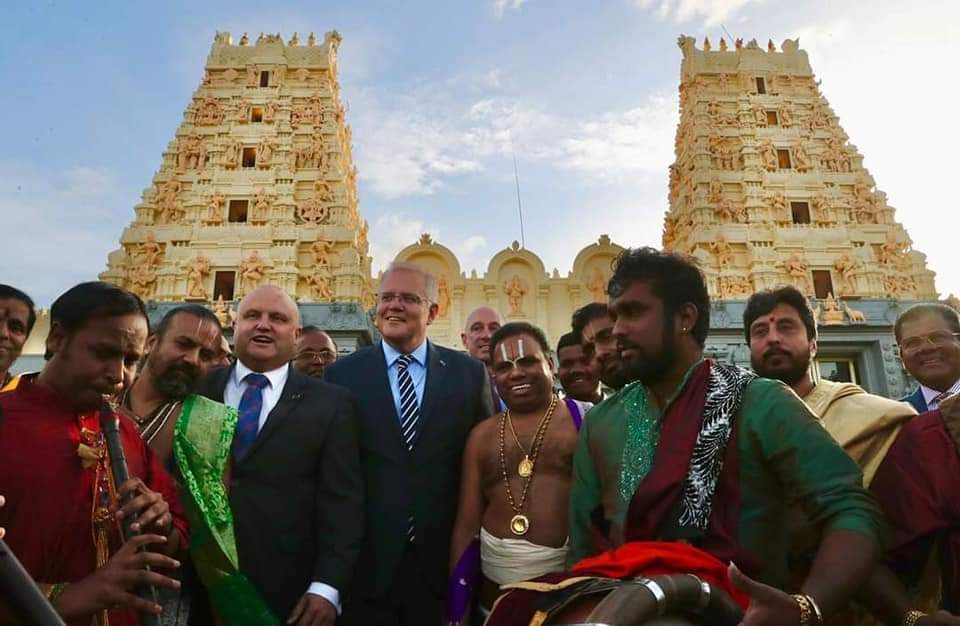
Rent regulations are no silver bullet, but they would help make renting fairer

0

By Alistair Sisson

Virtually every week brings news of rising rents or a story of still more renters forced out of their homes by unmanageable rent increases.

The Australian Bureau of Statistics says rents climbed 6.6% in the year to October.

If you’re signing a new rent agreement the situation is worse, with landlords charging on average 8.6% more than they did a year ago, and far more – about 15% more than a year ago – in the hotpots of Sydney and Melbourne.

Image: Australia’s next Reserve Bank governor, Michele Bullock (Source: RBA -X/Twitter)

Reserve Bank Governor Michelle Bullock expects things to get worse before they get better. She says rents are likely to climb by a further 10% in the next six months or so before easing.

None of this need be inevitable. State and territory governments have the power to prevent outsized rent increases and de facto evictions by regulating rents, helping curb the overall rate of inflation in the process.

Research I helped conduct for Shelter NSW and the Tenants Union of NSW finds regulations to prevent excessive rent increases are increasingly common throughout advanced economies including the United States, Canada and much of Europe.

It is often said that rent controls would make things worse for both landlords and tenants by reducing investment in rental properties. But we found that, where designed well, they can help tenants by enhancing the security of tenure and improving affordability.

How do rent regulations work?

There is a wide range of approaches, something that is often overlooked.

Some limit rent increases to a fixed percentage annually, ranging from 2% in Ireland to 10% in California. Some limit rent increases to the rate of inflation, although rising inflation has led many jurisdictions to place ceilings on such caps.

And most don’t regulate the initial rent for a tenancy but instead limit increases thereafter, allowing for “vacancy decontrol”.

So-called first-generation controls freeze rents, second-generation controls allow rents to increase gradually, and third-generation controls only limit rents within tenancies, allowing landlords unfettered increases when leasing to new tenants. This graph illustrates these differences.


As the graph shows, third-generation controls are less about suppressing growth over time than protecting incumbent tenants from exorbitant increases. This means they are less likely to inhibit supply.

Almost all regulations allow for exceptional rent increases when landlords significantly upgrade rental properties or face increased operating costs. This helps to ensure maintenance is not discouraged.

Some regimes even completely exempt newly-built rental properties, either permanently or for several years, which has the downside of leaving a large chunk of the market unregulated.

How could rent regulation help Australian renters?

We examined five cases of recently introduced rent regulations – in Australia’s ACT, in Ireland, Oregon, Scotland, and St Paul, Minnesota.

Like most of Australia, all had little recent history of rent regulation. Each introduced its controls in the past decade, and all but Ireland in the past five years.

We examined how helpful each of these regulations might have been by comparing each with rent increases in Sydney.

Ireland’s rent cap is the strictest. It limits annual increases to the lesser of 2% or the annual rate of overall inflation annually in several designated “rent pressure zones”.

If this cap was in place in Sydney over the past year, a median renter would have saved $1,976. Ireland is the only second-generation regime among the five, with the rent cap applying even where tenancies change.

The caps in Scotland and St Paul would have also held down increases in Sydney. Each limits annual increases to 3%, which would have saved the median Sydney renter $1,716 in the past twelve months.

However, Scotland allows exceptional increases to cover maintenance and increased costs of up to 6% and St Paul allows exceptional increases of up to 15% and exempts homes built in the past 20 years. Both “decontrol” between tenancies.

Oregon and the ACT are far more permissive. Oregon prevents rent increases greater than 10% or 7% plus inflation annually (whichever is lower) but excludes homes built in the last 15 years.

The ACT limits increase to 110% of the most recent annual increase in Canberra rents measured by the Australian Bureau of Statistics – a unique model internationally.

Neither would have constrained the median Sydney increase over the past 12 months, although each would have prevented the more excessive increases.


Australia’s recent rent increases have been exceptional.

For most of the past decade, each one of the models examined would have permitted increases in line with or a good deal more than those in Sydney.

While they would have prevented unusually large increases, they would have left most landlords unaffected.

One of the aims of Australia’s latest National Housing and Homelessness Agreement is to encourage “security of tenure in the private rental market”.

Unlimited rent increases undermine the security of tenure, building a case for Australia’s states and territories to regulate rents.

The examples we have examined show such regulations needn’t be at odds with efforts to increase supply. They show that while rent regulation is no silver bullet, it can help make renting more affordable and secure.

Alistair Sisson, Macquarie University Research Fellow, School of Social Sciences, Macquarie University

This article is republished from The Conversation under a Creative Commons license. Read the original article.

Support Our Journalism

Global Indian Diaspora needs fair, non-hyphenated, and questioning journalism, packed with on-ground reporting. The Australia Today – with exceptional reporters, columnists, and editors – is doing just that. Sustaining this needs support from wonderful readers like you.

Whether you live in Australia, the United Kingdom, Canada, the United States of America, or India you can take a paid subscription by clicking Patreon. Buy an annual ‘The Australia Today Membership’ to support independent journalism and get special benefits.

World Hindi Day Celebrated with Cultural Fervour at Indian Consulate in Melbourne

0

The vibrant celebration of World Hindi Day was held at the Indian Consulate in Melbourne, organised by prominent cultural organisations Sahitya Sandhya, Hindi Siksha Sangh and Hindi Niketan. The event was a grand display of cultural and linguistic pride, reflecting the significance of #Hindi in the global cultural landscape.

The celebration commenced with the traditional lighting of the lamp, symbolising enlightenment, knowledge, and the dispelling of ignorance.

Indian Consul General in Melbourne Dr Sushil Kumar graced the occasion, expressing gratitude to all participants and highlighting the importance of the event.

In a poignant moment, he read out the Indian Prime Minister’s statement, which underscored the vital role of Hindi not only in India but across the world, reiterating its significance in the global structure.

A special highlight of the evening was the felicitation of Dr. Subhash Sharma, a respected figure known for his significant contributions to promoting Hindi in Australia. His work has been pivotal in fostering an understanding and appreciation of the Hindi language and culture within the Australian-Indian community and beyond.

The event was also marked by a series of cultural performances, showcasing the talent and enthusiasm of the community. Poem recitation sessions were held, featuring participants from different age groups – under 10, under 18, and adults. Their performances reflected the depth and diversity of Hindi literature and poetry, resonating with the audience’s shared cultural heritage.

However, the showstopper of the evening was a captivating dance performance by young Indian-Australian kids. They celebrated the historic construction of the Shri Ram Janmabhoomi Temple, an event that holds profound significance for Indians worldwide.

This performance was a harmonious blend of cultural pride and modern expression, symbolising the continuity of tradition through generations.

Participants who showcased exceptional talent and hard work in their performances were recognised and facilitated, adding a sense of achievement to the cultural festivities.

The event, while a resounding success in many aspects, highlighted a notable gap in the participation of the younger Indian-Australian demographic, particularly those aged 25 to 45. This observation underscores the vital need for young Indian Australians to engage with and learn Hindi, not only as a means of preserving linguistic heritage but also as a bridge connecting them to their cultural roots.

In an increasingly globalised world, the importance of maintaining a connection with one’s heritage language is paramount. It fosters a sense of identity, belonging, and understanding of one’s ancestral culture. Encouraging this age group to learn Hindi and participate in such cultural events can enrich the community’s cultural tapestry, ensuring that the language and traditions continue to thrive in the diaspora.

This engagement also promises to strengthen intergenerational bonds within families, where the older generation can pass on not just a language, but stories, history, and a wealth of cultural knowledge.

The evening concluded on a delightful note with a taste of Indian hospitality. Attendees were treated to a spread of Indian delicacies, including the ever-popular samosas, the sweet bliss of rasgullas. These dishes not only satiated the taste buds but also served as a reminder of the rich culinary traditions of India.

World Hindi Day at the Indian Consulate in Melbourne was more than just a celebration of a language; it was a vibrant testament to the enduring strength of culture, heritage, and community bonds in the Indian diaspora.

As the attendees left with hearts full of joy and pride, the echoes of Hindi poetry and the rhythm of traditional dances lingered in the air, marking the success of a memorable event.

Support Our Journalism

Global Indian Diaspora needs fair, non-hyphenated, and questioning journalism, packed with on-ground reporting. The Australia Today – with exceptional reporters, columnists, and editors – is doing just that. Sustaining this needs support from wonderful readers like you.

Whether you live in Australia, the United Kingdom, Canada, the United States of America, or India you can take a paid subscription by clicking Patreon. Buy an annual ‘The Australia Today Membership’ to support independent journalism and get special benefits.

India helps launch solar generation system in Pacific countries

0

As the countries aspire towards the 2030 Agenda in the upcoming years, they have also taken leadership in reducing their carbon footprint and showcasing climate action with high level commitment in transforming Presidential residences to full clean energy thus closing energy gaps.

Pacific Island Countries (PICs) face multiple energy challenges, including: i) a limited range of indigenous energy resources, ii) the high cost of developing energy resources and extending service to remote populations, iii) poor quality of energy data and trends, iv) a small base of skilled people with energy knowledge, and v) weak bargaining positions with fossil fuel suppliers making energy unaffordable. These challenges affect all individuals, regardless of gender, and it’s important to ensure that both men and women have equal access to resources and opportunities in the energy sector.

Image: Solarization project in State House (Source: UNDP)

In terms of electricity access, there is significant variation across the region. Nearly all households in Niue, Nauru, Palau, Tokelau, Cook Islands, Samoa, Tonga, and Tuvalu have access to electricity. However, in Vanuatu and Solomon Islands, overall electrification rates remain very low, at about 20 percent of households or less. There are low-income households in most PICs, which use little electricity because of the high costs of fossil fuel-based electricity generation, even though it can be easily accessed. It’s crucial to consider the specific needs and circumstances of these households, which may include women-headed households, in energy planning and policymaking.

The Pacific has shown strong support for renewable energy, driven by the need to address climate change and energy security, as well as to mitigate high electricity costs. Many Pacific nations have set ambitious targets to reduce their CO2 emissions by 2030 and transition to nearly 100 percent renewable energy sources. Solar energy is particularly attractive due to its cost-effectiveness, with technology costs having decreased by 80 percent over the past decade and less operation and maintenance required.

Image: Installed solar panels at the Fiji State House (Source: UNDP)

An 18.25 kW solar generation system has been launched at the Fiji State House, that will supply the state house with an annual energy production of approximately 20,000 units of electricity. This translates into FJD $74,000 annual savings on energy cost from a clean energy source. This achievement been made possible with generous funding support from the Government of India through the India-UN Development Partnership Fund and the United Nations Development Programme. As we celebrate this milestone, let’s also remember the importance of gender equality in the energy sector and strive to ensure that both women and men can contribute to, and benefit from, the transition to renewable energy.

Image: Fiji’s Head of State, His Excellency President Ratu Wiliame Katonivere (Source: UNDP)

During the launch, Fiji’s Head of State, His Excellency President Ratu Wiliame Katonivere stated that the project is an example of a whole-of-society approach, specifically a multi-stakeholder partnership, with partners from the public and private sectors, as well as civil society. 

“With funding from the India – UN (United Nations) Development Fund, and close partnership between the United Nations Development Programme (UNDP) and the Pacific Island Development Forum (PIDF), the initiative is an important milestone towards creating awareness among different stakeholders as well as the general public on the adoption of solar energy as a source of clean, renewable energy,” President Katonivere said.

“This will bring Fiji a step closer to achieving its Nationally Determined Contribution (NDC) target of reaching close to 100 percent renewable energy power generation (grid-connected) by 2030 and a reduction of 20 percent of CO2 emissions from the energy sector under a Business as Usual (BAU) scenario. It will also contribute to the achievement of Sustainable Development Goal (SDG) 7 on ensuring access to affordable, reliable, sustainable, and modern energy for all.”

The PIDF and UNDP Pacific are currently implementing a program known as “Solarization of Head of State Residences (SOHS),” which aims to support the adoption of green energy in 11 PIDF member countries, including Fiji, Tonga, Kiribati, Solomon Islands, Vanuatu, Republic of Marshall Islands, Federal States of Micronesia, Palau, and Tuvalu. 

This article was first published by the UNDP publication which showcases the organization’s thought leadership and expertise and play a key role in fulfilling our mandate to support the realisation of the SDGs and encourage global development.

Disclaimer: The opinions expressed within this article are the personal opinions of the author. The Australia Today is not responsible for the accuracy, completeness, suitability, or validity of any information in this article. All information is provided on an as-is basis. The information, facts, or opinions appearing in the article do not reflect the views of The Australia Today and The Australia Today News does not assume any responsibility or liability for the same.

Support Our Journalism

Global Indian Diaspora needs fair, non-hyphenated, and questioning journalism, packed with on-ground reporting. The Australia Today – with exceptional reporters, columnists, and editors – is doing just that. Sustaining this needs support from wonderful readers like you.

Whether you live in Australia, the United Kingdom, Canada, the United States of America, or India you can take a paid subscription by clicking Patreon. Buy an annual ‘The Australia Today Membership’ to support independent journalism and get special benefits.

Uber ride-share run ruined as man arrested while fleeing from police

0

A man who called an Uber to try and get away from police has been arrested in Clayton overnight.

The man first came to police attention following reports of a collision at the intersection of Ferntree Gully and Blackburn roads just before midnight.

A witnessed called Triple Zero (000) and advised police the driver of a car, who had just crashed into another vehicle at speed, had run from the scene.

Attending police checked on the condition of the driver, confirmed the dumped car was stolen and cordoned the area; while following up reports the man was seen running south on Blackburn Road.

Local police and the Dog Squad moved in before a ride-share car was seen leaving a nearby hotel carpark.

Nunawading Highway Patrol intercepted the car on Wellington Road after noticing a passenger in the back seat, when the man ran from the scene.

Officers gave chase and the 31-year-old man was arrested following a short foot pursuit.

He has been interviewed by police and is expected to face charges including:

  • theft of motor vehicle
  • commit indicatable offence whilst on bail (x2)
  • unlicensed driving
  • drive in a manner dangerous
  • careless driving
  • fail to render assistance and other traffic related matters
  • possess methylamphetamine, and
  • deal property suspected proceeds of crime.

The Ferntree Gully man will be held over to appear before Moorabbin Magistrates’ Court today, 10 January,

The driver and passenger from the other vehicle involved were both transported to hospital for treatment.

Support Our Journalism

Global Indian Diaspora needs fair, non-hyphenated, and questioning journalism, packed with on-ground reporting. The Australia Today – with exceptional reporters, columnists, and editors – is doing just that. Sustaining this needs support from wonderful readers like you.

Whether you live in Australia, the United Kingdom, Canada, the United States of America, or India you can take a paid subscription by clicking Patreon. Buy an annual ‘The Australia Today Membership’ to support independent journalism and get special benefits.
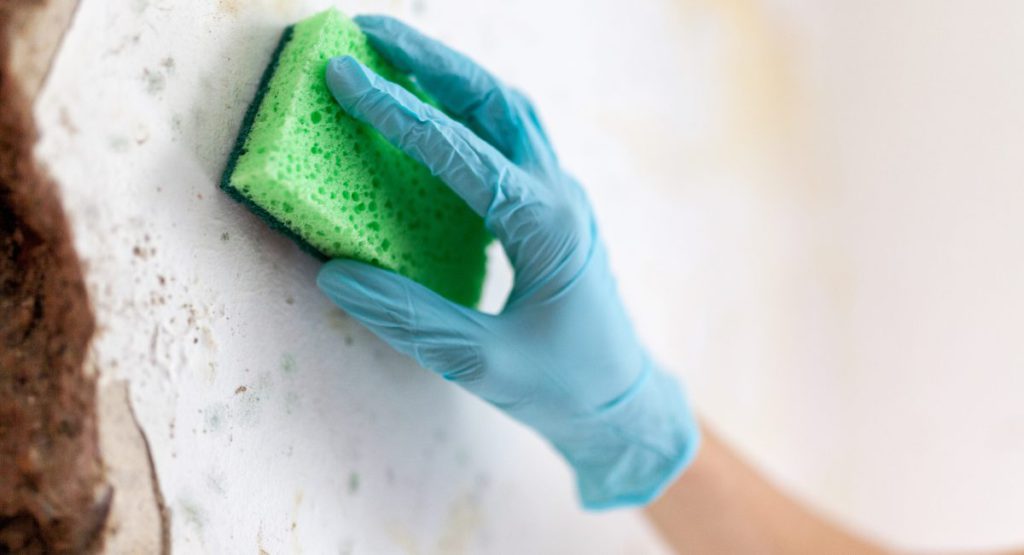
Strike Force Nerja: Appeal to locate one of Australia’s most wanted men

0

State Crime Command detectives, together with the family of George Giannopoulos and the Australian Federal Police, are appealing for global public assistance to find James Dalamangas – one of Australia’s most wanted men.

James Dalamangas is wanted over the fatal stabbing of Sydney man George Giannopoulous at a nightclub in Belmore on Sunday 25 April 1999, before it’s alleged he fled to Greece.

The next day, a warrant was issued for Mr Dalamangas’s arrest; however, despite extensive inquiries he has never been located. It’s believed he is still currently residing in Greece. 

After attempts to extradite Mr Dalamangas from Greece were not successful in 2003, Greek authorities agreed to commence the prosecution of Mr Dalamangas over his alleged role in the murder. That process was suspended in 2007 when he could not be located.

Today, as the 25-year-long Greek statute of limitations nears, police are appealing for anyone with information to come forward – particularly if they can assist in locating Mr Dalamangas in Greece.

As part of these inquiries to locate Mr Dalamangas in Greece, police have renewed their appeal for information alongside the Giannopoulos family and delivered a message in Greek, which will be distributed to reach Greek audiences.

Police have also published an age-progression image of James Dalamangas, showing what he may look like now, aged 54.

Records indicate Mr Dalamangas is of Middle Eastern/Mediterranean appearance, approximately 182cm tall, with brown hair, brown eyes and a Greek inscription tattoo on his right forearm. He may be using the names ‘James’, ‘Jim’ or ‘Tim’ with surnames ‘Dimitrious’ or ‘Kanis’.

Detective Superintendent Grant Taylor, Commander of State Crime Command’s Criminal Group Squad, said police have a limited amount of time left to prosecute Dalamangas in Greece, so are upping the ante to find him.

“Today, we’re directly appealing to members of our Greek community – and those who might hear our pleas in Greece – that now is the time to come forward. 

“Whether here or offshore, we will never stop chasing Mr Dalamangas and ultimately justice for the family of George Giannopoulos,” Det Supt Taylor said.

“We also want to remind people there is a $200,000 reward in place for information leading to the arrest of Mr Dalamangas – that’s approximately $123,000 in euros and can be claimed internationally.”

Through the Australian Federal Police, the New South Wales Police Force continues to work closely with Greek authorities in their bid to find Mr Dalamangas.

AFP Superintendent Transnational Operations Jared Taggart said the AFP had members based in the region, who are liaising with Greek authorities.

“Specialist investigators from our Fugitive Apprehension Strike Team (FAST) are extraordinarily successful in locating fugitives who are the subject of arrest warrants for murder, manslaughter, drug trafficking, money laundering and serious fraud,” Superintendent Taggart said.

“The team includes dedicated intelligence resources and uses capabilities and techniques to find alleged offenders, some who have changed their appearances and have assumed new identities. Their job is to work in direct support of NSW Police to identify and locate people like Mr Dalamangas who think they can hide from the AFP and its international partners.

“The AFP has a strong relationship with the Hellenic Police, who are highly-capable and trusted partners, and we will work with our partners in NSW and around the world to leverage every avenue to ensure this man is brought to justice.”

Inquiries to locate James Dalamangas continue.

Anyone with information that may assist investigators is urged to contact Crime Stoppers: 1800 333 000 or https://nsw.crimestoppers.com.au. Information is treated in strict confidence.

Support Our Journalism

Global Indian Diaspora needs fair, non-hyphenated, and questioning journalism, packed with on-ground reporting. The Australia Today – with exceptional reporters, columnists, and editors – is doing just that. Sustaining this needs support from wonderful readers like you.

Whether you live in Australia, the United Kingdom, Canada, the United States of America, or India you can take a paid subscription by clicking Patreon. Buy an annual ‘The Australia Today Membership’ to support independent journalism and get special benefits.

Dogs are incredible – if unlikely – allies in conservation

0

By Romane H Cristescu

Dogs have been working with people for centuries. Think hunting dogs, herding dogs, police dogs or search and rescue dogs. But have you heard of conservation dogs?

Conservation dogs fall mainly into two categories: guardian dogs and sniffer dogs (also called scent, detection or detector dogs).

Guardian dogs protect vulnerable species from predators, while sniffer dogs locate targets of interest using their powerful sense of smell.

In the past 15 years, dogs have begun to play a crucial role in conservation around the world. So let’s take a closer look at them, with a focus on their work in Australia.

UniSC Detection Dogs for Conservation

The nose that knows

Guardian dogs were made famous by the 2015 movie Oddball. The film is based on the true story of Maremma dogs, trained to protect little penguins from foxes on Middle Island near Warrnambool in southwest Victoria. The penguin population had dwindled to fewer than ten before the Maremma dogs got involved. The breed was chosen for its long association with guarding sheep in Europe.

But most conservation dogs are sniffer dogs, because there are so many uses for them. They can be trained to find animals or plants, or “indirect” signs animals have left behind such as poo or feathers.

Dogs can detect anything with an odour – and everything has an odour. Sniffer dogs are trained to detect a target scent and point it out to their human coworker (sometimes referred to as handler or bounder).

A photo of a sniffer dog during training, dropping to the ground to show where she found the target odour in a jar
During training, sniffer dog Billie Jean drops to the ground when she finds her target odour. Russell Miller, UniSC Detection Dogs for Conservation

Sniffer dogs have been trained for various missions such as:

  • finding rare and endangered species
  • detecting invasive animals during eradication or containment such as fire ants or snakes
  • locating pest plants
  • supporting wildlife surveys by detecting scats (poo), urine, vomit, nests, carcasses and even diseases.

They have worked in extreme conditions on land (including on sub-Antarctic islands) and at sea, and can even detect scent located underground. Sniffer dogs have also trained to recognise individual animals such as tigers by scent.

A sniffer dog poses with an open copy of a french book about the incredible nose of the dog by Frank Rosell
Sniffer dog Maya poses with a french copy of a book about the incredible nose of the dog by Frank Rosell. Romane Cristescu, UniSC Detection Dogs for Conservation

The ultimate scent detection machine

A dog’s nose is estimated to be 100,000 to 100 million times more sensitive than a human nose (depending on the dog breed). A much larger proportion (seven to 40 times larger) of the dog’s brain is dedicated to decoding scent.

That means dogs can detect very low scent concentrations – the equivalent of a teaspoon of sugar in five million litres of water (or two Olympic-sized swimming pools). They can also differentiate between very similar odours.

Dogs analyse the air from each of their nostrils independently, detecting tiny variations in scent concentration. This gives them a directional sense of smell that can guide them left or right until they’ve honed in on the origin of the scent.

Thanks to very sophisticated nostrils, dogs can avoid contaminating an odour with their own breath (exhaling air through the nostrils’ sides). They also can analyse odours continuously regardless of whether they are inhaling or exhaling.

Besides being the ultimate scent detection machine, dogs are great ambassadors for conservation – melting hearts all the way to Hollywood.

A still from a video on twitter featuring Hollywood actor Tom Hanks reading and responding to tweets including one about the koala detection dog Bear.
While reading a tweet about our IFAW / UniSC koala detection dog Bear, Hollywood actor Tom Hanks said: ‘This is a Disney movie that must be made’, before suggesting a title: ‘The story of Bear: The Koala Detection Dog’. ‘I like bear!’ X/Twitter

Finding the right candidate for the job

Some organisations rescue their dogs. They look for the toy-obsessed kind – those dogs that never stop playing.

In many cases these dogs were abandoned for that very reason. They require constant entertainment and become difficult to care for in a normal family setting, where people have to leave for work and devote time to activities other than entertaining their dog.

A sniffer dog gets to be with their handlers almost every day of the week. That work consists of long walks with lots of play.

Trainers use toys and play as a reward, so dogs learn to associate this reward with the target scent.

Learning through association – called classical or pavlovian conditioning – is very easy for dogs. It’s so easy that the scent-learning part of the job is usually the quickest. Training a dog to feel confident and be safe in the natural environment is more challenging. And if the dog had a troubled background before being rescued, rehabilitation is the most time-consuming and difficult component of the training.

Rear view of two sniffer dogs sitting with their handler in a grassy hilltop gazing into the distance
Sniffer dogs with their handler Russell Miller near Gympie region in Queensland, Australia. Katrin Hohwieler, UniSC Detection Dogs for Conservation

What type of dog can become a sniffer dog?

The most important aspect of the association learning process is having the right dog – one with obsessive behaviour. And any breed, sex and age of dog can present this personality type.

Some breeds might tend to have higher proportions of obsessed and toy-focused dogs, but all breeds, including crossbreeds, have been successfully deployed as sniffer dogs.

Some breeds do have better sniffers – the bloodhound is the champion of olfactory performance – but depending on the target scent, most dogs’ noses are still extremely efficient and more than capable of the task.

Robust, agile and high-energy breeds are better suited to working outdoors. Medium-sized breeds are usually better able to crawl under and jump over obstacles, while also light enough to be easily carried by their human coworker as needed.

A wildlife rescuer wearing fire protective gear carries detection dog Bear
International Fund for Animal Welfare IFAW / UniSC koala detection dog ‘Bear’ was deployed during the Black Summer fires (2019-20) to find survivors. Pictured here with the author Romane Cristescu at Two Thumbs Wildlife Trust sanctuaries in Cooma, New South Wales. Kye McDonald, UniSC Detection Dogs for Conservation

Top jobs for conservation dogs

Meet dogs working in conservation around the world:

These are just a few of the dogs making a difference in our fight to protect biodiversity. But we have barely scratched the surface of their potential!

Romane H Cristescu, Researcher in Koala, Detection Dogs, Conservation Genetics and Ecology, University of the Sunshine Coast

This article is republished from The Conversation under a Creative Commons license. Read the original article.

"The

Support Our Journalism

Global Indian Diaspora needs fair, non-hyphenated, and questioning journalism, packed with on-ground reporting. The Australia Today – with exceptional reporters, columnists, and editors – is doing just that. Sustaining this needs support from wonderful readers like you.

Whether you live in Australia, the United Kingdom, Canada, the United States of America, or India you can take a paid subscription by clicking Patreon. Buy an annual ‘The Australia Today Membership’ to support independent journalism and get special benefits.

‘We don’t know what tomorrow will bring’: How climate change is affecting Fijians’ mental health

0

By Amy Lykins and Suzanne Cosh

It’s unlikely any region of the world will escape the effects of climate change. These include increasing temperatures, more frequent and intense extreme weather events such as bushfires and floods, rising sea levels, and more.

But some areas, like the Pacific Islands, are likely to experience disproportionate effects from advancing climate change. Pacific island nations are uniquely vulnerable to sea level rise, coastal erosion and cyclones of escalating intensity.

Increasing temperatures and increasingly unpredictable weather patterns present additional risks to populations largely reliant on traditional fishing and farming practices for both food sources and trade.

The consequences of climate change also pose significant risks to the mental health and wellbeing of the people living in these countries, as we observed in a recent study with rural Fijians.

Shifts in the environment

We interviewed more than 70 Indigenous and other traditional Fijians living in rural villages in coastal, coastal hinterland and river delta regions of the country.

Interviewees from each village described environmental changes they had observed, ranging from shifts in seasons and rainfall, to warmer temperatures, to sea level rise resulting in more frequent flooding of the villages, particularly during “king tides”. As one participant said:

Now it is like we are having the hot season throughout. Now we are experiencing the abnormal changes in the weather like never before.

Another commented:

Sea level is not where it used to be since it is moving into the village, especially when it is high tides. We are really worried and concerned.

A number of items washed up on a beach in Fiji.
King tides sometimes see items washed away from coastal villages in Fiji. Amy Lykins

A strong theme of loss of traditional culture ran through our interviews, with many participants describing the ways these environmental changes were contributing to the loss of traditional ways of life and their broader cultural practices.

One participant talked about yatule, a fish customarily found in seas of the Nadroga-Navosa province, traditionally fished using only nets:

No longer is it [yatule] seen [here]. Fishing for the yatule here […] is done traditionally […] the traditional method is slowly fading.

These observed losses were having an effect on mental wellbeing. In particular, participants routinely expressed concerns and grief about what would be left for future generations.

Due to the climate change we are very concerned about our future generation. At least now we can still eat fish, we don’t know what tomorrow will bring.

The idea of relocation fuelled further distress

All interviewees were aware of a potential need in the future to migrate (indeed, a couple of the villages we visited are already in the process of relocating to higher grounds). But this prospect was met with both reluctance and substantial anticipated loss. As one participant said:

[The villagers] will not follow suit since they have strong ties with this place.

Another said:

This is our only land where we have lived in all our lives.

Given the strong connections Pacific island peoples traditionally have to their ancestral lands, there is no question any forced relocation would have significant negative effects on their mental health and wellbeing.

A Fijian island surrounded by blue ocean and blue sky.
The images tourists might have in their heads when they think of Fiji are very different to the reality for residents. Amy Lykins

Eco-grief

Our interviews highlight the substantial distress associated with the rapidly changing environment of Fiji.

In many ways, these themes mirror those observed in the Indigenous Inuit peoples of the Circumpolar North, found in Alaska, northern Canada and Greenland. In these locations, rapidly declining sea ice is having a major impact on traditional cultural practices (such as fishing and travel), also resulting in grief, worry and mental ill-health.

Across the globe, it’s clear people and cultures with strong place-based attachments are especially vulnerable to the mental health effects of climate change, sometimes called “eco-grief”.

More research is urgently needed to better understand mental ill-health in Pacific peoples related to the effects of climate change, and to develop culturally informed supports. There’s also a need to strengthen mental health systems in Pacific island nations.

Finally, concerted climate change mitigation efforts are crucial to protect these unique Pacific cultures, which will aid in protecting their mental health and wellbeing.

The authors would like to thank Patrick Nunn, Roselyn Kumar, Cassandra Sundaraja, Mereoni Camailekeba, Samisoni (“Samson”) Baivucago and Sala Tabaka for their contribution to the research that informed this article.

Amy Lykins, Associate Professor in Clinical Psychology, University of New England and Suzanne Cosh, Associate Professor in Clinical Psychology, University of New England

This article is republished from The Conversation under a Creative Commons license. Read the original article.

"The

Support Our Journalism

Global Indian Diaspora needs fair, non-hyphenated, and questioning journalism, packed with on-ground reporting. The Australia Today – with exceptional reporters, columnists, and editors – is doing just that. Sustaining this needs support from wonderful readers like you.

Whether you live in Australia, the United Kingdom, Canada, the United States of America, or India you can take a paid subscription by clicking Patreon. Buy an annual ‘The Australia Today Membership’ to support independent journalism and get special benefits.

Victoria police appeal for public assistance following armed robbery and kidnapping

0

Westgate Divisional Response Unit detectives are appealing for public assistance following an armed robbery and kidnapping in Tarneit on 29 October.

Police have been told that the victim was walking through the Wotten Road Reserve, near the intersection of Cuttlefish Circuit and Colias Walk about 7.10 pm, when he was approached by three male teens.

One of the teens threatened the 24-year-old victim with a knife before demanding he hand over his mobile phone.

A scuffle ensued during which the victim sustained an injury to his hand before the trio fled the scene with his mobile phone.

A short time later, investigators believe that the same trio of offenders approached a second male victim as he was seated inside his white Toyota Camry parked on Cuttlefish Circuit.

One of the three offenders produced a knife and demanded that all three be driven to a carpark on Wooten Road.

The victim drove to the carpark where the trio fled the Toyota on foot.

The 20-year-old victim was not injured.

Detectives have released CCTV and images of three males who they believe may be able to assist with their enquiries.

The first male is perceived to be Caucasian in appearance, aged in his teens, with a black moustache and a long black mullet. He was seen wearing a blue Nike jumper and black track pants.

The second male is perceived to be African in appearance, aged in his teens with an afro hairstyle. He was seen wearing a black tracksuit and dark coloured sneakers.

The third male is perceived to be African in appearance and aged in his teens. He was seen wearing a grey hoodie, dark trackpants and carrying a dark coloured bum bag.

Anyone with information, dashcam/CCTV footage or who witnessed the incident is urged to contact Crime Stoppers on 1800 333 000 or submit a confidential report online at www.crimestoppersvic.com.au

Support Our Journalism

Global Indian Diaspora needs fair, non-hyphenated, and questioning journalism, packed with on-ground reporting. The Australia Today – with exceptional reporters, columnists, and editors – is doing just that. Sustaining this needs support from wonderful readers like you.

Whether you live in Australia, the United Kingdom, Canada, the United States of America, or India you can take a paid subscription by clicking Patreon. Buy an annual ‘The Australia Today Membership’ to support independent journalism and get special benefits.

Maldivian President suspends three Ministers for Hinduphobic remarks against Indian PM Modi

0

Maldivian President Mohamed Muizzu took decisive action against three of his Deputy Ministers in a move to defuse the tension and diplomatic protocol violation. The officials were suspended from their duties for engaging in unsanctioned commentary, with remarks aimed at Indian Prime Minister Narendra Modi drawing the administration’s ire.

The reprimand came after Deputy Minister Mariyam Shiuna publicly denigrated Modi, referring to him as a “clown” in the wake of his visit to Lakshadweep.

Alongside Shiuna, fellow youth ministry officials Malsha Shareef and Abdulla Mahzoon have found themselves sidelined, their criticisms of the Indian Prime Minister on social media platforms prompting an official investigation.

While personal opinions often spark controversy, the government was quick to distance itself, stating unequivocally that such comments are strictly the individuals’ own and do not reflect the stance of the Maldivian government. This distinction underscores the delicate balance between free speech and the need for diplomatic decorum, especially considering the economic ties at stake—Indian tourists represent a significant contribution to the Maldives’ tourism-driven economy.

PM Modi’s recent social media posts, showcasing the serene beauty of Lakshadweep and inviting adventurous spirits to explore its wonders, contrast sharply with the charged atmosphere following the Maldivian officials’ suspension.

As the country navigates these choppy waters, President Muizzu—who ascended to power on the winds of change and promises including the removal of Indian military presence—has since moderated his approach, assuring that he would not disrupt the delicate regional equilibrium by inviting Chinese forces to fill any void left by India.

The Maldives, renowned for its luxurious resorts and tranquil seclusion, plays an important role in global geopolitics, with strategic shipping lanes threading through its sprawling archipelago. As President Muizzu grapples with his administration’s internal turmoil, the international community watches on, mindful of the broader implications of each diplomatic wave in this ocean-bound nation.

Support Our Journalism

Global Indian Diaspora needs fair, non-hyphenated, and questioning journalism, packed with on-ground reporting. The Australia Today – with exceptional reporters, columnists, and editors – is doing just that. Sustaining this needs support from wonderful readers like you.

Whether you live in Australia, the United Kingdom, Canada, the United States of America, or India you can take a paid subscription by clicking Patreon. Buy an annual ‘The Australia Today Membership’ to support independent journalism and get special benefits.

Elderly Sydney man jailed for four more years after pleading guilty to sexual intercourse with a young child

0

A Sydney man was sentenced to an additional four years’ imprisonment, after pleading guilty to an additional charge of sexual intercourse with a young child, after previously being convicted of multiple child abuse offences.

The additional charge arises as a result of an international investigation by the AFP and the Yorkshire and Humber Regional Organised Crime Unit (YHROCU), which led to the rescue of a child victim in New South Wales in 2019.

AFP Detective Acting Superintendent Nicole Kenny said the AFP and YHROCU had shared intelligence and worked successfully together to stop a child sex offender from causing further harm to children.

“The child exploitation material seized in this investigation is among the most abhorrent we have seen.”

Det Acting Supt Kenny further observed:

“This is a reminder to all criminals – whether you have faced court or are currently serving time in prison. The AFP will ensure every offence is accounted for and no offence is too small especially when dealing with abhorrent crimes, like child sexual abuse.”

The man, was sentenced in the Penrith District Court on 13 December, 2023, after pleading guilty to sexual intercourse with a child under 10 years’ old.

The AFP submitted a fresh charge, for the consideration of the ODPP, after the man was first sentenced in January 2021, to eight years imprisonment for multiple child abuse offences.

Detective Chief Inspector Al Burns of the Yorkshire and Humber Regional Organised Crime Unit (YHROCU) said:

“The worldwide nature of online communications means that our officers work with partner agencies and police forces across the globe to ensure the safety of the public.”

Detective Chief Inspector Burns added:

“My team of officers are pleased that we have been able to remove a child from further sexual harm. This conviction demonstrates that there are no borders when it comes to safeguarding children from these harms.”

The investigation, codenamed Operation BINDERA, which began in June 2019, after the AFP received a report from the YHROCU, relating to an Australian man using multiple social media platforms to engage with covert online operatives.

The AFP were able to identify the man and executed a search warrant at his Sydney home in July, 2019, where police located and seized over 50TB of data stored across multiple electronic devices.

Police identified thousands of child abuse images and videos on the devices including 18 new series of CAM, and over 100 previously known CAM files.

The man was subsequently arrested and charged.

Police removed the child from the harmful situation and placed them into the care of the family.

The Sydney man was previously sentenced in the Parramatta District Court in January 2021, to a total of eight years, with a non-parole period of five years’ imprisonment for the following offences:

  • One count of possess child abuse material, contrary to section 91H(2) Crimes Act 1900 (NSW), with 2 charges placed in schedule;
  • One count of use carriage service to transmit child pornography, contrary to section 474.19 Criminal Code (Cth);
  • One count of produce child abuse material, contrary to section 91H(2) Crimes Act 1900 (NSW); and
  • Five counts of aggravated indecent assault of person under 16 years, contrary to section 61M(2) Crimes Act 1900 (NSW), with 3 charges placed in schedule.

The man was sentenced to four years and six months imprisonment, with a non-parole period of two years and three months in relation to the latest charge.

The AFP and its partners are committed to stopping child exploitation and abuse and the Australian Centre to Counter Child Exploitation is driving a collaborative national approach to combatting child abuse.

This is a joint media release between the Australian Federal Police and Yorkshire and Humber Regional Organised Crime Unit.

Support Our Journalism

Global Indian Diaspora needs fair, non-hyphenated, and questioning journalism, packed with on-ground reporting. The Australia Today – with exceptional reporters, columnists, and editors – is doing just that. Sustaining this needs support from wonderful readers like you.

Whether you live in Australia, the United Kingdom, Canada, the United States of America, or India you can take a paid subscription by clicking Patreon. Buy an annual ‘The Australia Today Membership’ to support independent journalism and get special benefits.

1 in 3 people are lonely. Will AI help, or make things worse?

0

By Michael Cowling, Joseph Crawford, and Kelly-Ann Allen

ChatGPT has repeatedly made headlines since its release late last year, with various scholars and professionals exploring its potential applications in both work and education settings. However, one area receiving less attention is the tool’s usefulness as a conversationalist and – dare we say – as a potential friend.

Some chatbots have left an unsettling impression. Microsoft’s Bing chatbot alarmed users earlier this year when it threatened and attempted to blackmail them.

Yet pop culture has long conjured visions of autonomous systems living with us as social companions, whether that’s Rosie the robot from The Jetsons, or the super-intelligent AI, Samantha, from the 2013 movie Her. Will we develop similar emotional attachments to new and upcoming chatbots? And is this healthy?

While generative AI itself is relatively new, the fields of belonging and human-computer interaction have been explored reasonably well, with results that may surprise you.

Our latest research shows that, at a time when 1 in 3 Australians are experiencing loneliness, there may be space for AI to fill gaps in our social lives. That’s assuming we don’t use it to replace people.

Can you make friends with a robot?

As far back as the popularisation of the internet, scholars have been discussing how AI might serve to replace or supplement human relationships.

When social media became popular about a decade later, interest in this space exploded. The 2021 Nobel Prize-winning book Klara and the Sun explores how humans and life-like machines might form meaningful relationships.

And with increasing interest came increasing concern, borne of evidence that belonging (and therefore loneliness) can be impacted by technology use. In some studies, the overuse of technology (gaming, internet, mobile and social media) has been linked to higher social anxiety and loneliness. But other research suggests the effects depend greatly on who is using the technology and how often they use it.

Research has also found some online roleplaying game players seem to experience less loneliness online than in the real world – and that people who feel a sense of belonging on a gaming platform are more likely to continue to use it.

All of this suggests technology use can have a positive impact on loneliness, that it does have the potential to replace human support, and that the more an individuals uses it the more tempting it becomes.

Then again, this evidence is from tools designed with a specific purpose (for instance, a game’s purpose is to entertain) and not tools designed to support human connection (such as AI “therapy” tools).

The rise of robot companions

As researchers in the fields of technology, leadership and psychology, we wanted to investigate how ChatGPT might influence people’s feelings of loneliness and supportedness. Importantly, does it have a net positive benefit for users’ wellbeing and belonging?

To study this, we asked 387 participants about their usage of AI, as well as their general experience of social connection and support. We found that:

  • participants who used AI more tended to feel more supported by their AI compared to people whose support came mainly from close friends
  • the more a participant used AI, the higher their feeling of social support from the AI was
  • the more a participant felt socially supported by AI, the lower their feeling of support was from close friends and family
  • although not true across the board, on average human social support was the largest predictor of lower loneliness.

AI friends are okay, but you still need people

Overall our results indicate that social support can come from either humans or AI – and that working with AI can indeed help people.

But since human social support was the largest predictor of lower loneliness, it seems likely that underlying feelings of loneliness can only be addressed by human connection. In simple terms, entirely replacing in-person friendships with robot friendships could actually lead to greater loneliness.

Having said that, we also found participants who felt socially supported by AI seemed to experience similar effects on their wellbeing as those supported by humans. This is consistent with the previous research into online gaming mentioned above. So while making friends with AI may not combat loneliness, it can still help us feel connected, which is better than nothing.

The takeaway

Our research suggests social support from AI can be positive, but it doesn’t provide all the benefits of social support from other people – especially when it comes to loneliness.

When used in moderation, a relationship with an AI bot could provide positive functional and emotional benefits. But the key is understanding that although it might make you feel supported, it’s unlikely to help you build enough of a sense of belonging to stop you from feeling lonely.

So make sure to also get out and make real human connections. These provide an innate sense of belonging that (for now) even the most advanced AI can’t match.


Acknowlegement: the authors would like to acknowledge Bianca Pani for her contributions to the research discussed in this article.

Michael Cowling, Associate Professor – Information & Communication Technology (ICT), CQUniversity Australia; Joseph Crawford, Senior Lecturer, Management, University of Tasmania, and Kelly-Ann Allen, Associate Professor, School of Educational Psychology and Counselling, Faculty of Education, Monash University

This article is republished from The Conversation under a Creative Commons license. Read the original article.

"The

Support Our Journalism

Global Indian Diaspora needs fair, non-hyphenated, and questioning journalism, packed with on-ground reporting. The Australia Today – with exceptional reporters, columnists, and editors – is doing just that. Sustaining this needs support from wonderful readers like you.

Whether you live in Australia, the United Kingdom, Canada, the United States of America, or India you can take a paid subscription by clicking Patreon. Buy an annual ‘The Australia Today Membership’ to support independent journalism and get special benefits.

Australia wouldn’t be the country that it is without the contribution of the Indian diaspora: Joseph La Posta

0

CEO of Multicultural NSW Jospeh La Posta in an interview with The Australia Today said that Australia wouldn’t be the country that it is without the contribution of the Indian diaspora and it’s one of the communities that we should celebrate the loudest.

He also mentioned that we should be proud of our heritage like being an Australian of Italian or Indian descent but also make sure that our Australian identity is something that we hold dear to us as a common and a binding element.

Catch the full interview here:

David Warner bids farewell to Test Cricket amid emotion and applause at SCG

0

In an emotional farewell, David Warner, the Australian cricket dynamo, made his final walk as a Test cricketer through a guard of honour formed by the Pakistani team at the Sydney Cricket Ground (SCG). Greeted by the cheers of over 20,000 fans, Warner stepped onto the field with an undeniable sense of nostalgia.

Image Source: Instagram @cricketaustralia

Post-match, Warner shared the poignant exchange with Khawaja, noting, “It’s been an awesome journey and one that he won’t ever forget and will cherish these moments forever.” Overcome with emotion, Warner admitted, “I didn’t have anything to return to him with because I was tearing up.”

Warner’s final display at the crease was characteristic of his career – entertaining and tenacious. His innings, peppered with seven fours including a standout reverse sweep, concluded with 57 runs. His dismissal by Sajid Khan left Australia just shy of their 129-run target, yet it was enough to secure a 3-0 series sweep against Pakistan.

Image Source: Instagram @cricketaustralia

Acknowledged with a standing ovation from the SCG crowd, Warner, aged 37, expressed heartfelt gratitude for the overwhelming support. In a touching moment, he embraced teammate Steve Smith by the boundary rope, handed his helmet to a fan, and exited the Test stage for the last time.

Warner’s final week in Test cricket was as eventful off the pitch as on it. He openly reflected on his career and announced sudden retirements from other formats of the game, inviting even his critics for a reconciliatory beer.

The inadvertent misplacement of his baggy green caps led to a nationwide search, with even the Prime Minister chiming in, ensuring Warner remained the talk of the nation throughout the Test.

Image Source: Instagram @cricketaustralia

Despite the challenges, including the fallout from the 2018 ball-tampering incident, Warner’s resilience never wavered. “I’ve had a lot of ups and downs through my career,” he said, acknowledging the support that buoyed him throughout.

Warner’s Test career began amid scepticism and concluded with him etched in cricket lore. With an average of 44.89, a top score of 335* against Pakistan, and a tally of 8,786 runs, Warner’s legacy is that of a spirited competitor and entertainer.

Image Source: Instagram @cricketaustralia

As Mitch Marsh humorously noted, some things – like losing a baggy green – are quintessentially Warner. As he steps away from Test cricket, the ‘knockabout Sydney boy’ leaves a narrative as compelling and unique as his approach to the game.

David Warner’s Test Career in Numbers:

  • Tests: 112
  • Debut: Australia vs New Zealand, The Gabba, December 1-4, 2011
  • Final Test: Australia vs Pakistan, SCG, January 3-6, 2023
  • Average: 44.89
  • Highest Score: 335* vs Pakistan, Adelaide Oval, November 29-December 2, 2019
  • Centuries: 26
  • Half-centuries: 36
  • Runs: 8786
  • Wickets: 4
Image Source: Instagram @cricketaustralia

As Warner’s career in Test whites comes to a close, the memories of his explosive batting, unwavering intensity, and the sheer joy he brought to the pitch will continue to resonate with cricket fans worldwide.

Support Our Journalism

Global Indian Diaspora needs fair, non-hyphenated, and questioning journalism, packed with on-ground reporting. The Australia Today – with exceptional reporters, columnists, and editors – is doing just that. Sustaining this needs support from wonderful readers like you.

Whether you live in Australia, the United Kingdom, Canada, the United States of America, or India you can take a paid subscription by clicking Patreon. Buy an annual ‘The Australia Today Membership’ to support independent journalism and get special benefits.

3 ways to soften the blow of cost-of-living crisis

0

By Ama Samarasinghe

As our wallets feel the strain from the cost-of-living crisis, many of us are looking for ways to soften the blow.

While everyone’s circumstances are different, and ideally you should seek help from an accredited financial adviser, there are some tried and true ways to work out where all your money is going and why.

Here are three practical tips to reduce the impact of the cost-of-living increases, and stretch every hard-earned dollar.

1. Hunt for a better loan rate

For many households, the biggest hit comes from the mortgage, so start there.

Even a modest 0.5% reduction can translate into substantial savings. Call your bank today and just ask for rate reduction. If the answer is no, consider shopping around for a different lender.

Your loyalty to your current lender might be costing you more than you realise. Banks often reserve their most attractive rates for new customers, leaving long-time customers paying higher-than-necessary interest.

Even if your bank does agree to a rate reduction, explore the market anyway. There is a range of free rate-comparison websites, or you can directly check individual bank websites.

Cost of living crisis; Image Source: CANVA

If you find a lender offering a better rate, you might consider calling the competing bank to ask about switching your mortgage to them.

Or, you might seek assistance from a mortgage broker, who can guide you through the process of securing a better deal (just remember they often take commissions from lenders).

Tread carefully and factor in any exit fees or charges from your current lender. Refinancing isn’t without risk, so a thorough cost-benefit analysis is important before making the switch.

Also consider the value of features such as offset accounts. An offset account, linked to your home loan, allows you to deposit money such as your salary and savings. This money is then “offset” against your home loan balance.

That means you only pay interest on the outstanding amount (the loan minus whatever salary and savings you put in the offset). This can accelerate loan repayment and reduce interest costs.

Keep in mind that offset accounts are typically only available with variable interest rates. Offset accounts work best if you have considerable savings to put into the offset account that outweigh the additional fees and charges attached to offset accounts.

2. Trim your expenses and uncover hidden savings

It’s time to become a budget detective, identifying and cutting down on non-essential costs that might be quietly draining your wallet.

Take a close look at those recurring memberships and subscriptions. How often do you actually use that gym membership or streaming service?

Cost of living crisis; Image Source: CANVA

Many banking apps have handy spending tracking features to help you set realistic budget goals for each spending category.

According to the Australian Bureau of Statistics, insurance and financial services are among the top risers in living cost indexes (which measure the price change of goods and services and its effect on living expenses). So search comparison websites for better insurance premiums.

Australia’s insurance market is competitive, and you can often get discounts by bundling your insurances together (for example, having your home and contents insurance with the same company that also provides your car insurance). However, don’t shy away from exploring different insurers for potentially better value.

Don’t overlook energy costs, either. Use comparison websites like Energy Made Easy (or, if you’re in Victoria, the Victorian Energy Compare site) to find more cost-effective energy plans. Stay updated on rebates and concessions via the federal government’s Energy.gov.au site, to ensure you’re maximising your entitlements.

Use less energy, if you can. Small adjustments can make a significant dent in your bills. And for fuel costs, find websites and applications that allow you to lock in the lowest prices in your area.

If you’re renting, ask yourself whether moving to a cheaper suburb or a cheaper home is an option.

Many people use cashback sites like Cashrewards and ShopBack to accrue cashback incentives.

3. Maximise returns and tackle high-interest debts

While rising interest rates might make your mortgage climb, it also means high interest on your savings.

Consider exploring high-yield savings accounts; with current interest rates, you could potentially earn around 5.5% with a bank savings account. Many people set up recurring transfers to help them stick to savings goals, increase deposits and maximise interest earnings.

For those wrestling with high-interest debts such as credit cards or personal loans, prioritise settling outstanding balances to minimise interest payments. It can be hard to escape the long-term repercussions (such as a poor credit score) of defaulting on high-interest loans.

And approach buy-now, pay-later services with extreme caution. They may seem tempting but the debts can quickly add up.

And if you need more help, contact the government’s free National Debt Helpline on 1800 007 007.

Ama Samarasinghe, Lecturer, Financial Planning and Tax, RMIT University

This article is republished from The Conversation under a Creative Commons license. Read the original article.

Support Our Journalism

Global Indian Diaspora needs fair, non-hyphenated, and questioning journalism, packed with on-ground reporting. The Australia Today – with exceptional reporters, columnists, and editors – is doing just that. Sustaining this needs support from wonderful readers like you.

Whether you live in Australia, the United Kingdom, Canada, the United States of America, or India you can take a paid subscription by clicking Patreon. Buy an annual ‘The Australia Today Membership’ to support independent journalism and get special benefits.

89-year-old Indo-Fijian Hotel industry pioneer and tycoon passes away

0

By MONIKA SINGH

Reddy Group chairman Yanktesh Permal Reddy passed away in Auckland, New Zealand on the morning of 4 January 2024.

Fondly known as YP Reddy, the 89-year-old was the founder of Reddy Group which began as a small construction company in 1947 and now includes Tanoa Group of Hotels in Fiji, Samoa and Tonga.

Image: Reddy Group chairman Yanktesh Permal Reddy who passed away in Auckland, New Zealand. Picture: SUPPLIED

The late Mr Reddy was described as a man of vision, integrity and spirit by Deputy Prime Minister and Minister for Tourism and Civil Aviation Viliame Gavoka in his condolence message.

“I have had the greatest privilege of knowing him. He was an industry pioneer – who in many ways – shaped the industry and the Fijian business community. Today, we remember his life and his achievements.”

Mr Gavoka added:

“May his soul rest in peace and our prayers give strength to the bereaved family.”

image: Tanoa Rakiraki Hotel. Tanoa Hotel Group is part of Reddy Group, one of the Pacific’s most well-respected businesses. Picture: SUPPLIED

The late Mr Reddy served as the national president of TISI Sangam, one of Fiji’s largest socio-educational and cultural organizations.

He was also a life member of the Fiji Hotel Association and in 2000, received the lifetime achievement in excellence award for tourism in Fiji.

This news piece was first published in Wansolwara and has been republished here with the kind permission of the editor(s).

Disclaimer: The opinions expressed within this article are the personal opinions of the author. The Australia Today is not responsible for the accuracy, completeness, suitability, or validity of any information in this article. All information is provided on an as-is basis. The information, facts, or opinions appearing in the article do not reflect the views of The Australia Today and The Australia Today News does not assume any responsibility or liability for the same.

Support Our Journalism

Global Indian Diaspora needs fair, non-hyphenated, and questioning journalism, packed with on-ground reporting. The Australia Today – with exceptional reporters, columnists, and editors – is doing just that. Sustaining this needs support from wonderful readers like you.

Whether you live in Australia, the United Kingdom, Canada, the United States of America, or India you can take a paid subscription by clicking Patreon. Buy an annual ‘The Australia Today Membership’ to support independent journalism and get special benefits.

What do teachers do in the school holidays?

0

By Vaughan Cruickshank and Brendon Hyndman

Many people believe teaching is an easy job involving short days and long holidays. Anyone working in the profession, however, will tell you this is not the truth.

They will tell you teaching is a rewarding job, but that teachers are stressed and overworked. This has been made worse by a severe teacher shortage in recent years.

In fact, teaching is almost never a 9am to 3pm job; a lot of “invisible” work happens before school drop-off and after pick-up time. And the school holidays, while allowing some much-needed rest for teachers, can also be a busy time for them, as they prepare for the term and year ahead.

More than just teaching students

Classrooms generally open around 8:30am and most teachers are at school well before this time to prepare for the day. They don’t get much of a rest throughout the school day – even their lunch “break” is often spent supervising children.

The job of a teacher involves much more than just teaching students.

After the school day, teachers can stay later to assist students who require extra help, and there are usually meetings several afternoons a week.

Additional roles are also expected at different times throughout the year. These include things like:

  • coaching school sports teams
  • running and attending information nights
  • working on school camps
  • attending school fairs and discos
  • conducting parent-teacher interviews
  • organising and producing school concerts.

After that, many teachers take student work home with them to mark at night and on weekends, especially around report card season.

These non-teaching roles and responsibilities can all add up to teachers doing over 15 hours of unpaid overtime each week, on top of the 37-40 hours of work their positions require.

Consequently, teachers are often exhausted when the end of a term arrives.

Work over the holidays

While most teachers have students in their classes for around 40 weeks a year, they are not just on holiday the rest of the time. Many teachers are busy beyond business hours and work during the holidays to meet the needs of children, parents, colleagues, leaders and system requirements.

Yes, teachers use this non-teaching time to rest and refresh themselves, but they also spend time doing all the tasks they don’t have time to do during the busy school terms.

This can include:

These things are not easily done while you are also teaching and managing the behaviour of 25-30 students, so many get pushed to the holidays.

Enjoying things like being able to go to the bathroom whenever they want is also a welcome change!

Resting, recovering and catching up on life

And similar to people in other professions, teachers use their holidays to rest, recover and decompress. They catch up on things like sleep and Netflix and gardening and dentist appointments, and maybe go on a holiday with their family.

It should be acknowledged teachers generally don’t get a choice when they take their leave. They often cannot afford to travel with their families as their holidays are in the most expensive and most crowded times of year.

So while teachers may appear to get more holidays than most other professions, the reality is they are not actually on holiday for all of this time.

It is more a mix of flexible work from home, school-based meetings and preparation for the following teaching term, and some holiday downtime to unwind in between tasks.

Research shows many people deeply appreciate teachers’ dedication to our school communities.

However, there is work to be done to change widespread and incorrect perceptions about their work hours or holidays, which misrepresents and devalues the work they do.

Vaughan Cruickshank, Program Director – Health and Physical Education, Maths/Science, Faculty of Education, University of Tasmania and Brendon Hyndman, Senior Manager – Research, Innovation and Impact, Brisbane Catholic Education; Associate Professor of Education (Adjunct), Charles Sturt University

This article is republished from The Conversation under a Creative Commons license. Read the original article.

"The

Support Our Journalism

Global Indian Diaspora needs fair, non-hyphenated, and questioning journalism, packed with on-ground reporting. The Australia Today – with exceptional reporters, columnists, and editors – is doing just that. Sustaining this needs support from wonderful readers like you.

Whether you live in Australia, the United Kingdom, Canada, the United States of America, or India you can take a paid subscription by clicking Patreon. Buy an annual ‘The Australia Today Membership’ to support independent journalism and get special benefits.
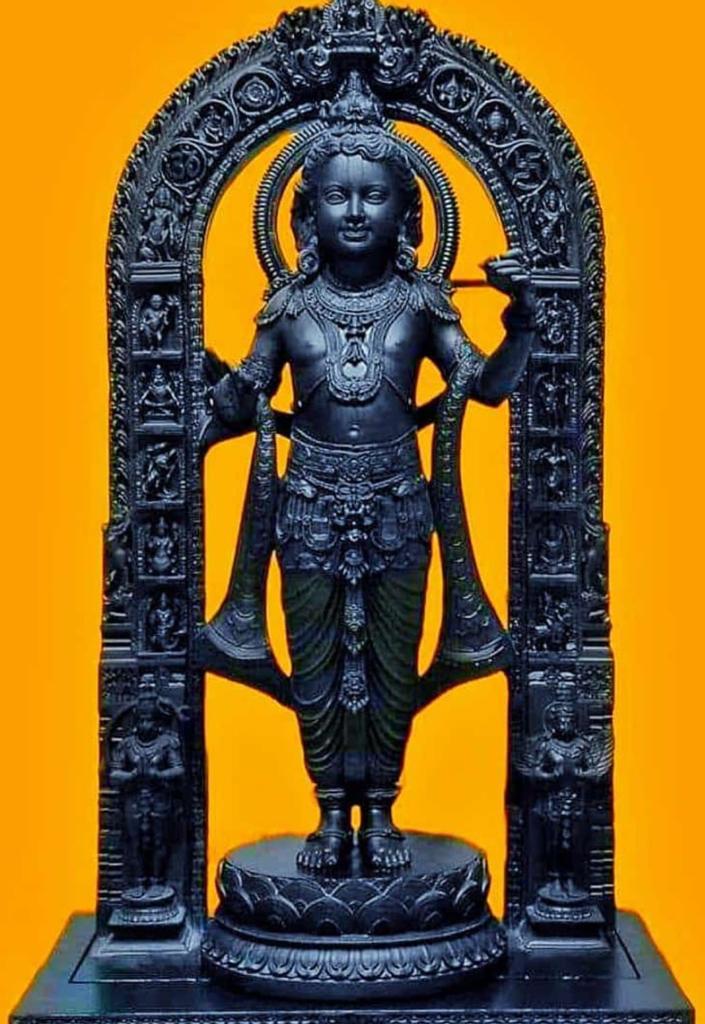
Australia and Pacific police partners building capability through connection

0

Pacific police and AFP representatives recently met in the Cook Islands to map out how they can work together to boost capability development across the region over the next 12 months.

The Pacific Community for Law Enforcement Cooperation (PCLEC) National Coordinators Forum was held last month to allow the members to discuss how the PCLEC network could be strengthened, while exploring options and solutions to challenges that may arise in the coming years.

Image: PCLEC forum (Source: CANVA)

AFP Detective Superintendent Kathryn Polkinghorne said the AFP was committed to the PCLEC in collaboration with its Pacific police partners. She said:

“The sharing of resources and information in a collaborative Pacific way supports regional safety and security.”

Det-Supt Polkinghorne added:

“National Coordinators are the eyes and ears of PCLEC. They play an important role in keeping the region informed about the priorities of Pacific law enforcement agencies, so it is important they come together to pave a way forward.”

Further, Det-Supt Polkinghorne observed:

“The forum enables stronger collaboration across the PCLEC network, which will support the growth and evolution of PCLEC into the future.”

Cook Islands Police Service (CIPS) Inspector Solomona Tuaati said the CIPS was proud to host this year’s PCLEC forum.

Inspector Tuaati said:

“In the Pacific, we need to work together. We need to be engaging with each other and sharing information in order for us to combat forecasted crimes.”

The PCLEC is a Pacific Islands Chiefs of Police (PICP) initiative established in 2020 to build the capability of Pacific police organisations through coordination and the sharing of information and resources across the region.

Image: PCLEC forum (Source: CANVA)

The PCLEC assisted with coordinating 36 operational engagement requests in 2023, spanning across all five of the PICP priority areas of intelligence, investigations, officer wellbeing, gender and family harm, and emergency management.

The productive discussions during the forum canvassed national and regional priorities for police capability development, strategies for addressing these requirements, and options for enhancing the coordination role performed by PCLEC.  Opportunities for donor support, including through the AFP’s Law Enforcement Cooperation Program, were also explored.

Support Our Journalism

Global Indian Diaspora needs fair, non-hyphenated, and questioning journalism, packed with on-ground reporting. The Australia Today – with exceptional reporters, columnists, and editors – is doing just that. Sustaining this needs support from wonderful readers like you.

Whether you live in Australia, the United Kingdom, Canada, the United States of America, or India you can take a paid subscription by clicking Patreon. Buy an annual ‘The Australia Today Membership’ to support independent journalism and get special benefits.

AI is our ‘Promethean fire’: using it wisely means knowing its true nature – and our own minds

0

By Randolph Grace

Future historians may well regard 2023 as a landmark in the advent of artificial intelligence (AI). But whether that future will prove utopian, apocalyptic or somewhere in between is anyone’s guess.

In February, ChatGPT set the record as the fastest app to reach 100 million users. It was followed by similar “large language” AI models from Google, Amazon, Meta and other big tech firms, which collectively look poised to transform education, healthcare and many other knowledge-intensive fields.

However, AI’s potential for harm was underscored in May by an ominous statement signed by leading researchers:

Mitigating the risk of extinction from AI should be a global priority alongside other societal-scale risks such as pandemics and nuclear war.

In November, responding to the growing concern about AI risk, 27 nations (including the UK, US, India, China and the European Union) pledged cooperation at an inaugural AI Safety Summit at Bletchley Park in England, to ensure the safe development of AI for the benefit of all.

To achieve this, researchers focus on AI alignment – that is, how to make sure AI models are consistent with human values, preferences and goals. But there’s a problem – AI’s so-called “dark secret”: large-scale models are so complex they are like a black box, impossible for anyone to fully understand.

AI’s black box problem

Although the transparency and explainability of AI systems are important research goals, such efforts seem unlikely to keep up with the frenetic pace of innovation.

The black box metaphor explains why people’s beliefs about AI are all over the map. Predictions range from utopia to extinction, and many even believe an artificial general intelligence (AGI) will soon achieve sentience.

But this uncertainty compounds the problem. AI alignment should be a two-way street: we must not only ensure AI models are consistent with human intentions, but also that our beliefs about AI are accurate.

This is because we are remarkably adept at creating futures that accord with those beliefs, even if we are unaware of them.

So-called “expectancy effects”, or self-fulfilling prophecies, are well known in psychology. And research has shown that manipulating users’ beliefs influences not just how they interact with AI, but how AI adapts to the user.

In other words, how our beliefs (conscious or unconscious) affect AI can potentially increase the likelihood of any outcome, including catastrophic ones.

AI, computation, logic and arithmetic

We need to probe more deeply to understand the basis of AI – like Alice in Wonderland, head down the rabbit hole and see where it takes us.

Firstly, what is AI? It runs on computers, and so is automated computation. From its origin as the “perceptron” – an artificial neuron defined mathematically in 1943 by neurophysiologist Warren McCulloch and logician Walter Pitts – AI has been intertwined with the cognitive sciences, neuroscience and computer science.

This convergence of minds, brains and machines has led to the widely-held belief that, because AI is computation by machine, then natural intelligence (the mind) must be computation by the brain.

But what is computation? In the late 19th century, mathematicians Richard Dedekind and Giuseppe Peano proposed a set of axioms which defined arithmetic in terms of logic, and inspired attempts to ground all mathematics on a secure formal basis.

Although the logician Kurt Gödel later proved this goal was unachievable, his work was the starting point for mathematician (and code-breaker) Alan Turing. His “Turing machine”, an abstract device capable of universal computation, is the foundation of computer science.

Deep structure of perception

So, computation is based on mathematical ideas that trace back to efforts to define arithmetic in logic. But our knowledge of arithmetic exists prior to logic. If we want to understand the basis of AI, we need to go further and ask where arithmetic itself comes from.

My colleagues and I have recently shown that arithmetic is based on the “deep structure” of perception. This structure is like coloured glasses that shape our perception in particular ways, so that our experience of the world is ordered and manageable.

Arithmetic consists of a set of elements (numbers) and operations (addition, multiplication) that combine pairs of elements to give another element. We asked: of all possibilities, why are numbers the elements, and addition and multiplication the operations?

We showed by mathematical proof that when the deep structure of perception was assumed to limit the possibilities, arithmetic was the result. In other words, when our mind views the abstract world through the same “coloured glasses” that shape our experience of the physical world, it “sees” numbers and arithmetic.

Because arithmetic is the foundation for mathematics, the implication is that mathematics is a reflection of the mind – an expression in symbols of its fundamental nature and creativity.

Although the deep structure of perception is shared with other animals and so a product of evolution, only humans have invented mathematics. It is our most intimate creation – and by enabling the development of AI, perhaps our most consequential.

A Copernican revolution of the mind

Our account of arithmetic’s origin is consistent with views of the 18th century philosopher Immanuel Kant. According to him, our knowledge of the world is structured by “pure intuitions” of space and time that exist prior to sense experience – analogous to the coloured glasses we can never remove.

Kant claimed his philosophy was a “Copernican revolution of the mind”. In the same way ancient astronomers believed the Sun revolved around the Earth because they were unaware of the Earth’s motion, Kant argued, philosophers who believed all knowledge is derived from sense experience (John Locke and David Hume, for example) overlooked how the mind shapes perception.

Although Kant’s views were shaped by the natural sciences of his day, they have proved influential in contemporary psychology.

The recognition that arithmetic is a natural consequence of our perception, and thus biologically based, suggests a similar Kantian shift in our understanding of computation.

Computation is not “outside” or separate from us in an abstract realm of mathematical truth, but inherent in our mind’s nature. The mind is more than computation; the brain is not a computer. Rather, computation – the basis for AI – is, like mathematics, a symbolic expression of the mind’s nature and creativity.

Promethean fire

What are the implications for AI? Firstly, AI is not a mind and will never become sentient. The idea we can transcend our biological nature and achieve immortality by uploading our minds to the cloud is only fantasy.

Yet if the principles of mind on which AI is based are shared by all humanity (and likely other living creatures as well), it may be possible to transcend the limitations of our individual minds.

Because computation is universal, we are free to simulate and create any outcome we choose in our increasingly connected virtual and physical worlds. In this way, AI is truly our Promethean fire, a gift to humanity stolen from the gods as in Greek mythology.

As a global civilisation, we are likely at a turning point. AI will not become sentient and decide to kill us all. But we are very capable of “apocalypsing” ourselves with it – expectation can create reality.

Efforts to ensure AI alignment, safety and security are vitally important, but may not be enough if we lack awareness and collective wisdom. Like Alice, we need to wake up from the dream and recognise the reality and power of our minds.

Randolph Grace, Professor of Psychology, University of Canterbury

This article is republished from The Conversation under a Creative Commons license. Read the original article.

"The

Support Our Journalism

Global Indian Diaspora needs fair, non-hyphenated, and questioning journalism, packed with on-ground reporting. The Australia Today – with exceptional reporters, columnists, and editors – is doing just that. Sustaining this needs support from wonderful readers like you.

Whether you live in Australia, the United Kingdom, Canada, the United States of America, or India you can take a paid subscription by clicking Patreon. Buy an annual ‘The Australia Today Membership’ to support independent journalism and get special benefits.

23-year-old woman charged for alleged assault on airline staff

0

A Victorian woman has been charged for allegedly assaulting airline staff at Gold Coast Airport while on board a Melbourne-bound flight. 

The woman, 23, was arrested on New Years Eve (Sunday, 31 December 2023) after airline staff notified the AFP of a passenger who was allegedly verbally abusive on board the aircraft. 

AFP officers boarded the plane and spoke to the woman. The woman was then escorted off the plane and arrested. 

The woman was charged with assault, threaten with violence or intimidate a person, a member of the aircraft crew, contrary to subsection 20A(1) of the Crimes (Aviation) Act 1991.

The maximum penalty for this offence is 10 years’ imprisonment.

AFP Superintendent Josh Kinghorn said there was zero tolerance for violent or abusive behaviour anywhere in the airport or on a plane.

“Other passengers and crew should not be subjected to bad behaviour, it can be quite frightening to be in an enclosed space with someone who is abusive or aggressive,” Supt Kinghorn said.

“These incidents can also cause delays for other travellers and staff. The AFP works closely with the airline industry to intervene if anyone’s behaviour interferes with the safe operation of a flight.”

The woman is due to face Coolangatta Magistrates Court on 25 March, 2024.  

Support Our Journalism

Global Indian Diaspora needs fair, non-hyphenated, and questioning journalism, packed with on-ground reporting. The Australia Today – with exceptional reporters, columnists, and editors – is doing just that. Sustaining this needs support from wonderful readers like you.

Whether you live in Australia, the United Kingdom, Canada, the United States of America, or India you can take a paid subscription by clicking Patreon. Buy an annual ‘The Australia Today Membership’ to support independent journalism and get special benefits.

What is dropshipping? 6 things to consider before you start dropshipping as a side hustle

0

By Brent Coker

You buy a new phone case from an online retailer. The phone case arrives safely at your house, the online retailer makes a small profit and everyone is happy.

But the phone case didn’t come from the retailer’s premises. It was sent directly from the manufacturer. The only thing the online retailer did was take your order and organise for the factory to deliver the case to your home.

This is “dropshipping”: where an online seller organises to have purchased products sent to buyers directly from the wholesaler or manufacturer, rather than sending it themselves. Many see dropshipping as, if not their main business, then as a valuable side hustle to help bolster income when the cost-of-living crunch is making it hard to make ends meet.

In other words, the seller doesn’t own a warehouse of products ready for shipping. They’re a middleman. They organise delivery of products to customers without taking physical possession.

Dropshipping may sound like an appealing side hustle to help offset the cost-of-living crunch but there are downsides, too.

So, what do you need to know before you become a dropshipper?

There are pros and cons

Dropshipping has doubled since 2020, and is expected to double again by 2027.

Websites with e-commerce features are also increasingly affordable, and since the barrier to entry for starting a dropshipping business is low, it has become a popular method for making extra money.

Dropshipping eliminates “inventory costs”, which includes things like:

  • buying the products upfront
  • paying warehouse rent, and
  • paying staff to package and ship.

Since dropshippers don’t need to hold any inventory, they’re able to offer a wider selection of products to sell. Low startup costs also make dropshipping more accessible to a wider range of people than traditional businesses.

So dropshipping has clear advantages over traditional methods of selling online – but it’s not all rosy.

The main problem with dropshipping is loss of control over the delivery and fulfilment process.

If a problem with delivery arises, it can be more difficult to resolve. Is the problem with the manufacturer? The warehouse? The delivery service? Sometimes it can be unclear and take longer to address than the customer would like.

This can threaten the seller’s ability to offer superior customer service.

Here are six things worth knowing before you launch into dropshipping as your side hustle.

1. Supplier reputation matters

Dropshipping isn’t new – brands in the late 1990s were doing it. But with this maturity has arisen opportunities for fraud.

Counterfeits, knock-offs, and general quality issues are worryingly commonplace in the dropshipping world.

Choose a reputable supplier with clear systems and processes to control product quality and eliminate copyright infringement.

2. Choose a local supplier

To remain competitive, delivery speed is key. If your target audience is in Australia, shipping from foreign soils won’t cut it – the delivery times are too long.

Consumers are willing to wait to receive their products on some occasions, but most of the time consumers want it now.

Choose a local, reputable supplier to minimise delivery times.

3. Don’t assume quality

One of the biggest mistakes dropshippers make is not physically inspecting products before listing them for sale.

Dropshipping enables sellers to offer a wider range, since shelf-space isn’t an issue. But that may tempt you to keep adding new products to the catalogue.

The quality of products from dropshipping suppliers varies considerably, and what looks great on screen might look very different in hand.

Selling poor quality products means more customer service requests, and ultimately consumers start to associate your brand with poor quality.

Always get a new product sent for physical inspection before listing them in your sales catalogue.

4. Develop a relationship with your supplier

The best way to resolve potential delivery issues associated with dropshipping is to build a strong relationship with the supplier.

Many suppliers do not offer support services when things go wrong. These suppliers should be treated with caution.

Developing a strong, collaborative relationship with a willing supplier makes service failures easier to deal with.

5. Stand out from the crowd

Doing business online is not easy – all your competitors are just a click or a tap away. Dropshipping is common, and many other websites are selling the same things as you, potentially from the same supplier.

Standing out from the crowd is key. Differentiate yourself from other dropshippers by servicing niche markets and offering superior after-sales support.

6. The customer sets demand

Don’t add more and more products to your catalogue until you’re offering everything under the sun; this sets you up for failure because you end up offering everything to no-one.

Specialisation is key. Find an easily reachable and sizeable audience and stick to what they want, not what you think they want.

Careful attention to sales data will help clarify what it is your customers are telling you they want.

Brent Coker, Lecturer in Marketing, The University of Melbourne

This article is republished from The Conversation under a Creative Commons license. Read the original article.

"The

Support Our Journalism

Global Indian Diaspora needs fair, non-hyphenated, and questioning journalism, packed with on-ground reporting. The Australia Today – with exceptional reporters, columnists, and editors – is doing just that. Sustaining this needs support from wonderful readers like you.

Whether you live in Australia, the United Kingdom, Canada, the United States of America, or India you can take a paid subscription by clicking Patreon. Buy an annual ‘The Australia Today Membership’ to support independent journalism and get special benefits.

45-year-old Afghan man charged for allegedly breaching visa condition

0

An Afghan national appeared in Parramatta Local Court on 31 December 2023 for allegedly failing to comply with his visa-mandated curfew.

The AFP arrested and charged the man, 45, on Saturday 30 December 2023, after locating him in Merrylands, NSW.

It will be alleged the man breached the conditions of his Commonwealth visa between 15 and 28 December 2023, by failing to observe his residential curfew obligations.

The man has been charged with 10 counts of failing to comply with a curfew condition, contrary to section 76C(1) of the Migration Act 1958 (Cth).

This offence carries a maximum penalty of five years’ imprisonment and a $93,900 fine.

The man has been remanded in custody and is due to appear in the Parramatta Local Court on 19 January 2024.

Support Our Journalism

Global Indian Diaspora needs fair, non-hyphenated, and questioning journalism, packed with on-ground reporting. The Australia Today – with exceptional reporters, columnists, and editors – is doing just that. Sustaining this needs support from wonderful readers like you.

Whether you live in Australia, the United Kingdom, Canada, the United States of America, or India you can take a paid subscription by clicking Patreon. Buy an annual ‘The Australia Today Membership’ to support independent journalism and get special benefits.

Relax – having different sleeping arrangements over the holidays probably won’t wreck your child’s sleep routine

0

By Sarah Blunden

Sleep, along with diet and physical activity, is one of the three pillars of good health. Good sleep makes it easier to grow, learn, perform, be happy, stay in our best weight range and generally be in the best mental and physical health. This is true for all humans but is particularly important with children.

Regular sleep patterns are important for good sleep. But children and their families often stay with relatives or in holiday accommodation around this time of year. Parents may anxiously wonder: will changing sleeping arrangements during school holidays sabotage good habits formed and maintained during the school term?

For over 20 years, I have researched and treated children sleep problems. The research suggests changing sleep patterns over the summer break does not have to be a problem. And there’s a lot you can do to manage sleep issues during and after the holidays.

Sleeping as a skill

In Australia, as in many western industrialised countries, parents often (but not always) expect their children to sleep alone in their own room and in their own bed.

Up to 40% of families use behavioural sleep strategies to teach their child sleep alone. While such strategies are generally successful in achieving this, it can be hard work for all the family.

Many parents worry that having children share a room or even a bed with their parents over the holidays will become the habit during term time, too.

However, the science says once children have learned a skill, such as sleeping alone, they have a “neural understanding” of that skill. That means their brain has registered, recorded and filed the “memory” of sleeping alone and this is stored for quite a long time.

Short relapses or interruptions to using that skill will not eradicate it in the brief time of a holiday. The child will still know how to sleep alone.

However, they may not want to.

Children may may realise sleeping with parents or siblings is actually pretty great (for them). It may be less fun, however, for the parents (who may not necessarily want to share a bed with a wriggly child, or feel frustrated by seeing siblings who don’t normally share a room, muck around when they should be asleep).

Like many aspects of parenting, it helps for parents to remind their children of the rules at home and guide them back to their regular sleep pattern.

Helping children to understand the co-sleeping or room sharing arrangement may be temporary is helpful. Children can and do learn sleeping arrangements can be different in different places, but the rules stay the same at home.

What if my child won’t sleep at the holiday accommodation?

This is a problem not just because it keeps parents and others from a good night’s sleep. It also deprives the child of sleep.

For some children, particularly sensitive or anxious children, changing sleep routines and particularly sleep environments can really throw them off. These children may find any change very difficult.

When these children are faced with an unknown sleeping environment, they may keenly feel the separation from their parents (who make them feel safe). It can be very difficult and sometimes impossible for them to adjust quickly.

The result may be a child taking a longer time to get to sleep, or long and unsettled overnight wakings. Parents may need to mentally prepare and adjust their expectations.

It may help to prepare the child for the changes. Find out information about sleeping arrangements, before you go to your holiday accommodation. Talk to the child about the sleep set up, who will be there, look at pictures and share the excitement of a new place with the child.

Discuss being scared and anxious with the child and learn some strategies together to help them be brave and calm such as “You will have your favourite bunny with you. And we will just be in the next room”? Or, “We can take our night light from home?” Practise these before leaving on the holiday.

Encouraging and helping your child to be brave rather than expecting them to be brave alone is more likely to result in a smoother transition from home to holiday and back again. Don’t shame them for feeling scared, but try to gently and empathetically help them learn some strategies to cope. Facing a difficult challenge such as changing sleep environments will also teach them resilience.

So parents don’t need to fear any negative repercussions from changing sleeping environments during the summer holidays. Bring on summer and enjoy.

Sarah Blunden, Professor and Head of Paediatric Sleep Research, CQUniversity Australia

This article is republished from The Conversation under a Creative Commons license. Read the original article.

"The

Support Our Journalism

Global Indian Diaspora needs fair, non-hyphenated, and questioning journalism, packed with on-ground reporting. The Australia Today – with exceptional reporters, columnists, and editors – is doing just that. Sustaining this needs support from wonderful readers like you.

Whether you live in Australia, the United Kingdom, Canada, the United States of America, or India you can take a paid subscription by clicking Patreon. Buy an annual ‘The Australia Today Membership’ to support independent journalism and get special benefits.

How Australia’s First Nations managed Australia’s ecosystems

0

By Penny van Oosterzee and Barry Hunter

First Nations people please be advised this article speaks of racially discriminating moments in history, including the distress and death of First Nations people.

On October 9 1873, George Augustus Frederick Dalrymple reclined in a boat on the glorious North Johnstone River in the coastal Wet Tropics. Dalrymple was in raptures. A riot of palms, bananas, ferns and lilies descended to the waters edge, and large-leafed taro grew in strips along the riverbank over tens of hectares. He came across a large village with rows of neatly made bark and palm leaf huts. Dappled paths led to managed patches of open forest, groves of fruit trees, bananas and yams. Nearby, a small fleet of moored catamarans sat bobbing.

In the colonial literature, there are many such descriptions of beautiful and bountiful pre-European tropical landscapes. It was clear that people had helped create such a rich paradise through their land management

By 1886, many rainforest people of tropical north Queensland had been “dispersed” – killed – and swathes of this biodiversity hotspot began being cleared for sugarcane.

First Nations groups such as Australia’s rainforest people had skilfully managed entire ecosystems over the long term, in what has been termed “ecology on steroids”. These future-making methods protected landscapes from climate change and buffered them against extinction.

Australia’s First Nations did this through the cold and dryness of the last ice age, and as the seas rose through the droughts and floods of the El Niño Southern Oscillation climate cycle.

As we face an uncertain climate future, it’s valuable to look at how people weathered such change.

Decoupling landscape from climate change

When people first came to Australia, the Wet Tropics were not wet. The Pleistocene climate was cool and windy, with mega monsoons and long periods of diabolical drought. If you had looked east from what is now Cairns, you would have seen not oceans and coral atolls, but plains and valleys filled with grasslands and forest. The sea lay tens of kilometres off the continental shelf.

The oldest record of human occupation in Australia is found in the Top End. Here, in a magnificent cave system in Arnhem Land, people prepared a meal of native fruits and processed pandanus using an adaptable toolkit. This meal took place 65,000 years ago, when savannah stretched all the way to the island of New Guinea.

map showing how Papua New Guinea and Australia were connected during the last ice age
When the sea levels were lower, people could walk from Australia to Papua New Guinea. Girraween lagoon is marked on the map. Michael Bird/Damien O’Grady, CC BY-ND

Over thousands of years, Australia’s people developed a vibrant cosmology. For First Nations people Country was sentient. The land was not a mindless resource but part of your family – and came with family obligations. Everyone, whether you were human, an animal, a plant, a river, fire, the sky or wind, was closely watched. People were embedded within ecosystems.

Recently scientists sampled the deep mud of Girraween lagoon in the Top End searching for pollen and charcoal that would provide a window into this deep time.

Two men drilling for scientific samples
The deep mud of Girraween lagoon near Darwin is a window into the past. Michael Bird/Damien O’Grady, CC BY-ND

Some 13,000 years ago, the landscape was parched. But as the northern hemisphere ice sheets melted, the seas rose and the monsoons began to return. By the mid-Holocene, between 9,000 and 4,000 years ago, the monsoons were arriving regularly. The lagoon filled up, nestled in a landscape of moisture-loving shrubs and brushed by relatively cool fires.

But then, the climate lurched to one of the long periods of horrendous drought instigated by an El Nino weather system.

Curiously, destructive fires did not follow. The deep mud core showed fire became less, not more, intense, as the forest shaded out the volatile grasses that cause intense fires in savanna. Even as drought increased, the Top End landscape filled with layers of diverse herbs and shrubs, with a variety of trees and groves of monsoon forest closer to the lagoon.

This patterning was likely the handiwork of people taming fire and putting it to work. Through patch burning, they created a rich landscape of diverse habitat that sustained people and created niches for a wide range of species.

Today, a quarter of Australia’s fire-prone savannahs, mostly managed by First Nations peoples, are returning to patchy fire regimes. These reduce the big wildfires associated with European pastoralism and reduce emissions.

Extinction busters

Perhaps few places encapsulate the harshness of Australia’s environment more than the Great Sandy Desert. From before the last ice age, the ancestors of today’s Martu people would have witnessed great floods rushing down the Sturt Creek into an extensive lake system, Paruku (Lake Gregory). These lakes were ten times larger than today’s system, ringed by dunes covered in scrubby vegetation and flammable spinifex.

Over perhaps 50 millennia, the Martu used fire to create mosaic landscapes.

In the 1960s, the Martu were forced to leave to make way for nuclear missile tests. Without cultural burning, it took mere years for fuel to build up and large wildfires to incinerate the landscape.

You can see the change clearly. Satellite images and aerial photograhy showed the size of the average fire went from 64 hectares under Martu management to over 50,000 ha by the 1980s.

Fire patterns in central Australia
Mosaic burning reduces fire intensity and promotes fresh growth. Stefani Crabtree, CC BY-ND

In turn, this drove dramatic shifts to the food web. Over the two decades of Martu absence, ten species of small mammal became locally extinct, including the rufous hare-wallaby, burrowing bettong, bilby, mulgara and brushtail possum. What’s more, 14 mammals, three birds and two reptiles became threatened. Cats, foxes, camels and buffel grass became widespread.

In the 1980s, the Martu were able to return. Back on Country, they worked with scientists to reconstruct pre-1960s food webs from their memories, recalling not only species hunted, but rich detail of the behaviour, interactions and life histories.

Today, Indigenous Protected Areas covering millions of hectares have been added to the national estate. The Western Desert Martu Ranger program manage 6.5 million hectares.

This return to First Nations management is long overdue, as human-made climate change intensifies. We will need to relearn these ancient techniques of managing country on a broader scale to cope with the changes to come.

Penny van Oosterzee, Adjunct Associate Professor James Cook University and University Fellow Charles Darwin University, James Cook University and Barry Hunter, Acting CEO, North Australian Indigenous Land and Sea Management Alliance, Indigenous Knowledge

This article is republished from The Conversation under a Creative Commons license. Read the original article.

"The

Support Our Journalism

Global Indian Diaspora needs fair, non-hyphenated, and questioning journalism, packed with on-ground reporting. The Australia Today – with exceptional reporters, columnists, and editors – is doing just that. Sustaining this needs support from wonderful readers like you.

Whether you live in Australia, the United Kingdom, Canada, the United States of America, or India you can take a paid subscription by clicking Patreon. Buy an annual ‘The Australia Today Membership’ to support independent journalism and get special benefits.

Will the world see more wars or unrest in 2024?

0

By Jessica Genauer

Sadly, 2023 has been a violent one on the global stage. War broke out between Israel and Hamas in Gaza, leading to the deaths of thousands of Palestinians and hundreds of Israelis, including many children on both sides. And the bitter war between Russia and Ukraine continued with no end in sight.

As a result of the focus on these two conflicts, other countries have dropped off the radar for many people. Some of these nations have been dealing with simmering unrest, however, which could erupt in 2024 and seize the global spotlight.

So, where should we be watching in the coming year? Here are five places where I believe civil conflicts or unrest could worsen and potentially lead to violence.

Myanmar

Myanmar descended into chaos in 2021 when a military coup overthrew the democratically elected government led by Aung San Suu Kyi and sparked widespread civil protests that eventually morphed into an armed resistance.

The country, home to 135 ethnic groups, has rarely known peace. For years before the coup, there was a ongoing, low-grade civil conflict between the military and several minority ethnic groups who have long sought control over natural resources in their regions and independence from the state.

This exploded after the coup as ethnic militia groups joined forces with pro-democracy fighters from the Bamar majority protesting the junta.

Their resistance escalated in late 2023 with a coordinated northern offensive dealing the military its most significant losses in many years.

Insurgents won control of towns and villages on the northeastern border with China, including control over key trade routes. This led to renewed fighting in western Rakhine state, as well as in other areas.

The tenacity of the resistance of these minority groups, paired with the refusal of the military to compromise, suggests the country’s civil war may worsen considerably in 2024 and regain international attention.

Mali

In Mali, a nation in the turbulent Sahel region of Africa, tensions escalated throughout 2023 and now threaten to erupt into full-scale civil war.

Mali has long battled insurgent activity. In 2012, Mali’s government fell in a coup and Tuareg rebels, backed by Islamist militants, seized power in the north.

A United Nations peacekeeping mission was established in 2013 to bring stability to Mali. Then, in 2015, key rebel groups signed a peace agreement with the Mali government.

After two more coups in 2020 and 2021, military officers consolidated their power and said they would restore the state’s full territorial control over all of Mali. The regime insisted the UN peacekeeping mission withdraw from the country, which it did in June 2023. Subsequently, violence broke out between the military and rebel forces over future use of the UN bases.

In November, the military, reportedly backed by Russia’s Wagner Group, took control of the strategic northern town of Kidal which had been held by Tuareg forces since 2012. This undermines the fragile peace that has held since 2015.

It is unlikely the military will regain complete control over all rebel-held areas in the north. At the same time, insurgents are emboldened. With the 2015 peace agreement now all but dead, we can expect increased volatility in 2024.

Lebanon

In 2019, widespread civil protest broke out in Lebanon against leaders who were perceived not to be addressing the day-to-day needs of the population.

The situation continued to deteriorate, with a reshuffled government, escalating economic crisis and a massive port explosion that exposed corrupt practices.

The International Monetary Fund criticised Lebanon in September for a lack of economic reform. The Lebanese government has also failed to reach agreement on appointing a president, a post that has been vacant for more than a year.

This risks undermining the fragile power-sharing arrangement in Lebanon in which the key political posts of prime minister, speaker and president are allocated to a Sunni-Muslim, Shia-Muslim and Christian Maronite, respectively.

Most recently, the war between Israel and Hamas has threatened to spill over to Lebanon, home to the Hezbollah militant group, which claims to have an army of 100,000 fighters. Importantly, this jeopardises tourism as a key hope for Lebanon’s economic recovery.

These factors may precipitate a more serious economic and political collapse in 2024.

Pakistan

Since Pakistan’s independence in 1947, the military has played an interventionist role in politics. Though Pakistani leaders are popularly elected, military officials have at times removed them from power.

In 2022, Pakistani Prime Minister Imran Khan fell out of favour with Pakistan’s militant leaders. He was subsequently ousted from power in a parliament vote and later arrested on charges that his supporters claim are politically motivated.

Violent demonstrations broke out nationwide after his arrest – a display of anger against the military that was once unthinkable.

Pakistan also faces spillover from instability in neighbouring Afghanistan and increased terror attacks. These security challenges have been compounded by a struggling economy and ongoing costs from the devastating 2022 floods.

Pakistan is expected to hold parliamentary elections in February 2024, after which the current military caretaker government is expected to transfer power back to civilian rule. Many are watching the military closely. If this transfer of power does not take place, or there are delays, civil unrest may result.

Sri Lanka

Sri Lanka faced a debilitating economic crisis in 2022 that led to critical fuel, food and medical shortages. Civil protests caused then-President Gotabaya Rajapaksa to flee the country. He was quickly replaced by current President Ranil Wickremesingh.

Stability returned in 2023 as Sri Lanka began implementing economic reforms as part of a bailout agreement with the International Monetary Fund. However, widespread dissatisfaction with political elites and the underlying drivers of the country’s economic hardship have not been addressed.

Elections are also due in Sri Lanka by late 2024. While Wickremesingh, the incumbent, is likely to run for a second term, he has low trust with the public. He is viewed as too close to corrupt political elites.

This dissatisfaction could lead to renewed protests – particularly if the economy stumbles again – in a repeat of the situation that led to Rajapaksa’s ousting in 2022.

Jessica Genauer, Senior Lecturer in International Relations, Flinders University

This article is republished from The Conversation under a Creative Commons license. Read the original article.

"The

Support Our Journalism

Global Indian Diaspora needs fair, non-hyphenated, and questioning journalism, packed with on-ground reporting. The Australia Today – with exceptional reporters, columnists, and editors – is doing just that. Sustaining this needs support from wonderful readers like you.

Whether you live in Australia, the United Kingdom, Canada, the United States of America, or India you can take a paid subscription by clicking Patreon. Buy an annual ‘The Australia Today Membership’ to support independent journalism and get special benefits.

Why are we allowing Middle East conflict to disrupt Australia’s multicultural harmony?

0

By Robert Gregory

Since the October 7th Hamas attack on Israel, Australians have been confronted by shocking news. The stories out of Israel, of Islamist terrorists, raping, beheading, and burning people alive are horrendous. Most of the victims were Israelis, but the terrorists showed no mercy to anyone. Among the 1200 murdered, were citizens of Nepal, Sri Lanka, the Philippines, Thailand and even Tanzania.

Another shocking development has been the hatred playing out on Australian shores. Days after the attacks, a mob gathered at Sydney’s Opera House, chanting ‘gas the Jews’. Anti-Israel protesters have specially targeted the neighbourhoods where Australia’s Jews live. Convoys waving the Palestinian Authority flag have targeted Caulfield in Melbourne and Bondi in Sydney.  

Australia’s multicultural fabric is being tested like never before.

Australia’s Jewish community is tiny.
It has never comprised more than half a per cent of Australia’s population. Jews came to Australia on the First Fleet, but the community is overwhelmingly an immigrant community. The largest growth came with refugees fleeing the Holocaust. It has been strengthened by more recent, successive waves of immigrants, including from the former Soviet Union and South Africa.

Jews have been incredibly successful and contributed greatly to Australia. The Australian Jewish community has produced multiple Governor Generals, military leaders, a federal treasurer, Chief Justices, a Premier, accomplished business persons, scientists, and thinkers.

Australian Jews have won the Nobel Prize, the Archibald Prize, Olympic Gold and just about every honour for Australia.

Businesses founded by Australian Jews are ubiquitous. Many Australians would interact daily with places like Westfield, Myer, Meriton, Spotlight, Chemist Warehouse and Kogan.

Now, many in the Jewish community are feeling very unsafe. Antisemitic incidents are up an astounding 738% since October 7. The Australian Jewish Association has received threats, and we work closely with the police. For the first time, I hear some members of my community questioning whether they have a future in Australia. This should worry all Australians.

The Australian Jewish community has been touched by the response from many communities. We have received messages of support from the Hindu, Assyrian, Kurdish, and many other communities. Those who show the most understanding have often experienced terrorism and religious extremism themselves.

Unfortunately, not all parts of the community have behaved honourably. Chief among the instigators is the Australian Greens. This political party pretends to promote tolerance but fuels hatred and division. They can often be found at the scene of disgraceful antisemitic incidents. The NSW Greens promoted the ‘gas the Jews’ protest. Federal leader, Mehreen Faruqi was forced to delete an antisemitic image she posted of the Jewish Star of David being placed in a garbage bin, alongside the words, “Keep the world clean.”

The Greens have brought divisive Middle East politics into every level of the Australian Government. Their senior federal leaders spread the false story that the IDF had bombed Gaza’s Al Ahli hospital. It was later proved to have been struck by a misfired rocket from the Palestinian Islamic Jihad.

The Greens have introduced anti-Israel motions into councils across Australia, causing division and taking attention away from the issues that councils are supposed to focus on.

Antisemitic incidents at the Opera House and outside the Caulfield Synagogue, not only cause tensions in Australia, they also risk damaging our reputation abroad.

The response from the Albanese Government has been disappointing. At the time of writing, neither Prime Minister Anthony Albanese nor Foreign Minister Penny Wong have visited the region, despite many world leaders having done so. Notably, the Coalition’s Shadow Minister for Foreign Affairs, Simon Birmingham has visited Israel.

Labor has called for Israel to agree to a ceasefire with the terrorist organisation, Hamas. At the United Nations General Assembly, Australia voted for a ceasefire, unlike our allies, including the United States, United Kingdom and Germany. Many countries in our region, like Papua New Guinea, Tonga, Nauru, Palau and others also did not vote for a ceasefire.

Australia must be careful not to demonstrate weakness to our allies or to others who are watching to see if our government has resolve.

The Labor’s response to antisemitism has focused on banning symbols and salutes which have been co-opted by some for hateful purposes. These are not the major threats facing the Jewish community.

When it comes to Islamist religious preachers inciting hate in Western Sydney, the government has been much more timid. Labor Party has also been weak in calling out the Greens. The Australian Jewish Association is calling on all political parties to pledge to preference the Greens last.

The Jewish people are grateful for those who stand with us. This is not our fight alone. No country is immune from the threat which we now face.

Those spreading hate, like the Australian Greens, must be held responsible. If the Labor Party continues to show weakness, Australia’s multicultural harmony will come under major strain.

Author: Robert Gregory is the Chief Executive Officer (CEO) of the Australian Jewish Association.

Disclaimer: The opinions expressed within this article are the personal opinions of the author. The Australia Today is not responsible for the accuracy, completeness, suitability, or validity of any information in this article. All information is provided on an as-is basis. The information, facts, or opinions appearing in the article do not reflect the views of The Australia Today and The Australia Today News does not assume any responsibility or liability for the same.

Support Our Journalism

Global Indian Diaspora needs fair, non-hyphenated, and questioning journalism, packed with on-ground reporting. The Australia Today – with exceptional reporters, columnists, and editors – is doing just that. Sustaining this needs support from wonderful readers like you.

Whether you live in Australia, the United Kingdom, Canada, the United States of America, or India you can take a paid subscription by clicking Patreon. Buy an annual ‘The Australia Today Membership’ to support independent journalism and get special benefits.

Australian police at the forefront of supporting safety and security of Pacific region in 2023

0

The AFP has undertaken important work across the Pacific in 2023, working closely with Pacific police counterparts to ensure the safety and security of their communities.

The AFP has built on its strong and enduring partnerships throughout 2023 by listening to the needs of the local police forces and being a close friend and ally.

The AFP has delivered training programs, provided a broad range of equipment, and shared knowledge and expertise through regional capability development programs across the Pacific. 

AFP Commander Pacific Melinda Phelan said the AFP was proud to work side-by-side with its Pacific police counterparts and support the outstanding work of our partners to protect their communities.

“Our Pacific police partners work hard every day to ensure their communities are safe and secure.’’

Commander Phelan said:

“The AFP sees the hard work being done and feels very privileged to play an active role in combatting transnational crime and other shared threats impacting our region.

“Our members based across the region are learning from their Pacific colleagues just as much as they are giving. They are learning the Pacific way of life, which they will have with them forever, and they are honoured to have been welcomed into the communities they are serving in.

“We look forward to continuing to build on the great partnerships we currently have across the Pacific by enhancing our levels of support and exploring the possibilities for what we can achieve together in the years to come.”

The AFP has more than 100 members based in nine nations across the region, where they work with local police forces to ensure they are equipped with the knowledge and tools needed to protect their communities against threats from crime, environmental impacts and beyond. 

AFP Commissioner Reece Kershaw and police chiefs from 19 Pacific police forces came together in August 2023 to celebrate more than 50 years of the Pacific Islands Chiefs of Police (PICP).

The PICP forum supports Pacific police leaders to share information, knowledge and form stronger partnerships to further combat transnational crime and other shared security challenges in the Pacific.

Pacific Police Development Program Regional (PPDP-R)

The PPDP-R has had another busy year supporting its policing partners. The Pacific Community for Law Enforcement Cooperation (PCLEC) assisted with coordinating 36 operational engagement requests in 2023, spanning across all five of the Pacific Islands Chiefs of Police (PICP) priority areas of intelligence, investigations, officer wellbeing, gender and family harm, and emergency management.

Additionally, the Law Enforcement Cooperation Program (LECP) was launched in July 2023. This team aims to strengthen the capability of Pacific Police and law enforcement agencies through the provision of short-term operational support, specialist operational training, procurement of essential operational resources and targeted capability development. Since August, the LECP has approved 39 requests to support our Pacific partners.

Highlights of 2023 include:

  • Hosting the 2023 PICP conference where Pacific police leaders came together to reaffirm their commitment to combat transnational crime together;
  • Through the small grants program, PCLEC helping to boost the capability of Pacific police organisations by funding a variety of initiatives including the provision of uniforms, computers, training for basic investigations and interviewing vulnerable witnesses; and
  • Continuing to help increase cyber safety awareness across the region and enhance cybercrime investigations capabilities by rolling out the Cyber Safety Pasifika program in Nauru, Kiribati, Vanuatu, Tonga and Samoa to police participants from across the Pacific.
  • Supporting regional working groups, including the Pacific Forensics Working Group to drive forward capability uplift in key thematic areas.
Image: Fiji Remembrance Day (Source: AFP)

Fiji

AFP Suva post celebrated another year of policing engagement, operational cooperation and increasing shared Pacific police capability by working with its sisters and brothers within the Fiji Police Force (FPF) and wider Pacific policing community.

This included delivering cutting-edge AFP fire investigation training to police forces across the Pacific, supporting Pacific United Nations pre-deployment training, developing advanced policing techniques within Fiji’s transnational crime unit (TCU), and using AFP specialist teams in-country or providing training to enhance Fiji Police’s human source handling capability.

Highlights of 2023 include:

  • AFP Suva post working with AFP officers in the Norfolk Island Police Force and the FPF Cybercrime team to deliver a ground breaking successful cyber bullying prosecution;
  • As part of Operation Blue Prosperity, the Pacific Transnational and Serious Organised Crime Taskforce seized 48kg of methamphetamine, restrained FJD 400,000 in assets and made 18 arrests in the past 12 months; and
  • AFP Suva Post leading a whole-of-Australian government effort to develop a Fijian Maritime Framework among Fijian security partners to interdict crime in the maritime domain.
Image: AFP Sergeant Nigel Wood and Mr. Enoka Feterika with the NPF TeaM (Source: AFP)

Nauru

The Nauru Australia Policing Partnership (NAPP) strengthened operational effectiveness and shared policing capabilities with its Nauru Police Force (NPF) family in 2023. The past year provided numerous examples of the benefits and positive impacts of increased Pacific police engagement and cooperation.

Highlights of 2023 include:

  • NAPP and its partners undertaking a significant unexploded ordinance (UXO) discovery and disposal operation, when about half the island’s population was from their homes to allow for the safe removal of a World War 2 UXO;.
  • The AFP-led Cyber Safety Pasifika program delivered to more than 50 police officers and other government partners in Nauru; and
  • In October and November 2023, NPF received a significant boost to its investigation and forensic capabilities with the delivery of a bespoke investigations training program and the acquisition and adoption of fingerprint comparison software. Both initiatives further enhanced the NPF’s ability to maximise its impact in the fight against crime, both locally and across the region.

Papua New Guinea

The AFP continued to build on its deep and trusted police-to-police partnership with the Royal Papua New Guinea Constabulary (RPNGC) throughout 2023, through the Papua New Guinea-Australia Policing Partnership (PNG-APP).

Highlights of 2023 include:

  • Operation Gepard, a joint AFP and RPNGC Transnational Crime Unit investigation, where five alleged criminal syndicate members were charged in Australian in March 2023 after allegedly orchestrating a black flight from PNG to Australia with 52kg of methamphetamine on board;
  • The AFP working closely with the RPNGC to identify two Malaysian nationals responsible for the movement of narcotics to Australia. A search warrant uncovered 124.7kg of methamphetamine and resulted in a total of five arrests. In October 2023, the two Malaysian nationals were sentenced 25 years and 20 years imprisonment respectively.
  • The AFP continued to boost the capability of the RPNGC through various initiatives including handing over more than $70,000 in essential safety equipment to RPNGC to bolster the safety of their water police officers and supporting RPNGC officers travel to Canberra to observe various AFP training programs to take back to their National College of Excellence.
  • To enhance local emergency response in addition to providing essential first response capacity to AFP members, PNG-APP have supported the placement of Australian paramedics at St John Ambulance stations in Kokopo and Mt Hagen. The paramedics will serve alongside local ambulance station staff on the frontline, reinforcing existing services and providing on-the-job support and tuition to their ambulance colleagues, to support the wider community.
Image: Samoa – motorcycles (Source: AFP)

Samoa

The AFP continued its strong relationship with Samoa Police, Prisons and Corrections Services (SPPCS) to maintain a safe and stable Samoa in 2023, through the AFP-led Samoa-Australia Police Partnership (SAPP) program.

Highlights in 2023 include:

Image: Solomon Islands – Kukum handover (Source: AFP)

Solomon Islands

AFP members based in Solomon Islands stood side-by-side with their Royal Solomon Islands Police Force (RSIPF) counterparts to successfully deliver the security operation for the 2023 Pacific Games. This support was delivered under the RSIPF and AFP Policing Partnership Program (RAPPP) and Solomons’ International Assistance Force (SIAF).

Highlights of 2023 include:

Image: Tonga_Families Free of Violence event (Source: AFP)

Tonga

The AFP continued to provide support to Tonga Police through the Tonga-Australia Policing Partnership (TAPP) in 2023. It is a multi-faceted capability-building program targeting Tonga Police priorities. These include institutional resilience and governance, security cooperation, transnational organised crime, gender-based violence – including the protection of women and children – and generalist policing skills development.

Highlights include:

  • TAPP providing funding to Tonga Police for a range of initiatives including to purchase new police uniforms; upgrade equipment, tools and facilities for the Tonga Police mechanical workshop; provide new musical instruments for the police band; and obtain gym equipment to support Tonga Police health and welfare programs;
  • TAPP supporting Tonga Police members to attend training programs to increase capability in areas such as forensics, fire investigations, and close personal protection.
  • TAPP funding the construction and refurbishment of Tonga Police facilities, including the ICT office at Tonga Police headquarters, the Canine Unit facility and the Transnational Crime Unit (TCU); and
  • TAPP continuing to deliver the Tonga Families Free of Violence (FFOV) program, supporting survivors of family violence to access better quality services and ongoing support.
Image: Vanuatu – Uniforms (Source: AFP)

Vanuatu

The AFP had another successful year working closely with the Vanuatu Police Force (VPF) through the Vanuatu-Australia Policing Justice Program (VAPJP).

Highlights in 2023 include:

Support Our Journalism

Global Indian Diaspora needs fair, non-hyphenated, and questioning journalism, packed with on-ground reporting. The Australia Today – with exceptional reporters, columnists, and editors – is doing just that. Sustaining this needs support from wonderful readers like you.

Whether you live in Australia, the United Kingdom, Canada, the United States of America, or India you can take a paid subscription by clicking Patreon. Buy an annual ‘The Australia Today Membership’ to support independent journalism and get special benefits.

IPL Auction: Australian pace trio Starc, Cummins and Spencer become most expensive players

0

In a history-making move, Australia pacer Mitchell Starc was bought by Kolkata Knight Riders (KKR) for a whopping Rs 24.75 crores/ A$ 5 million just hours after his skipper Pat Cummins had breached the Rs 20 crore/A$ 4 million mark after being brought by Sunrisers Hyderabad (SRH), to become the most expensive player in the history of the Indian Premier League (IPL) at the auction in Dubai on Tuesday.

Sam Curran, an all-around player for England, was previously the most expensive player in the Indian Premier League (IPL), having cost Punjab Kings (PBKS) INR 18.50 crore/A$ 3.8 million for him at the previous year’s auction, as per Olympics.com.

The 33-year-old left-arm fast bowler (Starc) described the competitive bidding for his services as humbling.

“It’s obviously humbling to still, I guess, feel like I’m wanted or needed anyway. So hopefully that experience that I’ve had for a few years now can translate into success in… obviously leading up to the IPL and, hopefully, add some of that to the KKR list,”

Starc said.

“Our Test squad WhatsApp group’s been going off, letting us know that I think it’s our shout for dinner and drinks. So it might be a costly little trip to Melbourne for us for the Boxing Day Test. But yeah, we’ve managed to find some luck tonight, and yeah, pretty, pretty special night for the both of us, I think,” Starc said on JioCinema as quoted by ESPNcricinfo.

On the other hand, SRH posted a video message by Cummins.

“Pumped to be joining SRH for the upcoming IPL. I have heard a lot of Orange Army, I have played in Hyderabad a few times and loved it. I cannot wait to get started. Happy to see another Aussie Travis Head. We are going to have a lot of fun this season and hopefully a lot of success,”

said Cummins in the video.

In addition to Starc and Cummins being the ones who started the 20 crore club in the IPL, other players who commanded premiums of 10 crore or more at the IPL 2024 auction were New Zealand all-rounder Daryl Mitchell (Rs 14.00 cr/A$ 2.9 million to CSK), Indian pacer Harshal Patel (Rs 11.75 cr/A$ 2.2 million to PBKS), West Indies pacer Alzarri Joseph (Rs 11.50 cr/A$ 2.2 million to RCB), and Australian pacer Spencer Johnson (Rs 10 cr/ A$ 2 million to GT).

Australian opener Travis Head, who produced remarkable performances in the World Test Championship final and the ODI World Cup final earlier this year, was one of the batter with a hefty price tag.

Chennai Super Kings and Sunrisers Hyderabad were engaged in a fierce bidding battle.
Travis became a part of the Orange family for a price tag of Rs 6.8 corer/ A$1.3 million.

He expressed excitement about joining the Sunrisers Hyderabad (SRH) for the Indian Premier League (IPL) next year.

“Hi, Sunrisers fans, over the moon about joining this year. So many good players in the team, exciting. So many brilliant stories about the Orange Army, how loud they are, how vocal they are. Looking forward to joining,” said Travis in a video by SRH.

At the IPL 2024 auction, 332 players from 13 different countries were up for bid. Of these, Indians made up 216. Following player retention, releases, and trades, the 10 clubs united in the IPL 2024 auction had a maximum of 77 spots available, including 30 overseas player quotas.

However, only KKR (23) and RR (22) decided not to pursue their entire quota of 25 players, meaning that 72 players were selected throughout the bidding process. All thirty international player places, however, were filled.

Support Our Journalism

Global Indian Diaspora needs fair, non-hyphenated, and questioning journalism, packed with on-ground reporting. The Australia Today – with exceptional reporters, columnists, and editors – is doing just that. Sustaining this needs support from wonderful readers like you.

Whether you live in Australia, the United Kingdom, Canada, the United States of America, or India you can take a paid subscription by clicking Patreon. Buy an annual ‘The Australia Today Membership’ to support independent journalism and get special benefits.

Interest rates will eventually fall but it’s a bit early for mortgagees to break out the champagne

0

By John Hawkins

Suddenly the talk in global financial markets has spun from “When will interest rates next rise?” to “How soon before they fall?”.

Some commentators are flagging the shift as a “pivot party”.

This change has been most prominent in the United States. It was prompted by the Federal Reserve, the US equivalent of the Reserve Bank of Australia, releasing its latest “dot chart”. This shows most members of its policy-setting Federal Open Market Committee expect their interest rate would be lower by the end of 2024.

FOMC participants’ assessments of appropriate monetary policy
US Federal Reserve, CC BY-SA

The recent review of the Reserve Bank in Australia wanted more transparency. But, after the whacking former Governor Phil Lowe got when he wrongly predicted rates would stay low until “at least” 2024, I doubt his successor Michele Bullock will be keen to publish a similar chart.

Even so, financial markets in Australia are also now implying interest rates will fall over the course of next year.

The latest indicators

The Australian economy has continued to slow according to the latest national accounts. Consumer spending did not increase at all in the September quarter, despite an increase in population. Exports contracted. Overall GDP grew by a mere 0.2%.

The news from the labour market was mixed. There was a solid rise in employment in November. The hours worked data, however, have been flat for the past six months.

The government maintained fiscal discipline in the mid-year budget update released last week. They saved rather than spent almost all the extra revenue from higher-than-expected commodity prices.

The minutes of the Reserve’s latest meeting on December 5 show the board noted “encouraging signs of progress” in returning inflation to the target.

Subsequent events have suggested inflation will likely continue on its downward trajectory, which means the Reserve has increased interest rates enough.

Another development since the Reserve last met is an update of the Statement on the Conduct of Monetary Policy between Treasurer Jim Chalmers and the board. This sets out the common understanding between them about Australia’s monetary policy framework.

Much of this statement carries over the existing framework. The bank’s primary tool is its cash rate target and it is varied to achieve a medium-term inflation target of 2-3%. Employment considerations influence how quickly it is regained when shocks move inflation away from it.

The statement explicitly refers to the midpoint of the target, reflecting a suggestion in the recent Reserve Bank review. Some commentators have interpreted this as indicating the bank cannot cut rates as its forecast for inflation only has it reaching the top, not the middle, of the range by the end of 2025.

I disagree. The bank has always aimed at the midpoint of the target as the most likely way to ensure inflation averages within it. If the board was happy at its December meeting to have reached 3% by the end of 2025 on its way to achieving 2.5% later, there is no reason for it to change this view in February.

So what will the Reserve Bank do?

On balance, the economic news does not suggest the Reserve Bank will feel a need to raise rates in February. But with inflation still high, and plenty of uncertainty, they are unlikely to cut rates any time soon. The bank does not generally make sharp U-turns with the average gap between the last interest rate increase in a cycle and the first cut being ten months.

At its next meeting, on February 5-6, the Reserve board may have a new member, Deputy Governor Andrew Hauser, and a new adviser, Chief Economist Sarah Hunter. They share a British background so will be familiar with the Bank of England model, which influenced the Reserve Bank review.

The impact of (eventual) lower interest rates

The movements in the Reserve Bank’s interest rate matter most to the third of households with a mortgage. Most of these have variable-rate loans where the interest rate closely follows that set by the Reserve. An interest rate cut would ease the cost-of-living pressures they have been facing.

A household with an average loan size of around A$600,000 would have seen their monthly repayments rise by almost $1,700 since early 2022. This would drop by $100 if rates were cut by 0.25%.

While the impact on mortgagees always gets the most attention, interest rates affect other members of the community too.

Lower interest rates mean a lower income to retirees dependent on interest on their savings. They tend to boost the prices of assets such as shares and houses. They encourage borrowing and spending and reduce incentives to save. They tend to lower the exchange rate, making imports more expensive for Australians but our exports cheaper to foreigners. The net impact is generally to lower unemployment.

A lot of people are therefore looking forward to an interest rate cut. But they should not be holding their breath.

Financial markets may be getting prematurely excited. The last thing the Reserve Bank would want is to find themselves having lowered rates too quickly and see inflation turn back up, necessitating the interest rate cut to be reversed. More likely, they will wait for inflation to drop much closer to their target before there is any easing of interest rates.

John Hawkins, Senior Lecturer, Canberra School of Politics, Economics and Society, University of Canberra

This article is republished from The Conversation under a Creative Commons license. Read the original article.

Support Our Journalism

Global Indian Diaspora needs fair, non-hyphenated, and questioning journalism, packed with on-ground reporting. The Australia Today – with exceptional reporters, columnists, and editors – is doing just that. Sustaining this needs support from wonderful readers like you.

Whether you live in Australia, the United Kingdom, Canada, the United States of America, or India you can take a paid subscription by clicking Patreon. Buy an annual ‘The Australia Today Membership’ to support independent journalism and get special benefits.