Less about climate change, more on reducing migration: here’s what matters most to Australian voters

0

By Ferdi Botha and A. Abigail Payne

Just prior to the last federal election in 2022, we surveyed Australians for their views on the important issues facing Australia using the Melbourne Institute-Roy Morgan Taking the Pulse of the Nation Survey, a nationally representative survey of Australian adults.

Top on the list were health care, open and honest government, economic stability, and housing affordability. The 2022 federal election then saw a change in government.

The survey asked Australians the same question in May 2024. While Australians still consider health services, economic stability, housing affordability, and open and honest government as the top four issues facing Australia, the magnitude of concern and the ranking of these issues have changed. Other issues have emerged as needing more attention.

Here’s what Australians told us about their priorities and what that says about how the country is changing.

Shifting priorities

Across both years, 3,772 respondents were shown a list of 17 potential issues facing Australians and asked to indicate which they thought were important.

In 2022, 77.5% identified health services and hospitals and 64.3% thought housing affordability was important.
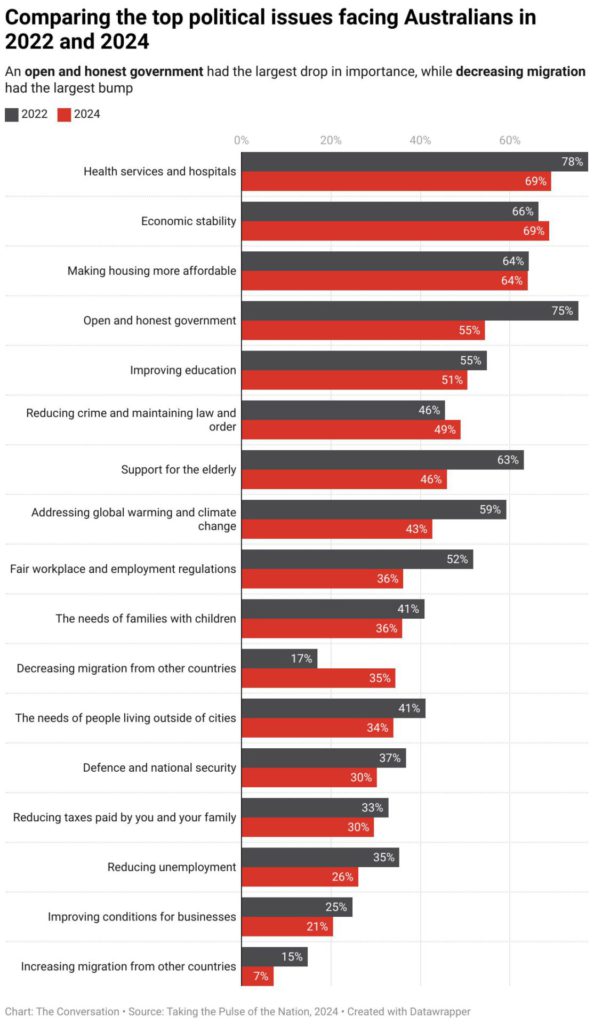


Two years later, the top four issues remained the most important, but their relative order has changed.

Health services remains at the top of the list, but with only 69.4% indicating it is an important issue. Economic stability (68.9%) and housing affordability (64%) rose in importance when compared to their rankings in 2022. Although now ranked fourth, open and honest government fell from 75.3% to 54.5% between 2022 and 2024.

Across the board, there is less agreement among Australians as to which issues are important. At the same time, there have been changes in the perceived prominence of other problems, such as declines in the proportion of Australians who think climate change or supporting the elderly should be addressed.

Do political colours matter?

Do the top issues vary based on political party affiliation? It’s a mixed bag.

Health services and hospitals were in the top three issues for supporters of Labor and Greens parties and the Coalition in 2024. Economic stability is important for all party affiliations except the Greens. Coalition voters did not identify housing as a top three issue.

Instead, reducing crime is one of the top three issues for Coalition supporters. Perhaps unsurprisingly, addressing global warming and climate change is a top issue for those affiliated with the Greens.

How much has it changed in two years?

Two years isn’t a long time, so what changed?

The matters with the largest fall in perceived importance were open and honest government (down 20.8 percentage points), support for the elderly (down 17.2 percentage points) and addressing global warming and climate change (down 16.4 percentage points).

By far the issue that increased the most in importance among Australians was an interest in reducing migration from other countries. Compared to 2022, the share reporting this matter as an important issue increased by 17.6 percentage points.

Are the changes in importance of these issues the same across political party preference?

We found a decline in the importance of open and honest government for all party types but most significantly for the Labor Party, followed by the Greens.

Similarly, voters from all parties stated that addressing support for the elderly is a less important issue in 2024 than in 2022. Across the three major parties, the importance of this issue dropped between 15 and 20 percentage points.

Lower proportions of voters from all parties believed addressing global warming and climate change was an important issue. Support for addressing climate change declined most among Labor voters, from 79.2% in 2022 to 58.6% in 2024.

Notably, among Greens voters, 79% believed in 2024 that fighting climate change was important for Australia, down from 90.4% in 2022.

Finally, as alluded to earlier, significantly more Australians believe reducing immigration was important. This sentiment has more than doubled among voters of most parties.

From 2022 to 2024, support for reduced immigration increased from 25% to 50.3% among Coalition voters, from 11.8% to 22.4% among Labor voters, from 5.2% to 15.7% among Greens voters. Support increased from 28.3% to 50.7% among voters from other parties (which include, for example, independents, One Nation and the United Australia Party).

Ferdi Botha, Senior Research Fellow, Melbourne Institute: Applied Economic & Social Research, The University of Melbourne and A. Abigail Payne, Professor, Melbourne Institute: Applied Economic & Social Research, The University of Melbourne

This article is republished from The Conversation under a Creative Commons license. Read the original article.

Support Our Journalism

Global Indian Diaspora and Australia’s multicultural communities need fair, non-hyphenated, and questioning journalism, packed with on-ground reporting. The Australia Today – with exceptional reporters, columnists, and editors – is doing just that. Sustaining this needs support from wonderful readers like you.

Whether you live in Australia, the United Kingdom, Canada, the United States of America, or India you can take a paid subscription by clicking Patreon and support honest and fearless journalism. LINK: https://tinyurl.com/TheAusToday
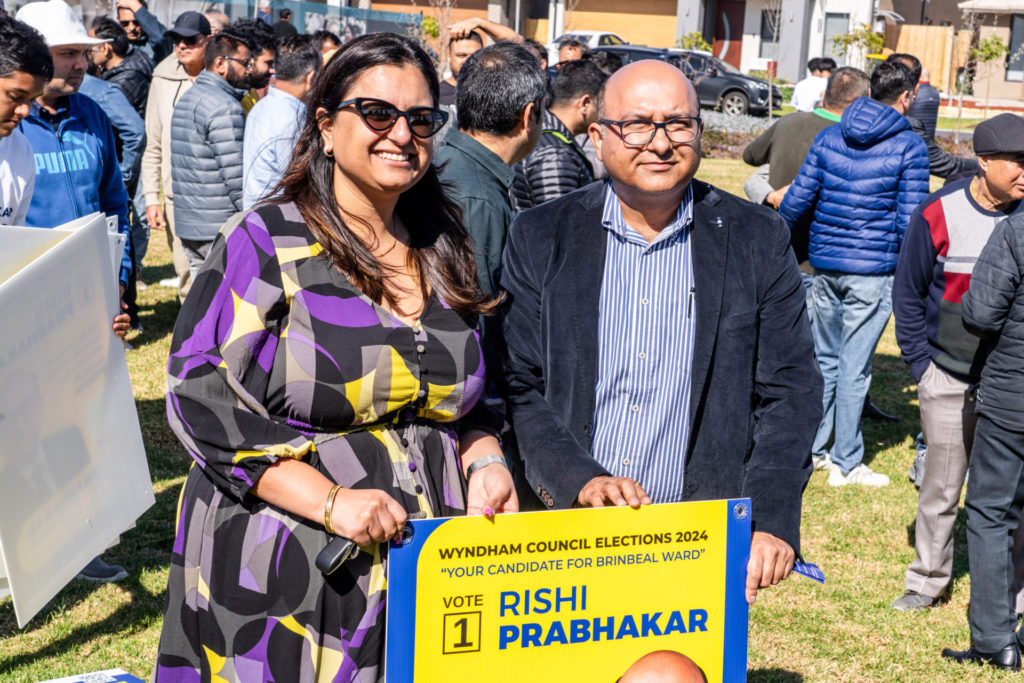
Rishi Prabhakar Launches Brinbeal Ward Campaign with Strong Message of Inclusivity and Community Empowerment in Wyndham Council

0

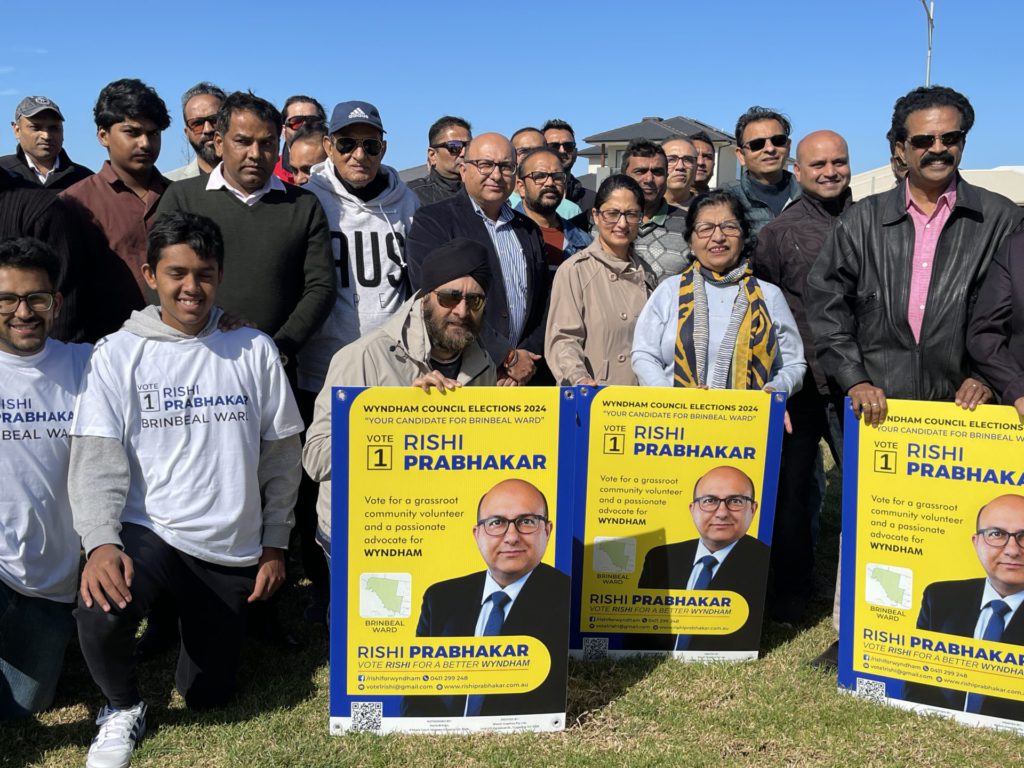
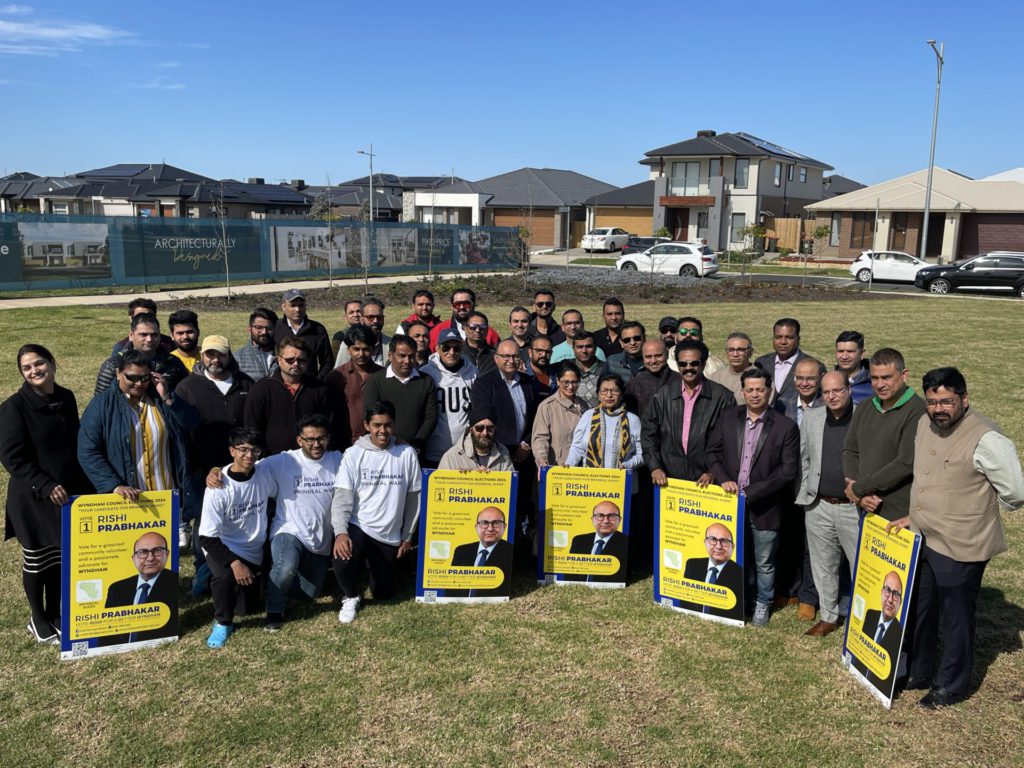
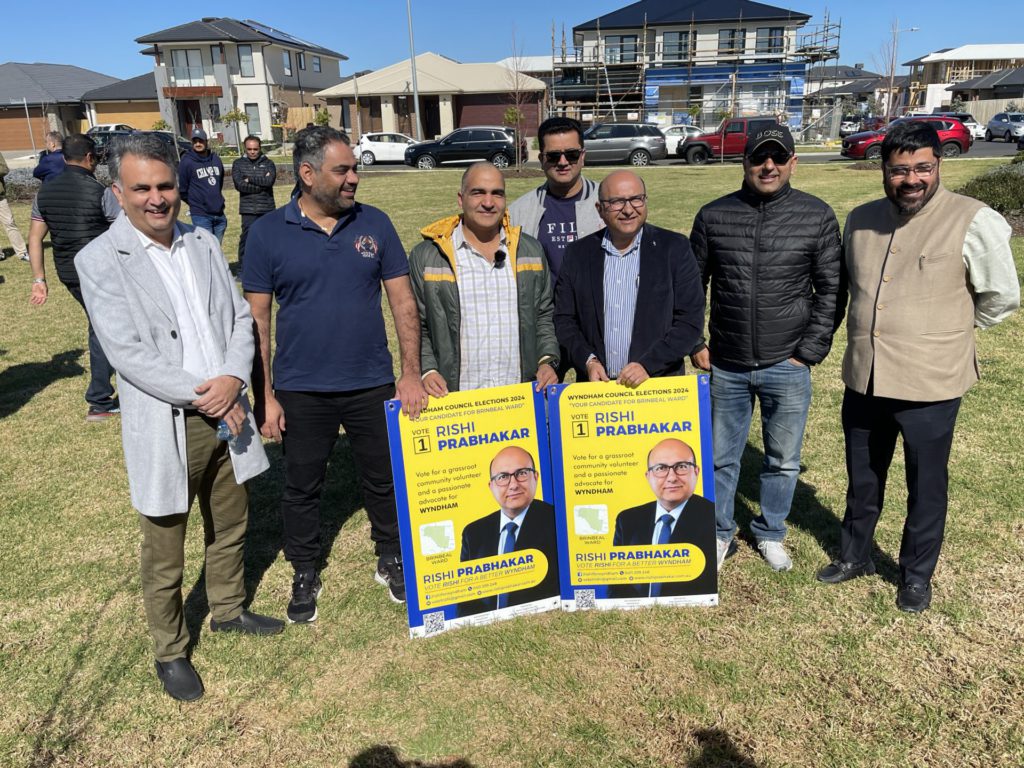
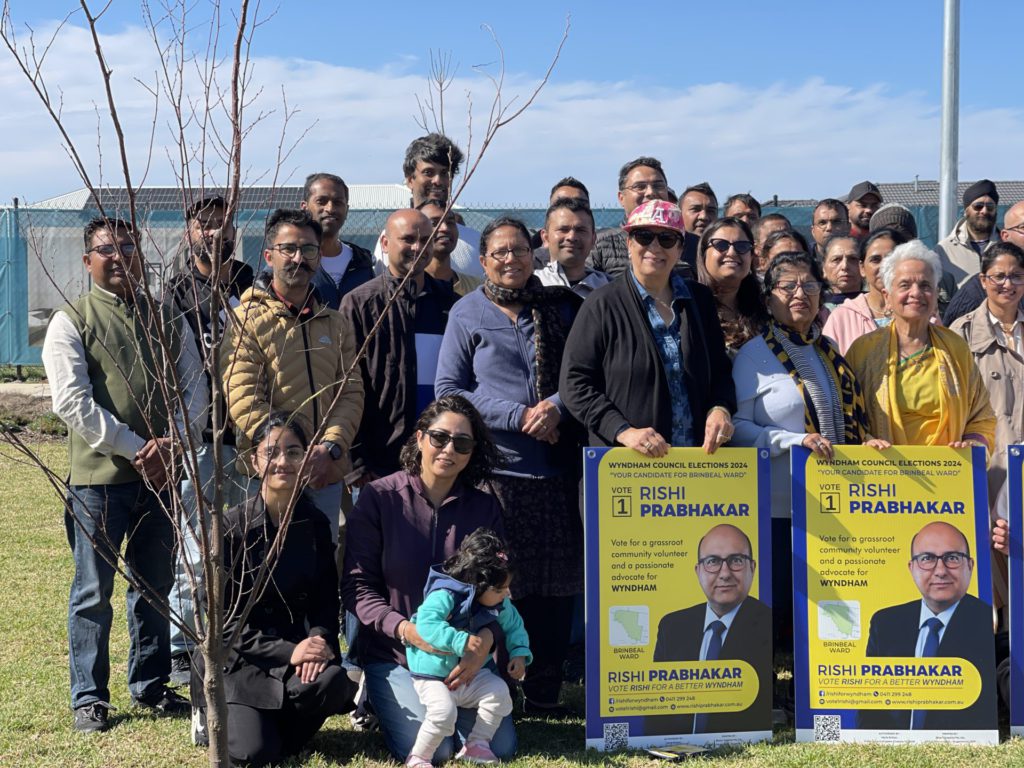
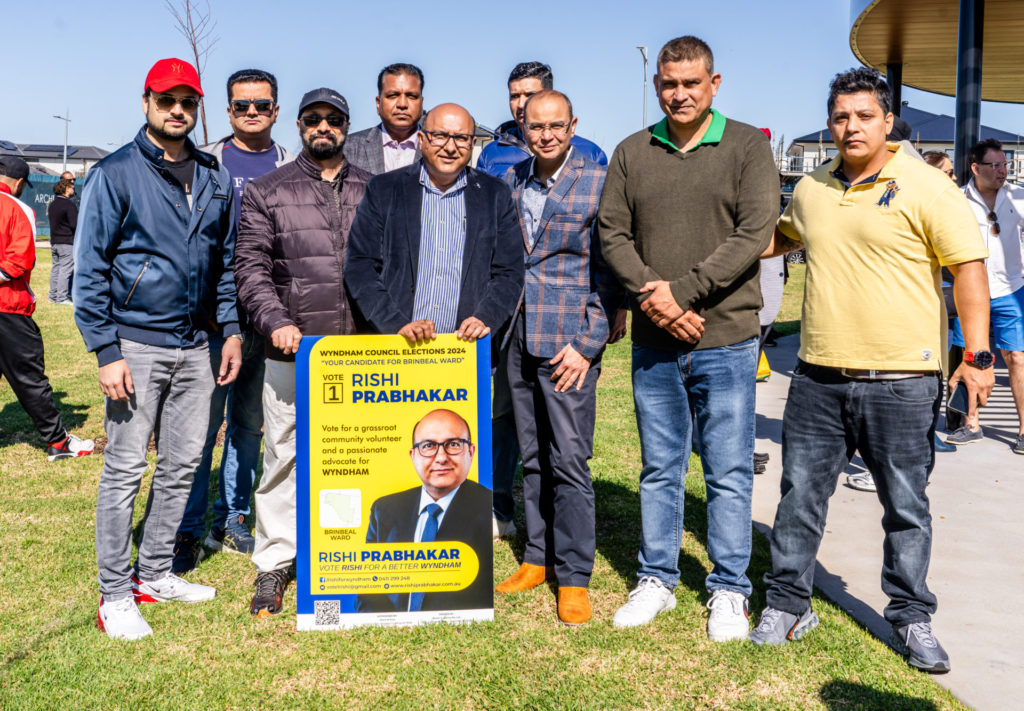
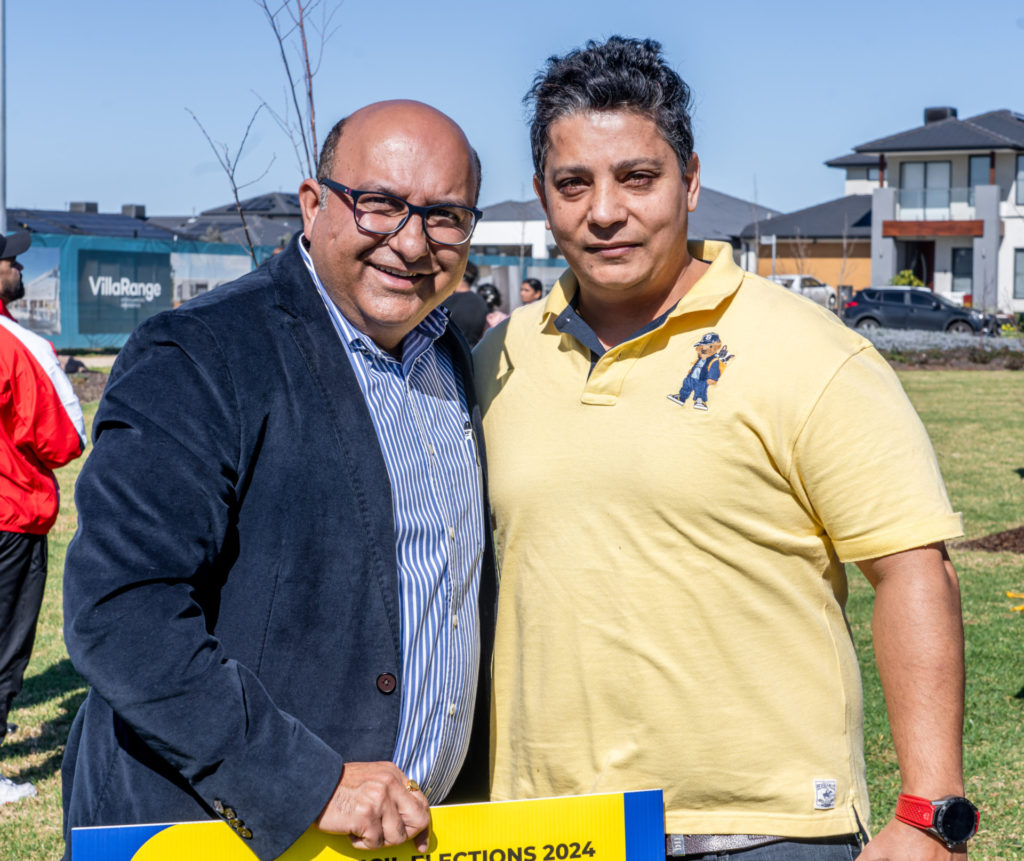
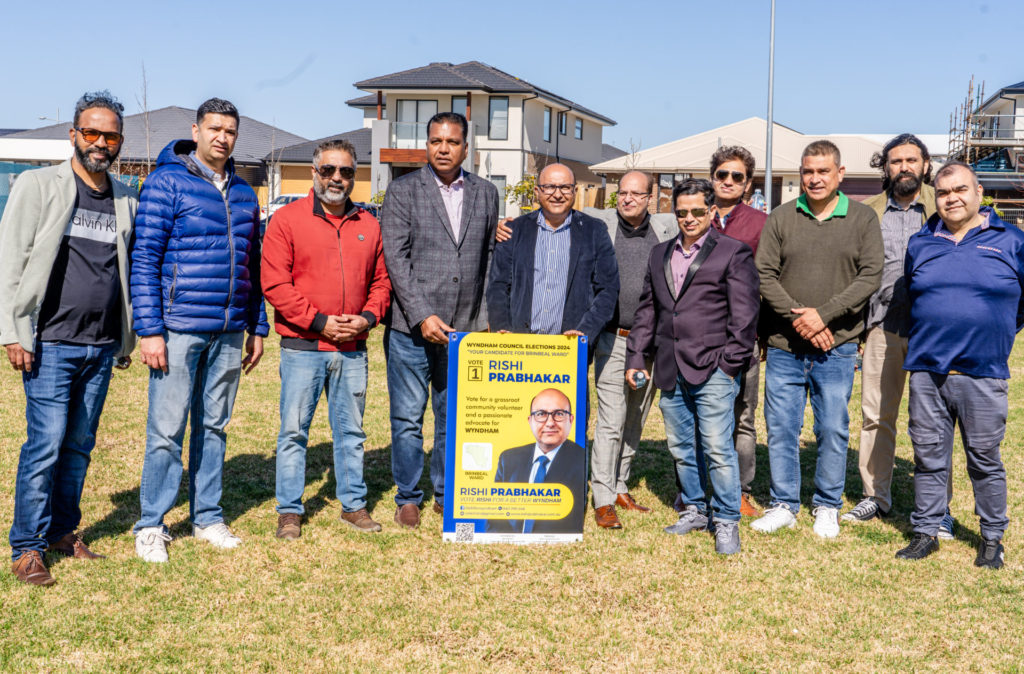
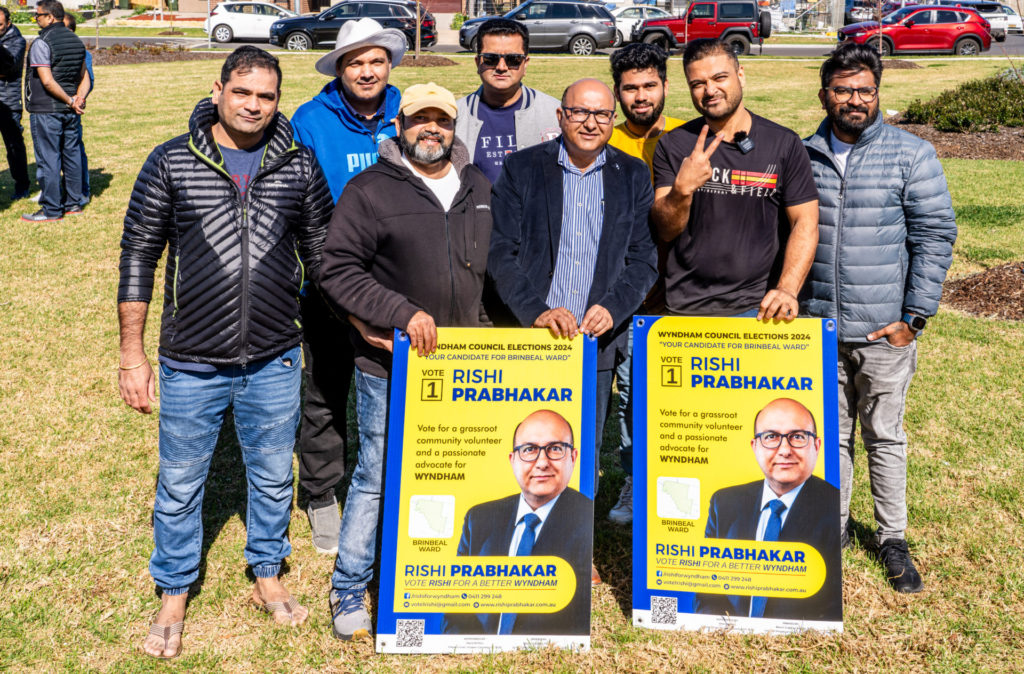
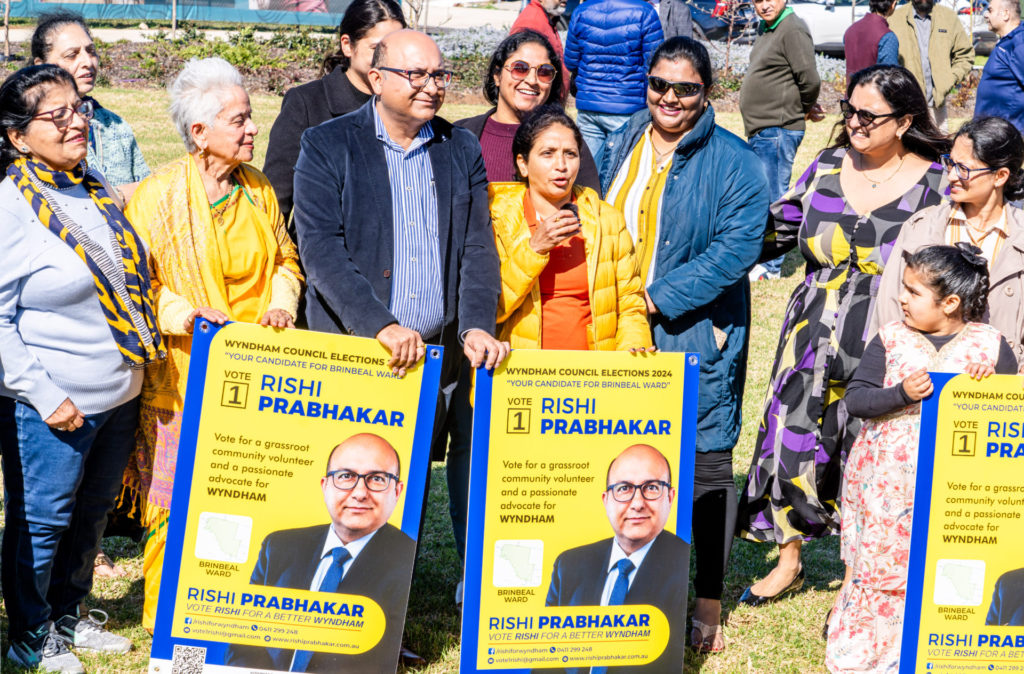
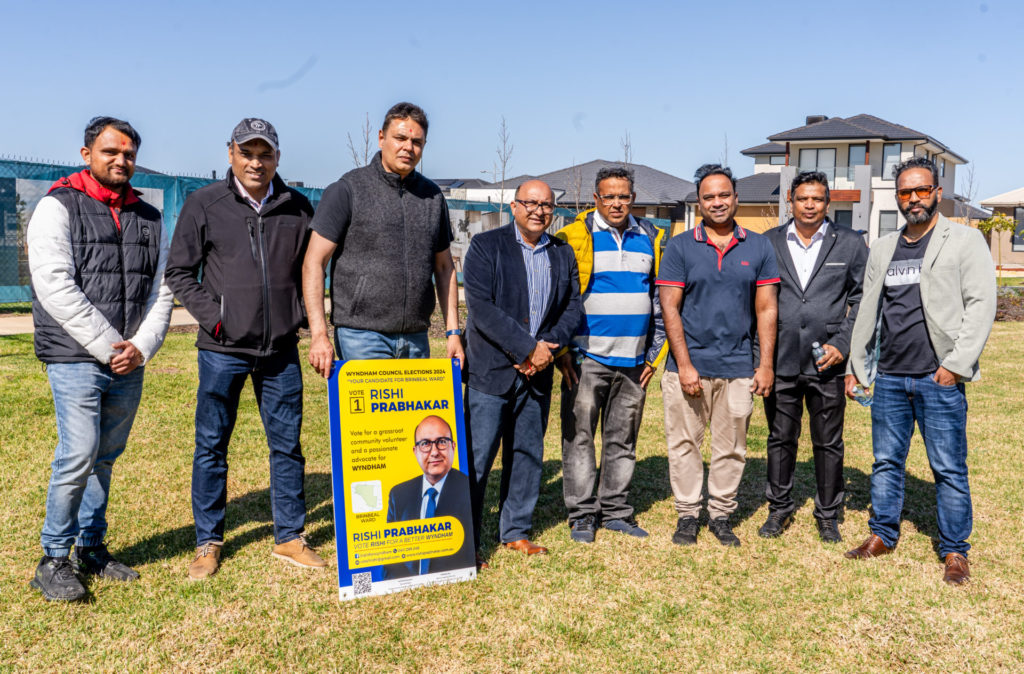
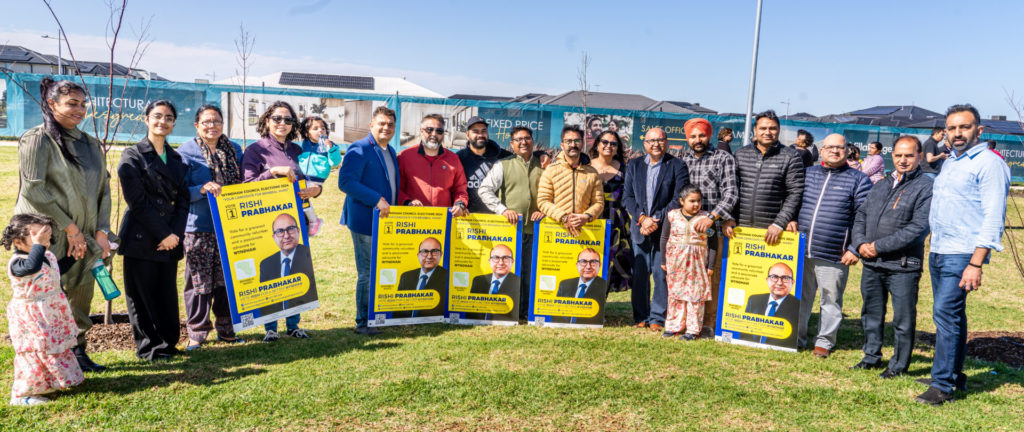
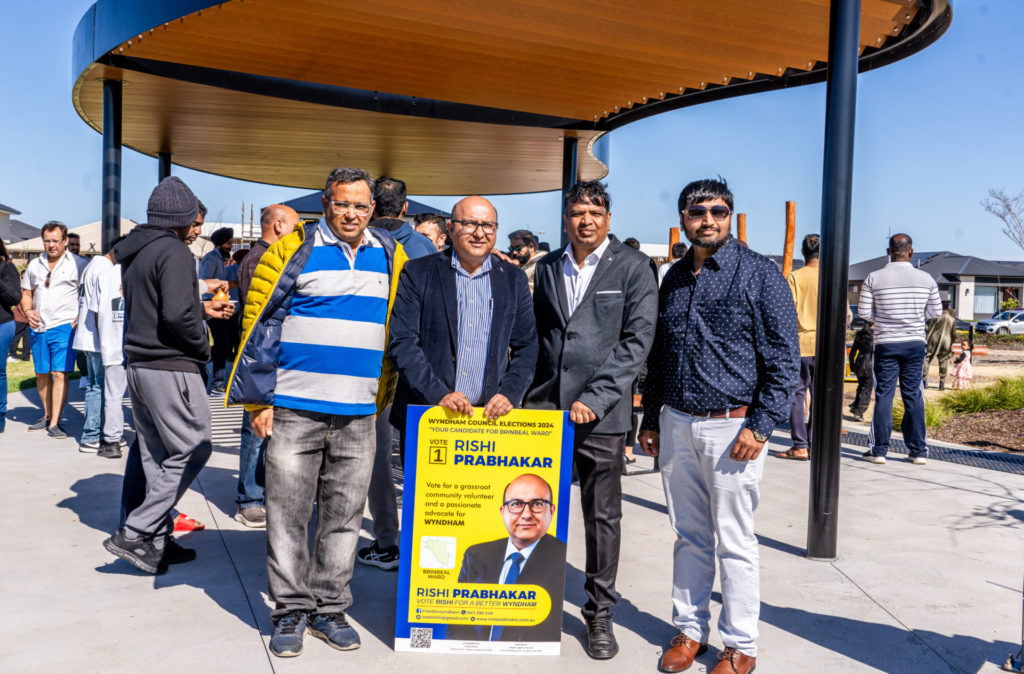
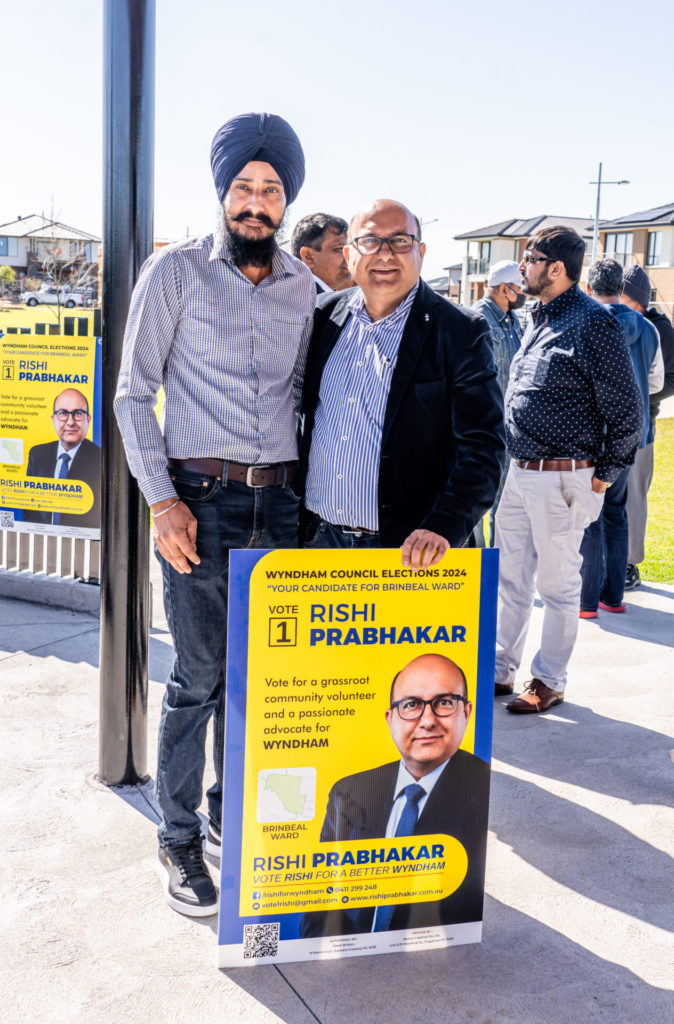
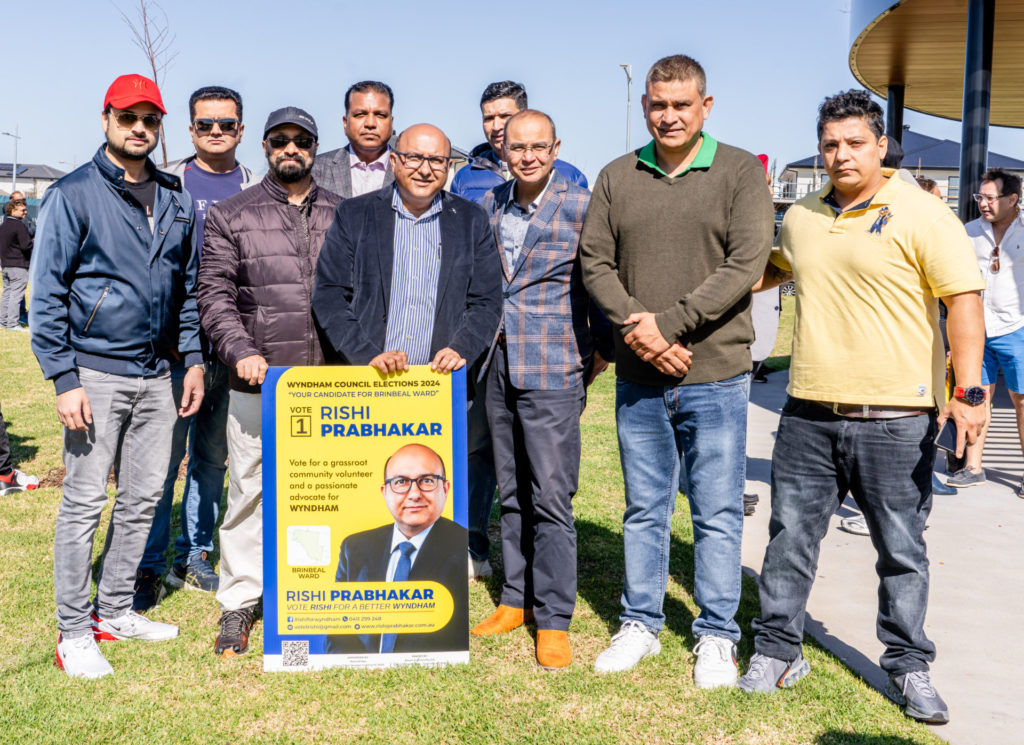
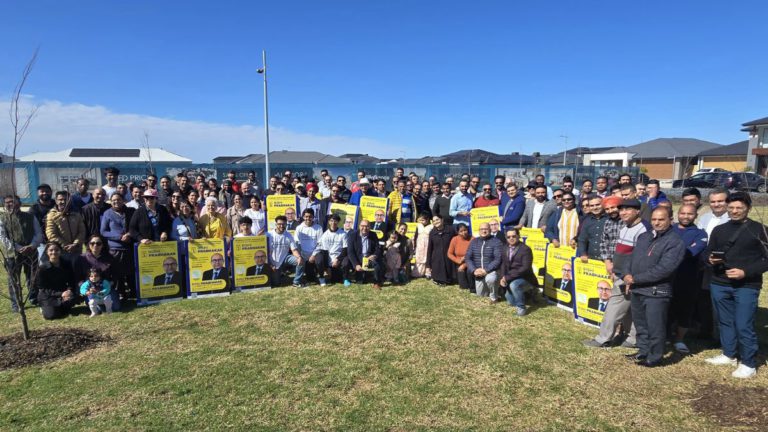
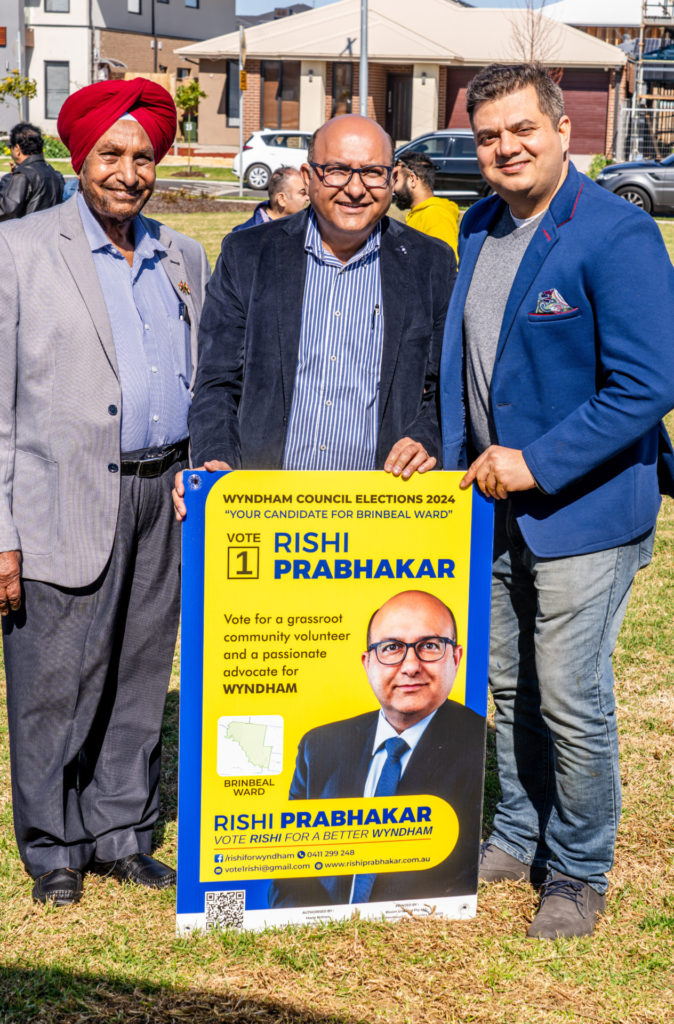
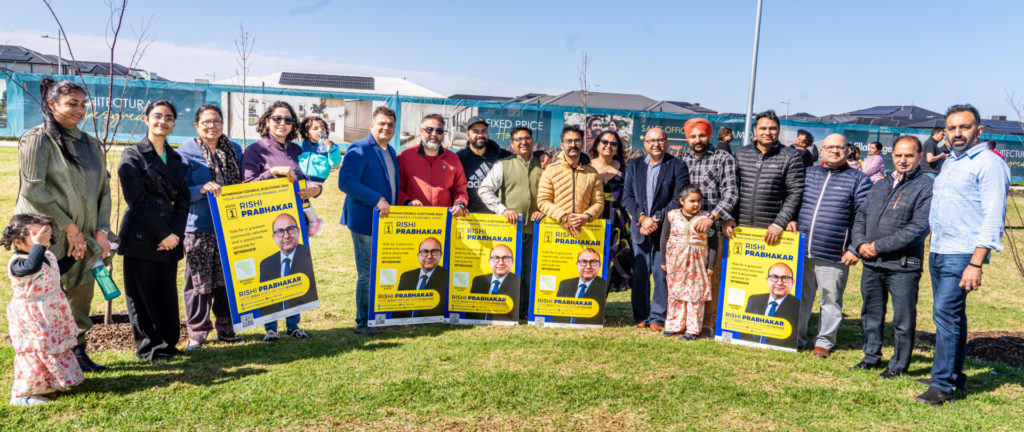
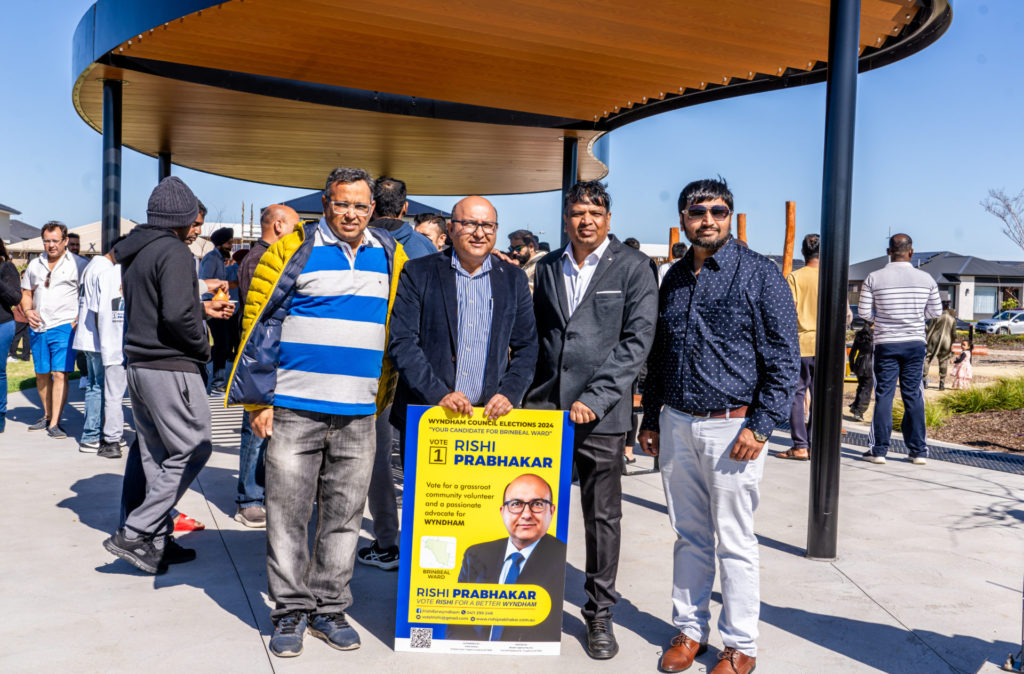
On a crisp spring-like morning in Wyndham City, Rishi Prabhakar a candidate for the ‘Brinbeal Ward’ in the upcoming Wyndham City Council elections came to meet the wider community and answer questions about his campaign.

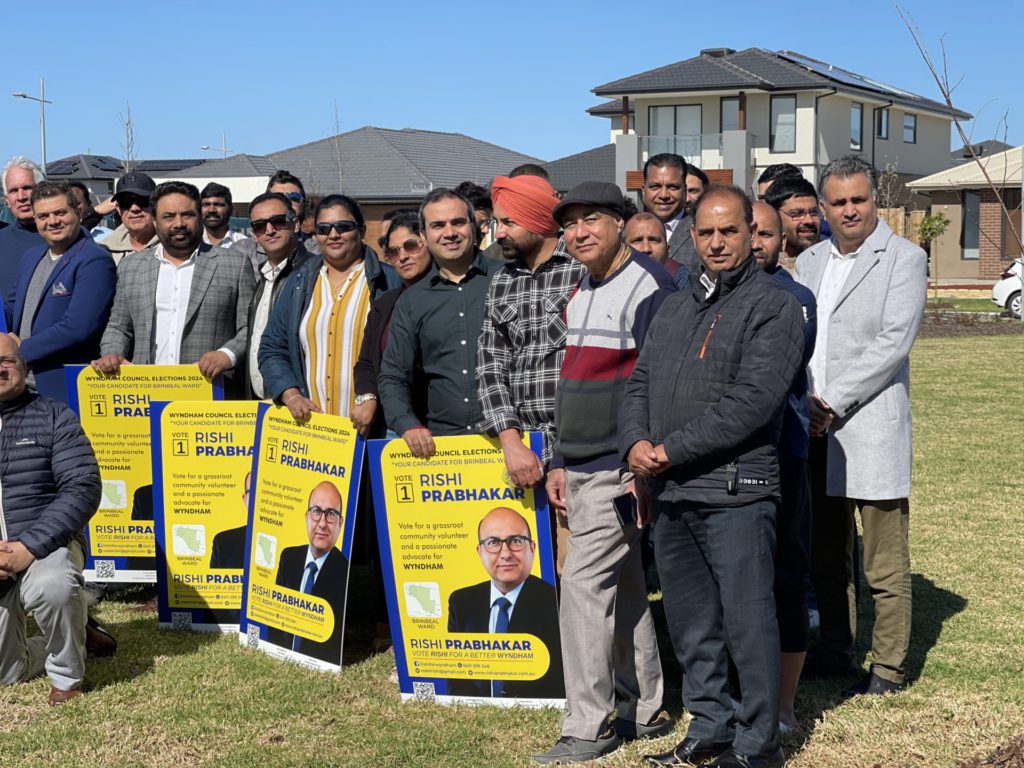
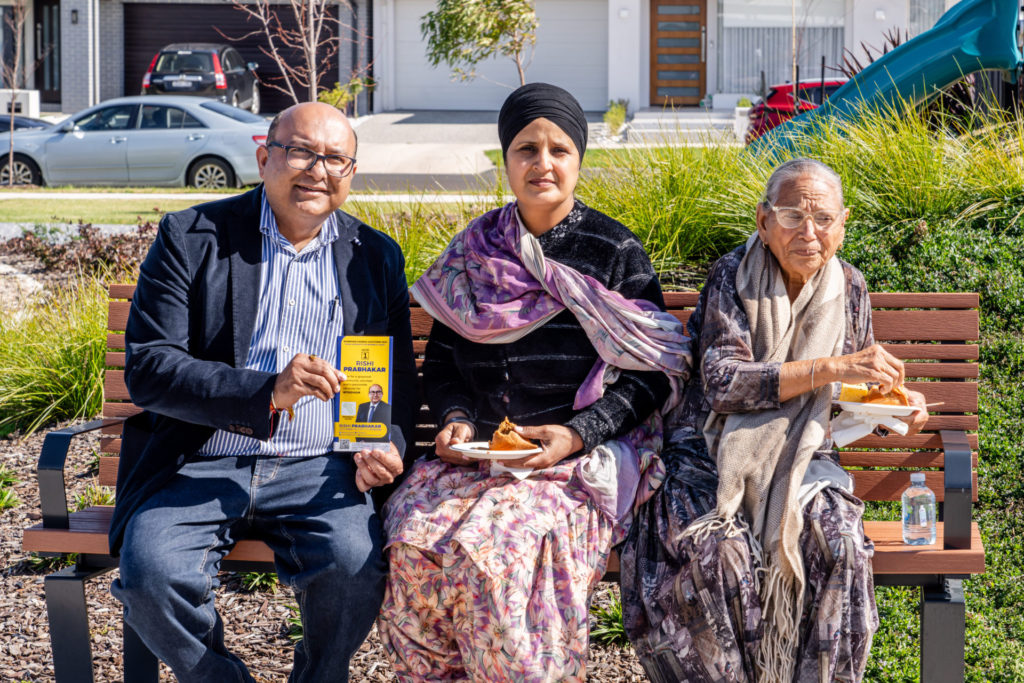
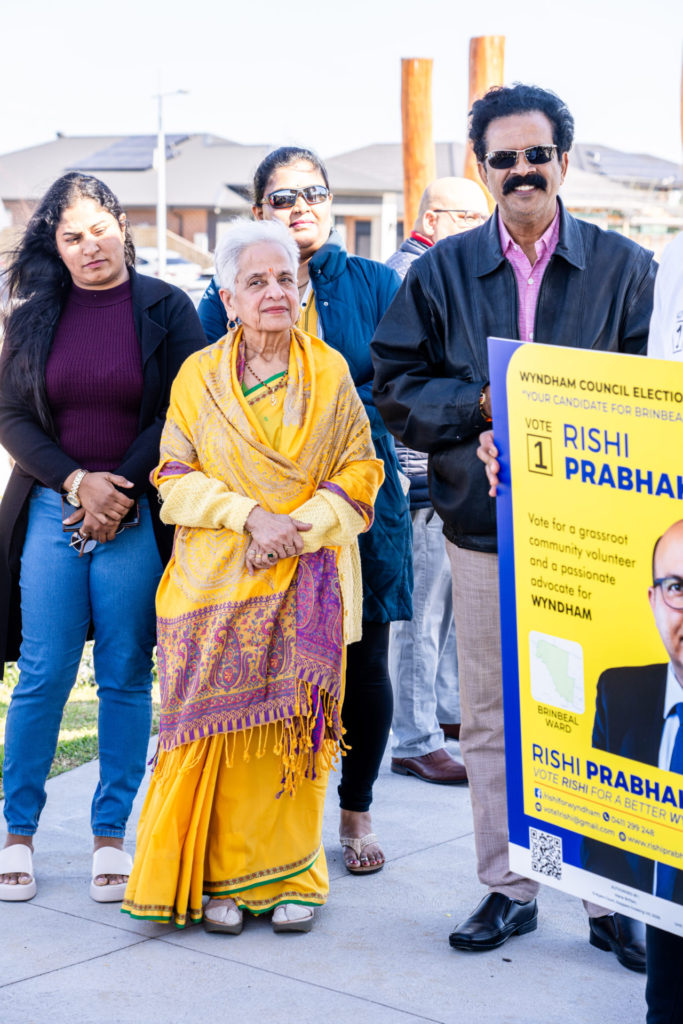
To everyone’s surprise, the event held at the Feronia Avenue Park in Tarneit attracted a large gathering of local community leaders, supporters, and residents who came to hear the inspirational story of a man who has dedicated his time to community service.

A Journey of Resilience and Commitment

Rishi Prabhakar’s story is a remarkable one, highlighting the resilience and determination of a multicultural community member who has risen to the challenge of building a successful life in Australia.

Arriving in 2003 as an international student, Rishi faced the typical struggles of a newcomer, working long hours in minimal-wage jobs, including stints in a restaurant and as a security guard. Despite the hardships, he remained focused on his goals and, in 2005, became a Permanent Resident of Australia.

“From the very beginning, it was always my passion to assist others so they don’t have to go through the same challenges I faced,” Rishi shared with the crowd, his voice filled with sincerity.

“I wanted to create a path where everyone, regardless of their background, has the opportunity to succeed and contribute to the community.”

Rishi’s journey from an international student to a respected community leader is a testament to his unwavering commitment to giving back. Now a married man with two young children, he juggles his family responsibilities, professional work, and extensive community service seven days a week.

His professional background in accounting has been instrumental in his work, but Rishi decided to shift his focus entirely toward community service in 2016, believing that true change comes from active involvement rather than mere complaints.

“In 2016 and again in 2020, I gained invaluable experience and learned important lessons about the power of grassroots involvement,” Rishi said.

“Instead of complaining, I realised it was time to take action and be the change I wanted to see in my community.”

A Leader During the Pandemic

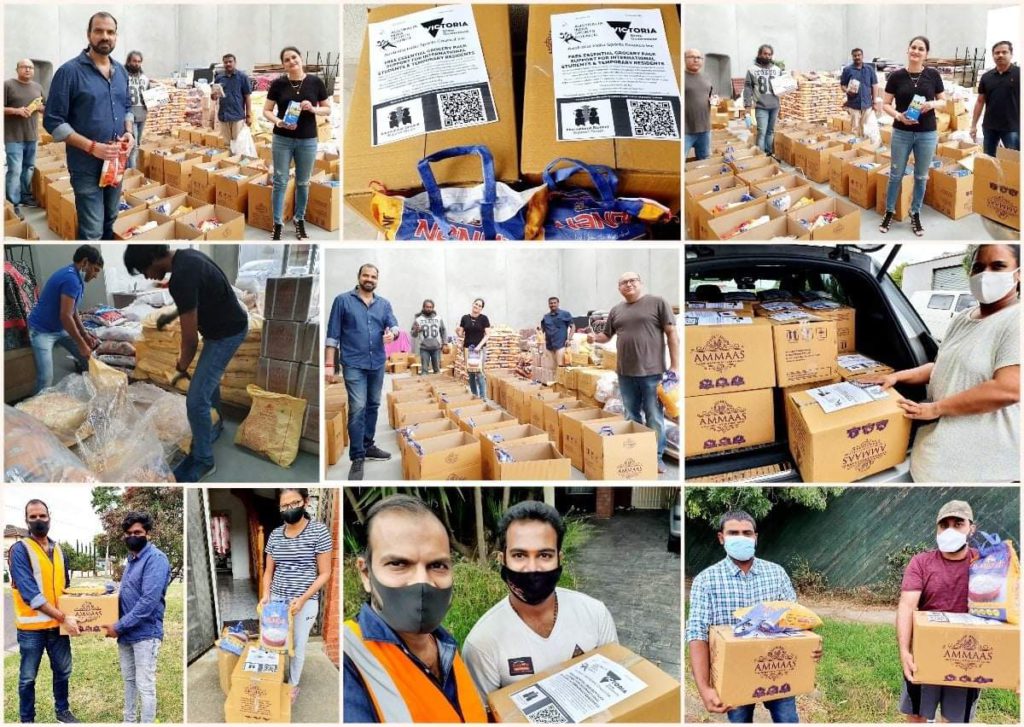
Rishi’s leadership and dedication to the community became particularly evident during the COVID-19 pandemic. Recognising the struggles faced by international students, newly arrived migrants, and residents, he established an international helpline and a student support line to assist those in need.

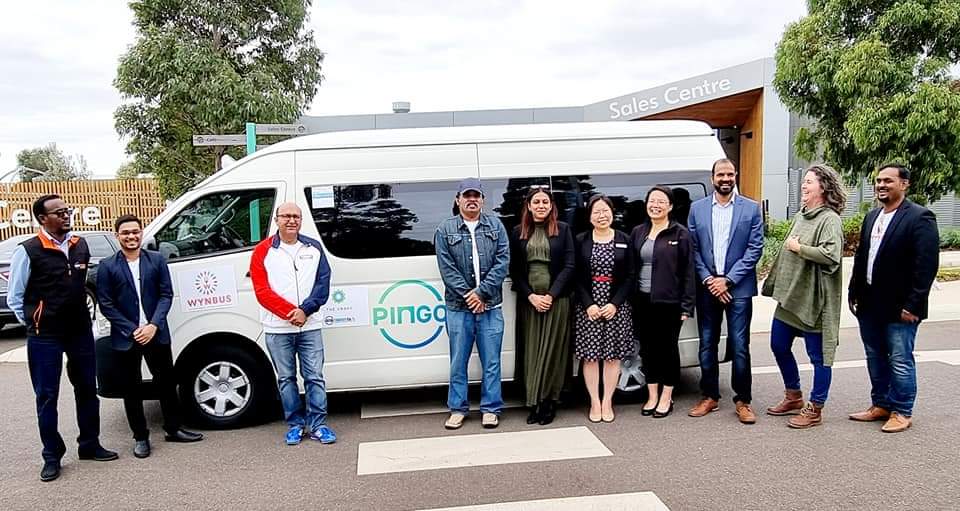
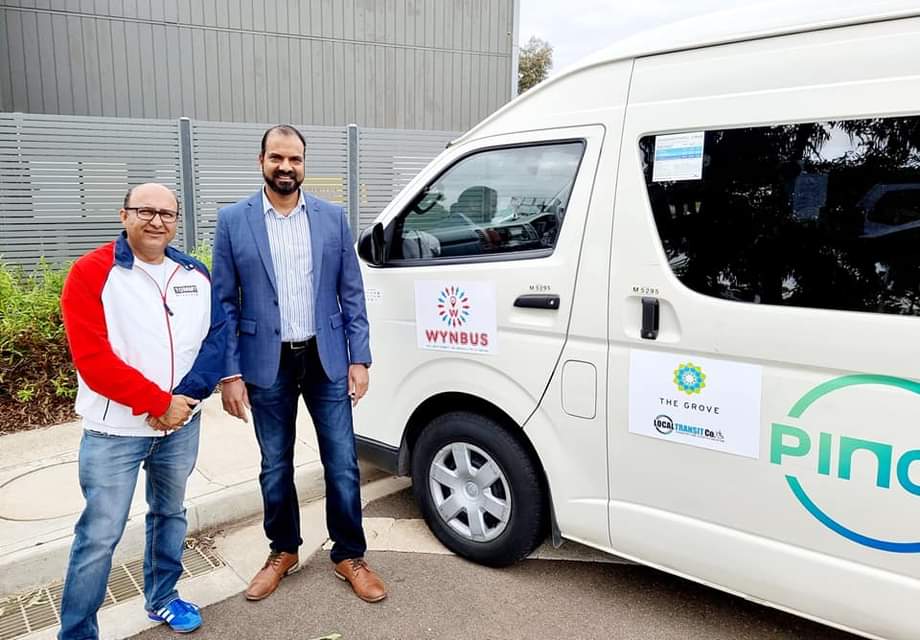
His efforts extended further when he became part of the initiative called the “Wyn Bus Service” for residents of a new estate in Wyndham, addressing the lack of local transportation options.

“The pandemic was a challenging time for all of us,” Rishi reflected.

“But it was also a time when we saw the importance of community and the impact that one person can make by stepping up and offering help. I’m proud of what we accomplished together during those difficult months, and it solidified my belief in the power of community-led initiatives.”

Campaign Message: “Let’s Get Together to Build a Better Wyndham”

The central theme of Rishi’s campaign is encapsulated in his message: “Let’s get together to build a better Wyndham.” This message resonates with many in the community who have seen the positive changes that inclusive and collaborative leadership can bring.

Rishi’s vision for Wyndham is one where every resident, regardless of their background, has a voice and can contribute to the city’s growth and development

Community leaders and supporters took to the stage to share their thoughts on the importance of multicultural representation in local government.

Community Leaders Voice Their Support

Biren Joshi one of the most prominent names working within the Wyndham community said, “Today’s event was more than just a community meet and suggestions session”

“It was a celebration of the diverse and vibrant community that makes up Wyndham City.

A notable aspect of the event was the inclusion of support messages delivered in various languages, reflecting the multicultural fabric of Wyndham City. Leaders spoke in Telugu, Gujarati, Rajasthani, and Haryanavi languages ensuring that the message of inclusivity reached as many community members as possible.

Vibrant Gujarati community leaders Champaksinh Ravalji, ⁠Chiketan Patel, Chetan Patel, Pragnesh Shah, Jaydipsinh Vachhani and Jayrajsinh Jadeja extended their support to Rishi’s campaign.

“Rishi Prabhakar is not just a candidate; he is one of us,” said Pragnesh Shah, a local community leader who addressed the gathering in Gujarati.

“He understands our struggles, our dreams, and our hopes. His leadership during the pandemic proved that he is a man of action, not just words. We need someone like him who can represent our voices in the council.”

Speaking in Telugu, Laxmi and Venkat Nookala, echoed similar sentiments: “Rishi’s journey from an international student to a community leader is something we all admire.”

He is committed to making Wyndham a place where everyone can thrive, no matter where they come from.”

Vara Ammina giving the message in Telugu

In Rajasthani (Marwari), Jitendra Sharma, emphasised the need for inclusive representation: “For too long, our communities have been under-represented. With Rishi, we have someone who understands our needs and is ready to fight for them.”

He has my full support, and I urge all of you to stand with him.”

Finally, From the Haryanavi Australian Community Pardeep Redhu, Raj Sahu, Dinesh Sahu, Parmod Tomor, Rishi Manna and Dr Sachin Dahiya were present.

Pradeep Radu highlighted Rishi’s dedication to education and youth: “Rishi knows the importance of education and the challenges our youth face. He has been a mentor to many, and his vision for a better Wyndham includes better opportunities for our children.”

A Strong Vision for Wyndham’s Future

As the event drew to a close, Rishi Prabhakar addressed the crowd with a heartfelt message of unity and hope.

“Wyndham is a city of diverse cultures, ideas, and dreams,” he said.

“Together, we can build a community where everyone has a place, where every voice is heard, and where we all work together for the common good.”

My commitment is to ensure that our council reflects the diversity of our city and that our policies and decisions are made with the input of all residents,” he added.

Rishi’s campaign promises to focus on key issues such as improving local infrastructure, increasing access to essential services, supporting small businesses, and enhancing educational opportunities for youth. He also plans to continue his work in community outreach, ensuring that the needs of all residents are addressed, particularly those in marginalised and under-represented groups.

The Road Ahead

As Rishi Prabhakar embarks on his campaign for the Brinbeal Ward, the support he has garnered from the community is a clear indication of his impact as a leader and his potential to bring about positive change in Wyndham City. His story of resilience, commitment, and service resonates with many, making him a strong contender in the upcoming council elections.

In his closing remarks, Rishi urged the community to join him in his mission to build a better Wyndham.

“This is not just my campaign; it’s our campaign,” he said.

“Together, we can make Wyndham a place where everyone feels valued, respected, and empowered to make a difference. Let’s get together to build a better Wyndham, for ourselves and future generations.”

With the campaign officially underway, all eyes are on Rishi Prabhakar as he continues to inspire and mobilise the community toward a brighter future for Wyndham City.

Support Our Journalism

Global Indian Diaspora and Australia’s multicultural communities need fair, non-hyphenated, and questioning journalism, packed with on-ground reporting. The Australia Today – with exceptional reporters, columnists, and editors – is doing just that. Sustaining this needs support from wonderful readers like you.

Whether you live in Australia, the United Kingdom, Canada, the United States of America, or India you can take a paid subscription by clicking Patreon and support honest and fearless journalism. LINK: https://tinyurl.com/TheAusToday
NT election: the Country Liberals claim a landslide victory in a contest decided in suburbia

0

By Rolf Gerritsen

The Northern Territory is a different place. On the day prior to this election, Speckles the Adelaide River crocodile was asked to predict the result of the election. He had replaced the previous crocodile, a spiv who got the 2016 and 2020 elections wrong.

Speckles decided Eva Lawler, the Labor Chief Minister, would win the election. Speckles was not the only prognosticator to get it wrong. I fear for his future.

The Country Liberal Party (CLP) has won majority government, returning to power after eight years in opposition. Double-digit swings against Labor have been recorded in some electorates. Lawler lost government and her own seat.

Instead, CLP Leader Lia Finocchiaro will become the Territory’s next Chief Minister and govern in majority.

A table and slider showing the percentage swing away from Labor to the CLP.
A screenshot of the Northern Territory election results as recorded by the ABC. Screenshot taken 9AM on Sunday August 25. ABC News

A tale of two elections

Yesterday, effectively, there were two elections conducted for the NT Legislative Assembly. The first was in the bush electorates.

These are dominated by Aboriginal communities, often blighted by poverty, poor housing, inadequate medical services, failing educational services and the absence of employment opportunities: all the elements the Closing the Gap targets seek to address.

As is customary in Territory elections, these Indigenous communities voted Labor. Only once since self government in 1978 (in 2012) have they not done so.

However, Indigenous issues were hardly mentioned by politicians or the media in this election campaign.

This election was essentially an urban election played out mainly in Darwin-Palmerston and, to an extent, Alice Springs. It only paid some attention to Indigenous issues as a covert subtext to the broader community angst about crime.

Twice the expected swing

I predicted the CLP would get uneven swings, bigger in some instances (like in electorates that had suburbs where there were high levels of property crime, violence and public drunkenness).

Overall, I assumed the CLP Opposition would get a Territory-wide swing of about 4%–6%. I was wrong.

The overall swing to the CLP in the suburbs of Darwin was over twice that estimate. Several ministers, including Lawler, have lost their seats.

Lawler conceded defeat at 8:30pm, a full hour before losers in NT elections usually do so. That indicated the extent of the loss for Labor.

Counting will resume today but, on the trends, I expect at least four (possibly six) Labor Ministers will lose their seats.

As I predicted, independents have been elected in two seats: Yingiya Mark Guyula in Mulka (in northeast Arnhem Land) and Robyn Lambley in Araluen (in Alice Springs).

Other independents have done well, as in Johnston where a Teal-like (she actually wore purple) independent out-polled the Labor incumbent (although still behind the CLP).

Labor’s vote collapse

My interpretation of the collapse of the Labor vote is that it involves two elements.

One is the defection of weakly-aligned voters. These voters usually make up the swing in an election.

The other is that a fair proportion of Labor voters switched to the Greens. I have lauded Chief Minister Lawler for her tough campaign, but it’s possible some Labor voters were alienated by her right-ish switch and decided to vote Green, to remind Labor that it is supposed to be a progressive party.

However you interpret this election, it is definitely a landslide to the CLP. Comparatively, it’s not as bad for Labor as the anti-CLP landslide in 2016. Back then, Finocchiaro was the only CLP member reelected in the Greater Darwin area.

That 2016 election was consequential. Because Finocchiaro was the only CLP parliamentarian left in the Greater Darwin area, she eventually became CLP leader. The twists of fate mean that she is now Chief Minister.

The most interesting new development of this election was the rise of the Greens. They will feel greatly buoyed by this election, where in some seats they finally broke the 20% primary vote barrier to become serious players in Territory politics.

In my pre-poll analysis, I said this would be a good election to win because the NT economy will pick up next year.

In addition, Commonwealth expenditure in the NT is set to dramatically escalate. The billions of dollars worth of spending as part of remote housing and education deals struck with the Commonwealth, plus other large-scale spending programs, will start to come into play.

The Commonwealth is becoming invested in reversing Indigenous disadvantage in the Territory because the NT is the worst performer on the Closing The Gap targets.

This means continuing money for the NT and all but ensures the new CLP government will be re-elected in 2028.

Rolf Gerritsen, Adjunct Professor, The Northern Institute, Charles Darwin University

This article is republished from The Conversation under a Creative Commons license. Read the original article.

"The

Support Our Journalism

Global Indian Diaspora and Australia’s multicultural communities need fair, non-hyphenated, and questioning journalism, packed with on-ground reporting. The Australia Today – with exceptional reporters, columnists, and editors – is doing just that. Sustaining this needs support from wonderful readers like you. Whether you live in Australia, the United Kingdom, Canada, the United States of America, or India you can take a paid subscription by clicking Patreon and support honest and fearless journalism.

Four, including a police officer, injured in car crash and stabbing incident in Sydney

0

Four people, including a police officer, have been injured following a car crash and suspected stabbing in Engadine, southern Sydney, on Sunday morning.

The incident occurred around 9 a.m. at the intersection of Princes Highway and Old Bush Road. Emergency services were alerted after multiple calls were made to Triple Zero (000) reporting a two-vehicle collision.

Upon arrival, officers from Sutherland Shire Police Area Command found a man who appeared to have been stabbed, allegedly fleeing the scene.

NSW Police apprehended the man using a Taser and took him into custody.

During the arrest, a male police officer sustained a serious laceration to his left wrist. A woman, believed to be a passenger in one of the crashed vehicles, was also discovered with multiple injuries.

A fourth individual was also found injured at the scene, though their involvement in the incident remains unclear at this time. All four individuals are currently receiving treatment from NSW Ambulance paramedics.

The Princes Highway has been closed in both directions, and authorities are urging motorists to avoid the area.

NSW Police Minister Yasmin Catley confirmed to media that an investigation is underway. Further information will be provided as it becomes available.

Anyone with information regarding the incident is urged to contact Crime Stoppers at 1800 333 000 or visit https://nsw.crimestoppers.com.au. All reports will be treated with strict confidentiality. The public is reminded not to share information via NSW Police social media pages.

Support Our Journalism

Global Indian Diaspora and Australia’s multicultural communities need fair, non-hyphenated, and questioning journalism, packed with on-ground reporting. The Australia Today – with exceptional reporters, columnists, and editors – is doing just that. Sustaining this needs support from wonderful readers like you. Whether you live in Australia, the United Kingdom, Canada, the United States of America, or India you can take a paid subscription by clicking Patreon and support honest and fearless journalism.

Australia advances Vanuatu’s policing capabilities with new equipment and infrastructure

0

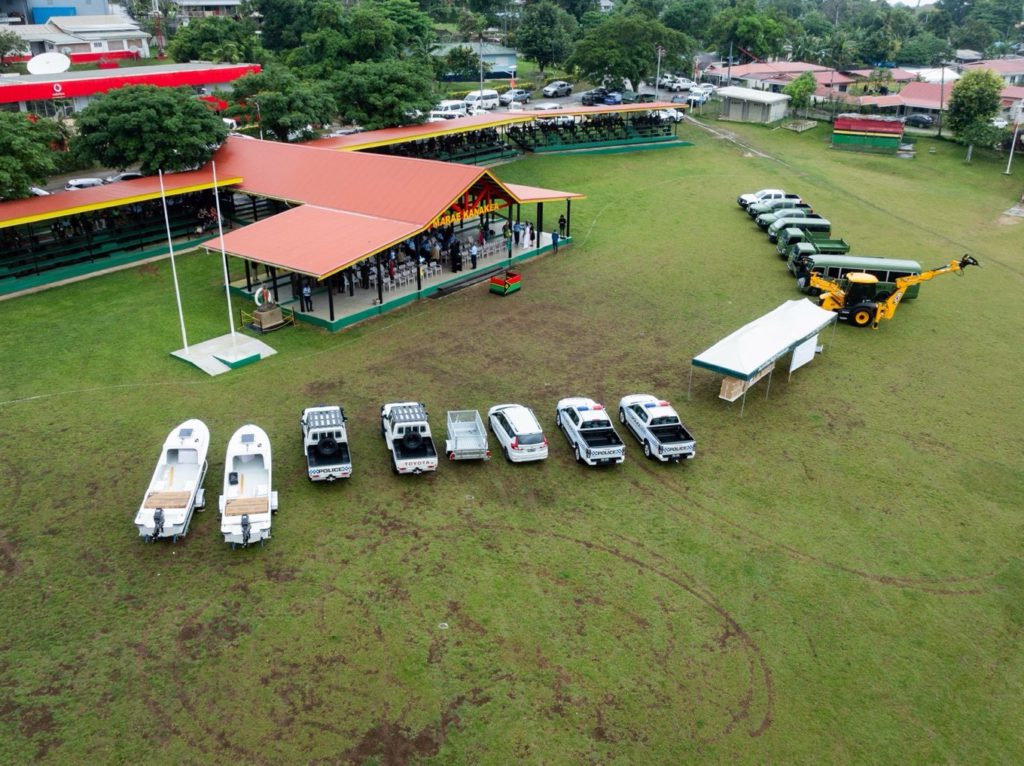
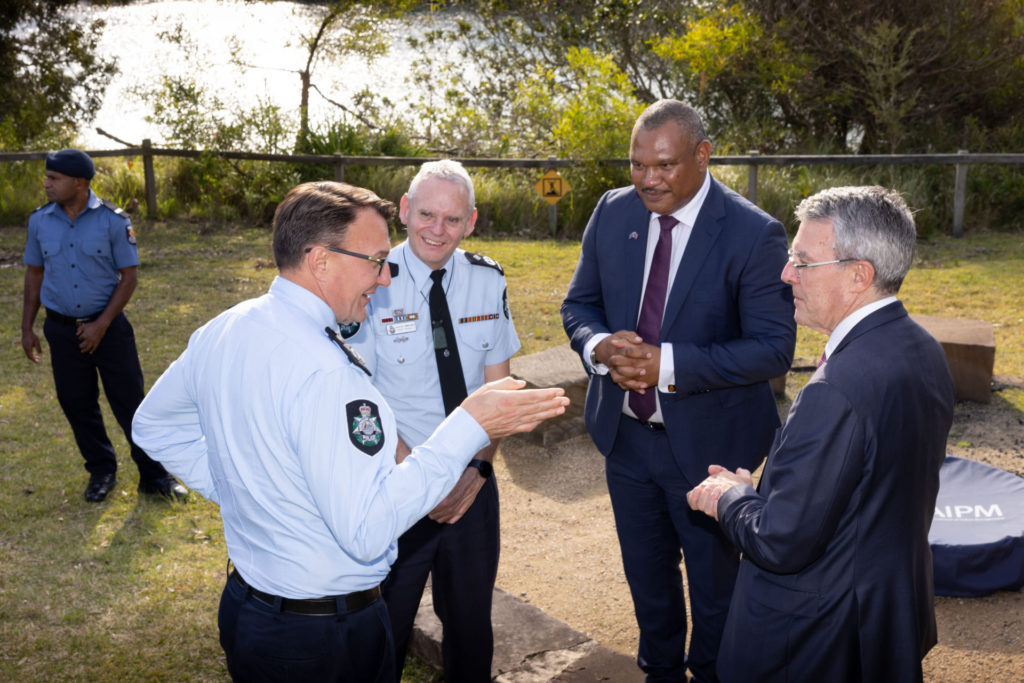
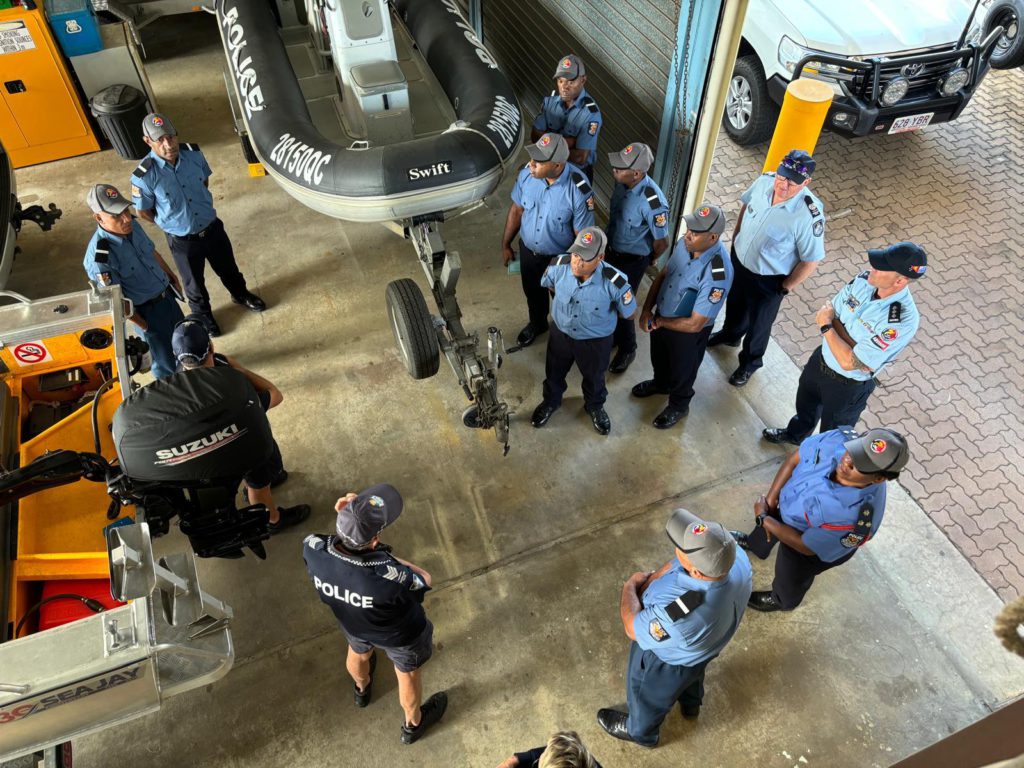
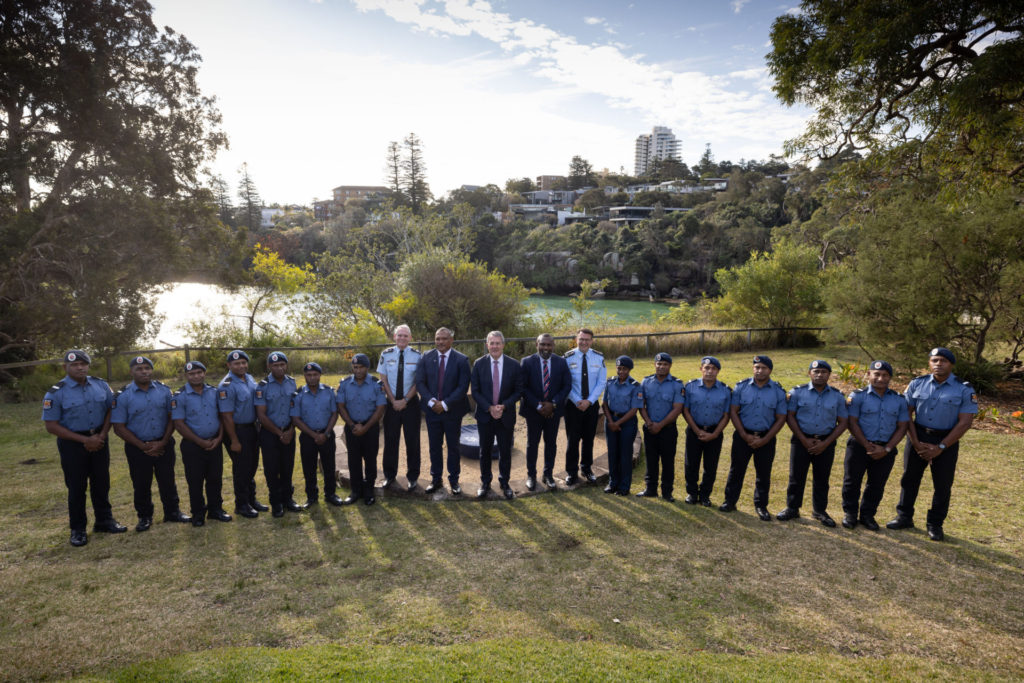
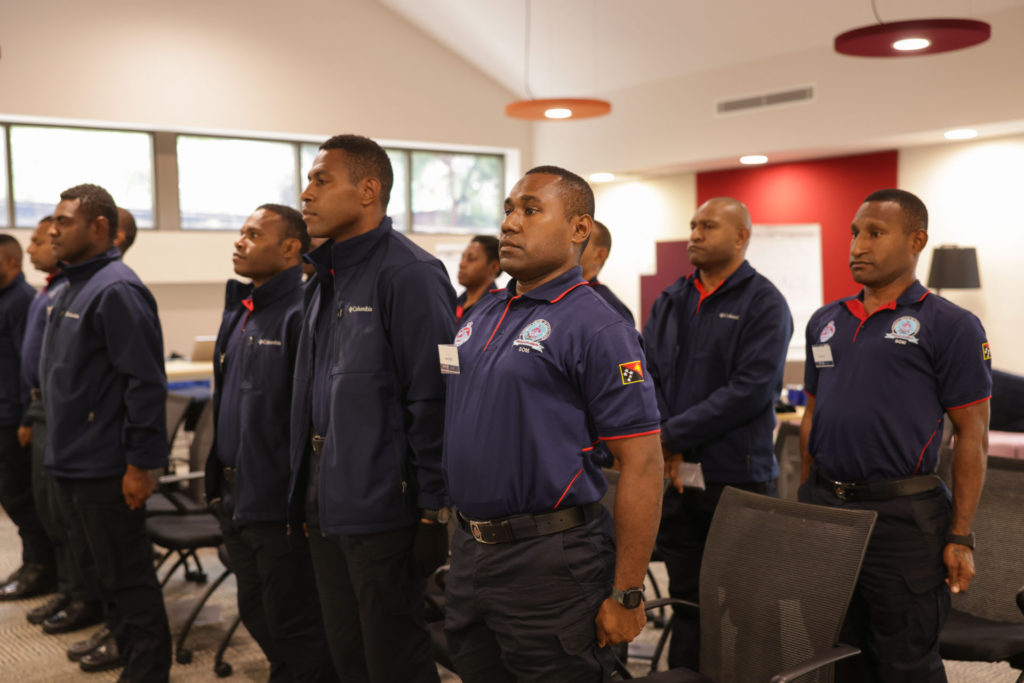
In a significant step to enhance regional security, the Australian Federal Police (AFP), in collaboration with the Australian Defence Cooperation Program (DCP), has provided the Vanuatu Police Force (VPF) with a comprehensive package of new equipment and refurbished infrastructure.

At a ceremony held in Port Vila on Tuesday, AFP Commissioner Reece Kershaw handed over 13 new police vehicles, two boats, and a range of high-grade policing equipment to VPF Commissioner Robson Iavro. This modern equipment is set to strengthen policing capabilities across Vanuatu’s diverse communities.

Image: AFP Commissioner’s visit to Vanuatu (Source: AFP)

In addition to the new equipment, several infrastructure projects supported by the AFP were officially unveiled. These include a refurbished Forensic Laboratory, upgraded facilities at the Police Training College, a newly constructed Fare (ni-Vanuatu gathering place) at the Freshwota police post, and the first of five police houses being renovated at Independence Park.

Commissioner Kershaw emphasized the importance of this initiative in reinforcing the partnership between the two nations. “It was an honour to be welcomed to Vanuatu by my friend Commissioner Iavro and to witness firsthand the close working partnership our two forces share,” said Kershaw.

“We are proud to provide this new equipment and support the infrastructure projects and look forward to the continued collaboration between Australia and Vanuatu. The AFP is committed to working together with our colleagues in the VPF to continue to protect our communities from criminal threats and maintain safety within the region.”

During his visit, Commissioner Kershaw also engaged in high-level discussions with Commissioner Iavro and the newly appointed Minister of Internal Affairs, the Hon Andrew Napuat. These talks aimed to further strengthen the enduring partnership between the AFP and VPF, with Minister Napuat warmly referring to the AFP as “family.”

Image: AFP Commissioner’s visit to Vanuatu (Source: AFP)

In a further commitment to Vanuatu’s policing efforts, the AFP has pledged an additional $32.7 million, funded through the Australian Pacific Police Partnership Program (AP4). This investment will support the construction of a new Port Vila Central Police Station, the provision of eight police motorcycles, and the delivery of a Naiad Rigid Hull Patrol Vessel to enhance the VPF’s maritime operations across Vanuatu’s 83 islands.

This collaboration marks another milestone in the AFP’s ongoing efforts to ensure a safer and more prosperous region in the Pacific.

Support Our Journalism

Global Indian Diaspora and Australia’s multicultural communities need fair, non-hyphenated, and questioning journalism, packed with on-ground reporting. The Australia Today – with exceptional reporters, columnists, and editors – is doing just that. Sustaining this needs support from wonderful readers like you. Whether you live in Australia, the United Kingdom, Canada, the United States of America, or India you can take a paid subscription by clicking Patreon and support honest and fearless journalism.

A swab that could save Indian Australian Archana Sukumar’s life

0

Archana Sukumar was diagnosed with Acute Myeloid Leukemia (AML) at the beginning of 2023. After undergoing chemotherapy and achieving remission, her leukemia has unfortunately relapsed. The young mother of two lives in North West Sydney and is an IT professional.

She urgently needs a Blood Stem Cell Transplant.

Ozindcare in association with Strength To Give are organising a testing drive to identify suitable donors, where a team of experts will be present to collect cheek swabs and provide detailed advice.

.

You can register via the link : https://strengthtogive.org.au/ozindcare/

You can click on the following link for more information on Stem Cell donation:
https://strengthtogive.org.au/faqs/

To know more about the process you can also watch this video.

Hackers from these three countries targeting US presidential election

0

Foreign hackers from Iran, Russia, and China are escalating their attempts to interfere in the US Presidential election’s outcome.

This week, the US intelligence community specifically accused Iranian actors of hacking into Donald Trump’s presidential campaign as well as Vice-President Kamala Harris’s campaign being targeted by foreign hackers.

Multiple agencies, including Meta and Microsoft’s threat intelligence division, have sounded the alarm over the increasing interference as election day approaches. However, the motives and methods behind these cyberattacks differ across the nations involved.

The US intelligence community highlighted that Iranian actors see the upcoming election as especially significant, aiming to “stoke discord” within the country. The joint statement from the FBI, the Office of the Director of National Intelligence, and the Cybersecurity and Infrastructure Security Agency, mentioned tactics such as “social engineering” and “thefts and disclosures” being part of Iran’s strategy.

The statement added that these methods are not new, as Iran and Russia have employed similar tactics in past US elections and other countries worldwide. Despite these accusations, Iran has denied any involvement, dismissing the intelligence report as “unsubstantiated”.

“We will not tolerate foreign efforts to influence or interfere with our elections, including the targeting of American political campaigns.”

According to a recent report by Microsoft Threat Intelligence, Iranian activities have contributed to a rise in “foreign malign influence,” with cyber-enabled operations being a consistent feature in the last three US election cycles. The report also noted that Iranian operations often emerge later in the election season and are more focused on disrupting the election process rather than directly influencing voter decisions.

Recent months have also seen Russian actors accused of attempting to sway the election. Meta’s latest threat report identified a “deceptive campaign from Russia” involving fake news stories and AI-generated content on YouTube.

Russia has been the leading source of coordinated inauthentic behaviour (CIB) networks disrupted since 2017, with Meta reporting 39 covert influence operations from Russia, 30 from Iran, and 11 from China. Russia’s interference is often aimed at supporting candidates opposing aid to Ukraine and criticising those advocating for it. The goal is to exploit economic hardships in the US and undermine support for Ukraine.

US intelligence agencies have also warned of Russian operatives covertly using social media to influence public opinion, often employing deep fake technology and inflammatory content to spread disinformation.

China, labelled by Meta as the third-highest source of CIB operations, has also been active in influencing American discourse. Microsoft’s report noted that CCP-linked actors have been expanding their activities to new platforms and audiences in the lead-up to the election. For example, these actors have been stoking outrage around pro-Palestinian protests at US universities and attempting to manipulate both left-leaning and right-wing groups to further agitate conflicts.

A US intelligence report from March highlighted China’s growing sophistication in influence operations, particularly through the use of generative AI and targeting candidates as early as the 2022 midterm elections. The report suggested that China’s primary aim is to sideline critics of Beijing and magnify societal divisions within the US.

Support Our Journalism

Global Indian Diaspora and Australia’s multicultural communities need fair, non-hyphenated, and questioning journalism, packed with on-ground reporting. The Australia Today – with exceptional reporters, columnists, and editors – is doing just that. Sustaining this needs support from wonderful readers like you. Whether you live in Australia, the United Kingdom, Canada, the United States of America, or India you can take a paid subscription by clicking Patreon and support honest and fearless journalism.

A kaleidoscopic impression of the Parramatta river across time and culture

0

A new collection of Australian writing and image commissions responding to the landscape, communities and histories surrounding the Parramatta River has been released by Powerhouse Parramatta in a new series titled ‘The River’.

Eight Australian writers with connections to Western Sydney were commissioned to develop stories that bring to life experiences and imaginings central to the river – a place of conflict, rebirth, joy, possibility and of coming together across time and culture.

Award-winning writer Felicity Castagna is the commissioning editor, bringing together contributors Lachlan Brown, Fiona Murphy, Vivian Pham, Willem Brussen, Jiva Parthipan, Maarama Kāmira and Anwen Crawford to contribute to the series. Each writer was selected for their unique literary style, responding to the river in their own way, from personal essays exploring cultural connections and rituals, to conversations with Dharug Elders and a poet’s impression.

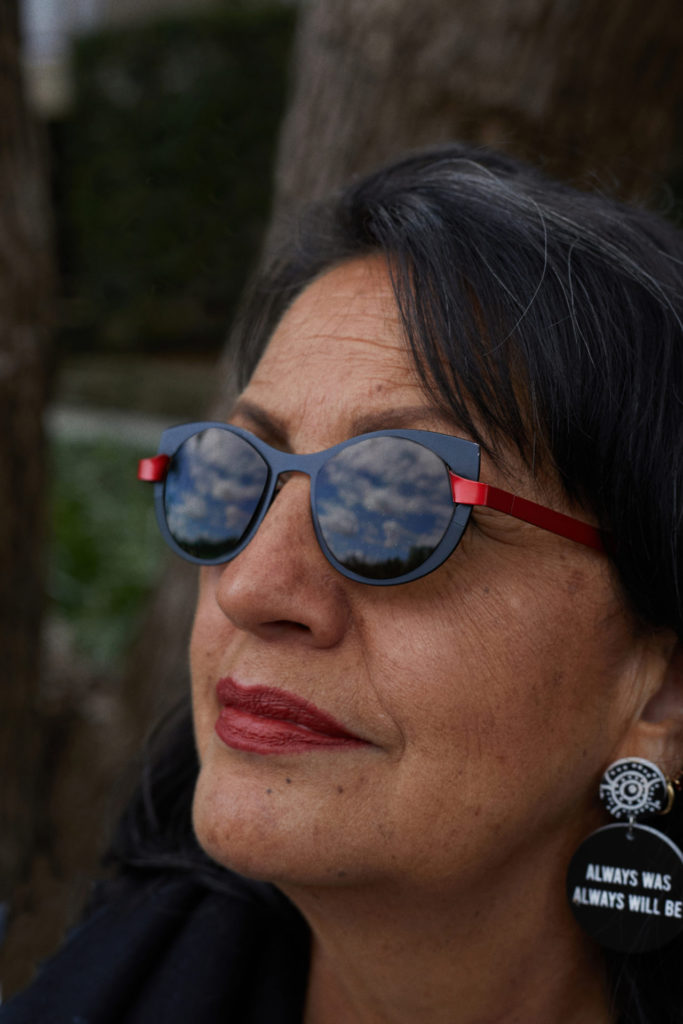
Felicity Castanga (Image by Jacquie Manning) 

Conor O’Brien was commissioned by Powerhouse Artistic Associate Zan Wimberley to create a series of new images and Joseph Mayers has contributed images that capture the cultural landscapes of the river. The River is part of the museum’s new initiative, Powerhouse Writing, a project that embeds writing across the museum through storytelling. It brings new perspectives to the Powerhouse Collection and the applied arts and sciences, while shining a light on the communities and landscapes surrounding Powerhouse Parramatta. It is an ongoing project encompassing digital stories, publications and program commissions.

Powerhouse Head of Writing, Jemma Birrell, says that like the Parramatta River, this collection is both local and specific yet also universal, connecting to other parts of the world. These stories are rich and varied, and the notion of Country is central. It’s an incredible range of perspectives on the river which, as Maarama Kāmira says ‘watches and gathers our fleeting stories’.

Maarama Kāmir (Image by Conor O’Brien)

Speaking to the The Australia Today, Jeema added that stories around the river were one way of exploring notions of Country central to opening Powerhouse Parramatta.

“When I started at Powerhouse one of the first projects I started working on was a series of writing commissions around the Parramatta River.

I asked writer and artist Felicity Castagna (who has lived close to the river for many years), to be the commissioning editor. She’s brought together 7 other established and emerging writers connected to Western Sydney. Their essays (and poetry in one case) are rich and varied, bringing a kaleidoscopic impression of the river, as well as new histories and perspectives

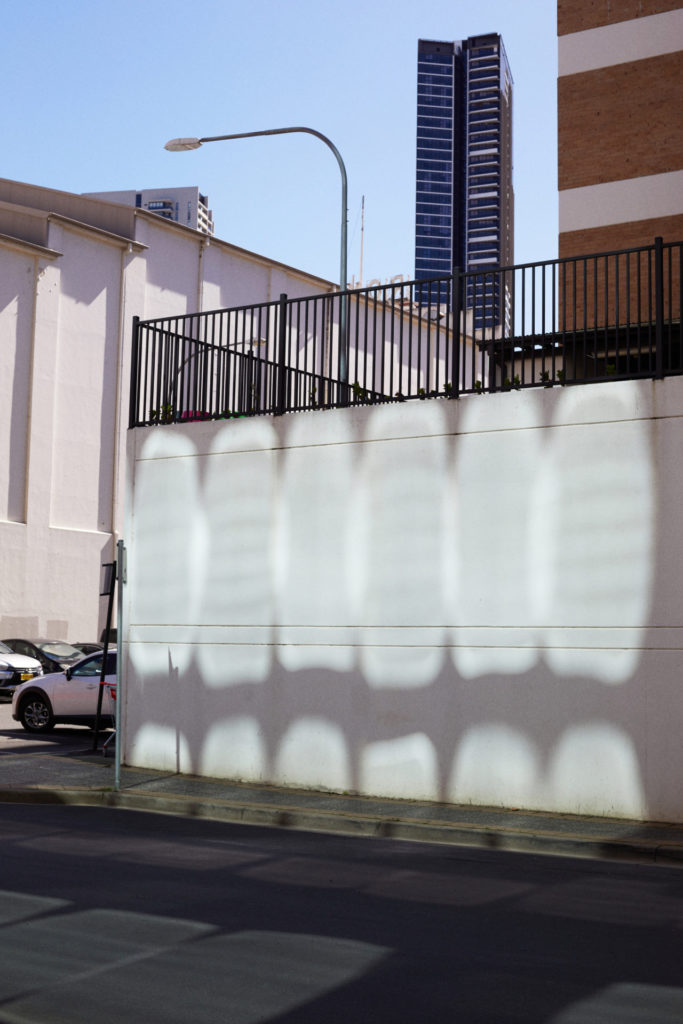
Powerhouse also commissioned images of the landscape surrounding the river, which are published alongside the writing and bring their own interpretation.”

(Image by Conor O’Brien)

Speaking about the project, Powerhouse Chief Executive Lisa Havilah said,

“Powerhouse Writing continues our support of Australian writers through commissions, collaborations, residencies and events, helping develop and grow our arts ecosystem while enabling national and international connections. ‘The River’ is one of the first projects in this initiative and I’m proud of the writers and image makers we can showcase through this series and the stories so closely connected to Powerhouse Parramatta.”

Commissioning Editor Felicity Castagna mentions that she walks the river every day and thinks about the layers of history that are underneath her feet.

(Image by Conor O’Brien)

“In editing ‘The River’ I’ve been given the impossible task of trying to gather together all those layers of story which extend 60,000 years back in time to when First Nations people traded here to the present, where it is still, first and foremost, a gathering space for the local communities around it. ‘Through this dynamic and diverse collection of writers that have all gathered here in their own ways, I hope I’ve managed to capture what it means to be here and why the river is such an important part of our local and national story.”

Felicity told The Australia Today that it’s been such a privilege to be able to help bring all those stories of a place that she feels so connected with to the general public.

“I walk the river every day and I think about all the many layers of story that are held there in both the natural and man made environment. There are still chemicals in the soil from the many factories that have lined the river over time. Underneath the ground, there are still the bodies of people who were held there in asylums and orphanages and  religious and state institutions. It has this huge history which spans back many thousands of years and which I’m a small part of now.”

(Image by Conor O’Brien)

“I’m really interested in the way that I’ve watched the landscape develop over the years as a local. There’s this incredibly striking contrast between the 15,000 year old mangrove forests on the river’s edge and all these hyper new, incredibly tall and shiny apartment blocks going up around them. In my essay, I wanted to capture that sense of a city in flux – one that exists simultaneously in the past and the present.

Firstly, the river always was and always will be Burramattagal country. Secondly, it’s important to explore how the many generations of migrants use the river now in their own ways – from promenading up and down the river like they may have in their home country, to fishing, engaging in religious rituals and bringing different communities together around the river through eating and cooking there”, added Felicity.

(Image by Conor O’Brien)

Fiona Murphy is one of the contributors to the series. Fiona told The Australia Today that she was immediately drawn to the concept.

“While the river is a specific location it is inherently ever changing as it moves through the landscape. As a writer it is a pleasure to write about something that is charged with momentum and lifeforce.” 

Fiona Murphy (Image by Ebony Kate Dennis)

“I was keen to show readers what it is like to move through the world as a deaf person, especially moving through a well known location. While most people assume deafness is a state of sensory deprivation, it really is one of alertness — watching, feeling, tasting, and responding to the world.”

Willem Brussen, who was also among the contributors to the series told The Australia Today, what was the inspiration behind his piece.

“The inspiration was to talk to three Elders who I respect deeply and to understand their connection to the river and the area. Through having these yarns and sharing stories this made me reflect further on my own connections to the area. I felt particular resonance to Aunty Julie Christian’s connection to a tree nearby to the river. The imagery of the tree growing through the fence underpinned the resilience of stories that were shared throughout. Whether they be the stories of frontier warriors shared by Uncle Chris Tobin or reflections shared through the work that Aunty Karen Maber does now in Parramatta with The Dharug Keeping Place.” 

Will Brussen (Image by Joseph Mayers)

“When I started writing the piece I didn’t really know where it would go, I knew I wanted to have conversations with my Elders and let that guide the direction. I felt fortunate to be able to have yarns with my Elders that I might not necessarily have had the opportunity without the means of writing this piece for the Powerhouse.”  

Willem also mentioned how important it is to have diverse voices while weaving histories of ancient lands and cultures.

“Both Aunty Karen and Uncle Chris spoke about how Parramatta is a meeting place, and it always has been. As such it is a place where people from all walks of life can come together. I think it’s really important to capture those voices and the varied as well as shared histories of those voices.”

(Image by Conor O’Brien)

Jiva Parthipan, another contributor to the series, reflects upon the role of rivers in cultural continuity across continents. Jiva told The Australia Today that he thinks of the river’s functions in both physical and emotional spaces, and how we ascribe our personal, political, environmental and cultural histories to landscapes.

“With over eighty percent of our bodies compromising water, it’s only apt we come and end our lives with water”, added Jiva.

Jiva Parthipan (Image by Conor O’Brien)

India’s Amul and Britannia emerge in world’s top 10 valuable and strongest food brands

0

In a recent update from the Brand Finance Food & Drink 2024 report, two Indian brands have made a remarkable impact in the list of most valuable and strongest food, dairy & non-alcoholic drinks brands.

Amul, a renowned dairy brand from India, has secured the top position as the world’s strongest food brand. With a Brand Value of USD 3.3 billion, Amul boasts a Brand Strength Index (BSI) score of 91.0 out of 100 and an impressive AAA+ rating.

The report highlights Amul’s exceptional performance in metrics such as familiarity, consideration, and recommendation, underscoring its dominance in the global food market.

Britannia, another notable Indian brand, has also made the list, coming in fourth. Known for its diverse product range including biscuits, dairy items, cakes, rusk, breads, and nutrition bars, Britannia continues to make a significant mark globally.

The list also features other prominent brands such as Doritos, a US-based flavoured tortilla chip brand (ranked 5th), and Cheetos, a crunchy corn-cheese puff snack from Frito-Lay (ranked 8th).

In addition to the top brand rankings, the Brand Finance Food & Drink 2024 report reveals other key insights:

  • World’s Most Valuable Food Brand: Nestlé retains its position as the most valuable food brand globally with a valuation of $20.8 billion. Lay’s has risen to second place, valued at $12 billion.
  • Fastest-Growing Food Brand: Viterra, a Canadian grain handling business, has seen the highest percentage growth in brand value, increasing by 37% to USD 1.1 billion.

The report also highlights trends affecting brand value, noting that convenience foods are gaining prominence due to the demands of busy consumer lifestyles. Additionally, dairy brands are thriving, buoyed by the rising popularity of plant-based options and health-conscious trends.

Support Our Journalism

Global Indian Diaspora and Australia’s multicultural communities need fair, non-hyphenated, and questioning journalism, packed with on-ground reporting. The Australia Today – with exceptional reporters, columnists, and editors – is doing just that. Sustaining this needs support from wonderful readers like you. Whether you live in Australia, the United Kingdom, Canada, the United States of America, or India you can take a paid subscription by clicking Patreon and support honest and fearless journalism.

Three people charged over alleged conspiracy to collect unlawful arrivals by sea

0

The AFP has charged three foreign nationals for allegedly conspiring to collect and conceal a group of unlawful maritime arrivals who arrived in Western Australia in April 2024.

A man, 26, and two women, aged 54 and 32, were arrested in Sydney yesterday (Thursday 22 August, 2024).

They are expected to appear before Dowing Centre Local Court today (Friday 23 August, 2024) to each face one count of conspiracy to conceal non-citizens, contrary to section 233E(2) of the Migration Act 1958 (Cth) by virtue of section 11.5 of the Criminal Code 1995 (Cth).

AFP Commander Counter People Smuggling Melinda Phelan, who heads the Disruption and Deterrence Task Group within the Joint Agency Task Force Operation Sovereign Borders (OSB), said an all-agency approach and coordination was necessary to stop people smugglers. 

“The Task Force is part of a whole-of-government approach to tackling the unlawful activities of people smugglers who willingly place the lives of others at risk, for their own financial gain,” Commander Phelan said.

“The AFP is warning members of the community to not encourage, or facilitate, unlawful ventures to Australia. There are serious penalties for these offences, including significant jail time.”

The maximum penalty for this offence is 10 years’ imprisonment.

It will be alleged the trio were linked to an attempted people smuggling venture in early April 2024.

Support Our Journalism

Global Indian Diaspora and Australia’s multicultural communities need fair, non-hyphenated, and questioning journalism, packed with on-ground reporting. The Australia Today – with exceptional reporters, columnists, and editors – is doing just that. Sustaining this needs support from wonderful readers like you. Whether you live in Australia, the United Kingdom, Canada, the United States of America, or India you can take a paid subscription by clicking Patreon and support honest and fearless journalism.

Victoria-India Relations Take Centre Stage at Spectacular 78th Independence Day Celebration at MCG

0

The 78th Indian Independence Day was celebrated with grand enthusiasm at the iconic Melbourne Cricket Ground, marking the 77th anniversary of India’s freedom.

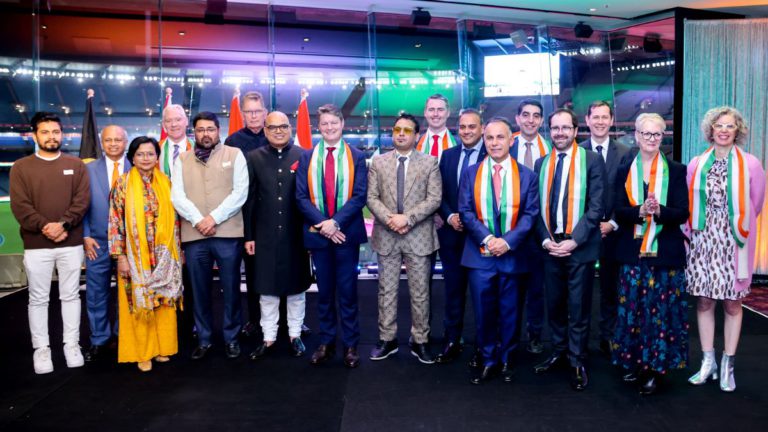
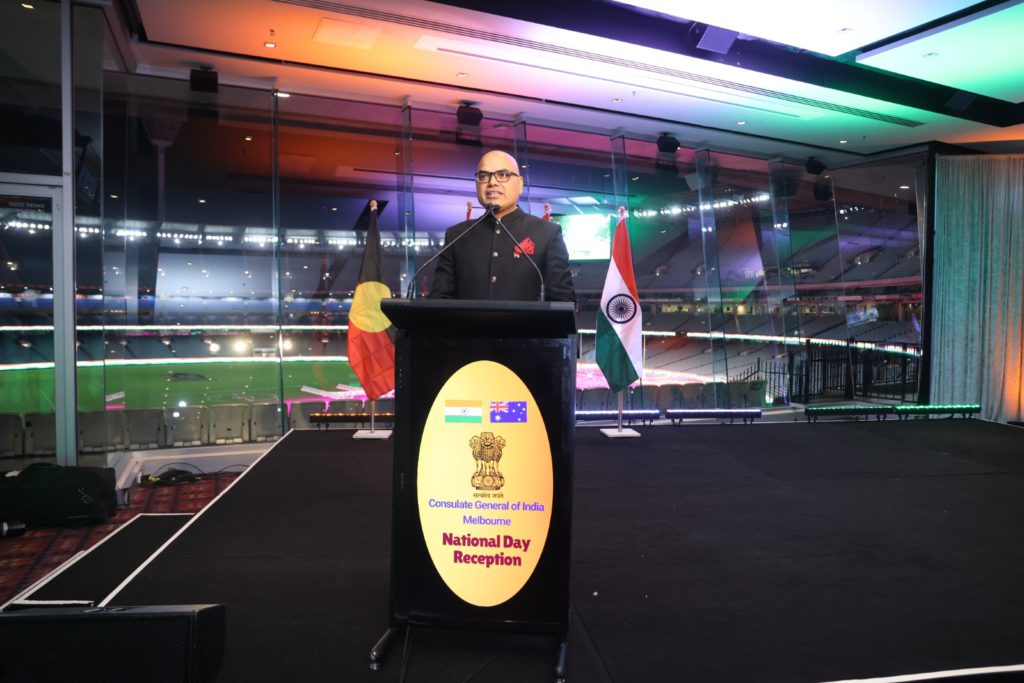
The event, hosted by the Consul General of India in Melbourne, Dr Sushil Kumar, was a vibrant display of cultural unity and the strong ties between India and Victoria.

In his opening remarks, Dr Sushil Kumar warmly welcomed the distinguished guests and members of the Indian diaspora, emphasising the importance of the Indian community in enhancing the cultural diversity of Melbourne.

He stated, “The heart of our relationship lies in the vibrant Indian diaspora that calls Melbourne home. The Indian community here has been instrumental in enhancing the cultural diversity of this great city.”

“The success stories of Indian Australians serve as a testament to their hard work, resilience, and commitment to making a positive impact on their adopted homeland.”

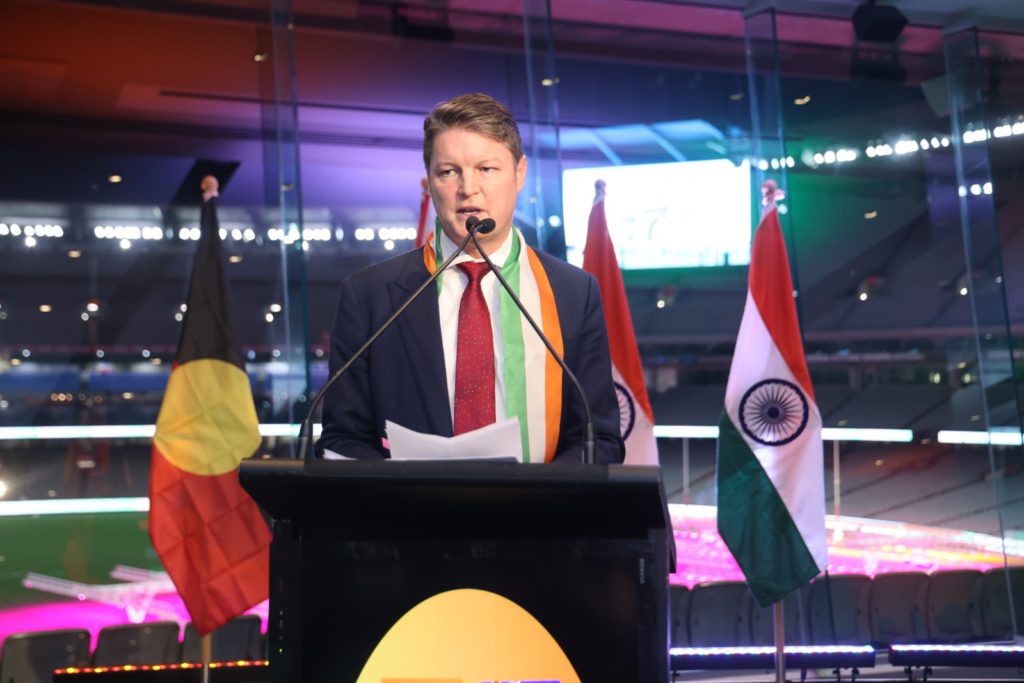
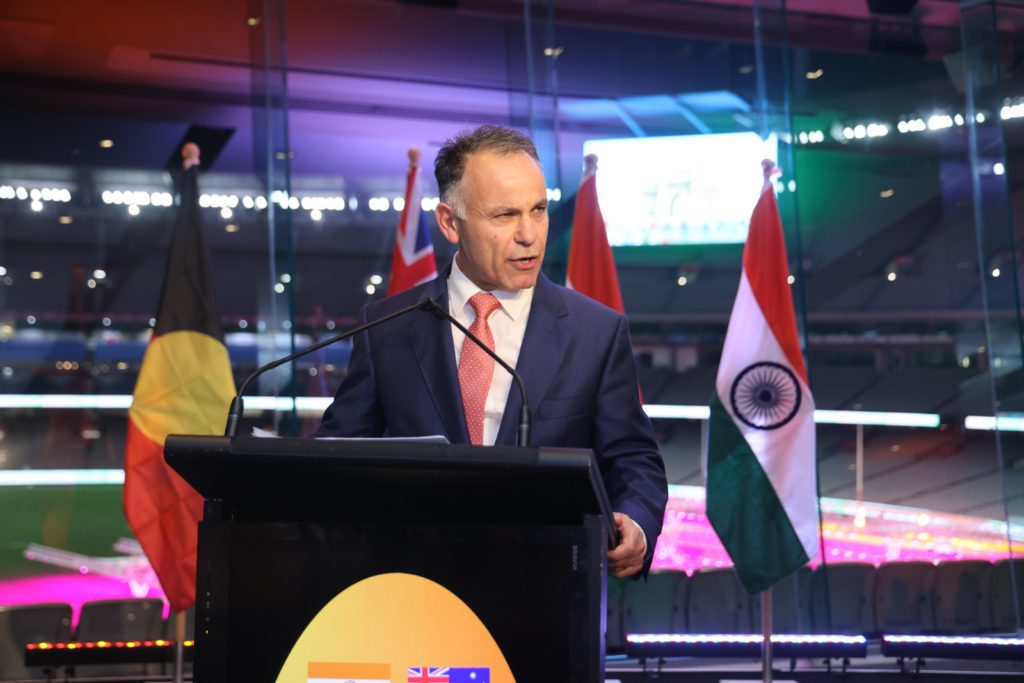
The event was graced by several high-profile guests, including the Deputy Premier of Victoria, Ben Carroll; Leader of the Opposition, John Pesutto; Former Premier, Ted Baillieu; and other key political figures.

Deputy Premier Ben Carroll, in his address, spoke about the deep values shared between Victoria and India and how these bonds are set to grow stronger.

He mentioned, “Did you see Melbourne’s iconic monuments light up in hues of green, orange, and white last night? It is in celebration of India’s 77th anniversary of Independence.”

“The values shared between Victoria and India run deep, and our relationship will continue to grow,”

he added

Carroll also highlighted the significance of education in the shared values of both regions, stating, “I’m a little biased, but I believe the most important one is how much we value education. It’s in our DNA, and we know it’s the most important investment we can make in our children’s future.

“Proud of the work of the Allan Labor Government in delivering a number of Indian languages in our schools and community language centres.”

Dr Kumar further elaborated on the strong and ever-growing relationship between India and Victoria, highlighting how shared values and mutual respect have fostered a meaningful partnership between the two regions.

“The relationship between India and Victoria is a shining example of how shared values, mutual respect, and a commitment to achieving growth and development can foster lasting and meaningful partnerships,” he added.

The Leader of the Opposition, John Pesutto, also expressed his admiration for the event and the strong ties between the two regions, thanking the Consulate General of India for their efforts in coordinating such a successful celebration.

“As India celebrates Independence Day, it was great to speak at the celebrations. A very big thank you to the Consulate General of India in Melbourne for their efforts in coordinating such successful events,”

Pesutto stated.

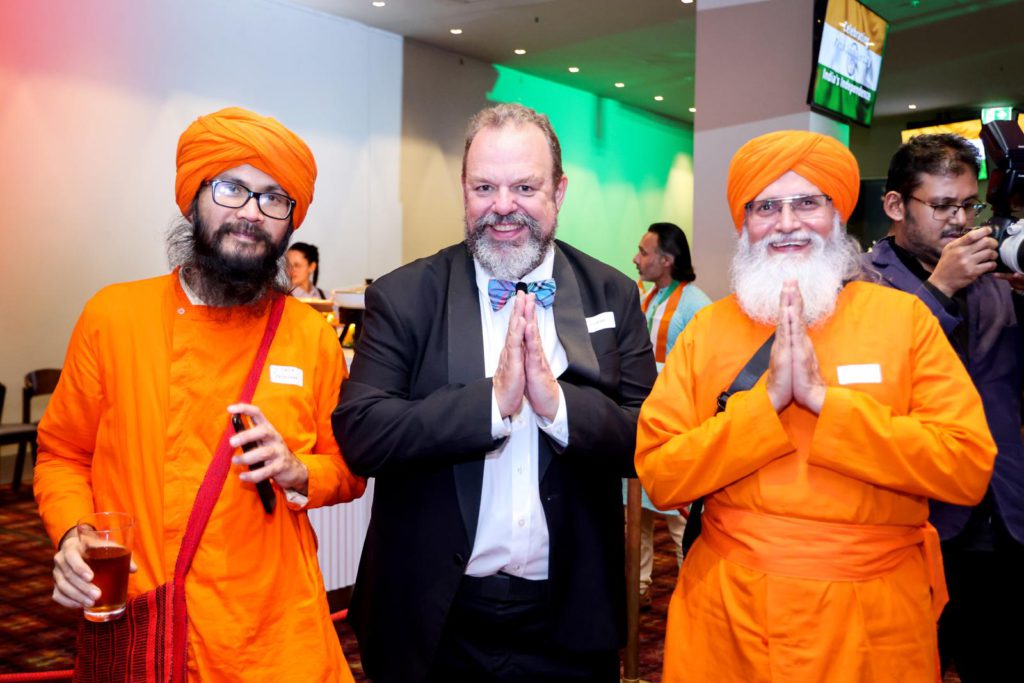
A special highlight of the evening was the presence of Prof. Arnold Dix, who played a crucial role in rescuing Indian labourers from a tunnel. His attendance underscored the spirit of unity and cooperation between India and Australia, adding a poignant touch to the celebrations.

The event featured an array of music and dance performances that brought the energy and spirit of India to life. Indian music and dance performances set a serene tone for the evening, with melodious tunes that resonated with the audience, creating an atmosphere of cultural reverence.

One of the most enthralling performances of the night was delivered by the Jana Garjana Dhol Pathak, a group renowned for their traditional Indian drumming. The group’s powerful and rhythmic beats reverberated through the iconic venue, capturing the essence of Indian festivity.

The dhol, a traditional drum used in various Indian celebrations, was played with such precision and enthusiasm that it drew the attention and admiration of nearly 450 guests present. The beats of the dhol not only energised the audience but also symbolised the strength and unity of the Indian community in Australia.

The culinary offerings at the reception were nothing short of a gastronomic adventure, leaving guests raving about the evening’s delicious spread. The menu was a vibrant showcase of India’s rich culinary traditions, featuring an enticing array of dishes that delighted the taste buds.

Each dish was a celebration of flavour. The dessert table, laden with sweets like gulab jamun added a perfect finishing touch, making the food a true highlight of the evening’s festivities.

The event celebrated the vibrant Indian community in Melbourne and highlighted the shared values that continue to strengthen the bonds between the two regions. The presence of distinguished guests and the cultural performances made it an unforgettable evening, reinforcing the deep ties that bind India and Australia.

Support Our Journalism

Global Indian Diaspora and Australia’s multicultural communities need fair, non-hyphenated, and questioning journalism, packed with on-ground reporting. The Australia Today – with exceptional reporters, columnists, and editors – is doing just that. Sustaining this needs support from wonderful readers like you.

Whether you live in Australia, the United Kingdom, Canada, the United States of America, or India you can take a paid subscription by clicking Patreon and support honest and fearless journalism. LINK: https://tinyurl.com/TheAusToday
The NDIS reform bill has been passed – will it get things ‘back on track’ for people with disability?

0

By Helen Dickinson

The government has passed a bill that will pave the way for sweeping reforms to the National Disability Insurance Scheme (NDIS).

In late March many in the disability community were surprised when the government introduced a new piece of legislation to get the NDIS “back on track”. The route of the bill through parliament has not been easy and many in the disability community have been highly critical of it, even calling for the current reforms to be scrapped altogether.

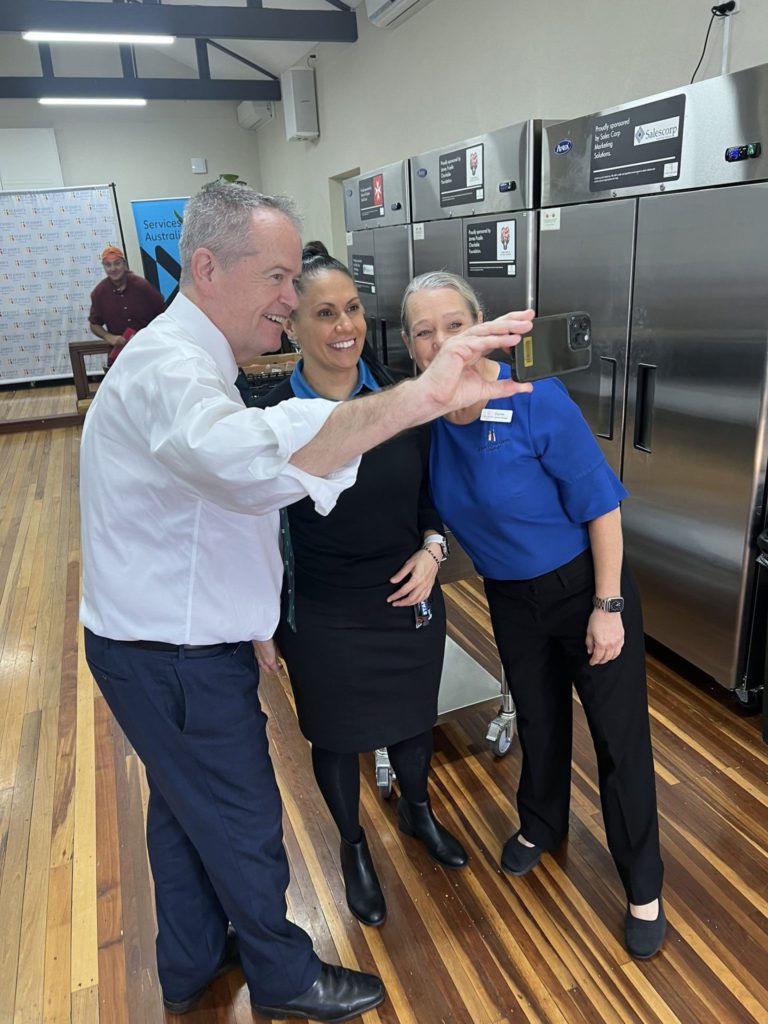
On Wednesday, NDIS Minister Bill Shorten said an agreement had been reached with states and territories about how they will work together regarding the scheme. The provision of “foundational” disability support and services outside the NDIS has been a sticking point.

Why has this bill been so controversial? And now that amended reforms have passed, what will happen next?

A long and winding path

When the legislation to reform the NDIS Act was tabled there had been no exposure draft released beforehand. This meant there had not been public discussion and although some Disability Representative Organisations had been given details, they had been asked to sign non-disclosure agreements to prevent them from talking about it. This was at odds with NDIS review recommendations that rules and changes should be co-designed with people with disability and adhere to the principle of “nothing about us, without us”.

When the bill was introduced to parliament there were also two major processes – the NDIS review and the disability royal commission – that had delivered recommendations about disability services and supports and had not yet been responded to by the government.

Since then, there has been a response to the disability royal commission widely panned as “lacklustre and disappointing”. But we still haven’t seen a government response to the NDIS review recommendations released at the end of last year. This means the government is legislating before outlining what changes it will make in response to the review.

Further investigation

The bill was referred to a senate committee for further investigation. In what would become an ongoing theme, submission deadlines were tight with hearings held in late May and a final report due mid-June. Yet hundreds of submissions were received from the disability community.

A staggering number of amendments to the legislation followed including how NDIS supports are defined and how human rights are considered.

The bill passed the House of Representatives in early June but the government did not have enough support to pass it in the Senate and it was referred for a second committee hearing.

Again, hundreds of submissions were received with people and groups pointing out the limitations of the bill and urging it should not be passed. The committee recommended the bill should pass promptly, despite renewed pushback from the Greens.

Today, that has happened.

Concerns over cost-shifting

Given the government’s goal of containing the scheme’s costs and growth, the disability community is worried this will result in cuts to services and support.

Some in the community have accused the government of whipping up public outrage about the scheme with talk about significant fraud and money being spent on things like sex services, which only a small number of people are approved to receive under the scheme.

One solution to reducing the costs of the scheme suggested by the NDIS review was that a foundational support strategy should be developed that would take some of the pressure off. In December of last year, the National Cabinet agreed to share the costs of these supports equally between the Commonwealth and states and territories and in January the Commonwealth committed $11.6 million over two years to support the development and implementation of the foundational supports strategy.

Meanwhile, the states and territories have spoken out against the bill from the start. This is likely due to concerns changes to the scheme would shift aspects of services and supports from the NDIS to states and territories.

The disability community also shares concerns about foundational supports. Given these are not in place and have five years to transition in, NDIS changes could leave service and support gaps and disabled people going without.

Minister Shorten has dismissed fears and said he was ready to force states to take on extra responsibilities. This process has caused a significant rift with important partners in this and other policies and programs.

This week the government admitted participants might have to pay for the required NDIS needs assessment. This would amount to significant costs for participants and might mean some go without access to the NDIS, creating a significant equity issue.

Up until the very last minute, groups such as Every Australian Counts and People with Disability Australia called on the government to pause or reject the bill for fear of causing harm to NDIS participants.

What’s next?

The government has lost a lot of political currency with the disability community. It is likely any future legislation or changes to scheme rules will encounter significant opposition.

And now the legislation has passed there will need to be significant action to work out what these reforms look like in practice. The government has said it will co-design these with the community, but many remain doubtful given the journey so far.

These fears have been realised with the current consultation on how eligible supports should be defined in the NDIS. While these details have significant implications for how the scheme operates, the consultation period was initially set for a mere fortnight. It has since been extended by a week. This brief window for consultation on such an important issue could lead to changes that significantly limit the innovation and independence of participants.

Unless the government really starts listening to people with disability we will see the NDIS go backwards and some of the gains made for the disability community in recent years will be significantly eroded.

Helen Dickinson, Professor, Public Service Research, UNSW Sydney

This article is republished from The Conversation under a Creative Commons license. Read the original article.

Support Our Journalism

Global Indian Diaspora and Australia’s multicultural communities need fair, non-hyphenated, and questioning journalism, packed with on-ground reporting. The Australia Today – with exceptional reporters, columnists, and editors – is doing just that. Sustaining this needs support from wonderful readers like you.

Whether you live in Australia, the United Kingdom, Canada, the United States of America, or India you can take a paid subscription by clicking Patreon and support honest and fearless journalism. LINK: https://tinyurl.com/TheAusToday
Pseudo-intellectuals using mask of Hindu identity to divide Indian Diaspora

0

Recently, a debate surrounding the role of Hindu nationalism in dividing the Hindu diaspora has intensified on social media, but the truth lies elsewhere. The real division, as has been pointed out by experts and Hindu activists, is being driven by organisations that wear the mask of Hindu identity and whose leaders time and again claim to represent the Hindu community. Yet, their impact on the Indian diaspora is anything but unifying.

Vishal Ganesan, an attorney by profession and a vocal critic of Indian diaspora culture and politics, makes it clear that the issue is not Hindu nationalism but rather the actions of these organisations. According to Ganesan, their influence is built on a “facade of ‘representation.'” He argues that some vested organisations are responsible for creating rifts within the Indian diaspora. He asserts that their leaders, despite having “nothing to offer in terms of insight or leadership,” have managed to carve out a niche in elite democratic circles by leveraging their identities.

The key issue, as Ganesan sees it, is that these organisations do not represent the Hindu American diaspora in any meaningful way. This disconnection is why, according to Ganesan, these organisations are so quick to “weaponize the jaundiced and prejudicial ‘hindutva’ label” against the very community they claim to represent.

Mukunda Raghavan, a Fin-tech executive interested in Hindu philosophy and Sanskrit language, echoes Ganesan’s concerns, emphasising that many such organisations are neither “Hindu Organization” nor “represent[s] or speak[s] for Hindus in the diaspora.”

Raghavan argues that instead of advocating for the rights and needs of Hindus, these organisations promote their own political biases. He criticises them as “bad actors” who exploit the veneer of being Hindu to position themselves as the “good Hindu” in contrast to others labelled as “bad, fascist, nationalists.”

The critique goes further, with Raghavan highlighting how such vested groups view Hinduism through a “Western colonial Marxist lens” that ignores the genuine concerns of the Hindu diaspora. He points out their failure to address issues affecting Hindus in countries like Pakistan and Bangladesh, where religious minorities face severe persecution. Moreover, these organisations are accused of shutting down dialogue by resorting to “ad hominem and name-calling,” instead of engaging with differing viewpoints within the Hindu community.

Image: Rajen Prasad, a Fijian academic (Source: Facebook)

The impact of these organisations is not insignificant. They may not represent a large constituency, but they wield enough influence to damage the nascent efforts of Hindus organising both in the old and new Indian diaspora.

According to Rajen Prasad, a Fijian academic, “The concept of Hindu identity in the old diaspora is a powerful unifying force. Fiji Hindus view their identity as essential in preserving their culture, language, and overall sense of self.”

Sai Paravastu, the National Secretary and Director for Community Services at Hindu Council of Australia (HCA), agrees with Prasad. He points that Hinduism plays a vital role in uniting the Indian diaspora, fostering a strong sense of identity and community. It achieves this through cultural and religious celebrations that highlight Hindu values of tolerance and inclusivity help bridge gaps between different cultural groups, contributing positively to Australia’s multicultural society. Additionally, for Paravastu, Hinduism encourages political and social engagement, further integrating the diaspora into civic life.

In fact in the Indian diaspora, Hindus are diverse and integral members of the host society and inspired by Hindu teachings contribute positively to their new home or communities. Yet, when organisations with vested political interests are given platforms with devious agendas amplified by pseudo-intellectuals, they can inflict serious harm on the community’s efforts to organise and represent themselves.

As Suhag Shukla, the Executive Director of Hindu American Foundation, aptly puts it, “You need not represent anyone and have almost no constituency to speak of, to still inflict serious damage on nascent Hindu American organising — especially when you’re promoted/coddled as a useful idiot by groups with a seriously malign agenda. Once in a while, you gotta just call out the BS.”

Well-known columnist Avatans Kumar highlights that the Indic Nationalism is neither theocentric (theocratic) nor anthropocentric (borderless laissez faire), “Indic Nationalism is Dharma with freedom of mind, body, and spirit as well as Self realization as its core principle. It is a divine power that does not strive to hurt or subjugate others.”

The time has come to recognise that the real threat to the unity of the Hindu diaspora is not the so-called rise of Hindu nationalism, but the divisive actions of those who are ideologically motivated and falsely claim to represent the Indian community.

Support Our Journalism

Global Indian Diaspora and Australia’s multicultural communities need fair, non-hyphenated, and questioning journalism, packed with on-ground reporting. The Australia Today – with exceptional reporters, columnists, and editors – is doing just that. Sustaining this needs support from wonderful readers like you. Whether you live in Australia, the United Kingdom, Canada, the United States of America, or India you can take a paid subscription by clicking Patreon and support honest and fearless journalism.

Albanese Government to introduce superannuation on Paid Parental Leave

0

The Albanese Labor Government has taken a significant step towards enhancing financial security for Australian families by introducing legislation to pay superannuation on Government-funded Paid Parental Leave.

Prime Minister Anthony Albanese described the policy as “a modern policy for modern families,” emphasising that it provides choice, security, and rewards aspiration. He added, “My Government is boosting Paid Parental Leave by extending it to a full six months. This strengthens that further by adding superannuation on it as well.”

The new legislation, titled the Paid Parental Leave Amendment (Adding Superannuation for a More Secure Retirement) Bill 2024, was presented to the House of Representatives today. This initiative builds on recent reforms aimed at making Paid Parental Leave more flexible, accessible, and equitable, while also extending the duration of the scheme.

If passed, the legislation will benefit eligible parents with babies born or adopted on or after 1 July 2025. They will receive an additional payment equivalent to 12 per cent of their Paid Parental Leave payment, which will be contributed to their nominated superannuation fund.

Treasurer Jim Chalmers highlighted the reform’s importance in ensuring that women earn more and retire with greater financial security. “Paying super on Paid Parental Leave is part of our efforts to ensure women earn more, keep more of what they earn, and retire with more,” he said.

This reform is expected to bolster the economic security of approximately 180,000 Australian families each year by improving retirement savings. The Paid Parental Leave scheme currently offers financial support to eligible working parents, allowing them to take time off work following the birth or adoption of a child.

Minister for Women, Katy Gallagher, noted that the changes would help reduce the financial penalties women face when raising a family, particularly in terms of their retirement savings. “These long-overdue changes will help ease those penalties and lessen the impact on women’s retirement savings,” Gallagher stated.

The legislation aligns with broader changes to the Paid Parental Leave scheme, which is set to expand to 26 weeks by 2026. As of 1 July 2024, parents have been able to access 22 weeks of Paid Parental Leave, an increase from the previous 20 weeks, offering more support as they care for their newborns.

Minister for Social Services, Amanda Rishworth, added that the move signals the Government’s commitment to valuing parental care and promoting gender equality. “By investing in these reforms, we are ensuring families can get the most out of Paid Parental Leave and exercise more choice and flexibility, especially now that we are adding superannuation for a more secure retirement,” she said.

Subject to legislative approval, a lump sum superannuation payment will be made after the end of each financial year, including an interest component, to those who have received Paid Parental Leave. The contribution will be automatically deposited into the superannuation accounts of eligible parents.

Support Our Journalism

Global Indian Diaspora and Australia’s multicultural communities need fair, non-hyphenated, and questioning journalism, packed with on-ground reporting. The Australia Today – with exceptional reporters, columnists, and editors – is doing just that. Sustaining this needs support from wonderful readers like you. Whether you live in Australia, the United Kingdom, Canada, the United States of America, or India you can take a paid subscription by clicking Patreon and support honest and fearless journalism.

Best Australian books of the 21st century: as chosen by 50 experts

0

By Jo Case

Like so many avid readers around the world, I was fascinated by the recent New York Times list of the Best Books of the 21st century, as voted by 503 authors, critics and book lovers.

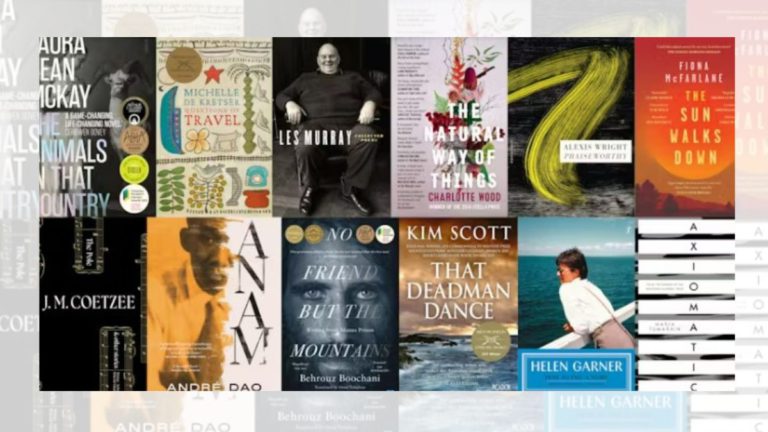
But like many Australians, I was disappointed to see no Australian books on the list. Even those authors who’ve made a splash in the US literary scene this century – Helen Garner, Gerald Murnane, Maria Tumarkin – didn’t get a guernsey.

That’s where we come in. The Conversation’s Books & Ideas team, seeking to right a wrong (and just very curious), asked 50 Australian literary experts to each share their favourite Australian books of this century.

I’m pleased to say the aforementioned authors are all represented here – along with a host of others, ranging from household names and local literary darlings to excellent (we’re told) books and authors you might not have heard of until now.

We were unsurprised to see Waanyi author Alexis Wright, who made history by winning both the Miles Franklin and the Stella Prize for her epic Praiseworthy, topping our most-picked list.

Melbourne bookseller Readings recently asked members of the Australian literary community to nominate their best Australian books of the 21st century, creating a ranked top 30. Our approach is a little different: we’ve included all 50 nominations, with a few words from our experts – and we’ve allowed two honourable mentions each.

What are our personal picks? Books & Ideas editor Suzy Freeman-Greene’s number one book is Extinctions by Josephine Wilson. Her honourable mentions are Burial Rites by Hannah Kent and Joe Cinque’s Consolation by Garner.

Fellow deputy editor James Ley, our resident 2024 Miles Franklin judge (doesn’t every books section have one of those?), chose Brian Castro’s Shanghai Dancing, closely followed by Wright’s Carpentaria (narrowly edging out Praiseworthy, if only because it came first) and J.M. Coetzee’s Elizabeth Costello.

And me? My very favourite is Tumarkin’s deeply ethics-driven work of creative nonfiction, Axiomatic. My honourable mentions are Dark Palace by Frank Moorhouse and How to End a Story: Diaries 1995–1998 by Garner.

If you’d like to play this game too, scroll to the end of the article to vote in our poll or leave a comment. We’ll share selected results in our next Books & Ideas newsletter. (You can subscribe here if you don’t get it already.)

And look out for New Zealand’s Best Books, which we’ll publish soon.

https://cdn.theconversation.com/infographics/1089/42a98130057df5742ff71ba05feeba866e722987/site/index.html

Jo Case, Deputy editor, Books & Ideas, The Conversation

This article is republished from The Conversation under a Creative Commons license. Read the original article.

"The

Support Our Journalism

Global Indian Diaspora and Australia’s multicultural communities need fair, non-hyphenated, and questioning journalism, packed with on-ground reporting. The Australia Today – with exceptional reporters, columnists, and editors – is doing just that. Sustaining this needs support from wonderful readers like you. Whether you live in Australia, the United Kingdom, Canada, the United States of America, or India you can take a paid subscription by clicking Patreon and support honest and fearless journalism.

200 unexploded WWII shells uncovered in Solomon Islands capital

0

By Stefan Armbruster

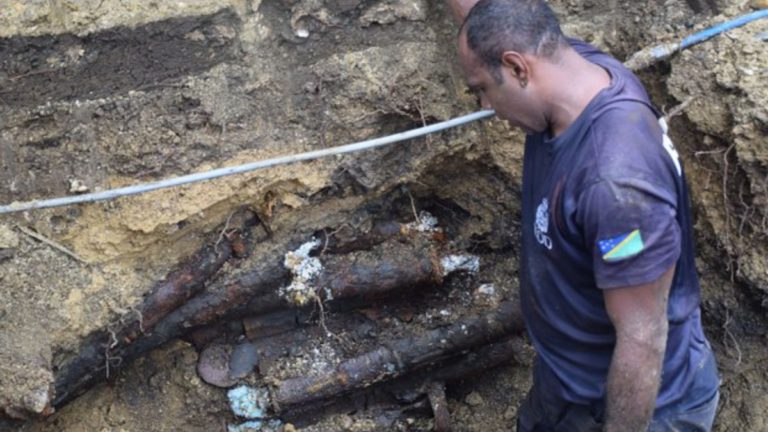
A stockpile of more than 200 U.S. artillery shells from the Second World War discovered at a school in the Solomon Islands capital has been safely removed.

Honiara is estimated to be littered with thousands of bombs and shells left behind on the battlefield after the six-month Battle of Guadalcanal ended in 1943.

Royal Solomon Islands Police Force in a statement said the unexploded ordnance was uncovered at St. Nicholas School, near the National Referral Hospital, while a hole was being dug for sewage at a staff house.

EODD officers pass on a UXO to officers for storage a safer location for transportation.jpeg
Explosive Ordnance Disposal Department officers of the Royal Solomon Islands Police Force move unexploded ordnance found at St. Nicholas School in the capital Honiara, on Aug. 20 2024. [RSIPF]

“A total of 200 plus U.S. projectiles has been removed to a safe location at Hell’s Point with the support of the Australian Defense Force and now waiting for safe destruction,” said RSIPF Inspector Clifford Tunuki said in the statement.

The school was used to house athletes during the Pacific Games in Honiara last year.

Tunuki, the acting director of the Explosive Ordnance Disposal Department, declared “the vicinity’s safe for the school to do its business” and warned people to be vigilant and report any further finds.

Stockpile of the US Projectiles removed by EODD.jpeg
The stockpile of unexploded ordnance removed by Explosive Ordnance Disposal Department officers of the Royal Solomon Islands Police Force in the capital Honiara, on Aug. 20 2024. [RSIP]

Honiara was the battlefield where U.S. Marines halted the Japanese advance on land in the Pacific for the first time. An estimated 26,000 Japanese and allied soldiers died, along with an unknown number of Solomon Islanders.

Deaths still regularly occur in the country 80 years later, when UXOs detonate.

The detonation failure rate for munitions used during the Second World War was up to one-in-three, leaving explosives scattered across former Pacific battlefields. 

Australia has led the disposal efforts and trained RSIPF officers, with support from the U.S. and Japan, during more than a decade of clearance operations in the country.

In March, 700 UXOs were uncovered and destroyed in a 12-day operation in Western Province. 

The first full UXO clearance operation in Solomon Islands since the COVID 19 pandemic began is due next month again in Western Province, the Australian High Commission said in a statement in July.

Disclaimer: This news article was originally published in Benar News and is re-published here with the editor(s)’ kind permission. The views expressed in this article are those of the original author and do not necessarily reflect the views of our publication. We are not responsible for any errors or omissions in the content.

Support Our Journalism

Global Indian Diaspora and Australia’s multicultural communities need fair, non-hyphenated, and questioning journalism, packed with on-ground reporting. The Australia Today – with exceptional reporters, columnists, and editors – is doing just that. Sustaining this needs support from wonderful readers like you. Whether you live in Australia, the United Kingdom, Canada, the United States of America, or India you can take a paid subscription by clicking Patreon and support honest and fearless journalism.

Indian beats from Punjab bowl over crowds as Bhangra and Giddha performed at Sydney Cricket Ground

0

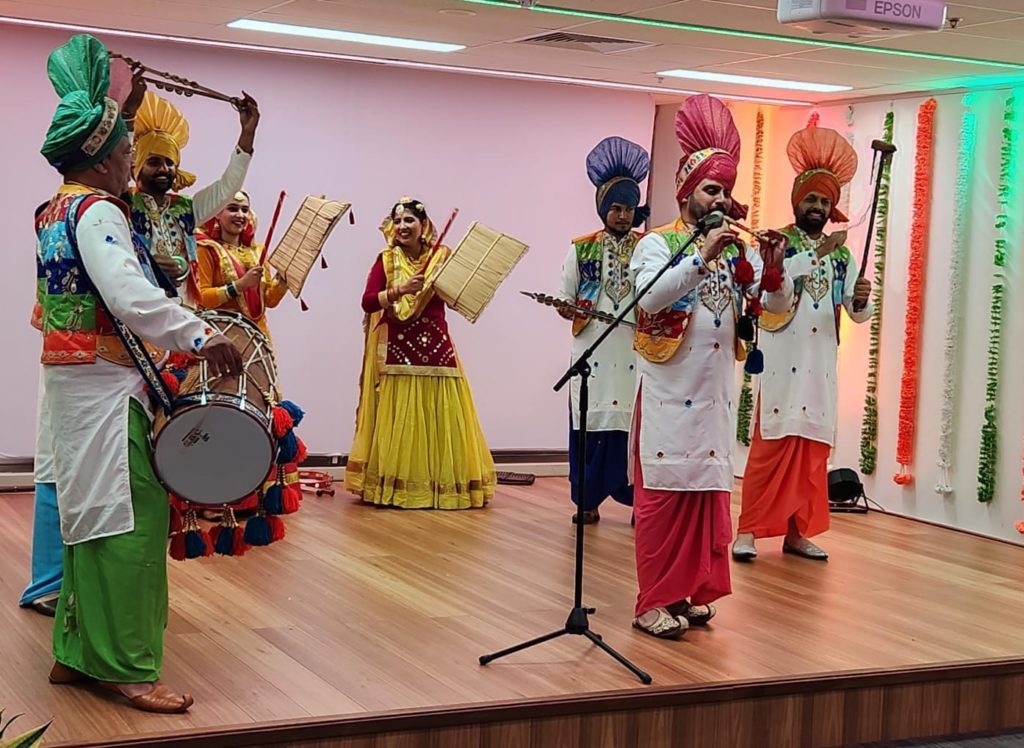
Australia recently danced to the beats of Punjab with an ICCR (Indian Council for Cultural Relations) empanelled troupe coming coming all the way from India to partake in Indian Independence Day celebrations.

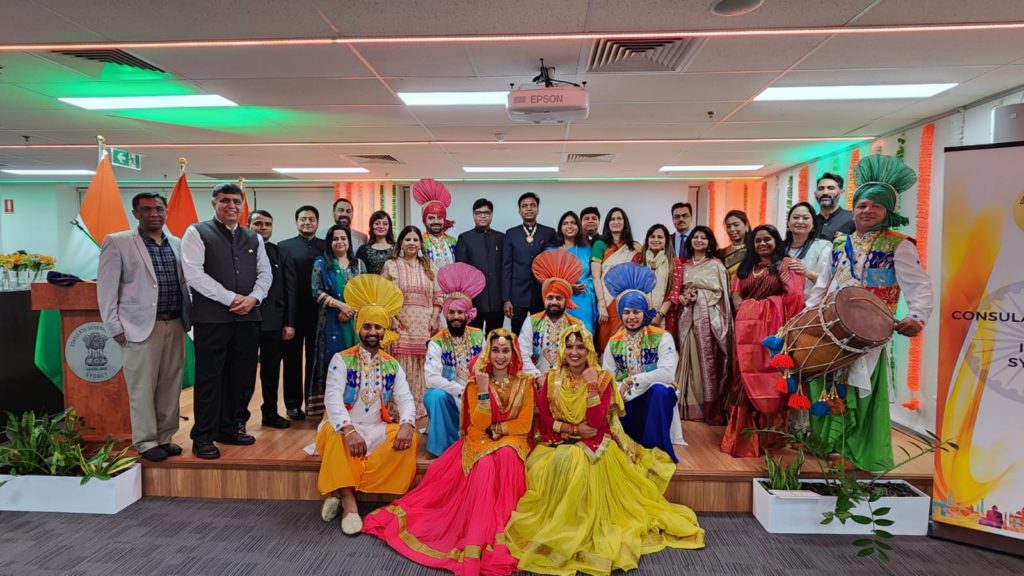
Punjab Cultural Society, led by Ravinder Singh Ranguwal, enthralled audiences with their dances, songs and music as they toured Sydney and Adelaide. They Swami Vivekananda Cultural Centre in Sydney (SVCC) hosted the ICCR emapnelled troupe and organised their programmes.

Punjab Cultural Society at CGI, Sydney (Image credit: ICCR in Australia Facebook)

Punjab Cultural Society at CGI, Sydney (Image credit: ICCR in Australia Facebook)

On 15th August, in celebration of Indian Independence Day, Punjab Cultural Society performed at the Swami Vivekananda Cultural Centre, Consulate General of India, Sydney in the morning and then proceeded to electrify the atmosphere at the Sydney Cricket Ground in the evening. This was the very first time that a dance troupe from India had performed inside the iconic cricket stadium on a stage as part of a cultural programme. The fabulous dances left the audiences mesmerised.

Watch Video: Punjab Cultural Society performing at Sydney Cricket during India’s 78th Independence Day Celebrations (Courtesy: ICCR in Australia)

Speaking exclusively to The Australia Today Mr Ranguwal said that he was enjoying his time in Australia and was really happy to have performed Bhangra and Giddha at the SCG.

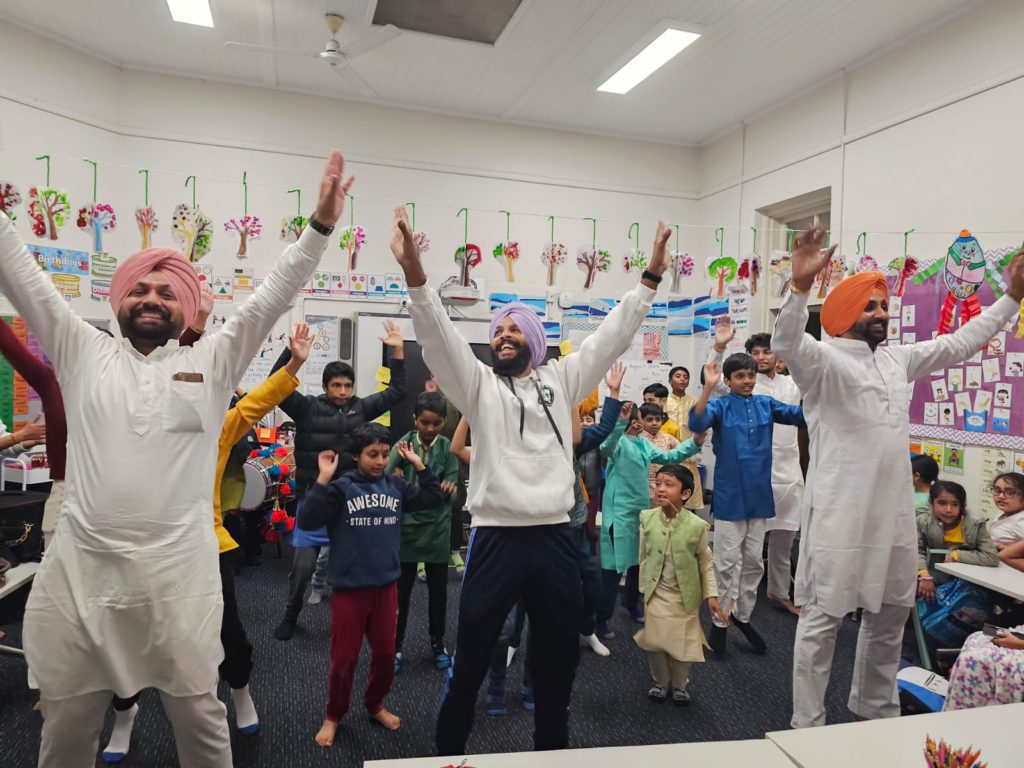
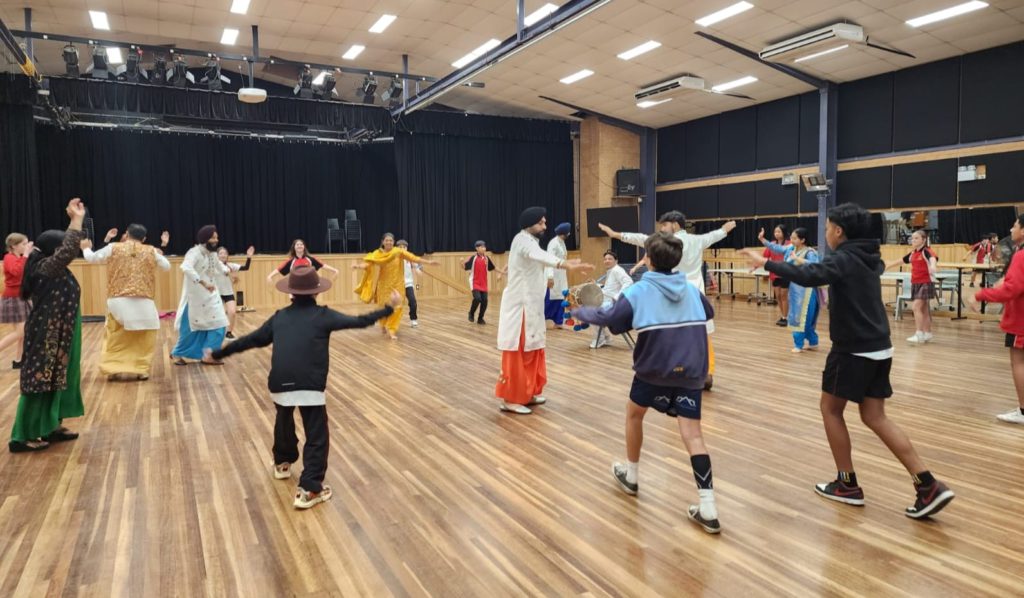
Besides the vibrant performances, the troupe had a folk dance workshop for the children and teachers at the Sydney Sanskrit School.

Punjabi workshop at Sydney Sanskrit School (Image credit: ICCR in Australia Facebook)

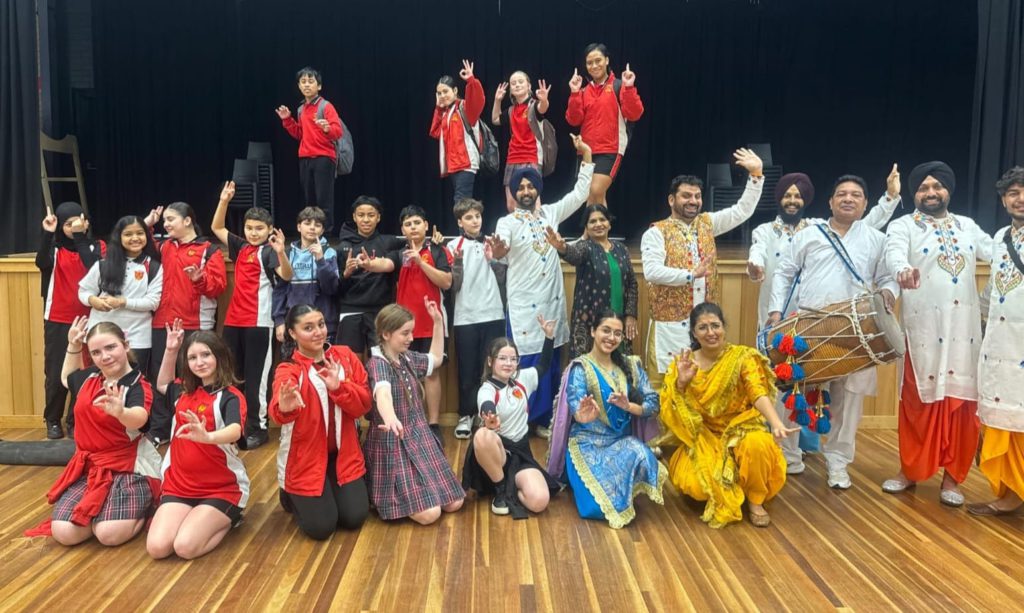
The Swami Vivekananda Cultural Centre and the Indo-Aust Bal Bharathi Vidyalaya also organised a Punjabi workshop at Plumpton High School in Adelaide. The students had a wonderful time learning different dances with the Punjab Cultual Society.

Punjabi workshop at Plumpton High School (Image credit: ICCR in Australia Facebook)

They did a variety of performances across the two cities with traditional musical instruments as well as Bhangra, Giddha, Sammie, Jhumar and others.

Punjabi workshop at Plumpton High School (Image credit: ICCR in Australia Facebook)

Support Our Journalism

Global Indian Diaspora and Australia’s multicultural communities need fair, non-hyphenated, and questioning journalism, packed with on-ground reporting. The Australia Today – with exceptional reporters, columnists, and editors – is doing just that. Sustaining this needs support from wonderful readers like you. Whether you live in Australia, the United Kingdom, Canada, the United States of America, or India you can take a paid subscription by clicking Patreon and support honest and fearless journalism.

Albanese Government Shuts Down Over 150 ‘Ghost Colleges’ in Major VET Sector Crackdown

0

The Federal Government has announced a significant crackdown on dormant vocational education and training (VET) providers, shutting down over 150 “ghost colleges” as part of an effort to restore integrity in Australia’s VET sector.

This action follows the findings of the Braithwaite Review (2018), the Nixon Review (2023), and the Interim Report into International Education (2023), which highlighted severe integrity issues that were ignored under the previous Liberal and National Governments.

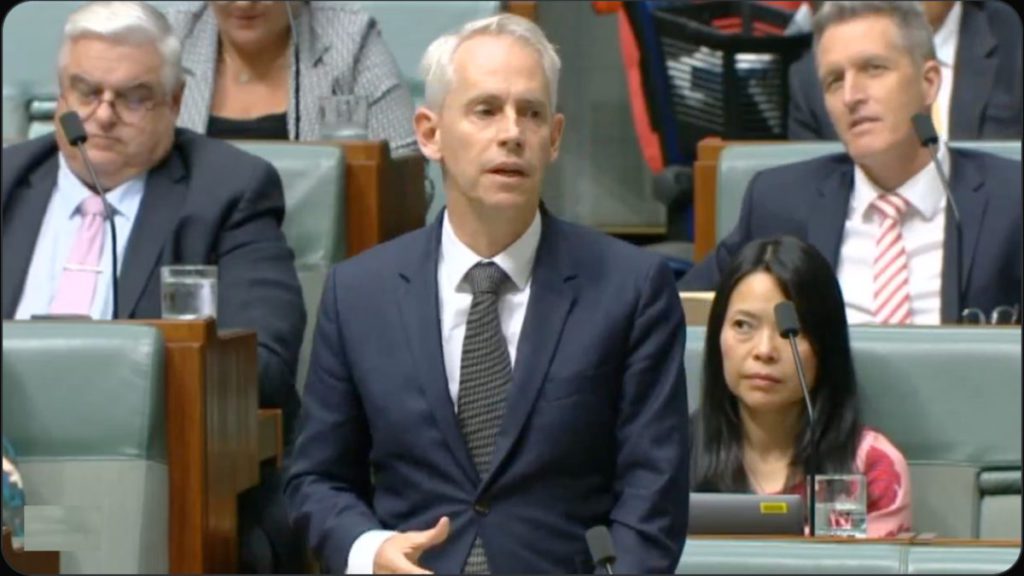
Minister for Skills and Training, Andrew Giles, emphasised that the government’s action is aimed at eliminating rorts and loopholes that have plagued the VET sector for too long.

Minister Andrew Giles at Parliament of Australia; Image Source @Screenshot

He stated, “The Albanese Government is calling time on the rorts and loopholes that have plagued the VET sector for far too long under the former Liberal and National Government.”

“We’ve weeded out and shut down over 150 dormant operators, and 140 more have been given a yellow card.”

The government has also put an additional 140 registered training organizations (RTOs) on notice, requiring them to resume quality training by the end of 2024 or face deregistration.

The initiative is part of broader efforts by the Albanese Government to restore the integrity and quality of the VET sector, backed by more than $37 million in investments in VET integrity initiatives.

The National Vocational Education and Training Regulator Amendment, passed earlier this year, has strengthened measures to improve the quality of education in Australia.

These actions are designed to ensure students receive training from reputable providers and that businesses can trust the qualifications being awarded, ultimately saving time and money in the hiring process and preventing student exploitation.

Minister Giles further added,

“Under our Government, there is no place for anyone who seeks to undermine the sector and exploit students.”

He says this decisive action demonstrates the government’s commitment to cleaning up a sector that has been marred by issues for over a decade, ensuring that Australia’s VET system remains robust, trustworthy, and effective in delivering quality education to students.

Support Our Journalism

Global Indian Diaspora and Australia’s multicultural communities need fair, non-hyphenated, and questioning journalism, packed with on-ground reporting. The Australia Today – with exceptional reporters, columnists, and editors – is doing just that. Sustaining this needs support from wonderful readers like you.

Whether you live in Australia, the United Kingdom, Canada, the United States of America, or India you can take a paid subscription by clicking Patreon and support honest and fearless journalism. LINK: https://tinyurl.com/TheAusToday

Islamist misinformation debunked: False claims of India’s alleged war crimes in Gaza exposed

0


By Amit Sarwal and Jai Bharadwaj

Islamist propaganda reports circulating on social media claiming that India has been charged with committing war crimes in Gaza, Palestine, have been debunked as entirely false through a fact-check conducted by AAP.

Image: A social media post claiming India has been charged with committing war crimes in Gaza (Source: Screenshot – AAP).

According to AAP Factcheck, the misleading claim seems to have originated from a YouTube video titled “India charged for war crimes in Gaza” by CJ Werleman.

In the video, the speaker CJ Werleman suggests that Israel’s acquisition of drones from India could “further implicate India in war crimes.” However, the video content does not substantiate the title’s claim that India has been charged with such crimes.

He also claims, “Israel hiring Indian Hindu workers to rebuild Gaza for illegal Jewish settlements, which constitutes a war crime.” Meanwhile, YouTube has restricted his show to limited advertisements because it claims the content is too “controversial”

India has consistently supported Palestine and Palestinian refugees through contributions to the UN Relief and Works Agency (UNRWA).

Last year, India sent nearly 6.5 tonnes of medical aid and 32 tonnes of disaster relief supplies to support the people of Palestine. The aid was transported by an Indian Air Force C-17 transport aircraft, which delivered the consignment to El-Arish airport in Egypt.

India’s shipment included essential life-saving medicines, surgical supplies, tents, sleeping bags, tarpaulins, sanitary utilities, water purification tablets, and other critical items.

This aid was dispatched three days after Prime Minister Narendra Modi expressed condolences to Palestinian Authority President Mahmoud Abbas following the deaths of civilians at a hospital in Gaza.

During this phone conversation, PM Modi reiterated India’s long-standing “principled position” on the Israel-Palestine issue and assured continued humanitarian assistance to the Palestinian people.

India’s Permanent Representative to the UN, Ambassador Ruchira Kamboj, in a statement at the UN General Assembly in March this year said that this conflict had resulted in an alarming humanitarian crisis that was simply unacceptable.

A former Indian Army Officer, Col Waibhav Kale (Retd), who was working with the United Nations Department of Safety and Security (UNDSS) as a security service coordinator, also lost his life in May this year when the UN vehicle he was travelling in came under attack in Gaza’s Rafah region.

In 2018, PM Modi created history by becoming the first Indian Prime Minister to visit Palestine. He travelled to Ramallah in a chopper provided by the Jordanian government, with an escort from the Israeli Air Force.

PM Modi was awarded the ‘Grand Collar of the State of Palestine,’ the highest honour given to foreign dignitaries, by President Mahmoud Abbas. The award recognised PM Modi’s significant role in strengthening India-Palestine relations.

During their joint press statement, President Abbas praised Modi’s leadership in promoting peace and stability in the region and globally. PM Modi added that bestowing the honour on him was a matter of proud moment for India and was reflective of the friendship between India and Palestine.

Experts and international prosecutors have emphasised that states cannot be charged with war crimes; only individuals are subject to such charges.

Emily Crawford, an international law expert at the University of Sydney, explained to AAP FactCheck, “The International Criminal Court (ICC) is only authorised to investigate and prosecute individuals, not states, under the Rome Statute.”

Melanie O’Brien, president of the International Association of Genocide Scholars, said that disputes between states over breaches of international law are handled by the International Court of Justice (ICJ), not through criminal prosecution.

“States exist outside the criminal legal system; their disputes are adjudicated based on obligations under treaties or conventions,” she told AAP FactCheck.

This distinction highlights the difference between individual accountability in the ICC and state disputes resolved in the ICJ.

The Office of the Prosecutor (OTP) in the International Criminal Court (ICC) says it is only authorised to investigate individuals under the jurisdiction of the court, as set out in the Rome Statute.

Support Our Journalism

Global Indian Diaspora and Australia’s multicultural communities need fair, non-hyphenated, and questioning journalism, packed with on-ground reporting. The Australia Today – with exceptional reporters, columnists, and editors – is doing just that. Sustaining this needs support from wonderful readers like you.

Whether you live in Australia, the United Kingdom, Canada, the United States of America, or India you can take a paid subscription by clicking Patreon and support honest and fearless journalism. LINK: https://tinyurl.com/TheAusToday
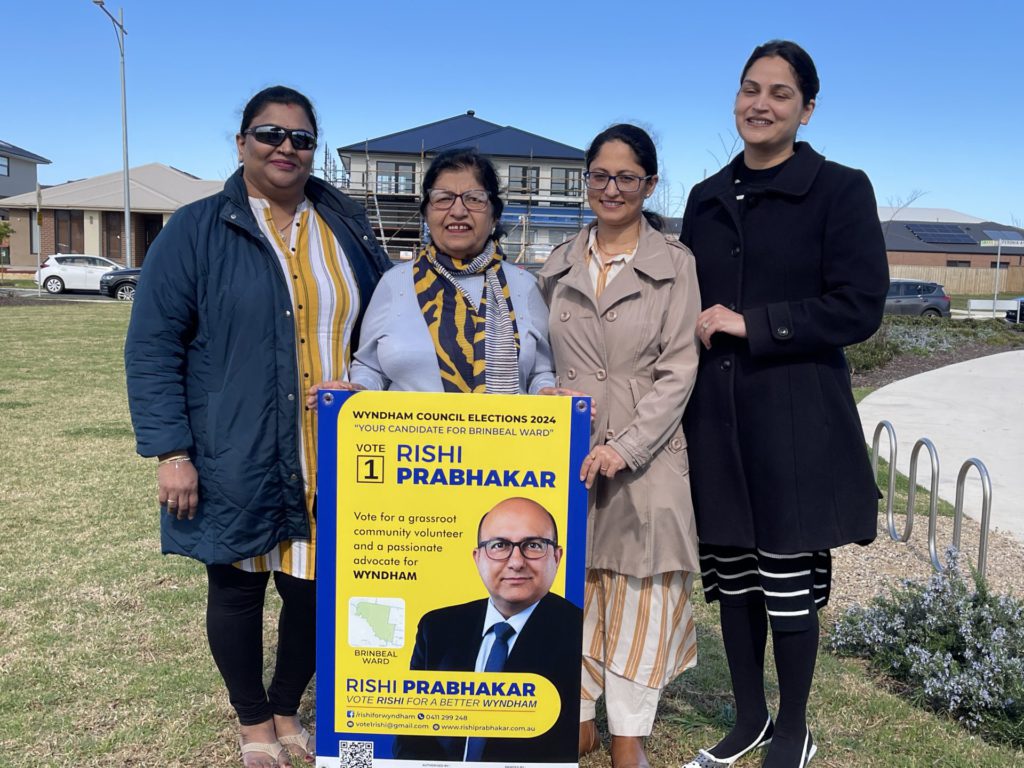
‘Not my boy.’ When teachers are harassed by students, some schools and parents fail to help

0

By Samantha Schulz and Sarah McDonald

Since the start of this school year, we have been surveying teachers in South Australia about sexist views among students. This is part of our research into how online worlds are shaping Australian schooling.

In May, we reported the first round of our research. We found South Australian teachers were experiencing a rise in sexist and other anti-social views among students, similar to those reported interstate and overseas.

Teachers in our as yet unpublished study spoke of an alarming increase in misogynistic, homophobic, racist, and sexist language and behaviours, mostly by boys and young men targeting girls and young female teachers. This is prompting some women to leave the profession.

A new theme to emerge from our research is bystander inaction. This is when school leaders, other teachers, or parents downplay what is happening or do nothing or little in response.

Female School Teacher- Image Source- CANVA

Our study

Between February and May this year, we advertised an anonymous survey on the Teachers of Adelaide Facebook group. This involves teachers from public, private co-ed and single-sex schools.

The survey called for short-answer responses to questions about sexism, racism, homophobia or other anti-social behaviours and language.

We received 160 responses. Almost 80% of the responses were from female teachers, who were mostly from high schools. On top of this, we did ten interviews with teachers who responded and were willing to talk at further length.

Teachers are not prepared to help

Some female teachers in our study experienced abuse and harassment by students when they were on their own. But it sometimes occurred around other female staff or teachers.

One female teacher who has been in the profession for 14 years told us how a Year 11 boy backed her into a corner of the staff room.

And the other staff members, they didn’t know what to do because he was stronger than all of us.

Other teachers spoke about how they had no training or preparation to deal with this kind of behaviour.

School Student- Image Source- CANVA

One female teacher said:

I don’t think my teaching degree prepared me for any of this […]. It was a bit of a culture shock going into a school.

Another female teacher said teacher education and professional development did not acknowledge “you could possibly be the victim of sexual harassment as a teacher”. She added, “that really pisses me off, to be honest”.

It’s different for male teachers

A male interviewee described stepping into a senior high school classroom after the female teacher for that class had resigned due to the behaviour of male students.

She was having sexually suggestive things said to her by her students and it was not really dealt with appropriately. And she got to the point where she felt sick even thinking about coming to work […].

Male School Teacher- Image Source- CANVA

But as this male teacher explained, male students did not treat him the same way.

So, I just walk into the room, and they’re like, yeah, that’s the […] authority figure. It’s a man.

Other male teachers said gender-based harassment and abuse was too big an issue for them to tackle as part of their already busy and complex jobs.

As one told us:

the scale of the problem is too big, and it’s really tangential as far as our duties go.

School leaders are not helping

Female teachers are telling us some school leaders (which include principals and deputy principals) are not treating these issues seriously.

School Student- Image Source- CANVA

In one school, a female teacher left after being told by students as young as Year 7 she “looked like a porn star”.

A female colleague told us how

she told the principal that she was being sexually harassed, the principal just said, ‘Well, just because you said it’s harassment, it doesn’t necessarily mean it is’.

Other respondents talked about a “hush-hush” response from schools when teachers left due to student behaviour.

anything that’s challenging, [the principal is] like, ‘No, we’re not discussing that. I’ll have a discussion in private with you’.

In other industries – where the harassment of women has been ignored or covered up – this has been referred to as “institutional gaslighting”.

Parents are ignoring warnings

When there is a behavioural issue with a student, one of the first steps a teacher can take is to talk to the parents. But teachers in our study said parents often did not believe their sons could behave this way.

As one female teacher described it, there is

a lot of eye rolling like, I can’t believe you’re treating this as an issue.

Another female teacher told us:

usually I get the response from the parent, ‘Not my boy. My boy would not do that. My boy would not have those values’.

The same teacher continued:

I’m just wondering how many parents really know their sons and have been prepared to sit down and talk about consent with their children, have been prepared to sit down and talk about respect with their children?

What can we do?

Bystander inaction to harassment and abuse of women and girls is not new. Research shows it thrives within cultures and systems where there is a poor understanding of gender equity and little recognition we are all responsible for preventing or responding to this behaviour.

In Australia, we have a decades-long policy vacuum around gender equity in schooling. So our systems are ill-equipped and reluctant to deal with this issue, despite warnings schools are becoming breeding grounds for gender-based violence and teachers are leaving.

We now have mandatory consent education, but as our research indicates, this is not being delivered consistently or effectively across schools.

Education around gender must be part of teaching degrees and a central component of the Australian Curriculum. And all of us in the community – including parents – need to take responsibility for the way men and boys treat women and girls.

Samantha Schulz, Senior Lecturer, School of Education, University of Adelaide and Sarah McDonald, Lecturer in Education Futures, University of South Australia

This article is republished from The Conversation under a Creative Commons license. Read the original article.

Support Our Journalism

Global Indian Diaspora and Australia’s multicultural communities need fair, non-hyphenated, and questioning journalism, packed with on-ground reporting. The Australia Today – with exceptional reporters, columnists, and editors – is doing just that. Sustaining this needs support from wonderful readers like you.

Whether you live in Australia, the United Kingdom, Canada, the United States of America, or India you can take a paid subscription by clicking Patreon and support honest and fearless journalism. LINK: https://tinyurl.com/TheAusToday
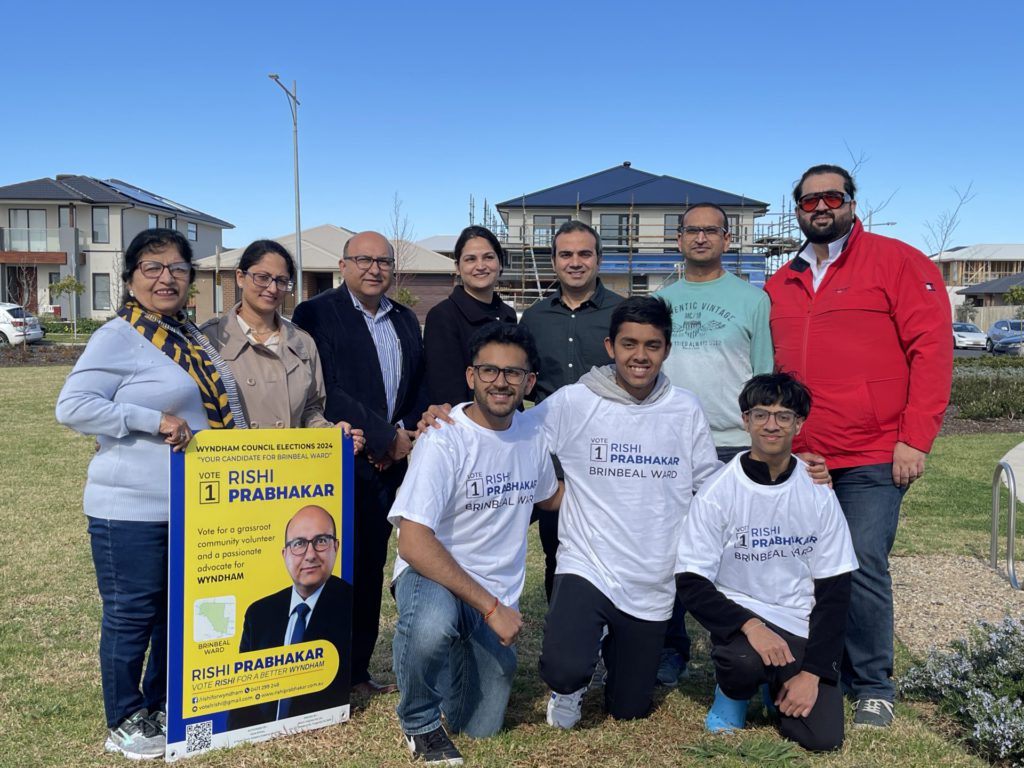
Indian International Student Seeks Community Support After Wife’s Tragic Cardiac Arrest

0

Chirag Patel, a young student from Ahmedabad, Gujarat, is facing an unimaginable tragedy. His wife, Hina, suffered a sudden cardiac arrest on August 9, 2024, and has been in the ICU at The Royal Melbourne Hospital ever since.

Despite the best efforts of the medical team, Hina’s condition has deteriorated, and she has been declared brain dead, leaving Chirag in a challenging situation.

Chirag and Hina moved to Australia just a year ago with dreams of building a better future together. Both had recently secured jobs, marking the beginning of what they hoped would be a prosperous journey in a new country. However, the sudden and severe nature of Hina’s illness has shattered those dreams, leaving Chirag not only emotionally devastated but also facing significant financial challenges.

With limited savings and the unexpected burden of medical and funeral expenses, Chirag is struggling to find the means to perform Hina’s last rites and give her a dignified farewell.

Understanding the gravity of the situation, Shreyas Patel, a close friend and housemate of the couple, has stepped in to help. He has initiated a fundraising campaign to support Chirag during this difficult time.

Shreyas describes Chirag as a kind and hardworking individual who has always been there for others. Now, he is hoping that the community can come together to support Chirag in his time of need. The funds raised will go directly towards covering the costs of Hina’s medical bills, funeral expenses, and any other immediate needs that Chirag may have as he navigates this heartbreaking period.

“Hina and Chirag are both wonderful people who came here with so much hope,” Shreyas shared.

“It’s devastating to see them go through this. Every bit of help can make a huge difference in ensuring that Hina can rest in peace and that Chirag can find some solace during this incredibly tough time.”

The outpouring of support from the community has already begun, with friends, acquaintances, and even strangers contributing to the fund. Each donation, no matter the size, is a testament to the power of community and the importance of standing together in times of crisis.

As Chirag faces the painful task of saying goodbye to his beloved wife, the support he receives from those around him will undoubtedly provide some comfort. The community’s generosity will not only help with immediate financial needs but will also serve as a reminder to Chirag that he is not alone in this journey.

For those who wish to contribute, Shreyas has made it easy to donate through the online fundraising platform. He encourages everyone who can give, emphasising that every cent will go towards helping Chirag and honouring Hina’s memory.

In moments like these, the strength of the community is truly felt. The hope is that through collective efforts, Chirag will be able to navigate this tragedy with the support he needs, and Hina will be remembered with the dignity and respect she deserves.

Click here to reach to GoFundMe page.

Support Our Journalism

Global Indian Diaspora and Australia’s multicultural communities need fair, non-hyphenated, and questioning journalism, packed with on-ground reporting. The Australia Today – with exceptional reporters, columnists, and editors – is doing just that. Sustaining this needs support from wonderful readers like you.

Whether you live in Australia, the United Kingdom, Canada, the United States of America, or India you can take a paid subscription by clicking Patreon and support honest and fearless journalism.

Queensland man charged in connection with alleged importation of 60 Litres of dangerous drug

0

A Queensland man has been charged following an AFP investigation into the alleged importation of 60 litres of 1,4 Butanediol, commonly known as bute, into Australia.

The man, 48, appeared before Southport Magistrates Court on 19 August, 2024, charged with possessing a marketable quantity of a border-controlled drug.

AFP Detective Superintendent Peter Fogarty said no amount of 1,4 butanediol was safe for human consumption.

“This substance depresses and slows down the functions of a person’s nervous system. Overdose can result in hallucinations, breathing difficulties, loss of consciousness and even death,” Detective Superintendent Fogarty said.

The AFP investigation, codenamed Operation Buteful, started in May 2024, after the Australian Border Force (ABF) detected five air mail consignments sent from China to Sydney that contained 1,4 butanediol concealed inside shower gel bottles. The ABF seized 120 bottles, amounting to a combined 60 litres of 1,4 Butanediol.

ABF Acting Commander Jim Ley praised the detection work of ABF officers at the border.

“Thanks to the excellent work of our well-trained officers, this sizeable quantity of illicit substance has been kept off Australian streets, where it could have resulted in immense community harm,” Acting Commander Ley said.

The AFP allegedly linked the man to the shipment and executed a search warrant at his Surfers Paradise property on Thursday (15 August, 2024). Investigators allegedly found about 200ml of bute contained in beauty product containers.

The man was arrested and charged with:

  • One count of possessing a marketable quantity of a border-controlled drug, contrary to section 307.9 of the Criminal Code 1995 (Cth); and
  • One count of failing to comply with a 3LA order, contrary to section 3LA(6) of the Crimes Act 1914 (Cth).

The maximum penalties for these offences are 25 years’ imprisonment and 10 years’ imprisonment respectively.

Inquiries are ongoing into six other alleged importations of 1,4 butenediol, weighing a combined 264 litres, and the source of money sent to China to purchase the shipments.

Australian law enforcement has reported escalating harm resulting from bute, which can be used as a substitute for the illegal drug gamma-hydroxybutyrate (GHB).

Bute is an industrial solvent the body naturally converts into GHB once ingested, depressing and slowing down the functions of a person’s nervous system.

From March 2024, bute was defined as a border-controlled drug (Crimes and Other Legislation Amendment (Omnibus No.2) Act 2023). This change means those convicted of illegally importing bute face a maximum penalty of life imprisonment.

Support Our Journalism

Global Indian Diaspora and Australia’s multicultural communities need fair, non-hyphenated, and questioning journalism, packed with on-ground reporting. The Australia Today – with exceptional reporters, columnists, and editors – is doing just that. Sustaining this needs support from wonderful readers like you.

Whether you live in Australia, the United Kingdom, Canada, the United States of America, or India you can take a paid subscription by clicking Patreon and support honest and fearless journalism.

August 26 Brings Minimum Standards for Gig Workers, Here’s What You Need to Know

0

By Juan Diaz-Granados and Benedict Sheehy

Monday, August 26 is when the government’s updated Fair Work legislation comes into force.

The new laws will offer new rights to so-called “gig workers” who take on jobs through platforms such as Uber, Menulog and Lyft.

Most gig workers aren’t currently classified as employees, meaning they miss out on rights such as sick leave, annual leave and minimum pay rates.

The new law empowers the Fair Work Commission to set minimum standards for a new category of workers known as “employee-like workers” – workers who get work through digital platforms used for things such as food delivery, ride share and personal care.

Until now, the law has recognised only two categories of workers: employees and independent contractors.

The law creating the new category of employee-like workers also creates a new category for the companies operating the platforms through which the workers obtain work: “digital labour platform operators”.

Gig Worker; Image Source- CANVA

Many (but not all) of the rights of employees

The new law allows employee-like workers and their representatives to apply to the Fair Work Commission for minimum standards orders tailored to their work.

Among the things that can be included in the orders are payment terms, record-keeping and insurance.

But, significantly, the Commission will not be able to set minimum standards for things such as overtime rates and rostering arrangements.

The government says this is to ensure the standards benefit workers without “requiring them to forego the flexibility they value”.

What employee-like workers will also get is protection from “unfair deactivation” and unfair contract terms, and the rights to seek collective agreements and to ask the Fair Work Commission to resolve disputes.

Gig Worker; Image Source- CANVA

The Commission won’t treat claims of unfair deactivation or unfair contract terms in quite the same way as it treats unfair dismissal cases.

The procedures are to be “quick, flexible and informal”, allowing the Commission to order reactivation, but not compensation, which is explicitly prohibited.

There’s much that’s unclear

There is an awful lot that won’t become clear for some time, including the extent to which platform operators will become liable for the things done by and that happen to their employee-like workers.

Would, for example, Uber be liable for an assault on a passenger perpetrated by one of its drivers? Would Uber Eats be liable for a “workplace accident” that injured one of its delivery riders?

They are questions the Fair Work Commission will have to work through, and the answers aren’t obvious.

While the Commission is ideally set up to adjudicate disputes between workers and employers, it might not be the optimal body to adjudicate disputes involving platforms where the traditional employee-employer relationship doesn’t fit.

Nevertheless, the new rules starting on Monday are a step forward.

Gig Worker; Image Source- CANVA

Gig workers are often drawn from vulnerable populations, such as international students and culturally diverse communities, who deserve protection.

The success of the new law is in the hands of the Commission. It will have to treat both gig workers and the platforms that engage them without bias, ensuring a “fair go all round” for both.

Juan Diaz-Granados, Lecturer, Australian Catholic University and Benedict Sheehy, Professor of Law, University of Canberra

This article is republished from The Conversation under a Creative Commons license. Read the original article.

Support Our Journalism

Global Indian Diaspora and Australia’s multicultural communities need fair, non-hyphenated, and questioning journalism, packed with on-ground reporting. The Australia Today – with exceptional reporters, columnists, and editors – is doing just that. Sustaining this needs support from wonderful readers like you.

Whether you live in Australia, the United Kingdom, Canada, the United States of America, or India you can take a paid subscription by clicking Patreon and support honest and fearless journalism.

RISE Accelerator Invites Agritech Startups to Innovate for Global Agricultural Challenges

0

The Commonwealth Scientific and Industrial Research Organisation (CSIRO), in collaboration with NITI Aayog’s Atal Innovation Mission (AIM), has launched a unique opportunity for startups and MSMEs (Micro, Small, and Medium Enterprises) in the agriculture technology sector through the Climate Smart Agritech cohort under the Rapid Innovation and Startup Expansion (RISE) Accelerator program.

This initiative seeks to foster the development and international expansion of agritech solutions that are crucial for enhancing agricultural productivity and resilience in the face of global environmental challenges.

Focus on India-Australia Collaboration

The RISE Accelerator program is an exemplary platform designed to support the agricultural sectors of India and Australia, two nations with distinct yet complementary agricultural challenges. By focusing on startups and MSMEs from both countries, the program aims to create solutions that are adaptable to diverse agricultural environments and can be scaled globally.

Tamara Ogilvie, Program Director at CSIRO, highlighted the importance of this collaborative effort, stating, “India and Australia share common agricultural challenges, but the scale and diversity of our farming operations are unique.”

“This cohort will enable participants to achieve product-market fit in diverse markets, and rapidly scale their solutions to meet global demands.”

Tamara Ogilvie, Program Director at CSIRO

Structure and Support

The Climate Smart Agritech cohort is a comprehensive nine-month program, providing a blend of self-paced online learning and in-person sessions, including immersive weeks in both India and Australia. These sessions will offer participants deep market insights, one-on-one coaching, and mentorship from industry experts. The program is designed to facilitate connections with potential partners, customers, and investors, thereby boosting the chances of success in new and challenging markets.

In the latter half of the program, selected startups and MSMEs will also have the opportunity to participate in field trials and technology pilots. This hands-on experience is crucial for validating and adapting their technologies for real-world applications.

Furthermore, these businesses may be eligible for non-equity grants of up to A$85,000 (Rs 45 lakh), providing significant financial support to help them scale their innovations.

Eligibility and Application Process

Startups and MSMEs from both India and Australia that are working on technologies to enhance agricultural productivity and resilience are encouraged to apply.

The program is open to businesses that can provide solutions to pressing agricultural needs, focusing on improving on-farm practices and addressing the priorities of farmers in both countries.

Applications for the Climate Smart Agritech cohort close on September 15, 2024. There is no charge for participating in the program, making it an accessible opportunity for innovative businesses looking to expand their reach.

The RISE Accelerator’s Legacy and Impact

The RISE Accelerator program, launched in 2023, has already made significant strides in supporting startups and MSMEs. By providing a structured environment for businesses to validate, adapt, and pilot their technologies, the program has paved the way for numerous success stories. The introduction of the Climate Smart Agritech cohort marks a focused effort to address the growing environmental challenges faced by the agricultural sectors in India and Australia.

NITI Aayog’s statement emphasised the program’s potential impact, noting that it aligns with the broader goals of sustainable development and innovation. The program not only seeks to foster technological advancements but also to strengthen the economic ties between India and Australia, reinforcing the commitment of both nations to collaborative growth.

The partnership between CSIRO and NITI Aayog through the RISE Accelerator program represents a significant step towards fostering innovation in the agritech sector. By supporting startups and MSMEs with the tools, resources, and networks they need to succeed, the program is set to make a lasting impact on agricultural practices in both India and Australia. The Climate Smart Agritech cohort, in particular, is poised to play a critical role in addressing the environmental challenges that threaten global food security, ensuring that agriculture remains a viable and sustainable industry for future generations.

As applications for the cohort open, anticipation builds for the innovative solutions that will emerge, potentially transforming the agricultural landscapes of both nations.

Support Our Journalism

Global Indian Diaspora and Australia’s multicultural communities need fair, non-hyphenated, and questioning journalism, packed with on-ground reporting. The Australia Today – with exceptional reporters, columnists, and editors – is doing just that. Sustaining this needs support from wonderful readers like you.

Whether you live in Australia, the United Kingdom, Canada, the United States of America, or India you can take a paid subscription by clicking Patreon and support honest and fearless journalism.

Brisbane Demonstration Demands Global Action Against Violence Towards Hindus in Bangladesh

0

Members of the Hindu, Sikh, and Jewish communities in Brisbane came together today at King George Square to protest against the ongoing brutal atrocities faced by Hindus in Bangladesh.

Organised by the Bangladeshi Puja and Cultural Society (BPCS), the event drew a large crowd, all united in their call for global action to protect minority communities in Bangladesh.

Image Source: Supplied

The protest was supported by several prominent organisations, including Sewa Australia, Hindu Council of Australia (HCA), the Hindu Swayamsevak Sangh (HSS), and the Australian Jewish Association, among others.

The atmosphere was charged with emotion as impassioned speeches were delivered, highlighting the urgency of addressing the human rights violations in Bangladesh.

Image Source: Supplied

“We cannot remain silent while innocent lives are being destroyed,” declared Mr Umang Rajani, head of the Brisbane chapter of Sewa Australia.

Video Source: Supplied

His words resonated with the crowd, emphasising the moral imperative to act against injustice. Mr. Bipin Sumanth, General Secretary of HSS Australia, echoed these sentiments, stating,

Image Source: Supplied

“It is time for us to unite globally and send a clear message that bigotry and hatred have no place in modern society. Dharma shall prevail.”

Image Source: Supplied

Mr Jogindra Modi, president of HCA in Brisbane, underscored the drastic decline in the Hindu population in Bangladesh since its formation in 1971, a stark reminder of the ongoing persecution.

Mr. Bikash Sikder, president of BPCS, voiced his deep concern for the safety of Hindus and other minorities in Bangladesh, urging the Bangladeshi government to take swift action.

Image Source: Supplied

“We are extremely worried about the safety and well-being of Hindus and other minorities in Bangladesh. The Australian government must take action, bring the culprits to justice, and ensure the safety of these communities,” he said.

Image Source: Supplied

The protest, though peaceful, was a potent call for justice, with participants holding placards and chanting slogans in solidarity with the victims.

Video Source: Supplied

The gathering served as a reminder that the communities in Brisbane, and around the world, will not stand by silently in the face of injustice.

Image Source: Supplied

The event concluded with a unified message: the international community must respond to these urgent human rights concerns to ensure the safety and security of Hindus and other minorities in Bangladesh.

Support Our Journalism

Global Indian Diaspora and Australia’s multicultural communities need fair, non-hyphenated, and questioning journalism, packed with on-ground reporting. The Australia Today – with exceptional reporters, columnists, and editors – is doing just that. Sustaining this needs support from wonderful readers like you.

Whether you live in Australia, the United Kingdom, Canada, the United States of America, or India you can take a paid subscription by clicking Patreon and support honest and fearless journalism.

How much should you read into your child’s NAPLAN report?

0

By Sam Sellar

The national 2024 NAPLAN results were released.

This was met with headlines raising alarm about one in three students not meeting literacy and numeracy standards. While these headlines may be worrying to parents, they do not say anything about individual students.

Families have been receiving individual student results since the beginning of Term 3. Here are a few things to help your digest the results.

What is NAPLAN for?

The National Assessment Program – Literacy and Numeracy (NAPLAN) is an annual test for students in Years 3, 5, 7 and 9. It was established in 2008 and the results have been used for a range of purposes, including comparing the performance of schools and making decisions about school funding.

Over time, NAPLAN has provided us with some very clear messages about inequalities in outcomes based on students’ social, economic and cultural backgrounds. Unfortunately, this hasn’t changed this year.

Indeed, as education researcher Sally Larsen has noted, this year’s national results didn’t tell us very much that is different from last year.

School Student; Image Source- @CANVA

How should NAPLAN be used?

While NAPLAN has provided population-level insights, traditionally, it has not been particularly useful for teachers and families because results were provided late in the school year, without much time to respond.

A number of changes were made last year, including moving the test from May to March, so teachers and parents can respond within the same school year.

Results are now being reported against four new proficiency standards: “exceeding”, “strong”, “developing” and “needs additional support”, rather than the ten numbered bands used previously.

These changes were designed to make it clearer for schools and parents to understand and use the results.

What does it mean for families and schools?

NAPLAN is just one test among many that schools use to assess student learning. Teachers regularly use other standardised assessments to measure progression in reading, maths and other areas.

Research has shown teachers’ assessments of student performance are similar to NAPLAN results, which suggests NAPLAN data doesn’t offer much of an advance on the information already provided in school report cards. Some researchers argue NAPLAN is not a good tool for comparing individual performance over time.

There is also evidence students do not try as hard as they might in NAPLAN testing.

We know NAPLAN only provides a snapshot of student performance on a given day in March each year. It is just one element in broader and more in-depth assessments teachers and schools provide throughout the year.

So, teachers can use the results to inform their decisions about which students need additional support and which students might benefit from additional challenges (but that may not come as much of a surprise).

Parents can use the individual results to talk to teachers about their child’s progress and what support they might need – knowing this is simply one test among many.

Sam Sellar, Professor of Education Policy, University of South Australia

This article is republished from The Conversation under a Creative Commons license. Read the original article.

Support Our Journalism

Global Indian Diaspora and Australia’s multicultural communities need fair, non-hyphenated, and questioning journalism, packed with on-ground reporting. The Australia Today – with exceptional reporters, columnists, and editors – is doing just that. Sustaining this needs support from wonderful readers like you.

Whether you live in Australia, the United Kingdom, Canada, the United States of America, or India you can take a paid subscription by clicking Patreon and support honest and fearless journalism.

IFFM 2024: Kabir Khan Wins Best Director, Kartik Aaryan and Parvathy Thiruvothu Take Top Acting Honours

0

The 15th edition of the Indian Film Festival of Melbourne (IFFM) 2024, a grand celebration of Indian cinema, has honoured a host of cinematic talents. The festival, running from August 15 to 25, has recognised outstanding contributions across various categories, underscoring the evolving and vibrant landscape of Indian cinema.

Among the celebrated was filmmaker Kabir Khan, who won Best Director for Chandu Champion.

Khan expressed his gratitude, saying,

“To get recognition from an international jury just feels special. It validates the heartfelt efforts behind Chandu Champion.”

Kartik Aaryan, who took home the Best Actor award for his role in Chandu Champion, shared his excitement, stating,

“This is a big honour. This is my first award for Chandu Champion and I hope this journey continues.”

He reflected on the role’s challenges, calling it the most intense portrayal of his career.

Parvathy Thiruvothu was awarded Best Actress for her performance in Ullozhukku (Undercurrent). “I’m going to go home to my mom and dad and give them this award,” she said, adding,

“This one has been a rebirth for me because it required me to unlearn every notion of what craft meant to me.”

Imtiaz Ali was honoured with the Breakout Film of the Year award for Amar Singh Chamkila. He expressed his gratitude, stating, “It’s just recognition for what Amar Singh Chamkila stood for and what he went through in his life.”

Rasika Dugal received the Diversity Champion award and reflected on her future choices, stating,

“This is really special because it makes you feel like the brief choices that you made were meaningful.”

Adarsh Gourav, awarded Disruptor of the Year for Kho Gaye Hum Kahan, celebrated the recognition, noting, “It’s such a special feeling to be awarded for a film that’s very, very dear to me.”

Arjun Mathur, who won Best Performance in a Series (Male) for Made In Heaven S2, expressed his appreciation for the global love the show has received, stating,

“It means a lot. The show has been loved all over the world, and it’s actually amazing.”

The festival also honoured the legendary AR Rahman with the Excellence in Cinema award, while Ram Charan was recognised as the Ambassador for Indian Art and Culture.

Shoojit Sircar, a prominent director, praised the festival for its role in bridging global audiences with Indian cinema, stating,

“It definitely gives us a lot more eyeballs and also the kind of cinema that we are doing.”

The list of the winners is given below:

  • Best Performance (Male): Kartik Aaryan for Chandu Champion
  • Best Performance (Female): Parvathy Thiruvothu for Ullozhukku
  • Best Film: 12th Fail
  • Best Director: Kabir Khan for Chandu Champion and Nithilan Swaminathan for Maharaja
  • Best Performer Critics Choice: Vikrant Massey for 12th Fail
  • Ambassador for Indian Art and Culture: Ram Charan
  • Best Film Critics Choice: Laapataa Ladies
  • Best Series: Kohhra
  • Equality in Cinema: Dunki
  • Best Film from the Subcontinent: The Red Suitcase
  • People’s Choice: Rocky Aur Rani Kii Prem Kahaani
  • Excellence in Cinema: AR Rahman
  • Breakout Film Of The Year: Amar Singh Chamkila
  • Disruptor of the Year: Adarsh Gourav
  • Diversity Champion: Rasika Dugal
  • Best Performance Female Series: Nimisha Sajayan for Poacher
  • Best Performance Male Series: Arjun Mathur for Made in Heaven Season 2
  • Best Director Critics Choice: Dominic Sangma for Rapture
  • Short Film Competition: Robbie Fatt for The Vegemite Sandwich 

The Indian Film Festival of Melbourne 2024 continues to be a beacon of cultural exchange, showcasing the rich diversity and creativity of Indian cinema on a global platform. The list of winners reflects the dynamic and evolving nature of Indian cinema, celebrating excellence across a wide spectrum of genres and styles.

Support Our Journalism

Global Indian Diaspora and Australia’s multicultural communities need fair, non-hyphenated, and questioning journalism, packed with on-ground reporting. The Australia Today – with exceptional reporters, columnists, and editors – is doing just that. Sustaining this needs support from wonderful readers like you.

Whether you live in Australia, the United Kingdom, Canada, the United States of America, or India you can take a paid subscription by clicking Patreon and support honest and fearless journalism. LINK: https://tinyurl.com/TheAusToday
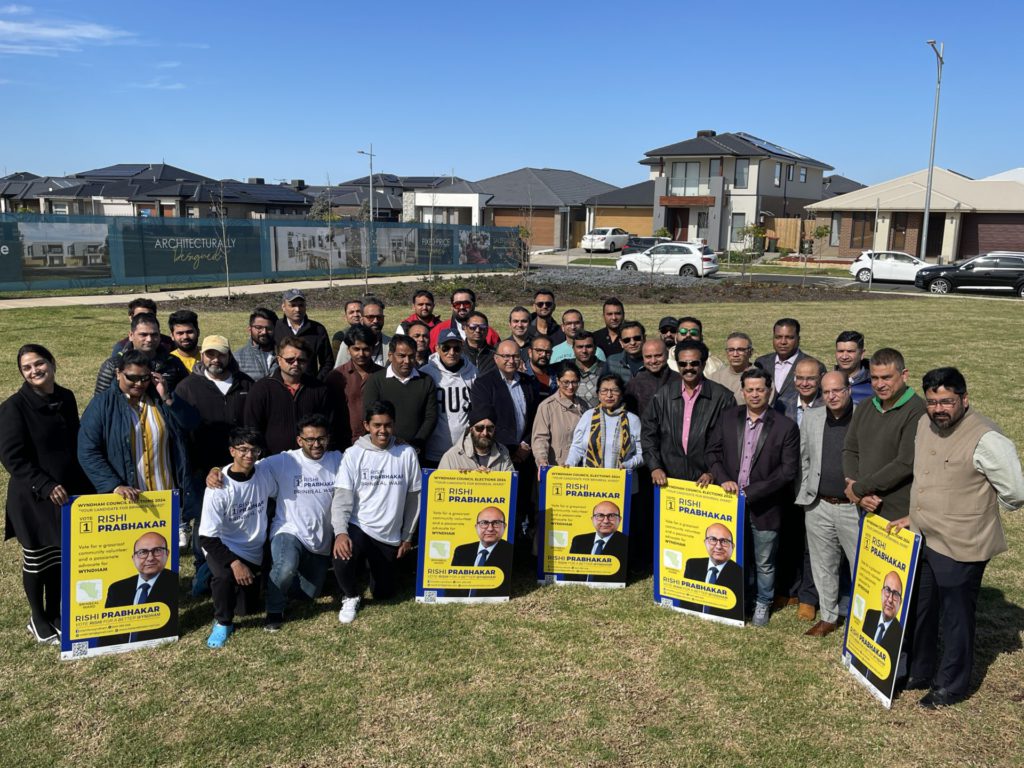
India proposes ‘Global Development Compact’ to counter Chinese ‘debt trap’ and extremism

0

India’s Prime Minister Narendra Modi has proposed a “Global Development Compact” centred on human development to enhance trade, technology sharing, and concessional financing among Global South nations.

This proposal, announced at the third India-hosted Voice of the Global South Summit, aims to provide development finance without burdening countries with debt, a concern in light of the growing number of nations falling into the Chinese ‘debt trap’.

Addressing the virtual summit, which saw participation from 123 countries, including 21 heads of state or government, Modi emphasised the importance of a unified approach to confronting global challenges such as food and energy security, terrorism, and extremism.

Modi highlighted that the proposed Compact would be informed by India’s own development journey and designed to support balanced, sustainable growth in partner countries.

The summit, held in line with India’s commitment to the priorities of the Global South, featured discussions on a range of critical issues, including climate change, debt burden, and the need for reform in global governance structures.

External Affairs Minister S. Jaishankar noted that concerns related to sovereignty and strategic autonomy were also raised by several participants, with the ongoing conflict in Gaza being a particular point of focus.

In his closing remarks, PM Modi stressed the need for just and inclusive global governance to address the world’s tensions and conflicts. He called for steps to reduce the gap between the Global North and South, pointing to the upcoming UN Summit of the Future as a potential milestone for these efforts.

Modi announced India’s plans to contribute $3.5 million to fund the new Compact, including $2.5 million for trade promotion activities and $1 million for training in trade policy and negotiation. He also reiterated India’s commitment to supporting the development of Digital Public Infrastructure (DPI) in the Global South, with an initial contribution of $25 million to a Social Impact Fund aimed at this purpose.

This summit follows India’s two previous Voice of the Global South Summits in 2023, which were instrumental in shaping the G20 agenda. Modi underlined the significance of the African Union’s recent admission as a permanent member of the G20, marking the first expansion of the group since its inception in 1999, and a key moment in India’s G20 presidency.

The summit saw participation from leaders across the Global South, including those from Fiji, Bangladesh, Bhutan, Nepal, Sri Lanka, Mauritius, Vietnam, and Chile, among others. Notably, China and Pakistan were not invited to the summit, reflecting the strategic and diplomatic contours of the event.

Modi’s address underscored India’s role as a leading voice for the Global South, advocating for inclusive growth, digital innovation, climate resilience, and equitable global health access. As the world navigates a challenging global environment, Modi’s call for unity and collaboration among developing nations resonates with India’s ongoing efforts to elevate the concerns and aspirations of the Global South on the global stage.

Support Our Journalism

Global Indian Diaspora and Australia’s multicultural communities need fair, non-hyphenated, and questioning journalism, packed with on-ground reporting. The Australia Today – with exceptional reporters, columnists, and editors – is doing just that. Sustaining this needs support from wonderful readers like you.

Whether you live in Australia, the United Kingdom, Canada, the United States of America, or India you can take a paid subscription by clicking Patreon and support honest and fearless journalism.

PNG police cadets complete intensive training in Australia

0

This week, cadets from the Royal Papua New Guinea Constabulary (RPNGC) successfully completed an intensive training program, marking a significant milestone in a joint initiative involving the Australian Federal Police (AFP), RPNGC, and Queensland Police Service (QPS).

The program’s closing ceremony, held in Manly yesterday, was attended by notable dignitaries, including Attorney-General Mark Dreyfus, PNG Minister for Police Peter Tsiamalili Junior, AFP Commissioner Reece Kershaw, and RPNGC Commissioner David Manning, who extended their congratulations to the cadets.

Image: Attorney-General Mark Dreyfus addressing PNG cadets (Source: AFP)

Launched in May, the program saw over 60 RPNGC cadets undergo rigorous training across north Queensland and Sydney, aimed at enhancing their policing and leadership capabilities.

This initiative represents the first collaboration of its kind between the AFP, QPS, and RPNGC since 2019, when specialist officers from PNG participated in the PNG-Australia Policing Program (PNG-APP) in Cairns. It also marked the inaugural delivery of such a comprehensive training program in Australia for Pacific police, with some cadets travelling overseas for the first time.

Image: PNG cadets conclude placement (Source: AFP)

The cadets were given opportunities to hone their leadership skills, decision-making abilities, and adaptability in various operational settings. Their training included a two-week placement with the QPS, where they were deployed to stations in Cairns and Townsville to shadow senior officers and gain firsthand experience of the Australian policing environment.

The program concluded in Sydney with a Policing Leadership Program at the Australian Institute of Police Management in Manly.

Image: PNG cadets conclude placement (Source: AFP)

AFP Commissioner Kershaw praised the program as a testament to the strong partnership between the AFP and its domestic and international counterparts.

“Programs like this further enhance the AFP’s strong relationships across the Pacific and allow us to continue working together to combat regional transnational crime,” said Commissioner Kershaw. “These cadets will be the future leaders of the Royal Papua New Guinea Constabulary, and the skills they have acquired will help keep their communities safe when they return to PNG. We are proud of this program and hope to continue it in the future.”

Image: PNG cadets conclude placement (Source: AFP)

Queensland Police Service Assistant Commissioner Kevin Guteridge expressed his pride in hosting the cadets in Cairns and Townsville, noting that the experience provided valuable insights into modern policing in Queensland.

“These cadets have worked alongside senior police in various units, learning about the latest technology and policing strategies,” Assistant Commissioner Guteridge said. “This program has not only strengthened our ties with the RPNGC but also provided our officers with an understanding of policing in the Pacific.”

Image: PNG cadets conclude placement (Source: AFP)

RPNGC Commissioner David Manning highlighted the program’s success as a reflection of the shared commitment between the RPNGC and AFP to develop a professional and responsive policing service.

“These cadets are the future leaders of policing in PNG and the Pacific region. This investment in skills, knowledge, and professional experience will ensure that our young Officer Cadets become the leaders of a professional and responsive police force,” said Commissioner Manning. “The success of this program demonstrates the strength of the RPNGC’s relationship with our longest-standing policing partner and underscores the importance of police-to-police cooperation in improving policing outcomes for all communities in our region.”

Image: PNG cadets conclude placement (Source: AFP)

Cadet Levinah Sila from Madang/East Sepik Province expressed her gratitude for the experience, noting the importance of transparency, accountability, and professionalism, which she intends to bring back to the RPNGC.

The training program is part of a three-year course that RPNGC cadets must complete to be sworn in as Inspectors. These cadets began their training in Port Moresby in September 2023.

The AFP continues to support the RPNGC’s training and development through the PNG-APP, which has been in place since 2008. The program now involves 51 AFP members dedicated to mentoring and building capability within the RPNGC.

Support Our Journalism

Global Indian Diaspora and Australia’s multicultural communities need fair, non-hyphenated, and questioning journalism, packed with on-ground reporting. The Australia Today – with exceptional reporters, columnists, and editors – is doing just that. Sustaining this needs support from wonderful readers like you.

Whether you live in Australia, the United Kingdom, Canada, the United States of America, or India you can take a paid subscription by clicking Patreon and support honest and fearless journalism.

Indigenous science can help solve some of the great problems of our time. Here’s how

0

By Tristan Kennedy and Melissa Miles

Australia has committed to elevating Aboriginal and Torres Strait Islander knowledge as one of five national priorities in science and research.

This comes as part of the National Science Statement released on Monday by the Minister for Industry and Science, Ed Husic. The statement signals the national priorities that will shape investment and policy across research and development over the next decade.

Australian research already punches above its weight. The statement notes we produce 3.4% of the world’s research with just 0.33% of the world’s population. So how can we accelerate our impact?

Indigenous knowledge systems are a national strength. The history of science on this continent is extraordinary, yet we often fail to recognise the sophisticated knowledges held by our First Nations peoples. Indigenous voices must be at the table.

The first peoples, the first scientists

Aboriginal and Torres Strait Islander peoples were the first astronomers, physicists, biologists and pharmacists on this continent. From as far back as 65,000 years Indigenous people have been integrating knowledge systems with and for people and Country.

There are many examples of Indigenous knowledge contributing to contemporary problems. Traditional Aboriginal burning takes into account local weather conditions, plants, environments and animals. It is showing how plants react to fire, how to reduce the risk of major fire events, and support regeneration and biodiversity.

Indigenous-led approaches to urban water are pointing towards more sustainable water management practices that also regenerate ecological and cultural environments.

Beyond this, Indigenous approaches to research can challenge Western science models in important ways that can bring about new leaps of innovation.

The stakes are high

The new national statement comes at a time when we face existential threats in climate change, artificial intelligence, new pandemics, social unrest and beyond. Research remains crucial to finding solutions for our survival.

But we must approach the task of elevating these knowledge systems in the right way and be mindful of the ongoing legacies of colonisation.
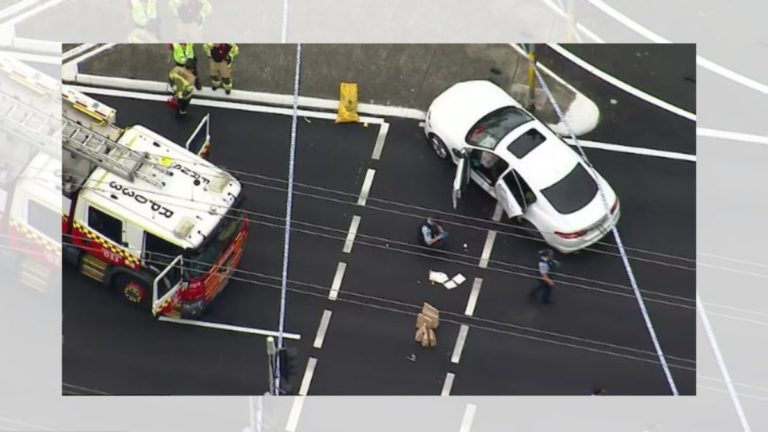
Eminent Māori scholar Linda Tuhiwai Smith has noted: Indigenous people are considered the most researched in the world, and yet have seen the least amount of benefit. The legacy of these past practices continues to foster uncertainty and distrust of research (and researchers) by many in Indigenous communities.

This observation, based on engagement and conversations with communities, highlights an imbalance in research benefit between those who are studied and those who do the research. It is tied to centuries of colonisation.

Science has long adhered to the principle of “do no harm”. However, Western science has sometimes done harm. This was recently highlighted in Melbourne University’s book Dhoombak Goobgoowana, or truth-telling in the Woi Wurrung language, which described some of the terrible outcomes of colonial biases in science.

At the same time Western institutions and industries have extracted an extraordinary amount of knowledge from Indigenous peoples. According to the World Health Organization

around 40% of pharmaceutical products today draw from nature and traditional knowledge, including landmark drugs: aspirin, artemisinin [an ancient Chinese herbal malaria treatment], and childhood cancer treatments.

This has benefited humanity, and fattened the profits of many pharmaceutical companies. Yet Indigenous people have seen very little financial benefit – or even credit.

This is one of the many reasons we need to foster Indigenous-led research and engage communities in research.

A seat at the table – and more

Bringing more people to the table – both in research and at universities in general – will help us ask better questions. It will ensure people, especially Indigenous peoples, can lead or guide the research, see benefit and help build capacity in communities.

The Australian Institute of Aboriginal and Torres Strait Islander Studies code of ethics points the way forward. It centres Indigenous self-determination, Indigenous leadership, sustainability and accountability, and demonstrating impact and value. It all starts with listening, and ensuring that research addresses priorities determined and supported by Aboriginal and Torres Strait Islander people.

The National Science Statement calls for teamwork. It calls for research collaborations between universities, civil society, governments and international partners to solve some of our biggest societal, geopolitical, economic and environmental challenges.

This task also demands new approaches to what responsibility means in research. To create futures in which people can thrive, responsible research must go beyond compliance to formal rules of ethics and integrity.

It must ask much bigger questions about the place of research within local communities and much larger geopolitical environments. And it must reconsider how we partner well with the governments, industries and the communities with which we are embedded.

This takes us right back to the question of why we do research. Is it to publish more papers, or find a drug that makes a lot of money? Or are we here to make the world a better place?

It’s a question the National Statement on Science is asking. It is up to us to put it into practice.

Tristan Kennedy, Professor & Pro Vice-Chancellor (Indigenous), Monash University and Melissa Miles, Acting Pro Vice-Chancellor Research, Monash University

This article is republished from The Conversation under a Creative Commons license. Read the original article.

"The

Support Our Journalism

Global Indian Diaspora and Australia’s multicultural communities need fair, non-hyphenated, and questioning journalism, packed with on-ground reporting. The Australia Today – with exceptional reporters, columnists, and editors – is doing just that. Sustaining this needs support from wonderful readers like you.
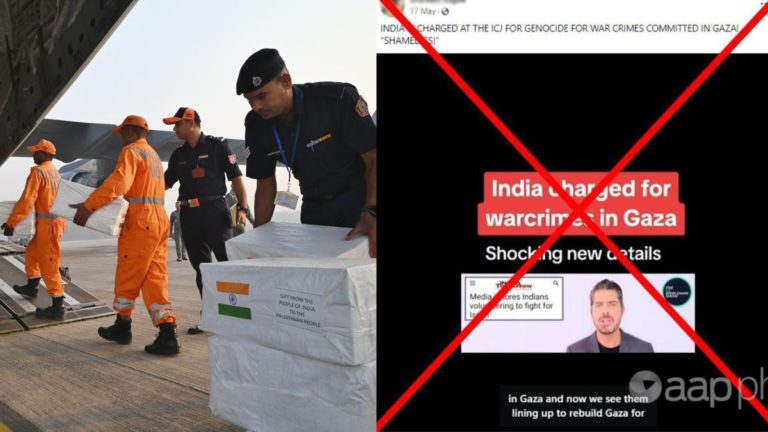
Whether you live in Australia, the United Kingdom, Canada, the United States of America, or India you can take a paid subscription by clicking Patreon and support honest and fearless journalism.

Albanese celebrates Indian community and cinema’s role in strengthening Australia-India relations

0

This week, Prime Minister Anthony Albanese celebrated the vibrant Indian community and cinema’s role in the strengthening ties between Australia and India.

On 16th August, he attended the India Australia Business and Community Alliance (IABCA) dinner, held in the Great Hall of Parliament House in Canberra. This event highlighted the flourishing relationship between the two nations.

Albanese, who became the first Australian Prime Minister to attend the IABCA event, expressed his pride on social media platform X, writing, “Honoured to be the first PM to attend the event, which gets bigger each year.”

The IABCA, founded a decade ago by Sydney’s Sonia Sadiq Gandhi, the largest platform dedicated to enhancing the Australia-India relationship, has been instrumental over the past decade in promoting cultural diplomacy, bilateral trade, and business investment.

By honouring the bilateral success stories of organisations and individuals, IABCA has gained international recognition as a crucial tool for strengthening ties between the two countries.

Image: PM Albanese at the IFFM event in canberra (Source: X)

Earlier in the week, on 14th August, Albanese joined Mitu Bhowmick Lange, Founder of Indian Film Festival of Melbourne (IFFM), Centre for Australia-India Relations (CAIR) Chair Swati Dave, Bollywood star Rani Mukerji, and renowned director Karan Johar in the celebration of Indian cinema and partnership opportunities with Bollywood.

This event was hosted by IFFM and Parliamentary Friends of India and the highlight of the 15th anniversary celebration was the unveiling of a commemorative stamp honouring legendary filmmaker Yash Chopra by actress Rani Mukerji and director Karan Johar. The stamp was then presented to Prime Minister Anthony Albanese at the Australian Parliament House.

The IFFM, established in 2010, is a prominent global celebration of Indian cinema and the longest-running private film festival outside India. It highlights the rich diversity and creativity of Indian filmmaking, connecting the Indian diaspora and cinephiles with filmmakers who bring captivating Indian stories to the screen.

Support Our Journalism

Global Indian Diaspora and Australia’s multicultural communities need fair, non-hyphenated, and questioning journalism, packed with on-ground reporting. The Australia Today – with exceptional reporters, columnists, and editors – is doing just that. Sustaining this needs support from wonderful readers like you.

Whether you live in Australia, the United Kingdom, Canada, the United States of America, or India you can take a paid subscription by clicking Patreon and support honest and fearless journalism.

$217,000 recovered for 209 underpaid food outlet workers

0

The Fair Work Ombudsman has recovered $217,806 for 209 underpaid food outlet employees in Cairns, following surprise inspections.

Fair Work Inspectors investigated 35 businesses in Cairns’ fast food, restaurants and cafés sector – mostly ‘cheap eats’ venues in Cairns City, Cairns North, Palm Cove and Trinity Beach. Businesses were targeted for investigation based on FWO intelligence from a range of sources, including anonymous reports.

Of 31 investigations finalised, the FWO found 23 businesses (74 per cent) had breached workplace laws. The most common breaches were a failure to pay various penalty rates (21 businesses), underpaying minimum wages (11 businesses), and not paying the right allowances (9 businesses).

Fair Work Ombudsman Anna Booth said improving compliance in the fast food, restaurants and cafés sector was an ongoing priority for the regulator.

“These disappointing Cairns findings are part of a national food precincts program where we’ve often found that low-cost dining comes at the expense of workers’ lawful wages,” Ms Booth said.

“Employers must follow all wage laws, including penalty rates which generally serve as compensation for those working at times when most people are not. Those doing the wrong thing are being found out and held to account.

“Employers should access our wide range of free online tools and resources to ensure they’re meeting their obligations, or contact the FWO directly for free advice. We want to help businesses in the food sector get it right in the first place.

“We also urge workers with concerns about wages and entitlements to reach out to us – including anonymously if preferred.”

The largest amount recovered from any one business was $46,576 for six restaurant employees, variously cooks, kitchen hands and bar attendants. These workers were underpaid penalty rates, had outdated rates of pay resulting in underpaid minimum rates, and missed out on overtime pay.

Following investigations, the FWO issued 23 Compliance Notices, recovering the $217,806 for the 209 workers.

Eleven Infringement Notices for pay slip and record-keeping breaches also resulted in $12,895 in fines paid.

Investigations into four businesses are ongoing.

Support Our Journalism

Global Indian Diaspora and Australia’s multicultural communities need fair, non-hyphenated, and questioning journalism, packed with on-ground reporting. The Australia Today – with exceptional reporters, columnists, and editors – is doing just that. Sustaining this needs support from wonderful readers like you.

Whether you live in Australia, the United Kingdom, Canada, the United States of America, or India you can take a paid subscription by clicking Patreon and support honest and fearless journalism.

Australia’s corporate watchdog is suing our largest stock exchange. What’s going on?

0

By Michael Adams

The Australian Securities Exchange (ASX) is unusual in the world of finance.

It is the operator of Australia’s largest stock exchange, and as such is “required to ensure that each of its licensed markets is fair, orderly and transparent”.

At the same time, it is itself a public company listed on that very exchange. It’s as if we’ve enlisted a flock’s shepherd by picking out one of its sheep.

That doesn’t mean the ASX does – or has done – anything wrong. But this has been a known potential conflict of interest since the 1990s.

That was when the ASX listed itself as a public company on its own exchange, the first time this had ever happened in the world.

That saw a wide range of regulatory functions handed to Australia’s corporate watchdog, the Australian Securities and Investments Commission (ASIC).

So for ASIC to file a lawsuit on Wednesday, alleging the ASX misled markets, was significant.

But what exactly does ASIC allege happened? And why do a company’s announcements matter so much in the first place?

What are ASIC’s allegations?

The issue in question is the exchange’s stated progress replacing a key piece of software – “CHESS” – that is used to settle transactions. ASIC alleges the ASX told markets this project was on track and on schedule, despite knowing it wasn’t.

According to ASIC Chair Joe Longo:

ASX’s statements go to the heart of trust in the integrity of our markets. We believe this was a collective failure by the ASX Board and senior executives at the time.

ASX chief executive Helen Lofthouse said the company acknowledges the “significance and serious nature of these proceedings”.

Lofthouse said the ASX is now “carefully reviewing and considering the allegations”, having “cooperated fully” with the investigation.

What is CHESS? And why does it need replacing?

One of the most important functions of the ASX is to provide a system for recording and settling share transactions. The current system is the Clearing House Electronic Subregister System, or CHESS for short, which we’ve had since 1994.

But for the past decade or so, it has been known that the technology underpinning CHESS is outdated and needs replacing.

According to ASIC’s filing in the Federal Court this week, the ASX determined it would replace CHESS in early 2016. By December 2017, it had engaged a company called Digital Asset to build the technology.

This new system was to be based on blockchain technology, an innovation that excited global markets and would have made Australia a world leader.

By March 2020, the ASX had announced that the CHESS replacement project’s initial go-live date in April 2021 would have to be delayed. By October, it had announced a new date: April 2023.

In mid-2021, it published an implementation timetable, and indicated it was still “on-track” to go live in April 2023. But ASIC alleges that in November 2021, the ASX opened an “industry test environment” despite a lack of “full functionality”.

The regulator alleges that about 100 defects in the application “were not addressed”.

According to the filing, the ASX’s own audit and risk committee was informed the CHESS replacement project had a “red” status on February 3 2022 – that is, there was a high risk it wouldn’t be completed on time.

ASIC alleges that despite this, when the ASX published its half-yearly results about a week later, it misleadingly indicated the project was “progressing well” – and still on track for its planned date to go live.

In September 2022, consulting firm Accenture was engaged to review the project. By November, ASX had paused it.

Pre-tax, it had already cost about A$250 million. The use of blockchain technology to replace CHESS has now been abandoned altogether.

Why does this all matter?

Both the ASX and the corporate regulator ASIC need a fully informed securities market to function. There are a number of laws that relate to this need.

Under the ASIC Act, the corporate regulator is explicitly required to “maintain, facilitate and improve the performance of the financial system”.

Under the Corporations Act – which is enforced by ASIC – companies must continuously disclose material information that could impact on their share price to the market.

More generally, this principle aims to prevent market manipulation and insider trading by companies listed on the stock exchange by preventing misleading or false statements.

With this lawsuit, ASIC has shone a spotlight on what is expected more broadly in terms of disclosures and accuracy, from all publicly listed companies.

The matter will now be decided under usual court processes and future hearings, unless it is settled earlier. Investors and regulators will be watching closely.

Michael Adams, Professor of Corporate Law & Academic Director of UNE Sydney campus, University of New England

This article is republished from The Conversation under a Creative Commons license. Read the original article.

"The

Support Our Journalism

Global Indian Diaspora and Australia’s multicultural communities need fair, non-hyphenated, and questioning journalism, packed with on-ground reporting. The Australia Today – with exceptional reporters, columnists, and editors – is doing just that. Sustaining this needs support from wonderful readers like you.

Whether you live in Australia, the United Kingdom, Canada, the United States of America, or India you can take a paid subscription by clicking Patreon and support honest and fearless journalism.

Google to invest $200 million in Data Centre in Fiji, promising major boost to Pacific ICT sector

0

Google is set to build a $200 million data centre in Fiji, a move expected to create significant business opportunities and establish the nation as a key player in the Pacific’s information and communications technology (ICT) industry.

Fiji’s Prime Minister Sitiveni Rabuka celebrated the announcement on X, sharing, “Big news! 🇫🇯 @Google is investing $200M to build a Data Centre in Fiji, shared by DPM Hon. @KamikamicaM. With 4 new subsea cable connections to the US, Hawaii, Australia & Japan, Fiji is set to become a key player in the Pacific ICT industry. A stronger future awaits! #Fiji”

Deputy Prime Minister and Minister for Trade, Cooperatives and Small Medium Enterprises, Manoa Kamikamica, announced the investment during an interview on Fijivillage Straight Talk with Vijay Narayan.

Minister Kamikamica emphasised that this development represents a major opportunity for Fiji to enhance its status as a regional ICT hub. He also highlighted that Google’s investment will not only bring the data centre but will also include the installation of four new subsea cable connections, further strengthening Fiji’s telecommunications infrastructure.

“Before Google approached us late last year, Fiji only had one subsea cable connection. Now, with Google’s investment, we will see an estimated $200 million injection into the economy and the creation of 3,600 jobs through the Google Pacific Connect Initiative.”

Addressing the Members of Parliament, Kamikamica expressed the Government’s excitement about the initiative, noting that the improved digital connectivity and enhanced network infrastructure will support key areas such as healthcare, education, and disaster management. He also emphasised that the new subsea cables would provide reliable and resilient connectivity between the Pacific and the rest of the world.

Google plans to lay the “Tabua Cable,” connecting the United States, Australia, and Fiji, and a second subsea cable, the “Honomoana Cable,” which will connect the United States to French Polynesia, with further links to Australia, Japan, and potentially Chile in South America. This investment is expected to act as a catalyst for the business process outsourcing (BPO) sector in Fiji by offering enhanced network infrastructure.

Support Our Journalism

Global Indian Diaspora and Australia’s multicultural communities need fair, non-hyphenated, and questioning journalism, packed with on-ground reporting. The Australia Today – with exceptional reporters, columnists, and editors – is doing just that. Sustaining this needs support from wonderful readers like you.

Whether you live in Australia, the United Kingdom, Canada, the United States of America, or India you can take a paid subscription by clicking Patreon and support honest and fearless journalism.

WHO has declared mpox a global health emergency. What happens next?

0

By C Raina MacIntyre

The World Health Organization (WHO) has declared mpox a public health emergency of international concern, after rising cases in the Democratic Republic of the Congo and the potential for further spread.

This now triggers a coordinated international response to an extraordinary event and the mobilisation of resources, such as vaccines and diagnostic testing, to curb the spread of this infectious disease.

But WHO has not declared mpox a pandemic. Rather, the measures it has triggered are designed to prevent it from becoming one.

What triggered this latest alert?

Mpox, once known as monkeypox, is a viral infection closely related to smallpox. Initial symptoms include a fever, headache, swelling of the lymph nodes and muscle ache. A typical rash follows, mainly on the face, hands and feet.

The spread of mpox through certain African countries led the Africa Centres for Disease Control and Prevention to declare earlier this week mpox a public health emergency of continental security. This is the first time the organisation has issued such an alert since it was established in 2017.

The situation in the Democratic Republic of the Congo in central Africa has been particularly worrying for more than a year.

There are two types or clades of mpox. Clade II, which originates in west Africa, is less severe. It has a fatality rate of up to 1% (in other words, roughly one in 100 are expected to die from it). But clade I, from central Africa, has a fatality rate of up to 10% (up to one in ten die). This compares to a 0.7% fatality rate for the Omicron variant of SARS-CoV-2, the virus that causes COVID. The Democratic Republic of the Congo is seeing large epidemics of the more deadly clade I mpox.

Mpox is endemic in some parts of central and west Africa, where the virus exists in animals and can spread to humans. Outbreaks have been increasing, with more human-to-human spread, since 2017.

This is partly due to very low levels of immunity to the mpox virus, which is related to the virus that causes smallpox. Mass vaccination against smallpox ceased more than 40 years ago globally, resulting in minimal immunity in populations today against mpox.

The WHO designation announced this week relates to the clade I. Not only does this have a higher fatality rate, it has new mutations that enhance spread between people. These changes, and the global lack of immunity to mpox, makes the world’s population vulnerable to the virus.

There are two different epidemics

In 2022, an epidemic of mpox swept through non-endemic countries, including beyond Africa. This was a variant of clade II originating from Nigeria, called clade IIb. This was sexually transmitted, predominantly affecting men who have sex with men, and had a low fatality rate.

That epidemic peaked in 2022, with vaccines made available to people at risk in high-income countries, but there has been an uptick in 2024.

At the same time, large clade I epidemics were occurring in the Democratic Republic of the Congo, but with far less attention.

Vaccines were not available there, even in 2023, when there were 14,626 cases and 654 deaths. Mortality was 4.5%, and higher in children.

In fact, most cases and deaths in the Democratic Republic of the Congo have been children. This means most transmission there is non-sexual and is likely to have occurred through close contact or respiratory aerosols.

However, in 2023 an outbreak in a non-endemic part of the country, South Kivu in the east, appeared to be by sexual transmission, indicating more than one epidemic and different transmission modes in the Democratic Republic of the Congo.

By mid-2024, there were already more cases in the country than all of 2023 – more than 15,600 cases and 537 deaths.

Testing capacity is low in the Democratic Republic of the Congo, most cases are not confirmed by lab testing, and the data we have are from a small sample of genomic sequences from the Kamituga region of South Kivu.

This show mutations to the clade I virus around September 2023, to a variant termed clade Ib, which is more readily transmissible between people. We do not have much data to compare these viruses with the viruses causing cases in the rest of the country.

Mpox is spreading internationally

In the past month, the virus has spread to countries that share a border with the Democratic Republic of the Congo – Rwanda and Burundi. It has also spread to other east African countries, such as Kenya and Uganda. None of these countries have had mpox cases previously.

In an interconnected, mobile world, cases may spread to other continents, as mpox did in 2018 from Nigeria to the United Kingdom and other countries.

A few travel-related cases between 2018 and 2019 may have led to the large multi-country 2022 clade IIb epidemic.

We have vaccines, but not where they are needed

As the mpox virus and smallpox viruses are related (they are both orthopoxviruses), smallpox vaccines offer protection against mpox. These vaccines were used to control the 2022 clade IIb epidemic.

However, most of the world has never been vaccinated, and has no immunity to mpox.

The newer vaccine (called Jynneos in some countries and Imvamune or Imvanex in others) is effective. However, supplies are limited, and vaccine is scarce in the Democratic Republic of the Congo.

WHO’s declaration of mpox as a public health emergency of international concern will help mobilise vaccines to where they are needed. The Africa Centres for Disease Control had already begun negotiations to secure 200,000 doses of vaccine, which is a fraction of what is required to control the epidemic in the Democratic Republic of the Congo.

What happens now?

Ultimately, a serious epidemic anywhere in the world is a concern for all of us, as it can spread globally through travel, as we saw with the COVID pandemic.

Controlling it at the source is the best measure, and WHO’s latest declaration will help mobilise the required resources.

Surveillance for spread of this more serious version of mpox is also essential, bearing in mind that many countries do not have the capacity for widespread testing. So we’ll have to rely on “suspected cases”, based on a clinical definition, to keep track of the epidemic.

Open-source epidemic intelligence – such as using AI to monitor trends in rash and fever illness – can also be used as an early warning system in countries with weak health systems or delayed reporting of cases.

A further complication is that 20-30% of people with mpox may simultaneously have chickenpox, an unrelated infection that also causes a rash. So an initial diagnosis of chickenpox (which is easier to test for) does not rule out mpox.

Effective communication and tackling push-back against public health measures and disinformation is also key. We saw how important this was during the COVID pandemic.

Now, WHO will coordinate the global mpox response, focusing on equity in disease prevention and access to diagnostics and vaccines. It is up to individual countries to do their best to comply with the International Health Regulations, and the protocols for how such a global emergency are managed.


The World Health Organization has more information about mpox, including symptoms and treatment. For information about vaccine access and availability, contact your local health department or doctor, as this varies from country to country.

C Raina MacIntyre, Professor of Global Biosecurity, NHMRC L3 Research Fellow, Head, Biosecurity Program, Kirby Institute, UNSW Sydney

This article is republished from The Conversation under a Creative Commons license. Read the original article.

"The

Support Our Journalism

Global Indian Diaspora and Australia’s multicultural communities need fair, non-hyphenated, and questioning journalism, packed with on-ground reporting. The Australia Today – with exceptional reporters, columnists, and editors – is doing just that. Sustaining this needs support from wonderful readers like you.

Whether you live in Australia, the United Kingdom, Canada, the United States of America, or India you can take a paid subscription by clicking Patreon and support honest and fearless journalism.

India-Australia unite against terrorism, condemn cross-border proxies

0

The 14th meeting of the India-Australia Joint Working Group on Counter-Terrorism took place in New Delhi, with senior officials from both nations coming together to discuss global counter-terrorism challenges and enhance bilateral cooperation.

K.D. Dewal, Joint Secretary for Counter-Terrorism at India’s Ministry of External Affairs, and Richard Feakes, Ambassador for Counter-Terrorism at Australia’s Department of Foreign Affairs and Trade, led their respective delegations.

Reflecting on the meeting, the Australian High Commissioner to India posted on X (formerly Twitter), stating: “Counter-Terrorism cooperation is an important part of the 🇦🇺🇮🇳 Comprehensive Strategic Partnership. Productive discussions this week between 🇦🇺’s Amb for Counter-Terrorism @AusAmbCT and 🇮🇳’s Joint Secretary for Counter-Terrorism @MEAIndia on current global challenges @dfat.”

During the meeting, both India and Australia strongly condemned terrorism in all its forms and stressed the importance of strengthening international cooperation to combat the menace in a comprehensive and sustained manner.

The two sides also jointly denounced the use of terrorist proxies for cross-border terrorism, highlighting the need for a united global front against such practices.

The discussions extended to a wide range of issues, including domestic, regional, and global terrorism threat assessments.

Key topics included countering the use of new and emerging technologies by terrorists, preventing the misuse of the internet for terrorist purposes, combating radicalisation and terror financing, and addressing the nexus between organised crime and terrorism.

The two sides also explored avenues for enhanced collaboration within regional, global, and multilateral fora such as the United Nations, Global Counterterrorism Forum (GCTF), Financial Action Task Force (FATF), ASEAN Regional Forum (ARF), Indian Ocean Rim Association (IORA), and with QUAD partners.

Counter-terrorism cooperation remains a crucial pillar of the India-Australia Comprehensive Strategic Partnership, and this meeting further underscored the shared commitment of both nations to tackle the evolving challenges of global terrorism.

In a positive conclusion to the discussions, both sides agreed to convene the 15th meeting of the Joint Working Group on Counter-Terrorism in Canberra at a mutually convenient date.

Support Our Journalism

Global Indian Diaspora and Australia’s multicultural communities need fair, non-hyphenated, and questioning journalism, packed with on-ground reporting. The Australia Today – with exceptional reporters, columnists, and editors – is doing just that. Sustaining this needs support from wonderful readers like you.

Whether you live in Australia, the United Kingdom, Canada, the United States of America, or India you can take a paid subscription by clicking Patreon and support honest and fearless journalism.

Free(r) movement at the Forum

0

By Sadhana Sen and Stephen Howes

The annual Pacific Islands Forum Economic Ministers Meeting (FEMM) always has a wide-ranging agenda. This year the FEMM, which was held at the start of August in Suva, endorsed the now-finalised but yet-to-be-released Pacific Roadmap for Economic Development, advanced the new Pacific Resilience Facility (to be headquartered in Tonga), and worked on a plan to reverse the exit of banks from the region.

The most interesting development from this year’s FEMM, though, was the endorsement by the new Pacific Islands Forum Secretary General Baron Waqa of the ambition to free up the movement of people within the region. As he put it in his opening address, “We must advocate for freer movement of our people within the islands including Australia and New Zealand, to facilitate greater regional economic cooperation and integration.”

Despite the emphasis on the Blue Pacific, there has, until recently, been very little focus within the Forum on the aspirations of Pacific nationals to move across that Blue Pacific in search of a better life. The 2050 Strategy for the Blue Pacific Continent released in 2022 runs to some 31 pages while hardly mentioning labour mobility or migration, let alone the free movement of people, even as a goal to be achieved by that far-away date.

The Forum started embracing the issue of freedom of movement within the Pacific as recently as May when the outgoing Secretary General, Henry Puna, and the outgoing Chair, Cook Islands Prime Minister Mark Brown, backed the idea one of us had put forward of a Pacific Business Travel Card to free up business travel.

But now the new Secretary General has gone much further to embrace the vision of free movement for all people within the Pacific. In making this call, he has joined, and no doubt been influenced by, the leaders of Samoa, Fiji and Solomon Islands who have all recently voiced similar aspirations.

With his opening statement, Waqa not only brought the Forum into line with regional sentiment but, choosing his words carefully, called for not free but freer movement: free movement might be the ultimate vision, but it is not a practical, short-term aspiration. Note also how Waqa singled out Australia and New Zealand for attention, as these are the two major countries within the region that so many in the Pacific want easier access to.

The FEMM communique is yet to be released, but from the closing press conference, it seems that there is still a gap between advocacy and results.

Tonga is chairing the Pacific Islands Forum, and according to Tongan Finance Minister Tiofilusi Tuieti who spoke at that press conference, there was agreement that there should be “an assessment of the social and economic impact of … labour mobility programs and also from human migration in the Pacific.” So perhaps more studies rather than action?

Biman Prasad, Fiji’s Finance Minister and a leading advocate on integration and free movement, also speaking at the press conference, said that a key element of the discussion was “was the ability of the Pacific Island countries, including Australia and New Zealand, to work towards a much better, deeper, meaningful regional integration”. On free movement specifically, Prasad said “we are hoping that this will remain on the agenda”. He talked about the relaxation of business visas, but also cautioned that “within the Pacific we need to free ourselves quicker than what we expect Australia and New Zealand and others to do”.

So, it seems that there is still a fair way to go. To gauge regional sentiment on this key issue, we asked a few ministers during the FEMM what they thought on the issue of free – or freer – movement.

Cook Islands Assistant Finance Minister Tukaka Ama said that his country supported free movement for PIF citizens, but added it was an area “that needs to be looked at carefully” as free movement might result “in a huge influx of people to a certain destination”.

Tonga’s Tuieti told us that his country has been advocating for free travel as part of wider regional integration but said that it may have to be introduced in phases.

Nauru Deputy Finance Minister and Special Envoy Maverick Eoe said that Nauru supported free movement “absolutely”. Commenting on reservations that Australia and NZ might hold, he said“If we are part of a family in the region, families don’t close doors, simple as that. We’re in the Pacific, and the Pacific is family, open your doors to everyone.”

As noted, Fiji’s Prasad has been a leading advocate for the free movement of people. On the question of freer vs free movement, he said: “Ideally, it has to be free movement. As part of a much deeper, meaningful integration, we will be pushing for this. We need to take some decisive actions, there might be some that need time to discuss and are done later. But there are low-hanging actions that we can work on immediately.  So it has to be a phased, free Pacific.”

On Australia and New Zealand’s position, Prasad said:

“There is much more dialogue and acceptance of the idea. I’m very pleased that since I talked about it last year it has gained traction. Almost all the Pacific countries support the idea. The benefits of integration may be differentiated but everyone benefits. Australia and New Zealand understand this. There might be some domestic imperatives in those countries but there is much more understanding and receptiveness to the idea than some years back.”

Overall, there is strong support in the Pacific for free movement of people, but more work is needed to move the idea from vision to implementation (see this blog for some ideas on how to do that). The popularity of the Pacific labour mobility schemes is a preoccupation causing some concern to island nations. It is still early days and, as Prasad said, now that the idea is on the agenda, the key thing is to keep it there. Having the region’s top bureaucrat, the Forum Secretary General, on board will surely help make that happen. The next test will be to see whether free – or freer – movement of people makes it onto the agenda at the Pacific Islands Forum Leaders Meeting in Tonga at the end of August.

This article was first published in the Australian National University’s DevpolicyBlog and has been republished here with the kind permission of the editor(s). The Blog is run out of the Development Policy Centre housed in the Crawford School of Public Policy in the ANU College of Asia and the Pacific at The Australian National University.

Disclosure: Sadhana Sen’s attendance at the Pacific Islands Forum Economic Ministers Meeting was endorsed by the Fiji Times, Marshall Islands Journal, Samoa Observer, Business Advantage PNG, and the Guam-based Pacific Islands Times.

Contributing Author(s): Sadhana Sen is the Regional Communications Adviser at the Development Policy Centre. Stephen Howes is Director of the Development Policy Centre and Professor of Economics at the Crawford School of Public Policy at The Australian National University.

Support Our Journalism

Global Indian Diaspora and Australia’s multicultural communities need fair, non-hyphenated, and questioning journalism, packed with on-ground reporting. The Australia Today – with exceptional reporters, columnists, and editors – is doing just that. Sustaining this needs support from wonderful readers like you.

Whether you live in Australia, the United Kingdom, Canada, the United States of America, or India you can take a paid subscription by clicking Patreon and support honest and fearless journalism.

Queensland man jailed for two years, 16 children overseas removed from harm

0

A Queensland man has been sentenced to two years’ imprisonment and 16 children in the Philippines have been removed from harm after an international child protection investigation.

The man, 57, was sentenced by the Downing Centre District Court yesterday (12 August, 2024) for two child abuse-related offences, including trying to arrange sexual activity with children in the Philippines.

AFP Detective Acting Inspector Emmanuel Tsardoulias said the investigation showed the commitment of police around the world to work together to combat the exploitation and abuse of children.

“Our common goal is to protect children, wherever they live, and to ensure anyone who tries to harm them is identified and brought before the courts. This is not a victimless crime. Children are not commodities to be used for the abhorrent gratification of sexual predators.”

Det A/Inspector Tsardoulias added:

“The AFP is working hand-in-glove with its partners here in Australia and abroad to find these offenders and bring them to justice.”

AFP Eastern Command Child Protection investigators arrested the Mackay man at Sydney International Airport in January 2023, after Australian Border Force (ABF) officers found child abuse material on his phone.

ABF officers inspected the man’s phone and located messages detailing his intent to pay a facilitator to enable him to sexually abuse children in the Philippines.

The AFP was alerted and began an investigation into his activities and subsequently charged him.

ABF Acting Superintendent Andrew Snook said Border Force officers had a zero-tolerance approach to child abuse material: “There is no place for child abuse material within our community.”

Philippine National Police (PNP) Chief of the Women and Children Protection Centre Police Brigadier General Portia Manalad said the PNP and the AFP worked collaboratively to enable the success of this investigation.

“The sharing of intelligence is vital in arresting perpetrators in both Philippines and Australia,” she said.

The AFP also shared intelligence gathered during the investigation with the Philippine Internet Crimes Against Children Centre (PICACC).

This resulted in further inquiries by the Philippine National Police (PNP), with the support of the AFP and other PICACC members, which led to 16 children being removed from harm in the Philippines.

The man pleaded guilty in February, 2024 to:

  • One count of intentionally importing tier 2 goods, being child abuse material, without approval, contrary to section 233BAB(5) of the Customs Act 1901 (Cth);
  • One count of preparing/planning to engage in sexual activity with a child outside of Australia, contrary to section 272.20(1) of the Criminal Code 1995 (Cth).

He was sentenced to two years’ imprisonment and ordered to pay a $2500 fine. The man has been remanded in custody since 30 July, 2023, and will be released on 30 September, 2024, to serve the rest of his sentence in the community under the supervision of a parole officer.

Support Our Journalism

Global Indian Diaspora and Australia’s multicultural communities need fair, non-hyphenated, and questioning journalism, packed with on-ground reporting. The Australia Today – with exceptional reporters, columnists, and editors – is doing just that. Sustaining this needs support from wonderful readers like you.

Whether you live in Australia, the United Kingdom, Canada, the United States of America, or India you can take a paid subscription by clicking Patreon and support honest and fearless journalism.

Are the latest NAPLAN results really an ‘epic fail’?

0

By Sally Larsen

On Wednesday, Australia woke up to a barrage of reports about the latest NAPLAN results. Media coverage described an “epic fail”, “plummeting” performances and a “bleak picture”.

Education experts spoke of “grim reading”, and Prime Minister Anthony Albanese called the results “alarming”.

But many of these analyses are misguided and unhelpful.

What were the results?

NAPLAN tests Year 3, 5, 7 and 9 students each year in literacy and numeracy. There are four possible achievement bands: “needs additional support,” “developing,” “strong” and “exceeding”.

In 2024 about one in three school students were into the bottom two proficiency bands, with the remaining two thirds were in the top two. About one in ten students were rated as needing additional support.

These are very similar to last year’s results. The number of students identified as needing additional support also mirrors the proportions of students falling into the bottom band in the previous NAPLAN reporting system used from 2008 to 2022. Around 10% of students (or fewer) were categorised as below the national minimum standard in every NAPLAN test year to 2022.

If we look at average results, some 2024 results in some year groups are slightly above those reported in 2023, and others are slightly below. As the national report notes, differences from 2023 are “either not statistically significant or negligible in size”.

None of the differences were more than four points (on a 1,000-point scale), with the exception of Year 7 and Year 9 writing which both improved in 2024 (by 6.5 and 7.3 scale scores respectively).

These results reflect normal population variability and are what you would expect if you administered the same test to different groups of children from year to year, as NAPLAN does.

There’s no long-term decline

As I have written previously, we need to be cautious about narratives that Australian students’ performances in NAPLAN and other standardised tests are getting worse.

My study published earlier this year clearly shows no long-term decline in NAPLAN results from 2008 through to 2022. It even shows some considerable gains. In particular, Year 3 and Year 5 reading showed good progress at the population level over the 14 years of NAPLAN to 2022.

In 2023, some of the processes around NAPLAN changed. This included reporting results in four proficiency levels within each year, rather than the ten bands used from 2008 to 2022.

Because there are fewer categories in the new reporting of proficiency, there are now higher percentages of students in each category. As is clearly evident from the news reporting, categorising students into fewer proficiency levels can be misinterpreted.

What does this mean?

Do the 2024 results mean Australian students’ literacy and numeracy proficiency have precipitously declined in since 2022?

The answer is no – it means the test developers changed the way students are categorised. Importantly, in 2024 the proportions of students falling into the four proficiency levels for each test was no different from those reported for 2023.

There are, of course, enduring differences between different groups of the Australian population, for example students from Indigenous backgrounds and remote areas are much more likely to be in the lower categories on NAPLAN. These, unfortunately, are not new problems.

Fixation on NAPLAN, with the relentless annual reports of crises and catastrophes in our schools, and accompanying criticisms about teacher quality, is not healthy or helpful for our schools.

Of course, improvements can be made to students’ literacy and numeracy achievement and progression. However, this is unlikely to happen in a school system that is inequitably funded and struggling to retain experienced professionals.

If state and federal governments are serious about resolving the problems in Australian schooling, a first step will be to accurately interpret the evidence about students’ literacy and numeracy.

Sally Larsen, Senior Lecturer in Education, University of New England

This article is republished from The Conversation under a Creative Commons license. Read the original article.

"The

Support Our Journalism

Global Indian Diaspora and Australia’s multicultural communities need fair, non-hyphenated, and questioning journalism, packed with on-ground reporting. The Australia Today – with exceptional reporters, columnists, and editors – is doing just that. Sustaining this needs support from wonderful readers like you.

Whether you live in Australia, the United Kingdom, Canada, the United States of America, or India you can take a paid subscription by clicking Patreon and support honest and fearless journalism.

IFFM 2024: Celebrating Indian Cinema Rani Mukerji Unveils ‘Yash Chopra Commemorative Stamp’ at Australian Parliament

0

The Indian Film Festival of Melbourne (IFFM) 2024 hosted a special event celebrating Indian cinema in collaboration with The Parliamentary Friends of India at the Australian Federal Parliament.

IFFM welcomed Prime Minister Anthony Albanese, along with the two iconic figures of Indian cinema, Rani Mukerji and Karan Johar. 

Rani Mukerji launched a commemorative postage stamp honouring the legendary filmmaker Yash Chopra as part of the Indian Film Festival of Melbourne (IFFM) 2024. The stamp pays tribute to Yash Chopra and commemorates 50 years of Yash Raj Films’ monumental contributions to Indian cinema and his role in making Hindi films a global cultural phenomenon.

Image Source: Supplied

Rani Mukerji expressed her pride and gratitude, stating, “I’m truly honoured and humbled to be a part of this momentous occasion…”

“This is not only a celebration of Yash Chopra and YRF’s rich and impactful 50-year-old legacy but also of the Indian film industry that has entertained countless people through the power of cinema.”

Image Source: Supplied

IFFM Director Mitu Bhowmick Lange expressed her enthusiasm about the event, stating, “We are thrilled to announce this unique celebration of Indian cinema at the Australian Federal Parliament.”

“Having iconic figures like Rani Mukerji and Karan Johar share their insights and experiences will undoubtedly make it an unforgettable evening.”

The evening also featured a keynote from Bollywood diva Rani Mukerji and one of the most famous movie directors Karan Johar at the Mural Hall of the Australian Federal Parliament, marking a significant celebration of Indian cinematic excellence on foreign soil.

Rani Mukerji, one of India’s most beloved actresses, is renowned for her versatility and has received numerous accolades both domestically and internationally. Married to Aditya Chopra, Chairman of Yash Raj Films, Mukerji’s connection with Australia runs deep, with several blockbuster Bollywood films being shot here. She is also an advocate for various humanitarian causes, including children’s education and women’s rights.

In her keynote, Ms Mukerji said, “I am honoured to be a part of this celebration. Indian cinema has a special place in my heart, and to share this joy with the Australian audience is truly special.”

“I look forward to discussing the profound impact of Indian films globally and the unique bond shared between India and Australia.”

Andrew Charlton, Chair of The Parliamentary Friends of India, highlighted the importance of such cultural events in strengthening bilateral ties.

“We are delighted to host this evening at the Australian Federal Parliament and look forward to an inspiring exchange of ideas at IFFM2024.”

“Indian cinema has a rich history of storytelling that resonates across borders. This event is not just a celebration of films but also a celebration of the deep-rooted friendship between India and Australia,” Charlton said.

Karan Johar, a prominent film producer, director, writer, and TV show host, has significantly influenced Indian cinema through his company, Dharma Productions. He has been instrumental in launching many successful careers in the film industry and was honoured with the Padma Shri by the Government of India in 2020.

“Indian cinema has always been a bridge connecting cultures and hearts. Celebrating this at the Australian Federal Parliament is a testament to the power of films in fostering international relations,” Johar remarked.

“I am excited to be part of this event and share the stage with Rani to highlight the cultural ties between our nations.”

The Indian Film Festival of Melbourne 2024, running from August 15 to 25, promises a vibrant celebration of Indian cinema, featuring film screenings, panel discussions, and cultural events. The festival, now in its 15th edition, aims to promote cultural exchange and celebrate the diversity of Indian storytelling on an international platform.

Support Our Journalism

Global Indian Diaspora and Australia’s multicultural communities need fair, non-hyphenated, and questioning journalism, packed with on-ground reporting. The Australia Today – with exceptional reporters, columnists, and editors – is doing just that. Sustaining this needs support from wonderful readers like you.

Whether you live in Australia, the United Kingdom, Canada, the United States of America, or India you can take a paid subscription by clicking Patreon and support honest and fearless journalism.

Jatinder Singh gets 3 years jail over $10.5 million mistaken refund spending spree

0

Jatinder Singh, 39, who embarked on a lavish spending spree after more than $10.5 million was mistakenly transferred into his bank account has been sentenced to three years in prison.

Singh received the funds in May 2021 when a refund on a cryptocurrency investment went awry due to a significant accounting error.

Singh had initially placed a $100 deposit into his then-partner Thevamangari Manivel’s account on the Crypto.com platform. He was notified that the investment would be refunded due to a discrepancy in account names. However, instead of returning $100, an employee mistakenly entered a bank account number into the funds box, resulting in a transfer of over $10.4 million into Manivel’s account.

Upon realising the error, Singh directed Manivel to transfer the funds from her Commonwealth Bank account into their shared account, anticipating the transaction might be reversed.

The court was told that over the course of 10 months, Singh spent $6 million of the erroneously transferred funds across 160 transactions. The spree included the purchase of two properties and a $1 million gift to a friend. Manivel also transferred $2 million to a Malaysian bank account.

It took seven months for Crypto.com and the Commonwealth Bank to detect the error during an audit. Attempts to recover the funds were ignored by the couple, who believed the communications were part of a scam.

Singh was arrested in March 2022 and later charged with theft. During his police interview, he claimed to have believed the money was a windfall from the Crypto.com website.

In sentencing, County Court Judge Martine Marich highlighted Singh’s cognitive challenges, including a notably low IQ, which impaired his ability to understand the consequences of his actions. The judge noted that Singh’s offences were “entirely situationally motivated” and that he had a good prospect of rehabilitation, pointing to his lack of prior offences and pro-social behaviour outside of this incident.

Judge Marich also acknowledged the impact of Singh’s time on remand, which included racial bullying and the worsening of his mental health, including anxiety, depression, and suicidal thoughts. She remarked that media coverage of the case had left Singh fearful of being ostracised by his community and anxious about his parents discovering his crime.

Singh, who has already served 361 days in custody, will be eligible for parole after two years. His former partner, Manivel, was previously jailed for 209 days after being arrested while attempting to board a flight to Malaysia.

Crypto.com has initiated civil proceedings against Singh to recover the lost funds but has not disclosed how much has been retrieved. The judge also noted that the conviction may impact Singh’s future visa applications as he is an Indian citizen.

Support Our Journalism

Global Indian Diaspora and Australia’s multicultural communities need fair, non-hyphenated, and questioning journalism, packed with on-ground reporting. The Australia Today – with exceptional reporters, columnists, and editors – is doing just that. Sustaining this needs support from wonderful readers like you.

Whether you live in Australia, the United Kingdom, Canada, the United States of America, or India you can take a paid subscription by clicking Patreon and support honest and fearless journalism.

New evidence from West Papua offers fresh clues about how and when humans first moved into the Pacific

0

By Dylan Gaffney and Daud Aris Tanudirjo

In the deep human past, highly skilled seafarers made daring crossings from Asia to the Pacific Islands. It was a migration of global importance that shaped the distribution of our species – Homo sapiens – across the planet.

These mariners became the ancestors of people who live in the region today, from West Papua to Aotearoa New Zealand.

For archaeologists, however, the precise timing, location and nature of these maritime dispersals have been unclear.

For the first time, our new research provides direct evidence that seafarers travelled along the equator to reach islands off the coast of West Papua more than 50 millennia ago.

Tristan Russell/Raja Ampat Archaeological Project, Author provided

Digging at the gateway to the Pacific

Our archaeological fieldwork on Waigeo Island in the Raja Ampat archipelago of West Papua represents the first major international collaboration of its kind, involving academics from New Zealand, West Papua, Indonesia and beyond.

We focused our excavations at Mololo Cave, a colossal limestone chamber surrounded by tropical rainforest. It stretches a hundred metres deep and is home to bat colonies, monitor lizards and the occasional snake.

In the local Ambel language, Mololo means the place where the currents come together, fittingly named for the choppy waters and large whirlpools in the nearby straits.

Archaeologists at an excavation site.
Archaeologists Daud Tanudirjo and Moses Dailom excavating at Mololo Cave. Tristan Russell, CC BY-SA

Excavation uncovered several layers of human occupation associated with stone artefacts, animal bones, shells and charcoal – all physical remains discarded by ancient humans living at the cave.

These archaeological findings were rare in the deepest layers, but radiocarbon dating at the University of Oxford and the University of Waikato demonstrated humans were living at Mololo by at least 55,000 years before the present day.

Foraging in the rainforest

A key finding of the excavation was a tree resin artefact that was made at this time. This is the earliest example of resin being used by people outside of Africa. It points to the complex skills humans developed to live in rainforests.

Scanning-electron microscope analysis indicated the artefact was produced in multiple stages. First the bark of a resin-producing tree was cut and the resin was allowed to drip down the trunk and harden. Then the hardened resin was snapped into shape.

The function of the artefact is unknown, but it may have been used as a fuel source for fires inside the cave. Similar resin was collected during the 20th century around West Papua and used for fires before gas and electric lighting was introduced.

This tree resin artefact, found at Mololo Cave, dates back to 55,000 to 50,000 years ago. A chart below shows how it may have been made and used.
The tree resin artefact found at Mololo Cave dates back to 55,000 to 50,000 years ago. The chart shows how it may have been made and used. Dylan Gaffney, CC BY-SA

Our study of animal bones from Mololo indicates people hunted ground-dwelling birds, marsupials and possibly megabats. Despite Waigeo Island being home to small animals that are difficult to capture, people were adapting to using rainforest resources alongside the coastal foods islands readily offer. This is an important example of human adaptation and flexibility in challenging conditions.

A hand holding a piece of tree resin to start a fire.
A modern example of tree resin from the Raja Ampat Islands being used for starting a fire. Dylan Gaffney, CC BY-SA

Seafaring pathways to the Pacific

The Mololo excavation helps us to clarify the precise time humans moved into the Pacific. This timing is hotly debated because it has major implications for how rapidly our species dispersed out of Africa to Asia and Oceania.

It also has implications for whether people drove Oceanic megafauna like giant kangaroos (Protemnodon) and giant wombats (Diprotodontids) to extinction, and how they interacted with other species of hominins like the “hobbit” (Homo floresiensis) that lived on the islands of Indonesia until about 50,000 years ago.

Archaeologists have proposed two hypothetical seafaring corridors leading into the Pacific: a southern route into Australia and a northern route into West Papua.

In what is today northern Australia, excavations indicate humans may have settled the ancient continent of Sahul, which connected West Papua to Australia, by 65,000 years ago.

However, findings from Timor suggest people were moving along the southern route only 44,000 years ago. Our work supports the idea that the earliest seafarers crossed instead along the northern route into West Papua, later moving down into Australia.

A map showing the two possible seafaring pathways from Asia to the Pacific region: a northern route along the equator to Raja Ampat and a southern route via Timor to Australia.
Two possible seafaring pathways from Asia to the Pacific region: a northern route along the equator to Raja Ampat and a southern route via Timor to Australia. Dylan Gaffney, CC BY-SA

West Papua: an archaeological enigma

Despite our research, we still know very little about the deep human past in West Papua. Research has been limited primarily because of the political and social crisis in the region.

Importantly, our research shows early West Papuans were sophisticated, highly mobile and able to devise creative solutions to living on small tropical islands. Ongoing excavations by our project aim to provide further information about how people adapted to climatic and environmental changes in the region.

Hand stencils of unknown age from the Raja Ampat Islands.
Hand stencils of unknown age from the Raja Ampat Islands. Tristan Russell, CC BY-SA

We know from other archaeological sites in the independent country of Papua New Guinea that once humans arrived in the Pacific region, they kept venturing as far as the New Guinea Highlands, the Bismarck Archipelago and the Solomon Islands by 30,000 years ago.

It was not until about 3,000 years ago that seafarers pushed out beyond the Solomon Islands to settle the smaller islands of Vanuatu, Fiji, Samoa and Tonga. Their descendants later voyaged as far as Hawaii, Rapa Nui and Aotearoa.

Charting the archaeology of West Papua is vital because it helps us understand where the ancestors of the wider Pacific came from and how they adapted to living in this new and unfamiliar sea of islands.


The authors acknowledge the contribution of Abdul Razak Macap, a social anthropologist at the Regional Cultural Heritage Center in Manokwari.


Dylan Gaffney, Associate Professor of Palaeolithic Archaeology, University of Oxford and Daud Aris Tanudirjo, Pengajar (Lektor Kepala) di Departemen Arkeologi, Universitas Gadjah Mada

This article is republished from The Conversation under a Creative Commons license. Read the original article.

"The

Support Our Journalism

Global Indian Diaspora and Australia’s multicultural communities need fair, non-hyphenated, and questioning journalism, packed with on-ground reporting. The Australia Today – with exceptional reporters, columnists, and editors – is doing just that. Sustaining this needs support from wonderful readers like you.

Whether you live in Australia, the United Kingdom, Canada, the United States of America, or India you can take a paid subscription by clicking Patreon and support honest and fearless journalism.

SFJ Chief Pannu incites violent protest to burn ‘Tiranga’ at Indian diplomatic missions in Australia

0

Gurpatwant Singh Pannu, chief of the banned separatist group Sikhs for Justice (SFJ), has incited his supporters to stage violent protests at Indian diplomatic missions across the United States, Canada, Australia, and Europe.

Scheduled to coincide with the 77th anniversary of India’s Independence Day, Pannu’s call includes urging demonstrators to burn the Indian national flag, the Tiranga, offering monetary rewards totalling $500,000 for participation in these actions.

This provocation is not only a serious violation of the laws governing democratic nations but also a direct attack on the principles of social cohesion and peaceful coexistence. The Indian national flag, a symbol of unity and pride, is respected worldwide, and its desecration on such a significant day is a grave insult to the Indian community and the democratic values that these nations uphold.

Pannu’s incitement to violence undermines the legitimate right to peaceful protest, a cornerstone of a democratic society, by replacing it with unlawful and destructive behaviour.

Melbourne-based Ravi Nagar Singh is the director of Hindus for Peace and Prosperity a not-for-profit organisation working for social cohesion.

He told The Australia Today,

“Law enforcement agencies in the U.S., Canada, Australia, and Europe need to take immediate action to prevent these planned attacks and ensure the safety of all individuals and diplomatic personnel.”

Encouraging violence against diplomatic missions, which are protected spaces under international law, endangers lives and disrupts diplomatic relations. Such acts of aggression can potentially inflame tensions, provoke hatred, and damage the fabric of multicultural societies that thrive on diversity and mutual respect.

The broader community, including members of the Indian diaspora and local populations, are coming together to reject these calls for violence and standing firm in support of peaceful dialogue and lawful expression. By doing so, they uphold the values of democracy and social harmony that extremists like Pannu seek to disrupt.

As the world commemorates India’s 77th Independence Day, it is a time to celebrate the achievements and progress of a nation, not to foster division and hatred. Democratic societies must work together to counter such extremist ideologies, ensuring that the spirit of freedom and unity prevails over violence and discord.

Support Our Journalism

Global Indian Diaspora and Australia’s multicultural communities need fair, non-hyphenated, and questioning journalism, packed with on-ground reporting. The Australia Today – with exceptional reporters, columnists, and editors – is doing just that. Sustaining this needs support from wonderful readers like you.

Whether you live in Australia, the United Kingdom, Canada, the United States of America, or India you can take a paid subscription by clicking Patreon and support honest and fearless journalism.

Indian music giant becomes world’s first YouTube account to surpass 250M subscribers

0

India’s music giant T-Series was honoured at YouTube’s prestigious Brandcast event, a leading gathering in the video advertising industry.

A custom-made creator button from YouTube’s CEO, Neal Mohan, and Global Head of Music, Lyor Cohen was presented to T-Series’ Bhushan Kumar.

T-Series said in a statement on Facebook:

“YouTube has been an exceptional partner, and we couldn’t imagine a better way to celebrate being the first account in the world to surpass 200M subscribers than surrounded by fellow creators, partners, YouTubers, and advertisers.”

Further reflecting on the partnership, T-Series expressed their gratitude to YouTube for providing a platform that has allowed them to showcase the richness of Indian music culture to a global audience.

“YouTube has given us a platform to showcase the best of Indian music culture, and empowered our belief that music can change the world.”

At YouTube Brandcast event, Neal Mohan, highlighted the significance of YouTube’s role in India.

“When I joined YouTube, there were only 11 channels with over 1 million subscribers…With 271 million subscribers, T-series is the largest YouTube Channel in the world.”

India is YouTube’s largest market today and has over 11000 Indian channels with over a million subscribers. The global influence of Indian music on YouTube is undeniable, with seven of the top ten musicians on YouTube’s weekly artists chart hailing from India. This includes Alka Yagnik, Udit Narayan, and Arijit Singh, who dominate the top positions with hundreds of millions of weekly views.

Support Our Journalism

Global Indian Diaspora and Australia’s multicultural communities need fair, non-hyphenated, and questioning journalism, packed with on-ground reporting. The Australia Today – with exceptional reporters, columnists, and editors – is doing just that. Sustaining this needs support from wonderful readers like you.

Whether you live in Australia, the United Kingdom, Canada, the United States of America, or India you can take a paid subscription by clicking Patreon and support honest and fearless journalism.

Vishwa Ramkumar selected for Australian U19 for India tour

0

Cricket Australia has named Vishwa Ramkumar, a talented leg-spinner of Indian heritage, to the Australian squad for the upcoming Under-19 Men’s Tour of India.

Ramkumar continues the legacy of Harjas Singh and Harkirat Bajwa, who both represented Australia in the 2024 ICC Men’s Under 19 World Cup in February.

The 16-player squad, selected by the Youth Selection Panel in collaboration with State Talent Managers, will embark on a multi-format series in India beginning in September.

The tour includes three 50-over matches and two four-day games, marking the start of a new World Cup cycle for Australia, as per a release by Cricket Australia.

The Australian team enters the series with confidence after their undefeated run in the 2024 ICC Men’s Under 19 World Cup, where they defeated India by 79 runs in the final.

Australian U19 Men’s Squad:

  1. Thomas Brown (South Australia/Adelaide University CC)
  2. Simon Budge (Western Australia/Melville District CC)
  3. Zac Curtain (Tasmania/Kingborough CC)
  4. Riley Kingsell (New South Wales/Bankstown District CC)
  5. Alex Lee-Young (New South Wales/Mosman CC)
  6. Steven Hogan (Queensland/Sandgate-Redcliffe CC)
  7. Lincoln Hobbs (Western Australia/Fremantle District CC)
  8. Harry Hoekstra (Victoria/Casey South Melbourne CC)
  9. Christian Howe (Victoria/Melbourne CC)
  10. Aidan O’Connor (Tasmania/Greater Northern Raiders CC)
  11. Ollie Patterson (New South Wales/Eastern Suburbs CC)
  12. Ollie Peake (Victoria/Geelong CC)
  13. Vishwa Ramkumar (Victoria/Dandenong CC)
  14. Lachlan Ranaldo (South Australia/Sturt District CC)
  15. Hayden Schiller (South Australia/Northern Districts CC)
  16. Addison Sheriff (New South Wales/Sydney Cricket Club).

Support Our Journalism

Global Indian Diaspora and Australia’s multicultural communities need fair, non-hyphenated, and questioning journalism, packed with on-ground reporting. The Australia Today – with exceptional reporters, columnists, and editors – is doing just that. Sustaining this needs support from wonderful readers like you.

Whether you live in Australia, the United Kingdom, Canada, the United States of America, or India you can take a paid subscription by clicking Patreon and support honest and fearless journalism.

Questacon transforms into a ‘Crime Scene’ for National Science Week

0

The AFP is set to declare the National Science and Technology Centre, also known as Questacon, a crime scene in celebration of National Science Week 2024.

The AFP’s world-class forensic capabilities is set to be deployed with the assistance of the community during a sanctioned takeover of the centre on Saturday, 17 August, 2024.

AFP Chief Scientist Dr Simon Walsh and the AFP Forensics Team will deploy to the National Science and Technology Centre to educate, encourage and inspire young children to embrace their inner ‘forensic scientist’.

“The deployment to the National Science and Technology Centre will allow the AFP to highlight some of our unique capabilities in the hope of inspiring a new generation of forensic and technology experts,” Dr Simon Walsh said.

“Together, with Questacon, we will provide aspiring scientists a hands-on experience and opportunity to see how law enforcement uses science and technology to investigate and combat crime, including a sneak peek at how AI can potentially assist to solve crimes.”

National Science Week is Australia’s annual celebration of science and technology. The week aims to encourage an interest in science pursuits and encourage younger people to be fascinated by the world we live in.

The crime scene will replicate the daily deployment of forensic experts who undertake complex work to keep Australians safe, thanks to their specialised knowledge and capabilities.

The AFP is calling on all Junior Forensic Investigators and aspiring scientists to investigate the Questacon crime scene from 9am on Saturday, 17 August, 2024.

Forensics specialists will include, Facial Identification and Forensic Artists, Crime Scene Examiners, Forensic Chemists, Fingerprint Experts, Digital Forensic Examiners and more!

Support Our Journalism

Global Indian Diaspora and Australia’s multicultural communities need fair, non-hyphenated, and questioning journalism, packed with on-ground reporting. The Australia Today – with exceptional reporters, columnists, and editors – is doing just that. Sustaining this needs support from wonderful readers like you.

Whether you live in Australia, the United Kingdom, Canada, the United States of America, or India you can take a paid subscription by clicking Patreon and support honest and fearless journalism.

Open Letter: Authors and Academics urge Indian Parliament to pass resolution against violence against Hindus in Bangladesh

0

A leading group of authors, academics, and eminent members of civil society have written an open letter voicing their profound concern about the violence against Hindus in Bangladesh and urged the Indian parliament to pass a unanimous resolution condemning “this wave of communal violence”.

The signatories, who include authors Amish Tripathi, Ashwin Sanghi, Abhishek Banerjee, Rajeev Mantri, Smita Barooah and SC Advocate J Sai Deepak, said that they are deeply concerned about reports of escalating violence against the Hindu Community in Bangladesh.

“In recent days we have observed deeply troubling events, including the burning of an ISKCON centre in Meherpur, the vandalism of multiple Hindu temples across the country, and the dissemination of videos showing rioters celebrating the lynching of Hindus. Tragically, these acts of violence are neither isolated nor are they without precedent,” the letter said

“The Hindu population in Bangladesh has historically endured repeated waves of persecution, which often intensify during periods of political instability. Since 1971, when 2.5 million Hindus were murdered by the Pakistani regime before the formation of Bangladesh, there has been an ongoing and systematic pogrom against Hindus”.

“Reports indicate that there have been over 3,600 attacks on Hindus in Bangladesh since 2013,”

it added.  

The letter said the current developments in Bangladesh have further destabilised the situation, “resulting in increased attacks on minority”.

It called on the people to bring the matter to the attention of their elected representatives.

“We respectfully request your immediate intervention to bring this matter to the attention of your elected representatives, urging them to address this issue at the highest levels of government,” the letter said.

“We, the undersigned, urge the Indian Parliament to pass a unanimous resolution recognizing the ongoing violence against Hindus in Bangladesh and condemning this wave of communal violence. Collaborate with international bodies, such as the United Nations, to press the Bangladeshi authorities to take concrete steps to protect their Hindu minority and hold the perpetrators accountable. Advocate for the provision of humanitarian assistance and asylum options for Hindus fleeing persecution in Bangladesh” it added.

Bangladesh is facing a fluid political situation after Sheikh Hasina tendered her resignation from the position of Prime Minister on August 5 in the wake of mounting protests. An interim government, headed by Professor Mohd. Younus, has since taken charge in Dhaka.

The letter said it is imperative that immediate action is taken to prevent further atrocities and to uphold the fundamental human rights of the Hindu community in Bangladesh.

Earlier on Sunday as per reports large groups of the Hindu community in Bangladesh had staged protests in certain cities demanding safety for their lives and places of worship. Hindu groups also staged protests against violence against their community members in Bangladesh in cities like London and Toronto.

On August 8, while conveying his best wishes to Prof Muhammad Yunus, Prime Minister Narendra Modi also called for the “safety and protection” of Hindus and other minorities in Bangladesh.

“My best wishes to Professor Muhammad Yunus on the assumption of his new responsibilities. We hope for an early return to normalcy, ensuring the safety and protection of Hindus and all other minority communities. India remains committed to working with Bangladesh to fulfil the shared aspirations of both our peoples for peace, security and development,” PM Modi said in a post on X.

Hindus make up about 8 per cent of Bangladesh’s 170 million population and thousands of Bangladeshi Hindus have been trying to flee to neighbouring India to escape the violence. 

Support Our Journalism

Global Indian Diaspora and Australia’s multicultural communities need fair, non-hyphenated, and questioning journalism, packed with on-ground reporting. The Australia Today – with exceptional reporters, columnists, and editors – is doing just that. Sustaining this needs support from wonderful readers like you.

Whether you live in Australia, the United Kingdom, Canada, the United States of America, or India you can take a paid subscription by clicking Patreon and support honest and fearless journalism.

Here’s why percentage of Australians with disability has surged in a few years

0

By Kelsey Chapman and Elizabeth Kendall

Updated figures show Australia has witnessed a significant surge in disability prevalence, marking a pivotal moment in the nation’s understanding and measurement of disability.

According to the Survey of Disability, Ageing and Carers, gathered in 2022, the number of Australians living with a disability increased to 5.5 million or 21.4% of the population.

This is a striking increase from 17.7% in 2018, a figure that had remained relatively consistent for two decades (15% in 1998). The rise was seen across genders, with a notable uptick in the number of people reporting profound or severe disability. The proportion of primary carers with disability also dramatically increased from 32.1% to 43.8%.

So what is driving the increase? Are these numbers truly reflective of reality, or influenced by changes in how data is collected?

About the survey

The Australian Bureau of Statistics (ABS) conducts the survey every three years, providing detailed insights into the lives of people with disability, those aged 65 and over, and primary carers.

Released last month, the 2022 survey collected data from over 13,700 households and 1,100 care accommodations and group dwellings between June and the following February.

Although the criteria for defining disability have remained consistent over the years, the latest survey introduced some methodological changes that could have influenced the reported rates.

One of the most significant changes was the introduction of an online participation option, which 41% of households used. This shift to a more private and comfortable mode of data collection may have encouraged disclosure of disability and discussion of sensitive needs.

Nevertheless, this increase likely reflects a more accurate representation of the population. Some argue greater willingness to disclose disability could lead to greater increase than the rates collected over the years. Disability disclosure often limits collection of accurate data, particularly in employment, where up to 56.9% of employed people with disability did not disclose to their employer.


A real increase

Several factors might contribute to the upward trend, including heightened public awareness, better diagnostic criteria, and an increase in long-term health conditions with disabling impacts.

Notably, this survey was the first conducted in the “post-COVID” era. COVID was the leading cause of disease burden globally in 2021, and has lasting health impacts that may contribute to the rising disability rates.

Australia’s ageing population is often cited as a key driver of increasing disability rates.

Older Australians (who made up 17.1% of the population in 2022, up from 15.9% in 2018) have higher disability rates than younger people, with 52.3% of older Australians reporting a disability in 2022, compared to 49.6% in 2018.

Despite the rising number of older Australians with disability, their proportion within the total disabled population actually decreased from 44.5% in 2018 to 41.7% in 2022. So although ageing contributes to the trend, other factors are at play.


Younger people

The most striking increases in disability prevalence were observed among children aged 0–4 years and young people aged 15–24 years. In these groups, prevalence rates jumped from 3.7% and 9.3% in 2018 to 5.7% and 13.9% in 2022, respectively.

One significant contributor to this rise is the increase in autism spectrum disorder diagnoses, which climbed by 41.8%, from 205,200 people in 2018 to 290,900 people in 2022.

Autism is the leading cause of disability for children under 5 years of age and the increase is largely attributed to increased awareness, improved diagnostic criteria and expanded screening efforts. These allow for earlier and more accurate identification of autism, a trend that mirrors global patterns.

Increased awareness, changing attitudes

The growing prevalence of disability also signals a broader societal shift. Our research shows community attitudes and education about disability are slowly improving. Most Australians have reasonably positive attitudes about disability, although that varies between types of disability.

The gradual shift towards greater inclusion and reduced stigma may lead to more people recognising and reporting disability in surveys like this one.

And this brings with it an obligation for Australia to provide better services, more inclusive public spaces, responsive health-care systems, and greater economic opportunities for people with disability.

Defining disability

Statistics are crucial for understanding trends, but they don’t always capture the full picture. The Survey of Disability, Ageing and Carers defines disability as any “long-term limitation or restriction resulting from an impairment lasting at least six months that impacts daily activities”.

Although widely accepted, this definition has been criticised for perpetuating a deficit-based view of disability.

Many in the disability sector advocate for a strengths-based approach, emphasising the mismatch between impairments and the environments in which people live and interact.

The language and categories used in surveys can impact response rates and, consequently, prevalence figures. It is important to recognise people with disability have diverse experiences that do not always fit neatly into predefined boxes.

Two people with the same diagnosis may experience vastly different impacts on their lives, shaped by personal, social and environmental influences. Acknowledging this diversity is crucial for developing more nuanced information and shaping policies and services that truly cater to the needs of people with disability.

The trends in this latest survey highlight the complexity of disability and the need for more inclusive and comprehensive approaches to defining and assessing it.

As these trends continue to evolve, exploration and adaptation will be essential to ensure the rights and needs of all people with disability are fully realised.

Kelsey Chapman, Research Fellow, Dignity Project, Griffith University and Elizabeth Kendall, Professor, Director, Griffith Inclusive Futures, Griffith University, Griffith University

This article is republished from The Conversation under a Creative Commons license. Read the original article.

"The

Support Our Journalism

Global Indian Diaspora and Australia’s multicultural communities need fair, non-hyphenated, and questioning journalism, packed with on-ground reporting. The Australia Today – with exceptional reporters, columnists, and editors – is doing just that. Sustaining this needs support from wonderful readers like you.

Whether you live in Australia, the United Kingdom, Canada, the United States of America, or India you can take a paid subscription by clicking Patreon and support honest and fearless journalism.

Breaking Bad: Why Australia’s Raygun scored Zero in Olympics debut

0

The Paris Olympics might be over, but in a stunning turn of events on the last weekend Australian breakdancing champion Rachael Gunn, known as B-girl Raygun, scored a zero in her debut.

The 36-year-old university lecturer with a PhD in cultural studies failed to earn a single point across her three bouts when breaking made its Olympic debut, sparking widespread criticism both online and in some mainstream media outlets. 

Amidst the backlash, MGbility, a breaking judge, offered an explanation for Gunn’s poor performance.

MGbility expressed empathy for the Australian performer, attributing her lack of points to the high level of competition rather than a lack of effort. “I feel personally very sorry,” MGbility told News Corp.

“The breaking and hip hop community definitely stands behind her. She was just trying to bring something new, something original, something that represents her country.” 

MGbility further elaborated on the judging process, explaining that Gunn’s performance, while creative, fell short when compared to her rivals.

“We have five criteria in the comparative judging system. Just her level was maybe not as high as the other competitors. Her competitors were just better, but it doesn’t mean that she did really bad. She did her best.” 

Primarily, breaking is judged on creativity, personality, technique, variety, musicality and vocabulary, which is the variation and quantity of moves. In her routine, Raygun incorporated elements she felt were uniquely Australian, including hopping like a kangaroo, yawning at an opponent, and performing the sprinkler.

MGbility noted that originality and innovation are key in breaking, and Gunn’s interpretation, though spirited, did not resonate with the judges. “She was representing Australia and Oceania and did her best,” MGbility said. 

“Unfortunately for her, the other b-girls were better. That’s why she didn’t score any votes in her rounds. Breaking is all about originality and bringing something new to the table from your country or region, and this is exactly what Raygun was doing.” 

Samuel Free, a title-winning breakdancer and Raygun’s coach—and husband—anticipated that her routine in Paris would include some unconventional moves. 

In an interview with Stan Sport before her Olympic performance, he hinted that those playful elements would likely make an appearance. 

“She’ll definitely have some signature moves, and there will be a few surprises too—a little bit of Aussie flavour she’s keen to bring in.”

Despite the criticism, Raygun has found support from prominent figures, including Australian Olympic team chef de mission Anna Meares. 

Meares had strongly condemned the online abuse directed at the athlete and praised her resilience in a male-dominated sport. 

“I love Rachael, and I think what has occurred on social media with trolls and keyboard warriors has been really disappointing,” Meares stated.

She highlighted Gunn’s perseverance, recalling her struggles in 2008 as the only woman in a male-dominated sport, which led to her qualifying for the Olympics in Paris.

“She is the best female breakdancer we have for Australia,” Meares asserted

“Raygun is an absolutely loved member of this Olympic team. She has represented the Olympic spirit with great enthusiasm, and I absolutely love her courage and character. I feel very disappointed for her that she has come under attack.” 

Following her exit from the competition, Raygun criticised the decision to drop breaking from the Los Angeles 2028 programme, calling it “disappointing.” 

She also responded to critiques of her choice to wear the Australian Olympic tracksuit during her performance, a point of pride for the athlete.  

Reflecting on the experience, Gunn said, “I know how rare this opportunity is, and I wanted to take the chance to wear the green and gold. It was a real moment of pride for me to wear the Australian uniform, especially with the Indigenous print on the arms.”

No matter what the judges say or what the trolls write, it’s undeniable that 36-year-old B-girl Raygun unintentionally stole the spotlight and is now poised to become an Australian cult icon.

Support Our Journalism

Global Indian Diaspora and Australia’s multicultural communities need fair, non-hyphenated, and questioning journalism, packed with on-ground reporting. The Australia Today – with exceptional reporters, columnists, and editors – is doing just that. Sustaining this needs support from wonderful readers like you.

Whether you live in Australia, the United Kingdom, Canada, the United States of America, or India you can take a paid subscription by clicking Patreon and support honest and fearless journalism.

India’s pitch to Australian and NRI investors with Singapore, Dubai like zone in Gujarat

0

A high-level Indian delegation led by Mr. K Rajaraman, Chairperson, the International
Financial Services Centres Authority (IFSCA)
recently visited Sydney and Melbourne in Australia. The visit was aimed at strengthening the ongoing partnership between Australian financial services industry & Universities and the maiden International Financial Services Centre in GIFT City, Gujarat, India. During the visit, the delegation held several engagements with Australian firms, Associations and Financial Sector Regulators.

Government of India implemented a major financial sector reform by establishing and
operationalizing India’s maiden International Financial Services Centre (IFSC) in Gujarat
International Financial Tech City (GIFT City). The vision of the Government is to develop GIFT IFSC as a leading internationally recognized financial centre with best-in-class business regulations, competitive tax regime and ease of doing business. The IFSC is a special international financial jurisdiction, which has been designated as a non-resident zone under Foreign Exchange Management (FEM) Regulations. This status enables transactions to be carried out in notified eleven foreign currencies including AUD.

The Indian Prime Minister, Narendra Modi, during his visit to GIFT IFSC in July 2022 articulated his vision for GIFT City and stated that “the vision of India’s future is associated with GIFT City, which is an important gateway to connect India with global opportunities”. He further stated that “if one integrates with GIFT City, one will integrate with whole world”.

To promote ease of doing business and provide for dedicated regulatory intervention, Government of India through an Act of Parliament (2019) set up the International Financial Services Centres Authority (IFSCA) as a unified regulator for development and regulation of financial markets in the IFSCs in India. From 1st October 2020, IFSCA assumed powers of four domestic sectoral regulators namely Reserve Bank of India (RBI), Securities and Exchange Board of India (SEBI), Insurance Regulatory and Development Authority of India (IRDAI) & Pension Fund Regulatory and Development Authority (PFRDA), in so far as development and regulation of financial products, financial institutions and financial services within the IFSCs in concerned.

In the last three years, GIFT IFSC has witnessed substantial growth across entire spectrum of financial services activities including Banking, Capital Markets, Insurance, Funds Industry, Aircraft Leasing, Ship leasing, FinTech, Foreign Universities, etc. With internationally aligned regulatory regime, competitive tax structure and beneficial cost of operations, GIFT IFSC is fast emerging as a prominent international jurisdiction for availing wide array of international financial Services. As of July 2024, more than 600 + entities across Banks, Capital Markets, Insurance, FinTech, Aircraft Leasing, Ship Leasing, Bullion Exchange, etc have been registered1 with the IFSCA. Including all entities registered, licenced, authorized and notified by IFSCA. The financial services market is gaining momentum with healthy and growing participation of global and domestic financial services institutions.

According to International Financial Services Centre at GIFT City its key advantages are as follows:
a) IFSC is a separate financial jurisdiction within India, which is treated as a non-resident zone under Foreign Exchange Regulations.
b) The IFSC enables global investors and financial services firms to access India’s large hinterland economy in a more efficient manner.
c) IFSCA has been set up as an agile, unified and dedicated authority for development and regulation of financial markets in GIFT IFSC (ease of doing business).
d) IFSC offers globally aligned regulatory architecture across banking, capital markets, insurance, fintech, aircraft leasing and financing, ship leasing and financing, etc.
e) Access to large talent pool of skilled human resource both in financial and IT sector.
f) The IFSC offers globally competitive tax regime with special tax incentives.
g) IFSC offers beneficial cost of operation viz-a-viz other global financial centres
h) Geo-strategic location of GIFT IFSC allows IFSC to serve different time zones from Japan to the United States of America

Key achievement of phase one according to IFSCA are:
a) Comprehensive regulations (29 Regulations,16+ Frameworks) aligned to international best practices, have been brought out which for banking, capital markets, insurance, funds industry, foreign universities, fintech, aircraft & ship leasing, global in-house centres, etc.

b) A well-developed financial sector ecosystem comprising world-class market infrastructure institutions, fund administration, custodial services, trusteeship services, consultancy services, legal advisory services, wealth advisory services, audit services, international trade finance services platform etc.

c) A growing banking sector comprising of 28 banks (12 foreign banks and 16 Indian banks). ANZ bank has received approval from IFSCA to set up its IFSC Banking Unit. The total banking asset size in IFSC has grown to USD 62 Bn. (June 2024) and the cumulative bank transactions have crossed USD 884 Bn. (June 2024).

d) IFSCA has recently notified (Bookkeeping, Accounting, Taxation, and Financial
Crime Compliance Services) Regulations, 2024 which provides a unique opportunity
for global firms including Australian firms to offer book-keeping, accounting,
taxation, and financial crime compliance services to non-resident clients in an
efficient and seamless manner from GIFT IFSC.

e) Gaining recognition as a preferred destination for India centric funds. Till June 2024, 130 Fund Management Entities have been registered by IFSCA. The FMEs have launched 148 funds (Private Equity funds, Venture Capital Funds and Hedge Funds) with targeted corpus to the tune of USD 38 Bn

f) The insurance and re-insurance ecosystem are gradually picking up pace with 12 Insurance offices and 23 intermediaries now having presence in IFSC.

g) Several measures have been taken to position IFSC as a ‘Global FinTech Hub’. IFSCA FinTech Entity (FE) Framework 2022 and FinTech Incentive Scheme have been notified.

h) Deakin University and University of Wollongong became the first two foreign universities to set up International Branch Campuses in GIFT IFSC. Deakin University has started its academic operations from GIFT IFSC with launch of two master’s Courses.

i) Steps have been taken to development of GIFT IFSC as a Sustinable Finance Hub. Cumulative ESG listing to the tune of USD 12.60 Bn have been listing on IFSC Exchanges.

.

“India and Fiji share a close bond”: Rugby legend Serevi proud to take charge as Head Coach

0

Despite the soaring humidity, World Rugby Hall of Fame legend turned coach, Waisale Serevi, is thoroughly enjoying his time at India’s Rugby Sevens camp in Kolkata, West Bengal.

Serevi, affectionately known as the ‘King of Sevens,’ expressed his excitement on Facebook, stating that he is looking forward to the upcoming weeks of training both the men’s and women’s teams in the “City of Joy.”

“Grateful to God Almighty for the opportunity to lend a hand and help our family friends at Rugby India 7s Men’s and Women’s programme for the Asia Rugby Sevens Tournament in October.”

Image: Coach Serevi with his Indian Rugby Team (Source: W. Serevi – Facebook)

Serevi, a five-time Hong Kong Sevens winner with two Commonwealth Games silver medals and a bronze, is expected to bring invaluable experience to the Indian teams.

Image: Rahul Bose, President of the Indian Rugby Football Union (Source: Rugby India – Facebook)

Rahul Bose, President of the Indian Rugby Football Union, said:

“It is a privilege to welcome Waisale Serevi as the head coach of our national sevens teams. Our goal at Rugby India is to improve daily, and Serevi’s presence will undoubtedly push us closer to competing with the world’s best.”

Serevi, who is considered one of the greatest rugby sevens players of all time, expressed his honour at joining the Indian rugby family.

“From Japan, England, France, and the USA, I have now made my way to India. India and Fiji share a close bond, and it gives me great pride as a Fijian to help elevate rugby in India to the next level.”

Serevi’s illustrious career includes leading Fiji to their first World Series title as a player-coach in 2005-06 and coaching roles with the Russia rugby sevens teams, Rhinos Rugby USA, and Jamaica Sevens teams. His ability to change the course of a game with his dynamic playstyle made him a pivotal figure in the Fijian team, where he scored 1,310 points on the World Rugby Sevens Series and a record 297 points in Rugby World Cup Sevens tournaments.


Image: Coach Serevi with Men’s senior team (Source: Rugby India – Facebook)

Serevi’s involvement as Head Coach comes at a crucial time, as the Indian women’s rugby 7s team recently qualified for the Asian Games, ranked seventh in the continent. The prestigious quadrennial event will be held in Hangzhou, China, from September 23 to October 8, 2024.

According to the Indian Olympic Association (IOA) policy for team events, teams ranked up to eighth amongst participating Asian countries in the past year are eligible for the Asian Games.

Bose added that preparations are in full swing at the SAI Netaji Subhas Eastern Centre in Kolkata, where the team will train until September 20 before heading to Hangzhou.

“This is a historic moment for Indian Rugby. We are privileged to have our women’s team compete at the Asian Games. Seeded 7th, we hope they will exceed expectations.”

Over the past few years, the Indian team has shown consistent improvement on the Asian stage, securing multiple silver medals in the Asia Rugby 7s Trophy, the Asia Rugby U20 Championship, and the Asia Rugby U18 Championship.

Support Our Journalism

Global Indian Diaspora and Australia’s multicultural communities need fair, non-hyphenated, and questioning journalism, packed with on-ground reporting. The Australia Today – with exceptional reporters, columnists, and editors – is doing just that. Sustaining this needs support from wonderful readers like you.

Whether you live in Australia, the United Kingdom, Canada, the United States of America, or India you can take a paid subscription by clicking Patreon and support honest and fearless journalism.

Couple charged with allegedly seizing passport and keeping a female employee in debt bondage

0

A West Australian couple faced Perth Magistrates Court on 9 August, 2024 charged with allegedly keeping a female employee, 41, in debt bondage and illegally taking her passport.

The AFP had previously charged the man, 32, and woman, now aged 38, with multiple alleged debt bondage, passport and visa offences as part of a human trafficking investigation.

Those charges included two counts of allegedly providing false details on visa applications for the 41-year-old woman, a foreign national who came to Australia in October 2023 to work at the couple’s massage business in regional WA. She ceased employment at the business after involvement by the AFP. 

As a result of the ongoing investigation, the AFP will allege the couple committed further offences against the woman, including taking her passport when she arrived in Australia and allocating unreasonable expenses to her.

AFP Detective Superintendent Peter Chwal said police would allege the couple attempted to profit from exploiting vulnerable foreign workers and cheating immigration laws.

“Some victims may view their working conditions as preferable to those in their country of origin – even though the conditions are extremely exploitative,” Det-Supt Chwal said.

“All workers in Australia are entitled to a minimum wage and certain conditions. The AFP and partner agencies can help people who are being exploited and are focused on protecting the safety and welfare of victims.”

The AFP first charged the couple in May, 2024, for allegedly keeping another foreign worker, a 36-year-old woman, in debt bondage and illegally taking her passport when she came to Australia in September 2023 to work as a masseuse in the same business.

In July, the AFP laid extra charges over allegations the couple submitted false information on multiple visa documents relating to the two women, a third foreign national who worked at the business in early 2023, and four others who did not reach Australia.

This case is the first time the AFP has laid debt bondage charges in Western Australia.

The AFP is seeking to prosecute the couple for the following offences:

  • Two counts of engaging in conduct that caused a person to enter into debt bondage, contrary to section 270.7C of the Criminal Code 1995 (Cth). The maximum penalty for this offence is four years’ imprisonment; and
  • Two counts of having control of a foreign travel document, being a passport belonging to another person, contrary to section 21(4) of the Foreign Passports (Law Enforcement & Security) Act 2005 (Cth). The maximum penalty for this offence is 10 years’ imprisonment; and
  • Nine counts of delivered to a person performing functions under the Migration Act 1958 (Cth), multiple documents containing information that is false in connection with the entry and immigration clearance of a non-citizen, with an application for a visa to enter Australia and a further visa permitting the non-citizen to remain in Australia, contrary to section 234 of the Migration Act 1958 (Cth). The maximum penalty for this offence is 10 years’ imprisonment.

Support Our Journalism

Global Indian Diaspora and Australia’s multicultural communities need fair, non-hyphenated, and questioning journalism, packed with on-ground reporting. The Australia Today – with exceptional reporters, columnists, and editors – is doing just that. Sustaining this needs support from wonderful readers like you.

Whether you live in Australia, the United Kingdom, Canada, the United States of America, or India you can take a paid subscription by clicking Patreon and support honest and fearless journalism.

Global outcry against Islamist violence towards Bangladeshi Hindus

0

In an unprecedented display of solidarity, Melbourne’s Hindu community gathered at Federation Square for a peaceful vigil and protest against the alarming rise in targeted violence towards Bangladeshi Hindus.

“No voice is too small, no act too insignificant. Let us speak for those who can’t make themselves heard, let us stand with some of the most vulnerable people in the world,” wrote Aparna Mitra on X.

The message that was echoed in Melbourne’s Fed Square, where supporters gathered to amplify the call for justice, has rapidly gained momentum, transcending borders to become a global cause. Across the world, people are standing with Bangladeshi Hindus, declaring that no voice is too small, and no act too insignificant in the fight against such egregious injustices.

In an unprecedented display of solidarity, Hindu community organisations and leaders gathered in New York City for a vigil against the alarming rise in targeted violence towards Bangladeshi Hindus. Braving torrential rains, massive crowds convened, their voices resonating with a unified demand: “We want justice.” The rally called for an immediate end to the violence and persecution of Hindus in Bangladesh, urging that those responsible be held accountable without delay.

In Toronto, Canada, a rally was organised in solidarity with Bangladesh Hindus. “It was an honour to stand with the Hindu community today, and I am proud of the thousands of people who came out in Toronto to send a message to the world,” said Daniel Bordman on X.

Meanwhile, in Dhaka, the capital of Bangladesh, hundreds of protesters took to the streets, denouncing the ongoing violence that has plagued the country’s Hindu minority since former Prime Minister Sheikh Hasina was made to leave the country earlier this week.

Protesters in Dhaka demanded the protection of Bangladeshi minorities, chanted slogans of “Who are we? Bengali Bengali,” as they blocked a major intersection in the city.

The aftermath of Ms Hasina’s forced resignation has been marred by a wave of brutal attacks targeting the Hindu community, leaving a school teacher dead and at least 45 others injured. Islamist extremists from Jamaat-e-Islami have been targeting Hindu temples, unleashing a wave of terror across multiple districts.

Bangladesh Hindu Buddhist Christian Unity Council estimates at least 52 of the country’s 64 districts have been impacted by communal violence. Reports indicate that numerous Hindu homes and temples have been destroyed, and in some instances, Hindu women have been abducted and raped as well.

Earlier, a Bangladeshi-Australian Hindu told The Australia Today on condition of anonymity to protect his family, “Hindus are most often on the receiving end of any chaotic religio-political situation in Bangladesh.”

The United Nations Secretary General has also said that the violence in Bangladesh should be “tamped down”, adding it stands against any “racially based attacks” or “racially based incitement to violence.”

Support Our Journalism

Global Indian Diaspora and Australia’s multicultural communities need fair, non-hyphenated, and questioning journalism, packed with on-ground reporting. The Australia Today – with exceptional reporters, columnists, and editors – is doing just that. Sustaining this needs support from wonderful readers like you.

Whether you live in Australia, the United Kingdom, Canada, the United States of America, or India you can take a paid subscription by clicking Patreon and support honest and fearless journalism.

Indian-Origin teen Krishank Karthik found and reunited with family in Sydney

0

After a week of searching, the Indian-origin teenager Krishank Karthik, 16, was eventually located in Penrith, western Sydney, at around 1 am on Sunday and has now been reunited with his family who travelled to NSW.

Image: Krishank Karthik left his Freemont Court home in Truganina to go to school about 7.30am on Monday. (Supplied)

Reflecting on the ordeal, mother Shobana described her time without Krishank as a “living hell” and expressed disbelief over his actions. She mentioned that, despite their close bond, she was unaware of any issues that might have led him to leave.

In the hours before he disappeared, Krishank texted his mother while she was visiting her sick mother in hospital, asking when she would be home. Later that evening, they shared a meal and watched cricket together, laughing and talking as usual. When it was time for bed, Krishank, who had an exam the next day, told his mother, “Goodnight, mum. Love you, mum.”

Krishank left his home on Freemont Court, Truganina, around 7:30 am on Monday to attend school but never arrived. Instead, Krishank was last seen carrying additional clothing, a backpack, and a suitcase, and used his Myki card to catch a train from Tarneit.

Security footage captured him purchasing two doughnuts and withdrawing money from a 7/11 store at Melbourne Central. Approximately an hour later, he was seen buying food in North Melbourne. After a social media appeal for information, the owner of a mobile phone store on Swanston Street contacted Krishank’s family, revealing that the teenager had sold his iPhone 14 Pro that same afternoon.

Victoria Police reported that Krishank is believed to have been at an emergency accommodation building on Cleveland Street, Surry Hills, Sydney, just before 5 am on August 6. At the time, he was wearing a grey hoodie, black tracksuit pants, and black shoes.

Earlier in the week, Krishank’s family expressed their distress and confusion over his sudden disappearance. His mother, Shobana Karthik, pleaded for her son’s return, saying, “Honestly, Krishank, two days is a living hell for mumma. Please, my dear child, come back, bubba. I don’t know if I’ve hurt you in any way, but I apologise to you.”

According to his family, Krishank is a high achiever at Suzanne Cory High School in Werribee. “He’s so good at his studies, he’s one of the most brilliant boys in his class,” Shobana added.

However, it was later discovered that Krishank had not attended school for the past two weeks. Instead, he had logged into the school’s system as a parent and marked himself as absent, pretending to be on holiday.

In her plea, Shobana asked, “Why did you leave?” while his aunt, Mathangi Akhilesh, urged, “There is nothing in this world we can’t sort out. Come home.”

The exact circumstances surrounding his departure still remain unclear, with his family still trying to understand why he left home so suddenly.

Support Our Journalism

Global Indian Diaspora and Australia’s multicultural communities need fair, non-hyphenated, and questioning journalism, packed with on-ground reporting. The Australia Today – with exceptional reporters, columnists, and editors – is doing just that. Sustaining this needs support from wonderful readers like you.

Whether you live in Australia, the United Kingdom, Canada, the United States of America, or India you can take a paid subscription by clicking Patreon and support honest and fearless journalism.

“A Sikh man with a beard and a turban”: Sergeant Jagmeet Singh’s journey in Australian Defence

0

Sergeant Jagmeet Singh of 11 Squadron shares his desire to join the military and advocate for diversity and multiculturalism in Defence. This is his story as told to Flight Lieutenant Lily Lancaster.

I have always been surrounded by military personnel. My first school bag was actually a military backpack, matching my cousin, both in green. Back then, my uncle was serving in the Indian Army, both my grandfathers had served in World War 2 in Greece and my cousin is in the Army now.

I was in Year 5 and I remember saying “I am going to be in the military”. That was always part of the plan. Moving to Australia wasn’t in the plan; I am happy I did. 

Image: Sergeant Jagmeet Singh in front of a RAAF P-8A Poseidon at Indian Navy Air Station Rajali in Tamil Nadu, India, during Indo-Pacific Endeavour 23 (Photos: Corporal Robert Whitmore / Source: https://www.defence.gov.au/news-events/news/2024-08-09/serving-country-his-blood)

I moved to Australia in December 2006 and walked into Defence Force Recruiting in January 2007. I went back to India to meet and get married to my wonderful wife, Kiran. She moved to Australia, a place she had never been before, and four months later I was off to Wagga Wagga for basic training. 

‘My first school bag was actually a military backpack, matching with my cousin, both in green.’

When I went to 1 Recruit Training Unit, they didn’t have a clue what to do. I was a Sikh man with a beard and a turban. I had to seek an exception up the chain of command just to be myself. I have always felt supported by my seniors, throughout training into today. I have never had a bad experience.

When I started my career, I felt like I stood out. I think I was the first to wear a turban in the Air Force. Since then, I have helped my instructor mates by teaching others how I wear the turban and position the badge. Defence has changed over the years; cultural diversity is better documented in policy and the Article of Faith is now included in the dress manual. I hope my efforts have paved the way for future generations. As an elder male, I feel it is my responsibility to do so.

Now, I am proud to be an advocate for diversity and multiculturalism. For example, I recently took part in a big LGBTQIA+ ally project. I participated because I knew what it is like to feel different from everyone else; I wanted everyone to feel included. When you look or identify differently from the majority, I can relate. I stand out all the time, if I am in a group of people, people see me. 

 ‘It’s a great feeling to be a link between two countries, helping break down cultural and language barriers. Breaking down the spice levels was an important one.’

Representing the Air Force in India on Indo-Pacific Endeavour 23 was one of my career highlights. To come back to my birth country, wearing the flag I serve, I just felt very proud. I wasn’t just doing my logistics role, I took on an informal role as a linguist and the local guide. It’s a great feeling to be a link between two countries, helping break down cultural and language barriers.

Image: Sergeant Jagmeet Singh in front of a RAAF P-8A Poseidon at Indian Navy Air Station Rajali in Tamil Nadu, India, during Indo-Pacific Endeavour 23 (Photos: Corporal Robert Whitmore / Source: https://www.defence.gov.au/news-events/news/2024-08-09/serving-country-his-blood)

Breaking down the spice levels was an important one. It was fun to get amongst the local kids there and play street cricket, just like we would at home in Australia. 

It was really good talking to the Indian Navy over there, sharing my experience and learning from their experiences. Our nations operate differently but towards the same goal. It was my first opportunity to work in India since joining 15 years ago, but the Indian Navy made it feel like home. I felt proud to be a part of that community and my Air Force community. 

Both my kids love the military too. My oldest son just joined Air Force cadets and wants to follow in my footsteps. They ask “Where are we going next Papa?” – they want to move around and get new experiences. When they see me in uniform, they are so proud.

Support Our Journalism

Global Indian Diaspora and Australia’s multicultural communities need fair, non-hyphenated, and questioning journalism, packed with on-ground reporting. The Australia Today – with exceptional reporters, columnists, and editors – is doing just that. Sustaining this needs support from wonderful readers like you.

Whether you live in Australia, the United Kingdom, Canada, the United States of America, or India you can take a paid subscription by clicking Patreon and support honest and fearless journalism.

Australia’s ‘Raygun’ faces harsh criticism as breakdancing makes its Olympics debut

0

Breaking, the sport commonly known as breakdancing, has made a controversial debut at the Paris Olympics 2024, facing a wave of criticism and mockery.

Australian athlete Dr Rachael Gunn, who competes under the name “Raygun,” was one of the competitors whose performance failed to impress both judges and viewers alike.

Image: Australian athlete Dr Rachael Gunn, who competes under the name “Raygun,” (Screenshots from X)

Raygun, a 36-year-old dancer with a PhD in breakdancing and dance culture, and an academic career lecturing at Macquarie University, exited the competition early after losing all her battles in the group stage.

Despite Raygun’s expertise and status as Oceania’s continental champion, her performance was met with harsh scorn on social media as she lost all three of her matches.

Critics were quick to slam the sport’s inclusion in the Olympics, labelling it “not a sport” and claiming it required the “least amount of skill ever.”

One user on X wrote, “Props to Raygun for having the guts to go out there … but this was the most second-hand embarrassment I’ve ever felt.” Another commented, “I always like to give the new sports a chance, so can confirm it’s an ABOMINATION. The lowest bar ever to be cleared for an Olympic medal.”

Raygun’s attire also became a target, with one user mocking her for dressing “like a school PE teacher complete with cap while everyone else is dressed in funky breaking outfits.” Another cruelly compared her thrusting action to “when my calf cramps up in bed,” while another dismissed the entire sport as “turbo cringe.”

One Olympics viewer also shared footage of Raygun’s routine and said “the moment Raygun broke out her Kangaroo move this competition was over!”

Despite the backlash, the sport had its moment in the spotlight. Japan’s B-Girl Ami claimed the inaugural gold medal, winning three rounds against Lithuania’s B-Girl Nicka with a score of 16 judges’ votes to 11. China’s B-Girl 671 took home the bronze.

“I don’t want my life to change,” Ami told Olympics.com, after sweeping Nicka 3-0 to top the podium. “I mean it in a good way, but I don’t want to change much myself.”

Raygun, however, would be disappointed as Breaking will not return for the 2028 Games in Los Angeles, a decision made by the Olympic Committee amid the sport’s controversial reception.

As the women’s breaking events wrapped up, attention turned to the men’s competition, where Australian athlete Jeff Dunne, known as J-Attack, is set to compete.

J-Attack became the first Australian male to qualify for the Olympics in the sport of Breaking when he won the Oceania Breaking Championships in Sydney last year. Fans are hopeful that J-Attack will enter the Games with his eyes firmly set on bringing home an Olympic medal.

Support Our Journalism

Global Indian Diaspora and Australia’s multicultural communities need fair, non-hyphenated, and questioning journalism, packed with on-ground reporting. The Australia Today – with exceptional reporters, columnists, and editors – is doing just that. Sustaining this needs support from wonderful readers like you.

Whether you live in Australia, the United Kingdom, Canada, the United States of America, or India you can take a paid subscription by clicking Patreon and support honest and fearless journalism.

Albanese government will introduce legislation next week to force an administrator into the CFMEU

0

By Michelle Grattan

The Albanese government next week will introduce legislation to force the appointment of an administrator into the recalcitrant CFMEU, after the union tried a delaying tactic to drag out court action.

Workplace Relations Minister Murray Watt announced on Friday the legislation – which the government threatened if the union resisted the application by the Fair Work Commission’s General Manager to install an administrator – would go ahead.

Watt had given the union until 5pm on Thursday to consent to the application, which is before the federal court.

He told a news conference that at 5.09 Thursday he had received a response from Zach Smith, the union’s national secretary, “in which he said that consenting to the application only remains a possibility.

“It is clear that the CFMEU will not consent to that application any time soon and for that reason the Albanese government will introduce a bill to deal with this situation when parliament returns next week.”

The bill will enable Watt to decide whether it is in the public interest to appoint an administrator into the union’s construction division. He would then set down a scheme of administration, including the administrator’s powers, roles and responsibilities. The legislation would give the Fair Work Commission’s General Manager, Murray Furlong, the power to appoint the administrator.

Watt said the bill was drafted so as to withstand legal challenge. There were “a couple of steps in the legislation to ensure that it can hold up in court – because I think you can bet your bottom dollar that the CFMEU will try and challenge it”.

“We cannot stand by and allow a once proud union to be infiltrated by bikies and organised crime or have bullying and thuggery as part of its day-to-day business,” Watt said.

“The construction division of the CFMEU has clearly failed to operate effectively or in the best interest of its members. Urgent action is required,” he said

“Our legislation is a critical step towards ridding organised crime from the construction industry once and for all.”

In his letter, Smith said the allegations had “not been tested by any court or tribunal, and the union’s rules require procedural fairness to be afforded to all persons whose interests are directly affected by any steps taken to address the allegations”.

“This takes time,” he wrote. The union had sent questions to the commission’s General Manager, Murray Furlong.

“Consenting to the application or seeking to negotiate some revisions to the proposed scheme in order to facilitate consent remains a possibility,” Smith wrote.

But Watt said the union had had “ample time” “The time for messing about is over.”

The union has previously tried to argue it can deal itself with the crisis following revelations in Nine media of a range of alleged nefarious behaviour. The union has appointed anti-corruption expert Geoffrey Watson the investigate the allegations.

The opposition has called for the union to be deregistered, but is expected to support the government’s legislation, although probably it will try to get amendments.

Michelle Grattan, Professorial Fellow, University of Canberra

This article is republished from The Conversation under a Creative Commons license. Read the original article.

"The

Support Our Journalism

Global Indian Diaspora and Australia’s multicultural communities need fair, non-hyphenated, and questioning journalism, packed with on-ground reporting. The Australia Today – with exceptional reporters, columnists, and editors – is doing just that. Sustaining this needs support from wonderful readers like you.

Whether you live in Australia, the United Kingdom, Canada, the United States of America, or India you can take a paid subscription by clicking Patreon and support honest and fearless journalism.

GT20 Canada: Marcus Stoinis impressed by Canadians’ love for cricket

0


Australian all-rounder and Surrey Jaguars captain advises Canada to keep playing and enjoying the game

Australian all-rounder Marcus Stoinis, the Surrey Jaguars captain, has been impressed with Canadians’ love for cricket during the ongoing GT20 Canada 2024. Stoinis said his advice for Canadians would be to keep playing and enjoying cricket as this was the best time to be involved with the game amid its global expansion.

“It is clear that Canada loves their cricket. This is a great competition. It is great to be playing cricket here,” said the 2021 T20 World Cup champion Stoinis before his franchise ended their season’s campaign against Montreal Tigers in Brampton.

Spectators and fans during M1 of GT20 played between Vancouver Knights and Toronto Nationals at the TD Cricket Arena on the 25th of July 2024. Pal PILLAI/Focus Sports/ GT20

Before leaving Canada, Stoinis said his message for the country was to continue having fun at the GT20 like they have always done over the years.

“What a great time to be playing for our generation, come around the world and do that sort of stuff,”

Stoinis added.

“The opportunity that cricket has got at the moment, the game is growing, taking everyone around the world, anyone can play a high level of cricket.”

Like I said, the best time to be playing is this generation, so enjoy it, have fun, and keep playing,” said Stoinis.

The GT20 Canada 2024 playoffs begin on Friday, August 9, with David Warner-led Brampton Wolves, Montreal Tigers, Bangla Tigers Mississauga and Toronto Nationals having made it, while Surrey Jaguars and Vancouver Knights could not.

The GT20 Canada is an established event on the Canadian, North American and global cricket calendar, and continues to provide a massive platform to showcase the growth of cricket in the country. The fourth edition of North America’s marquee T20 league is being played from July 25 to August 11 in Brampton, Ontario.

Support Our Journalism

Global Indian Diaspora and Australia’s multicultural communities need fair, non-hyphenated, and questioning journalism, packed with on-ground reporting. The Australia Today – with exceptional reporters, columnists, and editors – is doing just that. Sustaining this needs support from wonderful readers like you.

Whether you live in Australia, the United Kingdom, Canada, the United States of America, or India you can take a paid subscription by clicking Patreon and support honest and fearless journalism.

Gold Rush: Australia breaks its Olympic gold medal record

0

Australia has achieved its greatest-ever Olympic gold medal haul, setting a new benchmark in its sporting history.

On Thursday, the Australian Olympic team made history by winning the most medals in a single day, bringing their total medal count to an impressive 18 gold, 12 silver, and 11 bronze.

Previously, Australia’s best Olympic performance was at the Athens 2004 Games, where the nation secured 17 gold, 16 silver, and 17 bronze medals.

In the Tokyo 2020 Olympics, the team matched the gold tally with 17 but added seven silver and 22 bronze.

However, Australia’s current tally in Paris, with 18 gold medals, marks a new high for the country in terms of gold medals won.

Despite this record-breaking gold count, Australia’s total of 41 medals in Paris still falls short of the overall totals from previous Games, such as the 58 medals won in Sydney 2000 and the 46 medals claimed in Beijing 2008. The tally is on par with the 41 medals won in Atlanta 1996, although that year Australia secured only nine gold medals.

This extraordinary achievement places Australia third on the overall medal tally, trailing only the USA and China. The Aussies are now five golds clear of France in fourth place, with Great Britain, South Korea, and Japan each trailing by one gold medal with 12 apiece.

Support Our Journalism

Global Indian Diaspora and Australia’s multicultural communities need fair, non-hyphenated, and questioning journalism, packed with on-ground reporting. The Australia Today – with exceptional reporters, columnists, and editors – is doing just that. Sustaining this needs support from wonderful readers like you.

Whether you live in Australia, the United Kingdom, Canada, the United States of America, or India you can take a paid subscription by clicking Patreon and support honest and fearless journalism.

OpenText and NIAD Technologies announce strategic partnership to enhance information management

0

In a significant development for the Australian and New Zealand markets, OpenText and NIAD Technologies have announced a strategic partnership aimed at delivering advanced Information Management solutions.

This collaboration is set to combine the strengths of both companies, addressing the escalating challenges posed by the rapidly evolving cyber threat landscape.

Leading this initiative is Dr Amit Chaubey, Co-Founder & CEO at NIAD Technologies, a seasoned technology and cybersecurity risk professional with over 22 years of experience across the Asia Pacific.

Dr Chaubey has an Honorary PhD in Information Technology specialising in Cybersecurity from a French university. He is a member of multiple Executive Advisory Boards, Chair of the AISA (Australian Information Security Association) in New South Wales, National Cybersecurity Advisor for the Australia India Business Council, and Cyber Ambassador for Investment NSW.

NIAD Technologies, with its extensive expertise in IT services, and OpenText, a global leader in Information Management, are combining their strengths to help businesses maximise their technology investments. Together, they offer seamless solutions for securely capturing, governing, and exchanging information on a global scale.

As cyber threats continue to grow in complexity and frequency, organisations of all sizes are facing heightened risks. The partnership between OpenText and NIAD Technologies is designed to confront these challenges head-on.

NIAD Technologies said in a statement:

“Our partnership aims to address these challenges by leveraging the extensive expertise and innovative technologies of both companies.”

By leveraging their extensive expertise and cutting-edge technologies, the two companies aim to provide robust, comprehensive solutions that safeguard digital assets, optimise cloud infrastructure, and enhance overall cybersecurity.

This partnership between OpenText and NIAD Technologies is expected to significantly enhance the cybersecurity landscape in the ANZ region, providing businesses with the tools and support they need to thrive in a digital-first world.

Support Our Journalism

Global Indian Diaspora and Australia’s multicultural communities need fair, non-hyphenated, and questioning journalism, packed with on-ground reporting. The Australia Today – with exceptional reporters, columnists, and editors – is doing just that. Sustaining this needs support from wonderful readers like you.

Whether you live in Australia, the United Kingdom, Canada, the United States of America, or India you can take a paid subscription by clicking Patreon and support honest and fearless journalism.

The cancellation of Taylor Swift’s Eras Tour shows is the latest incident in a long history of concert terrorism

0

By Milad Haghani

Taylor Swift’s Eras’ Tour concerts in Vienna, scheduled for August 8–10, have been cancelled due to a foiled terrorist plot. The events were expected to draw around 65,000 attendees each night.

Two suspects have been arrested. The main suspect is a 19-year-old Austrian citizen who is believed to have pledged allegiance to Islamic State last month. Authorities found chemical substances in his possession and noted that he had been radicalised online. The other suspect was arrested in Vienna.

Concerts have always been prime targets for terrorists seeking to inflict maximum harm. This was tragically underscored by the attack on Crocus City Hall in Moscow in March. Four terrorists associated with IS carried out a coordinated attack involving mass shootings, slashing, and incendiary devices, resulting in 145 deaths and more than 551 injuries.

Concerts as terror targets

From 1996 to 2020, at least 33 cases of attempted or executed terror attacks targeting concerts have been recorded globally. These attacks have claimed an estimated 263 lives.

In nearly 70% of these cases, bombings and explosions were the primary method of attack, while firearms were used in almost 24% of the cases. The use of relatively primitive explosive devices, such as hand grenades, was reported in at least eight cases.


The most fatal terrorist attacks on concert venues in history include:

  • November 13 2015, Paris: the Bataclan theatre attack by the Islamic State of Iraq resulted in 90 deaths. This incident was part of a coordinated series of attacks across Paris, which left 130 people dead in total.
  • October 1 2017, Las Vegas: an alleged anti-government extremist opened fire on attendees of the Route 91 Harvest music festival from a hotel room, killing 58 people and injuring more than 850. This remains the deadliest mass shooting in modern US history.
  • May 22 2017, Manchester: a suicide bomber affiliated with IS detonated an explosive device at the end of an Ariana Grande concert, killing 22 people and injuring more than 500.

Given this history, it’s not surprising Austrian authorities decided to cancel the concerts.

Avoiding tragic deja vu

The demographic targeted in the alleged terror plot in Vienna is reminiscent of the 2017 Manchester Arena attack.

The typical profile of Ariana Grande concertgoers, especially during the “Dangerous Woman Tour” when the Manchester attack occurred, included a large proportion of young fans, many of whom were teenagers or even younger children. The audience was mostly female and often included families, with parents accompanying their children.

Among the 22 people killed in Manchester, the youngest victim was an 8-year-old girl. Several other children and teenagers lost their lives. An attack at a Taylor Swift concert could have inflicted similar damage and resulted in a comparable tragedy.

One of the victims of the Manchester Arena attack was 29-year-old Martyn Hett. Martyn’s mother became a prominent advocate for counterterrorism measures in the aftermath of the attack. Her efforts and campaigning resulted in the development of “Martyn’s Law” in the UK. This law aims to improve security at public venues by mandating better preparedness and response strategies to prevent similar terror attacks.

Growing radicalisation

Australia recently raised its terror threat level, a decision reaffirmed by incidents this latest incident in Austria.

One of the likely indicators used by ASIO to assess the threat level is the global security atmosphere, including existing and potential threats identified in other parts of the world. The interconnected nature of global terrorism means threats abroad can have implications for our national security.

This is further highlighted by the recent foiled terror plots ahead of the Paris Olympics, which were largely motivated by ideological extremism and encouraged by global terrorist networks. In the months leading up to the games, French authorities reportedly thwarted at least two terror plots aimed at the Games.

In late April, a 16-year-old was arrested after announcing plans to carry out a suicide bombing. More recently, an 18-year-old was detained for allegedly plotting an attack at a soccer stadium in Saint-Etienne, inspired by Islamist ideologies.

IS, particularly its Afghanistan-based affiliate Islamic State – Khorasan Province (IS–KP), had called on its supporters to attack European sporting events this summer, including the Olympics.

ASIO Chief Mike Burgess has emphasised more young Australians are being radicalised through the internet, which he describes as a “the world’s most potent incubator of extremism”. He’s highlighted that the online ecosystem has facilitated the spread of extremist ideologies, conspiracies, and misinformation, making young people particularly vulnerable to radicalisation.

This trend has been exacerbated by global events and conflicts, which have intensified grievances and fuelled extremist views. Burgess has noted that there has been a resurgence in minors embracing violent extremism, with recent cases involving individuals as young as 14. The above examples are case in point.

What does this mean for Australians? First, it reaffirms that our intelligence agencies are ahead of these trends, closely monitoring what’s happening here and around the world. This is cause for reassurance.

It also alerts us that the elevated terror threat level is for a reason, and the call for heightened vigilance is justified. It shows Australia’s commitment to a proactive approach in safety and security, staying ahead of potential risks before they materialise and taking mitigating measures.

It’s important to remember that countering terrorism is a shared responsibility between the government, the private sector and the community. While the current terror threat level is no cause for anxiety or suspicion of one another or any communities, it is crucial to remember that community-level vigilance remains a powerful tool in the fight against terrorism.

Milad Haghani, Senior Lecturer of Urban Mobility, Public Safety & Disaster Risk, UNSW Sydney

This article is republished from The Conversation under a Creative Commons license. Read the original article.

"The

Support Our Journalism

Global Indian Diaspora and Australia’s multicultural communities need fair, non-hyphenated, and questioning journalism, packed with on-ground reporting. The Australia Today – with exceptional reporters, columnists, and editors – is doing just that. Sustaining this needs support from wonderful readers like you.

Whether you live in Australia, the United Kingdom, Canada, the United States of America, or India you can take a paid subscription by clicking Patreon and support honest and fearless journalism.

Desperate search for missing Indian national Parbhat in Western Australia

0

Emergency services are in a desperate search for Parbhat, a 24-year-old Indian national, who was last seen at The Gap, a popular tourist lookout in Albany’s Torndirrup National Park, on Monday.

Albany Advertiser reports that Parbhat was last spotted in the car park around 4pm, visibly upset and refusing to talk to witnesses.

Concerns about Parbhat’s safety escalated on Tuesday when members of the public reported his unattended vehicle to the police, triggering an intensive search operation.

By Wednesday, 12 State Emergency Service (SES) personnel were battling challenging weather conditions, including rain and wind, to locate Parbhat. Sergeant Vaughan MacKay confirmed that significant resources had been deployed in the search, which would continue through Wednesday and Thursday.

Image: Albany Torndirrup National Park (Source: WA Govt)

Sgt MacKay stated:

“Police have launched an immediate search of the surrounding area in an attempt to locate Parbhat. With the assistance of DFES, SES, and Volunteer Marine Rescue, a comprehensive land and sea search is ongoing.”

He added that public assistance is crucial, urging anyone with information about Parbhat’s movements, sightings, or conversations to come forward. The rough weather, including severe winds and heavy seas, has complicated both land and sea search efforts.

Parbhat has been in the Albany area since 27 July, living out of his blue Kia Cerato, which remains parked at The Gap. He is described as olive-skinned, with dark hair and a beard, and was last seen wearing a dark tracksuit and a dark woollen jumper.

With no immediate family in Australia and a limited social circle, police are attempting to contact his family in India.

Police continue to appeal for any information that might help locate Parbhat. Anyone with information is urged to contact police immediately on 131 444.

Support Our Journalism

Global Indian Diaspora and Australia’s multicultural communities need fair, non-hyphenated, and questioning journalism, packed with on-ground reporting. The Australia Today – with exceptional reporters, columnists, and editors – is doing just that. Sustaining this needs support from wonderful readers like you.

Whether you live in Australia, the United Kingdom, Canada, the United States of America, or India you can take a paid subscription by clicking Patreon and support honest and fearless journalism.

Call for PM Albanese to intervene amid rising Islamist violence against Hindus in Bangladesh

0

On 6 August, Senator Penny Wong issued a statement and the next day Australia put Bangladesh on the ‘Do not travel’ list because “the security situation is extremely volatile.”

This advisory was issued due to a distressing turn of events following the resignation of Prime Minister Sheikh Hasina after bloody and violent protests. After the fall of the government, Bangladesh, a country that is 90% Muslim, has been engulfed in religious violence targeting its Hindu minority merely 8% of the 170 million population.

Since then, Islamist extremists from Jamaat-e-Islami have been targeting Hindu temples, unleashing a wave of terror across multiple districts. Reports indicate that numerous Hindu homes and temples have been destroyed, and in some instances, Hindu women have been abducted and raped as well.

A Bangladeshi-Australian Hindu told The Australia Today on condition of anonymity to protect his family, “Hindus are most often on the receiving end of any chaotic religio-political situation in Bangladesh.”

The Bangladesh Hindu Buddhist Christian Unity Council (BHBCUC) said more than 300 Hindu homes and businesses as well as 20 Hindu temples have been vandalised and damaged by the Islamist mob.

Rana Dasgupta of BHBCUC told Reuters:

“Until my death, I shall fight for them. I may not be able to physically protect them, but I can give them courage. I may not be able to resist attacks, but I can protest.”

Eyewitness accounts and videos from the affected areas depict horrifying scenes of Islamist mobs burning Hindu homes and looting businesses. The lawlessness and impunity with which these attacks are carried out have left the Hindu community in fear for their lives.

The local media has reported that more than 25 journalists have been injured in incidents of assaults across the country and Pradip Kumar Bhowmik, a Hindu journalist with Daily Khoborpatra, was killed in a mob attack on Rayganj Press Club in Sirajganj.

The 140-year-old house of well-known Bangladeshi icon and Hindu musician Rahul Ananda – who last year met French President Emmanuel Macron when he visited Dhaka – was also torched. It is reported that over 3000 Musical Instruments were burnt to ashes, house furniture was looted, and the house was gutted.

In a televised address, Bangladesh’s Military Chief General Waker-Uz-Zaman confirmed Ms Hasina’s resignation and departure. Tarique Rahman, the exiled acting chairman of the Bangladesh Nationalist Party (BNP), described this undemocratically forced resignation of an elected prime minister as proof of “the power of the people.”

Interestingly, these so-called democratic protesters climbed atop a large statue of Bangabandhu Sheikh Mujibur Rahman, the independence leader and founding father of Bangladesh. They garlanded the statue with shoes while chanting “Allahu Akbar,” urinated on it, and chiselled away at the head with an axe.

Shiekh Hasina is his daughter and leader of the Awami League party. Reports suggest that besides the attack on Hindus, Awami League leaders have also been murdered in Bangladesh after the Government fell.

Former PM Hasina and her sister, who are awaiting asylum, are currently under the protection of Prime Minister Narendra Modi’s government, which has offered them safe passage.

Addressing the Indian Parliament on the situation in Bangladesh, External Affairs Minister Dr S. Jaishankar said that India is “deeply concerned,” especially about the Hindu community.

“We are monitoring the situation with regard to the status of minorities. There are reports of initiatives by various groups and organisations to ensure their protection and well-being. We welcome that, but will naturally remain deeply concerned till law and order is visibly restored,” Dr Jaishankar added.

Many left leaning Hinduphobic journalists based in India and Western countries, often allies with Islamist organisations, have gone to the extreme of not only ignoring the persecution of Hindus but also denying its occurrence.

However, even the United States embassy in Dhaka has now called for “calm,” expressing its “concern about reports of attacks on religious minorities and religious sites in Bangladesh.”

The Hindu American Foundation (HAF) has also meticulously documented numerous incidents of violence against the Hindu community, highlighting the alarming rate at which their safety and security are deteriorating.

Prime Minister Albanese’s silence is particularly troubling given the historical context. The Hindu minority in Bangladesh, as well as Pakistan (the controller of East Pakistan now known as Bangladesh), has long faced discrimination and violence, often viewed as supporters of the secular Awami League party.

Avirup Sarkar a Bangladeshi Hindu told BBC that the Islamist mob shouted at the residents of his locality before leaving with the loot.

“You people are descendants of the Awami League! This country is in a bad shape because of you. You should leave the country.”

The current wave of violence is not an isolated incident but part of a broader pattern of religious persecution in Bangladesh which the world conveniently ignored. In 2021, Islamist mobs attacked Hindu households and temples during and after Durga Puja. Hindu rights and other religious minority groups have raised concerns at reports of many such attacks on Hindus earlier too.

The Australian Jewish Association (AJA) also issued a statement concerned with recent events in Bangladesh, especially the shocking violence against Hindus. “As Jews, we are familiar with persecution under radical Islam. We have seen terrible footage from Bangladesh, including the violence directed against Hindus. Our thoughts are with the victims,” AJA CEO Robert Gregory noted.

The Hindu Council of Australia has also issued a statement strongly condemning the killing and destruction targeting the Hindu community in Bangladesh.

Despite the severity of these atrocities against Hindus and their documentation over the years, Albanese’s response has been conspicuously absent, raising questions about his commitment to defending human rights and addressing religious persecution of Hindus in the region.

What is astounding is the fact that by failing to address these ongoing atrocities, the Australian Prime Minister also risks being seen as indifferent to the plight of Hindu communities in Islamist countries such as Bangladesh and Pakistan.

Sadly, today the world is merely watching as Bangladesh descends further into chaos taking a toll on the Hindu community. More than 51,000 people from Bangladesh call Australia home and Albanese’s lack of response to these valued members of our society is a stark contrast to the urgency and severity of the situation.

The Australian government which has been vocal about other conflicts, has not demonstrated its commitment to combating human rights abuses especially the religious persecution of Hindus in Bangladesh so far by Islamist mobs.

It must act now by not only issuing a strong condemnation of the violence against Hindus but also offering support to international efforts to protect the Hindu minority in Bangladesh.

Prime Minister Albanese, it is time to speak out and take action. The Hindu victims of this Islamist violence in Bangladesh are counting on you “because our words and our actions matter.”

Support Our Journalism

Global Indian Diaspora and Australia’s multicultural communities need fair, non-hyphenated, and questioning journalism, packed with on-ground reporting. The Australia Today – with exceptional reporters, columnists, and editors – is doing just that. Sustaining this needs support from wonderful readers like you.

Whether you live in Australia, the United Kingdom, Canada, the United States of America, or India you can take a paid subscription by clicking Patreon and support honest and fearless journalism.

Heartbreak for India: Vinesh Phogat Disqualified Before Gold Medal Match at Paris Olympics

0

In a big blow to India’s medal hopes from the wrestling arena, grappler Vinesh Phogat on Wednesday was disqualified from the 50 kg women’s wrestling event. Vinesh was scheduled to take on United States’s Sarah Ann Hildebrandt in the Gold Medal watch.

A statement issued by the Indian Olympic contingent said that Phogat had tipped the scales above the 50 kg mark and was disqualified.

“It is with regret that the Indian contingent shares news of the disqualification of Vinesh Phogat from the Women’s Wrestling 50 kg class. Despite the best efforts by the team through the night, she weighed in a few grams over 50 kg this morning.”

“No further comments will be made by the contingent at this time. The Indian team requests you respect Vinesh’s privacy. It would like to focus on the competitions on hand,” the statement read.

Vinesh Phogat had entered the Gold Medal bout after beating Cuba’s Yusneylis Guzman Lopez 5-0 in the semi-finals on Tuesday night.

Meanwhile, India can continue to hope for medals from the athletics arena. Athlete Avinash Sable will be taking part in the 3000 Metre Steeplechase final on Thursday which will start at 1:13 AM Indian Standard Time (IST).

Earlier, Sable stormed into the final of the men’s 3000m steeplechase after finishing fifth at the Stade de France. He finished in the fifth spot by clocking 8:15.43s behind Morocco’s Mohamed Tindouft (8:10.62s), Ethiopia’s Samuel Firewu (8:11.61s), Kenya’s Abraham Kibiwot (8:12.02s) and Japan’s Ryuji Miura (8:12.41s).

Mirabai Chanu will also be in action tonight where she will be seen competing in the Women’s 49 KG category iN Weightlifting.

Wrestler Antim Panghal will play her Round of 16 bout in the Women’s Freestyle 53 KG category later on Wednesday. India has won 3 medals so far at the Paris Olympics, all from the shooting competition. 

Support Our Journalism

Global Indian Diaspora and Australia’s multicultural communities need fair, non-hyphenated, and questioning journalism, packed with on-ground reporting. The Australia Today – with exceptional reporters, columnists, and editors – is doing just that. Sustaining this needs support from wonderful readers like you.

Whether you live in Australia, the United Kingdom, Canada, the United States of America, or India you can take a paid subscription by clicking Patreon and support honest and fearless journalism

0

Sergeant Jagmeet Singh of 11 Squadron shares his desire to join the military and advocating for diversity and multiculturalism in Defence. This is his story as told to Flight Lieutenant Lily Lancaster.

I have always been surrounded by military personnel. My first school bag was actually a military backpack, matching with my cousin, both in green. Back then, my uncle was serving in the Indian Army, both my grandfathers had served in World War 2 in Greece and my cousin is in the Army now.

I was in Year 5 and I remember saying “I am going to be in the military”. That was always part of the plan. Moving to Australia wasn’t in the plan; I am happy I did. 

I moved to Australia in December 2006 and walked into Defence Force Recruiting in January 2007. I went back to India to meet and get married to my wonderful wife, Kiran. She moved to Australia, a place she had never been before, and four months later I was off to Wagga Wagga for basic training. 

‘My first school bag was actually a military backpack, matching with my cousin, both in green.’

When I went to 1 Recruit Training Unit, they didn’t have a clue what to do. I was a Sikh man with a beard and a turban. I had to seek an exception up the chain of command just to be myself. I have always felt supported by my seniors, throughout training into today. I have never had a bad experience.

When I started my career, I felt like I stood out. I think I was the first to wear a turban in the Air Force. Since then, I have helped my instructor mates by teaching others how I wear the turban and position the badge. Defence has changed over the years; cultural diversity is better documented in policy and the Article of Faith is now included in the dress manual. I hope my efforts have paved the way for future generations. As an elder male, I feel it is my responsibility to do so.

Now, I am proud to be an advocate for diversity and multiculturalism. For example, I recently took part in a big LGBTQIA+ ally project. I participated because I know what it is like to feel different from everyone else; I wanted everyone to feel included. When you look or identify differently from the majority, I can relate. I stand out all the time, if I am in a group of people, people see me. 

 ‘It’s a great feeling to be a link between two countries, helping break down cultural and language barriers. Breaking down the spice levels was an important one.’

Representing Air Force in India on Indo-Pacific Endeavour 23 was one of my career highlights. To come back to my birth country, wearing the flag I serve, I just felt very proud. I wasn’t just doing my logistics role, I took on an informal role as a linguist and the local guide. It’s a great feeling to be a link between two countries, helping break down cultural and language barriers. Breaking down the spice levels was an important one. It was fun to get amongst the local kids there and play street cricket, just like we would at home in Australia. 

It was really good talking to the Indian Navy over there, sharing my experience and learning from their experiences. Our nations operate differently but towards the same goal. It was my first opportunity to work in India since joining 15 years ago, but the Indian Navy made it feel like home. I felt proud to be a part of that community and my Air Force community. 

Both my kids love the military too. My oldest son just joined Air Force cadets and wants to follow in my footsteps. They ask “Where are we going next Papa?” – they want to move around and get new experiences. When they see me in uniform, they are so proud.

Support Our Journalism

Global Indian Diaspora and Australia’s multicultural communities need fair, non-hyphenated, and questioning journalism, packed with on-ground reporting. The Australia Today – with exceptional reporters, columnists, and editors – is doing just that. Sustaining this needs support from wonderful readers like you.

Whether you live in Australia, the United Kingdom, Canada, the United States of America, or India you can take a paid subscription by clicking Patreon and support honest and fearless journalism.

Celebrating Strengthened Australia-India Relations at AIBC Victoria

0

The Australia India Business Council (AIBC) Victoria celebrated the growing relationship between Australia and India, spotlighting the contributions of the Indian diaspora in Victoria.

The evening began with an acknowledgment of the traditional landowners, followed by the national anthems of India and Australia, performed by a renowned opera singer.

Premier of Victoria Jacinta Allan and Reet Phulwani, Head of Women in Business at AIBC Victoria, inaugurated the event by lighting the ceremonial lamps.

Ms Phulwani delivered an inspiring introductory address to the guests. She highlighted the council’s initiatives and their ambitious plans to enhance business ties between Australia and India.

“Our focus at AIBC Victoria is to build a robust platform for businesses from both nations to connect, collaborate, and grow,” Phulwani stated.

Reet Phulwani, Head of Women in Business at AIBC Victoria

She emphasised the importance of empowering women in business and fostering an inclusive environment.

“We are committed to driving innovation and creating opportunities that benefit our communities. Together, we can achieve remarkable milestones in our bilateral relations,”

she added.

Premier Allan highlighted her efforts in collaborating with the Indian community to drive state growth and announced her upcoming visit to India in September 2024. She also emphasised the cultural connections fostered by the Indian Film Festival of Melbourne, which has successfully reached regional towns like Bendigo, Shepparton, and Geelong.

Jacinta Allan, Premier of Victoria

“The Indian diaspora has been instrumental in Victoria’s growth,” Premier Allan remarked.

“Their contributions span across various sectors, and I look forward to strengthening these ties during my visit to India.”

Rob Thomason, President of AIBC Victoria, outlined the council’s initiatives and their plans to elevate business ties between the two nations.

Rob Thomason, President of AIBC Victoria

“We are committed to fostering stronger business connections between Australia and India,” said Thomason.

“Our goal is to create opportunities that benefit both economies.”

Indian High Commissioner to Australia, Gopal Bagley, reinforced the notion that Australia and India are natural partners, with business and people-to-people connections poised to reach new heights.

Indian High Commissioner to Australia, Gopal Bagley

“Australia and India share a unique bond,” Bagley stated.

“Our relationship is built on mutual respect and shared values, and we aim to strengthen this further.”

The event also showcased the success story of Medsurge Healthcare, with CEO Kam Phulwani sharing how his business has grown into a multimillion-dollar global pharmaceutical manufacturer and supplier in just 15 years, including a 24/7 online pharmacy.

“Our journey is a testament to the opportunities available in both Australia and India,” said Phulwani.

“We look forward to further growth and innovation.”

Kam Phulwani, CEO, Medsurge Healthcare

Deakin University celebrated its 30 years of operations in India. Vice Chancellor Iain Martin highlighted the university’s achievements and the contributions of Ravneet Pahwa in expanding Deakin’s global operations.

“Our India campus is a significant milestone,” Martin noted.

“Ravneet Pahwa’s efforts have been instrumental in our success, and we look forward to continued growth.”

Iain Martin, Vice Chancellor Deakin University

Guests enjoyed a sumptuous dinner and were treated to an Indian classical dance performance, showcasing the richness of Indian culture.

Melbourne Mayor Nicholas Reece made a bid for support from the Indian-Australian business community for the upcoming council elections in October 2024. He promised his first visit would be to India and announced plans for a sister city agreement with a major Indian city.

“Melbourne and India share a vibrant connection,” said Reece.

Melbourne Mayor Nicholas Reece

“We aim to formalise this through a sister city agreement, strengthening our cultural and economic ties.”

CEO of the Centre for Australia-India Relations, Tim Thomas, emphasised Victoria’s significant contributions to the bilateral relationship and the benefits it receives from CAIR grants.

“Victoria plays a crucial role in Australia-India relations,” Thomas asserted.

Tim Thomas, CEO of the Centre for Australia-India Relations,

“Our efforts are recognised and supported through substantial grants.”

The evening concluded with a lively interaction between Nick Hockley, CEO of Cricket Australia, and Molina Asthana, National Sports Chapter Head of AIBC. Hockley expressed excitement about the upcoming test series between India and Australia in December 2024.

Nick Hockley, CEO of Cricket Australia, and Molina Asthana, National Sports Chapter Head of AIBC

“The Melbourne Cricket Ground feels like a home ground for the Indian team, given the incredible support from Indian fans,”

Hockley said.

Ravneet Pahwa, AIBC’s National Vice Chair, delivered the vote of thanks, expressing her optimism for the future of Australia-India relations.

Ravneet Pahwa, AIBC’s National Vice Chair

“Patience is key to success in India,” Pahwa advised.

“We look forward to a prosperous future together.”

The event highlighted the robust and dynamic relationship between Australia and India, celebrating cultural ties, business successes, and the pivotal role of the Indian diaspora in Victoria.

Support Our Journalism

Global Indian Diaspora and Australia’s multicultural communities need fair, non-hyphenated, and questioning journalism, packed with on-ground reporting. The Australia Today – with exceptional reporters, columnists, and editors – is doing just that. Sustaining this needs support from wonderful readers like you.

Whether you live in Australia, the United Kingdom, Canada, the United States of America, or India you can take a paid subscription by clicking Patreon and support honest and fearless journalism.

Maitri Grants and Partnerships to promote Australia-India ties

0

A project to grow sustainable manufacturing of Australian technology in India, workshops connecting Australian energy transition researchers and start-ups with India, and an artistic duo who will turn Melbourne’s Federation Square into a living canvas are among the recipients of this year’s Maitri Research and Cultural Partnerships Grants.

The Maitri (meaning friendship in Sanskrit) grants are administered by the Centre for Australia-India Relations to deepen links with India and allow for closer collaboration between our two countries.

The five Maitri Research Grants will explore opportunities between Australia and India in agribusiness, critical technology, energy transition and advanced manufacturing. This will provide a pathway for commercialisation of Australian research and technical capabilities with India and explore new avenues for industrial collaboration between our countries.

The Maitri Cultural Partnerships support connections between Australian cultural organisations and India’s creative sector. This round will fund fourteen collaborations between Australia and India, including three First Nations collaboration projects. 

Minister for Foreign Affairs, Senator Penny Wong said,

“I congratulate the recipients of this year’s Maitri grants and look forward to seeing how their work helps foster deeper links between Australia and India.

“Whether it’s shared research, commercial innovation, cultural exchanges – or just laughing together – we are proud to support these initiatives, because we understand that human connections and people to people links have always been at the heart of the Australia-India relationship.”

Tim Thomas, CEO, Centre for Australia-India Relations added,

“The Maitri Cultural Partnerships support innovative collaboration between small and large cultural organisations in Australia with India’s thriving creative sectors.

“The Maitri Research Grants will assist Australian businesses to harness the opportunities created by India’s economic transformation and build on its track record in innovation.

“They are focused on sectors of the economy that are indispensable for Australia’s future growth.”


The Centre for Australia-India Relations is a national platform established by the Australian Government in 2023 to support and facilitate greater collaboration and engagement with India.

The Centre works across all levels of government, industry, academia and civil society to build greater understanding of the Australia-India relationship and the opportunities flowing from our burgeoning connections.

It does so through its programming, advocacy and promotion of bilateral exchange, and in its management of the Maitri Grants, Cultural Partnerships, Fellowships and Scholars programs.


The Maitri Cultural Partnerships support greater exchange and collaboration between Australian and Indian creative industries.

This year, the grants were divided into three streams:

–          Maitri Cultural Partnerships Major Collaboration Grant

o   Supporting major Australian cultural organisations to engage Indian partners (funding up to $250,000)

–          Maitri Cultural Partnerships First Nations Collaboration Grants

o  Cultural collaboration that supports First Nations’ participation (funding up to $250,000)

–          Maitri Cultural Partnerships Collaboration Grants

o  Supporting collaboration of small to medium sized Australian cultural organisations and community groups (funding up to $70,000) with Australian and Indian creative industries.

Among those who have received the Cultural Partnership grants this year are The Australian South Asian Centre and Laugh Club India, Asia TOPA, in collaboration with Serendipity Arts Festival in Goa and Varuna, The National Writers’ House in Katoomba and Sangam House in Bengaluru.

The Australian South Asian Centre and Laugh Club India will host a series of comedy shows in Australia and India featuring seven female comedians aimed at bridging divides, enhancing the comedy ecosystem, and elevating the voices of women in the field.

Director / Founder, Australian South Asian Centre Daizy Maan said,

“The Australian South Asian Centre exists to amplify under-represented South Asian women who are determined to make a difference through entrepreneurship, creativity and leadership.”

“This grant will support our initiative Brown Women Comedy which is now Australia’s largest comedy show platforming under-represented Indian and South Asian women comedians at major comedy festivals. “

“The Maitri Cultural Partnerships program will support us to feature an impressive lineup of prominent women comedians from Indian and Australia across six cities—Sydney, Melbourne, Chandigarh, Delhi, Bengaluru and Mumbai.”

“The collaboration aims to engage a broad and diverse audience, bridge cultural gaps and enhance mutual understanding and appreciation between the two nations.”

Daizy Maan Kaur of Brown Women Comedy at Melbourne International Comedy Festival, Trades Hall 2024 (Image: Brig Bee)

Asia TOPA, in collaboration with Serendipity Arts Festival in Goa, will bring artistic duo Thukral & Thagra to transform Melbourne’s Federation Square into a living canvas exploring Punjabi heritage. 

“As Australia’s major triennial festival of Asia Pacific contemporary performance, Asia TOPA is committed to strengthening ties and advancing cultural exchange across the region.

This timely support from the Maitri Cultural Partnerships program will enable us to embark on a rich, multifaceted collaboration with India’s Serendipity Arts Festival, supporting artists from both countries to engage with communities, develop new skills and present ambitious, contemporary work to wide audiences across India and Australia”, said Melanie Smith, Executive Director, Performing Arts, Arts Centre Melbourne

Installation view, Aftermath, 2023, Thukral and Tagra (Image: KNMA / Thukral and Tagra)

Jitel Thukral and Sumir Tagra at India Art Fair (Image: KNMA / Thukral and Tagra)

Varuna, The National Writers’ House in Katoomba and Sangam House in Bengaluru will organise writers’ residencies in Australia and India, exploring shared experiences of First Nations and Adivasi writers.

Veechi Stuart, Executive Director of Varuna said,

“This funding will enable two Adivasi writers to travel from India for a month-long residency at Varuna, The National Writers’ House, Katoomba, and for two First Nations writers from Australia to travel to the prestigious literary residency of Sangam House in Bengaluru, India”

“Australian First Nations writers face many similar challenges to those faced by Adivasi writers, including marginalisation of tribal languages, the loss of oral storytelling traditions, and a lack of recognition by publishing houses. Choosing First Nations and Adivasi writers for this program offers a clear path for artistic and creative excellence.”

Varuna, The National Writers’ House, Katoomba, 2010 (Image: Bette Mifsud, 2010)


The Maitri Research Grants program supports research activities to build business capability and create opportunities for greater collaboration between Australia and India. Funding will support research into new avenues for industry collaboration and opportunities to commercialise Australia’s technical capabilities with India.

The inaugural Maitri Research Grants program round is divided into two streams:

–            Research into new forms of industry collaboration with India (funding up to $300,000)

–            Supporting collaboration to investigate Indian market opportunities for Australian technology (funding up to $300,000)

Among those who have received the Research grant is Murdoch University for renewable energy, energy transition and advanced manufacturing.

Murdoch University will connect Australian energy transition researchers and start-ups with India’s manufacturing hubs through joint workshops, site visits and conferences, forging new commercial partnerships in the areas of renewable energy, energy transition and advanced manufacturing. 

Deputy Vice-Chancellor Research and Innovation, Murdoch University, Professor Peter Eastwood said,

“Securing this grant is instrumental in advancing our organisational mission to drive global cooperation in renewable energy, energy transition, and advanced manufacturing. It will significantly enhance our ability to establish meaningful partnerships between Australia and India, thus promoting the development and commercialisation of innovative energy technologies.”

“The funding will be utilised to facilitate a series of collaborative activities, orchestrate comprehensive group meetings, conduct site visits to critical industrial manufacturing hubs in India, facilitate joint workshops, and organise prominent conferences. These strategic initiatives are crucial for establishing and solidifying partnerships with Indian manufacturers, paving the way for joint manufacturing ventures and the commercialisation of cutting-edge renewable energy solutions.”

Boola Katitjin building Murdoch University Perth Campus (Image: Supplied by Murdoch University)

Solar panels in the foreground, wind turbines in the middle ground, and electricity transmission lines in the background (Image: Supplied by Murdoch University)

For the full list of Maitri Research Grant recipients please see: https://www.australiaindiacentre.org.au/our-programs/maitri-research-grants

The full list of Maitri Cultural Partnership recipients is available at: https://www.australiaindiacentre.org.au/our-programs/maitri-cultural-partnerships

Support Our Journalism

Global Indian Diaspora and Australia’s multicultural communities need fair, non-hyphenated, and questioning journalism, packed with on-ground reporting. The Australia Today – with exceptional reporters, columnists, and editors – is doing just that. Sustaining this needs support from wonderful readers like you.

Whether you live in Australia, the United Kingdom, Canada, the United States of America, or India you can take a paid subscription by clicking Patreon and support honest and fearless journalism.

“Bula President”: Droupadi Murmu receives warm traditional Fijian welcome on historic state visit

0

In a grand ceremony at the Grand Pacific Hotel (GPH) on the morning of 6th August 2024, the President of India Droupadi Murmu, was warmly welcomed with a traditional Fijian ceremony.

This event marked the beginning of her three-day state visit to Fiji, a significant occasion aimed at strengthening the ties between the Republic of Fiji and the Republic of India.

President Murmu’s state visits to Fiji, New Zealand, and Timor-Leste represent a milestone in India’s diplomatic efforts to strengthen ties with these nations. 

This is President Murmu’s first visit to Fiji, and her presence highlights the growing relationship between the two nations.

In her address following the ceremony, President Murmu expressed her heartfelt gratitude to the people and Government of Fiji for their warm hospitality and beautiful welcome.

President Murmu remarked that the warm reception by Fijian people made her feel as if she were at home in India.

“I bring to you the greetings of 1.4 billion of your brothers and sisters in the largest democracy of the world, India.”

Accompanying President Murmu at the welcome ceremony was the Prime Minister of Fiji Sitiveni Rabuka. Following the ceremony, President Murmu paid a courtesy call to the President of Fiji, Ratu Wiliame Maivalili Katonivere.

President Murmu’s visits are expected to pave the way for deeper cooperation and mutual understanding, enhancing India’s engagement with the Indo-Pacific region.

India’s Ministry of External Affairs (MEA) has emphasised that this visit underscores India’s dedication to enhancing bilateral ties with Fiji.

The MEA noted that these visits reflect India’s strong focus on the Act East Policy, announced by Prime Minister Modi at the 9th East Asia Summit in 2014.

The visits aim to enhance political and economic cooperation, promote mutual interests, and foster regional stability. India’s robust economy and significant consumer base make it an attractive partner for bilateral trade, which is a key focus of these diplomatic engagements.

Support Our Journalism

Global Indian Diaspora and Australia’s multicultural communities need fair, non-hyphenated, and questioning journalism, packed with on-ground reporting. The Australia Today – with exceptional reporters, columnists, and editors – is doing just that. Sustaining this needs support from wonderful readers like you.

Whether you live in Australia, the United Kingdom, Canada, the United States of America, or India you can take a paid subscription by clicking Patreon and support honest and fearless journalism.

Australia joins global campaign to disrupt and prevent cryptocurrency scams

0

The Australian Federal Police (AFP) have joined forces with blockchain data platform Chainalysis to launch a global operation targeting criminal cryptocurrency scammers.

The initiative, dubbed Operation Spincaster, identified over 2,000 compromised crypto wallets belonging to Australians. This joint effort has uncovered the use of a technique called ‘approval phishing,’ which has resulted in the theft of more than $4 billion in cryptocurrency from victims worldwide since May 2021.

Approval phishing involves tricking victims into signing a malicious blockchain transaction. Once signed, criminals gain access to the victims’ crypto wallets, allowing them to drain the wallets of specific tokens at will. This tactic is commonly used in investment scams, where victims are lured with promises of high returns, and in romance scams, where criminals manipulate victims through feigned emotional connections.

AFP Detective Superintendent Tim Stainton emphasised the borderless nature of cybercrime and the importance of international collaboration. “Working together and sharing knowledge with industry, government, and law enforcement partners is crucial,” he stated.

“The intelligence gathered during Operation Spincaster has highlighted new tactics used by cybercriminals and will be vital in ongoing investigations.”

Chainalysis Director of Investigations Phil Larratt expressed pride in collaborating with Australian law enforcement, noting the positive impact of the operation. “Proactive initiatives like Operation Spincaster are pivotal in disrupting the global scam epidemic,” he said.

“We look forward to continued success in combating scams and supporting agencies in Australia and beyond.”

Operation Spincaster’s findings have led to ongoing AFP investigations into the identified Australian losses. The AFP has also gathered valuable intelligence on scam tactics, aiming to prevent further victimisation of Australians. The AFP-led Joint Policing Cybercrime Coordination Centre (JPC3) played a crucial role in the operation, collaborating with Chainalysis to target these scams.

Between April and June 2024, over 100 participants from digital currency exchanges and public agencies across the US, UK, Canada, Spain, Netherlands, and Australia engaged in training sessions as part of the operation. In June 2024, Australia became actively involved with the JPC3 hosting a workshop that brought together Chainalysis, digital currency exchanges, government bodies, and law enforcement agencies. The workshop focused on sharing intelligence, training on tracing stolen funds, and discussing how to support victims of approval phishing.

Australians are urged to remain vigilant against approval phishing and other scams. Key precautions include verifying transactions, being sceptical of urgent requests for money or information, researching the identity of individuals or companies, and trusting one’s instincts. For more information on approval phishing and other scam tactics, visit Chainalysis’ blog.

The AFP has also extended its gratitude to the digital currency exchanges BTC Markets, Binance, Crypto.com, Ebonex, Independent Reserve, OKX, SwyftX, and Wayex for their efforts in identifying and supporting Australian victims, helping to prevent further losses.

Support Our Journalism

Global Indian Diaspora and Australia’s multicultural communities need fair, non-hyphenated, and questioning journalism, packed with on-ground reporting. The Australia Today – with exceptional reporters, columnists, and editors – is doing just that. Sustaining this needs support from wonderful readers like you.

Whether you live in Australia, the United Kingdom, Canada, the United States of America, or India you can take a paid subscription by clicking Patreon and support honest and fearless journalism.

Australia made 9 Student Migration Rule Changes in a Year, and now moving to International Student Caps

By Andrew Norton

This week a Senate inquiry will look at the federal government’s controversial legislation to cap international student numbers in Australia from next year.

University-commissioned research predicts caps will cause a significant loss of revenue and jobs, including flow-on effects on the broader economy.

But my new report for the ANU’s Migration Hub, argues there are yet more reasons why the government’s international student cap is a bad idea.

The caps would add to many recent migration policy changes already reducing international student arrivals. Instead, we should wait to see whether these changes have done enough to bring numbers back to target levels.

What happened with international students?

Until late 2023, the Albanese government supported the return of international student numbers.

During 2022 and 2023 it cleared a backlog of student visa applications. It gave international students an additional two years in Australia after they graduated, provided they had one of a long list of qualifications.

These policies successfully rebuilt international education after the pandemic downturn. By May 2024 the resident student visa holder population, including partners and children of students, was 674,000. This was 58,000 more than the pre-COVID peak level. The combined total of students and temporary graduate visa holders was 887,000.

But by late 2023, the recovery of international education collided with rising rents and shrinking accommodation availability. The government hit the brakes on international education and implemented multiple migration policy changes. Then, just before the May budget, it announced the caps, which it hopes will send student numbers into reverse.

The move to cap international students

If the legislation passes, the education minister will be able to cap international students by education provider, campus location and course. From January 1 2025, caps would apply to new international students, with ongoing students included in later years.

The legislation covers 1,500 education providers that deliver more than 25,000 courses in 3,900 locations. This includes schools, English language colleges, vocational education providers, universities, and non-university higher education providers such as the pathway colleges that many international students attend before moving on to a university.

At this point, there is no plan to cap school or research degree students. The focus of the 2025 caps will be non-school education providers in Sydney, Melbourne and Brisbane as these are the most popular cities for international students.

The case against caps

With course caps, the government hopes to steer international students away from current popular choices such as business degrees, and towards courses that meet Australia’s skills needs, such as in health and education.

The in-principle case against caps is that students should be free to choose their own courses and education providers.

But the policy rationale for meeting Australia’s skills needs is also flawed, as fewer than 20% of international students end up as permanent residents in Australia.

Principles aside, the education and migration systems are not ready to implement a capping regime in less than six months.

Several government agencies – the vocational education regulator, higher education regulator and Department of Home Affairs (which manages student visas) – are so concerned they have gone public in Senate inquiry submissions. They say they cannot implement the caps with their existing setups.

9 changes already

To make matters more complex, Australia’s student migration system has already undergone significant changes in the past year.

Since 2023 the government has introduced nine major migration policy changes affecting future and former international students, with a tenth foreshadowed for later in 2024. Many of them have sensible goals.

To get a visa, prospective international students now need higher levels of English and more savings to support their stay in Australia.

The government has also introduced policies to block “non-genuine” students coming to Australia to work rather than study.

It has also more than doubled the visa application fee to A$1,600, which will divert student demand to other countries.

Other changes mean former students can spend less time in Australia. The government has also stopped temporary graduate visas to international graduates aged over 35, and reversed its earlier two-year extension of this visa.

Have we already done enough?

Several migration changes, including the higher visa application fee, are too recent to show in visa data.

But my report, using month-to-month data, shows the government’s policies have already had significant effects on vocational education, which includes students studying at TAFEs and their private-sector equivalents. In early 2024, monthly visa grants fell to the lowest level since 2005 apart from the two years of COVID border closure.

Higher education has been more resilient, but visa grants in early 2024 were running below their pre-COVID levels.

Policy changes aside, 2025 will be a more “normal” year in international education. The past few years have seen pent-up demand from 2020 and 2021, when students could not come to Australia, together with the students who would have arrived between 2022 and 2024 anyway.

As these students complete their courses and leave Australia, we will return to the usual pattern of departures significantly offsetting arrivals.

The government should wait and see

Amid all these changes and possible further disruption from caps, we are missing a key part of the puzzle.

The government should announce the target student visa levels underlying its capping policy.

It should then wait to see whether student visa applications and grants for the remainder of 2024 and the first semester 2025 put us on track to achieve them.

If not, then perhaps education provider caps should go back onto the policy agenda. Going ahead now risks far more harm to education providers, and the students who want to enrol with them, than is necessary to reduce Australia’s population.

Andrew Norton, Professor in the Practice of Higher Education Policy, Australian National University

This article is republished from The Conversation under a Creative Commons license. Read the original article.

Support Our Journalism

Global Indian Diaspora and Australia’s multicultural communities need fair, non-hyphenated, and questioning journalism, packed with on-ground reporting. The Australia Today – with exceptional reporters, columnists, and editors – is doing just that. Sustaining this needs support from wonderful readers like you.

Whether you live in Australia, the United Kingdom, Canada, the United States of America, or India you can take a paid subscription by clicking Patreon and support honest and fearless journalism.


Australia Raises Terror Threat Level From “Possible” to “Probable” Amid Rising Extremist Risks

0

Prime Minister Anthony Albanese has announced an increase in Australia’s official terror alert level from “possible” to “probable” in response to escalating security concerns. This decision reflects heightened community tensions and an uptick in radicalisation, particularly among youth.

ASIO Director-General Mike Burgess highlighted the volatile security environment, noting that while the conflict in Gaza is a significant driver, it is not the sole cause for the raised alert level.

Rising Threats and Quick Radicalisation

Burgess emphasised that the security landscape in Australia has become increasingly unpredictable, with more Australians being rapidly radicalised and showing a willingness to resort to violence for political motives.

“Politically motivated violence now joins espionage and foreign interference as our principal security concerns,”

he stated.

Despite the elevated threat level, Burgess reassured that there is no specific intelligence indicating an imminent attack.

Recent Disruptions and Concerns

Over the past four months, security agencies have disrupted eight incidents involving alleged terrorism or potential acts of terrorism. These cases primarily involved young individuals, with the youngest being 14 and the oldest 21, who had been radicalised online. The disruptions included plans for knife attacks and the use of improvised weapons.

Prime Minister’s Call for Calm

Prime Minister Albanese urged Australians to maintain calm and engage in peaceful debates, particularly regarding politically sensitive issues like the Gaza conflict.

“Probable does not mean inevitable, and it does not mean there is intelligence about an imminent threat or danger,”

Albanese reassured.

He stressed the importance of lowering the temperature of debate to prevent further escalation.

“No one is suggesting people should have conformity to particular views, but the way people express things is important,” he said.

“It is not normal to have people in occupations for months outside electorate offices, where the work of those electorate offices is to assist people.”

The last time Australia’s terror alert level was raised to “probable” was in 2014, following the emergence of the Islamic State terrorist group. The current rise in the threat level reflects a broader spectrum of ideologies and the increasing influence of online radicalisation.

Support Our Journalism

Global Indian Diaspora and Australia’s multicultural communities need fair, non-hyphenated, and questioning journalism, packed with on-ground reporting. The Australia Today – with exceptional reporters, columnists, and editors – is doing just that. Sustaining this needs support from wonderful readers like you.

Whether you live in Australia, the United Kingdom, Canada, the United States of America, or India you can take a paid subscription by clicking Patreon and support honest and fearless journalism.

Indian Hockey Team Secures Olympic Semifinal Spot with Thrilling Win Over Great Britain

0

The Indian men’s hockey team entered the Olympic semifinals after a dramatic win over Great Britain. As the score scores were level 1-1 after the end of regulation time, India won the shoot-out 4-2 and made the semi-finals.

In an extraordinary turn of events, the Indian men’s hockey team faced a severe challenge when Amit Rohidas was shown a rare red card in the 17th minute. The red card was issued for raising his stick and hitting William Calnan in the face.

Paris, Aug 04 (ANI): An umpire shows the red card to India’s Amit Rohidas for lifting the stick to the face of Great Britain’s Will Calnan during their men’s quarterfinal hockey match in the Paris Olympic 2024, at Yves Du Manoir Stadium in Paris on Sunday. India defeats Great Britain 4-2 in the shootout. (ANI Photo/Sukumaran)

This decision, which sparked debate over its severity, forced India to play with ten men against an aggressive British side. Field hockey typically features green, yellow (5-minute), and 10-minute suspension cards, with red cards being extremely rare, issued only for deliberate attempts to harm.

Paris, Aug 04 (ANI): Players vie for the ball during the men’s quarterfinal hockey match between India and Great Britain, in the Paris Olympic 2024, at Yves Du Manoir Stadium in Paris on Sunday. India defeats Great Britain 4-2 in the shootout. (ANI Photo/Sukumaran)

India initially took the lead through a powerful penalty corner conversion by Harmanpreet Singh. However, Britain quickly responded with a goal by Lee Morton, levelling the score at 1-1. With one player short, the Indian team had to defend aggressively for the remainder of the match.

Stellar Defensive Play

Despite the setback, India regrouped, focusing on a strong defensive strategy. Under the guidance of coach Craig Fulton, who emphasised a ‘defend to win’ strategy, the Indian team executed a near-perfect defensive performance. Veteran goalkeeper PR Sreejesh was instrumental, making crucial saves throughout the game.

Paris, Aug 04 (ANI): India’s Mandeep in action during the men’s quarterfinal hockey match against Great Britain, in the Paris Olympic 2024, at Yves Du Manoir Stadium in Paris on Sunday. India defeats Great Britain 4-2 in the shootout. (ANI Photo/Hockey India- X)

Manpreet Singh shifted to a defensive role, supporting a solid backline with Sumit, Harmanpreet, and Jarmanpreet Singh. Despite Britain’s relentless attacks, the Indian defence held firm.

The Shootout Drama

Sreejesh’s expertise came to the fore as the match extended into a shootout. After initial misses, he made a pivotal save against Phil Roper, setting the stage for Rajkumar Pal to secure victory. The team and staff erupted in celebration, knowing they had not only advanced to the semifinals but also kept alive Sreejesh’s hopes of a second Olympic medal.

Paris, Aug 04 (ANI): India’s Goalkeeper PR Sreejesh in action during the men’s quarterfinal hockey match against Great Britain, in the Paris Olympic 2024, at Yves Du Manoir Stadium in Paris on Sunday. India defeats Great Britain 4-2 in the shootout. (ANI Photo/Hockey India- X)

This victory is monumental for Indian hockey, marking their first semifinal appearance in decades. It underscores the team’s determination and the impact of experienced players like Sreejesh. The win is celebrated as a testament to the players’ discipline, teamwork, and the strategic acumen of their coaching staff.

Paris, Aug 04 (ANI): India’s players celebrate after winning the men’s quarterfinal hockey match against Great Britain, in the Paris Olympic 2024, at Yves Du Manoir Stadium in Paris on Sunday. India defeats Great Britain 4-2 in the shootout. (ANI Photo/Hockey India- X)

The world number five India will take on Germany, the four-time Olympic gold medallists and current FIH Hockey World Cup champions in the semifinal of the men’s hockey competition at the ongoing Paris Olympics on Tuesday.

Paris, Aug 04 (ANI): India’s Sukhjeet Singh celebrates after winning the men’s quarterfinal hockey match against Great Britain, in the Paris Olympic 2024, at Yves Du Manoir Stadium in Paris on Sunday. India defeats Great Britain 4-2 in the shootout. (ANI Photo/Hockey India- X)

Support Our Journalism

Global Indian Diaspora and Australia’s multicultural communities need fair, non-hyphenated, and questioning journalism, packed with on-ground reporting. The Australia Today – with exceptional reporters, columnists, and editors – is doing just that. Sustaining this needs support from wonderful readers like you.

Whether you live in Australia, the United Kingdom, Canada, the United States of America, or India you can take a paid subscription by clicking Patreon and support honest and fearless journalism.

Fiji’s emigration boom: will it last?

0

By Stephen Howes and Huiyuan (Sharon) Liu

The spike in migration out of Fiji since the end of COVID has been widely commented on. It is certainly real. As the graph below shows, prior to 2018 there were on average about 9,000 more departures than arrivals of Fijian residents every year. There were more than 25,000 in each of 2018 and 2019, then, after a COVID pause, more than 40,000 in each of 2022 and 2023.

Fiji’s population is just under one million. A net out-migration rate of 5%, the 2023 level, is high by any standards.

A key question is whether this is a temporary spike or a new trend. A recent ANZ study put the case for its being temporary. With Australia and New Zealand both tightening their migration policies, the ANZ argues that out-migration from Fiji will fall. We are not so sure.

Australia and New Zealand are the two main destination countries for Fijian migrants, with the diaspora in these two countries constituting more than 60% of the total Fijian diaspora according to UN data. There has been no trend upwards in the number of Fijians becoming permanent residents in either Australia or New Zealand, the two main destination countries. (Though there was a spike in New Zealand due to its new resident visa, introduced in 2021, which offered temporary residents a pathway to permanent residency.)

This means that the migration boom must have been in people exiting Fiji on temporary rather than permanent visas. At first sight, this fact supports the proposition that the boom itself is temporary rather than permanent. However, a closer look tells a different story.

There are four main groups of Fijian temporary migrants in Australia and New Zealand: temporary workers under the Pacific Australia Labour Mobility (PALM) and Recognised Seasonal Employer (RSE) schemes respectively, asylum-seekers, students and workers.

Notes: Figures reflect the year-end population level. “Fijians” refers to people with Fiji citizenship.

The first group, of PALM workers, will mainly return to Fiji. The second group, unique to Australia, is of bridging visa holders. Fijians have been a leading source country for asylum applications in recent years. The bridging visas obtained while the application is being processed act as multi-year work visas. Most applications are rejected, so this group too will eventually return. That leaves the workers under other temporary migration programs, and students.

Temporary non-PALM Fijian workers in Australia grew from 713 in 2019 to 2,624 in 2023. The number of students grew from 668 to 4,636 over the same period.

Growth in Fijian students and temporary non-RSE workers in New Zealand has been more modest, but still positive. The numbers of students grew from 1,962 in 2019 to 2,556 in 2023. The number of temporary non-RSE workers grew from 5,658 to 8,199. This is despite the new resident visa mentioned earlier. Over 10,000 Fijians obtained NZ residency through this new visa in 2022 and 2023, and 94% of them were granted onshore, largely clearing the stock of temporary Fijian migrants. But a large wave of new arrivals of Fijian non-seasonal workers meant that the number of non-RSE temporary workers nevertheless reached a new peak in 2023.

Most students in New Zealand are the dependents of Fijian temporary workers: 90% at the end of 2023. This is not the case in Australia. Whereas in New Zealand there are three times as many temporary workers as students, in Australia there are many more students than temporary workers.

The increase in Fijian students in Australia has come in the vocational education and training (VET) sector, where the number of student visa holders has exploded from 400 pre-COVID to close to 4,000 currently.

As the figure below shows, total VET applications have recovered to pre-COVID levels but applications from Fiji, even though they have fallen over the last year, are close to ten times their pre-COVID level.

Link: https://public.tableau.com/views/Fijisemigrationboomblog_Figure4/Dashboard1?:embed=y&:sid=&:redirect=auth&:display_count=n&:origin=viz_share_link

Total VET visa grants to all students are now below pre-COVID levels, following a tightening of requirements by Australia. However, grants to Fijians, though half their post-pandemic high, are still five times pre-pandemic levels.

Australian student visa fees are being hiked, but an exemption has been promised for the Pacific. The new requirement that student visas can only be applied for off-shore will surely dent the number of Fijian students able to stay in Australia long-term. Nevertheless, many students and temporary workers will be determined to stay on in Australia. A lower share might succeed but it will be a lower share of a much bigger group.

No one can be sure what the flow of out-migration from Fiji will look like in future years. An out-migration rate of 5% is unlikely to be sustained. Perhaps there will be a drop down to the pre-COVID level of around 25,000 residents leaving each year. However, given the trends and types of migration that we are observing, we expect out-migration to remain strong.

This article was first published in the Australian National University’s DevpolicyBlog and has been republished here with the kind permission of the editor(s). The Blog is run out of the Development Policy Centre housed in the Crawford School of Public Policy in the ANU College of Asia and the Pacific at The Australian National University.
Disclosure: This research was supported by the Pacific Research Program, with funding from the Department of Foreign Affairs and Trade. The views are those of the authors only.

Contributing Authr(s): Stephen Howes is Director of the Development Policy Centre and Professor of Economics at the Crawford School of Public Policy at The Australian National University. Huiyuan (Sharon) Liu is a research officer at the Development Policy Centre, working in the area of economic development.

Support Our Journalism

Global Indian Diaspora and Australia’s multicultural communities need fair, non-hyphenated, and questioning journalism, packed with on-ground reporting. The Australia Today – with exceptional reporters, columnists, and editors – is doing just that. Sustaining this needs support from wonderful readers like you.

Whether you live in Australia, the United Kingdom, Canada, the United States of America, or India you can take a paid subscription by clicking Patreon and support honest and fearless journalism.

Federal government has only ‘noted’ a call to end special schools, What does this mean for students with disability?

0

By Linda J. Graham

We have just received the long-awaited response from the Australian government to the disability royal commission’s final report.

One of the most controversial aspects of the final report was a split between the commissioners on the issue of school segregation – or students with disability being sent to special schools.

The three commissioners with close experience of disability recommended the phasing out of special schools. They said segregation is “inherently linked with the devaluation of people with disability”. The three commissioners without such experience said we should retain a dual-track system, with more interaction between special and mainstream schools.

In its national response, released on Wednesday, the federal government sidestepped this debate, noting schools are the responsibility of states and territories. That said, it then opened the door to keeping the current system by acknowledging “differing views”, as well as the “ongoing role” for special schools and the importance of families having a choice.

What does this mean for inclusive education (having all children in the same classrooms with support and adjustments) in Australia?

‘On an equal basis’

While running schools is indeed a state responsibility, this does not mean the federal government has nothing to do with students with disability.

The Convention on the Rights of Persons with Disabilities says signatories need to ensure an “inclusive education system at all levels”.

It also says

children with disabilities are not excluded from free and compulsory primary education, or from secondary education, on the basis of disability.

This should be “on an equal basis with others in the communities in which they live”.

Importantly, a child’s right to an inclusive education is not subordinate to a parent’s right to choose the type of school they attend.

In ratifying the convention in 2008, the Australian government agreed to uphold these rights. And yet, in 2024, it has not even provided an aspirational statement about special schools – it passed the issue to the states.

What do the states and territories say?

The states and territories have also responded individually to the royal commission. Here we have a range of responses, with most jurisdictions pointing back to the national response (which notes the different community views).

In Western Australia, the government said it would give the issue of phasing out segregated schools “further consideration”. It talks positively of change and says it will set up “timelines” and supports “fully inclusive” education.

The response from Queensland also keeps options open, saying it wants to strengthen inclusive education in all Queensland state schools and “provide a real choice for parents”.

At the other end of the spectrum is Victoria, which has the highest number of students in special schools of all the states and territories (unlike New South Wales, it does not have segregated support classes in mainstream schools). Victoria categorically said it does “not accept” the call to end special schools and “values” their role in its education system.

NSW also said special schools play a “crucial role” in meeting the diverse needs of students, in a sign it does not support a change.

What happens now?

Researchers have long noted the importance of leadership when it comes to inclusive education. This typically places focus on school principals, but they are limited by the political and policy context in which they work. So we also need political leadership, at both the federal and state levels.

During the royal commission hearings we heard a lot about the failure of the status quo – the current situation is not working for people with disability. And genuine inclusive education is crucial because it is the gateway to employment, independence and inclusion later in adult life.

But as this response to the issue of special schools shows, we are in danger of being stuck with the status quo.

It is very difficult to make the mainstream school system inclusive when human and financial capital is flowing to another system. And as long as there is another system to take “those kids”, there isn’t a real incentive for local schools to get inclusion right. And there isn’t a genuine choice for families.

Linda J. Graham, Professor and Director of the Centre for Inclusive Education, Queensland University of Technology

This article is republished from The Conversation under a Creative Commons license. Read the original article.

"The

Support Our Journalism

Global Indian Diaspora and Australia’s multicultural communities need fair, non-hyphenated, and questioning journalism, packed with on-ground reporting. The Australia Today – with exceptional reporters, columnists, and editors – is doing just that. Sustaining this needs support from wonderful readers like you.

Whether you live in Australia, the United Kingdom, Canada, the United States of America, or India you can take a paid subscription by clicking Patreon and support honest and fearless journalism.

Driver in critical condition after high-speed horror crash in Truganina

0

Victoria Police are investigating a high-speed crash that occurred in Truganina on Sunday, 4 August.

Emergency services were called to the intersection of Dohertys Road and Foundation Road at around 4 am after receiving reports of a car colliding with a tree.

Wyndham TV reported that upon arrival, responders discovered a male driver, believed to be in his 30s, trapped and unconscious in the wreckage.

The force of the impact had split the car in two, scattering parts of the vehicle metres from the crash site. The driver’s seat was left exposed due to the crash’s severity.

Image: High-speed horror crash in Truganina (Source: Wyndham TV screenshot)

Initial investigations suggest the car struck signage at a nearby roundabout before crashing into the tree. It appears the front lower section of the vehicle was torn off after hitting the signage, preceding the collision with the tree. Speed is believed to be a significant factor in the incident.

The driver was extracted and transported to The Royal Melbourne Hospital in critical condition, with injuries to both his upper and lower body.

Image: High-speed horror crash in Truganina (Source: 9News screenshot)

Officers from the Major Collision Investigation Unit attended the scene, treating it as a crime scene and meticulously gathering evidence.

Police are urging anyone who witnessed the incident or who has dashcam or CCTV footage to contact Crime Stoppers with any information that may assist in the investigation.

Support Our Journalism

Global Indian Diaspora and Australia’s multicultural communities need fair, non-hyphenated, and questioning journalism, packed with on-ground reporting. The Australia Today – with exceptional reporters, columnists, and editors – is doing just that. Sustaining this needs support from wonderful readers like you.

Whether you live in Australia, the United Kingdom, Canada, the United States of America, or India you can take a paid subscription by clicking Patreon and support honest and fearless journalism.

Australia champions women’s football in India through EmpowerHER program

0

The inaugural edition of the Kickstart Foundation’s EmpowerHER program, powered by Australian Aid, was launched with great enthusiasm.

This is a significant move towards promoting women’s football by the Australian High Commission in India.

Image: Kickstart FC in Bengaluru (Source: Australian High Commission – Facebook)

This collaboration with Kickstart FC in Bengaluru, Karnataka, aims to train and nurture the next generation of Indian football superstars, with aspirations of one day seeing them compete against the Matildas.

Image: Kickstart FC in Bengaluru (Source: Australian High Commission – Facebook)

Australian Consul General for Karnataka and Telangana Hilary McGeachy said:

“Australia is a strong supporter of women’s football. Andrew, Harriet, and Krithika from our team launched a new partnership @Kickstart_fc – training the next generation of Indian superstars. Look forward to seeing them play against @TheMatildas one day!”

The inagural event was graced by Andrew Collister, Consul at the Australian Consulate-General in Bengaluru, and Harriet White, Vice Consul. Both dignitaries kicked off the event in style, marking the beginning of an exciting week filled with on-field and off-field activities for the young athletes.

The week-long initiative culminated in a closing ceremony led by Luke Coates, Deputy Consul General at the Australian Consulate General in Bengaluru, who celebrated the achievements of the participants and highlighted the success of the program.

Image: Kickstart FC in Bengaluru (Source: Australian High Commission – Facebook)

The EmpowerHER program is designed to empower and support young women footballers, providing them with the resources and opportunities to excel in the sport.

Image: Kickstart FC in Bengaluru (Source: Australian High Commission – Facebook)

The Kickstart Foundation recognises that Australia’s support has been instrumental in the success of this unique initiative.

Image: Kickstart FC in Bengaluru (Source: Australian High Commission – Facebook)

In a statement on LinkedIn Kickstart FC said that it looks forward to continuing this partnership and nurturing more talented athletes through the EmpowerHER program.

“We thank the Australian Consulate General for their immense support to the Kickstart Foundation and look forward to producing more budding athletes through the EmpowerHER program!”

Kickstart aims to educate people of all ages and genders about the deeper values of football and is committed to promoting the sport across various levels, including schools, colleges, and corporate sectors, with the ultimate goal of putting India on the global football map. The club actively participates in local and national leagues in India and operates a youth academy with over 400 children. Additionally, Kickstart supports underprivileged footballers through its foundation. The organisation also manages three FIFA-approved facilities in Bangalore.

Support Our Journalism

Global Indian Diaspora and Australia’s multicultural communities need fair, non-hyphenated, and questioning journalism, packed with on-ground reporting. The Australia Today – with exceptional reporters, columnists, and editors – is doing just that. Sustaining this needs support from wonderful readers like you.

Whether you live in Australia, the United Kingdom, Canada, the United States of America, or India you can take a paid subscription by clicking Patreon and support honest and fearless journalism.

$15.6M in assets seized in money laundering investigation

0

In a major operation, the Australian Federal Police (AFP) has restrained waterfront properties, a high-rise unit, cash, cryptocurrency, and funds held in bank accounts following an extensive money laundering investigation on the Gold Coast. The AFP-led Criminal Asset Confiscation Taskforce (CACT) applied to restrain the assets, worth an estimated $15.6 million, under the Proceeds of Crime Act 2002 (Cth) in the District Court of Queensland on 26 July 2024.

The seized assets include seven Queensland properties valued at approximately $12.96 million, cryptocurrency worth an estimated $514,000, $1.95 million in cash, and around $118,000 in bank accounts. This investigation began following intelligence provided by AUSTRAC concerning two Russian nationals, a 49-year-old man and a 46-year-old woman, who are now subjects of the restraint action.

The couple, who moved to Australia in 2015, are alleged to have laundered funds into the country using various methods. It is alleged that these funds were used to purchase or rapidly repay mortgages for multiple Queensland properties, including waterfront locations in Hope Island, Broadbeach Waters, and Runaway Bay, as well as houses in Labrador, Alexandra Hills, and Mount Gravatt, and a high-rise unit in a Milton complex.

Earlier this year, the man and woman were charged with dealing in the proceeds of crime after an investigation by the Gold Coast Joint Organised Crime Taskforce (GC JOCTF). They remain before the courts.

Acting Commander Amelia McDonald emphasised the importance of the CACT’s role in disrupting criminal activities. “People engaged in money laundering are motivated by greed and an intent to make illicit profits. We work tirelessly with our partners to disrupt their criminal activities and remove their ill-gotten wealth,” she stated. “The AFP’s ability to target the means by which criminals launder their money and seize these profits sends a message to criminals – all your wealth is an illusion which will disappear when we knock on your door.”

The AFP-led CACT leverages the combined expertise of the AFP, Australian Border Force (ABF), Australian Taxation Office (ATO), Australian Criminal Intelligence Commission (ACIC), and AUSTRAC. Together, these agencies trace, restrain, and ultimately confiscate criminal assets. Once forfeited to the Commonwealth, these assets are sold by the Official Trustee in Bankruptcy, with the proceeds placed into the Confiscated Assets Account. The funds can then be allocated by the Attorney-General to benefit the community through crime prevention and other law enforcement measures across Australia.

Since July 2019, CACT has restrained more than $1.1 billion in criminal assets, including houses, cars, fine art, and luxury yachts. The GC JOCTF is a multi-agency taskforce comprising members from the AFP, Queensland Police Service, ACIC, Department of Home Affairs, ABF, AUSTRAC, and ATO.

Support Our Journalism

Global Indian Diaspora and Australia’s multicultural communities need fair, non-hyphenated, and questioning journalism, packed with on-ground reporting. The Australia Today – with exceptional reporters, columnists, and editors – is doing just that. Sustaining this needs support from wonderful readers like you.

Whether you live in Australia, the United Kingdom, Canada, the United States of America, or India you can take a paid subscription by clicking Patreon and support honest and fearless journalism.

What is ‘slot hoarding’ – and is it locking out regional airlines like Rex?

0

By Doug Drury

It’s been a depressing year for regional aviation. Rex Airlines has just become the second Australian airline to go into voluntary administration this year, after Bonza’s collapse in April.

Is Qantas’ chief executive Vanessa Hudson right – that there simply aren’t enough passengers in Australia to support more than three airlines?

That’s certainly a convenient narrative for the members of our domestic airline duopoly, Qantas and Virgin Australia, who now face even less competition.

Or did Rex fall victim to other airlines’ strategic management to limit the number of airport slots available to them to successfully fly between the capital cities? This practice is known as “slot hoarding”.

On Thursday, the former chair of the the Australian Competition and Consumer Commission (ACCC), Rod Sims, seemed to think so, telling ABC radio:

The government outsources the management of the slots at Sydney airport to a company that’s majority-owned by Qantas and Virgin, it is just unbelievable.

It’s certainly not a new allegation. Rex, Bonza, and the ACCC have all previously raised concerns.

So how exactly do airline slots work, and does the system need reform?

What are slots?

Back in the 1970s, the International Air Transport Association (IATA) developed the airline slot system to reduce airport congestion. The aim was to improve the traffic flow during peak travel times at “level 3” high traffic density airports – a category that includes Sydney and Melbourne.

Under the system, airlines are allocated a daily number of slots they can use. Importantly, there is a set amount of slots available, as they represent specific time windows for aircraft to take off or land.

Airlines schedule their slots ahead of time as part of a yield management program. This plan looks across the whole calendar year, taking into account projected peak and off-peak travel times for business and leisure travellers.

busy airport airfield runway with group of airplanes queueing to depart
The slot system was introduced to coordinate traffic at busy major airports. Taras Vyshnya/Shutterstock

An airline owns the time slot it is designated by the airport infrastructure capacity, whether it gets used or not.

The IATA system relies on what’s called the “80/20 rule”, which states an airline must use 80% of its allocated slots or it will loose its unused slots. The 20% is a buffer. But it has been criticised as overly generous.

Airlines can also buy sell or lease, slots they are not using due to slow demand or the need for financial gain. These can sell for huge sums.

Can slots be hoarded?

Broadly speaking, slot hoarding is the practice of booking slots for use only to cancel them in bad faith, preventing other airlines from getting access to premium travel times.

In June last year, Rex’s then-deputy-chairman John Sharp accused Qantas of engaging in the practice:

It’s as plain as the nose on your face that Qantas is hoarding slots by cancelling sufficient flights to remain within the 80/20 rule.

Slot availability is a particular issue for Sydney Airport, because takeoffs and landings are capped at 80 per hour.

Sydney Airport Corporation’s executive general manager of aviation, Robert Wood, as well as the airport’s then-chief-executive Geoff Culbert also both expressed serious concerns about slot use last year.

In February this year, the federal government unveiled a range of reforms for Sydney airport’s slot system. These included requirements for increased transparency on how slots are used, and new independent audits.

Notably though, the government made no change to the 80/20 rule.

What needs to change?

A number of further reforms could help make the airport system friendlier to new entrants and more equitable.

One possibility is to sell a predefined number of slots to the major participating airlines. Airlines would have to make a business case outlining their proposed needs over the next calendar year.

Currently, airlines request slots from the airport slot management team at no cost to the airline, a system which favours established airlines that have met the 80/20 rule.

A small Rex Airlines turboprop plane flying in the air
Slot management reforms could target giving new entrants a fairer go. Ryan Fletcher/Shutterstock

But a key criticism of this proposal is that the cost of purchasing slots would be passed down to the flying public, likely resulting in higher airfares. Bidding for slots would also add new cost barriers to entry for would-be startup challengers.

Another possibility is to look at slot allocation based on fairness, measuring an airline’s needs against airport infrastructure.

Airlines that had historically used 80% of their allocated slots would be given priority bidding on up to 50% of the following year’s total airport slot allocation.

The remaining 50% of slots could be prioritised for new airlines without an established history, with the goal of awarding them take off and landing times that aren’t necessarily premium, but close enough.

Airlines that didn’t achieve this 80% target or were found to be abusing the slot hoarding rules would be removed from the top-tier fairness status and placed in a slot allocation “sin bin” until their performance measures were brought up to standards.

Australia has challenges ahead for domestic flights that are already at capacity. Government reforms that provide better oversight of airport usage of the 80/20 rule could help mitigate the risk of anti-competitive behaviour.

Australian airlines have the right to compete without feeling unfairly held back, and we as consumers have the right to reasonable airfares.

Doug Drury, Professor/Head of Aviation, CQUniversity Australia

This article is republished from The Conversation under a Creative Commons license. Read the original article.

"The

Support Our Journalism

Global Indian Diaspora and Australia’s multicultural communities need fair, non-hyphenated, and questioning journalism, packed with on-ground reporting. The Australia Today – with exceptional reporters, columnists, and editors – is doing just that. Sustaining this needs support from wonderful readers like you.

Whether you live in Australia, the United Kingdom, Canada, the United States of America, or India you can take a paid subscription by clicking Patreon and support honest and fearless journalism.

31-year-old Sydney man charged in $828 million meth import plot

0

A 31-year-old man from south-west Sydney has been charged in connection with a plan to import nearly 900 kilograms of methamphetamine into the city from the United States, hidden inside industrial machinery.

The man appeared at Downing Centre Local Court on 1 August 2024, following his arrest on Wednesday, and has been remanded in custody. His next court appearance is scheduled for 2 October 2024.

Image: Op Alstonville meth seizure (Source: AFP)

The arrest followed an investigation by the Australian Federal Police (AFP), dubbed Operation Alstonville, which began last month. The operation was initiated after an anonymous tip-off to Crime Stoppers and intelligence from the United States’ Homeland Security Investigations (HSI), which alerted authorities to large drug shipments being sent to a Sydney-based furniture store.

On 22 July 2024, Australian Border Force (ABF) officers examined a shipping container at Port Botany containing two computer numerical control (CNC) machines. A powdered substance found inside tested positive for methamphetamine. Subsequent inquiries uncovered approximately 896 kilograms of the drug concealed within packages inside the machines. The drugs were removed, and the consignment was delivered to its intended destination in Warwick Farm on 31 July 2024.

According to police, two men examined and opened the container, using a forklift to handle the contents. Both were arrested, and the AFP executed search warrants at the Warwick Farm property, a home in Minto, and a vehicle. One man was released pending further inquiries.

Image: Op Alstonville meth seizure (Source: AFP)

A Winston Hills man has been charged with attempting to possess a commercial quantity of an unlawfully imported border-controlled drug, namely methamphetamine, under the Criminal Code 1995 (Cth). The maximum penalty for this offence is life imprisonment. The investigation continues, with further arrests expected.

AFP Detective Superintendent Peter Fogarty highlighted the potential impact of the seized drugs, stating that 896 kilograms of methamphetamine could have resulted in 8.9 million individual street deals, with an estimated street value of $828 million. “Methamphetamine is the second-most consumed illicit drug in Australia, affecting communities from homes to hospitals,” Det-Supt Fogarty said. He emphasised the commitment of law enforcement to uncover and prosecute those responsible for such activities.

Image: Op Alstonville meth seizure (Source: AFP)

ABF Acting Commander Asha Patwardhan praised the cooperation between agencies and international partners in intercepting the consignment. “Criminal syndicates will attempt to conceal their imports in whatever ways they can, but our ABF officers are expertly trained to identify anomalies,” Acting Commander Patwardhan said.

HSI Regional Attaché Ernest Verina reiterated the importance of international cooperation in combatting organised crime and preventing dangerous drugs from entering communities. He encouraged anyone with information about this consignment to contact Crime Stoppers, emphasising that reports can be made anonymously.

Support Our Journalism

Global Indian Diaspora and Australia’s multicultural communities need fair, non-hyphenated, and questioning journalism, packed with on-ground reporting. The Australia Today – with exceptional reporters, columnists, and editors – is doing just that. Sustaining this needs support from wonderful readers like you.

Whether you live in Australia, the United Kingdom, Canada, the United States of America, or India you can take a paid subscription by clicking Patreon and support honest and fearless journalism.

India ends 52-year drought, beats Australia in historic Men’s Hockey at Paris Olympics 2024

0

The Indian men’s hockey team beat Australia with a 3-2 victory in their final Pool B match, marking their first win against the Kookaburras in 52 years at the Paris Olympics 2024, .

This historic achievement, their first since the 1972 Munich Olympics, saw India climb to the second spot in Pool B, with 10 points from five matches, trailing only Belgium.

Australia, the Tokyo 2020 silver medallists, ended up in third place.

The match, held at the Yves-du-Manoir Stadium, was filled with thrilling moments and exceptional performances. India took an early lead in the first quarter with Abhishek scoring in the 12th minute, followed swiftly by a penalty corner conversion from skipper Harmanpreet Singh in the 13th minute.

Image: India vs Australia Men’s Hockey, Paris Olympics 2024 (Source: X – Hockey Australia and Hockey India)

Australia’s Thomas Craig responded in the 25th minute, converting a penalty corner to bring his team back into contention.

Harmanpreet Singh extended India’s lead in the 32nd minute with his second goal of the match, bringing his tournament tally to six goals, equalling his score from the Tokyo 2020 Olympics.

Despite a late penalty conversion by Australia’s Blake Govers in the 55th minute, India maintained their lead to secure a memorable victory. Goalkeeper PR Sreejesh also played a crucial role with several key saves, ensuring India stayed ahead.

Reflecting on the match, Harmanpreet Singh said,

“I think we ticked off all the right boxes today,” Harmanpreet said. “Starting the way we did and then some brilliant saves by PR Sreejesh ensured we stayed ahead in the game. It is a special win ahead of the quarter-finals. It gives us a lot of confidence.”

India’s victory sets up a quarter-final clash with three-time champions Great Britain on Sunday. As bronze medallists from Tokyo 2020, India will aim to continue their strong performance in Paris.

Support Our Journalism

Global Indian Diaspora and Australia’s multicultural communities need fair, non-hyphenated, and questioning journalism, packed with on-ground reporting. The Australia Today – with exceptional reporters, columnists, and editors – is doing just that. Sustaining this needs support from wonderful readers like you.

Whether you live in Australia, the United Kingdom, Canada, the United States of America, or India you can take a paid subscription by clicking Patreon and support honest and fearless journalism.

Fiji acknowledges Australia’s continued support and partnership

0

Fiji’s Deputy Prime Minister and Minister for Finance Prof. Biman Prasad expressed Fiji’s gratitude to the Australian Government for its longstanding assistance.

Image: Deputy Prime Minister and Minister for Finance Hon. Professor Biman Prasad engaging in fruitful discussion (Source: Fiji Government – Facebook)

During a bilateral meeting with Australia’s Treasurer and Minister for Financial Services, Dr Jim Chalmers (MP), at the Grand Pacific Hotel in Suva this morning, Prof. Prasad acknowledged Australia’s vital role in supporting Fiji.

Prof. Prasad highlighted how this support has bolstered Fiji’s bilateral ties, particularly in areas such as health, education, emergency preparedness, public finance management, and service delivery.

Image: From Left to Right: Australia’s Treasurer and Minister for Financial Services, the Hon. Dr Jim Chalmers (MP), Deputy Prime Minister and Minister for Finance Hon. Professor Biman Prasad and High Commissioner to Fiji and Special Envoy for the Pacific and Regional Affairs, His Excellency Ewen McDonald (Source: Fiji Government – Facebook)

“The Coalition Government welcomes Australia’s responsiveness to Fiji’s needs which has helped and contributed to the well-being and resilience of the people of Fiji.”

Australia’s ongoing support has strengthened the Vuvale Partnership which encompasses five key pillars: people-to-people links, economic relations, security cooperation, collaboration on international and regional issues, and a commitment to sustainable human development.

This is the the first time an Australian Treasurer has travelled to the Pacific to attend this forum in almost two decades.

Dr Chalmers said in a statement:

“The Government is committed to supporting a peaceful, prosperous and resilient Pacific, which is also critical for our prosperity here at home. This is an important opportunity to confer with our Pacific partners on the big challenges and opportunities for our region in the defining decade ahead.”

Dr Chalmers will conduct a series of meetings with Pacific counterparts to strengthen economic and bilateral relations in the region. He will also meet Samoa’s Finance Minister Lautimuia Uelese Va’ai, Tonga’s Minister for Finance Tiofilusi Tiueti and Tuvalu’s Deputy Prime Minister and Minister of Finance and Economic Development Panapasi Nelesone.

Support Our Journalism

Global Indian Diaspora and Australia’s multicultural communities need fair, non-hyphenated, and questioning journalism, packed with on-ground reporting. The Australia Today – with exceptional reporters, columnists, and editors – is doing just that. Sustaining this needs support from wonderful readers like you.

Whether you live in Australia, the United Kingdom, Canada, the United States of America, or India you can take a paid subscription by clicking Patreon and support honest and fearless journalism.

Werribee Man Charged in Major Methamphetamine Import Plot Worth $74 Million

0

A 25-year-old man from Werribee has been charged for his alleged involvement in a plot to import 80kg of methamphetamine into Australia.

The Victoria Joint Organised Crime Task Force (JOCTF) arrested the suspect on July 31, 2024, after the illicit drugs were seized in October 2023, following a tip-off from US law enforcement.

The Seizure and Investigation

The methamphetamine was concealed in a consignment of steel boxes addressed to a Victorian business. Upon its arrival in October 2023, Australian Border Force (ABF) officers intercepted and seized the drugs. Authorities estimate that this quantity of methamphetamine could have been distributed as 800,000 individual street deals, with a street value of approximately $74 million.

Delivery and Initial Arrest

In November 2023, the consignment was delivered to an address in Moorabbin. During the delivery, the Werribee man was observed in the vicinity and subsequently arrested. A search of his home uncovered encrypted telecommunications devices, small quantities of border-controlled drugs, and evidence of drug manufacture. Although he was released pending further inquiries, the investigation continued to build a substantial case against him.

Further Evidence and Additional Charges

A thorough review of additional evidence revealed that the suspect was allegedly involved in trafficking 11kg of MDMA, 10kg of methamphetamine, 5kg of cocaine, and 2kg of ketamine. Additionally, he is accused of laundering approximately $850,000 obtained from criminal activities. This led to his re-arrest in Newcomb and subsequent charges.

Charges and Court Appearance

The suspect faces multiple charges, including:

  • Importing a commercial quantity of a border-controlled drug (methamphetamine) under section 307.1(1) of the Criminal Code 1995 (Cth).
  • Dealing with money is believed to be proceeds of an indictable crime, valued at $856,700 or more, under section 400.4(1) of the Criminal Code 1995 (Cth).
  • Trafficking large commercial quantities of methamphetamine, ketamine, cocaine, and MDMA under section 71 of the Drugs, Poisons and Controlled Substances Act 1981 (Vic).
  • Possession of materials for drug trafficking and proceeds of crime under the Crimes Act 1958 (Vic).

During a search of his home and vehicle, police seized an electronic device and international banking cards. He appeared in Melbourne Magistrates Court on August 1, 2024, where no bail application was made. The case is set to return to court on October 23, 2024.

AFP Detective Superintendent Jason McArthur highlighted the dangers posed by illicit drugs and reiterated the commitment to bring those involved in trafficking to justice.

He stated,

“The seizure of 80kg of methamphetamine not only kept our communities safer but deprived a criminal syndicate of millions of dollars.”

Victoria Police Detective Superintendent David Cowan underscored the broader societal impacts of methamphetamine use, linking it to various forms of violent crime.

He emphasised,

“The damage caused by the use of methamphetamine ripples throughout the community, affecting not just users but those around them.”

ABF Commander Clint Sims praised the collaborative efforts of law enforcement agencies in disrupting drug trafficking.

“These criminal networks are relentless, but so are we. We will continue to work hand in glove with our law enforcement partners to prevent this extremely addictive drug from being sold on Australian streets,” he said.

Collaborative Effort

The Victorian JOCTF, comprising members from the AFP, Victoria Police, ABF, Australian Criminal Intelligence Commission (ACIC), and the Department of Home Affairs, remains dedicated to targeting and dismantling criminal syndicates involved in the illicit drug trade. Their coordinated efforts are crucial in making Australia a hostile environment for drug traffickers and ensuring the safety of the community.

Support Our Journalism

Global Indian Diaspora and Australia’s multicultural communities need fair, non-hyphenated, and questioning journalism, packed with on-ground reporting. The Australia Today – with exceptional reporters, columnists, and editors – is doing just that. Sustaining this needs support from wonderful readers like you.

Whether you live in Australia, the United Kingdom, Canada, the United States of America, or India you can take a paid subscription by clicking Patreon and support honest and fearless journalism.

Adelaide disability carer Arjun Kandel sentenced to 12 years in prison for rape and assault

0

Arjun Kandel, a former care worker at a residential care facility, has been found guilty of sexually assaulting a woman with an intellectual disability.

It is reported that the offences occurred on 7 August 2020, when Kandel was employed as a care worker. He was also accused of assaulting another woman, aged 59 at the time, though he was found not guilty in that case.

The police were alerted to the incidents two days later. During the hearing at Elizabeth Magistrates Court, Judge Kudelka stated:

“I am satisfied beyond reasonable doubt that the accused knew she was not consenting.”

Judge Kudelka emphasised Kandel’s responsibility as a carer, acknowledging the victim’s limited intellectual capacity and the level of care she required.

Kandel pleaded guilty to charges of rape and aggravated indecent assault in relation to the 35-year-old victim. In contrast, Judge Kudelka found Kandel not guilty of aggravated indecent assault against the first victim, stating,

“I am satisfied there was indecent conduct, but I am unsure about the nature of it.”

During sentencing, Judge Kudelka described Kandel as a “predator” who targeted vulnerable individuals, stating,

“Sadly, there are people like you who target the vulnerable because of their vulnerability.”

She warned that such abusers often believe they can evade consequences, but in this case, the victim’s complaints were taken seriously.

Kandel was sentenced to 12 years in prison with a non-parole period of seven years, effective from 21 June, when his bail was revoked.

Support Our Journalism

Global Indian Diaspora and Australia’s multicultural communities need fair, non-hyphenated, and questioning journalism, packed with on-ground reporting. The Australia Today – with exceptional reporters, columnists, and editors – is doing just that. Sustaining this needs support from wonderful readers like you.

Whether you live in Australia, the United Kingdom, Canada, the United States of America, or India you can take a paid subscription by clicking Patreon and support honest and fearless journalism.

Cultural Clashes Can Challenge Immigrant Parenting But Enhanced Support Can Benefit Children’s Mental Health

By Marie Yap and Sunita B Bapuji

More than 10% of children and young people worldwide have a diagnosable mental health problem. If these problems are not detected and treated, children may suffer the same or other mental health problems in adulthood.

So, preventing mental health problems in children is a global priority.

At the same time, the number of immigrants in Western countries such as Australia is rising – and they face many culture-related challenges in a new country. These challenges can affect parenting and their children’s mental health.

Parents have an important role in children’s mental health. They can help them develop positive self-esteem and manage stress, which can prevent anxiety and depression. So immigrant parents may benefit from tailored parenting support as they adjust to a new country, so they can support their children’s mental health.

Parenting programs reaching where they are needed

Governments worldwide are recognising the importance of preventing mental health problems in children and are setting aside money for mental health promotion and treatment.

In 2022, the Australian government invested A$40.6 million to make the evidence-based online parenting program Positive Parenting Program (Triple P) more widely available to support children’s mental health and wellbeing (aged up to 11 years).

Australia’s headspace National Youth Mental Health Foundation also made the individually tailored Partners in Parenting online program available in 2023 for parents of adolescents aged 12–18.

Parents can sign up for these online programs and work through the modules, which include interactive reflection activities and videos, in their own time.

Similar programs are available in other Western countries.

But such programs are still not reaching enough immigrant families who have moved to Western countries, including in Australia.

Our research explored how immigrant parents raise their children and how it affects immigrant children’s mental health. With that knowledge, we can adapt parenting programs to better support migrant parents as they get used to parenting in their new home country.

What did we do?

We combined the results of 56 research studies from seven countries on immigrant parenting and children’s mental health. We found the ways parenting can affect children’s mental health are mostly the same for immigrant and non-immigrant families.

For example, when parents are more caring and supportive, and are aware of what their children are up to when they’re not with them, children are more likely to have good mental health.

On the other hand, children may be more likely to develop mental health problems in families with frequent conflict between parents, or between parents and children, and where parents are not available for their children or have poor mental health themselves.

There is, however, a specific problem called “acculturative conflict”, where children and parents clash over cultural differences, including how to parent according to their culture of origin versus Australian expectations. These clashes pose a specific risk for poor mental health for immigrant children.

What is acculturation?

Acculturation happens when people are exposed to a new culture (such as values, beliefs, language, customs and practices) and attempt to adjust and incorporate them into their daily lives.

Parents and children go through the acculturation process of adjusting to a new culture. Parents do this through work or interactions with adults.

But children do this differently. Immigrant children tend to pick up the language and values of Western countries more quickly than their parents. This may be because they are taught these things in daycare or school.

Children want to feel like they belong and fit in with their friends. This is usually a bigger deal for them than it is for adults.

What happens when parent and child acculturation rates differ?

When children acculturate to the new culture faster than their parents, it often leads to family disagreements and conflicts.

Some of the ways these parent-child acculturation conflicts can play out include:

  • parents showing love for their children by providing shelter, food and a good education. But their children see their friends’ parents expressing physical and verbal affection and wish their own parents would do the same, or feel hurt or resentful that they don’t
  • parents setting high expectations and strict boundaries to ensure their children do not bring shame upon the family, while their offspring find this excessive and unreasonable
  • parents expecting their child to behave according to the “proper” standards for people of their cultural background, but young people feel their parents are being too traditional or conservative.

How can we better support parents?

Developers of parenting programs need to work with immigrant communities to adapt their existing programs. This could increase parents’ interest in seeking support and benefit immigrant children’s mental health.

Tailoring existing evidence-based parenting strategies can help immigrant parents minimise acculturative conflicts with their children and better support their children’s mental health and well-being.

This would require greater government support and investment in these programs.

In the meantime, immigrant parents can honestly discuss with their children how they would like their parents to express their love and care, and make the effort to do so. For example, does their child feel most loved when the parent says “I love you”, buys them a gift they like, or shows interest in what interests them?

Immigrant parents can help their children understand the reasons behind rules and boundaries, and involve them in shaping expectations. Parents can try to validate their children’s perspectives, even if they don’t always agree with them. Have a family discussion where both parent and child have input into what the expectations are (for example, about screen use or bedtimes) and what the consequences would be if expectations are not met.


If this article has raised issues for you, or if you’re concerned about someone you know, you can call Lifeline on 13 11 14 or the Kids Helpline on 1800 551 800 (for people aged 5 to 25).

Marie Yap, Professor of Psychology, Monash University and Sunita B Bapuji, PhD Candidate, Monash University

This article is republished from The Conversation under a Creative Commons license. Read the original article.

Support Our Journalism

Global Indian Diaspora and Australia’s multicultural communities need fair, non-hyphenated, and questioning journalism, packed with on-ground reporting. The Australia Today – with exceptional reporters, columnists, and editors – is doing just that. Sustaining this needs support from wonderful readers like you.

Whether you live in Australia, the United Kingdom, Canada, the United States of America, or India you can take a paid subscription by clicking Patreon and support honest and fearless journalism.

Alleged 9/11 mastermind arrested in Pakistan reaches controversial plea deal with US prosecutors

0

Three men allegedly accused of orchestrating the 11 September 2001 (9/11) terrorist attacks have reached a plea agreement with US prosecutors, the Pentagon announced on Wednesday.

Khalid Sheikh Mohammed, Walid Muhammad Salih Mubarak Bin Attash, and Mustafa Ahmed Adam al-Hawsawi will plead guilty to conspiracy charges, potentially avoiding the death penalty in exchange for life sentences.

According to US news outlets, this plea deal marks a significant development in the long-delayed legal proceedings, which have been stalled for years by pre-trial manoeuvres while the accused have been detained at the Guantanamo Bay military base in Cuba.

The specific terms of the agreement have not been disclosed, according to the Pentagon.

The New York Times reported that the plea deal includes the removal of the death penalty as a possible punishment, with the accused agreeing to plead guilty to all charges, including the murder of nearly 3,000 people.

The letter from chief prosecutor Rear Admiral Aaron Rugh read:

“In exchange for the removal of the death penalty as a possible punishment, these three accused have agreed to plead guilty to all of the charged offenses, including the murder of the 2,976 people listed in the charge sheet.”

The agreement was communicated to the families of the victims in a letter, which also noted that the defendants would answer questions about their roles in the attacks.

The letter acknowledged that the plea agreement would likely elicit a range of emotions among the families of the victims, recognising the mixed reactions to the decision. The prosecution argued that after 12 years of pre-trial litigation, the plea deal was the best way to achieve justice and finality.

The legal proceedings against the accused have been ongoing for over 16 years, largely due to legal disputes regarding evidence obtained through enhanced interrogation techniques.

Image: CBP World Trade Center Photography 16 (Source: Wikipedia)

The attacks on 11 September 2001 involved four hijacked airliners, with two crashing into the World Trade Center in New York, one into the Pentagon, and the fourth crashing in Pennsylvania after passengers attempted to retake control of the plane.

Mohammed, allegedly believed to be the mastermind behind the attacks, has been linked to multiple terrorist plots against the United States. He was captured in Pakistan in 2003 and has been held at Guantanamo Bay since 2006. Bin Attash and Hawsawi are accused of supporting the 9/11 plot and other attacks, including the bombing of the USS Cole.

The guilty pleas are expected to be formally entered in court as early as next week. The exact location where any sentence will be served remains unclear.

The White House stated that it had no involvement in the plea negotiations, and the decision has faced criticism, particularly from Republican leaders and some families of the victims.

Support Our Journalism

Global Indian Diaspora and Australia’s multicultural communities need fair, non-hyphenated, and questioning journalism, packed with on-ground reporting. The Australia Today – with exceptional reporters, columnists, and editors – is doing just that. Sustaining this needs support from wonderful readers like you.

Whether you live in Australia, the United Kingdom, Canada, the United States of America, or India you can take a paid subscription by clicking Patreon and support honest and fearless journalism.

Trump Questions Kamala Harris’ Heritage: “Is she Indian or is she Black?”

0

Former US President Donald Trump launched a strong personal attack on Vice President and rival in the upcoming presidential polls, Kamala Harris, by claiming that she, after being of “Indian heritage” for years, “turned Black” a few years ago, CNN reported.

He further claimed that Harris “all of a sudden, made a turn” in her identity and wants to be known as black.

Trump made the comments at a gathering of black journalists in Chicago when an interviewer asked him why black voters should consider backing a candidate with his history of racist attacks on political rivals.

Trump responded by questioning Harris’ heritage.

“She was always of Indian heritage, and she was only promoting Indian heritage. I didn’t know she was black until a number of years ago, when she happened to turn black, and now she wants to be known as black. So I don’t know, is she Indian or is she black?”

CNN quoted him as saying.

“I respect either one, but she obviously doesn’t, because she was Indian all the way, and then all of a sudden she made a turn and she went – she became a Black person,” he said.

“I think somebody should look into that too.”

Notably, Trump has made similar comments in the past as well. For years, he pushed the “birther” conspiracy theory that former President Barack Obama was not born in the United States, according to CNN.

Kamala Harris is of Indian origin. Her mother was Indian and her father is Jamaican; both immigrated to the United States. She was born in Oakland, California, and attended a historically black university, Howard University, in Washington.

American people deserve better”: Kamala Harris hits back at Trump 

US Vice President, Kamala Harris, hit back at her presidential rival and former President Donald Trump over the latter’s remarks against her racial identity and said the American people “deserve better.”

She asserted that today the country faces a choice between two different visions, and alleged that Trump and his campaign aim to take the country “backward.”

Harris was speaking at a Houston fundraiser on Wednesday (local time), hours after Trump’s comments.

“In this moment, we face a choice, between two very different visions for our nation. One focused on the future, and the other focused on the past. And we in this room, are fighting for the future,” she told the donors.

“As we work to move our nation forward…there are those who are trying to take us backward. You might have seen their agenda, they call it Project 2025 and it is a 900-page agenda of extremism,” Harris added.

Speaking on Project 2025, Harris claimed that it would raise taxes on the middle class, cut taxes on billionaires, and end the Department of Education.

Attacking Trump further, the Vice President said, “We are not going back. We all remember what those four years were like, and today we got yet another reminder. This afternoon, Donald Trump spoke at the annual meeting of the National Association of Black Journalists, and it was the same old show, the divisiveness and the disrespect. Let me just say, the American people deserve better.”

She added: “The American people deserve a leader who does tell the truth, who does not respond with hostility and anger when confronted with the facts. We deserve a leader who understands that differences don’t divide us, they are an essential source of our strength.”

She is the first female, first Black and first Asian American vice president. Also, if she wins the upcoming polls, she will become the first woman president of the country.

Last week, President Joe Biden dropped out of the presidential race and nominated his deputy, Kamala Harris, as the Democratic nominee for the race.

Harris’ takeover has re-energised the Democratic campaign that had faltered following Biden’s performance in the presidential debate against Trump, leaving the party in doubt about Biden’s chances of defeating Trump or his ability to continue in the White House if he had won.

Harris rapidly consolidated support among Democrats in the hours after Biden stepped aside, and she raised more than USD 200 million in her first week as a presidential candidate.

The White House was quick to denounce Trump’s comments, calling it “insulting” and said only VP Kamala Harris can speak for herself on the matter.

“As a person of colour, as a black woman, who is in this position, standing before you, at this podium…what he said is insulting,”

White House Press Secretary, Karine Jean-Pierre said at the briefing on Wednesday (local time).

“No one has any right to tell someone, who they are, how they identify, that is no one’s right. It is someone’s own decision,” she added.

“Only she (Kamala Harris) could speak up to her experience, only she can speak up to what it’s like, she is the only person that can do that. I think it’s insulting for anybody, doesn’t matter if it’s insulting for a foreign leader, a former president, it is insulting…she is the Vice President of the United States, we have to put some respect to her name,” Jean-Pierre further asserted.

Support Our Journalism

Global Indian Diaspora and Australia’s multicultural communities need fair, non-hyphenated, and questioning journalism, packed with on-ground reporting. The Australia Today – with exceptional reporters, columnists, and editors – is doing just that. Sustaining this needs support from wonderful readers like you.

Whether you live in Australia, the United Kingdom, Canada, the United States of America, or India you can take a paid subscription by clicking Patreon and support honest and fearless journalism.

Australia’s 3.8% inflation rate is concerning, but not enough to trigger a interest rate rise

0

By John Hawkins

After falling for five consecutive quarters to less than half of its 7.8% peak, inflation climbed slightly in the June quarter, from 3.6% to 3.8% for the year to June.

A rate of 3.8% is what the Reserve Bank had forecast. It is in line with market expectations, and well down on the 6% recorded this time last year.


It is likely not to cause much alarm at the Reserve Bank, whose board meets to consider the future of interest rates on Monday and Tuesday next week.

In Australia, as in much of the rest of the world, inflation in the price of goods has come down faster than inflation in the price of services.


Among the prices increasing the fastest are rents, up 7.3% over the year, reflecting the low vacancy rate.

The increase in average rents would have been even higher, 9.1%, had Commonwealth Rent Assistance not increased.

There have also been large rises in insurance premiums (up 14% in the past year, reflecting natural disasters) and tobacco prices (up 13.4%, reflecting increases in tobacco taxes).

There were falls in the prices of beef, lamb, furniture, household appliances, games and toys, childcare and domestic holiday travel over the past year, purchases that tend to get less attention.


https://flo.uri.sh/visualisation/18890129/embed

Made with Flourish


To get a better idea of what would have been happening were it not for unusual and outsized moves, the bureau calculates what it calls a “trimmed mean” measure of underlying inflation.

This excludes the 15% of prices that climbed the most during each quarter and the 15% that climbed the least or fell.

Watched closely by the Reserve Bank, this measure of inflation actually fell slightly in the June quarter, from 4% to 3.9%.


The separately calculated and less-comprehensive monthly measure of annual inflation, which misled some commentators by jumping to 4.0% in May, fell back to 3.8% in June.

The monthly measure, which the Bureau of Statistics calls an “indicator” rather than an index, zigs and zags around the quarterly index and provides a poor guide to trends.

The bureau is redesigning it and will unveil the results late next year.


The outlook for inflation

From here on in, the September and December quarters’ higher crude oil and shipping costs are likely to put upward pressure on prices.

But the main short-term influence will be price-relief measures announced in the May budget.

Treasury estimates suggest the A$300-per-household energy rebate and the 10% increase in the maximum rate of Commonwealth Rent Assistance will bring down measured inflation by 0.5 percentage points.

This might be enough to return headline inflation to the Reserve Bank’s 2-3% target band for the first time since 2021.

What will it mean for my mortgage?

Having predicted 3.8%, the bank is unlikely to be spooked into increasing rates because inflation has edged up to where it expected it to be.

Importantly, the bank believes wages growth has “likely passed its peak”.

This suggests inflation in the price of services will subside over time.

For some prices, this will take some time. Many of the prices that are continuing to climb strongly are administered, the result of government decisions or automatic indexation to previous inflation.

Other prices appear to be back within the Reserve Bank’s target band.

Economy barely growing

The national accounts show the economy is barely growing.

If the most recent figure of 0.1% for the March quarter is revised down, Australia will find itself on the edge of a so-called “technical recession”.

The bank wants inflation back within its 2-3% target band. But it doesn’t want to needlessly damage the economy doing it. Its agreement with the government requires it to balance its inflation objective with the objective of “sustained and inclusive full employment” in its deliberations about interest rates.

It will be pleased to know most of the economists in The Conversation’s latest forecasting survey expect inflation to return to the band by mid-2025.


The bank’s own survey of economists shows the same thing, as does pricing on interest rate futures markets.

It is true Australia’s Reserve Bank has not raised interest rates as much as some central banks in some other countries. In part, this is because inflation didn’t climb as high in Australia as in many other countries.


Bank for International Settlements

Also, interest rate hikes are more potent in Australia than in many other countries because variable mortgage rates are more common here.

While the Reserve Bank is unlikely to increase rates in August, inflation of 3.8% means it is unlikely to cut. Borrowers will have to wait for relief, most likely until next year.

John Hawkins, Senior Lecturer, Canberra School of Politics, Economics and Society, University of Canberra

This article is republished from The Conversation under a Creative Commons license. Read the original article.

"The

Support Our Journalism

Global Indian Diaspora and Australia’s multicultural communities need fair, non-hyphenated, and questioning journalism, packed with on-ground reporting. The Australia Today – with exceptional reporters, columnists, and editors – is doing just that. Sustaining this needs support from wonderful readers like you.

Whether you live in Australia, the United Kingdom, Canada, the United States of America, or India you can take a paid subscription by clicking Patreon and support honest and fearless journalism.

Fiji replaces Vanuatu as top source of PALM visa workers in Australia

0

By Richard Curtain and Stephen Howes

The Pacific Australia Labour Mobility (PALM) scheme has been transformed over the last five years. In June 2019, there were 5,886 PALM visa holders in Australia. Five years later, in May 2024, there were 32,513, an increase of 450%.

There are several factors behind this rapid growth, perhaps most importantly the preference given to PALM workers during COVID and the expansion of PALM from only seasonal to multi-year work. But what has this incredibly rapid aggregate growth meant for the ten countries that supply workers to the PALM scheme? This blog uses visa data from the Department of Home Affairs to answer this question.

The first answer is that every country has been a winner, as the next graph shows. It plots the numbers and rankings for each of the ten countries at the start and the end of the period as well as the growth over that period. The minimum growth rate is 181% for Vanuatu, which corresponds to almost a tripling of worker numbers.

Vanuatu has been the biggest PALM sending country since 2017 when it overtook Tonga. But just in May of this year, Fiji displaced Vanuatu. As the next graph shows, Vanuatu has experienced spurts of rapid growth, but also periods of decline, especially since March 2023. Fiji’s growth, while not monotonic, has been more consistent (Figure 2).

Solomon Islands vs PNG is another interesting comparison (Figure 3). They both started with less than 200 workers in 2019. Both have grown their numbers rapidly, but Solomon Islands has been much more successful and now sends 3,000 more workers than PNG. PNG has based its recruitment on the efforts of its Members of Parliament. Solomon Islands has taken a more orthodox approach, including the use of an Australian-based liaison officer to identify and support new employers. PNG, despite its efforts and the assistance it is receiving from the World Bank, is still only sending a few hundred more workers than Kiribati, a country that has a fraction of its population and is a lot further away from Australia.

More generally, the fastest-growing source countries have mainly been those with the lowest share to start with. The two biggest source countries in June 2019 (Tonga and Vanuatu) have had the slowest growth rate over the period. The next three have had middling growth rates (Samoa, Timor-Leste and Kiribati). Four of the five smallest have had the highest growth rates (PNG, Solomon Islands, Fiji, and Tuvalu). (Nauru is only sending a handful of workers. Its growth rate is undefined since it was sending no workers at the start of the period.)

Because growth has been more rapid among the smaller senders, there has been strong convergence in market share or, put differently, a big reduction in market concentration. The next and final graph shows the market share of the three biggest source countries, whoever they are. In June 2019, the big three then (Vanuatu, Tonga and Timor-Leste) had a market share of 78%. The big three now (Fiji, Vanuatu, and Solomon Islands) have a share of only 54%.

Less concentration is a good thing. More countries get to participate more meaningfully, and employers have more choice. If numbers from some countries start to decline (Vanuatu and Samoa have shed some 3,000 workers between them since the start of 2023), then other countries stand ready to fill the gap.

A lot more analysis is needed. Unfortunately, we are unable to break the data down into the two streams corresponding to seasonal visas (mainly horticultural work) and four-year visas (mainly abattoirs). We also need, from a Pacific perspective, to look at workers going to New Zealand as well as Australia.

However, the basic story for Australia’s PALM scheme is clear. We have talked a lot in our past writing about the importance of a first-mover advantage. But rapid growth has meant a big shake-up. The massive growth over the last five years has undermined the benefit gained from being a first-mover, and given other countries a second chance. Negative publicity around PALM in some of the early big senders, especially Samoa and Vanuatu, has encouraged employers to look elsewhere. And the introduction of entirely new industries into PALM has reduced the advantage that early movers had in horticulture via their experienced return workers.

Perhaps the best news for employers is that the two sending countries with the biggest populations – Timor-Leste and PNG – still send less than 20% of the PALM workforce. That means that, for all the rapid growth to date, there is still plenty of room for more expansion. Unfortunately, the visa numbers suggest an end to aggregate PALM growth at least for the time being. If so, then the shake-up has come to an and, and it will be difficult for these two larger countries to expand their numbers. PNG may have to wait for the next big expansion in aggregate PALM worker numbers to meet its target of 8,000 workers.

Date note: Visa data from Department of Home Affairs download “Temporary entrants visa holders pivot table”, 31 May 2024. 403 (PALM) and 408 (COVID) visas from the PALM-sending countries are included, as well as a small number on the older SWP and PLS visas (now rolled into PALM).

This article was first published in the Australian National University’s DevpolicyBlog and has been republished here with the kind permission of the editor(s). The Blog is run out of the Development Policy Centre housed in the Crawford School of Public Policy in the ANU College of Asia and the Pacific at The Australian National University.

Contributing Author(s): Richard Curtain is a research associate, and recent former research fellow, with the Development Policy Centre. He is an expert on Pacific labour markets and migration. Stephen Howes is Director of the Development Policy Centre and Professor of Economics at the Crawford School of Public Policy at The Australian National University.

Support Our Journalism

Global Indian Diaspora and Australia’s multicultural communities need fair, non-hyphenated, and questioning journalism, packed with on-ground reporting. The Australia Today – with exceptional reporters, columnists, and editors – is doing just that. Sustaining this needs support from wonderful readers like you.

Whether you live in Australia, the United Kingdom, Canada, the United States of America, or India you can take a paid subscription by clicking Patreon and support honest and fearless journalism.

PIL Filed in Delhi High Court Seeking Dual Citizenship for Indian Diaspora

0

A move that could impact millions of Indian origin people living abroad, a Public Interest Litigation (PIL) has been filed in the Delhi High Court advocating for dual citizenship for the Indian diaspora.

The plea, submitted by the Pravasi Legal Cell, a non-governmental organisation working for the welfare of migrants, through Advocate Robin Raju, urges the Ministry of External Affairs (MEA) and the Ministry of Home Affairs (MHA) to take appropriate steps to enable dual citizenship for Indians who have acquired foreign citizenship.

Image Source- The Australia Today

Background and Basis of the Plea

The petition emphasises that many members of the Indian diaspora were born in India but moved abroad for employment or business opportunities. Upon acquiring foreign citizenship, these individuals automatically forfeit their Indian citizenship, not due to renunciation of loyalty, but for practical reasons. The plea argues that allowing dual citizenship could significantly benefit India by increasing investment, trade, tourism, philanthropy, education, and cultural contributions.

The plea references a High-Level Committee report from 2002, chaired by L.M. Singhvi, which recommended the feasibility of dual citizenship. Following this, the Citizenship Amendment Act of 2003 allowed for the registration of Overseas Citizens of India (OCIs), with the intention of providing dual citizenship, as explicitly stated in its objectives. The Citizenship Amendment Act of 2005 further supported this goal.

Statistics and Current Debate

According to data from the Ministry of Home Affairs presented in the Lok Sabha, over 924,000 Indian citizens renounced their citizenship between 2015 and 2021. The External Affairs Minister also recently acknowledged that the debate on dual citizenship remains active. The plea notes that the Indian Constitution does not bar dual citizenship. Article 9 specifies the loss of Indian citizenship upon voluntarily acquiring another citizenship, but Article 11 empowers Parliament to alter or terminate citizenship provisions.

Constitutional Assembly Debates

The plea cites Constitutional Assembly debates, highlighting that dual citizenship was considered during the drafting of the Constitution. A proposal by K.T. Shah for dual citizenship was not acted upon at the time due to the complexities surrounding partition. It was left for Parliament to address through Article 11.

Image Source- The Australia Today

Petitioners’ Argument

The petitioners argue that while dual citizenship presents certain challenges, it should be seriously considered for a developing nation like India. The plea asserts that dual citizenship rights could be a significant step in harnessing the potential of the Indian diaspora for national development.

Official Response and Upcoming Hearing

The petitioner submitted a representation to the Indian Ministry of External Affairs and Ministry of Home Affairs on August 10, 2023, advocating for dual citizenship. Since then, the issue has gained traction in the media and political discourse. The External Affairs Minister’s recent comments suggest a willingness to explore this option further.

The bench, led by Acting Chief Justice Manmohan and Justice Tushar Rao Gedela, is scheduled to hear the matter on Wednesday. The outcome of this hearing could have far-reaching implications for the Indian diaspora and India’s engagement with its global citizens.

Implications and Future Steps

If the court directs the government to implement measures for dual citizenship, it could pave the way for significant policy changes. The recognition of dual citizenship would align with the government’s Act East Policy, emphasising stronger ties with countries where a significant number of Indians reside.

This PIL represents a crucial step in addressing the needs and aspirations of the Indian diaspora, potentially transforming India’s relationship with its global community. The Delhi High Court’s decision could mark a historic shift in India’s citizenship policies, reflecting its evolving approach to globalisation and diaspora engagement.

Support Our Journalism

Global Indian Diaspora and Australia’s multicultural communities need fair, non-hyphenated, and questioning journalism, packed with on-ground reporting. The Australia Today – with exceptional reporters, columnists, and editors – is doing just that. Sustaining this needs support from wonderful readers like you.

Whether you live in Australia, the United Kingdom, Canada, the United States of America, or India you can take a paid subscription by clicking Patreon and support honest and fearless journalism.

Trump assassination attempt exposes American democratic erosion and its global consequences

0

By Sagina Walyat

The assassination attempt on a former U.S. President and presidential candidate for 2024 elections, from a nation often seen as the cradle of modern democracy, has sparked serious concerns about the health and stability of democratic principles in the country. This incident is particularly alarming as it coincides with the critical election period in the states, a time when global attention is riveted on American politics due to its far-reaching implications on global politics and economic dynamics.

The gravity of this event is exacerbated by the context of recent years, during which the U.S. has witnessed significant democratic erosion. The tumultuous and violent transition of power in 2021 served as a stark indicator of this decline. As the world continues to grapple with the waning influence of the U.S. with countries like China and Russia jostling to expand their influence such destabilizing occurrences threaten to erode global confidence in the U.S.’s ability to be the leader of the free world.

The recent attempt on the former President’s life, amidst a hysterical election season which now includes the current President Joe Biden dropping out of the race and Vice-President Kamala Harris’s candidature still not completely sealed, add to the doubts in international corridors about the health of American polity, potentially destabilizing global trust in the US.

The assassination attempt on President Trump, who is once again the Republican party’s candidate for the upcoming Presidential elections, further undermines the U.S.’s moral authority on democracy — a doctrine it has championed and attempted to enforce globally, through diplomatic pressure and sometimes through military intervention as seen in the broader MENA region in the past and Iraq. And who can forget it’s humiliating withdrawal from Afghanistan.

The U.S.’s historical stance of supposedly promoting democracy with separate billion-dollar budgets and dedicated official bodies like USAID (United States Agency for International Development) with a key object of pursuing ‘the latter bottom- up’ approach promoting and helping fund democratic groups inside other countries to strengthen democratic governance, bolstering democratic movements abroad, now comes under scrutiny amidst internal instability.

Undoubtedly America has been the sole superpower in the world after the collapse of USSR with tremendous soft power primarily built on the premise of values like freedom, liberty and democracy, which seems to be under threat now. The credibility of its ideological battles, such as challenging China’s authoritarianism and forming strategic alliances or blocs of democratic nations, is now in question.

The recent events depict a nation grappling with internal violence and instability, diminishing its influence and reliability as a global leader. This instability not only weakens America’s democratic fabric but also jeopardizes its economic and security interests, erodes the confidence of global investors and partners.

The assassination attempt holds profound implications for America’s foreign policy, including concerning Tibet. The US recently passed the ‘Resolve Tibet Act’ advocating for democratic principles as Tibet remains under Chinese occupation. A bipartisan US Congressional delegation recently visited India and met with the Dalai Lama (Spiritual leader of Tibetans) who lives in exile in India.

However, America’s current domestic turmoil undermines its ability to effectively champion democracy both at home and abroad and potentially weakens its ability to take on authoritarian regime of China.

Following the assassination attempt on Trump, Chinese President Xi Jinping has once again seized the opportunity to subtly discredit ‘American-style democracy’ while attempting to showcase the Chinese governance model.

This underscores a calculated strategy to undermine US influence and an attempt to punch its weight and position itself as an alternate global leader amidst the US power decline and the evolving world shifts towards multipolarity. Undoubtedly, this event has clearly given a chance not just to China but also to other foreign adversaries of the US including – Russia and Venezuela to question America’s ‘democracy’ rhetoric that many allege is used to destabilize countries or to interfere in other nation’s domestic affairs. 

The violent and chaotic nature of America’s recent political landscape impair its moral authority and could diminish its influence among allies and partners.

India’s Prime Minister Narendra Modi, one of the first among world leaders in his condemnation of the attack, highlighted the weakening state of American democracy and expressed solidarity with the former President Donald Trump and tweeted:  “Strongly condemn the incident. Violence has no place in politics and democracies”.

This marks the first occasion where India has directly commented on American ‘politics and democracy’. Viewed critically, this statement can be seen as a form of critique directed at the perceived instability of the United States’ democratic system.

The U.S. has a well-documented history of interfering in the domestic affairs and electoral processes of other countries, the coup in Iran against the democratically elected Pime Minister Mohammad Mossaddegh in 1953 is a case in point. There have also been reports of US trying to interfere in domestic affairs of India and Bangladesh.

In a sharp critique of Washington, Bangladesh’s Foreign Ministry referenced the recent assassination attempt  and stated, “We are deeply concerned by the incident,” diplomatically highlighting issues of political stability and security in the US.

Furthermore, this could signal a strategic pivot for India, leveraging its influence as the world’s largest democracy and leader of the global South, to firmly have dialogues on sensitive issues such as Khalistan extremism, which India views as being supported by factions within the US under the pretext of free speech and promotion of democracy.

In conclusion, the assassination attempt on the former President represents more than a domestic tragedy—it sends geopolitical tremors. This event marks a critical juncture for American democracy, carrying far-reaching implications for its global standing, alliances, and ideological battles. As the U.S. wields significant soft power, the international community closely watches its democratic health amid the alarming normalization of political violence in first-world countries, including recent incidents in both the U.S. and the West. The escalation of political violence within the U.S., historically seen as a bastion of democracy, is particularly concerning, underscoring the urgent need for a resilient American democracy that can restore faith in its institutions and maintain its influential role on the world stage.

Contributing Author: Sagina Walyat is an analyst, a researcher, an AsiaGlobal Fellow, The University of Hongkong and a delegate of Australia-India Youth Dialogue (AIYD), writes on India-China Relations.

Disclaimer: The opinions expressed within this article are the personal opinions of the author. The Australia Today is not responsible for the accuracy, completeness, suitability, or validity of any information in this article. All information is provided on an as-is basis. The information, facts, or opinions appearing in the article do not reflect the views of The Australia Today and The Australia Today News does not assume any responsibility or liability for the same.

Support Our Journalism

Global Indian Diaspora and Australia’s multicultural communities need fair, non-hyphenated, and questioning journalism, packed with on-ground reporting. The Australia Today – with exceptional reporters, columnists, and editors – is doing just that. Sustaining this needs support from wonderful readers like you.

Whether you live in Australia, the United Kingdom, Canada, the United States of America, or India you can take a paid subscription by clicking Patreon and support honest and fearless journalism.

Adelaide family sentenced for ‘Honour’ Stabbing’ of daughter over interfaith relationship

0

The parents and older brother of a young Adelaide woman have been sentenced to prison for their roles in a violent attack stemming from her relationship with a Christian man.

The court was told that 21-year-old victim, whose identity remains suppressed, was repeatedly stabbed by her father in the abdomen with a large kitchen knife at the Sefton Plaza Shopping Centre car park in November 2021.

The attack, which resulted in severe internal injuries, has been described in court as an “attempted honour killing.”

On Monday, the Supreme Court heard that the woman’s traditional Pashtun Muslim family strongly disapproved of her relationship with a Christian man, whom she had met at university.

It was reported that the woman’s father, mother, sister, and two brothers conspired to track her down and forcibly bring her back to the family home.

Justice Sandi McDonald noted the egregious nature of the crime, highlighting the family’s collective betrayal of the victim.

“It is a particularly egregious feature of this offending that having seen [the victim] repeatedly stabbed by a knife, neither her brother, her sister nor her mother did anything to assist her, protect her or comfort her.”

The victim’s father, who pleaded guilty to an aggravated charge of causing serious harm with intent, was sentenced to 14 years and three months in prison, with a non-parole period of nine years.

The eldest brother received a nine-year, five-month sentence, with a non-parole period of six years.

The mother was sentenced to five years and five months, with a non-parole period of three years and two months.

Justice McDonald emphasised that the mother’s role in orchestrating the attack was pivotal.

“Your conduct set the wheels in motion that led up to a plan to physically manhandle your daughter into a car and abduct her in a public place in broad daylight,” Justice McDonald stated.

“One would have expected the ordinary maternal reaction would have been to protect your daughter … you appeared remarkably calm, you did not seem particularly concerned about her.”

The victim’s sister and brother-in-law received suspended sentences and were placed on good behaviour bonds, while the younger brother, who was not directly involved in the stabbing but helped track down the victim, also received a suspended sentence under the same condition.

The court’s decision underscores the severity of the crime and the necessity of publicly denouncing such behaviour. Justice McDonald concluded by sending a clear message that cultural or religious beliefs cannot justify such violent actions.

The victim, who suffered a perforated kidney, lacerated liver, and significant internal bleeding, continues to recover from the traumatic event.

Support Our Journalism

Global Indian Diaspora and Australia’s multicultural communities need fair, non-hyphenated, and questioning journalism, packed with on-ground reporting. The Australia Today – with exceptional reporters, columnists, and editors – is doing just that. Sustaining this needs support from wonderful readers like you.

Whether you live in Australia, the United Kingdom, Canada, the United States of America, or India you can take a paid subscription by clicking Patreon and support honest and fearless journalism.

All kids need to throw and catch. How can you help if your child is struggling?

0

By Stuart Evans and Kane Middleton

Apart from literacy and numeracy, some of the most important skills children learn in their primary school years are throwing and catching. These are considered “fundamental movement skills” because they underpin other, more complicated physical activities.

For many years, researchers have been highlighting concerns about a decline in children’s throwing and catching skills.

How can parents help their children develop these important skills?

Why is it so important to be able to throw and catch?

Not every child will go to the Olympics or want to. But it is important they develop fundamental movement skills (along with ball skills, these include running, skipping and balancing).

These skills are seen as “fundamental” because they are needed to engage in physical activities effectively and confidently. These also form the basis of skills in all other sports.

So even if they are not going to be a sporty child or sporty adult, these skills will give kids the essentials they need to remain active and healthy throughout their lives. As research tells us, the foundation for an active lifestyle is formed in early childhood.

Children need help to learn

By the time a child is about five, they should be able to throw using a coordinated movement of the throwing arm and opposite leg stepping forward. They should be able to catch using their hands only.

A common misconception is children learn skills such as throwing and catching automatically. But research both overseas and in Australia shows an increasing number of children are not developing adequate basic skills.

For example, a 2014 study on West Australian primary students showed a marked decline in six-year-olds’ ability to do an underarm throw and bounce and catch a ball since the 1980s.

To add to concerns, Australian research shows children and young people are not playing as much sport as they used to. A recent report on sports participation in Victoria showed sports participation in children aged ten to 14 was lower in 2022 than in pre-COVID years. The participation rate peaked at 67% in 2017 before dropping to 57% in 2022.

How can you help your child’s throwing and catching skills?

Early education services and schools include fundamental movement skills in their programs. Guidelines note it takes between 240 and 600 minutes of teaching time for a child to become proficient in one fundamental movement skill.

But research suggests parents can also help their kids at home and you can start building these skills from about the age of two. Here are some tips:

Start simple

When you’re helping your child, start with larger balls or balloons and work on overarm throwing, underarm throwing and two-handed passes. These can include chest passes and bounce passes like you see in netball and basketball.

As your child gets older, you can make the balls smaller and distances greater. And you can introduce challenges, such as “show me a different way of throwing or catching”.

Have formal and informal sessions

Research shows it’s important for children to get both unstructured play and structured practise to learns these skills.

This gives them specific tips and a chance to experiment and develop their skills.

Vary the activities

Repeatedly practising the same skill under the same conditions can lead to rapid gains in skill development. But it does not teach children how to apply this skill.

Research suggests children should practise skills in a variety of ways.

If a task is unpredictable it will create a more “game-like” environment so children are challenged to find solutions.

For example, you could have a game that involves throwing to a target. You could have changing targets (instead of just throwing at the same target over and over).

Keep it fun

While you may be “practising” or “working” on a skill, try and make it enjoyable. Perhaps it forms part of a trip to the park or it involves a favourite toy. Maybe it involves different equipment or a game where the ball is a character.

If you have concerns about how your child’s fundamental movement skills are developing, talk to their teacher, early childhood educator or a paediatrician.

Stuart Evans, Lecturer Teacher Education, Physical Education, Sport and Movement., La Trobe University and Kane Middleton, Senior Lecturer in Biomechanics, La Trobe University

This article is republished from The Conversation under a Creative Commons license. Read the original article.

"The

Support Our Journalism

Global Indian Diaspora and Australia’s multicultural communities need fair, non-hyphenated, and questioning journalism, packed with on-ground reporting. The Australia Today – with exceptional reporters, columnists, and editors – is doing just that. Sustaining this needs support from wonderful readers like you.

Whether you live in Australia, the United Kingdom, Canada, the United States of America, or India you can take a paid subscription by clicking Patreon and support honest and fearless journalism.

The Miss Universe Fiji Beauty Pageant is returning after a lapse of 43 years

0

The search for Fiji’s representative to the Miss Universe International Competition in Mexico in December was brought back with 10 finalists expected to be chosen.

Headed by Miss Universe Fiji, the competition will culminate with a final competition on August 30 when one of the 10 finalists will be chosen to represent the country at the world-renowned competition.

According to organisers, the 10 finalists will gather at Pacific Harbour for a three-day program that will include visiting local schools, awareness classes and village visits.

Judges picked to choose Fiji’s representative include Miss Universe Fiji national director Paris Jade, Miss Universe Fiji marketing, events and sponsorship director Grant Dwyer, The Pearl Resort and Spa, Fiji general manager Natalie Marletta, Lux Projects Fiji’s Riri Febriani, Bollywood actor and talent mentor Raj Suri, USA on-Air TV Host, style and beauty expert Jennifer Chan and Seakeepers.org South Pacific director Melissa White.

Miss Universe Fiji marketing, events and sponsorship director Grant Dwyer said they were focused on selecting a positive role model who will promote Fiji as a premier travel destination while showcasing its natural beauty of the country while raising awareness for positive causes and supporting charities.

“Miss Universe Fiji invites ladies aged between 18 to 32 years to visit www.missuniversefiji.org and enter via the competition link,”

he said.

“We look forward to seeing you at the national crowning at The Pearl Resort and Spa on Friday 30th August.”

Entries close on August 5, 2024.

Disclaimer: This news article was originally published in The Fiji Times and is re-published under the mutual collaboration agreement. The views expressed in this article are those of the original author and do not necessarily reflect the opinions of our publication. We are not responsible for any errors or omissions in the content.

Support Our Journalism

Global Indian Diaspora and Australia’s multicultural communities need fair, non-hyphenated, and questioning journalism, packed with on-ground reporting. The Australia Today – with exceptional reporters, columnists, and editors – is doing just that. Sustaining this needs support from wonderful readers like you.

Whether you live in Australia, the United Kingdom, Canada, the United States of America, or India you can take a paid subscription by clicking Patreon and support honest and fearless journalism.

Indian President Droupadi Murmu to Undertake Historic Visits to Fiji, New Zealand, and Timor-Leste

0

Indian President Droupadi Murmu will embark on a state visit to Fiji, New Zealand, and Timor-Leste from August 5 to 10, 2024. This tour marks the first-ever visit by an Indian head of state to Fiji and Timor-Leste, reflecting India’s commitment to strengthening bilateral relations under the Act East Policy.

Fiji Visit (August 5-6)

President Murmu will be in Fiji for two days at the invitation of President Ratu Wiliame Katonivere. This historic visit includes bilateral meetings with President Katonivere and Prime Minister Sitiveni Rabuka.

Murmu will also address the Fijian Parliament and engage with the Indian diaspora in Fiji. India’s Ministry of External Affairs (MEA) emphasised that this visit underscores India’s dedication to enhancing bilateral ties with Fiji.

New Zealand Visit (August 7-9)

Following her Fiji visit, President Murmu will visit New Zealand from August 7 to 9, at the invitation of Governor-General Dame Cindy Kiro. During her stay, she will hold bilateral meetings with Governor-General Kiro and Prime Minister Christopher Luxon. Additionally, Murmu will address an education conference and interact with the Indian community and friends of India. The MEA highlighted that this visit aims to bolster India-New Zealand relations.

Timor-Leste Visit (August 10)

On August 10, President Murmu will visit Timor-Leste at the invitation of President José Ramos-Horta. The visit includes bilateral meetings with President Horta and Prime Minister Kay Rala “Xanana” Gusmão, as well as interactions with the Indian community. This visit is significant as it marks the first-ever visit by an Indian head of state to Timor-Leste, further emphasising India’s commitment to strengthening ties with the region.

Broader Implications

The MEA noted that these visits reflect India’s strong focus on the Act East Policy, announced by Prime Minister Modi at the 9th East Asia Summit in 2014. The visits aim to enhance political and economic cooperation, promote mutual interests, and foster regional stability. India’s robust economy and significant consumer base make it an attractive partner for bilateral trade, which is a key focus of these diplomatic engagements.

The New Zealand visit, in particular, comes at a time when Wellington is keen to intensify its engagement with New Delhi. Recent visits by New Zealand’s Foreign Minister Winston Peters and Trade Minister Todd McClay to India have set the stage for Prime Minister Christopher Luxon to visit India, potentially in October 2024, to meet with Prime Minister Modi.

President Murmu’s visits are expected to pave the way for deeper cooperation and mutual understanding, enhancing India’s engagement with the Indo-Pacific region. These high-level interactions are seen as a significant step towards fostering stronger international relationships and promoting global peace and stability.

President Droupadi Murmu’s state visits to Fiji, New Zealand, and Timor-Leste represent a milestone in India’s diplomatic efforts to strengthen ties with these nations. The visits are anticipated to yield significant benefits in terms of bilateral relations, economic cooperation, and regional stability, reinforcing India’s commitment to its Act East Policy and its role in the global community.

Support Our Journalism

Global Indian Diaspora and Australia’s multicultural communities need fair, non-hyphenated, and questioning journalism, packed with on-ground reporting. The Australia Today – with exceptional reporters, columnists, and editors – is doing just that. Sustaining this needs support from wonderful readers like you.

Whether you live in Australia, the United Kingdom, Canada, the United States of America, or India you can take a paid subscription by clicking Patreon and support honest and fearless journalism.

Aussie Magic in GT20: Stoinis’ Heroics and Sana’s Bowling Dazzle Fans

0

The GT20, Canada, lived up to its reputation as North America’s premier cricket league on Sunday with two electrifying matches. The Montreal Tigers, led by Canadian star Kaleem Sana, edged past the Vancouver Knights by 10 runs, while Marcus Stoinis’ all-round brilliance, combined with Sunil Narine’s magic, propelled the Surrey Jaguars to a massive 80-run win over the Toronto Nationals.

Jaguars Secure Dominant Win

Popularly known as The Hulk, Marcus Stoinis made an immediate impact for the Surrey Jaguars after joining the team on Saturday. He spearheaded the batting with an aggressive 37-ball 57, featuring three fours and four giant sixes, helping the Jaguars post a healthy 161 for 6 after being asked to bat.

During the chase, the premier Australian all-rounder led his team from the front with three wickets. West Indian import Sunil Narine showcased his bowling prowess, claiming 3/5 to secure the Jaguars’ first win of the tournament.

Chris Lynn of Montreal Tigers bats during M6 of GT20, (Global T20) M6 played between Vancouver Knights and Montreal Tigers at the TD cricket Arena on 28th of July 2024. Pal PILLAI/Focus Sports/ GT20

After a flying start by Kyle Mayers (27 off 23 balls), the Nationals managed to claw back with a flurry of wickets, reducing the opposition to 75 for 4. Stoinis then anchored the innings with a crucial 57-run fifth-wicket partnership with Malaysian Virandeep Singh (23 not out off 20), pushing the total past the 150-run mark.

In response, the Nationals were forced to bring in a new opening combo after their skipper Colin Munro got hit during the first innings. Unmukt Chand began in his trademark style, scoring a 17-ball 21 and adding 30 runs for the opening wicket with Canadian national team skipper Nicholas Kirton (11). However, Narine’s introduction triggered a collapse, squeezing the run rate and leaving the Nationals restricted to 81.

The victory helped the Jaguars bag two points, moving them to the third spot on the leaderboard. The Nationals, with four points from three outings, dropped to the second spot.

Tigers Edge Out Knights in Thriller

Earlier in the day, the Montreal Tigers secured a thrilling 10-run victory over the Vancouver Knights. Opting to bowl first, the Knights restricted the Tigers to 144/7 in their 20 overs. Montreal suffered a top-order collapse, finding themselves at 29/5 by the sixth over. Canadian international Dillpreet Bajwa (33 off 22 balls) and Afghanistan star Azmatullah Omerzai (27 off 30) fought back with a 58-run partnership, with Corbin Bosch’s unbeaten 35 off 25 balls helping the Tigers reach a respectable total.

Ashton Agar of Montreal Tigers bowls during M6 of GT20, (Global T20) M6 played between Vancouver Knights and Montreal Tigers at the TD cricket Arena on 28th of July 2024. Pal PILLAI/Focus Sports/ GT20

In their reply, the Knights faced early trouble, with skipper Usman Khawaja falling leg before to Omerzai in the first over. Montreal’s bowlers dominated, reducing Vancouver to 73/5 in the 15th over. A spirited lower-order fightback from Dwaine Pretorius (31 off 20) and Dipendra Singh Airee (30 not out off 15) brought the Knights close, but Kaleem Sana’s crucial wicket of Pretorius with two balls to go sealed the win for the Tigers.

With this win, Montreal rose to the top of the standings with four points, having won both their matches. Vancouver, on the other hand, remained at the penultimate (fifth) spot after losing all three of their matches so far.

Looking Ahead

As the GT20, Canada, continues to deliver high-octane cricket, fans can expect more thrilling encounters and standout performances. The Surrey Jaguars and Montreal Tigers have set the stage with their impressive victories, and the competition is only heating up.

Support Our Journalism

Global Indian Diaspora and Australia’s multicultural communities need fair, non-hyphenated, and questioning journalism, packed with on-ground reporting. The Australia Today – with exceptional reporters, columnists, and editors – is doing just that. Sustaining this needs support from wonderful readers like you.

Whether you live in Australia, the United Kingdom, Canada, the United States of America, or India you can take a paid subscription by clicking Patreon and support honest and fearless journalism

Sakina Muhammad Jan jailed, first conviction for forced marriage laws in Australia

0

A Victorian mother Sakina Muhammad Jan has become the first person in Australia to be imprisoned under forced marriage laws.

She was sentenced to three years in jail, with a minimum term of 12 months, for compelling her daughter, Ruqia Haidari, into a marriage that ended tragically in her murder.

In sentencing remarks, Judge Fran Dalziel said:

“It must be made clear to everyone in our country that forced marriage is against the law and forcing someone to take part in a marriage against their will leads to significant consequences for the offender.”

Ruqia, 21, moved to Perth following her coerced marriage to Mohammad Ali Halimi in late 2019. Within six weeks, Halimi brutally killed her by slashing her throat. He has since been sentenced to life imprisonment, eligible for parole after 19 years.

In Melbourne’s County Court, Judge Dalziel stated that Jan “abused” her power as a mother, pushing Ruqia into the marriage despite her objections. The trial revealed that Ruqia wished to pursue education and work, wanting to marry only in her late twenties. However, Jan pressured her into the union, aided by a $14,000 dowry.

Judge Dalziel said:

“She did not want to get married until she was 27 or 28 years old. She wanted to pursue study and get a job.”

It is reported that the court proceedings were emotionally charged, with Jan and her supporters, including members of the Afghan Hazara community, expressing distress over the verdict.

Despite maintaining her innocence and refusing to accept the judge’s decision, Jan eventually agreed to a recognisance order. This will allow her to serve the remainder of her sentence in the community under conditions, should she maintain good behaviour.

The case has highlighted the growing issue of forced marriages in Australia, with Australian Federal Police reporting an increase in such incidents.

Australian Federal Police Commander Raegan Stewart said:

“The number of human trafficking complaints to the AFP is on the rise, with the AFP receiving 340 reports of offences – 90 being forced marriage allegations – across the 2022-23 financial year.”

In response, Attorney-General Mark Dreyfus announced a public consultation process aimed at enhancing civil protections for victims, particularly young women and girls.

Commander Stewart added anyone needing immediate assistance can call 131 AFP (237) or report information regarding human trafficking through an online form.

Support Our Journalism

Global Indian Diaspora and Australia’s multicultural communities need fair, non-hyphenated, and questioning journalism, packed with on-ground reporting. The Australia Today – with exceptional reporters, columnists, and editors – is doing just that. Sustaining this needs support from wonderful readers like you.

Whether you live in Australia, the United Kingdom, Canada, the United States of America, or India you can take a paid subscription by clicking Patreon and support honest and fearless journalism.

Australia and India working on future stability of Indo-Pacific amid China’s influence concerns

0

Foreign Minister Penny Wong and India’s Minister for External Affairs Dr S. Jaishankar met at QUAD meeting in Tokyo. Senator Wong said: “Australia is working with India, a leader in the region, towards an Indo-Pacific that is peaceful, stable and prosperous.”

In his opening remarks at a foreign ministerial conclave of Quad, Dr S. Jaishankar said a clear message should be sent that the Quad is “here to stay, here to do and here to go.”

Senator Wong announced at the Quad Foreign Ministers meeting that Australia will allocate $18 million to establish the “Cable Connectivity and Resilience Centre” in Canberra. This initiative aims to support Indo-Pacific countries developing new cable networks, enhancing regional communication infrastructure.

The announcement coincides with reports that Chinese diplomats are pressuring politicians from at least six countries, including Bolivia, Colombia, Slovakia, North Macedonia, Bosnia, and one unnamed Asian nation, to avoid attending a China-focused summit in Taiwan.

These representatives have reported receiving texts, calls, and urgent meeting requests conflicting with their plans to travel to Taipei for the IPAC summit, hosted by the Inter-Parliamentary Alliance on China.

The Quad nations emphasised their commitment to a “positive” regional agenda but also addressed concerns about China’s growing influence. In a joint statement, they criticised China’s “militarisation of disputed features” and “coercive and intimidating manoeuvres” in the South and East China Seas.

Japan’s Foreign Minister Yoko Kamikawa highlighted the Quad’s efforts against information manipulation and foreign interference. The Quad countries have been supporting Asia-Pacific nations in infrastructure development, maritime surveillance, and efforts to prevent Chinese companies from controlling critical undersea telecommunication cables.

US Secretary of State Antony Blinken stressed the importance of undersea cables, stating, “These cables connect all of us; upward of 95 per cent of digital traffic is carried by these cables, every millisecond of the day.”

The new centre aims to enhance the resilience of these vital networks, ensuring secure and reliable communications across the region. It will also provide technical assistance and training, involving both government and industry experts.

Support Our Journalism

Global Indian Diaspora and Australia’s multicultural communities need fair, non-hyphenated, and questioning journalism, packed with on-ground reporting. The Australia Today – with exceptional reporters, columnists, and editors – is doing just that. Sustaining this needs support from wonderful readers like you.

Whether you live in Australia, the United Kingdom, Canada, the United States of America, or India you can take a paid subscription by clicking Patreon and support honest and fearless journalism.

Two Children Killed and Nine Injured in Knife Attack at Dance and Yoga Class

0

Two children were tragically killed, and nine others injured, during a mass stabbing at a Taylor Swift-themed dance and yoga class in Southport, a town in northern England, on Monday, according to Merseyside Police.

Chief Constable Serena Kennedy reported that six of the injured children are in critical condition, along with two adults. The attacker, believed to have entered the premises armed with a knife, began assaulting the children.

Kennedy said during a press conference:

“We believe that the adults who were injured were bravely trying to protect the children.”

Merseyside Police received reports of a stabbing at around 11:50 a.m. local time (6:50 a.m. ET). Emergency services responded to what was described as a “major incident.”

A 17-year-old boy was arrested at the scene, and police have recovered a knife.

“The investigation is in its early stages, and the motive for the incident remains unclear,” Kennedy stated, adding that Counterterrorism Police Northwest have offered their support.

British Prime Minister Keir Starmer has called this attack an “horrendous and deeply shocking news.”

According to PA Media, a local business owner Colin Parry, who called the police, described the incident as “like a scene from a horror movie.” He mentioned that many of the victims appeared to be young girls, adding,

“The mothers are coming here now and screaming. It’s like something from America, not like sunny Southport.”

A resident of Hart Street, where the attack took place, recounted witnessing a woman in hysterics outside his house, screaming that her daughter had been stabbed. He assisted in getting the injured girl to where emergency services were present.

“When I got back up the street, there were a couple of kids on the floor being seen to by paramedics.”

Alder Hey Children’s Hospital in Liverpool, about 20 miles from Southport, declared a “major incident” and urged parents to avoid bringing children to their Emergency Department unless necessary. The hospital’s statement highlighted the severe strain on emergency services due to the incident.

Southport MP Patrick Hurley expressed his concern and extended his thoughts to those affected and their families.

“I am hoping for the best possible outcomes for the casualties. My thoughts go out to all those affected, their loved ones, and the entire community.”

King Charles III and Queen Camilla expressed their shock and condolences, describing the attack as “utterly horrific.” Prince William and Catherine, the Princess of Wales, also shared their sympathy for the victims and their families, saying,

“As parents, we cannot begin to imagine what the families, friends, and loved ones of those killed and injured in Southport today are going through.”

The investigation into the incident continues as authorities work to determine the motive behind the attack. This incident is not currently being treated as terror-related.

Support Our Journalism

Global Indian Diaspora and Australia’s multicultural communities need fair, non-hyphenated, and questioning journalism, packed with on-ground reporting. The Australia Today – with exceptional reporters, columnists, and editors – is doing just that. Sustaining this needs support from wonderful readers like you.

Whether you live in Australia, the United Kingdom, Canada, the United States of America, or India you can take a paid subscription by clicking Patreon and support honest and fearless journalism.

The right to disconnect is coming to Australia. What does this mean for you?

0

By John L. Hopkins

Next month, changes to the Australian Fair Work Act will give workers the formal right to disconnect from all work communication outside their usual work hours.

The main driver for introducing “right to disconnect” laws has been to protect the health and wellbeing of workers in an increasingly hyper-connected world.

But what exactly will the new laws mean for Australian businesses, managers and employees?

Right to disconnect origins

Right to disconnect laws were first introduced in France in 2017 in response to concern about the welfare of workers who were increasingly connected to their workplaces as a result of expanding digital technologies.

France introduced a law requiring companies with more than 50 employees to negotiate agreements with staff on their rights to ignore their smartphones and other electronic devices after work hours.

The reaction was mixed. Some praised the move for promoting work–life balance and reducing stress, while others raised concerns about its potential impact on productivity and competitiveness.

One critic at the time said

the French may quickly discover that their most productive workers are routine “lawbreakers” who stay connected during off-hours.

To learn more about this topic, I reviewed 21 academic articles on the right to disconnect, from 15 different countries over the past seven years, and identified several themes that may help Australian managers.

The ‘always on’ culture

The growth of digital devices – including smartphones, laptops, tablets and smart watches – means many Australian workers have been working way beyond their contracted number of hours for many years.

A 2023 Australia Institute study estimated Australian workers on average were doing an extra 5.4 hours of unpaid work per week.

The unofficial encroachment of work duties into workers’ personal time – also called “availability creep” or “time theft” – equates to an extra 281 hours’ unpaid work per year.

This is estimated to be costing workers an average of AU$11,055 annually. It has led to serious concerns for employee health and welfare, work-life balance and workplace exploitation.

The post-pandemic rise of flexible work arrangements in Australia, while offering many lifestyle and health benefits, may also contribute to our “always on” culture and expectations to be constantly available and contactable.

This digital presenteeism has been found to affect the health of workers in different ways, including causing headaches, eyestrain, insomnia, back pain, anxiety and burnout.

Protecting workers

Another key theme of right to disconnect laws is how working time, work availability and rest times are observed.

Portugal has even taken things a step further than other countries, placing the responsibility for the right to disconnect on the employer, by implementing “refrain from contact” laws. This means companies with more than ten employees can be fined if they text or email staff outside their contracted hours.

However, the new Australian law won’t restrict managers from contacting employees whenever they wish, but it will give their employees a legal right to refuse to

monitor, read or respond to communications from an employer or third party made outside their working hours, unless refusal is unreasonable.

If an employee chooses not to respond, disciplinary action cannot be taken, nor can the employee be treated differently, such as through rostering or performance requirements, for deciding to disconnect.

This should encourage conversations about what represents reasonable contact. The Fair Work Commission says this must be based on the reason for contact, the employee’s personal circumstances, the nature of the employee’s role and responsibilities, and whether the employee is being compensated for being available outside ordinary work hours.

Making the change

In some countries, right to disconnect policies have been formally set in law, while others rely on self-regulation by employers instead.

France, for example, legislated out-of-hours’ electronic communication between employers and employees through statutes and legislation, meaning government entities are required to enforce the right and a court is needed to interpret it.

Germany, on the other hand, does not formally legislate disconnection provisions but many of its companies (including car manufacturers Volkswagen and Daimler) already have their own regulations in place.

In Australia, the right to disconnect will be a right under general protection laws. Disputes about an employee’s response will need to be discussed and resolved at the workplace level but, if a resolution isn’t possible, employees or employers can take the case to the Fair Work Commission.

The commission can then make orders or deal with the dispute in other ways.

What to expect

The new laws come into effect 26 August.

They are an important step towards encouraging sensible conversations about the importance of rest, availability, and whether it is necessary to contact workers outside their normal hours.

Right to disconnect laws should challenge managers to create a work culture where employees feel comfortable disconnecting from work and understand the importance of maintaining a clear boundary between work and rest, where their rest periods are formally respected and preserved.

As an initiative for supporting improved digital wellbeing and work-life balance, in today’s hyperconnected world, clearer boundaries between working time and rest are crucial.

John L. Hopkins, Associate professor, Swinburne University of Technology

This article is republished from The Conversation under a Creative Commons license. Read the original article.

"The

Support Our Journalism

Global Indian Diaspora and Australia’s multicultural communities need fair, non-hyphenated, and questioning journalism, packed with on-ground reporting. The Australia Today – with exceptional reporters, columnists, and editors – is doing just that. Sustaining this needs support from wonderful readers like you.

Whether you live in Australia, the United Kingdom, Canada, the United States of America, or India you can take a paid subscription by clicking Patreon and support honest and fearless journalism.

GT20 Canada: David Warner Shines as Brampton Wolves and Montreal Tigers Secure Wins on High-Scoring Day Two

0

On the second day of the Global T20 Canada witnessed thrilling high-scoring matches as the defending champions Montreal Tigers and Brampton Wolves opened their campaigns with convincing victories at the CAA Centre in Brampton.

Returning to the GT20 Canada after nearly six years, Australian cricket legend David Warner, who recently retired from international cricket, showcased his leadership prowess by guiding the Brampton Wolves to a resounding 59-run victory over last year’s runners-up, the Surrey Jaguars. Earlier in the day, the Montreal Tigers demonstrated their championship mettle by defeating the Bangla Tigers Mississauga by 33 runs.

Warner, who participated in the inaugural edition of GT20 Canada in 2018, expressed his enthusiasm for returning to the tournament.

“Done with international cricket, GT20 gave me a nice opportunity to come back, and I’m happy to be back here,”

Warner stated.

Opening the innings alongside Canadian star Aaron Johnson (13 off 8 balls), Warner gave a glimpse of his aggressive style, hitting three boundaries in his 11-ball 15 before being dismissed by Mohammed Nabi. However, it was Scottish import George Munsey who stole the show for the Wolves. Munsey blasted a 21-ball fifty and amassed 69 runs off 44 balls, forming a crucial 64-run partnership with Kobe Herft (13 off 10) that took the Wolves to 99 by the ninth over.

Despite a brief setback with the wickets of Herft and Munsey, Canada’s rising star Akhil Kumar (34 not out off 16 balls) and Nick Hobson (16 not out) added an unbeaten 52-run stand to propel the Wolves to an imposing 198 for 6. Kumar also contributed with the ball, taking the wicket of Kyle Mayers during the Jaguars’ chase.

The Surrey Jaguars struggled after losing half their side for 48 runs. Despite late efforts from Shreyas Movva (41 not out off 40) and Terrance Hinds (35 off 19), the Jaguars fell short, ending their innings on 139 for 8.

GT20: Rahmanullah Gurbaz; Image Source: Supplied

In the first match of the day, the Montreal Tigers started their title defence on a strong note with a 33-run win over the Bangla Tigers Mississauga. Captain Chris Lynn led by example, smashing two sixes off David Wiese in the second over before being dismissed by the same bowler. Tim Seifert (44 off 24) and Ashton Agar (41 off 29) then powered the Tigers past the 100-run mark in the 10th over.

Wiese, the pick of the Bangla Tigers’ bowlers with 3/30, briefly stemmed the flow of runs before Dilpreet Bajwa (41 off 32) and Benjamin Manenti (40 off 23) ensured a competitive total of 189 for 6 for Montreal.

In response, Rahmanullah Gurbaz’s explosive 64 off 39 balls, featuring six boundaries and five sixes, gave the Bangla Tigers a fighting chance. However, once Agar dismissed Gurbaz, the Tigers’ chase faltered, ending at 156 for 8.

About GT20 Canada

The GT20 Canada is a prestigious event on the Canadian, North American, and global cricket calendar. The fourth edition of North America’s premier T20 league is scheduled to be played from July 25 to August 11 in Brampton, Ontario, continuing to provide a significant platform for showcasing the growth of cricket in the region.

Support Our Journalism

Global Indian Diaspora and Australia’s multicultural communities need fair, non-hyphenated, and questioning journalism, packed with on-ground reporting. The Australia Today – with exceptional reporters, columnists, and editors – is doing just that. Sustaining this needs support from wonderful readers like you.

Whether you live in Australia, the United Kingdom, Canada, the United States of America, or India you can take a paid subscription by clicking Patreon and support honest and fearless journalism.