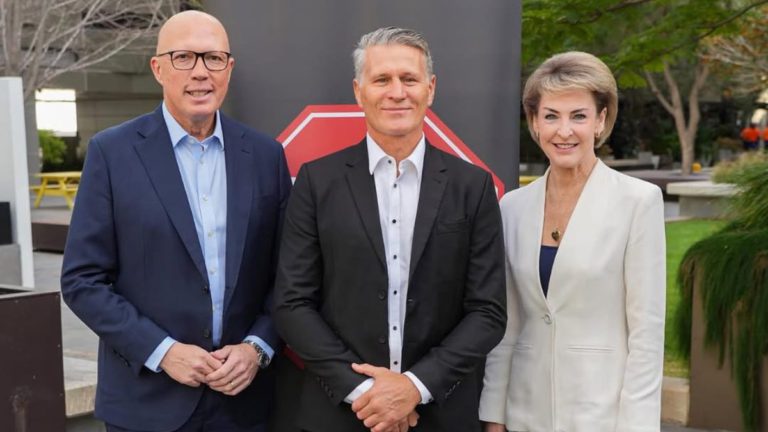
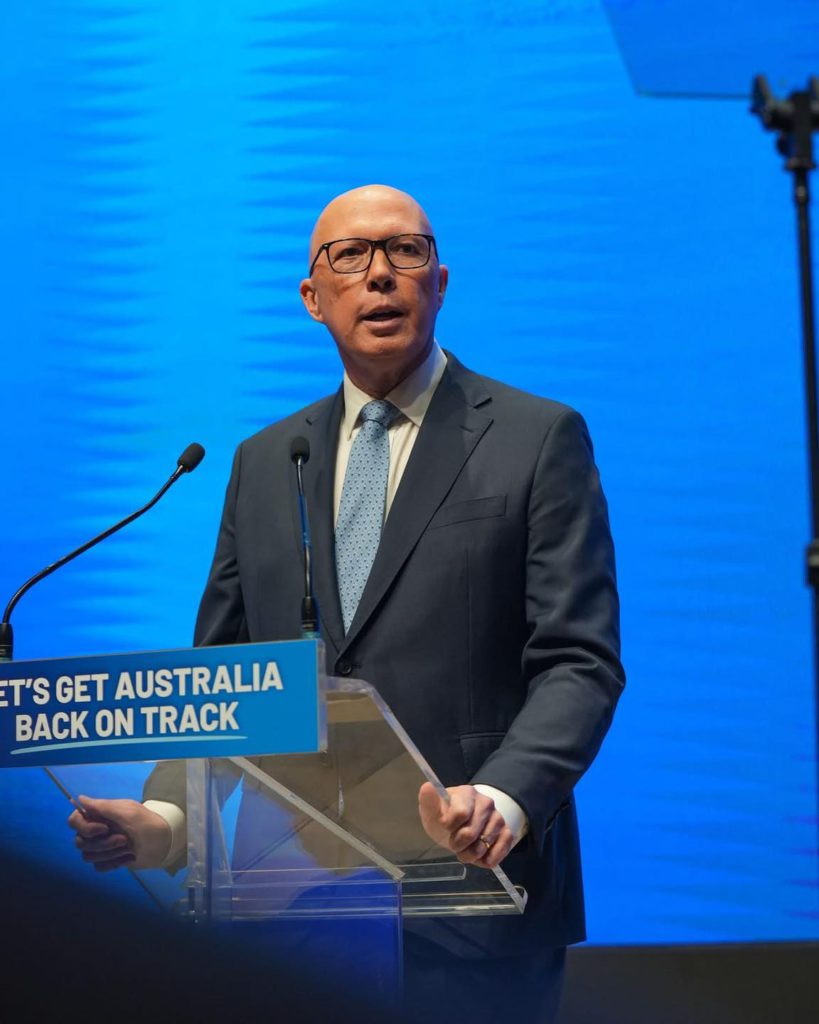
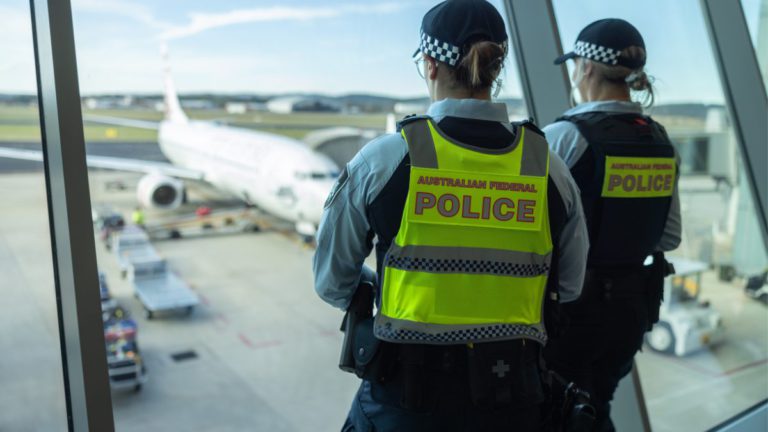
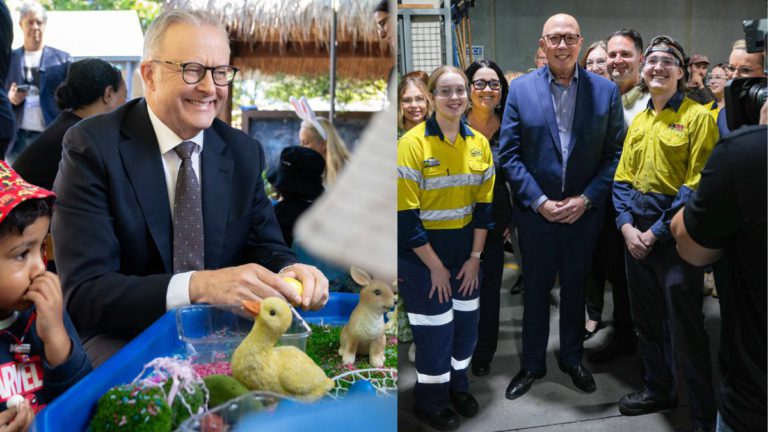
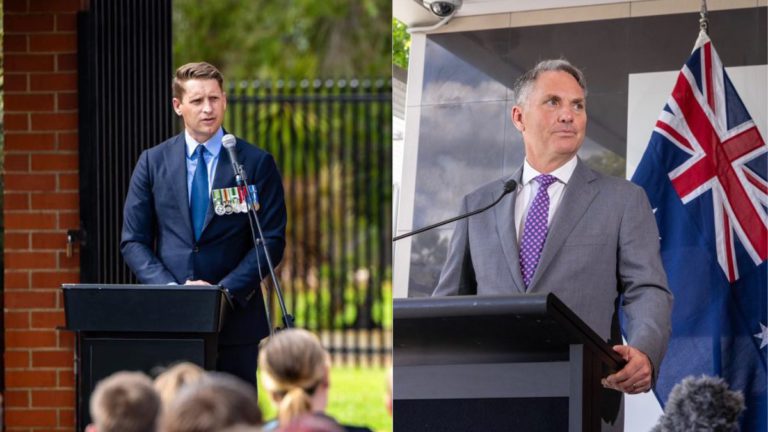
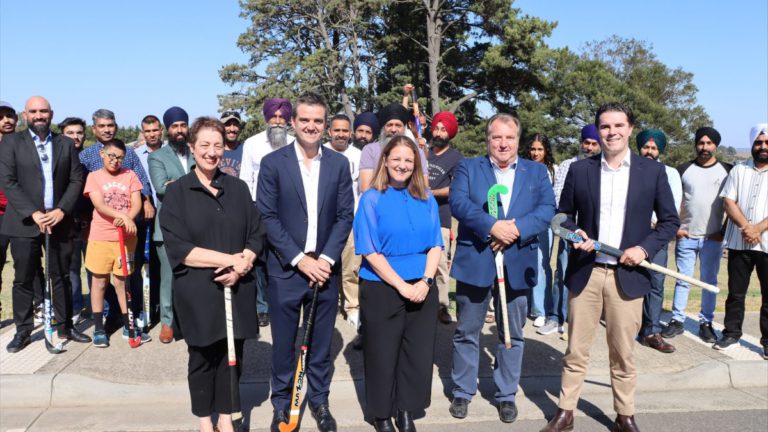
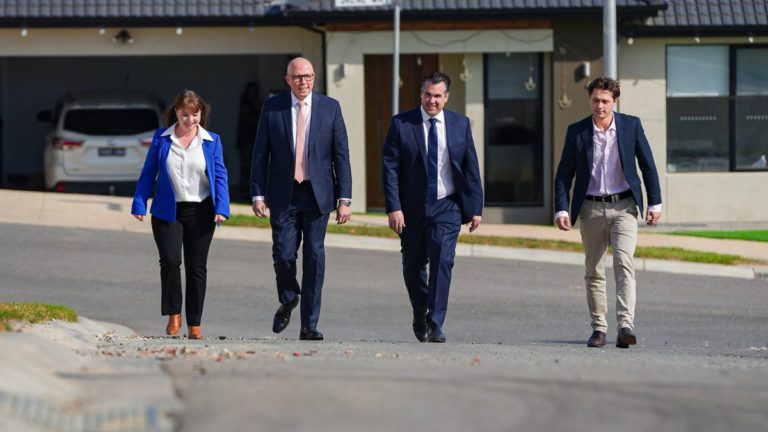
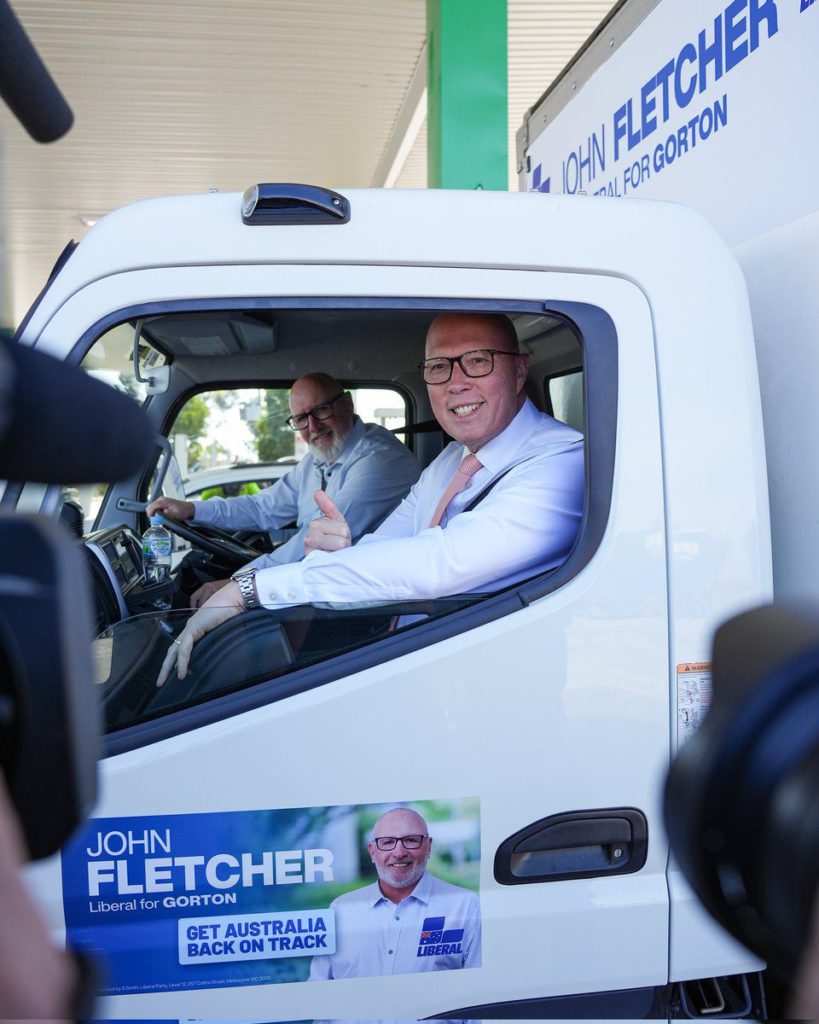
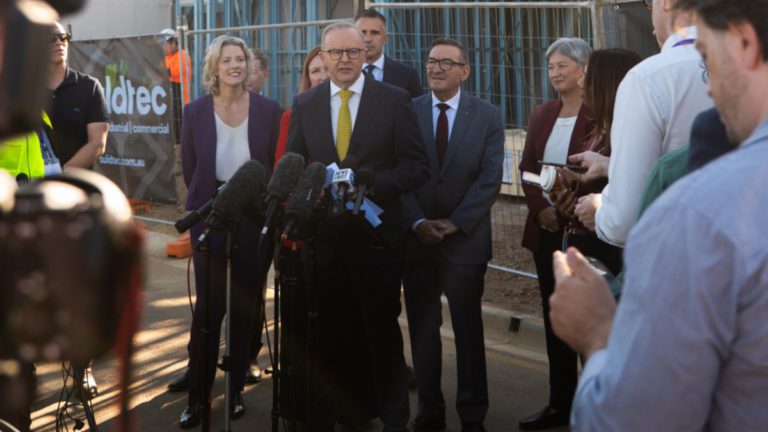
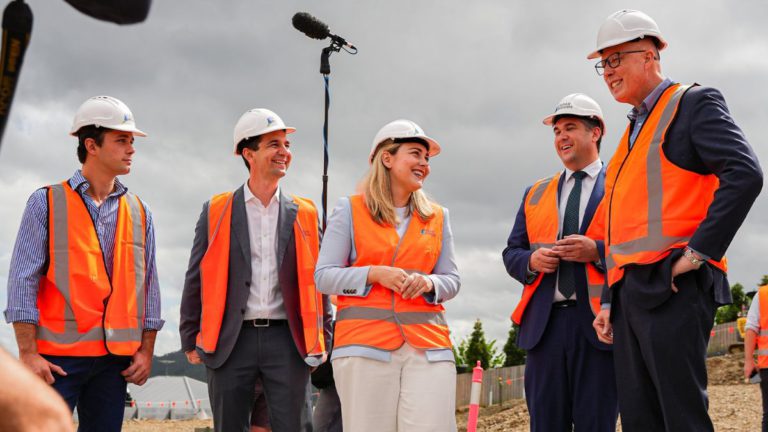
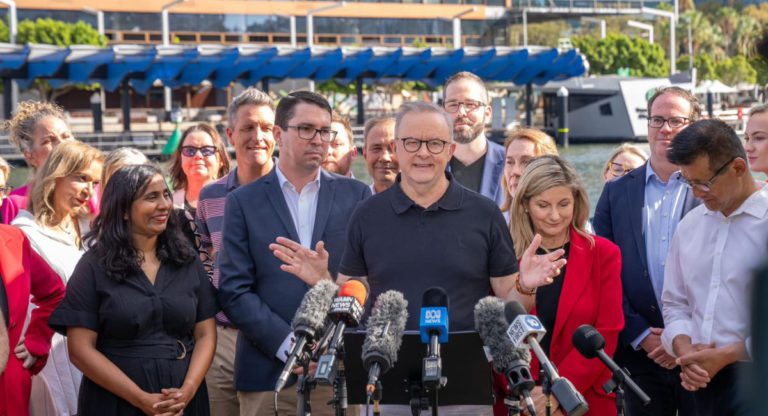
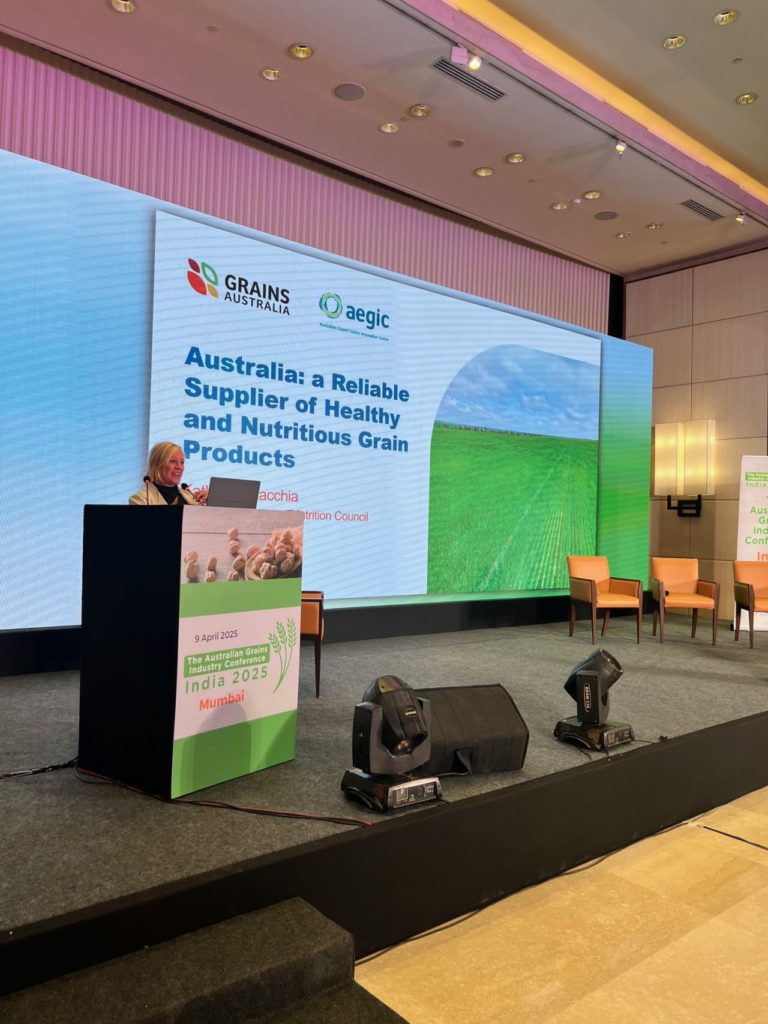
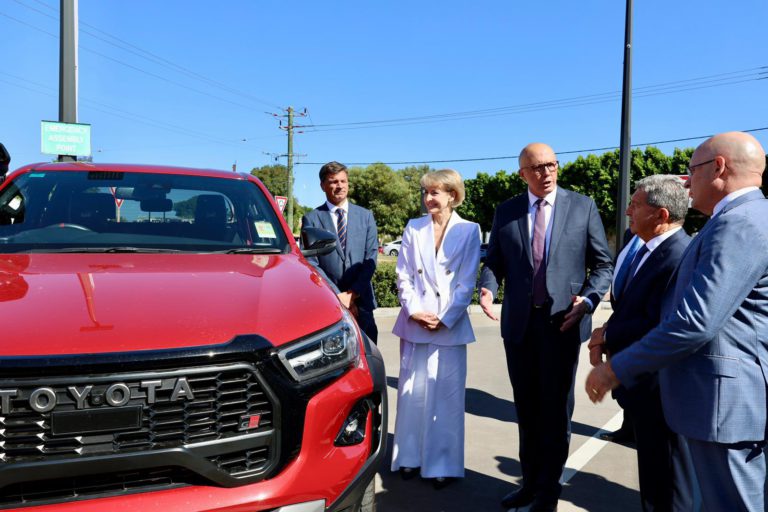
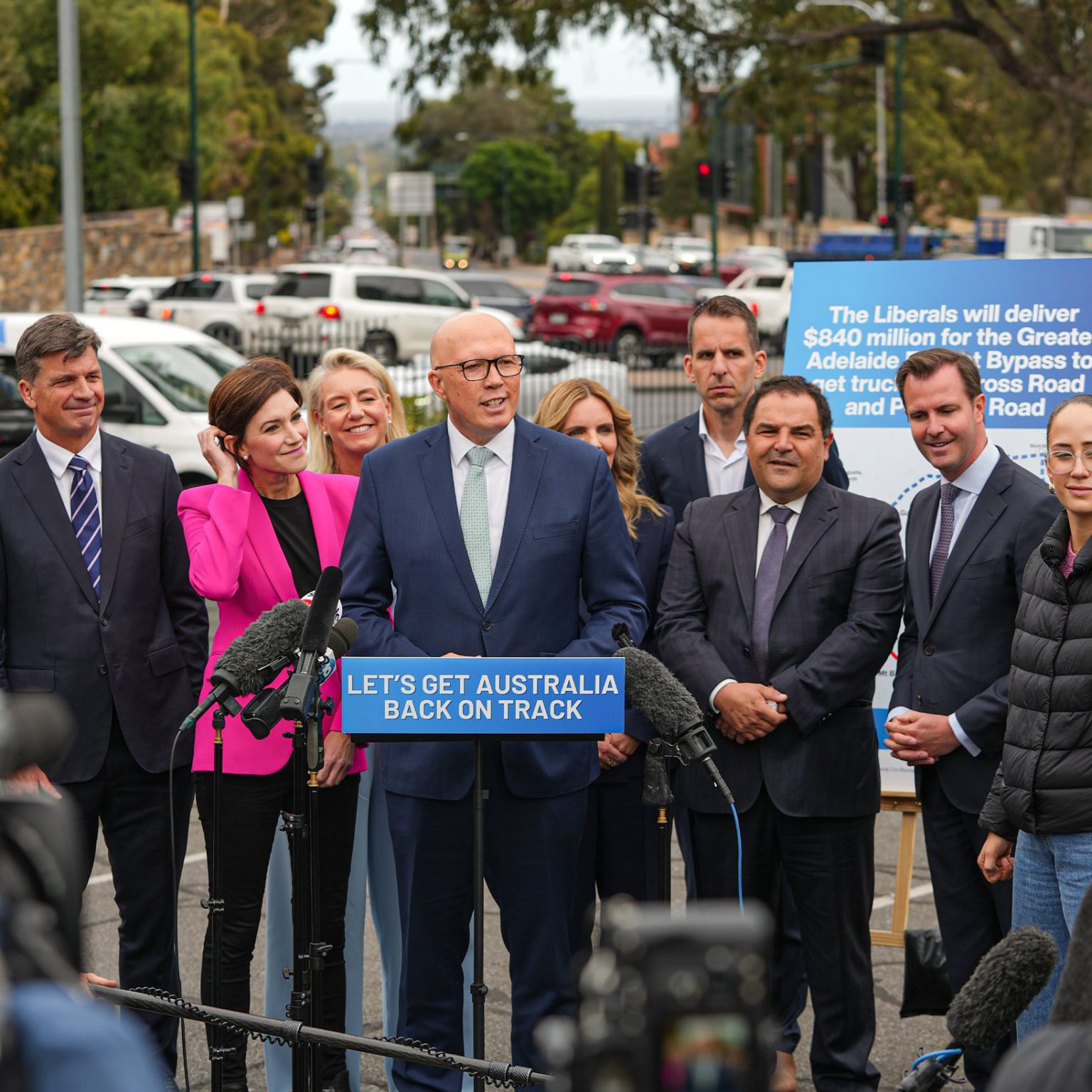
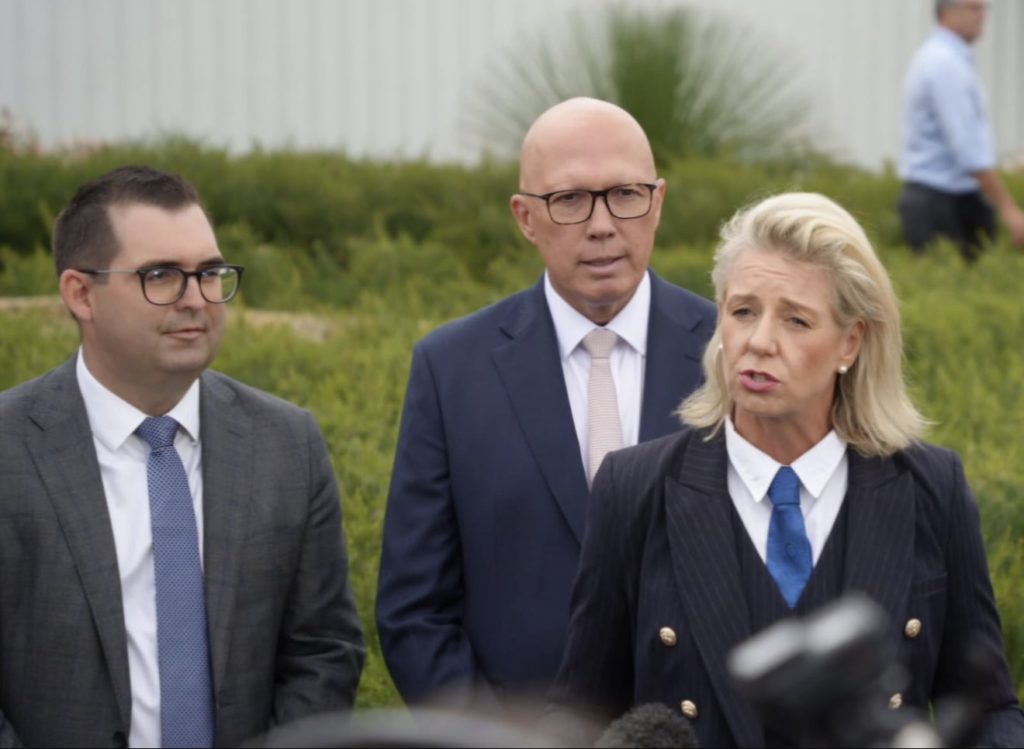
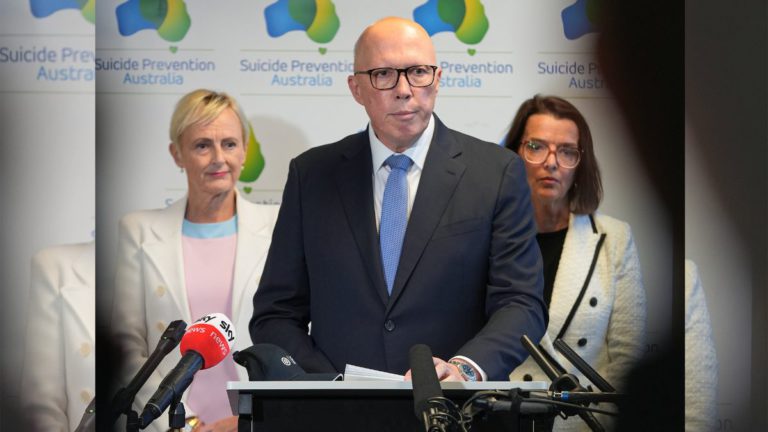
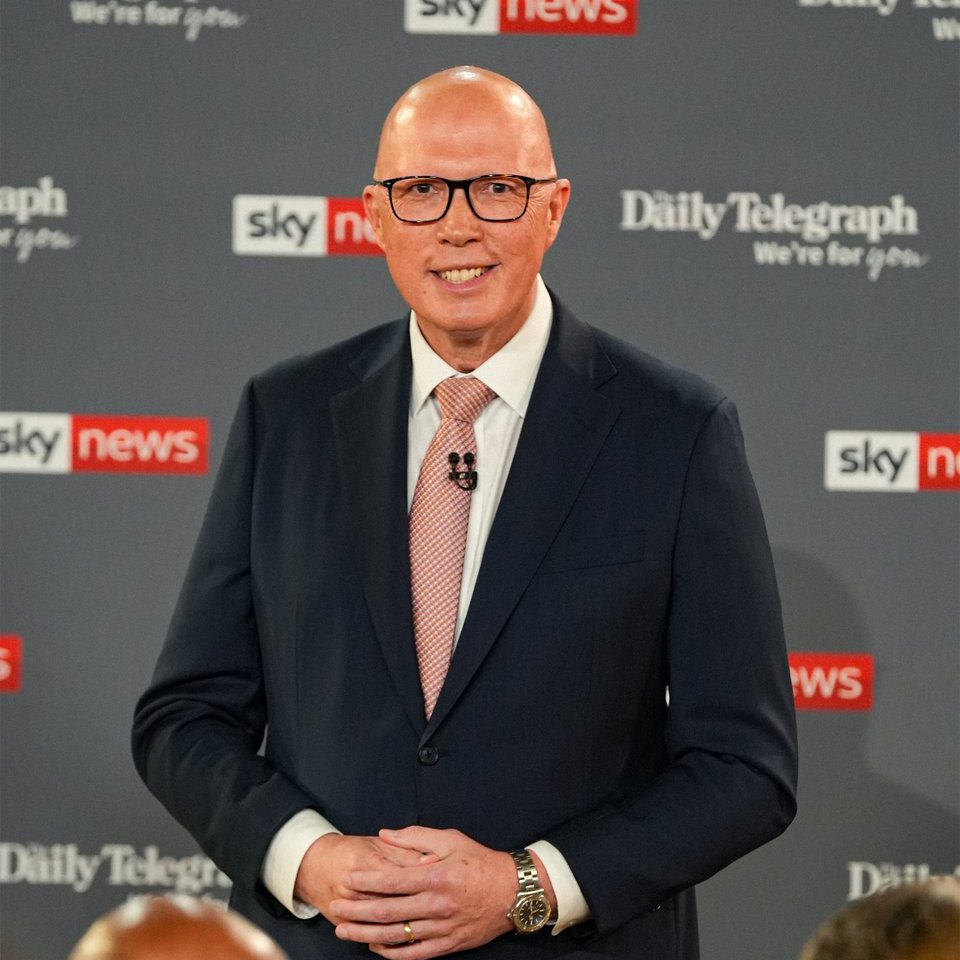
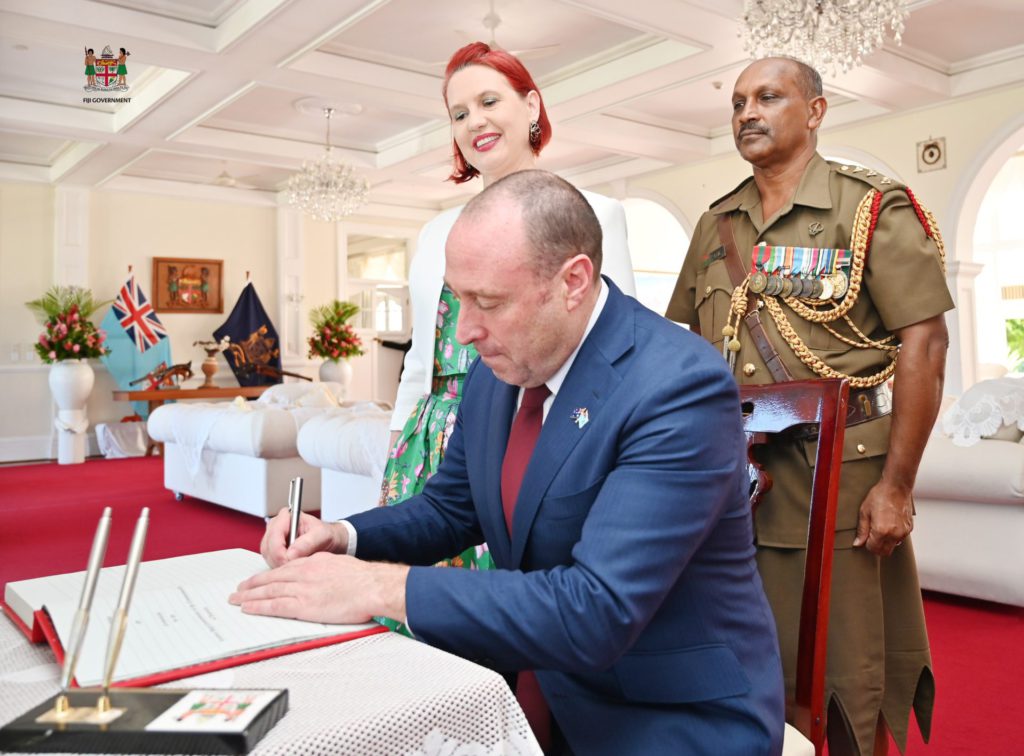
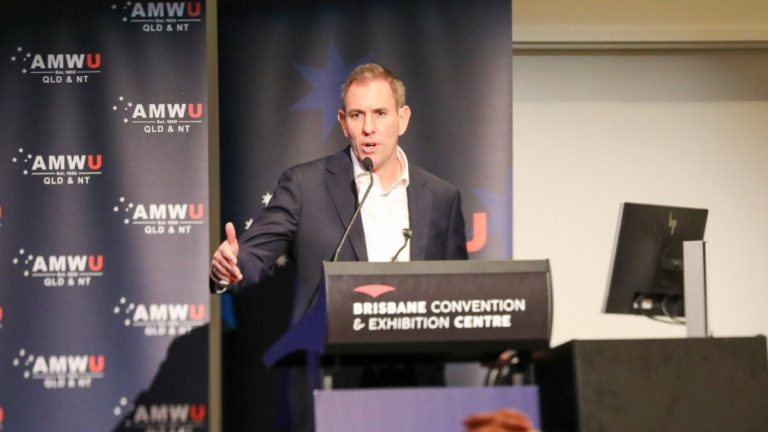
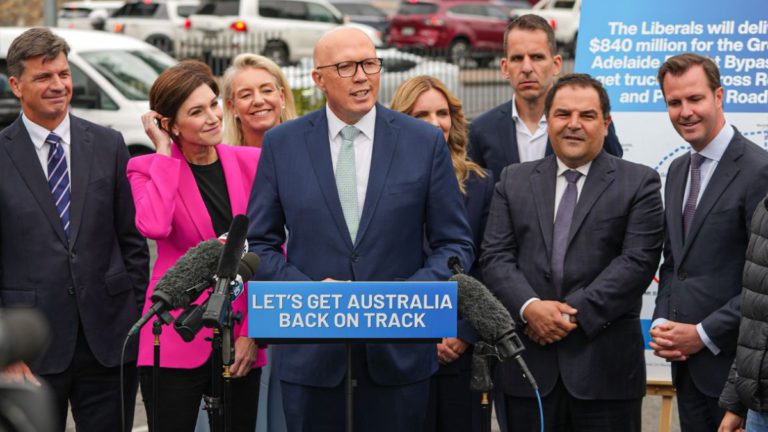
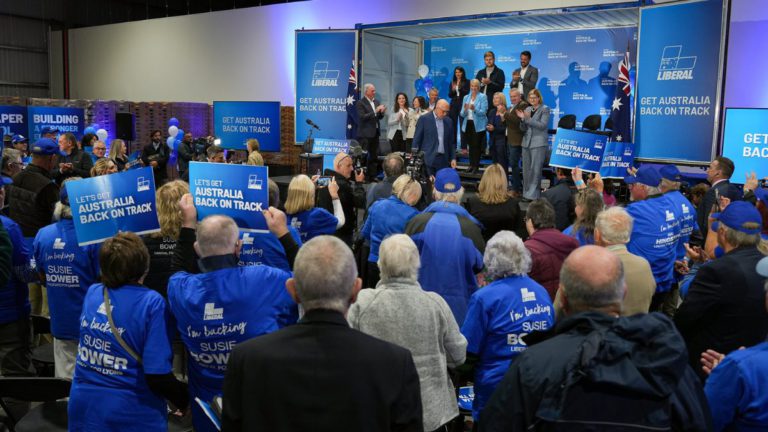
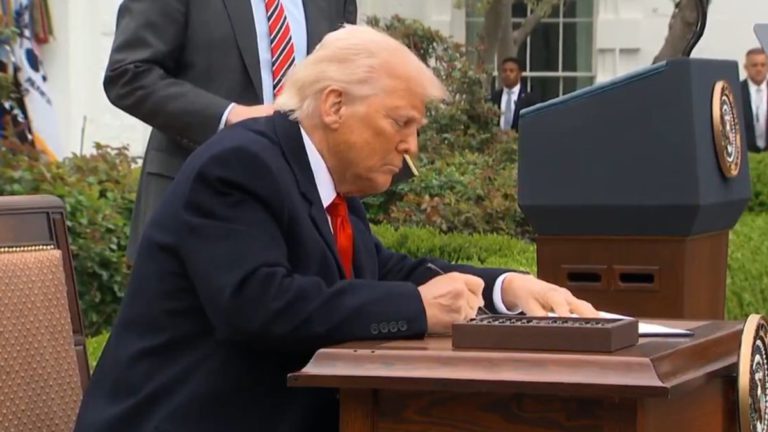
Opposition Leader Peter Dutton has unveiled a sweeping law and order policy package, pledging to trial a national child sex offender disclosure scheme and establish a $355 million strike team to combat organised crime, if the Coalition is returned to government.
The centrepiece of the proposal is a child sex offender register that would allow parents or guardians to confidentially request information from police about whether a person in contact with their child has a relevant conviction. The scheme would be rolled out as a 12-month pilot, funded with $21.3 million, and modelled on similar programs in Western Australia and the United Kingdom.
“This register is an idea whose time has come — and it is now time to put it into force to protect our kids,” Mr Dutton said.
“As a former police officer and as a father, I have always fought for the protection of children from harm.
This scheme will serve as a powerful deterrent to offenders and importantly will enable parents to be fully informed about their child’s safety.”
The register would operate under strict conditions, allowing law enforcement to disclose information only in cases where a genuine relationship exists between the requester and the child, and where police determine it is appropriate.
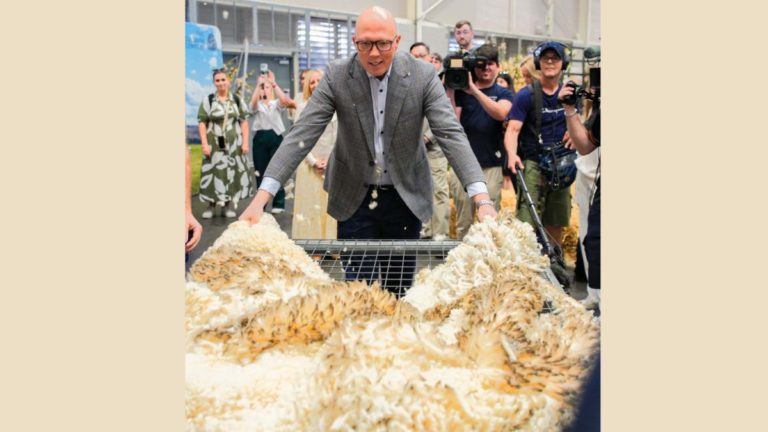
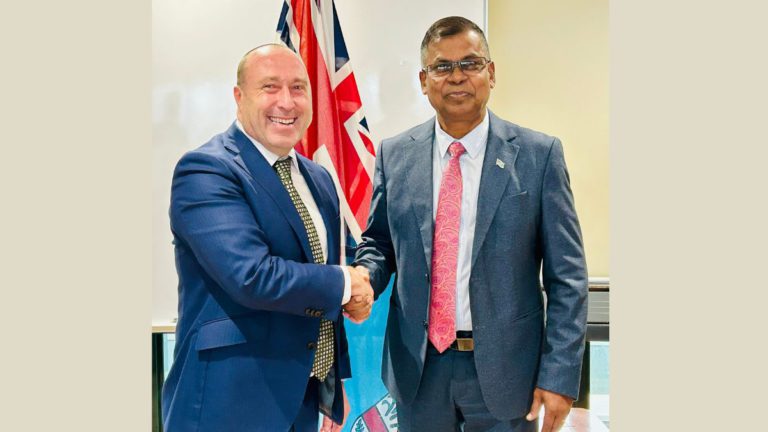
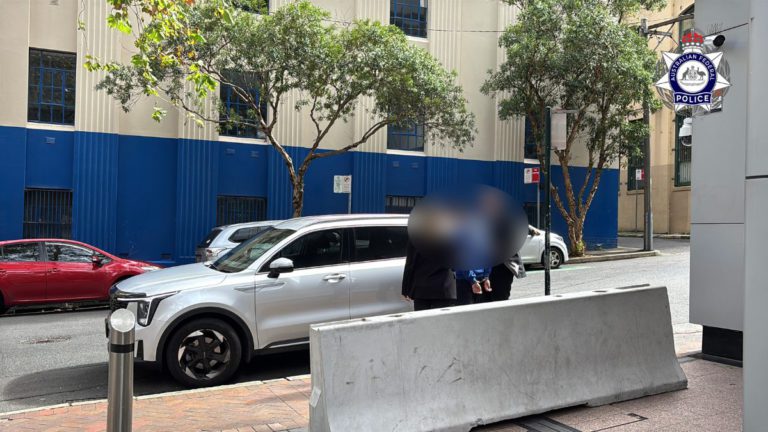
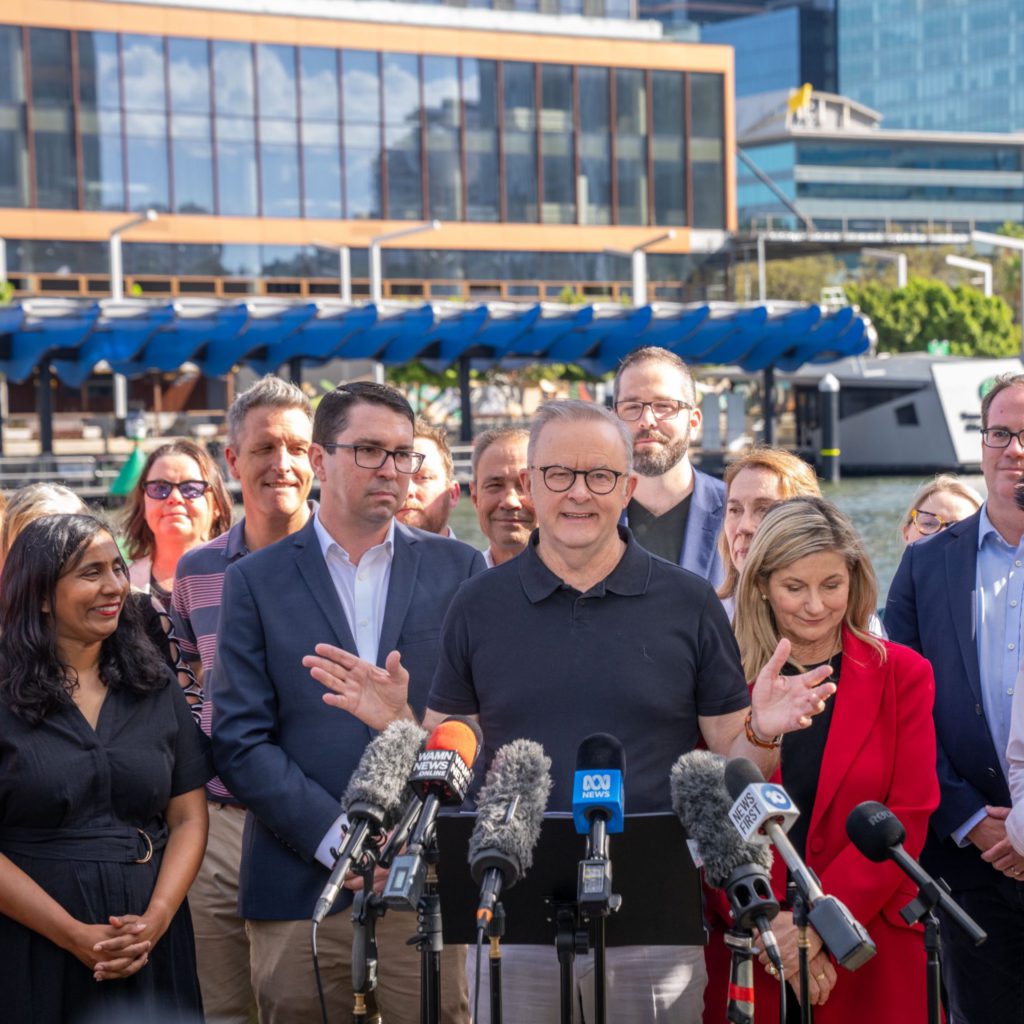
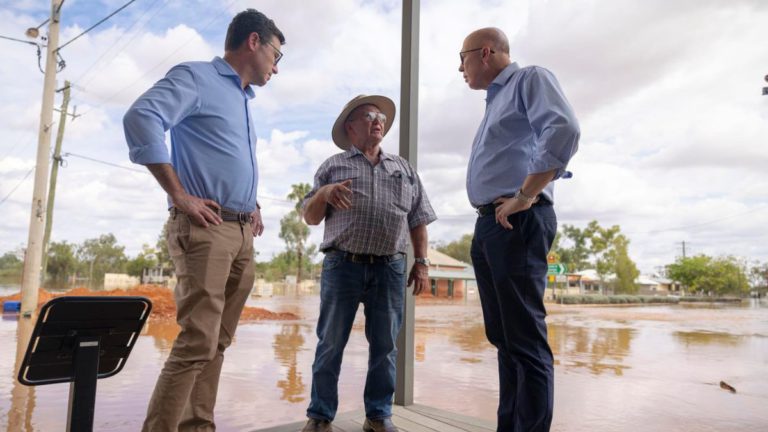
Image Source- Liberal Party Handout
The announcement comes amid growing public concern about community safety, and is part of the Coalition’s wider campaign narrative painting the Albanese government as soft on crime.
Alongside the register, the Coalition plans to establish a national “strike team” to target illicit drug networks and organised crime, staffed by Australian Federal Police officers embedded within state and territory agencies. The team would be supported by financial investigators and prosecutors, with assets seized from criminals redirected to community initiatives.
The policy package also includes plans to upgrade border detection technologies, strengthen laws targeting date-rape drugs, and enhance proceeds of crime legislation.
Shadow Attorney-General Michaelia Cash aimed for the government’s record, accusing Labor of turning a blind eye to rising criminal activity.
“When it comes to crime gangs running riot, particularly in Victoria, Australians are seeing the consequences of inaction every day,” she said.
“Anthony Albanese is soft on crime. He’s ignored the wave of organised crime and stayed silent on blatant criminal behaviour within the CFMEU.”
Government minister Murray Watt told ABC Radio National that police already have internal systems in place for tracking sex offenders and sharing information between jurisdictions. However, he did not rule out supporting the Coalition’s proposed disclosure model.
“We will always look at what future supports our federal law enforcement agencies need,”
Senator Watt said.
But he also criticised the timing of the announcement, describing it as a last-minute pitch ahead of an election by a party that had previously blocked measures to strengthen financial crime laws.
Labor recently announced an additional $156.7 million in the federal budget to combat illicit tobacco smuggling and transnational crime, and maintains that its funding commitments to policing and intelligence agencies are sufficient.
Still, the Coalition’s move reflects a broader effort to recast Peter Dutton’s image as a tough, solutions-driven leader focused on child safety and national security — themes that have long resonated with his conservative base.
Disclosure schemes like the one proposed have drawn praise in jurisdictions where they have already been implemented. Western Australia’s system has led to dozens of disclosures since its inception, and advocates say it empowers parents to make better decisions about their children’s safety.
However, critics warn that such schemes must be handled with care, particularly to protect privacy and prevent vigilantism. Under the Coalition’s plan, any information released to parents would be tightly controlled, and sharing that information further would be prohibited.
If elected, the Coalition would consult with states and territories to ensure consistent national implementation.
With just over two weeks until the election, the policy is likely to strike a chord with voters concerned about child protection, crime, and community safety, and could serve as a potent reminder of the Coalition’s traditional law-and-order credentials.
Whether it changes the electoral equation remains to be seen, but for Dutton, it is a message of clarity and control in a campaign increasingly defined by uncertainty.
Support our Journalism
No-nonsense journalism. No paywalls. Whether you’re in Australia, the UK, Canada, the USA, or India, you can support The Australia Today by taking a paid subscription via Patreon or donating via PayPal — and help keep honest, fearless journalism alive.
In the golden hush of an autumn afternoon, a mother’s world shattered in a single blink. Six-year-old Parsa, who lives with autism and is non-verbal, had vanished into the dense bushland of Victoria’s Dandenong Ranges during an Easter family outing. What followed was a 16-hour ordeal that turned strangers into searchers, and a nation into silent witnesses of a mother’s worst nightmare — and its miraculous ending.
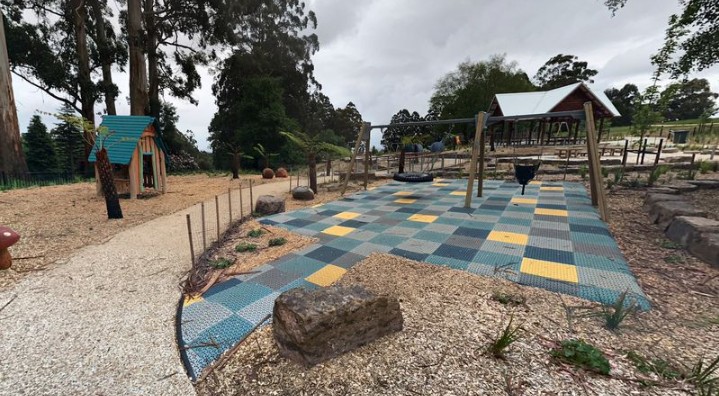
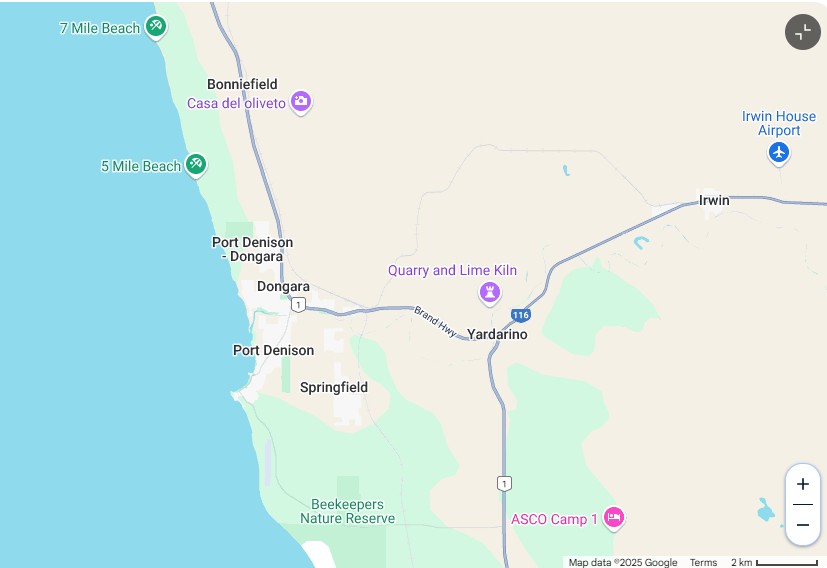
Image: Playspace near Olinda Monbulk Road (Source: Google Maps)
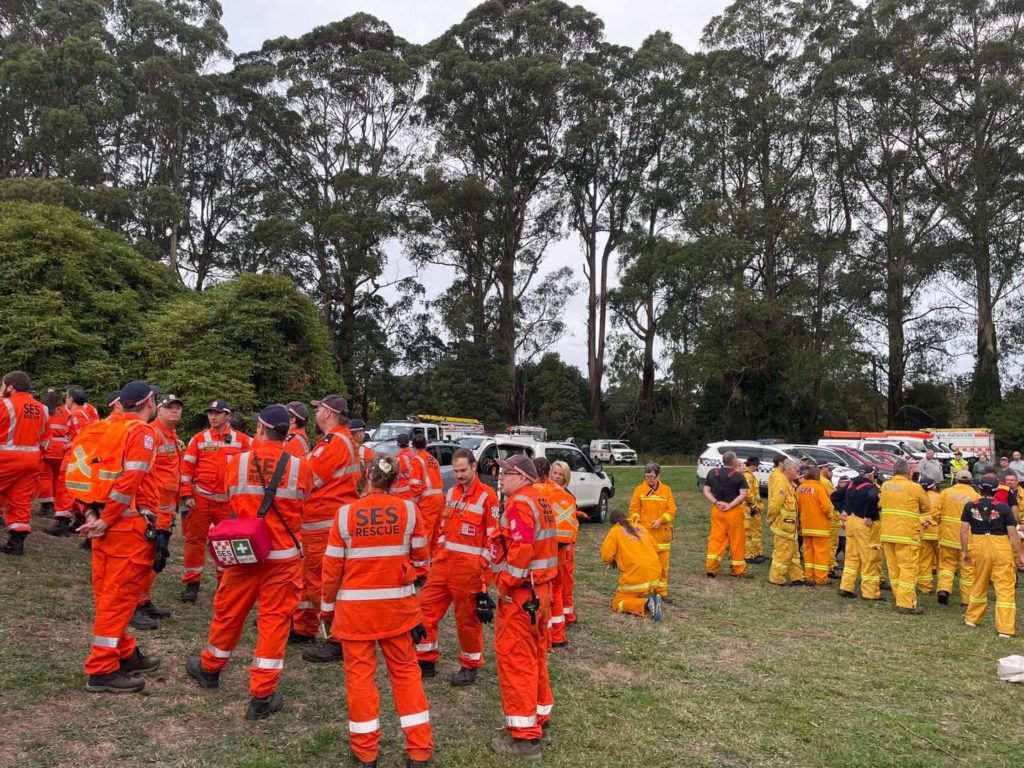
With more than 200 people — including police, SES, the Air Wing, sniffer dogs, and local volunteers — combing the rugged terrain, the operation stretched through the night. Despite wearing an AirTag, the device had last pinged at midnight. It was later discovered hanging on a tree, likely removed by the young boy irritated by its beeping.
As hope dimmed in the early hours of Saturday, a local teenager unknowingly became the hero of this story.
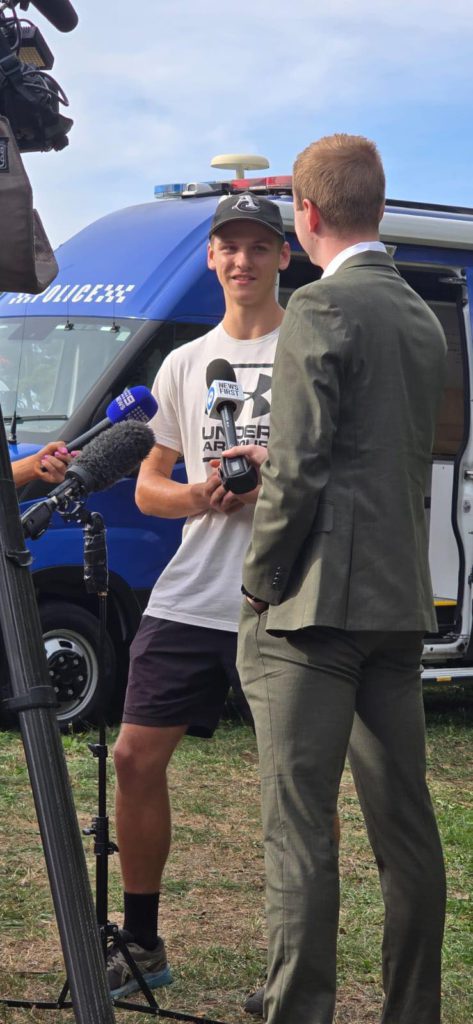
Image: Asher Shinkfield talking to media (Source: Facebook – Sahar Abedi)
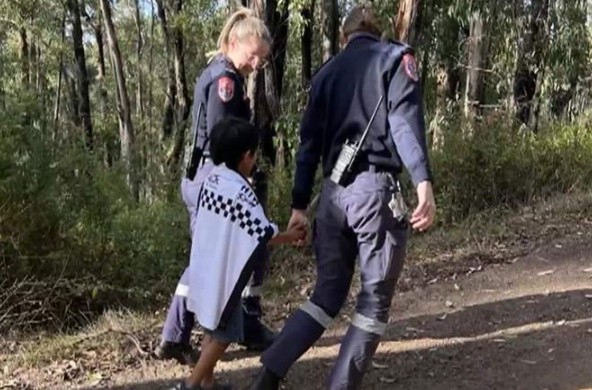
Eighteen-year-old Kalorama resident Asher Shinkfield had set out on his usual mountain bike ride when, around 8.15am, he spotted a small figure sitting alone on a forest trail — more than eight kilometres from where he had disappeared.
“He was fairly calm, he was really tired, obviously a long night,” Asher told reporters.
“It feels great, it’s heartwarming… right place, right time.”
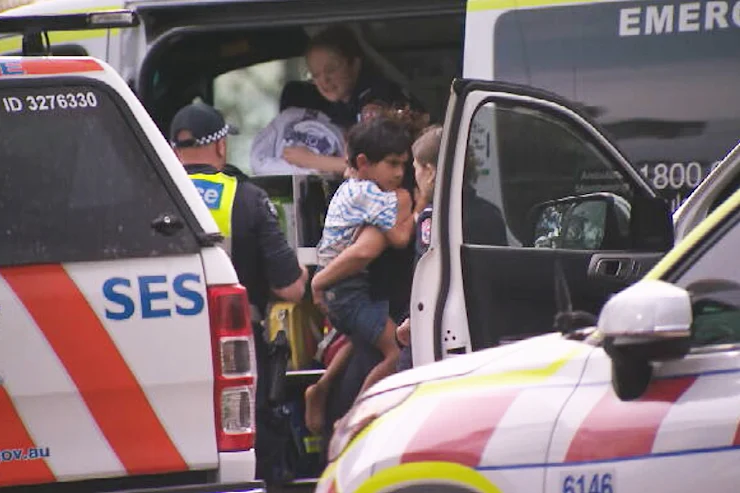
Parsa, though sleep-deprived, had not suffered any injuries. Paramedics gave him orange juice and an apple before he was taken home for rest and reunion.
Image: Parsa was found safe and well on Saturday in the Dandenongs (Source: Nine News screenshot)
For Parsa’s mother, Sahar Abedi, the moment marked the end of a nightmarish ordeal and the beginning of an outpouring of gratitude.
In a moving Facebook post, she wrote:
“My worst nightmare came to life — I lost my son in one of the most beautiful places I know, and he spent 17 hours alone overnight in the bush… From that moment until he was found, I lived through a thousand deaths.”
“It wasn’t just the SES teams, the police force, or the firefighters who searched tirelessly for my boy. It was the local community — the heroes without uniforms,” she added.
“People I had never met brought us clothes, toys for Parsa’s twin sister, warm homemade cakes, food, water, and hearts full of love.”
But instead of dwelling on the fear, Sahar chose to shine a light on compassion. She reserved special thanks for Asher, the teen who stayed by Parsa’s side and called police.
“To the young man who found Parsa… Parsa’s guardian angel will look after you, my friend. I’m so deeply grateful for you. I truly hope to meet you and give you the hug you so deeply deserve.”
Image: Parsa was found more than 8 kilometres away by local mountain bike rider, Asher Shinkfield. (Source: Nine News screenshot)
Knox Acting Senior Sergeant Melissa Gostimir called it an “Easter miracle” – “It’s not that often that I get to stand here with a smile on my face at the end of the day,” she said.
“Searches for lost children with autism can be particularly challenging as often they are unable to communicate with searchers.”
Officers had tried playing Parsa’s favourite song — Hickory Dickory Dock — on loudspeakers throughout the night in hopes of drawing him out. But in the end, it was the quiet presence of a kind stranger that brought him home.
Image: Parsa reunited with his family after spending 16 hours lost in the Dandenong Ranges (Source: Nine News screenshot)
As the sun rose on Saturday, so too did the spirit of a community — one that rallied, searched, and wrapped a family in its arms. And for one mother, whose heart had nearly broken, there were no words more powerful than these:
“Thank you, from the bottom of my heart. Your kindness will never be forgotten.”
Support our Journalism
No-nonsense journalism. No paywalls. Whether you’re in Australia, the UK, Canada, the USA, or India, you can support The Australia Today by taking a paid subscription via Patreon or donating via PayPal — and help keep honest, fearless journalism alive.
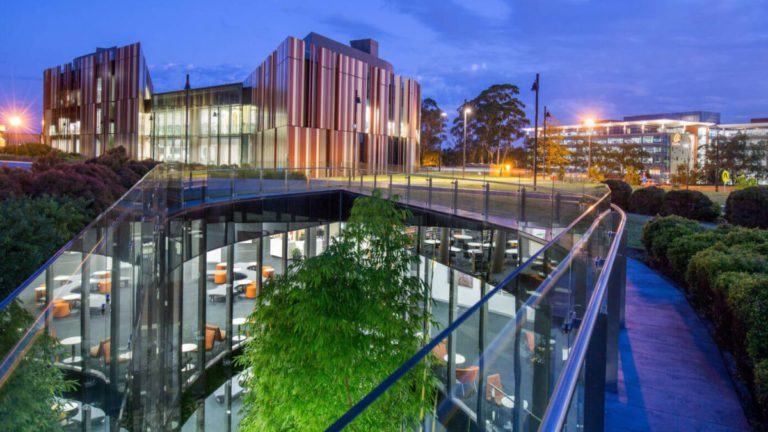
The University of the South Pacific (USP) marked another milestone as 1,881 students graduated on the 10th and 11th of April, 2025.
This event, held at the Vodafone Arena in Suva, included the Minister for Education, Aseri Radrodro, and USP’s Vice-Chancellor and President, Prof. Pal Ahluwalia, who both honoured the achievements of the graduating cohort.
Minister for Education Aseri Radrodro, centre, with graduates from USP. Picture: USP MARKETING
Radrodro extended his congratulations to the graduates and praised them for their determination, effort, and dedication.
He paid tribute to the families, teachers, and the wider USP community for supporting and enabling the graduates to achieve.
“This is not only a celebration of our graduates, but also a celebration for everyone who supported them — their families, their lecturers, and all those who have made USP a lighthouse of hope and excellence in the Pacific.”
USP Vice-Chancellor and President Professor Pal Ahluwalia with a graduate student. Picture: USP MARKETING
USP Vice-Chancellor and President Prof. Ahluwalia reminded all graduands that this ceremony was not an ending, but a new beginning for them.
Drawing inspiration from actress Kerry Washington, he encouraged students to reflect on moments of challenge and growth throughout their academic journeys.
“Your resilience, your willingness to step outside your comfort zones, and your belief in a better future have brought you here,” he said.
“You are the wayfinders of our time — charting new courses for our Blue Pacific.”
Highlighting USP’s unique role in blending traditional Pacific knowledge with modern academic excellence, the Vice-Chancellor emphasised that graduates are now equipped not only with degrees, but with the power to shape the future of their communities and the region.
Prof. Ahluwalia also spoke passionately about the institution’s commitment to addressing urgent regional issues such as climate change through its Centre for Sustainable Futures, and commended the university’s high global rankings and its efforts to support women in academic leadership.
“We all recognise that climate change remains the single greatest existential threat to our region. USP recognises the need and opportunity to leverage its position, complementing other regional initiatives around climate change and oceans management in collaboration with fellow CROP agencies,” he said.
“Given that our institution has produced more female graduates for successive years — an average of 60% of those who graduated over the last six years are female — we want to see more women play leading roles in such spaces,”
Both leaders urged graduates to be bold, visionary, and anchored in Pacific values as they take on new roles in a rapidly changing world.
The countdown begins!
USP is excited to host our first of the 2025 graduation ceremonies @ Vodafone Arena in Suva on 10-11 April.
To our graduands — you’ve worked hard, sacrificed & conquered every challenge to reach this milestone. It's time to walk that stage with pride! pic.twitter.com/g7Q6wgJe0c
— The University of the South Pacific (@UniSouthPacific) April 1, 2025
“Let your education fuel your passion, let your culture ground your vision, and let the Pacific spirit guide your leadership,” the Vice-Chancellor concluded, quoting Epeli Hau‘ofa:
“Just as the sea is an open and ever-flowing reality, so should our oceanic identity transcend all forms of insularity.”
Prof. Ahluwalia challenged the graduates to be the change-makers, to embody the Pacific spirit of working together for the benefit of all, and to shape a better future for the Pacific.
This article was first published in Wansolwara and has been republished here with the kind permission of the editor(s).
Contributing Author: Aalimah Zahraa is a second-year journalism student at The University of the South Pacific’s Laucala Campus.
Support our Journalism
No-nonsense journalism. No paywalls. Whether you’re in Australia, the UK, Canada, the USA, or India, you can support The Australia Today by taking a paid subscription via Patreon or donating via PayPal — and help keep honest, fearless journalism alive.
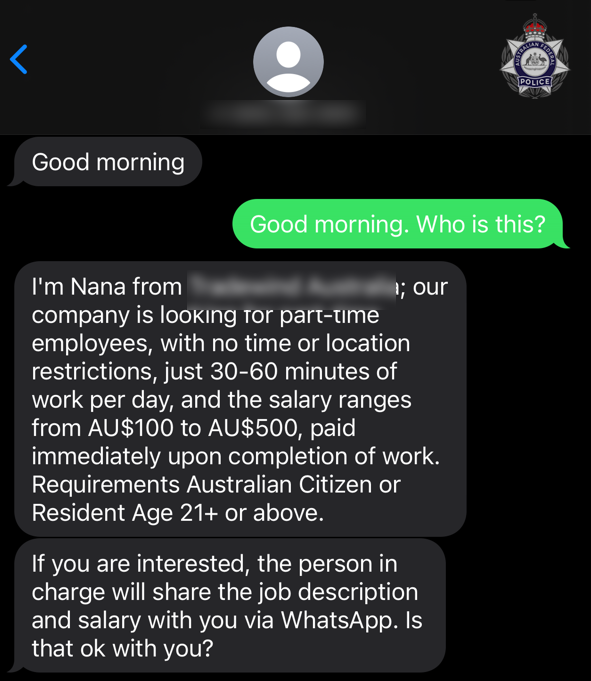
Fake job ads, often labelled as “employment scams,” are increasingly targeting Australians who are looking for flexible, remote or part-time work. The scams lure in victims with promises of quick cash for simple online tasks like liking posts, reviewing products or entering data.
“These ads are designed to hit all your vulnerable spots,” says AFP Commander Graeme Marshall.
“They offer hope to people who are struggling, only to leave them worse off—and in some cases entangled in serious criminal activity.”
According to the AFP-led Joint Policing Cybercrime Coordination Centre (JPC3), criminal networks are increasingly using these scams to exploit financially vulnerable Australians. In January 2025 alone, Scamwatch recorded more than $4.2 million in reported losses from employment scams.
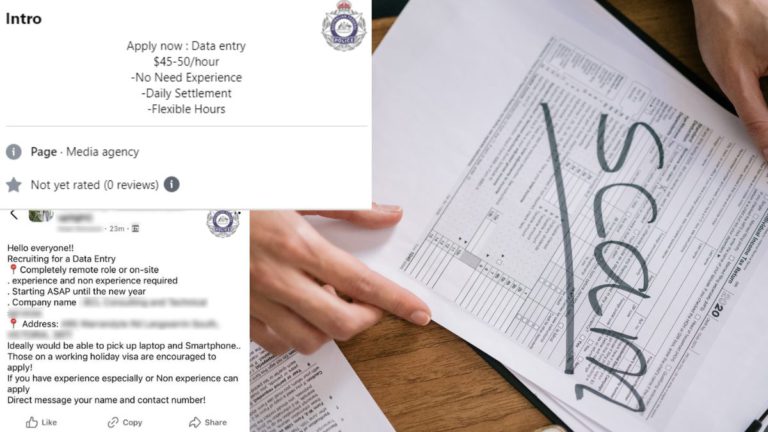
Image: Job scams (Source: AFP)
Scammers often impersonate recruiters or representatives from real companies in trusted industries—education, healthcare, real estate, entertainment—to gain a false sense of credibility. Once contact is made, victims are asked to pay fees for training, registration, or equipment. Others are tricked into sharing sensitive information such as tax file numbers, bank account details or even passport scans.
“The criminals may start by paying small amounts to build trust,” Commander Marshall explains.
“But then they ask for more money with the false promise of higher-paying tasks—money that disappears into a scammer’s pocket.”
Worse still, victims may unknowingly become accomplices in criminal schemes. Scammers often use stolen personal data to open bank accounts and launder money, which can drag innocent job seekers into police investigations and damage their credit history.
“These aren’t just financial scams—they’re identity thefts, they’re fraud networks, and they’re serious crimes.”
Image: Job scams (Source: AFP)
Authorities are urging job seekers to exercise extreme caution, especially when approached online. “No legitimate employer will ever ask you to pay to get a job,” Marshall warns.
“If the job description is vague, requires upfront payment, or promises huge returns for little work—walk away.”
“Cybercriminals are becoming more sophisticated,” Marshall said.
“We need to keep up. By staying alert and asking the right questions, we can protect ourselves—and each other.”
Support our Journalism
No-nonsense journalism. No paywalls. Whether you’re in Australia, the UK, Canada, the USA, or India, you can support The Australia Today by taking a paid subscription via Patreon or donating via PayPal — and help keep honest, fearless journalism alive.
Injectable medications originally developed for the treatment of diabetes are also effective for weight loss, and have surged in popularity for this purpose around the world.
In Australia, Ozempic is approved for the treatment of type 2 diabetes, while Wegovy is approved for weight management. Both are formulations of the drug semaglutide, which mimics the action of the naturally occurring GLP-1 hormone on GLP-1 receptors in the gut and the brain, helping regulate appetite and making you feel fuller for longer.
However these medications are expensive, and sometimes hard to get. They also come with side effects. For these reasons, people are taking to “microdosing” weight-loss drugs, or using less than the dose recommended by the manufacturer.
But is this effective, and is it safe? As a GP, people are asking me these questions. Here’s what we know – and what we don’t know yet.
Ozempic was originally developed to treat type 2 diabetes but is now used by people worldwide as a weight-loss drug.#UQ’s Dr Sebastian Furness discusses the origins of Ozempic for @conversationedu: https://t.co/FRr9zDH9lJ@UQhealth
However, the term is increasingly being used to describe the use of weight-loss injectables at lower-than-recommended doses.
Three common reasons come up when I ask patients why they microdose weight-loss drugs.
Cost: injectables used for weight loss are not covered by the Pharmaceutical Benefits Scheme, so patients must pay for these out-of-pocket. Costs start from A$260 per month and increase from there.
Side-effects: side-effects are common, and can include nausea, vomiting, bowel habit changes and reflux. Lower doses cause fewer side-effects, which is why the recommended dosing schedule starts low and gradually builds up.
How do people microdose weight-loss drugs?
A standard dose of semaglutide is 2.4mg, but we start patients on much lower doses (0.25mg) and gradually build up to this by increasing the dose each month. This is because starting at the full dose invariably causes bad side-effects.
Injectables come in an adjustable auto-injector pen which is twisted until the dose counter shows the prescribed dose in milligrams. There’s a click every time the dial is turned. Once the prescribed dose is showing, it’s injected under the skin.
To microdose, patients simply turn the dial fewer times than recommended for the full dose. They estimate a microdose by “counting clicks”, which means they’re turning it according to the clicks they hear rather than until they see the dial showing the correct dose has been reached.
Alternatively, they may inject the full recommended dose but do so less often than once per week.
Is it safe?
Using injectables in this way has not been researched, so the safety has not been established. However, it’s unlikely lower doses would lead to higher safety concerns.
In fact, logically, lower doses are likely to mean fewer side-effects.
But these drugs do expire after a few weeks, and microdosing could increase the risk of inadvertently using them after their expiration date. Injecting out-of-date medication can be a significant health risk. For example, it could cause infection if bacteria has started to grow.
The biggest concern around the safety of microdosing is if patients are doing it without the knowledge of their treating team (such as their GP, dietitian and pharmacist).
Because there are no clear guidelines around microdosing, patients should only try it with caution and under medical care. Their team can assist with issues such as accounting for the limited shelf-life of the medication.
Is it effective?
As lower doses than recommended for weight loss have not been tested, we cannot answer this question yet. However, reduced side-effects at lower doses make it likely there are also reduced therapeutic effects.
In my experience there’s a reason patients increase their doses as recommended: they simply don’t lose enough weight on the starting doses.
At the height of semaglutide shortages in 2023, experts from the American Diabetes Association published recommendations around how to prescribe lower doses for patients with diabetes. But these recommendations were for diabetes management, not for patients using the drug for weight loss.
It’s also important to note that for patients using Wegovy to reduce heart attack and stroke risk – which Australia’s Therapeutic Goods Administration recently approved it for – there’s no evidence that cardiovascular benefits will be achieved at lower-than-recommended doses.
Is there any role for microdosing weight-loss drugs?
There may be a role for microdosing in a few scenarios:
When side-effects are not manageable: when side-effects are intolerable for patients, even on the lowest introductory dose, there may be a role for individualised approaches. But this is best done with clear communication and regular monitoring, so patients are not under-treated.
Supply disruption: if there’s a supply disruption, lowering the dose or lengthening the time between doses may be preferable to ceasing the medication altogether.
Maintenance of weight loss: once therapeutic levels have helped patients achieve their goal weight, lowering the dose may be a helpful longer-term way of keeping them there. We know stopping these drugs altogether results in rebound weight gain. We await evidence for microdosing for weight maintenance.
So what’s the take-home message?
Patients who use injectables as part of their approach to weight loss should be under the care of an experienced team, including a GP, who can monitor their progress and ensure they achieve their weight loss in a safe and sustainable way.
Microdosing weight-loss drugs currently has no clear evidence base, but if a person wants to attempt it, they should do so with the full knowledge of their treating team.
Note:Natasha Yates wishes to thank Dr Terri-Lynne South – a GP, dietician, and the chair of the Royal Australian College of General Practitioners’ specific interest group in obesity management – for providing feedback and peer review on this article.
No-nonsense journalism. No paywalls. Whether you’re in Australia, the UK, Canada, the USA, or India, you can support The Australia Today by taking a paid subscription via Patreon or donating via PayPal — and help keep honest, fearless journalism alive.
Dr Kunal Kalra is a young professional living in Sydney. We asked him about the main issues that matter to him in the upcoming Federal elections on 3rd May. Like many other Australians his No 1 issue is cost of living.
“The issues with the elections have been tied to politicians making promises that ultimately turn out to be false hopes. They committed to improving financial conditions, but those promises haven’t actioned. For example, my mortgage payments have skyrocketed by $2500 to $3000 more than we anticipated, which is putting a strain on us financially. Meanwhile, salaries have stayed stagnant, but living expenses—like groceries, food, and even basic necessities like fruits—have doubled.”
)Cost of living pressure representative images @Canva
“What used to cost us $35 for a meal for two in 2023/2024 now costs $70-80 in 2024/2025. It’s not just food—every expense has doubled, including insurance, medical costs, clothing, transport, and fuel. Our electricity and gas bills have gone up. Fuel prices have risen. At the end of the day, it feels like these election promises happen only at the time of elections and aren’t actioned later,” says Kunal.
Cost of Living is also a big issue for Melbourne based Shruthi Mathur who says “from food to electricity basic cost of living has gone up and one has felt the impact of these rising expenses.”
Himanshu Pota has been living in Canberra for many years. He says,
“I look for a party that can initiate a program to educate Australians about the reality of having to share their country with migrants and to educate migrants on how to integrate with the Australian ethos and respect the people who built this nation.”
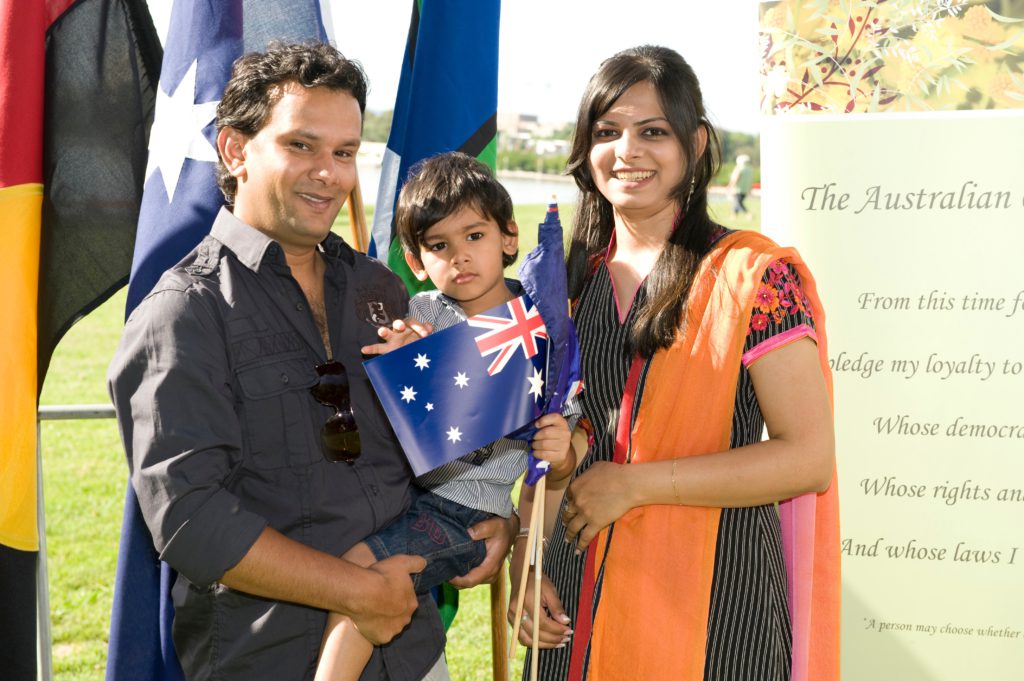
Indian Australians at a citizenship ceremony
According to the last census in 2021 by Australian Bureau of Statistics (ABS) , Australians with Indian Ancestry stood at 783,958 approximately 3.1% of the population while India-born population was 673,352.
There are several Federal seats where Australians of Indian origin could make a difference in the outcome. Seats such as Greenway (17.2 % Indian ancestry, 16% born in India), Parramatta, home to Australia’s ‘Little India’ (15.4 % Indian ancestry, 16.5% born in India) and Mitchell (9.4% Indian ancestry, 6.9% born in India) in NSW, and Lalor (16.1% Indian ancestry, 16.5% born in India), Gellibrand (11.2% Indian ancestry, 10.5% born in India) and Holt (10.6% Indian ancestry, 10.6% born in India) in Victoria.
On 3rd May Australians will vote for all 150 seats for the House of Representatives. Elections will also be held for 40 Senate seats (out of 76 seats). Voting is compulsory for all adult Australian citizens.
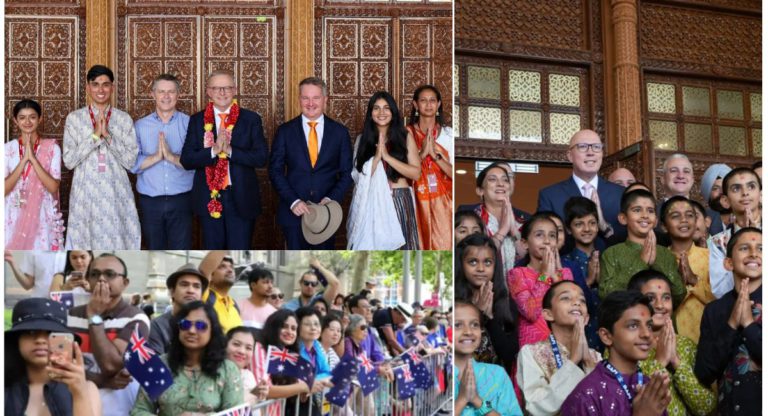
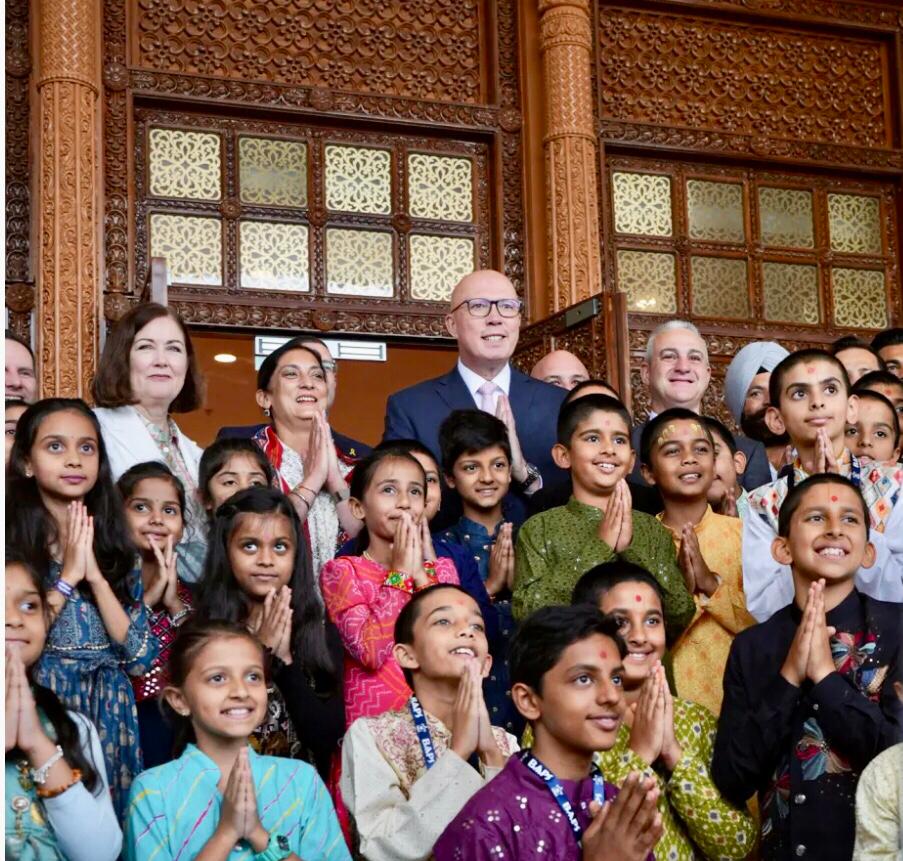
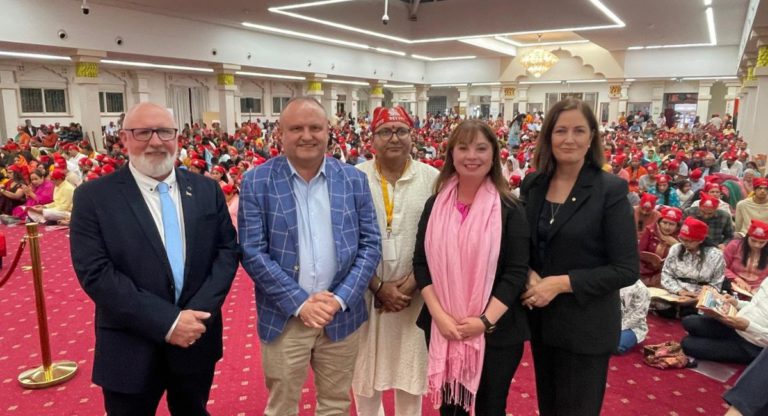
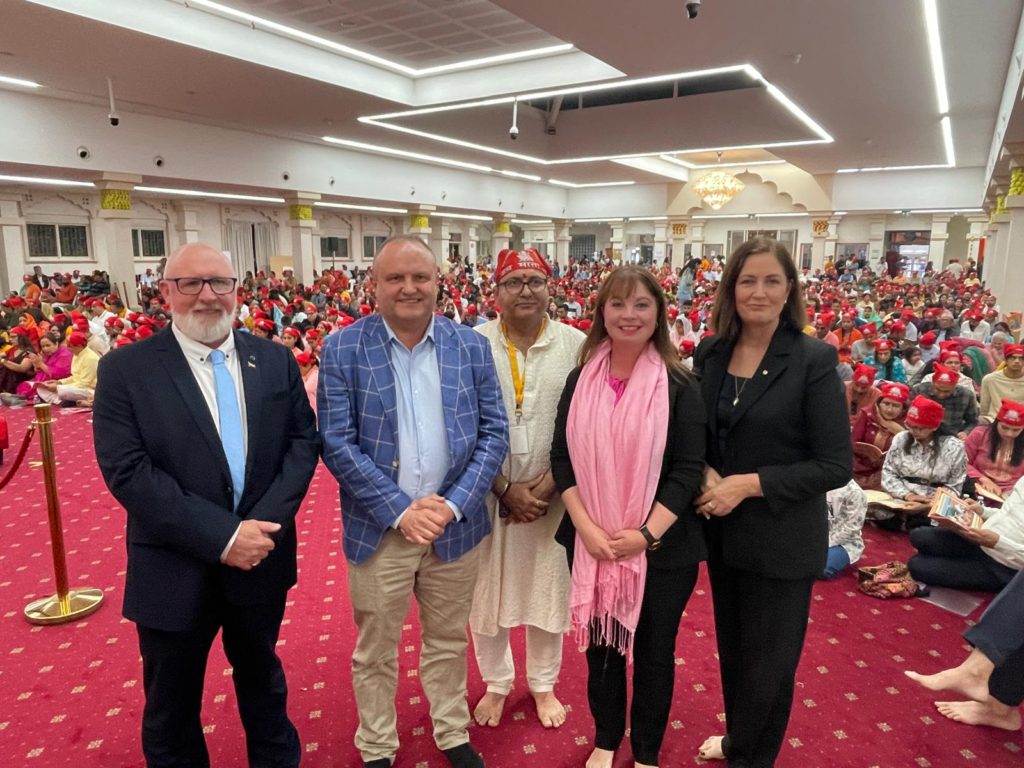
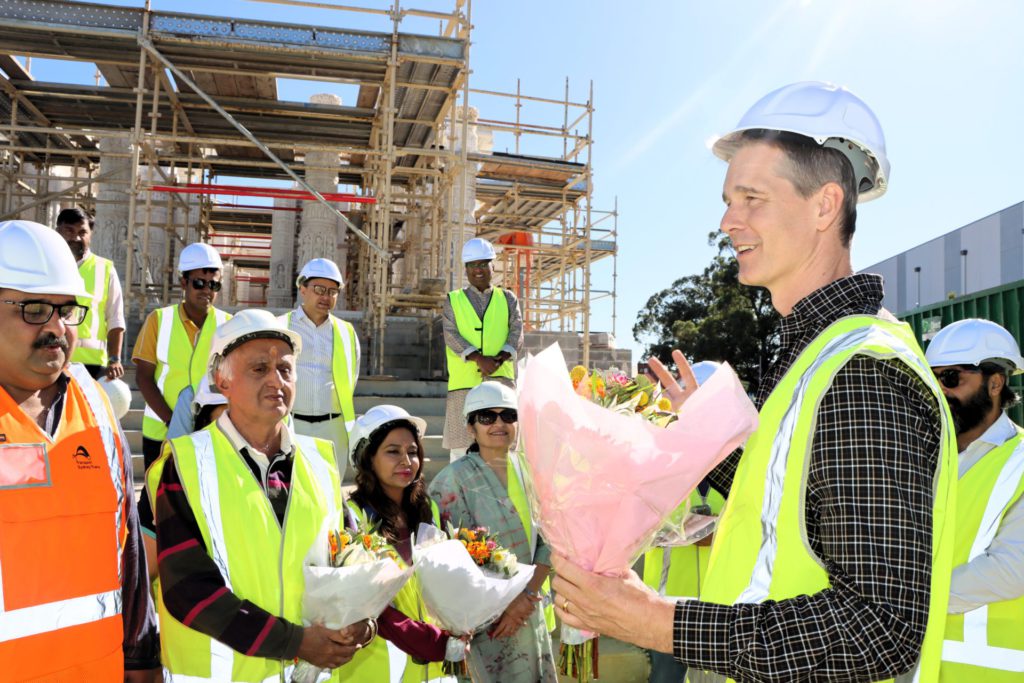
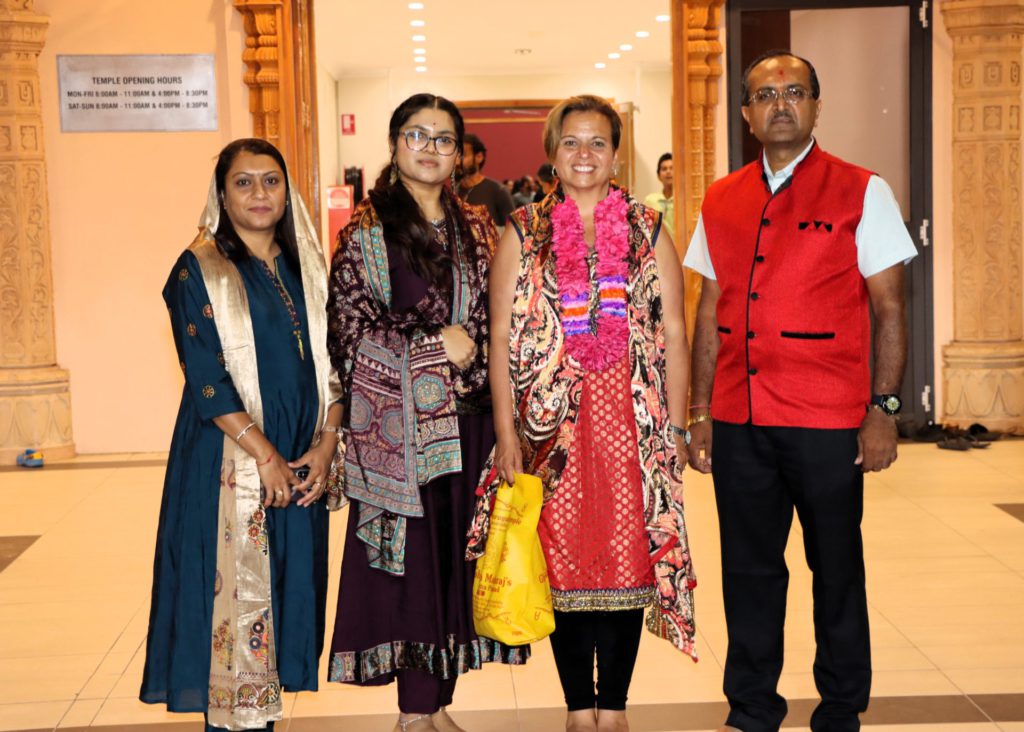
PM Anthony Albanese at BAPS Swaminarayan Temple, Kemps CreekLeader of the Opposition Peter Dutton at BAPS Swaminarayan Temple, Kemps Creek
There are around 45 Indian origin candidates in the fray this time contesting for the House of Representatives and the Senate.
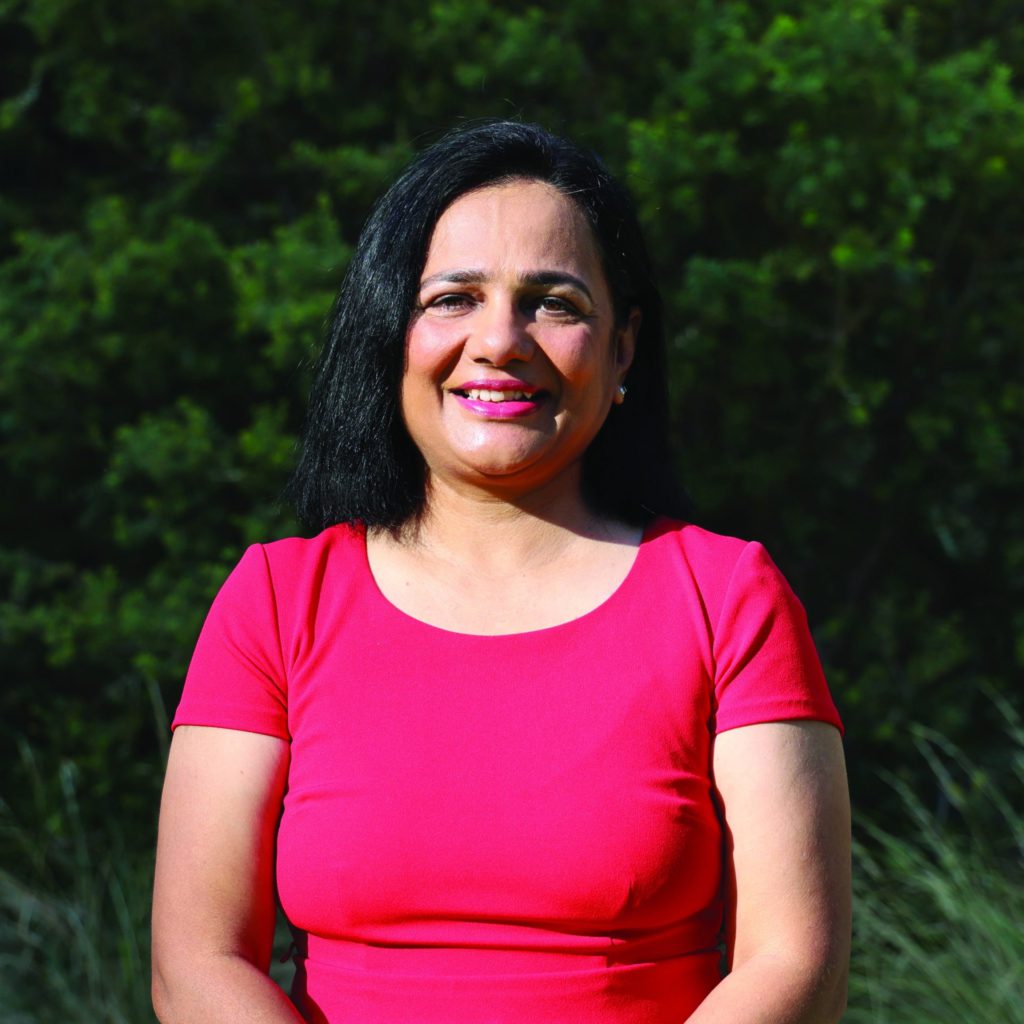
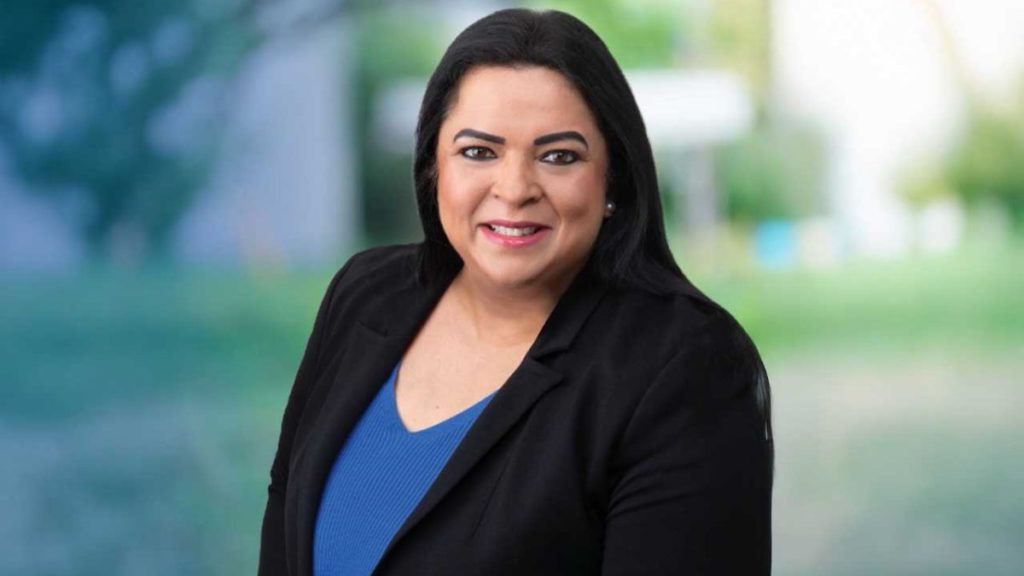
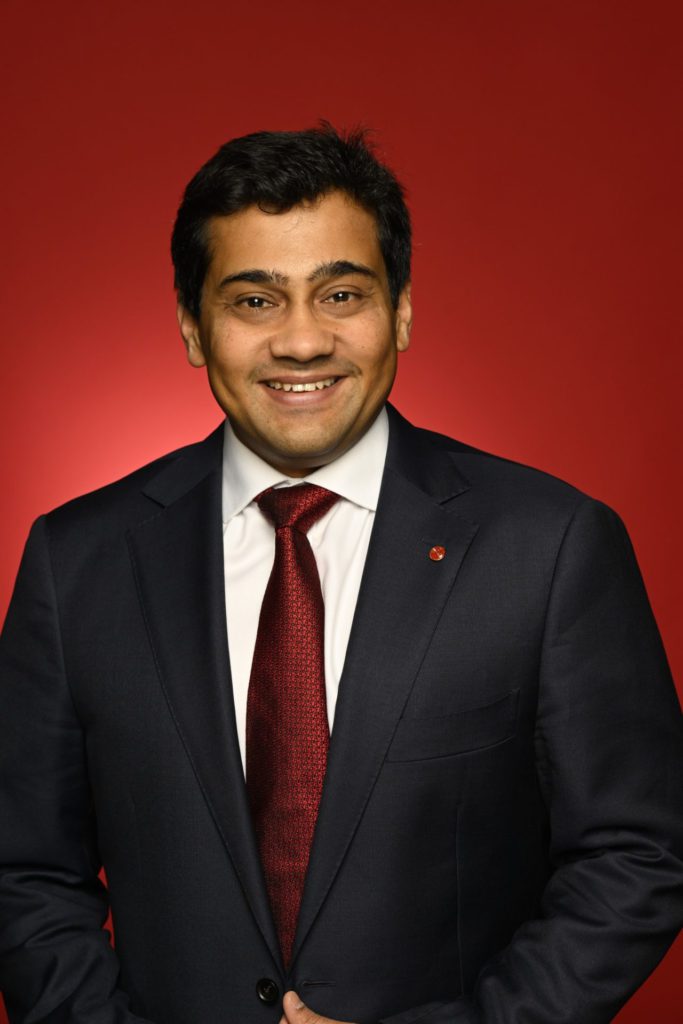
From Labor you have Zaneta Mascarenhas from Swan who is also the sitting MP and Nildhara Gadani from Goldstein for the Lower house and Senator Varun Ghosh who was appointed to the Senate from Western Australia in Feb 2024 for the Upper House.
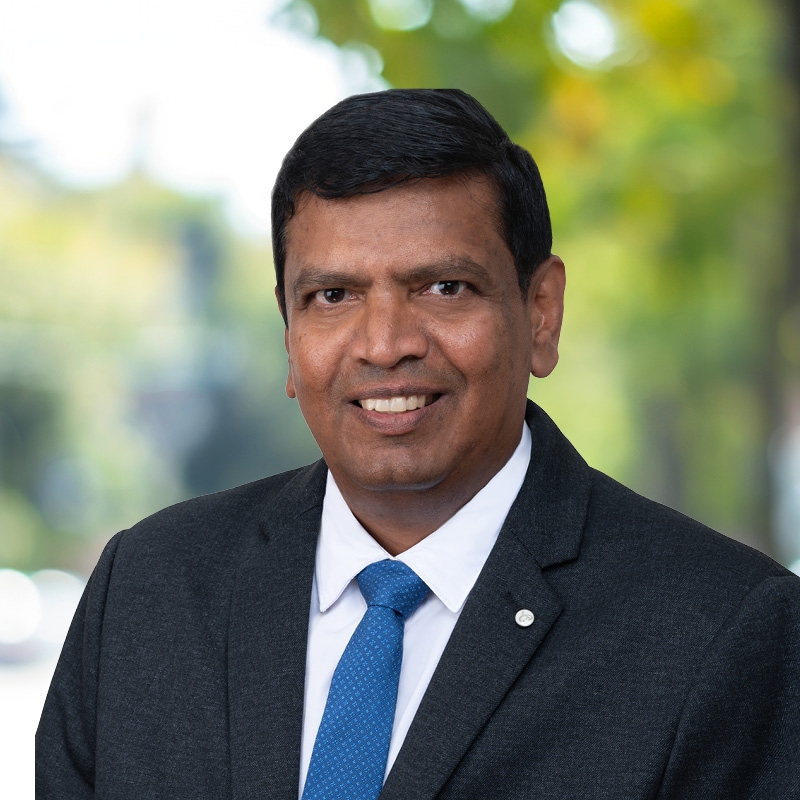
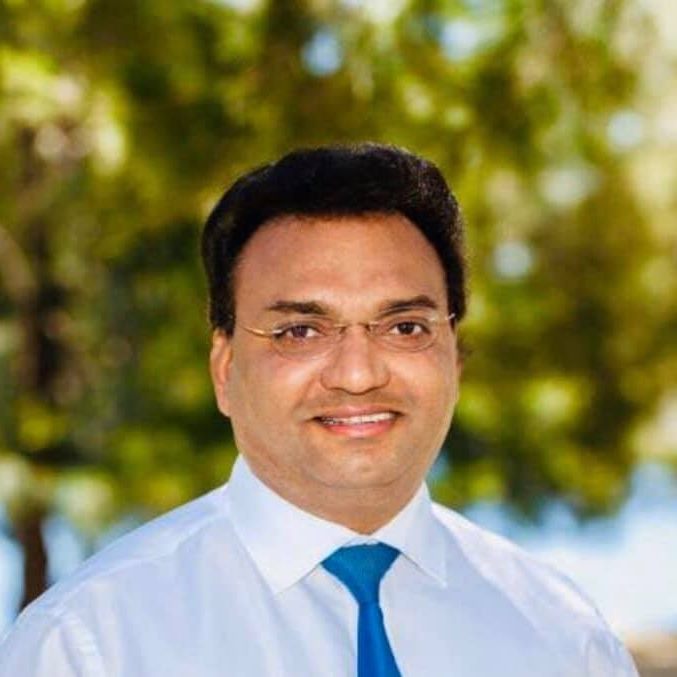
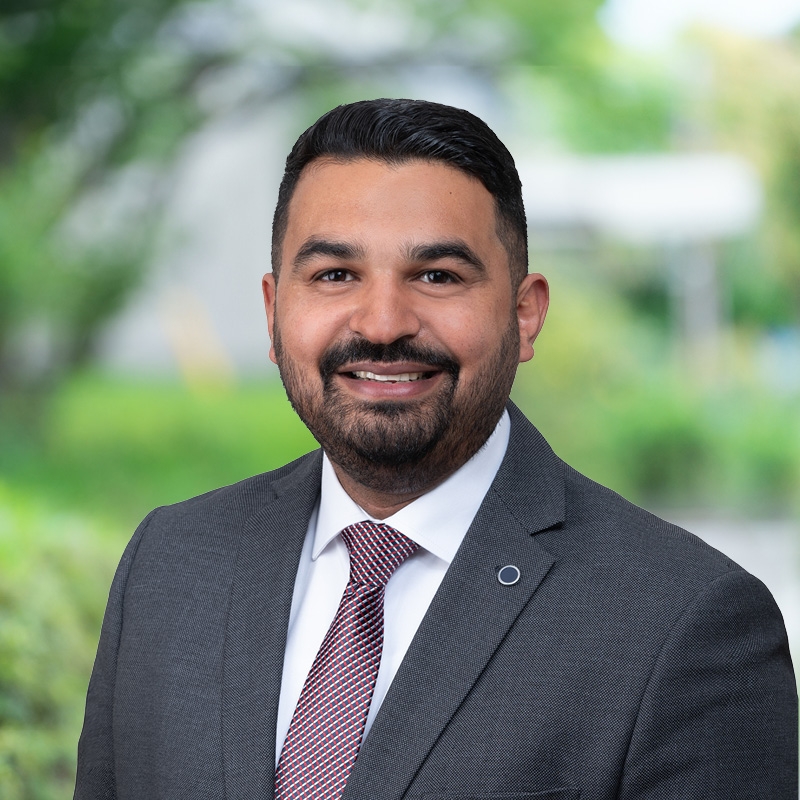
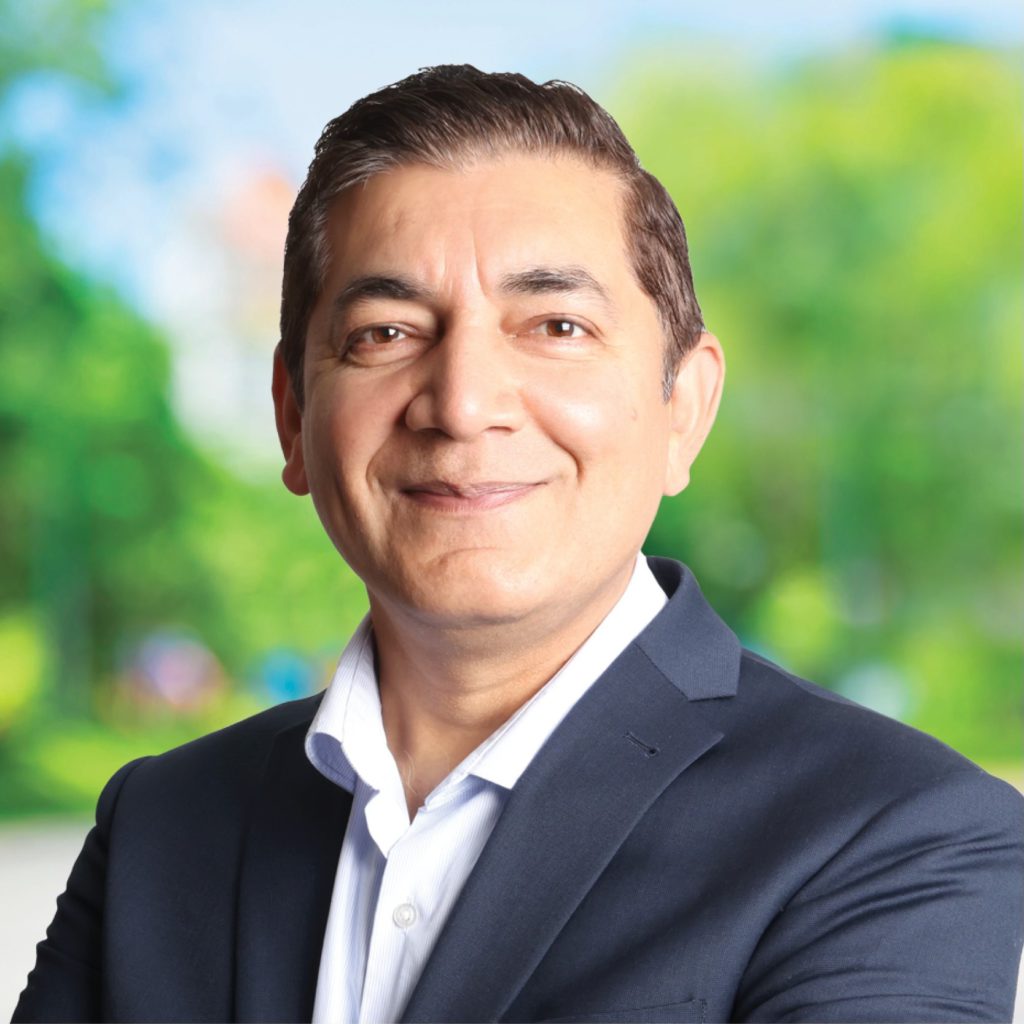
From the Liberals you have Rattan Virk (Greenway), Vivek Singha (Fowler), Mira D’Silva (Lalor), Satish Patel (Fraser), Leon Rebello (McPherson), and Rohit Taggar (Scullin) for House of Representatives while Jacob Vadakkedathu is the lead ACT Liberal Senate candidate.
Nildhara Gadani Satish Patel Jacob VadakkedathuRohit TaggarMira D’SilvaSenator Varun GhoshLeon RebelloVivek SinghaRattan VirkZaneta Mascarhenas – Federal MP from Swan (All pics from Facebook)
Besides the two primary parties, Indian origin candidates are also contesting from other parties like the Greens, One Nation, Animal Justice Party, Family First, Libertarian Party and Trumpet of Patriots, and several standing as Independents.
Purnendra Jain is Emeritus Professor in the Department of Asian Studies at the University of Adelaide. He says that political parties increasingly reach out to Indian Australians as the Indian-background diaspora is rising, and with that, their significance and importance in politics.
“The number of India-born people in Australia has almost doubled in a decade. Political leaders from both major parties engage the Indian community by attending religious celebrations, cultural events and other community functions. The purpose is to woo voters to their political parties.”
Federal MP Greenway and Communications Minister, Michelle RowlandFederal MP Gellibrand and Asst Min for Foreign Affairs, Tim WattsFederal MP La Trobe, Jason WoodFederal MP Parramatta & Chair Parliamentary Friends of India, Dr Andrew Charlton
“All these signify the importance of India and the Indian community in Australia. Migration from India in large numbers has happened recently, and it will take time for the Indian-origin population to stamp their mark on politics like they have done in the UK, US and Canada, but the time is not far off when Indian origin politicians will take up ministerial roles in Federal Parliament. Some state governments have already appointed senior ministers from Indian background,” added Prof Jain.
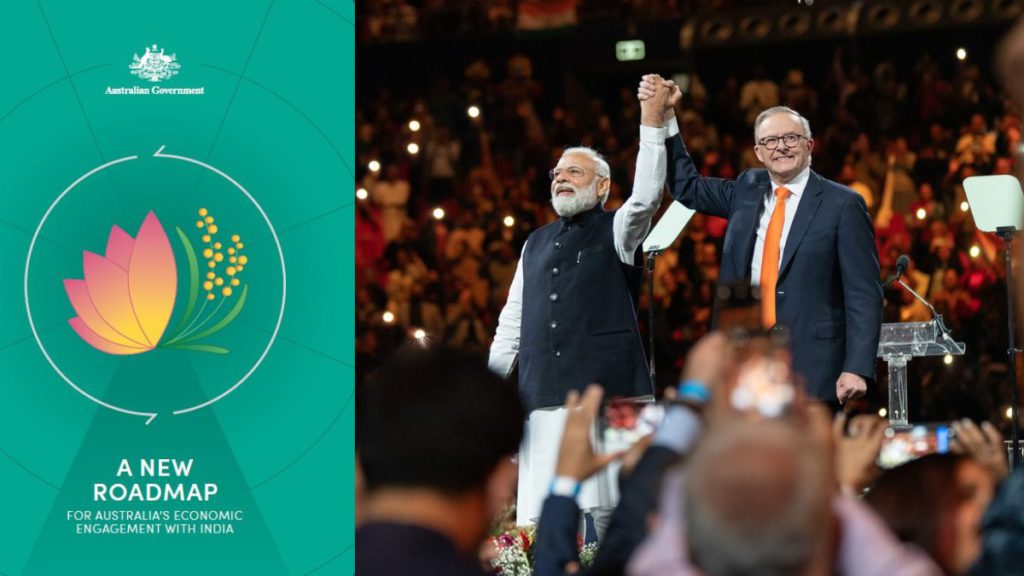
Image: Prime Minister Anthony Albanese with Indian Prime Minister Narendra Modi (Source: X)
According to Dr Amit Sarwal, well-known academic and leading expert on the Indian diaspora and cross-cultural relations,
“The growing presence of the Indian diaspora, not only in terms of numbers but also through increased civic participation and political candidacy, underscores their deepening roots and vital contribution to Australia’s multiculturalism and democracy.”
Support our Journalism
No-nonsense journalism. No paywalls. Whether you’re in Australia, the UK, Canada, the USA, or India, you can support The Australia Today by taking a paid subscription via Patreon or donating via PayPal — and help keep honest, fearless journalism alive.
Prime Minister Anthony Albanese and Opposition Leader Peter Dutton have set aside politics to wish Australians a happy and safe Easter, each delivering heartfelt messages centred on faith, family, and national values.
Albanese shared his Easter reflections in a warm public message:
“Whether you’re reflecting on your faith on this holy day or simply taking a break – have a safe and happy Easter, Australia.”
Whether you’re reflecting on your faith on this holy day or simply taking a break – have a safe and happy Easter, Australia. pic.twitter.com/KWdheLwpxF
Albanese, who will attend Easter Sunday mass at St Mary’s Cathedral in Sydney, where he once served as an altar boy, spoke about the deep social justice values shaped by his Catholic upbringing.
“The message of all the great monotheistic faiths is about social justice, about looking after people,” he told a live audience during The Rest is Politics podcast recording on Saturday night.
“I said on election night that I regard kindness as an Australian value — and I do. It’s a strength, not a weakness, to care for others.”
In a broader message to the public, the Prime Minister highlighted Easter as a time for rest, reflection, and togetherness.
“Whether you’re spending time with family and friends or preparing for an Easter egg hunt, may the weekend be everything you want it to be,” he said, also thanking frontline workers who help “keep our great country running”.
Meanwhile, Dutton marked Easter with a handshake and a laugh at the Sydney Royal Easter Show — even meeting Hephner the alpaca, famous for sneezing on King Charles — before turning to more solemn reflections.
“Easter is a time of reflection, and a time to rest, recharge, and spend time with those we love.”
He described Good Friday as a “day of contemplation” and Easter Sunday as a “celebration of joy and renewal of hope” through the risen Christ.
Dutton emphasised that the holiday’s values — “faith, renewal and enduring hope” — reflect the broader Australian spirit of “service, kindness, compassion and grace”.
“Whether you’re at a church service, sharing lunch with family, or enjoying a quiet moment with a hot cross bun and a cuppa, Easter reminds us of the values that help bind our nation together.”
The Opposition Leader also paid tribute to essential workers — especially paramedics, nurses, police, firefighters, and defence personnel — who sacrifice time with their own families to serve others.
The Sydney Royal Easter Show is more than a great day out — it’s a showcase of Australia’s world-class agricultural sector and the families who live and breathe it. pic.twitter.com/BUL24kitSP
As pre-polling resumes after Easter ahead of the May 3 election, both leaders have paused for a rare moment of national reflection, reminding Australians of the values that unite rather than divide.
Support our Journalism
No-nonsense journalism. No paywalls. Whether you’re in Australia, the UK, Canada, the USA, or India, you can support The Australia Today by taking a paid subscription via Patreon or donating via PayPal — and help keep honest, fearless journalism alive.
Mahendra Hembram, one of the two convicts in the brutal 1999 murder of Australian missionary Graham Staines and his two young sons, was released from Keonjhar Jail on Wednesday (16 April 2025) after serving 25 years, claiming he was falsely implicated.
“I was innocent. But still I was in jail for the last 25 years,” the 51-year-old told reporters outside the jail, where he received a garlanded farewell from prison authorities and a bank passbook containing wages earned from prison labour.
It is reported that the Odisha government granted remission on grounds of “good behaviour,” in line with its premature release policy for convicts who have served more than 14 years. Officials confirmed the decision was approved by the State Sentence Review Board and endorsed by the governor.
The release has also renewed focus on the fate of co-convict and main accused, Dara Singh alias Rabindra Pal, who remains behind bars and has applied for a similar remission. The Supreme Court has directed the Odisha government to decide on Singh’s plea by early May.
Staines, an Australian missionary associated with leprosy work, and his sons Philip (10) and Timothy (6), were burnt alive by a mob while sleeping in their station wagon outside a church in Manoharpur village on the night of 22 January 1999.
Then witnesses alleged that Hembram and Singh led the mob, locking the victims inside the vehicle before setting it ablaze.
Hembram was arrested in December 1999 and sentenced to life imprisonment in 2003 alongside Singh, whose original death sentence was later commuted by the Orissa High Court and upheld by the Supreme Court.
Dara Singh, who was arrested in January 2000, is reportedly seeking release on the grounds of repentance and old age. A decision on his future is expected in the coming weeks.
Support our Journalism
No-nonsense journalism. No paywalls. Whether you’re in Australia, the UK, Canada, the USA, or India, you can support The Australia Today by taking a paid subscription via Patreon or donating via PayPal — and help keep honest, fearless journalism alive.
“Harvard can no longer be considered even a decent place of learning, and should not be considered on any list of the World’s Great Universities or Colleges,” contends Donald Trump on his Truth Social platform. He goes on to say, “Harvard is a JOKE, teaches Hate and Stupidity, and should no longer receive Federal Funds.” But then, America is no exception. The condemnation and assassination of the institution’s reputation have become a fait accompli of late. As the state’s grip on renowned public and private universities continues to grow muscularly, we are witnessing a global struggle for the freedom of universities.
We are told that this scathing broadside by Trump has its roots in the university’s failure to curb antisemitism sentiments on its campus. Freezing $2.2 billion in funding while recommending changes to hiring and admission processes and questioning the reputation of an institution that has produced 161 Nobel laureates are apparently juvenile demonization of the very idea of what university are meant to be.
Harvard’s rise to popularity is not a fluke rather it is rooted in its deep vision and staunch support for multiculturalism and its commitment to humanitarian values. No wonder, it decided to change its status from a state university to a private university reinforcing and heightening its moral imperative for public purpose. One could claim that in neoliberal parlance, people’s resources and intellectual moorings are invariably subjected to cannibalistic practices. Universities are pushed to fraying edges, scholarly pursuits are termed “disposable knowledge”, and activism is legitimized only if it tows the powerful echelons.
The saddest part of all of this is its normalization and incorporation into the quotidian life of America as well as several other nations. For example, a report from the Guardian points out that “the US has severed research funding at six [Australian] universities – Monash University, Australian National University (ANU) and the University of Melbourne, University of Sydney, University of New South Wales and University of Western Australia” as US agencies target to meet President Donald Trump’s “America First” agenda.” Such patronizing practices are an attempt to put a leash around the intellectual’s neck under the garb of making a nation great. The unplumbed depth of mediocrity in conjunction with authoritarianism has led us to that critical juncture of universities’ future where the world is experiencing a growth of what John Sexton, the former President of New York University calls “secular dogmatism.” “What we have seen is a marginalization of seriousness,” he argues. “What we need instead is a marginalization of dogmatism.” In our world of populism and demagoguery, dogmatism qualifies as an essential virtue of national pantheons.
If universities have survived for so long, it is only because of our secular spirit of camaraderie, not dogmatism. It is also because it continues to be rooted in the celebration, promotion, and institutionalization of public reason. Universities have also managed to survive and thrive for so long due to their convincing demonstration that the greatest good of the public does not always lie to take sides with those in power, but to question them. It is the power of uncompromised questions that have protected us all irrespective of our class, caste, race, and gender. Demonstrating this fidelity, Harvard President Alan Garber wrote in a message to the community, “The University will not surrender its independence or relinquish its constitutional rights,” He added: “No government — regardless of which party is in power — should dictate what private universities can teach, whom they can admit and hire, and which areas of study and inquiry they can pursue.” While one can question the distorted meaning of “private” that Garbar uses here, since Harvard University receives almost 68 per cent of funding from the state, the pressing matter, however, is about maintaining the sacrosanctity and secularity of universities, or as the renowned Indian author, Dr Amit Sarwal advocates, “in theory and practice, universities need independence of thought.”
Apparently, in the world of globalization, everything seems affordable except the common sense for public good. Ours is a time when the realm of public good is judged against the realm of value of an individual or a group of people. Those who refuse to listen and understand this simple fact need to be reminded that the commitment to the public good can never be sacrificed at the altar of self-interests lest we run the risk of turning our public institutions into predefined templates of national level mediocracy, which unfortunately has become the leitmotif of our times. Exactly, why, we can witness a crack in the way universities are being imagined and judged on an everyday basis, which is an irony in itself because the life and value of universities can only be measured in their organic growth over a period aimed at intellectual inquiry and mutual respect of public purposes. Also, because universities are not stock markets that can give you monetary returns on a daily basis. This scalar ruin project, then, has been possible because University values have been replaced. Perhaps, we have reached that cursed crossroad where academics are categorically told to lessen their voice until they forget the purposive action of universities, and in so doing, also forget to speak at all. That damned silence will be a global violence on the very idea of public reason and public good. As my dear friend, Mustafa Zeki Cirakli, told me on the phone, “Nietzsche, once declared “Death of God”; Barthes declared “Death of Author”; T.S. Eliot and Gennette declared “death of originality”; AI recently declared, “The Second Death of Author”; and academia declared “death of academics.”
Not that choice to speak or re-entry to academic culture is difficult. The question is also not “what should I do?” but “what should I do given the situation?” It is also a question of who dares to speak in what clearly appears to be times of eulogization and celebration of sameness. It is, therefore, not surprising to find “The replacement of public experts with propogandists,” which according to the Vice Chancellor, Jawaharlal Nehru University, is “being presented in glowing terms” nowadays, relishing the perks of fidelity and mediocrity. To forestall this foreclosure of thinking and the public good, academics, including the University leaders, need to turn institutions into sites of both work and struggle, “because it is only in [Universities] where there already exist all the elements for the establishment of a community of wealth, and this community will be established here or it will be nowhere.”
Contributing Author: Prof. Om Prakash Dwivedi is a literary critic and columnist.
Support our Journalism
No-nonsense journalism. No paywalls. Whether you’re in Australia, the UK, Canada, the USA, or India, you can support The Australia Today by taking a paid subscription via Patreon or donating via PayPal — and help keep honest, fearless journalism alive.
By Trang Nguyen, Jack Hetherington, and Patrick O’Connor
Australians waste around 7.68 million tonnes of food a year. This costs the economy an estimated A$36.6 billion and households up to $2,500 annually.
Much of this food is wasted at home. So while consumers are increasingly aware of sustainability issues, awareness does not always translate into better food management in practice.
Our latest study takes a closer look at two groups who care deeply about food, for different reasons. It exposes a paradox: people who prioritise healthy eating waste less food, while those focused on sustainability do not necessarily follow through with waste reduction.
This suggests encouraging healthier eating habits might be a better way to cut household food waste than sustainability messaging alone.
Sustainability awareness doesn’t always mean less waste
To understand how food values influence waste, we surveyed 1,030 Australian consumers living in Adelaide between April and May 2021. We set quotas for age, sex and household income to match national demographics.
We wanted to find out who wasted more food: nutrition-conscious or sustainability-conscious consumers?
We asked each person how they plan meals and shop, what they value when buying food, and how much food they throw away each week.
Our results show nutrition-conscious consumers tend to plan meals in advance, use shopping lists and avoid over-purchasing. These behaviours contribute to both a healthier diet and less food waste.
We found consumers who make more nutrition-conscious food choices tended to waste less edible food. A one-point increase on our nutrition scale corresponded to a 17.6% reduction in food waste, compared to people with lower scores on the nutrition scale.
On the other hand, those who prioritise sustainability over nutrition did not show any significant reduction in edible food waste.
These consumers tend to choose environmentally friendly products. They typically prefer to shop locally, buy organic produce and avoid excessive food packaging. But that does not necessarily translate into waste-reducing behaviours.
Those concerned with sustainability tend to buy more food than they need. They have good intentions, but lack strategies to manage and consume the food efficiently. Unfortunately this means sustainably sourced food often ends up in landfill.
Integrating nutrition and food waste messaging
Our research reveals a disconnect between purchasing choices and what actually happens to the food at home.
This highlights an opportunity for policymakers and campaigns aimed at reducing food waste. Rather than focusing solely on sustainability, including messages about improving nutrition can boost health and reduce food waste at the same time.
Some successful interventions already demonstrate the potential of this approach. For example, an Australian school-based program found children involved in preparing their own meals wasted less food than they did before the program began.
These students learned about food waste and healthy eating, participated in workshops on meal preparation and composting, and helped pack their own lunches – with less food waste as a result.
5 ways to reduce food waste
So, what can households do to reduce food waste while maintaining a healthy diet? Our research suggests the following key strategies:
plan ahead – creating a weekly meal plan and shopping list helps prevent impulse purchases and ensures food is consumed before it spoils
buy only what you need – over-purchasing, even of sustainable products, can lead to unnecessary waste
store food properly – understanding how to store fresh produce, dairy, and leftovers can significantly extend their shelf life
prioritise nutrition – choosing foods that fit into a balanced diet naturally leads to better portion control and mindful consumption, reducing waste
use what you have – before shopping, check your fridge and pantry to incorporate existing ingredients into meals.
The Great Unwaste is a nationwide movement to end food waste.
Reducing waste is a bonus
People are often more motivated by personal health benefits than abstract environmental concerns. Our research suggests this is the key to reducing household food waste.
Encouraging meal planning for a balanced diet, careful shopping to avoid over-purchasing, and proper food storage, can make a big difference to the amount of food being wasted. This will not only help households save thousands of dollars each year, but also promote healthy eating habits.
Ultimately, developing a more sustainable food system is not just about buying the right products. It’s about how we manage, prepare and consume them.
No-nonsense journalism. No paywalls. Whether you’re in Australia, the UK, Canada, the USA, or India, you can support The Australia Today by taking a paid subscription via Patreon or donating via PayPal — and help keep honest, fearless journalism alive.
Radha Govinda Youth Group of ISKCON West Sydney is organising BhaktiFest 2k25, a youth spiritual festival with a weekend of culture, connection, and conscious living.
Open to young people aged 13 to 30, this three-day festival will take place from April 25 to 27, 2025, at the Hunter Valley Retreat Centre—a 200-acre sanctuary located just 1.5 hours from Sydney.
Youth leader Arvind Janardhan told The Australia Today,
“In a time when society is increasingly plagued by rising addiction, mental health challenges, and loss of direction among youth, BhaktiFest stands out as a countercultural solution—a space where values like self-discipline, compassion, and integrity are not only discussed, but lived. Through powerful music, thought-provoking discussions, cultural performances, and wellness sessions, BhaktiFest is designed to spiritually uplift and empower the next generation.”
“In today’s hyperconnected yet emotionally distant world, many young people are seeking deeper purpose and authentic connection. BhaktiFest offers a rare chance to unplug from everyday pressures and tap into something truly meaningful,” added Arvind.
This year, around 200 youth from across Australia—including Sydney, Melbourne, Brisbane, Perth, Adelaide, Canberra and Murwillumbah and New Zealand are expected to attend, making it a national celebration of youth unity and conscious living.
According to the organisers, BhaktiFest 2k25 offers a well-rounded program that blends creativity, culture, and conscious living:
🎤 Live Music & Chanting – High-energy music sessions that uplift the spirit and create powerful collective experiences. 💬 Workshops & Panels – Covering topics like mindfulness, values-based living, mental clarity, and inner growth. 🔥 Bonfire Nights & Games – Evening bonding through storytelling, song, and laughter. 🌱 Wellness & Mental Health Session – Exploring the balance between mental wellness and a deeper sense of purpose. 🌍 Community Parade – A joyful musical procession in a nearby town to share positivity and community spirit. 🎭 Youth Theatre & Performances – Showcasing talent and meaningful storytelling through art. 🧠 Discussion Circles – Facilitated conversations around life, identity, and navigating today’s world with clarity and intention. Each day blends quiet reflection with high-energy engagement, offering participants a fresh and inspiring experience.
ISKCON West Sydney is currently building what will be the largest Hare Krishna temple and cultural centre in the country—a vibrant hub for education, community, and spiritual growth located in the Hawkesbury Region of Western Sydney.
Vijay Gopikesh Das, who is it the Congregation Leader leading the new project of construction of the new temple mentioned that BhaktiFest 2k25 is part of a broader initiative to strengthen spiritual and cultural life in Australia.
“Inspired by international youth retreats like The Sanga Initiative (USA) and Pandava Sena Retreats (UK), BhaktiFest brings together tradition and modernity to support the emotional, spiritual, and social development of young people.”
Attendees and partners of BhaktiFest are contributing to this landmark 25-million-dollar project and helping create a long-term legacy of conscious community living.
Support our Journalism
No-nonsense journalism. No paywalls. Whether you’re in Australia, the UK, Canada, the USA, or India, you can support The Australia Today by taking a paid subscription via Patreon or donating via PayPal — and help keep honest, fearless journalism alive.
“Regional Australia has been left behind by the Albanese Labor Government. Labor cut round 2 of the Regional Agricultural Show Development Grants in the October 2022-23 Budget and never reinstated it.”
Today I announced that a Coalition Government will invest $20 million over three years to restore funding for regional agricultural shows — reversing Labor’s cuts and backing the show societies that bring people together and support local jobs. pic.twitter.com/rik8qqy6q7
Speaking at the Sydney Royal Easter Show, Dutton said,
“The show is more than a great day out — it’s a showcase of Australia’s world-class agricultural sector and the families who live and breathe it.”
The Coalition’s commitment would see $20 million invested over three years to upgrade and revitalise regional showgrounds, reversing what it describes as “cruel cuts” made by Labor in the October 2022-23 Budget. That budget scrapped round two of the Regional Agricultural Show Development Grants — a move the Opposition says has left rural communities behind.
“These shows bring people together, support local jobs, and build community spirit, especially in times of hardship like drought,” Dutton said.
“Many showgrounds have ageing infrastructure, and this funding will help fix that — getting the regions back on track.”
The grants would support improvements such as new lighting, seating, pavilions, yards and show rings, along with the development of new attractions to draw visitors and boost local economies.
A Coalition Government will undo Labor’s cruel cuts to regional Agricultural Shows and invest $20 million over three years for upgrades or to build new infrastructure. pic.twitter.com/nNBMoezkS8
— David Littleproud MP (@D_LittleproudMP) April 19, 2025
Nationals Leader David Littleproud said the commitment was vital for the sustainability of Australia’s much-loved agricultural shows, which contribute nearly $1 billion annually to the economy, attract six million visitors, and are supported by over 50,000 volunteers.
“While we all love showbags and rides, Agricultural Shows play a much more important role,” Littleproud said.
“They are central to our rural communities and the future of the agriculture industry, which is targeting $100 billion in farm gate output by 2030.”
The Coalition says only it has a clear plan to support the regions and ensure the long-term success of Australia’s agricultural sector.
Support our Journalism
No-nonsense journalism. No paywalls. Whether you’re in Australia, the UK, Canada, the USA, or India, you can support The Australia Today by taking a paid subscription via Patreon or donating via PayPal — and help keep honest, fearless journalism alive.
A 21-year-old Indian international student, Harsimrat Randhawa, has tragically died after being struck by a stray bullet in a shooting incident in Hamilton, Ontario. The Consulate General of India in Toronto confirmed her death and expressed deep sorrow in an official statement on Friday.
“We are deeply saddened by the tragic death of Indian student Harsimrat Randhawa in Hamilton, Ontario. As per local police, she was an innocent victim, fatally struck by a stray bullet during a shooting incident involving two vehicles. A homicide investigation is currently underway,” the statement read.
“We are in close contact with her family and are extending all necessary assistance. Our thoughts and prayers are with the bereaved family during this difficult time.”
We are deeply saddened by the tragic death of Indian student Harsimrat Randhawa in Hamilton, Ontario. As per local police, she was an innocent victim, fatally struck by a stray bullet during a shooting incident involving two vehicles. A homicide investigation is currently…
Hamilton Police said the shooting occurred around 7:30 p.m. on Thursday near the intersection of Upper James Street and South Bend Road. Randhawa, who was studying at Mohawk College, was standing at a bus stop on her way to work when gunfire erupted.
She suffered a gunshot wound to the chest and was rushed to hospital, where she later succumbed to her injuries.
Police believe the gunfire came from a black Mercedes SUV targeting occupants of a white sedan. Surveillance footage reviewed by investigators shows the Mercedes heading west on South Bend Road after the shooting, while the white sedan drove north on Upper James Street.
Stray bullets from the same gunfire also pierced the rear window of a nearby home on Allenby Avenue, where residents were watching television. Thankfully, no one inside was injured.
Mohawk College issued a statement mourning the loss of Randhawa, describing her as a valued member of their community. “Our thoughts are with her family and friends at this difficult time,” the college said.
“We know this loss is being felt by many and we will do everything we can to support Harsimrat’s friends, family and the broader college community.”
Hamilton Police are urging anyone with dashcam or security footage from the area between 7:15 p.m. and 7:45 p.m. to come forward as the investigation continues.
Support our Journalism
No-nonsense journalism. No paywalls. Whether you’re in Australia, the UK, Canada, the USA, or India, you can support The Australia Today by taking a paid subscription via Patreon or donating via PayPal — and help keep honest, fearless journalism alive.
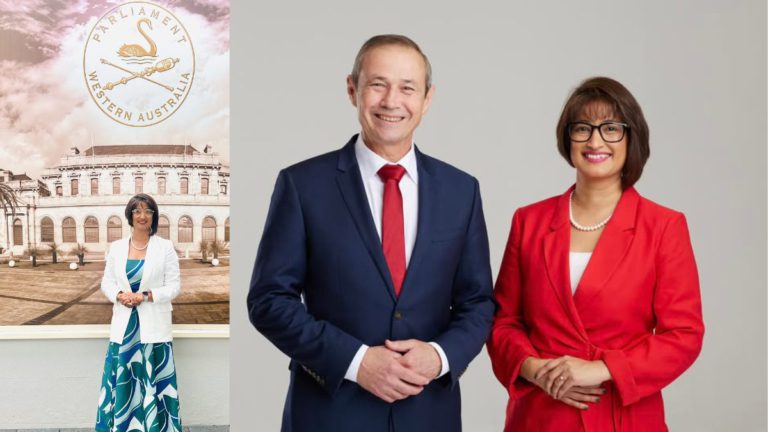
Renowned Indian-origin biotechnologist and award-winning scientist Dr Parwinder Kaur has made history by becoming the first Sikh woman elected to any Australian Parliament. Now a Member of the Legislative Council (MLC) in Western Australia, her election marks a significant moment for representation, inclusion, and diversity in leadership.
Image: Dr Parwinder Kaur with Premier Roger Cook (Source: Facebook)
Dr Kaur took to social media to reflect on her journey, calling the experience “super surreal” and expressing her gratitude to the people of Western Australia for their trust.
“This isn’t just a personal achievement — it’s a collective step forward for representation, equity, and inclusion.”
Born and educated in India, Dr Kaur arrived in Australia as a PhD scholar and went on to establish herself as a leading force in the field of biotechnology. She has spent over 15 years leading groundbreaking genomic research, particularly in the conservation of threatened species. She also headed an innovative DNA Lab and co-leads DNA Zoo Australia, a project dedicated to empowering biodiversity conservation through genomics.
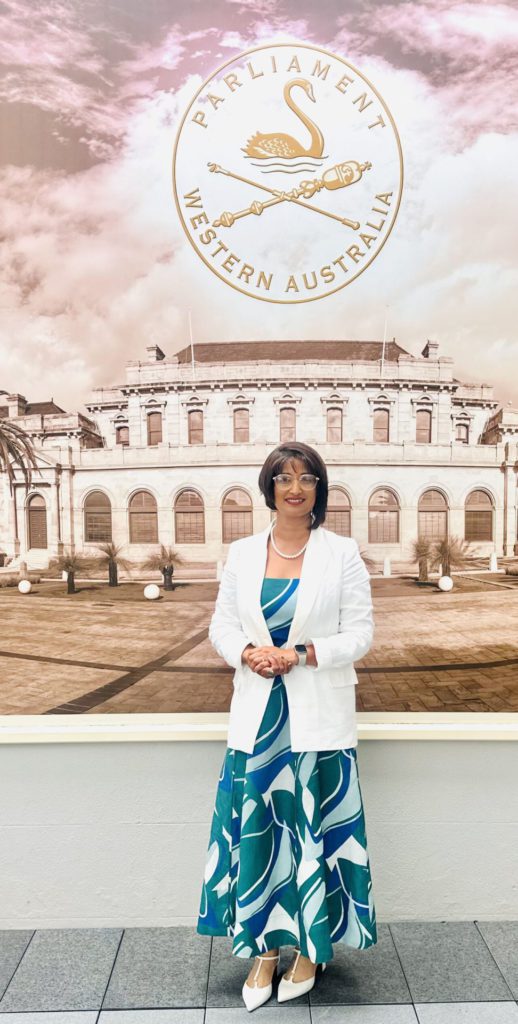
Image: Dr Parwinder Kaur at WA Parliament (Source: LinkedIn)
“This is not a career change — it’s a call to serve this beautiful country,” Dr Kaur said.
“A chance to bring the rigour of science, the power of community, and the heart of lived experience into our Parliament.”
Her induction into the Western Australian Parliament comes during a historic third consecutive term for the Cook Labor Government. As a candidate placed 13th on the Labor ticket for the Upper House, she secured a spot among the 15–16 elected Labor members, paving the way for this milestone achievement.
Image: Image: Dr Parwinder Kaur at a Gurudwara in Perth (Source: Facebook)
In a heartfelt Facebook post following the official opening of the 42nd Parliament of Western Australia, Dr Kaur reflected on the ceremony, tradition, and sense of purpose the day brought.
“From grassroots projects in our communities to statewide priorities that will leave a lasting legacy – the journey ahead is exciting.”
She wrote, quoting Mahatma Gandhi: “The best way to find yourself is to lose yourself in the service of others.”
Image: Image: Dr Parwinder Kaur at an award function (Source: Facebook)
Dr Kaur’s leadership and advocacy extend well beyond the laboratory. She is a passionate science communicator, mentor for gender equity, and founder of Ex Planta Pty Ltd, a biotech start-up developing natural health solutions. Recognised as a Women in Technology WA Role Model and GirlsXTech international ambassador, she is committed to closing the gender gap in STEM fields.
Her list of accolades includes the Australian Academy of Sciences’ Science and Innovation Award (2013) and Microsoft’s AI for Earth Award (2019–20). In March 2023, she was inducted into the Western Australia Women’s Hall of Fame in the STEM category, one of the few South Asian women to receive the honour.
Dr Kaur’s inspiring journey resonates deeply across the Indian diaspora, symbolising what can be achieved when diversity, science, and a commitment to public service come together.
Support our Journalism
No-nonsense journalism. No paywalls. Whether you’re in Australia, the UK, Canada, the USA, or India, you can support The Australia Today by taking a paid subscription via Patreon or donating via PayPal — and help keep honest, fearless journalism alive.
In a landmark moment celebrating India’s rich cultural and philosophical heritage, manuscripts of the Hindu texts Bhagavad Gita and Bharat Muni’s Natyashastra have been added to UNESCO’s prestigious Memory of the World Register.
The announcement, made on 17 April 2025, recognises 74 new documentary heritage collections from 72 countries and four international organisations, bringing the total number of inscriptions to 570.
The inclusion of these two iconic Hindu texts has been hailed as a proud and historic achievement. India’s Prime Minister Narendra Modi, in a post on X on Friday, called it “a proud moment for every Indian across the world.”
“The inclusion of the Gita and Natyashastra in UNESCO’s Memory of the World Register is a global recognition of our timeless wisdom and rich culture. These texts have nurtured civilisation and consciousness for centuries. Their insights continue to inspire the world,” PM Modi wrote.
The Bhagavad Gita, a revered spiritual text, and the Natyashastra, a foundational treatise on performing arts, are widely regarded as cornerstones of India’s civilisational ethos.
A proud moment for every Indian across the world!
The inclusion of the Gita and Natyashastra in UNESCO’s Memory of the World Register is a global recognition of our timeless wisdom and rich culture.
The Gita and Natyashastra have nurtured civilisation, and consciousness for… https://t.co/ZPutb5heUT
India’s Union Culture Minister Gajendra Singh Shekhawat echoed the Prime Minister’s sentiments, describing the recognition as “a historic moment for Bharat’s civilisational heritage.”
“These timeless works are more than literary treasures—they are philosophical and aesthetic foundations that have shaped Bharat’s worldview and the way we think, feel, live, and express,” Shekhawat posted on X, also sharing images of the manuscripts.
With the addition of these two manuscripts, India now has 14 documentary heritage entries in UNESCO’s international register, which aims to safeguard the world’s most valuable and at-risk archival holdings.
The newly inscribed collections also include entries that highlight the Scientific Revolution, the role of women in shaping history, and milestones in multilateral diplomacy.
Support our Journalism
No-nonsense journalism. No paywalls. Whether you’re in Australia, the UK, Canada, the USA, or India, you can support The Australia Today by taking a paid subscription via Patreon or donating via PayPal — and help keep honest, fearless journalism alive.
By Stephen Howes, Terence Wood, and Rubayat Chowdhury
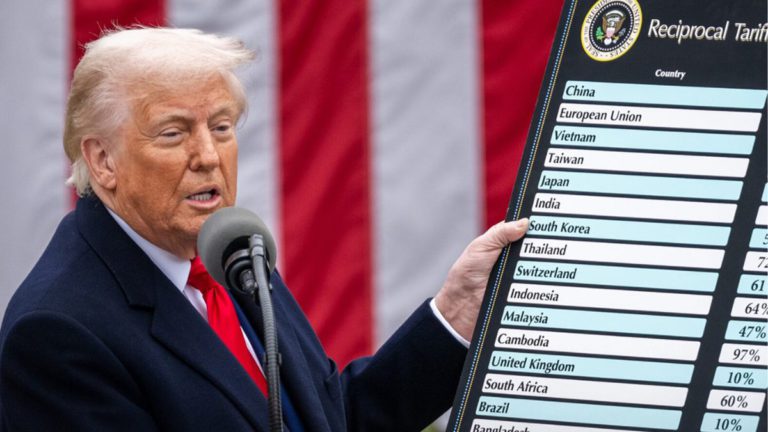
Most Pacific island countries got off relatively lightly with last week’s Trump “reciprocal” tariff announcement. Ten were given tariffs of 10%, the minimum handed out. (Timor-Leste also got a 10% tariff.) Three Pacific nations were given higher rates: Vanuatu (23%), Nauru (30%) and Fiji (32%).
Two Pacific countries were left out of the tariff list altogether: Niue and Palau. That’s good news for them — no new tariffs on their exports to the US — but indicative of the slapdash nature of last week’s US tariff announcement.
There is no reason for Federated States of Micronesia and Marshall Islands to get a 10% tariff, and Palau to escape it (all three are Compact States, which have a special relationship with the United States). And no reason for Cook Islands to get a 10% tariff, and not Niue — both have the same special relationship with New Zealand. (Even Tokelau had a tariff slapped on it, though it is a dependent territory.)
As is by now well known, Trump’s new tariffs are not in fact reciprocal, but are instead linked to the trade deficit or surplus each country is running with the US. Countries with a large trade surplus with the US (that is, they export a lot more to the US than they import) are the ones who got high tariffs. Everyone else got 10% (or was meant to).
The Pacific is not a large goods trading region, and most countries neither export nor import much from the US. The Pacific is much bigger exporter of services, such as tourism, but services were excluded from the Trump tariff calculations. Since Pacific nations are not in general running large goods trade surpluses with the US, most received only the minimum tariff. But there are some exceptions. Fiji is one.
In 2023, according to the OEC database, Fiji exported USD366 million worth of goods to the US. That’s about 8% of its GDP. 66% of this amount derived from exports of Fiji Water and another 14% from tuna exports. But the value of US exports to Fiji was only USD158 million. So, a large trade deficit and therefore a large Trump tariff (32%).
Unlike Fiji, Vanuatu and Nauru don’t consistently run trade surpluses with the US. They had the bad luck to do so in 2024 (according to the UN trade database) but in 2023 both countries ran deficits with the US. The fact that both countries have nevertheless had large tariffs imposed on them speaks to the absurdity of the entire US tariff exercise.
According to the OEC database, Vanuatu only exported USD6.5 million to the US in 2023 (only 0.7% of GDP). Around 73% was kava. Nauru is a tiny exporter and importer (with both values typically only about USD1-4 million each).
What will the impact of these tariffs be? Here we need to distinguish between the direct impact on the Pacific of the tariffs imposed on them and the indirect impact on the Pacific of the entire set of Trump tariffs.
The direct impact of the tariffs on the Pacific will be limited, just because the amounts at stake are in general small. Only two of the Pacific countries that were subjected to tariffs have a ratio of exports of goods to the US in excess of 2% of GDP: Fiji (7.7%) and Marshall Islands (8.1%). Marshall Islands has been given only a 10% tariff. Fiji, with its 32% tariff, will definitely be the hardest hit. But Fiji Water is a premium product, and highly profitable, and will likely be able to absorb at least some of the tariff hike. Fish producers from Fiji will suffer. Kava exporters from Fiji and Vanuatu will also suffer. Though there are kava shortages, it will be interesting to see if kava production moves to other Pacific countries with lower tariffs.
The much bigger impact of the Trump tariffs on the Pacific will be the indirect or global impact. The tariffs announced last week constitute a huge shock, bigger than expected. With stock markets crashing, confidence plummeting, and a trade war underway, economists are predicting a US if not a global recession.
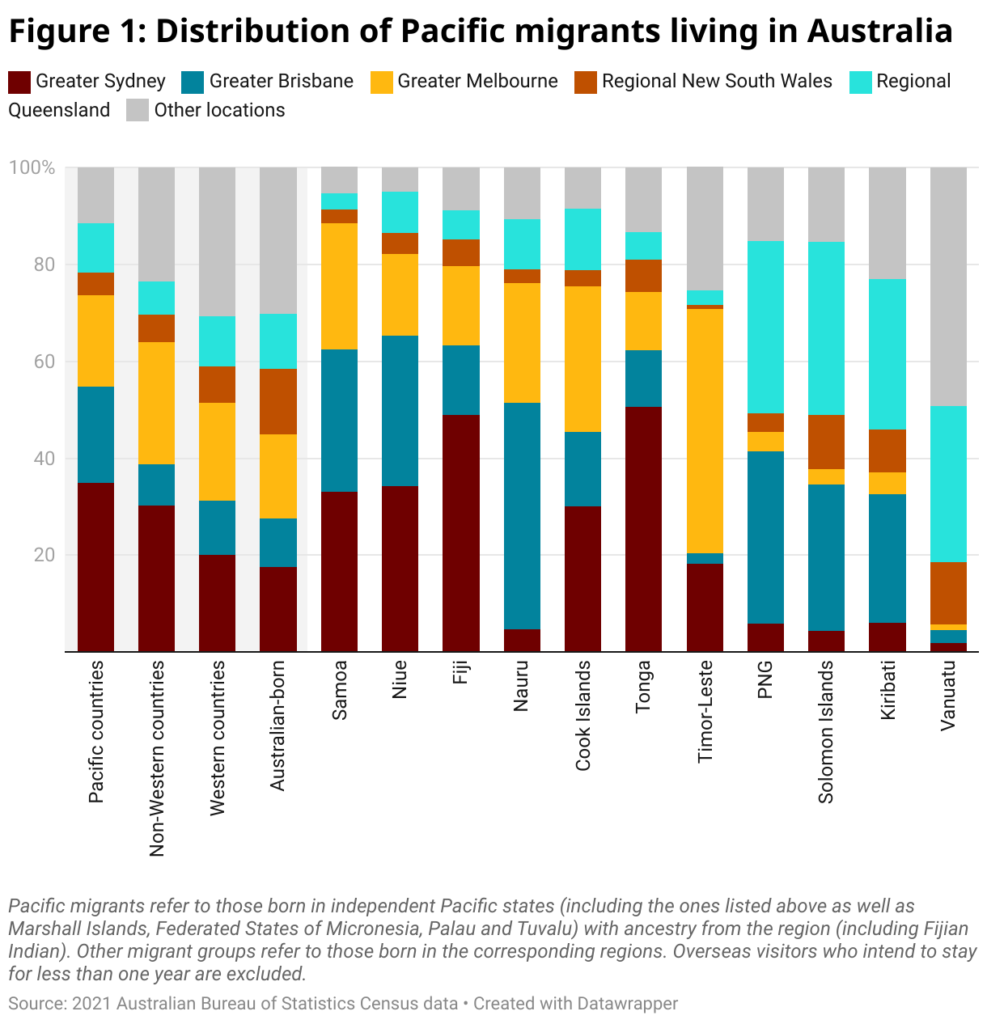
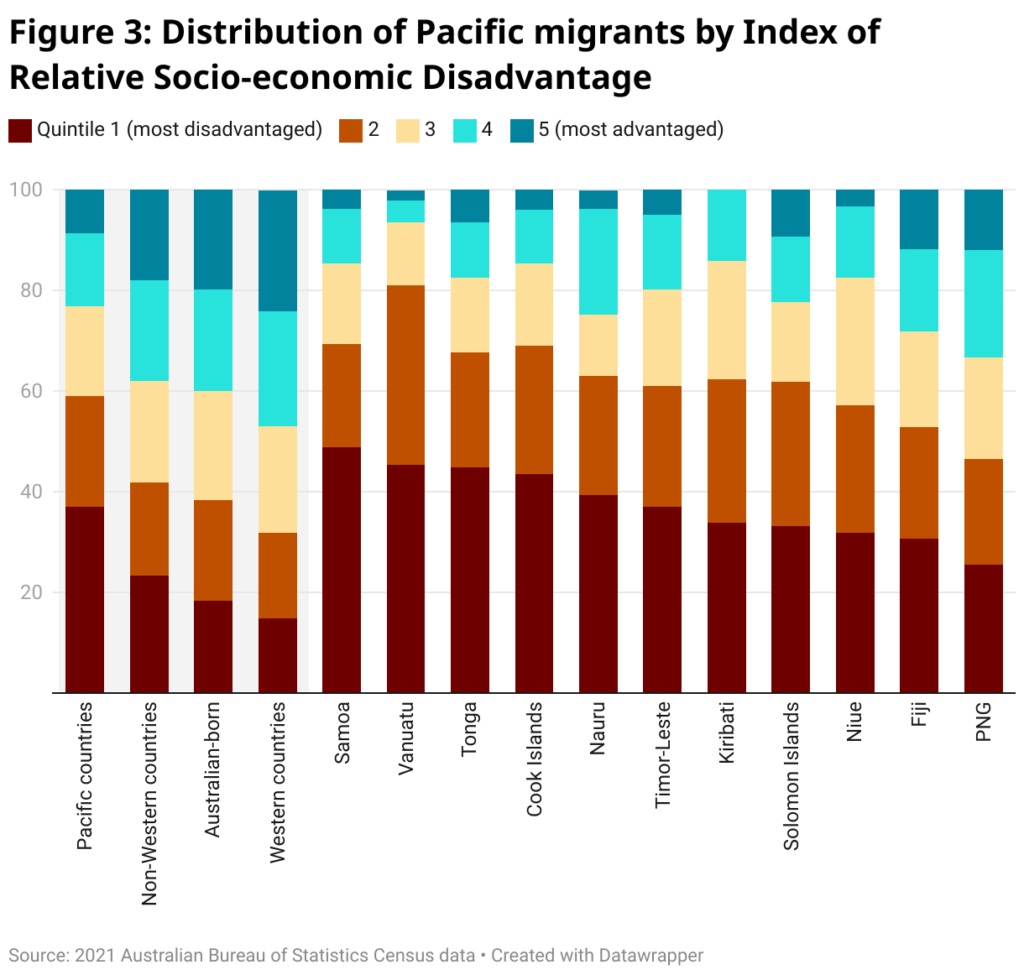
This will have some benefits for the Pacific. Lower commodity prices will mean cheaper petrol and diesel, for example. But overwhelmingly the impacts will be negative. Lower, perhaps negative, US and global growth will impose huge costs on a region that is still recovering from the pandemic. It will mean fewer tourists coming to the Pacific, fewer jobs for Pacific migrants and therefore less remittances, and lower tuna prices and therefore lower license fee payments from ships fishing in Pacific waters.
The Pacific will certainly be less directly affected by Trump’s tariffs than Asia. Nevertheless, these tariffs, because they are very bad news for the global economy, are very bad news for the Pacific.
Disclosure:This research was supported by the Pacific Research Program, with funding from the Department of Foreign Affairs and Trade. The views are those of the authors only.
Contributing Author(s):Stephen Howes is Director of the Development Policy Centre and Professor of Economics at the Crawford School of Public Policy at The Australian National University. Terence Wood is a Fellow at the Development Policy Centre. His research focuses on political governance in Western Melanesia, and Australian and New Zealand aid. Rubayat Chowdhury is a macroeconomist with experience working on monetary policy, growth, and economic development in emerging market economies. He is a Research Officer at the Development Policy Centre.
Northern Territory Police have arrested five people and seized over 120 kilograms of kava in a major operation targeting illegal drug transport in the East Arnhem Region.
On Wednesday 16 April 2025, intelligence indicated a large kava shipment was en route to the communities of Ramingining and Gapuwiyak.
Senior Sergeant Meacham King praised the coordinated effort, stating,
“This operation demonstrates the ongoing commitment of the DOU in disrupting the flow of destructive substances into vulnerable communities.”
Acting on the tip-off, the Dog Operations Unit (DOU) set up a cordon along the Stuart Highway to intercept the suspected traffickers. However, the suspects initially evaded capture and turned back towards Katherine.
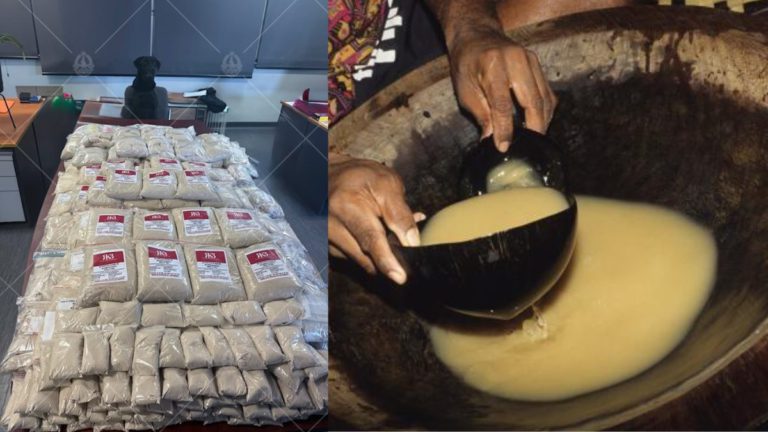
Image: East Arnhem kava bust (Source: Facebook – NT Police)
Police quickly ramped up their response, deploying additional units from Katherine, including Patrol Dog Boss, Drug Dog Rambo and their handlers, along with the Specialist Response Division, Territory Safety Division, and the National Substance Abuse Intelligence Desk.
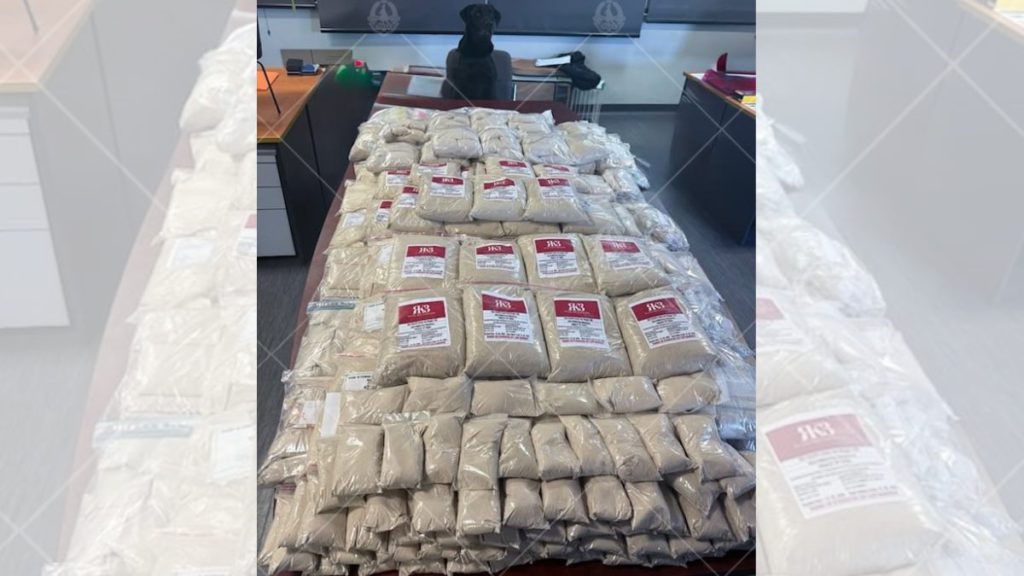
The operation culminated in the interception of two vehicles on the Stuart Highway. A search uncovered several bottles of spirits, 250 grams of cannabis, and a staggering 121 kilograms of kava.
Two women and three men, aged between 47 and 59, were charged with: Possessing a commercial quantity of kava; Supplying a commercial quantity of kava; and Supplying a Schedule 2 dangerous drug to an Indigenous community.
Senior Sergeant Meacham King added:
“We will continue to target individuals who facilitate the illegal supply of regulated substances. This was an excellent collaboration between all our divisions, and I would like to thank all the officers involved in the swift action and apprehensions.”
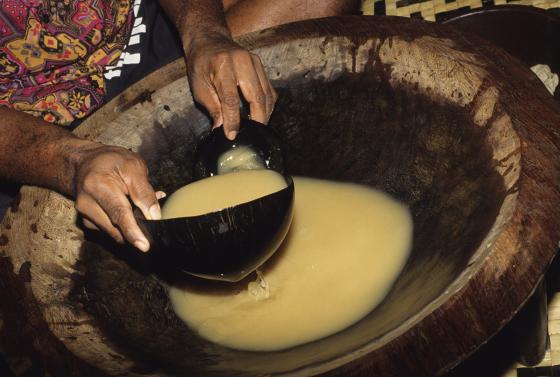
Image: Kava (Source: State Library of NSW)
Kava, derived from the root of the Piper methysticum plant, is traditionally consumed in Pacific Island communities during ceremonies and social gatherings.
In the Northern Territory, it is typically prepared by Aboriginal communities as a drink made from powdered root mixed with water. While possession of up to 2 kilograms is permitted under the Kava Management Act 1998, it is illegal to import, sell, supply, cultivate, or produce kava. Authorities continue to enforce these regulations to limit the spread of harmful substances into vulnerable communities.
Support our Journalism
No-nonsense journalism. No paywalls. Whether you’re in Australia, the UK, Canada, the USA, or India, you can support The Australia Today by taking a paid subscription via Patreon or donating via PayPal — and help keep honest, fearless journalism alive.
In H.G. Wells’ dystopian 1895 novel The Time Machine an unnamed Victorian scientist travels to the year 802,701. Instead of finding a flourishing, enlightened human civilisation reaping the cumulative benefits of millennia of economic and intellectual growth, he finds a horror scene. Here, gentle humans called Eloi are now the farmed food for the troglodyte-like Morlocks.
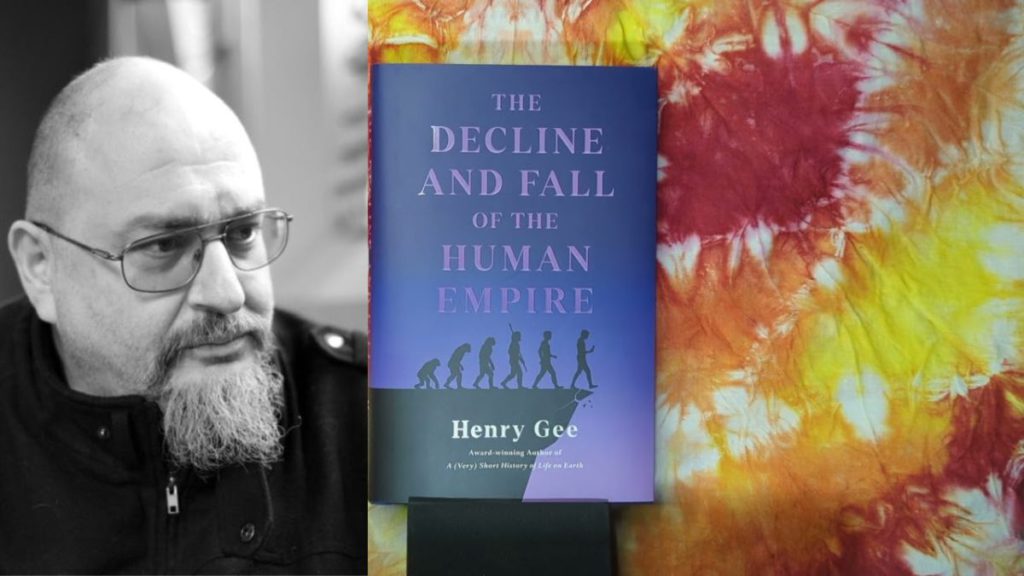
Science writer Henry Gee paints a less horrific but equally worrying picture of humanity’s future in his book The Decline and Fall of the Human Empire. Unlike Wells, Gee doesn’t see the human species capable of surviving longer than the next 8000-12,000 years.
This number is not an educated guess, or pessimistic opinion. It is based on statistical analyses that show our species is quickly degenerating amidst the chaos of our rapidly declining environments.
Review: The Decline and Fall of the Human Empire: Why Our Species Is on the Edge of Extinction – Henry Gee (Picador)
While all this might sound depressing, this book is a strangely engrossing read, addictive because of its continuum of interesting facts about our species’ origins and inevitable decline, and how we have impacted our planet in many unexpected ways. At times sarcastic, Gee’s book is more than just a monologue on our future. It could well be the ultimate wake up call to action for all of us.
A senior editor at Nature magazine, with a PhD in bovine palaeontology, Gee is also an accomplished writer of both popular science books and sci-fi novels. He writes in simple prose garnished with wit and humour, distilling complex science into an accessible read, a rare craft which won him the 2022 Royal Society Trivedi Science Book Prize for his previous book, A (Very) Short History of Life on Earth.
His new book takes a stoic look at humanity’s ultimate decline. This is something, he argues, we as a species cannot avoid, due to our damaging impact on the planet’s many environments, some of which are vital for our future food security. He does offer some hope for our survival beyond this time-frame, but it would rely on drastic, unlikely solutions.
The book is organised into three parts: Rise, Fall and Escape. Each details the story of our unique species from its prehistoric beginnings though to our success as the dominant mammal on Earth, and finally, to our fate in being too successful.
The rise of our species
“Rise” summarises a deluge of recent information about our ancient origins. Our modern human species, Homo sapiens, diverged from earlier human species around 300,000 years ago. We lived alongside a number of other such species at this time.
Genetics tells us a lot about our current population stability. Early human species almost went extinct before leaving Africa due to severe climatic events some 930,000–813,000 years ago, when the breeding population shrunk to an estimated 1,280 individuals on the entire planet. Modern Homo sapiens evolved later as a result of interbreeding amongst and between other archaic human species such as Neanderthals and Denisovans, the latter known from ancient DNA preserved in isolated small bones.
Only a small number of modern humans who evolved in Africa ever moved away from this continent, starting around 60,000 years ago. These eventually became our living human population of the world today. As Gee points out, “migration, is of course, the natural state of humanity”, a lesson with great implications for how we treat migrants today, many of whom are forced to flee war-torn or environmentally degraded areas.
I found this section full of fascinating new perspectives. For example, I didn’t know human populations in the past were very small. Fossil human remains are incredibly rare in most sites, full of many other kinds of mammals or bird remains.
Secondly, the populations of early Homo sapiens show great variability, indicating past populations were mostly isolated, not mixing very much. Small populations are more susceptible to natural disasters, so are easily wiped out by floods, tsunamis, fires, volcanic eruptions or other local events, keeping population numbers small.
Despite all this, we rose to over one billion people on the planet by the 1800s and to 8 billion today, fuelled by massive increases in agriculture and technology. The former provided enough food to sustain larger populations, the latter lengthened lifespans.
However, some researchers predict our population will peak at around 9.73 billion by about 2064, declining to 8.79 billion by 2100.
Other scenarios from the same source, involving better education and contraceptive access, predict the 2100 population at around 6.29 billion, and a decline from then onwards, eventually leading to a collapse once other factors, such as our declining fertility rates (leading to older populations, and labour shortages), kick in.
The fall of our species
The story of the royal Hapsburg family demonstrates how inbred human populations can lead to a host of debilitating disorders in future generations.
Between 1450-1750 there were 73 Hapsburg marriages, many between near relations. Uncles married nieces. First cousins twice removed married. This culminated in Charles II, the last Hapsburg king of Spain, who suffered many bouts of disease including rickets all his short life (he died at age 38) and couldn’t conceive any offspring. This is clearly not good for the species.
Random pandemics or diseases can, of course, strike populations without warning. Several evolved due to the growth of agriculture, when humans and animals came into closer contact. Viruses like flu, TB and plague are some examples of animal-borne diseases that jumped to humans, exactly as COVID did in 2020, though in that case not from a domesticated source.
The decline in our ability to reproduce as efficiently as in past populations is another worry for our species. The loss of the Y Chromosome in men, which is degenerating rapidly, is a disturbing trend, (though it may be addressed through genetic technology in the future). However, in some countries, male sperm counts and sperm quality are declining at an alarming rate.
The first detailed account of this, by Danish gynaecologist and obstetrician Elisabeth Carlesen and her team, showed sperm counts halved between 1940 and 1990. In Nigeria, sperm count and quality has dropped by 72.6% over the past 50 years.
Why is this happening? We don’t know yet. Gee cites as possible causes the increased human exposure to fossil fuel derivatives (in micro-plastics, and through other pollutions), climate change, or simply, our lifestyles.
To keep our population stable, every woman on the planet needs to have 2.1 babies (this number is the TFR or Total Fertility Rate). Even today many countries are dipping below this. China had a fertility rate of 1.18 in 2022. Japan’s was 1.26 in 2022 although the total fertility rate of all African nations in this year was 4.155. Globally, however, fertility rates are decreasing rapidly.
Survival or extinction?
The timing for our species extinction or “Doomsday scenario” is calculated using a statistical method developed by Princeton astrophysicist J. Richard Gott. The method is based on a statistical argument that we are living in the 95% range of humanity now, so we are more than 2.5% away from either the beginning or end of the species. (NB, this reasoning is complex, fully explained in the book.)
The average age of other human species (now all extinct) is mostly less than 2-3 million years. Our species has only been around about 300,000 years. However, if we are nearer the end of our species than the beginning, (assuming multiple factors leading to environmental collapse would happen sooner rather than later), Gee states,
I’d venture – with suitable hand-waving – that Homo sapiens will disappear from the Earth within the next 10,000 years.
Another argument about our imminent demise comes from “extinction debt”: when species destroy their habitat and eventually run out of resources. We humans have become the dominant species, pushing many thousands of species to extinction by altering habitats for growing food, harvesting wood, dumping our waste and so on.
Humans use about 25% of the world’s plants’ generation of photosynthesis as our food, a figure that has doubled since 1910. Humans and our domesticated animals make up 96% of all the mass of mammals on the planet. Around 70% of all birds on Earth comprise our poultry populations. And on it goes. The balance of nature is now changed forever, so predicting stability in long-term food security is way more difficult.
We humans represent a new force of evolution changing the biomass and reshaping most of our terrestrial ecosystems. We are also changing many marine ones, due to increased pollution, large-scale, over-fishing and the impacts of commercial shipping routes.
What to do?
All of this begs the question what can we do now? The answer is not about saving our species forever (all species have a finite lifespan). It’s matter of how much time do we have?. We can extend our species chances of longer survival if we can save our planet from further destruction and imminent environmental collapse, but we must we act now to do so.
The solution is simple. Science gives us clear directions as to how to mitigate climate change (by seriously reducing our production of greenhouse gases causing it); and how to restore damaged habitats (by cleaning them up). Politics unfortunately usually gets in the way of saving the planet due to human greed taking priority over any serious attempts at real progress in this area.
Gee has an elegant, if highly unlikely solution to saving our species. It might just be possible in the next century or so, he writes, with the increased pace of technology, to sustainably develop human colonies on the moon or Mars. We need first to develop a self-sustaining ecosystems that will provide food, clean air and all the resources necessary for life in order to survive on long distance space travels.
Despite various attempts, it has not been possible so far to survive in our own self-contained, mini-ecosytems, as seen by the failure of Biosphere 2 in the Arizona desert in the 1990s.
This gigantic terrarium (1.27 hectares) had 3000 species of animals and plants, with eight humans living inside its enclosed walls. It seemed to work well for a while, but over time bacteria in the soil took too much oxygen while the thick concrete walls sucked all the carbon dioxide out of the air, starving plant life. Crops failed and their pollinators, the birds and bees, also died. The experiment lasted under three years before the humans inside had to break the seal to let fresh air in.
Gee predicts the settlement of space will one day happen, but he suggests we are at least two to three centuries away from that goal.
While the topic of this book might seem a little depressing, it is really a powerful wake up call to all of us, based on the very latest scientific research.
The stoics say if we can’t do anything about a problem, we shouldn’t worry about it. But in this case there is a lot we can all do. Voting for the right people who will enact change is the first step. This book should be mandatory reading for all politicians.
No-nonsense journalism. No paywalls. Whether you’re in Australia, the UK, Canada, the USA, or India, you can support The Australia Today by taking a paid subscription via Patreon or donating via PayPal — and help keep honest, fearless journalism alive.
A man wanted in India for his alleged involvement in multiple terror attacks, including a 2024 grenade blast in Chandigarh, has been arrested in the United States.
The Federal Bureau of Investigation (FBI) announced that Harpreet Singh, also known as “Happy Passia”, was captured in Sacramento on Friday by FBI agents and Enforcement and Removal Operations (ERO).
Singh had reportedly entered the U.S. illegally and had used burner phones and encrypted communication apps to avoid arrest.
Today, Harpreet Singh, an alleged terrorist responsible for terror attacks in Punjab, India, was arrested by the #FBI & #ERO in Sacramento. Linked to two international terrorist groups, he entered the U.S. illegally and used burner phones to evade capture. pic.twitter.com/vObj2xPa8Q
According to the FBI, Singh is linked to two international terrorist organisations, including Babbar Khalsa International (BKI), a group banned by India for its violent campaign to establish Khalistan.
Indian agencies suspects he has ties with Pakistan’s intelligence service and was a key handler in orchestrating attacks targeting Indian police and civilians.
India’s National Investigation Agency (NIA) had issued a reward of ₹500,000 (AUD10,000) for information leading to Singh’s arrest, after connecting him to a grenade attack in September 2024 on the home of a retired Punjab police officer in Chandigarh.
In March, the NIA filed charges against Singh and three others — including Pakistan-based terrorist Harwinder Singh Sandhu alias Rinda — for their roles in the attack.
The NIA said Singh and Sandhu provided logistical support, terror funding, weapons, and coordinated with India-based operatives to execute the strike.
Local Indian media has also linked Singh to at least 14 of 16 grenade attacks carried out in Punjab over the past several months, targeting police facilities, religious sites, and prominent individuals.
Singh is currently in U.S. custody and has not made a public statement regarding the charges. Meanwhile, Indian authorities are pressing for further dismantling of the BKI network and seeking the extradition of those facing terror charges.
Support our Journalism
No-nonsense journalism. No paywalls. Whether you’re in Australia, the UK, Canada, the USA, or India, you can support The Australia Today by taking a paid subscription via Patreon or donating via PayPal — and help keep honest, fearless journalism alive.
The Sydney-based university faced intense scrutiny after it was revealed that students in the elective unit Age and the Law were being graded on their ability to deliver a “thoughtful, exceptionally well-written, culturally respectful” Acknowledgement or Welcome to Country — one of five criteria in an oral exam worth 30 per cent of their final grade.
In a statement, Macquarie University acknowledged the requirement was “not appropriate” and confirmed the Acknowledgement of Country would no longer form part of the LAWS5005 assessment in future offerings.
“The university’s standard practice of unit moderation will ensure that students who choose to opt out of the acknowledgement are not penalised in their grades or risk failing the unit.”
While the university defended the inclusion as a skill “commonly employed across the sector”, including in law firms and government agencies, it ultimately conceded to mounting pressure.
Course convener Dr Holly Doel-Mackaway previously defended the task, stating it was about students “acknowledging their positionality as a student of law on this unceded land”.
However, several students expressed concerns about being forced to adopt political stances they did not believe in, with one telling The Australian they felt pressured to “express an opinion that I don’t truly believe in”.
The Acknowledgement of Country assessment was not the only controversial element in the unit. The course reportedly also included a “privilege walk” exercise, where students role-played individuals from varying socioeconomic backgrounds and were asked to step forward or back based on their perceived privilege — an activity some students claimed made them feel ashamed of their backgrounds.
This latest controversy follows the university’s earlier decision to withdraw its mandatory “Manawari” course, which labelled non-Indigenous students as “settlers” and “guests” in Australia, sparking further public debate about the role of identity politics in higher education.
Support our Journalism
No-nonsense journalism. No paywalls. Whether you’re in Australia, the UK, Canada, the USA, or India, you can support The Australia Today by taking a paid subscription via Patreon or donating via PayPal — and help keep honest, fearless journalism alive.
Australia’s new High Commissioner to Fiji, Peter Roberts, has officially begun his diplomatic posting, meeting with Fiji’s Deputy Prime Minister and Minister for Finance, Prof. Biman Prasad, to reaffirm the growing partnership between the two nations.
“Pleased to receive a courtesy call from Australia’s new High Commissioner to Fiji, H.E. Mr. Peter Roberts. We reaffirmed our strong partnership and shared priorities in economic development, climate action, and regional security,” said Prof. Prasad in a statement following their meeting.
Pleased to receive a courtesy call from Australia’s new High Commissioner to Fiji, H.E. Mr. Peter Roberts. We reaffirmed our strong partnership and shared priorities in economic development, climate action, and regional security. 🇫🇯🤝🇦🇺 #FijiAustraliaRelations@AusHCFJpic.twitter.com/zb3eYS6LQU
— Professor Biman Prasad DPM, Fiji (@bimanprasad) April 15, 2025
Earlier, Australian High Commissioner Roberts met with Fiji’s Deputy Prime Minister Manoa Kamikamica, highlighting the growing importance of economic cooperation.
Kamikamica emphasised opportunities under the Vuvale Partnership, particularly in agriculture, connectivity, investment, business processes, and industry research, and expressed optimism for deeper collaboration with both the Fijian Government and private sector.
🇫🇯🇦🇺 economic cooperation more important than ever. Vinaka DPM @KamikamicaM Opportunities under our #VuvalePartnership on agriculture, connectivity, business processes, investment + industry research. Looking forward to more partnership with @FijiGovernment and private sector. pic.twitter.com/jbFcQe6T93
With over five decades of diplomatic ties, the Australia-Fiji relationship is entering a new phase of cooperation, focused on boosting economic resilience, improving infrastructure, and tackling climate change together.
Key initiatives under the renewed Vuvale Partnership include the Nadi Flood Alleviation Project, the redevelopment of CWM Hospital, and much-needed upgrades to school infrastructure across Fiji.
As both nations work towards shared climate goals, Fiji has also endorsed Australia’s bid to host COP31 in 2026. Their joint efforts are guided by the recently launched Australia-Fiji Development Partnership Plan 2024–2028, which focuses on sustainable development and long-term regional growth.
I had an incredible first week here in Fiji as Australia’s new High Commissioner.
High Commissioner Roberts presented his Letter of Credence to the President of the Republic of Fiji, Ratu Naiqama Lalabalavu, at a ceremonial event at the State House in early April.
A seasoned diplomat, Roberts brings extensive experience from previous roles, including Ambassador to Timor-Leste, Deputy Head of Mission in Tokyo, and senior positions in DFAT’s Office of the Pacific and Climate Change Section.
Support our Journalism
No-nonsense journalism. No paywalls. Whether you’re in Australia, the UK, Canada, the USA, or India, you can support The Australia Today by taking a paid subscription via Patreon or donating via PayPal — and help keep honest, fearless journalism alive.
Retailers, hair salons, and car washes were among businesses in Hobart, Adelaide, Melbourne, Sydney, Perth and Cairns that were visited by Fair Work Inspectors, primarily in central business districts.
Inspectors knocked on the doors of mobile phone repair stores, discount shops, independent butchers and bakeries, florists, specialty grocers, dry cleaners, and beauty supply outlets. The sweep also targeted hair and beauty salons and car washes — all industries known to commonly employ migrants and young workers.
Acting Fair Work Ombudsman Michael Campbell said inspectors checked time and wage records, as well as payslips, to ensure staff were being paid correctly and receiving their legal entitlements.
“Workplace breaches that involve migrant workers and young workers can be particularly serious,” he said.
“We find these workers are often unaware of their workplace rights or unwilling to speak up if something seems wrong.”
Campbell emphasised that visa holders have the same workplace rights as any other worker in Australia, and that visa protections exist for those who report workplace exploitation.
The businesses were selected for inspection based on intelligence received by the FWO, including anonymous tip-offs and complaints, or due to prior breaches.
Inspectors issued Infringement Notices — similar to on-the-spot fines — where they found employers were failing to meet their obligations, including poor or missing record-keeping, which often signals wage theft or underpayment.
“Record-keeping is the bedrock of compliance and must be taken seriously,” Campbell said.
“Pay slips help employees understand what they’re being paid, and accurate records are essential for running an efficient and lawful business.”
Under current laws, employers can be fined up to $1,878 per breach for individuals and $9,390 for companies.
The watchdog handed out 760 Infringement Notices in 2023–24, totalling $986,616 in penalties — up from 626 notices and $739,966 in fines the previous year.
During the inspections, Fair Work officers also ensured businesses were distributing mandatory Fair Work Information Statements and Casual Employee Information Statements to staff.
The results of this latest enforcement blitz won’t be made public until investigations are complete.
In the meantime, the FWO is urging employers to seek free advice and use available tools to ensure they meet their legal obligations from the start.
Support our Journalism
No-nonsense journalism. No paywalls. Whether you’re in Australia, the UK, Canada, the USA, or India, you can support The Australia Today by taking a paid subscription via Patreon or donating via PayPal — and help keep honest, fearless journalism alive.
At an early juncture in his engaging and enlightening book, Melanesia: Travels in Black Oceania, Hamish McDonald meets a cantankerous Fijian chief somewhere in the inlands of Viti Levu. The chief is short-fused because he thinks McDonald is there to fleece him. “You are a writer, and you want to go and … make money from a book”, he thunders. McDonald is accurate in reply, “I explained that the prospects of profit were not great for a project like this.”
McDonald is correct. Melanesia has always been a hard sell to Australian publishers who think few people care enough about the place to make it commercially viable. It’s getting harder too. Advances are slimmer, publishing runs smaller, the heights that one must scale to get a general interest book such as this commissioned higher.
Image: Hamish McDonald discuss his new book MELANESIA: Travels in Black Oceania at Readings (Source: Facebook – Black Inc)
Most writing about Melanesia these days comes from academics, funded by government grants, at least some of which come with “no surprises clauses” written into them. Zesty, first-person writing is not encouraged. As Peter Varghese observed in his review of Australian Government funding to non-government organisations for national security-related research, there is a growing tendency for “governments of all persuasions to exercise greater control of the policy narrative”. Space and scope, therefore, to write candidly and openly, and therefore insightfully, about Melanesia is vanishingly small. And getting smaller still. As I was editing this review, I saw a notification that Benar News, a recent welcome new addition to news stories about the Pacific, has stopped operations, another victim of the new US administration’s scything cuts.
This dearth of information is problematic. Now more than ever Australians need to be able to access well-sourced, well-written, informed knowledge about this region of increasing geopolitical importance which stretches from Indonesia’s Papua provinces to Fiji and could, potentially, be home to as many as many as three new nation-states in Bougainville, New Caledonia and West Papua. McDonald’s book helps tremendously. It is a comprehensive, balanced and nuanced primer on the past, present and uncertain future of this region.
McDonald dipped in and out of Melanesia during his years as a foreign correspondent. He feels like he never got much beyond the meniscus, restricted to capital cities and writing up the sonorous pronouncements of political elites for newspaper copy. Now retired, he has time on his hands to follow his hunch that the real story is not in these air-conditioned hotels but beyond the tarmac road of capital cities, places accessible only via rust-bucket ships, rattletrap trucks or lung-bursting hikes.
And so off he goes, starting first in Fiji and then wandering onwards to Vanuatu, New Caledonia, Solomon Islands, Bougainville, the New Guinea islands and the vast waterways of the Fly and the Sepik before recalling old excursions in Indonesia’s Papua provinces. (He can’t take any new sojourns for this book because the Indonesians denied him a visa, probably because of his previous journalism.) He hooks up with a few big-name politicians but for the most part he travels with a more unsung and generally more interesting cast, among them long-time Chinese businesspeople in Vanuatu; a hotelier, a taxman and betelnut traders in Papua New Guinea; and the doughty captains and crews of the multiple ships on which he sails. He spends next to no time in capital city hotels.
Each chapter follows a similar pattern, beginning first with McDonald locating the reader as to where he is and how he got there before delving into wide-ranging, lucid and illuminating history which explains how the present is as it is. The formula works. Not knowing the place at all well, I found McDonald’s explanation of the complicated twists and turns of New Caledonia’s history especially useful. Knowing Bougainville reasonably well, I found his account of the region’s history nuanced and correct.
Image: Hamish McDonald’s new book MELANESIA: Travels in Black Oceania (Source: Facebook – Black Inc)
The gravity of history is a major theme throughout the chapters, something for anyone venturing to work in Melanesia in any capacity to have uppermost in mind. It is important to remember, McDonald shows us, that it was a region that toggled between colonial neglect, avarice and jarring violence — and these legacies still echo. In Malaita, Solomon Islands, he visits the site of a colonial massacre. In one of the book’s best chapters, set on a lake in Papua New Guinea’s Western Province, he visits a village where the theft of objects by Australians one hundred years ago is still remembered as if it were yesterday. It’s hardly a surprise, come to think of it, that the Fijian chief is galled by McDonald in his midst, perceiving him as the embodiment of most white people that have shown up with a plan and a smile in the years before.
The Melanesian world that McDonald uncovers is a world away from the narrative of government dysfunction that is often the dominant framing of Melanesia. It is full of people getting on with it as best they can, ofttimes with little or no help from government. Indeed, government or “the State” doesn’t feel particularly present as soon as McDonald gets beyond the capital city. That too is an important lesson for those working in Melanesia to bear in mind. Donor projects, with one important exception, don’t figure in the lives of McDonald’s interlocutors at all. The exception is the seasonal worker scheme, which many Melanesians clamour to get on. “There are long queues of applicants” throughout Melanesia, McDonald writes poignantly, close to the end of the book. Melanesia is now coming to us and a whole lot of people beyond academia — factory owners, fruit picking companies, aged care providers, leaders and community members in towns across Australia — need to understand it better. They are an important audience for this book.
The book recalls other fine first-person adventures set in Melanesia from the early 2000s: Michael Moran’s Beyond the Coral Sea set in the New Guinea islands, and Charles Montgomery’s shimmering Shark God about the imprints of religion on Solomon Islands and Vanuatu. Of more recent vintage is Edward Cavanough’s eminently readable Divided Islesabout Solomon Islands. Travelogues such as these are powerful because they allow readers outside this region to live vicariously, understand worlds beyond their own and often present a reality different to the stage-managed ones presented elsewhere. McDonald tells it as his experienced eyes see it and the book is all the more readable for that.
Contributing Author: Gordon Peake is a writer, podcaster and consultant. His first book was an award-winning memoir of life in Timor-Leste, his second on the would-be nation of Bougainville.
Support our Journalism
No-nonsense journalism. No paywalls. Whether you’re in Australia, the UK, Canada, the USA, or India, you can support The Australia Today by taking a paid subscription via Patreon or donating via PayPal — and help keep honest, fearless journalism alive.
As airports brace for an influx of Easter travellers, the Australian Federal Police (AFP) is sounding a clear warning—poor behaviour at airports or on planes won’t just delay your holiday plans; it could land you in court or behind bars.
From threatening to blow up planes to opening aircraft doors mid-flight and assaulting staff or fellow passengers, a range of reckless incidents have been reported across Australia’s major airports. And authorities say they’re cracking down harder than ever.
In 2025 alone, AFP aviation teams have charged 347 individuals with 408 offences, a sharp rise that mirrors a troubling trend from the past 12 months, during which 1180 people were charged with 1442 offences.
“Travellers should be aware bad behaviour can result in flight cancellations, airline bans, criminal convictions and hefty fines,” said AFP Aviation Commander Craig Bellis.
“Don’t ruin your holiday plans because of poor choices—your holiday destination will be much nicer than a police holding cell.”
The AFP will increase high-visibility patrols across airports in Adelaide, Brisbane, Cairns, Canberra, Darwin, Gold Coast, Melbourne, Perth and Sydney this Easter period to help curb incidents before they escalate.
“For many, the Easter holiday period is a time of celebration,” said Commander Bellis.
“However, higher traveller numbers and potentially longer waiting periods can lead to a spike in bad behaviour, triggered by impatience or intoxication.”
And the examples speak for themselves. A 22-year-old man from southwest Sydney was fined $10,000 for using social media to issue threats against an aircraft. Other recent airport incidents included:
A 37-year-old New Zealand national, charged for allegedly assaulting an airline employee and two strangers at Sydney Airport (1 April).
A 46-year-old man, who allegedly tried to open an emergency exit mid-flight and assaulted airline staff on a plane to Sydney (5 April).
A 37-year-old man charged with disorderly conduct after punching a wall at Perth Airport when removed from a flight due to intoxication (7 April).
A 67-year-old foreign national, charged with an act of indecency against a fellow passenger on a flight from Los Angeles to Sydney (7 April).
The AFP says it has already logged over 31,000 hours in preventive patrols and security measures since 1 January 2025. These include perimeter inspections, intelligence-led patrols, and explosive detection dog sweeps.
“Airports are complex environments with countless people, luggage and cargo moving in and out every hour,” said Commander Bellis.
“The AFP is committed to working with our aviation partners to ensure safety and security across the entire precinct—from terminals to hangars, runways and beyond.”
Travellers are encouraged to take a few simple steps to make their journey smoother and avoid stressful delays or confrontations:
Check in online or via your airline’s app;
Monitor traffic and allow plenty of time to get to the airport;
Be aware of luggage weight limits and prohibited items;
Stay patient during security screening;
If travelling with children, bring food and distractions to keep them occupied.
As Commander Bellis put it:
“Be patient, be mindful of your alcohol intake and follow airline advice. A few smart choices can mean the difference between a dream holiday and a nightmare detour through the justice system.”
Support our Journalism
No-nonsense journalism. No paywalls. Whether you’re in Australia, the UK, Canada, the USA, or India, you can support The Australia Today by taking a paid subscription via Patreon or donating via PayPal — and help keep honest, fearless journalism alive.
By David Clune, Narelle Miragliotta, Paul Williams, Robert Hortle, Rob Manwaring, and Zareh Ghazarian
The federal election campaign has passed the halfway mark, with politicians zig-zagging across the country to spruik their policies and achievements.
Where politicians choose to visit (and not visit) give us some insight into their electoral priorities and strategy.
Here, six experts analyse how the campaign has looked so far in New South Wales, Queensland, South Australia, Tasmania, Victoria and Western Australia.
New South Wales
David Clune, honorary associate, government and international relations, University of Sydney
Opposition Leader Peter Dutton’s strategy in NSW seems to include a tacit concession Liberal heartland seats won by the Teals in 2022 are unlikely to come back.
Instead, the Liberals are hoping to make inroads into Western Sydney electorates held by Labor. It’s a fast-growing, diverse area where families are struggling to pay the mortgage and household bills, and young people have difficulty renting or buying homes. Dutton and Prime Minister Anthony Albanese have concentrated their campaigning in this area, both claiming to be the best choice for cost-of-living relief and housing affordability.
Many of these seats are among Labor’s safest. Most would require a two-party preferred swing of 6% or more to be lost. Historically speaking, swings of this size are unlikely, although nevertheless possible.
Labor is putting much effort into “sandbagging” marginal coastal seats. A major issue is Labor’s emphasis on renewables versus the Coalition’s policy of building nuclear power plants, including one in the Hunter Valley.
Dutton’s messaging in the early part of the campaign was confusing, combining pragmatic politics, such as cutting the excise on petrol, with right-wing ideology, such as slashing the public service. The former resonated in the marginals, the latter did not. Albanese, by contrast, stayed on message, releasing a stream of expensive handouts to win the votes of battling Sydneysiders.
A wildcard is the emergence of Muslim lobby groups, The Muslim Vote and Muslim Votes Matter. These were formed to support pro-Palestine candidates in safe Labor seats in Western Sydney where there is a large Muslim population, such as Blaxland and Watson.
One factor that won’t be influential is the state government. Premier Chris Minns leads a Labor administration whose performance has generally been lacklustre, but which is not notably unpopular. Unlike in Victoria, NSW voters seem to have their baseball bats in the closet.
The opinion polls continue to show the trend developing since February of a swing back to Labor in NSW, mirroring the national trend. According to an aggregate of polling data, as at April 15 the Labor two-party preferred vote in NSW was 51.9%, an increase of 1.7% since the March federal budget.
Queensland
Paul Williams, associate professor of politics and journalism, Griffith University
The fact neither Albanese nor Dutton has spent a disproportionate amount of time campaigning in Queensland underscores the view the Sunshine State is not a pathway to The Lodge.
But the fact both leaders have made several visits – Albanese campaigned here four times in 12 days – also indicates neither leader is taking any seat for granted.
Indeed, Albanese has visited normally tough-to-win seats, such as Leichhardt in far north Queensland (held by the Coalition for 26 of the past 29 years), which reveals an emboldened Labor Party. With the retirement of popular Coalition MP Warren Entsch, and held by just 3.44%, Labor thinks Leichhardt is “winnable”, especially after reports the LNP candidate Jeremy Neal had posted questionable comments regarding China and Donald Trump on social media.
If so – and given the growing lead Labor boasts in national polls – the LNP would be also at least a little concerned in Longman (3.1%), Bonner (3.4%), Flynn (3.8%), Forde (4.2%) and Petrie (4.4%).
At least the opposition can placate itself with this week’s Resolve Strategic poll, which indicates it still leads Labor in Queensland by six points after preferences, 53% to 47%. That’s just a one-point swing to Labor since 2022. However, it would be concerned that the LNP’s lead has been slashed ten points from the previous YouGov poll.
But most concerning must surely be a uComms poll in Dutton’s own seat of Dickson, held by a slender 1.7%, which forecast the opposition leader losing to high-profile Labor candidate Ali France, 51.7 to 48.3%. The entry of the Climate 200-backed independent candidate Ellie Smith appears to have disrupted preference flows.
Labor’s own polling indicated a closer contest at 50% each, while the LNP’s polling indicates an easy win for Dutton, 57% to 43%, despite Labor spending A$130,000 on France’s campaign.
An alleged terror plot against Dutton in Brisbane doesn’t appear to have shifted the dial. But voters’ potential to conflate Dutton with Trump may well have, especially given Trump’s tariffs now threaten Queensland beef producers’ $1.4 billion trade with the United States. In the closing weeks, watch as Dutton draws on the new and popular Premier David Crisafulli for electoral succour.
South Australia
Rob Manwaring, associate professor of politics and public policy, Flinders University
Is there a federal election campaign taking place? In South Australia, there is a something of an elusive air about the current festival of democracy, with many voters disengaged. The lack of excitement reflects the fact that only two seats in the state are marginal: Sturt (0.5%) and Boothby (3.3%).
The party campaigns have sparkled and flickered, but not really caught alight. The signature move was Albanese’s early announcement of the $150 million new healthcare centre at Flinders, in the seat of Boothby. For the ALP, this neatly coalesced around Labor’s campaign on Medicare.
Federal Labor also sees its strongest asset in the state in Premier Peter Malinauskas, who was prominent during the recent AFL gather round – the round played entirely in Adelaide and its surrounds.
In a welcome development for the state, Labor’s announcement Adelaide would be put forward to host the next Climate COP conference in 2026 was an interesting flashpoint. Locally, many businesses welcomed the announcement, as it potentially will generate significant footfall and economic activity.
Yet, the Coalition quickly announced they would not support the bid, trying to shift the attention away from climate to cost-of-living issues.
More generally, there is a perception the Coalition has been struggling to build campaign momentum. Notably, in a recent visit by members of the shadow cabinet, energies appear to be focused more on sandbagging the seat of Sturt than on winning Boothy, which Labor holds with a nominal 3.3%.
Other factors also might explain a sense of indifference in South Australia. There have been key developments in state politics, for example, notably the ongoing criminal case against former Liberal leader David Speirs, and independent MP, and former Liberal, Nick McBride, who faces assault charges related to family and domestic violence (to which he’s yet to enter a plea).
Tasmania
Robert Hortle, deputy director of the Tasmanian Policy Exchange, University of Tasmania
The Labor and Liberal campaign strategies started quite differently across Tasmania’s five electorates.
Labor is desperate to defend Lyons and Franklin and hopeful of picking up Braddon (though perhaps overly ambitious, given the 8% margin).
Its candidates have focused on promoting Labor’s big, national-level policies. In the first couple of weeks of the campaign, this meant pushing its flagship healthcare and childcare policies. Following the campaign launches on the weekend, housing is the new flavour.
The Liberal Party – there is no Coalition in Tassie – is focused on winning super marginal Lyons (0.9%) and holding Braddon and Bass. In contrast to Labor, the Liberal campaign was initially defined by lots of community-level funding announcements and Tasmania-specific infrastructure support.
Since the Coalition’s plan to halve the fuel excise was announced, the approach has changed somewhat. Tasmanian Liberal candidates are now swinging in behind this and other national policy pronouncements about – you guessed it – housing.
Both major party candidates have been pretty quiet on the controversial issue of salmon farming. This is surprising given the national spotlight on Braddon’s Macquarie Harbour and the waterways of Franklin. The only exception is Braddon Labor candidate Anne Urquhart’s very vocal support for the salmon industry.
For the Greens, the goal is to build on their 2022 vote share and turn one Senate seat into two, although this is a long shot. They have campaigned hard on issues – mainly salmon farming and native forest logging – where agreement between the Labor and Liberal parties has left space for a dissenting voice.
Although the Greens’ chances of winning any of the lower house seats are slim, they will be hoping these issues help them make further inroads into the declining primary vote share of the major parties.
Victoria
Zareh Ghazarian, senior lecturer in politics, school of social sciences, Monash University
Victoria has several seats that can potentially change hands at this election. As ABC election analyst Antony Green reminds us, the state is home to at least a dozen seats the major parties hold by a margin of 6% or less. Additionally, the independents in Kooyong and Goldstein are also on thin margins (2.2% and 3.3% respectively).
Within this context, the campaign in Victoria has been marked by several visits by the major party leaders. The challenge, however, has been how they have worked with their state counterparts.
State Liberal Leader Brad Battin has fallen short of explicitly supporting the Coalition’s focus on nuclear energy. Instead, he says he’s ready to have an “adult conversation” about the prospect. Coal currently provides more than 60% of electricity in Victoria.
Dutton was, however, happy to campaign alongside Battin and also visited a petrol station with the state leader while in Melbourne.
The Labor Party in Victoria, on the other hand, has been grappling with a drop in support in the polls, with Premier Jacinta Allan’s popularity falling. As a result, there’s been much speculation among political commentators about whether Albanese would want to be campaigning with a leader seemingly struggling to attract support.
In one of the first visits to the state, Albanese did not campaign with Allan. This was even though he had been happy to be with the premiers of South Australia and Western Australia while campaigning there.
According to Albanese, it was the fact that parliament was sitting that made it impossible for Allan to join him on the campaign trail. Both leaders were together at a subsequent visit, but this elicited questions about the impact of Allan’s leadership on Labor’s standing in Victoria.
Western Australia
Narelle Miragliotta, associate professor in politics, Murdoch University
Reports the state’s 16 seats will decide which party grouping will form government has resulted in WA voters being treated to regular visits by the major party leaders, including Labor’s campaign launch.
The campaign context in WA is shaped by its mining economy. Perth is the fastest growing capital in the country, which has led to strong growth in the median housing price and an expensive rental market.
On top of this two potentially divisive issues – the nature positive laws and North West shelf gas expansion – have been defused by federal Labor. The party has backtracked in the case of the former. In the case of the latter, it has merely delayed (not without criticism, however) what is likely to be an eventual approval.
Clearer differences have emerged on future of the WA live sheep trade. But while important to communities directly affected by the phasing out of the practice, the issue does not appear to be capturing the attention of most metropolitan voters.
What might we expect? Labor’s two-party-preferred margin is comfortable in eight of the nine seats it holds. The five Liberal-held seats are on much slimmer margins. Polling suggests little improvement in their state-wide share of the two party preferred vote since 2022.
To the extent the polls portend the outcome, the Liberals’ lack of electoral momentum in WA suggests it will be a struggle to regain the target seats of Curtin and Tangney. Only the outcome in WA’s newest seat, Bullwinkel, remains uncertain.
No-nonsense journalism. No paywalls. Whether you’re in Australia, the UK, Canada, the USA, or India, you can support The Australia Today by taking a paid subscription via Patreon or donating via PayPal — and help keep honest, fearless journalism alive.
The Albanese government is facing mounting criticism over its silence on reports that Russia has approached Indonesia with a request to base long-range aircraft in the region — a move that, if true, would carry serious implications for Australia’s national security.
According to the Liberal party, more than 48 hours have passed since the Coalition formally requested a security briefing under caretaker conventions, yet no official response has been issued by the government. The request, sent on Tuesday to both Foreign Minister Penny Wong and Defence Minister Richard Marles, sought clarification on the reports and any advice received from national security agencies.
In a strongly worded statement, the Opposition accused the government of failing its own test of transparency.
“Any approach to place Russian aircraft within short range of Australia is clearly a matter of critical national and strategic interest,” a senior Coalition spokesperson said.
“Australians deserve to know what the government knew, when it knew, and what advice it received from defence and intelligence agencies.”
The Prime Minister has so far declined to confirm whether his government had knowledge of Russia’s alleged request, instead offering broad statements about regional security and Australia’s relationship with Indonesia. Critics say the government’s refusal to directly answer whether it had prior knowledge of Russia’s diplomatic overtures to Jakarta only deepens concern.
“What we’re seeing is a shifty and evasive response to a very serious question,” the Coalition said.
“This isn’t politics — this is national security.”
Russian envoy confirms ‘discussions’: The urgency of the issue escalated following recent comments by Russia’s envoy to Jakarta, who confirmed that discussions had taken place between Russia and Indonesian officials. While Indonesian President Prabowo Subianto publicly ruled out any agreement to host Russian aircraft, the confirmation that talks were held has prompted alarm among Australian officials and foreign policy observers.
“The comments from Russia’s envoy in the last 24 hours demonstrate in stark terms the strategic importance of this matter,” the Coalition noted.
“It is irresponsible for the government to delay or dodge questions when the implications of such a development are so significant.”
Indonesia shares a northern maritime boundary with Australia, and any foreign military deployment in the archipelago would fundamentally alter the strategic balance in the region.
Coalition demands immediate briefing: Under caretaker conventions — which apply during the federal election period — opposition parties are entitled to receive confidential briefings on matters of national importance. The Coalition says it submitted its request in line with these provisions and is now demanding that the government uphold its obligation.
“There are serious questions the government appears to be dodging in the hope that the Easter break will see them swept under the rug,” a senior Opposition figure said.
“But this issue is not going away.”
The Albanese government has not publicly commented on the briefing request. Defence and Foreign Affairs officials have also remained tight-lipped.
The government’s handling of the issue comes at a time when questions over Australia’s preparedness and diplomatic agility in a shifting Indo-Pacific region are already under the spotlight.
Analysts say the possibility of Russian aircraft operating from within Southeast Asia, even if hypothetical, cannot be dismissed lightly. It would not only challenge Australia’s northern defence posture but also raise concerns among regional partners and allies in the Quad and AUKUS groupings.
Former defence officials have called on the government to be transparent and proactive, warning that any perception of secrecy could undermine public confidence and regional deterrence.
With just two weeks until the federal election, the matter is quickly becoming a test of trust and competence — one that the Opposition appears determined to keep on the national agenda.
“The public expects answers,” the Coalition concluded. “This is not about politics — this is about protecting Australia’s interests.”
Support our Journalism
No-nonsense journalism. No paywalls. Whether you’re in Australia, the UK, Canada, the USA, or India, you can support The Australia Today by taking a paid subscription via Patreon or donating via PayPal — and help keep honest, fearless journalism alive.
A groundbreaking initiative to bring Indian-Australian sporting talent to the forefront is underway in Melbourne’s north, with a $500,000 commitment from a re-elected Albanese Labor Government to establish the Melbourne Cobras hockey franchise.
The Cobras—featuring international-standard women’s and men’s teams made up of both Indian and Australian players—will be based in Cloverton, McEwen, and are set to become a powerful symbol of multicultural sporting excellence.
Backed by Hockey Victoria, the new teams aim to attract national and international attention, with home games slated for broad broadcast coverage.
“This is a further example of the Albanese Government’s commitment to Melbourne’s Indian-Australian community,” said Federal Member for McEwen, Rob Mitchell.
“It’s a fantastic initiative that will strengthen community ties through our shared passion for the sport while creating an opportunity to host world-class teams right here in McEwen.”
Federal Member for Gellibrand, Tim Watts, noted that the Cobras come at a time when sport is increasingly seen as a diplomatic bridge. “In the ‘green and gold decade’ leading to Brisbane 2032, sports diplomacy plays an important role in our engagement with the region—especially India,” Watts said.
“The Melbourne Cobras will be a platform for building not just league-to-league partnerships, but people-to-people relationships.”
The $500,000 in funding, spread over four years, is aimed at helping Hockey Victoria lay the foundations for a franchise that blends sporting excellence with cultural pride. For the fast-growing Indian community in north-west Melbourne and across regional Victoria, the Cobras are expected to become a new source of inspiration.
Andrew Skillern, CEO of Hockey Victoria, said the support from the Albanese Government was a major step forward. “The Melbourne Cobras will become a symbol of aspiration to the Indian diaspora,” he said.
“This is Australia’s first Indian-centric sports franchise—and it’s going to be based in the heart of one of the most vibrant and diverse communities in the country.”
Beyond sport, the Cobras are expected to generate local jobs and boost economic activity in McEwen and the Mitchell Shire, reinforcing Labor’s pledge to deliver infrastructure and opportunities that reflect the needs of multicultural communities.
As with all government initiatives, the funding will be delivered in accordance with Commonwealth Grants Rules and Principles.
Support our Journalism
No-nonsense journalism. No paywalls. Whether you’re in Australia, the UK, Canada, the USA, or India, you can support The Australia Today by taking a paid subscription via Patreon or donating via PayPal — and help keep honest, fearless journalism alive.
In the second televised showdown of the 2025 federal election campaign, Opposition Leader Peter Dutton faced off against Prime Minister Anthony Albanese in a heated debate that saw the prime minister on the defensive across a wide range of issues — from energy prices to foreign policy and housing affordability.
Held at the ABC’s studios in Western Sydney and moderated by David Speers, the encounter revealed a government struggling to hold its ground and a Coalition leader poised to capitalise on voter fatigue with Labor’s excuses and underwhelming delivery.
While no official winner was declared by the audience poll this time, the impression left on viewers was clear: Peter Dutton came ready to fight, which could mark the beginning of a serious political comeback.
Screenshot
Albanese ducks power price accountability: At the heart of cost-of-living pressures is energy, and PM Albanese once again refused to commit to any timeline on his party’s long-standing — and now discredited — 2022 promise to reduce power bills by $275. When pressed, he pivoted to generic claims about renewables being “the cheapest form of power”, offering no direct relief to struggling households now burdened by soaring bills.
His refusal to give a straight answer on energy costs has become emblematic of a broader issue: a prime minister who made big promises but seems unwilling or unable to account for them.
Dutton, in contrast, reminded voters of Labor’s broken energy pledge and highlighted the Coalition’s plan to introduce nuclear power into the mix — a controversial but increasingly popular idea as energy reliability falters and prices climb.
Foreign affairs fumble reveals Albanese’s weakness; Perhaps the starkest contrast came during discussion of Australia’s position in the region, particularly on the topic of reported Russian military interest in Indonesia. While Dutton conceded an earlier misstatement — a rare but refreshing moment of accountability — he quickly pivoted to pressing concerns over Australia’s deteriorating influence under Albanese.
Image Source- Screen shot for ABC video
Albanese’s response was vague and bureaucratic, dodging tough questions and offering little reassurance that his government was in control of international security challenges.
On the matter of President Donald Trump’s newly imposed tariffs, the prime minister once again relied on process-driven platitudes, refusing to commit to negotiating harder on behalf of Australian exporters. Dutton’s retort was sharp: under the Coalition, Australia had ambassadors who could “get on the phone” — a not-so-subtle jab at Labor’s lack of access and sway with key allies.
Climate doublespeak and Voice distraction: When climate policy came into focus, Albanese once again positioned himself as the science-backed leader — but it rang hollow. Despite claiming credibility through science, his government has yet to present a coherent or affordable transition strategy. Dutton, though mocked for admitting he’s “not a scientist,” managed to land a punch by pointing out the impracticality of Labor’s energy approach and highlighting the Coalition’s gas-backed nuclear vision.
On Indigenous affairs, Albanese remained wedded to the ghost of the failed Voice referendum, listing nationwide programs not specifically targeted to First Nations people while evading the question of why Labor’s model failed to resonate.
Image Source- Screenshot for ABC video
Dutton echoed bipartisan disappointment but shifted focus to practical reform, including a potential overhaul of how Indigenous programs are funded and evaluated — a direct appeal to voters who felt the Voice debate lacked clarity and accountability.
Housing hypocrisy and evasive economics: In perhaps the most telling segment of the night, both leaders were challenged on why negative gearing and capital gains tax — the third rail of housing reform — remain untouched despite affordability reaching crisis levels.
Albanese, despite Treasury modelling reforms, denied any responsibility or intent to act. Dutton backed the status quo too, but with one key distinction: he turned the moment into a referendum on Albanese’s credibility, accusing him of having “a problem with the truth.”
For a prime minister who campaigned on transparency and transformation, the charge hit hard.
Analysis: Is this Dutton’s comeback moment?
While Peter Dutton entered this election with a deficit in popularity and public warmth, his performance on Wednesday night suggests a shift is underway. Calm under pressure, apologetic when necessary, and clear on criticisms — Dutton looked like a leader preparing to take the keys to The Lodge.
Albanese, on the other hand, appeared weighed down by the record he must now defend. Repeatedly dodging questions, failing to provide specifics, and resting on slogans from campaigns past, he risks looking like a leader who’s run out of steam just halfway through his term.
With two more debates to go and polling day on May 3 fast approaching, this clash could be remembered as the night momentum began to swing — not just for the Coalition, but for Peter Dutton’s long-awaited political resurgence.
Support our Journalism
No-nonsense journalism. No paywalls. Whether you’re in Australia, the UK, Canada, the USA, or India, you can support The Australia Today by taking a paid subscription via Patreon or donating via PayPal — and help keep honest, fearless journalism alive.
Measures to tackle homelessness in Australia have been conspicuously absent from the election campaign.
The major parties have rightly identified deep voter anxiety over high house prices. They have responded with a raft of policies, with big dollars attached, to try to make housing more affordable.
But in doing so, homelessness has been rendered a silent crisis. We all see the destitute and displaced on our city streets or sleeping in their cars. But we are hearing very little from Labor and the Coalition about how to help the 122,000 Australians who are without permanent shelter.
This is despite evidence that homeless services are witnessing significantly increased demand, with the rate of homelessness soaring above pre–pandemic levels.
Election efforts to promote home ownership should be welcomed. But they will not help Australia’s homeless, who will remain excluded from shelter, a basic human right.
Impossible dream
Although people experiencing homelessness are not a homogeneous group, they have one thing in common – poverty. People who are homeless are overwhelmingly likely to be living in financial hardship.
Even if they aspire to home ownership, their poverty means buying a home is an improbable solution to their homelessness, regardless of the various incentives on offer during an election campaign.
Further, the experience of homelessness creates health problems and barriers to accessing mainstream services. People’s lives become transient, unpredictable and often dangerous.
When homelessness is lost in major policy announcements about addressing only part of the housing crisis, we fail to confront and deal with the related harms homelessness inflicts.
Strategic plan
The first thing needed to confront the problem is a national housing and homelessness strategic plan. Governments should set measurable targets to end and prevent homelessness and avoid vague terms such as “address” or “respond”.
Overseas experience shows it can be done. A strategic plan in the United States contributed to massive reductions in homelessness among military veterans.
If a standalone homelessness plan sounds familiar, it might be because it was a Labor commitment leading up to the 2022 election. Despite an issues paper and consultation with the sector, the plan has never seen the light of day.
Housing supply
It is self-evident that ending and preventing homelessness, as the recent Australian Homelessness Monitor demonstrates, requires an increase in housing supply.
Trying to fix homelessness without providing shelter would be like trying to prevent polio without vaccines, or ending illiteracy without books.
Extra supply needs to include more social housing for people on low incomes. And permanent supportive housing, which combines affordable housing with health and social services for our most marginalised citizens.
Representative image: Homeless (Source: CANVA)
Some progress has been made by the Albanese government, which has increased the availability of social housing and boosted subsidies to renters in the private market.
The Liberal Party’s policy platform for the election does not mention homelessness. Rather, it assumes increasing home ownership though measures like the tax deductibility of mortgage repayments for first homebuyers will be a remedy.
More than houses
Housing is critical to ending the scourge of homelessness. But it doesn’t tell the whole story.
A much broader approach is needed that recognises we don’t live siloed lives. Poor connections with a range of health, social and charitable services can drive people into homelessness, and make ending it even harder.
A more integrated approach would reduce the risk of homelessness. For example, ensuring people are not discharged from institutions such as prisons, hospitals, and foster care onto the street. The connections between homelessness and other critical areas of human need must be prioritised.
An exclusive focus on building more dwellings will never fix homelessness. This is because the problem and its solutions cut across society, ending and preventing homelessness will require a society wide approach.
Achieving that will be anything but simple.
What do we value?
Societies have worked out ways to overcome many harms to human life. Homelessness can also be remedied, but only if there is the social and political will to do so.
In Australia we achieved significant success for a short time during the COVID pandemic when many people sleeping rough were accommodated. It can be done again.
But any policies to end and prevent homelessness must confront the importance of values. Facts and data are needed to inform policy, but facts and data must always be framed by what we value in society.
The way we respond to people who are homeless would demonstrate how we value each other, and how we can achieve equity and social cohesion well beyond the election campaign.
No-nonsense journalism. No paywalls. Whether you’re in Australia, the UK, Canada, the USA, or India, you can support The Australia Today by taking a paid subscription via Patreon or donating via PayPal — and help keep honest, fearless journalism alive.
In a landmark decision that could reshape equalities law in the UK, the Supreme Court has unanimously ruled that the term “woman” in the Equality Act 2010 refers to biological sex and does not include transgender women with Gender Recognition Certificates (GRCs).
The Ruling in FWS v Scottish Ministers will be handed down next Weds 16th April at 9.45am
The ruling follows a years-long legal challenge brought by gender-critical campaign group For Women Scotland (FWS) against the Scottish government, which had sought to include trans women in legislation designed to increase female representation on public boards.
Campaigners gathered outside the Supreme Court on Wednesday as five judges delivered the decision, saying the Equality Act’s use of “sex” is based on biology, not legal gender recognition. The judges found that interpreting sex as “certificated” would undermine the coherent application of sex-based rights.
Susan Smith, co-founder of FWS, said:
“This confirms what we’ve long argued — that sex is real, and single-sex spaces and services are legally protected for women.”
Image: Susan Smith and Marion Calder of For Women Scotland (Source: X)
The ruling does not remove existing legal protections for transgender people, who remain covered under the Equality Act’s provisions for gender reassignment. However, it may prompt Parliament to consider amending the Act to clarify how these protections operate in relation to single-sex spaces such as hospital wards, prisons, and shelters.
Deputy President of the Court Lord Hodge urged the public not to view the outcome as a win for one side over another, stressing that all individuals are entitled to dignity and protection under the law.
The group FWS, partly funded by author J.K. Rowling and backed by the campaign group Sex Matters, claims that the Equality Act defines “woman” exclusively as someone who is biologically female.
JK Rowling posted, “It took three extraordinary, tenacious Scottish women with an army behind them to get this case heard by the Supreme Court and, in winning, they’ve protected the rights of women and girls across the UK. @ForWomenScot, I’m so proud to know you.”
It took three extraordinary, tenacious Scottish women with an army behind them to get this case heard by the Supreme Court and, in winning, they’ve protected the rights of women and girls across the UK. @ForWomenScot, I’m so proud to know you 🏴💜🏴💚🏴🤍🏴 https://t.co/JEvcScVVGS
The Scottish government, which had argued that GRCs confer a legal change of sex “for all purposes,” accepted the judgment. First Minister John Swinney said his government would now reflect on the implications “while ensuring the rights of all are protected.”
The reaction has been sharply divided. Supporters of the ruling, including Conservative Equalities Minister Kemi Badenoch, hailed it as “a victory for women’s rights and common sense.” In contrast, LGBTQ+ groups expressed concern that the judgment could erode protections for trans individuals.
Meanwhile, the LGB Alliance, which advocates for the rights of lesbians, bisexuals, and gay men based on biological sex, posted: “We are delighted that the UK Supreme Court has ruled unanimously that sex and sexual orientation in the Equality Act are biological and not a matter of paperwork! A huge win, and we are so grateful to @ForWomenScot for fighting so many years to get here.”
We are delighted that the UK Supreme Court has ruled unanimously that sex and sexual orientation in the Equality Act are biological and not a matter of paperwork! A huge win, and we are so grateful to @ForWomenScot for fighting so many years to get here ❤️ pic.twitter.com/uHqRAZPAHt
Scottish Trans called the outcome “shocking,” warning that it could create legal confusion and restrict access to spaces for both trans men and trans women. “It’s hard to see how this supports a fair and equal society,” said Vic Valentine, the group’s manager.
The Equality and Human Rights Commission is now expected to revise its guidance in light of the ruling. Meanwhile, campaigners on both sides anticipate further legal and political battles over the balance between sex-based rights and gender identity.
Support our Journalism
No-nonsense journalism. No paywalls. Whether you’re in Australia, the UK, Canada, the USA, or India, you can support The Australia Today by taking a paid subscription via Patreon or donating via PayPal — and help keep honest, fearless journalism alive.
As in 2022, this year’s federal election is shaping up as one in which questions of foreign policy are playing a major role. It was a surprise China–Solomon Islands security pact that hit the headlines in 2022 and saw both major parties debating who was best placed to manage Australia’s relationships in a more contested Pacific region. This time around, the backdrop is the crumbling of what is left of the postwar global order as US President Donald Trump attempts to reconstitute it in his image and other great powers, like China and Russia, press for advantage amid the cacophony and chaos.
As in other Western countries, these dramatic events have prompted a renewed debate about whether Australia is spending enough on defence and, if not, how it might pay for any additional increases. Pointing to the UK’s recent decision, some have suggested that Australia should cut its aid budget to help meet the costs of increasing defence spending to 2.5% or even 3% of its Gross Domestic Product (GDP) by the end of the decade.
Apart from a failure to acknowledge that Australia is already one of the West’s least-generous aid donors, what is missing from much of this commentary is the fact that the gap between Australia’s defence and development assistance spending is already at an unprecedented high. Moreover, under current budget settings — that is, even in the absence of more increases to defence and/or cuts to aid — this gap will continue to widen. Australia is projected to spend 2.33% of GDP on defence by 2034 and just 0.14% on Official Development Assistance (ODA or “aid”). In comparative terms, Australia already has one of the highest defence-to-ODA spending ratios among its donor peers.
The widening gap between Australia’s defence and aid spending was first raised by Stephen Howes on the Devpolicy Blog in 2020. As Howes pointed out, during the Cold War the ratio of the two spending lines averaged around 7:1 and never exceeded 8:1, even at the height of our involvement in the conflict in Vietnam. It briefly exceeded 8:1 during the early stages of the second Gulf War in the 2000s. By contrast, under current budget settings, Australia’s defence-to-ODA spending ratio will reach almost 12:1 in 2025–26 and increase to a new record of over 13:1 by 2030 (Figure 1). This is because, while defence expenditure is continuing to increase annually in real terms, real ODA spending has been kept flat until at least 2036-37.
On the basis of the 2025 budget estimates, if Australia were to increase defence spending to 2.5% of GDP by 2029–30 and not increase real ODA spending, the defence-to-ODA spending ratio would rise to a new record of 16:1, more than double the ratio during the height of the Vietnam War. If Australia were to increase defence spending to 3% of GDP by 2029-30 and not increase real ODA spending, the ratio would widen increase to a whopping 19:1, almost three times its Cold War average!
The gap is also large when Australia is compared to other ODA providers. Using the latest available comparative data, in 2023 Australia spent 1.92% of its GDP on defence and 0.19% of its Gross National Income (GNI) on ODA (see Figure 2). This is a ratio of more than 10:1. The only other OECD donor countries with ratios above 10:1 in 2023 were: a global superpower (the US), several countries that share a border with or are near Russia (Estonia, Poland, the Slovak Republic and Hungary) and two donor countries that have active disputes with their neighbours (South Korea, Greece) and very small aid budgets — although South Korea has been rapidly increasing its aid spending and will soon overtake Australia in both dollar and ODA/GNI terms.
While some countries like the UK and Germany will move up the rankings on this metric as they increase defence spending and/or cut aid, Australia will continue to outpace them. For example, even after the UK fully implements its recently announced defence increases and aid cuts, its defence-to-ODA ratio will still be lower than Australia’s, moving from about 4:1 in 2023 to around 8:1 in 2027.
What might explain this comparatively very large and growing spending gap?
The first possible explanation is that despite the “statecraft” framing, aid is just not seen by Australia’s foreign policy elite as very useful when it comes to dealing with the transactional politics of geopolitical competition. And, outside of a handful of aid-dependent countries, they are probably right. But aid, delivered effectively, can still help serve other important and legitimate policy purposes. Just as our strategic circumstances have deteriorated, so has the regional and global development outlook. Many of Australia’s developing-country neighbours suffered setbacks to their long-term growth and development trajectories during the COVID-19 pandemic and remain vulnerable to looming global economic and geopolitical shocks. And some of the biggest shared global problems that aid is designed to help address, like pandemic threats, climate change and humanitarian emergencies, have worsened.
A second, related possible explanation is that the domestic politics of supporting aid increases has just become too hard. That is, the so-called “cautious consensus” has morphed into a “pernicious paralysis” in which politicians who support increasing aid pre-emptively cite potential opposition as a reason for not doing anything beyond incrementalism, thereby handing their opponents a de facto veto over what is possible. However, the idea that the public is inherently hostile to aid is simply not reflected in our data on Australian public opinion. And, as leaders like former Australian Prime Minister John Howard, former US President Ronald Reagan and former UK Prime Minister David Cameron have all shown, there does not have to be an in-built aversion to increasing aid from centre-right parties.
A third possible explanation is that Australia’s defence costs are just much higher than they were during the Cold War. There have certainly been big advances in military technology since the 1990s, and large defence contractors have proven adept in their marketing of these technologies. But the costs of aid have also increased. This is particularly the case in the Pacific which remains one of the world’s most remote developing regions and one that is affected by more frequent and intense climate-related disasters, both factors which make aid to this region more expensive.
Back in 2020, Howes observed an “unprecedented divergence” between Australia’s defence and development spending, saying, “no Australian government in the last 60 years has ever before given defence such priority relative to foreign aid”. Others have subsequently pointed to Australia’s increasingly unbalanced statecraft. Whatever the explanation, the divergence between defence and aid spending is growing from a gap to a chasm.
Note: Many thanks to Development Policy Centre Research Officer Estelle Stambolie for putting the data together for Figure 1.
Disclosure: This research was undertaken with the support of the Gates Foundation. The views are those of the author only.
Contributing Author: Cameron Hill is Senior Research Officer at the Development Policy Centre. He has previously worked with DFAT, the Parliamentary Library and ACFID.
Support our Journalism
No-nonsense journalism. No paywalls. Whether you’re in Australia, the UK, Canada, the USA, or India, you can support The Australia Today by taking a paid subscription via Patreon or donating via PayPal — and help keep honest, fearless journalism alive.
A 15-year-old foreign national has been charged in Sydney over an alleged plan to organise overseas contract killings using an encrypted messaging app, in a case that spans multiple countries and reveals the dark reach of transnational crime syndicates.
The Australian Federal Police (AFP) arrested the juvenile early on Tuesday morning (16 April 2025) after executing a search warrant at a home in Western Sydney. Electronic devices were seized during the operation and will undergo forensic examination.
AFP Commander Brett James said encrypted technology may offer criminals a false sense of security.
“Criminals believe encrypted communications can shield them from law enforcement – but the AFP and our global partners are a step ahead.”
The charges follow an AFP-led investigation, codenamed Operation Dedric, launched in April 2025 after Danish Police provided intelligence about a foreign national in Australia allegedly linked to attempts to organise crime-as-a-service (CAAS) contract killings in Europe.
CAAS contract killings involve outsourcing violent crimes to third parties, often facilitated via online platforms and encrypted communication channels.
The 15-year-old has been charged with two serious offences:
One count of using a telecommunications device with intent to commit conspiracy to murder, under section 26 of the Crimes Act 1900 (NSW) and section 474.14(2) of the Criminal Code (Cth).
One count of using a telecommunications device with intent to commit murder under section 237 of the Danish Penal Code, also an offence under section 474.14(2) of the Criminal Code (Cth). Both charges carry a maximum penalty of life imprisonment.
Commander James emphasised the role of international collaboration:
“This case shows the strength of our partnership with agencies like the Danish Police. Geography won’t protect those who intend to do harm – we’re always watching.”
Danish Police Deputy Chief Superintendent Lars Feldt-Rasmussen confirmed the teen is suspected of attempting to recruit individuals for contract killings in Denmark and Sweden, linked to gang conflicts in the Nordic region.
“This case highlights our collaborative and effective international police cooperation and shows that we are united in our fight against cross-border crime.”
The teenager appeared before Surry Hills Children’s Court, where he was formally refused bail. He is due to reappear on 11 June 2025. The investigation remains ongoing.
Support our Journalism
No-nonsense journalism. No paywalls. Whether you’re in Australia, the UK, Canada, the USA, or India, you can support The Australia Today by taking a paid subscription via Patreon or donating via PayPal — and help keep honest, fearless journalism alive.
The Hindu community of NSW has marked a historic milestone with the acquisition of a new property in Sydney’s West, set to become a vibrant cultural hub with the support of $3.75 million from the Minns Labor Government.
The Hindu Cultural and Education Centre in Parramatta will be a central touchpoint for the Hindu community, hosting cultural events, music and dance classes, yoga, and activities for seniors and young people.
The Hindu Council of Australia (HCA) will also use the space to run training for Hindu chaplains and religious education teachers, and to store important religious and cultural texts.
Hindus love this country; we are lucky to have you says NSW Premier @ChrisMinnsMP as he inaugurates 'Hindu Hub' in Parramatta while NSW Treasurer @dmookheyMLC paints the sacred Hindu symbol Aum ॐ to mark the event.
The centre will serve as the main administrative hub for the HCA and other Hindu community organisations.
The funding is part of an election commitment by the NSW Government to support the Hindu community in NSW.
The announcement comes as the HCA has settled on a property in Parramatta, which will be the site of the Hindu Cultural and Education Centre.
The Hindu Council of Australia is the national peak body for the Hindu community in Australia with almost 200 organisations being its members across Australian states and territories.
In an exclusive interview with The Australia Today Premier Chris Minns said that Hindus have made Australia better.
“Today we’re delivering our election commitment to establish a home for Hindus in Western Sydney with more than a quarter of a million people in NSW now practising Hinduism.
“This site will be a cultural and spiritual hub for the Hindu community for many years to come, and I look forward to seeing the centre add to the rich diversity of Sydney’s west.
“I congratulate the Hindu Council of Australia for its work to make this project a reality” added Premier Minns.
NSW Treasurer Daniel Mookhey, who became the first Parliamentarian anywhere in Australia to take his oath on the Bhagavad Gita, said that he was excited to see the project come to life.
To see what this site is right now and what it will become is inspiring said NSW Treasurer @dmookheyMLC in an exclusive interview with @Pallavi_Aus at the launch of 'Hindu Hub' in Parramatta, Sydney.
Daniel Mookhey became the first Parliamentarian anywhere in Australia to take… pic.twitter.com/XP0OSK5bCD
NSW Minister for Multiculturalism Steve Kamper was also present during the launch.
“The Hindu community in NSW is growing, so I’m very pleased that with this funding from the Minns Labor government Parramatta will the new home for a Hindu cultural centre.
“The Hindu Cultural and Education Centre will host a range of activities from cultural exchanges to wellness sessions, and it will act as a base for engagement with other faiths and communities.
“For over 25 years, the Hindu Council of Australia has dedicated itself to fostering harmony and social cohesion in in NSW. I’m excited to see the Council’s impact on the community grow once the centre opens,” said Minister Kamper.
CEO of Better Balanced Futures Murray Norman also emphasised the importance of having a Hindu Cultural and Education Centre.
NSW Member for Parramatta Donna Davis added,
“Parramatta is the heart of the Australian Hindu community, with almost 22,000 Hindu Australians calling the area home.
“There is no better place for a Hindu Culture Centre than Parramatta, and the Minns Labor Government is proud to help fund such an important project.
“I am proud to represent an area where such an important centre of Hindu culture and faith will be located; providing much needed community spaces.”
President of the Hindu Council of Australia, Sai Paravastu, began the event with a verse from ancient Hindu scriptures ‘Vasudhaiva Kutumbakam – The world is one family’ — a truth that beautifully embodies the spirit of multicultural Australia.
“This is not just a philosophy for us Hindus; it is a lived value. It is why we are gathered here today — to celebrate unity, gratitude, and the beginning of a shared journey through the Hindu Hub,” added Mr Paravastu.
Support our Journalism
No-nonsense journalism. No paywalls. Whether you’re in Australia, the UK, Canada, the USA, or India, you can support The Australia Today by taking a paid subscription via Patreon or donating via PayPal — and help keep honest, fearless journalism alive.
The Federal Court has ordered Clorox Australia to pay $8.25 million in penalties after admitting to making false and misleading claims about the environmental credentials of its GLAD-branded plastic products.
The Australian Competition and Consumer Commission (ACCC) announced the outcome on Monday, stating that Clorox breached Australian Consumer Law by claiming its GLAD kitchen and garbage bags were made with at least 50 per cent recycled plastic sourced from ocean waste. These claims appeared on packaging and marketing materials between June 2021 and July 2023.
However, investigations revealed that the bags did not contain any recycled ocean plastic, prompting legal action and public scrutiny over greenwashing — a growing concern in both the retail and environmental sectors.
“The Court’s decision sends a clear message to companies: misleading environmental claims will not be tolerated,” said ACCC Chair Gina Cass-Gottlieb.
“Consumers are increasingly making purchasing decisions based on environmental claims. Businesses must ensure those claims are truthful and can be substantiated.”
Clorox, a U.S.-based multinational behind household brands like GLAD, Pine-Sol, and Clorox bleach, admitted to the conduct and cooperated with the ACCC’s investigation. The company acknowledged that its representations were likely to mislead customers who believed they were making an environmentally conscious purchase.
The misleading claims were featured prominently on GLAD product packaging sold across major Australian retailers, including supermarkets and department stores. Many of the labels specifically referenced the use of recycled plastic collected from ocean sources — a factor likely to influence environmentally-minded consumers.
The ACCC emphasised that Clorox had not verified its environmental claims with adequate evidence before making them publicly. The regulator said the use of such unverified sustainability messaging risked undermining consumer trust in the growing market for environmentally friendly products.
In addition to the financial penalty, the Court ordered Clorox to implement a compliance program, review its current environmental claims, and publish corrective notices across its communication platforms.
Environmental groups have welcomed the decision, citing the ruling as a significant moment in holding corporations accountable for misleading eco-friendly branding.
“This fine is a warning shot for companies attempting to capitalise on public concern about plastic pollution without actually changing their practices,”
said Jo Davy, spokesperson for the Environmental Justice Collective.
The ACCC has been actively pursuing greenwashing cases in recent years and says it is monitoring a growing number of businesses making questionable sustainability claims. It is currently investigating several other companies across sectors, ranging from fashion to food packaging.
Clorox’s spokesperson told The Australia Today, “GLAD Australia takes seriously its obligations to package and market its products with claims that are accurate and substantiated.”
“While the ACCC and the Court recognised that Glad did not intend to mislead consumers, we respect this outcome and see this as an opportunity to further enhance our practices and reaffirm our commitment to offering products that help reduce environmental impact and meet consumers’ evolving needs.”
Support our Journalism
No-nonsense journalism. No paywalls. Whether you’re in Australia, the UK, Canada, the USA, or India, you can support The Australia Today by taking a paid subscription via Patreon or donating via PayPal — and help keep honest, fearless journalism alive.
Opposition Leader Peter Dutton is revving up the Coalition’s campaign, literally with a truck tour across Victoria, fuelling up at servo stops, cuddling puppies, and pitching a bold $10 billion plan to address Australia’s housing crisis.
The Liberal leader’s campaign trail brought him to a petrol station in the marginal seat of Gorton in Melbourne’s northwest, where he arrived in a truck wrapped with the face of local Liberal candidate, highlighting a grassroots approach to draw attention to the Coalition’s promise to cut the fuel excise.
But the pit stops are more than photo ops — they’re becoming unlikely stages for real-time policy engagement. At one such stop, Dutton fielded questions from a concerned stepfather about issues surrounding the National Disability Insurance Scheme. Elsewhere, he posed with dogs, chatted with voters, and hammered home his pitch for home ownership reform.
The Coalition has placed housing at the heart of its 2025 federal election agenda, declaring Labor’s record on home building “a failure” and promising a multi-pronged solution to unlock construction, restore apprenticeships, and ease the burden on first-home buyers.
“Under Labor, the dream of home ownership is slipping away,” Dutton said.
“Approvals are down, rents are soaring, and young Australians are being priced out.”
According to the Coalition, housing completions under the Albanese government have dropped by nearly 20 per cent on a per capita basis — even worse than during the COVID shutdown years.
In response, the Coalition is promising to:
Offer a tax deduction on the interest paid on the first $650,000 of a mortgage for first-home buyers purchasing a new home.
Inject $5 billion into a Housing Infrastructure Program to fast-track up to 500,000 homes by funding essential services like water, sewerage, and power.
Ban foreign buyers and temporary residents from purchasing existing homes for two years.
Allow early access to superannuation — up to $50,000 — for first-home deposits.
Reduce net migration levels, aiming to free up 40,000 homes in the first year alone.
Unlock shovel-ready developments, streamline red tape, and freeze changes to the National Construction Code for a decade.
A Dutton Coalition Government will introduce a Cost-of-Living Tax Offset worth up to $1,200 for more than 10 million Australians.
For a couple earning the average Australian salary, that's a combined saving of $2,400.
Shadow Housing Minister Michael Sukkar said the policies are designed to restore housing affordability and return Australia to a path of ownership opportunities.
“We won’t accept a future where an entire generation is shut out of the housing market,” Sukkar said.
“Labor has promised hundreds of thousands of homes and delivered far less.
We have a clear plan to build and a clear plan to train the workers needed to get it done.”
A cornerstone of the Coalition’s pitch is rebuilding Australia’s construction workforce. According to Dutton, Australia has lost over 90,000 apprentices and trainees under Labor’s leadership.
The Coalition says it will reverse this trend through:
$10,000 payments to apprentices under its Key Apprenticeship Program.
$12,000 grants for small and medium businesses to hire new apprentices, with a focus on the building trades.
A target of 400,000 apprentices and trainees in training, focused on key trades like carpentry, plumbing, bricklaying, and electrical work.
Prioritising skilled construction workers in the migration intake to fill immediate gaps.
Deputy Opposition Leader and Shadow Skills Minister Sussan Ley took direct aim at Labor’s Free TAFE program, saying that despite funding 600,000 places, it has failed to grow the construction workforce.
“Free TAFE might sound good, but it hasn’t delivered where it counts,” Ley said.
“Construction apprenticeships have dropped 30 per cent — fewer apprentices means fewer homes.”
Dutton’s truck tour and hands-on style aim to project the Coalition’s message that it is offering practical, real-world solutions to Australia’s cost-of-living and housing crises. While Albanese’s campaign has focused on climate, cost-of-living relief and economic stability, Dutton is zeroing in on the touchpoints that resonate with outer-suburban and regional voters: petrol prices, apprenticeships, and the promise of home ownership.
At every stop, the Coalition’s message is clear: Labor’s promises have fallen flat, and only the Coalition has a plan that can deliver on the ground, not just in press releases.
With the May 3 federal election looming, both sides are betting big on housing, affordability, and who can best secure the economic future of the next generation.
Support our Journalism
No-nonsense journalism. No paywalls. Whether you’re in Australia, the UK, Canada, the USA, or India, you can support The Australia Today by taking a paid subscription via Patreon or donating via PayPal — and help keep honest, fearless journalism alive.
Federal election security concerns have escalated following an incident in which Prime Minister Anthony Albanese was confronted by alt-right protesters inside the lobby of a Melbourne hotel — a location intended to be kept confidential for safety reasons.
Footage circulating on social media shows two men aggressively approaching the Prime Minister as he conversed with a staff member. The pair, affiliated with far-right groups including Melbourne Freedom Rally and Tactical Force Combatives, demanded answers about housing affordability before being swiftly removed by security personnel.
The episode has raised questions about the efficacy of current protection protocols, particularly as incidents of political event infiltration rise sharply during the ongoing campaign.
Video Source: X/Twitter
Prime Minister Albanese, while acknowledging the concerns, expressed confidence in federal police and declined to comment further on the specifics of his security arrangements.
“I trust the AFP to do their job,” he said.
“We must not give undue attention to those seeking disruption for its own sake.”
This is not an isolated incident. In recent weeks, at least 10 events involving both Labor and Coalition figures have been disrupted. From breweries and restaurants to hospitals and media appearances, activists have managed to breach security using covert methods.
In one early case, two climate activists disguised themselves as members of Albanese’s team to infiltrate a closed-door event at Maitland Hospital in NSW. Just a day later, protesters donning high-visibility vests posed as journalists to disrupt a press event by Treasurer Jim Chalmers in Perth.
The persistence of such breaches — including one by protester Alexa Stuart at a Sydney Headspace centre — has highlighted a new wave of “guerilla tactics” adopted by activist groups aiming to bypass traditional security arrangements.
‘Bird-Dogging’ and Infiltration Tactics Raise Alarm: According to Dr Josh Roose, political sociologist at Deakin University, activists are increasingly employing “bird-dogging” — a tactic where campaign events are hijacked to pressure politicians into answering specific questions. He warns that while protest is a democratic right, the rising sophistication of these tactics introduces potential risks.
“Infiltration, disguise, and false accreditation are now being used to penetrate events that are tightly vetted and meant to be secure,” Dr Roose said.
“The danger lies in one individual with malicious intent slipping through the net.”
Dr Roose added that Australian activists appear to be drawing from protest strategies seen in the United States, reflecting a broader internationalisation of political dissent.
The climate-focused group The Rising Tide, which has claimed responsibility for multiple disruptions, maintains that its actions are peaceful and necessary.
“We’re sick of asking nicely and being ignored,” organiser Alexa Stuart told the media.
“We use publicly available information — that’s it. These are peaceful disruptions designed to force discussion on climate and energy policies.”
When pressed on how the group accesses private event details, Stuart declined to comment, adding only that their goal was to redirect media attention to issues, not methods.
Escalating Extremism and Neo-Nazi Threats: Beyond climate activists, there are growing fears of far-right radicalism seeping into the political landscape. Just days ago, more than 20 masked neo-Nazi demonstrators gathered outside Senator James Paterson’s office in Victoria, chanting racist slogans and displaying fascist imagery.
Paterson condemned the stunt, calling the protesters “cosplaying losers” and reaffirming his commitment to combating extremism.
“I certainly won’t be lectured on patriotism by people who worship failed foreign regimes,” he said.
“These displays only strengthen my resolve to protect Australians from radical ideologies.”
Separately, The Australia Today reported that Opposition Leader Peter Dutton was the intended target of a 16-year-old who allegedly sought bomb-making materials in 2024. Prime Minister Albanese responded by revealing he too had recently been the subject of a “pretty serious incident” that remains under legal review.
In light of recent events, the Australian Federal Police (AFP) has launched Operation AUSTRALIS25, a dedicated taskforce to monitor and respond to threats targeting political figures during the federal election.
AFP Commissioner Reece Kershaw has warned of an increase in violent threats against politicians, including death threats and sexual violence. Security advice has since been upgraded, with greater online surveillance and physical protection measures around political leaders.
“Security is often most effective when it’s invisible,” Dr Roose said.
“But the level of risk we’re now seeing will require significant resource escalation from both state and federal agencies.”
With the May 3 election drawing closer, Australia’s political landscape remains tense. As protests evolve and security challenges mount, leaders from both major parties are navigating an increasingly volatile campaign trail.
Support our Journalism
No-nonsense journalism. No paywalls. Whether you’re in Australia, the UK, Canada, the USA, or India, you can support The Australia Today by taking a paid subscription via Patreon or donating via PayPal — and help keep honest, fearless journalism alive.
Hockey India has announced a 26-member Indian Women’s Hockey Team for a crucial five-match tour of Australia, scheduled from April 26 to May 4 at the Perth Hockey Stadium.
The series will begin with two matches against Australia A, followed by three fixtures against the senior Australian team. The tour is seen as an important build-up to the European leg of the FIH Pro League 2024–25 in June.
Dynamic midfielder Salima Tete will captain the squad, with experienced forward Navneet Kaur named vice-captain. Both are expected to play key roles in leading a squad that mixes seasoned internationals with fresh talent.
Indian players celebrate after a goal against Malaysia during a match in the Women’s Asian Champions Trophy 2024, at Rajgir Sports Complex in Nalanda on Monday. (ANI Photo)
Hockey India has named goalkeepers Savita and Bichu Devi Kharibam as the last line of defence. The defensive unit includes Jyoti Singh, Ishika Chaudhary, Sushila Chanu Pukhrambam, Sujata Kujur, Suman Devi Thoudam, Jyoti, Ajmina Kujur, and Sakshi Rana, bringing together a blend of experience and youth.
The midfield will be spearheaded by Tete, supported by Vaishnavi Vitthal Phalke, Neha, Sharmila Devi, Manisha Chauhan, Sunelita Toppo, Mahima Tete, Pooja Yadav, and Lalremsiami, forming a core expected to drive the team’s tactical play.
India’s attack will feature Navneet Kaur, Deepika, Rutaja Dadaso Pisal, Mumtaz Khan, Baljeet Kaur, Deepika Soreng, and Beauty Dungdung.
Five players—Jyoti Singh, Sujata Kujur, Ajmina Kujur, Pooja Yadav, and Mahima Tete—have earned their maiden senior team call-ups, highlighting the depth emerging from domestic circuits.
Women’s hockey team goalkeeper Savita Punia during a practice session ahead of the Women’s Asian Champions Trophy match against Japan, at Rajgir Sports Complex in Nalanda on Sunday. (ANI Photo)
“This tour to Australia is an important opportunity for us to test our skills and strategies against top-level competition,” said Harendra Singh, Chief Coach of the Indian Women’s Hockey Team.
“We’ve selected a balanced squad that combines experience with fresh energy. It will be exciting to see how the debutants adapt and rise to the challenge at the international level.”
He added that the team has had a productive training block at the national camp in Bengaluru. “We are working hard on fitness, decision-making, and building a resilient mentality.”
“Playing against Australia A and the Hockeyroos will help us fine-tune our game before the Pro League’s European leg.”
Hockey India also named seven standby players: Bansari Solanki (goalkeeper), Anjana Dundung and Lalthantluangi (defenders), Sakshi Shukla and Khaidem Shileima Chanu (midfielders), Dipi Monika Toppo and Sonam (forwards).
The squad is expected to depart for Perth in the coming weeks, aiming to sharpen form and combinations ahead of a packed international calendar.
Support our Journalism
Whether you live in Australia, the UK, Canada, the USA, or India, you can take a paid subscription by clicking on Patreon to support honest and fearless journalism.
Liberal MP Chandra Arya has issued an emotional farewell to his constituents in Nepean, marking the end of his nearly decade-long parliamentary career with a call for bold economic reform and a warning about Canada’s growing inequality.
The Hindu Canadian MP, who has represented the Ottawa-area riding since 2015, posted a “final letter” to residents after being dropped as the Liberal candidate ahead of an anticipated federal election call.
“It has been a profound honour and privilege to serve the people of Nepean — and all Canadians,” Arya wrote, highlighting his dedication to public service and the principles he stood by, “even when it came at a personal or political cost.”
While expressing gratitude for his time in office, Arya also used the moment to sound the alarm on what he sees as urgent and growing economic challenges. He cited a lack of pension coverage for millions, falling real wages for the middle class, and rising wealth inequality as key threats to Canada’s future.
“More than 13 million working Canadians have no access to a workplace pension,” he warned. “Many risk retiring directly into poverty.”
Final letter to my constituents: Hello Neighbours,
It has been a profound honour and privilege to serve the people of Nepean — and all Canadians — as a Member of Parliament since 2015.
Every day, I have strived to serve with integrity, compassion, and a deep sense of duty. I am… pic.twitter.com/ZhPmoDSTGy
Arya outlined a series of ambitious proposals, including: • Mandating Canadian pension funds to invest 40% of their capital domestically in critical infrastructure and development; • Using credit guidance to steer private investment into strategic sectors like manufacturing, housing, and technology; • Introducing citizenship-based taxation to ensure all Canadians contribute fairly, regardless of where they live.
“These are not easy fixes,” Arya wrote, “but they are necessary if we want to secure economic security and fairness for future generations.”
His departure adds to a series of shake-ups within the Liberal ranks as the party prepares for a high-stakes national campaign. While Arya didn’t address the reasons for his removal, his statement struck a tone of legacy, conviction, and hope that his ideas will carry forward beyond his term.
“I urge you to advocate for these ideas with your next Member of Parliament,” he said.
I have been informed by the Liberal Party that my nomination as the candidate for the upcoming federal election in Nepean has been revoked.
While this news is deeply disappointing, it does not diminish the profound honour and privilege it has been to serve the people of Nepean —… pic.twitter.com/Kw5HcsRf6Q
Arya had earlier been barred from the Liberal leadership race, raising concerns about the process’s fairness. He was later also dropped as the party’s candidate for Nepean ahead of the federal election, ending his three-term tenure. The decision, communicated by campaign director Andrew Bevan, came just days before an expected election call. Arya’s removal opened the possibility of a candidacy for Prime Minister Mark Carney.
Support our Journalism
No-nonsense journalism. No paywalls. Whether you’re in Australia, the UK, Canada, the USA, or India, you can support The Australia Today by taking a paid subscription via Patreon or donating via PayPal — and help keep honest, fearless journalism alive.
The independent report found the Victorian Curriculum and Assessment Authority (VCAA) failed in its duty when it accidentally published sample cover pages containing real exam questions online. These pages were viewed around 6,000 times before the final exams and were downloaded by some students, according to online forum activity. However, the review could not determine exactly how many students gained an unfair advantage.
The review made eight key recommendations to overhaul governance at the VCAA, including installing a new board and creating a senior executive role to improve oversight and accountability. The Victorian government has accepted all recommendations and is already implementing changes ahead of this year’s exam cycle.
Andrew Smith has been appointed to lead the interim board and will take over as CEO from 1 June. Education Minister Ben Carroll, who ordered the review after the scandal affected more than half of the 116 VCE subjects, said the board was “completely unprepared” for the 2024 exams and failed to respond adequately when the leak was discovered.
“There was a complete lack of oversight from the board when it comes to VCE examinations,” Carroll said. He also criticised the exam rewriting process, stating it was not “up to scratch”.
The review, led by Yehudi Blacher, concluded that the issues were systemic and extended beyond the 2024 exams. It said responsibility lay both with the board and VCAA management for poor preparation and quality control over a sustained period.
In response, the government has also appointed independent monitor Margaret Crawford to oversee the development of the 2025 exams, ensuring greater transparency and rigour.
However, the opposition has slammed the review. Shadow education minister Jess Wilson criticised its independence and limited scope, claiming it failed to prevent future exam failures and accusing Minister Carroll of initially attempting to cover up the scandal.
“He valued saving his job more than preserving the integrity of the VCE,” Wilson said.
From 2026, the VCAA will introduce backup exams to be used in the event of future leaks, bringing it in line with other jurisdictions.
Support our Journalism
No-nonsense journalism. No paywalls. Whether you’re in Australia, the UK, Canada, the USA, or India, you can support The Australia Today by taking a paid subscription via Patreon or donating via PayPal — and help keep honest, fearless journalism alive.
More than a year after a tragic workplace accident claimed the life of 30-year-old Sorav Saini at a timber mill, his widow, Laleni Saini, says she is devastated by the decision not to prosecute his employer.
On 25 January 2024, Sorav became trapped in machinery while working as a fingerjointer and optimiser supervisor at the timber mill. He was airlifted to Waikato Hospital in critical condition and died two weeks later, with Laleni by his side.
Since his death, Laleni has been left to raise their two children—infant Shon and teenager Ritik—alone, while battling both grief and the complexities of seeking justice.
What has kept her going, she told New Zealand Media and Entertainment (NZME), is her pursuit of accountability. But her hopes were shattered after WorkSafe completed its investigation and concluded there was no breach of the Health and Safety at Work Act 2015, meaning no charges would be filed against Clelands Timber.
“I feel that my husband didn’t get justice for losing his life at his workplace,” Laleni told NZME.
“It’s hard sometimes. I feel I just don’t have the strength to cope, and I’m totally lost not knowing the rights and laws.”
WorkSafe confirmed it had issued a prohibition notice shortly after the accident, preventing further use of the machinery until it was deemed safe. That notice was lifted on 31 January 2024, after timber mill made improvements to its machine guarding. Despite this, the agency stated the overall investigation found no grounds for prosecution.
She described the past year as one of immense struggle.
“My last year has been stressful and full of struggles without my husband. Also, he was our main income earner and my support. I am just living alone with my baby.”
Sorav, described as “lovely and honest”, had moved to New Zealand from India in 2014 on a student visa, later becoming a citizen. He met Laleni the same year, and the couple married in India in 2020. He was known for his love of cooking and spending time with his family—often using his lunch breaks to visit them at home.
“I can’t explain how broken I am,” Laleni said.
“All I wanted was for him to live at any cost but God took him away. I am in so much shock.”
Coronial Services confirmed the case remains open, and Laleni cannot yet share the full details of the WorkSafe report. Still, she says she was unhappy with its findings and continues to feel alone in her search for justice.
“Now I am just like lost, alone, not knowing where to go or what to do.”
A spokesperson for the timber company previously told NZME it was doing everything it could to ensure the safety of its team, and it had reached out to Sorav’s family.
Support our Journalism
Whether you live in Australia, the UK, Canada, the USA, or India, you can take a paid subscription by clicking on Patreon to support honest and fearless journalism.
US President Donald Trump has launched a furious attack on 60 Minutes, accusing the CBS news programme of being a “dishonest political operative” after it aired two major reports involving Ukraine and Greenland.
In a fiery Truth Social post on Sunday night, Trump claimed the newsmagazine frequently mentions his name “in a derogatory and defamatory way,” but said this weekend’s broadcast “tops them all.”
Almost every week, 60 Minutes, which is being sued for Billions of Dollars for the fraud they committed in the 2024 Presidential Election with their Interview of Failed Presidential Candidate Kamala Harris, mentions the name “TRUMP” in a derogatory and defamatory way, but this… pic.twitter.com/z7ucpadUEa
— Donald J. Trump Posts From His Truth Social (@TrumpDailyPosts) April 14, 2025
The president is currently suing 60 Minutes, CBS, and its parent company Paramount for $20 billion over what he calls “fraudulent” coverage of a 2024 interview with Kamala Harris, whom he dubbed a “failed presidential candidate.” Trump alleges the programme altered her responses to boost her image ahead of the election — a claim the network strongly denies.
Despite the lawsuit, 60 Minutes has continued to investigate Trump’s administration in his second term. In Sunday’s episode, correspondent Scott Pelley interviewed Ukrainian President Volodymyr Zelenskyy at the site of a deadly Russian attack that killed nine children. Zelenskyy told Pelley he feels “100% hatred” towards Russian President Vladimir Putin and invited Trump to visit Ukraine and see the destruction for himself.
Another report by correspondent Jon Wertheim explored Greenland, where locals reacted to Trump’s renewed interest in acquiring the autonomous Danish territory.
Image: 60 Minutes reports (Source: CBS News website screenshot)
In response, Trump said the programme falsely portrayed his administration and called for the Federal Communications Commission (FCC) to impose “maximum fines and punishment” for what he labelled “unlawful and illegal behaviour.” He also praised FCC Chairman Brendan Carr and urged the agency to take swift action.
“This is not a news show,” Trump wrote. “It is a dishonest Political Operative simply disguised as ‘News’… CBS is out of control and should pay a big price for this.”
Reports indicate the FCC has launched a parallel investigation into the matter. Trump’s legal team is also believed to be in ongoing settlement talks with CBS’ parent company.
Support our Journalism
Whether you live in Australia, the UK, Canada, the USA, or India, you can take a paid subscription by clicking on Patreon to support honest and fearless journalism.
There is no denying housing reform is urgently needed in Australia to make housing more affordable and accessible to everyday Australians.
Both major parties have now announced the incentives they are offering to help first-home buyers. While both Labor and the Coalition are hopeful their newly announced policies will win the most votes, how easy will it be to implement and how will it help first-home buyers?
What new housing incentives are being offered?
Refreshingly, both major parties are offering more novel policies than have previously been announced. In addition, both policies offer welcome relief to first-home buyers.
As part of their $43 billion housing plan that already includes delivering 55,000 social and affordable homes, a Labor government will spend $10 billion to help more Australians purchase their first home.
The first part of this plan includes increasing housing supply by building 100,000 new homes over eight years – just for first home buyers. The government would work with the states to identify where these homes will be built, beginning next financial year.
The second part of Labor’s plan involves expanding the 5% deposit Home Guarantee Scheme to remove the annual cap of 50,000 places and removing income thresholds.
It will also increase property price caps to better reflect local markets so that buyers can look to purchase a property where they currently work and/or live. For example, the current cap in Sydney will increase from $900,000 to $1.5 million.
Dave has worked at Boyer Mills near Hobart for 47 years, and he’s still showing up with pride.
That’s what secure work looks like. We want to protect these jobs.
The Home Guarantee Scheme, which has already been used by more than 150,000 Australians, allows eligible first-home buyers to purchase a property with a 5% deposit and without paying Lenders Mortgage Insurance. The government guarantees part of the home loan. This will speed up the time that it will take for first-home buyers to save for a deposit, as they will be able to use a smaller deposit to secure a home.
The Coalition have announced it will permit first-time buyers of newly built properties to deduct interest on up to $650,000 of their mortgage against their income for up to five years. The first home buyers, however, have to remain in their home for this time period.
This will be available to singles on incomes up to $175,000 and couples with a combined income of up to $250,000. This is similar to the mortgage interest tax deduction currently permitted through negative gearing to property investors with rental properties.
How easy are these housing policies to implement?
While Labor’s Home Guarantee policy is already in operation, it should be relatively easy to expand this policy.
This is where Labor’s policy of increasing subsidies to apprentices in the construction industry, as well plans to invest in prefabricated and modular homes and introduce a national certification system will help. While welcomed by housing advocates, the detail surrounding exactly where the houses will be built is an important part of this new housing policy.
The Coalition’s proposal is more radical and will require changes to legislation before it can be implemented.
It may also need to form part of more holistic taxation reform to have the intended effect. Details are still needed as to how this reform may affect the current capital gains tax exemption and other property tax concessions for one’s principal place of residence.
Whether the Coalition have other taxation reforms planned is yet to be revealed.
Could these policies work?
The latest housing policies announced by both major parties are a step in the right direction.
However, the details are missing and concerns remain around how these policies will interact with other policy proposals and whether there will be an unintended effect of pushing up housing prices.
This election is a choice between more of the same housing crisis under Labor — or a government that will help young Australians buy a home.
It’s time to restore the dream of home ownership and get Australia back on track. pic.twitter.com/Dd4hnJF669
While increasing the supply of housing is the answer to the housing crisis, whether these houses can be built quickly is still questionable. The 5% deposit for first home buyers will go a long way in enabling first home buyers to save a deposit. However, this means the remaining 95% still needs to be repaid and first home buyers will still need to prove they can service the loan. It will also increase pressure on first home buyers if interest rates increase early in their home ownership journey.
First home owners who want to claim a tax deduction on their mortgage interest will still need to construct a new home, which will take some time to build.
The tax deduction will help first-home buyers in the early years of their mortgage when mortgage interest is highest. However, it does tend to favour higher income earners who receive larger tax deductions due to their higher tax brackets.
While it does little to put downward pressure on housing prices, the Coalition has combined this with an aggressive immigration policy aimed at increasing supply of established homes.
Given the tight and expensive market in Australia, the latest housing incentives announced by the major parties may come as welcome news to first home buyers. But any new policy must be viewed as part of the larger package of policies being offered. First home buyers are not the only ones experiencing problems with housing affordability and accessibility.
If anything, the contest for the federal election has forced both major parties to seriously consider their housing policies and share these with the public. However, the hardest part is yet to come: whether the incoming government’s housing policy is actually effective.
Whether you live in Australia, the UK, Canada, the USA, or India, you can take a paid subscription by clicking on Patreon to support honest and fearless journalism.
The coastal town of Dongara has made Western Australian history by unveiling the state’s first official Sikh place name — Sikh Lane — in a ceremony that drew around 200 attendees.
The newly named laneway, which runs through what was once known as the town’s “Sikh Quarter”, commemorates the contributions of early Punjabi migrants, including Sojan Singh, the first Sikh to settle in the town nearly a century ago.
Image: Sojan Singh and Pola Singh (Source: IDHS – Facebook)
Irwin District Historical Society (IDHS) chair Dr Bruce Baskerville, who led the historical research behind the naming, told the ABC that the initiative has been years in the making.
Images: Sikh Lane Naming ceremony in Dongra, Western Australia (Source: Punjabi Sath Perth – Facebook)
According to the IDHS, Sojan Singh and other Punjabi families had established a vibrant business district in early 20th-century Dongara. However, the community faded over time due to the White Australia Policy, which restricted immigration and prevented Sikhs from reuniting with their families.
Image: Irwin Road in 1907, showing Sojan Singh’s first rented store, left, and his new store, right. IRME0643 (Source: IDHS – Facebook)Image: Advertisements in the Murchison Gazette & Day Dawn Times 1913
Singh’s former property, through which the now-named ‘Sikh Lane’ runs, once sat at the heart of the Sikh commercial hub.
The Shire of Irwin approved the naming proposal after a public submission process last year, with final Geographic Naming approval granted by Landgate in July.
For a town of just under 1,400 people, Dongara’s recognition of its Indian-Australian heritage is a significant act of remembrance — bringing visibility to a community once forgotten, but now etched permanently into Western Australia’s story.
Support our Journalism
Whether you live in Australia, the UK, Canada, the USA, or India, you can take a paid subscription by clicking on Patreon to support honest and fearless journalism.
Michelle Rowland, Minister for Communications, delivered a heartfelt speech at the Krishna Temple in Marsden Park, Sydney, celebrating the rich 800-year legacy of the Udupi Krishna Temple and its enduring commitment to community service.
She expressed her admiration for the Temple’s global impact, particularly its dedication to feeding over 1.5 million people annually and providing scholarships, free education, and transportation to disadvantaged students.
Minister Rowland praised the leadership of His Holiness, Shri Sugunendra Theertha Swamiji, whose influence extends beyond Sydney to global platforms, including the United Nations, where he advocated for unity, diversity, and faith-based service.
“What touched me most when learning about this legacy, was the scale of its humanity and hospitality. “
As the Temple prepares to build the largest Krishna Temple complex in the Southern Hemisphere at Marsden Park, Minister Rowland announced a significant funding boost from the Albanese Government.
A re-elected government will allocate $2.5 million for the construction of the Sri Krishna Community Hall, which will include a multi-purpose hall, classrooms, a kitchen, and kids’ play areas, alongside basement parking.
“This centre will be more than a place of worship. It will be a beacon for Hindu traditions, a hub for cultural and spiritual harmony, and a testament to Australia’s multicultural strength,” Minister Rowland stated.
She concluded by expressing her pride in walking alongside the temple community, noting that their service and spirit of unity reflect the best values of a diverse, inclusive Australia.
Support our Journalism
Whether you live in Australia, the UK, Canada, the USA, or India, you can take a paid subscription by clicking on Patreon to support honest and fearless journalism.
Underscoring cricket’s capacity to unite and uplift, the International Cricket Council (ICC) on Sunday announced the creation of a dedicated task force and financial support system aimed at assisting displaced Afghan women cricketers.
The initiative, backed by the Board of Control for Cricket in India (BCCI), England and Wales Cricket Board (ECB), and Cricket Australia (CA), marks a powerful statement of solidarity and hope.
Image Source: Supplied
The ICC has committed to establishing a dedicated fund that will provide direct financial assistance to the affected athletes, many of whom were forced to flee Afghanistan following the Taliban’s return to power and subsequent ban on women participating in sports. Alongside this, a high-performance program featuring elite coaching, access to state-of-the-art facilities, and personalised mentorship will be rolled out to help these cricketers rebuild their sporting careers.
Image Source: Supplied
“At the International Cricket Council, we are deeply committed to fostering inclusivity and ensuring every cricketer has the opportunity to shine, regardless of their circumstances,” said ICC Chairman Jay Shah.
“This initiative reflects our steadfast dedication to cricket’s global growth and its power to inspire unity, resilience, and hope.”
Among the strongest voices advocating for Afghan women cricketers has been Melbourne-based Nahida Sapan, Captain of the national team, who now continues to train with a group of fellow Afghan athletes in exile.
Image Source: Supplied
“This is more than just cricket,” Nahida told The Australia Today.
“With this ICC support, we can train with dignity and compete with pride.”
“It is about reclaiming our identity, our passion, and our right to dream. We’ve lost our homeland, but not our hope,” Nahida said.
“I want to inspire young girls back home that there is hope for them to shine if they decide to pursue the game of cricket.”
Melbourne has become a second home for many members of the exiled Afghan women’s cricket team, and their story recently received global attention thanks to the film My Melbourne, produced by Mitu Bhowmick Lange AM. The film documents the team’s journey from oppression to empowerment, capturing their resilience and fight to keep the sport alive.
Image Source: Supplied
“The story of these brave women needed to be told,” said Lange.
“Their struggle is symbolic of what sport can do for those who have had everything else taken away.
This ICC initiative validates their courage and gives them the chance to rewrite their future.”
Image Source: Supplied
Cricket Australia has also pledged its full support to integrate the displaced players into domestic structures where possible, further enhancing their opportunities to train and eventually compete on the world stage.
We are here to represent our nation and fight for our rights, and speak out on behalf of those who can’t, says Firooza in an exclusive interview with @Pallavi_Aus… pic.twitter.com/2iPSOdGDlD
The ICC hopes the new initiative will serve as a template for future humanitarian collaborations in sport. While the fund and support programs will be rolled out in phases, beginning later this year, the symbolic impact of the announcement is already resonating with displaced athletes and cricketing communities around the world.
“This is not just a win for Afghan women cricketers,” Nahida added.
“It’s a win for every girl who dares to play, even when the world says she can’t.”
The ICC’s announcement comes at a critical time, as global conversations around women’s rights, sport, and displacement continue to intensify. With funding, mentorship, and high-performance pathways now in place, a new innings is about to begin for Afghanistan’s exiled women cricketers.
Support our Journalism
Whether you live in Australia, the UK, Canada, the USA, or India, you can take a paid subscription by clicking on Patreon to support honest and fearless journalism.
The Trump administration has issued a sweeping directive requiring all foreign nationals residing in the United States for more than 30 days to register with the federal government or face steep penalties, including fines, imprisonment, deportation, and a permanent ban from re-entering the country.
In a widely shared social media post, the Department of Homeland Security warned: “Foreign nationals present in the U.S. longer than 30 days must register with the federal government. Failure to comply is a crime punishable by fines and imprisonment. @POTUS Trump and @Sec_Noem have a clear message to illegal aliens: LEAVE NOW and self-deport.”
Foreign nationals present in the U.S. longer than 30 days must register with the federal government. Failure to comply is a crime punishable by fines and imprisonment. @POTUS Trump and @Sec_Noem have a clear message to Illegal aliens: LEAVE NOW and self-deport. pic.twitter.com/FrsAQtUA7H
The move follows Executive Order 14159, Protecting the American People Against Invasion, signed by President Donald Trump on January 20, 2025. The order instructs the Department of Homeland Security to enforce section 262 of the Immigration and Nationality Act (INA), which mandates that all foreign nationals in the U.S. for over 30 days must register and provide biometric data. Failure to comply is now being treated as a civil and criminal enforcement priority.
Under the INA, all foreign nationals aged 14 or older who were not registered and fingerprinted when applying for a visa must register within 30 days of arrival. Parents or guardians are responsible for registering minors under 14. Once a minor turns 14, they must re-register and submit fingerprints, even if they were previously recorded.
Upon registration and fingerprinting, DHS will issue proof of registration, which must be carried at all times by individuals aged 18 and older. The penalties for non-compliance include fines up to $5,000, imprisonment for up to 30 days, immediate deportation, and a permanent re-entry ban. In some cases, additional fines may apply, including $998 per day for ignoring final orders of removal.
Under President Trump’s leadership, we are enforcing REAL ID starting May 7. We are committed to ensuring secure identification at TSA checkpoints for all domestic air travel. Prepare now. pic.twitter.com/yOiXzeqUUZ
DHS Secretary Kristi Noem reminded all foreign nationals present in the United Stated longer than 30 days that the deadline to register under the Alien Registration Act is coming up on April 11.
“President Trump and I have a clear message for those in our country illegally: leave now. If you leave now, you may have the opportunity to return and enjoy our freedom and live the American dream.”
“The Trump administration will enforce all our immigration laws—we will not pick and choose which laws we will enforce. We must know who is in our country for the safety and security of our homeland and all Americans.”
White House Press Secretary Karoline Leavitt described the new regulation as essential to national security and public safety, stating that the Trump administration is committed to enforcing all immigration laws without exception.
🚨 BOOM! Karoline Leavitt says ALL foreign nationals in the US longer than 30 days must register with the government, or they may be IMPRISONED and/or deported!
"If not, you will be arrested, fined, deported, never to return to our country again."pic.twitter.com/HRbxQuG5Jj
The Department of Homeland Security is also encouraging self-deportation, highlighting that individuals who leave voluntarily may retain earnings made in the U.S. and keep future pathways to legal immigration open. The department added that those unable to afford travel might qualify for subsidised departure assistance.
To facilitate compliance, the U.S. Citizenship and Immigration Services (USCIS) has introduced a new online form, G-325R, Biometric Information (Registration), allowing foreign nationals to fulfil their legal obligations under the INA. DHS clarified that registration is not an immigration status, nor does it confer employment rights or any benefits under U.S. law.
Illegal aliens should use the CBP Home app to self-deport and leave the country now.
If you don’t, you will face the consequences. This includes a fine of nearly $1,000 per day that you overstay your final deportation order.@TriciaOhiopic.twitter.com/PQpfJ0f4NE
Illegal aliens are being advised by the US administration to use the CBP One app to self-deport immediately or face serious consequences, including a fine of nearly $1,000 for each day they remain in the U.S. after a final deportation order.
Support our Journalism
Whether you live in Australia, the UK, Canada, the USA or India, you can take a paid subscription by clicking on Patreon and support honest and fearless journalism.
Following our previous blogs on the age distribution of, and labour market outcomes for, Pacific migrants in Australia, we continue in this blog to use 2021 Australian Census data to examine the geographical distribution of Pacific migrants across the country. We found that, although there are some differences among Pacific countries, Pacific migrants are generally concentrated in major cities. However, they tend to cluster in disadvantaged areas compared to the broader population.
Figure 1 illustrates the distribution of Pacific migrants, highlighting their high concentration in major cities. More than 70% of Pacific migrants reside in Greater Sydney, Greater Brisbane, and Greater Melbourne, compared to 45% of the Australian-born population, 51% of Western migrants, and 64% of non-Western migrants. Among these cities, Greater Brisbane stands out as the second-largest hub for Pacific migrants — likely due to its warm climate and geographical proximity to their ancestral homelands — with nearly 20% of Pacific migrants living there. This figure is significantly higher than the corresponding figures for the Australian-born population (10%), Western migrants (11%), and non-Western migrants (9%). In contrast, the latter three groups are more likely to settle in Melbourne than in Brisbane, with 17%, 20%, and 25% residing there, respectively.
There are exceptions to these general patterns, driven by historical settlement arrangements and current visa constraints. Migrants from Vanuatu, with a large share of its population participating in the Pacific Labour Scheme (now the long-term stream of the Pacific Australia Labour Mobility scheme), are highly dispersed. About 94% of them settle outside major cities, particularly in horticulture regions across Australia. Meanwhile, half of the migrants from Timor-Leste reside in Greater Melbourne, shaped by early refugee settlement patterns and the subsequent demand for family reunification.
Additionally, migrants from Papua New Guinea, Solomon Islands, Kiribati and Nauru show high concentrations in Queensland, with 71%, 66%, 58%, and 57% of these groups respectively settling in this state. While most Nauruans live in Greater Brisbane (47%), Papua New Guineans, Solomon Islanders and i-Kiribati are more or less evenly split between Greater Brisbane and regional Queensland, with 36%, 36% and 31% residing in the regional areas, respectively.
Within major cities, Pacific migrants tend to cluster in lower-income suburban parts of our capital cities, where housing also tends to be cheaper. Figure 2 provides a detailed view of the distribution of Pacific migrants across subregions in three major cities: Sydney, Brisbane and Melbourne. In Sydney, they are primarily settled in the southwest and northwest areas, where the housing prices are much lower than in the eastern area. Similarly, in Melbourne and Brisbane, Pacific migrants are concentrated in affordable housing areas, such as Mickleham, Yuroke, Hampton and Cranbourne West in Melbourne, and Ipswich and Logan in Brisbane.
Figure 2: Distribution of Pacific migrants in three Australian cities
Source: Australian Bureau of Statistics Census 2021
Another way to examine the clustering of Pacific migrants is by using the Index of Relative Socio-economic Disadvantage (IRSD) developed by the Australian Bureau of Statistics, which reflects the economic and social conditions of people living in an area in 2021. Areas with a lower score are characterised by a higher proportion of households with low income, more people without qualifications and more people in unskilled occupations. In other words, these areas are more likely to be considered “disadvantaged”.
Figure 3 shows the distribution of populations across the five quintiles of the IRSD index for the Australian-born population as well as Western, Pacific and non-Western migrants. Pacific migrants are concentrated in disadvantaged areas, with 37% living in quintile 1 and 22% in quintile 2. Samoa has the highest share in the most disadvantaged areas (49%), followed by Vanuatu (45%) and Tonga (45%). In contrast, Papua New Guinea (26%) and Fiji (31%) have the lowest shares among Pacific groups living in these areas. For comparison, Western migrants are much less likely to reside in disadvantaged areas, with only 15% in quintile 1, while the Australian-born population (18% in quintile 1) and non-Western migrants (23% in quintile 1) have a more even distribution across quintiles.
These results align with our earlier analysis of labour market outcomes for Pacific migrants, where we found that Pacific migrants generally earn less than Australian-born individuals and Western migrants. This analysis also adds important geographical context: while Pacific migrants tend to move to major cities and live within close-knit communities, they are more likely to be concentrated in socioeconomically disadvantaged areas compared to the broader population.
Disclosure: This research was undertaken with the support of the Pacific Research Program, with funding from the Department of Foreign Affairs and Trade. Any opinions expressed are those of the authors only.
Contributing Author(s):Toan Nguyen is a Research Fellow at the Development Policy Centre, Crawford School of Public Policy, ANU. Huiyuan (Sharon) Liu is a research officer at the Development Policy Centre, working in the area of labour mobility.
Support our Journalism
Whether you live in Australia, the UK, Canada, the USA or India, you can take a paid subscription by clicking on Patreon and support honest and fearless journalism.
A 50-year-old US woman faced Downing Centre Local Court on 11 April 2025 after allegedly trying to smuggle 17 kilograms of methamphetamine into Australia hidden in her luggage.
Image: US national charged over 17kg of meth (Source: AFP)
AFP Detective Superintendent Peter Fogarty said the arrest highlighted the continued efforts to stop drug trafficking via international travel routes.
“The AFP is committed to disrupting criminal networks and their blatant disregard for the health and well-being of our community.”
The woman was charged by the Australian Federal Police (AFP) on 10 April 2025 after she reported her missing suitcase upon arrival from San Francisco at Sydney Airport — a move that inadvertently led authorities to discover the illicit cargo.
Image: US national charged over 17kg of meth (Source: AFP)
Airline staff assisting with the luggage claim spotted a bag bearing her surname and alerted Australian Border Force (ABF) officers. Upon inspection, officers allegedly found vacuum-sealed packages containing a white crystalline substance concealed within packing cubes. Preliminary testing confirmed the substance as methamphetamine.
ABF Superintendent Elke West added that the case served as a stark warning to anyone considering using Australia’s airports to smuggle drugs.
“ABF officers work closely with airline staff and law enforcement partners to intercept potential threats at the border,” Supt West said.
“If you attempt to import illicit drugs into this country, you will be stopped in your tracks.”
Image: US national charged over 17kg of meth (Source: AFP)
The AFP seized the suitcase, along with the woman’s mobile phone and other personal items, for forensic analysis. She was subsequently arrested and charged with importing a commercial quantity of a border-controlled drug, an offence that carries a maximum penalty of life imprisonment under the Criminal Code 1995 (Cth).
Support our Journalism
Whether you live in Australia, the UK, Canada, the USA or India, you can take a paid subscription by clicking on Patreon and support honest and fearless journalism.
Seeing a medical specialist can leave you with significant out-of-pocket costs. Yet political parties have not adequately addressed this in their pre-election bids.
During a cost-of-living crisis, this is a major omission.
Specialists’ fees are high, vary across specialties and across geographical regions.
That’s what we found when we used actual Medicare data to map costs across Australia to see a specialist doctor.
What we did and what we found
We used data from the national 2023 Medicare Benefits Schedule (or MBS) accessed from the Australian Bureau of Statistics. We calculated mean (average) fees charged by doctors in 17 specialties for initial face-to-face appointments after a GP referral.
Under MBS billing rules, different specialties use different item numbers (104 or 110) for an initial consultation. These attracted a different Medicare schedule fee ($91.80 and $161.90, respectively, as of January 2023). These schedule fees are what Medicare considers a fair price for doctors to charge.
Most patients pay the gap between 85% of the Medicare schedule fee and the specialist’s fee. This is their out-of-pocket cost. But that percentage can differ, depending on the circumstances. So not all patients have the same out-of-pocket costs for the same consultation.
We only looked at fees charged by private specialists at private clinics. We didn’t include free specialist care in public clinics. Nor did we look at GP fees.
We then looked at how specialists’ fees varied by patients’ geographical location to create some maps.
Use the map below to search for mean specialists’ fees and mean out-of-pocket costs for cardiology, rheumatology, neurology, and oral and maxillofacial surgery.
Specialist fees varied substantially. On average, rheumatology had the highest fees, followed by neurology and immunology. Oral and maxillofacial surgery had the lowest fees, followed by general surgery.
Some specialties used the item number that attracted the $91.80 Medicare schedule fee. But almost all these specialists (except for general surgery) charged more than twice this amount (an average $183.60) in at least 80% of geographical areas.
Other specialties used the item number that attracted the $161.90 Medicare schedule fee. This included rheumatologists, which charged an average of over $323.80 (twice the schedule fee) in 17.6% of geographical areas. Neurologists charged the same amount in 19.2% of geographical areas.
Which parts of the country had the highest fees?
Certain states and territories consistently had higher fees for some specialties. For example:
cardiology was most expensive in Western Australia, Australian Capital Territory and Queensland
orthopaedics was most expensive in ACT, New South Wales and Queensland
obstetrics was most expensive in ACT, WA and NSW.
High fees matter
Higher specialists’ fees directly translate to patients’ higher out-of-pocket costs. That’s because Medicare rebates are fixed, and private health insurance does not cover out-of-hospital consultations.
If patients avoid their initial consultation due to cost, their health can worsen over time, potentially leading to more expensive treatments later.
Higher specialists’ fees and the barrier to care could also entrench inequalities. That’s because people in lower socioeconomic groups already tend to have worse health.
What can I do?
You can use our maps to look at what specialists charge near you. Although the maps use 2023 data and look at average fees and out-of-pocket costs, you can get a general idea. Then you can call specialists’ offices and the receptionist will tell you how much the doctor charges for an initial appointment.
If there are several referral options, comparing fees will help you make an informed decision about your health care, alongside wait times, geographical location, quality of care and other factors. You can discuss these issues with your GP so they can refer you to the best available specialist for your circumstances.
What else can we do?
1. Make fees transparent
Patients often do not know how much a specialist consultation costs until they arrive at the doctor’s office. GPs typically do not refer to specialists based on their fees and often don’t know them anyway.
The government’s Medical Costs Finder website relies on doctors voluntarily reporting their fees. But only a few report them.
If re-elected, the Labor government says it will upgrade the website to display the average fee charged by every eligible specialist (other than GPs) using Medicare data, without asking doctors to spend time inputting their fees.
This is a welcome move. But the government should also mandate disclosure of fees on the website, which would be more up-to-date than looking back through past Medicare data.
2. Doctors need more advice, and can help
Specialists in Australia can charge what they like, and as we’ve found, sometimes way above the Medicare schedule fee.
But professional medical colleges can provide guides on how to set “reasonable” fees. They can also develop codes of conduct about fee practices, and counsel members who consistently charge high fees.
Once specialists’ fees are more transparent, GPs can inform patients about fee variations and options for more affordable care.
3. We need more public clinics
Government could also open more public clinics that offer free specialist care for those who cannot afford large gap fees in private clinics. This type of investment may be warranted in some low-socioeconomic areas if we’re aiming for all Australians to receive the specialist care they need.
Whether you live in Australia, the UK, Canada, the USA or India, you can take a paid subscription by clicking on Patreon and support honest and fearless journalism.
Prime Minister Anthony Albanese has made a major election pledge aimed at easing Australia’s housing crisis, announcing a $10 billion plan to build up to 100,000 new homes exclusively for first home buyers. The policy, which will be formally launched during Labor’s campaign event in Perth, is designed to help more Australians – particularly younger voters – access the property market amid soaring home prices and mounting cost-of-living pressures.
A key feature of the initiative includes removing income caps for eligibility under the First Home Guarantee, which currently limits the scheme to singles earning up to $120,000 and couples earning $160,000. The changes would allow all first home buyers to qualify for the government-backed 5% deposit guarantee, eliminating the need for costly lenders mortgage insurance.
“Labor will enable every Australian to buy their first home with a 5% deposit,” the Prime Minister said. “There will be higher property price limits and no caps on places or income.”
5% deposits for all first home buyers – making it easier for you to buy a place of your own. pic.twitter.com/MYQhXToyv7
The proposal will also lift price caps on eligible properties and scrap the current 50,000-person limit on government guarantees. Labor says this move will drastically cut the time required to save for a deposit and reduce the financial burden of securing a mortgage.
Under current market conditions, the median home price in Australia sits at $820,000. With the new scheme, buyers could secure a property with just $41,000 upfront – or even less, depending on the location. In Sydney, first-time buyers could purchase a $1 million apartment with a $50,000 deposit, backed by a government guarantee.
Housing Minister Clare O’Neil said young Australians have been hardest hit by the housing affordability crisis. “Our government is going to step up to give them a fair go at owning their own home,” she said.
The $10 billion funding pool will be channelled through partnerships with state and territory governments and the private sector. Of that, up to $2 billion will be distributed as grants and the remaining $8 billion will go toward zero-interest loans or equity investments. States and territories will be required to match the federal grants and expedite planning and land release processes.
Source: Facebook – Anthony Albanese
Construction on the first housing projects is scheduled to begin in 2026–27, with eligible buyers expected to move in from 2027–28. The announcement raises the Albanese government’s total housing investment over its term to $43 billion.
The plan comes as housing affordability and rental stress emerge as top election concerns for Australians under 40. Recent surveys show that many young people feel locked out of the housing market, with homeownership increasingly out of reach.
Labor’s campaign pitch contrasts starkly with the Coalition’s offer of a one-off cost of living tax offset and fuel excise cuts. With the 2025 federal election heating up, housing is shaping up to be a decisive battleground for both major parties.
Support our Journalism
Whether you live in Australia, the UK, Canada, the USA or India, you can take a paid subscription by clicking on Patreon and support honest and fearless journalism.
In a bold move to woo middle Australia ahead of the federal election, Opposition Leader Peter Dutton has unveiled a targeted tax relief plan that would provide a one-off income tax offset of up to $1,200 for more than 10 million Australians.
Announced ahead of the Liberal Party’s official campaign launch in Sydney, the proposed “Cost of Living Tax Offset” would benefit taxpayers earning up to $144,000, with the full $1,200 going to those in the $48,000 to $104,000 income bracket. The Coalition estimates that around 85% of all taxpayers will benefit, with half receiving the maximum offset.
The measure is projected to cost $10 billion and would be claimed at tax time in the 2025–26 financial year, providing relief more than a year from now. Nevertheless, the Coalition argues it is a necessary step to ease mounting household financial pressure.
“Australians are hurting,” Dutton said on Sunday. “Grocery bills are up, rents are rising, and mortgage repayments are punishing families. A Coalition government will ease the pressure with this tax offset and by cutting fuel prices.”
(Source X – Peter Dutton)
The fuel excise relief – another key pledge from the Opposition – proposes to halve the fuel tax, saving a typical two-car household up to $1,500 annually. Together with the tax offset, Dutton says the average family could see $2,400 in relief.
Dutton’s announcement marks a return to Coalition-era tax policy reminiscent of the Morrison Government’s Low and Middle Income Tax Offset (LMITO), which Labor discontinued after taking office.
The announcement surprised some observers, particularly given the Coalition’s earlier stance that additional tax cuts might be fiscally irresponsible in the current economic climate. The government’s own stage three tax changes, legislated in February, are set to kick in from mid-2024 and will cost $17 billion over the forward estimates.
(Source X – Peter Dutton)
Criticising the government’s plan, Dutton said Labor’s cuts amounted to “just 70 cents a day” and were a “slap in the face to hard working Australians.”
Shadow Treasurer Angus Taylor reinforced the party line, calling the offset a responsible and targeted approach to economic management. “Labor’s big spending agenda is fuelling inflation. Our plan is to ease cost-of-living pressures, reward hard work, and rebuild the economy,” Taylor said.
Labor has yet to formally respond to the Coalition’s new tax policy but is expected to challenge the Opposition’s costings and accuse it of policy backflipping.
The tax offset joins a growing list of Coalition promises aimed at tackling cost-of-living pressures as the federal election campaign intensifies. The pitch signals the Opposition’s strategy to reclaim economic credibility and win over voters disillusioned by persistent inflation and interest rate hikes.
With both major parties now offering tax relief, cost-of-living pressures are shaping up to be the defining issue of the 2025 election. As Australians weigh competing promises, the battle for middle Australia is heating up – and Peter Dutton is making his case loud and clear.
Support our Journalism
Whether you live in Australia, the UK, Canada, the USA or India, you can take a paid subscription by clicking on Patreon and support honest and fearless journalism.
Shadow Minister for Multicultural Affairs Jason Wood and Shadow Minister for Education Sarah Henderson have announced $5 million for Shri Durga Temple’s Education and Cultural Centre in Melbourne’s West. The funding commitment was made during a visit to the temple by Mr Wood and Senator Henderson, along with Liberal Party candidates for Gorton and Hawke, John Fletcher, and Simmone Cottom, marking a significant show of support for one of Victoria’s largest and fastest-growing multicultural communities.
The announcement was met with enthusiasm by the management committee of the Shri Durga Arts and Cultural Education Centre (SDACEC Inc.), which owns and operates the 8-hectare community precinct.
The funding, if the Coalition is elected to government, will go towards building a multi-purpose Educational and Cultural Centre to support language classes, health programs, youth support, performing arts education and social services for over 200,000 members of Victoria’s Hindu community and broader multicultural groups.
Mr Wood, said this facility will serve as a vital hub for education, cultural enrichment, and community support initiatives.
“For years, Sri Durga Arts, Culture, and Educational Centre has been a pillar of service to the Hindu community – preserving faith, traditions, and education while bringing people together through its various initiatives.”
“Once constructed, the ‘Educational and Cultural Centre’ will become a vibrant hub for the Hindu community across Victoria, while also providing a space for broader communities to learn, understand, and practice cultural arts and language education. The Liberals’ commitment to multiculturalism is not just about words—it’s about action, and we stand with the Australian Hindu community in ensuring this vision becomes a reality.”
Mr Wood added “This is not just an investment in bricks and mortar”.
“It’s an investment in community, culture, education, and harmony.
Shri Durga Temple is already a vibrant hub, and this new centre will help scale up the incredible work being done to support Victorians of all backgrounds.”
Senator Henderson echoed the sentiment, saying the Liberal Party recognises the value of multicultural institutions that offer educational opportunities while fostering social cohesion.
“The centre will be a vital space for cultural learning, community engagement, and intergenerational support, she said.
“It aligns with our commitment to support grassroots organisations and improve educational outcomes for all Australians.”
“Thank you to John Fletcher, who has listened to local residents and fought for this hub at the Sri Durga Temple, which will serve local Hindu communities for many generations to come. The people of Gorton have been ignored by Labor for far too long – it’s time for a strong local voice who will listen to the needs of the community. John is a genuine local who cares deeply about the community he is seeking to serve,” added Senator Henderson.
The planned centre, part of a long-term masterplan, will include an 800-seat hall, dedicated rooms for language and computer classes, and a library housing literature on art, culture and Hindu philosophy. The new facility is expected to enhance SDACEC’s capacity to deliver a wide range of community-focused programs currently run from temporary structures.
“We are deeply grateful for this show of support,” said a spokesperson for SDACEC.
“This centre will not only serve the Indian community but also become a platform for intercultural learning and harmony across Victoria.”
These programs include Hindi and Indian language classes, digital literacy sessions for seniors, women’s health education, youth counselling, cultural performances, food distribution, and blood donation drives. Major events held by SDACEC regularly draw crowds of between 10,000 to 20,000 attendees.
With the total project cost estimated at $6 million, SDACEC has already committed $1 million from its own revenue sources. The additional $5 million, if secured through the Coalition’s election win, will enable the centre’s construction to commence, further cementing the site as a cornerstone of Melbourne’s growing Indian-Australian community.
The announcement underscores the increasing importance of Western Melbourne electorates in the federal election, where a growing Indian diaspora is emerging as a critical voter base. The pledge by the Liberal Party is seen as both a cultural investment and a strategic electoral move.
Construction of the foyer extension to the existing temple is already underway, and SDACEC hopes to begin work on the new Education and Cultural Centre by 2026 if funding is confirmed.
Support our Journalism
Whether you live in Australia, the UK, Canada, the USA or India, you can take a paid subscription by clicking on Patreon and support honest and fearless journalism.
With the 2025 federal election campaign gathering momentum, Prime Minister Anthony Albanese and Opposition Leader Peter Dutton have both launched high-profile campaign events in Western Australia, a critical battleground that could tip the balance of power in Canberra.
Western Australia, home to a slew of marginal electorates and a booming resources sector, is being aggressively courted by both Labor and the Coalition. In the last election, WA delivered several key seats that helped Labor secure a majority. Both parties now understand that maintaining or flipping those seats will be essential to their respective election hopes.
Albanese’s pitch: Infrastructure, unity, and economic stability
Prime Minister Albanese began his campaign push in WA with a ferry ride across Perth’s Swan River alongside Premier Roger Cook, before announcing a $60 million expansion of the city’s ferry network. The investment, part of a broader Metronet infrastructure plan, aims to improve public transport while promoting sustainable urban growth.
“We need to represent the whole of Australia, not just the east coast or Canberra,” Albanese told reporters.
“This investment is a down payment on our commitment to the people of WA, a sign that we value your contribution to our national economy.”
The Prime Minister used the opportunity to differentiate Labor from the Coalition, painting Peter Dutton as someone out of touch with WA priorities. Albanese also defended his government’s economic credentials, pointing to falling inflation, low unemployment, and major investments in healthcare, education, and clean energy.
“Since we came into office, we’ve created more than a million jobs. Wages are rising, inflation is coming down, and we are rebuilding Australia’s international reputation,”
he said.
However, Albanese was forced to address internal policy concerns, notably the government’s proposed “nature positive” laws aimed at strengthening environmental regulations. He confirmed that the original version of the bill would be rewritten following opposition in the Senate and feedback from industry.
“We will sit down with both environmental and industry stakeholders to get this right,” he said.
“We need a national EPA, but we also need a policy that is workable.”
Dutton’s counterattack: Cost of living, energy policy, and security
Meanwhile, Opposition Leader Peter Dutton hit the campaign trail with renewed energy after a shaky start to his campaign. At a rally in Perth’s Mount Pleasant Bowling Club, Dutton launched a scathing attack on Labor’s economic management, describing the cost-of-living crisis as the result of Albanese’s “failed leadership.”
“Everywhere I go, Australians tell me they are struggling to make ends meet,” Dutton said.
“Fuel, groceries, mortgages, and power bills are all up. Labor promised relief, but they’ve delivered pain.”
Flanked by Shadow Attorney-General Michaelia Cash and Indigenous Australians spokesperson Jacinta Nampijinpa Price, Dutton promised to scrap Labor’s proposed vehicle emissions standards, which the Coalition has dubbed a “car tax,” and pledged to slash petrol excise for 12 months, saving motorists 25 cents per litre.
He also renewed his call for a national east coast gas reservation policy, which he claims will reduce household gas and electricity bills by up to 15 per cent.
Screenshot
“We sit on some of the world’s largest gas reserves. It’s time to use them for our own benefit, not just for export profits,”
Dutton said.
Dutton also highlighted national security, referring to recent revelations that he was the target of a terror plot thwarted by intelligence agencies earlier this year. He praised the police and intelligence services and framed the incident as a reminder of the importance of strong leadership.
The WA battleground
Both major parties are focusing their efforts on a cluster of marginal WA seats including Swan, Hasluck, and Tangney. The Coalition is especially keen to reclaim blue-ribbon electorates such as Curtin, which fell to independent Kate Chaney in 2022.
Dutton conducted a walk-through in Cottesloe with Liberal candidate Tom White, aiming to re-establish connections with affluent voters disenchanted by the Liberal Party’s direction in recent years. The relaxed campaign style—complete with sausage sizzles and street chats—was a clear attempt to humanize Dutton and rebuild grassroots support.
Meanwhile, Albanese emphasised the strong Labor ties already established in WA, noting that his government has delivered unprecedented infrastructure investment and is committed to maintaining strong ties with Premier Cook’s state administration.
As both leaders gear up for their official campaign launches, the battle for Western Australia is heating up. Albanese is set to formally launch Labor’s campaign from Perth—a strategic choice that signals just how important WA has become in national politics.
With cost of living, housing affordability, energy security, and infrastructure all dominating the campaign narrative, WA voters are being courted with policy promises and funding pledges from both sides. Whether Labor can defend its red wall or the Coalition can reclaim its lost heartland will likely determine the outcome of the 2025 federal election.
As the campaign trail winds on, one thing is clear: Western Australia is no longer just the “wild west” of Australian politics—it’s the kingmaker.
Support our Journalism
Whether you live in Australia, the UK, Canada, the USA or India, you can take a paid subscription by clicking on Patreon and support honest and fearless journalism.
India has accelerated its push for deeper trade and energy ties with the United States. State-run energy giant GAIL (India) Ltd has issued a tender to acquire up to a 26% equity stake in a U.S.-based liquefied natural gas (LNG) project. The deal would also include a 15-year import agreement, positioning India as a serious contender to become one of the first nations to secure a substantial post-election trade agreement with Washington.
The tender, published on GAIL’s website, marks a revived effort by India’s largest gas distributor to solidify long-term access to U.S. energy resources — a key pillar in New Delhi’s bid to reduce its $45.7 billion trade surplus with America and secure energy supply in a volatile global market.
This comes at a time when geopolitical tensions are reshaping energy alliances. Former U.S. President Donald Trump, who has announced sweeping tariffs on multiple trading partners, including China, has signalled an aggressive pivot to using U.S. natural gas exports as a foreign policy lever.
India’s swift engagement in LNG talks is widely interpreted as a proactive attempt to safeguard its economic interests ahead of potential disruptions and sweeten the pitch for a broader trade deal.
Under the new tender, GAIL is seeking bids for equity participation in either an existing or soon-to-be-commissioned U.S. LNG liquefaction plant, with a supply commitment of one million metric tonnes per year (MMTPA) of LNG starting between 2029 and 2030. The company has also indicated flexibility to extend the deal for up to a decade beyond the initial term. Submissions for the tender close on April 28.
This is GAIL’s second attempt at such a deal. A similar move in 2023 was shelved after the Biden administration imposed a moratorium on new and pending LNG export approvals amid domestic climate policy considerations. That restriction has since been lifted under Trump’s policy direction, prompting GAIL to resume its plans swiftly.
The United States is already India’s second-largest LNG supplier, trailing only Qatar. India — the fourth-largest LNG importer globally — has made it clear it wants to increase natural gas’s share in its national energy mix from the current 6.2% to 15% by 2030. Securing affordable long-term LNG from a stable partner like the U.S. is crucial to achieving that target.
To further sweeten the economic viability of American gas, India is reportedly considering scrapping the import duty on U.S. LNG — a move that would both boost competitiveness and signal goodwill ahead of trade negotiations. Such a step could be particularly significant as India seeks to remain a key partner in Washington’s Indo-Pacific economic and strategic frameworks.
According to GAIL’s latest annual report, the company is already committed to importing 15.5 million tonnes of LNG annually under long-term contracts with global players including QatarEnergy, Australia’s Gorgon project, and U.S.-based firms like Berkshire Hathaway Energy (Cove Point) and Cheniere Energy (Sabine Pass). The proposed new deal would further strengthen GAIL’s portfolio and enhance India’s energy security.
As Washington repositions its trade and energy strategies, India’s timely re-entry into the U.S. LNG market could give it an early-mover advantage. For New Delhi, this is more than an energy acquisition — it’s a calculated move in the broader chess game of global trade realignment.
Support our Journalism
Whether you live in Australia, the UK, Canada, the USA, or India, you can take a paid subscription by clicking on Patreon to support honest and fearless journalism.
In a vibrant show of agri-trade diplomacy, representatives from Grains Australia and Grain Trade Australia explored Asia’s largest wholesale spice and grain market — Khari Baoli — located in the heart of Old Delhi, India.
Image: Grains Australia & Grain Trade Australia Explore Asia’s Largest Grains Market in Delhi (Source: Austrade South Asia – LinkedIn)
Built in 1650 under Mughal Emperor Shah Jahan, Khari Baoli still remains a bustling centre of commerce — sourcing everything from almonds and cashews to chickpeas, lentils and more. Today, it continues to serve chefs, retailers and international traders alike, with nearly half of its business now operating online.
Grain Trade Australia CEO, Pat O’Shannassy, welcomed the Australian delegation, which is in India to deepen ties amid evolving market conditions, including India’s recent reinstatement of tariffs on Desi chickpeas and lentils.
Image: Grains Australia & Grain Trade Australia at (Source: Austrade South Asia – LinkedIn)
During their visit, delegates examined supply chain logistics, discussed digital trade innovation, and explored new opportunities to boost Australian exports of grains, pulses, nuts and horticultural products to India.
The organisations said in a LinkedIn post:
“From trade opportunities to industry collaboration, AGIC India is shining a spotlight on Australia’s role in supporting India’s rapidly evolving grain and food sectors.”
Image: Peter Breguet, John Ackerman and Katherine La Macchia at AGIC 2025 (Source: Grains Australia – LinkedIn)
Grains Australia, with support from the Australian Export Grains Innovation Centre (AEGIC), also brought its message to Mumbai. At a seminar, John Ackerman introduced a session by Kathy La Macchia, highlighting Australia’s credentials as a reliable supplier of nutritious grains and addressing barriers to whole grain consumption globally.
Meanwhile, Peter Breguet took part in a plenary on AgTech, focusing on how cross-border collaboration can drive productivity and enhance food security.
Image: Grains Australia & Grain Trade Australia Explore Asia’s Largest Grains Market in Delhi (Source: Austrade South Asia – LinkedIn)
Formed in 1991, Grain Trade Australia plays a key advocacy role in standardising trade rules and contracts across the Australian grain industry. Grains Australia, an initiative of the Grains Research & Development Corporation, supports the sector through classification, market access, and industry education.
Image: Panel discussion at AGIC 2025 (Source: Grains Australia – LinkedIn)
The AGIC was held for the first time in Mumbai on 9 April 2025, showcasing the Australian grain value chain to Asian stakeholders. The event featured keynote speakers, technical experts, and leaders from both countries — including the Australian Ambassador to India.
Support our Journalism
Whether you live in Australia, the UK, Canada, the USA or India, you can take a paid subscription by clicking on Patreon and support honest and fearless journalism.
A Perth Airport catering employee is due to face court on 11 April 2025 after allegedly breaching an airside security zone to help her family board a flight.
AFP Acting Superintendent Peter Brindal reminded airport workers of their responsibility to follow strict security protocols.
“AFP officers patrol the Perth Airport precinct to ensure people do not enter restricted areas without authorisation, and that includes employees entrusted with access to certain areas,” he said.
“If employees enter an airside security zone without permission for personal reasons, they can face prosecution.”
The Australian Federal Police (AFP) allege the 38-year-old woman, from Alexander Heights, used her Airport Security Identification Card (ASIC) to unlawfully access a restricted area within the international terminal on 18 February, 2025.
According to police, the woman entered the departures hall in Terminal 4 and boarded a plane bound for Singapore, where she allegedly helped family members to their seats before being stopped by airport staff as she exited the aircraft. The AFP was then called to investigate.
Following inquiries, the woman was charged via summons on 5 March with one count of entering a secure area for non-lawful purposes, contrary to section 3.11(1) of the Aviation Transport Security Regulations 2005 (Cth). The offence carries a maximum fine of $1650. Her airport security privileges were suspended the same day as the alleged breach.
Support our Journalism
Whether you live in Australia, the UK, Canada, the USA or India, you can take a paid subscription by clicking on Patreon and support honest and fearless journalism.
Fiction is an exercise in lying—we create a fake world, populated by fake people living fake lives. But right there, in the middle of all the lies, lies the kernel of truth.
This sentence strikes at the heart of the paradox that has both haunted and fascinated philosophers, writers, and readers for centuries. Fiction is fundamentally untrue—its events fabricated, its characters inventions, its settings often entirely unreal. And yet, no other medium speaks so precisely to the depths of human experience. The lie is the form; the truth is its content. At its essence, fiction is the art of telling the truth through falsehoods. From the earliest myths to modern psychological novels, fiction has always worn the mask of fantasy, only to gesture toward the real.
Long before novels, before printed books, before the formal division of genres, we had stories. Ancient epics such as the Epic of Gilgamesh, composed over 4,000 years ago, already demonstrated fiction’s capacity to touch upon grief, the fear of death, the longing for immortality, and the pain of losing a friend. Enkidu’s death in Gilgamesh is not simply a narrative device—it is an emotional earthquake that ripples across millennia, because it expresses an unchanging truth: to love is to risk loss. Gilgamesh’s desperate journey in search of eternal life is fiction, yes, but in it we see the universal human struggle with mortality.
Consider also Homer’s Odyssey, a fantastical journey full of monsters, gods, and enchantresses. No one has ever truly sailed past Scylla and Charybdis, nor heard the Sirens’ song—but Odysseus’s wanderings become a metaphor for homecoming, for endurance, for identity, and for the long and twisted road back to oneself. Fiction, even at its most allegorical and absurd, provides us with an architecture to understand inner movements of the soul.
In classical Sanskrit literature, we see the Kathasaritsagara, a vast ocean of tales within tales—folk stories, courtly romances, riddles, philosophical dialogues—all anchored in invented characters and fabulous situations. But through these stories, the ancient Indian imagination conveyed ethical dilemmas, the nature of duty, and the complexities of fate. Truth does not demand realism.
Even in later canonical Western literature, we find this same dialectic between the invented and the eternal. Cervantes’ Don Quixote parodies chivalric romance through its delusional protagonist, and yet, paradoxically, becomes one of the most moving portrayals of idealism and madness. The character is a fool, but he is also all of us—tilting at windmills in a world that seems increasingly devoid of poetry.
Fiction operates in the strange interstice between what is and what might be. It is here that it becomes more than mere entertainment—it becomes formative. Aristotle, in his Poetics, argued that poetry (which included drama and fiction in his taxonomy) was more philosophical than history. Why? Because history tells us what did happen; fiction tells us what could or should happen. It deals not with particulars, but with universals. A historical account might describe a king’s fall. A tragedy like Oedipus Rex explains why hubris leads to ruin—not only for one man, but for all who refuse to see.
Fictional stories, then, are not just untrue. They are structured lies, curated illusions—deliberate imitations of action that aim to provoke catharsis, the purging of pity and fear. And this is not an accident. Writers sit at the boundary between the factual and the fantastic, and their craft lies in creating emotional reality within narrative artifice.
How is it, for instance, that readers grow anxious for a character’s safety, even when—logically—they know that a protagonist halfway through the book is unlikely to die? Part of the answer lies in suspension of disbelief, a term coined by Samuel Taylor Coleridge, who argued that if a writer could create “human interest and a semblance of truth,” the reader would overlook the story’s unreality. But it is more than that. Fiction’s power does not come from tricking us into thinking the events are real. Rather, it emerges from its ability to mimic the structure of emotional life.
In Madame Bovary, Gustave Flaubert famously said, “Emma Bovary, c’est moi.” A male writer, writing a woman, writing a life of unfulfilled desire and romantic delusion, and yet readers across time, gender, and geography have found Emma achingly real. Why? Because what fiction does so expertly is not portray reality, but to render interiority. Emma’s disillusionment, her longing for something more than the provincial life, her fall into fantasy and despair—all are expressed not through grand philosophical statements, but through gesture, tone, rhythm, and detail. Flaubert does not tell us the truth; he makes us feel it.
And feeling is central. Fiction is not an intellectual argument—it is a simulation of experience. Characters may be fictional, but our emotional responses to them are real. When Anna Karenina throws herself onto the tracks, we feel the weight of repression, loneliness, the collapse of a human spirit under societal judgment. We know Tolstoy wrote her fate—but we mourn her as though she were a friend.
Writers play a delicate game: they know we know it’s not real, and yet they ask us to feel as though it were. They manipulate time, pacing, and language; they seed just enough unpredictability, just enough narrative danger, to make us forget—if only for a page or two—that the outcome has already been written.
Fiction’s truth is not always beautiful. Often, it is grotesque, uncanny, painful. Kafka’s Metamorphosis begins with a man waking up as a giant insect. What could be less plausible? And yet the story captures the profound sense of alienation, of being dehumanized by family and work and the cold machinery of modern life. The truth of Metamorphosis is not biological, but existential.
Fiction also becomes a space where moral complexities can be explored without the pressure of definitive answers. Dostoevsky’s The Brothers Karamazov is a case in point. Each of the brothers represents a philosophical stance—faith, reason, sensuality—and the novel becomes a battlefield of ideas as much as a story. Through these invented characters, Dostoevsky does not argue a thesis; he stages a debate within the psyche of humanity itself.
The reader is not asked to side with any one brother, but to wrestle with all of them. And this is the ethical dimension of fiction: it forces us into the skin of others, even when they are contradictory, flawed, even repulsive. We may not agree with Raskolnikov’s justifications for murder in Crime and Punishment, but we are made to understand his mental labyrinth. Fiction offers us empathy without endorsement.
In the end, fiction’s greatest truth may lie in its ability to reflect not what the world is, but what it feels like to live within it. We turn to novels not for facts, but for insight; not for accuracy, but for understanding. We lie to ourselves with fiction—and yet in doing so, we discover the truths we are otherwise too guarded, too rational, or too weary to face head-on. It is the lie that saves us.
The writer stands on the edge of the real and the imagined, manipulating symbols and silhouettes, carefully balancing on the tightrope of truth and illusion. And the reader, knowingly complicit, willingly falls into the lie—only to emerge, somehow, more whole, more human.
Because in the invented lives of fictional characters, we are offered not escape from reality, but a return to it—with eyes that see more clearly.
Support our Journalism
Whether you live in Australia, the UK, Canada, the USA or India, you can take a paid subscription by clicking on Patreon and support honest and fearless journalism.
You’re about to recycle your laptop or your phone, so you delete all your photos and personal files. Maybe you even reset the device to factory settings.
You probably think your sensitive data is now safe. But there is more to be done: hackers may still be able to retrieve passwords, documents or bank details, even after a reset.
In fact, 90% of second-hand laptops, hard drives and memory cards still contain recoverable data. This indicates that many consumers fail to wipe their devices properly before resale or disposal.
But there are some simple steps you can take to keep your personal information safe while recycling responsibly.
The data security risks
Discarded or resold electronics often retain sensitive personal and corporate information. Simply deleting files or performing a factory reset may not be sufficient. Data can often be easily recovered using specialised tools. This oversight has led to alarming incidents of data leaks and breaches.
For example, 42% of used storage devices sold on eBay still contained sensitive data, despite sellers following methods to erase data. This included passport images, school records, and corporate documents.
Another 2022 study found that improperly erased internet-connected devices stored private data, making them vulnerable to exploitation. European e-waste exported to Ghana also contained classified corporate and government files, exposing security risks beyond personal identity theft.
A major wireless provider in the United States failed to securely decommission storage devices. This lead to a data breach affecting 14 million customers.
Similarly, in 2021 improperly discarded medical hard drives exposed over 100,000 confidential patient records.
Why standard factory resets are not enough
Many people believe performing a factory reset fully erases their data. But this is not always the case.
An analysis of secondhand mobile devices found that 35% still contained recoverable data after being reset and resold. This highlights the risks of relying solely on factory resets.
On older devices or those without encryption, residual data can still be recovered using forensic tools.
iPhones use hardware encryption, making resets more effective, while Android devices vary by manufacturer.
Best practices for secure disposal
To protect your personal and organisational information, consider these measures before disposing of old devices:
Data wiping
Personal users should use data-wiping software to securely erase their hard drive before selling or recycling a device.
However, for solid-state drives, traditional wiping methods may not be effective. This is because solid-state drives store data using flash memory and algorithms, which prolong a device’s lifespan by distributing data across memory cells and can prevent direct overwriting.
Instead, enabling full-disk encryption with software such as BitLocker on Windows or FileVault on Mac before resetting the device can help to ensure data is unreadable.
On Android phones, apps such as Shreddit provide secure data-wiping options. iPhones already encrypt data by default, making a full reset the most effective way to erase information.
Businesses that handle customer data, financial records or intellectual property must comply with data protection regulations. They could use certified data-wiping tools that meet the United States National Institute of Standards and Technology’s guidelines for media sanitisation or the US Institute of Electrical and Electronics Engineers’ standard for sanitising storage. These guidelines are globally recognised.
Many companies also choose third-party data destruction services to verify compliance and enhance security.
Darik’s Boot and Nuke, also known as DBAN, is a computer program designed to permanently erase data. Darik Horn/Wikimedia
Physical destruction
If the data is highly sensitive, physically destroying the storage medium (such as a hard drive) is the most secure option. Common methods include degaussing (using a strong magnetic field), shredding, disintegration, melting, and drilling.
However, some of these techniques can be hazardous if not handled by professionals. They also make a hard drive or device unsuitable for resale and instead require it to be taken to a waste recovery centre so the rare earth metal components can be recovered.
Certified recycling services
Use reputable e-waste recyclers who adhere to strict data destruction protocols to ensure your information does not fall into the wrong hands. Look for certifications such as R2, e-Stewards, or AS/NZS 5377, which ensure compliance with industry security standards. An online database run by sustainable electronics organisation SERI of R2-certified facilities around the world can help with this.
Safe selling and donating practices
Before selling or donating devices, conduct a thorough data wipe. Be cautious of devices linked to cloud accounts, and remove all personal information to prevent unauthorised access. Resetting alone may not be enough.
Legal and regulatory considerations for businesses
Different regions have strict data-protection laws that impose legal and financial penalties for improper disposal of sensitive data.
It’s important for businesses to consider the legal standards for handling and disposing personal information in whatever region they’re operating in, whether that be Europe, the United States, Australia or elsewhere.
Before recycling or selling an old device, take the necessary steps to ensure your data is completely erased. Identity theft, financial fraud and data breaches are real risks. But they can be prevented with the right precautions.
A few extra steps now can protect your information and ensure responsible recycling.
Whether you live in Australia, the UK, Canada, the USA or India, you can take a paid subscription by clicking on Patreon and support honest and fearless journalism.
The Consulate General of India in Melbourne has once again been targeted in an act of vandalism, with graffiti discovered at the front entrance of the diplomatic premises located at 344 St Kilda Road. The incident reportedly occurred in the early hours of April 10, around 1:00 am.
Victoria Police confirmed to The Australia Today that officers attended the site on the morning of April 10 following reports of graffiti on the building.
A police spokesperson stated,
“Officers believe the front entry of the building was graffitied overnight, sometime between Wednesday 9 and Thursday 10 April. An investigation into the damage remains ongoing.”
This act of vandalism has reignited concerns within the Indian-Australian community, which has expressed frustration over a growing pattern of targeted incidents involving Hindu temples and Indian government establishments across Melbourne.
Community leaders say repeated attacks on places of religious and cultural significance are deeply distressing and undermine social cohesion in Australia’s most multicultural state.
“It’s not just graffiti — it’s a message of intimidation aimed at our community,”
said a local Indian-Australian organiser who asked not to be named.
The Consulate General has previously been the site of similar provocations, with slogans defacing the premises in past years during periods of heightened international tension. No public statement has been issued by consulate officials at the time of writing, but sources within the Indian diaspora confirmed the matter has been raised with senior Victorian officials and the Indian High Commission in Canberra.
Police have not confirmed whether any suspects have been identified, nor whether security footage from the area is being reviewed. Authorities are urging anyone with information to come forward.
“Anyone with information that could assist police is urged to contact Crime Stoppers on 1800 333 000 or submit a confidential report at www.crimestoppersvic.com.au,”
the police spokesperson added.
In recent months, Victoria Police and the State Government have pledged to crack down on hate-based crimes and vandalism, particularly those targeting faith-based institutions. Premier Jacinta Allan’s government passed anti-vilification laws this year to strengthen penalties for acts motivated by hate or religious bias.
However, members of the Indian-Australian community continue to raise concerns over perceived slow responses and inconsistent enforcement, especially when compared to responses to similar incidents involving other communities.
“This is not about politics,” said one community member.
“It’s about safety, respect, and equal protection under the law.”
The investigation into the latest act of vandalism remains active. Police have not ruled out the possibility of coordinated activity or links to previous similar offences. As tensions simmer, many in Melbourne’s Indian community say they are watching closely — and waiting for action, not just words.
Support our Journalism
Whether you live in Australia, the UK, Canada, the USA, or India, you can take a paid subscription by clicking on Patreon to support honest and fearless journalism.
Opposition Leader Peter Dutton has vowed that a Coalition government would repeal the penalties associated with Labor’s New Vehicle Efficiency Standard (NVES), labeling them as a “car and ute tax” that unfairly burdens Australian families and small businesses.
The NVES, implemented by the Albanese government on January 1, 2025, aims to reduce vehicle emissions by setting average CO₂ targets for manufacturers, with penalties for non-compliance. Critics argue that these penalties could increase the cost of popular vehicles, such as the Toyota RAV4 and Ford Ranger, by thousands of dollars.
“This is a tax on families who need a reliable car and small businesses trying to grow,” Mr. Dutton stated.
“Instead of making life easier, Labor is making it harder and more expensive.”
Under the Coalition’s plan, while the emissions standards would remain, the associated penalties for manufacturers exceeding targets would be abolished. This approach, according to the Coalition, would prevent price hikes on popular vehicles and provide relief to consumers amid ongoing cost-of-living challenges.
BREAKING: We will abolish Labor’s tax on family cars and utes. Saving you thousands when buying a new car.
Shadow Minister for Infrastructure, Transport, and Regional Development, Bridget McKenzie, emphasised that the Coalition supports cleaner and more fuel-efficient vehicles but believes Labor’s policy is too narrow in its focus on electric vehicles (EVs).
“Labor’s policy punishes Australian families and businesses who either don’t want or cannot afford to buy an EV,”
she said.
The Coalition’s proposal has drawn criticism from environmental groups and industry experts. The Climate Council warned that removing penalties could lead to Australia becoming a dumping ground for high-emission vehicles, undermining efforts to reduce pollution and combat climate change.
Prime Minister Anthony Albanese defended the NVES, stating that the policy has “strong support” from the automotive industry and aligns Australia with international standards.
“We worked with industry, with major car makers, here, to land an arrangement that has strong support,”
PM Albanese said.
As the election approaches, the debate over vehicle emissions standards and their impact on consumers remains a contentious issue, highlighting the broader challenges of balancing environmental objectives with economic realities.
Support our Journalism
Whether you live in Australia, the UK, Canada, the USA, or India, you can take a paid subscription by clicking on Patreon to support honest and fearless journalism.
Western Sydney University has issued a public apology after a targeted cyber attack compromised the personal data of approximately 10,000 current and former students — with some of the stolen information found on the dark web.
The university confirmed that the unauthorised access occurred through its single sign-on system between January and February this year. The breach exposed enrolment, progression, and demographic information. Investigators later discovered that some of this data had been posted online as early as November 2024.
Western Sydney University (WSU) said in a statement:
“As soon as the unauthorised access was detected, the university’s internal and third-party cyber experts immediately began working to shut down the perpetrator’s access to the system in real time.”
Vice-Chancellor and President Professor George Williams AO acknowledged the significant impact the breach has had on the university community and issued a formal apology. “Western Sydney University has been the subject of persistent and targeted attacks on our network,” he said.
“We are very aware of the personal impact these incidents are having on our students, staff and wider community. On behalf of the university, I apologise.”
It is being reported that investigations are ongoing, led by NSW Police’s Strike Force Pardey, with assistance from the National Office of Cyber Security, the Australian Federal Police, the Australian Cyber Security Centre, and the NSW Information and Privacy Commission.
This is not the first time WSU has been targeted. In a previous breach, 580 terabytes of sensitive information — including names, government ID details, and banking information — were stolen through Microsoft Office 365 and Dell’s Isilon storage platform.
To protect affected individuals, the university secured an injunction from the NSW Supreme Court preventing the use, transmission or publication of the stolen data. WSU has pledged to contact the students impacted by the most recent breach next week.
Students and staff have been urged to remain vigilant, as universities across Australia continue to face growing threats from cyber criminals.
Support our Journalism
Whether you live in Australia, the UK, Canada, the USA or India, you can take a paid subscription by clicking on Patreon and support honest and fearless journalism.
The Australian Trade and Investment Commission (Austrade) made a strong impression as the Platinum Sponsor of Fresh Produce India 2025, held last week at Mumbai’s Trident Nariman Point Hotel.
Image: Austrade team at the Fresh Produce India 2025 (Source: LinkedIn)
The premier event brought together more than 300 global players in the fresh fruit and vegetable trade, showcasing the best of horticulture innovation, supply chain development, and premium produce.
Image: John Tyas, Avocados Australia, participating in a discussion panel (Source: Fresh Produce India 2025 – website)
Austrade, alongside Avocados Australia Limited and Summerfruit Australia, showcased top-quality Australian produce to Indian importers and retailers seeking reliable supply, great taste, and national distribution capabilities. The event served as a key opportunity to strengthen trade ties, explore new business opportunities, and promote Australian horticulture.
Image: Australian Avocado mascot with panellists at Fresh Produce India 2025 (Source: Fresh Produce India 2025 – website)
“Our goal is to support Australian growers and exporters in tapping into the vibrant Indian market,” Austrade posted on LinkedIn.
“From avocados to summer fruit, Australian produce stands out for its quality, safety, and consistency — and Indian consumers are taking note.”
Image: Audience interaction during a panel discussion (Source: Fresh Produce India 2025 – website)
Austrade also hosted a market briefing for visiting clients, led by Kiran Karamil, Counsellor (Agriculture) from Australia’s Department of Agriculture, Fisheries and Forestry. The session highlighted India’s dynamic market trends, regulatory landscape, and pathways for expansion.
Image: Yoga session by Ira Trivedi (Source: Fresh Produce India 2025 – website)
The two-day event, held from 3–4 April 2025, included a packed schedule of panels, tastings, networking, and curated tours of key retail and wholesale points. The programme opened with a yoga session by Ira Trivedi and a nutritious breakfast curated by celebrity chef Amrita Raichand — both sponsored by Avocados Australia and Summerfruit Australia.
Image: Dinesh Sarda, founder director of KPN Farm Fresh (middle) accepted the India Business Award (Source: Fresh Produce India 2025 – website)
A major highlight of the event was the launch of the Fresh Produce India Awards, celebrating excellence in India’s fresh produce industry. Tamil Nadu’s KPN Farm Fresh won the India Business Award, while the India Marketing Campaign Award was claimed by the World Avocado Organisation (WAO) for its impactful localisation and outreach.
Image: Zac Bard, chairman of the World Avocado Organisation (second from the left) and Sumit Saran of India food marketing consultancy SS Associates (second from right) accepted the India Marketing Award (Source: Fresh Produce India 2025 – website)
WAO’s marketing campaign, launched in 2024 and expanded this year, featured Indian celebrity chefs like Sanjeev Kapoor and leading nutritionists to promote avocado consumption. Their campaign amassed over 106 million followers and 25 million impressions across platforms.
In 2025, the campaign went a step further with a partnership with Haldiram’s to develop ‘Desi’ avocado recipes and launch them nationwide. Zac Bard, chairman of WAO, accepted the award alongside Indian food marketing consultant Sumit Saran. Bard said:
“With avocados’ health benefits aligning with the needs of the Indian diet, we’re thrilled to see such enthusiastic uptake across the country.”
The World Avocado Organisation (WAO) is a non-profit organisation representing avocado growers, national growers associations and importers from both the northern and southern hemisphere. These include growers from Chile, Peru, South Africa, and Zimbabwe, as well as importers from Austria, Belgium, France, Germany, India, Italy, Spain, the Netherlands and UK.
Support our Journalism
Whether you live in Australia, the UK, Canada, the USA or India, you can take a paid subscription by clicking on Patreon and support honest and fearless journalism.
A 16-year-old student from a prestigious Brisbane private school has been accused of orchestrating a terrorist plot targeting Opposition Leader Peter Dutton.
The teenager allegedly conducted extensive research on bomb-making, procured explosive materials, and tested homemade devices between May and July 2024. Authorities suggest that the plan involved using a drone to execute the attack at Mr. Dutton’s property near Brisbane.
The Australian Federal Police (AFP) arrested the youth in August 2024 following a joint counter-terrorism operation with Queensland police. Charged with preparing for or planning a terrorist act—a crime that carries a maximum sentence of life imprisonment—the teenager has been held in custody since his arrest. Recently, he was committed to stand trial in the Queensland Supreme Court.
This incident underscores a disturbing trend: threats against Australian politicians have escalated significantly. The AFP reported over 1,000 instances of harassment, offensive communications, and threats against parliamentarians in the past financial year, nearly doubling figures from two years prior. Factors contributing to this surge include domestic tensions related to the Voice referendum and international conflicts such as the Israel-Hamas war.
In response to these growing concerns, security protocols for senior federal politicians are under review. To mitigate potential threats, authorities aim to bolster protections for high-ranking officials, including the Prime Minister, ministers, and opposition leaders.
Peter Dutton, who has faced multiple death threats in the past, acknowledged the recent incident and expressed confidence in the AFP’s ability to ensure his safety. He emphasized the importance of addressing such threats decisively to prevent them from becoming normalized in Australian political life.
The case also highlights the challenges posed by radicalization among youth. The accused teenager’s alleged actions raise questions about the effectiveness of current measures to detect and prevent extremist influences on young individuals. This incident serves as a stark reminder of the need for comprehensive strategies to safeguard public figures and address the root causes of political violence in Australia.
Support our Journalism
Whether you live in Australia, the UK, Canada, the USA, or India, you can take a paid subscription by clicking on Patreon to support honest and fearless journalism.
Premier Jacinta Allan has doubled down on her government’s commitment to law and order, anti-racism legislation, and support for Victoria’s multicultural communities. She has positioned her government as acting decisively in contrast to an opposition she accused of “walking away from history.”
Speaking alongside Minister for Multicultural Affairs Ingrid Stitt, Premier Allan opened by giving considerable focus to law and order, detailing the Victorian Parliament’s passage of the “toughest bail laws in Australia.”
These include prioritising community safety in all bail decisions, new offences for breaching bail, and a clampdown on serious crimes such as aggravated burglary, home invasions and car-jackings.
“These are not just reforms; they are a jolt to the system,” Allan said, responding to rising public concern about repeat offenders.
“We’ve listened to victims, to people whose lives were shattered by violent crime.”
She revealed that corrections facilities are being prepared to handle increased remand numbers, indicating her expectation that tougher bail criteria will result in more offenders being held in custody pre-trial.
Australia’s first machete ban was also introduced, prompted by growing community fears over violent youth crime.
Premier Allan said,
“There is no place for such dangerous weapons in our streets or shopping centres.”
Delayed responses to Hindu Temple attacks spark concern: Premier Allan was also pressed on Victoria Police’s slow response to recent acts of vandalism targeting Hindu temples. Acknowledging the frustration within the Hindu community, Allan pledged stronger coordination with police and recognised that anti-Hindu incidents must be treated with the same urgency as other hate crimes.
“Whether it’s Islamophobia, anti-semitism or attacks on Hindu Temples, it’s all the same, it’s all hateful behavior that needs to be dealt with and needs to be prosecuted,”
she said.
She also stressed the need to look at what additional support must be provided to communities, because an attack on a temple strikes at the very heart of their faith, religion, and cultural practice.
“To me, that is absolutely unacceptable and does need a strong response from Victoria Police.”
Tackling hate: Anti-vilification laws and a divided Parliament – Premier Allan highlighted the recent passage of anti-vilification and social cohesion legislation as a “historic step” in criminalising hate speech and strengthening protections for marginalised communities.
“Whether you’re a Sikh boy in a turban, a Jewish child on their way to school, or a woman in a hijab – you deserve safety,” she said.
“Hateful speech that leads to violence is not freedom of speech – it’s a crime.”
She praised Victoria’s multicultural communities for being united in support of the laws but accused the state Liberal Party of putting “peace in their party room ahead of peace in our streets” for opposing the legislation.
Combating youth crime and supporting disengaged communities: In response to questions about root causes of crime, Allan cited social media, cost-of-living pressures, and post-COVID disconnection as major contributors to youth disengagement.
She reiterated her government’s focus on diversion and rehabilitation, saying,
“We’re grabbing young people early, supporting them with education, free TAFE, and job pathways.”
The Premier confirmed that new youth justice reforms include rehabilitation beginning at the point of remand, not incarceration.
Jobs and economy: A vision for growth: Turning to the broader economy, Premier Allan stressed job creation and economic resilience as top priorities. She highlighted Victoria’s infrastructure pipeline, advanced manufacturing sector, and medical research as key growth areas.
In response to U.S. tariffs under President Trump, she promised to help exporters find new markets and boost local supply chains.
Premier Allan concluded with a strong message: “The best relationships are the ones where we keep working together. We’ve passed laws, but now it’s about continuing the work through education, support, and strong government action.”
She said, Victoria remains committed to being the most multicultural, inclusive, and safe state in Australia — but warned that unity, social cohesion and safety require vigilance and political will.
Support our Journalism
Whether you live in Australia, the UK, Canada, the USA or India, you can take a paid subscription by clicking on Patreon and support honest and fearless journalism.
Sixteen years after the horrific 26/11 Mumbai attacks, Tahawwur Hussain Rana, a Pakistan-born Canadian citizen and a key accused in the deadly 2008 siege, has been extradited to India from the United States.
The 64-year-old former Pakistani army medic landed under heavy guard at a military airbase near New Delhi late Thursday evening and was later presented before the Patiala House Court, which remanded him to 18-day custody under the National Investigation Agency (NIA).
#BREAKING: Pakistani Canadian Terrorist #TahawwurRana leaves from Palam Technical Airport for Patiala House Court in New Delhi where he would be produced before NIA Special Court where NIA would seek custodial interrogation of the #Mumbai2611 plotter. pic.twitter.com/Dd5gyiSOPE
Rana, who once ran businesses in Chicago, is accused by Indian authorities of aiding the Pakistan-based terror group Lashkar-e-Taiba (LeT) in planning the 2008 Mumbai attacks that left 166 people dead and hundreds injured across major landmarks including the Taj Hotel, CST railway station, and a Jewish centre.
NIA Takes Custody of 26/11 Mumbai Terror Attack Mastermind Tahawwur Rana Following Special Courts Orders pic.twitter.com/5A3rwETNx8
According to the NIA, Rana “conspired with David Coleman Headley and operatives of designated [Pakistan-based] terrorist organisations LeT and Harkat-ul-Jihadi Islami” to plan the coordinated assaults. Headley, a US national and Rana’s long-time associate, had earlier pleaded guilty in a US court to his role in the attacks and is serving a 35-year prison sentence.
Rana’s extradition follows years of diplomatic negotiations and legal proceedings. The breakthrough came after the US Supreme Court rejected his final appeal against extradition earlier this month.
US President Donald Trump had previously labelled Rana “one of the very evil people in the world” and committed to supporting India’s pursuit of justice.
India had charged Rana in absentia in 2011 for providing material support to LeT, including helping Headley procure a visa under a false identity. Though acquitted in the US of direct involvement in the Mumbai plot, Rana was convicted in 2013 for aiding another LeT-linked plan to attack a Danish newspaper.
Responding to the extradition, the US State Department reaffirmed its support for India. Spokesperson Tammy Bruce said:
“The United States has long supported India’s efforts to ensure those responsible for these attacks are brought to justice… We are very proud of that dynamic.”
#WATCH | US State Department spokesperson Tammy Bruce says, "On April 9th, the United States extradited Tahawwur Hussain Rana to India to face justice for his role in planning the horrific 2008 Mumbai terrorist attacks. These attacks resulted in the tragic loss of 166 lives,… pic.twitter.com/wtTnI1LrTN
Pakistan, meanwhile, sought to distance itself from Rana, with its foreign ministry stating that he had not renewed his Pakistani citizenship after leaving the country.
Devendra Fadnavis, Chief Minister of Maharashtra, welcomed the development, saying,
“Finally, the long wait is over and justice will be done.”
Support our Journalism
Whether you live in Australia, the UK, Canada, the USA or India, you can take a paid subscription by clicking on Patreon and support honest and fearless journalism.
Emergency services were called to the three-storey building at around 9:45 am, where flames forced several people onto a third-floor ledge.
It is reported that construction workers and firefighters managed to rescue those trapped before the fire was brought under control within half an hour.
One worker, Shakil Mohammad, told The Straits Times he was inside a neighbouring building when he heard screams, “The children wanted to jump. I told them, ‘Don’t jump! I will help you’.”
“The fire was so hot. But I die, no problem, I just needed to save the children.”
The young girl, one of the 22 people rushed to hospital, later succumbed to her injuries. The Department of Foreign Affairs and Trade (DFAT) confirmed that they are providing consular assistance to the grieving family, but refrained from further comment out of respect for privacy.
“We send our deepest condolences to the family at this difficult time.”
Image: Singapore Civil Defence Force
The cooking school expressed shock and sadness in a statement, offering support to those affected and cooperating with authorities in the ongoing investigation.
“We cannot express our sadness in words for the affected families and what they are going through.”
Preliminary findings suggest that the fire started in a second-floor storage area and was exacerbated by fire safety violations, including alleged unauthorised partitions within the premises.
Singapore’s Civil Defence Force warned that any parties found responsible for these safety breaches could face hefty fines or imprisonment.
The investigation continues as the community reels from the loss.
Support our Journalism
Whether you live in Australia, the UK, Canada, the USA or India, you can take a paid subscription by clicking on Patreon and support honest and fearless journalism.
Federal Member for Parramatta Dr Andrew Charlton has announced that a re-elected Albanese Labor Government will help fund a two-storey, multi-purpose community hall at the Murugan Temple in Mays Hill.
This $7 million election commitment will contribute to funding a state-of-the-art facility for Sydney’s Tamil community with an 800-seat multifunction hall, a 600 seat multi-purpose space, foyers, learning rooms, library and meeting rooms.
It will be an important gathering space that will help strengthen community ties for the local Tamil community, as well as an educational and cultural hub for the wider Parramatta community.
Consistent with past practice, election commitments will be delivered in line with Commonwealth Grants Rules and Principles.
Dr Charlton said that this will be a space where culture, learning, and community come together.
“I promised to help make this vision a reality — and today, I’m delivering. This first-of-its-kind, purpose-built space will be a vibrant home for Tamil culture, celebration and connection”, added Dr Charlton.
Support our Journalism
Whether you live in Australia, the UK, Canada, the USA or India, you can take a paid subscription by clicking on Patreon and support honest and fearless journalism.
Queensland Premier David Crisafulli has announced a major move to help first-home buyers and stimulate the state’s housing market by axing stamp duty on new builds.
Experts believe that this reform, effective from May 1, 2025, will see first-time buyers save an average of $9,096 on a median-priced house-and-land package.
From 1 May 2025 first home buyers who build or buy a new home will pay no stamp duty.
We'll also let you rent out a room and keep your first home owner's grant.
We're giving our State a fresh start and giving more Queenslanders a place to call home.
Currently, Queensland first-home buyers already enjoy some stamp duty relief, with a waiver on properties valued under $700,000 and a concessional rate for homes up to $800,000. Additionally, a vacant land concession exists for eligible buyers. Under the new rules, however, buyers will no longer face any transfer duty when purchasing a new home or vacant land to build one.
Modelling from the state suggests the reform could deliver around 800 new homes by driving increased demand in the sector. It’s estimated that approximately 3,000 first-home buyers will benefit each year.
“The government wants to make homeownership more achievable for Queenslanders who aspire to own their own property,” said Treasurer David Janetzki.
Tax gone. Savings on. ✅🏡
From 1 May 2025, first home buyers purchasing a new build won’t pay a cent in stamp duty.
Our Securing Our Housing Foundations plan is delivering a place to call home.
The Revenue Legislation Amendment Bill, which aims to provide “major cost-of-living relief,” passed the state parliament with support from various housing advocates. In a bid to ease the transition into homeownership, the new laws will also allow first-home buyers to rent out part of their property in the first 12 months, a significant change from previous rules that barred renting out rooms during that period.
Support our Journalism
Whether you live in Australia, the UK, Canada, the USA or India, you can take a paid subscription by clicking on Patreon and support honest and fearless journalism.
Fiji’s Deputy Prime Minister and Minister for Finance, Prof. Biman Prasad, officially opened the 2025 Pacific Islands Investment Forum (PIIF) CEO Workshop (7-10 April 2025) at the Sheraton Resort on Denarau Island, highlighting the power of regional financial institutions to drive transformative change.
“With over $160 billion FJD in assets under management, our regional superannuation, trust, and sovereign wealth funds have the power to drive real change across the Blue Pacific,” he said in his address to over 90 delegates from 10 countries and 15 partner institutions.
“This forum is not just about finance—it’s about our people, their future, and our shared commitment to resilience, climate action, and regional prosperity.”
Pleased to officiate at the 2025 Pacific Islands Investment Forum CEO Workshop. With $160B FJD under management, our regional funds can transform the Blue Pacific. Let’s invest in resilience, climate action & shared prosperity. #PIIF2025#BluePacific@FijiGovernmentpic.twitter.com/jFUtvussNb
— Professor Biman Prasad DPM, Fiji (@bimanprasad) April 7, 2025
Prof. Prasad acknowledged the efforts of the Fiji National Provident Fund (FNPF) in hosting the forum, praising its historic role and legacy in the Pacific.
“I am extremely proud of the FNPF – the Pacific’s oldest Provident Fund. The Party that I lead in our Government is also the Pacific’s oldest political party.”
Reflecting on the fund’s origins, he added, “The FNPF is a fund that the National Federation Party had fought long and hard with the then colonial authorities to establish to provide security for Fijians.”
Emphasising the stakes of the gathering, Prasad reminded participants of the weight of their responsibilities. “You represent 20 Superannuation, Provident, Trust, and Sovereign Wealth Funds from 12 Pacific nations. Collectively, you manage approximately FJD $160 billion in assets. These funds hold the promise and dreams of over 1.6 million Pacific people across the Blue Pacific.”
He called for the PIIF to evolve as a platform for collaboration, skill-building, and partnership. “This platform must evolve and foster learning. It must support professional development of Pacific islanders employed across these institutions. It must evolve to support long-term partnerships across the region.”
Prasad warned of increasing uncertainty in the global economy and the impact of international trade policies.
“Global markets are unsettled. Global trading environment is unsettled. The impacts on our economies of tariff conflicts will be significant.”
He urged a unified Pacific response to protect the region’s economic future. “I join the call for Pacific’s leaders to meet the US Government urgently to present the region’s special circumstances, to state the regional case for fairness on tariffs and to explore further the medium-term adjustments that we will need to make.”
In addressing the threat of climate change, Prasad was direct.
“The Blue Pacific is the world’s most vulnerable region by a long mile… They are our present – and they will be our future. We cannot wait for international solidarity and finance. That will make the task of adapting our economies even harder.”
He stressed the need to integrate sustainability and resilience into all investment decisions. “To not begin financing climate-resilient infrastructure, supporting low-carbon transitions, and embedding sustainability into our investment strategies will be the greatest own goal we will have scored.”
As the Pacific’s largest pool of investment finance, Prasad said fund managers must “accelerate climate-smart investments across the Pacific” to meet the expectations of members and civil society.
“Our primary mandate is to deliver long-term value and security to our members. The financial security of our members depends on Pacific economies becoming far more resilient – resilient to external shocks like the US tariffs, resilience to climate change and crucially resilient to political changes.”
He concluded with a call for partnership and action:
“Let’s think beyond national borders. Let’s explore opportunities to invest together—to solve regional challenges with regional solutions. Let’s find ways to amplify and build on each other’s strengths.”
Support our Journalism
Whether you live in Australia, the UK, Canada, the USA or India, you can take a paid subscription by clicking on Patreon and support honest and fearless journalism.
A 32-year-old Indian national, Mihir Desai, has been formally identified as the victim in a fatal stabbing at a home in Melbourne’s eastern suburb of Burwood on Tuesday night.
Emergency services were called to the Winton Street property around 11 pm following reports of a disturbance. Upon arrival, officers discovered Mihir with critical stab wounds. Despite efforts by paramedics, he was pronounced dead at the scene.
Burwood Murder- Image Source- The Australia Today
Victoria Police confirmed Mihir’s identity on Wednesday, stating, “Our victim has been formally identified, however, we have been unable to notify his next of kin at this time – we have only been able to advise the Indian Consulate.”
The alleged offender, believed to be Mihir’s housemate and also of Gujarati background, was arrested at the scene and is being interviewed by Homicide Squad detectives. Investigators believe the two men were known to each other, and the incident is not being treated as a random attack.
A crime scene has been established as forensic teams continue to examine the property.
Burwood Murder- Image Source- The Australia Today
Originally from Bilimora in Surat district, Gujarat, Mihir Desai had moved to Australia for study and work opportunities. His mother, now widowed, lives alone in Bilimora, while his sister currently resides in Germany.
News of his death has shocked the Indian-Australian community, with early efforts already underway to support his family and begin the process of repatriation.
Burwood Murder- Image Source- The Australia Today
The Indian Consulate in Melbourne has been notified, and community leaders are urging authorities to expedite communication with Mihir’s family abroad.
Victoria Police is urging anyone with further information to contact Crime Stoppers on 1800 333 000 or file a confidential report online at www.crimestoppersvic.com.au.
Burwood Murder- Image Source- The Australia Today
Investigations are ongoing, and formal charges are expected to follow.
Support our Journalism
Whether you live in Australia, the UK, Canada, the USA or India, you can take a paid subscription by clicking on Patreon and support honest and fearless journalism.
To streamline operations and enhance community interactions, Victoria Police has launched a new digital infringement system, allowing officers to issue fines electronically. The new initiative, known as the ePINs (electronic Penalty Infringement Notices) system, is being praised as a modern, efficient alternative to traditional paper-based fines — and a step forward in digital public service delivery.
The rollout began in February 2025 with State Highway Patrol members piloting the technology. In just under two months, over 5,000 ePINs were issued across Victoria, marking a significant milestone in the force’s transition toward smarter, technology-enabled policing.
Image Source- Victoria Police Handout
What is ePIN: The ePIN system operates through mobile devices issued to Victoria Police officers. It enables frontline police to quickly generate, complete, and send infringement notices without relying on paper forms or manual entries. Once issued, the fine can be received by the public either via email or multimedia message (MMS), with the option to print and mail notices for those without digital access.
The application also includes built-in features, such as penalty codes, demerit point listings, fine amounts, and due date calculators — helping officers to reduce administrative errors and improve consistency in the field.
Image Source- Victoria Police Handout
“This new technology makes a significant difference to how we issue fines, and how the public receives them,” said Deputy Commissioner Wendy Steendam.
“With Victoria now introducing digital licences and a lot of traditional paperwork now digital, introducing electronic infringements is a natural and timely progression for the force.”
Image Source- Victoria Police Handout
For the Victorian community, the benefits are clear:
Faster and more accurate processing of fines, with less risk of handwritten errors
Improved convenience through digital delivery to mobile phones or inboxes
Time saved for officers, allowing more focus on proactive community safety efforts
Environmentally responsible, with a significant reduction in paper usage
Each year, Victoria Police issues around 350,000 roadside infringements, which previously required time-consuming paperwork. With the shift to ePINs, officers now spend less time completing forms and more time responding to local issues — from road safety to community policing.
“Reducing the time required for police to complete paper-based administration means we can dedicate more time to policing and community safety,”
Deputy Commissioner Steendam added.
Rollout timeline: Following the successful pilot phase, the ePIN system will be rolled out statewide throughout 2025, with full implementation expected by June 2025. All Victoria Police officers will eventually be trained and equipped to issue digital fines.
Those who interact with police and receive an infringement are encouraged to provide an email or mobile number at the time of the interaction to receive the notice digitally. For those who opt out or don’t have access to digital services, notices will still be printed and mailed to a residential address.
Image Source- Victoria Police Handout
No change to rights or payment process: While the format of infringement notices is changing, the process for payments, appeals, and objections remains the same. The digital format is legally valid and subject to the same timeframes and procedures as traditional fines.
For more information about ePINs, payment options, or how to lodge a formal objection, members of the public can visit the official Victoria Police website: 👉 police.vic.gov.au/infringement-notices
With Victoria at the forefront of digitising public services, the ePIN system reflects a broader trend toward smart policing — one that prioritises both operational efficiency and public accessibility.
Support our Journalism
Whether you live in Australia, the UK, Canada, the USA or India, you can take a paid subscription by clicking on Patreon and support honest and fearless journalism.
In a dramatic policy reversal, U.S. President Donald Trump announced on April 9, 2025, a 90-day suspension of newly imposed tariffs on numerous countries, while significantly increasing tariffs on Chinese imports. This unexpected move led to a historic surge in U.S. stock markets, with the S&P 500 experiencing its largest single-day gain since 2008.
The initial tariffs, which took effect less than 24 hours prior, had sparked significant financial market volatility, erasing trillions from global stock valuations and causing a sharp rise in U.S. government bond yields.
In response to the market upheaval, President Trump stated,
“I saw last night that people were getting a little queasy. The bond market right now is beautiful.”
Under the revised tariff strategy, a universal 10% tariff remains on most imports, but country-specific tariffs are suspended for three months to allow for negotiations. Conversely, tariffs on Chinese imports have been raised to 125%, escalating the ongoing trade tensions between the world’s two largest economies.
Image Source: X/ White House
The market responded positively to the tariff suspension. The S&P 500 closed up 9.5%, marking its best day since 2008, while the Nasdaq Composite surged 12.2%, its second-largest rise on record. The Dow Jones Industrial Average also saw a significant increase of 7.8%. This rebound added approximately $4 trillion to the S&P 500’s market capitalisation.
Treasury Secretary Scott Bessent defended the administration’s approach, stating that the abrupt policy shift was part of a deliberate strategy to maximise negotiating leverage. He emphasised that the move rewarded countries that refrained from retaliatory measures and positioned the U.S. favourably in future trade discussions.
Despite the market rally, analysts caution that the economic damage and uncertainty from the initial tariffs may have lasting effects. Surveys indicate a slowdown in business investment and consumer spending due to tariff concerns, and inflationary pressures remain a significant worry. Goldman Sachs adjusted its recession probability down to 45% following the tariff pause but noted that the overall tariff rate is still elevated.
Image Source: X/ White House
Australia, a longstanding ally of the United States, was among the countries initially subjected to the baseline 10% tariff on imports. Despite the temporary suspension of country-specific tariffs, Australia’s situation remains unchanged, with the 10% levy still in effect.
Earlier, Prime Minister Anthony Albanese criticised the U.S. decision, stating it was “not the act of a friend,” but ruled out reciprocal tariffs to avoid escalating trade tensions. Since the Australian government has expressed its intent to negotiate with U.S. officials to seek exemptions and mitigate the impact on key export sectors, including beef and pharmaceuticals.
Treasurer Jim Chalmers has been tasked with leading these discussions, emphasising the importance of maintaining strong economic ties between the two nations
The intensified tariffs on Chinese goods have further strained U.S.-China relations. China has previously retaliated with its tariffs, and the latest U.S. actions are expected to prompt additional countermeasures. The administration has indicated that negotiations with China will be prioritised after discussions with other countries.
While the temporary suspension of tariffs has provided short-term relief to financial markets, the long-term implications of the administration’s trade policies remain uncertain. Businesses and consumers alike are advised to stay vigilant as the situation continues to evolve.
Support our Journalism
Whether you live in Australia, the UK, Canada, the USA or India, you can take a paid subscription by clicking on Patreon and support honest and fearless journalism.
In a significant move to bolster regional development, the Liberal-National Coalition has announced plans to establish a $20 billion Regional Australia Future Fund (RAFF). This initiative aims to enhance healthcare, childcare, and infrastructure in rural and regional communities across the nation.
Fund Structure and Objectives: The RAFF is designed to operate similarly to existing sovereign wealth funds, generating approximately $1 billion annually. These funds will be allocated to projects that local councils may struggle to finance independently, such as improving telecommunications, transportation networks, and essential services.
Nationals leader David Littleproud emphasised the fund’s role in addressing longstanding disparities faced by regional Australians.
“This fund will provide a secure and ongoing source of funding to fill in the holes left by governments that don’t understand regional Australia,”
he stated.
Funding Sources and Legislative Process: The Coalition plans to seed the RAFF with an initial $5 billion reallocated from Labor’s Rewiring the Nation program, which was intended to develop transmission lines for renewable energy projects. This reallocation reflects a shift in priorities towards immediate regional infrastructure needs.
Further contributions to the fund will come from 80% of annual budget surpluses resulting from higher-than-expected commodity prices, with an estimated $20 billion projected over four years. To expedite the fund’s impact, an initial $1 billion will be allocated from the budget to commence projects while the legislative process is underway.
Complementary Initiatives and Oversight: In addition to the RAFF, the Coalition proposes the creation of a Future Generations Fund aimed at debt reduction and infrastructure financing. This fund will receive a portion of the commodity windfall revenues, reflecting a broader strategy to manage national finances responsibly.
To ensure transparency and equitable distribution of funds, allocations from the RAFF will be managed through competitive grant processes. The reinstatement of the Building Better Regions Fund is also planned, focusing on infrastructure and community development projects. Littleproud assured that stringent parameters would be set to prioritize the most needy and deliver the best value for taxpayers.
Political Context and Future Outlook: This announcement comes amid broader economic discussions, including debates over energy policies and fiscal management. The Coalition’s proposal to establish these funds aligns with their commitment to reducing national debt and addressing regional disparities. The effectiveness of these initiatives will depend on legislative approval and the subsequent management of the allocated resources.
As the election campaign progresses, regional communities will be closely monitoring these developments, hopeful that such initiatives will lead to tangible improvements in their daily lives.
Support our Journalism
Whether you live in Australia, the UK, Canada, the USA or India, you can take a paid subscription by clicking on Patreon and support honest and fearless journalism.
A man has been arrested following a fatal stabbing in Melbourne’s eastern suburb of a Gujarati background person in Burwood, in what police believe was a violent altercation between two men who knew each other.
Victoria Police’s Homicide Squad has launched an investigation after emergency services were called to a property on Winton Street just before 11 pm on Tuesday night. Upon arrival, officers found a man suffering injuries consistent with a stabbing.
Despite the efforts of emergency crews, the victim, who is yet to be formally identified, was pronounced dead at the scene.
A second man, understood to be the victim’s housemate, was arrested at the property and is currently being interviewed by detectives. Police confirmed that the men were known to each other and believe the incident was not a random attack.
A crime scene has been established at the residence as forensic teams work to gather evidence. Detectives are also speaking with neighbours and potential witnesses in the area.
While police have not released the identities of those involved, community members in Melbourne’s growing Indian diaspora have expressed shock at the news, particularly within the local Gujarati community.
Authorities have not yet confirmed the motive behind the incident, but investigations are continuing.
Victoria Police urged anyone with information that may assist the investigation to contact Crime Stoppers on 1800 333 000 or to submit a confidential report online at www.crimestoppersvic.com.au.
Further updates are expected once formal identification and charges are confirmed.
Support our Journalism
Whether you live in Australia, UK, Canada, the USA or India, you can take a paid subscription by clicking on Patreon and support honest and fearless journalism.
Opposition Leader Peter Dutton is doubling down on his promise to cut household and industrial energy bills through a controversial east coast gas reservation policy. But while newly released modelling suggests modest benefits for consumers, the plan is already drawing sharp criticism from the energy sector and raising questions about economic certainty and implementation.
The policy, unveiled during Dutton’s budget reply speech and backed by analysis from Frontier Economics, proposes the introduction of a “gas security charge” — effectively a financial disincentive for exporters to send gas overseas, diverting up to 100 petajoules annually into the domestic market.
What the modelling shows
According to the economic modelling released just ahead of Dutton’s first televised election debate with Prime Minister Anthony Albanese, the gas reservation plan would:
Cut industrial gas prices by 15%
Lower household gas bills by 7%
Reduce residential electricity prices by 3% by the year 2026
Bring down wholesale gas prices from $14 to $10 per gigajoule
“Gas is critical to our nation’s energy future,” Dutton said during the debate.
“Our plan will deliver relief by putting more of our own gas back into Australian homes and businesses — where it belongs.”
However, the plan has sparked widespread concern across Australia’s energy sector. Critics argue the policy amounts to a reverse tariff that risks distorting market signals and punishing companies that have made multi-decade investment decisions based on export opportunities.
“Changing the rules on existing projects midstream sends a troubling message to investors,” one industry insider told ABC.
“It’s a form of sovereign risk, and that has serious implications.”
Energy giants like Senex — in which billionaire Gina Rinehart holds a stake — are reportedly furious about the policy’s potential impact. The lack of consultation and post-announcement modelling has further fuelled concerns about credibility and transparency.
The proposal’s modelling — prepared by Frontier Economics — acknowledges the plan would only start delivering household savings from 2026. That means voters would not feel the effects before the next election cycle, despite the Coalition branding it a “game-changer.”
Even some energy policy experts who are critical of Labor’s record have raised red flags.
“If we drive producers away or reduce their margins to unsustainable levels, we may end up with less domestic gas — not more,”
said one expert.
There’s also the question of what impact this plan would have on broader inflation. Dutton has argued the policy could help lower the cost of construction, manufacturing, and food production — but no modelling has yet quantified those secondary effects.
Labor strikes back
The Albanese government has labelled the proposal “economically irresponsible” and pointed out that any savings will be modest and slow to materialise. Labor’s energy spokesperson said the Coalition is engaging in “energy populism” that could backfire, especially with global energy markets still volatile and long-term supply deals at risk.
Prime Minister Albanese has so far avoided a direct policy clash, focusing instead on existing Labor commitments to renewable energy investment and grid stability — themes that resonate more strongly with climate-conscious voters.
With the federal election looming, Dutton’s gas reservation pitch will likely remain central to the Coalition’s cost-of-living campaign. But with industry unrest growing and questions swirling around the economic modelling, the coming weeks will test whether this bold policy shift can survive the heat of scrutiny — or whether it will backfire at the ballot box.
Support our Journalism
Whether you live in Australia, UK, Canada, the USA or India, you can take a paid subscription by clicking on Patreon and support honest and fearless journalism.
Prime Minister Anthony Albanese was declared the winner of the first televised leaders’ debate of the 2025 federal election campaign, securing a lead among undecided voters after a night of pointed exchanges on the cost of living, energy, Medicare, and economic credibility.
Hosted by Sky News and The Daily Telegraph, the “people’s forum” debate took place in the marginal electorate of Parramatta, an area seen as a bellwether for western Sydney — a key electoral battleground. The forum was watched by an audience of 100 undecided voters who cast votes at the end of the hour-long session.
The results: 44 per cent gave their vote to Albanese, 35 per cent to Dutton, and 21 per cent remained undecided.
While both leaders avoided major gaffes or ‘gotcha’ moments, the forum marked a decisive moment in the campaign’s early days, with Albanese appealing to optimism and stability, and Dutton seeking to tap into voter frustration over living costs and public service delivery.
Cost of living remains king: From the outset, both leaders focused on the number one issue dominating this election: cost of living pressures. Albanese sought to reassure voters that his government had already delivered tangible relief and would continue to ease inflationary stress if returned to office.
Prime Minister Anthony Albanese
“We’ve seen the worst of inflation. We’ve weathered the storm,” the Prime Minister said.
“Now is the time to stay the course, not change direction.”
Dutton, however, painted a bleaker picture of daily economic realities under Labor. He claimed life had become more expensive for average Australians, and that Labor’s promises on energy bills, housing, and grocery prices had failed to materialise.
“People are struggling,” Dutton said.
“Anthony Albanese said your power bills would go down by $275 — they’ve gone up. This government has been distracted, not delivering.”
Leaders trade barbs over Medicare: One of the most memorable moments came when Albanese pulled a Medicare card from his pocket — a symbolic gesture he has used often — to reinforce Labor’s commitment to universal healthcare and bulk billing.
Leader of Opposition Peter Dutton
But Dutton challenged the narrative, asking an audience member directly about her experience with out-of-pocket GP costs. She responded that she regularly pays a $70 to $80 gap fee, prompting Dutton to declare: “That’s the reality for millions of Australians.”
Dutton accused the government of misleading the public.
“The Prime Minister keeps saying all you need is your Medicare card. But bulk billing rates have dropped, and that’s a fact,”
he said.
Albanese shot back, blaming the previous Coalition government for freezing the Medicare rebate for six years and attempting to introduce a co-payment during Dutton’s tenure as Health Minister.
“We inherited a system in free fall,” Albanese said.
“We’ve reversed that trend and made the biggest investment in bulk billing in history.”
Energy showdown: renewables vs nuclear: mEnergy policy provided another flashpoint. Dutton criticised Labor for failing to deliver lower power bills, arguing that the transition to renewables had been poorly managed and unreliable.
He asked, accusing Albanese of breaking his $275 power bill reduction promise,
“If renewables are so much cheaper, why haven’t people seen the savings?”
In response, Albanese mocked the Coalition’s newly announced energy plan, which proposes government-backed nuclear power plants to replace coal while using gas as a transitional source.
“The only gas policy the Coalition has is the gaslighting of the Australian public,”
the PM quipped.
The only gas policy that the Coalition have is the gaslighting of the Australian public. pic.twitter.com/VlhK2NW20n
He reiterated Labor’s commitment to renewables and the grid upgrades necessary to make them viable and affordable.
Misinformation and mistrust: While the tone of the debate was respectful overall, the gloves came off when each leader accused the other of dishonesty.
Albanese attacked the Coalition’s record, claiming it had cut hospital and school funding when in power. Dutton quickly fired back, labelling the claim as “factually incorrect and dishonest.”
“It’s designed to scare people,” Dutton said, arguing that spending levels had increased under the Coalition, albeit not at the pace Labor preferred.
Later in the debate, Albanese accused Dutton of inflating Labor’s spending record, denying the claim that his government was the “biggest spender in 40 years.” He pointed instead to the Coalition’s pandemic-era stimulus as far more significant in scale.
Foreign policy and Trump briefly mentioned: Despite global events looming large in the background — particularly the war in Gaza and the return of Donald Trump to the U.S. political stage — foreign policy barely featured.
Responding to a question from the audience, Albanese reaffirmed that “no Australian weapons are being used by Israel in Gaza” and said his government supports an internationally negotiated peace deal.
Neither leader spoke at length about Trump, despite recent headlines about his potential influence on trade and diplomacy.
A quiet show of respect: One topic that wasn’t raised — but noted by many observers — was the absence of any mention of Peter Dutton’s father, Bruce Dutton, who had been hospitalised earlier in the day. It was a gesture of restraint from Albanese, acknowledging the gravity of personal circumstances in the midst of political combat.
Mr Dutton’s team confirmed that his father, 79, was in a stable condition. The Opposition Leader chose to proceed with the debate, which was reportedly encouraged by his family.
Debate one: momentum or mirage: While the undecided audience gave Albanese a narrow win, the outcome is far from conclusive. With several weeks until the May election and more debates on the horizon, both leaders are now armed with fresh soundbites and talking points to energise their base and sway wavering voters.
For Albanese, the challenge will be to maintain control of the narrative and highlight his government’s achievements. For Dutton, it’s about capitalising on dissatisfaction and positioning himself as a credible alternative in uncertain economic times.
The election battle has only just begun — but in this first contest, the Prime Minister walks away with the early edge.
Support our Journalism
Whether you live in Australia, UK, Canada, the USA or India, you can take a paid subscription by clicking on Patreon and support honest and fearless journalism.
In a major push to deepen bilateral ties, the Australian Cotton Shippers Association (ACSA) wrapped up a high-impact delegation visit to India last week, forging new connections and signing a landmark Memorandum of Understanding (MoU) with the Cotton Association of India (CAI).
Image: CAI signs MoU with Australian Cotton Shippers Association (Source: LinkedIn – Austrade South Asia)
From the textile powerhouse of Coimbatore to the trade capital of Mumbai, the ACSA delegation – led by Chair Cliff White and CEO Jules Willis – met with key stakeholders in India’s cotton and textile sectors through packed schedules of roundtables, seminars, and site visits.
In Coimbatore, Austrade facilitated a significant roundtable with the Southern India Mills’ Association (SIMA), Indian Cotton Federation (ICF), and major agents, buyers, and spinning mills – marking a robust start to the visit.
Image: CAI signs MoU with Australian Cotton Shippers Association (Source: LinkedIn – Austrade South Asia)
The momentum continued in Mumbai with two major engagements:
A roundtable with TEXPROCIL (The Cotton Textiles Export Promotion Council), the international face of India’s cotton textile exports, and
A seminar hosted by CAI, where both countries explored future opportunities in the cotton trade.
A highlight of the trip was the signing of an MoU between ACSA and CAI during a reception at the iconic Cricket Club of India. The agreement aims to:
Enhance the sharing of market intelligence and production trends
Collaborate on global pricing and forecasts
Improve market access and push for greater tariff-free quotas
Promote reciprocal trade support across the two markets
The MoU comes on the back of the Australia-India Economic Cooperation and Trade Agreement (AI-ECTA), which came into effect in December 2022 and allows duty-free access for 51,000 tonnes of Australian cotton into India annually.
Image: CAI signs MoU with Australian Cotton Shippers Association (Source: LinkedIn – Austrade South Asia)
At the seminar, CAI President Atul S Ganatra welcomed the delegates and highlighted the need for stronger trade partnerships underpinned by AI-ECTA. ACSA Chair White’s presentation on the Australian cotton landscape spurred a lively Q&A session, with Indian farmers, ginners, and brokers engaging in discussions about future opportunities.
Image: CAI signs MoU with Australian Cotton Shippers Association (Source: LinkedIn – Austrade South Asia)
The visit also included a tour of Mumbai’s historic 100-year-old Cotton Exchange building and concluded with a networking reception, solidifying Australia and India’s shared commitment to sustainable cotton supply chains, mutual growth, and long-term trade collaboration.
Support our Journalism
Whether you live in Australia, the UK, Canada, the USA or India, you can take a paid subscription by clicking on Patreon and support honest and fearless journalism.
Australia’s newly appointed High Commissioner to Fiji, Peter Llewelyn Roberts, has formally begun his diplomatic posting after presenting his Letter of Credence to the President of the Republic of Fiji, Ratu Naiqama Lalabalavu, during a ceremonial event held at the State House today.
Image: Australian High Commissioner to Fiji Peter Llewelyn Roberts at the State House (Source: Facebook – Fiji Government)
The credentials, authorised by the Governor-General of Australia, were accompanied by Letters of Recall for former High Commissioner Ewen McDonald.
President Ratu Naiqama congratulated High Commissioner Roberts on his appointment and, on behalf of the Fijian Government and people, extended best wishes for a successful tenure.
Image: Australian High Commissioner to Fiji Peter Llewelyn Roberts at the State House (Source: Facebook – Fiji Government)
During their meeting, the President reaffirmed Australia’s role as a key strategic partner for Fiji, particularly under the elevated Vuvale Partnership Agreement, which has facilitated initiatives in trade and investment, defence, labour mobility, governance, health, and infrastructure.
“As Fiji’s largest development partner, Australian support is felt widely across key sectors through various assistance programs that have bolstered national development,” President Ratu Naiqama said. He noted that the upcoming Development Partnership Plan will further define the shared priorities between the two nations.
On the critical issue of climate change, the President expressed Fiji’s strong support for Australia’s bid to host COP31 in 2026. He said this would be a pivotal opportunity for the Pacific region to influence global climate policy, accelerate climate action, and highlight the urgent needs of island nations vulnerable to environmental threats.
In response, High Commissioner Roberts congratulated President Ratu Naiqama on his recent appointment as Head of State and expressed enthusiasm for working closely with the Fijian Government to deepen cooperation in areas including trade, tourism, development, defence, disaster response, seasonal work programmes, and climate resilience.
Image: Australian High Commissioner to Fiji Peter Llewelyn Roberts at the State House (Source: Facebook – Fiji Government)
The ceremony included a 30-member Guard of Honour mounted by the Republic of Fiji Military Forces, led by Second Lieutenant Edward Vakatalai, with Captain Arvind Lal serving as temporary Aide-de-Camp to the High Commissioner.
Image: Australian High Commissioner to Fiji Peter Llewelyn Roberts at the State House (Source: Facebook – Fiji Government)
A seasoned diplomat, Roberts previously served as Deputy Head of Mission at the Australian Embassy in Tokyo and was Ambassador to Timor-Leste from 2018 to 2022. His roles in Canberra have included Head of the Strategic Communications Taskforce and Key Sectors Taskforce in the Office of the Pacific (DFAT), Assistant Secretary of North Asia Goods in the Free Trade Agreement Division, and leadership roles in DFAT’s Climate Change Section.
High Commissioner Roberts holds a Bachelor of Asian Studies (Hons) (1999) and a Bachelor of Science (1997), both from the Australian National University (ANU). His appointment signals a continued commitment to the Fiji–Australia Vuvale partnership and the shared vision of a secure, resilient, and prosperous Pacific region.
Support our Journalism
Whether you live in Australia, the UK, Canada, the USA or India, you can take a paid subscription by clicking on Patreon and support honest and fearless journalism.
A dual United States-Nepalese national is due to appear before Downing Centre Local Court on 8 April 2025 after being charged with allegedly committing an act of indecency on board an international flight.
The Australian Federal Police (AFP) Sydney Airport Police Commander Davina Copelin said air travellers should feel safe and protected from inappropriate behaviour.
“No one deserves to be subjected to unwanted attention under any circumstance, particularly when isolated and confined on a long-haul flight.”
AFP allege the 67-year-old man acted indecently towards a female passenger, whom he did not know, during a flight from Los Angeles to Sydney on 7 April. The woman alerted airline staff to the alleged incident, who then informed the AFP.
Commander Copelin added, “When people are bound by Australian law and there is evidence that someone has committed a criminal offence, the AFP will take action.”
“Anyone subjected to unwanted contact is encouraged to alert the authorities—be it airline staff, the AFP or airport security—as soon as it is safely possible to do so.”
AFP officers interviewed passengers and crew upon the plane’s arrival at Sydney Airport before charging the man with one count of an act of indecency without consent, contrary to section 60(1) of the Crimes Act 1900 (ACT), applied through section 15(1) of the Crimes (Aviation) Act 1991 (Cth).
The offence carries a maximum penalty of seven years’ imprisonment.
Support our Journalism
Whether you live in Australia, the UK, Canada, the USA or India, you can take a paid subscription by clicking on Patreon and support honest and fearless journalism.
The Labor government has announced it would invest A$1 billion in mental health if re-elected to provide more Australians – particularly young people – with “free, public mental health care”.
$225 million to either build or upgrade 31 Medicare mental health centres
more than $200 million to build or upgrade 58 headspace services for young people
$500 million to establish 20 youth specialist centres for young people with complex needs
$90 million to support more than 1,200 training places for mental health professionals and peer workers.
This is good news – but there are some important things that are left out.
A focus on youth
Some 75% of severe mental health problems develop before a person turns 25. We know intervening early improves clinical outcomes as well as prospects for completing education and maintaining employment in the future.
So this focus on youth mental health is really welcome and needed. If we can execute it properly, it represents an investment not just in young people and their families, but will also see longer-term benefits for communities and the economy.
Australia’s continued investment in a network of youth mental health services, headspace, is unique and positive. That said, multiple reviews have found there are often issues finding enough staff to provide appropriate care for the young people accessing these services.
It’s crucial to ensure existing and new headspace centres have properly trained staff to deliver the required services. The new training places are welcome in this regard but will of course take time to come on stream.
The youth specialist centres would be new, and could fill an important gap.
At present, we have federally funded Medicare services for mental health, such as GPs and psychologists. At the other end of the spectrum there are state-funded hospital inpatient and outpatient services for people with more severe problems.
What has been missing is much in the middle, in the way of community mental health services. The new specialist centres for young people with complex needs may go some way to filling this gap, but we need more detail about how they’ll operate.
The importance of holistic care
This funding package has focused on new provisions for clinical and medical mental health care. While this is important, it neglects psychosocial care.
Psychosocial services help keep people in stable housing, in employment, at school and enjoying some quality of life. This is what really matters to most people.
The psychosocial workforce can be found in some of the non-government and charitable organisations providing mental health and community services. It includes people with a range of qualifications, with staff such as social workers, peer workers and others, who can help young people stay connected across these social determinants of health, while they receive treatment from clinical staff for their mental illness.
Of those needing help for their mental health, a large proportion of young people face multiple concerns, including drugs and alcohol, sexual health or other issues such as unstable housing. So rather than simply seeing one clinician, someone with an eating disorder, for example, may need a team including a psychologist, a GP, a social worker, a dietitian, a nurse and others.
It’s unclear whether the youth specialist centres would bring together multidisciplinary teams such as this, but it’s important they do, including professionals who can provide psychosocial care.
Psychosocial support services have traditionally been very poorly funded in Australia. One option could be to set up new Medicare mental health centres to be managed by community sector organisations already using team-based service delivery models.
Ultimately, while having more services is great, we need to think imaginatively and flexibly about who has the skills to best respond to young people’s needs. A heavy reliance on clinical and medical care, without psychosocial care, is a bit like trying to fight with one arm behind our back.
A national analysis found that in 2022–23, 335,800 people aged 12–64 with severe mental illness would benefit from 21.9 million hours of psychosocial support services. A further 311,500 people with moderate mental illness would benefit from 3.3 million hours.
Other questions we need answered
Different groups face different levels of need and different barriers to accessing mental health care. So if we’re establishing new centres, we need to understand clearly things such as where the highest levels of psychological distress are, and what services will need to look like in areas where a high proportion of young people speak English as a second language.
What’s more, young women are more likely to seek mental health care than young men. We need to ask what’s making accessing services less appealing to young men and address these issues.
In a nutshell, we need to develop models of care tailored to local circumstances. This should involve working with local communities, rather than looking to impose centralised, one-size-fits-all solutions.
We also need to know how well new services will be linked to existing services, such as hospitals, GPs, and non-government organisations providing psychosocial care. If we don’t invest properly in coordination, these changes could risk perpetuating the fragmentation which often hampers our current mental health system.
Finally, we need a new level of accountability so we can tell whether what we’re doing is helping or not. We need regularly reported outcomes – such as hospital admissions among young people with mental illness – so we can understand system quality and performance, address any issues, and build our collective confidence that we’re meeting the needs of Australia’s young people.
Without this, we risk well-intentioned investments failing to deliver better support.
Whether you live in Australia, the UK, Canada, the USA or India, you can take a paid subscription by clicking on Patreon and support honest and fearless journalism.
A re-elected Albanese Labor Government will contribute to the delivery of the Shree Vitraag Jain Community Centre says Federal Member for Parramatta, Dr Andrew Charlton.
This $2 million election commitment will support the establishment of a multipurpose community and cultural centre in Girraween to support the current and future needs of the growing Jain Sydney community.
The community centre will host a range of festivals, lectures, events and cultural celebrations. There will also be a library in addition to a stage with audio visual equipment and a commercial kitchen.
This community centre will provide a spiritual and cultural home for the Jain community of Sydney, as well as facilities for the wider community.
Consistent with past practice, election commitments will be delivered in line with Commonwealth Grants Rules and Principles.
“I am proud that the re-elected Albanese government will contribute to the establishment of such a significant cultural and spiritual hub for the Jain community here in Parramatta.”
“The Shree Vitraag Jain Community Centre will serve as a cultural and spiritual hub for festivals, celebrations, and activities, benefiting both the Jain community and the wider community and further enriching the vibrant multicultural fabric of Parramatta,” said Dr Charlton who is also the Chair of Parliamentary Friends of India.
Communications Minister and Labor Member for Greenway, Michelle Rowland also announced that a re-elected Albanese Labor Government will deliver $1.3 million to support the establishment of the Nilkanth Community hub in Kings Park.
This $1.3 million election commitment will support Shree Swaminarayan Mandir Bhuj to convert its existing warehouse into a multi-purpose space for the Hindu community, benefiting members of all ages.
This expanded community facility will promote cultural enrichment and provide a vital space for events and programs, education classes and workshops, and youth engagement through sports activities. Consistent with past practice, election commitments will be delivered in line with Commonwealth Grants Rules and Principles.
“This commitment from the Albanese Labor Government will support enhanced cultural, social and recreation opportunities for our community in Greenway and Western Sydney.”
“I had the honour of attending the opening of this Mandir in Kings Park over a decade ago and have cherished watching it grow. “This investment of a re-elected Albanese Labor Government will help the community progress the next chapter here in Kings Park,” added Minister Rowland.
Support our Journalism
Whether you live in Australia, the UK, Canada, the USA or India, you can take a paid subscription by clicking on Patreon and support honest and fearless journalism.
In a milestone moment for bilateral economic cooperation, the Canberra Business Chamber and the Australia India Business Council (AIBC) have officially signed a landmark Memorandum of Understanding (MOU), aimed at deepening trade and investment ties between Australia and India.
The agreement was formalised by Deepak-Raj Gupta OAM, National Chair of AIBC, and Greg Harford, CEO of the Canberra Business Chamber, in a ceremony hosted at JAGA WORKSPACES, Canberra. The signing represents a significant step toward creating new pathways for business collaboration, innovation, and strategic partnerships across sectors.
Image Source- AIBC
Australia and India have long enjoyed a robust economic relationship, and this MOU signifies a proactive step to further harness that potential, particularly at the local and regional business level. With over 35,000 members, the Canberra Business Chamber plays a key role in shaping the ACT’s business ecosystem. Meanwhile, AIBC stands as one of the most influential bilateral chambers working to expand Australia-India trade and investment.
Commenting on the partnership, Deepak-Raj Gupta OAM stated:
“This MOU is not just a document – it’s a commitment. A commitment to collaboration, to expanding horizons for our businesses, and to creating lasting connections between our two great nations.”
Image Source- AIBC
Greg Harford echoed that sentiment, saying:
“We are thrilled to partner with AIBC to bring real value to our members and to play a role in deepening Australia-India relations from the ground up.”
By combining the strengths, networks, and resources of both organisations, the agreement is set to offer practical benefits to businesses across both countries.
Image Source- AIBC
This forward-thinking collaboration is built around four strategic pillars:
💎 Reciprocal Valued Memberships: Businesses within both organisations will now have broader access to resources, networks, and business opportunities, thanks to mutual membership benefits.
💎 Co-Promotion of Initiatives: Each organisation will actively promote and support the other’s events, ensuring greater visibility and deeper engagement from both communities.
💎 Collaborative Trade Events: The two bodies will work together on trade-related events, with members enjoying exclusive discounts, preferred access, and participation in high-impact industry engagements.
💎 Co-Branding Opportunities: By leveraging their shared networks and platforms, the Chamber and AIBC will explore co-branded initiatives aimed at amplifying their collective reach and economic impact.
Importantly, this MOU is not a standalone initiative. It is the first in a series of partnerships AIBC plans to develop with other state-based business chambers across Australia. The goal is to build a national framework that consistently promotes bilateral engagement and enables small-to-medium businesses to scale their presence in both the Indian and Australian markets.
Image Source- AIBC
As Australia and India continue to expand their economic engagement through agreements like the Economic Cooperation and Trade Agreement (ECTA), this local partnership adds vital momentum at the grassroots level.
Together, the Canberra Business Chamber and AIBC are setting a benchmark for how local and national organisations can work together to realise the full potential of international cooperation — one business, one opportunity, and one connection at a time.
Support our Journalism
Whether you live in Australia, the UK, Canada, the USA or India, you can take a paid subscription by clicking on Patreon and support honest and fearless journalism.
Amid the chaos of the tariff crisis and the dark clouds internationally, there is a potential silver lining for Australian mortgage holders.
Treasurer Jim Chalmers on Monday pointed out that the markets were expecting several cuts in Australia’s interest rates this year, including one next month. There has been one cut so far, in February.
“Markets are now expecting around four interest rate cuts in Australia this calendar year”, Chalmers told a news conference. There was even a “more than 50% expectation in the markets that the next Reserve Bank interest rate cut in May might be as big as 50 basis points”.
While saying he didn’t predict or pre-empt Reserve Bank decisions, Chalmers nevertheless highlighted what the markets are expecting.
Australia is well placed and well prepared to deal with the uncertainty we see in the global economy because of the progress that we’ve made together over the course of the past three years.
We've got inflation down substantially, real wages are up, unemployment is low, we've… pic.twitter.com/fJ56wdvEEW
The next meeting of the Reserve Bank is on May 19-20, so a cut would be after the May 3 election.
Chalmers said the “whole world” was trying to get their heads around the impacts of these “bad decisions” on tariffs.
Releasing updated Treasury modelling of the impact, Chalmers said it expected big hits to American growth and to Chinese growth, as well as a spike in American inflation.
“We expect more manageable impacts on the Australian economy, but we still do expect Australian GDP to take a hit, and we expect there to be an impact on prices here as well”.
Chalmers stressed the uncertainty around the modelling and about the economic impacts more generally.
“Clearly, a series of decisions are still to be taken around the world when it comes to how countries may or may not retaliate to the decisions taken and announced by President Trump”.
The Treasury modelling says: “The effects on the Australian economy are expected to be modest, however, some parts of the agriculture, energy, mining and durable manufacturing sectors will be more adversely affected than others”.
“Australia’s real GDP is estimated to decline by 0.1 per cent and inflation to increase by 0.2 percentage points in 2025 relative to a baseline scenario with no tariffs. Over the medium-term, Australia’s GDP is permanently lower, while the effect on inflation is temporary.
“The direct effects of the United States tariff changes (from bilateral trade) are expected to be small.
“Most of Australia’s exposure to US tariffs comes from reduced demand for Australian exports from major trading partners, including China, Japan, South Korea, and India.
“The indirect effects of US tariffs on Chinese demand account for almost 80 per cent of the total impact on Australian GDP.”
Government to promise $1 billion for mental health, with emphasis on youth
Returning to Labor’s core issue of health, Prime Minister Anthony Albanese on Tuesday will promise $1 billion for free mental health services that would fill gaps in the system.
This includes
$225 million for 31 new and upgraded Medicare Mental Health Centres
More than $200 million for 58 new, upgraded or expanded headspace services
$500 million for 20 Youth Specialist Care Centres for young people with complex needs, and
$90 million for more than 1,200 training places for mental health professionals and peer workers.
The government says the new network of Youth Specialist Care Centres would ensure young people in “the missing middle” received needed specialist help. It would mean those with complex mental health needs, such as personality disorders, eating disorders, and early psychosis, would be able to receive ongoing and intensive care outside the hospital.
Dog day for Dutton
Saying you got it wrong is never harder than in an election campaign. Peter Dutton bowed to the inevitable in dropping his plan to force Canberra public servants back into the office, but fronting the media for the mea culpa on Monday was painful.
“I have apologised for the decision we took in relation to work from home,” he said. He added, with false optimism, “Labor’s run this scare campaign and I think we bring an end to that today.”
It wasn’t the only pain of the day for the opposition leader, who needs – to borrow his own election slogan – to get his campaign “back on track”. The message from Newspoll, the poll many Liberals take most notice of, was bad. Labor had extended its lead in a week, from 51%-49% in two-party terms to 52%-48%. This is close to the result of the 2022 election, and can only alarm the Liberal campaigners.
Some Liberals, disappointed with the Coalition campaign so far, are recalling John Howard’s mantra: you can’t fatten the pig on market day. “There’s not much evidence the work has been done,” one says.
As of late Monday, Dutton had still not produced the modelling for his controversial gas reservation scheme, which has made it more difficult for candidates to explain the policy to voters.
On another front, the Liberals have also failed to do their work properly in vetting candidates. They’ve had to disendorse their candidate for the Sydney Labor seat of Whitlam, Ben Britton.
Previously, Britton had said women should be removed from combat positions in the defence force. “Their hips are being destroyed because they can’t cope with the carrying of the heavy loads and the heavy impacts that are required for doing combat-related jobs,” he said, among other comments attacking “diversity and equity quotas” for weakening Australia’s defence.
In previous elections, parties have had to remove candidates after earlier embarrassing comments have turned up. Surely the Liberals would have learned to be scrupulous in vetting. But in the New South Wales Liberal organisation, it seems to take a long time for the messages to get through.
Whether you live in Australia, the UK, Canada, the USA or India, you can take a paid subscription by clicking on Patreon and support honest and fearless journalism.
Australia and South Asia are writing a new chapter in education collaboration, as a high-level delegation of school leaders from the region tours Queensland and Western Australia to deepen partnerships and share best practices.
In a statement marking the visit, the Australian Trade and Investment Commission (Austrade) said:
“South Asia’s education ecosystem is at an exciting stage of growth. Educators across the region are focused on shaping global citizens and improving how learning is delivered by embracing best practices from around the world.
And the Australian education system, built on strong partnerships and a deep commitment to quality, continues to support South Asia’s progress.”
Austrade is currently hosting a delegation of school directors and principals from India, Pakistan, Sri Lanka and Bangladesh, as part of its ongoing efforts to build strong education relationships across the region. The group is visiting Brisbane, the Gold Coast, and Perth, with a focus on exploring opportunities in school and undergraduate education.
Their Queensland visit began with a warm welcome dinner in Brisbane and included engagements with the Queensland University of Technology (QUT) and The University of Queensland, where discussions centred on curriculum partnerships, exchange programs, and embedding Australian pedagogy into South Asian classrooms.
Austrade described the tour as “the start of yet another exciting chapter supporting students to discover their brilliant future self.”
The 2025 mission builds on previous initiatives, including a 2017 high school leaders’ mission across Perth, Brisbane and Darwin, and the 2023 Study Melbourne Familiarisation Program, hosted by the Victorian Government from.
That 2023 visit brought together 25 leading educators from South Asia to explore collaboration with institutions such as The University of Melbourne, Monash, RMIT, Deakin, La Trobe, Swinburne, and Victoria University. The itinerary also featured a visit to Blackburn High School and meetings with Victorian Ed-Tech companies, highlighting Australia’s commitment to educational innovation and global partnerships.
Together, these missions reflect Australia’s sustained commitment to supporting South Asia’s educational development through shared knowledge, institutional collaboration, and a vision of empowering students for a global future.
Support our Journalism
Whether you live in Australia, UK, Canada, the USA or India, you can take a paid subscription by clicking on Patreon and support honest and fearless journalism.
The following article explores the complex relationship between media narratives, ethnicity, and social cohesion in Fiji, around the following three key questions:
How have media shaped narratives on ethnicity and what is the impact on social cohesion?
What is journalism’s role in promoting an inclusive society?
What strategies would you recommend for a racially harmonious Fiji?
How have media shaped narratives around ethnicity and what is the impact on social cohesion?
Questions about how media have shaped narratives around ethnicity and its impact on social cohesion would need a proper study for a definitive answer. Since no such recent studies exist, we can, at best, make some calculated observations.
For a start, media see themselves as a “mirror of society”. Media would argue that they do not shape narratives, but that their reporting simply reflects society as it stands—including its values, issues, and realities.
Therefore, if Fiji is an ethnically divided society, the news will reflect that. Conversely, if Fiji is a model of harmony, that’s what the news should show. If the media portray anything other than this, they are arguably not reflecting reality as it exists.
But claiming that media just mirror society could be downplaying or underestimating their role. Some argue that beyond simply reflecting society, media also function as a magnifying glass: firstly, because media can amplify or exaggerate situations, and secondly because media’s job isn’t just to reflect society, but also question it, challenge its norms, and push boundaries.
Relevant to this is the fact that media are often drawn to conflict and to powerful individuals—elements which are deemed more newsworthy. This explains why politicians often get the lion’s share of news coverage.
Consequently, how politicians handle race and ethnicity can shape news narratives. For example, the Minister for Defence and Veteran’s Affairs Pio Tikoduadua has frequently spoken out strongly in favour of minority rights, national unity and the rule of law.
But what about the other national leaders? What are they saying in Parliament? Are they promoting unity or are they fueling division? These are crucial questions because much of the media narrative on ethnicity can be shaped by what our leaders say.
Another question then is, do media narratives reflect society as media claim? Or do media preference elite viewpoints, given that politicians dominate news coverage?
Dr Shailendra Bahadur Singh, Minister for Home Affairs Pio Tikoduadua,, UNDP Pacific Office Resident Representative Munkhtuya Altangerel and UNDP Representative Raphael Asuliwonnu at the UNDP Strengthening Social Cohesion Pathways, Human Rights and Women’s Civic Participation validation workshop. Tikoduadua has frequently spoken out strongly in favour of minority rights, national unity and the rule of law (Image: Supplied)
What is journalism’s role in promoting an inclusive society?
This is the very question I addressed in my PhD thesis entitled “Rethinking journalism for supporting social cohesion and democracy: Case study of media performance in Fiji”(2014). Based on a review of the literature, I found that historically, media, at times, misrepresented certain issues, which did not help inclusiveness.
These included sensitive topics like land use and population trends, which fostered mistrust. During colonial times, this manipulation was part of deliberate divide-and-rule strategies to drive a wedge between communities. Today, we have a term for such tactics: “disinformation”, which is the intentional spread of false or misleading information to manipulate public perception.
The spread of disinformation didn’t stop completely after Fiji’s independence. For example, during the height of land disputes in 2000, a Fiji Daily Post editorial claimed that landowners would rather see land idle and overgrown, than leased out for economic gain. This was just the editorial writer’s opinion, with no interviews conducted with landowners to seek their views.
In contrast, a study published in the same year did interview landowners. It found many of them wanted to farm their land for profit, and willing to lease surplass land for the right rental, rather than leave it idle. So, this was a clear case of media misrepresentation—based not on facts, but rather a figment of the editorial writer’s imagination.
The problem is that the public is more likely to read newspapers, rather than academic research, meaning that more people would have been exposed to the editorial than to the study.
The lesson here is simple: journalism’s first rule is to be ethical and professional, not condescending, or taking shortcuts. Especially on sensitive issues, the media must be both alert and responsible.
They should educate themselves on key national debates like land, demography, the constitution, and electoral systems.
Which brings us back to the claim that media just reflect reality. As mentioned before, that argument diminishes media’s responsibility.
Media shouldn’t merely mirror society. They should apply a magnifying glass to it by, among other things, interrogating political rhetoric rather than repeating it uncritically under the guise of reporting the facts. Especially concerning issues of race and ethnicity, as they significantly impact national stability, economic development and quality of life in Fiji.
What strategies would you recommend for a racially harmonious Fiji?
It is surprising that until recently, Fiji has never had a proper social cohesion strategy despite the obvious need for one.
Without social cohesion, there’s no real development because whatever progress we make is destroyed by upheavals—military and civilian—with ethnic tensions being a key underlying cause.
However, social cohesion is not just the government’s job. It’s everyone’s responsibility. Every organisation and every sector should get behind it. And it starts at home. A lot of the prejudices that we observe today are learnt at home.
What we need is a coordinated national awareness campaign, with media, the education sector and civil society working together.
Moreover, research in this area is lacking. What are our three universities doing about it? Globally, conflict prevention and peacebuilding are major fields of study—to what extent are our universities supporting this effort?
In addition, Fiji must look beyond its borders for inspiration. Countries like Singapore and Malaysia have invested heavily in reducing economic disparities and building a common national identity—with reasonable success.
Mauritius is another multiethnic country from which Fiji could learn. In the 1970s, Mauritius and Fiji had similar per capita GDPs but by 2023, Mauritius’s GDP had doubled compared with Fiji’s, making it twice as wealthy.
While the contexts are different, could Mauritius’s success hold any lessons for Fiji? We will never know unless we regularly engage with Mauritius in a broader way.
Conclusion
In summary, media can shape social cohesion—for better or worse. Their impact depends on whether they report professionally and ethically. Media must make it their business to better understand sensitive national issues and challenge divisive political narratives.
Furthermore, Fiji must look beyond its borders for ideas and inspiration.
And finally, an inclusive society isn’t just the government’s responsibility but a national effort. However, the government must take the lead and set an example.
This opinion piece is an updated version of the writer’s presentation at the Dialogue Fiji and Fiji Human Rights and Anti-Discrimination Commission panel discussion in Suva on March 21. The event was held to mark the International Day for the Elimination of Racial Discrimination.
Contributing author: Dr Shailendra Bahadur Singh is an associate professor and head of the journalism program at The University of the South Pacific in Fiji. He has written widely on Pacific media, politics and development. The views in this article are his own and do not reflect the position of The University of the South Pacific.
Support our Journalism
Whether you live in Australia, UK, Canada, the USA or India, you can take a paid subscription by clicking on Patreon and support honest and fearless journalism.
Truth, justice, righteousness, honesty, and integrity are timeless values that inspire unity and teach us to put national interest above all else, said Fiji’s Deputy Prime Minister and Minister for Finance, Professor Biman Prasad, in his message on the occasion of Ram Naumi celebrations.
Speaking at the vibrant Ram Navami event organised by the Shree Sanatan Dharm Pratinidhi Sabha of Fiji at Sanatan Shiv Mandir in Suva, Professor Prasad said Lord Ram’s life offers invaluable lessons on achieving success for the greater good through honesty, dedication, and hard work.
Reflecting on the legacy of the Girmitiya — the indentured Indian labourers who brought their faith and customs to Fiji — Professor Prasad said Ram Naumi was a vital source of strength and inspiration for them during challenging times.
“Lord Ram has shown that irrespective of how difficult the journey may be, success is possible when we are guided by the principle of service to the greater good,” he said, adding that these teachings should be embraced in daily life.
🇮🇳 🤝🇫🇯 Cultural and Diaspora Connect!
Vibrant Ram Navami celebrations organized by the Shree Sanatan Dharm Pratinidhi Sabha of Fiji at Sanatan Shiv Mandir in Suva, marked by great fervor and devotion 🙏
Professor Prasad extended warm wishes to Hindu communities across Fiji, expressing hope that the festival brings peace, strength, and prosperity to all.
— Professor Biman Prasad DPM, Fiji (@bimanprasad) April 5, 2025
Also in attendance was Indian High Commissioner to Fiji, Suneet Mehta, who sought blessings for stronger India-Fiji relations and praised the celebrations for highlighting a shared cultural and spiritual heritage.
Support our Journalism
Whether you live in Australia, UK, Canada, the USA or India, you can take a paid subscription by clicking on Patreon and support honest and fearless journalism.
Opposition Leader Peter Dutton has vowed to deliver safer, less congested roads for South Australians by pledging an $840 million investment to build the Greater Adelaide Freight Bypass — a key piece of infrastructure aimed at re-routing up to 420,000 trucks a year away from busy suburban corridors like Cross Road and Portrush Road.
Dutton accused the federal Labor government of delays and underfunding, declaring that only a Coalition government would provide a “real plan” to tackle traffic and freight inefficiencies in Adelaide.
“We’re backing South Australia with a real plan to make roads safer and less congested by moving trucks off suburban streets,” he said, noting the Coalition’s proposed spend is $315 million more than Labor’s current commitment.
We’re backing South Australia with a real plan to make roads safer and less congested by moving trucks off suburban streets. pic.twitter.com/8FMOeVEXsu
Labor’s 2025-26 federal budget pledged $525 million over ten years for stage one of the High Productivity Vehicle Network (HPVN), including bypassing the Truro township, duplicating the Swanport Bridge, and upgrades between Monarto and the Sturt Highway.
The freight bypass, first floated years ago, returned to the political spotlight after Labor axed previous funding in 2023. Under the revived plan, funding is expected to begin flowing this year.
However, the bypass project — especially the Truro leg — has sparked debate. SA Road Transport Association executive officer Steve Shearer told ABC that the proposal was “critically important” for freight efficiency.
“If done right, the bypass could remove a truck a minute from Adelaide’s suburban streets…But it has to be done in lockstep. Otherwise, trucks will just keep using the freeway.”
Funding arrangements remain uncertain. Federal officials told Senate Estimates the project would follow a 50:50 split model between state and federal governments, though previous agreements operated on an 80:20 model.
Opposition roads spokesperson Tony Pasin pressed the SA government for clarity.
“You can’t build half a road. As welcome as the $525 million is, it’s only half of what’s needed to get the job done.”
SA infrastructure minister Tom Koutsantonis told ABC the state is assessing its funding contribution as part of its upcoming budget and is open to negotiation.
With both major parties now backing the freight bypass in some form, South Australians may see long-awaited relief from truck-clogged streets — but only if funding and delivery align across both levels of government.
Support our Journalism
Whether you live in Australia, UK, Canada, the USA or India, you can take a paid subscription by clicking on Patreon and support honest and fearless journalism.
Rugby Premier League (RPL), the world’s first franchise-based rugby sevens league will begin in Mumbai in June 2025. The league is expected to include the participation of Indian players as well as the the world’s leading talents in the sport.
World Rugby has given RPL a 15-day window in which no international rugby sevens would be played anywhere in the world ensuring the participation of some of the world’s leading players in the league.
The six teams that will participate in RPL are Bengaluru Bravehearts, Chennai Bulls, Delhi Redz, Hyderabad Heroes, Kalinga Black Tigers, and the Mumbai Dreamers. Rugby Premier League will have 34 matches played over 15 days.
Get. Set. Rugby! 🏉#RugbyPremierLeague action begins soon at the iconic Shahaji Raje Bhosale Kreeda Sankul in Mumbai! 💥😍
Thirty marquee international players from the leading rugby sevens nations, including Argentina, South Africa, Kenya, Britain, New Zealand, Australia, Spain, Fiji, USA, and Ireland will be participating in the tournament.
Among those who will feature in the RPL are three-times Olympian Perry Baker of the United States, New Zealand’s 2021 Olympic silver medallist Scott Curry and Ireland’s former World Rugby 7s Player of the Year Terry Kennedy.
It will also have 18 international players from Canada, Hong Kong and Germany.
In 2025, some of the best rugby players in the world will meet the best in India in the #RugbyPremierLeague.
Fast. Physical. Fearless. Action-packed. What else is there to say?
Thirty Indian players selected out of a pool of 71 will also be featuring in the league. Mohit Khatri emerged as the most expensive player at the in the inaugural auction for RPL that took place in Mumbai yesterday (6 April 2025). The Bengaluru Bravehearts got him for Rs 4.5 lakhs.
The Rugby Premier League is organised by Rugby India. Well known Indian actor Rahul Bose is the President of Rugby India. He himself played Rugby for India between 1998-2009.
RPL will take place from 1-15 June 2025 at Mumbai’s Football arena. A ten year partnership between Rugby India and GMR Sports was announced last December to launch the league in 2025.
Rugby India manages all of India’s national teams including men’s, women’s, men’s seven, women’s seven and U20 teams. While this season will debut with the men’s teams, the 2026 season will have both men’s and women’s league.
The league also has a strong Australian Link. The Chennai Bulls is owned by AvidSys Group’s Avid Sports which is an Indian-Australian sports company. It is the only foreign-owned franchise in the league and represents a bold fusion of Australian sporting tradition and India’s emerging rugby potential.
Supplied by Chennai Bulls
Backed by Avid Sports, the Chennai Bulls are not just a team but also aim to build a rugby ecosystem from the ground up — training schoolkids, empowering coaches, and bringing global expertise to local communities.
Brad Thorn—legendary dual-code international and former All Black, Queensland Reds and Kangaroos star—is their Brand Ambassador.
Support our Journalism
Whether you live in Australia, UK, Canada, the USA or India, you can take a paid subscription by clicking on Patreon and support honest and fearless journalism.
A University of Auckland associate professor is facing a long and painful recovery after being critically injured in a horrifying crash that saw a car mount the footpath and plough into pedestrians outside the university’s engineering school.
Image: Dr Vinod Suresh with colleagues after their cutting-edge agritech solution—designed to improve cow health—won first place in the Velocity $100k Challenge. (Source: InfoNews – Auckland Agriculture)
The crash left Dr Suresh with life-threatening injuries: his quadriceps were torn from his pelvis, his bladder and colon were ruptured, and he suffered multiple fractures and herniated muscles.
“If it weren’t for the swift actions of the ambulance and fire crews, I might not be here today.”
More than a week on, Dr Suresh has lost a significant amount of weight as he remains unable to walk, eat, or carry out basic tasks without assistance:
“I can’t shower by myself. I can’t eat any solids or take any liquids. I basically can’t live an independent life.”
The crash has had devastating consequences for the professor and his young family. His wife, who has not returned to work since the incident, remains by his side daily. “It’s beyond frustrating that someone’s carelessness can cause this,” she said.
“He was just walking on the footpath—there was nothing he could have done.”
The impact of the incident has rippled far beyond the hospital walls. A once-active squash player and Sea Scouts volunteer, Dr Suresh is now navigating an uncertain future filled with pain, medication, and unanswered questions.
“It’s like an entire village is affected,” his wife said of the toll on their extended support network.
Despite the trauma, Dr Suresh says he is focusing on recovery rather than resentment. “There’s not a whole lot of point in trying to understand the motivation or character of the person driving the car,” he said.
“My focus has been on dealing with the consequences.”
Court documents reveal the 20-year-old driver, who has name suppression, faces several charges including careless driving causing injury, and possession of drug-related paraphernalia and nitrous oxide canisters.
Police confirmed that Dr Suresh remains the only victim still in hospital, while other injured pedestrians have since been discharged. The University of Auckland has offered support services to affected students and staff.
Support our Journalism
Whether you live in Australia, UK, Canada, the USA or India, you can take a paid subscription by clicking on Patreon and support honest and fearless journalism.
An Australian woman has been charged in Singapore two years after she allegedly stole a $248 bottle of Chanel perfume from a duty-free shop at Changi Airport.
Image: Changi Airport (Source: X)
As per The Straits Times, Raj Varsha, 35, is accused of committing the theft at The Shilla Duty Free Perfume and Cosmetics store in Terminal 1’s departure transit area shortly after 4am on March 22, 2023.
In a statement, police said they take a serious view of shop theft and added:
“Offenders will be held accountable, even if they manage to evade immediate detection. The police will continue to work closely with stakeholders and the community to prevent and deter shop theft cases.”
Singapore police said they were alerted to the case the following day and, with the help of CCTV footage and ground inquiries, identified the suspect. However, Varsha had already left the country by the time she was identified.
Image: The Shilla Duty Free Perfume and Cosmetics (Source: Chnagi Airport)
She returned to Singapore on March 31 this year and was arrested shortly after her arrival. She was formally charged with theft in dwelling on April 4 and is expected to plead guilty on April 16.
If convicted, she faces up to seven years in prison and a fine.
Support our Journalism
Whether you live in Australia, UK, Canada, the USA or India, you can take a paid subscription by clicking on Patreon and support honest and fearless journalism.
Opposition Leader Peter Dutton has issued a rare apology, admitting the Coalition “made a mistake” with its controversial plan to force public servants back into the office five days a week.
Appearing on Today, Dutton said the Coalition was listening to voters and had reversed its stance on ending flexible work arrangements in the public service. He accused Prime Minister Anthony Albanese of “twisting” the policy and wrongly implying it would extend to the private sector.
“We never had any intention for work-from-home changes that we were proposing in Canberra to apply across the private sector,” Dutton said.
“We’ve made a mistake in relation to the policy. We apologise for that. And we’ve dealt with it.”
The backflip comes just one week into the federal election campaign, following heavy criticism that the original policy would disproportionately impact women and working parents who rely on flexible arrangements.
Shadow Finance Minister Jane Hume also softened the Coalition’s rhetoric, saying the party had “listened” and there would now be no change to current public service work-from-home policies.
“We understand that flexible work, including work from home, is part of getting the best out of any workforce.”
Dutton is also walking back on another controversial pledge — the proposed axing of 41,000 public service jobs. He now says these cuts would be achieved through natural attrition and a hiring freeze, rather than forced redundancies.
“There’s no change to the costing at all because the original plan of the natural attrition and the freezing was what we’d always had.”
The Coalition says the planned savings — originally estimated at $24 billion — would be redirected towards health and other priorities, although critics question whether this funding plan still stacks up.
Labor has pounced on the Coalition’s shifting stance, accusing Dutton of trying to “pretend” the original policies never existed. Prime Minister Albanese said flexible work is a vital part of modern family life.
“Peter Dutton and the Coalition want to end that flexibility, and it would have real consequences for Australian families,” Albanese warned.
“When Peter Dutton cuts, you pay.”
Labor’s analysis suggests women forced to give up flexible working could be up to $740 a week worse off in gross pay — a narrative the government had hoped to hammer home throughout the campaign.
But the Coalition’s policy U-turn may have blunted Labor’s attack line. Dutton maintains the change was a result of consultation, not political pressure.
“I think Labor’s been able to get away with twisting this,” he said.
“We’re not going to be framed up.”
Support our Journalism
Whether you live in Australia, UK, Canada, the USA or India, you can take a paid subscription by clicking on Patreon and support honest and fearless journalism.
Fifteen-year-old Tanvi Lathwal, who dreams of emulating Indian shooting icon Manu Bhaker, is set to represent Australia at the prestigious ISSF Junior World Cup in Suhl, Germany, from May 19–27 — making her the first Indian-origin girl to join the national squad.
Born in Sydney, 2009, to a family originally from Chidana village in Haryana’s Sonepat district, Tanvi will compete in the 10m air pistol category as part of the 12-member Australian junior shooting contingent.
Tanvi’s selection follows a string of stellar performances at key qualifying events — the New South Wales State Championships (564/600), Queensland State Championships (559), and Junior Nationals (560) — where she struck gold in all three and cemented her status as Australia’s No.1 junior shooter in the category.
Image: Tanvi Lathwal (Source: X)
“My shooting journey in Australia began in 2023 after my family returned from India,” Tanvi told TOIfrom Sydney.
“I was born in Australia during my father’s earlier work posting, and when we came back, he enrolled me at the Genesis Pistol Shooting Club. It’s a dream come true to represent Australia, and I’m confident about my World Cup prospects.”
Tanvi’s journey to the world stage has been anything but ordinary. After the family first moved to Australia in 2008 and secured citizenship in 2012, they returned to India in 2015 to stay connected with their roots.
Image: Tanvi Lathwal with her mother (Source: YouTube screenshot)
In Sonepat, Tanvi initially pursued badminton before a bike accident in 2019 left her with a fractured ankle. During the COVID-19 lockdowns, she discovered shooting under coach Ankur Arya and soon excelled — winning gold at the 2022 CBSE School Nationals in Ranchi.
Image: Tanvi Lathwal (Source: Facebook)
Tanvi even qualified for the Indian team through National Rifle Association of India (NRAI) trials but was denied a spot due to not holding an Indian passport. The NRAI confirmed she could compete only as a foreign national.
In July 2023, the family returned to Sydney after her father, Harveer Lathwal, an electronics engineer, landed a job.
“We got her enrolled in a local shooting club straight away. Since then, there’s been no looking back.”
Currently ranked third nationally in Australia’s open category, Tanvi’s journey reflects resilience, adaptability, and the fire to succeed on the global stage.
Support our Journalism
Whether you live in Australia, UK, Canada, the USA or India, you can take a paid subscription by clicking on Patreon and support honest and fearless journalism.
With the clock ticking down to the 8pm deadline, Australians are making a last-minute dash to enrol or update their details for the 2025 federal election — an event already set to make history for democratic participation.
More than 400,000 enrolment transactions have been lodged since the election was called, a surge that reflects what the Australian Electoral Commissioner Jeff Pope describes as “the best democratic base for participation our country has ever had.”
Despite a record-breaking enrolment rate of around 98%, the AEC is urging those yet to act to do so now — especially first-time voters and those who have recently moved.
Enrolling takes less than five minutes and can be completed online at aec.gov.au. For the first time at a federal election, Australians can use their Medicare card as proof of identity, making the process even more accessible.
“The fastest way to enrol is by completing the online enrolment form on the AEC website,” Pope said, adding that over 400,000 transactions — roughly 40,000 a day — have poured in since the announcement.
But time is running out. Paper enrolment forms must be completed at an AEC office by 8pm tonight. Posting forms is no longer an option; those unable to visit an office can upload their completed forms directly to the AEC website.
Voting is compulsory in Australia, and all citizens aged 18 and over are required by law to be enrolled.
Whether it’s your first election or your fifteenth, tonight marks the final opportunity to ensure your voice is heard in what is shaping up to be one of Australia’s most engaged federal elections yet.
Support our Journalism
Whether you live in Australia, UK, Canada, the USA or India, you can take a paid subscription by clicking on Patreon and support honest and fearless journalism.
I normally avoid writing about domestic issues of countries other than my own. Such writing requires insights and depth that I cannot even pretend to have. When actions that other countries take impact on the Blue Pacific, then these issues are no longer domestic. They are fair game.
Has the international environment been transformed?
When President Donald Trump took office in January 2025, one of the very first acts of the new administration was to withdraw from the Paris Climate Treaty. U.S simply walked away from its obligations under this Treaty. In doing so, it undermined one of the foundational premise on which inter-state and international relations are framed. Did this brazen action embolden others countries to become equally reckless?
Not too long thereafter, the British Government hugely unexpectedly said that it was crushing its international development assistance – undoing development cooperation arrangements that UK itself had delicately negotiated with development partners across the World. Pacific’s leaders were first informed of this via the BBC.
Not too long thereafter, several senior political leaders announced their intention to ditch hosting the UN’s climate COP31. In so doing, they casually undermined Pacific’s aspiration to work with Australia to host the United Nations meeting on Climate Change (COP31) to bring focus on the World’s most climate vulnerable region. Again, the region learned of this through ABC news.
Another of our neighbours casually threatened to cut off development assistance to one of the most climate vulnerable nations in the Pacific because a meeting date between two leaders could not be secured. Just like that as if history and deep relations did not matter. If these were not enough, the U.S in a single moment declared sweeping tariffs on the whole of the Blue Pacific – not even leaving poor Tokelau aside. Tokelau exports some US$150,000 of goods to the U.S – a US$30 trillion economy. Clearly there is someone or some alogrithm that believes that wiping out the US$150,000 trade surplus that Tokelau enjoys today will contribute to making America great.
Even More alarmingly, the U.S declared tariffs on the North Pacific states of FSM, Palau and Marshall Islands – as if the Compact of Free Association simply did not exist. This Compact had been shaped through years of quiet negotiations between sovereign state parties. All that simply did not matter.
It may seem that the world is becoming unhinged. No. Far from it.
It is certainly true, however, that we have entered an era where state behaviour and government actions have become more precisely centred on, more specifically shaped by some of the narrowest of domestic interests. If treaties, respect for other countries, obligations and historical responsibility gets in the way of these interests – than that’s just it. All these can be disregarded because narrow domestic interest trumps everything else. Leaders of the Blue Pacific need to respond as skilfully as they must and as diplomatically as they can. History and empathy will matter for little. We have collectively entered is the business end of the Blue Pacific’s engagement with its external environment.
Not a time for alarm
Global stock markets are spooked. U.S markets alone lost nearly US$4 trillion within a day of the tariffs being announced.
The Pacific is surely made of greater stuff. The Pacific did not panic even when the spectre of whole countries ceasing to exist on their horizon became real. Vanuatu did not panic when it lost 70 percent of its economy in two hours. But this cannot be a time for business as usual. That would be suicidal. It is time for business.
Driving hard business bargains in not the natural instincts of Pacific diplomacy and of its leaders. But this is what the moment requires – a level headed commitment that the region is open for business, that the region will plug and play in this new era of business focussed international relations.
Pathways for the Pacific
Is this an epoch changing moment in international relations? I will leave that to our experts in international relations. But is no time for knee jerk reactions also. The risks are too high. It is a time for calculated, well thought through and a powerful collective regional response – a response that meets the scale of challenges.
A political strategy to drive Pacific’s Climate Urgency
In the short time since the U.S elections, we have seen how power plays with climate change. U.S’s intentions to annex Greenland is the crudest display of what happens at the intersections of climate change and power. The melting glaciers at 1.5 Celsius of global warming are opening up shipping pathways in the Artic; opening up seabed and other resources which were previously unreachable. The U.S having Greenland as a operating base is a crucial part of its strategy to gain control of this region, its seabed and its shipping lanes in face of stiff competition. This is the geoeconomics of climate change at work. The Pacific should see this as a warning shot. Should states physically cease to exist above sea level, these sovereign waters may meet similar empires – committed to using might and capable of throwing laws and history into the dustbin to pursue economic and strategic objectives. Greenland is the climate story of our times. Greenland is the Pacific’s future story.
Our international climate diplomacy must become more business like. We need to maintain our solidarity with our friends across the developing world but we should be clear-eyed – the last miles of our climate journeys may need to be walked alone. That will be lonely walk if we do not play are cards well now.
Our solidarity as a region has never mattered as much as it does now. The hope we offer to Pacific students and our climate activists leading the charge on all our behalf in international courts, on streets and in virtual chatrooms must be real. What more can Pacific’s leaders do to build on the energy that they provide to all of us.
What the Pacific needs is a carefully designed political strategy that gives all its leaders the firepower, the directions and the negotiating space to ‘cut a deal’ wherever they may have opportunities to engage with World leaders and international policy decision makers. An agile and multipronged approach that moves away from the set pieces of COP negotiation to more asymmetric business-like deals that adds up to something larger.
The Pacific’s political blueprint for its climate diplomacy should be clear about the range of options that lie ahead of the region. It should be clear of the region’s ask of its development partners and allies – crystal clear.
In the 2025-2026 period, this should deliver ring-fenced and protected climate finances for Pacific SIDS through all vehicles – from soft loans, to global funds such as Green Climate Fund to bilateral development assistance.
The Pacific’s political blueprint for climate diplomacy should deliver a clear understanding of the adaptation priorities of the region with precision. It should be clear about its expectations of contributions that Pacific expects from its partners to its share of new climate finance over the medium term. This is business. For the Pacific this is the business of survival – for its development partners, it is the business of development assistance.
A strategy to respond to trade uncertainties
It is too early to say what the specific impacts of trade disruptions arising from the global tariff on Pacific economies will be. But there isn’t a lot of time. The region has already commenced work to understand its dependencies in critical areas like supply of medicines, construction materials, shipping and fuel.
Disruptions will occur with little notice. Plans B and C need to be in place to respond to market disruptions and uncertainties as our suppliers adjust to new global realities. The region needs to strengthen its trade representation in both Washington and China urgently to understand rapid changes underway in advance, present Pacific’s case before decisions are undertaken and convey our anxieties. The job of region’s leaders will flow from that.
A Pacific Rule Book
The Blue Pacific just can no longer be held hostage to the electoral cycles in its major development partners. This strategy has failed the region one too many times already. One of Pacific’s leading thinkers of these issues , Prof Sione Teketeki has proposed that the region takes its own steps to establish a “Pacific rules based order”. That time has come.
A Pacific playbook that tells all actors – those who seek to advance their own narrowest of interests such as narrowing the trade gap with Tokelau to those who are beholden to fossil fuels interests seeking a muted rather than a forceful Pacific voice on the international stage. The region should be able to tell all actors – these are our rules. These rules apply across our vast region. You can plug and play or you can unplug. Brilliant simplicity in presenting a wonderfully complex idea.
A Development Supermarket
Another of the regions leading thinkers Prof Transform Aqorau proposal for the Pacific to have to a broader development-scape; a supermarket of options is an equally simple and powerful idea. The region needs to be able to explore alternatives when mission critical programs are lost as a consequence of electoral cycles.
Fiji has had to postpone its rollout of 5G as a result of loss of USAID support. PNG is exploring new partners for its forest conservation program similarly. We have similar stories from across this region – Kiribati, RMI to Tonga. This is the World’s most climate vulnerable region. This region does not need to add another layer of vulnerability arising from sudden aid cuts. The Blue Pacific has suffered for long from this start-stop-restart cycle of development assistance. Any development economist will tell you that is far worse for development than not providing development assistance in the first place. This nightmare must end.
Prof Transform has urged Pacific Governments to reduce their aid dependencies as rapidly as they can.
Leaders meeting
The answers to the pathways forward lie in the region – not in distance capitals or the neighbourhood. It would be great if Pacific Islands Forum Chair were able to convene Pacific small island states heads in the immediate future to firm up a new regional consensus on its pathways forward. This is an immediate and urgent step for the world has just become more uncertain and less empathetic to our unique and special circumstances.
This article was originally published by Pacific News Service and is republished here with the kind permission of the author.
Contributing Author: Dr Satyendra Prasad is a climate policy expert with a focus on the Pacific region and a former ambassador and permanent representative of Fiji to the United Nations.
Support our Journalism
Whether you live in Australia, UK, Canada, the USA or India, you can take a paid subscription by clicking on Patreon and support honest and fearless journalism.
NSW Government has unveiled new technology that allows every police officer across NSW to access interpreting services 24/7.
Language+ is a mobile application designed to facilitate more effective communication between police and community members who may not be fluent in English.
The app features over 200 commonly used phrases translated and recorded in 29 languages.
It also provides officers with direct access to a dedicated team of certified interpreters, ensuring critical information can be conveyed quickly and accurately.
The app was soft launched last week and is now on 12,000 police devices.
In that time, more than 1,500 users accessed the app.
The Language+ app was developed by Multicultural NSW specifically for the NSW Police Force and in consultation with community and frontline officers.
The app enables more effective communication between police and the community, fostering trust, improving engagement in day-to-day interactions, as well as being important in critical incidents.
According to the 2021 Census, about 30 per cent of the people in NSW were born overseas, and more than one in four speak a language other than English at home.
The app also helps streamline police resources, enabling officers to respond to incidents more quickly and efficiently, allowing them to move on to the next task.
Speaking about the app Minister for Police Yasmin Catley said that the NSW Government and NSW Police Force are dedicated to supporting every community and as our multicultural landscape evolves, we’re evolving the systems that help police do their job more effectively.
“Being a police officer is more demanding than ever, but with new technology, we’re making it easier for them to serve and protect the community.
“Language+ gives every front-line officer instant access to professional Multicultural NSW interpreters, 24/7 – so they have the tools and confidence to keep our communities safe.”
NSW Minister for Multiculturalism Steve Kamper added that the new Language+ app ensures more effective communication between police and the community, breaking down language barriers and fostering trust.
“It provides frontline officers with instant access to pre-recorded phrases and 24/7 interpreters, ensuring those who need support feel heard, understood, protected, and respected.
“This initiative is a great example of the NSW Government’s multi-agency approach to strengthening social cohesion in our diverse state.
“The Language+ app is the result of a strong collaboration between NSW Police and Multicultural NSW to deliver better services for the people of NSW.”
Multiculturalism Corporate Sponsor and South West Region Metropolitan Region Commander, Assistant Commissioner Brett McFadden mentioned that the app should help officers save valuable time when communicating with members of the community.
“We hope this app will help build trust with communities by minimising misunderstanding and reducing stress and frustration during emergencies.
“The phrases have also been specifically designed by certified interpreters for everyday interactions between police and people, whether they are victims or witnesses.”
Support our Journalism
Whether you live in Australia, UK, Canada, the USA or India, you can take a paid subscription by clicking on Patreon and support honest and fearless journalism.
Prime Minister Anthony Albanese has unveiled a $2.3 billion subsidy plan aimed at slashing the cost of home batteries by 30%, a move that could save Australian households up to $4,000 per battery.
The initiative, set to roll out from July 2025, targets both cost-of-living relief and environmental goals by making renewable energy storage more accessible.
We'll make home batteries cheaper, saving you thousands and slashing power bills. pic.twitter.com/bUUuiWNyDw
Labor’s new program aims to install over 1 million new batteries by 2030, with each household able to access discounts on battery systems installed alongside new or existing solar panels. The scheme could save families up to $2,300 annually on their energy bills, reducing reliance on the national grid.
Every household will receive another $150 off their energy bills.
Albanese framed the announcement as part of Labor’s broader push to ease the financial burden on Australian households while supporting cleaner energy. “This is good for power bills and good for the environment,” the Prime Minister said, stressing that the initiative would help Australians access cheaper, cleaner energy.
The scheme is an extension of the government’s existing small-scale renewable energy scheme, which has already subsidised solar panels and other renewable energy equipment. Clean energy advocates have welcomed the move, calling it a vital step towards making energy more affordable while tackling climate change.
This is what one of the world’s fastest electric vehicle chargers looks like.
It’s the kind of technology we need to make Australia a renewable energy superpower.
Businesses like Tritium here in Brisbane need certainty to invest in new tech, new ideas and new jobs. pic.twitter.com/zKbOHsm982
Labor’s commitment comes ahead of the 2025 federal election, with the party hoping the initiative will bolster its re-election campaign, particularly in states like Queensland, which boasts the highest uptake of solar power.
The discount is expected to reduce over time as battery costs decline, and the scheme will apply to battery systems with a capacity of 5-50kWh. Several state governments, including Western Australia, already offer additional rebates for home batteries, adding to the overall financial support available for households looking to reduce energy costs.
Support our Journalism
Whether you live in Australia, UK, Canada, the USA or India, you can take a paid subscription by clicking Patreon and support honest and fearless journalism.
Pakistan’s final ODI against New Zealand in Mount Maunganui ended in both sporting defeat and controversy as Khushdil Shah was involved in an alleged heated altercation with spectators hurling abuse and anti-Pakistan slogans.
The Pakistan Cricket Board (PCB) strongly condemned the incident, stating that foreign spectators—reportedly of Afghan origin—directed inappropriate and abusive language towards players during the match on Saturday, 5 April. Security personnel had to physically restrain Shah after he attempted to confront the offending fans near the boundary line.
The match, which saw Pakistan slump to a 43-run defeat and a 0–3 series whitewash, was marred by the tense post-match scene. A widely shared video shows Shah trying to scale the fence while shouting at fans, who responded with jeers and slurs in Pashto.
“The Pakistan cricket team management has strongly condemned the abusive language directed at national players by foreign spectators,” the PCB said in a statement.
“When anti-Pakistan slogans emerged, cricketer Khushdil Shah intervened and appealed to the spectators to desist. In response, Afghan spectators escalated the situation.”
Stadium officials reportedly responded to a formal complaint by the Pakistan team and ejected the two disruptive fans from Bay Oval.
Tensions were high after another disappointing performance by Pakistan, despite fielding a full-strength squad. New Zealand, missing several key players due to IPL commitments, dominated the rain-shortened 42-over match. Ben Sears delivered a match-winning five-wicket haul, ensuring the hosts clinched the series 3-0.
While Babar Azam showed resilience with a half-century, Pakistan collapsed to 221 all out in pursuit of New Zealand’s 264. Earlier, Rhys Mariu and Michael Bracewell played key roles in the hosts’ batting effort, with Bracewell smashing 59 off 40 balls.
Support our Journalism
Whether you live in Australia, UK, Canada, the USA or India, you can take a paid subscription by clicking Patreon and support honest and fearless journalism.
Opposition Leader Peter Dutton has unveiled a sweeping plan to slash the number of international students in Australia by 80,000, claiming the move will ease the housing crisis and restore the dream of home ownership for young Australians.
Dutton posted on X, “ANNOUNCED: We will cap international student numbers and reduce permanent migration by 25 percent – freeing up nearly 40,000 homes in the first year.”
ANNOUNCED: We will cap international student numbers and reduce permanent migration by 25 percent – freeing up nearly 40,000 homes in the first year.
This was a major policy announcement in the marginal Melbourne seat of McEwen, as Dutton promised to introduce a hard cap on student visas and triple visa fees for some university applicants. The proposed cap will limit new overseas student commencements at public universities to 115,000 per year and to 125,000 across private and vocational education sectors.
The Coalition leader singled out Australia’s elite Group of Eight universities, including Sydney and Melbourne Universities, for admitting “excessive numbers” of foreign students, and revealed visa fees for these institutions will jump from $1,600 to $5,000. Other students will face a hike to $2,500, and an additional $2,500 will be charged for switching education providers.
“My absolute priority is to get this housing mess sorted out,” Dutton said.
“Over the last three years, Anthony Albanese’s government hasn’t delivered a single additional new home under its failed housing policies.”
Dutton criticised the Government’s migration targets, warning the arrival of 1.8 million new migrants over five years was worsening the housing shortage, especially in capital cities. Since the last election, he said, the number of international students in Australia had surged by 65 per cent—from 520,000 to more than 850,000—while national median rents have jumped 25 per cent.
“In some courses, up to 80 per cent of students are international. It’s unsustainable,” he argued.
“When you’ve got 42 international students to every new dwelling being built, it doesn’t stack up.”
Under the Coalition plan, the cap would reduce international student intake by 30,000 annually compared to Labor’s current policies.
Dutton also pledged a $5 billion infrastructure fund to unlock 500,000 homes and support stalled housing projects. Additionally, first home buyers would be able to access up to $50,000 of their superannuation for a home deposit.
However, critics argue international students have been unfairly scapegoated. Research from the University of South Australia found no significant link between international student numbers and rental prices, based on data from 2017 to 2024.
The Department of Education also notes only 50 per cent of international students rely on the private rental market, with the remainder living with family, in student accommodation, or homestays.
Universities and education bodies are likely to oppose the policy, with international education contributing over $51 billion to the Australian economy in 2023–24.
Dutton acknowledged the economic value of the sector but insisted,
“This is about priorities. We need to make sure young Australians can afford a home.”
The Coalition also plans to review the Temporary Graduate Visa (subclass 485), which they claim is being used as a backdoor to permanent residency and employment in Australia.
While the proposed cap is expected to hit metropolitan universities hardest, Dutton said the Coalition would support regional universities and tailor policy settings to ensure balanced growth across the sector.
The policy is a centrepiece of the Coalition’s housing strategy heading into the May 3 election, with Dutton presenting migration reform as essential to solving Australia’s housing and rental pressures.
Support our Journalism
Whether you live in Australia, UK, Canada, the USA or India, you can take a paid subscription by clicking Patreon and support honest and fearless journalism.
AFP Detective Senior Constable Jacob Purcell stressed the importance of truth in the judicial system.
“The laws of Australia are written to ensure a fair go for all, but judges need correct information to make appropriate rulings,” he said.
“I hope this case sends a message to anyone who thinks dishonesty might help them get more than their share of divided assets or a more favourable ruling from the courts.”
The 36-year-old will serve six months behind bars, with the remaining 12 months to be served under a Recognisance Release Order, suspended for three years on the condition of good behaviour.
The man began legal proceedings in the Federal Circuit and Family Court of Australia (FCFCOA) in September 2017, seeking parenting and asset orders following a breakup. However, a second former partner also laid claim to the shared asset pool.
To determine the division of assets, the Court required all parties to make full declarations of their financial contributions. But on 7 August 2020, the presiding judge found the man had submitted falsified documents, lied under oath, and concealed key financial information — including the sale of a business worth more than $4 million.
The Australian Federal Police (AFP) launched an investigation after the judge referred the matter to authorities. The man was found to have forged bank statements, emails, and other documents to falsely claim the business was sold before both relationships began — effectively attempting to exclude it from the asset pool.
He was charged on 23 August 2023 with one count of giving false testimony in a federal judicial proceeding and one count of fabricating evidence, both under the Commonwealth Crimes Act.
Support our Journalism
Whether you live in Australia, UK, Canada, the USA or India, you can take a paid subscription by clicking Patreon and support honest and fearless journalism.
As summer fades into autumn, most Australian states and territories will set their clocks back an hour as daylight saving time ends and standard time resumes.
About one-third of the world also adjust their clocks seasonally, moving forward in spring and back in autumn (remember: spring forward; fall back).
In spring, losing an hour of sleep can leave us feeling tired, groggy and out-of-sync, making it hard to shake off that lingering sleepiness in the following days.
Although getting an extra hour of sleep in autumn might sound great, it’s not entirely positive either, as biannual time shifts – whether you’re gaining or losing an hour – can disrupt our biological clock.
This is why sleep experts and scientists who study the body clock (chronobiologists) often oppose the biannual clock changes. They argue we should eliminate daylight saving time and stick to standard time year-round.
So why do we have daylight saving time in the first place? And why is it contentious?
What’s daylight saving time for?
Daylight saving time was first introduced during World War I as a wartime measure to conserve fuel.
However, modern research shows that daylight saving time does not meaningfully reduce overall energy use. It can even increase it: while Australians use less power for lighting during daylight saving time, we use more for air conditioning during hot weather.
These days, daylight saving is debated mainly for its potential economic and social benefits, such as extended evening daylight for recreation, shopping and traffic safety, as well as for its health implications.
What happens in our body?
Humans have a longstanding, evolutionary-conserved biological or circadian clock.
To keep everything running smoothly, the biological clock depends on natural daylight. Exposure at the right time is particularly important for sleep. Morning sunlight helps wake you up, while evening light signals your body to stay awake, meaning you stay up later and get up later in the morning.
When we adjust the time on our clocks by one hour, we shift our social schedules, such as work or school times and social activities, and the timing of light exposure. When we switch our clocks back to standard time, most people experience sunrise and sunset earlier relative to their biological clock.
Conversely, under daylight saving time, morning light is delayed, so we encounter sunlight later in relation to our internal clock. This “circadian misalignment” can throw our biological clock out of sync, adversely affecting bodily functions.
This is especially problematic for people who already experience a persistent circadian misalignment (social jetlag), such as shift workers and those who prefer to stay up late in the evening and wake up later in the morning (night owls).
How the ‘spring forward’ can affect your health
Most research on biannual clock changes has historically focused on the spring switch, the transition from standard time to daylight saving.
It’s also associated with a higher risk of cardiovascular and mental health problems, with studies reporting a 4–29% increase in heart attacks and a 6% increase in mental health crises and substance misuse. These are attributed to the acute disruptions in sleep and the body clock.
On standard time, mornings are bright and evenings are dark. But with daylight saving time, sunlight comes later, so you might stay up later and still need to wake up at the same time due to social obligations.
When that pattern persists, it can cause longer-term circadian misalignment. This “social jetlag” has been associated with poorer cognitive performance and mental health.
How the ‘fall back’ can affect your health
The autumn transition from daylight saving time back to standard time is often perceived as beneficial because of the extra hour of sleep gained.
However, some research shows the autumn transition from daylight saving time back to standard time can disrupt wellbeing too. It is linked with increased restlessness during the night that compromises sleep.
It has also been linked to a rise in depressive episodes in Denmark, up to ten weeks after the transition to standard time. This may be due to the sudden start of earlier sunsets, which signals the start of a long period of short days.
The EU’s proposal to end biannual clock changes was approved in principle and awaits final agreement by all members states.
The US Senate has passed the Sunshine Protection Act, which now needs additional approval to become law.
From a circadian health perspective, permanent standard time aligns better with our biological clocks than permanent daylight saving time.
But people do not have to sacrifice their lifestyle preferences to live in tune with their biological clocks. Daylight saving time doesn’t provide more sunlight, it only shifts the timing.
So simple lifestyle adaptions, such as flexible work hours, can let people start working earlier in summer months and enjoy longer evenings even without changing the clock twice a year.
Whether you live in Australia, UK, Canada, the USA or India, you can take a paid subscription by clicking Patreon and support honest and fearless journalism.