


The question of what it means to be “Fijian” has resurfaced as a central issue in Fiji’s constitutional review discussions, with former Deputy Prime Minister Prof. Biman Prasad urging citizens to embrace a shared national identity over racial distinctions.
The Leader of the National Federation Party (NFP) says a common identity cannot simply be created by legislation, but must be genuinely felt and accepted by all citizens.
“A common identity is not something that can just be imposed by law — people must believe in it,” Prof. Prasad said, reiterating his party’s long-standing support for “Fijian” as a unifying national identity.
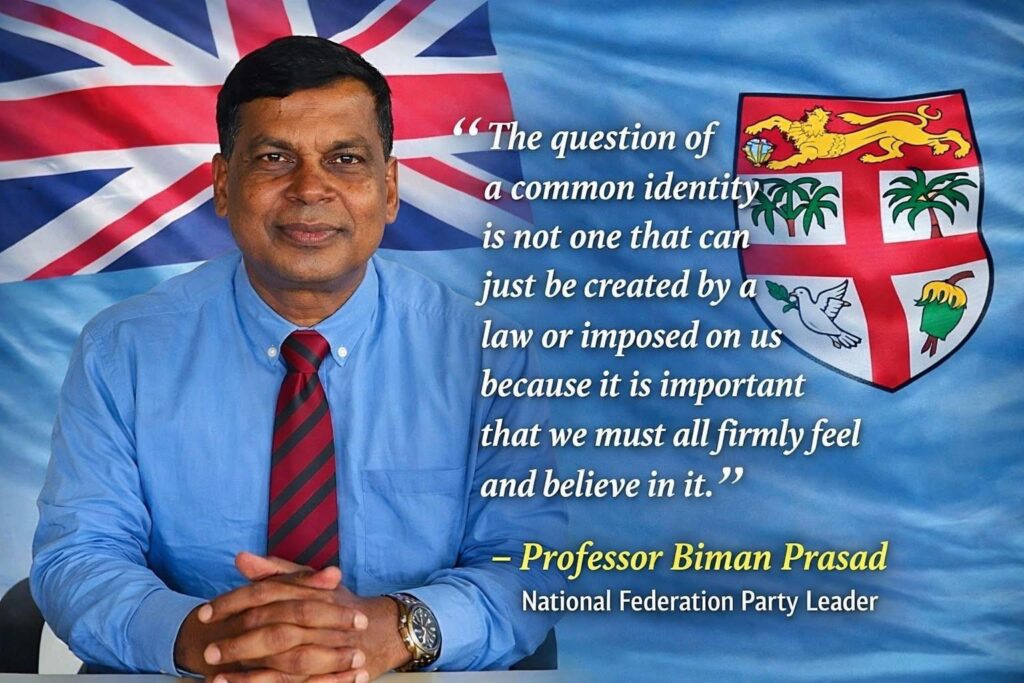
Drawing on history, he referenced the words of NFP founder A. D. Patel, who as early as 1964 asked:
“Won’t it be better if we thought less of our race and more of our nationality?”
The remarks come amid renewed debate sparked by submissions to the constitutional review process, including one from the Bose Levu Vakaturaga (Great Council of Chiefs), which proposed reserving the term “Fijian” exclusively for Indigenous iTaukei people.
Prof. Prasad criticised attempts to politicise the issue, warning that such arguments risk deepening divisions in a multi-ethnic society.
“Those who are invoking racial debate are being deliberately divisive,” he said. “Instead of uniting people, they are undermining national cohesion.”
He argued that the term “Fijian” has long been used internationally to describe all citizens of Fiji, well before it was formalised in the 2013 Constitution.
To illustrate this, he pointed to globally recognised figures in sport — including athletes such as Josefa Levula, rugby sevens legend Waisele Serevi and golfer Vijay Singh — who were widely referred to as “Fijian” on the world stage.
“These identities were never in question internationally,” he said, adding that the real issue lies not in the concept itself but in how it was introduced.
Prof. Prasad reiterated concerns that the 2013 Constitution, enacted under the former Bainimarama government, imposed the common identity without sufficient public consultation following the abandonment of an earlier constitutional process.
As the Constitutional Review Commission prepares to conduct public consultations across the country, he urged stakeholders to approach the issue responsibly.
“There will be many views expressed, but this process must not be hijacked by those seeking to inflame racial tensions.”
He emphasised that the ultimate goal should be unity, achieved through dialogue, negotiation and consensus among Fiji’s diverse communities.
“At the end of the day, elected representatives must make decisions that bring people together — strengthening our multi-ethnic, multi-cultural and multi-religious nation.”
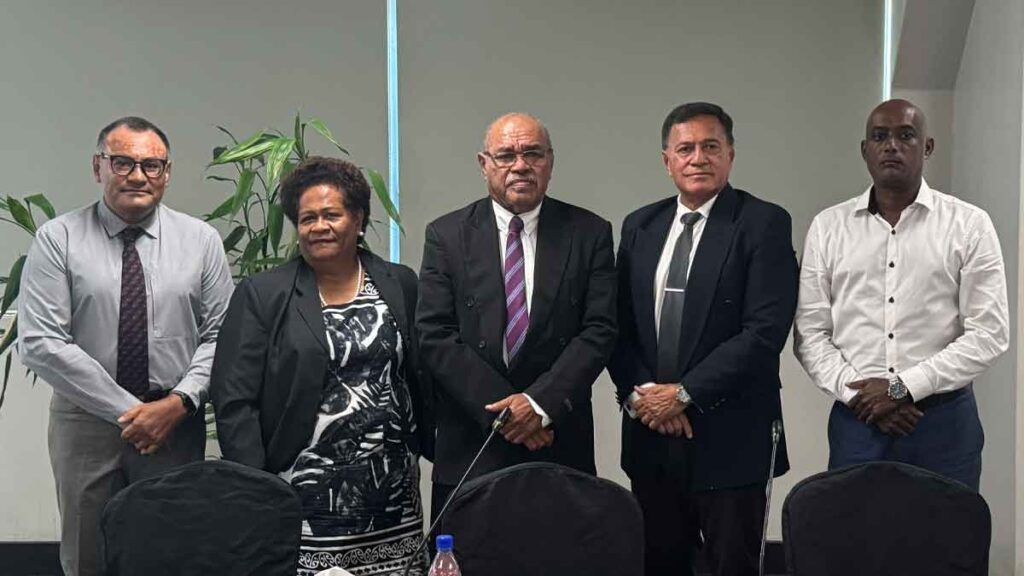
The debate comes as the Constitution Review Commission prepares to begin nationwide consultations on the 2013 Constitution, amid growing public interest in its Terms of Reference.
Chair Sevuloni Valenitabua said the Commission will gather public submissions, analyse feedback and present recommendations to the President by August, with the aim of shaping a constitution that reflects the will of the people and strengthens democracy.
The findings will then be considered by Cabinet, as calls grow for reforms to address perceived gaps in the current constitutional framework.
Support our Journalism
No-nonsense journalism. No paywalls. Whether you’re in Australia, the UK, Canada, the USA, or India, you can support The Australia Today by taking a paid subscription via Patreon or donating via PayPal — and help keep honest, fearless journalism alive.
