
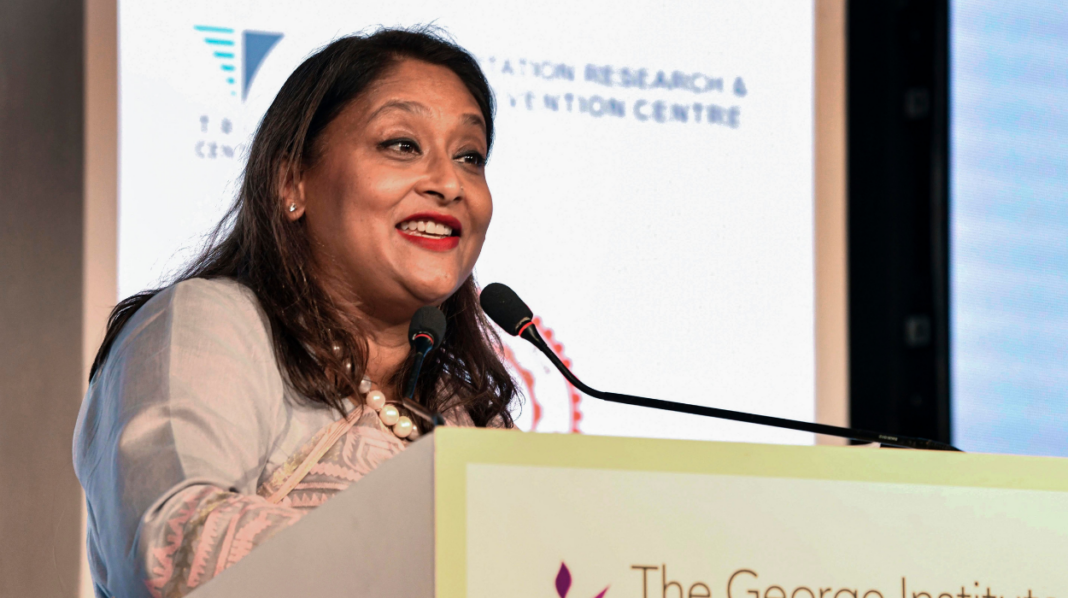
By Saima Wazed
For more than a year, my name has travelled further in headlines than my work. Today I would like to introduce myself in my own voice: a public health professional, a school psychologist and an advocate for the rights of persons with autism, mental health and disabilities.
I am a licensed school psychologist with a specialist degree and a master’s in clinical psychology from Barry University, Florida. For the last six years, I have been working on my doctorate in education leadership with a specialisation in human resource development.
Since 2009, I have made advocacy the centre of my professional life and helped change policies, programs and strategies starting at the global level with resolutions at the UN and WHO, right down to the country and community level. It has been and always will be my mission to use science to address the needs of those with psychological needs and help those from the neurodivergent community. That’s what I have worked on in my country, and what I had hoped to do at WHO as the Regional Director.
I am proud to be the daughter of Sheikh Hasina and the granddaughter of Bangabandhu Sheikh Mujibur Rahman. It is an inheritance of courage, resilience and leadership based on the emancipation of the oppressed. Although I have chosen a professional path away from politics, I carry their legacy of service with humility and gratitude. Their ideals, relentless efforts for the rights of the marginalised, and unerring moral compass have always guided me and will always guide me in the work I have chosen to do to support those with mental health conditions.
Resilience is not born in comfort; it is born from facing challenges and seeing your caregivers survive them. To understand me, one has to understand how I was raised in a family that had lost almost everyone and everything. On 15 August 1975, in a military coup, my grandfather and 17 other family members were brutally killed by military personnel, and before I ever realised it, I had lost all those who loved me and even the country where I was born. My brother and I survived because my mother and her sister went to visit my father, who was working in Germany. When I speak of psychosocial health and the needs of those who are displaced, I talk from a modicum of experience, not just concepts I have read. We are all resilient survivors raised to give back to the country my grandfather founded.
What I see going on in Bangladesh now- the indiscriminate attack on anyone supportive of the liberation of my country, the correction of history to favour those who in actuality opposed its very independence, the oppression of the poor and lack of any economic growth, and negligence of the health of children- these are all history repeating itself.
I remember the same situation in 1981, albeit without the disguise of a democratic parliament. Then too, the songs sung during our struggle for freedom were suppressed; just like today, they closed down an entire publishing house simply for selling my grandfather’s memoirs. It is no wonder that my mother wishes to return to her country no matter the risks. She has done it before as a young woman. Over the decades that followed her political career, she has faced danger again and again, including twenty-one attempts on her life during one of the earliest ones, when I was present as a little girl by her side. I have never seen her lose her courage or her objective for the economic emancipation of Bangladesh.
My mother taught me how to survive the hardest of times and be courageous while you are still afraid. She taught me to keep my heart open and to answer cruelty with hard work. She taught me that hope is a discipline you practise on the hardest days. She is my inspiration, and through this past year she has been my hope.
After the political changes of August 2024, I found myself defined only by my family connection, with years of professional work simply disregarded and my credibility torn to tatters. It was exactly at my most vulnerable stage that WHO placed me on indefinite leave under the flimsiest of pretexts on 9th July 2025. None of which could be legally substantiated. Ever since that fatal day, I have faced nothing but harassment, subjected to a show process that disregarded all of the organisation’s established rules and procedures.
From the very beginning, DG Tedros was fully aware of the political vendetta Bangladesh was subjecting me to, knew that I was not absconding and that a trial in absentia had no merit because I was working as a Regional Director of WHO. Legal scholars and the Human Rights Council have highlighted questionable legal processes being held in Bangladesh, but ignoring all that, WHO claiming I committed misconduct based on breaking the law of a land in 2021 cannot even apply to me.
How can a rule that does not guide you apply to you retroactively? Besides all that, WHO was given all the evidence to state how the judicial process in Bangladesh was a farce because I was eligible for the land based on the Father of the Nation Family Security Act of 2009 and did not break any applicable laws. This begs the question why I was placed on administrative leave without pay following such a flawed and illegal verdict by an International Organization that is supposed to remain politically neutral.
June 2025, based on a single letter from the Anti-Corruption Commission of Bangladesh sent directly to DG Tedros, who was fully aware that the entire matter was a political vendetta. DG and his leadership were well aware that I had not received any legal notices required to participate meaningfully in the legal proceedings. A complete violation of my human rights. Despite Tedros having gone through a similar situation with Ethiopia, he used his position in WHO to help perpetuate the political vendetta. And chose to move a disciplinary measure based on that, ruining nearly 20 years of a professional career built from hard work.
Instead of an organisation that supports its staff, WHO leadership decided to harass me with an internal investigation that had no merit. Like claiming I committed travel fraud for filing a claim of USD 901 for a trip to China when I did not even travel there due to being ill. Such harassment and intimidation tactics were simply a means to get me to leave the job I had won through a challenging election. I suffered the witch hunt and trusted the internal procedures to clear my name.
The former interim regime made numerous fictitious claims about me, alleging that my not-for-profit NGO, Shuchona Foundation, did not exist. Formed in 2014, Shuchona Foundation held UN ECOSOC consultative status, had partnered with various UN agencies including WHO to organise events, develop strategic documents and advise on research. Shuchona was also a member of UNESCAP’s working group on Disability.
In order to obtain such a status, we had to ensure we demonstrated a high-level quality of work, and ensure that all our financial documents could be rigorously scrutinised and above reproach. Our efforts helped us obtain donations which enabled us to provide training to government teachers and health workers without any fees. Unfortunately, misinformation, rumours, fear-mongering, and harassment of myself and the dedicated professionals who worked with me have unjustly resulted in the closure of Shuchona, a huge loss of support to the community we served.
Article 14 of the International Covenant on Civil and Political Rights protects the right to be informed, to be heard and to defend oneself. Not only was I not given those rights, but it almost appears as though the WHO Director-General withheld essential documents, obtained by him through questionable means, and may have even assisted an unelected political regime with a vendetta against me. Last but not least, the International Civil Servants Code of Ethics specifically stipulates that any judicial procedures against an international civil servant should adhere to the strictest international standards. It seems to have mattered little to DG Tedros and his supporters that none of those standards was upheld.
I am a scientist and a professional; I believe in data and evidence. Despite providing that evidence, I continued to be subjected to political machinations and reputational damage to my WHO-SEAR Member States. I spent 10 months on leave without pay due to a decision by the head of an organisation purported to uphold health and human rights. All because I wanted an investigation into his conduct. I finally resigned when all my attempts to seek accountability, an independent investigation, transparency, due process and the ability to exercise my rights as a staff member were thwarted through the unilateral decision of the man in charge.
WHO is a tremendous organisation and plays a critical role in developing countries. But if its leadership survives solely through successful removal of persons the DG disagrees with, or feels threatened by, then it is going to risk losing professionals. I may have chosen to leave the organisation, but there are many dedicated, excellent professionals who continue to be a part of it, and they deserve to continue working for an organisation they can count on as being transparent, diligent and one that follows due process.
And I hope to continue dedicating myself to the needs of the neurodivergent community and ensuring mental health is effectively addressed within public health systems.

Author: Saima Wazed, Former advisor and Regional Director for WHO SEARO. She also chaired for the National Advisory Committee on Neurodevelopmental Disabilities for the Government of Bangladesh.
Disclaimer: The opinions expressed within this article are the personal opinions of the author. The Australia Today is not responsible for the accuracy, completeness, suitability, or validity of any information in this article. All information is provided on an as-is basis. The information, facts, or opinions appearing in the article do not reflect the views of The Australia Today, and The Australia Today News does not assume any responsibility or liability for the same.
Support our Journalism
No-nonsense journalism. No paywalls. Whether you’re in Australia, the UK, Canada, the USA, or India, you can support The Australia Today by taking a paid subscription via Patreon or donating via PayPal — and help keep honest, fearless journalism alive.
