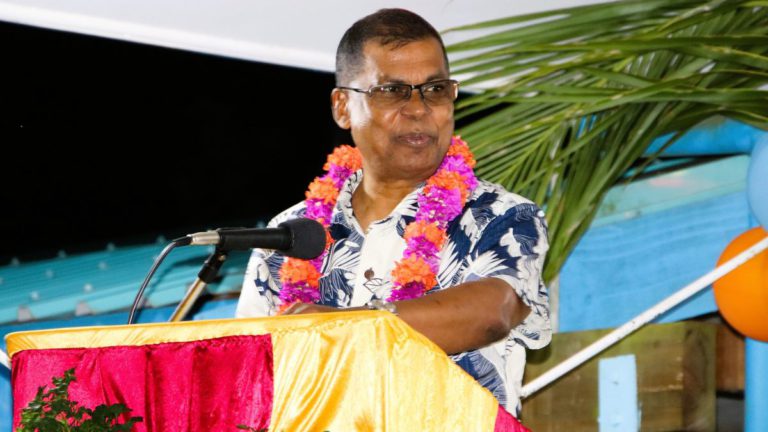
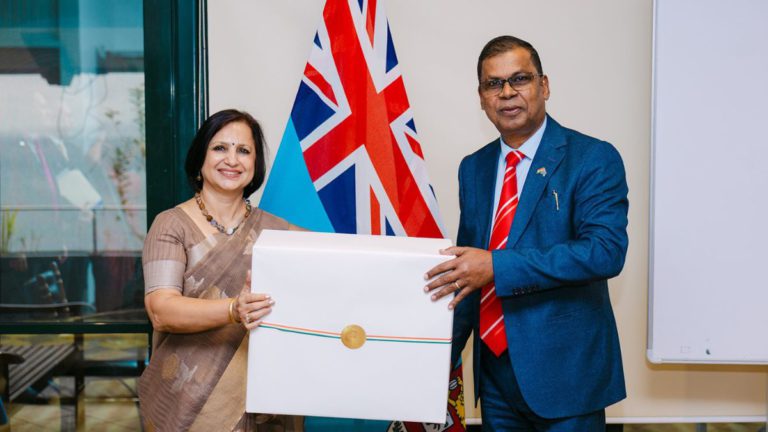
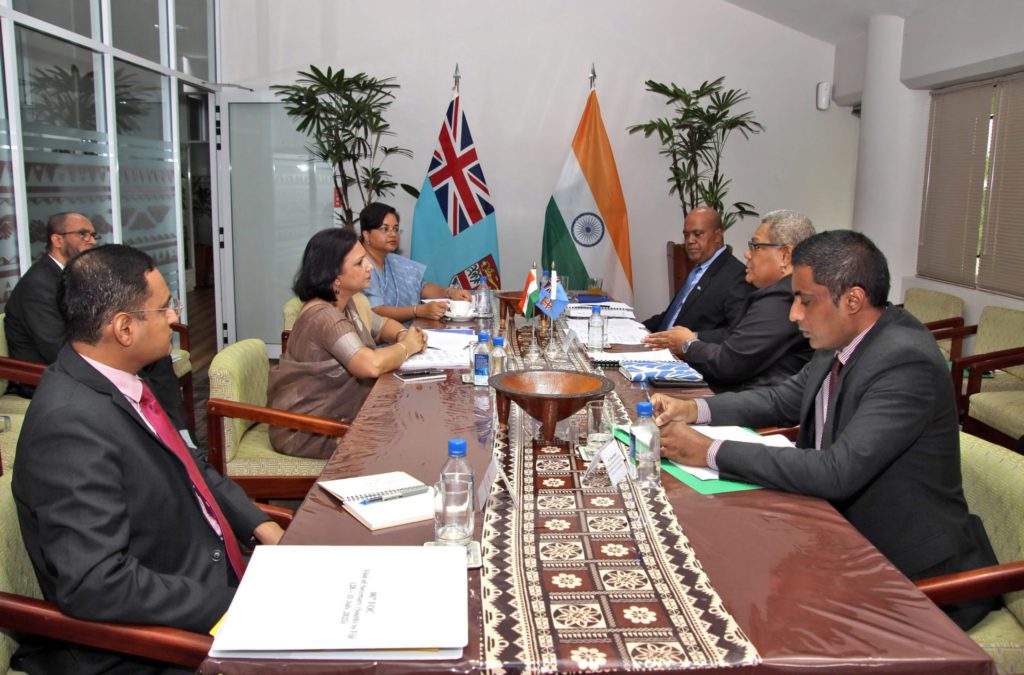
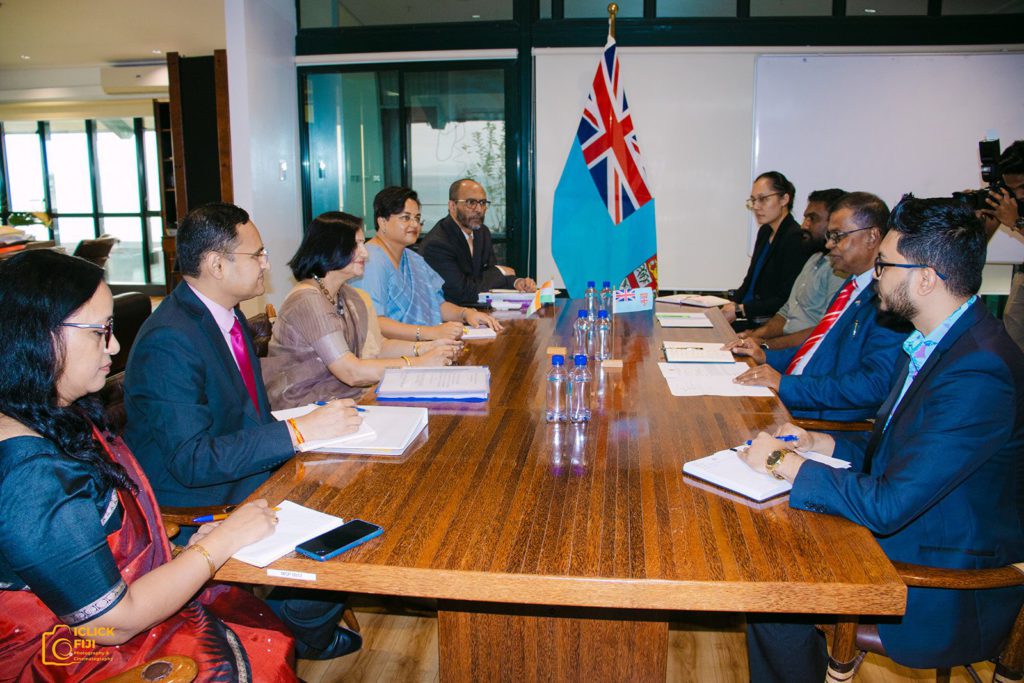
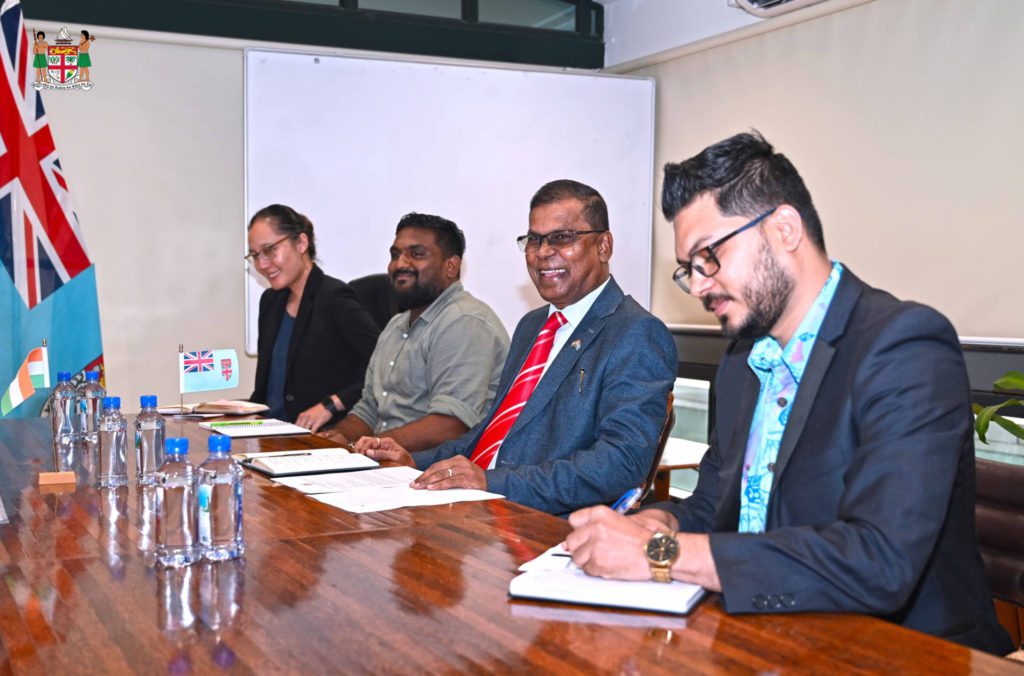
To revitalise Fiji’s sugar industry and strengthen rural livelihoods, Deputy Prime Minister and Finance Minister Prof. Biman Prasad launched a suite of transformative financial and insurance reforms in Ba on Saturday night.
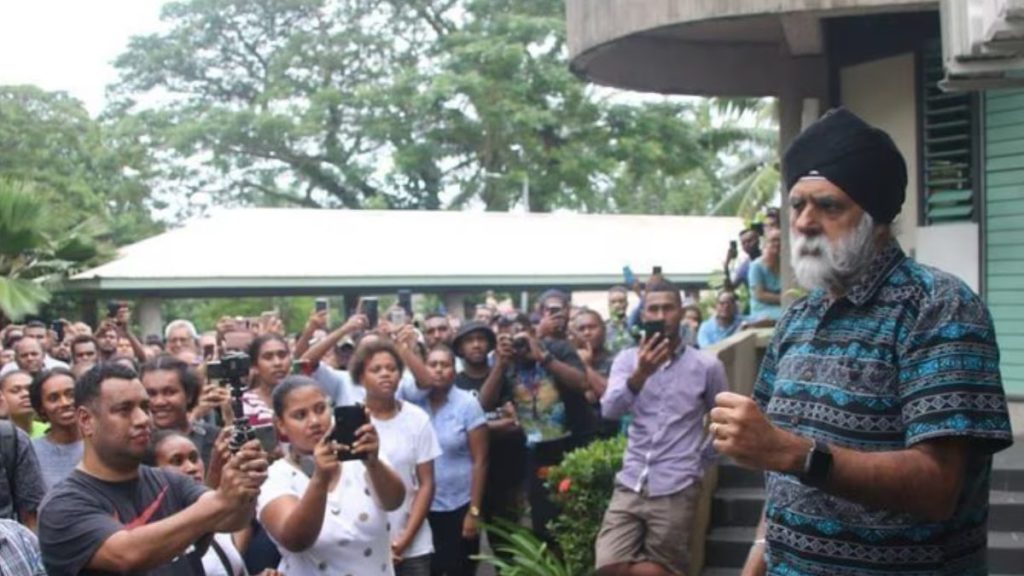
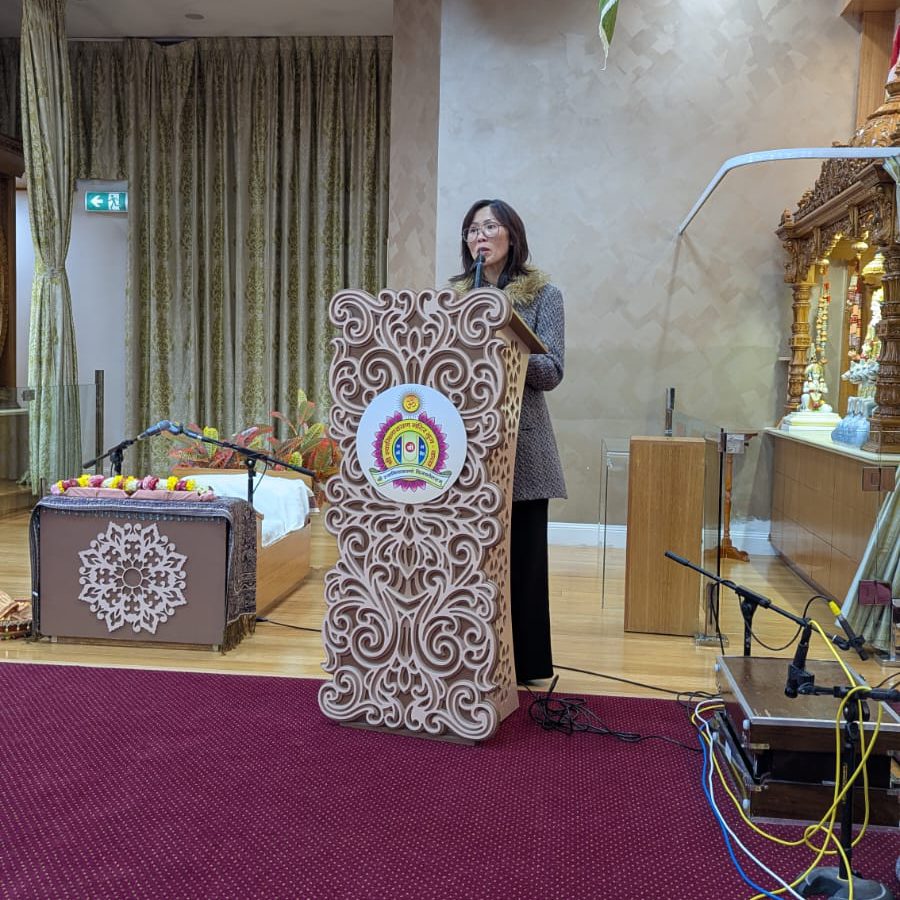
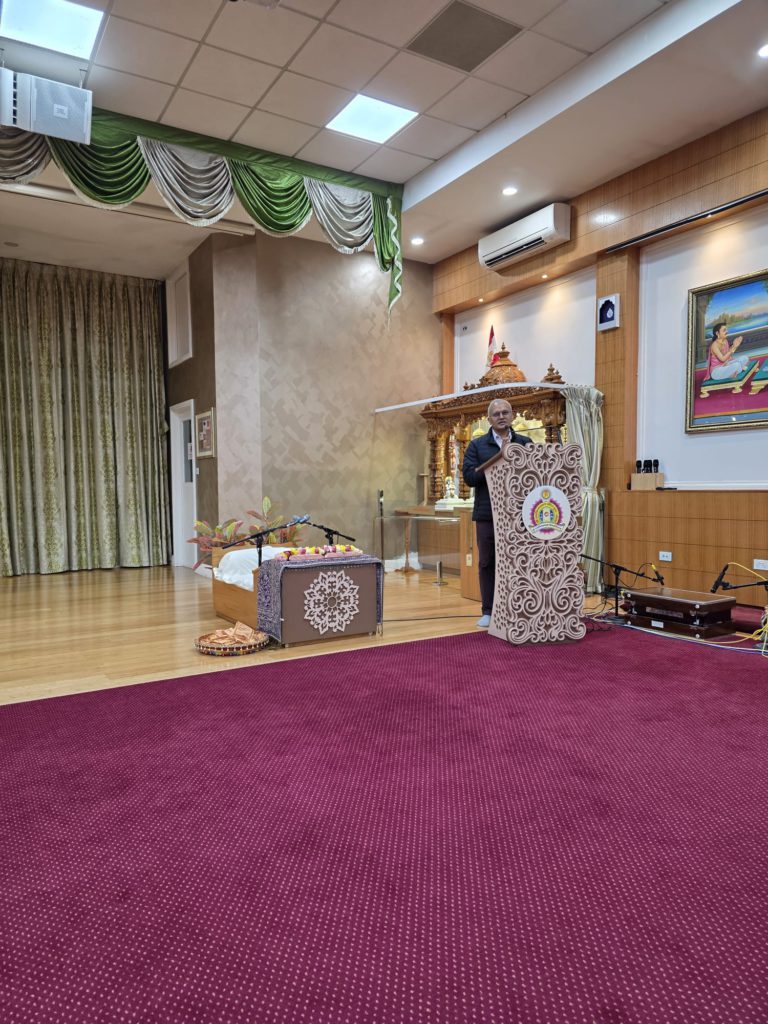
Speaking to farmers at Veisaru Sanatan Dharam School, Prof. Prasad said the initiatives would bring real, tangible support to the grassroots.
“Too often, initiatives like these are launched in boardrooms or urban centres far from the fields and faces of the farmers who will benefit most,”
he remarked.
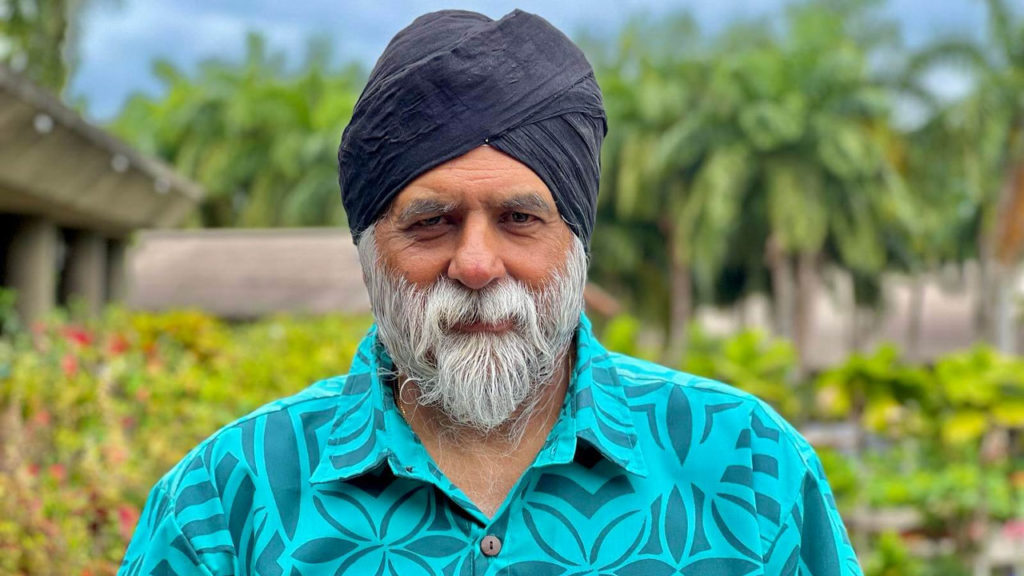
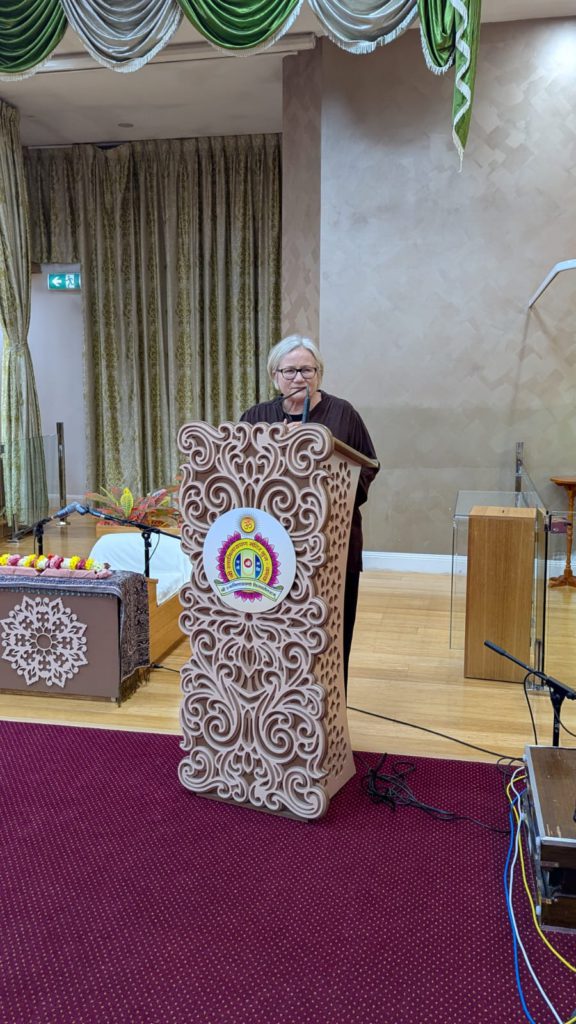
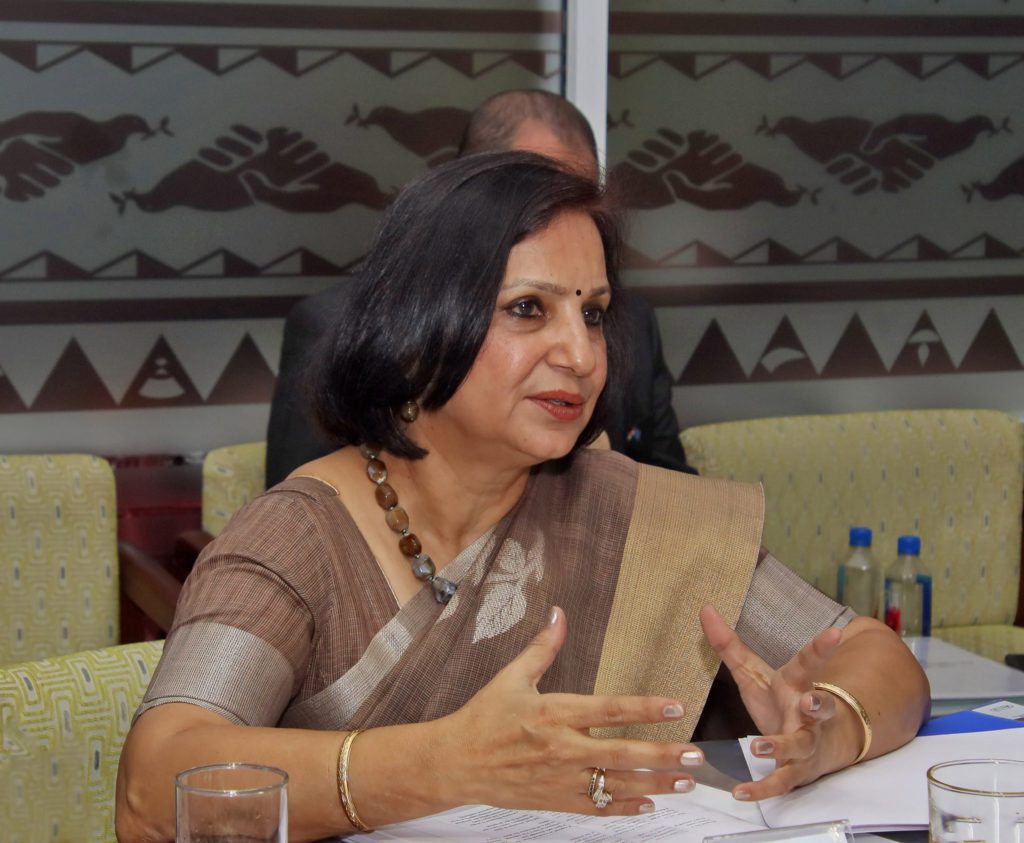
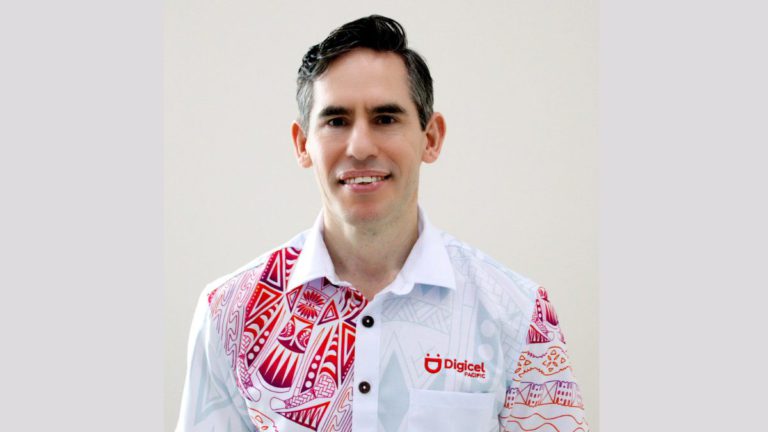
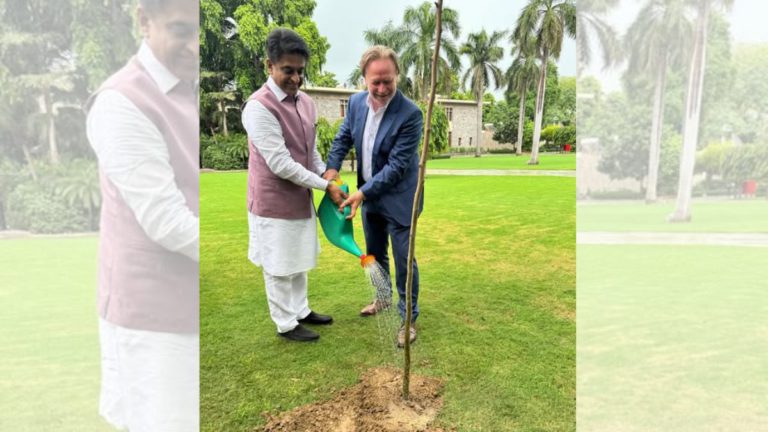
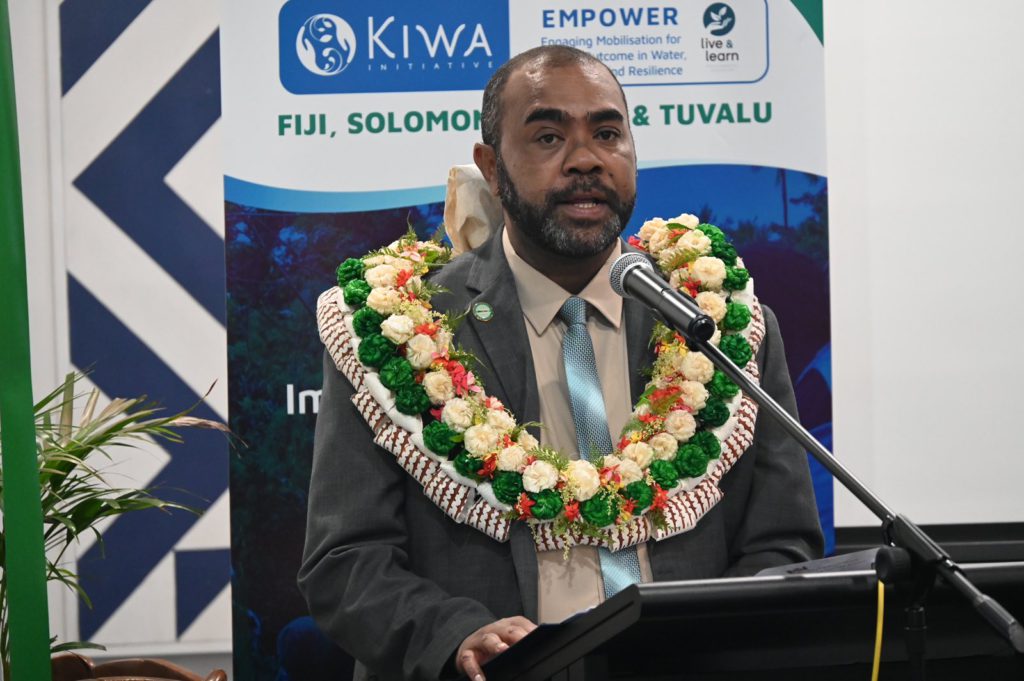
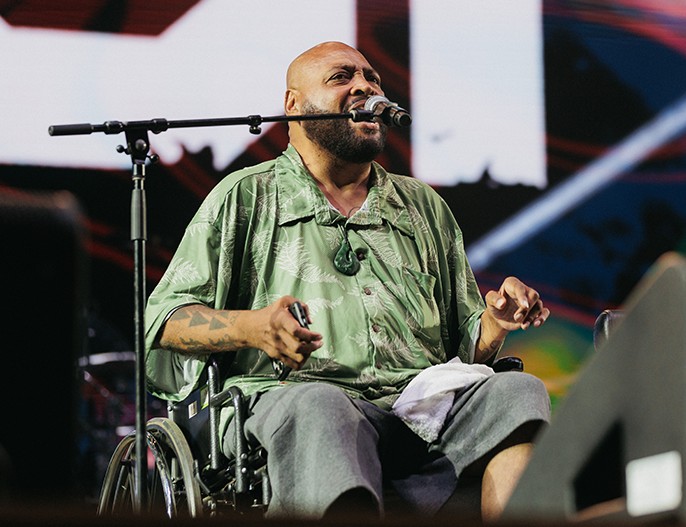
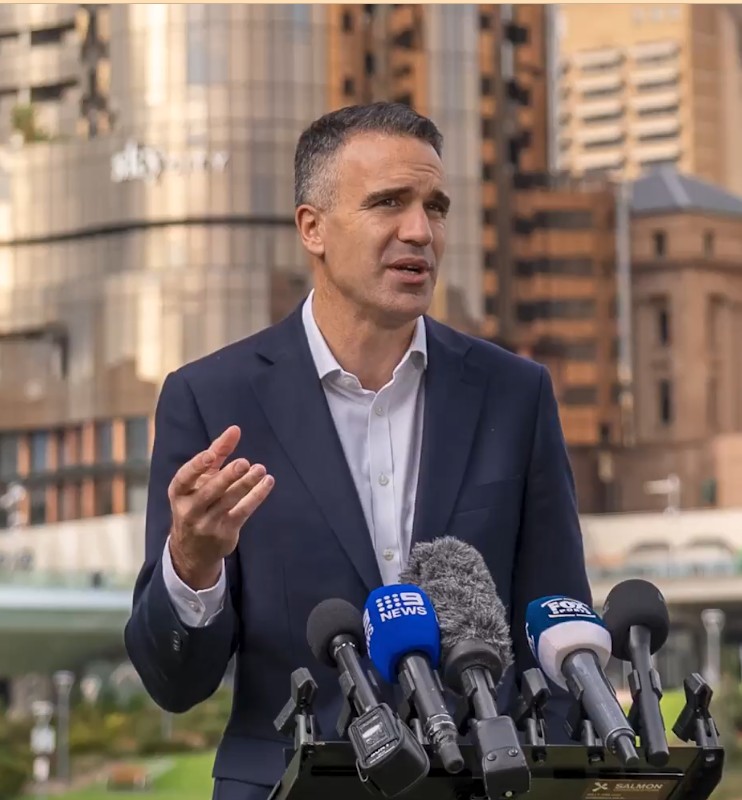
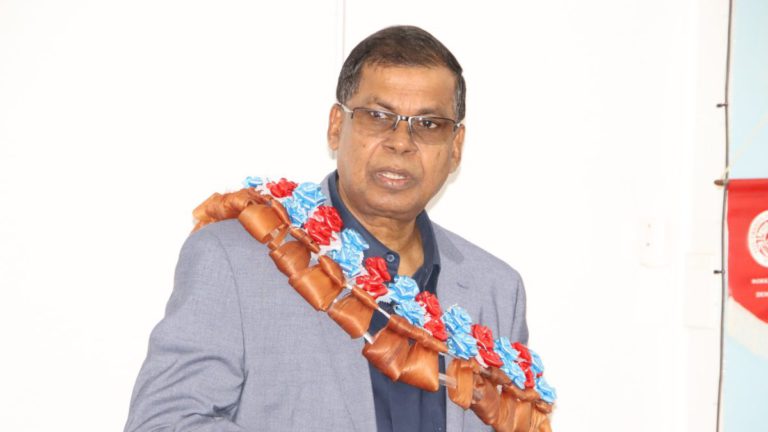
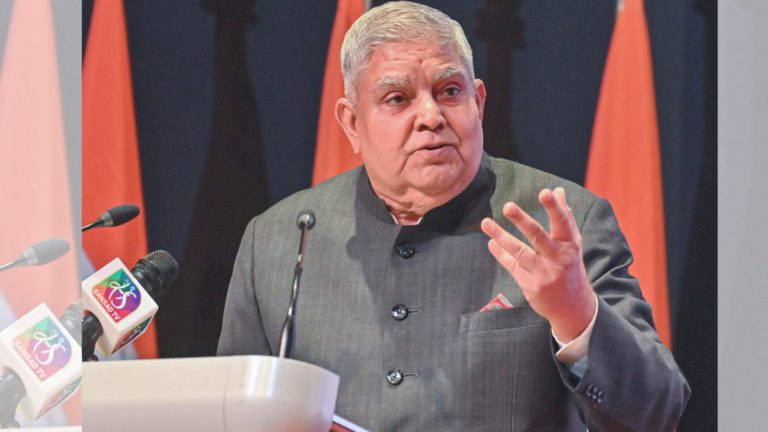
DPM Biman Prasad; Image Source: Supplied
At the heart of the announcement was a new partnership between the Sugar Cane Growers Fund (SCGF) and the United Nations Capital Development Fund (UNCDF), backed by a USD $148,000 (FJD $330,000) grant.
This funding will power two major projects:
• The SCGF 5S (Special Social Security Savings Scheme) in collaboration with the Unit Trust of Fiji, and • A Revolving Loans Facility, offering emergency loans of up to $2,000 via M-PAiSA — the first scheme of its kind in Fiji.
Prof. Prasad also launched a Limited Peril House Fire Insurance Scheme, created by SCGF in partnership with Sun Insurance. Starting 1 September 2025, the new cover will specifically support rural households facing disaster risks such as fires and structural damage.
In another boost for farmers, Ba Motor Parts was welcomed as the 22nd partner in the SCGF loyalty program, providing a 12.5% discount on mechanical parts — a timely support for tractor-dependent farming households.
“These initiatives reflect a government that is listening, responding and delivering where it matters most,” Prof. Prasad said.
“What we are witnessing this evening is not merely the unveiling of new services.
We are witnessing a model of development that is grassroots-led, farmer-centred, and future-focused.”
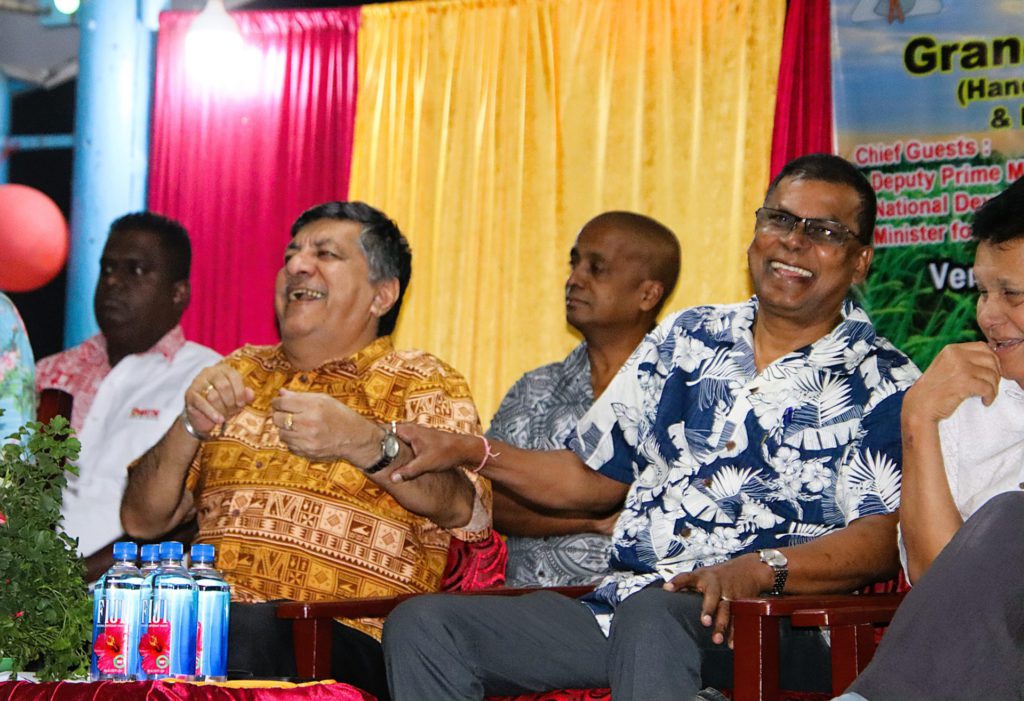
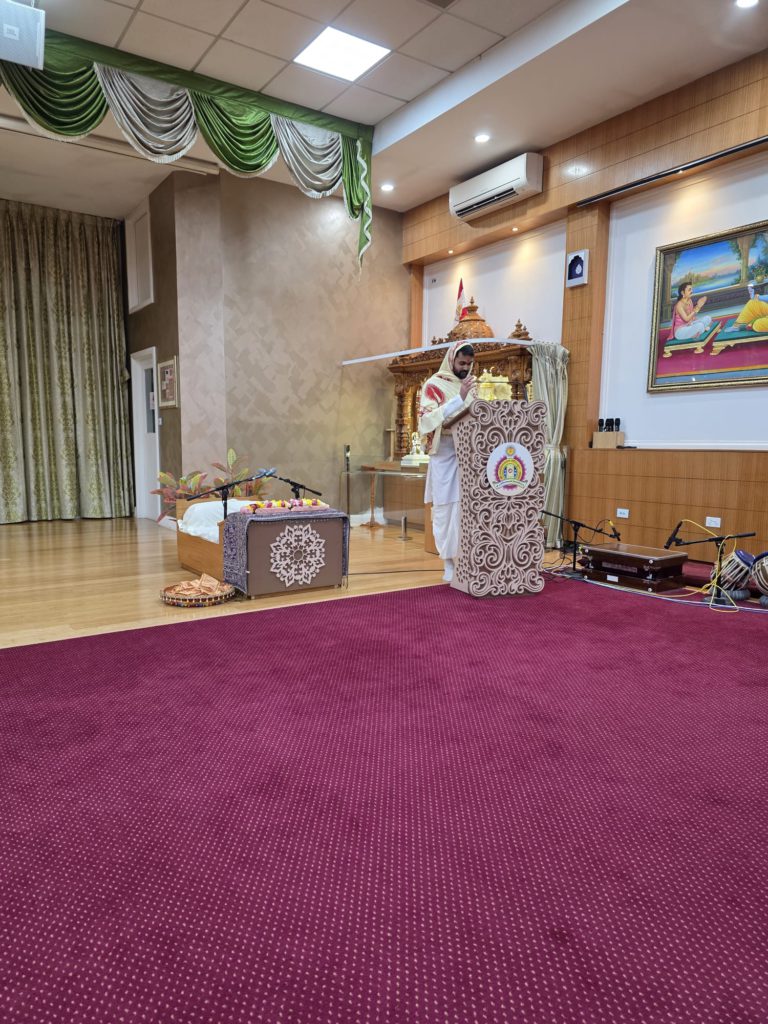
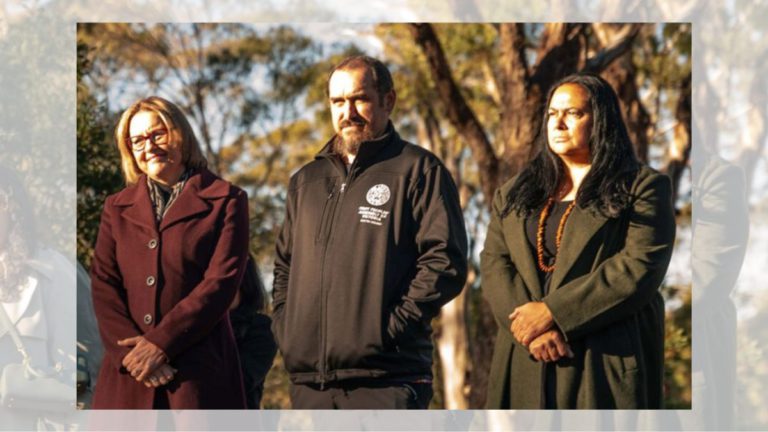
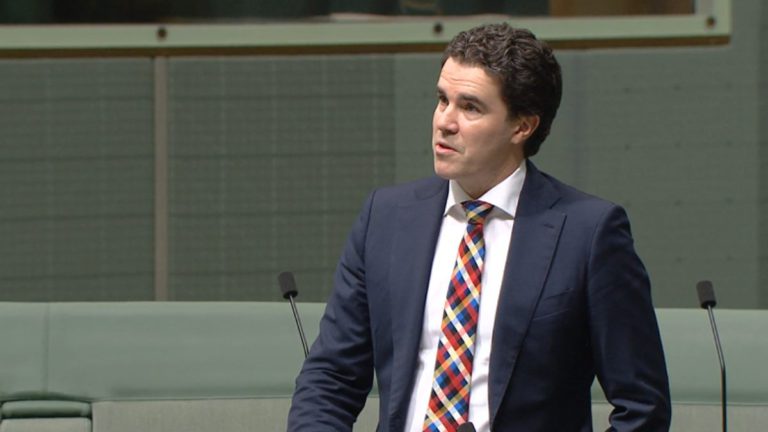
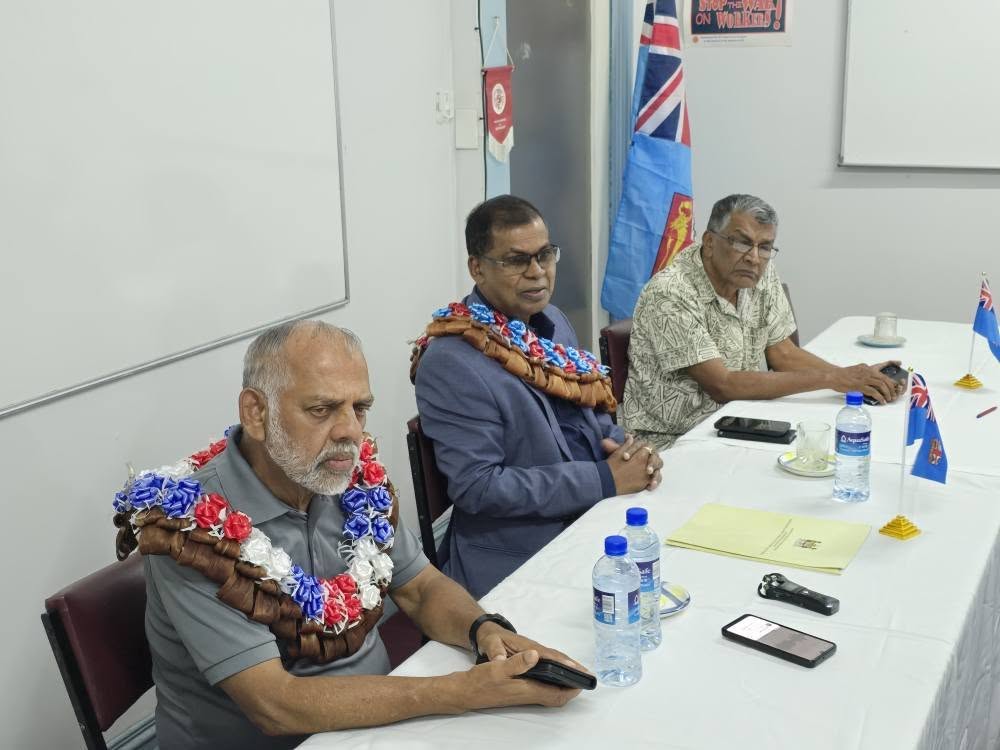
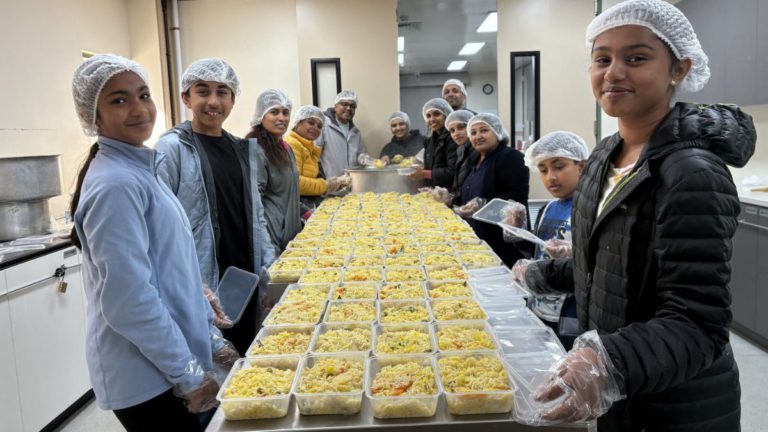
DPM Biman Prasad; Image Source: Supplied
The minister reaffirmed government support for the sugar industry, highlighting the recent price rise to $105.08 per tonne and the $72 million allocated in the 2025–2026 National Budget for sugar-related programmes, including subsidies, price support, and infrastructure upgrades.
A special parliamentary committee chaired by the Prime Minister has also been established to lead strategic reforms in the sector, with recommendations expected by November 2025.
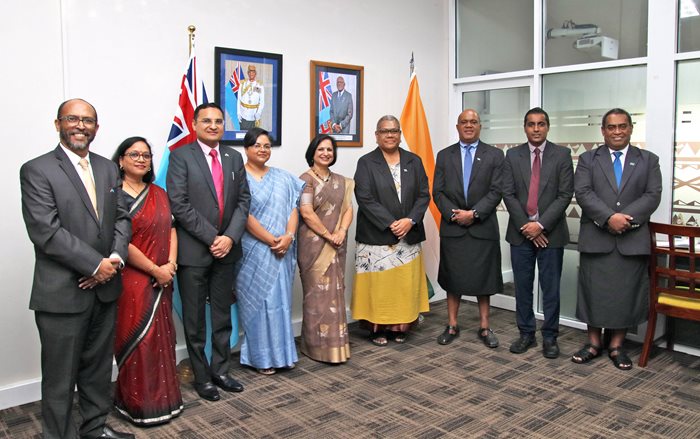
Also in attendance were Minister for Multi-Ethnic Affairs and Sugar Charan Jeath Singh, UNCDF Country Coordinator Zeituna Mustafa Abdi, SCGF Chairman Ahemad Bhamji, CEO Raj Sharma, landowner representative Ratu Eveli Nauni, and members of the farming community.
Support our Journalism
No-nonsense journalism. No paywalls. Whether you’re in Australia, the UK, Canada, the USA, or India, you can support The Australia Today by taking a paid subscription via Patreon or donating via PayPal — and help keep honest, fearless journalism alive.
The Albanese Government is under renewed pressure to reinstate the baby bonus scheme as Australia grapples with its lowest fertility rate in decades.
Former Prime Minister John Howard has led calls for the return of the payment, first introduced in 2004 under his leadership and then-Treasurer Peter Costello. The policy initially provided a $3,000 lump sum to new parents, later rising to $5,000, and was widely credited with boosting birth rates, peaking at 301,617 babies in 2011—surpassing even the post-war baby boom.
Costello famously urged Australians to “have one for mum, one for dad and one for the country.” Now, Howard warns that the current fertility crisis demands similar intervention.
“Later governments should never have watered down these policies,” Howard said.
“Their restoration or equivalent measures are needed to address the quite disturbing and depressed level in the current fertility rate.”
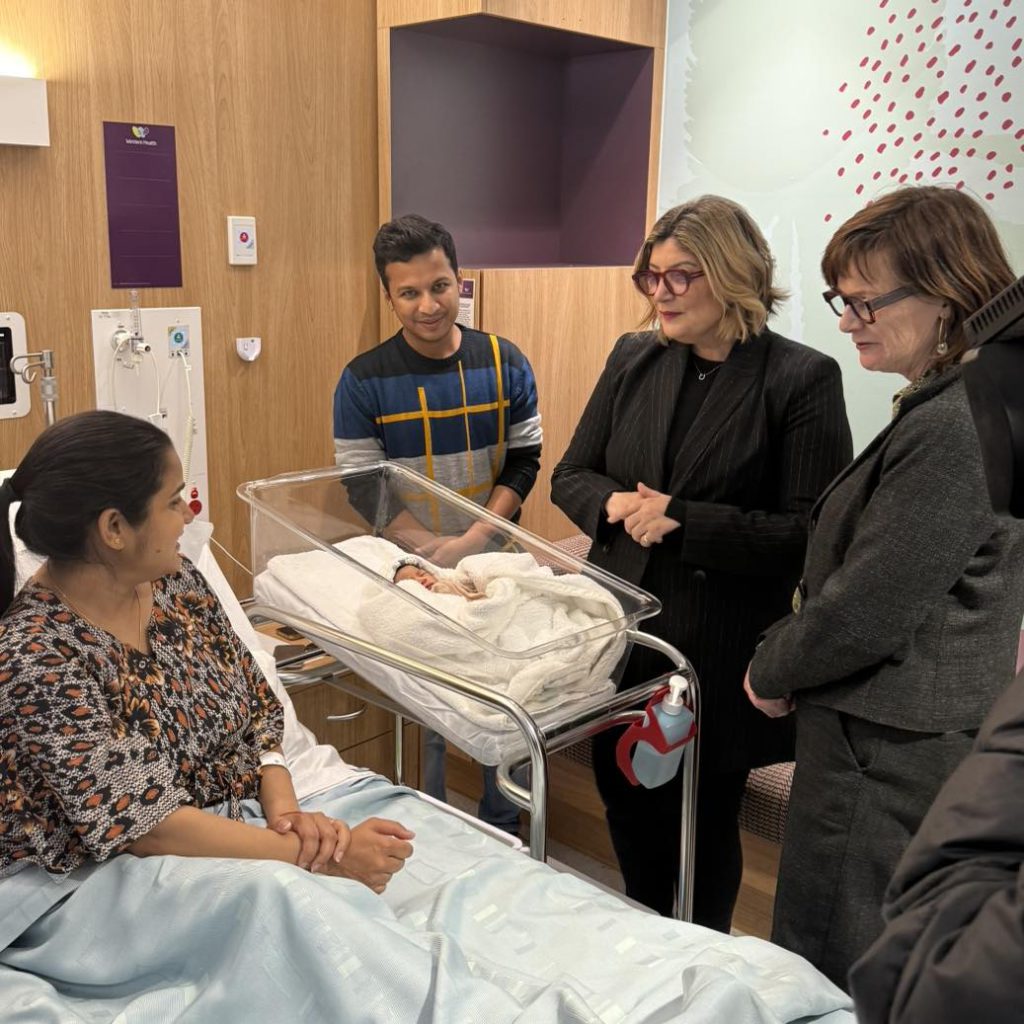
Mum and newborn; Image Source: CANVA/The Australia Today
“I don’t think a baby bonus is going to spur anybody on who just simply cannot financially afford to have a baby,” Littleproud told Today.
“Housing, inflation, and wages have changed the equation dramatically.”
According to the Australian Bureau of Statistics (ABS), just 286,998 births were registered in 2023—a 17-year low—bringing the total fertility rate (TFR) to 1.50 babies per woman. In comparison, the TFR in 1993 was 1.86. The figure has continued its downward slide in 2024, with experts warning it could drop further to 1.45 by 2030 if cost-of-living pressures are not addressed.
The ABS reports that the highest fertility rates in 2023 were seen in Western Australia (1.57), New South Wales and the Northern Territory (both 1.55), while the Australian Capital Territory recorded the lowest rate at 1.31. Only Tasmania saw an increase in births.
Fertility among Aboriginal and Torres Strait Islander mothers remains above the national average, with a rate of 2.17 babies per woman in 2023—accounting for 8.6 per cent of all registered births.
The decline in national fertility is being fuelled by younger Australians postponing parenthood, with the average age of first-time mothers now 31.9 years. The most significant drops have occurred among women aged 15 to 24, while birth rates among women aged 40 to 44 have nearly doubled over the past three decades.
Amanda Davies, professor of demography at the University of Western Australia, attributes much of the decline to financial insecurity and the housing crisis.
“There’s a feeling they need to have secure housing before starting a family, and that extreme housing crisis that’s being faced in all parts of Australia is [related] to that declining fertility rate,”
Recent data also shows that regional and outer-suburban Australians are more likely to have children compared to their inner-city counterparts, with cities like Melbourne and Sydney seeing sharp falls in birth rates—Melbourne hitting a low of 1.4 births per woman in 2024, compared to 1.71 a decade earlier.
Perth stands out as an exception among capital cities, recording a stabilising fertility rate in 2024, aided by relative housing affordability and a stronger local economy.
Experts warn that without targeted policies addressing affordability, secure housing, and parental support, Australia risks facing long-term demographic and economic challenges due to a shrinking working-age population.
Support our Journalism
No-nonsense journalism. No paywalls. Whether you’re in Australia, the UK, Canada, the USA, or India, you can support The Australia Today by taking a paid subscription via Patreon or donating via PayPal — and help keep honest, fearless journalism alive.
US-based Sikh businessman and outspoken critic of Khalistani separatism, Sukhi Chahal, was found dead under suspicious circumstances at a friend’s home in California on Thursday evening, local authorities and associates have confirmed. Close friend Jaspal Singh told The Times of India that Chahal “fell ill shortly after dinner and passed away on the spot,” despite being in good health beforehand.
Chahal, 48, who built a reputation as the founder and CEO of The Khalsa Today, had long campaigned against extremist factions within the Sikh diaspora. His vocal opposition to pro-Khalistan elements earned him repeated death threats, particularly ahead of the planned Khalistan Referendum event in Washington, D.C., on 17 August. The timing of his death has only added to the mounting concerns over possible foul play.
Another California-based associate,Boota Singh Kaler, described the news as a “wave of grief” for pro-India communities. “Sukhi remained steadfast in his advocacy, despite knowing the risks,” Kaler said, noting that an autopsy is expected to shed light on the cause of death. Local law enforcement has opened an investigation and is withholding details pending the post-mortem report.
Beyond his activism, Chahal used social media to warn Indian immigrants in the U.S. to respect local laws.
In a recent post on X, he wrote:
“The United States is a society of law and order. Crimes like assault by foreign visitors will not be tolerated. If you break the law, your visa can be revoked, and you may be unable to return.”
His work with The Khalsa Today sought to counter misinformation and encourage lawful civic participation among the Sikhs in North America. Colleagues remember him as a tireless advocate who leveraged both traditional and digital platforms to amplify moderate voices.
Chahal’s unexpected death has reverberated across India and the United States, prompting calls from community leaders for a transparent inquiry. As the investigation continues, supporters hope the findings will honour his legacy of fearless activism and determine whether his demise was a tragic health emergency—or something more sinister.
Support our Journalism
No-nonsense journalism. No paywalls. Whether you’re in Australia, the UK, Canada, the USA, or India, you can support The Australia Today by taking a paid subscription via Patreon or donating via PayPal — and help keep honest, fearless journalism alive.
Detectives from the Melbourne Sexual Offence and Child Abuse Investigation Team (SOCIT) allege that inappropriate images were inadvertently displayed during a lecture on Wednesday, 5 February.
The incident was reported to police, prompting an extensive investigation. A search warrant was executed at the man’s Middle Park home on Wednesday, 12 February, where investigators seized several electronic devices.
Detectives also travelled to Sydney and, with the assistance of New South Wales Police, conducted a second search at a property in the eastern suburbs on 13 February. Further electronic devices were located and are currently being examined.
The Middle Park man has been charged with one count of possessing child abuse material under Commonwealth law and two counts under the Crimes Act. He is scheduled to appear at Melbourne Magistrates’ Court on 7 August.
Police have confirmed they are not looking for anyone else in connection with the investigation.
Support our Journalism
No-nonsense journalism. No paywalls. Whether you’re in Australia, the UK, Canada, the USA, or India, you can support The Australia Today by taking a paid subscription via Patreon or donating via PayPal — and help keep honest, fearless journalism alive.
It was one of those days—the kind where the weight of an entire sector seemed to crash onto my shoulders. The phone had been ringing nonstop. Student after student, desperate to find placement. One girl called all the way from the west of Melbourne, practically begging for a chance to complete her mandatory hours. Another shared how centre after centre had declined her—not because she lacked the skills, but because of what had happened a month ago. The shadow of that incident had reached so far, so deep, that even learning had become conditional.
Aren’t we already chronically understaffed in ECEC? Aren’t the few educators we have already stretched thin, burnt out, and exhausted?
And yet, here we are—too scared to mentor. Too scared to nurture the very people who will carry this profession forward.
But it got worse. A male student, qualified and ready to learn, was denied his right to education—not because he had done anything wrong, but because he was a man.
The injustice didn’t stop there. That same day, families began withdrawing enrolments from the centre. Their reason? They didn’t feel “safe” knowing there were male educators on the team. I sat there trying to remain composed, but inside, I was furious. I understand fear. I understand that parents want to protect their children. But what happens when your child goes to school? Will you protest the male teacher? The male principal? And if your son tells you he wants to become a teacher one day, will you suppress that dream out of fear?
Later that evening, I turned to the news for escape, only to find an article from a major Australian publication with the headline: “Why Male Educators Should Be Banned.”
I felt physically sick. The piece wasn’t written by someone from our sector—it was authored by someone with no understanding of what we do, telling the country that care, nurture, and empathy—the very foundations of our profession—could not be trusted in the hands of a man.
Not only was it ignorant—it was dangerous. Instead of educating the public, it fuelled fear. Instead of nuance, it weaponised prejudice.
I sat in that moment—exhausted, angry, grieving for a profession I love. A profession being slowly dismantled by suspicion.
It’s been nearly a month since the name Joshua Brown sent shockwaves through Australia’s early childhood education and care (ECEC) sector—a name now synonymous with betrayal. His alleged crimes fractured the trust between children, families, and educators, and shook the very foundations of a profession built on safety, integrity, and love.
The collective grief was palpable. Every educator I know felt it deep in their bones. Our work—centred on nurturing and safeguarding young lives—was suddenly overshadowed by the horror of one man’s actions. Fear crept into every corner: families, educators, service providers, students. A silent contagion of suspicion and self-doubt.
And then came something even more alarming.
In a response rooted in fear, one service provider reportedly moved to ban male educators from performing nappy changes or supporting children with toileting. It was an instinctive, panic-driven measure masquerading as policy. Not an evidence-based decision. Not a child-safety initiative. Just fear, dressed in the guise of protection.
From that moment, the trauma of a single case began to snowball into something broader. Something more insidious.
A profession turned on its own
I’ve heard from male educators—once respected colleagues—who found their shifts cut, their placements denied, their presence questioned. Some were told outright they were no longer needed. Others were dismissed more subtly—stripped of core duties, excluded from routines, left standing on the fringes of a profession they had trained so hard to join.
The message was deafening in its silence: If you are a man, you are a risk.
It didn’t matter if you had 20 years of experience, glowing references, a spotless record. Your gender became your guilt. You were no longer an educator—you were a threat.
This is happening in a sector already buckling under a nationwide staffing crisis. A sector plagued by low retention, chronic burnout, and a desperate shortage of qualified professionals. And now, we are actively driving away passionate, capable educators because of their gender?
It got so bad that universities began calling centres asking: “Do you still take male students?”
A deeper wound for the marginalised
For male students from culturally and linguistically diverse backgrounds, the impact has been even more acute. They are not just seen as men—but as outsiders. Othered. Watched. Whispered about. Their every move weighed against stereotypes, not substance.
These students did not come here to harm. They came to learn. To nurture. To serve.
And we are telling them—sometimes with words, sometimes with silence—that they don’t belong.
Diversity is our strength, not our threat
I came to this country with hope. Like many, I studied for my citizenship test and learned about Australia’s commitment to fairness, equality, and diversity. But today, I have to ask: Where is that promise now?
These students bring more than labour. They bring language, culture, empathy, and passion. They are not a risk—they are the future of early childhood education. And yet, they are the first to be abandoned when fear takes hold.
Let’s be honest: this is no longer about protecting children.
This is about prejudice.
Who really misses out? The children.
When male educators are pushed out—when passionate students are left on the sidelines—when fear is allowed to write policy—it is the children who suffer the most.
In Australia, one in six families are single-parent households, and almost 80% of those are led by mothers. Many young children grow up without a consistent male figure in their early years.
For some, the first man to nurture, to listen, to model empathy, is their male educator. He might be the first person to show them that masculinity can be gentle. That strength can also look like kindness.
And we meet him with suspicion?
“Why would a man want to work with children?” “What’s he doing here?” “Can he be trusted?”
These are not questions. They are accusations cloaked in bias.
What we need is reform, not fear
Let us be clear: one person’s actions—no matter how heinous—should not become a life sentence for an entire gender.
We do not need bans. We need reform:
Rigorous recruitment grounded in values, not gender.
Transparent and ethical training from day one.
A national, portable background check system (currently under government consideration).
Clear accountability for those overseeing qualifications and placements.
Architectural safeguards—windows, cameras, open doors—not for surveillance, but for reassurance.
Involved families, empowered to help build safe, trusting environments.
Public education to dismantle harmful myths and reshape the narrative.
We already have mandatory reporting. We already have the 11 Child Safe Standards. But these must be more than policies on paper. They must be lived, breathed, and upheld with intention.
And above all, we must stop treating gender as a red flag.
Let care be human again
The Early Years Learning Framework teaches children about Being, Belonging, and Becoming.
But how can we teach belonging, when we tell male educators they don’t belong? How can we talk about becoming, when students are denied the chance to begin?
This is a moment of crisis—but also one of reckoning.
An opportunity to lead with principle, not panic.
To build a system that holds child safety sacred without sacrificing the dignity of those who serve.
A system that welcomes every educator—of every background and gender—who walks in with ethics, love, and the courage to care.
To every male educator: You are not the problem. You are the proof that care is not gendered. That empathy has no chromosomes. That love is a universal language.
And you are needed—now more than ever.
To the sector: It’s time to rise. To stop reacting with fear and start leading with courage. If we want our children to believe in equity, they must see it: In every face that welcomes them. In every voice that guides them. In every heart that teaches them.
Because care does not see gender.
And our children deserve nothing less.
Support our Journalism
No-nonsense journalism. No paywalls. Whether you’re in Australia, the UK, Canada, the USA, or India, you can support The Australia Today by taking a paid subscription via Patreon or donating via PayPal — and help keep honest, fearless journalism alive.
What is the greatest threat to truth in this AI-driven world? Is it the fakery that deceives, or the simulacrum that convinces? In this post-truth era—dominated by large language models—artificial intelligence takes the lead in generating news, mimicking human voices, creating realistic videos, and forecasting trends with eerie plausibility. It convinces us with its polished fakery.
Hoax news has now moved beyond yellow journalism and fabricated stories. It is beginning to question our existential reality—even the fate of the planet we all inhabit. The psychological phenomenon known as confirmation bias, where people tend to trust information aligning with their pre-existing beliefs, demonstrates how we are becoming willing “stochastic parrots.” Human intelligence is being sacrificed at the altar of machine learning’s predictive models. Man—once considered by Shakespeare as “noble in reason [and] infinite in faculty”—now treads a path towards intellectual and planetary suicide. This is the banality of hoax culture: ever-growing, increasingly insidious, and disguised in different guises.
Here, the commodification of truth is guided by personalisation: a truth tailored for you, not based on reality but on a hyperreality shaped by your needs and preferences. Platforms like Facebook and Instagram function as pseudo-news channels, showing content that serves individual biases—based on proximity and past behaviour—rather than objective truth, thus trapping us in echo chambers. We have ensnared ourselves—and thereby the future of humanity—within the seductive models of algorithmic logic. Misinformation can masquerade as credible news at any time, especially in our 24/7 news culture and the insatiable machine of hoaxes that constantly massage our egos and divert our attention from real societal, national, and planetary issues. No wonder then that Maxim Gorky once presciently said, “When everything is easy, one quickly gets stupid.”
Are we already doomed? The normalisation and celebration of fakery suggest we might be. Consider the recent case where U.S. President Donald Trump shared an AI-generated video depicting former U.S. President Barack Obama being arrested by the FBI in the Oval Office. This wasn’t just a viral clip—it exemplified how quickly and powerfully false content spreads in our post-truth era, commodified and distributed by the very platforms that claim to be guardians of truth. The issue is this: we are trying to build our future on a foundation of fakeness, and that foundation is bound to crumble.
The swift flow of digital information connects the world—but also fuels the rapid spread of misinformation. By the time something is debunked as a hoax, millions may have already seen and believed it. Another telling example is when Donald Trump called climate change an “expensive hoax and mythical drama.” With one of the most-followed accounts on X (formerly Twitter), his tweets—provocatively framed with hashtags like #ClimateHoax—were rapidly amplified by AI algorithms prioritising engagement. His messaging reached millions inclined to agree, especially when he referred to climate activists as “prophets of doom” and dismissed environmental warnings as “foolish.” This highlights how AI and social media can amplify false narratives globally, placing our collective future at risk.
The crisis of authenticity—where the line between real and AI-generated becomes blurred—has brought us to a philosophical boiling point. We are now forced to question our ethical convictions. For instance, I recently read a headline: “Deepfake deception: Indian woman’s identity stolen for erotic AI content.” In this case, an ex-partner, driven by anger, used deepfake technology to create explicit videos for social media, which were later revealed to be fabricated. This example underscores the ethical collapse of those who exploit technology and social media to manipulate reality, causing profound psychological and emotional trauma to victims.
AI is growing ever more robust—a double-edged sword sharpening its edge with innovation. In this post-truth age, where lies are sugar-coated as truth, we must ask: what becomes of truth itself? What is the cost of this distortion? Is truth now in a state of flux, where lies are normalised, and falsity gains credibility? And if so, what is the cost to our society, our democracy, and our future? In a time where truth is pliable, can we ever restore the trust and unity that once bound us?
The onus is on us—to demand ethical accountability and uphold the collective well-being of our society.
Support our Journalism
No-nonsense journalism. No paywalls. Whether you’re in Australia, the UK, Canada, the USA, or India, you can support The Australia Today by taking a paid subscription via Patreon or donating via PayPal — and help keep honest, fearless journalism alive.
Too often, it’s anti-immigration sentiment dominating headlines in Australia. But a quieter story is going untold. Migrants are not just fitting into Australian society, they’re actively reshaping it through entrepreneurship.
Starting a business is difficult for anyone. But migrant entrepreneurs often do so without the networks, credit history, or local knowledge many Australian-born business owners take for granted.
Our new research drew on interviews with 38 migrant business owners from 25 different countries, who had all lived in Australia for at least five years.
We found many are able to turn everyday exclusion into entrepreneurial fuel. Many have been able to survive – even thrive – by turning their identity into an asset.
Yet there is still more we can do to take migrant entrepreneurship seriously and make it a core part of our economic and social planning.
Key challenges
Our research reveals migrant business owners face many forms of marginalisation. Some of these are well-understood among the public, others less so.
One of the biggest is social. Arriving in a new country without established relationships in the community or financial sector, many struggle to gain customer trust or secure loans. It can also mean having less of a safety net.
As one interviewee put it:
I don’t have networks built up over the generations to sustain me and give me time to jump back out [of financial difficulties] […] For migrant entrepreneurs, we often do not have such a structure to absorb risks.
Cultural stereotypes also hinder migrant entrepreneurs, and negative media portrayals can reinforce these biases. Even with local qualifications, they are often perceived as less professional or competent due to race, religion, accent or appearance.
Many interviewees spoke of constantly having to prove their legitimacy – being overlooked, second-guessed or treated as representatives of their ethnic group rather than as individual business people.
Structural barriers
While the lack of networks and cultural acceptance undermines confidence and connection, structural barriers directly constrain access to the resources needed to survive and expand.
Without a local credit history or collateral, many are ineligible for loans, yet need those very funds to build their credit standing. Even long-settled migrants found Australia’s legal, bureaucratic and financial systems difficult to navigate.
Language barriers and unfamiliar regulations can add layers of complexity to this problem. While government support programs exist, they are often inaccessible, or the availability of those programs are poorly communicated to culturally diverse communities.
These social and systemic disadvantages can push migrant business owners into informal markets or ethnic enclaves, where opportunities are fewer and risks higher.
Turning identity into an asset
Despite these barriers, migrant entrepreneurs often find ways to survive. One key strategy is to turn marginalised identities into business strengths.
Our research found some migrants begin by serving customers from their own ethnic communities, leveraging shared language, culture and trust. Once established, they expand to other migrant groups or the broader public.
In sectors such as food, fashion and wellness, cultural authenticity can be a competitive advantage.
One hairdresser from Korea, for example, drew clients by offering Korean styling techniques popularised by the global rise of the Korean popular music style K-pop. She said this gave her work appeal among other migrant groups:
Korean hairdressers are actually attractive to other Asian countries because Korean hairstyles are considered fashionable and detailed. It’s getting popular here too. This is like free marketing for me.
And rather than simply competing on price, many migrant businesses offer something different: handmade, ethical, sustainable or culturally-rooted products. An Indian small business owner started her business by selling curry pastes made from her own family recipes, telling us:
I use my family’s traditional Indian recipes to create small spice packs, making it easy for Australians, mostly non-Indian customers, to cook authentic dishes at home.
Such ventures create not only economic value, but also spaces of cultural exchange and community belonging.
There’s more we can do
The most recent figures show migrant entrepreneurs make up one in three small business owners in Australia. Research conducted in 2017 found the vast majority of migrant entrepreneurs had not owned a business before migration.
With fewer systemic barriers and better support, their potential to contribute would be even greater. There are a range of actions policymakers, local councils, support organisations and local businesses could take.
First, access could be expanded to small business grants by removing overly complex eligibility and documentation barriers.
We should also support migrants to navigate collectively “gatekeeping” practices that lock them out of lending, investment and business certification.
That could include developing alternative credit assessment tools for migrants without a local credit history. There are already some microloan schemes tailored to new migrants or visa holders, including Thrive Refugee Enterprise.
At the same time, we need to ensure such schemes are being effectively communicated to the communities they’re intended to serve.
And we need media narratives and public campaigns that highlight successful migrant businesses. Crucially, both policy and practice must be informed by the voices and experiences of migrant entrepreneurs themselves, not just as case studies, but as co-designers of better systems.
No-nonsense journalism. No paywalls. Whether you’re in Australia, the UK, Canada, the USA, or India, you can support The Australia Today by taking a paid subscription via Patreon or donating via PayPal — and help keep honest, fearless journalism alive.
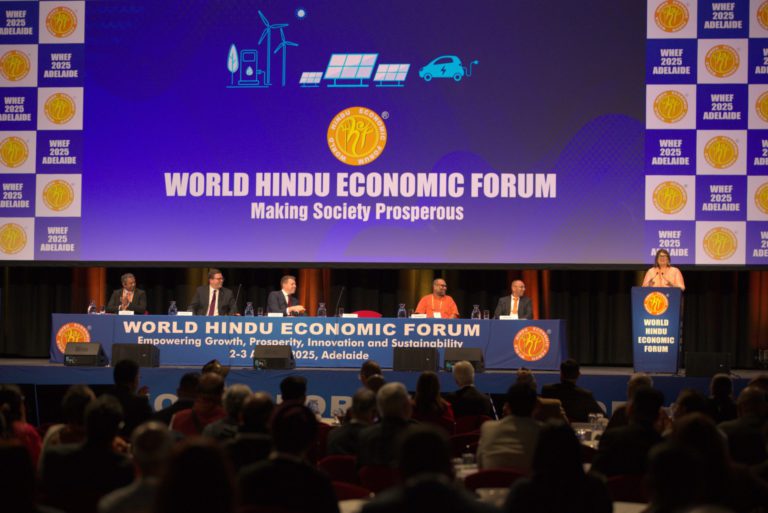
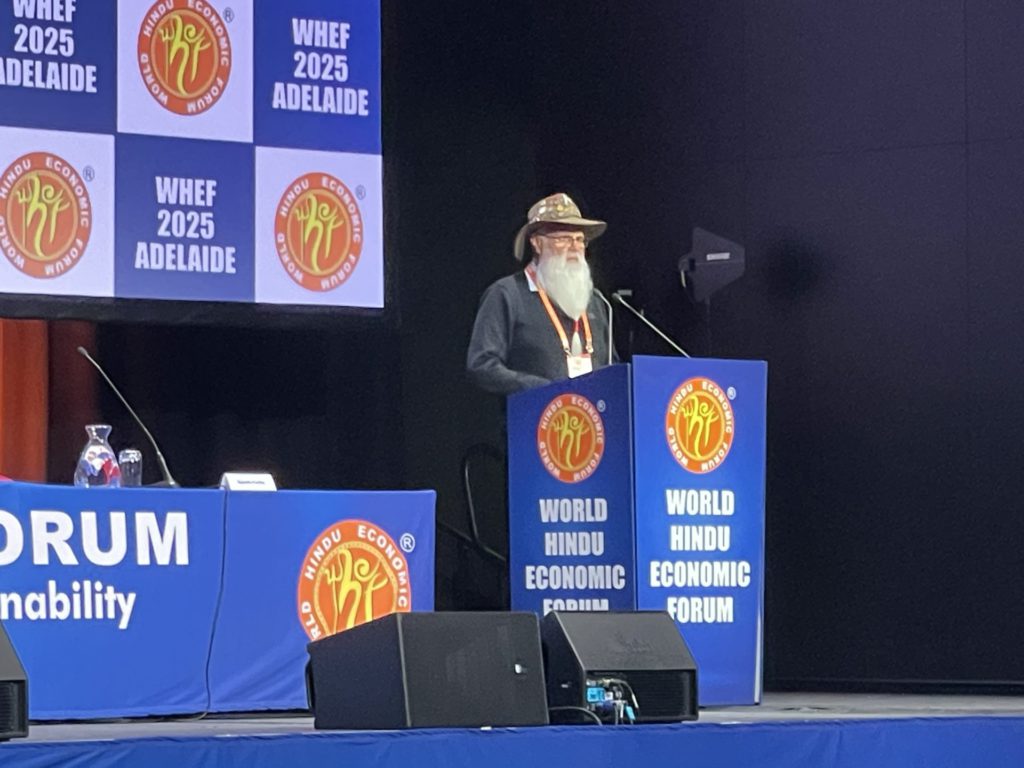
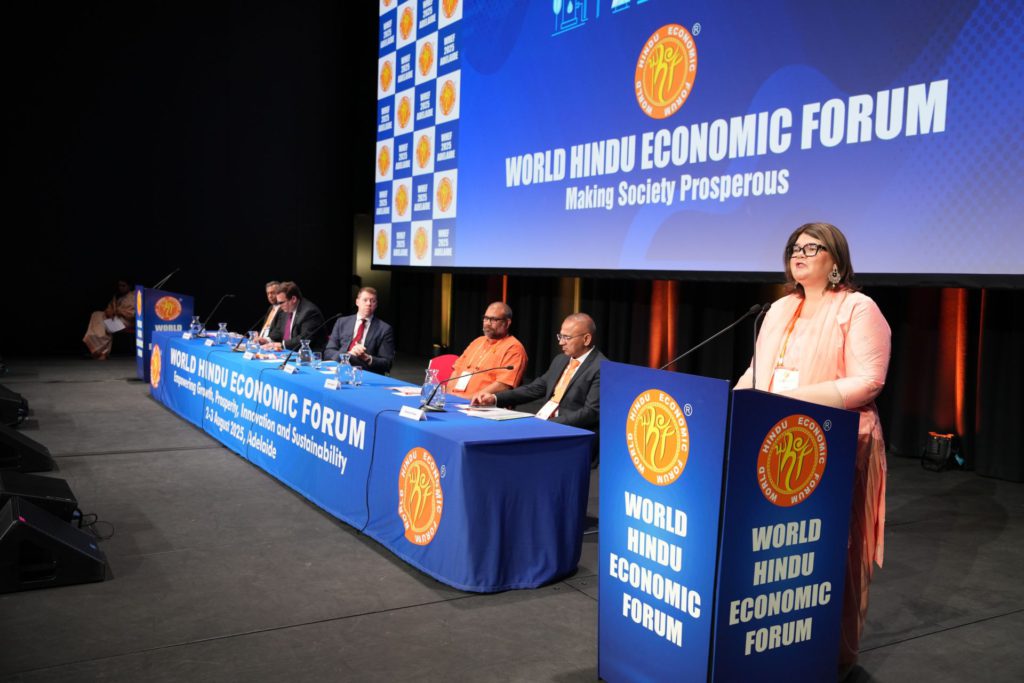
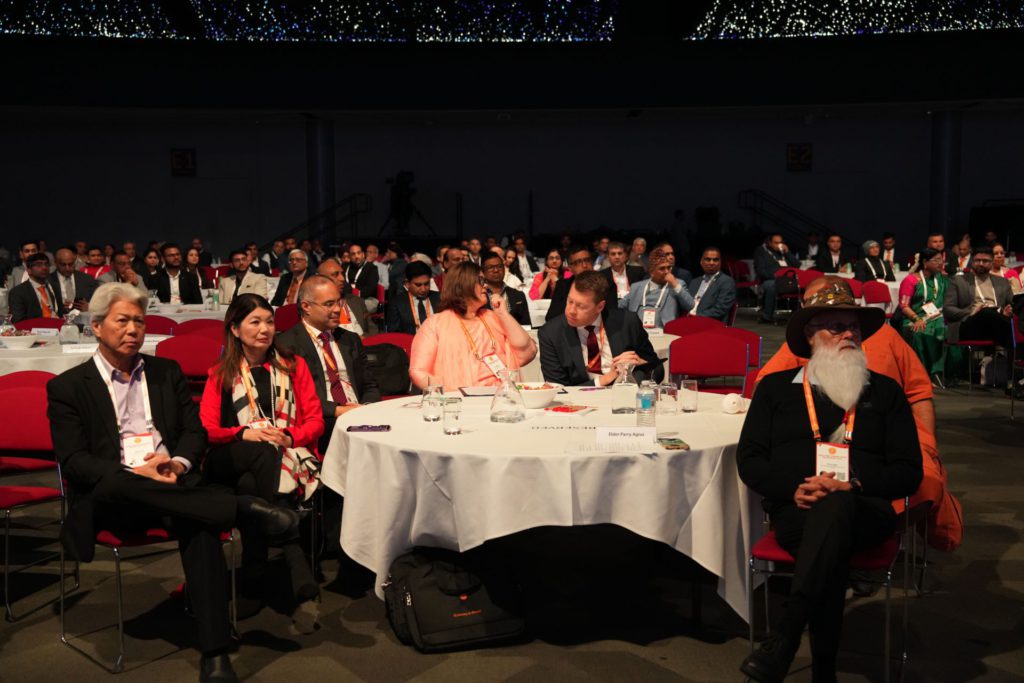
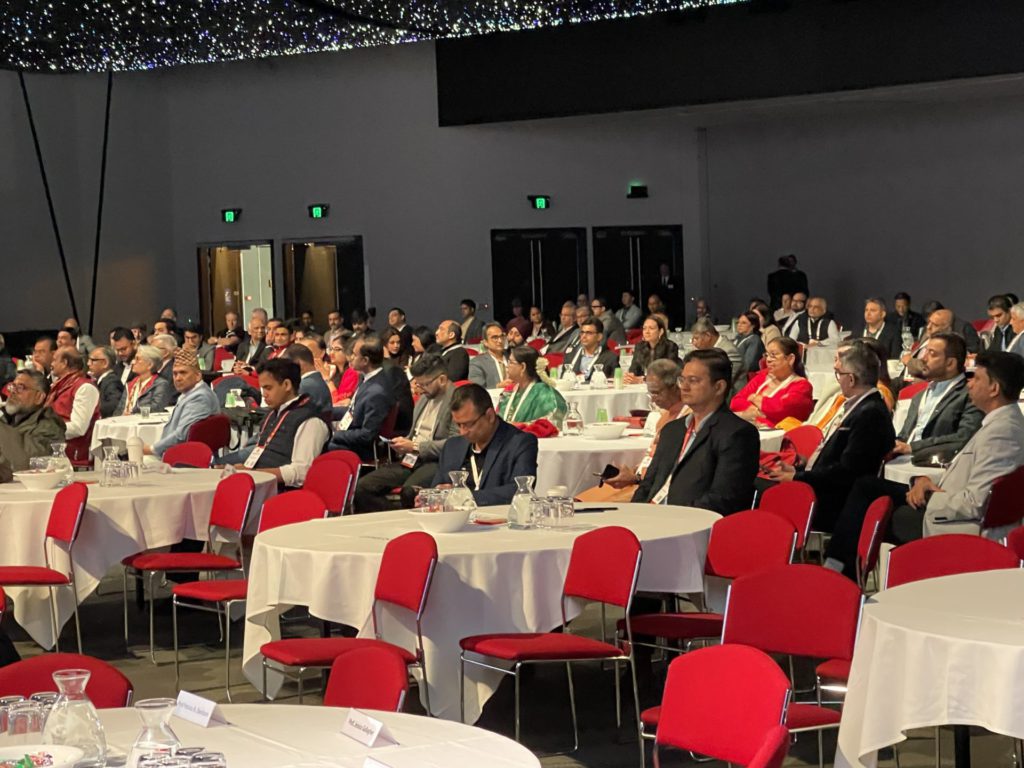
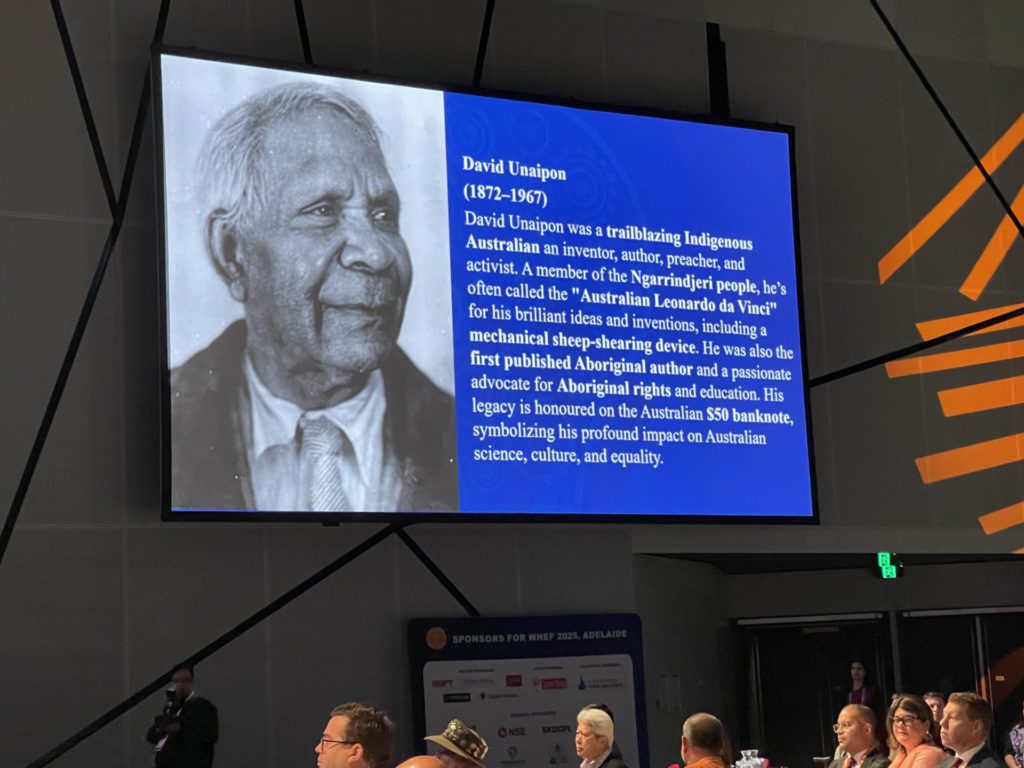
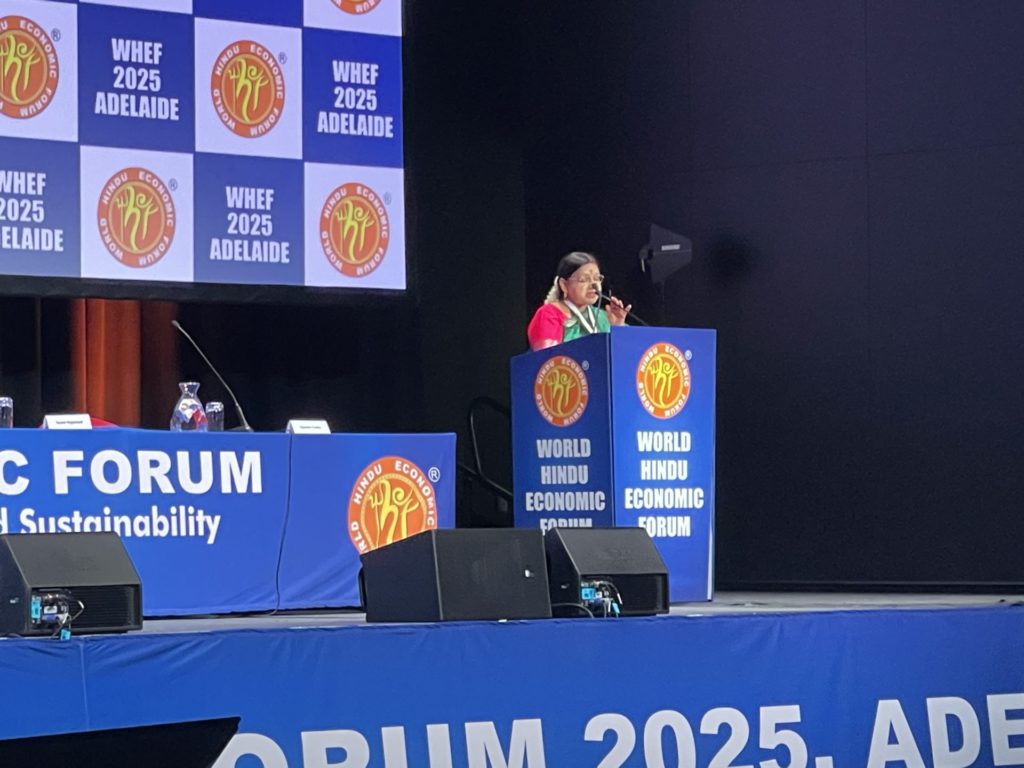
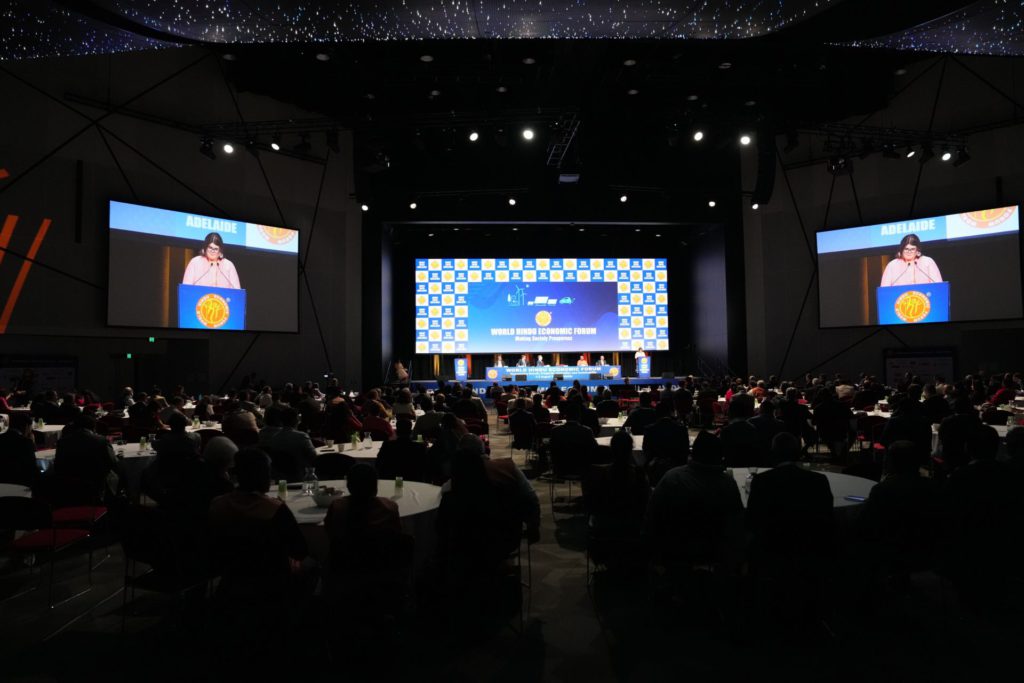
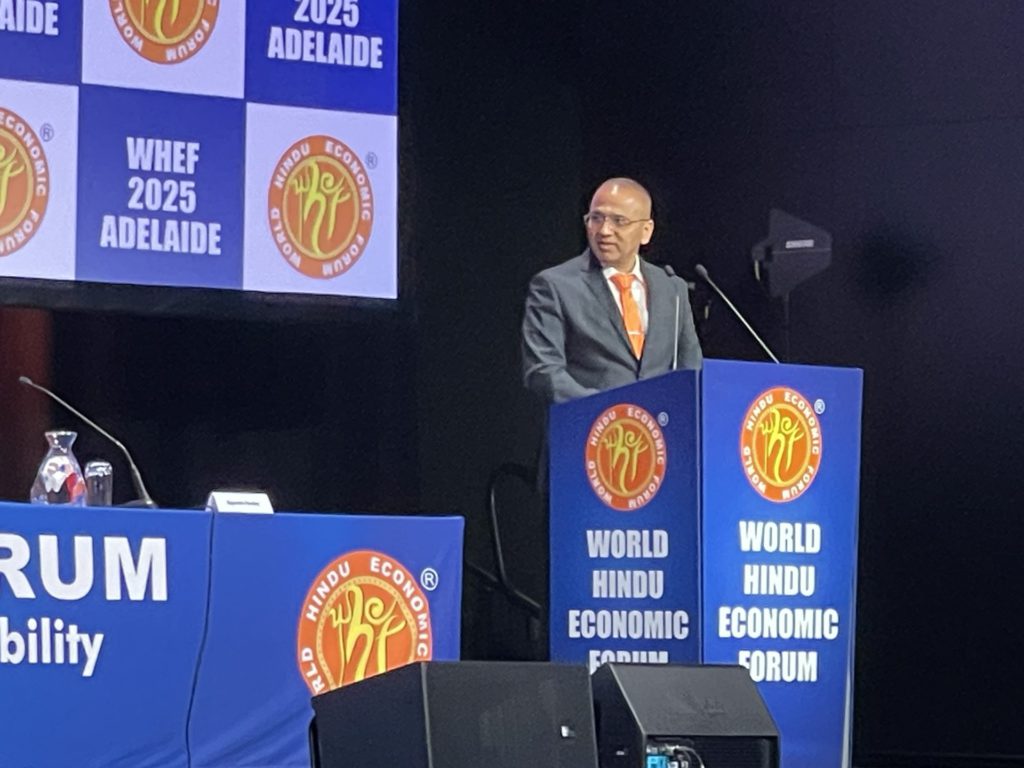
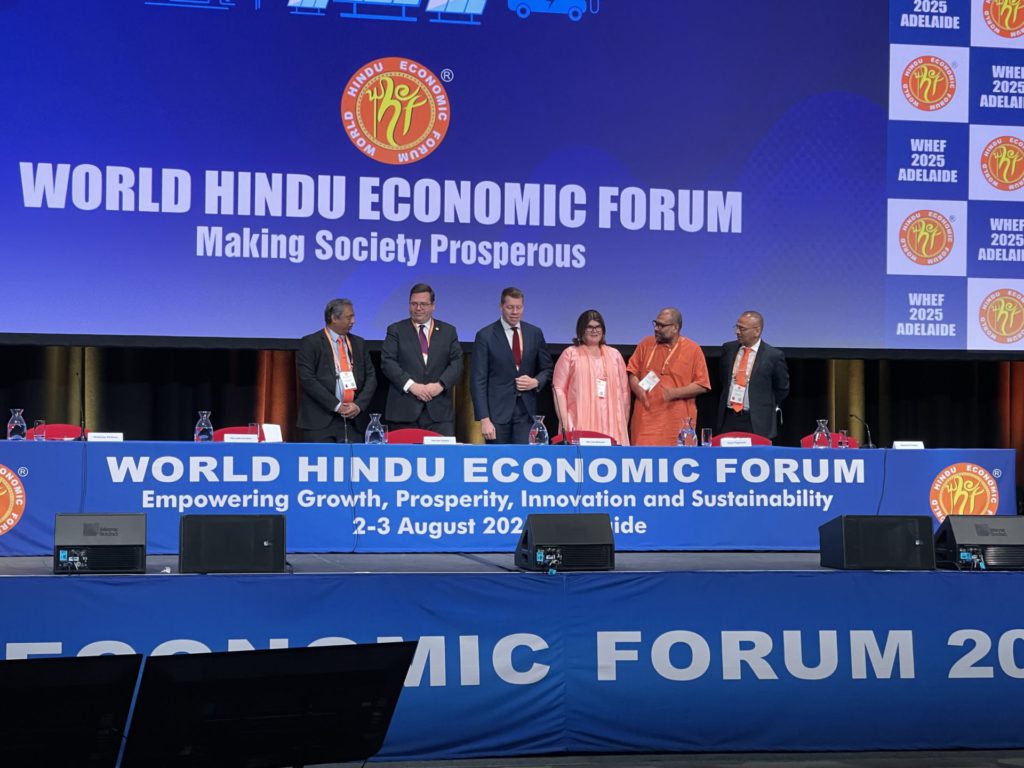
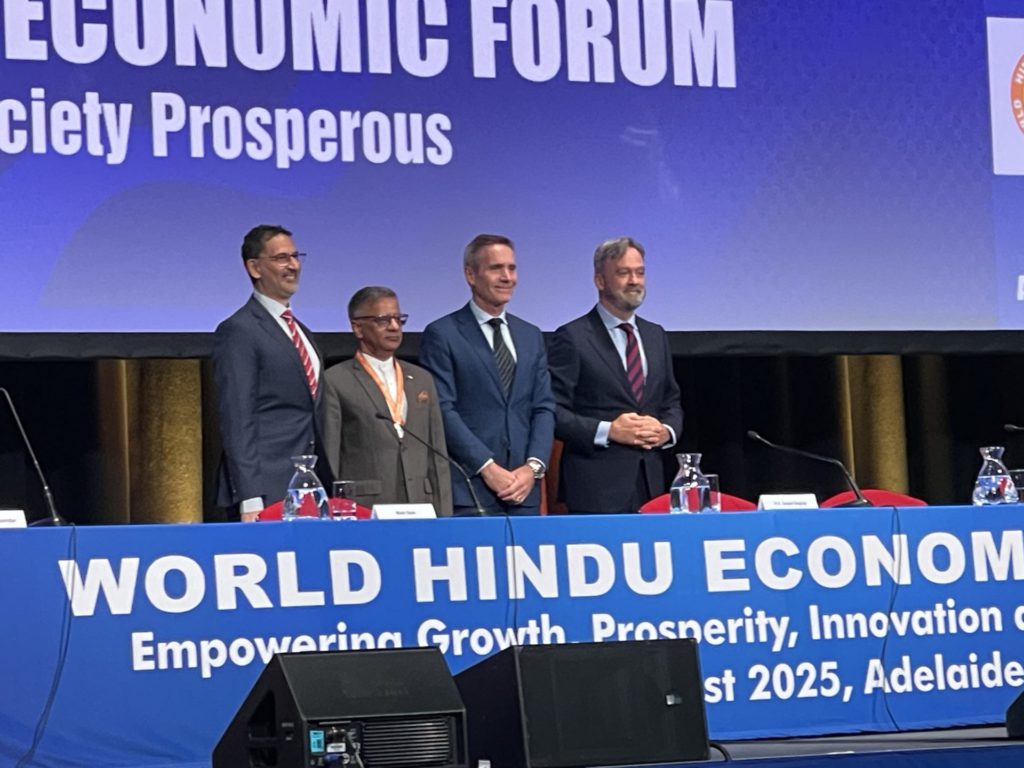
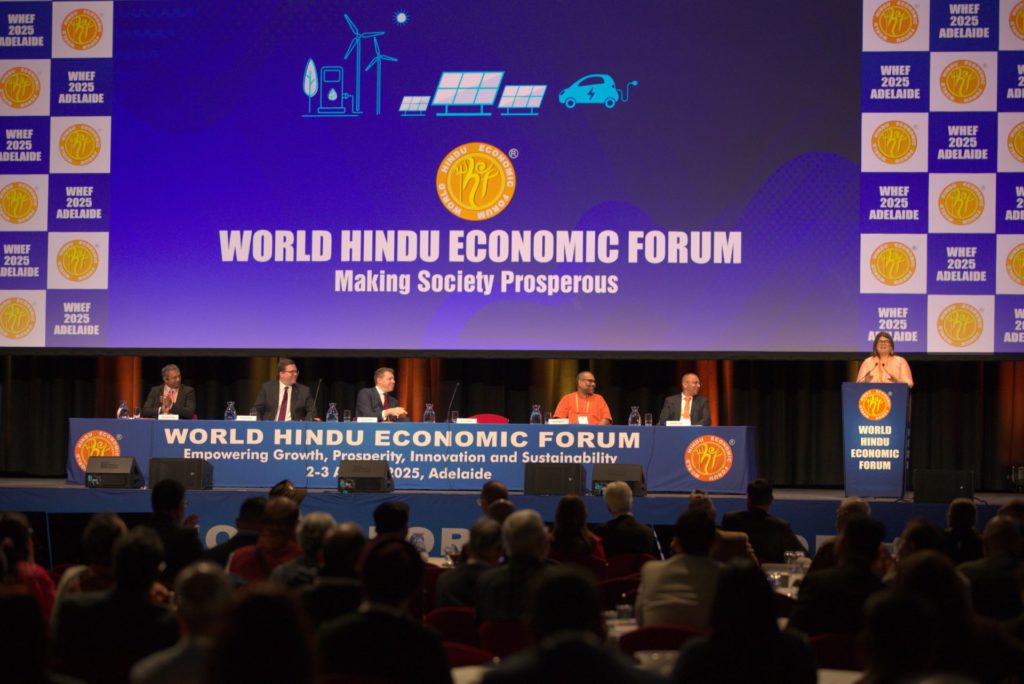
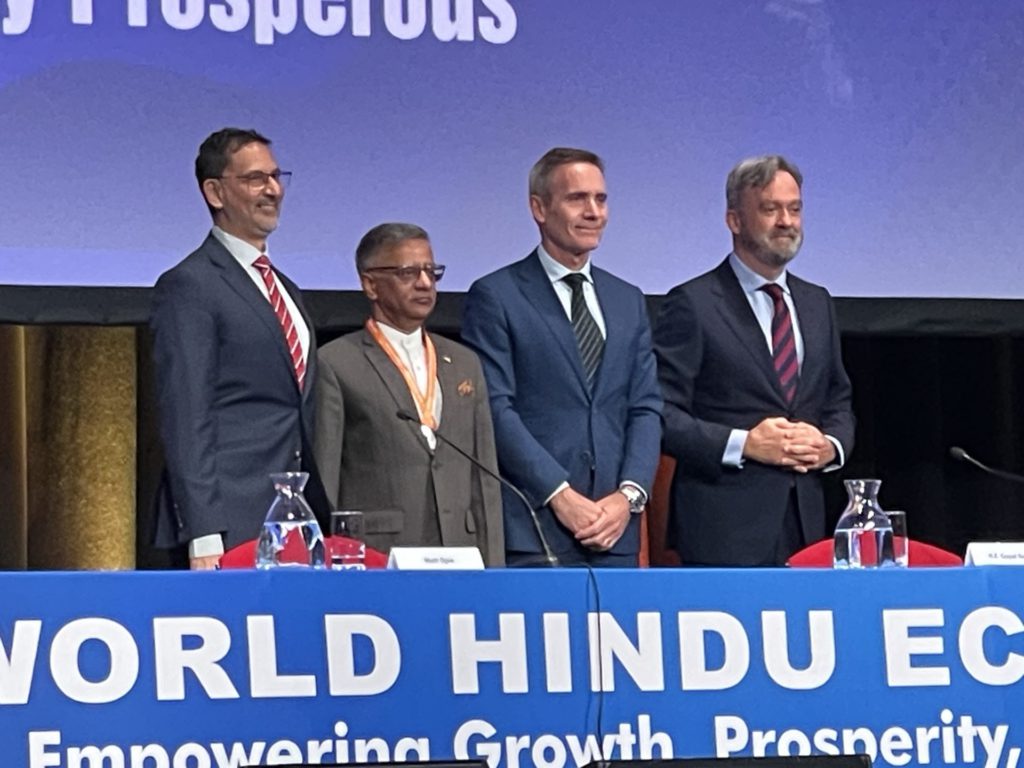
Business leaders, policymakers and innovators from more than 30 countries converged on Adelaide’s Convention Centre yesterday for the inaugural day of the World Hindu Economic Forum (WHEF) 2025, where a landmark agreement with Aboriginal entrepreneurs and a packed agenda of sector-wide panels set the tone for inclusive growth under the banner “Empowering growth: prosperity, innovation & sustainability.”
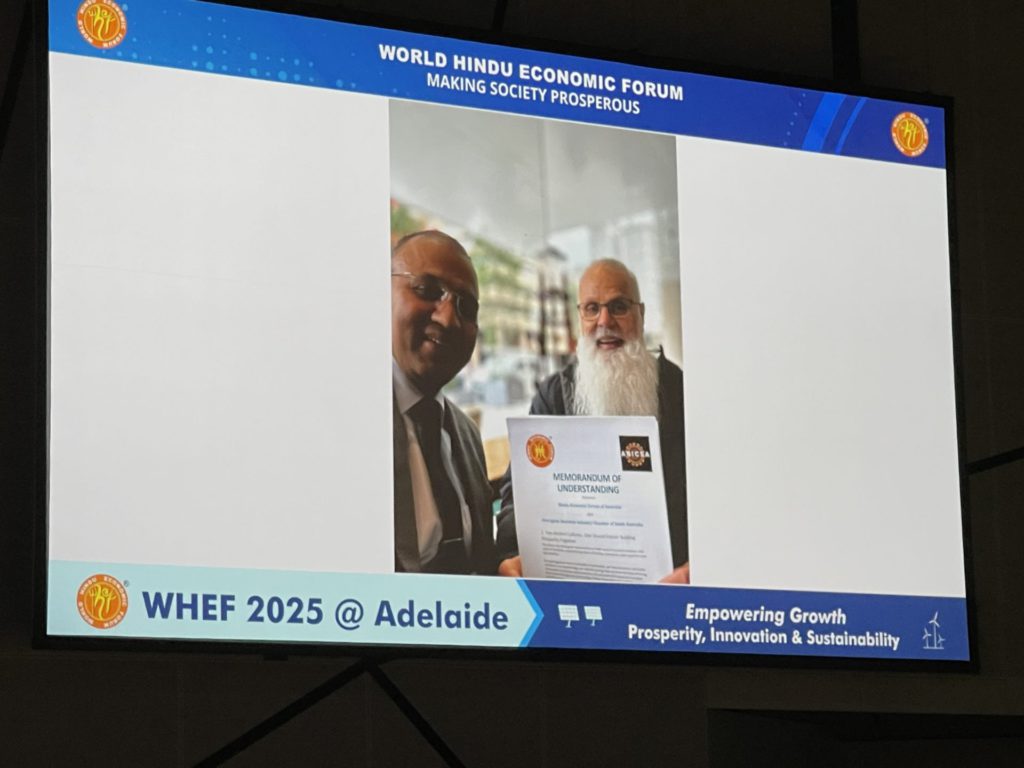
In his opening remarks, WHEF 2025 organising committee chair Rajendra Pandey announced a memorandum of understanding between WHEF and the Aboriginal Business Council.
“Under this agreement, we will collaborate on mentorship programmes, joint workshops and investment initiatives to uplift communities and entrepreneurs across South Australia,” he said, thanking Multicultural Affairs Minister Zoe Bettison and Trade Minister Joe Szakacs for their support in making the partnership a reality.
Pandey noted that Hindu Australians are “leading enterprises in finance, technology and agriculture, driving key projects in education, healthcare and the creative industries” and added that through volunteerism and philanthropy they are “reinforcing the multicultural fabric that underpins our nation.”
Keynote speaker Swami Vigyananand, founder and chairman of WHEF and Joint General Secretary of the Vishva Hindu Parishad, urged delegates to view entrepreneurship as a moral imperative.
“Entrepreneurship lies at the heart of Hindu philosophy, driving inclusive growth through local, national and global market access,” he said, invoking his recent book The Hindu Manifesto to illustrate how business can serve society’s most disadvantaged.
He described WHEF as “a collaborative platform that develops human resources, applies shared knowledge to solve global challenges and creates lasting value,” and called on the community to “accelerate the adoption and integration of technology for a competitive edge.”
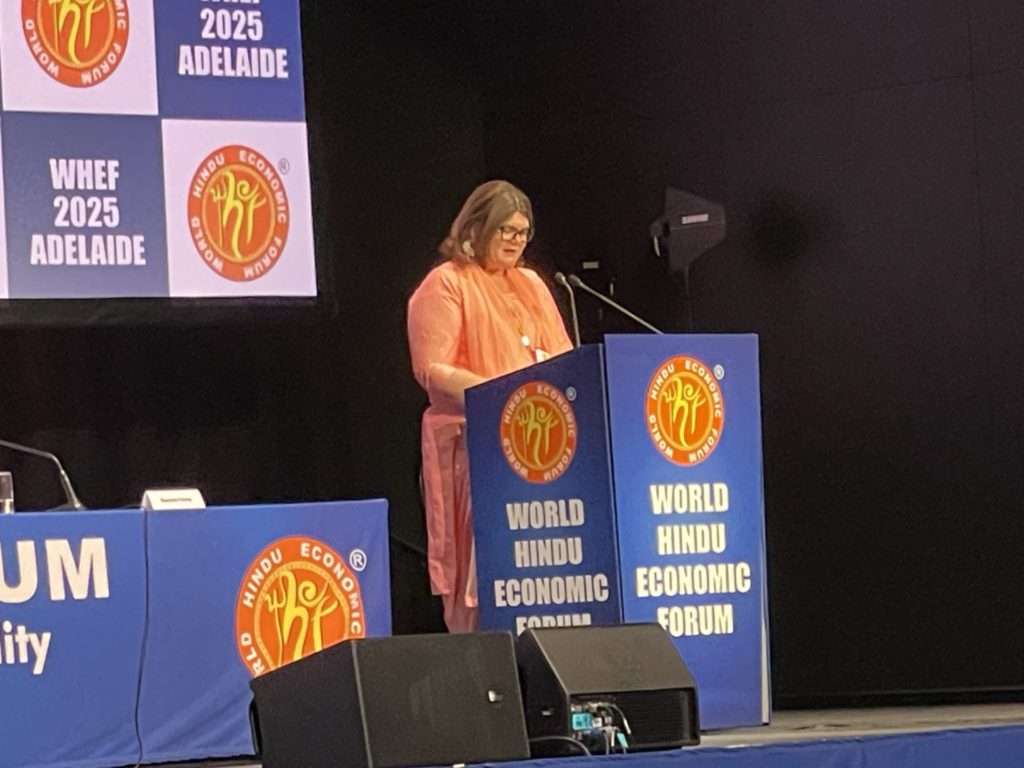
Minister Bettison used her address to highlight South Australia’s booming visitor economy, which she said has reached a record A$10 billion, thanks in part to cultural exchange.
“I’m delighted to see such a thriving Hindu community choosing South Australia as their business home,” she said, inviting investors to bring expertise in pharmaceuticals, space science, wine production and tourism to Adelaide.
“This really is the place to be,” she added, praising the local Hindu community for “opening their hearts and sharing their culture.”
She closed by celebrating India’s rising economic power:
“We can all look forward to India becoming the world’s third-largest economy very soon.”
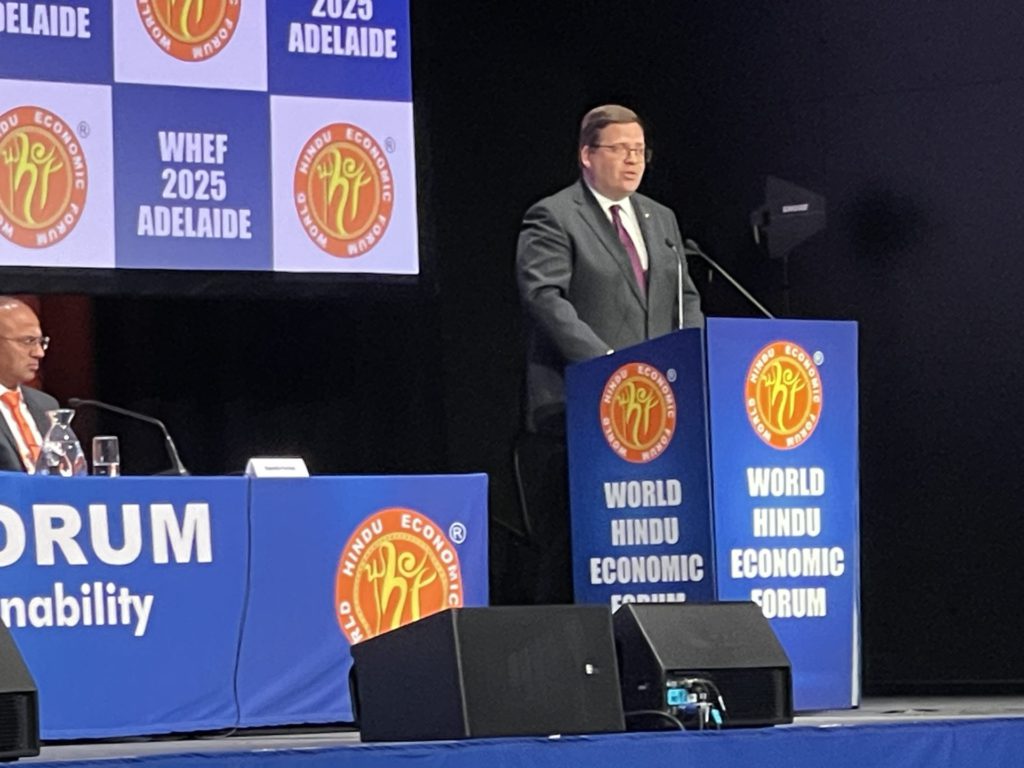
Minister Szakacs followed with a focus on defence, renewable energy and critical minerals, declaring that “our collaboration is vital to delivering clean-power solutions and building skills that meet tomorrow’s challenges.”
He reiterated the state government’s commitment to backing India as it “diversifies its supply chains and advances its defence capabilities,” and applauded companies such as HCL for “creating thousands of jobs here – they are now among our largest employers.”
He drew warm applause when he connected the forum’s spirit to cricket, saying:
“From Sachin Tendulkar’s greatest innings to the electric atmosphere at the Adelaide Oval, our shared passion for the game reminds us of the bonds that unite us.”
Shadow Education Minister John Gardner emphasised the contributions of Hindu Australians in academia. “Hindu Australians have enriched our schools and universities as both educators and learners, bringing fresh perspectives and a spirit of innovation,” he said.
He welcomed new bipartisan support for a direct Adelaide–India flight, predicting it will “open up tourism and strengthen business ties,” and highlighted the diaspora’s potential to help establish “world-class AI and cyber centres right here in Adelaide.”
The conference’s first panel, moderated by Senator Andrew McLachlan, examined the Australia–India Comprehensive Economic Cooperation Agreement as a vehicle for defence and strategic cooperation.
Defence SA CEO Matt Opie noted “there’s a boom in the defence industry sector” and urged joint ventures.
India’s High Commissioner Gopal Baglay encouraged Australian investment in India’s renewable-energy expansion and critical-minerals value chains, describing the bilateral relationship as “magic” built on “shared economic objectives and convergence.”
Dr Sanjay Mazumdar of Defence Trailblazer outlined a A$240 million South Australian fund to train an AI and cyber-security workforce, saying “we’re creating the next-generation talent to give our forces their competitive edge.”
In the health session, chaired by Vyantra CEO Saurabh Mishra, Care 24-7 founder Dr Sharad Pandit described a telehealth and mobile-physician model that “has cut hospital transfers by 30 per cent and brings emergency care to the doorstep.”
Jiva Ayurveda CEO Madhusudan Chauhan argued that “affordable, preventive care begins with time-tested therapies,” while Skanray Technologies founder Vishwaprasad Alva asked rhetorically, “Why should an ultrasound cost A$500 000 when we can build one for under A$50 000?”
The panel agreed that scaling affordable services requires regulatory harmonisation, local manufacturing and blended public-private financing.
The third session, chaired by former University of Wollongong vice-chancellor Patricia Davidson, focused on international education. University of Adelaide deputy vice-chancellor Jessica Gallagher unveiled the new Adelaide University—“opening January 2026 with 180 years of experience, A$2 billion in revenue, 5,000 researchers and 7,000 industry partners”—as “an engine room for Indo-Pacific growth.”
Delhi University’s Prof Balaram Puri warned that “overlapping regulations in Australia and India act as a brake on swift decision-making” and urged joint committees to streamline visas and credit transfers.
Closing the day, a panel on resilient business leadership, moderated by Sunway University vice-chancellor Mahendhiran Sanggaran, championed a nature-centric “8R” approach to industry: respect, rethink, reduce, reuse, recycle, restore, repurpose and revitalise.
Nepal’s Pradeep Man Vaidya described Nepal as “the cradle of Hindu philosophy,” arguing that “integrating social harmony and environmental stewardship unlocks sustainable growth.”
WHEF 2027 organiser Kush Kumar Joshi previewed Kathmandu’s upgrades for the next forum, while Mumbai host Swadesh Khetawat outlined plans for WHEF 2026 to showcase urban sustainability projects and green-hydrogen innovation.
On behalf of WHEF Australia, managing director Sivakumar Krishnan offered a vote of thanks: “To our speakers, partners, sponsors and volunteers—your insights and support have been invaluable. And to our delegates, your energy and ideas have truly embodied ‘empowering growth.’”
Day 2 will feature interactive workshops on financial technology, agritech, women’s entrepreneurship and public-private financing, along with site visits to Adelaide’s leading innovation precincts.
Support our Journalism
No-nonsense journalism. No paywalls. Whether you’re in Australia, the UK, Canada, the USA, or India, you can support The Australia Today by taking a paid subscription via Patreon or donating via PayPal — and help keep honest, fearless journalism alive.
The University of the South Pacific (USP) has confirmed that its Vice-Chancellor and President, Prof. Pal Ahluwalia, will conclude his tenure on 1 September 2025.
Appointed in 2018 and formally beginning his term in 2019, Prof. Ahluwalia brought with him decades of international academic leadership. Of Indian origin, he was born in Nairobi, Kenya, and educated at the University of Saskatchewan in Canada and Flinders University in Australia. He previously served as Professor of Politics at the University of Adelaide, and later held senior roles including Pro Vice-Chancellor and Acting Deputy Vice-Chancellor at the University of South Australia. In 2014, he was appointed Pro Vice-Chancellor at the University of Portsmouth in the United Kingdom.
Image: The University of the South Pacific Vice-Chancellor Professor Pal Ahluwalia (Source: USP)
Prof. Ahluwalia’s leadership at USP coincided with one of the most turbulent periods in the university’s history, particularly marked by the COVID-19 pandemic and financial strain.
In a statement, USP acknowledged his “significant contributions” during this time, particularly in maintaining teaching and research operations despite severe fiscal and operational pressures.
USP Pro-Chancellor and Chair of Council, Siosiua ‘Utoikamanu, thanked Prof. Ahluwalia for his service, saying he “led USP through a period of significant challenges” with the support of the university’s staff, students, and management team.
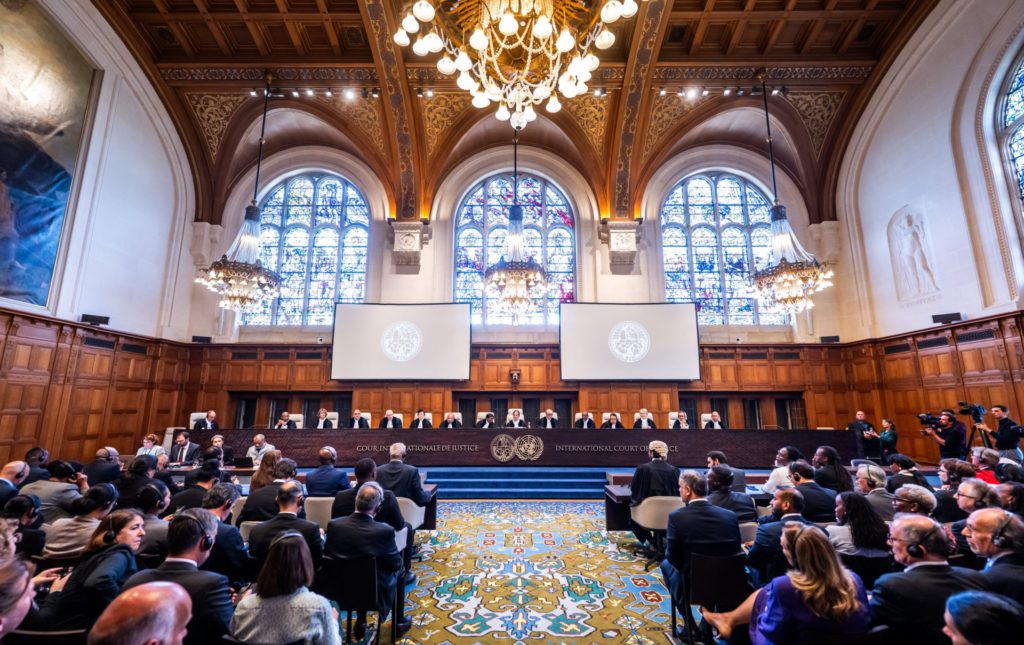
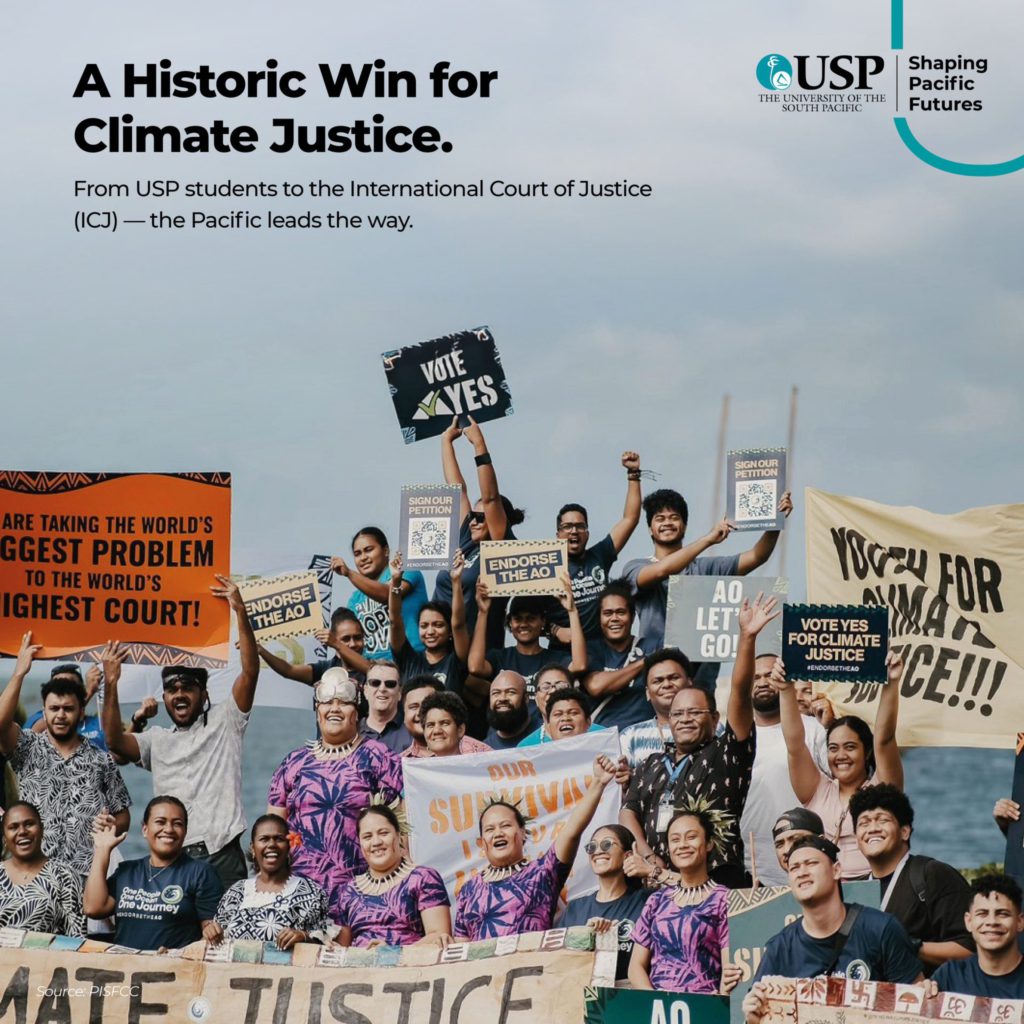
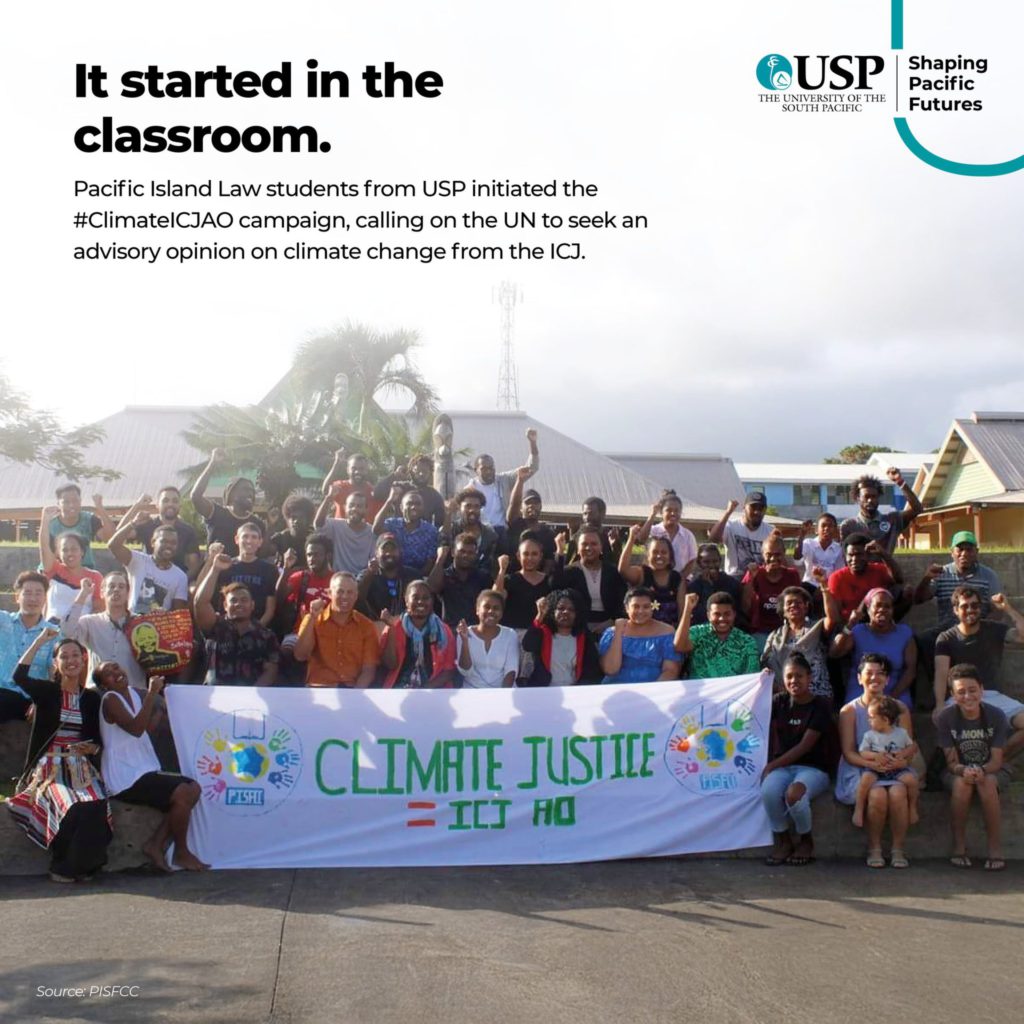
Proud to see our USP students and the Pacific leading the way in this historic step for climate justice.
— Professor Pal Ahluwalia, USP VC (@pal_vcp) July 24, 2025
Key milestones under Prof. Ahluwalia’s tenure include the reaffirmation of accreditation by the WASC Senior College and University Commission (WSCUC), validating the global recognition of USP’s academic programmes.
As you go forth, remember the power of your education lies not only in the knowledge you've gained but also in the wisdom you’ve cultivated. This wisdom will guide you as you navigate the complexities of a 🌎 that is often unpredictable and ever-changing.#Congratulations 🎓 pic.twitter.com/KPJDb4gTCR
— Professor Pal Ahluwalia, USP VC (@pal_vcp) May 30, 2025
Most notably under his expert guidance, USP also entered major international rankings — including Times Higher Education and WURI — for the first time. He championed the creation of the Centre for Sustainable Futures, a hub for advancing sustainability and resilience across the Pacific.
Prof. Ahluwalia’s tenure also attracted international attention in 2021 when he was deported from Fiji by the Bainimarama government.
Labelled a “prohibited immigrant,” Prof. Ahluwalia and his partner Sandra Price were forcibly removed from their Suva home and placed on a flight to Brisbane. He described the ordeal as traumatic, claiming Fijian officials threatened to break down his door and manhandled him during detention.
The deportation sparked condemnation from regional leaders, human rights groups, staff, and students. A joint statement from USP staff associations called the move a “Gestapo tactic,” while then–Opposition Leader Prof. Biman Prasad described it as “a cowardly and thuggish act.”
Indeed very concerning @CainTess. The deportation of USP VC @pal_vcp by Fijian government was also an attack on academic freedom and rule of law. Is the disease catching up elsewhere in the Pacific! https://t.co/pPbp3Ck5Fh
— Professor Biman Prasad DPM, Fiji (@bimanprasad) August 11, 2022
Despite being exiled from Fiji, Prof. Ahluwalia continued to serve as Vice-Chancellor from Nauru — a bold move that cemented his standing among many in the university community.
Prof. Ahluwalia remained a popular figure at USP’s Suva campus, widely respected for his commitment to institutional reform, academic integrity, and regional collaboration.
File image: Prof. Ahluwalia addressing staff anbd students at USP’s Laucala Campus (Source: Association of the University of the South Pacific Staff)
The USP Council has announced it will begin the process of appointing a new Vice-Chancellor and President. Interim management arrangements will be put in place to ensure a smooth transition.
Support our Journalism
No-nonsense journalism. No paywalls. Whether you’re in Australia, the UK, Canada, the USA, or India, you can support The Australia Today by taking a paid subscription via Patreon or donating via PayPal — and help keep honest, fearless journalism alive.
In a landmark shift set to redefine the post-pandemic workplace, Premier Jacinta Allan has unveiled plans to enshrine the right to work from home in Victorian law — making it the first state in Australia to do so.
BREAKING: We're protecting your right to work from home at least two days a week – by making it law.
Speaking at Labor’s state conference on Saturday, Allan announced that the legislation will give employees in both the public and private sectors the legal right to work from home at least two days a week, provided their job can be “reasonably” done remotely.
“Work from home has changed millions of lives,” the Premier said.
“While not everyone can work from home, everyone can still benefit. Work from home works for families and it’s good for the economy.”
If you can do your job from home, we'll make it your right – because we're on your side. pic.twitter.com/CQOc9CeRXB
Although industrial relations are a federal matter, Allan said the state government would task the Department of Premier and Cabinet with leading consultations and drafting the legislation. The review will consider how the law would apply across industries and business sizes, as well as how remote work eligibility is defined.
The announcement has triggered early political friction. While the Victorian Opposition signalled conditional support, warning it would scrutinise the legislation closely, earlier comments from Coalition figures suggest a more hardline approach to public sector office mandates.
Labor's priorities at its conference this weekend are the same as they are in Parliament and in Government – more tax, more regulation, and more intrusion into your life.
Labor will not be talking about ways to keep our children and communities safe, bring cost of living down or…
“We support measures that help Victorians enjoy a better work-life balance and will review any legislation closely to ensure it supports flexibility, productivity and personal choice.”
Shadow Treasurer James Newbury told the Herald Sun in February that public servants should be required to return to the office — a position that mirrors the federal Coalition’s failed attempt to curb work-from-home rights during the last election campaign, a move that contributed to voter backlash.
The proposed laws — expected to be drafted and introduced ahead of the November 2026 state election — aim to protect work-life balance, reduce commuting costs, ease congestion, and increase workforce participation, particularly for women, carers, and people with disabilities.
If passed, Victoria’s legislation would be the first of its kind in the country and could set a precedent for other states as debates about flexible work and productivity continue to reshape Australia’s employment landscape.
Support our Journalism
No-nonsense journalism. No paywalls. Whether you’re in Australia, the UK, Canada, the USA, or India, you can support The Australia Today by taking a paid subscription via Patreon or donating via PayPal — and help keep honest, fearless journalism alive.
As global momentum builds for the recognition of Palestinian statehood, Prime Minister Anthony Albanese has signalled Australia will not be rushed into making a formal declaration — not even ahead of the upcoming United Nations General Assembly in September.
In a revealing interview with ABC’s 7.30 host Sarah Ferguson, the Prime Minister made clear that while his government supports a two-state solution, recognition of Palestine will be driven by outcomes, not deadlines. “We won’t be driven by a time frame,” Albanese said.
“What we’ll be driven by is when the recognition of Palestine can make a contribution to the creation of two states that is very much our focus.”
This statement aligns with the Albanese government’s cautious diplomacy in the Middle East, as Australia seeks to balance its long-standing support for Israel with growing concern over the humanitarian situation in Gaza.
While the United Kingdom under Prime Minister Keir Starmer and Canada under Mark Carney have announced conditional pathways to Palestinian recognition, Australia has stopped short of such a commitment. Albanese insisted any recognition must be meaningful and contribute to lasting peace. “It’s a statement you can only make once,” he explained.
“once you make that declaration, you lose your capacity to negotiate and to influence outcomes to some extent.”
Ferguson pressed the Prime Minister repeatedly on what specific changes were required for Australia to join the likes of France, Canada and the UK in taking a firmer stance.
Albanese cited recent developments — notably the Palestinian Authority’s 10 June statement recognising Israel, pledging democratic elections within a year of statehood, and explicitly excluding Hamas from governance — as important steps forward.
Unlike Canada, whose recognition is conditional on those same stipulations being met, Albanese made clear that Australia is not yet ready to set recognition in motion, even on those terms.
Throughout the interview, the Prime Minister reinforced the notion that Palestinian self-determination must be paired with guaranteed security for Israel. “You can’t advance the cause of Palestinian self-determination without also advancing the need for Israel to have security,” he said, pointing to the need for a demilitarised Gaza and West Bank and regional recognition of Israel’s right to exist.
He also welcomed the role of Arab nations in recent diplomatic efforts, following a conference in New York, and stressed the importance of the United States in shaping a broader regional peace plan. “Clearly the United States has a role to play here,” he noted.
“We’ll make our own decisions.”
The interview also touched on the worsening humanitarian situation in Gaza, with Ferguson asking whether the Israeli government’s actions, particularly the restriction of aid, amounted to using starvation as a weapon of war.
Albanese reiterated that while Israel has the right to defend itself, “how it defends itself matters”:
“Australians want to see is two things they want to see, the killing stop, whether it be Israelis or Palestinians who are innocent losing their lives.”
He also revealed that Australia remains prepared to offer more humanitarian assistance to Gaza, stressing that current methods, such as airdrops, are insufficient, and that full access must be opened for aid delivery.
As the UN Assembly approaches, Australia remains on the sidelines of the growing list of countries committing to recognise Palestine. Yet, Albanese’s position is clear: when and if Australia recognises a Palestinian state, it will be on its own terms and only if it truly advances the cause of peace.
“We’ll make a decision at an appropriate time if we believe that making that decision advances the objective, which is the creation of a two state solution.”
Support our Journalism
No-nonsense journalism. No paywalls. Whether you’re in Australia, the UK, Canada, the USA, or India, you can support The Australia Today by taking a paid subscription via Patreon or donating via PayPal — and help keep honest, fearless journalism alive.
The Australian Museum has revealed the 59 finalists shortlisted for the prestigious 2025 Australian Museum Eureka Prizes, the nation’s leading science awards celebrating excellence in research, innovation, leadership, science engagement, and school science.
Entries from across Australia are competing in four main categories: Research and Innovation, Leadership, Science Engagement, and School Science. The awards recognise outstanding Australian achievements in scientific discovery, invention, communication, and practical solutions to global challenges.
Image: Dr Kamal Kant Gupta is 2025 Australian Museum Eureka Prizes finalist (Source:Instagram)
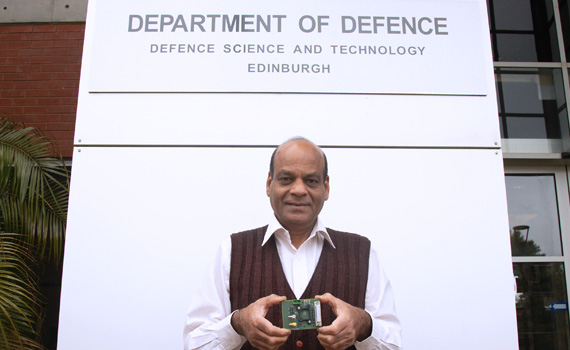
Among the finalists for the Department of Defence Eureka Prize for Outstanding Science in Safeguarding Australia are Defence Scientist Adjunct Dr Kamal Kant Gupta (Department of Defence) and Dr Jafar Shojaii (Macquarie University), alongside collaborators from the University of Melbourne and Swinburne University of Technology.
They have developed interference-resistant integrated circuit designs to protect Defence, satellite, and civilian electronic systems from electromagnetic and particle radiation, which pose risks in space and high-interference environments.
In the Australian Museum Eureka Prize for Science Journalism, the 14-part social media series Hysteria is a finalist. Created by Maddie Massy, Margie Bryant, Tejas Bhat, and Henry Zwartz, the series highlights the healthcare barriers women face in a system historically designed by and for men. The episodes feature insights from experts, politicians, and affected women, aiming to raise awareness and foster change.
Image: Prof. Bianca Brijnath is 2025 Australian Museum Eureka Prizes finalist (Source:Eureka Prizes)
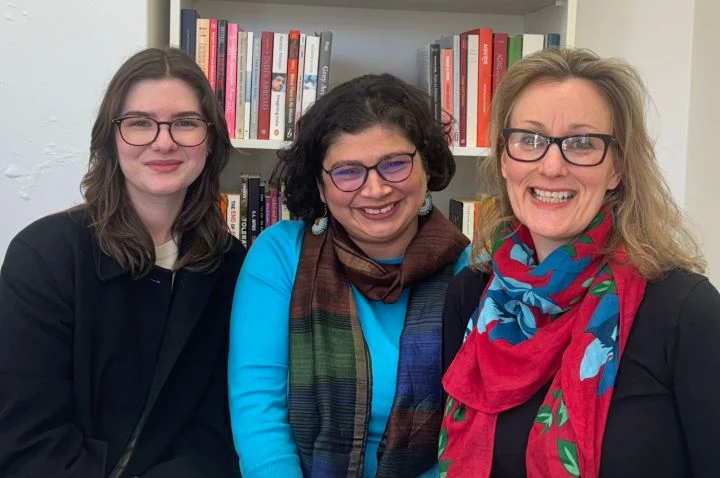
The UNSW Eureka Prize for Societal Impact of Science finalists include the MINDSET team, led by Prof. Bianca Brijnath, Assoc. Prof. Jo Antoniades, and Research Assistant Nyssa Clarke from the School of Humanities and Social Sciences.
MINDSET co-designed and trialled online training for interpreters to improve dementia assessments for non-English speakers, with 865 interpreters nationwide completing the program. Now incorporated into Australia’s National Dementia Plan, MINDSET is also being implemented in seven European countries.
Image: Prof. Bianca Brijnath, Assoc. Prof. Jo Antoniades, and Research Assistant Nyssa Clarke from the School of Humanities and Social Sciences (Source: Latrobe University)
Prof. Brijnath explained that the training covered dementia’s effects on cognition and language, assessment tools, and interpreting strategies specific to cognitive evaluations. “To date, around 14 per cent of Australia’s active interpreter workforce has completed the MINDSET training, which has had a significant impact on timely dementia diagnosis in culturally diverse communities,” she said.
In the School Science category, Penrith Selective High School’s Dev P., Angadjot Singh, and Zarif W. earned a Highly Commended nod for their investigation Flame Tests: Electrons Moving Above and Below.
The 2025 Eureka Prizes finalists highlight Australia’s cutting-edge scientific talent and their vital contributions to society. The winners of the nation’s most prestigious science awards will be announced on Wednesday, 3 September, at a ceremony at Sydney Town Hall.
Support our Journalism
No-nonsense journalism. No paywalls. Whether you’re in Australia, the UK, Canada, the USA, or India, you can support The Australia Today by taking a paid subscription via Patreon or donating via PayPal — and help keep honest, fearless journalism alive.
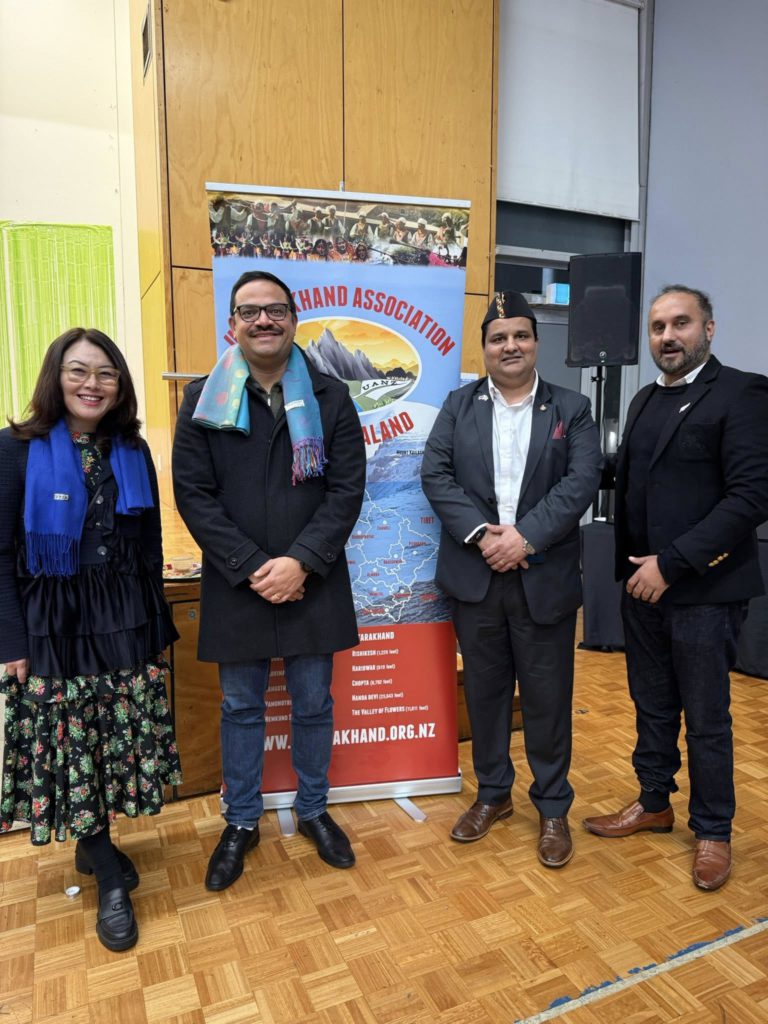
More than 250 people gathered in Auckland’s New Lynn on 19 July to celebrate the annual Harela festival, hosted by the Uttarakhand Association of New Zealand.
Harela — which means “Day of Green” — is a vibrant celebration of nature, prosperity and renewal, deeply rooted in the culture and spirituality of Uttarakhand, a northern Indian state nestled in the Himalayas and often referred to as Dev Bhoomi or “Land of the Gods”.
Image: Harela festival hosted by the Uttarakhand Association of New Zealand (Source: Facebook – Ash Parmar)
Chetan Joshi, president of the association and a key figure behind its founding over a decade ago, said Harela was more than a harvest festival. “It is a celebration of renewal, prosperity and harmony with nature,” Joshi told RNZ.
“In Uttarakhand, it marks the onset of the monsoon, the sowing season and a spiritual reminder that our lives are deeply connected to the cycles of the Earth.”
He said the occasion, traditionally celebrated by planting saplings, blessing children for a prosperous future, and praying for environmental balance, has been embraced in New Zealand as a way to honour heritage while promoting sustainability and community unity.
“This festival helps keep the flame of rich Uttarakhandi traditions alive while also embracing the diversity and inclusivity that Aotearoa represents,” he added.
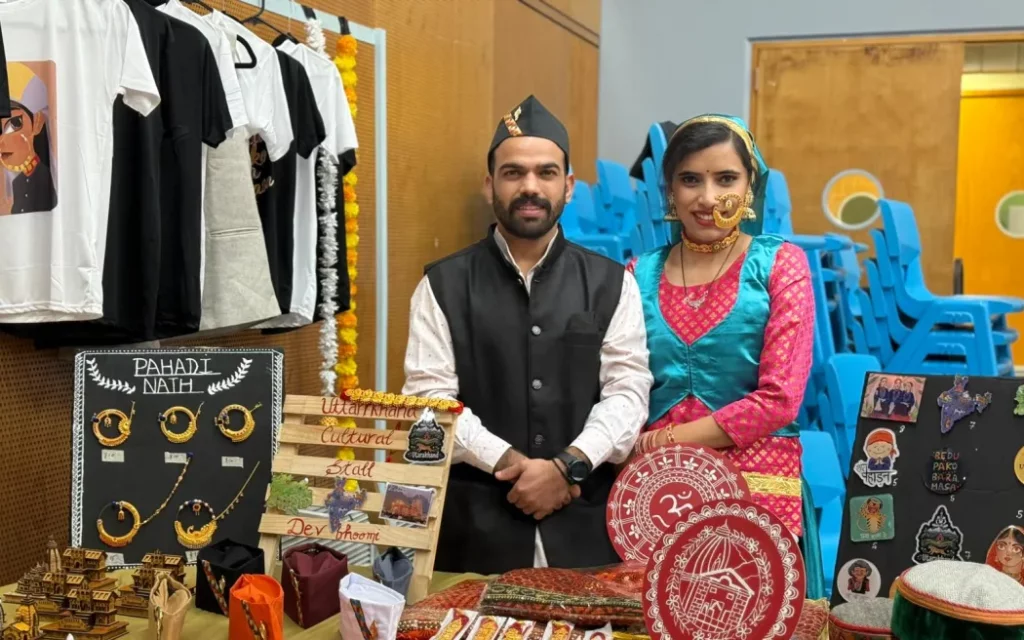
Image: A couple dressed in traditional Uttarakhand attire attend the Herala festival in Auckland (Source: Uttarakhand Association of New Zealand)
In India, Harela has both religious and agrarian connotations. Families often set up clay idols of Hindu god Shiva and goddess Parvati to mark their divine union and pray for a good harvest and environmental harmony.
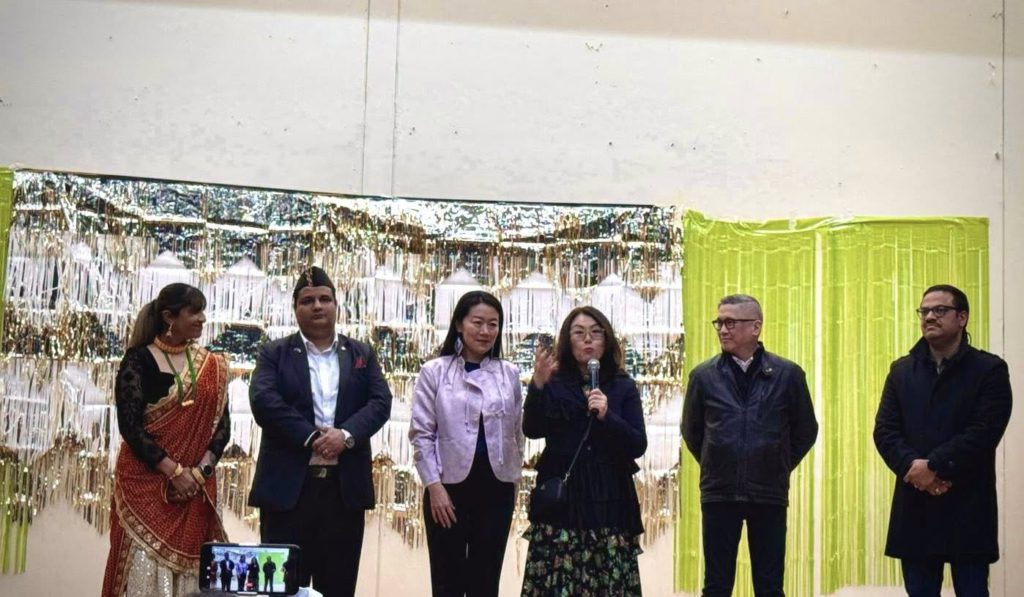
Image: Harela festival hosted by the Uttarakhand Association of New Zealand (Source: Facebook – Nancy Lu MP)
Nancy Lu MP, who attended the celebrations, said, “This vibrant festival from India’s north celebrates nature, new beginnings, and harmony with the Earth — and tonight, it brought together delicious food, colourful music and dance, and a strong sense of community.”
“Events like this remind us how much New Zealand’s multicultural communities enrich our country — not just through traditions, but through connection, contribution, and shared celebration.”
Image: Harela festival hosted by the Uttarakhand Association of New Zealand (Source: Facebook – Ash Parmar)
Reflecting the festival’s green ethos, several tree-planting drives were held in Auckland as part of the celebrations. “Our communities have been celebrating this festival for at least the last 300 years,” Joshi said.
“Every year, here in New Zealand, the Indian community gathers at this time and renews its commitment to sustainable living, cultural preservation and community bonding.”
Image: Harela festival hosted by the Uttarakhand Association of New Zealand (Source: Facebook – Ash Parmar)
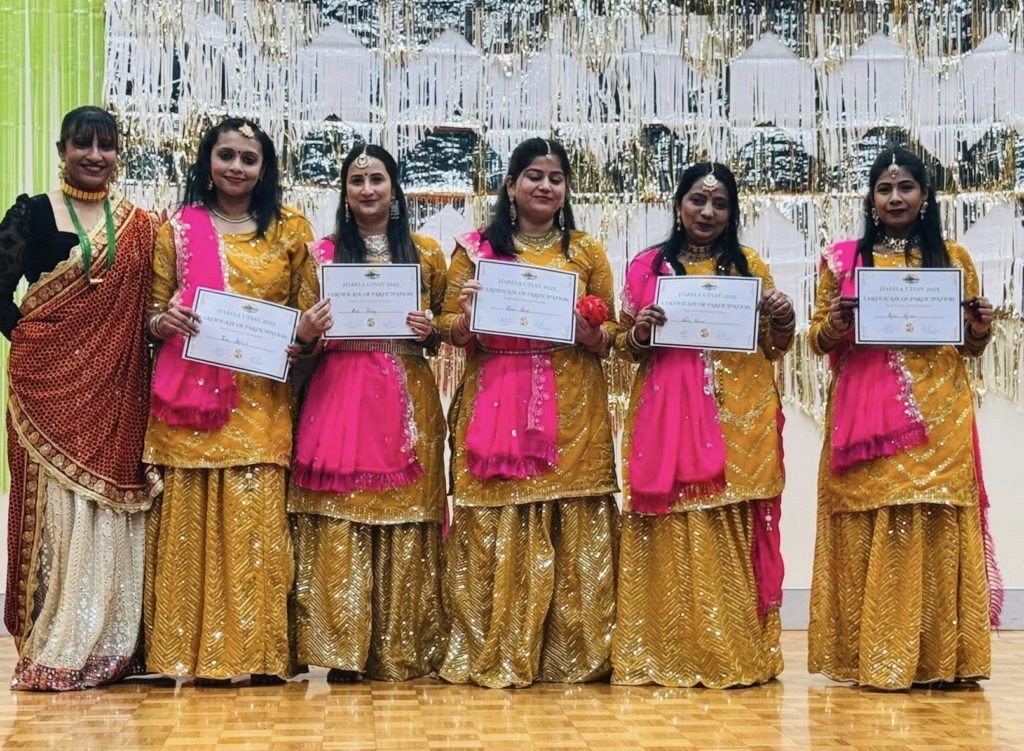
Members of the Bihar Jharkhand Association of New Zealand (BJANZ) were also proud to attend and take part in the vibrant Harela Utsav 2025. BJANZ women graced the stage with a beautiful cultural performance that received loud applause and admiration.
Image: Harela festival hosted by the Uttarakhand Association of New Zealand (Source: Facebook – BJANZ)
The Harela festival was not only embraced by the local Indian community but also attended by MPs Nancy Lu, Paulo Garcia, Melissa Lee, and community leaders Ash Parmar and Navtej Radhana, highlighting strong cross-cultural support.
Image: Harela festival hosted by the Uttarakhand Association of New Zealand (Source: Facebook – Paulo Garcia MP)
With highlights like the Indian Food and Art Festival and the Mr and Ms Uttarakhand showcase presented by Rani Nalam of RANZ Financial Services, the event served as a vibrant reminder of how such celebrations foster regional unity and honour New Zealand’s multicultural heritage.
Support our Journalism
No-nonsense journalism. No paywalls. Whether you’re in Australia, the UK, Canada, the USA, or India, you can support The Australia Today by taking a paid subscription via Patreon or donating via PayPal — and help keep honest, fearless journalism alive.
What was pitched as a bold new initiative to support digital creators (@ausinfluencerunion) quickly became a lightning rod for criticism, with audiences on TikTok and other platforms slamming the group.
Criticism ranged from Veronica’s appearance and messaging to broader frustrations about the perceived self-importance of influencer culture.
Fuel was added to the fire when influencers claimed during the launch that being an influencer was harder than being a doctor or teacher:
“It isn’t easy to get one million views.”
The bold statement drew widespread criticism: “Staying relevant is harder than a doctor saving someone’s life? World’s fried,” one viewer commented. Others mocked the comparison: “Didn’t know you had to study eight years to be an influencer,” and “Saving a life is easier than being a TikTok influencer… literally… wow.”
“We work as hard as people who work nine-to-five. It’s not that easy, sweetie.”
However, public sentiment appeared far from sympathetic. One comment read, “These TikTok people have never worked a real job. They think recording yourself for attention is hard?” Another user lashed out, saying, “Influencers? Their work is what most people do in their spare time. Go pick up a book for once.”
Yaz Haddad, another influencer at the launch, took a more aggressive stance, telling critics:
“… keep working your nine-to-five. You’re at home watching Netflix while we’re out here working.”
Although a minority praised the idea of an influencer union as a “beautiful” initiative, the broader online reaction has been overwhelmingly negative.
Support our Journalism
No-nonsense journalism. No paywalls. Whether you’re in Australia, the UK, Canada, the USA, or India, you can support The Australia Today by taking a paid subscription via Patreon or donating via PayPal — and help keep honest, fearless journalism alive.
In the years since the abrogation of Article 370, Jammu and Kashmir has entered a new phase of development, one marked not by slogans but by visible change on the ground. What was once a region associated in headlines with turmoil is now increasingly becoming known for progress, opportunity, and youthful ambition.
From new rail links and road networks to startup accelerators and digital classrooms, the transformation is not just infrastructural, it is aspirational. And nowhere is this more evident than in the stories of young Kashmiris who are breaking barriers and defining success on their own terms.
A series of major infrastructure projects have laid the groundwork for growth. The Udhampur–Srinagar–Baramulla rail corridor, which includes the world’s highest railway arch bridge over the Chenab River, now connects the Valley with the rest of India year-round. Dozens of new roads, tunnels, and bridges have followed. Srinagar is also witnessing the rapid rise of smart-city projects, upgraded hospitals, and a vibrant tourism ecosystem.
Tourism has surged. In 2024 alone, over 3 crore tourists visited Jammu and Kashmir, a record number. The surge has created jobs, revived handicraft industries, and brought new business to hotels, houseboats, and transport providers. Behind this economic revival is a clear vision: development that empowers, rather than divides
Perhaps the most powerful shift has occurred in the realm of education. New institutions such as the Indian Institutes of Technology (IIT) and All India Institutes of Medical Sciences (AIIMS) campuses in the region have made world-class education more accessible to local students. Thousands of Kashmiri youth are now enrolled in professional courses, civil services coaching, IT training, and skill development programs.
The impact is visible. Young scientists, engineers, and designers from Kashmir are increasingly making their mark in national-level competitions, innovation expos, and academic research. They are no longer waiting for opportunities to come to them, they are creating their own.
Take Faizan Arif, a 22-year-old from Srinagar, who has become one of India’s most trusted independent weather forecasters. Through a combination of science, self-learning, and social media engagement, Faizan has built a platform that now serves millions across North India. He is regularly cited in leading news outlets for his accurate and accessible forecasts.
Kashmir’s youth are not just excelling in classrooms, they’re also starting businesses. In 2013, Mehvish Mushtaq became Kashmir’s first female app developer when she launched Dial Kashmir, a mobile directory app offering contact information for essential services across the Valley. Her innovation won her national accolades and inspired a generation of young tech enthusiasts.
Today, the region is home to more than 800 government-registered startups, covering sectors from handicrafts and e-commerce to agriculture and renewable energy. The government’s goal is to facilitate 2,000 new startups by 2027, with a focus on women-led and rural enterprises.
Another notable example is Kashmir Box, a platform founded by Muheet Mehraj that connects Kashmiri artisans and farmers directly with customers around the world. By blending digital tools with local traditions, the company has built a sustainable business while preserving heritage.
In the world of sports, Kashmir’s daughters are leading the charge. Tajamul Islam, who began martial arts training at the age of five, became a world kickboxing champion by the age of seven. Now in her teens, she runs a sports academy training hundreds of young girls in self-defense and competitive martial arts. Her mission: to give young Kashmiri girls confidence, strength, and global visibility.
On another front, artists like Mudasir Rehman Dar from Kulgam are using waste materials like plastic to create powerful environmental art installations. His work has been displayed in colleges, schoolyards, and public spaces across the Valley, spreading awareness about sustainability while redefining the role of art in social change.
The most profound transformation lies in how young Kashmiris are choosing to define themselves. They are writers, athletes, coders, doctors, pilots, and entrepreneurs, not victims or slogans. With better access to opportunity, a responsive administration, and platforms for expression, the next generation is no longer held back by the weight of conflict.
Challenges remain. Employment is still a concern and some areas face security anxieties. But the balance is shifting. More youth are choosing laptops over stones, startups over slogans, and solutions over blame.
This is not a sudden or accidental change. It is the result of a sustained push for inclusion, investment, and reform. It is also a tribute to the resilience of Kashmiris, who have chosen progress in the face of pain and purpose over politics.
Kashmir today is not just one of India’s most scenic destinations, it is a story of human potential being realized. Its young people are not waiting for peace to be handed to them; they are building it through their work, their creativity, and their courage.
This is Kashmir’s quiet revolution. Not waged in protest or violence, but through code, art, commerce, and education. A revolution that tells the world: Kashmir is rising, and this time, it’s on its own terms.
This oped is part of a series first published on Global Order.
Support our Journalism
No-nonsense journalism. No paywalls. Whether you’re in Australia, the UK, Canada, the USA, or India, you can support The Australia Today by taking a paid subscription via Patreon or donating via PayPal — and help keep honest, fearless journalism alive.
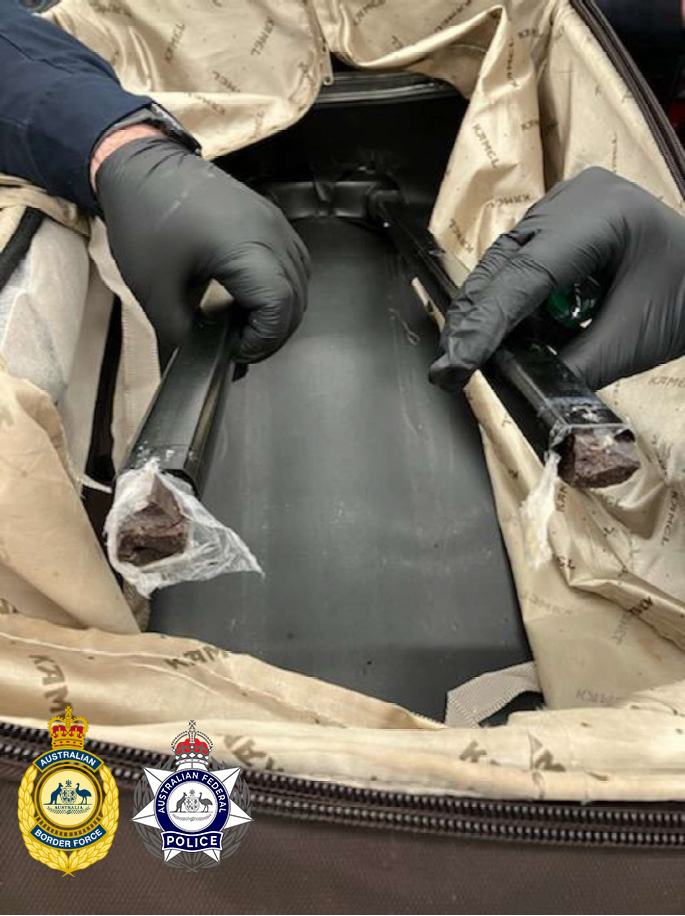
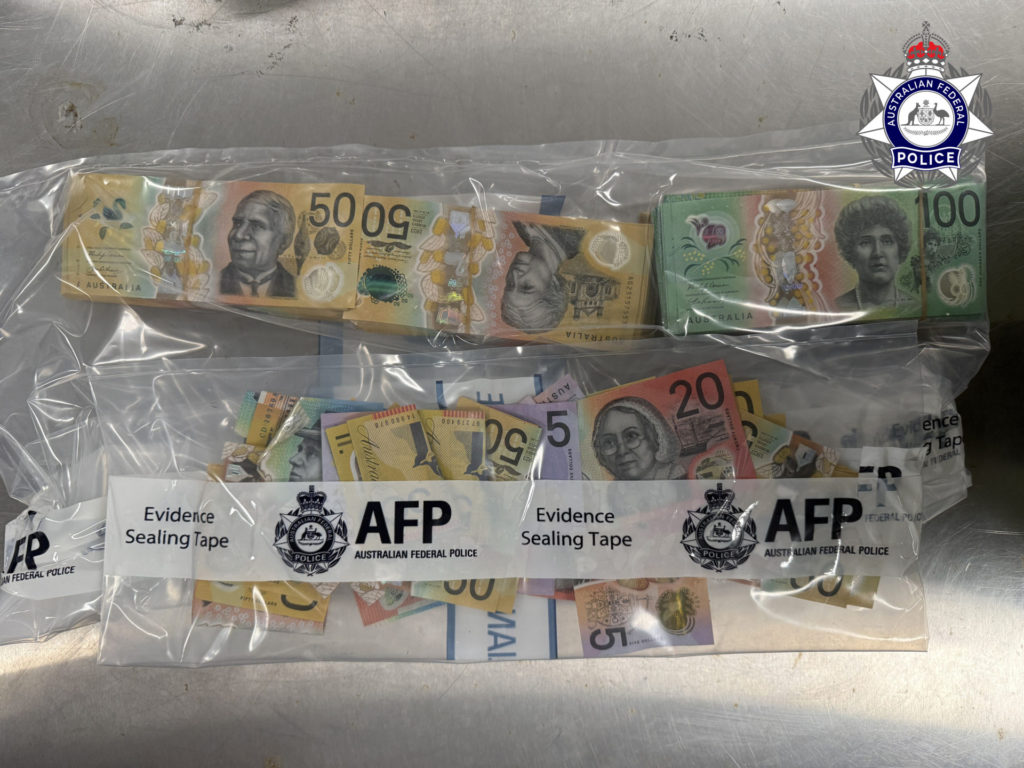
AFP Detective Acting Superintendent Simon Lalic said the case highlighted the importance of cooperation between agencies in disrupting drug trafficking networks.
Image: SA man charged with allegedly smuggling 500g heroin into Adelaide in a suitcas (Source: AFP)
“The AFP and its partners are committed to disrupting all levels of the drug trade and stopping anyone trying to profit at the expense of our community,” he said.
“Criminals are motivated by greed. They have no regard for the significant harmful impacts these illicit drugs have on our community.”
The 47-year-old man was targeted for a full baggage examination by Australian Border Force (ABF) officers upon arrival at Adelaide Airport on 29 July, 2025. Using intelligence-led screening and officer intuition, the ABF officers allegedly discovered a suspicious black fluid seeping from the handle of his luggage.
A presumptive test returned a positive result for heroin, with authorities removing around half a kilogram of the illicit drug from the suitcase.
Image: SA man charged with allegedly smuggling 500g heroin into Adelaide in a suitcas (Source: AFP)
ABF Superintendent Jody Griswood commended the frontline officers for their vigilance.
“ABF officers at the border are highly trained, experienced and alert. They know exactly what to look for when selecting travellers and their baggage for further examination,” she said.
“This isn’t an isolated case and it’s not based on luck. These successes happen across our airports every week and this is just one example of the outstanding work ABF officers do every day to protect our borders and our communities.”
The Australian Federal Police (AFP) charged the man with importing a marketable quantity of a border-controlled substance, an offence under section 307.2(1) of the Criminal Code (Cth), which carries a maximum penalty of 25 years’ imprisonment. He is expected to reappear in court on 23 September, 2025.
Support our Journalism
No-nonsense journalism. No paywalls. Whether you’re in Australia, the UK, Canada, the USA, or India, you can support The Australia Today by taking a paid subscription via Patreon or donating via PayPal — and help keep honest, fearless journalism alive.
The latest round of NAPLAN results are out, along with a string of news reports about “students falling behind” and “failing”, and experts sounding the “alarm” about school progress.
In March, all Australian students in years 3, 5, 7 and 9 sat tests in literacy and numeracy. There are four broad bands of achievement, from “needs additional support” to “developing”, “strong” and “exceeding”. The national results, released on Wednesday, show once again that about 10% of students need additional support and about 20% developing towards expectations.
Individual reports have also been going home to families over the past week. Amid the dire headlines, however, how should parents and students be thinking about their individual results?
It’s just one test
NAPLAN tests important literacy and numeracy skills and these are foundational to other parts of the curriculum. For example, students need literacy skills for history and numeracy skills for science.
But while NAPLAN results can highlight an issue that may have been missed in a child’s schooling, the tests are not very precise individual-level assessments.
Other school-based assessments provide teachers with more detailed information on students’ progress across a range of outcomes across the full school year.
NAPLAN also does not test everything in the school curriculum. It can’t tell you how well students are developing their knowledge in other subject areas (such as history and science). It does not say anything about the creative arts, physical education and social skills. These are also really important components of a well-rounded education.
Parents may also not appreciate that the tests get relatively harder as students get older. Expectations go up. So if your child was in the “developing” band in Year 3 and then in the same “developing” band in Year 5, they have made progress.
Tests this year were completed primarily online – younger children, particularly those in Year 3, may still be getting used to the technology. This is all part of the learning process at school.
Sometimes individual NAPLAN results may simply be a reflection of how a child interacted with the assessment on the day.
Teachers are always assessing kids
Another key thing to note is teachers are likely already aware if there are particular issues for any student. They are constantly assessing students in their classrooms – indeed, schools are awash with data these days.
NAPLAN results are designed to be interpreted alongside other school-based assessments. Results are supposed to provide “additional information to support teachers’ professional judgement about students’ levels of literacy and numeracy attainment and progress”.
Teachers will therefore already be providing support in their classrooms to students at all different stages of progress – albeit often in environments impacted by teacher shortages and funding limitations.
Families can talk to their child’s teacher to understand what the school is already doing to support progress and how they can support their child at home.
Families will have also recently received their child’s half-yearly school report. Parents can use this, together with NAPLAN and their own perceptions of how their child is faring, to talk to teacher(s).
It’s not a ‘failure’
There is often a lot of emphasis on standarised tests in education – governments and the media seize on them because they provide lots of data and easy comparisons.
If the results are not what you or your child hoped for, try not to catastrophise them. For one thing, NAPLAN was done about four months ago – kids will have made progress since then.
Schooling itself is also a developmental process. It’s not just about getting certain results in standardised tests. If you do identify an issue, put the emphasis on “I can progress, I can improve”. It’s not a failure.
No-nonsense journalism. No paywalls. Whether you’re in Australia, the UK, Canada, the USA, or India, you can support The Australia Today by taking a paid subscription via Patreon or donating via PayPal — and help keep honest, fearless journalism alive.
Acording to the U.S. Attorney’s Office, Eastern District of California, Singh, the alleged founder of the “Punjabi Devils” Motorcycle Club — a Stockton-based outlaw gang linked to the Hells Angels — faces charges of allegedly unlawfully dealing firearms, possessing a machine gun, and possessing an unregistered short-barreled rifle.
According to court documents, Singh allegedly attempted to sell several illegal weapons to an undercover officer on 6 June 2025.
The cache included a short-barreled rifle, three other assault weapons, three machine gun conversion devices, and a revolver.
A later search of his home uncovered even more weapons — including a machine gun, another conversion device, a silencer, a hand grenade, and what appeared to be a military-style Claymore mine.
It is reported that the San Joaquin County Sheriff’s bomb squad safely destroyed the explosive devices at the scene.
Image: Firearms (including machine guns and a short-barreled rifle), firearms parts (including a silencer and high-capacity drum magazines) and other items seized from Singh’s vehicle and residence on June 6, 2025 (Source: U.S. Attorney’s Office, Eastern District of California)
Initially charged at the state level, Singh failed to appear in court on 21 July, prompting a bench warrant for his arrest. Two days later, the FBI was alerted by U.S. Customs and Border Protection that Singh had booked a flight to India, scheduled to depart from San Francisco International Airport on 26 July. He was arrested at the airport before boarding and remains in federal custody.
A multi-agency investigation in San Joaquin County resulted in federal charges for the founder of the Stockton Punjabi Devils motorcycle club. He is charged with unlawful dealing of firearms, unlawful possession of a machine gun, and possession of an unregistered short-barreled… pic.twitter.com/g40OkaI0iV
The case is the result of a multi-agency investigation involving the FBI, the Bureau of Alcohol, Tobacco, Firearms and Explosives, Homeland Security Investigations, local sheriff’s departments, Stockton Police, and U.S. Customs and Border Protection.
Singh faces up to 25 years in prison and fines totalling $510,000 if convicted on all charges. The case is being prosecuted by Assistant U.S. Attorneys Alex Cárdenas and Adrian Kinsella.
Note:All charges are allegations and the defendant is presumed innocent unless and until proven guilty in a court of law.
Support our Journalism
No-nonsense journalism. No paywalls. Whether you’re in Australia, the UK, Canada, the USA, or India, you can support The Australia Today by taking a paid subscription via Patreon or donating via PayPal — and help keep honest, fearless journalism alive.
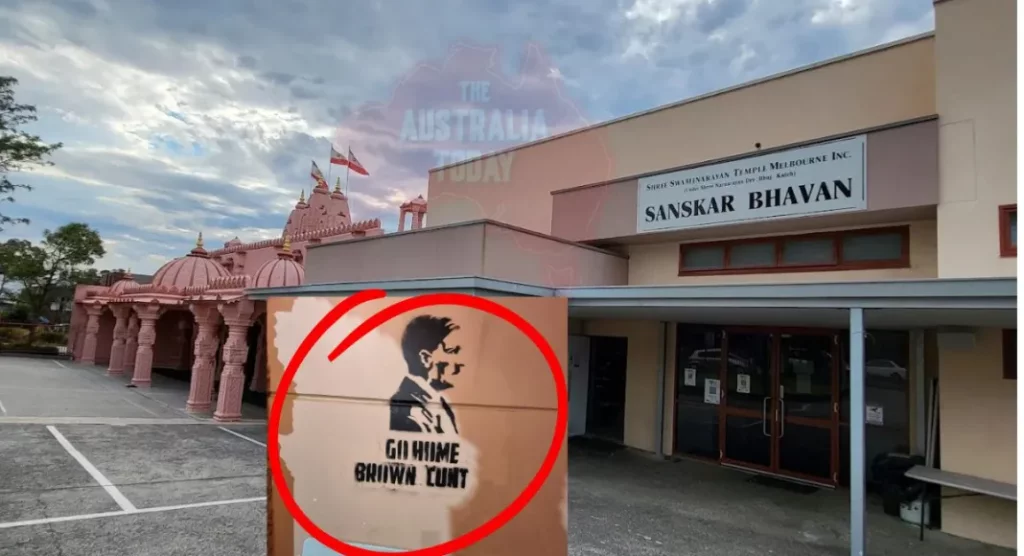
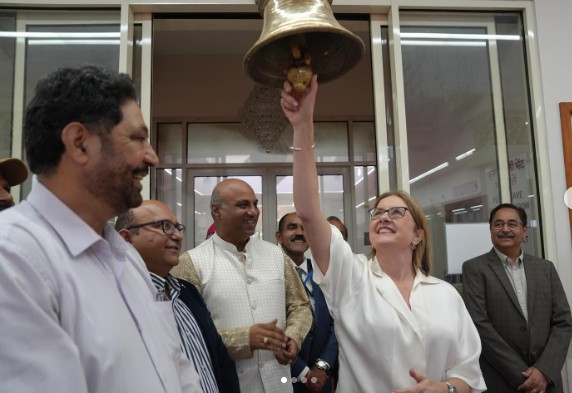
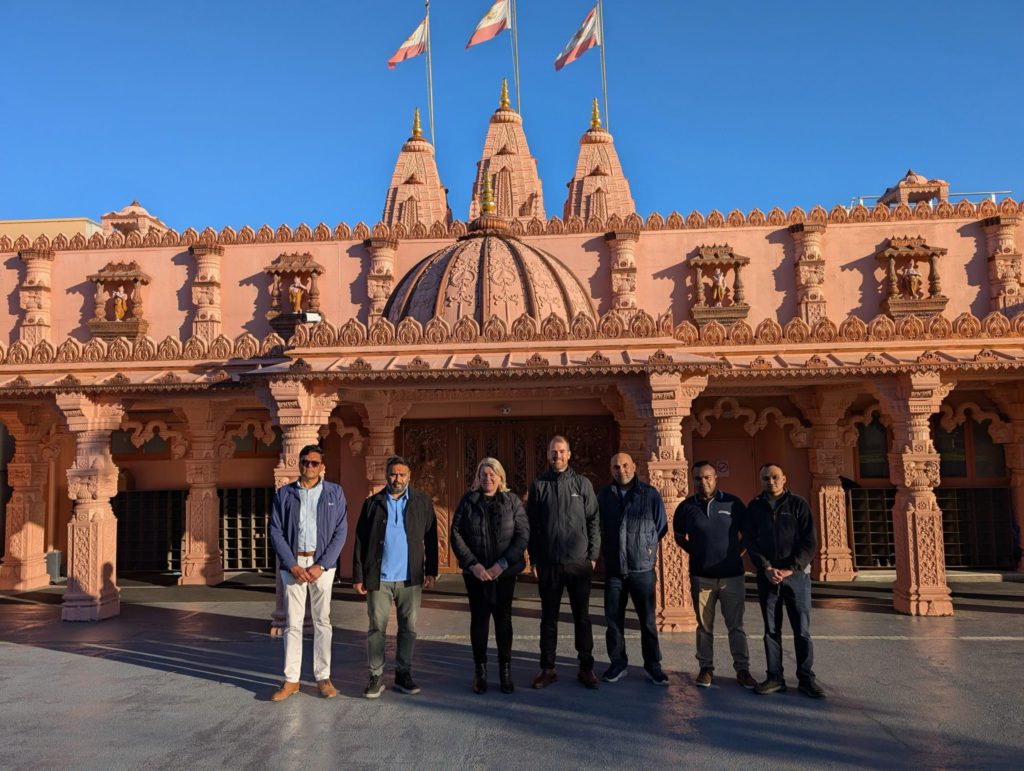
The Hindu Council of Australia (HCA) led an interfaith delegation to the Shree Swaminarayan Mandir Bhuj in Boronia, following last week’s vandalism attack on the revered Hindu temple.
The gesture, organised in partnership with the Victorian Multicultural Commission (VMC), brought together faith representatives from across the state to condemn religiously motivated hate and reaffirm Victoria’s commitment to multicultural harmony.
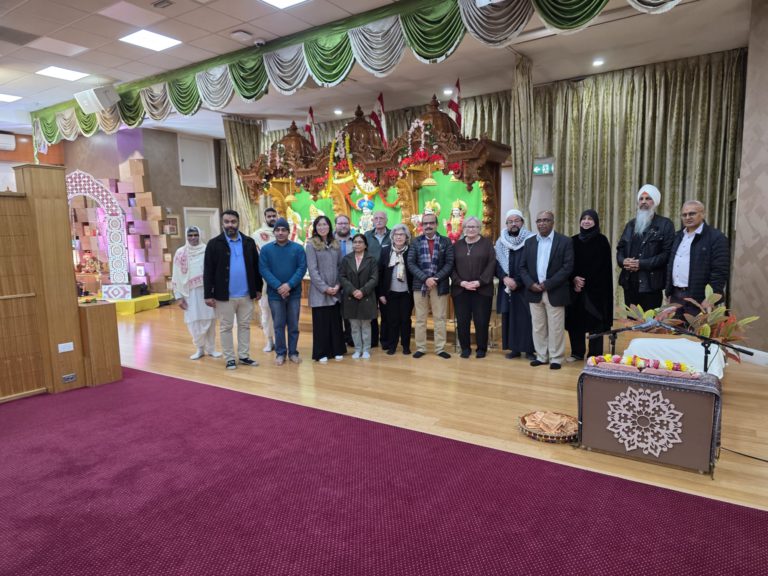
Temple multifaith meet; Image Source- The Australia Today
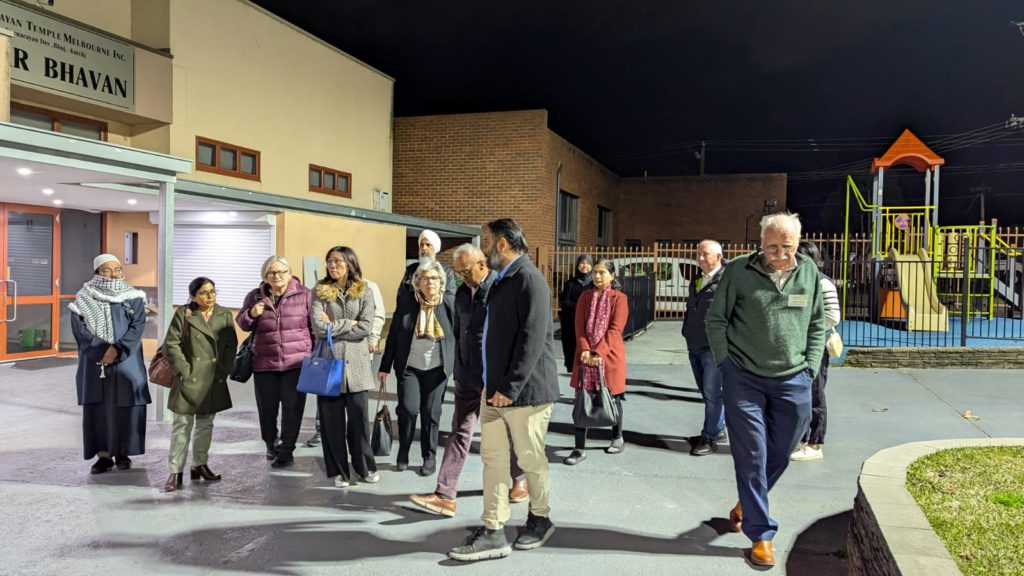
A United Front VMC Chairperson Viv Nguyen joined HCA President Makrand Bhagwat, Buddhist Council of Victoria president Diana Cousins, Victorian Council of Churches executive member Ashok Jacob, Islamic Council of Victoria representative Mohamed Mohideen, Australian Mar Thoma Affairs Forum in Victoria’s Batul Gulani, and Sikh Interfaith Council of Victoria’s Jasbir Singh Suropada, among others. Together, they offered prayers, inspected the temple grounds, and pledged collective support to the shaken Hindu community.
Temple multifaith meet; Image Source- The Australia Today
Mr Bhagwat said, “This was more than a symbolic visit.”
“It was a clear message that an attack on one faith is an attack on all faiths. We stand together — stronger, united, and committed to peace.”
Victorian Multicultural Commission’s Chairperson Viv Nguyen echoed this sentiment: “This vile act does not reflect who we are as Victorians. Our strength lies in our diversity and our respect for each other.”
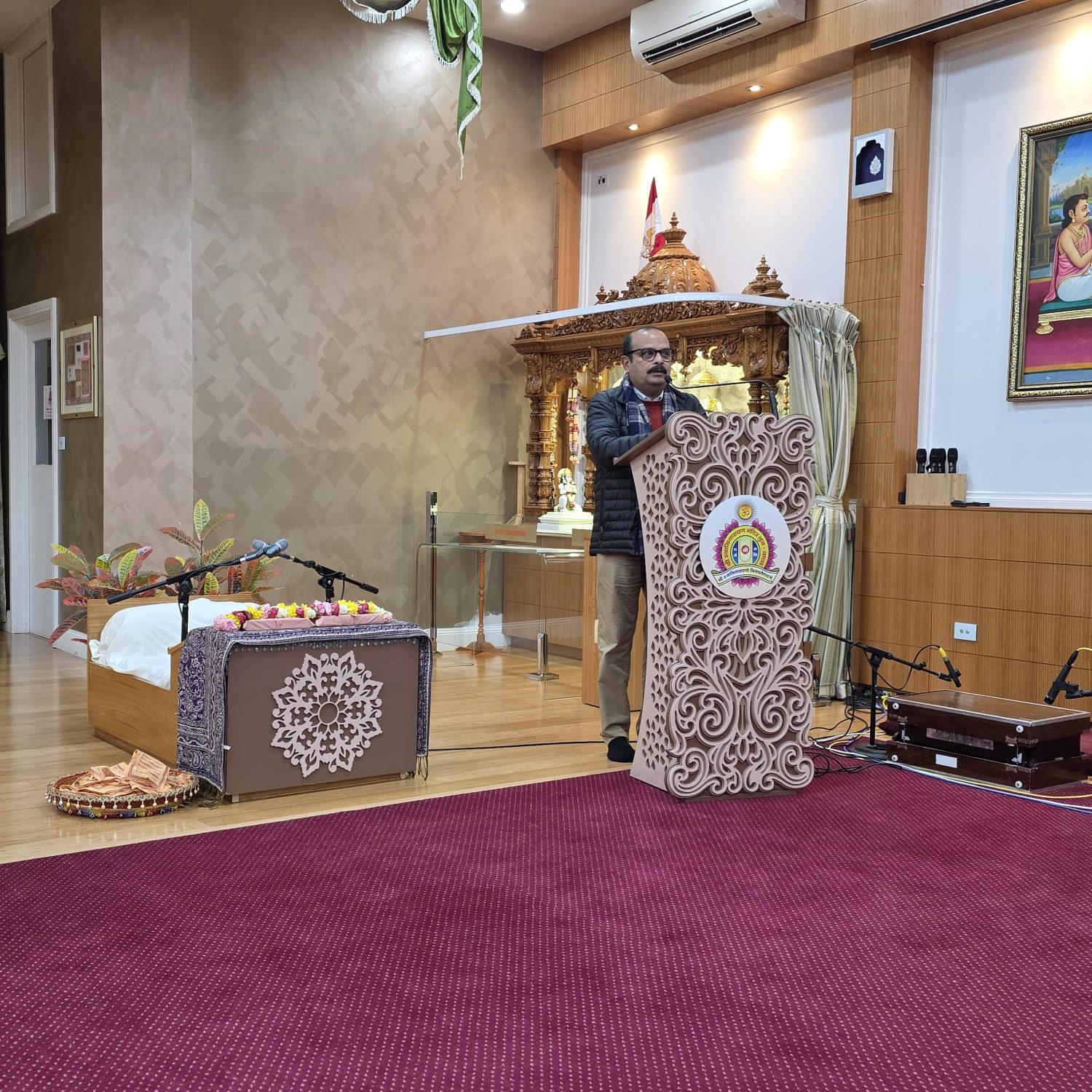
Temple multifaith meet; Image Source- The Australia Today
“The Victorian Government will continue to protect every place of worship and uphold our state’s core values of inclusivity and mutual respect.”
Archbishop Peter A. Comensoli of the Catholic Archdiocese of Melbourne delivered an impassioned address at the temple entrance, “May I simply offer our prayerful solidarity with the Hindu community following the callous and disrespectful attack on your sacred temple in Boronia.
“Such acts of hatred wound us all and betray the values that bind us together. Respect for one another—our faiths, our cultures, our sacred spaces—is the cornerstone of true peace.”
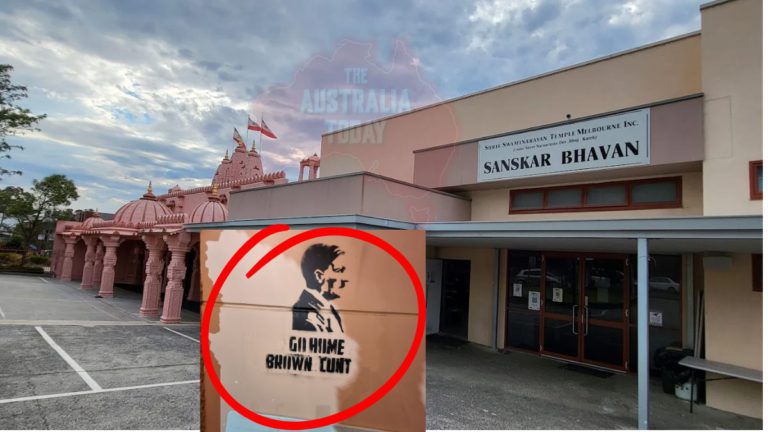
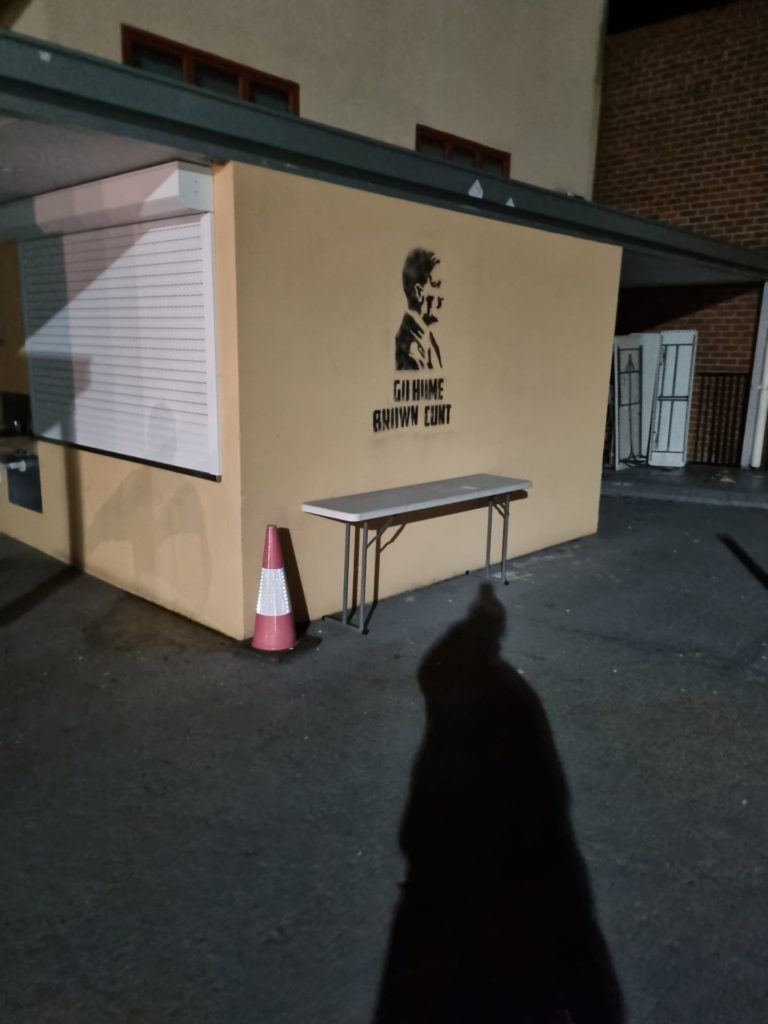
Late last month, unknown vandals defaced the Shree Swaminarayan Mandir Bhuj’s façade with hateful graffiti, demanding that the Hindu community “go home.” Two nearby Asian-run restaurants suffered identical slurs. Victoria Police have launched a hate crime investigation, recovered paint fragments, and are reviewing CCTV footage. No arrests have yet been made.
Temple multifaith meet; Image Source- The Australia Today
A Call to Action In the wake of the attack, the Shree Swaminarayan temple secretary said, “We want to show that love and solidarity triumph over hate,” he said, as interfaith leaders prepared to assist.
Community and faith leaders have urged all Victorians to remain vigilant and to report any suspicious activity. The HCA has also called upon schools, neighbourhood houses, and local media outlets to organise educational programs on religious tolerance and unity.
Temple multifaith meet; Image Source- The Australia TodayTemple multifaith meet; Image Source- The Australia TodayTemple multifaith meet; Image Source- The Australia TodayTemple multifaith meet; Image Source- The Australia Today
Moving Forward Together Today’s interfaith delegation underscores a shared determination: Victoria’s faith communities will not be divided by hate. Instead, they will continue to promote unity, dignity, and respect across cultural and religious lines.
As Mr Bhagwat concluded,
“We extend our sincere thanks to all who have stood with us. Let this be a moment not of fear, but of renewed hope in our shared humanity.”
Support our Journalism
No-nonsense journalism. No paywalls. Whether you’re in Australia, the UK, Canada, the USA, or India, you can support The Australia Today by taking a paid subscription via Patreon or donating via PayPal — and help keep honest, fearless journalism alive.
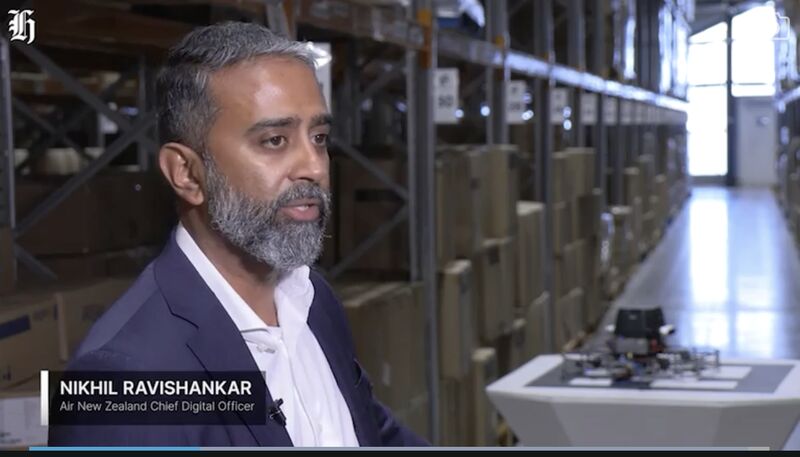
The appointment of Indian-origin Nikhil Ravishankar as the next chief executive of Air New Zealand sparked a wave of racist abuse online, prompting several major local media outlets to disable comments on their social media posts.
Ravishankar, the airline’s current Chief Digital Officer, will take over from outgoing CEO Greg Foran in October. His elevation marks a significant milestone, as he becomes the first Indian-origin leader to head one of New Zealand’s most respected corporate brands. However, the announcement was quickly marred by bigoted remarks focused on his ethnicity.
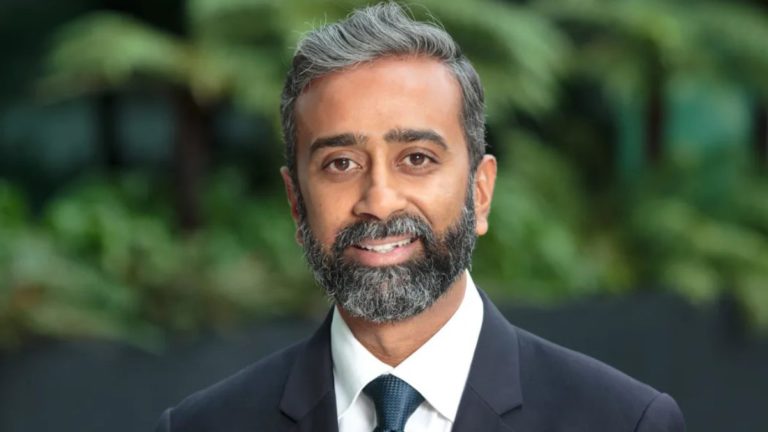
Image: Indian-origin Nikhil Ravishankar as the next chief executive of Air New Zealand (Source: LinkedIn)
A Herald post announcing the news on Facebook was flooded with hate speech, forcing the outlet to shut down the comment section. “We appreciate the high level of interest in this story but cannot safely moderate it at this time,” the Herald wrote, citing its commitment to fostering a safe online space.
RNZ echoed this approach. “The comments were disabled after our monitoring found racist comments,” an RNZ spokesperson said, noting their policy to proactively restrict discussions that risk harmful communication.
1News similarly turned off comments after their team was diverted to cover a tsunami event and could not adequately moderate the post.
Image: Indian-origin Nikhil Ravishankar as the next chief executive of Air New Zealand (Source: Indian Newslink)
Ravishankar is a homegrown talent, having attended Mount Albert Grammar and graduated from the University of Auckland with degrees in science and commerce. He has held senior leadership roles across Vector New Zealand, Spark, and Accenture, and has been a pivotal figure in Air New Zealand’s digital transformation since 2019. He also serves on the board of New Zealand Asian Leaders and is an advisor to The Auckland Blues Foundation.
In his first public remarks following the announcement, Ravishankar said:
“This airline is an institution with a deep legacy but also a fantastic future… It’s a privilege to step into the CEO role and take on that responsibility for our people, our customers, and our country.”
Former colleagues, like Leeanne Langridge, expressed dismay over the incident on LinkedIn. “I’ve been deeply disappointed to witness the racist comments directed at Nikhil Ravishankar,” she wrote.
“Let me be absolutely clear: this behaviour is unacceptable and does not represent the New Zealand I know and love… Racism thrives in silence.”
Image: Campbell Wilson is the Chief Executive Officer (CEO) & Managing Director (MD) of Air India (Source: Air India)
Critics were quick to point out the hypocrisy of those questioning Ravishankar’s “Kiwi-ness”. In contrast, Air India’s current CEO is a New Zealander—Campbell Wilson—whose appointment in 2022 attracted no such backlash in India. Wilson, who hails from Christchurch, has spent decades in global aviation leadership, including with Singapore Airlines and Scoot.
Observers say Air New Zealand’s board, chaired by Dame Therese Walsh, chose Ravishankar on merit from a highly competitive international field. His appointment signals not only a generational shift but also a vote of confidence in local talent.
New Zealand’s latest Census shows that the Indian community is now the country’s third-largest ethnic group, numbering over 292,000. Despite this demographic shift, the reaction to Ravishankar’s appointment highlights lingering issues of race and representation in public life.
Support our Journalism
No-nonsense journalism. No paywalls. Whether you’re in Australia, the UK, Canada, the USA, or India, you can support The Australia Today by taking a paid subscription via Patreon or donating via PayPal — and help keep honest, fearless journalism alive.
To strengthen educational ties between Australia and India, The University of Western Australia (UWA) and The Association of International Schools of India (TAISI) have signed a Memorandum of Understanding (MoU) to enhance academic collaboration and expand pathways for Indian students into globally recognised higher education.
Image: The University of Western Australia (UWA) and The Association of International Schools of India (TAISI) have signed a Memorandum of Understanding (MoU) to enhance academic collaboration (Source: TAISI – LinkedIn)
Austrade South Asia hailed the MoU as a significant step forward in transnational education, stating,
“This partnership marks a new chapter in transnational education, empowering students and educators with world-class opportunities and fostering deeper Australia–India collaboration.”
The MoU was signed by Prof. Jennifer Howell, Pro Vice-Chancellor (Global Engagement) at UWA, and Mr Syed Sultan Ahmed, Chairperson of TAISI. It sets the foundation for UWA’s proposed branch campuses in Mumbai and Chennai and builds on the growing recognition of the Western Australian Certificate of Education (WACE) in India.
WACE, promoted under TAISI’s “WACE in India” initiative, is now officially recognised by the Association of Indian Universities as an equivalent foreign curriculum, creating seamless pathways from Indian secondary schools to undergraduate programs at UWA.
TAISI, established in 2005 as the first and largest platform for international schools in India, empowers educators and institutions with the latest technologies, resources and professional development to raise the standard of education across the country.
Welcoming the agreement, TAISI said,
“We are excited to announce a landmark moment in global education. This MoU with UWA enhances educational pathways and fosters deeper academic collaboration between India and Australia.”
The agreement will open greater access to world-class higher education for Indian students, while also supporting professional development and training for educators delivering the WACE curriculum in India. It also encourages ongoing academic and cultural exchange between the two countries.
Image: The University of Western Australia (UWA) and The Association of International Schools of India (TAISI) have signed a Memorandum of Understanding (MoU) to enhance academic collaboration (Source: TAISI – LinkedIn)
This significant step forward was marked by the presence of key dignitaries and stakeholders, including Roshan Perera, Assistant Executive Director at the School Curriculum and Standards Authority (SCSA); George Thiveos, Minister Counsellor for Education and Research, South Asia; Christian Jack, Deputy Consul General in Mumbai; and Mary Overington, Trade and Investment Commissioner at the Australian Trade and Investment Commission (Austrade). Also in attendance were Maithili Jhaveri, Business Development Manager at Invest and Trade WA; Tanya Koshy, Business Development Director at Austrade; Rutwik Pungliya, Head of South Asia at UWA; Nashid Chowdhury, Director of Global Growth and Advocacy; and Neha Jain, Film Pedagogy Head at School Cinema (LXL Ideas), reflecting the strong institutional and diplomatic support behind this milestone agreement.
Support our Journalism
No-nonsense journalism. No paywalls. Whether you’re in Australia, the UK, Canada, the USA, or India, you can support The Australia Today by taking a paid subscription via Patreon or donating via PayPal — and help keep honest, fearless journalism alive.
In a dazzling display of stamina, skill, and dedication, 20-year-old Remona Evette Pereira, a final-year BA student from St Aloysius (Deemed to be University) in Mangaluru, has danced her way into the Golden Book of World Records with a record-breaking 170-hour Bharatanatyam performance.
Image: India’s Remona Evette Pereira dances into history with 170-hour Bharatanatyam marathon (Source: Instagram screenshot)
Beginning on July 21 at 10am and concluding in the afternoon of July 28, Remona’s week-long marathon shattered the previous record of 127 hours set by Sudhir Jagtap in 2023. Her feat, recognised officially by the Head of the Golden Book of World Records, Manish Vishnoei, earned her a ‘Certificate of Excellence’ and thunderous applause from well-wishers, dignitaries, and her proud parents.
“This dance form is incredibly demanding, yet Remona performed for 10,200 minutes with only a 15-minute break every three hours — a feat nearly impossible to imagine,” said Vishnoei, who originally suggested a five-day performance. Remona, however, pushed herself further, dancing for seven straight days and defying expectations.
Remona’s achievement was supported by her guru, Dr Shrividya Muralidhar, her college administration, and a dedicated medical team. Her classmates welcomed her with a Bharatanatyam procession as she was honoured inside the college auditorium.
The performance was a spiritual and artistic journey, beginning with prayers to Lord Ganesha and concluding with a tribute to Goddess Durga. Throughout, Remona exhibited flawless footwork, intricate mudras, and unwavering facial expressions — hallmarks of her 13 years of training under Guru Sri Vidya in Yeyyadi.
“I stood by my daughter every step of the way. Her dream has come true and my heart swells with pride,” said her mother, Gladis Celine, moved by her daughter’s accomplishment.
This is not Remona’s first brush with recognition. In 2022, she received the Pradhan Mantri Rashtriya Bal Puraskar for excellence in art and culture. She is also trained in semi-classical, western, and contemporary dance, and has previously featured in the India Book of Records, Golden Book of Records – London, and the Bharat Book of Records.
Her marathon has become a defining moment for the cultural and academic community of Mangaluru, inspiring young artistes across India. The documentation is now being submitted for formal entry into the Golden Book of World Records.
Support our Journalism
No-nonsense journalism. No paywalls. Whether you’re in Australia, the UK, Canada, the USA, or India, you can support The Australia Today by taking a paid subscription via Patreon or donating via PayPal — and help keep honest, fearless journalism alive.
The man, who has been in custody since 12 October 2024, is accused of creating child abuse material involving 10 victims, all aged six or younger, between April 2021 and May 2024. The charges include:
Nine counts of aggravated use of a child under 14 to produce child abuse material (maximum 20 years’ imprisonment each)
One count of use of a child under 14 to produce child abuse material (14 years)
Two counts of possessing child abuse material (10 years)
One count of refusing to provide passcodes under a section 3LA order related to a serious offence (10 years)
Image: Acting Assistant Commissioner Brett James (Source: AFP)
AFP Acting Assistant Commissioner Brett James said the case highlights the horrific breach of trust by an individual responsible for caring for young children. “Any form of child sexual abuse is confronting—more so when the alleged offender is someone trusted to care for children,” James said.
“Our investigators have worked meticulously to uncover the full scope of the man’s alleged crimes.”
The AFP began investigating after the Australian Centre to Counter Child Exploitation (ACCCE) detected child abuse material on the dark web in July 2024. A subsequent search of the man’s Artarmon home in September led to the seizure of electronic devices. He was initially arrested for refusing to provide access to those devices and later re-arrested after forensic investigators found alleged abuse content.
Due to the sensitive nature of the case, a court-imposed non-publication order had kept the details confidential. That order was lifted today (31 July 2025), allowing the AFP to publicly disclose the charges and ongoing support efforts.
Authorities confirmed the man worked at six OOSH services where the alleged offences occurred. A coordinated response led by NSW Police, NSW Health, the Department of Communities and Justice, and the Office of the Children’s Guardian has since contacted families whose children may have been affected. Support services have been made available through NSW Health.
As part of the multi-agency response, letters were sent to families on 18 June 2025, providing information about the man’s employment locations and advising on support options. Further inquiries have extended to 52 other care facilities and providers where the man was previously employed, though no offending has been identified at those locations.
A dedicated website under Operation Arctile has been launched to offer information about the investigation, timeframes of employment, and access to support for affected families.
NSW Acting Children’s Guardian Rachael Ward urged all child-related organisations to go beyond compliance and commit fully to Child Safe Standards.
“Most abusers offend multiple times before being caught. Organisations cannot rely solely on the Working with Children Check.”
The man’s legal proceedings continue, with law enforcement urging any concerned families to visit the Operation Arctile website for information and assistance.
Support our Journalism
No-nonsense journalism. No paywalls. Whether you’re in Australia, the UK, Canada, the USA, or India, you can support The Australia Today by taking a paid subscription via Patreon or donating via PayPal — and help keep honest, fearless journalism alive.
Espionage cost Australia $12.5 billion in 2023-24, according to a study by ASIO and the Australian Institute of Criminology.
The figure includes the direct costs of known espionage incidents, including state-sponsored theft of intellectual property, as well as the indirect costs of countering and responding.
Details of the Cost of Espionage report were released by the head of ASIO, Mike Burgess, in delivering the annual Hawke Lecture on Thursday night. Espionage is defined as “the theft of Australian information by another country that is seeking an advantage over Australia”.
Burgess said the Institute estimated foreign cyber spies stole nearly $2 billion from Australian companies and businesses in trade secrets and intellectual property in 2023-24.
In one instance, spies hacked into a major Australian exporter’s computer network, stealing commercially sensitive information.
“The theft gave the foreign country a significant advantage in subsequent contract negotiations, costing Australia hundreds of millions of dollars.”
Burgess pointed to another espionage incident several years ago when an overseas delegation visited a sensitive Australian horticultural facility.
A delegation member entered a restricted area and photographed a rare, valuable variety of fruit tree. A staff member intervened and deleted the image, but it later turned out that several of the tree’s branches had been stolen and smuggled out of Australia.
“Almost certainly, the stolen plant material allowed scientists in the other country to reverse engineer and replicate two decades of Australian research and development.”
In another instance, an Australian defence contractor invented and sold a world-leading innovation.
At first, sales boomed, but then they collapsed, and “customers began flooding the company’s repair centre with faulty products. While the returns looked genuine, closer examination revealed they were cheap and nasty knock-offs.
“An investigation uncovered what happened.
“One year earlier, a company representative attended a defence industry event overseas and was approached by an enthusiastic local. She insisted on sharing some content via a USB, which was inserted into a company laptop. The USB infected the system with malware, allowing hackers to steal the blueprints for the product.
“Almost certainly, the ‘enthusiastic local’ worked for a foreign intelligence service. The blueprints were given to a state-owned enterprise, which mass-produced the knock-offs and deprived the Australian company millions of dollars in lost revenue – the tangible cost of espionage.”
Burgess said many entities do not realise their secrets have been stolen by espionage.
He stressed the institute was deliberately conservative, only modelling costs it could confirm and calculate.
“That means many of the most serious, significant and cascading costs of espionage are not included in the 12.5 billion dollar figure. The potential loss of strategic advantage, sovereign decision-making and warfighting capacity holds immense value, but not a quantifiable dollar value.”
“The Institute estimates Australia prevented tens of billions of dollars of additional costs by stopping or deterring spying,”
Burgess said.
He said ASIO estimated the espionage threat “will only intensify. It is already more serious and sophisticated than ever before, so our response must also be more serious and sophisticated than ever before.”
Russian spies booted out in 2022
Burgess confirmed that in 2022, a number of “undeclared Russian intelligence officers” were removed from Australia.
“The decision followed a lengthy ASIO investigation that found the Russians recruiting proxies and agents to obtain sensitive information, and employing sophisticated tradecraft to disguise their activities.”
Last year, two Russian-born Australian citizens were charged with an espionage-related offence.
Russian remained a persistent and aggressive espionage threat, Burgess said. “But Russia is by no means the only country we have to deal with.
“You would be genuinely shocked by the number and names of countries trying to steal our secrets.
“The obvious candidates are very active – I’ve previously named China, Russia and Iran – but many other countries are also targeting anyone and anything that could give them a strategic or tactical advantage, including sensitive but unclassified information.”
Burgess said increasingly foreign intelligence services were broadening their collection efforts beyond traditional categories. They were aggressively targeting science and technology, and public and private sector projects, negotiations and investments. This includes Antarctic research, green technology, critical minerals and rare earths extraction and processing.
‘A very unhealthy’ interest in AUKUS
Burgess said foreign intelligence services were “taking a very unhealthy interest in AUKUS and its associated capabilities.”
“Australia’s defence sector is a top intelligence collection priority for foreign governments seeking to blunt our operational edge, gain insights into our operational readiness and tactics, and better understand our allies’ capabilities.
“Targets include maritime and aviation-related military capabilities, but also innovations with both commercial and military applications.
“And with AUKUS, we are not just defending our sovereign capability. We are also defending critical capability shared by and with our partners.”
He said foreign intelligence services were “proactive, creative and opportunistic” in targeting present and former defence employees.
There was relentless cyber espionage, in-person targeting and technical collection.
“In recent years, for example, defence employees travelling overseas have been subjected to covert room searches, been approached at conferences by spies in disguise and given gifts containing surveillance devices.”
Two dozen major disruptions in the last three years
Burgess said that ASIO had detected and disrupted 24 major cases of foreign interference in the last three years alone.
This was more than in the previous eight years combined. They were just the major disruptions – there were many other cases. Among the examples he gave were:
spies recruited a security clearance holder who handed over official documents on free trade negotiations
foreign companies connected to intelligence services sought to buy access to personal data sets; sought to buy land near sensitive military sites, and sought to collaborate with researchers developing sensitive technologies
foreign intelligence services tried to get someone employed as a researcher in a media outlet, aiming to shape reporting and receive early warning of critical stories
spies convinced a state bureaucrat to login to a database to obtain details of people considered dissidents by a foreign regime
nation state hackers compromised a peak industry body’s network getting sensitive information
a foreign intelligence service had multiple agents and their family members apply for Australian government jobs to get access to classified information.
No-nonsense journalism. No paywalls. Whether you’re in Australia, the UK, Canada, the USA, or India, you can support The Australia Today by taking a paid subscription via Patreon or donating via PayPal — and help keep honest, fearless journalism alive.
Ramandeep Singh left India to start a new life in New Zealand, assuring his worried parents it was a safe country. But on a December night in 2023, the 25-year-old security guard was beaten to death while closing a West Auckland reserve — a second job he had taken up to earn extra income.
“This was a prolonged and gratuitous attack on Mr Singh despite his attempts to call for help and escape,” said Justice Geoffrey Venning on Thursday as he sentenced Lorenzo Tangira, 26, to life imprisonment with a minimum non-parole period of 13 years and nine months.
Ramandeep Singh; Image Source: NZ Herald
“I do consider that the murder of Mr Singh was conducted with a high degree of brutality and callousness,”
the judge told the High Court in Auckland.
“The killing of Mr Singh was unprovoked. He was there doing his job,” he added
Singh had moved to Auckland five years earlier to pursue higher education. On the night of the attack, Tangira and a 17-year-old co-offender, who has been ruled unfit to stand trial, had been drinking before heading to Royal Reserve, where Singh was on duty.
According to court documents, Singh, who weighed just 46kg, was first confronted by the teen. Tangira then grabbed him by the back of his hi-vis vest, swung him around and punched him repeatedly in the face. Singh tried to escape to his vehicle, but the teen jumped on the bonnet, and Tangira continued the assault.
Screenshot
“When Mr Singh was eventually pulled from the vehicle, the assault by [the teen] and Mr Tangira continued,”
the court heard.
Singh was punched, kicked and stomped on, leaving him with multiple skull and facial fractures and severe brain injuries. His partially clothed body was later found dragged into bushes, his belongings stolen and car damaged.
His sister, speaking through a statement read by the prosecution, said:
Ramandeep Singh; Image Source: NZ Herald
“He was my closest friend, my anchor, my guide… And now he’s gone — stolen in the most brutal way.
If this can happen to him while simply doing his job in a park, how can any of us feel secure?”
Singh’s devastated family watched the sentencing remotely from India. His parents said: “Not even an animal would be treated as he was… His loss has torn us apart in ways that cannot be repaired. There’s a silence in our home now — a heaviness, a void that will never be filled.”
The Crown argued Tangira showed no real remorse and had minimised his involvement. Tangira admitted to punching Singh but denied responsibility for the fatal blows. His defence lawyer, Vivienne Feyen, submitted a letter of apology and argued for a shorter non-parole period. But the judge rejected any significant reductions, citing Tangira’s violent criminal record and lack of genuine rehabilitation efforts.
Ramandeep Singh; Image Source: NZ Herald
“You must have known the violence against Mr Singh was extreme and unacceptable,” Justice Venning said.
“You had a number of opportunities to stop the assault… but you carried on.”
A close friend of Singh, in a victim impact statement, said:
“The pain of losing Ramandeep is constant and cuts deeply… I think about his final moments and it breaks me.”
Ramandeep Singh’s body was returned to his family in a coffin — “cold, lifeless and covered in injuries.” The young man remembered for his “unwavering kindness” now leaves behind a community shattered by the senseless violence of his death.
Support our Journalism
No-nonsense journalism. No paywalls. Whether you’re in Australia, the UK, Canada, the USA, or India, you can support The Australia Today by taking a paid subscription via Patreon or donating via PayPal — and help keep honest, fearless journalism alive.
In a major development for Australian higher education, Victoria University (VU) has become the first institution from the state to receive formal approval to establish a full-fledged campus in India.
The announcement was made in New Delhi, where VU representatives received a Letter of Intent from India’s University Grants Commission (UGC), authorising the university as an approved Foreign Higher Education Institution under India’s recently rolled-out National Education Policy (NEP).
Key Facts
Licence Received: Letter of Intent from India’s UGC, approved as Foreign Higher Education Institution under NEP.
Campus Launch: Targeted for 2027 in the Delhi National Capital Region.
Signature Model: VU Block Model®—four-week intensive modules focusing on one subject at a time.
Leadership: Pro Vice-Chancellor (Global) Monty Singh; Chief Academic Officer Prof. John Germov.
Programs: Undergraduate, postgraduate and research degrees with industry focus.
The licence, presented by India’s Minister for Education Dharmendra Pradhan, paves the way for VU to launch its India campus by 2027, beginning with the Delhi National Capital Region.
The campus will offer a suite of undergraduate, postgraduate and research programs, with a particular emphasis on industry-aligned qualifications designed to meet India’s rapidly evolving workforce needs.
Monty Singh, VU’s Pro Vice-Chancellor (Global), said at the ceremony, “Victoria University can now progress its strong connections to India.”
“we look forward to working alongside local partners to share knowledge, deliver industry-focused qualifications and make a real contribution to India’s National Education Policy,”
added Mr Singh.
Leveraging the VU Block Model®
Central to VU’s offering in India will be its award-winning VU Block Model®, an innovative teaching approach that breaks the traditional semester structure into intensive four-week modules. Under this system, students focus on one subject at a time through interactive, workshop-style classes, enabling deeper engagement and more personalised support.
The Block Model, first introduced by VU in Australia and now the largest of its kind outside North America, has been shown to improve student retention, streamline pathways to graduation, and strengthen industry partnerships through real-world projects.
At the New Delhi event, VU Senior Deputy Vice-Chancellor and Chief Academic Officer Professor John Germov underscored the model’s potential impact in India.
“We are delighted at the opportunity to share our unique VU Block Model with industry, students and teachers in India,” Professor Germov said.
“By collaborating with local partners, we’ll ensure the Block Model remains at the forefront of industry needs, and our graduates are ready to support one of the strongest economies in the world.”
Riding the Wave of India’s Education Reforms
India’s NEP, unveiled in 2020, represents one of the most ambitious overhauls of the country’s education system in decades. Among its many reforms, the policy invites top global universities to establish campuses in India, aiming to enhance the quality of higher education and reduce student outflows to overseas institutions.
VU’s successful bid follows a rigorous application process that assessed its academic credentials, governance structures, and capacity for quality assurance.
As part of the next steps, VU will now engage with Indian universities, vocational institutes and industry bodies to finalise joint programs, share research expertise, and co-design curricula tailored to local and global priorities.
“India is home to one of the world’s largest student populations and a booming knowledge economy,” Deputy Vice-Chancellor Singh added.
“Our new campus will not only serve Indian learners but also strengthen bilateral ties in innovation, research and workforce development.”
A New Chapter in Australia–India Higher Education Collaboration
The VU licence marks a significant milestone in Australia–India educational cooperation. While several Australian universities have partnered with Indian institutions on joint research and student exchanges, few have pursued fully owned overseas campuses. VU’s initiative is expected to inspire other institutions to explore similar ventures, leveraging complementary strengths in areas such as vocational education, digital innovation and community engagement.
For India, international campuses are anticipated to boost domestic capacity for advanced learning, reduce barriers to global best practices, and create new streams of academic and professional talent. For Australia, these ventures guard against international enrolment volatility and expand the global footprint of its education sector—already one of the nation’s top export earners.
With official planning permission secured, Victoria University will now move to formalise partnerships, recruit faculty and commence campus construction. The university aims to welcome its first cohort by mid-2027, offering degrees in fields aligned with India’s national priorities, including technology, health and community services, and sustainable development.
As the India campus takes shape, VU plans to continue expanding collaborative opportunities across Asia, reinforcing its reputation as a truly global institution. Students in both countries can expect cross-campus exchanges, joint research centres and shared industry placements—bringing a new era of transnational education to life.
With this groundbreaking approval, Victoria University cements its role as a pioneer of Australia’s international education strategy and a bridge between two of the world’s largest democracies—creating lasting impact for students, industries and communities on both continents.
Support our Journalism
No-nonsense journalism. No paywalls. Whether you’re in Australia, the UK, Canada, the USA, or India, you can support The Australia Today by taking a paid subscription via Patreon or donating via PayPal — and help keep honest, fearless journalism alive.
In a statement, Ravishankar described his appointment as both a privilege and a responsibility. “This airline is an institution with a deep legacy but also a fantastic future,” he said.
“At the end of the day, we are a people business – purposeful, ambitious, and deeply rooted in Aotearoa New Zealand. I’m excited to help shape what this next stage of Air New Zealand looks like.”
Ravishankar will take over the reins on 20 October 2025, succeeding Greg Foran, who steps down after almost six years at the helm. His appointment follows an international search and reflects the airline’s strategic pivot toward innovation, technology, and customer-centric service in the post-pandemic era.
Image: Indian-origin techie Nikhil Ravishankar (Source: Air New Zealand)
Born in India and raised in New Zealand, Ravishankar holds a BSc in Computer Science and a BCom (Hons) from the University of Auckland. He began his career in technology strategy at Telecom New Zealand (now Spark) and later became Managing Director at Accenture, working across the Asia-Pacific.
In 2017, he was appointed Chief Digital Officer at Vector, where he led a major digital transformation. Ravishankar is also active in leadership circles, serving on the boards of New Zealand Asian Leaders, the Blues Foundation advisory committee, and is a member of the AUT AUTEUR Influencer Network.
Despite not coming from a traditional aviation background, Ravishankar brings extensive experience in digital transformation, having previously held senior roles at Vector, Accenture, and Telecom New Zealand. Since joining Air New Zealand nearly five years ago, he has spearheaded significant upgrades to the airline’s technology systems, loyalty programme, and customer experience platforms.
Image: Air New Zealand Chair Dame Therese Walsh (Source: LinkedIn)
Air New Zealand Chair Dame Therese Walsh said Ravishankar’s appointment signals a fresh chapter for the airline. “We have always been bold and not afraid to adapt and lead. Nikhil brings the mindset and contemporary leadership we need to build on our strong foundations and focus on the future,” she said.
“His ambition, people leadership, global outlook and digital acumen, combined with his deep care for the airline and New Zealand, made him the standout choice.”
Ravishankar’s promotion comes as Air New Zealand pushes back against fierce competition from Qantas and North American carriers increasing their presence in the Pacific. The airline has introduced a new top-tier AirPoints membership, upgraded customer tech systems, and is refurbishing its business class product.
Image: Outgoing CEO Greg Foran (Source: Air New Zealand)
Outgoing CEO Greg Foran, a former Walmart executive, joined just two weeks before COVID-19 shut borders globally. While Qantas and Virgin Australia experienced post-pandemic booms, Air New Zealand grappled with fleet issues that hindered recovery.
Under Foran, the airline began overhauling its ageing widebody fleet and initiated business class upgrades set to launch by year’s end. With Ravishankar at the controls, Air New Zealand is aiming to soar into a more connected, customer-focused and tech-driven future.
Support our Journalism
No-nonsense journalism. No paywalls. Whether you’re in Australia, the UK, Canada, the USA, or India, you can support The Australia Today by taking a paid subscription via Patreon or donating via PayPal — and help keep honest, fearless journalism alive.
File image: Foreign Minister Senator Penny Wong (Source: X)
Unveiling the next phase of the signature program on Tuesday, Senator Wong said the reforms will prioritise long-term immersive experiences, a significant increase in scholarships, and a renewed focus on Asian language learning.
“I am pleased to announce the next phase of the New Colombo Plan, which will further strengthen Australia’s Indo-Pacific capability and Asia literacy,” she said.
Since its launch in 2014, the NCP has supported more than 55,000 Australian undergraduates to undertake study, internships, and language training in the Indo-Pacific region.
The revamped program will kick off from 2026, aligning with key recommendations from Invested: Australia’s Southeast Asia Economic Strategy to 2040. The reforms aim to build a cohort of Australians better equipped to understand and engage with the region’s economies, cultures and communities
Senator Wong said these changes will help grow a “generation of Australians with the skills and capabilities needed to deepen our national understanding of the region, strengthen ties between our people, and increase engagement with Australian businesses operating in the Indo-Pacific.”
File image: Special Envoy for Indian Ocean Affairs, Tim Watts MP (Source: X)
Special Envoy for Indian Ocean Affairs, Tim Watts MP, who chaired the NCP External Advisory Group, also welcomed the announcement.
“These reforms are designed to enable NCP participants to deepen their Asia capability and support Australian universities to empower them to do so.”
Highlighting the key elements of the reforms, Watts thanked the External Advisory Group members for their expertise and insights during last year’s consultation process.
Increasing NCP scholarships to 500 annually by 2028;
Introducing a new Semester Program to support longer-term study experiences;
Establishing a program-wide language learning target focused on priority Asian languages;
Expanding access to NCP programs through Australian offshore campuses in the region;
Providing dedicated support funding to universities and consortia to build Indo-Pacific expertise and language offerings.
The next round of grant guidelines for the NCP Scholarship, Semester, and Mobility programs will be released in August 2025. The reforms mark a significant step in preparing Australia’s future leaders, professionals and innovators to thrive in the increasingly interconnected Indo-Pacific region.
Support our Journalism
No-nonsense journalism. No paywalls. Whether you’re in Australia, the UK, Canada, the USA, or India, you can support The Australia Today by taking a paid subscription via Patreon or donating via PayPal — and help keep honest, fearless journalism alive.
Modern slavery, human trafficking, and forced marriage are crimes many Australians believe only happen in faraway places. But they’re happening right here — in our suburbs, towns, workplaces, schools and even family homes. Hidden in plain sight, these horrific offences are unfolding every day across the country, often undetected and unspoken. The Australian Federal Police (AFP) is urging Australians to recognise this uncomfortable reality and take action.
To mark the United Nations’ World Day Against Trafficking in Persons (WDATIP), the AFP has revealed there were 382 reports of modern slavery and human trafficking offences in the 2023–24 financial year. That’s a jump of more than 12 per cent from the previous year and the highest figure ever recorded in Australia. These reports included cases of slavery, servitude, debt bondage, deceptive recruiting, and forced marriage — the latter making up the largest portion, with 91 cases, or nearly one every four days.
Image: AFP Commander Helen Schneider (Source: AFP)
The statistics are confronting. But experts warn the real figures are likely much higher. The Australian Institute of Criminology estimates that for every victim of human trafficking or slavery identified, at least four more remain hidden. Part of the challenge, AFP Commander Helen Schneider says, is that many victims don’t know they’re being exploited — or are too afraid to seek help.
“This can especially be the case when perpetrators are members of their family or community, or where they may fear shame or embarrassment from their communities,” Commander Schneider explains.
“These factors often prevent victims from reporting human exploitation crimes to law enforcement.”
She says many cases involve overlapping forms of exploitation. A victim of forced marriage may also be experiencing slavery or servitude. Someone in forced labour may also be subject to debt bondage or deceptive recruitment. And often, the people around them simply don’t recognise what’s happening.
“It’s not always clear-cut. Human exploitation is happening in our communities, in our neighbourhoods, in everyday spaces. The people affected could be living on your street,” she says.
“These crimes cut across industries — from domestic work to agriculture to hospitality. Regardless of the setting, the result is the same: profound abuse and violation of human dignity.”
Australia is considered primarily a destination country for human trafficking. Victims have been identified from countries around the world, brought here under false pretences or through coercion. “Human trafficking and exploitation know no borders,” says Commander Schneider.
“It denies people their dignity and basic human rights. Australia must be part of the global effort to combat it.”
As part of this effort, the AFP established its Human Exploitation Community Officer (HECO) program in 2023. Rolled out nationally by 2024, the program is designed to build relationships with high-risk communities and empower victims to speak out. HECOs work directly with vulnerable groups, offering support, raising awareness and putting preventative strategies in place.
Leading Senior Constable Afra Prodan, the first HECO for South Australia and the Northern Territory, describes the work as both fulfilling and heart-wrenching. “I’ve always been interested in helping victims, but I wasn’t fully aware of the extent of human exploitation in Australia until I stepped into this role,” she says.
“It’s about community engagement, but it’s also about potentially saving someone’s life.”
One of her earliest experiences was speaking to a young person who was being exploited — but didn’t realise she was a victim. “It was probably one of the most gut-wrenching conversations I’ve had,” Prodan recalls. “She wasn’t asking for justice. She was just asking for help.”
Prodan and her colleagues have led more than 370 community engagements so far in 2025, focusing on at-risk communities based on cultural, economic or geographic vulnerability. Their work includes not just awareness, but early intervention — particularly in cases like forced marriage where cultural sensitivities can complicate detection and reporting.
Beyond law enforcement, support services are expanding. The Additional Referral Pathway (ARP) now allows victims of human trafficking and modern slavery to seek help without first going to the police. Instead, they can access support from trusted non-government organisations such as Anti-Slavery Australia, Project Respect, Scarlett Alliance and the Australian Muslim Women’s Centre for Human Rights.
Commander Schneider says the ARP is a breakthrough for victim support.
“It gives people the chance to reach out to community-based organisations and still receive immediate safety, wellbeing support and legal advice — all confidential and free.”
Other services include the Red Cross’s Support for Trafficked People Program and Life Without Barriers’ Forced Marriage Specialist Support Program. These programs help victims rebuild trust, reconnect with family and community when safe, and begin the difficult process of recovery.
Foreign Minister Senator Penny Wong marked WDATIP by highlighting the link between human trafficking and organised crime, including the rise of trafficking victims being forced to work in online scam centres. “Many of these scam centres operate across our region to defraud and steal from people, including Australians,” she said.
“This has become one of the world’s largest illicit industries, fuelling money laundering and the drug trade.”
Domestically, Australia has introduced a world-first Scams Prevention Framework and launched the National Anti-Scam Centre to tackle this evolving threat. Internationally, it continues to lead partnerships through the ASEAN–Australia Counter Trafficking program and co-chair the Bali Process with Indonesia.
Attorney-General Michelle Rowland noted that large businesses are now required to report on their efforts to combat modern slavery under the Modern Slavery Act 2018. “We are committed to prevention, prosecution and protection,” she said.
“Australia stands with victims of these abhorrent crimes and remains committed to providing victim-centred support and protection.”
Image: Assistant Treasurer Dr Daniel Mulino (Source: LinkedIn)
Assistant Treasurer Dr Daniel Mulino added that the government’s investment in scam prevention was already having an impact.
“We want to prevent people being harmed by scams and are putting in place world leading measures to help keep Australians safe – our Scams Prevention Framework, legislated in February this year, will establish world leading consumer protections against scams.”
But despite government efforts, frontline officers like LSC Prodan believe the solution also lies in education and community awareness. “Most Australians don’t know this is happening around them — but it is,” she says.
“We need people to ask questions, look out for others, and understand what exploitation can look like. It can be subtle. It can be cultural. And it can be right next door.”
If you suspect someone is a victim of trafficking, call 131 AFP (131 237) or report it online. Help is available — even if you’re unsure. Raising awareness and taking action are the first steps to shining a light on modern slavery in Australia and ending the silence that allows it to thrive.
Support our Journalism
No-nonsense journalism. No paywalls. Whether you’re in Australia, the UK, Canada, the USA, or India, you can support The Australia Today by taking a paid subscription via Patreon or donating via PayPal — and help keep honest, fearless journalism alive.
The Washington Post has formally acknowledged incorrect reporting in an article related to Operation Sindoor, and has issued a correction and apology to Indian news network TV9 Bharatvarsh. The acknowledgment follows a legal notice sent by TV9 challenging the accuracy of the article and demanding the retraction of misleading claims.
Operation Sindoor, launched by India in early May, was a targeted counter-terror mission following the April 22 terror attack in Jammu and Kashmir’s Pahalgam region.
In a correction note added to the article “How misinformation overtook Indian newsrooms amid conflict with Pakistan” published on June 7, the Post admitted it had wrongly stated that TV9 Bharatvarsh reported the surrender of Pakistan’s Prime Minister amid India-Pakistan tensions. That claim has now been removed from the article, along with other references that were found to be inaccurate.
The correction further clarified that a WhatsApp message referenced in the original story — which suggested a coup in Pakistan — did not come officially from India’s state broadcaster Prasar Bharati, but from an individual employee. Other corrections addressed the mischaracterization of Indian media coverage and the mistaken claim that Indian channels aired footage from the Sudan conflict.
Senior Indian journalist and News Director of TV9 Hemant Sharma posted on social media that The Washington Post had formally apologized to TV9 Bharatvarsh through email, stating: “We regret the error.” The message reportedly followed a legal notice and evidence submitted by TV9 to dispute the claims made in the original report.
@washingtonpost ने TV9 भारतवर्ष से माफ़ी मांगी है और स्वीकार किया है कि उनकी रिपोर्ट में @TV9Bharatvarsh को लेकर जो दावा किया गया था, वो ग़लत था.
7 जून 2025 को द वॉशिंगटन पोस्ट ने भारत-पाकिस्तान तनाव के दौरान भारतीय न्यूज़ चैनलों की रिपोर्टिंग की आलोचना करते हुए एक आर्टिकल छापा.… https://t.co/C4DVqiQwna
The correction, now prominently displayed above the article outlines a series of editorial missteps. These include:
Misstating the origin of a WhatsApp message that claimed Pakistan’s Army Chief Gen. Asim Munir had been arrested. The message, according to the correction, was received by an Indian journalist from an individual employee of Prasar Bharati, not officially from the broadcaster itself.
Incorrectly attributing claims about the surrender of Pakistan’s Prime Minister to TV9 Bharatvarsh. This specific reference has since been removed.
Mischaracterizing Indian media reports about destruction in Pakistan by suggesting they claimed entire cities had been destroyed. The networks, in fact, reported major destruction in some Pakistani cities, but not that entire cities were flattened.
Incorrectly stating that Indian networks aired conflict footage from Sudan, which was also later retracted.
The Washington Post’s correction marks a rare and telling instance of editorial backtracking by a major Western media outlet—prompted not by internal oversight, but by the persistent fact-checking of an Indian news organisation that exposed its flawed and potentially biased coverage.
The Washington Post has apologised to TV9 Network for writing fake news against the Network on India’s #OperationSindoor. Western Media can’t continue with fabricated reporting spreading disinformation against India and then get away with it! https://t.co/ZPLDz599QQ
In addition to removing the erroneous claims, the updated article now includes a statement from Prasar Bharati, India’s national public broadcaster.
The Washington Post‘s correction follows criticism by many observers who questioned the accuracy and objectivity of international legacy media reporting during the conflict.
Operation Sindoor reset global military matrix due to the scale and precision of India’s cross-border strikes on Pakistan. However, several established media outlets were observed circulating unverified claims during the conflict, deviating from fact-based reporting. These included falsehoods like Pakistan taking Indian soldiers prisoners (Bloomberg) and a female Indian pilot taken into custody (Al Jazeera) among others.
Support our Journalism
No-nonsense journalism. No paywalls. Whether you’re in Australia, the UK, Canada, the USA, or India, you can support The Australia Today by taking a paid subscription via Patreon or donating via PayPal — and help keep honest, fearless journalism alive.
Fiji and India have reaffirmed their strong bilateral ties and commitment to deeper cooperation during the Sixth Foreign Office Consultations held at the Ministry of Foreign Affairs headquarters in Suva on 29 July 2025.
Image: Sixth Foreign Office Consultations held at the Ministry of Foreign Affairs headquarters in Suva (Source: Fiji Government – Facebook)
The high-level meeting, presided over by Fiji’s Permanent Secretary for Foreign Affairs, Dr Raijeli Taga, and Dr Neena Malhotra, Secretary (South) from India’s Ministry of External Affairs, brought together senior officials from both countries to review ongoing projects and explore new avenues for collaboration.
Image: Fiji’s Deputy Prime Minister and Minister for Finance, Prof. Biman Prasad meeting with Dr Neena Malhotra, Secretary (South) from India’s Ministry of External Affairs (Source: Fiji Government – Facebook)
Central to the discussions was the proposed 100-bed Super Speciality Cardiology Hospital in Suva, with Fiji’s Deputy Prime Minister and Minister for Finance, Prof. Biman Prasad, confirming that land allocation has been approved and preparatory work is underway.
The consultation also covered progress on the lease arrangements for India’s new Chancery and Cultural Centre in Nasese, Suva.
Image: Fiji’s Deputy Prime Minister and Minister for Finance, Prof. Biman Prasad (Source: Fiji Government – Facebook)
Additional agreements were finalised, including an upcoming Memorandum of Understanding for the Tubalevu Groundwater Project under India’s Quick Impact Project, and another MOU expected to be signed between the Bureau of Indian Standards and Fiji’s Department of National Trade Measurement & Standards during Prime Minister Sitiveni Rabuka’s official visit to India in August 2025.
Image: Sixth Foreign Office Consultations held at the Ministry of Foreign Affairs headquarters in Suva (Source: Fiji Government – Facebook)
Dr Taga expressed gratitude for India’s continued support through initiatives such as the Forum for India–Pacific Island Countries cooperation, the India Technical and Economic Cooperation programme (ITEC), and cultural exchange projects, including Tamil language teaching in Rakiraki and Nadi.
Image: Dr Neena Malhotra, Secretary (South) from India’s Ministry of External Affairs (Source: Fiji Government – Facebook)
Dr Malhotra highlighted the importance of the consultations in strengthening health, capacity building, cultural, and people-to-people ties, looking forward to the implementation of key projects and enhanced diplomatic engagement as Fiji and India approach 55 years of formal diplomatic relations.
Fiji’s Prime Minister Rabuka’s forthcoming visit to India, scheduled for 25 August 2025, will further cement this enduring partnership and pave the way for new collaborative ventures.
Support our Journalism
No-nonsense journalism. No paywalls. Whether you’re in Australia, the UK, Canada, the USA, or India, you can support The Australia Today by taking a paid subscription via Patreon or donating via PayPal — and help keep honest, fearless journalism alive.
Today at about 11:30am local time, a magnitude 8.8 earthquake struck off the coast of Russia’s Kamchatka Peninsula in the country’s far east.
Originating at a depth of roughly 20 kilometres, today’s powerful earthquake – among the ten strongest in recorded history and the largest worldwide since 2011 – has caused building damage and injuries in the largest nearby city, Petropavlosk-Kamchatsky, just 119 kilometres from the epicentre.
Tsunami warnings and evacuations have reverberated through Russia, Japan and Hawaii, with advisories issued for the Philippines, Indonesia, and as far away as New Zealand and Peru.
The Pacific region is highly prone to powerful earthquakes and resulting tsunamis because it’s located in the so-called Ring of Fire, a region of heightened seismic and volcanic activity. All ten most powerful earthquakes recorded in modern history were located on the Ring of Fire.
Here’s why the underlying structure of our planet makes this part of the world so volatile.
Why does Kamchatka get such strong earthquakes?
Immediately offshore the Kamchatka Peninsula is the Kuril-Kamchatka Trench, a tectonic plate boundary where the Pacific Plate is being thrust beneath the Okhotsk Plate.
While tectonic plates move continuously relative to one another, the interface at tectonic plates is often “stuck”. The strain related to plate motion builds up until it exceeds the strength of the plate interface, at which point it is released as a sudden rupture – an earthquake.
Because of the large areas of interface at plate boundaries, both in length and depth, the rupture can span large areas of the plate boundary. This results in some of the largest and potentially most damaging earthquakes on earth.
Another factor that affects the rates and sizes of subduction zone earthquakes is the speed at which the two plates are moving relative to each other.
In the case of Kamchatka, the Pacific Plate is moving at approximately 75 millimetres per year relative to the Okhotsk plate. This is a relatively high speed by tectonic standards, and causes large earthquakes to happen more frequently here than in some other subduction zones. In 1952, a magnitude 9.0 earthquake occurred in the same subduction zone, only about 30 kilometres away from today’s magnitude 8.8 earthquake.
Other examples of subduction plate boundary earthquakes include the 2011 magnitude 9.1 Tohoku-Oki Japan earthquake, and the 2004 magnitude 9.3 Sumatra-Andaman Indonesia “Boxing Day” earthquake. Both of these initiated at a relatively shallow depth and ruptured the plate boundary right to the surface.
They uplifted one side of the sea floor relative to the other, displacing the ocean above it and resulting in devastating tsunamis. In the case of the Boxing Day earthquake, the sea floor rupture happened along a length spanning roughly 1,400km.
At time of writing, approximately six hours after the earthquake struck, there have already been 35 aftershocks larger than magnitude 5.0, according to the United States Geological Survey.
Aftershocks happen when stress within Earth’s crust is redistributed following the mainshock. They are often as large as one magnitude unit smaller than the mainshock. In the case of today’s earthquake, that means aftershocks larger than magnitude 7.5 are possible.
For an earthquake of this size, aftershocks can continue for weeks to months or longer, but they typically will reduce in both magnitude and frequency over time.
Today’s earthquake also produced a tsunami, which has already affected coastal communities on the Kamchatka Peninsula, the Kurile Islands, and Hokkaido, Japan.
Over the coming hours, the tsunami will propagate across the Pacific, reaching Hawaii approximately six hours after the earthquake struck and continuing as far as Chile and Peru.
Tsunami scientists will continue to refine their models of the tsunami’s effects as it propagates, and civil defence authorities will provide authoritative advice on the expected local effects.
What are the lessons from this earthquake for other parts of the world?
Fortunately, earthquakes as large as today’s occur infrequently. However, their effects locally and across the globe can be devastating.
Apart from its magnitude, several aspects of today’s Kamchatka earthquake will make it a particularly important focus of research.
For instance, the area has been seismically very active in recent months, and a magnitude 7.4 earthquake occurred on 20 July. How this previous activity affected the location and timing of today’s earthquake will be a crucial focus of that research.
Like Kamchatka and northern Japan, New Zealand also sits above a subduction zone – in fact, above two subduction zones. The larger of these, the Hikurangi subduction zone, extends offshore along the east coast of the North Island.
Based on the characteristics of this plate interface, and geological records of past earthquakes, it is likely the Hikurangi subduction zone is capable of producing earthquakes at magnitude 9. It hasn’t done so in historic times, but if that happened it would produce a tsunami.
The threat of a major subduction zone earthquake never goes away. Today’s earthquake in Kamchatka is an important reminder to everyone living in such earthquake-prone areas to stay safe and heed warnings from civil defence authorities.
No-nonsense journalism. No paywalls. Whether you’re in Australia, the UK, Canada, the USA, or India, you can support The Australia Today by taking a paid subscription via Patreon or donating via PayPal — and help keep honest, fearless journalism alive.
India and the United States marked a significant milestone in global space cooperation today with the successful launch of the NISAR satellite. Developed jointly by the Indian Space Research Organisation (ISRO) and the National Aeronautics and Space Administration (NASA), the satellite was launched from the Satish Dhawan Space Centre in Sriharikota, India on July 30, 2025, at 5:40 PM local time aboard ISRO’s GSLV-F16 rocket.
This mission is being hailed as one of the most advanced Earth observation efforts ever undertaken, and it symbolizes a deepening strategic and scientific partnership between the two countries. NISAR is also one of the most expensive civilian satellites in the world with the total cost estimated at be around US $1.5 billion.
NISAR, which stands for NASA-ISRO Synthetic Aperture Radar, is designed to observe and measure Earth’s surface changes with extraordinary precision. The satellite uses a unique combination of dual-frequency radar systems—NASA’s L-band and ISRO’s S-band—which enables it to detect even subtle shifts in the Earth’s crust, ice sheets, forests, and agricultural regions.
This capability is expected to benefit global efforts in climate science, natural disaster response, and environmental monitoring. Once fully operational, the satellite will map the entire globe every 12 days, capturing high-resolution data that can be used to track glacier movements, monitor deforestation, measure soil moisture, and detect early signs of earthquakes or landslides.
Go NISAR! 🚀
The joint NASA-India satellite aboard @ISRO's Geosynchronous Launch Vehicle launched from the southeast Indian coast at 8:10am ET (1210 UTC) on its mission to monitor Earth's changing land and ice surfaces. pic.twitter.com/2Y3LUxlM2D
ISRO contributed the launch vehicle, satellite bus, and the S-band radar, while NASA provided the L-band radar system and additional support through its Jet Propulsion Laboratory. Over the next 90 days, the satellite will go through an initial commissioning phase during which all systems and instruments will be thoroughly tested. After this period, the data collected by NISAR will be made freely accessible to scientists, researchers, and policy makers worldwide.
The successful deployment of NISAR demonstrates how collaborative missions can serve the global scientific community. As the satellite begins its journey of orbiting the Earth and collecting crucial data, it stands as a testament to what international cooperation can achieve in addressing some of the planet’s most pressing challenges.
Support our Journalism
No-nonsense journalism. No paywalls. Whether you’re in Australia, the UK, Canada, the USA, or India, you can support The Australia Today by taking a paid subscription via Patreon or donating via PayPal — and help keep honest, fearless journalism alive.
A 21-year-old man from Werribee has been arrested for his alleged role in the arson attack that devastated the Adass Israel Synagogue in Ripponlea last December, in what authorities are investigating as a politically-motivated crime.
The Victorian Joint Counter Terrorism Team (JCTT) made the arrest today, 30 July, following coordinated search operations across seven Melbourne suburbs, including Toorak, Airport West, and Weir Views. Various items, including electronic devices, were seized for forensic examination.
Image: Victorian JCTT arrest second man in relation to Melbourne synagogue arson attack (Source: AFP)
The man is expected to be charged with arson, conduct endangering life, and theft of a motor vehicle—offences under the Crimes Act 1958 (Vic) that carry maximum penalties ranging from 10 to 15 years’ imprisonment. Police allege he is one of three individuals who broke into the synagogue on 6 December 2024 and set it alight.
This is the second arrest in the high-profile case. In July, another individual was charged for allegedly stealing a communal car used in the lead-up to the attack.
AFP Deputy Commissioner National Security Krissy Barrett reaffirmed the seriousness of the incident, describing the attack as both despicable and dangerous. “The gravity of this crime has not been lessened by time. This was not just an arson on a building—it was an attack on a community,” she said.
“We are treating this as a politically-motivated crime and will not stop until everyone involved is brought to justice.”
Victoria Police Deputy Commissioner Wendy Steendam called the arrest a major step forward in the investigation and urged anyone with information—no matter how minor—to come forward.
“We have now charged two people and expect further arrests. Public assistance has been vital, and we know there are still individuals with information that can help.”
Victoria Police Chief Commissioner Mike Bush echoed the sentiment, emphasising the importance of safety in places of worship.
“No one should fear attending their place of worship. We will be relentless in holding those responsible to account.”
An AFP member was seriously injured during today’s raids after being attacked by an unrestrained dog at a Weir Views property. A firearm was discharged during the incident, and the dog was later euthanised. The officer remains in hospital.
The JCTT, a partnership between Victoria Police, the AFP, and ASIO, is continuing to engage with the Jewish community and relevant stakeholders as the investigation unfolds.
Support our Journalism
No-nonsense journalism. No paywalls. Whether you’re in Australia, the UK, Canada, the USA, or India, you can support The Australia Today by taking a paid subscription via Patreon or donating via PayPal — and help keep honest, fearless journalism alive.
In a historic first for Australia’s space industry, an Australian-designed and built rocket launched from local soil — only to crash back to Earth 14 seconds later in a fiery end that left plumes of smoke and a trail of valuable data.
Gold Coast-based startup Gilmour Space Technologies launched its 23-metre, 30-tonne Eris rocket at 8:35am on Wednesday from the newly commissioned Bowen Orbital Spaceport in North Queensland. It marked the first-ever attempt at an orbital rocket launch from Australian soil.
Image: The 23-metre-long, 30-tonne Eris rocket was launched from the Bowen orbital spaceport after months of waiting for the right conditions (Photograph: Gilmour Space Technologies)
The three-stage rocket, built to carry small satellites into orbit, lifted off successfully in its maiden test flight, clearing the launch pad and firing all four engines — a milestone that Gilmour Space called a “strong result” despite the early crash.
“Got off the pad, I am happy,” said co-founder and CEO Adam Gilmour on social media shortly after the launch.
“Of course, I would have liked more flight time, but happy with this.”
Although the Eris rocket did not reach orbit — an “anomaly” ended the flight prematurely — the launch is being celebrated as a giant leap forward for Australia’s sovereign space capabilities. The rocket had been on the pad for over a year awaiting regulatory approvals and favourable conditions. Previous attempts had been postponed due to weather and technical issues.
Image: The 23-metre-long, 30-tonne Eris rocket (Photograph: Gilmour Space Technologies)
Spectators gathered in surrounding hills and tuned in online via YouTuber Josh Keegan (Aussienaut), who captured the moment from 12 kilometres away. “We’re going, it’s going!” he shouted, before realising the flight was short-lived.
“Oh no, there wasn’t sufficient thrust to actually keep it up.”
“Today, Eris became the first Australian-made orbital launch vehicle to lift off from Australian soil. For a maiden test flight, especially after an extended 18-month wait on the pad for approvals, this is a major step forward.”
The launch pad and surrounding infrastructure were reported to be intact after the crash. Gilmour Space confirmed no injuries or environmental damage occurred.
Federal Minister for Science Tim Ayres said in a statement the launch showed what’s possible with a “Future Made in Australia.” “Getting to the launch pad is a success, and just the beginning,” he said.
“The confidence gained, and lessons learned will help Gilmour and the broader space ecosystem innovate and grow.”
Enrico Palermo, head of the Australian Space Agency, echoed the sentiment:
“It is rare for first launches to reach orbit. That is part of the innovation cycle and why you test. We look forward to the next phases.”
Image: Gilmour Space Technologies said its orbital rocket, Eris, achieved 13 seconds of flight time (Source: Gilmour Space Technologies)
Gilmour Space, backed by major investors including Blackbird Ventures, HESTA, and Hostplus, now plans a second test flight within six months using insights gained from Wednesday’s launch. The flight also tested locally designed propulsion systems, a critical component for future success.
“Space is hard,” said Gilmour, referencing the many failed early attempts by giants like SpaceX and Rocket Lab.
“Every second of flight will deliver valuable data that will improve our rocket’s reliability and performance for future launches.”
Support our Journalism
No-nonsense journalism. No paywalls. Whether you’re in Australia, the UK, Canada, the USA, or India, you can support The Australia Today by taking a paid subscription via Patreon or donating via PayPal — and help keep honest, fearless journalism alive.
Canadian authorities are scrambling to locate nearly 600 foreign nationals—many with serious criminal records—who have disappeared while awaiting deportation.
According to newly released figures from the Canada Border Services Agency (CBSA), 1,635 foreign nationals convicted of crimes in Canada are currently slated for removal. Alarmingly, 599 of them have failed to appear for deportation proceedings and are now on the CBSA’s “wanted” list. Of those, 431 have been found guilty of serious crimes such as sexual assault, with 315 having evaded authorities for more than three years.
“Individuals subject to immigration enforcement have an incentive not to be found and may rely on family and community members to shelter them,” said CBSA spokesperson Luke Reimer. He added that some even resort to using alternate identities to avoid detection.
The data reveals a worrying trend in Canada’s immigration enforcement system. While 401 of the 1,635 convicted foreign nationals are currently serving prison sentences and are expected to be deported upon release, the remainder—including the hundreds who have vanished—pose an ongoing challenge to public safety.
As of 2025, CBSA figures show:
599 foreign nationals with criminal records are missing
315 have been unaccounted for over three years
46 have evaded capture for over two years
In addition, 29 foreign nationals are currently detained due to their perceived danger to the public or risk of fleeing. The remaining individuals are largely being supervised in the community, some with electronic monitoring.
Canada had previously maintained a “Wanted by the CBSA” webpage featuring mug shots and details of high-risk fugitives. It was decommissioned in 2023 as authorities shifted to new investigative tools.
The bulk of criminal deportees come from Mexico (7,009), India (5,844), and the United States (1,786), with over 30,000 individuals in Canada currently in the process of removal.
The issue has drawn international attention. In 2025, U.S. President Donald Trump accused Canada of allowing criminals to cross the border into the United States. In response, Ottawa designated seven transnational criminal organisations—including several Mexican cartels—as terrorist entities and announced a $1.3 billion investment in border security, including the hiring of more CBSA and RCMP officers to combat human trafficking and organised crime.
The CBSA maintains it is working to close enforcement gaps and remove criminal offenders “as soon as possible” to protect Canadian communities. But with hundreds of deportees still at large, public safety concerns continue to mount.
Support our Journalism
No-nonsense journalism. No paywalls. Whether you’re in Australia, the UK, Canada, the USA, or India, you can support The Australia Today by taking a paid subscription via Patreon or donating via PayPal — and help keep honest, fearless journalism alive.
In her hauntingly tender debut collection What the Suitcase Still Holds, Melbourne-based poet Shilpa Taneja Wason gives voice to the invisible weight of migration — the kind of grief that doesn’t erupt at airports, but lingers in the margins of everyday life.
Born in India, Shilpa uses her 21 poems to explore the emotional terrain of migrant experience: the ache of distance, fractured identity, and the subtle, persistent pull of multiple homelands — all of which never feel fully like home. “This book is my ode to Hiraeth,” she says, referencing the untranslatable Welsh word that evokes deep homesickness for a place you can’t return to — or perhaps never truly belonged to.
“These poems were written from the in-between — the quiet ache of choosing a different life, one filled with opportunity, but also absence.”
Image: Shilpa Taneja Wason (Source: Supplied)
Shilpa’s poems are steeped in memory and loss — livestreamed funerals, muted festivals, children growing up without their grandparents, and the ache of WhatsApp calls across time zones.
In the title poem What the Suitcase Still Holds, the suitcase becomes a powerful metaphor not only for items never unpacked, but for identities, rituals, and emotional truths too fragile to confront. Its zippered silence speaks to the paralysis of grief, a fear of feeling too much. Shilpa writes with evocative restraint — “the scent of my mother’s food,” “letters in a language I don’t write in now” — capturing the tension between preserving the past and surviving the present.
Other poems like I Did Not Get to Say Goodbye and To My Children — I’m Sorry explore the tenderness and guilt woven into ordinary moments: the scent of a lost homeland, the alien ring of your own name, or the heartbreak of lifting off from the tarmac of a country that still feels like yours.
In I Am Every Immigrant, Shilpa offers a lyrical litany that reads like a collective anthem of the displaced. With the refrain “I am,” she builds a rhythmic, aching portrait of identity in flux — spanning guilt, longing, resilience, and the deep cost of choice. The line “I am the victim of my own choice” lands like a quiet thunderclap, laying bare the emotional reckoning at the heart of migration.
Shilpa’s voice is raw, but never overwrought — grounded in resilience, yet open to vulnerability. In Homeless, she beautifully expresses the cultural dissonance many migrants face, particularly from the Indian subcontinent:
“Too foreign here, too foreign there. My accent shapeshifts depending on the room. I pause before pronouncing my name.”
The Alien tackles not overt racism, but the softer, more insidious forms of exclusion. It’s a powerful poem about the emotional labour of assimilation — learning to decode AFL references, Google unfamiliar trivia answers, perfect your accent, or smile just enough to blend in. “Not racism, exactly— but a kind of quiet sorting,” Shilpa writes, distilling the discomfort of not quite fitting in. Her final line — “I always was— and still am— an alien” — lingers as a poignant reminder that Australian identity, for many migrants, remains conditional and elusive.
The collection closes with What I Know Now, a gentle yet profound reckoning with impermanence and multiplicity. Shilpa observes:
“Peace doesn’t look like joy. It looks like getting through the day without an apology.”
Here, Shilpa captures the hard-won wisdom of the migrant journey — that home is not always a place but often a person; that grief sits beside us like an old friend; and that one can belong to many places and still feel homeless. In finding solace through spirituality, language, and silence, she offers quiet dignity to those who carry the burden of multiple selves.
Early readers have described What the Suitcase Still Holds as “a mirror” — a collection that holds and honours the stories of those navigating displacement, nostalgia, and intergenerational longing. It is deeply resonant for anyone who has left home, only to realise they’ve never fully arrived.
Shilpa, who works in technology marketing by day, writes from the liminal spaces of memory, identity, and belonging. Her heartfelt dedication reads:
“For my parents, Yash and Swaraj — whose love travelled with me, even when I couldn’t return it in person. And for all those whose hearts ache from being torn between the motherland and the land you now call home. May your heart always find a way to belong.”
Support our Journalism
No-nonsense journalism. No paywalls. Whether you’re in Australia, the UK, Canada, the USA, or India, you can support The Australia Today by taking a paid subscription via Patreon or donating via PayPal — and help keep honest, fearless journalism alive.
In his new role, Long says he is energised by the opportunity to engage with the Pacific’s vibrant cultures and dynamic commercial landscapes. “I’m passionate about telecommunications because we play such a critical role in connecting people, communities, and businesses,” he said.
“Joining Digicel Pacific offers a unique chance to learn from the region, build strong relationships, and help our teams and customers thrive.”
Long brings with him more than 18 years of experience in the telecommunications industry, including eight years in senior executive roles at Telstra, spanning Consumer, Business, and Wholesale divisions. His diverse professional background—ranging from police work to accounting—has shaped him into a high-energy leader with broad expertise across sales, marketing, strategy, M&A, integration, and finance.
Telstra International CEO Roary Stasko welcomed the appointment, saying,
“Steve brings a wealth of experience and energy to Digicel Pacific. His passion for developing people and his strong commercial acumen will be invaluable in driving the continued success of our Hub Markets.”
Digicel Pacific has described Long as a dedicated executive with a passion for leadership and transformation, ready to guide the company into its next phase of regional innovation and growth.
Support our Journalism
No-nonsense journalism. No paywalls. Whether you’re in Australia, the UK, Canada, the USA, or India, you can support The Australia Today by taking a paid subscription via Patreon or donating via PayPal — and help keep honest, fearless journalism alive.
The Victorian Government has introduced the Bail Further Amendment Bill 2025 into Parliament, promising the “toughest bail laws in the country” to curb repeat, serious offending and bolster community safety.
Premier Jacinta Allan, Attorney‑General Sonya Kilkenny and Police Minister Anthony Carbines unveiled the reforms on Tuesday, building on amendments passed earlier this year.
New bail test for repeat, high‑harm offending
Under the new legislation, anyone on bail for a serious offence who faces fresh charges of aggravated home invasion, aggravated carjacking, armed robbery, aggravated burglary, home invasion or carjacking will confront a heightened bail test. Bail must now be refused unless the decision‑maker is satisfied “with a high degree of probability” that the person will not reoffend if released. Unlike similar New South Wales laws, Victoria’s tougher standard applies across all ages and remains in force indefinitely.
“We said we needed to go further under our tough new bail laws to keep Victorians safe, and that is what we are delivering,” Premier Jacinta Allan said.
“Victorians are rightly disgusted with repeated, violent offending. Now, our bail laws are the toughest in the country, because community safety will always come first.”
The Bill also expands the “uplift” regime—where the bail test is stricter for those accused of repeat offending—to a wider range of indictable offences.
The offences that will be subject to the new uplift provisions include:
Burglary
Motor vehicle theft
Assaults
Robbery
Riot and affray
Firearms and controlled weapons offences
Sex offences
Serious drug offence
Theft ($2,500)
Criminal damage (above $5,000, or where damage is caused by fire).
Vulnerable people who commit low‑level drug possession or other minor offences on bail remain exempt from uplift to avoid unnecessary remand.
“These laws protect the community from serious repeat offenders who endanger Victorians, while ensuring vulnerable people aren’t unfairly caught up,”
Attorney‑General Sonya Kilkenny said.
Supporting law enforcement and the justice system
Anticipating higher remand numbers, the government is recruiting hundreds of additional prison staff and adding nearly 1,000 new adult prison beds statewide, plus 88 more at Cherry Creek and Parkville youth justice facilities.
“Our frontline police work hard day and night to keep the community safe—these tough new laws will back that work and send the strongest possible message to serious, repeat offenders,”
Police Minister Anthony Carbines said.
The Bail Further Amendment Bill 2025 follows reforms earlier this year that introduced standalone bail offences, removed “last‑resort” remand for young offenders and elevated knife crimes into a stricter bail test. Parliament will debate the Bill in the coming weeks, with supporters arguing it is essential to prevent high‑harm offenders from reoffending while on bail.
Support our Journalism
No-nonsense journalism. No paywalls. Whether you’re in Australia, the UK, Canada, the USA, or India, you can support The Australia Today by taking a paid subscription via Patreon or donating via PayPal — and help keep honest, fearless journalism alive.
As the fallout of the expulsion of Australian Greens co-founder Drew Hutton continues, Hutton and others have claimed the Greens have “lost their way” and are “in real trouble”.
Do such claims stand up?
Hutton’s expulsion
Hutton – who co-founded the Australian Greens alongside former leader Bob Brown in the early 1990s – recently had his Queensland Greens membership terminated. This followed an extended suspension of his membership over actions taken in 2022.
The initial action that led to Hutton’s suspension was providing a platform for Facebook connections to leave comments demeaning transgender people under a post he made. He refused to remove the offending comments.
He was expelled earlier this year when he sought to publicise his plight through the media, and increasingly took to social media to criticise people he labelled “trans extremists”.
The Greens’ sole MP in the Queensland parliament, Michael Berkman, also backed the decision, writing in a Facebook post:
[U]nfortunately, Drew’s commitment [to] the Greens and our work on social and environmental justice seems to have been overshadowed by his obsession with trans policy.
The electoral calculus for the party helps explain the leadership’s unwavering backing of the decision, even when faced with displeased former party leaders.
Hutton is not the first to have his membership revoked or face other penalties over comments deemed harmful to trans people. But he does stand out as a more high-profile scalp that has fallen foul of the party’s ethics code.
In particular, the Victorian Greens have struggled with these issues, and sought to remove such elements of their membership. The ousting of Linda Gale as state convenor in 2022 is the most notable example.
There were also alleged discussions within the Greens about expelling the Victorian branch from the national party if it failed to address transphobia within its ranks.
Leaving aside the ethical justification of this for a moment, what of the electoral implications?
Polling conducted by Redbridge for Equality Australia prior to the 2025 election suggests Australians overwhelmingly respect trans people’s fundamental rights and reject the politicisation of trans issues. This polling indicated that over nine in ten agree that trans people should be able to live their lives in the way that makes them happy. Close to nine in ten agree the government and opposition should not politicise trans issues for political gain.
That’s not to say Australians are overwhelmingly ardent defenders of trans rights. Transphobia is certainly a problem in Australia that contributes to disproportionate harms such as discrimination in employment and healthcare, high rates of verbal and physical abuse, and the high mental toll of such stigma, discrimination, and assault.
But it suggests many Australians are uninterested in the narratives presented by those who seek to weaponise trans issues.
We saw the electoral consequences of parties leaning into such issues in 2019, when the Liberal Party experienced some of the most substantial swings against them in Warringah after Prime Minister Scott Morrison hand-picked, then continued to back, anti-trans Waringah candidate Katherine Deves, whose views featured prominently in the media.
For Greens members and supporters, low tolerance of harmful views towards trans people is expected. In parliament, the Greens are the only party whose members vote consistently in favour of supporting the rights of trans people.
Available evidence confirms this. The ABC’s Australia Talks survey revealed that Green voters are most likely to have trans people in their social circles and are most supportive of people being referred to the gender pronouns they identify with, even if that differs from the one they were assigned at birth.
Claims this will be detrimental for the party are overblown
It appears claims about the Hutton decision resulting in significant harm to the party are overblown. Following comparable actions being taken against members of the Victorian Greens, it does not appear voters have penalised the party as a result.
While some might claim Hutton’s prominence makes this a somewhat different case, it is not at all unprecedented for Australian parties to revoke the membership of prominent party members. Disgraced former Labor leader Mark Latham, for example, who is currently facing serious accusations of abuse and will see a disclaimer placed under his portrait in Parliament House, was expelled from the party and banned for life in 2017 for numerous prior actions.
The Hutton case should signal to Greens members and supporters that trans rights and safety are not negotiable for the party.
No-nonsense journalism. No paywalls. Whether you’re in Australia, the UK, Canada, the USA, or India, you can support The Australia Today by taking a paid subscription via Patreon or donating via PayPal — and help keep honest, fearless journalism alive.
The 6th India-Fiji Foreign Office Consultations were held today in Suva, with senior diplomats from both nations engaging in wide-ranging talks to deepen their growing partnership.
Image: Dr Neena Malhotra, Secretary (South), Ministry of External Affairs, Government of India, and Dr Raijeli Taga, Permanent Secretary of Fiji’s Ministry of Foreign Affairs (Source: Facebook)
The consultations were co-chaired by Dr Neena Malhotra, Secretary (South), Ministry of External Affairs, Government of India, and Dr Raijeli Taga, Permanent Secretary of Fiji’s Ministry of Foreign Affairs.
The discussions covered the full spectrum of bilateral relations, with a strong emphasis on cooperation in healthcare, support for small and medium enterprises (SMEs), capacity building, and enhancing people-to-people connections.
Image: 6th India-Fiji Foreign Office Consultations were held today in Suva (Source: Facebook)
It is reported that both sides also reviewed progress on recent high-level visits and reiterated their commitment to strengthening their development partnership.
Support our Journalism
No-nonsense journalism. No paywalls. Whether you’re in Australia, the UK, Canada, the USA, or India, you can support The Australia Today by taking a paid subscription via Patreon or donating via PayPal — and help keep honest, fearless journalism alive.
The ACT Government has launched a new survey to gauge community interest in introducing Hindi and Punjabi language education in the Territory’s public schools, in a move that could significantly strengthen cultural inclusion and language learning opportunities for students.
The survey invites views from families, educators, and the broader public on whether Hindi and Punjabi should be offered as part of the ACT’s language curriculum.
Languages are one of the eight learning areas under the Australian Curriculum, and the government emphasises their value in fostering communication skills, critical thinking, problem solving, and intercultural understanding.
Members of the local Indian-Australian community have welcomed the move. “It’s a fantastic step,” Anjali told The Australia Today.
“Many children grow up speaking Hindi or Punjabi at home but never have the chance to study it formally. This will help keep our language and culture alive for the next generation in ACT.”
The initiative acknowledges the growing presence and influence of the Indian diaspora in Canberra. According to the ACT Government, the Indian community is now the largest multicultural group in the Territory, with around 17,000 residents. Of these, nearly 10,000 people speak Hindi or Punjabi at home.
Data from the August 2024 Census of ACT public schools revealed that more than 600 students identified Punjabi as their primary language, while over 800 reported Hindi as their main language.
The ACT Government said in a statement that the survey aims to ensure language education programs reflect the rich diversity of the local community.
ACT public schools currently offer eight priority languages and are supported by strong ties to embassies, universities, and community language networks. The Territory also promotes mother tongue and community language learning through dedicated programs and teacher training. The ACT education system continues to evolve to meet the needs of a diverse, globalised society.
The ACT Government is encouraging community members to participate in the survey to help shape the future of language education in local schools.
Support our Journalism
No-nonsense journalism. No paywalls. Whether you’re in Australia, the UK, Canada, the USA, or India, you can support The Australia Today by taking a paid subscription via Patreon or donating via PayPal — and help keep honest, fearless journalism alive.
Australia’s tourism, hospitality and travel industries have a powerful new tool to attract, train and retain workers with the national launch of eeger — a government-funded, industry-led digital platform aimed at revitalising the country’s visitor economy.
Unveiled in partnership with Accommodation Australia, the Albanese Labor Government has invested $10 million in the groundbreaking initiative to tackle chronic workforce shortages and ensure long-term sustainability across the sector.
Tourism Minister Don Farrell said eeger was a “pivotal moment” for the sector, which supports more than 706,000 jobs — one in every 23 across the country — and over 360,000 businesses, from hotels and tour operators to cafes and cultural centres.
“The launch of eeger offers a national perspective for tourism, travel and hospitality job seekers to find the right opportunities and for employers to access the skilled workforce they need,” Minister Farrell said.
“My first job was in tourism, and I know firsthand how magnificent this industry is to be a part of. I encourage businesses and jobseekers to sign up and make the most of this innovative platform and join this vibrant and important sector.”
With demand in the visitor economy forecast to grow by nearly 150,000 workers by 2033, eeger brings together job listings, training programs and career resources in one easy-to-use digital hub — connecting jobseekers, employers and educators across the country.
General Manager of eeger, Emilie Howe, said the platform was “more than a job board” and marked a first-of-its-kind national solution built by industry for industry.
“It’s a unique solution that centralises career, job and training information for our workforce needs,” she said.
“We encourage all businesses in tourism, hospitality and travel, no matter the size, to sign up and take advantage of the free eeger platform.”
Accommodation Australia CEO James Goodwin added: “We’re proud to have worked with so many sectors to develop such an innovative platform that responds exactly to what the industry needs.”
The launch of eeger aims to boost Australia’s world-class visitor experience by ensuring the industry can access the workforce it needs today — and tomorrow.
Support our Journalism
No-nonsense journalism. No paywalls. Whether you’re in Australia, the UK, Canada, the USA, or India, you can support The Australia Today by taking a paid subscription via Patreon or donating via PayPal — and help keep honest, fearless journalism alive.
A routine screening at Perth International Airport has blown the lid off a suspected multi-million-dollar money laundering operation, with the Australian Federal Police (AFP) now restraining about $7 million in assets believed to be proceeds of crime.
The extraordinary investigation began in October 2023 when airport security flagged irregularities in the luggage of a 65-year-old woman preparing to depart Australia. After being referred to the Australian Border Force (ABF), a search uncovered bundles of cash – $191,850 in Australian dollars, along with a small amount of Euros and other currency – concealed in her clothing and suitcase.
The AFP was called in and seized the cash, which the woman allegedly failed to declare. She claimed the money was savings, partly gifted by her family, including her son and daughter-in-law.
That statement triggered an AFP-led Criminal Assets Confiscation Taskforce (CACT) probe, which soon revealed that the son and daughter-in-law had purchased six properties in Western Australia over the past six years, valued at around $4.5 million. Some of these properties were mortgage-free.
Police alleged the couple’s declared earnings to the Australian Taxation Office (ATO) didn’t stack up against their spending and asset accumulation.
“Police alleged the couple hid their true earnings to ensure they paid less tax than required to the ATO.”
The investigation further found the couple had recently acquired a residential property in Gnangara, WA, worth just over $2 million.
On 24 June 2025, the CACT – comprising the AFP, ABF, Australian Criminal Intelligence Commission, AUSTRAC and ATO – applied to the Perth District Court to restrain the assets under the Proceeds of Crime Act 2002 (Cth). The restrained assets include seven WA properties worth approximately $6.5 million, the $191,850 seized at Perth Airport, and a bank account with about $236,000.
Australia’s proceeds of crime legislation enables authorities to restrain assets even in the absence of a criminal prosecution, as is the case here. Those affected by a restraint order can apply to have their assets excluded if they prove they were legitimately acquired and not connected to criminal activity.
AFP Western Command acting Superintendent Chris Colley said the CACT was committed to ensuring individuals couldn’t profit from crime.
“The AFP and its partners in the CACT will hold people to account and make sure they are able to lawfully justify the wealth and assets they accumulate,” a/Supt Colley said.
“Those who acquire wealth unlawfully consider the confiscation of their assets to be as much, or more, of a punishment than any potential prison sentence.”
“The CACT is committed to seeing the legal process through to completion; pursuing confiscation orders in relation to the restrained assets and property.”
ABF Superintendent John Eldridge emphasised the importance of declaring large sums of cash when travelling.
“There is no limit to the amount of cash travellers are allowed to bring in or take out of the country, however, it must be declared if it is more than $10,000 AUD,” Supt Eldridge said.
“The ABF and partners use intelligence-based profiling and behavioural analysis to target people attempting to depart Australia with undeclared excess cash, including allegedly in support of money laundering networks and serious organised crime groups.”
“We will continue to work with law enforcement agencies to remove profit as a motive for criminal acts.”
Should legal proceedings prove successful, the seized assets will be liquidated by the Australian Financial Security Authority (AFSA) and the funds deposited into the Commonwealth Confiscated Assets Account (CAA). These funds can then be reinvested into crime prevention, drug treatment, and other initiatives aimed at protecting community safety.
Support our Journalism
No-nonsense journalism. No paywalls. Whether you’re in Australia, the UK, Canada, the USA, or India, you can support The Australia Today by taking a paid subscription via Patreon or donating via PayPal — and help keep honest, fearless journalism alive.
The Victorian Government has launched the first state-wide virtual women’s health clinic, offering free, specialist-led care to women and girls of all ages across the state. Backed by a $153 million investment in women’s health, the service aims to close the gender health gap—especially in hard-to-reach regional and remote communities.
Operated in partnership with community health organisation EACH, the new telehealth clinic is staffed by experienced specialist nurses who deliver comprehensive women’s health support via phone or secure online consultations.
Minister for Health Mary-Anne Thomas said, “By bringing expert women’s healthcare directly to women’s homes, we’re removing the distance and cost hurdles that too often prevent timely treatment.”
During an initial telehealth consultation, nurses conduct a full health assessment and can prescribe treatment where appropriate. Patients in need of further care are then referred to a local GP or other relevant health practitioner, reducing wait times and travel barriers.
“Our new virtual women’s clinic is helping to break down these barriers to care,”
Minister Thomas added.
Services include:
Endometriosis and pelvic pain management
Menstrual health advice
Cervical screening guidance
Menopause care
Breast health assessments
Contraception counselling and provision
Medical abortion support
Targeted Support for Regional and Remote Women Women living outside Melbourne stand to gain the most from the virtual clinic, where accessing contraception, abortion services, and specialist advice has traditionally required long journeys to major centres.
“There is no denying the gender health gap is real and it disproportionately affects women living in regional or remote areas of Victoria,”
Minister Thomas said.
In addition to immediate clinical needs, the virtual clinic offers referral pathways to mental health and wellbeing services, alcohol and other drug support, and family violence community agencies—ensuring a holistic model of care for vulnerable women.
Complementing Victoria’s Mobile Women’s Health Service The virtual clinic complements the Labor Government’s existing mobile women’s health van, operated by BreastScreen Victoria, which travels to regional and rural towns to deliver free sexual and reproductive health services. Staffed by nurse practitioners, the mobile unit provides on‑the‑spot contraception, clinical advice, and referrals for medical abortion, with a particular focus on improving access for Aboriginal women.
Both the virtual and mobile clinics form key pillars of Victoria’s unprecedented $153 million women’s health package, which also funds expanded specialist services, research into women’s health priorities, and a dedicated women’s health strategy. The Government says this investment will transform healthcare delivery for Victorian women—making it more timely, accessible, and attuned to women’s unique needs.
“We’re making it easier for all women and girls to get the specific care and advice they need no matter where they live—and we have made it free,”
Minister Thomas said.
With the launch of this virtual service and the ongoing mobile clinic tours, the Victorian Government aims to ensure that every woman—regardless of postcode—receives expert, respectful, and timely healthcare.
How to Access the Virtual Clinic The virtual women’s health clinic operates Monday to Friday, 9 am–5 pm. Women and girls can book a consultation by calling 1300 003 224 or completing a secure online form at EACH’s website: each.com.au/services/virtual-womens-health-clinic.
Support our Journalism
No-nonsense journalism. No paywalls. Whether you’re in Australia, the UK, Canada, the USA, or India, you can support The Australia Today by taking a paid subscription via Patreon or donating via PayPal — and help keep honest, fearless journalism alive.
As school returns, parents and teachers might each be faced with the familiar chorus of “I can’t find my school jumper” and “I left my hat at home”. For parents of older kids, the stakes may be even higher: lost mobile phones or laptops left on the bus.
As parents, it can be tempting to take charge by packing schoolbags yourself, or texting older children a list of things to remember at the end of each day.
However, doing everything for your child robs them of an opportunity to learn.
What’s happening in their developing brain?
Our kids, in their busy lives, are constantly using and developing their memory skills – remembering where they put things, new conceptual knowledge, and routines required for the day-to-day.
Prospective memory – which involves remembering to do things in the future – is particularly challenging.
It’s prospective memory children draw on when they set a drink bottle down at play time and must remember to pick it up later, or get a note from their teacher and must remember to show their parent after school.
Children must pay attention to what is needed in a given situation (“I can’t play outside if I don’t have a hat”), and then form and store a particular intention to act in the future (“I need to take my hat with me to school”).
Then, they must bring the intention back to mind at the crucial moment (taking the hat on the way out the door).
This “remembering to remember” requires memory to spontaneously occur at just the right time, without prompts or reminders.
These processes all require a higher-order cognitive skill known as “executive function”.
This is the ability to consciously control our attention and memory and to engage in challenging thinking tasks.
Processes that rely on executive function are hard, which is why lost drink bottles and forgotten hats are such frustratingly common experiences for parents.
Executive function develops later in childhood compared with some other skills, such as language and play.
The prefrontal cortex, which underpins executive function tasks, is not mature until early adulthood.
This means forgetfulness among children is common, and a natural part of development. Chances are you were like this too when you were a kid (you just might not remember it).
Image Source: CANVA
Could some kids struggle even more?
Yes.
Children (and adults) vary widely in their executive function skills.
While all children get better at executive function throughout childhood, this happens at different rates; some children may be more forgetful than others their own age.
One condition particularly related to forgetfulness is attention-deficit/hyperactivity disorder (ADHD).
Children with an ADHD-inattentive subtype may be more likely to lose things and be forgetful during everyday activities such as chores or errands.
Children with ADHD will still develop prospective memory skills over time, but may be more forgetful relative to other children their own age.
How can I help my kid?
Do build routines and stick to them. Research shows routines help children develop cognitive skills and self-regulation. Children are best able to remember a routine when it is “automatised” – practised often enough they know it without thinking.
Do promote “metacognition”: an awareness about one’s own cognitive processes. Research suggests children are over-optimistic about their likelihood of remembering successfully. Parents and teachers can help them to notice when remembering is hard and put in strategies that help.
Do model the behaviour you want to see. For example, you might set up your own lists and strategies to help you remember daily tasks. You could also have a family routine of “bags by the door” and checking them the night before. Don’t do it for them, do it together.
Do seek professional support if you’re worried. All children will forget sometimes, and some more than others. If your child is particularly absentminded or forgetful, it could be worth consulting a GP or school psychologist. Conditions such as ADHD must be observed in more than one setting (for example, home and school, or home and sport), and specific diagnostic criteria must be met. Diagnosis can be helpful in accessing supports.
Image Source: CANVA
What should I not do – and why?
Don’t rely on kids being able to spontaneously self-initiate memory – that’s the hardest part of prospective memory! Instead, use checklists and memory aids. For instance, if they are consistently leaving their drink bottle at school, you could put a tag on their bag that says “where is your drink bottle?” Using prompts isn’t cheating – it’s supporting success.
Don’t sweat the slip-ups – these are normal. One study with 3–5-year-old children found incentives in the form of food treats weren’t enough to improve performance. Punishing is also unlikely to help. Instead, use instances of forgetting as teachable moments – strategise about how to adjust next time.
Don’t leave things too late. Anxiety and stress can make forgetting more likely, because children can easily become overwhelmed. Pack bags the night before, practise new routines, and avoid rushing where possible.
Don’t judge. Prospective memory failures are sometimes perceived as character flaws, particularly when they affect other people (such as when forgetting to return a borrowed item).
Understanding how memory works, however, helps reveal that forgetfulness is an everyday part of development.
No-nonsense journalism. No paywalls. Whether you’re in Australia, the UK, Canada, the USA, or India, you can support The Australia Today by taking a paid subscription via Patreon or donating via PayPal — and help keep honest, fearless journalism alive.
Divya Deshmukh captured the FIDE Women’s World Cup title by defeating Koneru Humpy in a an all-Indian final, a moment that stands as a significant milestone for Indian chess. She is the first Indian woman to win this championship.
With this victory, India now holds both the Women’s World Cup champion title, through Divya Deshmukh, and the Women’s World Rapid champion title, held by Koneru Humpy
At just 19, Deshmukh showed remarkable poise from the very start, with the classical rounds producing two intense draws. Although she missed winning chances in the first game and had to withstand pressure in the second, she remained resilient and took the match into rapid tiebreaks—an area where Humpy, the reigning World Rapid Champion, was considered stronger.
A historic final featuring two outstanding Indian chess players!
Proud of the young Divya Deshmukh on becoming FIDE Women's World Chess Champion 2025. Congratulations to her for this remarkable feat, which will inspire several youngsters.
In the tiebreaks, however, Divya turned the tables. After splitting the first rapid game, she played with Black in the second and maintained sharp focus, exploiting errors in a tense endgame to secure victory.
Her 2.5–1.5 win not only earned her the championship but also fulfilled the requirements for her final Grandmaster norm, making her India’s 88th Grandmaster and only the fourth Indian woman ever to achieve this distinction.
The scenes following her win were emotional: Divya embraced her mother with tears in her eyes, reflecting the years of dedication behind the moment.
The final also highlighted India’s growing strength in women’s chess, as both finalists had eliminated strong Chinese players—Humpy defeated top seed Lei Tingjie, while Divya ousted former world champion Tan Zhongyi in the semifinals.
🇮🇳♟️ India’s Chess Powerhouses! 4 Women Grandmasters made the nation proud :-
Deshmukh’s victory is being hailed as a breakthrough achievement. At just 19 years old, she has entered the global elite, inspiring a new generation of chess talent and affirming India’s rising presence on the international stage.
Support our Journalism
No-nonsense journalism. No paywalls. Whether you’re in Australia, the UK, Canada, the USA, or India, you can support The Australia Today by taking a paid subscription via Patreon or donating via PayPal — and help keep honest, fearless journalism alive.
This milestone follows a sustained and strategic push by the Australian Trade and Investment Commission (Austrade) and Meat & Livestock Australia (MLA), powered by the Australia-India Economic Cooperation and Trade Agreement (AI-ECTA), which eliminated tariffs on Australian lamb and sheepmeat exports to India.
Exports surged 85% year-on-year, rising from A$1.2 million in 2023 to over A$2.3 million in 2024. Australia now supplies 14 different cuts of lamb and mutton to Indian chefs and consumers, compared to just two or three offered by other exporting nations.
Austrade described the achievement as “not just a trade success” but “a story of culinary collaboration and industry engagement.”
Image Source: Austrade – LinkedIn
The campaign marked a shift in Australia’s global meat export strategy — moving away from live exports to promoting premium processed meat. India was identified as a key growth market, especially its booming hospitality sector.
Australian exporters worked closely with importers and food leaders in India to develop a responsive, year-round supply chain that ensured freshness and reliability — critical advantages while other nations faced disruptions.
In April 2025, MLA signed a landmark MoU with the Indian Federation of Culinary Associations (IFCA), strengthening industry links. The partnership has trained more than 180 chefs from leading hotel chains like Taj, Marriott, Hilton, ITC and Oberoi, and over 80 culinary students, under the guidance of MasterChef Tarek Ibrahim.
The collaboration also included a strong consumer outreach campaign, using media partnerships — including high-impact visibility during the Indian Premier League — to reach over 28 million consumers in six months.
New Zealand’s lamb and mutton exports to India fell sharply from A$3.4 million in 2023 to A$1.4 million in 2024, according to the International Trade Centre. In contrast, Australia’s exports grew nearly tenfold since 2022.
With five Australian producers already in the market and more joining, the opportunity is set to grow. Austrade said it was proud to work “hand-in-hand with chefs, importers, industry bodies and food leaders to deliver premium Aussie produce to Indian plates.”
Support our Journalism
No-nonsense journalism. No paywalls. Whether you’re in Australia, the UK, Canada, the USA, or India, you can support The Australia Today by taking a paid subscription via Patreon or donating via PayPal — and help keep honest, fearless journalism alive.
Germany has wrapped up one of the world’s largest sporting events of 2025 with great fanfare as the Rhine-Ruhr 2025 FISU World University Games drew to a close on 27 July. Hosted across six German cities—Bochum, Duisburg, Essen, Mülheim an der Ruhr, Hagen, and Berlin—the 12-day multi-sport spectacle welcomed around 8,500 student-athletes and officials from more than 100 countries, competing in 18 disciplines.
Image: Team Australia (Source: UniSport)
The Games, held from 16–27 July, captivated the nation with sold-out venues and a festival-like atmosphere that blended top-level international sport with cultural and academic events. From beach volleyball to rowing, basketball to water polo, competition venues across the region witnessed surging crowds and sporting excellence.
Image Source: FISU – Facebook
The official medal tally crowned Japan the overall winner, securing 34 golds among their 79 total medals. China followed closely with 30 golds, while the USA, despite earning the most medals (84), placed third with 28 golds. Australia placed 11th with a total of 12 medals (5 gold, 3 silver, 4 bronze), while India finished 20th, earning 2 golds, 5 silvers and 5 bronzes.
Australia’s UniRoos athletics team delivered their most successful World University Games campaign to date, topping the athletics medal tally plus 23 top-eight finishes.
Image: Australia’s athletics (Source: Website)
Leading the charge was racewalker Elizabeth McMillen, who shattered the FISU Games record to win gold in the Women’s 20km Race Walk and spearheaded a team silver alongside Olympian Olivia Sandery. The Men’s 20km squad also secured team silver with consistent top-10 finishes.
On the track, Australia’s Women’s 4x100m Relay Team blazed to gold in a photo finish, with Georgia Harris collecting her second gold after an earlier 100m victory.
Image Source: FISU – Facebook
Meanwhile, India edged out the Australian Men’s relay team for bronze by mere milliseconds. Triple jumper Desleigh Owusu soared to a personal best of 13.86m to claim bronze, while Aiden Princena-White placed sixth in the Pole Vault and Klara Dess finished fifth in the Women’s 1500m.
Over 1.2 million people engaged with the event across various venues, including 23 sports facilities and dozens of cultural and entertainment hubs. The Opening Ceremony alone drew 23,000 fans to Schauinsland-Reisen-Arena in Duisburg. Interest built daily, culminating in packed stands and a sold-out closing concert by German electro-rap group Deichkind.
Image:9047 participants dug for gold in a region known for its mining tradition (Source: FISU – X)
Berlin’s inclusion as the sixth host city proved pivotal, with the swimming events at Schwimm- und Sprunghalle im Europasportpark producing 17 of the 28 new FISU records set during the Games.
Beyond competition, the Games showcased a diverse cultural and academic offering, including the three-day FISU World Conference on mental health in sport and sustainability. The conference received 429 research abstract submissions from 29 nations, with 150 daily participants on average. Children and youth also joined the action, with over 24,000 awarded a ‘Sports Diploma’ for taking part in community activities.
Image: Concert (Source: FISU – Facebook)
Concerts by top German artists like Ski Aggu, Querbeat, Alle Farben and Michael Schulte transformed festival stages into energetic hubs, attracting thousands more to celebrate the Games.
Germany’s role as host drew praise across the board. Dr Christiane Schenderlein, State Minister for Volunteering and Sport, described the Games as “a legacy beyond sport,” while FISU President Leonz Eder hailed them as “sustainable and inclusive.” Organising CEO Niklas Börger said, “These Games have sparked a special flame that goes far beyond sport… We wanted to create an experience, and we succeeded.”
Image: Two volunteers (Source: FISU – X)
Volunteers, sports fans, and civic pride were credited with helping turn the Rhine-Ruhr region—and Berlin—into a welcoming global stage. Officials from Sportland NRW and the German University Sports Association called the event a “milestone” and a “model” for future major international events, including potential Olympic and Paralympic bids.
Support our Journalism
No-nonsense journalism. No paywalls. Whether you’re in Australia, the UK, Canada, the USA, or India, you can support The Australia Today by taking a paid subscription via Patreon or donating via PayPal — and help keep honest, fearless journalism alive.
From 1 January next year, the maximum cost of a prescription under the Pharmaceutical Benefits Scheme (PBS) will be capped at just $25 — the lowest price seen in over two decades.
“We said we would make cheaper medicines even cheaper — that is exactly what we are doing,” said Prime Minister Anthony Albanese, framing the change as a significant part of his government’s wider cost-of-living relief agenda.
“This is another example of cost of living relief that helps every Australian. The size of your bank balance shouldn’t determine the quality of your healthcare.”
Every medicine on the PBS, no more than $25. We're working to make it law this week.
The planned $25 cap marks a more than 20 per cent cut to the current maximum price of $30, a reduction introduced in January 2023 as part of what was then the largest single drop in PBS history. That move alone has saved Australians hundreds of millions, and this latest step is expected to save over $200 million annually.
Minister for Health and Aged Care Mark Butler said the new price point brings general patient costs back to 2004 levels. “Cheaper medicines are good for the hip pocket and good for your health,” Butler said.
“For general patients, medicines haven’t been this cheap since 2004. For pension and concession card holders we’ve frozen your medicine prices at a maximum price of $7.70 until the end of the decade.”
Since taking office, the Albanese Government has rolled out a string of PBS reforms designed to ease access and affordability. These include a 25 per cent reduction in the number of scripts required before concessional patients hit the PBS Safety Net, the introduction of 60-day prescriptions for chronic conditions, and a nationwide freeze on co-payments for all Australians until January 2025 — the first such freeze in 25 years.
The upcoming legislation also ensures pharmacies can continue to offer discounted prices on medicines beyond the $25 cap, with built-in safeguards to protect that practice.
Making medicines more affordable is, as the Prime Minister noted, “a tangible way we’re helping with the cost of living” — and one the government clearly intends to build upon.
Support our Journalism
No-nonsense journalism. No paywalls. Whether you’re in Australia, the UK, Canada, the USA, or India, you can support The Australia Today by taking a paid subscription via Patreon or donating via PayPal — and help keep honest, fearless journalism alive.
New Zealand’s Prime Minister has declared a ban on card payment surcharges, saying “you shouldn’t have to pay to use your own money.”
Under the new rule, set to take effect by May next year, merchants will no longer be allowed to add extra charges for most in-store debit, credit, or Eftpos transactions. The move follows a separate announcement to slash the interchange fees businesses pay to accept card payments — a change expected to save them around $90 million annually.
“We’re banning surcharges on debit, credit and Eftpos payments,” the Prime Minister said.
“This is about making sure those savings are passed on to consumers.”
This follows a recent announcement that the fees that businesses pay to accept card payments will be reduced, saving businesses an estimated $90 million a year. The ban ensures that these savings will flow through to consumers.
Commerce and Consumer Affairs Minister Scott Simpson said the change would finally end the frustration many shoppers feel at the checkout.
“Surcharges are a hassle and an unwelcome surprise when shoppers get to the till,” he said.
“That pesky note or sticker on the payment machine will become a thing of the past.”
The Government estimates that Kiwis are currently paying up to $150 million in surcharges every year, with as much as $65 million considered excessive. “That’s money that could be saved or spent elsewhere,” Simpson said.
The upcoming Retail Payment System (Ban on Surcharges) Amendment Bill will apply to card payments made in-store using Eftpos, Visa and Mastercard. However, it won’t cover online purchases, foreign-issued cards, prepaid gift or travel cards, or other schemes such as American Express and UnionPay.
Simpson acknowledged that some merchants could respond by raising prices to absorb the cost of offering contactless payments. “In some cases, the retailer doesn’t even make it clear what the surcharge percentage is,” he said, highlighting the lack of transparency in the current system.
The Commerce Commission, which will be responsible for enforcing the new rule, is also expected to require banks to improve how they communicate payment costs to merchants so they can negotiate better deals.
If retailers fail to comply, consumers will be entitled to refunds.
The announcement brings New Zealand in line with countries like the United Kingdom and members of the European Union, where card surcharges are banned on designated payment networks. While Australia still allows surcharging on card payments, it must reflect the actual cost to retailers — though the Reserve Bank of Australia has recently proposed a full ban on surcharges for Eftpos, Visa and Mastercard transactions.
With legislative changes expected before the end of this year, New Zealand is positioning itself as a leader in retail payment fairness, aiming to put an end to hidden costs at the counter.
Support our Journalism
No-nonsense journalism. No paywalls. Whether you’re in Australia, the UK, Canada, the USA, or India, you can support The Australia Today by taking a paid subscription via Patreon or donating via PayPal — and help keep honest, fearless journalism alive.
India has dispatched five metric tonnes of black-eyed cowpea seeds to Fiji as part of its ongoing humanitarian assistance to Pacific Island nations under the ‘Act East Policy’. The first tranche of seeds left New Delhi for Fiji on Saturday.
Sharing the update on X, Ministry of External Affairs (MEA) spokesperson Randhir Jaiswal said, “Standing in solidarity with our partners in the Indo-Pacific. As part of its ‘Act East Policy’, India sends humanitarian assistance of 5 MT Black-eyed Cowpea Seeds to our Pacific partner Fiji to support agricultural production.”
Standing in solidarity with our partners in the Indo-Pacific.
As part of its ‘Act East Policy’, India sends humanitarian assistance of 5 MT Black-eyed Cowpea Seeds to our Pacific partner Fiji to support agricultural production. The 1st tranche of seeds departed from Delhi… pic.twitter.com/RkAx9ZRPSH
The cowpea seeds—widely recognised for their versatility—can be used for human consumption, livestock feed, and as a cover crop to improve soil fertility. Experts note that they also act as green manure and play a key role in nitrogen fixation, making them ideal for sustainable farming practices.
The Pacific is considered one of the most climate-vulnerable regions in the world, with small island states like Fiji facing increasing threats to food security and sustainable development. India’s agricultural aid is intended to support Fiji’s local production and resilience.
According to an official statement, “India-Fiji relations are based on mutual respect, cooperation and strong cultural and people-to-people ties.” India has consistently supported Fiji in nation-building efforts across key sectors including health, education, disaster management, and capacity building.
This latest initiative underscores India’s growing role as a development partner in the Indo-Pacific and its commitment to fostering regional stability and sustainable growth.
Support our Journalism
No-nonsense journalism. No paywalls. Whether you’re in Australia, the UK, Canada, the USA, or India, you can support The Australia Today by taking a paid subscription via Patreon or donating via PayPal — and help keep honest, fearless journalism alive.
India’s Independence Day, celebrated annually on 15 August, marks the historic occasion when the nation achieved freedom from colonial rule in 1947. To commemorate this significant milestone, the Consulate General of India in Sydney will be hosting a grand reception. The event is expected to bring together dignitaries from the Australian government, as well as prominent personalities from the country’s political, social, and cultural spheres.
In addition to official representatives, the celebrations will also welcome members of the vibrant Indian diaspora and friends of India, providing an opportunity to reflect on shared values, strengthen bilateral ties, and celebrate the rich cultural heritage of India.
Indian Independence Day celebrations in 2024 at the Sydney Cricket Ground (Image: CGI Sydney Linkedin)
Those interested in attending the event are invited to register in advance to secure their participation in what promises to be a memorable celebration of India’s independence and its enduring bonds with the global community.
This year, the Independence Day celebrations will be held at the International Convention Centre (ICC) in Sydney. The event will host senior political leaders and other distinguished dignitaries, accompanied by a diverse program of cultural performances. Highlights include acts by winners of a Talent Show Competition and a visiting cultural troupe from India.
Indian Independence Day celebrations in 2024 at the Sydney Cricket Ground (Image: CGI Sydney Linkedin)
In 2024, the Consulate marked the occasion with a memorable celebration at the iconic Sydney Cricket Ground, which drew an audience of over 2,000. The event was attended by prominent political figures, including NSW Premier Chris Minns, Governor Margaret Beazley, and the Leader of the Opposition Mark Speakman. The evening featured vibrant performances by a renowned Punjabi dance group from India, First Nations artists from Australia, and talented members of the Indian diaspora in Sydney.
Support our Journalism
No-nonsense journalism. No paywalls. Whether you’re in Australia, the UK, Canada, the USA, or India, you can support The Australia Today by taking a paid subscription via Patreon or donating via PayPal — and help keep honest, fearless journalism alive.
One-time Nationals leader Barnaby Joyce sought to dominate the first sitting week of the current federal parliament by proposing a divisive plan to reverse Australia’s net zero emissions target.
If Australia is to take meaningful climate action, federal parliament must engage with the facts honestly and without distortion. So let’s take a closer look at whether Joyce and McCormack’s latest claims withstand scrutiny.
Claim 1: Australia’s net zero policy will not address climate change
Joyce describes as “perverse” the notion that Australia’s net zero goal can meaningfully help address global climate change.
Every tonne of greenhouse gas emissions adds to global warming. What’s more, Joyce’s claim ignores the near-universal agreement of nations signed up to the Paris Agreement – including Australia – to pursue efforts (including domestic measures) to limit the average global temperature rise to 1.5°C.
It’s true that collective national efforts to curb warming have so far been insufficient. But that doesn’t mean they should be abandoned.
A landmark court ruling this week is likely to further strengthen global pressure for nations to ramp up emissions reduction. The advisory opinion by the International Court of Justice observed countries are legally obliged to prevent harms caused by climate change – including by regulating the fossil fuel industry.
As others have noted, Australia must now reconsider its stance on approving new fossil fuel projects – including those geared to export markets.
Claims 3: the net zero goal is a security threat
Joyce claims a net zero policy agenda is “treacherous” for Australia’s security and will “inflame our incapacity” to contend with geopolitical threats.
But evidence suggests the opposite is true. There is a significant link between climate change and certain types of military conflicts.
Research predicts the Australian Defence Force will become involved in more wars as the climate crisis escalates, and respond to more frequent climate-related disasters inside our borders.
Claim 4: net zero is bad for regional Australia
Both Joyce and McCormack say the net zero target and associated renewable energy rollout is devastating regional Australia. The Institute of Public Affairs, a prominent right-wing think tank, this week launched a documentary making similar claims.
Joyce cited division in rural communities over renewable energy. In reality, there is significant support in regional Australia for such technology. A poll last year by Farmers for Climate Action found 70% of regional Australians in renewable energy zones support the development of renewable energy projects on local farmland.
Joyce also pointed to “the removal of agricultural land from production” to support his stance. However, analysis shows very little farmland is required for the clean energy transition.
What’s more, the cost of inaction is high. Climate change is disproportionately affecting cost of living for regional households – for example, due to higher insurance premiums.
Joyce also appears deaf to the myriad regional voices calling for stronger climate action.
The Mackay Conservation Group, for example, is challenging Whitehaven’s Winchester South coal mine in Queensland’s Land Court. Similarly, an environment group based in the NSW Hunter Valley this week successfully appealed the expansion of MACH Energy’s Mount Pleasant coal mine.
Only facts can stop a new wave of climate wars
Clearly, the efforts of Joyce and McCormack to undermine Australia’s net zero goal are not backed by evidence.
The Coalition must heed the facts – not backbench pressure – as it weighs its climate and energy policy. Only then can Australia avoid reigniting the divisive climate wars that stalled progress and positioned Australia as a global laggard.
Likewise, the Albanese government must not be distracted from the climate action task. Australia’s next round of climate targets should be based on the best available science, and make a meaningful, credible contribution to the objectives of the Paris Agreement.
No-nonsense journalism. No paywalls. Whether you’re in Australia, the UK, Canada, the USA, or India, you can support The Australia Today by taking a paid subscription via Patreon or donating via PayPal — and help keep honest, fearless journalism alive.
Indian Prime Minister Narendra Modi unveiled a special ₹1,000 silver coin during the Aadi Thiruvathirai festival at the Gangaikonda Cholapuram Temple today (27 July 2025), commemorating 1,000 years of Emperor Rajendra Chola I’s historic naval expedition to Southeast Asia.
The coin, inscribed in both English and Devanagari, honours the emperor’s maritime campaign that extended Bharat’s influence overseas. Struck from 99.9% pure silver and weighing 40 grams, it features intricate designs celebrating the Chola dynasty’s legacy and naval prowess.
Screenshot: X – PIB_India
The commemoration marks a thousand years of this expedition and the commencement of the construction of the iconic Gangaikonda Cholapuram Temple, dedicated to Lord Shiva.
Image: X -@MyGovIndia
Rajendra Chola I (1014–1044 CE) was one of Bharat’s most influential rulers. He launched a maritime expedition in 1025 CE that extended Bharat’s influence to large parts of South East Asia including present-day Indonesia, Malaysia, Thailand, and Cambodia.
Gangaikonda Cholapuram built by Emperor Rajendra Chola I (Image: Wikipedia, By KARTY JazZ – Own work, CC BY-SA 4.0)
Rajendra Chola I established Gangaikonda Cholapuram as the imperial capital (presently in Ariyalur district, Tamil Nadu, India). Gangaikonda Cholapuram—“the city of the Chola who brought the Ganga”—was founded by Rajendra Chola I to commemorate his victory over the Ganges region, marked by bringing sacred water from the Ganga and consecrating it in the Cholagangam tank.
Sacred Ganga Reaches Chola Land!
PM @narendramodi brings sacred Ganga waters from Kashi to Gangaikonda Cholapuram, retracing the legendary journey of Rajendra Chola.
These visuals don’t just speak they roar with legacy.
The temple he built there, also known as the Gangaikondacholeeswaram Temple, became a major center of Lord Shiva’s worship, architectural brilliance, and imperial administration during the Chola era, with its historical significance continuing to this day.
The Gangaikonda Cholapuram Temple is also a UNESCO World Heritage Site, celebrated for its intricate sculptures, Chola bronzes, and ancient inscriptions.
The Cholas were among the longest-reigning dynasties in India (est. 300 BC to AD 1279). At the height of their power, their empire encompassed much of southern India and extended its influence over vast regions of Southeast Asia. They were also among the world’s first maritime superpowers, fielding a formidable blue-water navy in their time.
Rajendra I proclaimed as Emperor by Shiva and Shakthi, Gangaikonda Cholapuram (Image: Wikipedia, By Nittavinoda – Own work, CC BY-SA 4.0)
The Aadi Thiruvathirai festival, held from July 23 to 27 this year, is traditionally associated with the worship of Lord Shiva in his cosmic dancer form (Nataraja) and celebrates the rich Tamil Shaiva Bhakti tradition.
The dates of the festival each year are associated with Thiruvathirai Natchathiram/Ardra Nakshatra*. The celebrations are symbolically significant in relation to Rajendra Chola I as Thiruvathirai/Ardra is also his birth nakshatra.
Brhadiswara Temple, Gangaikondacholapuram, eleventh century CE (Pic: Benoy K Behl)
*A nakshatra is a division of the sky in Hindu astronomy and astrology. The ecliptic—the apparent path of the Moon—is divided into 27 (sometimes 28) segments, each called a nakshatra or lunar mansion. Each nakshatra spans 13°20′ of the zodiac*. They are identified by specific stars or star clusters, a person’s birth nakshatra is the one where the Moon was located at their time of birth.
*There are 12 zodiac signs – Aries, Taurus, Gemini, Cancer, Leo, Virgo, Libra, Scorpio, Sagittarius, Capricorn, Aquarius, and Pisces– 30° each in the sky.
Support our Journalism
No-nonsense journalism. No paywalls. Whether you’re in Australia, the UK, Canada, the USA, or India, you can support The Australia Today by taking a paid subscription via Patreon or donating via PayPal — and help keep honest, fearless journalism alive.
A symbolic tree planting in New Delhi has highlighted a growing cross-border commitment to environmental stewardship, as Australian High Commissioner Philip Green joined Vice Chairman of the New Delhi Municipal Council, Kuljeet Singh Chahal, to plant a tree under Indian Prime Minister Narendra Modi’s Ek Ped Maa Ke Naam campaign.
“Australia celebrates National Tree Day on 27 July every year — a beautiful reminder that environmental consciousness knows no borders,” said Green, lending his support to a movement that encourages citizens to plant a tree in honour of their mothers.
Ek Ped Maa Ke Naam, launched last year by PM Modi with the planting of a Peepal tree at Buddha Jayanti Park, blends personal sentiment with ecological action.
Its second phase, Ek Ped Maa Ke Naam 2.0, aims to plant 10 crore saplings across India between 5 June and 30 September, reinforcing the nurturing role of both mothers and trees in sustaining life and protecting the future.
This afternoon, The King received the Prime Minister of the Republic of India, @NarendraModi, at Sandringham House. 🇮🇳
During their time together, His Majesty was given a tree to be planted this Autumn, inspired by the environmental initiative launched by the Prime Minister, “Ek… pic.twitter.com/9nhigoCgkw
Australia’s own commitment to environmental care is showcased through National Tree Day, the country’s largest community tree-planting and nature care event. Established in 1996 by Planet Ark, the initiative is a nationwide call to action for Australians to roll up their sleeves, plant trees, and give back to their communities.
Each year, around 300,000 volunteers — including schoolchildren and local residents — participate in environmental activities, with Schools Tree Day and National Tree Day celebrated on the last Friday and Sunday of July, respectively.
The Australian mission’s participation in the Indian campaign offered a powerful symbol of international solidarity in tackling climate change and promoting sustainable practices.
Support our Journalism
No-nonsense journalism. No paywalls. Whether you’re in Australia, the UK, Canada, the USA, or India, you can support The Australia Today by taking a paid subscription via Patreon or donating via PayPal — and help keep honest, fearless journalism alive.
Federal Liberal MP Jason Wood has lashed out at the Victorian Labor Government after it was revealed that $382 million has been spent over the past decade negotiating a statewide Indigenous treaty.
Wood posted on social media:
“It’s been revealed that State Labor have splashed $382 million on negotiating a statewide Indigenous treaty. Having Labor in power is sending Victoria bankrupt.”
File image: Liberal MP Jason Wood (Source: Facebook)
“The Premier has also stated she is open to compensation which will of course be paid by the taxpayer. This spending spree is just adding to the state debt which is full of cost blowouts on big build projects with no end in sight,” he added, warning that the government’s solution is to “increase taxes” and that struggling businesses would be hit hardest.
The criticism follows new analysis showing the Daniel Andrews and Jacinta Allan Labor governments have directed hundreds of millions towards treaty consultations, with spending dating back to 2016.
It is reported by SkyNews that the state’s Yoorrook Justice Commission, which concluded its final report in early July after four years, labelled the occupation of Victoria as illegal and described the treatment of First Peoples as genocidal. It made 100 recommendations, including financial reparations, tax relief, and finalising the treaty.
“The First People’s Assembly has been the independent, democratically elected body representing First Peoples in the Treaty Process.”
The proposed legislation aims to make the Assembly a permanent, statutory advisory body with decision-making power on matters directly affecting First Peoples, including community infrastructure, heritage, appointments, and cultural programs.
But a new investigation by the Institute of Public Affairs (IPA) found that $382 million has already been spent solely on treaty negotiations – with more likely to follow.
According to The Herald Sun, members of the Treaty Authority, which acts as an independent umpire in the negotiation process, have been paid salaries of up to $388,000 per year. Additional funding went to Indigenous organisations to help prepare briefings and attend consultations.
A government spokesperson declined to confirm to SkyNews the full $382 million figure but said $308 million had been allocated since the 2020–21 budget alone.
Image: IPA Research Fellow Margaret Chambers (Source: IPA)
“With a Treaty scheduled to be finalised inside the next 12 months, and despite the volume of secret meetings over the past decade, very little is known about what this treaty will entail.”
She added:
“Any Treaty will fundamentally change Victoria’s legal structure and will likely require already financially stretched Victorian taxpayers to pay billions of dollars to activists aligned to the Allan government.”
The IPA said 727 meetings had taken place between the government and Indigenous groups since July 2016, averaging a meeting every 2–3 business days. If the pace continues, the total could reach 968 by mid-2026.
The government and First Peoples’ Assembly maintain the treaty will not override parliamentary power and will not include veto rights, but rather help close the gap by embedding First Peoples’ voices in government decisions.
The joint statement described the treaty as a way “to acknowledge the past and make real, practical change to achieve better outcomes for First Peoples in Victoria.”
The treaty process, hailed by the Productivity Commission as a leading national example, is part of a broader $776 million investment in Indigenous programs over the past decade, including truth-telling initiatives and the establishment of a state Voice.
Support our Journalism
No-nonsense journalism. No paywalls. Whether you’re in Australia, the UK, Canada, the USA, or India, you can support The Australia Today by taking a paid subscription via Patreon or donating via PayPal — and help keep honest, fearless journalism alive.
AFP Detective Superintendent Marie Andersson said cybercriminals continue to target organisations that regularly handle large payments: “In the 2023–2024 financial year, business email compromise and fraud were among the most common self-reported cybercrimes for small, medium and large businesses and individuals in Australia.”
She urged caution when dealing with payment requests that involve changes to banking details.
“It is crucial to double check emails, particularly if there is a request for a change in banking details. Call the party you are engaged with to confirm the request is legitimate – and use a phone number that you’ve previously used or independently verified – don’t call a number in the suspicious email,”
According to the Australian Federal Police (AFP), investigations began in November 2024 when a bank flagged a suspected fraud involving a government agency. Authorities allege that the man impersonated a legitimate construction contractor working with the NT Government by registering a business with a similar name and opening a bank account to receive funds.
On 7 November 2024, the government agency received an email purporting to be from the contractor. The message included a vendor identification form with updated bank details, and appeared to copy in multiple email addresses of the contractor’s employees. However, the AFP allege these email addresses were fraudulently created to support the deception.
Believing the communication to be genuine, the agency transferred $3,583,363 to the newly provided bank account. While swift action by the bank helped recover $3,571,760 of the funds, police claim the man was able to access and withdraw some of the money.
Further investigation allegedly linked a phone number in the fraudulent vendor form to the accused. The AFP executed a search warrant at his home on 23 July 2025, seizing electronic devices and documents related to the fake business.
He has been charged with one count of dealing with money worth $1,000,000 or more, believed to be proceeds of crime, under section 400.3(2) of the Criminal Code (Cth). The offence carries a maximum sentence of 12 years in prison.
Det-Supt Andersson added that quick action from the bank played a key role in the recovery:
“If you have fallen victim, report it immediately to your bank and the police to give us the best chance of recovering your money. As a result of quick action and preventative measures undertaken by the bank involved, $3,571,760 of the allegedly stolen money was recovered.”
Milan Gigovic, ANZ’s Head of Financial Crime Threat Management, said such scams are increasingly exploiting trust within business relationships. He said, “Business email compromise (BEC) and impersonation fraud are rapidly evolving and sophisticated scams that exploit the trust between businesses, their partners, and customers.”
He further noted that ANZ’s crime prevention efforts rely heavily on collaboration,
“Together, we are strengthening our defences, preventing fraudulent payments and protecting Australian businesses.”
The man appeared before Liverpool Local Court on Thursday, 24 July 2025, where he was granted conditional bail. He is due to face Campbelltown Local Court on 17 September 2025.
Support our Journalism
No-nonsense journalism. No paywalls. Whether you’re in Australia, the UK, Canada, the USA, or India, you can support The Australia Today by taking a paid subscription via Patreon or donating via PayPal — and help keep honest, fearless journalism alive.
Almost all of this year’s 3M Young Scientist Challenge national finalists are Indian-American, making a striking mark in one of the United States’ most prestigious STEM competitions for middle school students.
With innovative projects ranging from biodegradable plastics to clean energy solutions, these remarkable teenagers are not only redefining the possibilities of science at a young age but also challenging global issues with creativity and conscience.
Image: Amaira Srivastava (Source: 3M)
Fourteen-year-old Amaira Srivastava from Arizona is among the top 10 national finalists whose project, FlavoPeel Cups, is drawing attention for its simple yet powerful impact. Combining fruit peels with a mix of vinegar, glycerine, cornstarch, and water, Amaira has created biodegradable drinkware that not only decomposes faster than petroleum-based plastic but also infuses water with natural flavonoids from citrus. Her invention addresses three global issues at once—plastic pollution, food waste, and malnutrition.
Working with her 3M mentor, Dr Rohit Gupta, a Product Development Specialist in the Automotive and Aerospace Division, Amaira is now focused on refining her prototype to make it scalable and household-ready. She says her ultimate goal is to become a global scientist and purpose-driven entrepreneur who develops environmentally friendly and inclusive solutions to major world challenges such as climate change and hunger.
Image: Aniket Dey (Source: 3M)
Another finalist, Aniket Dey, has developed a low-cost atmospheric moisture-capturing system designed to help farmers in drought-prone regions like the American Midwest and West. His invention extracts water from dry air to support crop growth in arid environments, potentially transforming farming in regions increasingly affected by climate change.
Aniket entered the competition to find a platform to showcase his prototype and connect with experts who could help advance his work. He hopes to one day become an environmental engineer collaborating with like-minded peers to develop sustainable solutions to society’s most pressing problems.
Image: Anirudh Kandalam (Source: 3M)
Anirudh Kandalam, also a returning finalist, is working on a moisture-powered nanogenerator built with four-layer graphene oxide and a fibreglass substrate. His innovation offers clean, affordable electricity for sensors used in healthcare and environmental monitoring—particularly in communities with unreliable power. He entered the challenge to find guidance from a dedicated 3M mentor and accelerate his project beyond its current stage.
Anirudh has already reached over 5,000 students globally through his educational workshops connecting science, climate change, and history. He hopes to someday reshape K–12 education by integrating environmental science more deeply into classrooms around the world.
Image: Divyam Chhajer (Source: 3M)
Divyam Chhajer, another finalist, has invented a smart irrigation system that monitors soil moisture near building foundations and automatically delivers water only where it’s needed. His project aims to prevent structural tilting in regions with clay-rich soils, such as Texas, where foundation damage is a costly problem for homeowners.
Inspired by issues affecting his own family, Divyam hopes to raise awareness among construction companies and infrastructure developers. Divyam dreams of becoming a mathematician, drawn to the subject for its structure, creativity, and endless possibilities.
Image: Isha Kaushik (Source: 3M)
Isha Kaushik has developed AlginaFAB, a sustainable alternative to conventional textiles made from alginate, a substance derived from seaweed. Her biofabric mimics the flexibility and strength of traditional fibres while decomposing quickly in the environment, presenting a greener future for the fashion industry.
Isha balances her scientific interests with a passion for music, finding connections between rhythm and the scientific method. Isha envisions herself becoming a cardiovascular surgeon who contributes to both medicine and innovation.
Image: Reanna Paramasivam (Source: 3M)
Reanna Paramasivam created a device that captures electricity from ambient heat using thermoelectric principles, offering a clean, low-cost energy solution for off-grid communities. Inspired by her passion for ideas and invention, Reanna sees the 3M Young Scientist Challenge as a unique space that empowers young innovators to think freely and develop breakthrough technologies. In the future, Reanna hopes to become an engineer and entrepreneur developing new products that address critical social and environmental issues.
Image: Sheyna Patel (Source: 3M)
Sheyna Patel has tackled the growing problem of microplastic pollution with her project— a non-toxic hydrogel capable of removing over 93 percent of PET microplastics from water. Her work offers a powerful new tool for protecting aquatic ecosystems from the harmful effects of plastic waste. Motivated by a love of STEM and environmental science, Sheyna entered the challenge to share her vision and gain experience in solving real-world problems. In 15 years, Sheyna hopes to be in a leadership role driving innovation that benefits both industry and the environment.
Image: Shrey Arora (Source: 3M)
Shrey Arora impressed the judges with FreshMate, a smart kitchen device that tracks food expiration dates and helps families reduce waste, save money, and make more sustainable choices. Built to be practical and affordable, FreshMate reflects Shrey’s passion for technology-driven problem solving. He credits 3D printing as his favourite invention of the last century for enabling creativity and hands-on innovation. Shrey aspires to pursue a career in STEM, working on real-world projects that make a meaningful difference.
Each finalist is now preparing for the final round of judging in October, working closely with their mentors to refine and present their inventions to a panel of experts. They bring diverse backgrounds, interests, and ambitions, but share one thing in common: a passion for using science to make life better.
Support our Journalism
No-nonsense journalism. No paywalls. Whether you’re in Australia, the UK, Canada, the USA, or India, you can support The Australia Today by taking a paid subscription via Patreon or donating via PayPal — and help keep honest, fearless journalism alive.
This week, the World Health Organization (WHO) raised concerns about a surge in the number of cases of a mosquito-borne viral infection called chikungunya.
Diana Rojas Alvarez, a medical officer at the WHO, highlighted an outbreak occurring across La Réunion and Mayotte. These small islands in the Indian Ocean were previously hit during an epidemic of the virus in 2004–05.
Between August 2024 and May 2025, more than 47,500 confirmed cases and 12 deaths from chikungunya were reported in La Réunion. Some 116 cases were reported in Mayotte between March and May this year.
The main symptoms of chikungunya include fever, joint pain and joint swelling. However, other symptoms may include headache, rash, muscle pain, nausea and tiredness. On rare occasions, chikungunya can be fatal.
Some people are more prone to having worse symptoms, including infants, older adults, and people with pre-existing medical conditions.
There’s no specific treatment for chikungunya other than managing the pain with medications, such as paracetamol.
Most people recover after a few weeks, but some people can experience ongoing tiredness and joint pains for many months, or even years.
How does it spread?
Infected female mosquitoes spread chikungunya. The mosquitoes become infected when they feed on a person carrying the virus in their blood. Once infected, the virus reproduces in the mosquito, and then they can transmit it to other people when the mosquitoes bite them.
A. aegypti and A. albopictus look similar and can be easily confused. Both are about 4–7 millimetres in size and have similar black and white markings on their thorax and legs.
Both are day-time biters, unlike other mosquitoes that typically bite at dawn or dusk. They’re known as “ankle biters” because they mainly bite exposed legs and ankles. These aggressive mosquitoes bite multiple times and are known to follow people indoors to get their meal of human blood.
Chikungunya was first documented in Tanzania in 1952. While outbreaks initially occurred across Africa and Asia, over time the virus has spread around the world. As of December 2024, local transmission of chikungunya had been reported in 119 countries and territories.
A key contributor to the proliferation of chikungunya is climate change. Warmer temperatures, altered rainfall patterns, and increased humidity are creating ideal conditions for mosquito breeding. This allows the mosquitoes to adapt to new environments and therefore expand into new habitats.
The increase is also partly because chikungunya has evolved and been introduced into new populations, whose immune systems have not previously been exposed to the virus.
A. aegypti mosquitoes are now found in areas across north, central and southern Queensland, while A. albopictus is currently still only found in the Torres Strait.
Nonetheless, to date, there have been no recorded cases of chikungunya transmission within Australia.
But cases do occur in people who have recently travelled overseas, most often to South and Southeast Asia, or the Pacific Islands.
In 2023 there were 42 cases of chikungunya recorded in Australia, 70 in 2024, and 90 so far in 2025. Previous years have seen figures above 100, however numbers in recent years may have been lower due to COVID impacting travel.
As climate change continues to support the spread of A. aegypti and A. albopictus, the risk of transmission within Australia increases.
Two vaccines are approved for use in the United States against chikungunya, but there’s currently no vaccine approved in Australia. The only way to reduce your risk of infection is to avoid being bitten by mosquitoes.
People travelling to places where chikungunya is known to occur should wear loose-fitting and light-coloured clothing with enclosed shoes, use insect repellent, close windows and consider using mosquito bed nets. Taking these steps also reduces the risk of other mosquito-borne infections, such as dengue fever.
If you travel to a place where chikungunya occurs and you get bitten by mosquitoes, monitor yourself for signs and symptoms.
No-nonsense journalism. No paywalls. Whether you’re in Australia, the UK, Canada, the USA, or India, you can support The Australia Today by taking a paid subscription via Patreon or donating via PayPal — and help keep honest, fearless journalism alive.
An Indian-origin man is recovering in hospital after a brutal machete attack by a group of teenagers outside a shopping centre in Melbourne’s southwest left him with life-altering injuries, including a nearly severed hand that was later reattached by surgeons.
Saurabh Anand, 33, was walking home after picking up medicine from the pharmacy at Central Square Shopping Centre in Altona Meadows around 7.30 pm on Saturday, 19 July, when he was ambushed by five teenagers.
Image: Saurabh Anand spoke about his ordeal from his hospital bed this week (CREDIT: THE AGE)
Anand said that he was on the phone with a friend when he saw a flicker of movement out of the corner of his eye. “I didn’t hear a sound,” he recalled.
“Within seconds, they had surrounded me.”
He said one of the boys rummaged through his pockets while another punched him repeatedly in the head until he fell to the ground. A third teen then pulled out a machete and held it to his throat.
“They didn’t stop there,” Anand told from his hospital bed.
“My instinctive reaction was to bring my arm up to protect my face and wrist. While I was trying to protect myself, the machete just went through my wrist. The second attack went through my hand. The third went through the bone.”
He was also slashed and stabbed in the shoulder and back, suffering a fractured spine, broken bones in his arm, and head injuries. “I was just trying to survive,” he said.
“All I remember is the pain and my hand was … hanging by a thread.”
Bloodied and seriously injured, Anand managed to stumble outside the centre and cry out to passers-by for help.
“I saw someone and I just yelled out, ‘I’ve been attacked. Please help me’.”
Strangers came to his aid and called triple zero. He was rushed to the Royal Melbourne Hospital, where doctors initially believed they would need to amputate his left hand. However, after hours of emergency surgery—including the insertion of screws into his wrist and hand—surgeons were able to reattach it.
Image: Altona Meadows shopping centre (Source: Screenshot news.com.au)
“The doctors say my injuries are so severe that they’re unsure how this is going to go,” Anand told The Age.
“I cannot move my hand … All I feel in it is pain.”
A 14-year-old boy from Wyndham has been charged with intentionally causing serious injury, recklessly causing injury, robbery, and unlawful assault. He was remanded to appear before a children’s court on 15 August.
Two 15-year-olds from the Hobsons Bay area were also charged with similar offences and released on bail to appear in court on 11 August. A fourth teen, a 14-year-old from the same area, is expected to be charged on summons.
Image: Saurabh Anand spoke about his ordeal from his hospital bed this week (CREDIT: THE AGE)
Anand expressed distress at learning that two of the accused had been released on bail. “I’m seeking justice,” he told The Age.
“I don’t want anyone else in the community to be going through the same trauma I have.”
He added that he is too afraid to return home and that his partner has been sleeping by his bedside in the hospital.
“I want this to be a catalyst for change, where people understand the consequences of doing this to another human.”
The attack comes amid a surge in knife crime and youth violence in Victoria. Police are currently making a record 208 arrests per day and seizing an unprecedented number of edged weapons, according to recent statistics.
In response to a spike in machete-related attacks and youth gang violence, the Victorian government has introduced tough new bail laws for repeat offenders and will implement a full ban on machete possession from 1 September.
Anyone with information about the Altona Meadows incident is urged to contact Crime Stoppers on 1800 333 000 or visit www.crimestoppersvic.com.au.
Support our Journalism
No-nonsense journalism. No paywalls. Whether you’re in Australia, the UK, Canada, the USA, or India, you can support The Australia Today by taking a paid subscription via Patreon or donating via PayPal — and help keep honest, fearless journalism alive.
When you went to school, did you call your teacher Mrs, Ms or Mr, followed by their surname? Perhaps you even called them Sir or Miss.
The tradition of addressing teachers in a formal manner goes back centuries. For many of us, calling a teacher by their first name would have been unthinkable.
But that’s not automatically the case anymore. Some teachers in mainstream schools now ask students to call them by their first name.
Why is this? And what impact can teachers’ names have in the classroom?
There’s no rule
There’s no official rule in Australia on what students should call teachers. Naming is usually decided by schools or individual teachers. This is no official training on this topic before teachers start in classrooms.
Some primary school teachers now use first names or a less formal name such as “Mr D”. Teachers say this helps break down barriers, especially for young students or those who are learning English as an additional language.
High schools are more likely to stick with tradition, partly to maintain structure and boundaries, especially with teenagers. Using formal titles can also support early-career teachers or those from minority backgrounds assert their authority in a classroom.
But even so, some high school teachers are using their first names to foster a sense of trust and encourage students to see them as a partner in learning, rather than simply an authority figure.
Mr Singh or Puneet; Image Source: CANVA
What does the research say?
Research – which is mainly from the United States – suggests names have an impact on how students perceive their teachers and feel about school.
In one study of US high school students, teenagers described teachers they addressed with formal titles as more distant and harder to connect with. Teachers who invited students to use their first name were seen as more supportive, approachable and trustworthy.
A secondary school principal in the state of Maryland reported students felt more included and respected when they could use teachers’ first names. It made classrooms feel less hierarchical and more collaborative.
A 2020 US study on teaching students doing practical placements found those who used their first name observed greater student engagement than those who did not. This came as a surprise to the student teachers who expected students would not respect them if they used their first names.
These findings don’t necessarily mean titles are bad. Rather, they show first names can support stronger teacher-student relationships.
It’s important to note society in general has become less formal in recent decades in terms of how we address and refer to each other.
So, what should students call their teachers?
What works in one school, or even one classroom, may not work in another.
For example, for Indigenous students or students from non-English speaking households, name practices that show cultural respect and mutual choice can be vital. They help create a sense of safety and inclusion.
But for other teachers, being called by their title may be a key part of their professional persona.
That’s why it’s important for naming decisions to be thoughtful and based on the needs of the teacher, students and broader school community.
Image Source: CANVA
The key is to treat naming as part of the broader relationship, not just a habit or automatic tradition. Whether students say “Mrs Patel” or “Kavita” matters less than whether they feel safe, respected and included. It’s about the tone and relationship behind the name, not simply what someone is called.
No-nonsense journalism. No paywalls. Whether you’re in Australia, the UK, Canada, the USA, or India, you can support The Australia Today by taking a paid subscription via Patreon or donating via PayPal — and help keep honest, fearless journalism alive.
The University of Queensland has launched the most detailed statistical analysis of the Australian Indian diaspora to date. The report, produced by a team of eleven academics from UQ, Deakin, and Griffith University on behalf of the Department of Foreign Affairs and Trade (DFAT), presents a snapshot including generational trends for Indian origin Australians from data sets spanning 1987 to 2022.
Pro Vice Chancellor (Global Partnerships) at UQ, Brett Lovegrove, introducing the report at Customs House Brisbane, highlighted its ability to “move beyond anecdote into insight,” to “better celebrate and support” the “vibrant diverse and deeply influential Indian community, which enriches every facet of Australian life.” Understanding Australia’s Indian Communities: A statistical snapshot will be available online in coming days.
(Brett Lovegrove 2nd from left, Image: Sarah Gates)
Distinguished guests included Neetu Bhagotia, Brisbane’s new Indian Consul General; Sarah Storey, the First Assistant Secretary of South and Central Asia (DFAT); Tim Watts, Special Envoy for Indian Ocean Affairs and UQ Chancellor, Peter Varghese (AO).
Chancellor Varghese called for greater Indian diaspora community engagement with foreign policy, public diplomacy and recognition of their weight as a national asset. He urged diaspora leaders to help tell the story of Australia, to break down outdated views in India, and present Australia as the “modern, sophisticated, multicultural society and economy that we think we are.”
(L to R Sarah Storey, Likitha Rajashekhar (Master’s student at UQ), Peter Varghese (AO), Tim Watts, Neetu Bhagotia, Image: Sarah Gates)
Education, according to Varghese is the “flagship” sector for India-Australia relations and it is “central to the composition of the Indian diaspora,” with around half of new arrivals entering through education, and Indian research students being the second largest cohort of international candidates.
Research and development investment in innovative science will require India to “come to grips with the research agenda,” said Varghese, and this will advance India’s potential as a geostrategic power.
As a “tier one partner of Australia,” the relationship has to align on multiple layers, not only economic and defence, but requires deeper integration of the Indian diaspora, who “give texture” to the strategic partnership, building community to community ties between the two countries.
"Can't imagine the nation of Australia without the contribution of Indian-Australians"
Speaking exclusively to The Australia Today at the launch of @UQ_News's latest report: 'Understanding Australia's Indian Communities', Special Envoy for Indian Ocean Affairs, @TimWattsMP,… pic.twitter.com/HNPCQQlfv2
In his new role as Special Envoy for Indian Ocean Affairs, in the fifth year of Australia’s Comprehensive Strategic Partnership, Tim Watts, honoured the community as key to Australia’s success in building a “peaceful, stable and prosperous Indo Pacific.”
Watts noted the report’s appraisal of the Indian diaspora’s “sophisticated and pragmatic approach to electoral participation” combining “democratic faith and political scepticism” with a “willingness to switch votes over policy considerations,” making them “an important and discerning segment of the Australian electorate.”
Watts addressed the community as,
“a powerful strand in the bond between the land of your home, and the land of your heritage.”
“Whether it is in business, academia, the law, politics, government, civil society, the arts, science or on the sporting field, we celebrate what the Australian Indian diaspora brings to Australia Today,” added the Special Envoy for Indian Ocean Affairs.
Likitha Rajashekhar, master’s student in the Pharmaceutical Industry Program at UQ, took time out to perform a South Indian dance before embarking on a six-month placement, building industry ties in India.
A stellar array of report authors, academics, diplomats, diaspora community figures, and students gathered to network after formalities over a light morning tea and refreshments.
(Image:Seema Chauhan Linkedin)
Contributing Author: Sarah Gates has a background in Communication and Culture, with a PhD in Environmental Humanities and Cultural Studies.
Support our Journalism
No-nonsense journalism. No paywalls. Whether you’re in Australia, the UK, Canada, the USA, or India, you can support The Australia Today by taking a paid subscription via Patreon or donating via PayPal — and help keep honest, fearless journalism alive.
The temple, a sanctuary for Melbourne’s Hindu community, was defaced with hateful graffiti, including a slur demanding “Go home brown c**t” painted in red. Two nearby Asian-run restaurants were also targeted in what police believe are linked hate crimes.
Image: A vile racist attack on the Shree Swaminarayan Temple in Melbourne’s eastern suburb of Boronia (Source: Supplied)
Political leaders, community groups and faith-based organisations have spoken out, expressing deep concern and pledging solidarity with the affected communities.
File image: Victoria’s Premier Jacinta Allan (Source: Instagram)
Victoria’s Premier Jacinta Allan, while not issuing a formal public statement, sent a heartfelt message to temple leaders stating,
“What happened this week was hateful, racist and deeply disturbing. It was an attack on your right to feel safe and to belong, and on the values that bind us together. There’s no place for it anywhere in Victoria.”
Allan assured the community that her government stood with them in solidarity and respect.
Image: Victoria’s Minister for Multicultural Affairs Ingrid Stitt and Jackson Taylor MP visited Boronia in the aftermath of the incident (Source: Supplied)
Minister for Multicultural Affairs Ingrid Stitt visited Boronia in the aftermath of the incident and said the Allan Labor Government “strongly condemns this racist attack” and will “continue to invest in building stronger, safer and more inclusive communities.” She added,
“Our multicultural and multifaith communities are the heart of our state — and we stand with the Hindu community in Boronia and all those affected by this hateful vandalism. In this state, you have the right to practise your religion, be proud of who you are, and not have to look over your shoulder in fear.”
The Minister noted that Victoria Police is actively investigating the incident and urged anyone with information to come forward. She also highlighted the government’s forthcoming Anti-vilification and Social Cohesion Bill 2024, which will expand police powers to deal with hate crimes, create new criminal offences for serious vilification, and strengthen civil protections for communities vulnerable to targeted abuse.
Image: Tony Burke MP, Minister for Home Affairs, Minister for Immigration and Citizenship, with the Anne Aly MP (Source: Tony Burke’s website)
Federal leaders have also weighed in, denouncing the acts as an attack on the very values that define Australia.
In a joint media release Tony Burke MP, Minister for Home Affairs, Minister for Immigration and Citizenship, with the Anne Aly MP, made the federal government’s position clear: “The racist attacks on Asian restaurants and a Hindu temple in Melbourne are an attack on Australia and our core values. They come on the back of a sickening string of racist and homophobic graffiti attacks in Melbourne in recent weeks. When bigoted graffiti tells people to ‘go home’ our response is clear: they already are.”
“Our government has taken the strongest possible line against hate speech and hate crimes. We are committed to defending the right of all Australians to feel safe and be safe in their communities. We stand with all Australians against anyone who would seek to make them feel unwelcome or unsafe.”
Image: Evan Mulholland MP, Liberal Member for the Northern Metropolitan Region (Source: Facebook)
Evan Mulholland MP, Liberal Member for the Northern Metropolitan Region, described the attack as disgraceful and cowardly. “The attack on such an important place of worship is an attack on the values of respect, tolerance and harmony that underpin our multicultural state,” he said.
“The Liberals and Nationals stand with our Hindu community, multicultural Victorians, and all who are shocked and saddened by this senseless act.”
File image: Liberal leader Jason Wood MP (Source: Facebook)
Liberal leader Jason Wood MP also issued a scathing statement, calling for strong action. “I strongly condemn the disgusting racist graffiti attack vandalising the Shree Swaminarayan temple in Boronia. There is no place for racism in our society. These vile scums of society who perpetrate these hateful attacks on our communities should be brought to justice soon. Shri Swaminarayan Hindu temple is a sanctuary of faith, peace and harmony for our Hindu community. I understand it would be extremely distressing to our Hindu community and I strongly stand with them.”
“I am deeply concerned by these hateful incidents and call upon the police to take strong measures to keep our community safe. Victoria needs strong bail laws and strict sentencing to keep the miscreants in jail, which is where they belong.”
The Hindu Council of Australia expressed its deep concern and unequivocally condemned what it called a “heinous and targeted hate graffiti attack.” In a public statement, the council said,
“Acts of hatred and vandalism of this nature not only hurt the sentiments of the Hindu community but also threaten the values of peace, mutual respect, and multicultural harmony that Australia proudly upholds.”
The council urged law enforcement authorities to act decisively and called on all Australians to reject hate in all its forms and embrace a spirit of inclusiveness, respect and unity.
Makrand Bhagwat, President of the Hindu Council of Australia’s Victoria chapter, described the emotional toll the vandalism had taken on worshippers and volunteers. “Our temple is meant to be a sanctuary of peace, devotion and unity,” he said.
“Seeing it vandalised with hateful words was heartbreaking for volunteers and worshippers alike. To have it targeted in this way feels like an attack on our identity, our right to worship and freedom of religion.”
The temple is a major cultural and spiritual hub for Melbourne’s Indian diaspora, hosting daily prayers, community meals, and vibrant cultural festivals. Many congregants travel from across the city to attend services and participate in religious and social gatherings.
The Victorian Multicultural Commission’s Multifaith Advisory Group, in a unified statement, extended heartfelt sympathy to the temple’s congregation and quoted a universal Hindu prayer:
“May all realise what is good. May all be motivated by noble thoughts. May all rejoice everywhere. May all be happy.”
The group said the hateful act had disturbed the sense of safety for many, but they stood together in resilience and solidarity until “the yearning of our prayers is fulfilled.”
Image: Shadow Minister for Home Affairs Andrew Hastie MP and Shadow Minister for Multicultural Affairs Senator Paul Scarr
Shadow Minister for Home Affairs Andrew Hastie MP and Shadow Minister for Multicultural Affairs Senator Paul Scarr issued a joint statement saying,
“There is no place for bigotry and violence in Australia. All Australians have the right to feel safe in their communities.”
Victoria Police confirmed that four incidents are under investigation, including those at the temple and the two restaurants. A police spokesperson said,
“There is absolutely no place at all in our society for hate-based and racist behaviour.”
Investigators believe the attacks are linked and are urging witnesses or anyone with CCTV or dashcam footage to come forward by contacting Crime Stoppers.
Community leaders, including the City of Greater Knox’s Multifaith Network, have pledged their support to the Hindu community and condemned the attacks as an affront to the values of multiculturalism and mutual respect. Anita Mehta, a temple volunteer, said,
“Let’s not let fear divide us. If we stand together—Hindus, Buddhists, Christians, Jews, Muslims—we can reclaim our public spaces for harmony.”
As investigations continue, the Shree Swaminarayan Temple and the broader Hindu community in Victoria remain united in grief, but determined not to let hate define their future.
Support our Journalism
No-nonsense journalism. No paywalls. Whether you’re in Australia, the UK, Canada, the USA, or India, you can support The Australia Today by taking a paid subscription via Patreon or donating via PayPal — and help keep honest, fearless journalism alive.
Millions of workers across Australia will have their penalty and overtime rates shielded under landmark legislation introduced to Parliament today by the Albanese Labor Government, aimed at strengthening the industrial safety net and easing cost-of-living pressures.
Prime Minister Anthony Albanese said in a statement the move reflects his government’s core priority. “Our number one focus is continuing to deliver cost of living relief to Australians,” he said.
“Protecting penalty rates for millions of workers is an important part of that – making sure Australians can earn more and keep more of what they earn.”
Everyone deserves fair pay for giving up their weekend.
That’s why we’re locking in penalty rate protections for 2.6 million workers. pic.twitter.com/wrgnkp6E4D
The Fair Work Amendment (Protecting Penalty and Overtime Rates) Bill 2025 seeks to stop any future variations to modern awards that would reduce or eliminate employee entitlements to penalty and overtime pay.
Workplace Relations Minister Amanda Rishworth added that the legislation would directly impact approximately 2.6 million award-reliant workers, many of whom are employed in industries such as hospitality, retail, health and aged care.
“If you rely on the modern award safety net and work weekends, public holidays, early mornings or late nights, you deserve to have your wages protected,” Rishworth said.
“This legislation will prevent award variations from reducing or removing penalty and overtime rates.”
The Minister for Employment and Workplace Relations @AmandaRishworth has introduced the Fair Work Amendment (Protecting Penalty and Overtime Rates) Bill 2025.
— Australian House of Representatives (@AboutTheHouse) July 23, 2025
She emphasised that many Australians depend on these additional rates to stay afloat amid rising living costs.
“Millions of hard-working Australians rely on penalty rates and overtime rates to keep their heads above water, which is why this Bill is so critical and should receive the support of both the Opposition and the Greens.”
The Government argues that penalty and overtime rates are not luxuries, but fundamental components of the award safety net – a lifeline especially for low-paid and vulnerable workers.
The Bill now awaits debate in Parliament, with Labor calling on all parties to back the changes in support of fairness, dignity, and economic stability for working Australians.
Support our Journalism
No-nonsense journalism. No paywalls. Whether you’re in Australia, the UK, Canada, the USA, or India, you can support The Australia Today by taking a paid subscription via Patreon or donating via PayPal — and help keep honest, fearless journalism alive.
AFP Acting Superintendent Chris Colley said the bust was a result of strong cooperation between law enforcement partners.
“Methamphetamine causes immense harm – not only for users, but the entire community through the associated crime, pressure on the health system and distortion of financial markets.”
The Australian Federal Police (AFP) launched an investigation last week after Australian Border Force (ABF) officers at Perth Airport intercepted two suspicious air cargo consignments from Malaysia.
Image: WA man charged following liquid meth seizures in Perth (Source: AFP)
ABF drug detection dogs reacted positively to bottles of cordial and oil, and initial testing confirmed the presence of methamphetamine. Officers seized 27 bottles containing 33 litres of liquid meth and alerted the AFP, who began a controlled delivery operation.
The bottles were drained and refilled with an inert substance before being delivered to a Rockingham industrial unit on 18 July. Authorities allege the Kelmscott man took possession of the packages, opened them, and took photos before returning home—where he was arrested shortly after.
A subsequent search of the industrial unit and his residence uncovered the substituted consignments, $45,000 in cash hidden in a freezer, suspected methamphetamine and cannabis, ammunition, a crossbow, and several mobile devices, now under forensic examination.
Image: WA man charged following liquid meth seizures in Perth (Source: AFP)
ABF Acting Superintendent Carmen Lee added that officers remain vigilant against criminal attempts to bypass Australia’s border protections.
“Criminals attempt to circumvent our border controls every day, but our highly skilled officers are alert to the indicators of illegal imports and use world-class technologies, intelligence and training to disrupt them.”
The man has been charged with attempting to possess a commercial quantity of a border-controlled drug, a crime that carries a maximum penalty of life imprisonment under section 307.5 of the Criminal Code (Cth).
Further inquiries are underway into the origin of the cash and potential involvement of others in the drug trafficking scheme.
The man is due to face Perth Magistrates Court today after being remanded in custody following his first court appearance on Saturday, 19 July.
Support our Journalism
No-nonsense journalism. No paywalls. Whether you’re in Australia, the UK, Canada, the USA, or India, you can support The Australia Today by taking a paid subscription via Patreon or donating via PayPal — and help keep honest, fearless journalism alive.
In a decision welcomed as a “planetary-scale win” by climate advocates and small island states, the International Court of Justice (ICJ) ruled that governments must take “urgent and effective action” to address climate change, stating that failure to do so may constitute “an internationally wrongful act”.
The Fijian Government said in a statement that the advisory opinion confirms what science and morality have long made clear: “no State is exempt from responsibility, and those most responsible for emissions must also be responsible for action”.
File image: Fiji’s Minister for Environment and Climate Change Hon. Mosese Bulitavu (Source: Facebook)
Fiji’s Environment and Climate Change Minister, Mosese Bulitavu, called the decision “a historic step forward”.
“The law now speaks as clearly as the science: climate inaction has consequences. This Opinion strengthens our hand and sharpens our voice as we seek fairness, justice, and survival for our people,” said Minister Bulitavu.
“Fiji calls on all nations to act boldly. No more excuses. No more delay. The planet is watching, and so are our children.”
While the ICJ’s opinion is not legally binding, it provides powerful legal clarity and is expected to shape national and international climate litigation for years to come.
Image: ICJ Advisory Opinion on States Obligations in Respect of Climate Change (Source: X – CIJ_ICJ)
In a powerful affirmation of international law, the Court clarified that all States are required to reduce emissions in accordance with climate treaties and customary law, and where harm is established, may be obligated to provide restitution or compensation.
The ruling has major implications for high-emitting nations such as Australia, which had argued during court proceedings — alongside fossil fuel giants Saudi Arabia, China, and the United States — that state obligations were limited to existing climate treaties such as the Paris Agreement. The ICJ rejected this narrow interpretation.
Instead, the court found that states must also uphold climate responsibilities arising from broader international legal frameworks, including human rights law and the law of the sea. The ruling also holds countries accountable for private actors within their borders — including the regulation of fossil fuel industries and subsidies.
Fiji’s government said the Court’s recognition that environmental degradation threatens fundamental human rights, such as life, health, food, water, and housing, reinforces the position long championed by vulnerable nations: that the climate crisis is also a justice and human rights issue.
Image: The University of the South Pacific students initiated the campaign for an ICJ advisory opinion on climate change. (Source: Facebook – Pacific Islands Students Fighting Climate Change)
The ruling stems from a campaign initiated in 2019 by law students at the University of the South Pacific (USP), who sought legal pathways to unlock climate justice. With support from the Vanuatu government, the case gained the backing of more than 100 nations and became the largest ever heard by the ICJ.
USP has praised the advisory opinion on climate change as a “powerful shift in international climate justice.”
Image: The University of the South Pacific students initiated the campaign for an ICJ advisory opinion on climate change. (Source: Facebook – USP)
In a Facebook post, the university highlighted the pivotal role played by its Pacific Island law students, stating:
“What began with Pacific Island law students from The University of the South Pacific has grown into a global movement demanding legal accountability for climate inaction.”
Image: The University of the South Pacific students initiated the campaign for an ICJ advisory opinion on climate change. (Source: Facebook – USP)
Celebrating the success of the #ClimateICJAO campaign, USP added:
“This milestone reaffirms what the Pacific has always known: that our voices, cultures and futures matter!” The university described the moment as a victory for the Pacific, calling it a shining example of “#PacificYouthLeadership.”
File image: Fiji’s Prime Minister Sitiveni Rabuka with Prime Minister Anthony Albanese (Source: X)
Prime Minister Sitiveni Rabuka expressed Fiji’s gratitude for the advisory opinion, and reaffirmed the country’s commitment to low-carbon development, renewable energy, coastal resilience, and relocating at-risk communities.
The Fijian government also called on all high-emitting countries to take immediate, transformative steps — including stronger emissions targets, enhanced climate finance, and operationalisation of the Loss and Damage Fund — and pledged to push for this at COP30 in Brazil.
Australia, which co-sponsored the UN resolution referring the case to the ICJ, has said it will “carefully consider the court’s opinion”.
“Climate change is one of the greatest existential threats to all humanity, and it’s having a significant effect on our region. We will now embed serious climate targets in law and make the changes necessary to achieve them.”
Legal experts say the opinion will have far-reaching influence in future court proceedings — including in Australia, where recent cases have tested whether the government has a legal duty of care to protect vulnerable communities such as Torres Strait Islanders.
As Minister Bulitavu declared:
“The ICJ’s Opinion is not just a legal milestone, it is a call to action that the world must now answer.”
Image: ICJ Advisory Opinion on States Obligations in Respect of Climate Change (Source: X – CIJ_ICJ)
The advisory opinion on climate obligations, while unanimous in its conclusions, was accompanied by a range of separate opinions and declarations that reflect the complexity and nuance of international climate law. Vice-President Judge Sebutinde issued a separate opinion, as did Judges Tomka, Yusuf, Xue, Bhandari, Charlesworth, and Aurescu, each offering individual perspectives on the scope and interpretation of state responsibilities. Judge Bhandari also joined Judge Cleveland in a bilingual joint declaration, while Judge Charlesworth co-authored a joint declaration with Judges Brant, Cleveland, and Aurescu. Additionally, individual declarations were made by Judges Nolte, Cleveland, and Tladi. These opinions and declarations provide deeper insight into the legal reasoning behind the ruling and highlight the diverse judicial perspectives on the climate crisis and state accountability.
Support our Journalism
No-nonsense journalism. No paywalls. Whether you’re in Australia, the UK, Canada, the USA, or India, you can support The Australia Today by taking a paid subscription via Patreon or donating via PayPal — and help keep honest, fearless journalism alive.
Indian Prime Minister Narendra Modi and British Prime Minister Keir Starmer have signed a historic free trade agreement between India and the United Kingdom. The Comprehensive Economic and Trade Agreement (CETA), finalised earlier in May after three years of negotiations, marks a significant milestone in the post-Brexit economic strategy of the UK and positions India as a key partner in global trade for the West.
The signing ceremony was held at the UK Prime Minister’s country residence, Chequers, during Modi’s official visit to the United Kingdom (23-24 July, 2025).
The talks with PM Keir Starmer were outstanding, particularly in the wake of the successful signing of the Comprehensive Economic and Trade Agreement. In addition to economic cooperation, this agreement sets the stage for boosting shared prosperity. @Keir_Starmer… pic.twitter.com/PQD1f2zu2M
This comprehensive trade deal is being hailed as the largest FTA the UK has signed since leaving the European Union and the most expansive India has inked with a developed Western economy. While the deal is signed, it is now awaiting ratification by both countries’ parliaments before coming into full legal effect, a process expected to stretch into 2026.
According to the UK government, the trade pact is expected to increase bilateral trade by up to £25.5 billion annually (approx AUD $51 billion) by 2040, delivering a boost of £4.8 billion (approx AUD $9.8 billion) to the UK’s GDP and an estimated £2.2 billion (UAD $4.5 billion) in additional wages across sectors. The agreement provides Indian and British exporters with preferential access to each other’s markets and lays the foundation for deepening economic ties across manufacturing, services, agriculture, clean energy, and more.
Our landmark trade deal with India is a major win for Britain.
This is about putting more money in the pockets of hardworking Brits and helping families with the cost of living. pic.twitter.com/okDnO64oEG
For India, the deal opens nearly 99% of its export lines to the UK with zero or significantly reduced tariffs. This includes critical sectors such as textiles, garments, gems and jewellery, engineering goods, auto components, marine products, and processed foods. These sectors, which employ millions of Indian workers, especially in MSMEs, stand to benefit significantly from increased demand and market access.
On the UK side, approximately 90% of its export lines will see tariffs lowered or eliminated in the Indian market. High-tariff goods such as Scotch whisky and gin will see duties reduced from around 150% to 75% immediately, and further to 40% over a ten-year period. British automakers will also benefit from a capped 10% tariff under a quota-based system. Additional UK products such as medical devices, aerospace parts, chocolates, lamb, and biscuits will now have a smoother path to Indian consumers.
(Image: X – @narendramodi)
India’s labour-intensive sectors, such as apparel and leather goods, are likely to experience a surge in orders from British retailers. Exporters in Tiruppur, Surat, and Kanpur are already preparing for a 30–45% increase in UK-bound shipments over the next five years. Marine product exporters, including shrimp and tea producers, will also benefit from duty-free access.
In addition to trade in goods, the agreement facilitates investment and cooperation in key areas like green energy, AI, and financial technology. British firms are eyeing India’s growing demand for solar, hydrogen, and EV infrastructure. The UK is expected to inject over £6 billion (approx AUD $12 billion) in investment across these strategic sectors.
(Image: X – @narendramodi)
One of the standout features of the agreement is its focus on mobility and professional access. A Double Contributions Convention (DCC) has been introduced, allowing professionals from both countries to work abroad for up to three years without paying social security taxes in both jurisdictions—a step up from the earlier one-year limit. This is expected to benefit thousands of Indian IT professionals, consultants, and engineers working in the UK.
Furthermore, the agreement provides for 1,800 annual visa slots for Indian yoga instructors, classical musicians, chefs, and other cultural professionals, reflecting growing soft-power ties between the two countries. There is also limited mutual recognition of qualifications for certain services, though broader liberalisation in legal and financial services has been deferred for future discussions.
(Image: X – @narendramodi)
Despite the celebrations, some contentious areas remain to be resolved. The Bilateral Investment Treaty (BIT) is still under negotiation, as Indian authorities remain cautious about investor-state dispute mechanisms. India is pushing for a more equitable framework that safeguards its regulatory sovereignty while encouraging FDI.
Meanwhile, the services sector, especially legal and financial services, did not see significant breakthroughs. UK firms are keen on greater market access in India’s legal, insurance, and digital services industries, but those areas were left largely untouched in the current deal. Data localisation rules in India also continue to be a sticking point for tech-based services and e-commerce platforms.
(Image: X – @narendramodi)
The agreement has been signed but still requires legislative ratification in both countries. The UK Parliament is expected to begin its review process later this year, and full implementation is projected by mid to late 2026. In the meantime, businesses on both sides are gearing up to take advantage of the provisions as they gradually come into force.
(Image: X – @narendramodi)
The India–UK Free Trade Agreement is a significant geopolitical and economic milestone that promises to transform one of the world’s oldest bilateral relationships into a modern, forward-looking partnership. While some areas like investment protections and climate policy remain under discussion, the deal represents a clear win for exporters, professionals, and investors in both countries.
Support our Journalism
No-nonsense journalism. No paywalls. Whether you’re in Australia, the UK, Canada, the USA, or India, you can support The Australia Today by taking a paid subscription via Patreon or donating via PayPal — and help keep honest, fearless journalism alive.
When an outing calls for upfront payment, such as admission to the cinema, a play or a theme park, the question of who covers it can shape the tone before the fun even begins.
Navigating payment with others – whether colleagues, close friends or new acquaintances – can be tricky and interrupt the social dynamic that makes shared experiences so valuable.
Our new research, published in Psychology and Marketing, suggests the way you approach splitting upfront costs could have some surprising impacts.
In some cases, despite the dent in your bank account, covering the full cost of an experience for yourself and someone else could actually make you happier.
But this won’t always be the case. And it likely comes down to the different norms and expectations we have for different kinds of relationships.
The experience economy
When times are tough financially, psychology suggests people would prefer to spend their money on material goods rather than experiences.
Experiences are not just services, but rather about creating memorable events. Compared with material goods, experiences are consistently linked to improved happiness.
A big part of the benefit we derive from such experiences hinges on the fact that we share them with other people. Putting money towards experiences lets us spend time with other people and relate to them in ways just buying “stuff” often can’t match.
So much so, that factors like who we go with, the quality of conversations an experience leads to, or the clarity we have about the other person’s interests can have as much of an effect on happiness as the experience content itself.
In shared experiences, where money is unavoidable, how does “who pays” affect their well-being benefits? This is the question we posed in our latest research, coauthored with Belinda Barton and Natalina Zlatevska.
Going to the movies
We conducted three experiments with 2,640 people and presented them with a common scenario: they would be going to the cinema with either their best friend or a casual acquaintance.
We told half of the participants they would split the cost (that is, pay only for their own admission). The other half were told they would cover the whole cost for both themselves and the other person. We then asked them how happy they would be with this purchase.
Across the three studies, when participants were with their best friend, they reported they would be happier paying the full amount than they would be splitting the cost. In contrast, when participants were with an acquaintance, we found that how the cost was split had no effect on happiness.
Could paying for someone else’s ticket make you happier? Image Source: CANVA
The ‘close friends’ effect
With closer friends, unlike acquaintances and strangers, we often have a different set of norms and expectations – especially surrounding reciprocity.
Interactions with close friends usually follow “communal norms”. This is where people help each other based on care and need, without expecting something in return.
On the other hand, interactions with strangers and acquaintances are more likely to follow “exchange norms”, which prioritise balance and direct repayment.
In line with this, we found when participants were with their best friends, their expectations of repayment were lower than with acquaintances when they paid for them. Where participants had higher expectations of repayment, they noted they would be less happy.
Other possibilities
We also tested other ideas, such as whether who pays would affect how smooth the conversation felt or whether it created awkwardness in the dynamic.
We also examined whether the payment felt like an investment in the relationship, or whether it made the other person think more positively of the participant.
We found that none of these really changed depending on who paid and how close the two people were, so they didn’t seem to explain why paying for a close friend felt better.
Instead, norms around reciprocity in different types of relationships can make paying feel more transactional than a kind gesture. This, in turn, affects how happy it makes us feel.
So, should I spend all my money on my friends?
While our research suggests paying for others can make you happier, we don’t recommend budgeting your life savings for this cause.
We limited our experiments to inexpensive experiences (that is, the cinema). So, it’s unlikely paying for your friend’s 2026 Europe trip will bring you ultimate happiness.
Also, if your friend already owes you money, you might expect them to pay you back sooner, and footing the bill again could start to wear thin on your happiness.
No-nonsense journalism. No paywalls. Whether you’re in Australia, the UK, Canada, the USA, or India, you can support The Australia Today by taking a paid subscription via Patreon or donating via PayPal — and help keep honest, fearless journalism alive.
Fijian-born music icon George ‘Fiji’ Veikoso — hailed as the voice of the Pacific and a trailblazer of Polynesian reggae — has died at the age of 55 in Suva, his family has confirmed.
Veikoso, whose soulful sound and heartfelt lyrics earned him global acclaim, passed away on Wednesday. The cause of death has not been made public. His passing was first shared by Polynesian Music on social media, sparking an outpouring of grief from fans and fellow musicians across the region.
Celebrated not just for his voice but as a cultural icon, Fiji — as he was fondly known — was described as “a beacon of light in challenging times” and “a voice for the people.”
Image: Fijian-born music icon George ‘Fiji’ Veikoso (Source: Facebook and Website – Precise Digital)
Born on 10 May 1970 in Tailevu, Fiji, Veikoso’s journey began with a $5 performance and grew into a remarkable career that shaped the sound of island reggae and R&B. Influenced by his uncles, including the legendary Sakiusa Bulicokocoko, he first made waves with the band Rootstrata before relocating to Hawai‘i in 1987 following Fiji’s political unrest.
It was in Hawai‘i that his legacy took flight, pioneering the “Lost Coast Sound” and releasing hits that resonated across generations. His debut album Evolution was followed by a string of successful releases, with his music surpassing 500 million streams by 2023. He co-wrote the Baywatch Hawaii theme song, appeared in the film Blue Crush, and was nominated for a Grammy for the Island Warriors compilation. In 1998, he won the prestigious Na Hoku Hanohano Awards for Male Vocalist and Favourite Entertainer of the Year.
Image: Fijian-born music icon George ‘Fiji’ Veikoso at the Homecoming Tour (Source: Facebook and Website – Precise Digital)
In 2024, Veikoso returned to Fiji for his long-awaited Homecoming concert in Nadi — a sold-out celebration that drew thousands. A second concert had been planned for September this year. Despite battling illness and performing from a wheelchair, he continued to tour and inspire.
His team, in a heartfelt message, said:
“Your voice will forever echo in our hearts, Fiji.”
Tributes are pouring in. Chair of the Fiji Performing Rights Association and fellow legend Laisa Vulakoro said:
“He’s the biggest artist that ever came out of Fiji and the Pacific. He made Fiji proud — his name is Fiji. He took our music to another level… chants, vude, vanua, identity. We all emulated him.”
Support our Journalism
No-nonsense journalism. No paywalls. Whether you’re in Australia, the UK, Canada, the USA, or India, you can support The Australia Today by taking a paid subscription via Patreon or donating via PayPal — and help keep honest, fearless journalism alive.
In a powerful adjournment speech to the House of Representatives, Labor MP Tim Watts denounced the rise of anti-Indian rhetoric by the far-right and called for renewed commitment to Australia’s multicultural identity. He warned of a growing global and local trend to demonise the Indian diaspora.
“In far-right circles around the world, there’s now an emerging trend to specifically single out Indian diaspora communities in anti-immigration rhetoric.”
Watts added that media reports have noted a significant increase in overtly racist AI generated material targeting Indian Australian communities on social media platforms like TikTok.
He also criticised former LNP MP George Christensen for falsely claiming that the Albanese government “rigged” the election by allowing more Indian migrants into the country.
Watts, who has served as Assistant Minister for Foreign Affairs in the Albanese Government since 2022 and is currently the Special Envoy for Indian Ocean Affairs, spoke passionately about the changing face of Australia’s parliament. He highlighted the symbolic significance of new MPs being sworn in on the Bible, Koran, and Bhagavad Gita, and praised the gender equality seen on the government benches.
“These are beautiful stories encompassing the glorious diversity of modern Australia,” he said, framing the moment as an embodiment of what Prime Minister Anthony Albanese has called ‘progressive patriotism.’
Watts, the author of The Golden Country: Australia’s Changing Identity and Two Futures: Australia at a Critical Moment (co-authored with fellow MP Clare O’Neil), emphasised that Australia’s cohesion is not a fixed state but an ongoing process that requires active engagement and empathy.
He also slammed Advance, a right-wing political lobby group that published an anti-immigration video singling out Indian and Chinese migrants, which controversially included a photo of the Prime Minister wearing a turban at a Sikh event.
“What are they trying to achieve by sharing a picture of the Prime Minister wearing a turban in an anti-immigration video?” Watts asked.
“Why did they not use a picture of any other group referenced in that report?”
He said, “Unfortunately, in the last parliament, some in this place chose to exploit the challenges we faced, demonising some groups and seeking to divide the Australian community for political gain.”
“The Australian public rejected this at the last election, and many of the most enthusiastic practitioners of this kind of politics are no longer with us in this chamber as a result.
But there are lessons for those who remain and for their parties.”
“For the Greens, the lesson is that you can’t build a political movement condemning everyone who disagrees with you. You can’t build a political movement based on the premise that everyone who disagrees with you is either financially corrupt or morally evil. Unsurprisingly, this approach to politics doesn’t persuade anyone who didn’t already agree with you beforehand, and it makes it impossible to build a big enough coalition to actually deliver anything on the issues you care about.”
He concluded by urging the new Liberal Party leader to publicly reject such divisive rhetoric and contribute to building a “modern Australia” that reflects and respects its diversity.
“All of us in this chamber should work together in this cause,” Watts said. “I welcome the Liberal Party joining this mission.”
Support our Journalism
No-nonsense journalism. No paywalls. Whether you’re in Australia, the UK, Canada, the USA, or India, you can support The Australia Today by taking a paid subscription via Patreon or donating via PayPal — and help keep honest, fearless journalism alive.
New Zealand’s ACT Party Indian-origin MP Dr Parmjeet Parmar has slammed the University of Auckland over what she claims is a racially discriminatory job listing that prioritises Māori applicants for an engineering internship, warning that such practices breach New Zealand’s Human Rights Act.
Image: New Zealand’s ACT Party Indian-origin MP Dr Parmjeet Parmar (Source: Facebook)
Taking to Facebook, Dr Parmar criticised a summer internship programme which states that applicants of Māori, Pasifika, Aboriginal, or Torres Strait Islander descent would be fast-tracked directly to the interview stage. “We must not let the rot that is so pervasive in our public institutions spread into the private sector,” she wrote.
“This is discrimination,” Parmar stated in a formal letter to the university’s Vice-Chancellor, Professor Dawn Freshwater, alleging that the job listing could violate sections 22 and 23 of the Human Rights Act 1993, which prohibit discrimination based on race in employment matters.
Race-based hiring has no place in our universities. I’ve written to Auckland University’s Vice-Chancellor demanding they scrap discriminatory, potentially illegal requirements from their job ad. pic.twitter.com/hF2lntaR8g
— Dr Parmjeet Parmar (@Parmjeet_Parmar) July 14, 2025
The role in question is part of the ‘Kaihōpara Raukura – Māori Graduate Programme’ and includes wording that applicants “will whakapapa Māori / be of Māori descent.” ACT says such hiring conditions are “unacceptable” and reflect a broader culture of racial division fuelled by New Zealand’s academic institutions.
It's unacceptable for any job to exclude applicants on the basis of race. Parmjeet Parmar has written to Auckland University urging them to take race out of their hiring conditions. pic.twitter.com/8a5K4My2Sc
“Universities in particular are fuelling these corrosive ideas,” Parmar said, accusing them of training future HR managers to value ancestry over ability, character or contribution. “Race-based hiring, in any sector, is wrong. The ACT Party will keep fighting to stop this rot from spreading any further.”
Image: Auckland University advt screenshots shared by New Zealand’s ACT Party Indian-origin MP Dr Parmjeet Parmar (Source: Facebook)
Dr Parmar’s criticism follows the Government’s removal last year of race-based procurement rules, including an 8% quota for contracts awarded to Māori-owned businesses. She now calls for local councils and universities to follow suit and abandon similar requirements.
“Businesses need to get the memo that they no longer need to engage in identity politics to secure Government contracts,” she said, urging the university to immediately revise the job description and ensure future listings comply with legal and ethical standards.
The University of Auckland has not yet publicly responded to Dr Parmar’s letter.
Support our Journalism
No-nonsense journalism. No paywalls. Whether you’re in Australia, the UK, Canada, the USA, or India, you can support The Australia Today by taking a paid subscription via Patreon or donating via PayPal — and help keep honest, fearless journalism alive.
Melbourne’s eastern suburb of Boronia was the scene of a hate‑fueled assault when the Shree Swaminarayan Temple on Wadhurst Drive was defaced with red‑painted slurs demanding, “Go Home Brown C**t.” The same message appeared on two nearby Asian‑run restaurants, but it was the violation of the temple—an important spiritual hub for the local Hindu community—that prompted deep alarm.
A place of worship desecrated President of the Hindu Council of Australia, Victoria chapter, Makrand Bhagwat, described the shock of finding the sacred site marred on Monday morning.
“Our temple is meant to be a sanctuary of peace, devotion and unity,” he said.
“Seeing it vandalised with hateful words was heartbreaking for volunteers and worshippers alike.”
Mr Bhagwat noted the Shree Swaminarayan Temple hosts daily prayers, community meals and cultural festivals, drawing congregants from across Melbourne’s Indian diaspora.
“It’s where we come together to celebrate our faith and heritage,” he added.
“To have it targeted in this way feels like an attack on our identity, our right to worship and freedom of religion.”
Victoria’s Premier Jacinta Allan is yet to publicly condemn the vandalism at the Temple, however, her office has sent a private message to the Temple management.
Premier Allan’s statement says,
“The Shree Swaminarayan Temple is so much more than a place of worship – it’s a place of warmth and community.
“It’s a space where people are welcomed with open arms. Where faith is practised, traditions are honoured, and the values of kindness and compassion are lived every single day.
“That’s what you’ve built in Boronia – and it means a great deal. To your neighbours, to our state, and to me personally. Communities like yours are part of what makes Victoria strong.
“What happened this week was hateful, racist and deeply disturbing. It wasn’t just vandalism – it was a deliberate act of hate, designed to intimidate, isolate, and spread fear.
“It was an attack on your right to feel safe and to belong, and on the values that bind us together. There’s no place for it anywhere in Victoria. And it must be called out for what it is.
“Jackson Taylor raised this with me directly. He is a strong voice for your community, and I want you to know that we both stand with you.
“I’m advised that Victoria Police are taking this matter seriously, as they should. Soon, the Minister for Multicultural Affairs will visit the Shree Swaminarayan Temple to offer the support of our Government, and to listen to you and your community directly.
“No community should ever have to endure something like this, but in speaking out, you’ve shown an enormous amount of strength and dignity.
“As Premier, I want you to know how much your contribution, your culture, and your faith mean to me, and to the future we’re building together in this state.
“You carry with you the full support of our government. We stand beside you, with respect and unwavering support.”
Police investigation under way Victoria Police confirmed they are investigating four linked incidents in Boronia, including the temple and two restaurants.
A Victoria Police spokesperson told The Australia Today:
“Police are investigating following reports of graffiti in Bayswater and Boronia on 21 July.”
“There is absolutely no place at all in our society for hate-based and racist behaviour.”
“It is understood graffiti was spray-painted on the front of a healing centre on the Mountain Highway overnight.
“Shortly after, graffiti was discovered on a temple on Wadhurst Drive in Boronia about 9.30 am. Two further restaurants were located with graffiti on Boronia Road.”
“Investigators believe the incidents are linked. An investigation into the incident is underway.”
Community rallies around temple In the wake of the attack, Hindu community leaders have urged interfaith groups
“We want to show that love and solidarity triumph over hate,” Vikrant Thakur said. Locals, including the City of Greater Knox’s Multifaith Network, have pledged support.
Broader pattern of faith‑based hate This incident echoes recent stencil attacks on cultural institutions across Melbourne, including other temples and museums. Community advocates warn of a worrying rise in targeted hate incidents.
Temple volunteer Anita Mehta urged, “Let’s not let fear divide us. If we stand together—Hindus, Buddhists, Christians, Jews, Muslims—we can reclaim our public spaces for harmony.”
What you can do
Report tips to Crime Stoppers if you saw suspicious activity around Wadhurst Drive overnight.
As investigations continue, the Shree Swaminarayan Temple and Victoria’s Hindu community are determined to transform this act of hate into a powerful demonstration of resilience and interfaith unity.
Anyone with information that could assist police is urged to contact Crime Stoppers on 1800 333 000 or submit a confidential report at www.crimestoppersvic.com.au
Support our Journalism
No-nonsense journalism. No paywalls. Whether you’re in Australia, the UK, Canada, the USA, or India, you can support The Australia Today by taking a paid subscription via Patreon or donating via PayPal — and help keep honest, fearless journalism alive.
India closed the opening day of the fourth Test of the Anderson–Tendulkar Trophy at Old Trafford on a commanding 264 for 4, thanks largely to patient half-centuries from left-handers Sai Sudarshan (61) and Yashasvi Jaiswal (58). At stumps, Ravindra Jadeja (19* off 31 balls) and Shardul Thakur (19* off 26 balls) had added a fighting unbeaten 29-run stand to keep the visitors firmly on top of this crucial encounter.
Manchester, Jul 23 (ANI): India’s Yashasvi Jaiswal plays a shot during day 1 of the 4th test match against England, at Old Trafford stadium in Manchester on Wednesday. (@BCCI X/ANI Photo)
Electing to field first on a typically green Manchester wicket, England’s seamers struck regularly in the opening session but were unable to break the 42-run opening stand. Jaiswal and KL Rahul both reached double figures before tea, with Rahul notching up the landmark of 1,000 Test runs on English soil – joining a select quintet of Indians to achieve the feat.
After lunch, India gradually extended their lead. The tourists passed 150 in the 53rd over and reached 200 by the 65th over, only for wicketkeeper-batter Rishabh Pant’s valiant innings to be cut short on 37 when a sharp Chris Woakes delivery struck his right foot. The impact looked serious; Pant was forced off in obvious pain, replaced at the crease by Jadeja, leaving India a wicket down on 212.
Sudarshan then seized centre stage, guiding India past 235 before edging a Ben Stokes delivery to slip for a well-compiled 61 off 151 balls. Thakur’s gritty presence alongside Jadeja saw India through to 250 in the 79th over, before stumps were called with the pair unbeaten on 264/4.
Manchester, Jul 23 (ANI): India’s Sai Sudharsan plays a shot during the 4th Test against England, at Emirates Old Trafford in Manchester on Wednesday. (@BCCI X/ANI Photo)
For England, all-rounder Ben Stokes led the attack with figures of 2 for 47 in 14 overs, supported by Chris Woakes (1/43) and left-arm spinner Liam Dawson (1/45). England will need to find early breakthroughs on Day 2 if they are to wrestle back control in this pivotal penultimate Test, with India eyeing a series-levelling victory.
Support our Journalism
No-nonsense journalism. No paywalls. Whether you’re in Australia, the UK, Canada, the USA, or India, you can support The Australia Today by taking a paid subscription via Patreon or donating via PayPal — and help keep honest, fearless journalism alive.
Indian police have arrested a man accused of operating a bogus ‘Embassy‘ from a rented house in Ghaziabad, near New Delhi, posing as a diplomat for fictional nations such as “Westarctica”, “Seborga”, and “Lodonia”.
The suspect, Harshvardhan Jain, 48, allegedly impersonated an ambassador and promised foreign jobs to unsuspecting victims in exchange for money. Police said Jain ran the sham “consulate” under the guise of being an envoy of non-existent micronations, complete with fake diplomatic plates and doctored credentials.
Image Source: ANI
According to Sushil Ghule of the Uttar Pradesh Special Task Force (STF), officers recovered ₹44.7 lakh in cash (around £38,000), foreign currencies, 12 forged diplomatic passports, fake seals of India’s Ministry of External Affairs and nearly three dozen other countries, as well as 34 rubber stamps of various companies and nations.
Jain’s rented premises were decorated with flags of various countries and housed four cars bearing fake diplomatic plates. Authorities also recovered 18 additional forged number plates, fake press cards, two forged PAN cards, and multiple doctored photographs of Jain posing with global leaders.
Image Source: ANI
Police suspect he was laundering money through shell companies overseas and said he has been booked for forgery, impersonation, and possession of fake documents. A First Information Report has been lodged at Kavi Nagar police station, and further investigations are underway.
Image Source: ANI
The STF also revealed that Jain had prior links with controversial figures like self-styled godman Chandraswami and arms dealer Adnan Khashoggi. He had previously been booked in 2011 for possessing an illegal satellite phone.
Support our Journalism
No-nonsense journalism. No paywalls. Whether you’re in Australia, the UK, Canada, the USA, or India, you can support The Australia Today by taking a paid subscription via Patreon or donating via PayPal — and help keep honest, fearless journalism alive.
Childcare centres will lose their eligibility for fee subsidies if they don’t meet safety standards, according to a new bill introduced to parliament on Wednesday.
As Education Minister Jason Clare told parliament:
it will give us the power to cut off funding to childcare centres that aren’t up to scratch.
The bill follows recent allegations a Victorian childcare worker abused children in his care. There have also been allegations of abuse in centres in New South Wales and Queensland. Labor has warned lower house MPs it can expect late nights next week, to try to get this bill and the governments’ plan to cut HELP debts through parliament.
What’s in the bill? What does it mean for families? And what’s missing?
What’s in the bill?
Clare told parliament the federal government’s childcare subsidy currently covers about 70% of the average cost of running a centre.
This legislation gives the federal education department the power to suspend or cancel that funding if a centre “is not meeting the quality, safety and other compliance requirements,” according to the national system of early childhood regulation.
The department could also stop a childcare operator from opening a new service if there are problems with existing services.
It applies to all types of early childhood services from daycare centres to family daycare, and also before and after school care.
The federal education department will also have new powers to do spot checks in services (this is on top of state authorities who can already do checks).
Image Source- CANVA
There are strong, new measures
It is positive to see strengthened measures to take a providers’ track record into account before saying “yes you can open another service”. This is a slightly more proactive measure, in addition to punishments for services that do not comply.
We are also seeing more transparency. The bill will provide new powers to publicise when a provider is refused approval for a new service.
It can also publish other compliance action taken against providers, such as when conditions are applied – and the details of those conditions. Or if a fine has been imposed.
This means families and the broader public – including any shareholders – will also be more aware of what is going on in childcare services.
Is this enough?
While the Coalition and the Greens are broadly supportive of the bill, they also want to see further changes.
Clare told parliament the bill is not the only measure the federal government was making around childcare standards.
State and federal education ministers are due to meet next month to discuss child safety. This includes a national register to track early childhood workers from centre to centre, mandatory “child safety training”, CCTV for centres and other recommendations from the recent Wheeler review on the NSW early childhood sector.
Attorneys general will also meet next month to discuss how to improve working with children checks.
What about the impact on families?
We also need to think about the practical consequences of the bill. If the childcare subsidy was removed from any service – whether they are private or not-for-profit – they would quickly become unviable.
Without the subsidy (which reduces out-of-pocket costs for parents), many families would not be able to afford childcare.
If a service is going to have access to the subsidy taken away, how much notice should families get? These details need thoughtful consideration.
If the federal education department is going to have a team of people doing checks on services, we also need to ask, how will this work? How quickly will they be able to do these checks? One of the issues with the current system is there are long delays between assessments. This suggests it will need careful planning and it will also cost some money.
The bigger picture
Beyond these questions, there is the bigger picture of childcare quality in Australia. The system is complex, but people who educate and care for children are at the heart of it.
My recent research has revealed educators are only spending 30% of their time on undistracted and uninterrupted time with children. This is due to the heavy and sometimes competing demands of their work, including administrative and cleaning duties. Educators say this diminishes their capacity to provide quality education and care.
Heavy and distracting workloads, along with widespread reports of understaffing and breaches to minimum staff-to-child ratios, makes it difficult for educators to keep children safe.
So meaningful reform must consider educators’ experiences, and include strategies to increase support for educators to do their jobs well.
No-nonsense journalism. No paywalls. Whether you’re in Australia, the UK, Canada, the USA, or India, you can support The Australia Today by taking a paid subscription via Patreon or donating via PayPal — and help keep honest, fearless journalism alive.
Indian-origin Labor MP Zaneta Mascarenhas marked the first sitting day of Australia’s 48th Parliament with a striking symbol of cultural solidarity — wearing a sari featuring an Indigenous artwork.
The MP for Swan chose the garment as a tribute to First Nations culture and a nod to the multicultural makeup of her Western Australian electorate. The sari incorporated Emu Dreaming, a design by Warlpiri artist Lee Nangala Gallagher, sourced from the Warlukurlangu Artists Aboriginal Corporation.
“I chose a sari that showcases Indigenous design to mark the occasion.”
Elected in 2022, Mascarenhas made history as the first Goan-origin MP and the first woman to represent Swan since its creation in 1922. Her presence in Parliament reflects a growing shift towards diversity and inclusion.
During the official swearing-in on 22 July, Mascarenhas also received recognition in the Governor-General’s address for her continued advocacy against financial abuse — a lesser-known but insidious form of domestic and family violence.
“Thrilled to see the work from my first term around financial abuse mentioned in the speech today and the reforms that will follow.”
Since her maiden speech, Mascarenhas has campaigned to reform financial systems that enable abuse through coercive control, such as restricting access to money or taking out loans in a partner’s name. In February 2024, she tabled a motion in the Federation Chamber, calling for coordinated action from banks, regulators, advocates and government bodies. The motion praised changes to banking protocols designed to detect and respond to financial abuse.
Mascarenhas has also helped launch a formal parliamentary inquiry into the role of financial institutions in identifying and preventing abuse. The inquiry continues to assess whether current laws offer sufficient protection and what reforms may be necessary.
Born in Kalgoorlie to Indian-origin parents who migrated from Kenya, Mascarenhas grew up in the mining town of Kambalda. She later studied engineering at Curtin University and worked with ASX 200 companies on decarbonisation and emissions reduction — experience she now brings to her roles on the House committees for Climate, Energy, Environment and Water, and for Industry, Science and Resources.
In her first parliamentary speech, Mascarenhas shared her family’s struggles under the White Australia policy and praised the Whitlam government’s reforms that allowed them to make a home in Australia. No doubt, the sari represents Mascarenhas commitment to honouring both her Indian heritage and First Nations culture on a day symbolising renewal in Australian democracy.
Support our Journalism
No-nonsense journalism. No paywalls. Whether you’re in Australia, the UK, Canada, the USA, or India, you can support The Australia Today by taking a paid subscription via Patreon or donating via PayPal — and help keep honest, fearless journalism alive.
An Indian international student has been hospitalised after a violent and allegedly racially motivated attack in the heart of Adelaide, sparking widespread outrage and prompting calls for stronger protections for international students.
Image: Charanpreet Singh, 23, was out with his wife near Kintore Avenue (Source: 9News screenshot)
Charanpreet Singh, 23, was out with his wife near Kintore Avenue at around 9:22pm on Saturday, 19 July, when he was allegedly ambushed by a group of five men armed with what appeared to be metal knuckles or sharp objects. The couple had just parked their car to see the city’s light displays when the unprovoked attack occurred.
Image: Screenshot of alleged racist attack from footage circulated on social media (Source: X)
According to eyewitnesses and footage circulated on social media, the men exited another vehicle and began striking Singh without warning, shouting racial slurs including “F*** off, Indian” before fleeing the scene.
Singh told 9News that the attack began over a car park dispute, but quickly escalated into what he believes was a racially charged assault. “They just said, ‘F— off, Indian,’ and after that they just started punching,” he recalled.
“You can change anything in your body, but you can’t change the colours.”
Image: Charanpreet Singh sustained serious injuries in the violent incident attack (Source: 9News screenshot)
It is reported by 9News that Singh was left unconscious on the road with serious injuries, including facial fractures and brain trauma.
Emergency services arrived soon after and transported Singh to the Royal Adelaide Hospital, where he received overnight treatment for his injuries.
South Australia Police confirmed they were called to Kintore Avenue just before 9.30pm following reports of an assault. “When police arrived, they located the 22-year-old victim on the floor with facial injuries. He was taken to hospital for treatment. Investigations are continuing,” a police spokesperson told The Indian Sun.
File Image: South Australia Premier Peter Malinauskas strongly condemned the attack (Source: X)
South Australia’s Premier Peter Malinauskas strongly condemned the attack, saying,
“Any time we see any evidence of any racial attack, it is completely unwelcome in our state and just not consistent with where the majority of our community are at.”
One man has been arrested and charged, while police continue to search for the remaining attackers. CCTV footage from the well-monitored Kintore Avenue area is being reviewed, and authorities are urging anyone with information to contact Crime Stoppers.
Support our Journalism
No-nonsense journalism. No paywalls. Whether you’re in Australia, the UK, Canada, the USA, or India, you can support The Australia Today by taking a paid subscription via Patreon or donating via PayPal — and help keep honest, fearless journalism alive.
The Albanese Labor Government has introduced legislation to slash student debt by 20 per cent, delivering long-awaited cost of living relief to over three million Australians.
We've just introduced a bill to wipe 20% off all student debt.
Prime Minister Anthony Albanese said in a statement, “We promised cutting student debt would be the first thing we did back in Parliament – and that’s exactly what we’re doing.”
“Getting an education shouldn’t mean a lifetime of debt. No matter where you live or how much your parents earn, my Government will work to ensure the doors of opportunity are open for you.”
This sweeping move will wipe more than $16 billion in outstanding student loans, including HELP, VET Student Loans, Australian Apprenticeship Support Loans, Student Startup Loans, and other student debts — all backdated to 1 June.
I’ve just introduced our very first piece of legislation – wiping your student debt by 20%. pic.twitter.com/5w6gIjhDdJ
Education Minister Jason Clare added, “This is a big deal for 3 million Australians, in particular, a lot of young Australians. Just out of uni, just getting started, this will take a weight off their back.”
“It will also cut their annual repayments. For someone earning $70,000 a year, it will cut the amount they have to repay every year by $1,300. That’s real help with the cost of living. It means more money in your pocket, not the government’s.”
In addition to the 20 per cent cut, the legislation also lifts the minimum income threshold for loan repayments from $54,435 to $67,000, and reduces the minimum repayment amounts. Someone earning $70,000 will see their annual repayments shrink by $1,300.
Minister for Skills and Training Andrew Giles also welcomed the move, “From speaking with students at TAFEs across the country, I know that cost can often be a barrier to Australians pursuing an apprenticeship or qualification.”
“This bill will deliver cost of living relief to almost 280,000 students in the VET sector – cutting half a billion dollars of student debt from this group alone.”
These measures build on previous reforms to the indexation formula, which have already erased over $3 billion in student debt. Altogether, the Albanese Government is set to cut close to $20 billion in student loans.
Support our Journalism
No-nonsense journalism. No paywalls. Whether you’re in Australia, the UK, Canada, the USA, or India, you can support The Australia Today by taking a paid subscription via Patreon or donating via PayPal — and help keep honest, fearless journalism alive.
Federal Senator Varun Ghosh has once again made history by taking his oath on the Bhagavad Gita as he was officially sworn in as a Senator for Western Australia in the 48th Parliament.
Sharing the moment on Facebook, Senator Ghosh said,
“Today I was honoured to be sworn in on the Bhagavad Gita as a Senator for Western Australia… I’m excited to represent our great state in Canberra.”
This marks the second time Senator Ghosh has taken his oath on the sacred Hindu text.
Welcome to Varun Ghosh, our newest Senator from Western Australia.
Senator Ghosh is the first ever Australian Senator sworn in on the Bhagavad Gita.
I have often said, when you're the first at something, you've got to make sure you're not the last. pic.twitter.com/kTLUZsx0iX
In February 2024, he became the first Australian Senator to be sworn in on the Bhagavad Gita, a move that resonated strongly with the multicultural community across the country.
Foreign Minister Senator Penny Wong had expressed confidence in his role and impact. She said: “I know Senator Ghosh will be a strong voice for his community and for West Australians. Wonderful to have you on the Labor Senate team.”
“I have often said, when you’re the first at something, you’ve got to make sure you’re not the last.” “
Senator Ghosh, a former barrister at Francis Burt Chambers, has built a career in commercial, administrative, industrial relations, and employment law. He filled the Senate vacancy left by veteran Labor Senator Pat Dodson, who resigned due to health reasons.
Welcome Varun Ghosh, our newest Senator from Western Australia.
Welcoming the newest member of the Labor caucus last year, Prime Minister Anthony Albanese praised Ghosh, stating he would be a “great voice” for Western Australia:
“Welcome Varun Ghosh, our newest Senator from Western Australia. Fantastic to have you on the team,” Albanese posted on X on 5 February.
Born in 1985 to Indian immigrant parents who were both medical professionals, Senator Ghosh joined the Labor Party in Perth at the age of 17. He earned honours degrees in law and arts from the University of Western Australia, where he served as Chair and Secretary of the UWA Guild Council, and later completed a Master of Law at the University of Cambridge in the United Kingdom.
The 48th Parliament of Australia has officially commenced, with politicians gathering in Canberra for the first sitting week since the federal election.
Labor’s large majority in the House of Representatives has resulted in some MPs occupying seats traditionally meant for the crossbench. Prime Minister Anthony Albanese and Opposition Leader Sussan Ley attended a service at Wesley Uniting Church. Governor-General Sam Mostyn concluded the day with a reminder of the serious responsibilities ahead, after outlining Labor’s election commitments.
Support our Journalism
No-nonsense journalism. No paywalls. Whether you’re in Australia, the UK, Canada, the USA, or India, you can support The Australia Today by taking a paid subscription via Patreon or donating via PayPal — and help keep honest, fearless journalism alive.
From cricket-mad fans at the Border-Gavaskar Trophy series to packed stadiums at the AFL Grand Final, the Australian Open and LIV Golf Adelaide, sporting fever is gripping Australia — and Airbnb says fans are packing their bags and booking homes in record numbers to be part of the action.
Michael Crosby, Head of Public Policy Australia and New Zealand at Airbnb, said in a LinkedIn post:
“From the AFL Grand Final to the Australian Open and LIV Golf Adelaide, there’s no shortage of blockbuster events pulling in crowds across the country.”
A new Airbnb study reveals that 70% of Australians are willing to travel for sport, and it’s not just major games drawing crowds. Thousands also travel annually for grassroots competitions such as WA’s Country Week, where 3,000 students and 2,000 staff descend on Perth, and Canberra’s Kanga Cup, the largest youth soccer tournament in the Southern Hemisphere.
“And all those travellers need somewhere to stay,” Crosby said.
“More and more, these trips are becoming shared getaways – with groups booking homes together to keep things affordable and memorable.”
According to YouGov data, Aussie sports fans are willing to spend an average of $108 per person per night on accommodation, with the economic impact extending beyond stadiums to neighbourhood cafés, pubs, and small businesses.
With Australia’s sporting calendar heating up, demand for accommodation is spiking nationwide. “So if you’ve got a spare room or a place that’s occasionally free, it’s worth thinking about opening the door – it’s a small way to give back to your community while earning a little extra,” Crosby added.
Airbnb says major sporting events are helping local economies and supporting hosts. During Sydney’s cricket test in January, a typical Airbnb host earned $1,390 over the weekend.
Susan Wheeldon, Airbnb Country Manager for Australia and New Zealand, highlighted strong generational interest in sports tourism. “Millennials are leading the pack with 78 percent having travelled for sport in the past six months while Gen Z are particularly keen on following the Lions rugby tour.”
“Fans flock to Airbnb because they want to be close to the action with research revealing over 55 percent prioritise location when booking sport-related travel.”
Data also shows 66% of NSW residents, 61% of Queenslanders and 58% of Victorians plan to travel for sport this year, with Sydney topping the sporting destination list, closely followed by Melbourne.
Wheeldon added, “Group bookings are particularly popular with people opting to stay together for events such as the men’s Ashes in Brisbane”
“Groups then spend money at local cafes, pubs and restaurants and so it’s the community who reaps the benefits while fans save money by splitting the cost of a large property – something that is a key benefit of Airbnb.”
We've officially surpassed the attendance record set in 1936/37 when Australia faced England — a Test which spanned six days! pic.twitter.com/Kykmz8KY65
At the MCG, a total of 373,691 spectators turned out, including 74,362 on Day 5, the largest-ever final day crowd for a Test match. Melbourne Cricket Club CEO Stuart Fox remarked:
“I’ve not seen anything like it at a cricket match… I thought Taylor Swift was big, but this has been something else.”
In Sydney, a record-breaking 47,566 fans packed the SCG for the Pink Test on Day 1, while Perth recorded attendance highs with 96,463 fans over three days.
Image: Attendance: 50,186 – the highest ever for an Australia v India Test match at Adelaide Oval (Source: Facebook – Peter Malinauskas)
Adelaide Oval also saw strong numbers, with 36,225 on Day 1 and a sellout 51,642 on Day 2, prompting SA Premier Peter Malinauskas to celebrate online:
“Attendance: 50,186 – the highest ever for an Australia v India Test match at Adelaide Oval!”
Even a washout in Brisbane couldn’t dampen spirits, with 90,000 fans attending despite rain halting play.
Events like the TCS Sydney Marathon are further boosting Airbnb searches. “With 35,000 participants and many travelling from interstate or overseas, there are a huge number of runners looking for accommodation,” said Wayne Larden, CEO and Race Director of the TCS Sydney Marathon.
With 59% of Australians having already travelled or planning to travel for sport in 2025, Airbnb sees the trend continuing – creating an opportunity for more locals to earn income and for communities to share in the sporting buzz.
Support our Journalism
No-nonsense journalism. No paywalls. Whether you’re in Australia, the UK, Canada, the USA, or India, you can support The Australia Today by taking a paid subscription via Patreon or donating via PayPal — and help keep honest, fearless journalism alive.
Deputy Prime Minister and Minister for Finance Prof. Biman Prasad has vowed to rebuild Fiji’s deteriorating public health infrastructure, promising that the country will have a “first-class” system within the next five to seven years.
Addressing the Fiji Trades Union Congress (FTUC) National Council Meeting in Suva on Saturday, Prof. Prasad said the Coalition Government inherited one of the most run-down health systems in the world.
“The health infrastructure inherited by the Coalition Government was among the most dilapidated that any government could take over, anywhere in the world.”
Quoting findings from a World Bank review commissioned by the Government, Prof. Prasad pointed to decades of decline: “What the report says is our health outcomes were better in the ’70s, ’80s and the ’90s.”
“In the last 20 years, we have completely destroyed our public health system. That is what we (Coalition Government) inherited here.”
He said the Government is now actively repairing and upgrading health facilities across the country. “You go around the country, in two and a half years, we have fixed so many health centres,” he noted.
“Nausori Health Centre, looking after 70,000 people, was falling apart, we fixed it in one year. In Kadavu, the health centre was falling apart. Staff, civil servants were struggling to live in their quarters.”
Prof. Prasad confirmed that the Vunisea Hospital in Kadavu is being upgraded with assistance from the Australian Government and that reconstruction of the Colonial War Memorial (CWM) Hospital in Suva is also underway.
“Again, we got the independent review done and in the first sentence of the report, it says, ‘Years of neglect of the CWM Hospital.’ Remember, when we were in Opposition, we used to take pictures and show them, we still have some issues there.”
He revealed that 27 health infrastructure projects are currently in progress: “In the meantime, we are also negotiating and a lot of work has already been done for a new national hospital of more than 700 beds.”
“We identified a location as I said in my budget speech, we are getting a number of partners to work together to build it.”
Construction on a new Indian Government-supported 100-bed super-specialty hospital is also set to begin shortly: “We are still negotiating with the Lautoka and Ba hospitals. These hospitals were handed over to Aspen.”
“In the last two and a half years, we made sure that the services in those hospitals are much better, much improved. But we are still negotiating the model. FNPF is a major shareholder.”
DPM Prasad concluded:
“Government is confident that in the next four to five years or seven years, we will have first-class health infrastructure in this country.”
Image: Fiji’s Deputy Prime Minister and Minister for Finance Prof. Biman Prasad with Minister for Employment Agni Deo Singh (Source: Facebook)
In his wider address to the FTUC, Prof Prasad also underlined the vital role that trade unions continue to play in promoting fairness, protecting workers’ rights, and supporting democracy.
“Trade unions are not just about wages and working conditions. They are a vital pillar of our society and an essential partner in nation-building.”
Joined by Minister for Employment Agni Deo Singh, the Deputy Prime Minister reiterated the Coalition Government’s commitment to improving the labour environment through ongoing reforms announced in the 2025–2026 National Budget. “Workers must be treated with dignity, and this Government will continue to uphold that principle,” said Prof Prasad.
“The budget prioritises job creation, investment in education and training, and protecting vulnerable workers—especially women and youth.”
He also urged union leaders to take a leading role in promoting workplace productivity, punctuality and efficiency.
The session concluded with an open question-and-answer forum where Prof Prasad engaged directly with FTUC members on pressing labour and economic issues.
Support our Journalism
No-nonsense journalism. No paywalls. Whether you’re in Australia, the UK, Canada, the USA, or India, you can support The Australia Today by taking a paid subscription via Patreon or donating via PayPal — and help keep honest, fearless journalism alive.
Winter is here, and with it come higher rates of respiratory illnesses. If you’ve been struck down recently with a sore throat, runny nose and a cough, or perhaps even a fever, you’re not alone.
Last week, non-urgent surgeries were paused in several Queensland hospitals due to a surge of influenza and COVID cases filling up hospital beds.
Meanwhile, more than 200 aged care facilities around Australia are reportedly facing COVID outbreaks.
So, just how bad are respiratory infections this year, and which viruses are causing the biggest problems?
COVID
Until May, COVID case numbers were about half last year’s level, but June’s 32,348 notifications are closing the gap (compared with 45,634 in June 2024). That said, we know far fewer people test now than they did earlier in the pandemic, so these numbers are likely to be an underestimate.
Besides classic cold-like symptoms, this Omicron offshoot can reportedly cause particularly painful sore throats as well as gastrointestinal symptoms such as nausea and diarrhoea.
While some people who catch COVID have no symptoms or just mild ones, for many people the virus can be serious. Older adults and those with chronic health issues remain at greatest risk of experiencing severe illness and dying from COVID.
The COVID booster currently available is based on the JN.1 subvariant. Nimbus is a direct descendant of JN.1 – as is another subvariant in circulation, XFG or “Stratus” – which means the vaccine should remain effective against current variants.
Free boosters are available to most people annually, while those aged 75 and older are advised to get one every six months.
Vaccination, as well as early treatment with antivirals, lowers the risk of severe illness and long COVID. People aged 70 and older, as well as younger people with certain risk factors, are eligible for antivirals if they test positive.
More recent case numbers seem to be trending lower than 2024, however we don’t appear to have reached the peak yet.
Flu symptoms are generally more severe than the common cold and may include high fever, chills, muscle aches, fatigue, sore throat and a runny or blocked nose.
Most people recover in under a week, but the flu can be more severe (and even fatal) in groups including older people, young children and pregnant women.
An annual vaccination is available for free to children aged 6 months to 4 years, pregnant women, those aged 65+, and other higher-risk groups.
Queensland and Western Australia provide a free flu vaccine for all people aged 6 months and older, but in other states and territories, people not eligible for a free vaccine can pay (usually A$30 or less) to receive one.
RSV
The third significant respiratory virus, respiratory syncytial virus (RSV), only became a notifiable disease in 2021 (before this doctors didn’t need to record infections, meaning data is sparse).
Last year saw Australia’s highest case numbers since RSV reporting began. By May, cases in 2025 were lower than 2024, but by June, they had caught up: 27,243 cases this June versus 26,596 in June 2024. However it looks as though we may have just passed the peak.
RSV’s symptoms are usually mild and cold-like, but it can cause serious illness such as bronchiolitis and pneumonia. Infants, older people, and people with chronic health conditions are among those at highest risk. In young children, RSV is a leading cause of hospitalisation.
A free vaccine is now available for pregnant women, protecting infants for up to six months. A monoclonal antibody (different to a vaccine but also given as an injection) is also available for at-risk children up to age two, especially if their mothers didn’t receive the RSV vaccine during pregnancy.
For older adults, two RSV vaccines (Arexvy and Abrysvo) are available, with a single dose recommended for everyone aged 75+, those over 60 at higher risk due to medical conditions, and all Aboriginal and Torres Strait Islander people aged 60+.
Unfortunately, these are not currently subsidised and cost about $300. Protection lasts at least three years.
The common cold
While viruses including COVID, RSV and influenza dominate headlines, we often overlook one of the most widespread – the common cold.
The common cold can be caused by more than 200 different viruses – mainly rhinoviruses but also some coronaviruses, adenoviruses and enteroviruses.
Typical symptoms include a runny or blocked nose, sore throat, coughing, sneezing, headache, tiredness and sometimes a mild fever.
Children get about 6–8 colds per year while adults average 2–4, and symptoms usually resolve in a week. Most recover with rest, fluids, and possibly over-the-counter medications.
Because so many different viruses cause the common cold, and because these constantly mutate, developing a vaccine has been extremely challenging. Researchers continue to explore solutions, but a universal cold vaccine remains elusive.
How do I protect myself and others?
The precautions we learned during the COVID pandemic remain valid. These are all airborne viruses which can be spread by coughing, sneezing and touching contaminated surfaces.
Practise good hygiene, teach children proper cough etiquette, wear a high-quality mask if you’re at high risk, and stay home to rest if unwell.
You can now buy rapid antigen tests (called panel tests) that test for influenza (A or B), COVID and RSV. So, if you’re unwell with a respiratory infection, consider testing yourself at home.
While many winter lurgies can be trivial, this is not always the case. We can all do our bit to reduce the impact.
No-nonsense journalism. No paywalls. Whether you’re in Australia, the UK, Canada, the USA, or India, you can support The Australia Today by taking a paid subscription via Patreon or donating via PayPal — and help keep honest, fearless journalism alive.
Victoria Police have announced a $500,000 reward for information that helps catch the people behind a fatal house fire in Truganina, which claimed the life of 27-year-old Katie Tangey and her family’s golden retriever, Sonny.
Emergency services were called to the blaze on Dover Street around 2.30 am on Thursday, 16 January. Moments earlier, CCTV captured two people exiting a dark-coloured SUV—similar to a BMW X3 or X5—before a massive explosion lit up the property.
Katie, who was house-sitting for her brother and sister-in-law, called triple zero to report the fire, but tragically died at the scene alongside the dog. The three-storey townhouse was destroyed.
New footage from a ring camera shows two men fleeing the fire—one appearing to carry a jerry can. Another camera later captured the same SUV heading north on Forsyth Road just after 2.12 am.
Arson and Explosives Squad detectives, working with Taskforce Lunar, confirmed in February that the arson was likely linked to Melbourne’s ongoing illicit tobacco war. But in a devastating twist, police believe the attack was targeted at the wrong address.
“We know Katie was completely innocent and had nothing to do with the illicit tobacco trade,”
police said.
In April, detectives released a digitally enhanced composite image of a man they want to speak to. He is described as Middle Eastern in appearance, 25–30 years old, and slim. A search warrant executed in Dandenong on 12 June led to the seizure of mobile phones, which are now undergoing forensic analysis.
Investigators also received anonymous tips via Crime Stoppers, including one call that offered a nickname linked to a suspect. They are urging the caller to get back in touch and share more details.
Detective Inspector Chris Murray from the Arson and Explosives Squad said the attack remains a priority for Victoria Police.
“Those responsible for Katie’s death know they targeted the wrong house, and they have to live with the knowledge that they are responsible for the horrific death of a completely innocent young woman,” he said.
“We believe we know who directed this crime, and we know we are getting closer to proving who was responsible for carrying it out on the night.”
“$500K is a lot of money – hopefully it will encourage those people out there who do know something to do the right thing and come forward. Katie’s family deserve answers.”
He added: “These people need to be held accountable for the fact that they committed a crime which ultimately led to the death of a young woman who had her whole life ahead of her.
“I’d ask how these people can live with themselves knowing they’ve done that, and I would ask how people who know what the offenders have done can live with this knowledge and not come forward and assist police.
“This investigation remains a priority for Victoria Police. We know there are people in the community who have inside knowledge of the planning and directing as well as the identity of those who took part in the arson. We are doing everything we can to locate those people and hold them to account.”
The reward will be paid at the discretion of the Chief Commissioner for information leading to the arrest and conviction of the offenders. The Director of Public Prosecutions may also consider indemnity from prosecution for those who come forward with information identifying the main perpetrators.
Anyone with information is urged to contact Crime Stoppers confidentially on 1800 333 000 or via www.crimestoppersvic.com.au.
Support our Journalism
No-nonsense journalism. No paywalls. Whether you’re in Australia, the UK, Canada, the USA, or India, you can support The Australia Today by taking a paid subscription via Patreon or donating via PayPal — and help keep honest, fearless journalism alive.
Global Victoria has announced the reappointment of Michelle Wade for a further term as Victoria’s Commissioner to South Asia, based in Bengaluru, India. Ms. Wade will continue to spearhead the in‑market delivery of the Victorian Government’s India Strategy, a role she has held with distinction since 2017.
In her capacity as Commissioner, Ms. Wade leads Victoria’s diplomatic and commercial engagement across one of the world’s fastest‑growing regions. Under her stewardship, Victorian businesses have deepened trade ties and attracted record levels of investment from India into sectors such as advanced manufacturing, agribusiness, education, and digital technologies.
“Michelle Wade has been instrumental in elevating Victoria’s profile in a region of immense opportunity,” said Tim Pallas, Victoria’s Treasurer and Minister for Economic Development.
“Her reappointment underscores our ongoing commitment to strengthening economic and cultural links with South Asia.”
A career trade and investment professional, Ms. Wade brings over 25 years of experience to the role. Prior to her first appointment in Bengaluru, she held senior positions within Austrade, including overseas postings in London, Berlin, Bangkok, and Jakarta. She also led Trade and Investment Queensland’s global network, driving transformative initiatives that expanded market access for Queensland exporters.
Among her notable achievements, Ms. Wade oversaw the successful rollout of the $45 million Victoria International Student Emergency Relief Fund, ensuring continued support for Victorian international students during the height of the COVID-19 pandemic. She has also negotiated flagship Victorian trade missions to India, delivered targeted sector briefs, and facilitated high‑level delegations between Victorian and Indian government and industry leaders.
“Victoria and India share a dynamic and enduring partnership,” said Ms. Wade.
Global Victoria will focus on:
Advancing Bilateral Trade: Building on previous successes to identify new export opportunities for Victorian goods and services across India’s rapidly evolving markets.
Attracting Investment: Showcasing Victoria’s innovation ecosystem—particularly in clean energy, life sciences, and digital technologies—to Indian investors seeking stable, growth‑oriented opportunities.
Education and Skills: Strengthening ties between Victorian and Indian education institutions, promoting student exchanges, and supporting pathways for skilled workforce migration.
Cultural and People‑to‑People Links: Expanding arts, innovation, and diaspora‑led initiatives to deepen mutual understanding and collaboration.
Michelle Wade will continue to be headquartered at Victoria’s South Asia office in Bengaluru. Her appointment runs through to mid‑2028, ensuring continuity of leadership as Victoria pursues its ambitious goal of doubling two‑way annual trade with India to $25 billion by 2030.
Support our Journalism
No-nonsense journalism. No paywalls. Whether you’re in Australia, the UK, Canada, the USA, or India, you can support The Australia Today by taking a paid subscription via Patreon or donating via PayPal — and help keep honest, fearless journalism alive.
India finished behind top performers China (1st), the United States (2nd), Republic of Korea (3rd), Poland and Japan (tied 4th), and Israel (6th). Following India were Singapore (8th) and Vietnam (9th).
The Indian team also earned two silver and one bronze medal, bringing the total tally to six — a standout performance among 110 participating countries.
This year’s medal-winning team included Kanav Talwar, Aarav Gupta, and Adhitya Mangudy (gold), Abel George Mathew and Aadish Jain (silver), and Archit Manas (bronze). With a record-breaking cumulative score of 193 out of 252, this marks India’s best-ever result since it began participating in 1989.
Image: IMO Medallist 2025 – Adhitya Mangudy (Gold), Aadish Jain (Silver), Abel Mathew (Silver), Kanav (Gold), Aarav (Gold), Archit Manas (Bronze) (Source: Facebook – Homi Bhabha Centre for Science Education,TIFR)
The Indian delegation was led by Prof. Shanta Laishram of ISI Delhi, with Dr Mainak Ghosh from ISI Bengaluru as Deputy Leader. Observers included Atul Shatavart Nadig, a BS student at MIT, and Dr Rijul Saini.
The Homi Bhabha Centre for Science Education (HBCSE), Tata Institute of Fundamental Research, manages India’s participation in the IMO, overseeing national selection, training, and preparation.
This is only the second time India has won three golds at the IMO — the first being in 1998 — and the third time it has ranked 7th, matching its placements in 1998 and 2001. India’s best-ever ranking was 4th in 2024 when it won four golds. From 2019 to 2025, Indian students have brought home 12 gold medals, nine of which were achieved in the last three years alone.
The Australian team also performed strongly, earning two gold medals (William Cheah and Jayden Pan), two silver medals (William Liu and Xiangyue Nan), and two bronze medals (Justin Tran and Zihui Zhang). Cheah and Pan achieved near-perfect scores of 35/42, placing them among the top global contestants.
This year’s Olympiad hosted 630 students from 110 nations, who competed over two days to solve six complex problems across algebra, number theory, combinatorics, and geometry.
Hosted by the Australian Maths Trust, the 2025 IMO also embraced cutting-edge innovation with the introduction of the $10 million AI Mathematical Olympiad (AIMO) Prize — aimed at encouraging the development of open-source AI models capable of solving Olympiad-level problems.
As part of the IMO’s fringe events, students engaged with representatives from AI companies and witnessed demonstrations of closed-source models tackling this year’s questions. While the IMO does not formally validate AI methods, President Gregor Dolinar acknowledged the growing influence of AI in mathematics, stating: “Correct mathematical proofs, whether produced by the brightest students or AI models, are valid.”
The 66th IMO concluded with inspiring lectures by global mathematicians, including Cheryl Praeger and Terence Tao, followed by a medal ceremony and a classic Australian barbecue.
Since its inception in 1959, the IMO has grown from just seven countries to over a hundred, becoming the world’s premier mathematics competition for high school students. Australia, a participant since 1981, last hosted the IMO in Canberra in 1988.
Support our Journalism
No-nonsense journalism. No paywalls. Whether you’re in Australia, the UK, Canada, the USA, or India, you can support The Australia Today by taking a paid subscription via Patreon or donating via PayPal — and help keep honest, fearless journalism alive.
In a surprise move that has sent ripples through India’s political landscape, Vice President Jagdeep Dhankhar resigned today, citing health reasons, just as Parliament’s Monsoon Session got underway.
Mr Dhankhar, 74, submitted his resignation under Article 67(a) of the Indian Constitution, asking President Droupadi Murmu to accept it with immediate effect.
“To prioritise health care and abide by medical advice, I hereby resign as Vice President of India, effective immediately,”
Mr Dhankhar wrote in his letter to the President.
The timing – on the very first day of the Monsoon Session and ahead of a key Business Advisory Committee meeting Mr Dhankhar himself had convened – has raised eyebrows in New Delhi. Opposition parties, led by the Congress, have called for greater transparency, suggesting that there may be more behind the sudden departure than mere medical advice.
“While we all wish Mr Dhankhar a full recovery, this announcement comes at a highly inconvenient moment,” said Congress MP Jairam Ramesh.
“He was due to preside over significant discussions on judicial reforms tomorrow. We need clarity on whether health concerns were the sole driver of this decision.”
Communist Party of India MP Sandosh Kumar echoed the sentiment, describing the resignation as “unexpected” and voicing doubts that it would be accepted at face value without further explanation.
By contrast, senior advocate and former Union minister Kapil Sibal urged his colleagues to respect Mr Dhankhar’s reasons and avoid speculation.
“He has clearly stated health grounds. We should accept his decision and move on,”
Mr Sibal said, paying tribute to Mr Dhankhar’s reputation for impartiality in the Rajya Sabha, India’s upper house of Parliament.
Quick Facts:
Tenure: Mr Dhankhar took office as Vice President in August 2022.
Role: As Chair of the Rajya Sabha, he has overseen debates on key national issues, including economic reform and pandemic response.
Successor Timeline: India’s Constitution requires a Vice Presidential election within six months of a vacancy.
With the resignation now in the hands of President Murmu, attention turns to the ruling Bharatiya Janata Party (BJP) and its allies to nominate a new candidate. The unexpected development is likely to dominate headlines in both New Delhi and Canberra, where observers are watching India’s political stability amid its pivotal role on the global stage.
What’s next?
Parliamentary Agenda: The Monsoon Session continues, but Mr Dhankhar’s absence will be felt at this week’s committee meetings.
Vice Presidential Election: A replacement must be elected by the Electoral College, comprising both houses of Parliament, within six months.
Political Fallout: Opposition figures will press for answers, while the government will seek to maintain momentum on its legislative priorities.
For now, India—and indeed many in Australia’s diplomatic and business communities—will be waiting for official confirmation of Mr Dhankhar’s health status and any further announcements from Rashtrapati Bhavan (the President’s residence) regarding the succession.
Support our Journalism
No-nonsense journalism. No paywalls. Whether you’re in Australia, the UK, Canada, the USA, or India, you can support The Australia Today by taking a paid subscription via Patreon or donating via PayPal — and help keep honest, fearless journalism alive.
The high-voltage India vs Pakistan veterans’ clash at the World Championship of Legends (WCL) was called off after several Indian cricketers, including captain Shikhar Dhawan, refused to participate citing national sentiment following the April 22 Pahalgam terror attack in Jammu and Kashmir, which killed 26 tourists.
— World Championship Of Legends (@WclLeague) March 19, 2025
The match, scheduled for Sunday, 20 July 2025, at Edgbaston, was billed as one of the marquee fixtures of the WCL—a tournament co-owned by Bollywood actor Ajay Devgn. However, India’s withdrawal sparked a wave of emotion, leading the organisers to cancel the tie and issue an apology.
— World Championship Of Legends (@WclLeague) July 19, 2025
Australian fast bowling great Brett Lee, who is part of the Australia Champions squad, responded to the situation at a press conference. He urged for unity and respect amidst global tensions.
“That is a tough question. But the thing I’ll say right is, I love India, I love Pakistan. I hope they can come to a place of mutual appreciation. Most importantly, we are here to play cricket and celebrate sport inclusively.”
🇮🇳 INDIA vs PAKISTAN 🇵🇰⁰The biggest rivalry in cricket is BACK — and it’s happening in just 3 days! 🔥⁰Sunday, 20th July – Legends collide in the World Championship of Legends 2025! 🏏💥 Limited seats left — don’t miss history in the making!⁰🎟️ Book your tickets NOW! pic.twitter.com/SAJcSrg5Gq
— World Championship Of Legends (@WclLeague) July 16, 2025
The WCL’s organisers had hoped to emulate the spirit of a recent India-Pakistan volleyball fixture by staging the legends’ match, but the move backfired. In a statement on X, the league acknowledged it may have misread the emotional climate and unintentionally stirred unrest:
“Maybe in the process, we ended up hurting the feelings of many and stirring emotions. We sincerely apologise for causing discomfort to Indian legends.”
Jo kadam 11 May ko liya, uspe aaj bhi waise hi khada hoon. Mera desh mere liye sab kuch hai, aur desh se badhkar kuch nahi hota.
Shikhar Dhawan publicly shared that he had informed the organisers well in advance of his unwillingness to play Pakistan. Sharing a dated email from 11 May and reaffirming his stance on X, he wrote:
“Jo kadam 11 May ko liya, uspe aaj bhi waise hi khada hoon. Mera desh mere liye sab kuch hai, aur desh se badhkar kuch nahi hota.” (I stand by the decision I took on 11 May. My country means everything to me, and nothing is more important than the nation.)
Other senior Indian players, including Harbhajan Singh (a sitting Rajya Sabha MP), and parliamentarians Yusuf and Irfan Pathan, also supported the boycott, although they have not yet made individual statements.
We're back for the World Championship of Legends 2025 and we want to hear your roar! It's time to bring the energy, the passion, and the noise because the India Champions are coming! Saturday, 26th July – India vs Australia | 12:30 PM BST • Sunday, 27th July – India vs England |… pic.twitter.com/Sm6JkrkHJi
— World Championship Of Legends (@WclLeague) June 27, 2025
The India Champions, captained by World Cup winner Yuvraj Singh, were last year’s WCL title holders, having defeated Pakistan by five wickets in the final.
While India and Pakistan rarely meet in bilateral cricket due to long-standing geopolitical tensions, the Indian government has permitted Pakistan’s participation in other international events being hosted in India this year—like the Hockey Asia Cup and Junior Shooting World Cup—to avoid breaching the Olympic Charter, which prohibits exclusion based on political reasons.
Support our Journalism
No-nonsense journalism. No paywalls. Whether you’re in Australia, the UK, Canada, the USA, or India, you can support The Australia Today by taking a paid subscription via Patreon or donating via PayPal — and help keep honest, fearless journalism alive.
In a generous show of community spirit, two families came together to sponsor the delivery of more than 500 meals of freshly made vegetable biryani to those in need across Melbourne.
The initiative, coordinated by the Mental Health Foundation Australia in partnership with the Australian Indian Community Charitable Trust (AICCT) and ABBS, was delivered on Saturday, 19 July.
Image: Indian-Australian families unite to deliver 500 vegetable biryani meals to Melbourne’s needy (Source: Vasan Srinivasan – LinkedIn)
The meal distribution was sponsored by Bhavya Vinay and her family, and Kamini Visvanathan and her family, in memory of Mrs. Vinay’s late father and Mrs. Visvanathan’s brother, Vignesh Viswanathan.
“We sincerely thank both families for their kindness and compassion,” said Vasan Srinivasan, CEO of Mental Health Foundation Australia, in a post shared on social media. “Their support has made a real difference in the lives of many.”
Image: Indian-Australian families unite to deliver 500 vegetable biryani meals to Melbourne’s needy (Source: Vasan Srinivasan – LinkedIn)
The honorary chef for the day, Sudharshan Sridharan, led the kitchen with support from Mohan Shankar, Siva Ramakrishnan, and Subra Ramachandran.
Image: Indian-Australian families unite to deliver 500 vegetable biryani meals to Melbourne’s needy (Source: Vasan Srinivasan – LinkedIn)
The younger generation also played a vital role, with Bhavya Vinay’s daughters – Nisarga and Niharika – and Ayush and Arush Reddy helping with vegetable cutting, packing, and organising the meal kits.
Community members Bala Chandra Pandian, Shalini Bala, Srinivas Reddy, Shilpa Reddy, Bhagyashree Joshi, Shilpa Munji, and Seema Aditya were instrumental in ensuring smooth delivery operations.
Special thanks were also extended from the Find A Penny Foundation for helping with the distribution of the meals.
Support our Journalism
No-nonsense journalism. No paywalls. Whether you’re in Australia, the UK, Canada, the USA, or India, you can support The Australia Today by taking a paid subscription via Patreon or donating via PayPal — and help keep honest, fearless journalism alive.
China’s development footprint across the Pacific is growing, yet it remains fundamentally transactional and driven by strategic opacity. The recent joint report by China Matters and UTS‑ACRI reveals that Pacific leaders welcome Chinese infrastructure spending—and yet remain deeply wary of Beijing’s intentions, especially its burgeoning security presence. Officials from Fiji and the Solomon Islands have voiced grave concerns about PRC coast guard movements and maritime militia shadowing Pacific waters. This isn’t benign diplomacy—it’s the exercise of hard power under the cover of civilian aid.
Despite Beijing’s efforts to portray itself as a partner in development, trust remains fragile. Solomon Islanders admitted bluntly that their relationship with China is still “relatively new” since switching from Taiwan only in 2019, and that “we are still learning how to deal with China”. In a region used to decades of transparent partnerships from Australia, New Zealand, and the United States, Beijing’s approach feels more like blunt leverage than genuine goodwill.
Let’s be clear: China’s quick‐fix construction projects—ports, roads, public buildings—do come with a generous helping of strings attached. The region’s memory of Sri Lanka’s Hambantota Port, leased for 99 years under heavy debt, still lurks in the collective consciousness. Similar tactics are now being deployed across the South Pacific. The reported attempts to set up PLA facilities—like naval and coast guard presences—in places like the Solomon Islands, Vanuatu, PNG, and Fiji signal a worrying trend. These missions are cloaked in diplomatic silence and regional distrust.
Pacific leaders don’t mince words. They remain steadfast in their conviction that Australia, not China, offers genuine security, rooted in decades of regional cooperation, transparent aid, and cultural understanding. By contrast, Chinese engagement is often bilateral and utilitarian, stressing technical agreements rather than shared values: “Beijing prefers to engage bilaterally, while many PICs express a preference for interaction through regional mechanisms”. That preference for multilateralism is not mere bureaucratic pedantry—it reflects a desire for collective bargaining power and resilience against coercive bilateral overtures from big powers.
Worryingly, Beijing is pushing for murky “coast guard cooperation” in the region. Their coast guard units, already aggressive in the South China Sea, are now being normalized in Pacific territorial waters. China’s fleet, largely paramilitary, blurs civil and military lines—an intentional strategy that evades diplomatic scrutiny and pushes the boundaries of regional security norms. Pacific nations worry this may evolve into a de facto military presence, with coast guard vessels calling the tune under strategic imperatives.
Australia’s longstanding investments—like the Pacific Patrol Boat Project and the Regional Assistance Mission to Solomon Islands (RAMSI)—are far more than traditional aid. They provide real maritime capacity to PICs, while cementing a commitment to transparency, shared sovereignty, and mutual benefit. Canberra’s programs have repairable optics: Australia has intervened decisively in crises, natural or political, and continues to empower Pacific nations to safeguard their own security.
Beijing, in contrast, is fostering dependency, not partnership. Its precedent-setting debt diplomacy, opaque BRI lending, and political interference—Nauru election meddling among them—are rewriting the rules of engagement in secretive ways. Regional leaders rightly perceive China’s actions as undermining not just independence, but democratic resilience.
Putting a Chinese military or quasi‐military base in the Pacific isn’t hypothetical. Canberra’s security community is openly alarmed that such deployments would fundamentally alter the strategic geography of the region—and pose a direct challenge to Australia, New Zealand, the US, and their Pacific partners. The stakes include not only strategic control of sea lanes and maritime chokepoints, but also surveillance and potential coercion over entire nations.
Chinese diplomacy consistently denies any military ambitions, framing security ties as benign professional exchanges with coast guard training and technical support. But those denials are eroded by concrete actions: increased coast guard deployments, incense of debt dependency, infrastructure with strategic value, and rushes to edge partnerships around military cooperation.
The Pacific Islands Forum recognizes the danger. Its ongoing Regional Architecture Review seeks stronger collective oversight to safeguard sovereignty and transparency in foreign engagement. China’s insistence on bilateral deals undermines this push and escalates geopolitical rivalry. This fracture is not just a local issue—it reshapes the Indo‑Pacific security landscape and threatens to fracture what has been a relatively stable regional alliance network.
From Canberra’s perspective, this should trigger urgent action: reinforcing Pacific capacity, deepening honest multilateral dialogue, and offering alternatives that combine infrastructure support with deep commitments to sovereignty, transparency, and indigenous governance. Speed matters. China is working quickly to consolidate its influence by binding Pacific nations into financial and security relationships that will be near-impossible to unwind.
In the end, Beijing’s Pacific model—a cocktail of grand development promises, multilayered debt dependency, strategic ambiguity, and creeping maritime presence—is setting a dangerous precedent. It amplifies insecurity, not stability; erodes regional institutions; and seeks leverage not partnership.
PICs know who they can trust. They’ve seen Australia’s model deliver durable, value-driven, respectful security assistance. China’s blueprint? A silken glove over an iron fist—subtle, but strategic and potentially irreversible.
The time to expose, challenge, and counter this subtle encroachment is now—before the Pacific becomes a staging ground for strategic leverage at the expense of regional freedom.
Support our Journalism
No-nonsense journalism. No paywalls. Whether you’re in Australia, the UK, Canada, the USA, or India, you can support The Australia Today by taking a paid subscription via Patreon or donating via PayPal — and help keep honest, fearless journalism alive.
Spurred on by hashtags and usernames indicating these feats involve steroids, soon Mark is online, ordering his first “steroid cycle”. No script, no warnings, just vials in the mail and the promise of “gains”.
A few weeks later, he’s posting progress shots and getting tagged as #MegaMark. He’s pleased. But what if I told you Mark was unknowingly injecting toxic chemicals?
In our new research, we tested products sold in Australia’s underground steroid market and found many were mislabelled or missing the expected steroid entirely.
Even more concerning, several contained heavy metals such as lead, arsenic and cadmium. These substances are known to cause cancer, heart disease and organ failure.
What are anabolic steroids, and who is using them?
Anabolic steroids are synthetic drugs designed to mimic the effects of testosterone. Medical professionals sometimes prescribe them for specific health conditions (for example, hypogonadism, where the body isn’t making enough sex hormones). But they are more commonly taken by people looking to increase muscle size, improve athletic performance, or elevate feelings of wellbeing.
In Australia, it’s illegal to possess steroids without a prescription. This offence can attract large fines and prison terms (up to 25 years in Queensland).
Despite this, they’re widely available online and from your local “gym bro”. So it’s not surprising we’re seeing escalating use, particularly among young men and women.
People usually take steroids as pills and capsules or injectable oil- or water-based products. But while many people assume these products are safe if used correctly, they’re made outside regulated settings, with no official quality checks.
Our research
For this new study, we analysed 28 steroid products acquired from people all over Australia which they’d purchased either online or from peers in the gym. These included 16 injectable oils, ten varieties of oral tablets, and two “raw” powders.
An independent forensic lab tested the samples for active ingredients, contaminants and heavy metals. We then compared the results against what people thought they were taking.
More than half of the samples were mislabelled or contained the wrong drug. For example, one product labelled as testosterone enanthate (200mg/mL) contained 159mg/mL of trenbolone (a potent type of steroid) and no detectable testosterone. Oxandrolone (also known as “Anavar”, another type of steroid) tablets were sold claiming a strength of 10mg but actually contained 6.8mg, showing a disparity in purity.
Just four products matched their expected compound and purity within a 5% margin.
But the biggest concern was that all steroids we analysed were contaminated with some level of heavy metals, including lead, arsenic and cadmium.
While all of the concentrations we detected were within daily exposure limits regarded as safe by health authorities, more frequent and heavier use of these drugs would quickly see people who use steroids exceed safe thresholds. And we know this happens.
If consumed above safe limits, research suggests lead can damage the brain and heart. Arsenic is a proven carcinogen, having been linked to the development of skin, liver and lung cancers.
People who use steroids often dose for weeks or months, and sometimes stack multiple drugs, so these metals would build up. This means long‑term steroid use could be quietly fuelling cognitive decline, organ failure, and even cancer.
What needs to happen next?
Heavy metals such as lead, arsenic and cadmium often contaminate anabolic steroid products because raw powders sourced from some manufacturers, particularly those in China, may be produced with poor quality control and impure starting materials. These metals can enter the supply chain during synthesis, handling, or from contaminated equipment and solvents, leading to their presence in the final products.
Steroid use isn’t going away, so we need to address the potential health harms from these contaminants.
While pill testing is now common at festivals for drugs such as ecstasy, testing anabolic steroids requires more complex chemical analysis that cannot be conducted on-site. Current steroid testing relies on advanced laboratory techniques, which limits availability mostly to specialised research programs such as those in Australia and Switzerland.
We need to invest properly in a national steroid surveillance and testing network, which will give us data‑driven insights to inform targeted interventions.
We also need to see peer‑led support through trusted programs to educate people who use steroids around the risks. The programs should be based in real evidence, and developed by people with lived experience of steroid use, in partnership with researchers and clinicians.
No-nonsense journalism. No paywalls. Whether you’re in Australia, the UK, Canada, the USA, or India, you can support The Australia Today by taking a paid subscription via Patreon or donating via PayPal — and help keep honest, fearless journalism alive.
The school was founded by parents who wished for Sanskrit and the ancient Vedic wisdom to thrive amongst the upcoming generations by providing a wide exposure to ancient texts and familiarising students with the ancient knowledge of Vedas, Yoga, Meditation, Spirituality, Culture and History. The school promotes the language of Sanskrit through fun ways.
It has been officially a decade since Sydney Sanskrit School have started to host the Paniniyam Grammar Camp. Paniniyam grammar camp is a camp for improving student’s speaking skills and grammar in Sanskrit. Students from Pre-Prathama, Prathama, Dwitiya, and Tritiya are selected to go to this prestigious camp and learn about Sanskrit grammar in depth.
Let’s decode the Paniniyam Grammar Camp. It was recently hosted at Heathcote Scout Camp in Heathcote under the expert and prestigious supervision and guidance of Dr. Meena Srinivasan (Principal of Sydney Sanskrit School), Meera Jagdeesh (Treasurer of Sydney Sanskrit School), Karthik Subramaniam (President of Sydney Sanskrit School) and with the Association of Haryanvi’s in Australia.
The Adventure Begins (Day 1):
Th Paninyam Grammar Camp 2025 kicked off by arriving at the camp site (Heathcote Scout Camp) at 8:45am followed by an inauguration ceremony by lighting lamps and chanting Ganesh Stotram. SSS were honoured to welcome David Moncrieff (Federal Member for Hughes), Charisma Kaliyanda (NSW MP for Liverpool), and Sewa Singh (President of the Association of Haryanvi’s in Australia).
All the students of respective grades i.e. Pre-Prathama, Prathama, Dwitiya, and Tritiya were grouped in a batch of 10-30 students. Students were directed to the respective grade classes where all the students were taught निरुक्त. The Dwitiya and Tritiya students were taught more complex topics such as identifying the, अन्त, लिङ्ग, वचन, विभक्ति, of words in Sanskrit. In the evening, we started off with some devotional Guruvashtakam, followed by the Dakshina Murthy Pooja led by Pandit Venkatraman.
There was an entertaining session in relation to the different Sanskrit playwrights, focusing mainly on how Bhāsa Mahākavi’s work in the Bhaāsanaatakachakram differ to other playwrights like Mahākavi Kālidāsa.
Day 1 was an exciting day considering it has given us a great base of some fundamental concepts of Sanskrit grammar. The teachers had worked hard to ensure all the students were prepared for the complex topics in Sanskrit Grammar. In the evening the dinner was served – which was Pav Bhaji – followed by the day’s conclusion in the dormitories.
Day 2 Synopsis:
On Day 2 started off with some rejuvenating yoga. We were taught how to sit in वज्रासन and how to make some मुद्राः. We were then met with some delicious breakfast and Dwitiya’s and Tritiya’s learning kicked off with some भूत ख्या and छन्दः. Meanwhile Prathama and Pre-Prathama learnt लट् लकारः.
The teachers successfully explained us these subjects in detail allowing students to primarily understand Sanskrit grammar. Before they knew it, it was time for afternoon tea where they ate some delicious snacks and then changed into traditional Indian clothing for some Bhajan and Games. In Bhajan many students and teachers volunteered to use their impressive talents to sing devotional songs in Carnatic music. In games they played Musical chairs and then it was dinner time. They served us some scrumptious food, and then they concluded their day in the dormitories.
Day 3: Lot of समासः, सन्धि and a Ton of Fun
We started off the morning with some tranquilizing yoga and Pranayama. Dwitiya and Tritiya had dived into Day 3 with learning समासः and different types of समासः. The teachers did an exceptional job explaining a complex yet so vital topic – समासः – and made an interactive game which used समासः to make sentences. Pre Prathama and Prathama had started on the different types of Sandhi’s and identifying Sandhi’s in sentences. The teachers gave Dwitiya and Tritiya an activity to make a कालविभक्ति चक्र and the result looked fabulous. Students were directed to Bhajan and sung Hymns in God’s presence and later, ate dinner. Students and teachers ended their day in the dormitories with a well-deserved sleep.
The Final and the 4th day conclusion:
On the last day we all woke up to do yoga one last time in camp and make memorable memories. We ended the yoga session with a quick prayer and made our way to the dining hall for breakfast where we munched on some mouthwatering food. For the last time Dwitiya and Tritiya proceeded to their routine classes and learnt कृदन्तः. After finishing we ate lunch and packed up, wore our traditional Indian clothing and proceeded to valedictory. At valedictory the students at Sydney Sanskrit School were awarded a certificate congratulating them on finishing the 2025 Paniniyam Sanskrit Grammar Camp. SSS volunteers also gave students a mini book to write short notes. They served parents and students with some snacks, and everyone left to go home.
Final Thoughts:
Overall, the experience at the Paniniyam Grammar Camp was an exceptionally memorable one. It helps students learn vital things essential for speaking Sanskrit and writing in Sanskrit. Over the course of 4 days at Paniniyam Grammar Camp, they learnt a mountain load of knowledge. The things they learnt included निरुक्त, अन्त, लिङ्ग, वचन, विभक्ति, भूतसं ख्या, छन्दः, समासः and कृदन्तः. These concepts are a fundamental part of Sanskrit which make a huge difference in how the people speak and write Sanskrit.
Contributing Author: Agastya Gupta is a 12-year-old year 7 student at the Sydney Sanskrit School. He has been part of Sydney Sanskrit School since the age of 7. As a young and eager writer, Agastya demonstrates a passion for language learning, particularly in Sanskrit and English. Additionally, Agastya has a strong passion for Music, Cricket, and Tennis.
Disclaimer: The opinions expressed within this article are the personal opinions of the author. The Australia Today is not responsible for the accuracy, completeness, suitability, or validity of any information in this article. The information, facts, or opinions appearing in the article do not reflect the views of The Australia Today and The Australia Today News does not assume any responsibility or liability for the same.
Support our Journalism
No-nonsense journalism. No paywalls. Whether you’re in Australia, the UK, Canada, the USA, or India, you can support The Australia Today by taking a paid subscription via Patreon or donating via PayPal — and help keep honest, fearless journalism alive.
Despite the Liberal Party claiming victory in the Tasmanian state election, a new national Newspoll reveals a troubling trend for the Coalition, with support plunging to its lowest level in nearly four decades.
The poll, published by The Australian, shows the Coalition’s primary vote has dropped to just 29 per cent, lower than its historic 32 per cent result at the May federal election — a figure already regarded as its worst-ever performance.
In contrast, Labor’s primary vote has risen to 36 per cent, while the Greens remain steady at 12 per cent. On a two-party-preferred basis, Labor now leads the Coalition 57 to 43 per cent, widening its margin from the election result.
The Newspoll is the first national gauge of voter sentiment since the federal election, and comes as Parliament prepares to sit for the first time under the 48th Parliament. Labor now holds 94 seats in the House of Representatives, while the Coalition is reduced to just 43.
Experts believe that these results reflect a growing voter disillusionment with the federal opposition, despite the Tasmanian Liberals’ narrow lead in Saturday’s state election. There, Premier Jeremy Rockliff declared victory after the Liberals emerged with the most seats, though falling short of a majority. Labor, led by Dean Winter, suffered its worst primary vote in over a century, recording just 26.1 per cent.
Meanwhile, Federal Opposition Leader Sussan Ley, who recently took over from Peter Dutton, has yet to make a significant impression. Her approval rating sits at 35 per cent, while 23 per cent of voters remain undecided about her leadership. In comparison, Prime Minister Anthony Albanese’s net approval has improved from minus 10 before the election to neutral, with 47 per cent of voters satisfied with his performance.
Labor’s lead is bolstered by the government’s push to restore Australia’s trade ties with China. Attorney-General Michelle Rowland defended PM Albanese’s recent high-level visit to Beijing, saying it was aimed at “creating jobs and extra trade opportunities,” and noting that over $20 billion in trade impediments have been lifted since the Coalition’s term.
The combined Labor and Coalition primary vote now sits at 65 per cent, the lowest combined level in Newspoll history, reflecting a continuing drift of voters toward minor parties and independents.
Despite winning the Tasmanian election, the broader political landscape presents a sobering outlook for the Liberals, with the national data showing a party struggling to regain trust and relevance.
Support our Journalism
No-nonsense journalism. No paywalls. Whether you’re in Australia, the UK, Canada, the USA, or India, you can support The Australia Today by taking a paid subscription via Patreon or donating via PayPal — and help keep honest, fearless journalism alive.
A controversial post by the Facebook page Pro Australia has ignited debate on free speech or promoting racist stereotypes about Indian Australians, particularly the Sikhs and Sri Lankan communities.
The now-viral post features an AI-generated image of four turbaned Sikh men holding an Australian Indigenous flag, accompanied by the caption: “May we please have your free money please.”
The text of the post sarcastically reads: “Kangaroo Curry, very traditional apparently. Some Indians and Sri Lankans are not slow on the uptake.”
The post quickly attracted more than 300 comments, polarising users between condemnation and defence.
One commenter wrote:
“My home town is being taken over by Raj … he’s the parcel courier, the pizza delivery person, the call centre voice, the newsagent that fronts for a ‘bong’ shop, he’s security at the front door of the local dole office …. ol’ Raj is a busy bugger.”
Another added:
“Curry munchies in Australia are now starting to identify as Aborigines … this country is now becoming a third world country.”
However, the backlash was swift and pointed.
One user countered:
“You’re wrong on this one. Indians come here & work hard. Often more than one job.
They’re not the ones crying over the cost of living like white Aussies do.
They’re working hard, getting on with it and buying homes. Aussies could learn a lot.”
In response to criticism, the page’s administrator repeatedly defended the post, insisting the use of the word “some” absolved it of generalisation:
“Perhaps you missed the ‘some’ …. ‘Some’. I have Indian friends.”
Several users attempted to educate the admin and fellow commenters, pointing out the Indian-Australian community’s significant contributions, particularly in disaster relief, aged care, and local business.
One said:
“Are you sure Sikhs are on the bandwagon? They do a lot for communities and helped feed poor people during the Queensland floods.”
Another added:
“These people fought side by side with Australians in WWII. Try saying that to a Muslim and see what you get … fair is fair, mate.”
Some tried to shift the blame to broader systemic issues, arguing that the government has failed to manage integration and economic equality:
“We’ve created a society of entitlement and disempowerment … we need a complete reset.”
Others reminded the admin that Sikh Australians, especially in towns like Woolgoolga in NSW, are deeply rooted in the nation’s multicultural fabric and are among the hardest-working and most community-focused groups.
Despite multiple calls for the post to be amended, Pro Australia continued to justify its content under “truth-telling.” The page administrator reiterated:
“There are 1 million Indians in Australia, not all are honest. I have Indian friends. Pointing out facts is very difficult at times.”
Support our Journalism
No-nonsense journalism. No paywalls. Whether you’re in Australia, the UK, Canada, the USA, or India, you can support The Australia Today by taking a paid subscription via Patreon or donating via PayPal — and help keep honest, fearless journalism alive.
Despite many pre-election predictions, the 48th Australian parliament looks quite similar to the 47th. The Labor Party has greater representation than before: 94 Members of the House of Representatives (up from 77) and 29 Senators (up from 26).
The Coalition’s numbers were famously smashed at the election, and will be represented by 43 Members and 27 Senators.
Despite the landslide electoral victory, Labor’s parliamentary position is not materially improved. It retains a majority in the House of Representatives, but Prime Minister Anthony Albanese faces the problem of finding jobs to keep such a large backbench occupied. Restless politicians reliably create havoc for their leaders (just ask Keir Starmer).
In the Senate, Labor has more possible paths to a majority, but none is particularly pretty. Pre-election, the government required 12 additional senators to support its legislation. Often, this support came from the Coalition, with the crossbench bypassed entirely, as in the case of political donation reforms.
Other reforms, including workplace relations, were passed by a combination of Greens and independent senators.
Labor can achieve a majority (38 votes) in the new Senate by negotiating with either the Greens or the Coalition. If neither is forthcoming, Labor can then turn to a disparate group of crossbenchers: four One Nation Senators, plus Fatima Payman, Jacqui Lambie, Ralph Babet and David Pocock.
Clearing the decks
How the new Senate configuration affects Labor’s legislative agenda depends on what exactly that agenda looks like.
Labor went into the 47th parliament emphasising the Voice referendum, COVID and rising inflation.
At the end of that term, ten bills were listed for debate but were “timed out” by the constitutional requirement to hold an election.
The most controversial of these is the proposal to add a new 15% tax on superannuation balances of more than $3 million. The Greens, under previous leader Adam Bandt, promised to support the bill in 2023 pending the government extending superannuation to paid parental leave (which was legislated in 2024 and came into effect on July 1 2025).
The Greens continue to support the tax proposal in principle, but want the threshold lowered to $2 million.
One Nation is strongly opposed. The Coalition has expressed willingness to negotiate on the condition that unrealised gains are exempt from valuations.
The government has also proposed cutting the number of overseas students at Australian universities, ostensibly due to concerns over exploitation of the student visa program. The Greens have called the proposal “disastrous for tertiary education”.
Pocock and the Coalition have both called for key changes to the bill. Their primary concerns are about a ministerial power to decide appropriate student numbers without parliamentary approval.
Despite opposing the bill for different reasons, the Greens and Coalition were willing to team up against the government, perhaps foreshadowing a strategy in the new parliament.
What’s on the horizon?
Labor announced just 15 specific policy proposals before the election. Only two costed promises are registered with the Parliamentary Budget Office. This gives Labor a free hand to determine its policy agenda in the 48th parliament.
Right out of the gate, the government promised to cut HECS debt by 20%. Given that the Greens would wipe all current HECS debt, they seem likely to wave this through the Senate.
Treasurer Jim Chalmers has since declared that while “the first term was primarily inflation without forgetting productivity, the second term will be primarily productivity without forgetting inflation”.
In search of new thinking, the government has announced an economic reform roundtable comprising government, business and experts, and covering economic resilience, skills, new technologies, healthcare reform and clean energy.
Productivity is notoriously difficult to measure and improve. Whether policies arising from the roundtable will pass the parliament remains to be seen.
However, the government’s invitation to Shadow Treasurer Ted O’Brien was accompanied by commentary that Chalmers does not believe O’Brien or his leader, Sussan Ley, are “by their nature constructive, collaborative types”.
Other election policies should be legislated with ease. The Coalition has already supported purchasing the Port of Darwin, promised instant asset write-offs for small business, and pledged to match Labor’s Medicare spending dollar for dollar.
The Coalition is also likely to support new fast-track training for 6,000 tradies.
In general, the government’s stated agenda is incremental and should be achievable in this parliament. If the Greens won’t play ball, the Coalition will be waiting in line.
This will probably lead to quixotic policymaking as Labor bounces between two ideologically opposed partners.
No-nonsense journalism. No paywalls. Whether you’re in Australia, the UK, Canada, the USA, or India, you can support The Australia Today by taking a paid subscription via Patreon or donating via PayPal — and help keep honest, fearless journalism alive.
Tasmanian Premier Jeremy Rockliff has declared victory and vowed to “get on with the job for Tasmania” after the Liberal Party emerged with the most seats in Saturday’s state election — while Labor leader Dean Winter refused to concede, arguing voters had delivered a mandate for a “progressive majority”.
At 9.30pm, with the Liberals leading on track for 14 of the 35 seats needed to form government, Rockliff addressed a cheering crowd alongside his wife, daughters and mother, saying he was “very humbled by tonight’s result”.
“A little over six weeks ago, the Leader of the Opposition forced this unnecessary election on the Tasmanian people by moving a vote of no-confidence,” he said.
“Tonight, in return, the people of Tasmania has said that they have no-confidence in the Labor Party to form government and they have voted to re-endorse our Liberal government.”
The Premier added:
“It is our team, the Liberal Party, who will achieve the most seats in this election, with a significantly increased vote, and I thank you. I want to thank all Tasmanians.”
He confirmed his intent to “visit the governor and ask her to recommission my government so we can get on with the job for Tasmania”, despite not yet securing the 18-seat majority.
File image: Labor leader Dean Winter (Source: X)
Labor leader Dean Winter, speaking an hour later, admitted the public had “delivered another hung parliament” and sent a “resounding message that they want their politicians to work together more collaboratively”.
“Another election is not an option,” Winter said.
“This will take leadership, it will take maturity, and it will take a willingness to work and seek common ground.”
Winter left the door open for a progressive coalition, noting the result “highly likely” left the parliament with a progressive majority made up of Labor, the Greens, and independents.
While Labor suffered a 2.9% swing against it — recording a record-low 26.1% primary vote — the Greens maintained five seats and are poised to gain a sixth.
Greens leader Rosalie Woodruff said voters had again “rejected majority government” and urged Labor to prioritise the people:
“Dean, I hope you put them first this time.”
Rockliff pointed to the state’s “strongest economy in the country” and “lowest unemployment rate” as signs of his government’s success, despite facing a no-confidence vote earlier this year over the controversial Macquarie Point AFL stadium.
Independent crossbenchers — including Kristie Johnston, Craig Garland, David O’Byrne, and newcomer Peter George — are now key to forming government.
With the count ongoing and 30% of votes still uncounted, the final seat distribution remains in flux. The Liberals are hopeful of winning a 15th seat, which could bring them closer to governing with support from independents.
The result marks 23 years since Rockliff was first elected, and his emotional speech closed with a reflection:
“I want to take this opportunity to thank the people of Tasmania for the great privilege that you have provided me… and Premier of Tasmania for the last three years.”
Support our Journalism
No-nonsense journalism. No paywalls. Whether you’re in Australia, the UK, Canada, the USA, or India, you can support The Australia Today by taking a paid subscription via Patreon or donating via PayPal — and help keep honest, fearless journalism alive.
Characters obey genre the way people obey culture—not because they must, but because they don’t realise they can choose otherwise.
A noir detective does not call the police. A rom-com protagonist rarely questions whether that impulsive romantic gesture is actually a red flag. A teenager in a horror film never seems to run out the front door, even when it is wide open. These are not mere coincidences or narrative flaws to be laughed at. They happen because genre, much like culture, establishes a framework of behaviour that shapes characters in ways they may not even recognise. Just as people unconsciously follow the values, expectations, and customs of the cultures they grow up in, characters in stories move through their worlds shaped by the silent authority of genre.
Culture is rarely visible to those living within it, yet it determines everything from how we grieve to how we speak, what we fear, what we worship, and what we consider heroic or shameful. People may not always agree with these norms on the surface, but they often internalise them simply by being surrounded by them. Genre functions in fiction with the same invisible influence. It informs the moral structure of the story, defines the boundaries of acceptable behaviour, and offers a set of expectations that characters almost never escape.
A Western places value on grit and individualism, and so its heroes ride alone, often in silence, resisting emotional vulnerability. In a romantic comedy, problems are not solved through calm reasoning but through dramatic misunderstandings and eventual reconciliations that restore faith in love. In science fiction, emotional turmoil is often redirected into technological or philosophical dilemmas, where grief becomes a question about memory or identity, rather than a raw human experience.
Characters, like people, do not need to know that they are following a script in order to follow it. A person raised in a rigid culture does not need to believe in its customs in order to feel bound by them. Similarly, a character in a horror story behaves in ways that fulfil the genre’s narrative requirements, even when those choices appear irrational. A character who avoids danger with perfect logic shortens the story. A villain who refuses to explain their plan deprives the audience of closure. A side character who survives too long risks unbalancing the emotional stakes.
These behaviours are not necessarily logical or grounded in personality. They are required by genre conventions that operate beneath the surface, guiding actions as surely as any personal motivation.
However, the most compelling stories often arise when characters resist these invisible pressures. Just as a person who questions or rejects cultural expectations can create friction and, in doing so, spark change, a character who steps outside their genre’s rules can make a story more unpredictable, more honest, and more alive.
Frodo Baggins, for example, is not the classic heroic figure typically found in fantasy epics. He is neither powerful nor especially brave, and the story makes space for his weakness, his vulnerability, and his quiet endurance. The genre adapts around him, allowing for a different kind of heroism to emerge. Veronica Mars, on the other hand, is a teenage girl in a sunlit California town, but she speaks and thinks like a world-weary noir detective. This mismatch between genre expectations and character behaviour creates a layered narrative that both critiques and expands the possibilities of the genres it plays with.
The parallel with real life is striking. People who deviate from cultural norms often provoke confusion or discomfort. A man who chooses caregiving over ambition, a woman who does not marry or have children, or a teenager who openly questions religious tradition—each challenges the invisible code that dictates what a “normal life” should look like. While these choices may isolate them at first, they also plant the seeds for cultural transformation.
In fiction, the same is true. Characters who behave in ways that resist or refuse the roles assigned to them allow us to reimagine what kinds of stories are possible.
Of course, genre is not inherently restrictive. Like culture, it offers structure and meaning. It can be comforting, familiar, and emotionally resonant. A tragedy gives us catharsis. A comedy gives us relief. A detective story gives us closure. But when genre is followed too closely, the result can feel mechanical. Characters begin to act not as people but as props, moved around by invisible hands. When every woman must be rescued, when every villain must die, and when every love story must end in a kiss, the narrative begins to collapse under the weight of its own predictability.
This is why stories that bend or blur genre boundaries feel so urgent and alive. In Jordan Peele’s Get Out, for instance, the story begins with the tone and rhythm of a romantic drama, then slowly reveals itself as psychological horror. The protagonist does not act like a typical horror character. He notices the warning signs, tries to reason with his surroundings, and resists the manipulations that are meant to trap him. The tension arises not because he is oblivious, but because he behaves too rationally for the genre to contain him.
In Deadpool, the story does not simply exist within the superhero genre but actively mocks its conventions. The protagonist is aware of the script and chooses to tear it apart while still playing the lead. Everything Everywhere All at Once is not committed to any one genre at all, and this refusal to conform mirrors its deeper themes about identity, multiplicity, and the chaos of trying to live a meaningful life across competing realities. These stories do not abandon genre. They use it, question it, stretch it—and in doing so, transform it.
Writers, then, are not simply storytellers. They are, in a way, cultural engineers. They can choose to reinforce the genre’s expectations, or they can interrogate and dismantle them. They can ask whether the rules still serve the story, or whether the story might be better if it stepped outside them. And readers, too, have a role to play. By noticing how characters behave, and by recognising the deeper values a genre promotes, readers can begin to see fiction not just as entertainment, but as a reflection of what we have come to believe about morality, love, justice, and identity.
Just as no one chooses the culture they are born into, no character chooses the genre they are written into. Yet both can, at a certain point, begin to notice the shape of their world. They can see the expectations they are meant to fulfil. And in the rare and radical moment, they can decide not to follow them.
Some of the most moving scenes in literature and cinema come when a character refuses to play the part they were given. A romantic lead walks away instead of chasing the departing train. A villain surrenders without violence. A hero chooses not to fight but to forgive. These moments do not just challenge the genre. They remind us that stories are not inevitable—and neither are we.
We may not have written the genre we were placed in, but we can question it. We can rewrite our parts, change our roles, or step entirely outside the frame. And perhaps that is the most human thing a character can do—to see the story they are in, and to ask if there might be another way to live it.
Support our Journalism
No-nonsense journalism. No paywalls. Whether you’re in Australia, the UK, Canada, the USA, or India, you can support The Australia Today by taking a paid subscription via Patreon or donating via PayPal — and help keep honest, fearless journalism alive.
The Australian Federal Police (AFP) charged the man on 1 June following an investigation into the mid-air incident.
AFP Detective Superintendent Anthony Conway condemned the alleged conduct.
“There is no excuse for offensive behaviour in any situation, especially on a flight where passengers are confined in a limited space,” he said.
“Indecent conduct on a plane will not be tolerated, and the AFP will take action against individuals who engage in this kind of criminal behaviour.”
Police allege the man exposed himself to two female passengers seated in the same row. The women, who were not known to the man, reported the alleged conduct to airline staff and were moved to different seats while the crew monitored the man for the remainder of the flight.
Upon arrival in Brisbane, AFP officers responded to the airline’s request for assistance, escorting the man off the aircraft before speaking with him, crew members, and other passengers.
Following inquiries, the man was charged with one count of indecent exposure under section 393 of the Crimes Act 1900 (ACT), which carries a maximum penalty of 12 months’ imprisonment.
Support our Journalism
No-nonsense journalism. No paywalls. Whether you’re in Australia, the UK, Canada, the USA, or India, you can support The Australia Today by taking a paid subscription via Patreon or donating via PayPal — and help keep honest, fearless journalism alive.
Artificial intelligence is rapidly becoming an everyday part of lives. Many of us use it without even realising, whether it be writing emails, finding a new TV show or managing smart devices in our homes.
But apart from a handful of computing-focused and other STEM programs, most Australian university students do not receive formal tuition in how to use AI critically, ethically or responsibly.
Here’s why this is a problem and what we can do instead.
But this does not teach students how these tools work or what responsible use involves.
Using AI is not as simple as typing questions into a chat function. There are widely recognised ethical issues around its use including bias and misinformation. Understanding these is essential for students to use AI responsibly in their working lives.
So all students should graduate with a basic understanding of AI, its limitations, the role of human judgement and what responsible use looks like in their particular field.
We need students to be aware of bias in AI systems. This includes how their own biases could shape how they use the AI (the questions they ask and how they interpret its output), alongside an understanding of the broader ethical implications of AI use.
For example, does the data and the AI tool protect people’s privacy? Has the AI made a mistake? And if so, whose responsibility is that?
What about AI ethics?
The technical side of AI is covered in many STEM degrees. These degrees, along with philosophy and psychology disciplines, may also examine ethical questions around AI. But these issues are not a part of mainstream university education.
This is a concern. When future lawyers use predictive AI to draft contracts, or business graduates use AI for hiring or marketing, they will need skills in ethical reasoning.
Ethical issues in these scenarios could include unfair bias, like AI recommending candidates based on gender or race. It could include issues relating to a lack of transparency, such as not knowing how an AI system made a legal decision. Students need to be able to spot and question these risks before they cause harm.
In healthcare, AI tools are already supporting diagnosis, patient triage and treatment decisions.
For example, if a teacher relies on AI carelessly to draft a lesson plan, students might learn a version of history that is biased or just plain wrong. A lawyer who over-relies on AI could submit a flawed court document, putting their client’s case at risk.
How can we do this?
There are international examples we can follow. The University of Texas at Austin and University of Edinburgh both offer programs in ethics and AI. However, both of these are currently targeted at graduate students. The University of Texas program is focused on teaching STEM students about AI ethics, whereas the University of Edinburgh’s program has a broader, interdiscplinary focus.
Implementing AI ethics in Australian universities will require thoughtful curriculum reform. That means building interdisciplinary teaching teams that combine expertise from technology, law, ethics and the social sciences. It also means thinking seriously about how we engage students with this content through core modules, graduate capabilities or even mandatory training.
It will also require investment in academic staff development and new teaching resources that make these concepts accessible and relevant to different disciplines.
Government support is essential. Targeted grants, clear national policy direction, and nationally shared teaching resources could accelerate the shift. Policymakers could consider positioning universities as “ethical AI hubs”. This aligns with the government-commissioned 2024 Australian University Accord report, which called for building capacity to meet the demands of the digital era.
Today’s students are tomorrow’s decision-makers. If they don’t understand the risks of AI and its potential for error, bias or threats to privacy, we will all bear the consequences. Universities have a public responsibility to ensure graduates know how to use AI responsibly and understand why their choices matter.
No-nonsense journalism. No paywalls. Whether you’re in Australia, the UK, Canada, the USA, or India, you can support The Australia Today by taking a paid subscription via Patreon or donating via PayPal — and help keep honest, fearless journalism alive.
Prime Minister Anthony Albanese has concluded his second official visit to China, marking a new chapter in Australia-China relations with renewed commitments to trade, industry decarbonisation, and tourism cooperation.
Australia's committed to a stable relationship with China.
Across trade, tourism, and climate action, we're working collaboratively with China in Australia's interests.
Yesterday I met with President Xi Jinping, Premier Li Qiang and Chairman Zhao Leji, because open dialogue is… pic.twitter.com/ini9FULNd2
Reflecting on the visit, PM Albanese said in a statment: “This visit marks another important step in the Australia-China relationship. A stable and constructive relationship with China is in Australia’s national interest.”
“We will cooperate where we can, disagree where we must, and engage in our national interest.
The visit, seen as pivotal for advancing Australia’s economic and security interests, featured high-level meetings in Beijing with China’s top leadership, including President Xi Jinping, Premier Li Qiang, and Chairman Zhao Leji of the National People’s Congress.
Steel made from Australian iron ore is in everything from buildings to bridges in China.
Creating jobs and boosting both our economies.
We want a sustainable global steel sector while we work to lower emissions.
At the centre of the talks was the announcement of a formal review of the decade-old China-Australia Free Trade Agreement (ChAFTA). Prime Minister Albanese and Premier Li confirmed that the review would involve consultation with industry and the public to modernise the agreement and better reflect contemporary trade realities.
PM Albnaese added, “Strengthening our security and economic interests with our largest trading partner will boost Australian jobs and support Australian businesses.
“I used my engagements in China to advocate for Australia’s interests including on trade, consular, human rights, and regional and global issues.”
In Beijing, the leaders also took part in the 8th Australia-China CEO Roundtable, where key bilateral agreements were signed to boost collaboration in trade, agriculture, and tourism.
Dialogue with China matters. For jobs, our economy and the security of our region. pic.twitter.com/FY893iMVXH
While in Shanghai, the Prime Minister joined a Business Council of Australia delegation to meet with leading Chinese and Australian companies. Discussions focused on strengthening commercial ties and creating new opportunities for Australian exporters.
Tourism was a key agenda item, with several new agreements signed to promote Australia in the Chinese market. These included initiatives aimed at boosting media visibility of Australia as a premium travel destination.
In the resources sector, Albanese hosted a Steel Decarbonisation Roundtable alongside major Australian mining companies — BHP, Rio Tinto, Fortescue, and Hancock Prospecting — and Chinese steelmakers. The roundtable explored pathways for industry-led efforts to reduce emissions while ensuring the long-term strength of Australia’s iron ore trade.
To formalise this cooperation, the Prime Minister and Premier Li announced the launch of a new Policy Dialogue on Steel Decarbonisation. PM Albanese said,
“I thank President Xi and Premier Li for their hospitality on my second official visit to China.”
The trip also included a visit to Chengdu, where the Prime Minister highlighted Australia’s contributions to health and medical technology innovation. He toured Cochlear Australia’s facility, celebrating the company’s expansion into China’s southwest region.
Thank you for the warm welcome to Chengdu, Secretary Wang Xiaohui.
Australia’s connection with Sichuan, China includes trade, education, tourism, medical technology, sport and culture.
The government maintains that its approach to China will remain “patient, calibrated, and deliberate,” with dialogue at the core of a stable bilateral relationship.
Support our Journalism
No-nonsense journalism. No paywalls. Whether you’re in Australia, the UK, Canada, the USA, or India, you can support The Australia Today by taking a paid subscription via Patreon or donating via PayPal — and help keep honest, fearless journalism alive.