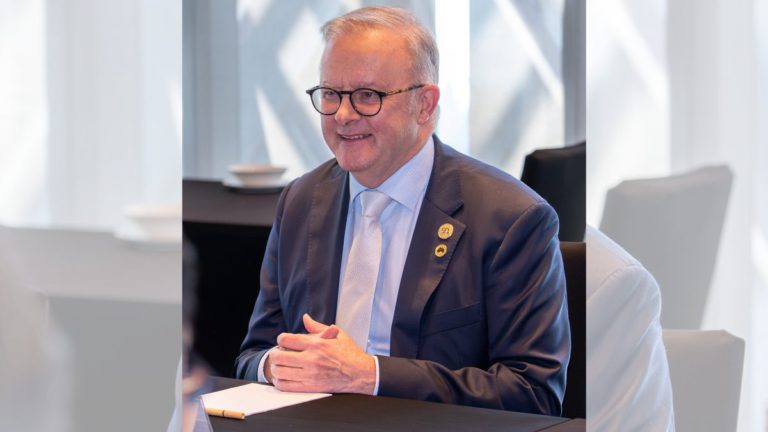
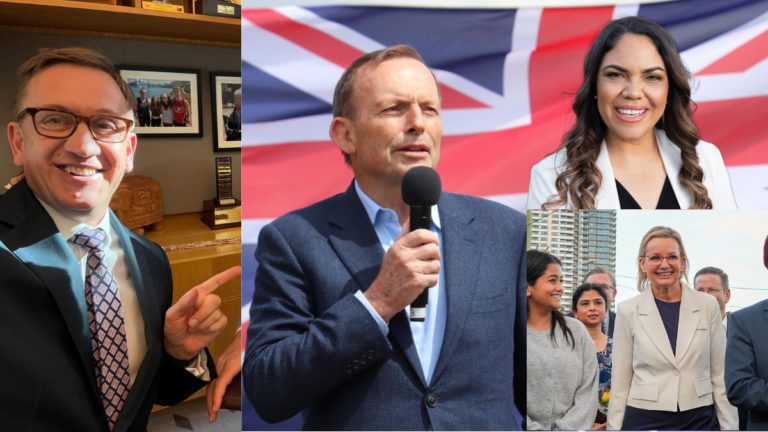
The Albanese Government has locked in Australia’s next climate milestone, setting a 2035 emissions reduction target of 62–70% below 2005 levels, in line with independent advice from the Climate Change Authority.
Prime Minister Anthony Albanese said in a statement the goal is both “ambitious but achievable”, designed to drive investment, respond to the science and prepare Australia for the global clean energy transition.
The Government’s new plan identifies five priority areas for cutting emissions: expanding renewable electricity, boosting energy efficiency and electrification, scaling up clean fuels like green hydrogen, backing new technologies through the “Future Made in Australia” agenda, and increasing carbon removals via land management schemes.
To deliver on the target, a funding package worth more than $8 billion has been announced, including:
$5 billion Net Zero Fund to help industries decarbonise and grow clean manufacturing
$2 billion for the Clean Energy Finance Corporation to cut power costs
$1.1 billion to boost local clean fuel production
$40 million to accelerate EV charging infrastructure
$85 million to support households and businesses improve energy use
$50 million for community sports clubs to go green
Treasury modelling released alongside the Net Zero Plan forecasts that a steady transition to net zero will support more jobs, higher wages and a stronger economy, with global clean energy investment set to exceed USD $2 trillion.
Climate Change and Energy Minister Chris Bowen said the target would halve emissions from current levels, align Australia with global efforts to limit dangerous warming, and secure future prosperity:
“This is the right target to protect our environment, grow jobs and keep Australia competitive.”
Australia’s updated commitment will be lodged as its Nationally Determined Contribution under the Paris Agreement, signalling to international partners that the country is ready for large-scale investment in clean energy.
Support our Journalism
No-nonsense journalism. No paywalls. Whether you’re in Australia, the UK, Canada, the USA, or India, you can support The Australia Today by taking a paid subscription via Patreon or donating via PayPal — and help keep honest, fearless journalism alive.
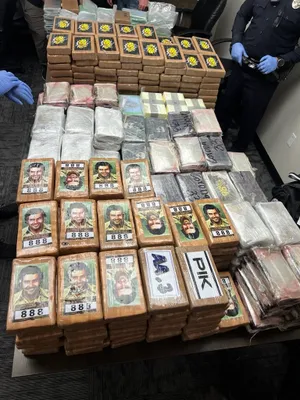
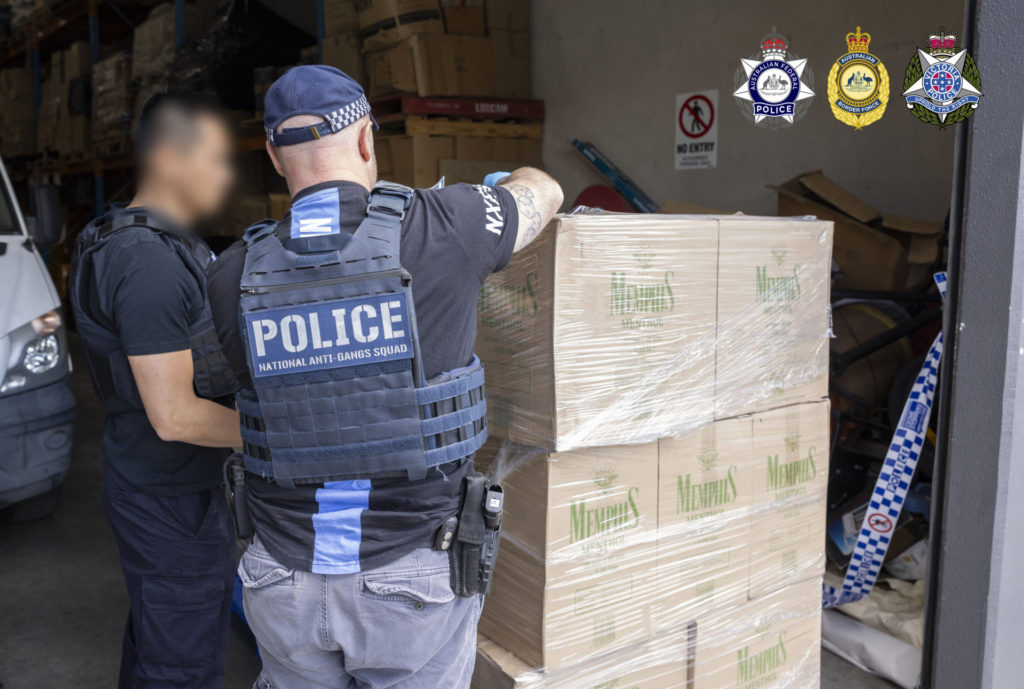
A routine traffic stop in California, USA, turned into a massive drug bust after a police K-9 helped officers uncover nearly 1,000 pounds of cocaine hidden inside a big rig, authorities said.
The driver, identified as 32-year-old Yuvraj Singh of Arizona, consented to a search of the truck. Inside, officers discovered 453 kilograms — about 999 pounds — of cocaine “wrapped in packaging and concealed between boxes,” police said in a statement.
Barstow police told local media that the officers pulled over the tractor-trailer on the 15 Freeway just after midnight on Saturday, near Lenwood Road, for a traffic violation.
Image: A police K-9 helped officers discover nearly 1,000 pounds (453 kilograms) of cocaine in a semitrailer during a traffic stop in Barstow (Source: Brastow Police)
During the stop, an officer deployed his K-9, which quickly alerted to the trailer, signalling the presence of narcotics.
Photos released by investigators showed some of the drug bundles stamped with the face of notorious Colombian drug kingpin Pablo Escobar, while others bore a “98%” logo.
Singh was arrested on suspicion of possessing and transporting narcotics for sale. He was booked at the High Desert Detention Center before being released on bail later the same day, pending legal proceedings.
Police said the cocaine was seized as evidence and secured at the Barstow Police Department.
Support our Journalism
No-nonsense journalism. No paywalls. Whether you’re in Australia, the UK, Canada, the USA, or India, you can support The Australia Today by taking a paid subscription via Patreon or donating via PayPal — and help keep honest, fearless journalism alive.
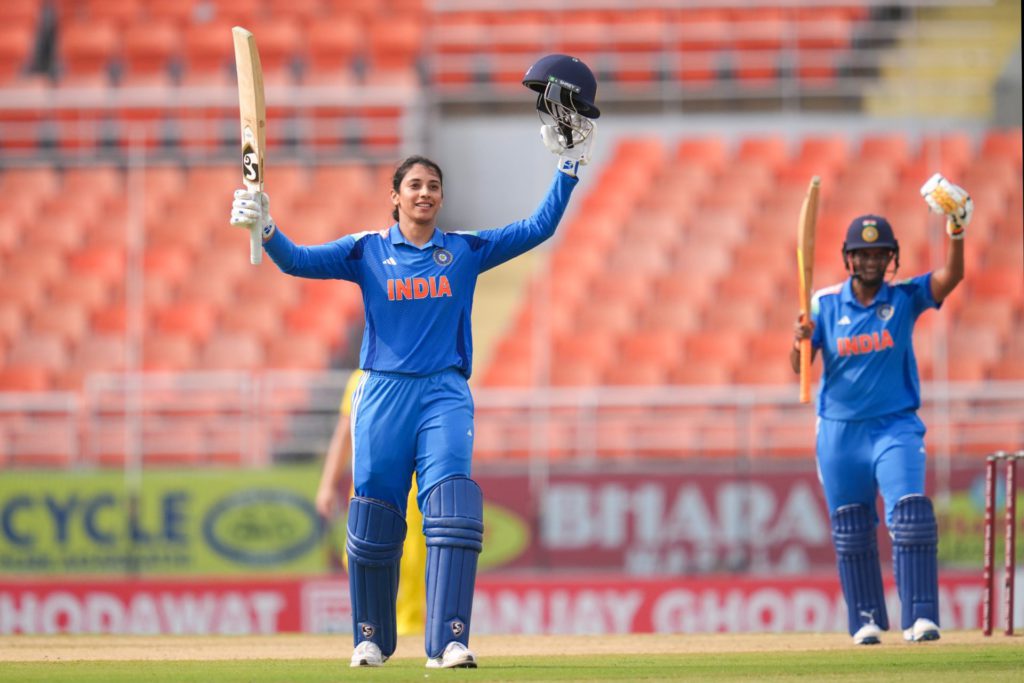
Smriti Mandhana’s breathtaking 117 off 91 balls led India Women to a dominant 102-run victory over Australia Women in the second One Day International of the series at the Maharaja Yadavindra Singh International Cricket Stadium, Mullanpur.
The win, India’s first home ODI triumph over Australia in 18 years and 206 days, levelled the three-match series 1-1.
Image Source: BCCI Women
Harmanpreet Kaur (India Captain) said,
“We are pleased with the way we played today… Our focus is always on keeping things simple and clear, and we managed to get the right breakthroughs at the right time.”
A blazing start, a landmark knock
After being sent in to bat, India’s openers set the tone early with Pratika Rawal contributing 25 off 32 and the explosive Mandhana putting Australia under immediate pressure. Mandhana launched into her innings with ferocity: 8 boundaries and 2 sixes in the powerplay helped her reach 64/0 by the 10-over mark. Her century was decorated with 14 fours and 4 sixes, reaching the milestone in just 77 balls — becoming the second-fastest century by an Indian woman in ODIs and equalling the world record for most hundreds by a women’s ODI opener.
The middle overs brought some turbulence for India. Harleen Deol (10), Harmanpreet Kaur (17), and Richa Ghosh (29) fell after promising starts, but Deepti Sharma’s composed 40 helped steady the ship. Sneh Rana smashed 24 off 18 to push the scoring forward and enable India to close at 292 in 49.5 overs. Although Ashleigh Gardner (2/39) and Darcie Brown (3/42) were among Australia’s standout bowlers, the damage of an imposing total had already been done.
Image Source: BCCI Women
Australia Captain Alyssa Healy said,
“India played excellent cricket today. They outperformed us in every phase… It makes for a valuable lesson as we head into the World Cup.”
Australia’s reply falls short
Australia, chasing 293 for victory, lost two quick wickets early — Georgia Voll departed for a duck and her opener partner Alyssa Healy fell to Kranti Goud. Goud was the pick of the Indian bowlers, finishing with 3/28. While Ellyse Perry (44) and Annabel Sutherland (45) offered resistance, the frequent loss of wickets prevented the Australian side from building any substantial partnerships. Ultimately, they were bowled out for 190 in 40.5 overs. India’s bowlers — Deepti Sharma, Arundhati Reddy, Sneh Rana, and Radha Yadav — shared the spoils to seal the win.
This victory was not just a win; it was a landmark moment for Indian women’s cricket. It ended a nearly two-decade-long drought where India had been unable to beat Australia in an ODI on home soil. It also delivered India their biggest margin of defeat over Australia in Women’s ODIs. The result is likely to boost confidence ahead of the 2025 Women’s World Cup, and re-solidifies India as a force to be reckoned with — especially when Mandhana fires.
Smriti Mandhana was declared Player of the Match.
She said,
“My last two hundreds against Australia came in losing causes, so I am really happy that this time it helped us win. The plan was clear — take advantage of the powerplay and then build the innings… With Australia you usually know the par score, around 280 to 290, which gives our bowlers that extra cushion.”
Image Source: BCCI Women
India’s win in this match will no doubt be remembered — not just for the statistics, but for what it symbolises: a return to form, belief, and a reminder that past records do not define future potential.
Support our Journalism
No-nonsense journalism. No paywalls. Whether you’re in Australia, the UK, Canada, the USA, or India, you can support The Australia Today by taking a paid subscription via Patreon or donating via PayPal — and help keep honest, fearless journalism alive.
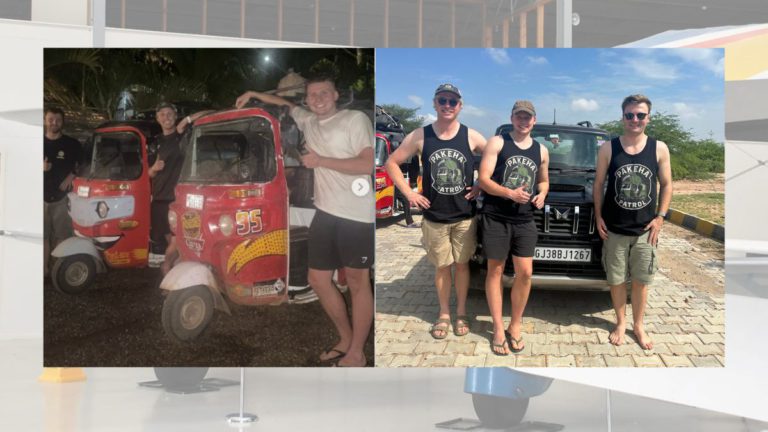
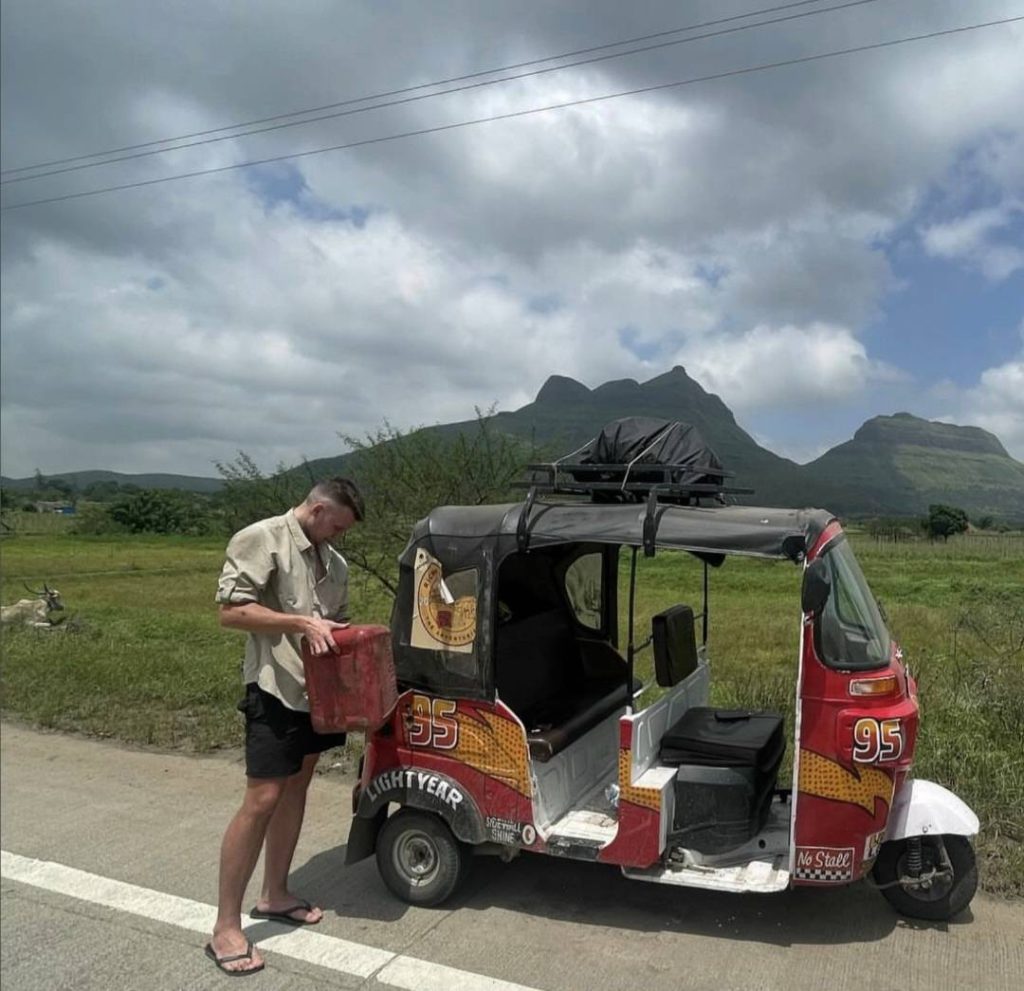
A 23-year-old New Zealand man’s love for adventure has taken him on a chaotic ride across India in auto rickshaw — all to help keep one of the most treasured aircraft in the skies.
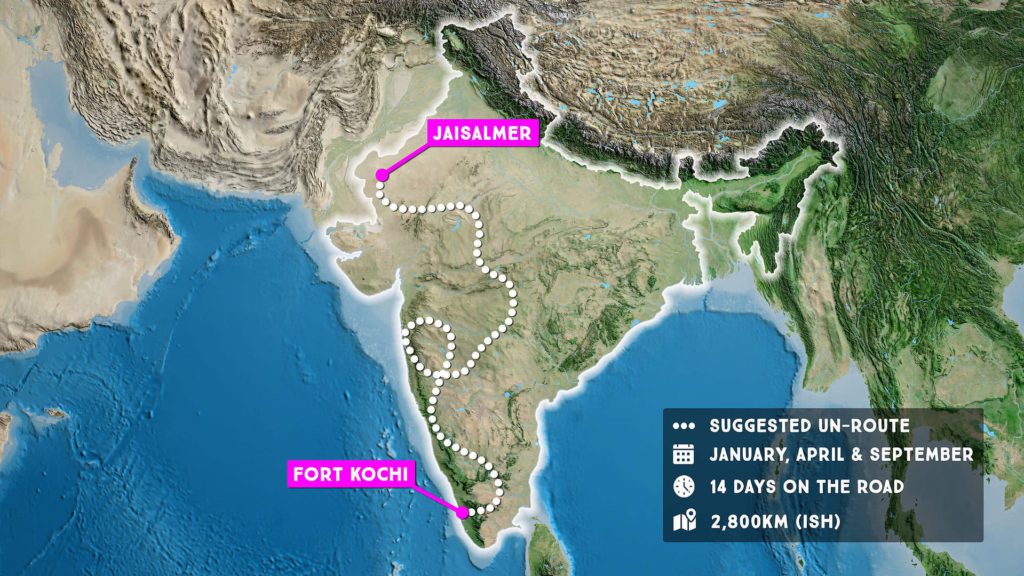
According to the Otago Daily Times, Matt Highsted, along with two South Island mates, is competing in the Rickshaw Run — a 3000km journey from Jaisalmer in northern India to Fort Kochi in the south.
Image: Matt Highsted, along with two South Island mates, is competing in the Rickshaw Run — a 3000km journey from Jaisalmer in northern India to Fort Kochi in the south (Source: Facebook – Croydon Aviation Heritage Centre, Mandeville)
Dubbed “two weeks of being slapped about the chops with everything India can throw at you and your glorified lawnmower,” the challenge has no set route and no rules, with teams navigating three-wheeled auto rickshaw through India’s unpredictable terrain.
Image: de Havilland 89 Dominie (Source: Website – Croydon Aviation Heritage Centre, Mandeville)
The Dominie is the only one of its kind in New Zealand still licensed to carry passengers, but engine troubles threaten to ground it after more than 80 years of flying.
“Aviation has been a passion of mine, and what better way to support a project back home than drive across India with no plan and no guidance, just a final destination.”
The run has already tested the team’s resilience. “On day one, we overheated, got lost in the desert, and rolled the tuk tuk,” he said.
Despite an unexpected 2000km detour to India’s east coast, the group is determined to cross the finish line.
Image: Matt Highsted, along with two South Island mates, is competing in the Rickshaw Run — a 3000km journey from Jaisalmer in northern India to Fort Kochi in the south (Source: Facebook – Croydon Aviation Heritage Centre, Mandeville)
Highsted is no stranger to tough challenges. While studying aerospace engineering at Canterbury University, he helped build rescue housing in Fiji and later walked the length of New Zealand to raise funds for charity.
Croydon Aviation Heritage Trust chairman Tracy Hicks praised his efforts: “We are very grateful to Matt for his enthusiasm and community commitment,” he told the Otago Daily Times.
The Rickshaw Run, first launched in 2006, is a chaotic and adventurous 3,000km journey across India between Fort Kochi in Kerala’s tropical south and Jaisalmer in Rajasthan’s Thar Desert. Dubbed a “stupid yet glorious” challenge, the unplanned route takes participants through everything India can throw at them, making it one of the most iconic and unpredictable adventure rallies in the world.
Support our Journalism
No-nonsense journalism. No paywalls. Whether you’re in Australia, the UK, Canada, the USA, or India, you can support The Australia Today by taking a paid subscription via Patreon or donating via PayPal — and help keep honest, fearless journalism alive.
Australians are reluctant to openly link immigration to the nation’s housing crisis, a leading population researcher has claimed, despite official data showing broad support for migration.
(Image Source: Mapping Social Cohesion Report 2024)(Image Source: Mapping Social Cohesion Report 2024)
Bob Birrell, president of The Australian Population Research Institute (TAPRI), said many Australians — including well-established migrants — privately felt immigration levels were too high.
“The poll that the ABS cited, it’s really just probing Australians’ politeness,” he told The Nightly. “Most people are not prepared to say outright that migrants are a problem, but when we ask them in our survey whether they are in favour of more diversity or not, the great majority of voters — including most well-established migrants — say they’re opposed to that. The concerns are very evident.”
“Most voters could see the connection between high levels of immigration and housing unaffordability.”
The comments come after thousands rallied in major cities two weeks ago against high immigration, a flashpoint in the broader debate over housing affordability and population growth.
While advocates argue immigration boosts the economy, fills labour shortages, and enriches society, critics link high intake to rising housing costs.
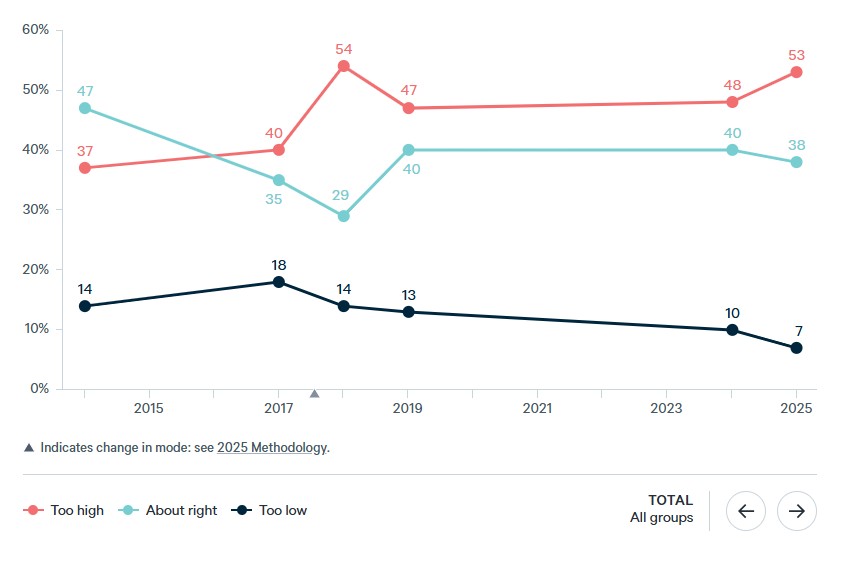
Image: Question – Thinking now about Australia’s immigration program. Do you personally think that the total number of migrants coming to Australia each year is too high, too low, or about right? (Source: Lowy Institute)
Other polls also show declining support. A TAPRI survey found 67 per cent opposed boosting immigration to increase diversity, while a June Lowy Institute poll reported 53 per cent believed migrant numbers were too high.
Despite the fall in sentiment, the ABS maintained that “cultural diversity is one of the greatest assets of Australian society” and said multiculturalism remained a “key indicator of cohesion, helping protect our society from social divisions.”
Net overseas migration dropped from a record 548,800 in the year to September 2023 to 340,800 by year’s end, including permanent arrivals and international students.
Support our Journalism
No-nonsense journalism. No paywalls. Whether you’re in Australia, the UK, Canada, the USA, or India, you can support The Australia Today by taking a paid subscription via Patreon or donating via PayPal — and help keep honest, fearless journalism alive.
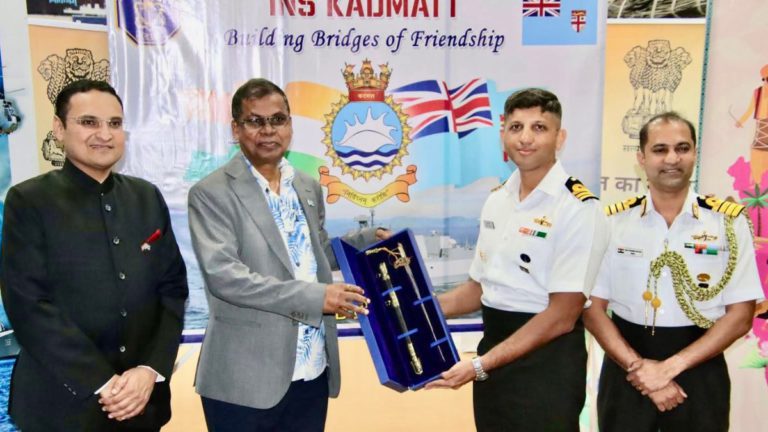
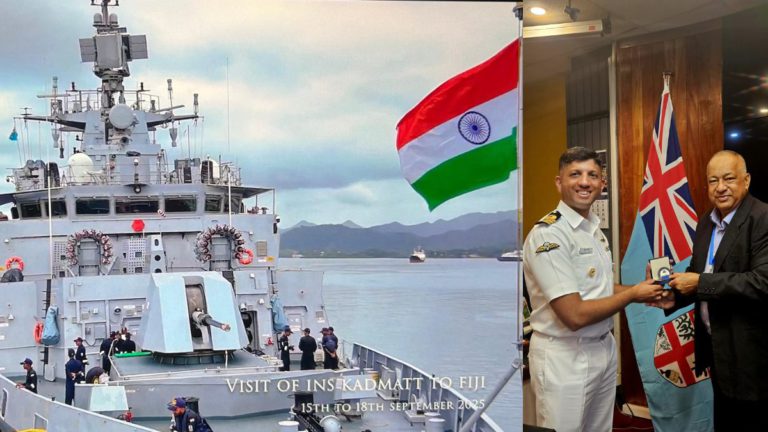
Fiji’s Acting Prime Minister and Minister for Finance, Prof. Biman Prasad, has reaffirmed Fiji’s commitment to working with India to advance peace, security, and sustainable development across the Indo-Pacific.
Speaking at a deck reception onboard INS Kadmatt at Suva Port, Prof. Prasad said the vessel’s arrival was more than a ceremonial visit, describing it as “a celebration of friendship, of trust, and of the enduring partnership between Fiji and India.”
🇫🇯🤝🇮🇳 Fiji & India share a common vision for the Blue Pacific as an Ocean of Peace. At the INS Kadmatt reception, the enduring friendship & partnership between our nations was celebrated—built on trust, peace & sustainable development. #FijiIndiaRelations#RegionalPartnershippic.twitter.com/2mLIJCe3Ug
The Acting Prime Minister noted that Pacific leaders had recently endorsed Fiji’s proposal for the Blue Pacific to be declared an “Ocean of Peace” during their meeting in Honiara.
Prof. Prasad added that the Indian Prime Minister Narendra Modi had expressed strong support for the vision when he met with Fiji’s Prime Minister in Delhi.
“The arrival of INS Kadmatt represents a significant step in advancing India’s cooperation towards this vision,” Prof. Prasad said.
“This visit underscores India’s support for promoting the Blue Pacific as an Ocean of Peace, an ocean that is welcoming to all and that respects the sovereignty and interests of Pacific Island communities.”
Prof. Prasad added that Fiji and India share common values, deep cultural ties, and a longstanding history of cooperation in areas such as climate resilience, agriculture, education, digital transformation, and health.
Cabinet ministers and members of the diplomatic corps also attended the event.
Support our Journalism
No-nonsense journalism. No paywalls. Whether you’re in Australia, the UK, Canada, the USA, or India, you can support The Australia Today by taking a paid subscription via Patreon or donating via PayPal — and help keep honest, fearless journalism alive.
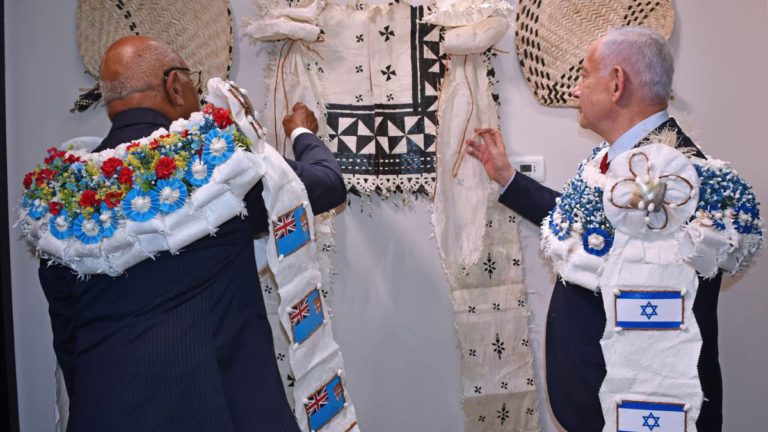
Fiji has officially opened its first resident embassy in Israel, with Prime Minister Sitiveni Ligamamada Rabuka joining Israeli Prime Minister Benjamin Netanyahu at the inauguration ceremony in Jerusalem on 17 September.
Rabuka observed that this event is a “historic step” that cements the friendship between Fiji and Israel while creating new opportunities for cooperation.
Image: Fiji’s Prime Minister Sitiveni Ligamamada Rabuka joined Israeli Prime Minister Benjamin Netanyahu at the inauguration ceremony in Jerusalem on 17 September (Source: Facebook )
“Today, I had the honour of joining Prime Minister Benjamin Netanyahu to officially open Fiji’s first Resident Embassy in Jerusalem,” Rabuka said.
“This historic step deepens the bonds of friendship between Fiji and Israel and opens new opportunities for cooperation. The inauguration ceremony of the Fiji Embassy marks the dawn of a new era and is more than the unveiling of a plaque.”
Rabuka further added: “It is a testament to Fiji’s enduring commitment to friendship, dialogue, and constructive engagement with the global community.”
“Our presence here reflects our desire to build bridges—not walls—between nations, cultures, and peoples. God bless Israel, God bless Fiji.”
The embassy is a strategic move by Fiji to deepen bilateral cooperation across security, agriculture, climate resilience, innovation, trade, and people-to-people links. An advance team led by Fiji’s Permanent Representative to the United Nations, Filipo Tarakinikini, had been in Jerusalem finalising preparations ahead of the opening.
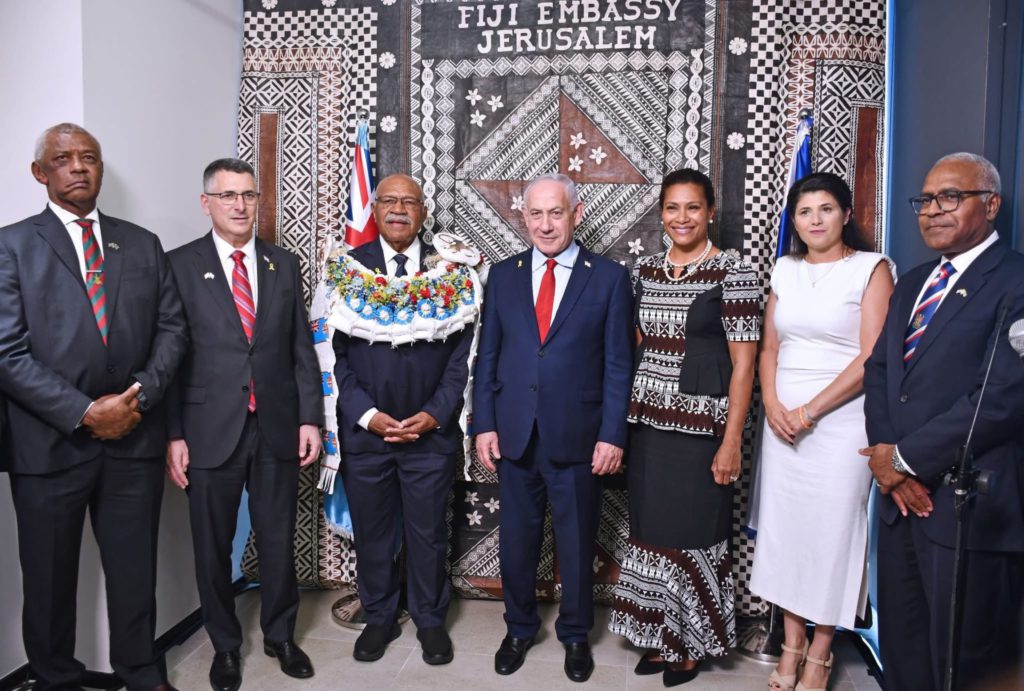
Image: Fiji’s Prime Minister Sitiveni Ligamamada Rabuka, Israeli Prime Minister Benjamin Netanyahu and distinguished ministers at the inauguration ceremony in Jerusalem on 17 September (Source: Facebook )
During the visit, Fijian ministers and officials are holding talks with their Israeli counterparts to progress practical initiatives. Security discussions will build on Israel’s earlier pledge to support Fiji’s maritime and border security, including patrol vessel capability, as part of Fiji’s wider effort to combat transnational crime and keep its communities safe.
Minister for Information Lynda Tabuya emphasised that the embassy’s establishment was about delivering “practical outcomes” for Fijians, ranging from climate-smart agriculture and modern irrigation to digital and communications cooperation.
Minister for Home Affairs Pio Tikoduadua added that meetings with Israeli security officials would focus on “training, technology exchange, and operational cooperation to make Fiji safer and more secure.”
Israel has extended hospitality and financial support in line with its cabinet decision to assist countries relocating embassies to Jerusalem.
The new mission will also enhance consular services for Fijians while symbolising a deepening partnership. As Rabuka underlined, the embassy is “a forward-looking step, a bridge of cooperation that advances Fiji’s interests, supports our values, and fosters dialogue and peace.”
Support our Journalism
No-nonsense journalism. No paywalls. Whether you’re in Australia, the UK, Canada, the USA, or India, you can support The Australia Today by taking a paid subscription via Patreon or donating via PayPal — and help keep honest, fearless journalism alive.
The man who died in a suspected carbon monoxide leak at Haveli Indian Restaurant in Riverstone has been identified as 25-year-old Nepali international student Shiva Khatri, who worked at the venue as a cleaner.
Image: 25-year-old Nepali international student Shiva Khatri (Source: GoFundMe)
Emergency services were called to the Garfield Road restaurant around 9.15am on Tuesday after Khatri was found unresponsive inside. Despite efforts by police officers and paramedics, he could not be revived.
Khatri’s brother, Mandip, has launched a fundraising appeal to repatriate his body to Nepal. “With deep sorrow, I share that Shiva tragically lost his life yesterday morning in a workplace accident,” he wrote.
“We are raising funds to take Shiva’s body back to Nepal so that he can be laid to rest with his family… any contribution, no matter how small, will make a big difference and help us honour Shiva’s memory.”
Eralier it was reported that five police officers who attempted CPR on Khatri, along with a member of the public living above the restaurant, were taken to hospital for suspected carbon monoxide poisoning. The officers have since been released.
NSW Police Assistant Commissioner Gavin Wood said there were “extremely high levels” of carbon monoxide detected inside the building. While, Fire and Rescue NSW Superintendent Adam Dewberry confirmed specialist firefighters detected dangerous levels of gas inside the building.
Greenway MP Michelle Rowland said she was “deeply saddened and shocked to hear of the tragic incident in Riverstone,” extending her condolences to Khatri’s family and praising first responders.
Haveli Indian Restaurant, which opened in April last year, is a popular restaurant in the area. Blacktown councillor Moninder Singh described the owners as “a young family, very humble people” who are well known in the local community.
A GoFundMe campaign has been launched to help repatriate Khatri’s body to Nepal and support his grieving family. “Our heartfelt condolences go out to his family, friends, and the Nepali community in Australia. May his soul rest in eternal peace,” a local community leader observed.
Authorities are continuing investigations into the cause of the leak.
Support our Journalism
No-nonsense journalism. No paywalls. Whether you’re in Australia, the UK, Canada, the USA, or India, you can support The Australia Today by taking a paid subscription via Patreon or donating via PayPal — and help keep honest, fearless journalism alive.
Premier Jacinta Allan launched the Direct From Victoria campaign today in Shanghai at one of Dingdong Fresh’s order-fulfilment centres, putting Victorian produce literally on Chinese phones. The app delivers fresh produce, meat and seafood within 30 minutes and boasts two million daily users, 830,000 of whom place orders each day.
“Food is our brand. There are no better ambassadors for our state than products like Devondale dairy and Yering Station wine,” Premier Allan said.
“We’re not just taking Victorian product to the Chinese market – we’re putting it on Chinese phones.”
Nearly 40 Victorian products from 13 brands will be highlighted on the app’s front page, including Sunkist oranges, Bulla ice cream and frozen yoghurt, Chobani Greek yoghurt, Mondelez cream cheese, Devondale milk, Mayura Station wagyu, Yering Station pinot noir, Lakefield alcohol-free sparkling and Red Tractor chia seeds.
Minister for Economic Growth and Jobs Danny Pearson added:
“Supporting our nation-leading exporters to access and expand in international markets drives business and jobs growth back home.”
The campaign coincides with the reopening of Vic House, Victoria’s permanent trade hub and food and wine showcase in Shanghai. The venue features a demonstration kitchen where producers can conduct live tastings and showcase regional products, including iconic brands like King Valley’s Brown Brothers.
Since opening in 2021, Vic House has helped more than 200 businesses export to China, hosted 160 events and facilitated over 2,200 business meetings, injecting $300 million in export sales into Victoria’s economy.
Victorian Commissioner to Greater China Leigh Howard said: “Vic House is a unique asset for the Victorian Government in China, showcasing the strength of our industries and creating new opportunities for Victorian businesses.”
“By broadening our footprint in one of the world’s biggest economies, Vic House positions Victoria for future trade and investment growth.”
Victoria, which represents just three per cent of Australia’s landmass, produces 27 per cent of the country’s food and fibre export value. China remains Victoria’s largest trading partner, with exports exceeding $4.8 billion in 2023-24.
Support our Journalism
No-nonsense journalism. No paywalls. Whether you’re in Australia, the UK, Canada, the USA, or India, you can support The Australia Today by taking a paid subscription via Patreon or donating via PayPal — and help keep honest, fearless journalism alive.
Pakistan faced international embarrassment after Japan deported a group of nationals posing as a football team, allegedly in an attempt at human trafficking.
According to news report, 22 Pakistani nationals claimed to be players of a football team from Sialkot but were found carrying fake documents.
Japanese authorities intercepted the group at the airport and sent them back after verifying their credentials were fraudulent.
The Federal Investigation Agency (FIA) identified the main suspect as Malik Waqas, who was arrested in Gujranwala.
Waqas had reportedly registered a club called ‘Golden Football Trial’ and trained the individuals to act as footballers, charging each member between Rs 4–4.5 million to facilitate their travel.
A senior FIA official said the group obtained 15-day visit visas to Japan under the invitation of Boavista Football Club using forged Pakistan Football Federation registration letters and a fake No Objection Certificate from the Ministry of Foreign Affairs. None of the travellers returned to Pakistan as planned.
The FIA confirmed that this was not the first incident involving Waqas. In a similar case on 15 June 2025, a 22-member fake football team was also deported by Japanese authorities, prompting a formal investigation and subsequent arrests.
The Gujranwala Director of the FIA, Muhammad Bin Ashraf, said the cases are ongoing and further investigations are underway.
Support our Journalism
No-nonsense journalism. No paywalls. Whether you’re in Australia, the UK, Canada, the USA, or India, you can support The Australia Today by taking a paid subscription via Patreon or donating via PayPal — and help keep honest, fearless journalism alive.
Tim Watts MP, Australia’s Special Envoy for Indian Ocean Affairs, is in Mumbai this week to deepen the cultural and economic links between Australia and India.
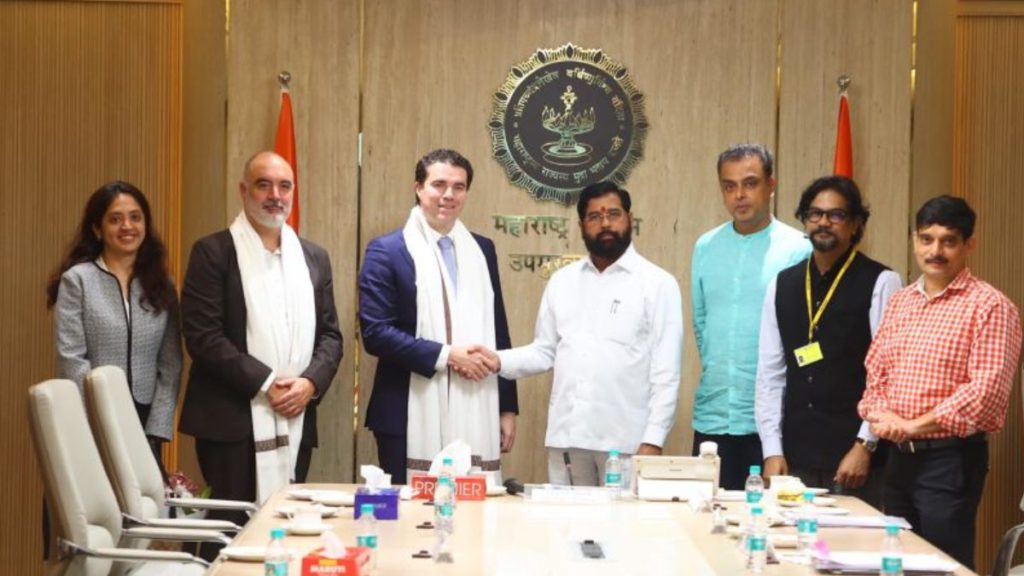
Image: Tim Watts MP with Milind Deora MP, Deputy Chief Minister of Maharashtra Eknath Shinde and Australia’s Consul General in Mumbai Paul Murphy (Source: LinkedIn)
During his visit, Watts met with Milind Deora MP and Maharashtra Deputy Chief Minister Eknath Shinde, alongside Australia’s Consul General in Mumbai, Paul Murphy.
“Australia and India have strong and growing economic and community ties, and we are working together to realise shared opportunities for growth and exchange.”
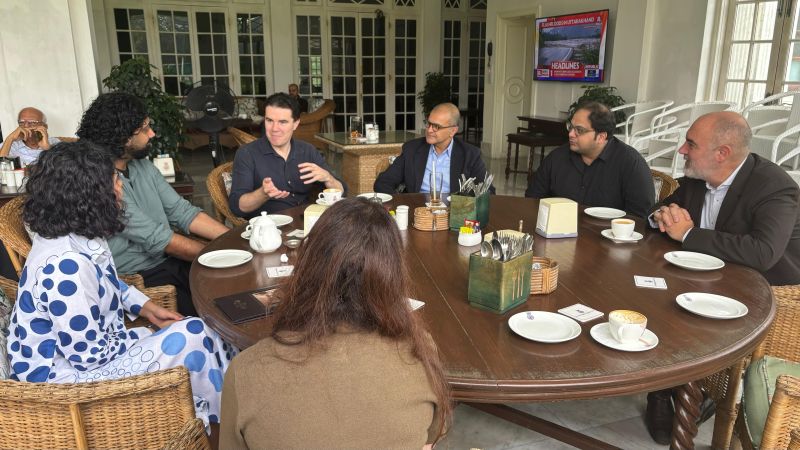
Watts has been engaging with cultural leaders in Mumbai to explore collaborations, build on programs such as the Maitri grants, and leverage popular events like the Indian Film Festival of Melbourne. Highlighting the strength of the Indian diaspora in Australia, now nearly one million strong, he noted the potential to deepen cultural exchange.
Image: Tim Watts MP with cultural leaders in Mumbai (Source: LinkedIn)
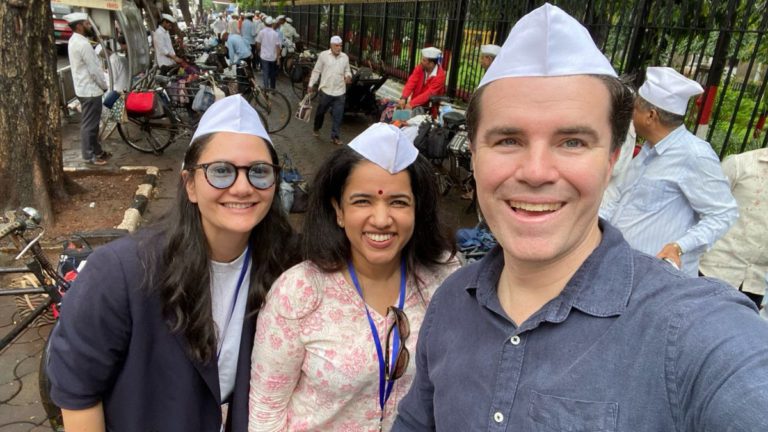
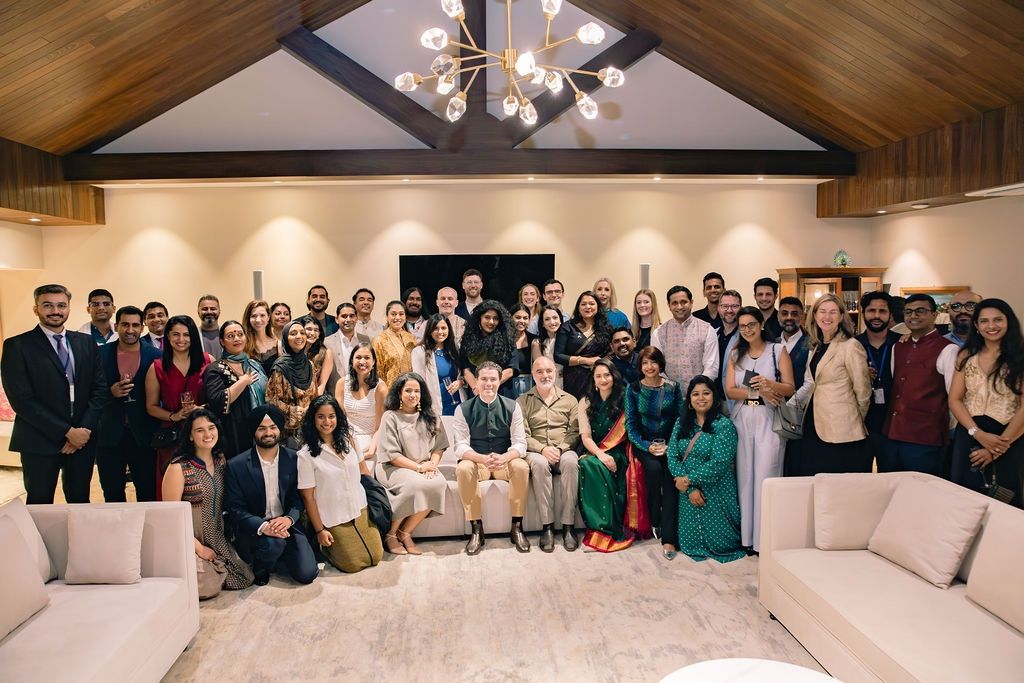
As part of his trip, Watts joined celebrations for the Australia India Youth Dialogue (AIYD) in Mumbai and Delhi, recognising its role in empowering young leaders to strengthen bilateral ties. He visited the city’s famed dabbawalas, following the opening night hosted by the Australian High Commission for India and Bhutan, reflecting the people-to-people connections between the two nations.
Image: Tim Watts MP with AIYD alumni in Mumbai (Source: LinkedIn)
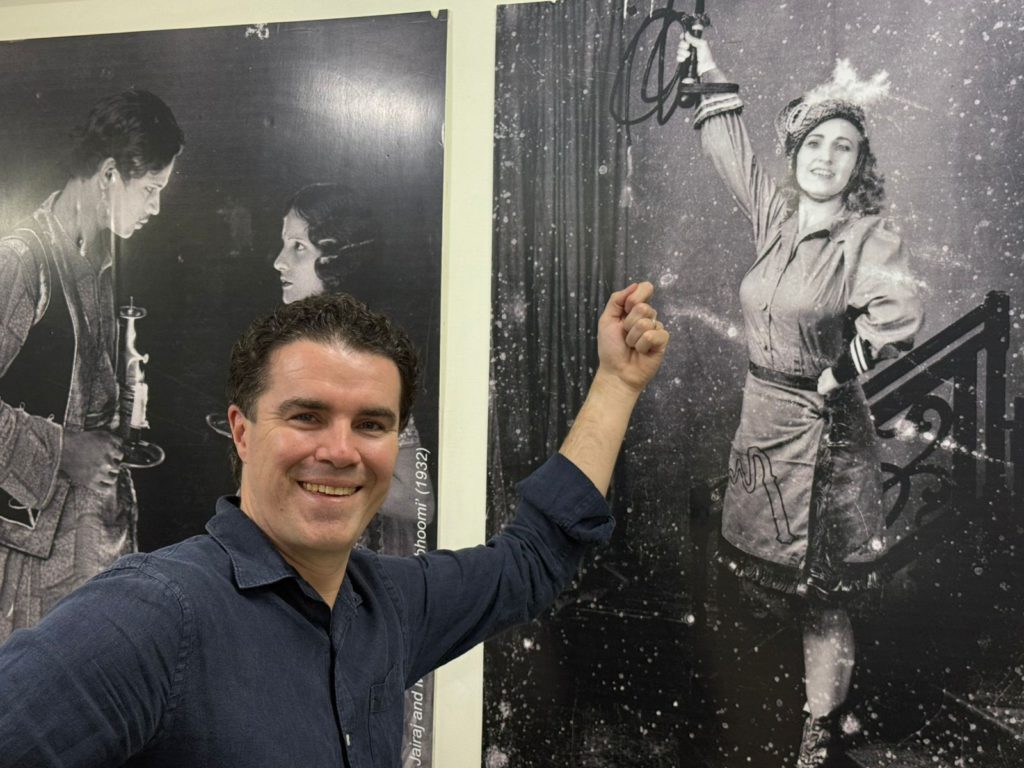
Watts also toured the Film Heritage Foundation centre, where Australian and Indian creative collaboration is flourishing. He highlighted the nearly 100-year history of cinematic ties, recalling Perth actress Mary Ann Evans’ lead role in the 1935 Hindi film Hunterwali.
Collaboration through initiatives like the Australia-India Audiovisual Co-production Agreement, he said, continues to reinforce cultural and economic connections.
Image: Tim Watts MP at the ilm Heritage Foundation centre in Mumbai (Source: LinkedIn)
“Programs like AIYD and cultural partnerships build on our ties – enhancing our economic, innovation and people-to-people connections,” Watts said, emphasising India’s importance as a key partner in the Indo-Pacific.
Support our Journalism
No-nonsense journalism. No paywalls. Whether you’re in Australia, the UK, Canada, the USA, or India, you can support The Australia Today by taking a paid subscription via Patreon or donating via PayPal — and help keep honest, fearless journalism alive.
Peel Regional Police have arrested three men on Canada-wide warrants in connection with two shooting incidents linked to an extortion case in Brampton, Ontario.
On 10 and 11 July, 2025, shots were fired at homes on Rolling Acres Drive. No one was injured, but suspects were seen fleeing in a black Chrysler 300, later recovered in Winnipeg on 13 July.
20-year-old Husandeep Singh of Mississauga was arrested on 27 July and charged with discharging a firearm with intent and extortion.
23-year-old Gurpreet Singh, of no fixed address, was arrested in Winnipeg on 26 August and charged with two counts of discharging a firearm with intent and extortion.
26-year-old Gurdeep Shergill of Delta, British Columbia, was arrested in Surrey on 12 September with the assistance of the Surrey Police Service. He faces the same charges as Gurpreet Singh.
Arrests Made in Relation to Shooting Investigations
All three men were transported to Ontario, where they remain in custody pending bail hearings.
Peel Regional Police thanked Surrey Police Service for its support. While Shergill was arrested in Surrey, local investigators confirmed there is currently no link between him and the ongoing wave of extortion cases targeting Surrey’s South Asian community.
Surrey Police are separately investigating 44 extortion cases and 27 related shootings, with Mayor Brenda Locke announcing a $250,000 reward fund for tipsters who help secure convictions.
Support our Journalism
No-nonsense journalism. No paywalls. Whether you’re in Australia, the UK, Canada, the USA, or India, you can support The Australia Today by taking a paid subscription via Patreon or donating via PayPal — and help keep honest, fearless journalism alive.
India’s Prime Minister Narendra Modi celebrated his 75th birthday on Wednesday, with greetings pouring in from across the globe.
Prime Minister Anthony Albanese extended greetings, praising the strong India–Australia partnership: “Happy birthday to my friend Prime Minister Modi. Australia is proud to share such a strong friendship with India, and we’re grateful every day for the incredible contribution of the Indian community here in Australia.”
“I look forward to catching up with you soon, Prime Minister, and to many more years of friendship and progress.”
US President Donald Trump held a phone call with PM Modi—their first conversation since Operation Sindoor. The two leaders discussed the ongoing Ukraine conflict and reaffirmed their commitment to deepening India–US relations.
“Just had a wonderful phone call with my friend, Prime Minister Narendra Modi. I wished him a very Happy Birthday! He is doing a tremendous job,” Trump posted on his Truth Social account.
Just had a wonderful phone call with my friend, Prime Minister Narendra Modi. I wished him a very Happy Birthday! He is doing a tremendous job. Narendra: Thank you for your support on ending the War between Russia and Ukraine! President DJT
Modi responded on X, thanking Trump for his warm wishes: “Thank you, my friend, President Trump, for your phone call and warm greetings on my 75th birthday.”
Thank you, my friend, President Trump, for your phone call and warm greetings on my 75th birthday. Like you, I am also fully committed to taking the India-US Comprehensive and Global Partnership to new heights. We support your initiatives towards a peaceful resolution of the…
New Zealand’s Prime Minister Christopher Luxon also conveyed his wishes, sharing a video message on X to congratulate PM Modi on his milestone birthday.
Indian Leaders including President Droupadi Murmu, Union ministers Amit Shah and Nirmala Sitharaman, along with celebrities like Shah Rukh Khan and Nagarjuna, joined citizens in flooding social media with messages under the hashtag #MyModStory.
भारत के प्रधानमंत्री श्री @narendramodi जी को जन्मदिन की हार्दिक बधाई और शुभकामनाएं। परिश्रम की पराकाष्ठा का उदाहरण प्रस्तुत करते हुए अपने असाधारण नेतृत्व से आपने देश में बड़े लक्ष्यों को प्राप्त करने की संस्कृति का संचार किया है। आज विश्व समुदाय भी आपके मार्गदर्शन में अपना…
As in previous years, the Bharatiya Janata Party (BJP) is marking the occasion with ‘Sewa Pakhwara’, a nationwide fortnight of service activities highlighting Modi’s focus on welfare and public service.
पीएम @narendramodi के जन्मदिन पर दें पर्सनलाइज्ड AI Shubhkamna Reel से संदेश। अपने नाम, पेशे के साथ बताएं उनकी प्रेरणाओं को। अभी शेयर करें।
Born in Gujarat’s Mehsana district, Modi is India’s longest-serving non-Congress prime minister and the first non-Congress leader to complete two full terms in office. Now the second-longest consecutive prime minister in India’s history, his popularity remains strong—reflected in his July ranking at the top of global democratic leader approval ratings with 75 per cent.
Support our Journalism
No-nonsense journalism. No paywalls. Whether you’re in Australia, the UK, Canada, the USA, or India, you can support The Australia Today by taking a paid subscription via Patreon or donating via PayPal — and help keep honest, fearless journalism alive.
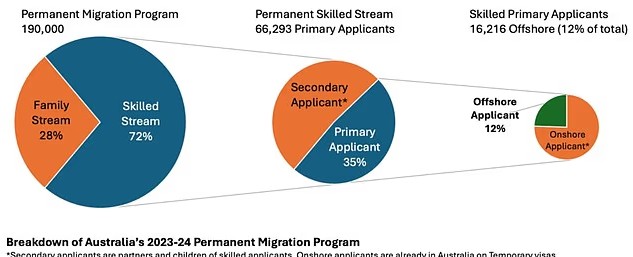
ANU Professor Alan Gamlen said temporary migrants, such as international students, graduates, and working holidaymakers, are already driving most growth in the skilled workforce.
“These groups now underpin high-skill occupations including managers, professionals, and trades.”
The report found that while only 12 per cent of permanent visa places currently go to offshore skilled entrants, temporary visa holders are contributing significantly to the country’s skill base.
Over the past three years, 84 per cent of growth in migrant skilled employment came from students, graduates, and working holidaymakers.
Prof. Gamlen and co-author Emeritus Prof. Peter McDonald argue that a shift in migration policy to focus on permanent skilled stream applicants would provide a steadier pipeline of talent, restore employer confidence, and strengthen Australia’s long-term workforce. Professor Gamlen said:
“A clear focus on skilled primary applicants, particularly through employer sponsorship, would sharpen policy purpose and address the country’s economic objectives.”
Earlier, Immigration Minister Tony Burke confirmed the permanent migration program would be maintained at 185,000 for 2025-26, with an emphasis on skilled migration, ensuring continuity for businesses and industries reliant on skilled workers.
The ANU report also highlighted the misperception that temporary visa holders only fill low-skill roles. Data show that more than half of graduate visa holders work in high-skill positions, with working holidaymakers increasingly taking on skilled roles.
Experts say the proposed reforms could clarify the purpose of permanent migration, separate family visas from the capped program, and better align Australia’s migration system with the country’s workforce needs.
Support our Journalism
No-nonsense journalism. No paywalls. Whether you’re in Australia, the UK, Canada, the USA, or India, you can support The Australia Today by taking a paid subscription via Patreon or donating via PayPal — and help keep honest, fearless journalism alive.
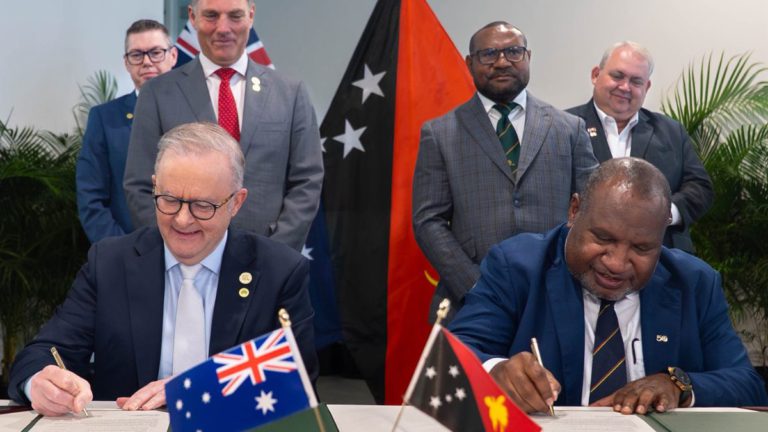
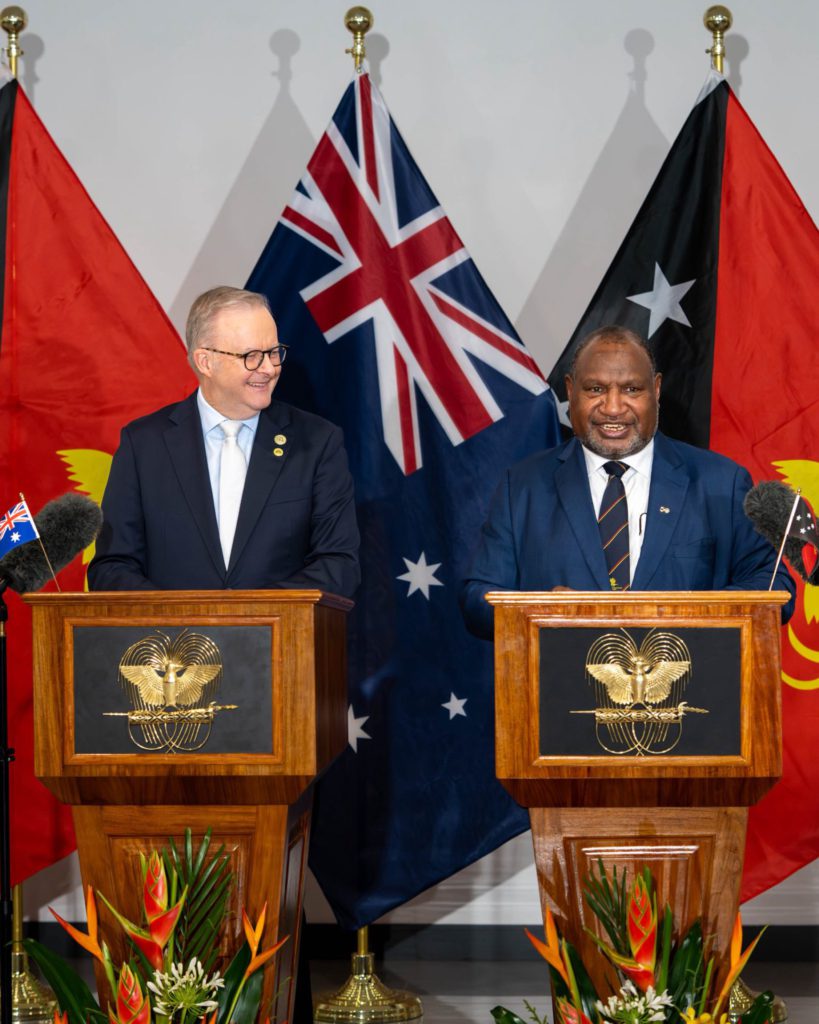
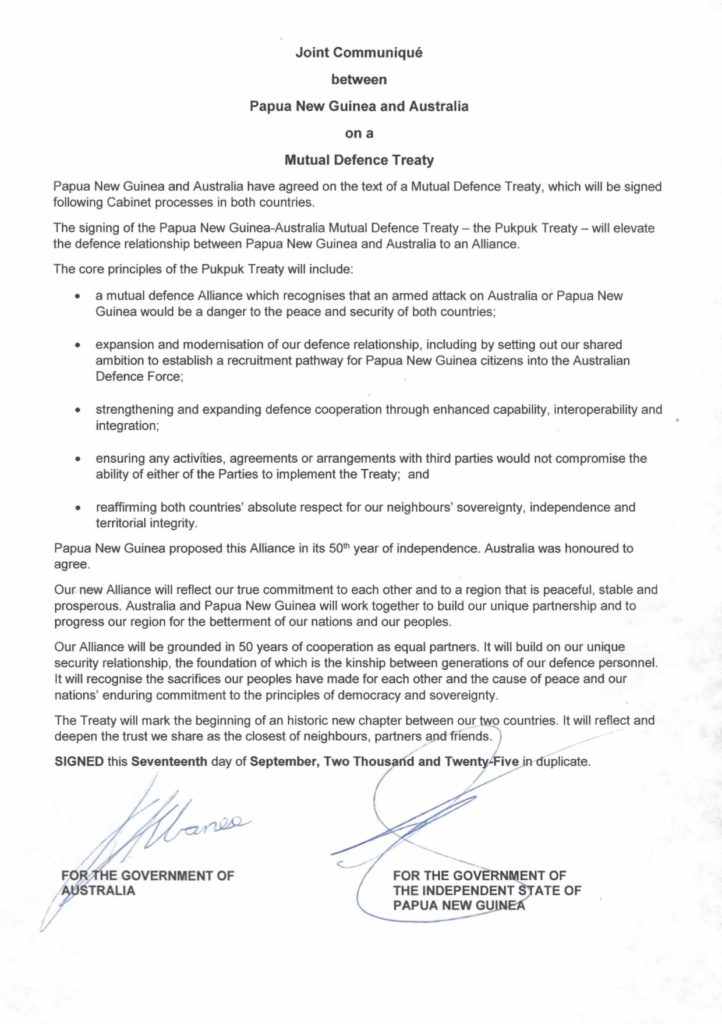
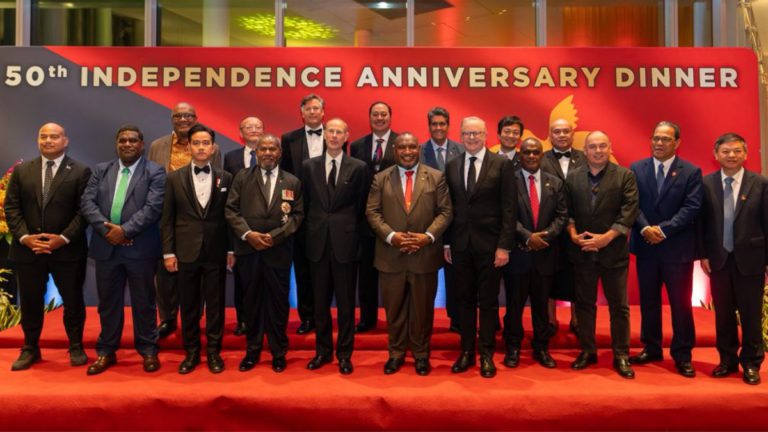
Papua New Guinea and Australia have agreed on the text of a landmark Mutual Defence Treaty – the Pukpuk Treaty – set to be signed once Cabinet processes in both countries are completed.
Prime Ministers Anthony Albanese and PNG’s Prime Minister James Marape said the treaty represents the next chapter in a partnership grounded in half a century of cooperation, shared sacrifices and a commitment to democracy and regional stability.
“This historic alliance will deepen the trust we share as neighbours, partners and friends, while ensuring our region remains peaceful, stable and prosperous,” they said in a joint statement.
Image: Prime Ministers Anthony Albanese and PNG’s Prime Minister James Marape (Source: X)
The agreement will formally elevate the defence relationship between the two nations into a mutual defence alliance. It commits both countries to stand together in the event of an armed attack, while strengthening cooperation through modernised defence capability, interoperability and integration.
Key elements of the treaty include a recruitment pathway for Papua New Guinea citizens into the Australian Defence Force, safeguards against third-party agreements undermining the treaty, and a reaffirmation of respect for neighbours’ sovereignty, independence and territorial integrity.
Papua New Guinea proposed the alliance in its 50th year of independence, a gesture that Australia described as an honour to accept.
Support our Journalism
No-nonsense journalism. No paywalls. Whether you’re in Australia, the UK, Canada, the USA, or India, you can support The Australia Today by taking a paid subscription via Patreon or donating via PayPal — and help keep honest, fearless journalism alive.
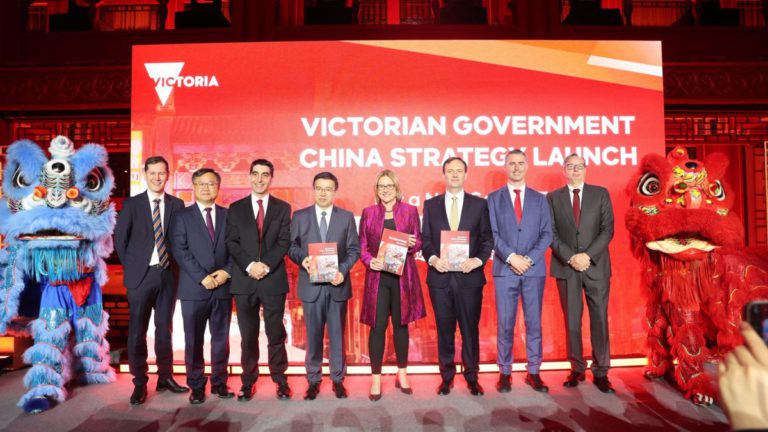
Premier Jacinta Allan has launched Victoria’s new China Strategy in Beijing, announcing a landmark renewable energy partnership set to deliver cheaper and cleaner power to thousands of homes across the state.
Premier Allan launched the China Strategy alongside members of Victoria’s Chinese community in Beijing. She said the plan sets a five-year roadmap to attract investment, boost regional growth, and deliver clean energy security.
“China is the world’s clean energy superpower, installing 100 solar panels every second – and Victoria is benefiting,” Ms Allan said.
“My China Strategy is all about investments like these that cut our bills, lower emissions and create new jobs.”
My China Strategy is clear:
We want Victoria to be the first port of call for Chinese business to invest and innovate – and the destination of choice for Chinese people to visit and study.
That means more jobs and stability for Victoria in an increasingly uncertain world.… pic.twitter.com/JWHumya8EH
The Allan Labor Government has given the green light to a $453 million battery energy storage system in North-East Victoria, backed by Chinese renewable energy giant Trina Solar.
The 500-megawatt Kiewa Valley project, located near Dederang Terminal Station, will be capable of powering up to 172,000 homes annually.
The project, which creates 80 construction jobs and six ongoing roles, has been fast-tracked through the Government’s Development Facilitation Program. Conditions require strict management of bushfire risk, noise and visual impacts.
More than $5 billion worth of renewable energy projects have already been accelerated under the facilitation program, with the potential to power 570,000 households and provide battery storage to meet peak demand for 1.3 million homes.
Planning Minister Sonya Kilkenny said the Government was “fast-tracking decisions on renewable energy projects like this one to provide cheaper, cleaner energy for more Victorians,” while Energy Minister Lily D’Ambrosio added that the project supports the state’s transition to 95 per cent renewable energy by 2035.
The partnership underscores Victoria’s ambition to become the first port of call for Chinese investors and innovators, ensuring economic stability and growth even in a volatile global environment.
Support our Journalism
No-nonsense journalism. No paywalls. Whether you’re in Australia, the UK, Canada, the USA, or India, you can support The Australia Today by taking a paid subscription via Patreon or donating via PayPal — and help keep honest, fearless journalism alive.
The Australian government has released regulatory guidance on the social media minimum age law, which comes into effect on December 10. The law will restrict individuals under 16 from holding accounts on many social media platforms.
Reasonable steps for tech companies
This guidance follows a self-assessment guide for technology companies recently released by the eSafety Commission. Companies can use this to determine whether their services will be age-restricted.
That guidance included details on the types of platforms to be excluded from the age restrictions, such as those whose “sole or primary purpose” is professional networking, to support education or health, or to enable playing of online games.
The recent guidance is aimed at services likely to be age-restricted, such as Facebook, Instagram and TikTok. It sets out what the government considers “reasonable steps” technology companies must take to “ensure they have appropriate measures in place” to comply with the legislation.
Removing underage users
Social media platforms will be expected to “detect and deactivate or remove” accounts from existing underage users. The government advice says this should be done “with care and clear communication”, which suggests account-holders will be notified.
However, it remains unclear whether companies will delete a user’s content. Nor is it clear whether an underage person’s account could be reactivated once they turn 16.
Preservation options may demonstrate a level of “care” expected by the legislation. This may be important for young people concerned about losing their creative content and social media history.
Tech companies will also need to “prevent re-registration or circumvention by underage users whose accounts have been deactivated or removed”.
This suggests companies may need to put measures in place to counter attempts to use virtual private networks (VPNs), for example, which allow users to hide their country of residence. They may also need strategies to check whether underage users are accessing accounts due to errors made by age-assurance technologies.
How age assurance may work
For users over 16 who are erroneously restricted from accessing accounts, technology companies must “provide accessible review mechanisms”.
Companies are also expected to take a “layered approach” to age assurance to minimise error rates and “friction” for users. They must also give users choice on how age will be assured, as they “cannot use government ID as the sole method”.
This may allay some data-privacy concerns. However, the number of users who need to provide some form of personal information to assure their age will be significant.
The government guidance makes clear companies must ensure they are “avoiding reliance on self-declaration alone” (that is, simply asking users their age). Companies must also be “continuously monitoring and improving systems” to demonstrate they are effective in limiting underage account access.
Will the legislation achieve its goal?
The guidance provides clarity on many practical questions about how the legislation will be implemented. It also demonstrates that Australians under 16 are not being banned, completely, from accessing social media content.
Under-16s will still be able to view social media content online without logging into an account. This means things such as watching YouTube on a web browser.
Young people may still access content through accounts held by older people. Think of when adult accounts remain logged in on shared devices.
Parents and other caregivers will need to ensure they understand the new rules and continue to guide young people accessing content online. The eSafety Commissioner will also provide further resources to support people to understand the new laws.
What won’t be required
Importantly, the government “is not asking platforms to verify the age of all users”. The guidance explains such a blanket verification approach “may be considered unreasonable, especially if existing data can infer age reliably”. Some young people may keep their accounts, such as in cases where facial scanning technology estimates them to be over 16.
The government “does not expect platforms to keep personal information from individual age checks” or retain “user-level data”. Rather, companies will be expected to keep records that “focus on systems and processes”.
This suggests individual cases of young people accessing accounts may not mean companies have failed to comply with legislation.
However, the eSafety Commissioner said in a press conference today that companies will be expected to “make discoverable and responsible reporting tools available”. Where some young people’s accounts are missed, the government will “talk to the companies about the need to retune their [age assurance] technologies”.
What happens next?
Technology companies are likely to start implementing restrictions using data they already have for account holders, to ensure compliance from December 10. If a person signed up to Facebook in 2004, when the platform launched, for example, that could demonstrate the account holder is over 16 without additional checks.
However, the government is not prescribing specific approaches or technologies companies must use. Each service will need to determine its own strategy. This means Australians could face differing expectations for age assurance from each platform.
What the government has made clear is there will be no delay in the start date for compliance. Communications Minister Anika Wells said there is “no excuse for non-compliance”.
The next steps are now in the social media companies’ hands.
Lisa M. Given, Professor of Information Sciences & Director, Social Change Enabling Impact Platform, RMIT University
No-nonsense journalism. No paywalls. Whether you’re in Australia, the UK, Canada, the USA, or India, you can support The Australia Today by taking a paid subscription via Patreon or donating via PayPal — and help keep honest, fearless journalism alive.
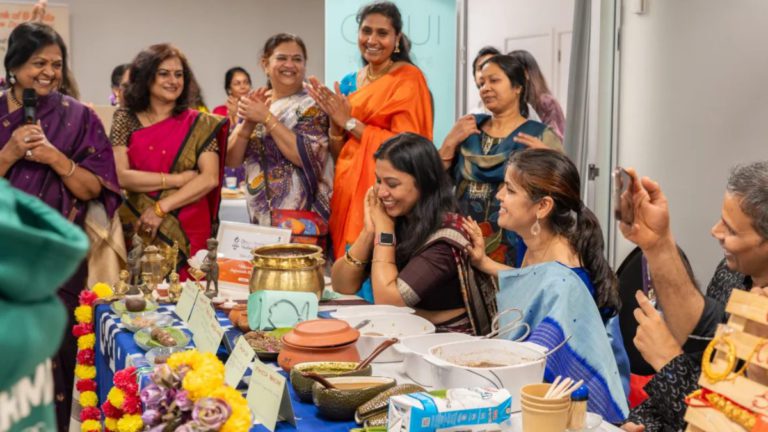
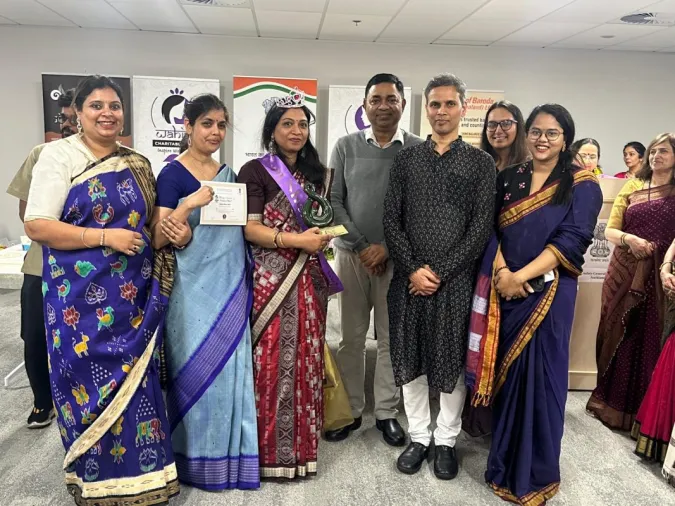
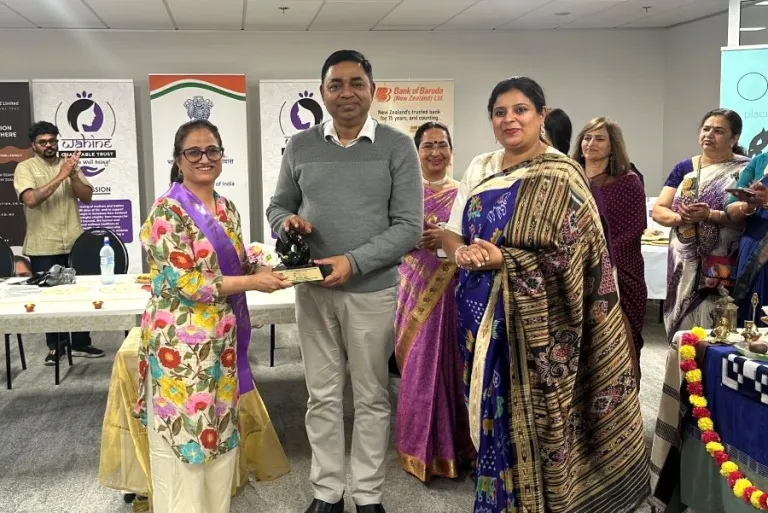
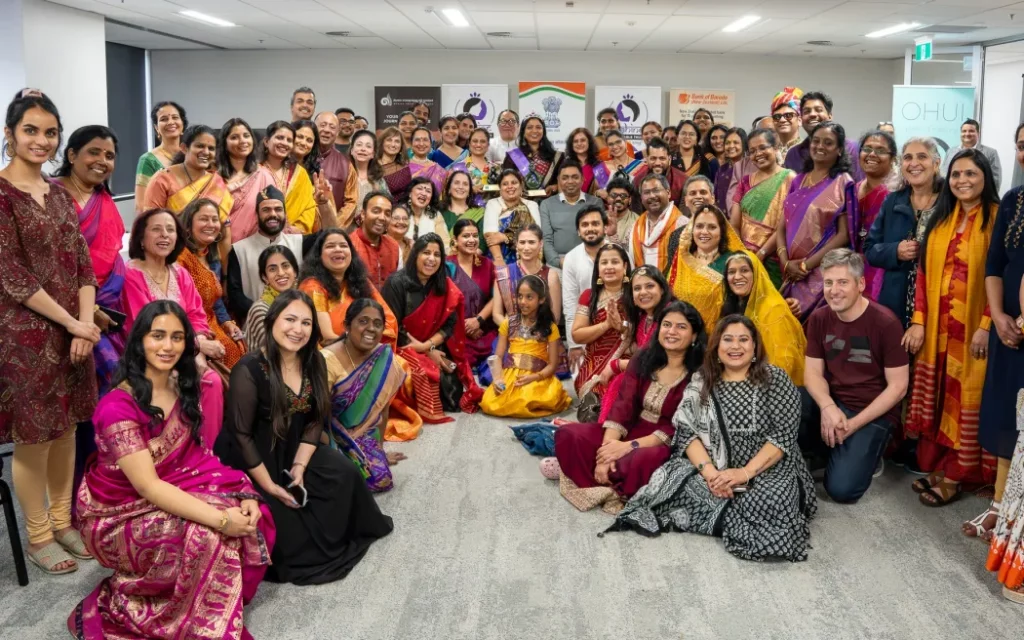
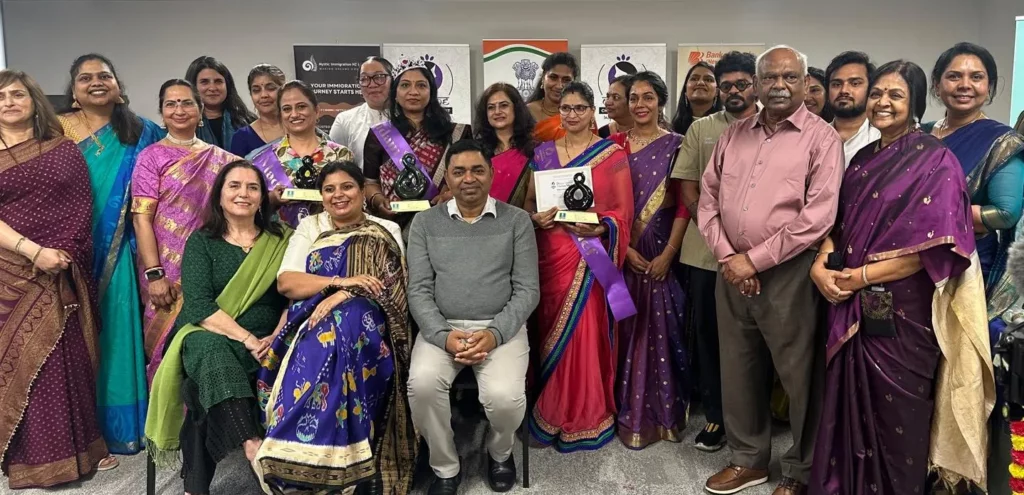
Auckland played host to a celebration of culinary heritage and healthy eating last weekend, as 18 women came together to showcase the power of millet — India’s super grain.
Anjali Behera was crowned Madam Shef 2025, with Shweta Jaisawal finishing as runner-up and Diksha Arora securing third place in the cooking competition.
Image: Anjali Behera, winner of the Madam Shef 2025 title, with Consul General of India in Auckland Dr Madan Mohan Sethi (to her left), his wife Swagatika Bhuyan and Social Secretary Manisha Harichandan (extreme left and right) at the Madam Shef Contest organised by Wahine Charitable Trust at the Consulate on September 13, 2025 (INL Photo)Image: Diksha Arora received the Second Runner-Up Trophy from Consul General of India in Auckland Dr Madan Mohan Sethi (watched by his wife Swagatika Bhuyan) at the Madam Shef Contest organised by Wahine Charitable Trust at the Consulate on September 13, 2025 (INL Photo)
Organised by the Wahine Charitable Trust and hosted by the Consulate General of India, the event — Culinary Chronicles: Madam Shef’s Millet Magic — highlighted millet’s nutritional value while promoting women’s wellness.
Guests at India House enjoyed innovative recipes, live demonstrations, and a cultural exchange through food.
Image: Members of Auckland’s Indian community gathered on Saturday for a culinary competition highlighting the health benefits of millet (Photo: Supplied to RNZ)
“At the heart of the celebration was the table of unity, featuring dishes from seven Indian states,” Mallika Janakiraman, founder of the Wahine Charitable Trust, told RNZ.
“It represented 25 per cent of India’s regional diversity and celebrated the glory of its culinary heritage.”
The spread included cuisines from Bihar, Karnataka, Odisha, Rajasthan, Tamil Nadu, Uttar Pradesh and Uttarakhand.
Image: Tamil Nadu’s contribution to the ‘Millets Revolution’ was authenticated by Mamtha Velumurugan at her stall which featured several items to enhance human health and wellness (Photo Supplied to INL)
Janakiraman said the event was designed to weave together tradition, wellness, and women’s wisdom passed through generations. She also emphasised millet’s potential for New Zealand households:
“Millets are wholesome foods, nutritionally superb, and not only nutrient-rich but also nutrient-dense. They are gluten-free, diabetic-friendly and, most importantly, affordable.”
Buoyed by the success of this inaugural competition, Janakiraman confirmed that organisers are already planning to make it an annual fixture.
“We wanted to bring everyone together and showcase India’s rich culinary traditions — the whole tapestry.”
Image: Consul General of India in Auckland Dr Madan Mohan Sethi, his wife Swagatika Bhuyan and Dr Primla Khar (seated) with the winners and volunteers at the Madam Shef Contest organised by Wahine Charitable Trust at the Consulate on September 13, 2025 (Photo Supplied to INL)
Known in India as Shree Anna, millet has been making a comeback globally. India declared 2018 the National Year of Millet, and the United Nations followed with the International Year of Millet in 2023. With production hitting 18 million tonnes in the year to July 2025, India remains the world’s largest producer.
Support our Journalism
No-nonsense journalism. No paywalls. Whether you’re in Australia, the UK, Canada, the USA, or India, you can support The Australia Today by taking a paid subscription via Patreon or donating via PayPal — and help keep honest, fearless journalism alive.
Calls are growing for Victoria to urgently adopt Jack’s Law after the fatal stabbings of two boys, 12-year-old Chol Achiek and 15-year-old Dau Akueng, in Melbourne’s outer west.
A Change.org petition launched by Aimee Henderson — a close friend of Oscar Hamilton’s mother, whose 16-year-old son was also killed in a stabbing last year — has already attracted more than 9,000 signatures.
Henderson, who has attended two funerals of teenage knife crime victims in the past year, said Victoria could no longer afford to wait.
“By introducing Jack’s Law in Victoria, we can empower police, deter people from carrying knives, and save lives,”
Henderson wrote in her petition on Change.org.
Jack’s Law, named in honour of 17-year-old Jack Beasley, who was fatally stabbed on the Gold Coast in 2019, gives police the power to use handheld metal detectors (“wanding”) in high-risk public areas such as shopping centres and transport hubs.
According to the Queensland Police Service, in its first year, police conducted more than 5,200 operations, seized over 400 weapons and laid more than 250 charges.
Knife crime is rising sharply in Victoria, with more than 1,100 offences recorded last year, Victoria Police data shows.
In Victorian Parliament, Member for Eastern Victoria Renee Heath accused the state government of failing families by allowing repeat violent offenders back on the streets. Citing figures that show 25 young men under the age of 25 have died from knife attacks since 2020.
“Premier, you have shown Victorians that even when there is video evidence of offenders beating women with poles, you can still goosestep your way out of Victoria’s courts.”
Heath argued that weak bail laws have created a climate of fear so severe that some parents are sending their children overseas for safety. She accused Premier Jacinta Allan of hypocrisy, pointing out that neo-Nazis with video evidence of brutal assaults had been granted bail until one confronted the Premier directly, at which point bail was denied.
Heath also criticised the government’s $13 million machete bin scheme, describing it as ineffective and symbolic of misplaced priorities, with reports of bins failing to function properly and doing little to prevent knife crime.
She highlighted the contrast between this investment and the government’s cuts to youth crime prevention programs, noting that just two grants have been awarded in the past two years despite soaring youth crime and pleas from dozens of community groups for support. Calling for urgent evidence-based reforms, Heath pressed the Premier to act before more families are driven to extreme measures to protect their children from Victoria’s escalating youth violence crisis.
“Will you act before more families are forced to send their children overseas just to be safe from Victorian streets?”
The fresh push comes after a candlelight vigil in Melton this week, where hundreds gathered to mourn Chol and Dau.
The vigil heard emotional tributes from families. Chol’s father, Chuti Ngong, told mourners his son was “a lovely boy” who “loved everybody.” Dau, remembered as a rising basketballer, was described by mentors as a “really good kid.”
Premier Jacinta Allan confirmed her government is “looking at further police powers” and has not ruled out adopting Jack’s Law.
Opposition Leader Brad Battin said that the shocking killings underscored the need for stronger crime prevention measures, while police described the Cobblebank stabbings as “one of the worst” knife crimes they had seen.
Opposition leader Brad Battin has given a ringing endorsement of introducing a law that he believes would help curb Victoria’s growing machete problem.
The law gives police the power to use wands and metal detectors in public, without having to take out a warrant.
“It’s time we give police the power to go and get (knives from alleged criminals,”
Meanwhile, some families in Melbourne’s west are so fearful they have begun sending children overseas to escape the violence. Dr Berhan Ahmed, CEO of Africause, told 9News he has helped at least seven families relocate children to schools in Africa this year.
Henderson said in her petition that it was time to honour Jack Beasley’s legacy:
“Queensland acted. It’s time Victoria did too.”
Support our Journalism
No-nonsense journalism. No paywalls. Whether you’re in Australia, the UK, Canada, the USA, or India, you can support The Australia Today by taking a paid subscription via Patreon or donating via PayPal — and help keep honest, fearless journalism alive.
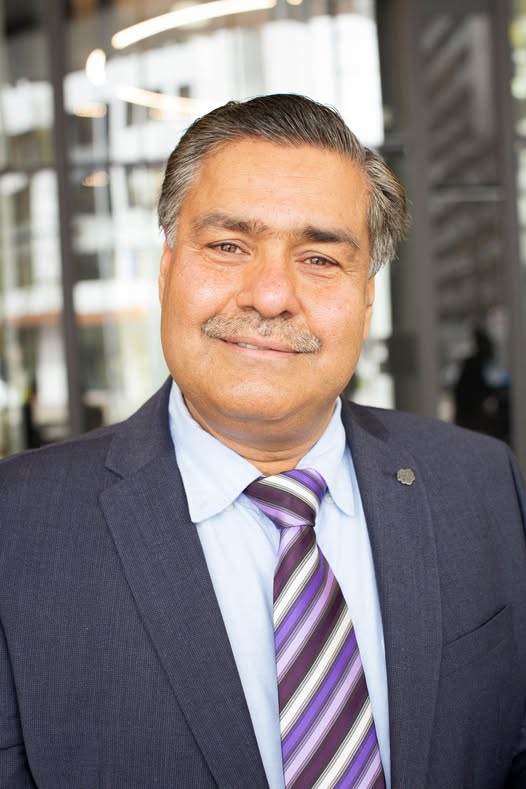
Tourism Fiji has announced the appointment of Dr Paresh Pant as its new Chief Executive Officer, marking the return of an experienced leader to one of Fiji’s most important industries.
Dr Pant will succeed Brent Hill, who stepped down as Tourism Fiji CEO earlier this year. Hill, an Australian executive, had led the organisation since 2021 and was credited with steering Fiji’s post-pandemic tourism recovery.
In his first statement as CEO-designate, Dr Pant said: “I am honoured to be entrusted with this role at a time when Fiji continues to shine as one of the world’s premier tourism destinations.”
“Tourism is at the heart of Fiji’s economy and identity, and I am committed to building on our strong foundations to ensure long-term, sustainable growth that benefits our communities, industry partners, and the nation as a whole.”
Dr Pant, who will officially take up the role in mid-October 2025, brings more than 25 years of leadership in tourism, hospitality, and aviation across Fiji, Australia, and New Zealand.
A former Regional Director for Tourism Fiji, he is widely recognised for his work in driving visitor growth, crisis recovery, and forging strong global partnerships.
Tourism Fiji Board Chair Ilisapeci Matatolu said Dr Pant was the clear choice after a rigorous recruitment process: “We are delighted to welcome Dr Pant back to Tourism Fiji at a pivotal time for the industry.”
“His proven record of driving growth in key markets, combined with his deep understanding of Fiji’s tourism landscape, made him the natural fit for this role. He not only brings a wealth of global experience but also a genuine passion for Fiji and its people,” she said.
Deputy Prime Minister and Minister for Tourism and Civil Aviation Viliame Gavoka also welcomed the appointment, saying Dr Pant’s leadership comes at a crucial time as Fiji charts a course towards long-term growth.
“I am confident Dr Pant will bring in strategic leadership and vision to further strengthen Fiji’s global brand while supporting a more resilient and competitive tourism industry.”
Dr Pant holds a PhD in Tourism Strategy & Aviation Management from Griffith University, Australia, as well as postgraduate qualifications in commerce and marketing from leading New Zealand universities.
Support our Journalism
No-nonsense journalism. No paywalls. Whether you’re in Australia, the UK, Canada, the USA, or India, you can support The Australia Today by taking a paid subscription via Patreon or donating via PayPal — and help keep honest, fearless journalism alive.
AFP Detective Inspector Steven Wiggins said authorities were working closely with industry and government partners to counter increasingly sophisticated cybercrime.
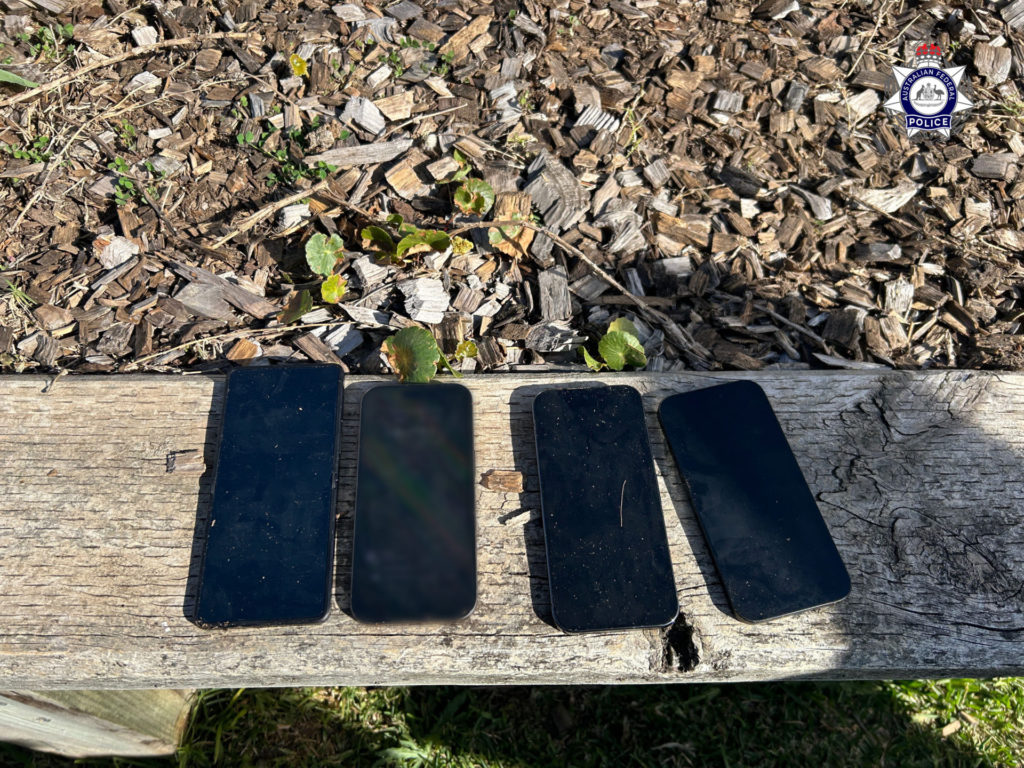
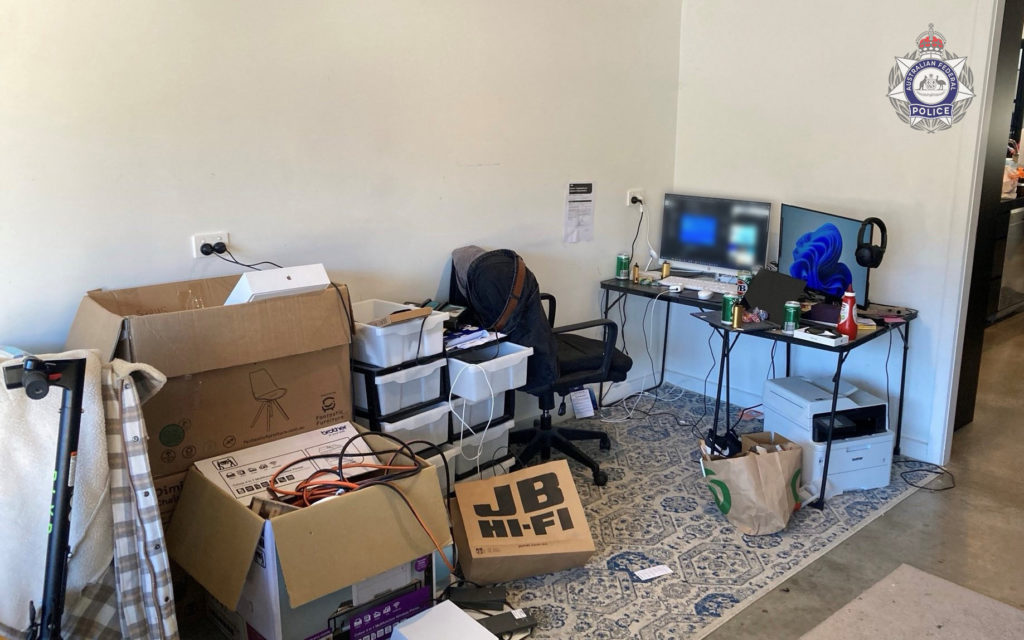
Image: NSW South Coast man in court charged over mobile phishing scam (Source: AFP)
“ScamWatch data shows more than 108,000 reports of scams in the first six months of 2025, with losses estimated at over $174 million,” he said.
“Scams don’t discriminate, which is why building a scam-aware community is so important. Every report helps us track patterns and protect others.”
Image: NSW South Coast man in court charged over mobile phishing scam (Source: AFP)Image: NSW South Coast man in court charged over mobile phishing scam (Source: AFP)
Police allege that in early August the man sent fraudulent text messages claiming mobile services would be restricted due to missed payments.
The messages allegedly contained links to a malicious website designed to harvest personal and banking information.
The Australian Federal Police (AFP) launched an investigation on 20 August after receiving a report from the provider that some of its customers had been subjected to cyber attacks.
Image: NSW South Coast man in court charged over mobile phishing scam (Source: AFP)
On 9 September, officers executed a search warrant at a Tomakin home, arresting the man and seizing computers, laptops, mobile phones and SIM cards. Several mobile devices were allegedly found hidden in an in-ground drainage pipe.
A forensic analysis of one laptop allegedly uncovered a large cache of personal information, including usernames, passwords and login details for multiple websites and applications. Police are working to trace the source of the data and will contact potential victims of fraud or identity theft.
The man has been charged with:
Producing, supplying or obtaining data with intent to commit a computer offence, carrying a maximum penalty of three years’ imprisonment.
Dishonestly obtaining or dealing in personal financial information, which carries a maximum penalty of five years’ imprisonment.
Support our Journalism
No-nonsense journalism. No paywalls. Whether you’re in Australia, the UK, Canada, the USA, or India, you can support The Australia Today by taking a paid subscription via Patreon or donating via PayPal — and help keep honest, fearless journalism alive.
NSW Police are appealing for information after a man was seen allegedly attaching threatening letters to two hotels in Sydney last month.
The incidents occurred at buildings on Martin Place and Hickson Road.
NSW Police, as per SkyNews, say the man approached the Martin Place location twice, first on Wednesday, 27 August, and again on 2 September.
Authorities reported that “multiple” envelopes containing threatening messages were affixed to the buildings.
The letters are currently undergoing forensic examination.
Image: An image of a man police believe may be able to help with inquiries has been released on NSW Police’s social media pages (Picture: NSW Police)
Police have released an image of a man who may assist with their inquiries.
The man is described as being of Asian or Indian subcontinental appearance, possibly in his 20s, with a moustache, beard, and short black hair.
As per report at the time of the incident, the man was wearing a black checkered long-sleeve shirt, black pants, black running shoes, and carried a black shoulder bag with a boombox slung over his shoulder.
Anyone who may have been in the vicinity between 10.30am on 27 August and 11pm on 2 September is urged to contact Sydney Crime Police Station or Crime Stoppers on 1800 333 000.
Support our Journalism
No-nonsense journalism. No paywalls. Whether you’re in Australia, the UK, Canada, the USA, or India, you can support The Australia Today by taking a paid subscription via Patreon or donating via PayPal — and help keep honest, fearless journalism alive.
India’s High Commissioner to Fiji, Suneet Mehta, has been concurrently accredited as the next High Commissioner to Kiribati, with residence in Suva, the Ministry of External Affairs announced.
The ministry highlighted India’s longstanding partnership with Kiribati through FIPIC summits, International Solar Alliance membership, development grants, and cultural exchanges.
Mehta officially assumed his role as High Commissioner to Fiji earlier this year after presenting his Letters of Credence to President Ratu Naiqama Lalabalavu at a formal ceremony in Suva’s State House.
A seasoned diplomat, Mehta has served in Madrid, Washington, D.C., and most recently as Deputy High Commissioner in Canberra.
Within India’s Ministry of External Affairs, he has managed relations with European countries and the United Nations, while also contributing to international cooperation initiatives during his tenure with the Ministry of Housing and Urban Affairs, including the AMRUT Mission and Central Vista Redevelopment Project.
Holding a Bachelor’s degree in Commerce and a Chartered Accountancy qualification, Mehta is expected to bring both financial acumen and diplomatic expertise to further strengthen India’s ties with Fiji and Kiribati, particularly in trade, education, and development cooperation.
Support our Journalism
No-nonsense journalism. No paywalls. Whether you’re in Australia, the UK, Canada, the USA, or India, you can support The Australia Today by taking a paid subscription via Patreon or donating via PayPal — and help keep honest, fearless journalism alive.
One person has died and six others have been rushed to the hospital following a suspected gas leak at a Sydney restaurant on Tuesday morning.
According to news.com.au, emergency services were called to Haveli Indian Restaurant on Garfield Road in Riverstone around 9.15 am. Police confirmed the death of one person at the scene.
Five police officers and another member of the public were taken to the hospital in stable condition.
Fire and Rescue NSW Superintendent Adam Dewberry said multiple people inside the restaurant had been “overcome by gas” and appeared to be suffering from carbon monoxide poisoning.
Screenshot
“My thoughts are with the loved ones of the person who has sadly died, as well as those hospitalised, which includes courageous first responders.”
Attorney-General Michelle Rowland, who is MP for Blacktown,told The Australia Today, “I am deeply saddened and shocked to hear of the tragic incident in Riverstone this morning.”
“I understand investigations are underway, and I encourage anyone in the area to follow any directions issued by emergency services.”
“I will continue to keep the community updated as I receive more information.”
NSW Ambulance confirmed to news.com.au that doctors, paramedics, intensive care workers, and a helicopter were deployed to the scene.
Two patients were taken to Hawkesbury Hospital, two to Blacktown Hospital, and two to Mount Druitt Hospital for observation.
It is reported that Haveli is a restaurant chain with locations in Riverstone and Stanhope Gardens, promoting itself as offering “the authentic taste of Indian cuisine in a warm and inviting atmosphere.”
Authorities are investigating the cause of the leak, with carbon monoxide poisoning suspected.
Support our Journalism
No-nonsense journalism. No paywalls. Whether you’re in Australia, the UK, Canada, the USA, or India, you can support The Australia Today by taking a paid subscription via Patreon or donating via PayPal — and help keep honest, fearless journalism alive.
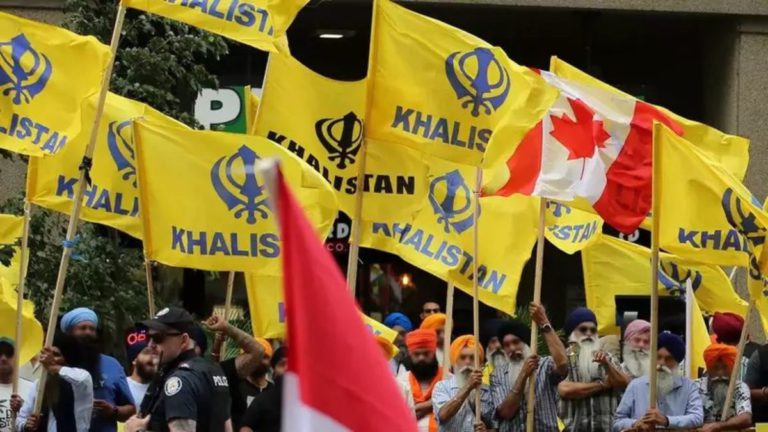
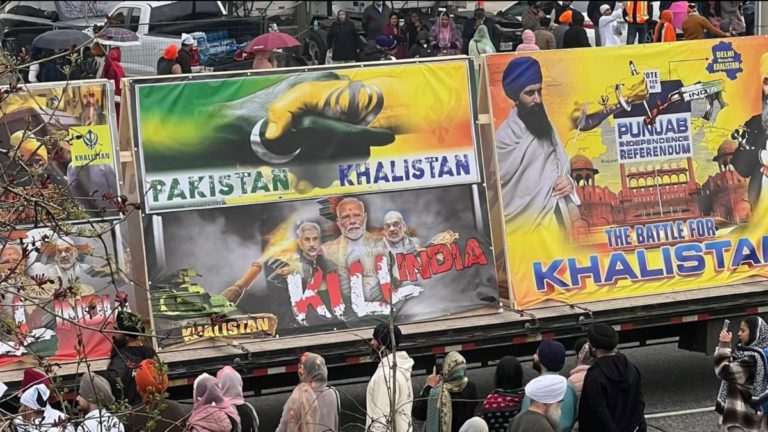
Canadian federal courts have dismissed appeals from at least 30 individuals who sought to avoid removal or secure asylum based on their alleged support for the Khalistan movement.
According to Federal court records confirmed by the Hindustan Times, the claimants argued they would face persecution in India due to ties with the secessionist group Sikhs for Justice (SFJ) or participation in the so-called Khalistan Referendum.
It is reported that one of the latest cases involved Pardeep Singh, who challenged a removal order in Toronto. His application included affidavits from family members and social media evidence of support for Khalistan. Federal Court Judge dismissed the motion on September 6, noting Singh’s expired spousal work permit and the timing of his refugee claim as key factors.
Similarly, in Vancouver, Federal Justice rejected Kanwaljit Kaur’s appeal, ruling that her claims of persecution due to Khalistan-related activity were “speculative.” The judge noted that holding a voter card for the Khalistan Referendum was insufficient to demonstrate that she was a target for Indian authorities.
In Montreal, a Federal Judge upheld the denial of asylum for an Indian couple who amended their original refugee application to include support for Khalistan, presenting protest photos and voter registration cards from SFJ.
In all cases, it is reported that the court deemed their arguments “disingenuous,” affirming earlier Refugee Appeal Division and Refugee Protection Division decisions.
Meanwhile, in Australia, authorities are tackling a growing problem of bogus asylum claims.
The Australia Tiday reported yesterday that a multi-agency operation has uncovered seven scam migration agents operating in Victoria and Queensland who exploited vulnerable visa applicants, facilitating over 470 Protection visa applications and charging up to $1.42 million.
In these cases, as per the official statement, investigators have also identified potential links to organised crime syndicates.
“If you engage in this sort of unlawful activity, chances are you have been reported and we are coming for you. Don’t do it. We simply will not tolerate scammers taking advantage of the hopes and fears of vulnerable people,” said Commander John Taylor of Home Affairs’ Field Operations and Sponsoring Monitoring Branch.
Additionally, authorities have warned that applicants themselves risk heavy fines and jail time if they knowingly provide false information.
Lavinia Mitchell, Assistant Secretary of the Citizenship and Humanitarian Policy Branch, advised applicants to seek help only from registered migration agents or free legal providers, while Emily Winch, Senior Director of the Office of the Migration Agents Registration Authority, urged verification of agents before paying for services.
These measures aim to protect the integrity of the visa system and ensure fair access for genuine asylum seekers.
Australian authorities have not confirmed how many bogus claims relate to the Khalistan movement, but investigations continue.
Support our Journalism
No-nonsense journalism. No paywalls. Whether you’re in Australia, the UK, Canada, the USA, or India, you can support The Australia Today by taking a paid subscription via Patreon or donating via PayPal — and help keep honest, fearless journalism alive.
Victorian Premier Jacinta Allan has unveiled her government’s new China Strategy in Beijing, declaring it marks “a new chapter of an old story” built on friendship, education and shared prosperity.
“This is my third visit to China, but my first as Premier of Victoria,” Allan said at the launch of the strategy.
“Allow me to introduce myself. My name is Jacinta Allan and I come from Big Gold Mountain – the city of Bendigo. The world where I grew up was shaped by Chinese migrants.”
The Premier launched the China Strategy: For a New Golden Era before senior Chinese officials and Victoria’s Chinese community leaders, describing it as a plan to strengthen economic, cultural and educational ties over the next five years.
“Victoria today looks very different from the 1850s, but there’s one thing it still has in common. Around one in 15 Victorians is Chinese,” she said.
“Our Chinese community are our neighbours, friends and family – and within the China-Victoria relationship, they are our navigators.”
Allan made education the centrepiece of the new strategy. “I want to be clear about my top three priorities: education, education and education,” she said.
“Victoria is the Education State – that’s what it says on the number plates of our cars.”
Highlighting more than 140 partnerships between Victorian and Chinese institutions, the Premier confirmed that a new Education Working Group had been formally established between Victoria and China.
“It’s our chance for two-way exchanges between teachers and students, joint vocational programs, sharing of language and culture, supporting students with a disability, and more.”
She also announced the revival of the Hamer Scholarships, with $10,000 grants for students from regional Victoria to study in China.
“Regional kids deserve a clear shot at experiencing something that will profoundly shape their lives.”
The Premier emphasised China’s importance as Victoria’s largest trading partner and number one source of international visitors. “In 2024, two-way merchandise was valued at almost 200 billion Yuan,” she said.
“Once the ships were filled with tea and textiles. Today, they are filled with the goods that support our lifestyles and our livelihoods.”
The new strategy identifies six priority sectors: agribusiness, health and life sciences, creative industries and sport, tourism, clean energy, and public transport.
On agriculture, Allan noted: “Victoria is just three per cent of Australia’s landmass, but we produce 27 per cent of Australian food and fibre export value. Whether it’s our Goulburn fruit or our Gippsland beef, our brand is fine, fresh and premium – and it’s found a market in China.”
On clean energy, she said China’s rapid transition was transforming Victoria too.
“China installs 100 solar panels every second. Its extraordinary energy transition has changed the world forever – and Victoria is benefiting.”
Victoria is the only Australian state with two Chinese sister-state relationships – Jiangsu since 1979 and Sichuan since 2016 – supported by 20 sister-city and 86 sister-school links. “Our goal is to become the first port of call for Chinese business to innovate and invest, and the destination of choice for Chinese people to visit and study,” Allan said.
“That’s a win for jobs and stability in an increasingly uncertain world.”
Framing the strategy as both practical and symbolic, she concluded: “In Victoria, we have not turned our backs to China – we have turned to face it. Just like gold paved the streets of my hometown in the 1800s, today we enter a new golden era of prosperity – together with the people of China.”
Support our Journalism
No-nonsense journalism. No paywalls. Whether you’re in Australia, the UK, Canada, the USA, or India, you can support The Australia Today by taking a paid subscription via Patreon or donating via PayPal — and help keep honest, fearless journalism alive.
Australia will support the construction of a new ministerial wing for Papua New Guinea’s National Parliament as part of celebrations marking 50 years since the country’s independence.
The project, designed through a Papua New Guinea–led consultation process and drawing on local craftsmanship, will embody the spirit of yumi stap wantaim — “side by side, step by step.”
It is intended to highlight the democratic principles that underpin the modern Australia–PNG relationship and the role of parliaments in reflecting the voices of their people.
Prime Minister Anthony Albanese said the initiative was,
“an investment in Papua New Guinea’s democracy and sovereignty that will benefit future generations.”
He recalled how at PNG’s independence ceremony in 1975, then–Prime Minister Gough Whitlam described the partnership as “a relationship of equals, based on mutual respect, understanding and trust,” adding that,
“as close neighbours and warm friends, the future prosperity of our two nations are bound together.”
The announcement reflects a deepening friendship between the two countries. In January 2023, Albanese became the first foreign leader to address PNG’s National Parliament, and just over a year later, in February 2024, Prime Minister James Marape became the first Pacific leader to address both Houses of the Australian Parliament.
Support our Journalism
No-nonsense journalism. No paywalls. Whether you’re in Australia, the UK, Canada, the USA, or India, you can support The Australia Today by taking a paid subscription via Patreon or donating via PayPal — and help keep honest, fearless journalism alive.
Victorian tertiary students will once again have the chance to immerse themselves in six months of study in China, with the revival of the state’s prestigious Hamer Scholarship program.
Victoria’s Premier Jacinta Allan launched the initiative in Beijing today as part of Victoria’s China Strategy: For a New Golden Era, announcing that for the first time, 20 new scholarships will be reserved specifically for regional students.
Each Hamer Regional Scholarship will provide $10,000 to support students studying, living in, or from regional Victoria.
Allan said her vision for the program drew on her own experiences as a country student.
“Studying in Asia and immersing myself in a language was an opportunity that didn’t feel within reach to us as country kids in the 90s, but it should now.”
The program, first established by Premier Rupert Hamer, was paused in 2019 due to pandemic travel restrictions. It has previously sent scholars to China, Indonesia, Japan and Korea, with past recipients including scientists, engineers, start-up founders and educators who have gone on to global careers.
Launching the program alongside the state’s new China Strategy, Ms Allan emphasised her focus on education.
“My top three priorities in China are clear: education, education, education. I’ll bring home more opportunities for teachers and students in the Education State.”
Today in Beijing, I met Minister of Education His Excellency Huai Jinpeng to discuss the cooperation between China and Victoria’s education systems and to oversee the signing of the historic Education Working Group.
Allan also revealed details of her meeting with China’s Minister of Education, Huai Jinpeng, posting on X: “Today in Beijing, I met Minister of Education His Excellency Huai Jinpeng to discuss the cooperation between China and Victoria’s education systems and to oversee the signing of the historic Education Working Group.”
“I shared my three priorities for my visit to China – education, education and education – and I was proud to inform him that Mandarin is the number one language taught in Victorian Government schools.”
Minister Jinpeng shared his deep commitment to education and said that learning a language helps a child know more about the culture and history of another country.
Victoria’s Minister for Economic Growth and Jobs Danny Pearson added that the program would give regional students life-changing opportunities while strengthening Victoria’s global connections.
“We’ll give regional students a chance to experience something that will profoundly shape their lives – and over time, they’ll help boost Victoria’s standing as a globally-connected economy.”
Guidelines and timelines for the scholarships will be released soon.
Support our Journalism
No-nonsense journalism. No paywalls. Whether you’re in Australia, the UK, Canada, the USA, or India, you can support The Australia Today by taking a paid subscription via Patreon or donating via PayPal — and help keep honest, fearless journalism alive.
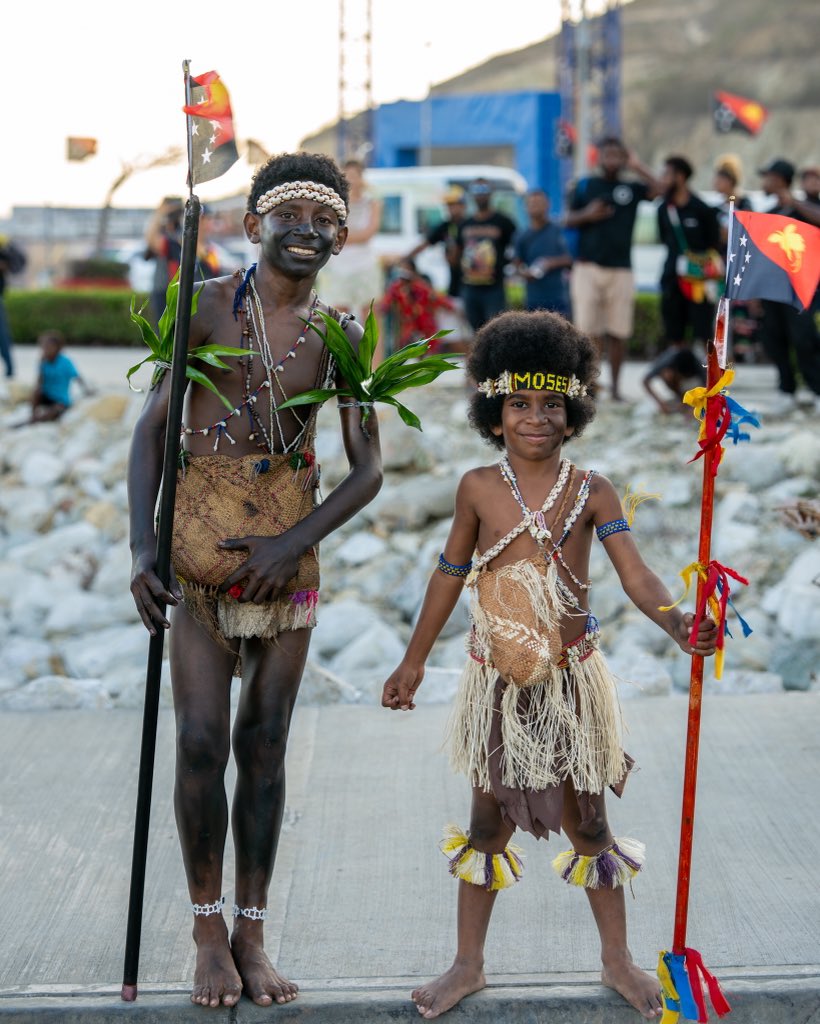
Fifty years ago this week, Papua New Guinea became independent from Australia. Once separate territories under Australian administration, Papua and New Guinea were merged in 1971, before independence was declared in 1975.
In a statement Albanese said Australia was proud to join in the Golden Jubilee celebrations, describing PNG as “not only one of our closest neighbours but also the truest of friends.”
“Our unique relationship has been forged by shared history, mutual respect and ongoing collaboration.”
Pleased to meet with Papua New Guinea PM James Marape at the @ForumSEC. We spoke about the deep links between our two countries and how we can strengthen our special relationship. pic.twitter.com/nEm3KKoBdd
Australia’s partnership with PNG spans health, security, education, infrastructure, development, gender equality, sport and agriculture.
During his visit, Albanese will hold talks with PNG Prime Minister James Marape, joined by Deputy Prime Minister and Defence Minister Richard Marles and Pacific Island Affairs Minister Pat Conroy.
In addition to commemorations, Albanese and Marape are expected to sign a major security pact that will see the Australian Defence Force (ADF) and Papua New Guinea Defence Force (PNGDF) become “totally integrated” — going beyond interoperability to shared recruitment, equipment and operations.
PNG’s Defence Minister Billy Joseph told the ABC the treaty would be a “mutual defence” agreement containing a clause similar to NATO’s Article Four, requiring consultation if either country’s sovereignty is threatened.
The deal will also allow the ADF to recruit PNG citizens and, in return, the PNGDF to recruit Australians. A briefing document suggests Papua New Guineans who serve in the ADF may have a pathway to Australian citizenship.
Defence Minister Marles, who began treaty negotiations with his PNG counterpart earlier this year, confirmed on ABC’s Insiders that PNG recruits would be paid equally to Australians.
“This is something we would be doing hand in glove with PNG as we walk down this path.”
The agreement follows the opening of an upgraded naval base on Manus Island in August, signalling increased cooperation, including reciprocal access to each other’s facilities.
Great to meet with my friend and Minister for Defence, the Honourable Dr. Billy Joseph, MP in Papua New Guinea today.
This year was the first time a component of Exercise Talisman Sabre was held offshore, in PNG, reflecting our ongoing collaboration and close relationship… pic.twitter.com/8UxcIycjL0
Dr Joseph said the pact, expected to be approved by PNG’s cabinet this week, enjoys broad parliamentary support and represents a “really big strategic step” for both nations.
Last week, as part of the Golden Jubilee celebrations, more than 15,000 people gathered in Port Moresby for a static aircraft show hosted by the PNGDF Air Transport Wing.
The event showcased both PNG and Australian aircraft, including the PNGDF’s PAC 750 and the RAAF’s C-130J Hercules, C-27J Spartan and KA350 King Air.
Chief of Air Force Air Marshal Stephen Chappell said he was honoured to take part in the milestone: “I’m excited to be able to visit Papua New Guinea on such a momentous occasion for their country and I’m proud to see so many RAAF personnel and assets supporting the events of PNGDF Week.”
“We deeply appreciate being invited to participate and share in such a significant national milestone.”
He added that it was a privilege to see ADF personnel working seamlessly with PNGDF, New Zealand Defence Force and other partners under Joint Taskforce 50.
Since independence in 1975, Australia and PNG have maintained close defence ties through joint training, exercises and infrastructure investment — but the new treaty marks the most ambitious step yet in their shared security future.
Support our Journalism
No-nonsense journalism. No paywalls. Whether you’re in Australia, the UK, Canada, the USA, or India, you can support The Australia Today by taking a paid subscription via Patreon or donating via PayPal — and help keep honest, fearless journalism alive.
Victorian Premier Jacinta Allan has embarked on her first official visit to China as Premier, reaffirming the state’s historic ties and unveiling a new strategy to boost future engagement.
“Victoria and China share more than 150 years of history. Our old friendship has made our lives better and our economy stronger,” Allan said in a media release.
Victoria and China share more than 150 years of history.
Our old friendship has made our lives better and our economy stronger.
Today I was honoured to visit the Temple of Heaven in Beijing to renew our friendship for the future, so we can make the most of the economic… pic.twitter.com/usUWmcEihV
China is currently Victoria’s largest trading partner and the top source of international visitors.
Allan said the visit was aimed at strengthening economic opportunities while deepening cultural links.
The Premier’s itinerary includes Beijing, Shanghai, Nanjing in Jiangsu Province – Victoria’s earliest sister-state – and Chengdu and Deyang in Sichuan Province, its newest sister-state. She is joined by Paul Hamer MP, Parliamentary Secretary for Jobs and Member for Box Hill.
On behalf of Victoria, I am honoured to lead a delegation to China to renew our friendship for the future, so we can make the most of the economic opportunities that stand before us. pic.twitter.com/20fc9mgmLt
In Beijing, Allan will launch Victoria’s China Strategy, a five-year plan to position the state as the “first port of call for Chinese business to innovate and invest – and the destination of choice for Chinese people to visit and study.”
Allan acknowledged the role of Victoria’s Chinese community in shaping the visit and the strategy.
“They honour us as our navigators in Chinese business and life. I’ll be proud to represent them – and all Victorians – in China this week.”
Support our Journalism
No-nonsense journalism. No paywalls. Whether you’re in Australia, the UK, Canada, the USA, or India, you can support The Australia Today by taking a paid subscription via Patreon or donating via PayPal — and help keep honest, fearless journalism alive.
Australia and New Zealand Banking Group Limited (ANZ) has admitted to engaging in widespread misconduct spanning both its institutional and retail divisions, including overstating bond trading volumes to the Australian Government and mishandling services affecting nearly 65,000 customers.
The bank now faces a total of $240 million in penalties, which ASIC and ANZ will seek to have imposed by the Federal Court.
The misconduct occurred over several years and reflects significant failures in ANZ’s risk management and compliance culture, ASIC said.
ASIC Chair Joe Longo said the penalties reflected the seriousness and breadth of ANZ’s misconduct. “Time and time again ANZ betrayed the trust of Australians. Banks must have the trust of customers and government. This outcome shows an unacceptable disregard for that trust, which is critical to the banking system,” he said.
(Image:www.breathe.com.au)
The four proceedings under consideration include: • Bond trading misconduct: ANZ acted unconscionably while managing a $14 billion government bond deal in April 2023. Instead of trading gradually to limit market impact, the bank sold large volumes of 10-year Australian bond futures at the time of pricing, placing undue downward pressure on the bond price. Internal records show ANZ was aware of the risks and still misled the Australian Government by overstating trading volumes by tens of billions of dollars over nearly two years. This conduct denied the government an opportunity to protect public funds, which are used for critical services such as health, education, and defence. ASIC has proposed $125 million in penalties for institutional and markets matters, including a record $80 million for unconscionable conduct. • Financial hardship failures: Between May 2022 and September 2024, ANZ failed to respond to 488 customer hardship notices, leaving vulnerable Australians—some experiencing unemployment, illness, bereavement, or family violence—without timely support. In some cases, the bank pursued debt recovery actions despite customers’ hardship claims. ASIC says ANZ’s failures continued even after being alerted in June 2023 and have since been partially remedied through customer payments and corrections to credit reports. • Incorrect interest payments: ANZ misled tens of thousands of customers about savings interest rates between July 2013 and January 2024. Due to process deficiencies, bonus and introductory interest rates were not consistently applied. Affected customers are being remediated, with around $480,000 in unpaid interest identified. Separate issues between August 2024 and March 2025 involved inaccurately advertised interest rates on certain accounts, impacting more than 56,000 customers. • Deceased estates errors: Between July 2019 and June 2023, ANZ failed to refund fees charged to thousands of deceased customers and did not respond to loved ones attempting to manage estates within the required timeframes. Over 18,900 accounts have been remediated, with more than $3.8 million refunded and thousands of families contacted to apologise. The full extent of the issue remains unknown.
ASIC Deputy Chair Sarah Court emphasised that the misconduct exposed systemic inadequacies across multiple divisions of ANZ. “As one of Australia’s biggest banks, customers trusted ANZ to do the right thing. These failures show a clear inability to manage non-financial risk,” she said.
Including today’s announcement, ASIC has brought eleven civil penalty proceedings against ANZ since 2016, with proposed and ordered penalties totalling more than $310 million. Past penalties have included breaches of responsible lending obligations, misleading conduct, and manipulation of market benchmarks.
ANZ has admitted the allegations in all four current proceedings. The Federal Court will now consider whether the proposed penalties are appropriate and determine any additional orders.
Support our Journalism
No-nonsense journalism. No paywalls. Whether you’re in Australia, the UK, Canada, the USA, or India, you can support The Australia Today by taking a paid subscription via Patreon or donating via PayPal — and help keep honest, fearless journalism alive.
A 42-year-old school teacher has been charged over the alleged sexual assault of a 15-year-old girl on the NSW Central Coast, following his dramatic arrest at Sydney Airport.
Detectives from the Child Abuse Squad launched an investigation after receiving a report that the girl was assaulted on Saturday. A search warrant was executed at a Kincumber unit on Sunday evening, where officers seized a car and several laptops for forensic examination.
About 6.30pm the same day, police arrested the man at Sydney Airport, where they allege he intended to fly to South Africa via Perth.
He was taken to Mascot Police Station and charged with seven counts of aggravated sexual intercourse with children aged between 14 and 16, three counts of intentionally sexually touching children aged between 10 and 16, and grooming a child for unlawful sexual activity.
Police allege the teacher sexually assaulted the teenager multiple times across August and September.
The man was refused bail and is expected to appear before court.
Support our Journalism
No-nonsense journalism. No paywalls. Whether you’re in Australia, the UK, Canada, the USA, or India, you can support The Australia Today by taking a paid subscription via Patreon or donating via PayPal — and help keep honest, fearless journalism alive.
U.S. President Donald Trump has blamed former President Joe Biden’s immigration policies for the brutal killing of an Indian-origin motel manager in Dallas, allegedly by an undocumented Cuban immigrant with a criminal record.
Chandra Mouli “Bob” Nagamallaiah, 50, originally from Karnataka, was attacked with a machete on 10 September at the Downtown Suites Motel, where he lived and worked.
The assault, carried out in front of his wife and 18-year-old son, ended in his beheading and has left the Indian-American community deeply shaken.
"I am aware of the terrible reports regarding the murder of Chandra Nagamallaiah, a well respected person in Dallas, Texas, who was brutally beheaded, in front of his wife and son, by an ILLEGAL ALIEN from Cuba who should have never been in our Country…" – President Trump pic.twitter.com/c1kny3aA2C
The accused, Yordanis Cobos-Martinez, 37, has been charged with capital murder.
U.S. immigration officials confirmed he had previously been detained but was released in January 2025 after Cuba refused to accept his deportation.
Posting on his Truth Social platform, President Trump described the suspect as an “Illegal Alien” who should have been removed from the country, accusing Biden of pursuing “incompetent and lenient” policies.
“I am aware of the terrible reports regarding the murder of Chandra Nagamallaiah, a well-respected person in Dallas, Texas, who was brutally beheaded … by an ILLEGAL ALIEN from Cuba who should have never been in our Country,”
“Rest assured, the time for being soft on these Illegal Immigrant Criminals is OVER under my watch.”
According to an arrest affidavit, the deadly attack began after a dispute over a broken washing machine. Disturbing security footage shows Cobos-Martinez chasing Nagamallaiah through the motel, attacking him repeatedly, and later desecrating his body.
Nagamallaiah, who moved to the U.S. in 2018, was known among friends as “Bob.” He is survived by his wife, Nisha, and son, Gaurav, who recently graduated from high school and hopes to study hospitality management.
His funeral was held on 13 September in Flower Mound, Texas, attended by family and friends. A fundraiser for his family has so far raised more than USD 321,000.
Support our Journalism
No-nonsense journalism. No paywalls. Whether you’re in Australia, the UK, Canada, the USA, or India, you can support The Australia Today by taking a paid subscription via Patreon or donating via PayPal — and help keep honest, fearless journalism alive.
The Indian Naval Ship Kadmatt has arrived in Suva on an important three-day goodwill visit, marking a new chapter in the growing defence partnership and people-to-people ties between India and Fiji.
Commander Kutuhal Limaye, Commanding Officer of INS Kadmatt, called on Mr Mason Smith, Permanent Secretary for Fiji’s Ministry of Defence and Veteran Affairs, today. He was accompanied by Captain Rohit Raymond Kattoju, India’s Defence Adviser to Fiji. The two sides discussed collaboration in maritime security, humanitarian assistance and disaster relief (HADR), and capacity development.
Highlighting the significance of the visit, Commander Limaye said his crew of over 200 personnel had “travelled across two oceans, crossed three straits, sailed through four seas, and traversed five time zones to be here.” He noted that the mission comes within a month of Prime Minister Sitiveni Rabuka’s visit to India, underscoring the commitment of both governments to deepen bilateral ties.
The visit features a full programme of public, cultural, and professional exchanges. This afternoon, INS Kadmatt will be open to the public from 2pm to 6pm, giving Fijians a rare opportunity to tour one of India’s advanced warships. Later in the evening, a free joint concert by the Indian Navy Band and the Republic of Fiji Navy Band will be staged at Ratu Sukuna Park.
Tomorrow, government ministers and dignitaries will be hosted aboard the vessel, while on Wednesday the ship’s medical team, in partnership with Fijian doctors, will conduct free public health screenings at Albert Park. Indian and Fijian naval personnel will also participate in joint training sessions on bridge resource management, search and rescue procedures, and damage control, alongside cultural and sporting exchanges, including cricket and volleyball matches.
Cdr Kutuhal Limaye, Commanding Officer of INS Kadmatt called on Mr. Mason Smith, Permanent Secretary for Ministry of Defence & Veteran Affairs today. Accompanying him was Capt Rohit Raymond Kattoju, India’s Defence Adviser to Fiji. Both sides discussed collaboration in Maritime… pic.twitter.com/GwXNuoNbeq
Indian High Commissioner to Fiji Suneet Mehta said the visit reflects the shared vision of Prime Minister Rabuka and India’s leadership to strengthen defence and community-level cooperation.
Commissioned under India’s Project-28, INS Kadmatt is an indigenously built anti-submarine warfare corvette equipped with state-of-the-art stealth technology, weapons, and sensors. The ship plays a vital role in safeguarding India’s maritime interests and regularly participates in regional security missions across the Indo-Pacific.
Commander Limaye said the aim of the visit was clear: “to build bridges of friendship through professional exchanges with the Fiji Navy and wider community engagement.”
Support our Journalism
No-nonsense journalism. No paywalls. Whether you’re in Australia, the UK, Canada, the USA, or India, you can support The Australia Today by taking a paid subscription via Patreon or donating via PayPal — and help keep honest, fearless journalism alive.
A major multi-agency operation is targeting scam migration agents who have ripped off vulnerable visa applicants of more than $1.4 million.
Field Operations officers from the Department of Home Affairs, supported by Commonwealth partners, are investigating agents giving unlawful migration advice, particularly targeting people applying for Protection (subclass 866) visas.
These scam migration agents have allegedly been charging excessive fees while encouraging applicants to make fake claims to secure bridging visas with work rights.
So far, officers from Home Affairs’ Field Operations and Sponsoring Monitoring Branch have removed four major scam migration agents illegally operating in Victoria and Queensland and detained a further three pending removal.
These seven individuals are known to have facilitated more than 470 alleged fake Protection visa applications, charging clients a combined total of up to $1,422,000 despite knowing the applicants were not eligible asylum seekers.
The investigation has also uncovered potential links to organised crime syndicates.
Commander John Taylor, Field Operations and Sponsoring Monitoring, said, “If you engage in this sort of unlawful activity, chances are you have been reported and we are coming for you.”
“Don’t do it. We simply will not tolerate scammers taking advantage of the hopes and fears of vulnerable people,”
he said.
Authorities also warned applicants themselves against making false Protection visa claims, which carry heavy fines and potential jail terms.
“Scam agents may tell you to provide false information or documents when applying for a Protection visa. But this activity is illegal and could result in large fines and possible jail time for up to 10 years,”
said Lavinia Mitchell, Assistant Secretary, Citizenship and Humanitarian Policy Branch.
She advised applicants to engage only registered migration agents or seek free legal help from specialist refugee and immigration providers listed on the Department of Home Affairs website.
The operation will continue over the coming months, targeting more scam agents.
Ms Mitchell also highlighted the broader impact of scam agents, noting that false Protection visa claims slow down the system for genuine asylum seekers.
“Home Affairs has made big changes to the Protection visa process, speeding up approvals for those in need while swiftly refusing ineligible applications,”
she said.
Emily Winch, Senior Director of the Office of the Migration Agents Registration Authority (OMARA), reminded the public that it is illegal for unregistered individuals to charge for migration advice. Visa applicants are encouraged to verify agents through OMARA’s Self-Service Portal before engaging or paying for services.
Authorities say Australia remains committed to protecting vulnerable applicants, preserving the integrity of the visa system, and ensuring fair access for genuine Protection visa applicants.
Anyone with information on potential immigration offences can report it online via Border Watch, anonymously if preferred.
Support our Journalism
No-nonsense journalism. No paywalls. Whether you’re in Australia, the UK, Canada, the USA, or India, you can support The Australia Today by taking a paid subscription via Patreon or donating via PayPal — and help keep honest, fearless journalism alive.
India dismantled Pakistan with ruthless clarity on Sunday, winning by seven wickets with 25 balls to spare and staying top of Group A. It was the kind of all-court performance that leaves a rival not just beaten, but exposed: incisive new-ball bowling, a strangling middle phase from the spinners, and a measured chase iced by captain Suryakumar Yadav’s unbeaten 47 (37).
If Pakistan’s lone bursts of resistance came from Sahibzada Farhan (40 off 44) and a late cameo from Shaheen Afridi (33* off 16), everything else belonged to India. Kuldeep Yadav (3/18) put the squeeze on a flimsy middle order, Jasprit Bumrah and Hardik Pandya ripped open the top, and the chase was launched by a blistering Abhishek Sharma (31 off 13).
Dubai, Sep 14 (ANI): Spectators cheer during the Asia Cup 2025 match between India and Pakistan, at Dubai International Stadium in Dubai on Sunday. (ANI Photo)
India mowed down 128 in 15.5 overs: a win built on plan, patience and pressure.
Powerplay punch, middle-overs choke
Pakistan chose to bat and immediately fell into a trap India had set. Pandya dismissed Saim Ayub first ball; Bumrah hurried Mohammad Haris into a miscue. At 42 after the powerplay Pakistan still looked alive, but the spinners turned the screws. Axar Patel removed Fakhar Zaman (17) and the out-of-touch skipper Salman Agha (3), before Kuldeep’s left-arm wrist-spin applied the tourniquet: double-strike to fell Hasan Nawaz and Mohammad Nawaz, then Farhan in the 17th. Pakistan limped to 127/9.
Dubai, Sep 14 (ANI): India’s Kuldeep Yadav bowls during the Asia Cup 2025 match against Pakistan, at Dubai International Stadium in Dubai on Sunday. (ANI Photo)
This was textbook India: quicks to bruise, spinners to suffocate, death overs to deny.
Captain cool finishes; Pakistan’s tactics unravel
Chasing, India tore into Shaheen straightaway; Abhishek belted a four and six in the first over, then peeled boundaries off part-timer Saim Ayub. Shubman Gill (10) fell stumped to a clever carrom ball, Abhishek holed out trying to keep the tempo, but there was no panic. Suryakumar and Tilak Varma (31 off 31) soaked up spin, stitched 56 for the third wicket, then shifted gears: SKY’s late flurry plus a Shivam Dube six ended it with a statement.
Pakistan’s selection and on-field choices begged questions. Over-reliance on Afridi, under-prepared middle order, and extended overs from part-time spin against India’s best players of slow bowling was asking for trouble. India obliged.
Why India declined the handshake
After the match, Suryakumar addressed the team’s decision to refuse a handshake with Pakistan:
“There are a few things in life ahead of sportsman spirit.”
He dedicated the victory to the victims of the Pahalgam terror attack and the armed forces:
“Perfect occasion, taking the time out, we stand by the families of the victims… We express our solidarity… Want to dedicate the win to all our armed forces who showed a lot of bravery.”
Dubai, Sep 14 (ANI): India’s Kuldeep Yadav and teammates celebrate the wicket of Pakistan’s Hasan Nawaz during their match in the Asia Cup 2025, at Dubai International Stadium in Dubai on Sunday. (ANI Photo)
In a rivalry routinely framed as cricket alone, India’s stance was clear: some moments demand solidarity over ceremony.
Assistant coach Ryan ten Doeschate underlined head coach Gautam Gambhir’s directive to stay “emotionless” and control the controllables—precisely how India played. Kuldeep, named Player of the Match, said he came in with specific plans and executed them ball-by-ball. Suryakumar added a tactical nod to India’s identity:
“I’m always a fan of spinners because they control the game in the middle.”
What the result really says
Method beats mayhem: India’s blueprint—discipline with the new ball, spin dominance, no-scoreboard-panic—travelled perfectly to Dubai’s conditions.
Pakistani frailties persist: Since 2021, Fakhar’s vulnerability advancing to spin has been well-known; Pakistan still haven’t insulated against it.
Chasing trend holds: In 8 of the last 9 India-Pakistan T20Is, the side batting second has won; India again read the conditions better.
This wasn’t an upset; it was a systems win. India arrived with clarity, composure and cause—and left with two points, an emphatic net run-rate boost, and a message: when cricket intersects with conscience, India will pick both the right line and the right line to take.
Support our Journalism
No-nonsense journalism. No paywalls. Whether you’re in Australia, the UK, Canada, the USA, or India, you can support The Australia Today by taking a paid subscription via Patreon or donating via PayPal — and help keep honest, fearless journalism alive.
Canada has taken a decisive step in acknowledging what India has long warned about: the presence and operations of Khalistani extremist groups on its soil. The 2025 Assessment of Money Laundering and Terrorist Financing Risks categorically identifies these groups as national security threats, marking a pivotal shift in Ottawa’s counterterrorism strategy.
The 2025 report highlights that these groups continue to operate from within Canada, raising funds, spreading propaganda, and planning violent acts targeting India.
“Khalistani extremist groups supporting violent means to establish an independent state within Punjab, India are suspected of raising funds in a number of countries, including Canada.”
While their fundraising networks have shrunk from earlier decades, the report nobserves that these groups continue to exploit diaspora communities and non-profit organisations for propaganda and financial mobilisation.
For the first time, Canada has officially acknowledged that banned extremist groups such as Babbar Khalsa International and the International Sikh Youth Federation remain active in promoting separatism and violence. The report underscores that while their activities are aimed primarily at India, they carry implications for Canadian national security and foreign relations.
This is not an isolated move. The shift builds on the 2024 annual report of the Canadian Security Intelligence Service (CSIS), tabled in Parliament immediately after Prime Ministers Narendra Modi and Mark Carney held breakthrough talks at the G7 Summit in Alberta. That report bluntly stated:
“Canada-based Khalistani extremists (CBKEs) continue to pose a national security threat to Canada and Canadian interests.”
Crucially, it was the first time the Canadian government described Khalistan supporters operating within its borders as “extremists.” For decades, India has raised concerns about Canada providing a safe haven to such elements, and the new recognition signals a diplomatic breakthrough.
CSIS also confronted Canada’s own painful history of complacency. Reflecting on the 1985 Air India bombing, which killed 329 people, the report admitted:
“In 1985, Canada-based extremists planted and detonated a bomb on Air India Flight 182, killing all 329 people onboard, the majority being Canadian… The failure to disrupt this event provided several hard lessons for CSIS to learn as a young security intelligence service.”
That tragedy remains the deadliest terrorist attack in Canadian history and a lasting reminder of the dangers of allowing extremist ideologies to fester under the guise of free expression.
Earlier this year, Former Canadian Prime Minister Stephen Harper has also urged Ottawa to cut ties with Khalistani extremists. Warning that “those who seek to bring the battles of India’s past to Canada have no place in our political discourse,” Harper stressed that parties cannot hope to build strong relations with India while pandering to separatist groups.
Prime Minister Carney has already signalled his intent to rebuild ties, supported by strong business lobbies eager to expand trade beyond North America.
Canada’s tougher stance is not just about domestic security — it is about repairing credibility with India, a nation it now recognises as indispensable in a volatile world. With the United States under strain from trade wars and China’s aggression, Canada cannot afford to alienate a democratic partner with whom it shares values and people-to-people ties.
This is where Australia and other Five Eyes intelligence partners come in. Canada has finally drawn a red line between free expression and violent extremism — and the rest must follow.
As per CSIS reports, Khalistani extremists do not respect borders, they exploit global financial systems, charitable networks, asylum route, and diaspora politics. By naming and treating them as a serious threat, Ottawa has created the space for collective action.
Australia, the UK, New Zealand, and the US must now align with Canada to ensure that Khalistani extremist fundraising and propaganda networks are dismantled across all jurisdictions. Joint monitoring of suspicious non-profit activities, intelligence sharing, and decisive political distancing from separatist lobbies are vital steps.
For too long, Khalistani extremism has been treated as an “Indian issue.” Canada’s recognition shows it is a global security issue. If Five Eyes democracies truly believe in safeguarding pluralism and protecting their diverse communities, they must act together. Australia, with its growing Indian diaspora and deepening strategic ties with New Delhi, is well placed to lead this collective effort.
Canada has broken the silence. Now it is time for its allies — Australia included — to stand firm and follow suit.
Support our Journalism
No-nonsense journalism. No paywalls. Whether you’re in Australia, the UK, Canada, the USA, or India, you can support The Australia Today by taking a paid subscription via Patreon or donating via PayPal — and help keep honest, fearless journalism alive.
The Australian Federal Police (AFP) has charged nine people with more than 30 online child abuse offences following a two-week national crackdown supported by the NSW Police Force (NSWPF) and Australian Border Force (ABF).
AFP Commander Brett James stressed the devastating impact of these crimes. “Creating, possessing and sharing child abuse material is not a victimless crime,” Commander James said.
“Perpetrators are indifferent to the harm they cause and only motivated by their abhorrent desires. Our message has not changed—if you commit these crimes, you will be found, arrested and prosecuted.”
Between 28 August and 11 September 2025, more than 140 officers executed 15 search warrants across metropolitan Sydney, the Central Coast and Wollongong as part of Operation Titan. The blitz came as reports of child exploitation continue to surge, with the Australian Centre to Counter Child Exploitation (ACCCE) receiving more than 82,700 reports in the past financial year—a 41 per cent rise from 2023–2024.
Among those arrested was a Wyongah man accused of paying for live online child sexual abuse involving minors offshore on three occasions. Police seized more than 50 electronic devices, including phones, laptops, USBs and hard drives, which will undergo forensic examination. None of those charged are currently employed in roles with access to children.
The accused face offences carrying maximum penalties of between 10 and 20 years’ imprisonment.
NSW Police Force Detective Acting Superintendent Rachel Fawcett praised investigators for their tireless work.
“Every successful operation and arrest is a step toward a safer digital environment, and we remain steadfast in our commitment to bringing perpetrators to justice and protecting our children,” she said.
ABF Superintendent Shaun Baker added that Border Force officers play a critical frontline role. “Increasing awareness around child abuse material ensures we are not masking the taboo topic anymore—this year’s theme highlights shifting conversation into action,” Supt Baker said.
“We will always prioritise keeping children out of harm’s way.”
The arrests coincided with the close of National Child Protection Week (7–13 September), underscoring the agencies’ joint commitment to tackling online child exploitation.
Support our Journalism
No-nonsense journalism. No paywalls. Whether you’re in Australia, the UK, Canada, the USA, or India, you can support The Australia Today by taking a paid subscription via Patreon or donating via PayPal — and help keep honest, fearless journalism alive.
Should last year’s dramatic fall of Sheikh Hasina in Dhaka and this week’s political collapse of K. P. Sharma Oli be treated as two isolated incidents, or as warning signals for India? The turmoil unfolding in India’s immediate neighbourhood carries not just political but humanitarian consequences, with clear risks of spillover into the Hindi heartland. For decades, both Bangladesh and Nepal were counted among India’s trusted partners, serving as buffers and security cushions along its borders.
In August 2024, Bangladesh was shaken by student-led protests that spiralled into violence and forced Sheikh Hasina to resign and leave the country. What followed was a political vacuum, quickly filled by groups that often harbour anti-India sentiments. This shift also created space for external players to step in and shape the political landscape with new “development narratives.”
Just a year later, in September 2025, Nepal was convulsed by youth-led protests after the government abruptly banned 26 social media platforms, including Facebook, X, and YouTube. What began as an outburst against censorship soon turned deadly. Police opened fire, killing at least 19 and injuring more than 300. Crowds torched Parliament, the Supreme Court, and Singha Durbar (the administrative centre of the government) and stormed the residences of both the Prime Minister and the President. It was, to put it bluntly, anarchy on the streets. By 9 September, K. P. Sharma Oli was left with no option but to resign, bringing down his government in one of the most dramatic political collapses in Nepal’s recent history.
These upheavals have two immediate implications for India.
First, geography itself magnifies the risk. India shares a 4,096 km border with Bangladesh and a 1,770 km border with Nepal, both long, porous, and difficult to monitor. Instability across these frontiers could spill over quickly. Criminal networks would exploit the vacuum, fuelling insurgency, trafficking, and cross-border migration. Even short-term disruptions would erode intelligence-sharing and strain security forces. Alongside these risks, the humanitarian fallout could place heavy pressure on the already fragile economies of India’s north-eastern states.
Second, the sudden exit of governments in Dhaka and Kathmandu creates fresh opportunities for China and Pakistan to step in. Beijing in particular has been quick to extend economic and political influence in South Asia, and any recalibration in Kathmandu and Dhaka could threaten India’s hard-won projects on connectivity, trade, and transit rights.
Dramatic regime changes in the neighbourhood inevitably trigger strong domestic reactions in India. Nationalist rhetoric may be tempting, but it risks complicating future efforts to rebuild ties. New Delhi will need to strike a careful balance between domestic political pressures and a foreign policy that safeguards stability. The human cost of these upheavals—ranging from displacement, rights violations, hunger, and poverty—must remain at the centre of India’s response.
India cannot afford to remain passive. It must act with urgency by strengthening its multilateral diplomacy, using regional forums such as SAARC and BIMSTEC to call for restraint, the restoration of law and order, and the revival of civilian governance. At the same time, soft-power tools such as cultural exchanges, academic partnerships, and non-partisan technical assistance should be expanded to build trust and resilience at the grassroots level.
Finally, India must resist the temptation to view its neighbours through the simple lens of friend or foe. The unrest in Dhaka reflects genuine grievances over student quotas, while the upheaval in Nepal stems from anger against censorship and corruption. These are domestic crises that demand empathy and steady engagement, not opportunism. Delhi’s response will ultimately be judged by whether it can help protect lives and democratic institutions. Stability abroad is inseparable from stability at home, and for that, New Delhi must stand not for partisan gain but for stability, democracy, and human security. Only then can the neighbourhood remain India’s first line of defence.
Contributing Author: Dr Ila Joshi is an Assistant Professor at the Jaypee Institute of Information Technology, India.
Support our Journalism
No-nonsense journalism. No paywalls. Whether you’re in Australia, the UK, Canada, the USA, or India, you can support The Australia Today by taking a paid subscription via Patreon or donating via PayPal — and help keep honest, fearless journalism alive.
Uncertainty in the wake of Sri Lanka’s economic crisis that forced then-president Gotabaya Rajapakse to flee the country in 2022 has driven an unprecedented wave of graduate migration out of the country, with the health sector alone losing 4,000 professional staff trained under what is still a free national education system.
The loss of graduates has fuelled a debate on whether higher education should continue to remain free and without a bonding system to keep graduates at home, at least for a few years after graduation.
A study by Wasantha Athukorala and Lakshman Kumara at the University of Peradeniya showed that around 30% of Sri Lankan university graduates migrate after completing their studies, with the majority never returning to contribute to the country’s economy.
Athukorala, an economics professor, pointed out in an interview with University World News that about 45,000 students enter government-funded universities each year, while thousands more enrol in government-maintained technical colleges and the Open University.
Delving into the statistics for 2019 to 2023, he found that one-third of the 138,980 who graduated from state universities had gone overseas. The most mobile graduated from management, computer sciences, health, engineering, technology and architecture degree programmes.
He estimated it costs the state around LKR500,000 (US$1,660) a year to educate a single student, or around LKR2 million (US$6,620) for a four-year degree. Government investment in the tertiary sector in 2023 was LKR83 billion (US$275 million), excluding capital expenditure.
According to his calculation, it cost the government LKR96 billion (US$318 million) over the period of his five-year study to educate all those who left the country.
Poor economic planning
Describing his research as “eye-opening”, Athukorala said: “Now [the government] understands that there is a serious issue here.”
The government is currently consulting with top Sri Lankan professionals overseas on measures to reform higher education and attract back those who have left, Deputy Minister for Higher Education Dr Madhura Senevirathna told the Sunday Morning newspaper on 24 August.
“One of the central weaknesses of [the] Sri Lanka’s education system has been its disconnection from broader economic planning,” he noted.
“For decades, universities produced graduates in fields such as arts, social sciences, and general sciences without adequately matching them to the skills demanded by the labour market. As a result, graduates often found themselves underemployed or unemployed at home, even as foreign economies eagerly absorbed their expertise.”
“We are consulting with leading Sri Lankan academics and professionals, both here and abroad, to identify the bottlenecks,” he added. “They have been very clear in their feedback: unless Sri Lanka can offer competitive salaries, credible research platforms, and opportunities for career advancement, there is no incentive to return.”
According to Athukorala, three types of people are leaving. “One is those who go for higher studies, such as a PhD, and don’t return [if they are not bonded]. The second [are] those who are funded by their parents, [who] even [sell] their properties to send them abroad. The third goes overseas to study and look for employment.
“The graduates who are going abroad are an extremely clever group,” he said.
“Because they get first-class [degrees] and they are very, very good people, we can’t ask them to stay here if they want to find better employment overseas.”
Health professionals
Peradeniya Chair Professor of Community Dentistry, Dileep de Silva, a specialist in health finance, said migration of health professionals stands at around 10% of total health professionals in active service.
The healthcare system in the country dates back to 1856. “The Sri Lankan Ministry of Health started then. It’s a very mature, resilient system. So, system turbulence does not come from a one or two per cent shortage. It comes when it hits 15%,” he told University World News.
Sri Lanka spends about 1.6% of GDP on higher education. The per capita cost of training a medical doctor is LKR5.6 million (US$18,535) for the five-year course. “It’s a taxpayer’s money. When they have got that free education, they leave. It’s a loss, definitely,” argued de Silva.
Professor Saman Nanayakkara, dean of the Faculty of Medicine at Peradeniya University, said: “When doctors go, replacement is not that easy. It takes so long to educate them; you’re looking at five to six years.”
“Because of this exodus of health staff, both academic and non-academic, our faculty is affected, and we can’t take more students and teach more,” Nanayakkara told University World News. “When doctors leave, [then] the academic staff leave as well. Over the last five years, we have lost five members in my department.”
“The government is not going to advertise all those positions because they cannot provide salaries. So how can we increase the number of students?”
The professors concur about the need for some form of bonding for new graduates, especially in the health sector, because countries like Australia, the United Kingdom and, lately, Singapore and countries in the Middle East are poaching Sri Lankan graduates.
“I think we have to make bonding binding,” stressed de Silva. “It is not because they [rich countries] can’t train. They know it is easier for them to buy a product from a supermarket.”
Huge demand for Sri Lankan doctors
Dr Chamil Wijesinghe, media spokesperson for the Government Medical Officers Association, told University World News:
“Because of the higher standards maintained within the medical education system of this country as well as our health system, there is a huge demand for Sri Lankan doctors internationally.”
Pointing to a recent example, he said: “In 2024, the College of Respiratory Physicians, Sri Lanka, received an email from the National Health Service in the UK, advertising for 30 vacancies for respiratory physicians.”
The migration of talent also comes at a cost to the local economy, said Priyanga Dunusinghe, a professor in the Department of Economics at Colombo University.
“When professionals migrate, you lose a productive workforce, and you cannot attract foreign capital or investments.”
“For example, if doctors go abroad, then the most talented nurses also will go because they find it [the working environment] increasingly becoming less productive, and they’ll become less satisfied with this environment,” according to Dunusinghe.
“Most people look at the cost in terms of losing the invested money, but beyond that, the contribution they should have made to the economy is vast,” he noted. It is “beyond what we have invested”.
“When they leave, especially at [the] university level, when they get a free education and leave, that whole investment is wasted.”
He suggested Sri Lanka look at the model adopted by Singapore, which opened up its economy to foreign talent and foreign investment, creating the kind of well-paid jobs that migrating graduates are looking for.
Sri Lanka instead restricts incoming non-Sri Lankan talent, without restricting outgoing talent.
“Singapore has done it the other way around,” Dunusinghe said. “They don’t give free education at university.”
Those who receive Singapore government scholarships are subject to a bond of around three years after graduation, when they must work for a Singaporean company. Malaysia also operates a bond system for those who receive government scholarships, he said.
This article was first published in University World News a and is republished here with the kind permission of the author.
Support our Journalism
No-nonsense journalism. No paywalls. Whether you’re in Australia, the UK, Canada, the USA, or India, you can support The Australia Today by taking a paid subscription via Patreon or donating via PayPal — and help keep honest, fearless journalism alive.
Hindi is not just a language; it is a medium through which the socio-cultural diversity of India gets unified. Every year on September 14, India pauses to celebrate Hindi Diwas, a reminder of the day in 1949 when Hindi, written in Devanagari script, was adopted as one of the official languages of the nation.
As per the Eighth Schedule of the Indian Constitution (2018), India has a total of twenty-two officially recognised languages, but alongside, there are over 1,600 dialects spoken across the country. An old saying, ‘kos-kos par badle paani, chaar kos par bani’ (every few miles the taste of water changes, and every few more, the dialect shifts), is a living example of India’s linguistic mapping, which is not static but is contingent upon altering geography, cultural practices, climate, and community. Amidst these dynamic expedients, Hindi becomes a thread of connection, a bridge that holds together diversity without erasing it.
Hindi Diwas is a reminder of asserting this linguistic pride and recognising how one language, emerging out of the soil, songs, and struggles of Indians, has carried the intimacy of family conversations, the explosion of poetic and cinematic creations, and the responsibility of national aspirations. Besides being a medium of communication, the language also acts as the shared thread of accessibility, which helps people from different walks of life and across regions to stay connected to the larger idea of unity that the country cherishes through its vast linguistic diversity.
Be it the bustling railway station, a street market, or workplaces in metropolitan cities like Delhi, Mumbai, or Bengaluru, Hindi enables a Tamil-speaking shopkeeper and a Punjabi customer, or a Bihari migrant and a Maharashtrian colleague, to understand each other. Whether it is a student moving across states for higher education or a person relocating for work, Hindi has ushered in a sense of familiarity, helping them to build small circles of belonging and navigate their way in otherwise unknown territories.
Hindi has long functioned as a language of cultural imagination, stretching across genres, styles, and expressive forms. From its early roots in Apabhramsha and dialects like Awadhi and Braj, Hindi literature grew through the medieval period, with devotional and philosophical works by Kabir, Tulsidas (Ramcharitmanas), Surdas, and Mirabai. These culturally compelling voices, besides providing the language a spiritual basis, offered it a quotient of intimacy that spoke about the everyday lives of people.
With the coming of modernity, Hindi literature acquired a different urgency. Writers like Munshi Premchand, Maithili Sharan Gupt, Sumitranandan Pant, Mahadevi Verma, and Suryakant Tripathi ‘Nirala’ raised questions of social reform, nationalism, and individual feeling. Their words seeped into the wider cultural consciousness, later echoed in cinema and, eventually, television and digital forms of storytelling.
In the decades following independence, Hindi cinema emerged as a dominant entity in the cultural sphere, representing not just entertainment but also a medium through which the essential understanding of identity, morality, and justice could be negotiated.
The screen reflected the changing times: Raj Kapoor individualised the idealist vision of the everyman, Bimal Roy translated the realistic ennui of the times into visual form, and Guru Dutt portrayed the isolation of modern existence. By the 1970s, resentment was expressed through the figure of the “angry young man”, embodied by Amitabh Bachchan, who came to symbolise a generation’s angst and disappointment towards systemic injustice and inequality.
At the same time, family dramas such as Roti Kapada Aur Makaan (1974) reaffirmed kinship bonds and filial responsibilities as the essence of the Indian moral landscape. Alternatively, parallel cinema sought to raise its voice against societal issues at the intersections of caste, class, and social power, with the film Ardh Satya (1983) being a befitting example of this perspective.
Television, too, effectively carried this cultural dialogue into homes across the country. The televised versions of Ramanand Sagar’s Ramayana (1987) and B.R. Chopra’s Mahabharata (1988) were not solely for entertainment, but they reimagined nationhood in a way that resonated with everyday life, thus fostering a sense of community feeling. Their resonance was so deep that decades later, in the early days of the COVID-19 lockdown, they returned once more to the national stage.
With the country under a 21-day shutdown in April 2020 and over 6,000 reported infections, Doordarshan decided to re-telecast these classics. For many, this felt like a return to a familiar anchor in a moment of profound uncertainty. Families, sometimes three generations together, watched the shows out of nostalgia and a shared need for comfort and continuity.
Interestingly, the Broadcast Audience Research Council reported that the popularity was not confined to older viewers. Children between the ages of two and fourteen tuned in in large numbers, often with grandparents by their side. Engagement levels were extraordinary: nearly three-quarters of the audience carried on from one episode to the next, and more than 80 per cent returned week after week.
During the week of 4–10 April 2020, Hindi general entertainment channels recorded their highest viewership since 2015, with Doordarshan once again becoming the country’s most-watched network. However, the small screen of the 1980s was not confined to epics alone. Serials such as Hum Log (1984) and Nukkad (1986) gave space to the aspirations and anxieties of the middle class. They sparked conversations around employment, gender roles, and urban life while providing reassurance and emotional connection at a moment of social transition.
In contemporary times, streaming content on OTT (over-the-top) platforms has changed the way stories are narrated and consumed. Regarding Hindi web series, what once remained confined within a regional viewership or the limits of state-run television is now available to viewers across and beyond India.
The reach of popular series like Sacred Games (2018), Mirzapur (2018), Delhi Crime (2019), Paatal Lok (2020), and Khakee (2022) rests not only on their gripping plots and cliffhangers but also on their attempt to portray the grim edges of everyday life in the Hindi-speaking belts of India. These are not just crime or psychological thrillers, but they bring to the forefront the varied shades of reality that Indian society embodies, thus making the content more relatable and authentic. Therefore, by focusing on such essential questions of human survival, safety, and dignity, the series propel viewers to consider this paradox of a society that proclaims a modern perspective yet remains tethered to older forms of bias, discrimination, and inequality.
However, these concerns are not entirely new; they draw inspiration from Hindi writers of the twentieth century—Krishna Sobti, Nirmal Verma, and Usha Priyamvada, among others—who raised similar concerns in their fictional narratives. The tropes of loneliness in migration, the weakening of the joint family structure, and the strain of changing gender dynamics did find their representation in such works. They created a space where these tensions could be questioned and even resisted, without negating the immediacy of the lived experience.
This particular spirit was effectively carried forward in the visual form by OTT platforms. What strikes as different today is the scale and immediacy with which these narratives circulate, are consumed, and are responded to. The screen now documents and interrogates social change, reminding one that the conditions depicted are what we inhabit, and that Hindi as a language brings us closer to such realisation.
To complement the cultural significance of Hindi, governmental initiatives have also contributed significantly to strengthening its role and preservation. At the Kendriya Hindi Samiti meeting in November 2024, essential measures were outlined, which included the Hindi Shabdsindhu project, envisioned to emerge as the most comprehensive and largest Hindi dictionary in the world within the next five years. Besides this, the Bhartiya Bhasha Anubhaag (Indian Languages Section) has been established to integrate technology into translation, ensuring wider accessibility of Indian languages in official and regular use.
Another pivotal attempt to spread awareness about the official language policy has been made through the Rajbhasha Sammelans (Official Language Conferences), which have successfully reaffirmed the role of Hindi as an essential link language.
Union Home Minister Amit Shah also underlined that the government, under the leadership of Prime Minister Narendra Modi, had consistently tried to preserve and promote the widespread use of Indian languages, with Hindi receiving the utmost attention. He has also emphasised the significance of education in one’s native language, as it enables children to connect with it effortlessly, improving their ability to read, reflect, and even make better decisions. Such a vision intends to weave language policy into empowerment at both cognitive and cultural levels.
As India continues to change, what keeps Hindi alive is not just its official status but the way it quietly threads through everyday life. It travels from a poet’s verse, through the silver screen, to the smallest phone screen, adapting without losing its essence. Hindi does not stand apart from the people who speak it; it grows with them, holds their memories, and carries their hopes. In this way, it does more than preserve the past; it keeps India’s cultural legacy moving forward, alive and responsive to every new moment.
Contributing Author: Priyanka Tripathi is an Associate Professor of English and Gender Studies at the Indian Institute of Technology Patna, India.
Support our Journalism
No-nonsense journalism. No paywalls. Whether you’re in Australia, the UK, Canada, the USA, or India, you can support The Australia Today by taking a paid subscription via Patreon or donating via PayPal — and help keep honest, fearless journalism alive.
While those examples might sound extreme, they’ve already happened for shoppers in parts of the United Kingdom and the United States.
In Australia, we’ve only seen some of those measures, including trials of security tags on meat. But just last month, the owner of Dan Murphy’s and BWS said its bottle shops had moved expensive spirits and wine to locked displays, in conjunction with auto-lock doors and boosted staff training to deal with rising theft.
Other retailers – from Woolworths, Coles and IGA to Bunnings and Kmart – say they’re dealing with “a full-scale retail crime crisis”. Last week, new data showed 268,666 cases of theft in retail settings last year – almost half of the national thefts, even as residential thefts declined.
My research also found record levels of shoplifting, employee theft, fraud and customer aggression in the 2024 financial year, adding up to A$7.79 billion in merchandise losses, almost 2% of total turnover.
So what are retailers doing about rising thefts? And what other security or staffing measures could we see over the next decade that could change how we shop?
Tightening in-store controls
Back in 2008, when Woolworths began to phase in self-serve checkouts, its retail operations manager said:
The self-service checkout certainly doesn’t spell the death knell for manned checkouts, under no circumstances.
But over the years since then, self-checkout has become far more common, with far fewer checkout staff. That choice to save on checkout staff means retailers have also had to ramp up security.
To prevent what’s known as unpaid “push-outs” of trolleys full of goods, some supermarkets such as Coles are trialling wheel-locking technology.
If a customer tries to exit without paying, the wheels automatically lock and immobilise the trolley. Similar systems are used in the US.
For the growing number of Australian supermarkets with “smart gate” exits, the gate stays closed until cameras and computer vision systems confirm a payment has been made.
Major chains have also expanded computer-vision systems at self-checkout. For instance, Woolworths has rolled out camera-based AI in more than 250 stores across NSW, Victoria and Queensland. The system flags mis-scans by changing indicator lights (from green to red or orange) and displays an image of the unscanned item to prompt rescanning.
Similarly, some systems now recognise loose produce visually, automatically detecting, say, bananas or Roma tomatoes as they’re placed on the scale, reducing how much shoppers need to navigate the checkout menu. These computer-vision upgrades speed up honest transactions and intercept mis-scans.
More obvious security, but more aggressive thefts
The anti-theft response isn’t only digital. Retailers have made security more visible, including uniformed guards and putting body-worn cameras on staff in higher-risk locations.
This approach is usually targeted to “risky facilities”: the minority of outlets that generate a majority of incidents.
For example, analysis of a US-based retailer showed that 85% shoplifting for the entire business took place in just 20% of their stores.
So depending on where you live and shop in Australia, your experience of how visible the security is can be very different.
What’s driving the rise in retail theft, as well as aggression?
The spread of cameras, AI and merchandise protection has made theft easier to detect. But it has also pushed staff into more confrontations with suspected offenders.
As QUT researchers note, “customer aggression is growing” and frontline staff report they are bearing the brunt.
Thieves have learned that aggression can cause staff to back away, making retail theft a comparatively low-risk crime.
This week, the CEO of independent supermarket chain Ritchies IGA said violence in Victorian stores has hit a “crisis point” and they are considering closing some stores.
Earlier this year, Victoria Police’s Operation Supernova dismantled a syndicate accused of stealing $10 million in merchandise from Melbourne supermarkets in five months.
Is this how we want to shop?
Even with rising retail theft in Australia, the evidence still doesn’t support a widespread, cookie-cutter rollout of “fortress”-style security measures for all supermarkets, chemists or other big retailers.
But for some of the worst-affected stores, it is likely we will see more targeted “fortress” measures, including controlled entries and exits for individual aisles where high-risk item are located.
Trained greeters, clear sightlines and tidy, well-presented aisles can also make it easier to prevent theft.
Self-checkout was sold as convenience. But if the outcome is more tension, more hostility, and less human connection, it’s hardly an improvement.
Shoppers don’t want to see fights at the checkout, and staff shouldn’t have to manage them.
Unless retailers can get this balance right, the real question risks becoming why would anyone still bother shopping in person?
No-nonsense journalism. No paywalls. Whether you’re in Australia, the UK, Canada, the USA, or India, you can support The Australia Today by taking a paid subscription via Patreon or donating via PayPal — and help keep honest, fearless journalism alive.
Australia has welcomed the appointment of Sushila Karki as Nepal’s interim prime minister, calling it an important step towards restoring stability after a week of violent unrest.
Foreign Minister Senator Penny Wong said in a post: “Australia welcomes the appointment of Rt Hon Sushila Karki as interim Prime Minister of Nepal as a step towards resolving the difficult events of the past week.”
“We continue to urge calm and restraint to ensure the transition to elections is peaceful, accountable and inclusive. As a longstanding partner we support the people of Nepal during this time.”
Australia welcomes the appointment of Rt Hon Sushila Karki as interim Prime Minister of Nepal as a step towards resolving the difficult events of the past week.
Karki, 73, a former chief justice renowned for her uncompromising stance against corruption, was sworn in on Friday to lead an interim government tasked with preparing elections scheduled for 5 March 2026.
“We have to work according to the thinking of the Gen Z generation… What this group is demanding is end of corruption, good governance and economic equality,” Karki said, adding that her interim government “will not stay here one day more than six months.”
Her appointment follows unprecedented Gen Z-led protests against corruption and a temporary social media ban that turned deadly.
More than 70 people, including three police personnel, were killed as demonstrators torched parliament and government buildings in Kathmandu, forcing Oli to resign.
Karki, Nepal’s first female chief justice in 2016, is backed by youth leaders and Kathmandu’s popular mayor Balendra Shah. She has a reputation for integrity, though her tenure as chief justice was not without controversy, including an impeachment attempt.
Support our Journalism
No-nonsense journalism. No paywalls. Whether you’re in Australia, the UK, Canada, the USA, or India, you can support The Australia Today by taking a paid subscription via Patreon or donating via PayPal — and help keep honest, fearless journalism alive.
The investment, part of an additional $70 billion in defence spending over the next decade, will deliver continuous naval shipbuilding, facilities for future frigates, sustainment of surface combatant vessels, and contingency docking for conventionally armed nuclear-powered submarines.
Deputy Prime Minister Richard Marles said the funding marked a “significant proportion” of the project’s estimated $25 billion cost, cementing Henderson as the hub for submarine sustainment and surface fleet construction.
WA Premier Roger Cook praised the announcement as “a huge opportunity” for the state, predicting the precinct would become the largest shipbuilding and maintenance hub in the Southern Hemisphere and a key driver of economic diversification.
The government said the first phase of work, including construction of Army landing craft, would begin next year, with the precinct ultimately employing 4,000 directly and supporting 10,000 jobs across WA.
Support our Journalism
No-nonsense journalism. No paywalls. Whether you’re in Australia, the UK, Canada, the USA, or India, you can support The Australia Today by taking a paid subscription via Patreon or donating via PayPal — and help keep honest, fearless journalism alive.
Quebec provincial police confirmed that Baljeet Singh, 28-year-old, was arrested by U.S. Marshals on 21 August following several months of extradition proceedings and returned to Canada on Wednesday.
Image: Quebec Highway Crash (Source: Facebook)
The crash occurred on 19 July 2022 at about 10:30 p.m. on Highway 30 in Brossard, near Grande-Allée Boulevard.
Police allege Singh failed to slow down as he approached a construction zone, colliding with seven vehicles.
The impact killed an 11-year-old boy and a 42-year-old woman, and left 10 others injured.
Singh appeared by video conference in a Longueuil courtroom on 11 September 2025 facing charges of dangerous driving causing death and dangerous driving causing bodily harm. His bail was denied, and he is scheduled to return to court on 15 October.
Support our Journalism
No-nonsense journalism. No paywalls. Whether you’re in Australia, the UK, Canada, the USA, or India, you can support The Australia Today by taking a paid subscription via Patreon or donating via PayPal — and help keep honest, fearless journalism alive.
Canberra’s commitment to diversity and inclusion was celebrated at this year’s ACT Multicultural Awards, honouring individuals, businesses, and groups making the city more welcoming. Among the winners was Sanjay Sharma, who received the ACT Multicultural Individual Champion Award for his tireless efforts in using cricket to foster belonging.
Image: Sanjay Sharma winner of ACT Multicultural Individual Champion Award 2025 (Source: Supplied)
Sharma, founder of the Indian Australian Multicultural Sports Association (IAMSA) and the Yerrabi District Cricket Club (YDCC), has spent more than a decade building community through sport. His flagship initiatives, including the Multicultural Cup and Independence Day Tape Ball Matches, have become platforms for cultural exchange, teamwork, and friendships across Canberra’s diverse communities.
Image: Sanjay Sharma winner of ACT Multicultural Individual Champion Award 2025 (Source: Supplied)
“When I first arrived in Canberra, one of the biggest challenges was adapting to a new environment without the strong cultural and social bonds that give people a sense of belonging,” Sharma recalled.
“I felt the need for a platform where people, especially migrants, could connect, celebrate their identity, and feel included. In 2011, I started my journey to bring the community together through cricket, because the sport was a natural bridge across cultures.”
But the journey was far from easy. Sharma faced hurdles in hiring ovals, securing equipment, and attracting sponsorships. “One of the biggest obstacles was the lack of resources—both financial and logistical.”
“Another challenge was creating awareness and convincing people that a multicultural sporting association could genuinely add value to the broader Canberra sporting landscape,” he said.
To overcome this, he focused on building trust “step by step”—starting with small community matches, free kids’ clinics, and charity initiatives such as Pink Stumps Day for the McGrath Foundation.
With his wife, he also launched the Kitchen to Crease program, designed to encourage South Asian women to step onto the cricket field.
“From this program, many women found confidence, and today their kids—especially daughters—are proudly playing at different levels in Cricket ACT competitions.”
The persistence paid off. By 2021, Cricket ACT recognised Sharma’s decade-long work and invited him to establish a junior cricket club under its official structure. “That’s how Yerrabi District Cricket Club was born, and I had the honour of becoming its founder,” he said.
“This milestone was not just about creating a club—it was about proving that when you serve with persistence and honesty, institutions and communities eventually place their trust in you.”
For Sharma, inclusivity has always been central to IAMSA’s vision. “We never wanted to represent just one community; the goal was always multiculturalism,” he explained.
“By combining cricket with cultural celebrations, food, and music, people felt valued for who they are.”
That inclusive approach has flourished. This year, the Multicultural Cup will celebrate its third edition at the iconic Manuka Oval. “Their encouragement gave IAMSA the platform to grow, and this year we will proudly celebrate the third edition of the Multicultural Cup finals at the iconic Manuka Oval,” Sharma said with pride.
CANBERRA, AUSTRALIA – MARCH 31: Indian cricket fans pose during the 2025/26 Cricket Australia Schedule Announcement at Commonwealth Place on March 31, 2025 in Canberra, Australia. (Photo by Matt King/Getty Images via Cricket Australia)
Yet the road was never without setbacks. “There were times when grounds were not allocated, sponsorships fell through, or community participation seemed uncertain,” he admitted.
“But what kept me going were the smiles of the kids learning cricket, seniors enjoying a match day, or women taking part in programs for the first time. These small but powerful successes reminded me why I started in 2011.”
Image: Sanjay Sharma winner of ACT Multicultural Individual Champion Award 2025 (Source: Supplied)
Reflecting on his recognition at the ACT Multicultural Awards, Sharma is quick to share the credit. “Being recognised with national and ACT awards is humbling, but I have always seen them as community achievements rather than personal ones.”
“Each award represents the dedication of countless volunteers, parents, players, and supporters who stood with me on this journey.”
Above all, he draws motivation from a guiding principle in the Bhagavad Gita: “Karmanye vadhikaraste ma phaleshu kadachana – You have the right to perform your duties, but not to the fruits of your actions.”
“Recognition, awards, and success are all by-products,” Sharma said.
“What matters most is the service itself and the positive impact it creates in people’s lives.”
Support our Journalism
No-nonsense journalism. No paywalls. Whether you’re in Australia, the UK, Canada, the USA, or India, you can support The Australia Today by taking a paid subscription via Patreon or donating via PayPal — and help keep honest, fearless journalism alive.
In the quiet village of Saurath in Bihar, where the Mithila Art Institute stands as a hub of learning and creativity, one woman embodies resilience, artistry, and the breaking of social boundaries. Padma Shri awardee Dulari Devi not only creates striking Madhubani paintings but also mentors young learners in this folk tradition of the Mithila region.
According to legend, the art form began when King Janaka of Mithila instructed his people to adorn the walls of their homes to commemorate the wedding of his daughter, Sita, to Lord Ram. Over centuries, what began as ritual decoration has grown into a global art form, today sustaining women artists through both creative expression and economic independence.
Recently, during the Union Budget session, the finance minister entered Parliament draped in a Bangalore silk saree patterned with fish-themed Madhubani motifs, a gift from Dulari Devi herself, carrying the cultural heritage of Bihar onto the national stage.
Image: Padma Shri Dulari Devi with Priyanka Tripathi at Mithila Art Institute (Source: Author)
As part of the JPN Centre of Excellence, IIT Indore-funded project “Digitizing Madhubani: Archiving the Socio-cultural History of Bihar”, I travelled to Madhubani and sat with Dulari Devi, listening as her life unfolded through memory and art. From hardship emerged the artist now known as Padma Shri Dulari Devi, her every brushstroke carrying the quiet defiance of resilience against the layered hierarchies of caste, class, region, and education that still shape social life in Bihar.
Born in 1968 into the fishermen community, considered to be at one of the lowest rungs in the society of Bihar, her life was marked by deprivation and poverty. She stated, “I was born in Ranti village. I did not get any formal schooling. I would go to work with my parents from a very young age. Around the age of 12, I was married off. I lived with my in-laws for 8 to 9 years. But after the death of my daughter, I returned to my village with nothing in hand.”
At that time, she began working as a domestic help in the houses of families from socially advantaged backgrounds to sustain herself. When asked if she ever considered remarriage, she said, “I did not want to fall into the vicious trap where I could not be sure how my new in-laws or partner would be like. I wanted to remain independent, no matter how many struggles I may have to endure.”
In Mithila, Madhubani art was traditionally practised by women from Brahmin and Kayastha families, who created bhittichitra (murals on the inner walls of homes) and aripanas (ritual floor designs) during weddings and religious ceremonies. Women from other communities were excluded from this artistic practice, just as they were restricted from entering spaces such as the chinbaar—where food for upper-caste families was prepared—or from touching certain household utensils. Reflecting on her circumstances, Dulari Devi recalled, “My house was in a very bad condition, and even the roof wasn’t proper. I could not think of practising the art as I didn’t even have paper, pen, or any material required for it.”
This is when her fate took a turn. She started working as a domestic help in the house of the celebrated artist, late Padma Shri Mahasundari Devi, and her sister-in-law, late Smt. Karpoori Devi. She fondly remembers how they did not discriminate against her. She was provided with some household items and a space to live, but more importantly, she was given dignity and care. She reminisces about how, on a chilly winter night, she was feeling cold and late Smt. Karpoori Devi took care of her by covering her with a sujni (a quilt or a bedspread) that she had made. When she asked why they didn’t treat her as the others did, the reply left a lasting impression on her: “You are a child to us. How can we treat you as inferior to us!”
These women were not only acclaimed artists but also progressive thinkers, far ahead of their times. Smt. Mahasundari Devi’s mastery extended beyond Mithila painting to clay work, sujni embroidery, and sikki crafts. At a time when women in the region were still bound by purdah, she stepped into the public sphere in 1961 and carved out a name for herself in the world of traditional arts. She also founded the Mithila Hastashilp Kalakar Audyogki Sahyog Samiti, a cooperative that empowered local artisans and created sustainable livelihoods. Equally pioneering was Smt. Karpoori Devi, who dedicated her life to preserving folk traditions. Skilled in Madhubani painting, she also helped bring sujni textiles to national prominence.
Together, these women not only created art but also led a quiet revolution, challenging gendered boundaries and building institutions that supported women in the region. It was along the path opened by such trailblazers that Dulari Devi, despite belonging to a marginalised community and facing barriers of caste and poverty, eventually found the space to claim her own artistic identity.
Image: Madhubani Painting of Lord Ganesha painted by Padma Shri Dulari Devi (Source: Author)
Another pivotal incident that Dulari Devi mentions is the time when she was drawing patterns in the soil with a bamboo stick. Looking at her enthusiasm, they offered to teach her the folk art. She said, “They told me that if I wanted to learn Madhubani painting, then I should first learn how to write my name. So, I started practising to write my name first. They also told me how this folk art required hard work, and it was equivalent to tapasya (austerity and meditation).”
In a society where caste boundaries were fiercely guarded, Dulari Devi started developing her skill through training and hard work. She soon mastered the bharni (filling) and kachni (lining) styles, painting mythological themes like the Dashavatara (the ten incarnations of the Hindu god Vishnu) and numerous Hindu deities. For instance, here is her painting of Lord Ganesha from the collection of the Mithila Art Institute, symbolising new beginnings and wisdom.
One of the most striking aspects of Dulari Devi’s artistic journey is her commitment to bringing to canvas the traditions, myths, and everyday lives she grew up with. She remarks, “I wanted to paint the lives of my community. I wanted to depict our livelihoods and festivals. You will see in my paintings how I have drawn women performing household chores like washing utensils and clothes or working in a makhana (popped fox nuts, traditionally cultivated in the Mithila region) field. Since I come from the Machuarah (fishermen) community, I also depict fishermen with their fishing nets, women in rural landscapes, and motifs such as fish, boats, and water. Several times, I sing folksongs when I am painting, and they are related to myths which often inspire the themes depicted in the paintings.”
Her artwork also presents the deities worshipped in her community, along with festivals like Kamala Puja and Gamaia Puja.
By the late 1990s and early 2000s, Dulari Devi’s work had begun to attract recognition. Her confident use of colour and the distinctive stories embedded in her paintings set her apart, drawing attention first in local circles and then far beyond. Her art travelled to urban centres such as Delhi and Mumbai, and eventually crossed borders to be housed in international collections, including the Graphic Arts Collection at Princeton University and the William Benton Museum of Art in the United States.
In 2011, her illustrated autobiography Following My Paintbrush, created in collaboration with French writer Gita Wolf, was published by Tara Books, offering readers an intimate glimpse into her life and art. The following year, she was honoured with the State of Bihar Award for Excellence in Art, marking a milestone in her journey.
Image: Padma Shri Dulari Devi explaining the themes in her paintings to Priyanka Tripathi at Mithila Art Institute (Source: Author)
Recalling one of the most memorable moments of her life, Dulari Devi said it was the day she received a call from the Ministry about the Padma Shri. “I got a call from Delhi. The man said, ‘Are you Dulari Devi speaking?’ I said, ‘Yes.’ Then he told me that I was going to receive the Padma Shri. I could not believe it, and even my neighbours laughed with disbelief. It was only after talking to the officials that I finally believed what my ears had heard a few minutes before. It was a great moment of joy for me and my community. I wasn’t free for the next six months as so many people came to visit me.”
When she received the Padma Shri (the fourth-highest civilian award in India, given for “distinguished service” in any field) from the President of India, it marked more than the triumph of an individual. It was a win for an entire community’s suppressed creative potential and challenged the silent exclusion that had marked the Mithila art traditions for centuries.
Dulari Devi’s oeuvre continues to engage with contemporary concerns, including themes such as girl-child education and the COVID-19 pandemic. In doing so, she extends the representational boundaries of Madhubani painting, positioning it as a dynamic art form that both preserves tradition and responds to present realities. Her life and work underscore the fact that art is never autonomous; it is inextricably embedded within the struggles, aspirations, and imaginaries of the society from which it emerges.
Declaration: All views expressed in this article are personal and based on the interview held for the project.
Contributing Author: Priyanka Tripathi teaches English and Gender Studies at the Indian Institute of Technology Patna (India). This interview is a part of her JPN Centre of Excellence, IIT Indore-funded project on “Digitizing Madhubani: Archiving the Socio-Cultural History of Bihar.”
Support our Journalism
No-nonsense journalism. No paywalls. Whether you’re in Australia, the UK, Canada, the USA, or India, you can support The Australia Today by taking a paid subscription via Patreon or donating via PayPal — and help keep honest, fearless journalism alive.
Michael Ondaatje rightly asked a disturbing question, “Do you understand the sadness of geography?” What happens when the country of one’s birth becomes a life sentence? One may also ask why the cost of liveability is found only beyond the given human life for migrants and asylum seekers.
To restrict movement is to immobilise the future. It is a time in which the body itself becomes a burden and its colour a proverbial sin. One is thrown to a point of no return, to a country of life sentence, and to a destiny mired in perennial chaos and lurking threat. There is no departure then, only a future that is always already cancelled.
Words like dignity, human rights, living conditions, love, care, and future do not exist in the lives of many migrants and asylum seekers. “So, here you are, too foreign for home, too foreign for here. Never enough for both,” as the Nigerian poet Ijeoma Umebinyuo powerfully sums it up.
Perhaps the distance between the country in which one is born and the country that can feed and render a dignified life can only be covered through the distance between the mind and heart. Maybe that is the kind of lie in which migrants and asylum seekers can find an escape—or perhaps they can only pitch their tents in such imaginative spaces. Because in our real world, bodies and colour matter more than being human. It is a world torn asunder by the toxicity of whiteness and hegemonic forces, profoundly stoked with xenophobic ideas and practices.
To be a migrant, then, is to be in a state of perpetual denial and an approved condition of chaos. It is to dream of a place for the future from outside, which can never be claimed. It is to write a body for which the supply of ink has already been severed.
To be a migrant is, therefore, a praxis toward reckoning—a praxis of a disembodied life. How else does one see the spiralling surge of cataclysmic violence to which they remain subjected?
Australia deported a large number of asylum seekers to Nauru, a small island in the Pacific Ocean. Likewise, the European Union, since 2017, has spent a staggering €59 million to train the Libyan Coast Guard to prevent migration from Libya to Europe. The EU has also signed multiple deals with African and Middle Eastern countries to block asylum seekers from entering its borders.
In March 2024, the EU signed a similar deal with Mauritania, agreeing to pay €210 million to stop migrants’ movement into Europe. This eventually turned into a double-edged sword, for the amount was also used to strengthen authoritarianism and structure violence in the country by granting more power and resources to President Mohamed Ould Ghazouani, who is yet to abolish slavery in Mauritania.
One must also not forget the deportations carried out under Trump’s regime on 15 March, when he invoked the 1798 Alien Enemies Act, sending back more than two hundred alleged members of the Venezuelan Tren de Aragua gang.
Similarly, on 16 July 2025, Tricia McLaughlin, the US Department Assistant Secretary for Public Affairs, announced the deportation of migrants to Eswatini, a small South African kingdom. These deportees were imprisoned upon arrival, but what further problematised this inhuman offshoring was the enthusiastic response from Prime Minister Russell Mmiso Dlamini, who declared the country open to receiving more deportees. Termed “foreign criminals”, the deportees became tools to instil public fear, allowing Dlamini to evade scrutiny.
According to a 2024 report by the International Organization for Migration (IOM), “At least 8,938 people died on migration routes worldwide in 2024, making it the deadliest year on record.” Yet such figures cannot capture the horrors of reality.
Individual suffering can never be compressed into statistics. The personal loss is incalculable and incomprehensible to the public. To slaughter and degrade migrants from poor nations is the barefaced brutality of our brave new world.
This article was first published as “The Sadness of Human Geography” in The Times of India and is republished here with the kind permission of the author.
Support our Journalism
No-nonsense journalism. No paywalls. Whether you’re in Australia, the UK, Canada, the USA, or India, you can support The Australia Today by taking a paid subscription via Patreon or donating via PayPal — and help keep honest, fearless journalism alive.
Two Australian men have been charged after a two-year counter-terrorism investigation uncovered an alleged plot to traffic firearms to a violent paramilitary group in Indonesia’s West Papua.
The Queensland Joint Counter Terrorism Team (QLD JCTT) – comprising the AFP, Queensland Police Service and ASIO – along with New Zealand Police, charged a 64-year-old man from New South Wales and a 44-year-old man from Queensland with a range of firearms offences.
The investigation was triggered by the February 2023 kidnapping of New Zealand pilot Phillip Mehrtens by the National Liberation Army of West Papua (TPNPB). Mr Mehrtens was held captive for 592 days before being released in September 2024.
Police allege the two men conspired to traffic firearms and ammunition from Australia to the TPNPB and even discussed sourcing Australian military-grade weapons for the group. The NSW man is further accused of travelling to Indonesia in 2024 to meet TPNPB members and illegally transporting an optical rifle scope.
Search warrants executed at the men’s homes in Urunga (NSW) and Eagleby (QLD) uncovered weapons parts, explosives, and 13.6kg of mercury metal – a controlled substance.
Both men were granted bail and are due to appear before Brisbane Magistrates Court on 17 October.
AFP Assistant Commissioner Stephen Nutt said the case highlighted Australia’s “zero tolerance” approach to arms trafficking. “Anyone involved in the trafficking of illegal weapons from Australia with the intention of providing them into the hands of international groups should be warned,” he said.
Queensland Police acting Assistant Commissioner Heath Hutchings said the operation sent a clear message: “Those who seek to profit from the illegal trafficking of firearms will be identified and prosecuted.”
New Zealand Police acting Deputy Commissioner Mike Pannett added the investigation was vital in ensuring the safe release of Mr Mehrtens and in strengthening cross-border law enforcement ties.
Support our Journalism
No-nonsense journalism. No paywalls. Whether you’re in Australia, the UK, Canada, the USA, or India, you can support The Australia Today by taking a paid subscription via Patreon or donating via PayPal — and help keep honest, fearless journalism alive.
You may have lived in Australia for most of your adult life, speaking English every day. But if you acquired the language later in life and then develop dementia – a brain condition that affects thinking, memory and everyday function – you may lose fluency and find the language you spoke as a child takes over again.
For many migrants, this is the confronting reality. Language loss affects not only how they communicate with doctors and carers, but also how they connect with family, friends and the world around them.
More than one in four (28%) people living with dementia in Australia is from a culturally and linguistically diverse background.
This means language changes in dementia aren’t a niche issue – they affect thousands of families. It is estimated that 411,100 Australians were living with dementia in 2023.
How does dementia affect language?
Dementia can cause changes to speech and language, and these are often early symptoms. People may repeat themselves, have trouble finding the right word, switch topics unexpectedly or use words in unusual ways.
But these language changes can affect bi- or multilingual people differently.
Dementia usually affects the parts of the brain that store more recently acquired skills, including languages.
Languages learned during childhood are more deeply embedded in long-term memory than recently acquired skills.
This means someone who moved to Australia in their 20s and then learned English may lose their ability to speak it when they develop dementia later in life. But they may retain the ability to communicate in a first language – such as Italian, Arabic, Greek or Vietnamese – and revert to using only this.
Losing a second language means more than losing a skill. Migrants with dementia may be losing part of the life they’ve built, returning to a version of themselves from decades ago, which family and carers might not recognise.
The language gap in dementia care
While interpreters are widely available in aged care and to assist people with dementia, most lack specialised training.
Without this knowledge of dementia-specific communication, even skilled interpreters can struggle to communicate tone and meaning and recognise dementia symptoms.
Trained health interpreters are scarce outside major cities, and in regional areas family members are often heavily relied on.
But interpreting for a loved one with dementia is no easy task. Research shows family carers from culturally and linguistically diverse backgrounds face added stress thanks to language and cultural barriers. Many provide unpaid care and feel isolated.
For instance, a daughter caring for her mother with dementia might struggle to understand medical terms, while at the same time dealing with her own grief and exhaustion.
Some elderly people may also not want to discuss personal health details in front of their children or other relatives.
Burnout is a huge issue for family members and can sometimes lead to errors in care.
So, what works?
Evidence shows dementia-aware language services and culturally responsive care can help reduce stress for carers and improve quality of life for people living with dementia.
In a 2023 clinical trial, Australian researchers co-designed and evaluated specialist online training for interpreters. These included modules on dementia, aged care and cross-cultural communication.
The study found the training significantly improved the quality of interpreters’ communication during cognitive assessments of people with dementia, which are used to work out what supports someone might need.
Dementia Support Australia also provides language support for people with dementia and their carers, arranging interpreters, translated materials, and Auslan services when needed.
There are also various initiatives in different states and territories, such as the “language buddies” program in Victoria which help people with dementia reconnect with community.
But we still need to do more
Despite these positive developments, there is still more to do to ensure diagnosis and support for people with dementia are not delayed due to cultural and language barriers.
We need to continue expanding supports, including:
Specialist dementia training for interpreters: to handle repetitive speech, non-linear conversation and culturally specific expressions.
Language and dementia awareness training for health workers: to understand why language loss happens and how to adapt care to address cognitive decline and also consider overall wellbeing.
Better matching of interpreters: including age, dialect and cultural familiarity, especially in dementia-related contexts.
Expanding the bilingual workforce: hiring more health-care workers who share the languages and cultures of local communities, particularly in rural, regional and remote areas.
Culturally tailored dementia resources: booklets, videos, and support groups in multiple languages, co-designed with community members.
No-nonsense journalism. No paywalls. Whether you’re in Australia, the UK, Canada, the USA, or India, you can support The Australia Today by taking a paid subscription via Patreon or donating via PayPal — and help keep honest, fearless journalism alive.
Prime Minister Anthony Albanese has reaffirmed Australia’s commitment to its Pacific neighbours, announcing $100 million in funding for a new Pacific-led climate resilience initiative while backing a shared vision of the region as an “Ocean of Peace.”
PM Albanese attended the 54th Pacific Islands Forum (PIF) Leaders’ Meeting in the Solomon Islands from 10–11 September, where Pacific leaders signed the Pacific Resilience Facility Treaty. The fund will provide small-scale grants from 2026 to help local communities adapt to and withstand the growing impacts of climate change. Australia has pledged the largest contribution to date.
Advancing regional security, action on climate change and economic cooperation – this year’s Pacific Islands Forum has made real progress in our common interests. pic.twitter.com/x4eVam2RSk
“The Pacific Resilience Facility is more than a fund, it is a promise to Pacific communities that they will not face climate threats alone,” PM Albanese said.
“Our region is on the frontline of the climate crisis — this is the single largest threat to the livelihoods, culture and security of Pacific communities.”
Pacific leaders also threw their weight behind Australia’s bid to co-host COP31 with the Pacific, a move PM Albanese described as a chance to showcase the region’s leadership on climate change while pushing for tangible global action.
At the forum, leaders signed the Ocean of Peace Declaration, building on Fijian Prime Minister Sitiveni Rabuka’s vision of a secure and stable Blue Pacific. The declaration calls on the international community to respect Pacific-led approaches to peace and security.
“The Ocean of Peace Declaration is a powerful statement of Pacific resolve,” PM Albanese said.
“The Pacific Islands Forum unites our region and makes us stronger – it is key to realising the vision of Pacific leaders for a peaceful, stable and prosperous region.”
Alongside regional commitments, PM Albanese held bilateral talks with Solomon Islands Prime Minister Jeremiah Manele, congratulating him on successfully hosting the forum. The leaders discussed Australia’s ongoing security partnership, including expansion of the Royal Solomon Islands Police Force and the design process for an Australian-funded police academy in Honiara.
From more tax cuts, cheaper medicines to 20% off student debt – we’re focused on helping with the cost of living.
Speaking in Cairns after the forum, the Prime Minister stressed the importance of regional cooperation on climate and energy security. He pointed to the Facility as a potential “half a billion dollar fund to advance infrastructure in these nations so that they can shift from diesel onto renewables, so that they can help to transform their economies as well.”
He also highlighted the close friendships formed during his Pacific engagements, rejecting suggestions of tension over Australia’s climate policies:
“We have a fantastic relationship with our Pacific neighbours… At the Pacific Island Forum, there was a real warmth between all of the nations there. We are family, and we look after each other, and we’ll continue to do so.”
With Australia preparing for key climate negotiations and marking 50 years of Papua New Guinea’s independence later this month, PM Albanese signalled that Pacific solidarity will remain central to his foreign policy:
“Australia is a partner the region can count on. It is in our interests to foster a safe and resilient region that enables all our economies to grow and prosper together.”
Support our Journalism
No-nonsense journalism. No paywalls. Whether you’re in Australia, the UK, Canada, the USA, or India, you can support The Australia Today by taking a paid subscription via Patreon or donating via PayPal — and help keep honest, fearless journalism alive.
Former Prime Minister and IPA Distinguished Fellow Tony Abbott has urged a dramatic reduction in Australia’s migration intake, insisting that new arrivals embrace Australian values and actively contribute to society.
File image: Former Prime Minister and IPA Distinguished Fellow Tony Abbott (Source: X)
“We really need to get our act together in terms of having a genuine skills-based migration program that’s much smaller than the current one,” Abbott said.
“and insisting to the new migrants that they are not just living in Hotel Australia, they are now actively part of Team Australia, and need to subscribe to the sort of values that until recently we took great pride in.”
Abbott made these comments speaking on the latest episode of the Australia’s Future podcast alongside Daniel Wild, Deputy Executive Director at the Institute of Public Affairs (IPA).
Abbott also highlighted the need for a genuinely skills-based migration program that is significantly smaller than the current one.
Just because immigration is a sensitive subject doesn’t mean it shouldn’t be discussed. In settler societies, there’s often a particular reticence because almost everyone is an immigrant or the descendant of immigrants and raising immigration issues can seem “personal” in a way… pic.twitter.com/oGpWySzZ5O
In his latest blog, the former prime minister also argued with data that immigration, while sensitive, must be openly discussed and carefully managed.
Abbott posted, It’s more than possible to be pro-migrant without supporting an ever-larger and an ever-more-diverse immigration programme… there should be no expectation, in making migrants welcome, that they be allowed to reshape their new countries to resemble their old ones.”
He emphasised that high levels of immigration can strain economies and societies, calling for a halt to mass immigration across the Anglosphere.
Jacinta Price will be a big loss to the frontbench but I’m confident that she will continue to make a strong contribution to our public life.
Earlier, Abbott has also called out sacking of Senator Jacinta Price from Liberal Party’s frontbench as “a big loss and added but that he is “confident that she will continue to make a strong contribution to our public life.”
Support our Journalism
No-nonsense journalism. No paywalls. Whether you’re in Australia, the UK, Canada, the USA, or India, you can support The Australia Today by taking a paid subscription via Patreon or donating via PayPal — and help keep honest, fearless journalism alive.
The Australian Government is relisting terrorist organisations Hamas, Hizballah, and Palestinian Islamic Jihad, along with 30 other entities and 10 individuals, for counter-terrorism financing sanctions, Senator Penny Wong announced on Friday.
These counter-terrorism listings, which expire every three years, are being renewed ahead of their 2025 expiry date. Hamas has been listed in Australia since 2001.
The government is also imposing new sanctions on three individuals and one entity linked to Hamas, reflecting recent changes in the organisation’s leadership. In a post on X, Senator Wong said:
“The Albanese Government has zero tolerance for foreign interference and violence in Australia. We will not tolerate attempts to undermine the safety of Australians or sow division in our community.”
The Albanese Government has zero tolerance for foreign interference and violence in Australia. We will not tolerate attempts to undermine the safety of Australians or sow division in our community.
The sanctions target Mr Izz al-Din al-Haddad, who has served as Hamas’ leader and military commander since May 2025, and includes a senior financial facilitator and a currency exchange used to transfer funds and cryptocurrency to the group.
“The Albanese Government remains unequivocal in its condemnation of Hamas and continues to call for the immediate, unconditional and dignified release of the hostages taken during the October 7, 2023 terrorist attacks,” Senator Wong said.
Senator Wong added that Australia continues to work with the international community to isolate Hamas and prevent its involvement in any future Palestinian state.
Under Australian law, dealing with the assets of listed individuals or entities is a criminal offence, punishable by up to 10 years’ imprisonment and/or heavy fines. A consolidated list of sanctions is available on the Department of Foreign Affairs and Trade’s website.
“The G7 RRM stands in solidarity with our international partners whose citizens and residents have also been targeted by Iran,” the statement said, emphasising the group’s commitment to safeguarding sovereignty and protecting communities from foreign interference.
Support our Journalism
No-nonsense journalism. No paywalls. Whether you’re in Australia, the UK, Canada, the USA, or India, you can support The Australia Today by taking a paid subscription via Patreon or donating via PayPal — and help keep honest, fearless journalism alive.
Nepal has appointed its first female prime minister, Sushila Karki, following a week of unprecedented Gen Z-led protests that forced the resignation of Prime Minister KP Sharma Oli and the dissolution of parliament.
Karki, 73, a former chief justice known for her tough stance against corruption, took the oath of office late Friday to lead an interim government tasked with preparing fresh elections, scheduled for 5 March next year.
The ceremony, held at the presidential palace, was attended by youth representatives, officials, and foreign diplomats.
The Gen Z revolution in Nepal has its first Prime Minister – Sushila Karki. After a long fight against corruption, nepotism, and the lavish lifestyles of political elites, the Nepali youth movement has prevailed. A democratic coup born in blood: 51 killed, 500+ injured. ✊🇳🇵 pic.twitter.com/hIsK9VB3bp
On the appointment of Nepal’s interim prime minister, Prof. Krishna K. Shrestha of UNSW Sydney told The Australia Today:
“Hopeful unfoldings in Nepal: Challenging and changing the culture of politics and the making of a next generational leadership in Nepal.
He added that this is a welcome news, given the unprecedented chaos, uncertainties and risks, although the debates on constitutional provision continues. But also warned that “slogans, emotions and energy alone will not take us that far.”
Image: Prof. Krishna K. Shrestha of UNSW Sydney (Source: Facebook)
Prof. Shrestha stressed that the new leadership requires “a calm and robust mindset, deliberative and evidence-informed decision making, and good guidance along the way.” He cautioned that Nepal “can’t afford to go into a chain of protests and movements… The culture of bad politics has been challenged; now the culture of politics must be changed for good.”
Looking ahead, Prof. Shrestha said, “One of the key challenges is how the new interim government to deal with the core issues of the movement: corruption, accountability, democratisation, and good governance.” He concluded,
“The responsibility ahead is not just the responsibility of the new government or the GenZ; it’s a collective responsibility for rebuilding new Nepal. So, good luck to the new interim government, GenZ and all of us.”
The protests, largely driven by Gen Z activists under the banner of anti-corruption and opposition to a temporary social media ban, turned violent earlier in the week with at least 51 killed and more than 500 injured.
Police fired on demonstrators, leaving more than 50 civilians dead and several key government buildings, including parliament, torched in Kathmandu. Oli, who had been airlifted to safety by the military, resigned on Tuesday amid the chaos.
Karki, appointed Nepal’s first female chief justice in 2016, became widely respected for high-profile rulings against corrupt ministers and police officials. Following her retirement, she continued to speak out on political malpractices, gaining the backing of youth leaders and Kathmandu’s popular young mayor, Balendra Shah, a rapper-turned-politician.
#BREAKING : President Ram Chandra Poudel, as per the recommendation of Prime Minister Sushila Karki, has dissolved the current House of Representatives with effect from 11:00 PM on Friday
The date for the election of the new House of Representatives has been fixed as 5 March… pic.twitter.com/jwBbO75edT
The interim government, whose full cabinet is yet to be announced, faces multiple challenges: restoring law and order, rebuilding damaged institutions, investigating corruption allegations against former ministers, and addressing the deaths from the protests.
Asked in a recent interview about her expectations from PM Narendra Modi and India, she responded:
“First, I will say namaskaar to Modi ji. I have a good impression about Modi ji.”
She said government-to-government relations “is a different matter”, noting that there is a history to India-Nepal ties.
“India has helped Nepal at all times… (But) there is a saying (in Hindi): ‘When there are utensils kept together in the kitchen, they do make some sound.’ It happens!”
PM Modi has extended his best wishes to Right Ms Karki on assuming office as the Prime Minister of the Interim Government of Nepal. In a post he said:
“India remains firmly committed to the peace, progress and prosperity of the people of Nepal.”
I extend my best wishes to Right Hon. Mrs. Sushila Karki on assuming office as the Prime Minister of the Interim Government of Nepal. India remains firmly committed to the peace, progress and prosperity of the people of Nepal.
International organisations too have welcomed Karki’s appointment. UNICEF described it as “an inspiration for girls and women,” while the UN emphasised support for peace, justice, and inclusive governance.
Karki’s historic appointment marks a turning point for Nepal’s young democracy, signalling hope for reform after one of the nation’s bloodiest weeks in modern history.
Support our Journalism
No-nonsense journalism. No paywalls. Whether you’re in Australia, the UK, Canada, the USA, or India, you can support The Australia Today by taking a paid subscription via Patreon or donating via PayPal — and help keep honest, fearless journalism alive.
Queensland’s Griffith University and India’s Masters’ Union have signed a Memorandum of Understanding (MoU), marking a significant step in academic collaboration and student mobility between the two nations.
Image: Queensland’s Griffith University and India’s Masters’ Union have signed a Memorandum of Understanding (MoU) 9Source: LinkedIn – Austrade South Asia)
The agreement aims to launch joint initiatives, strengthen cross-border educational ties, and promote global excellence and innovation in learning.
The partnership is seen as a key milestone in the rapidly growing education relationship between Australia and India, opening new opportunities for students and educators alike.
Image: Queensland’s Griffith University and India’s Masters’ Union have signed a Memorandum of Understanding (MoU) 9Source: LinkedIn – Austrade South Asia)
Swati Ganeti, Director of Undergraduate Programmes at Masters’ Union and Co-Chair of the New Age Universities track at the CII Industry Academia Partnership Forum, highlighted the potential of the collaboration.
Ganeti has played a pivotal role in mentoring students and driving institutional innovation at Masters’ Union—a business school founded by alumni of Harvard, Stanford, and Wharton.
Masters’ Union is focusing on faculty and student exchange programmes, international dual-degree collaborations, and exploring opportunities for campuses in India.
The MoU with Griffith University represents a new chapter in fostering global education partnerships and nurturing future Indian business leaders.
Support our Journalism
No-nonsense journalism. No paywalls. Whether you’re in Australia, the UK, Canada, the USA, or India, you can support The Australia Today by taking a paid subscription via Patreon or donating via PayPal — and help keep honest, fearless journalism alive.
California’s highly debated Senate Bill 509 (SB509) has passed both houses of the state legislature and now heads to Governor Gavin Newsom’s desk, but the measure has drawn sharp criticism from Indian-American and Hindu advocacy groups.
The bill, sponsored by Senator Anna Caballero (D-Merced), aims to create law enforcement training to identify and respond to “transnational repression” — harassment, threats, and intimidation carried out in the U.S. by foreign governments against diaspora communities. Proponents say the training will help protect vulnerable communities and ensure that law enforcement can recognise patterns of foreign interference.
“All Californians deserve to feel safe in their homes, workplaces, and neighbourhoods,” Caballero said.
“SB 509 is about justice, dignity, and ensuring that no one in California lives in fear because of who they are or where they come from.”
However, organisations including the Hindu American Foundation (HAF), the Coalition of Hindus of North America (CoHNA), and HinduPACT have voiced strong opposition, warning that the bill could unfairly target Indian-American and Hindu communities under the guise of preventing foreign interference.
On July 14, Hindus from across California made their way to Sacramento and the State Capitol building to make their views heard at the Assembly Emergency Services Committee Hearing for SB509 (Transnational Repression; Training Services bill). This is advocacy and democracy in… pic.twitter.com/J1YYMjKkFx
— CoHNA (Coalition of Hindus of North America) (@CoHNAOfficial) July 15, 2025
“The bill lacks the guardrails necessary to prevent trainings on transnational repression from being politicised,” said Samir Kalra, managing director of HAF and civil rights attorney.
“It risks empowering law enforcement to criminally scrutinise community groups that speak out against terrorism or extremism, mischaracterising lawful advocacy as foreign interference.”
BREAKING | Both houses of California’s state legislature just passed the highly controversial, heavily amended SB509, that would target India and Indian Americans in mandated training about “transnational repression.”
Earlier attempts to amend the bill to safeguard civil liberties were rejected, prompting concerns that peaceful advocacy and cultural expression could be labelled as transnational repression. CoHNA board member Sudha Jagannathan said,
“It is deeply troubling to see our concerns repeatedly dismissed. SB 509 could lead to profiling of Indian-Americans and Hindu organisations based on unfounded suspicions.”
"Hindu temples targeted—Rep. demands Action".
Important article in @AsAmNews highlights the widespread nature of attacks we have seen in just 18 months. We are proud of our work in driving awareness on the critical issue of growing anti-Hindu hate and the support from leaders… pic.twitter.com/XDz13f8fmF
— CoHNA (Coalition of Hindus of North America) (@CoHNAOfficial) September 12, 2025
The controversy comes amid a recent rise in attacks on Hindu temples in California, with at many vandalised allegedy by Khalistani extremists.
Critics argue that SB 509 prioritises abstract foreign threats over immediate protection for communities at risk from domestic extremism such as from white supremacists and Khalistani extremists.
Pro-Khalistan influencers are outageously accusing Hindus & Jews for recent violence.
This might be expected from a movement that justifies political & religious violence, but we are deeply disturbed that a law partner of our @DOJCivil head would repost this dangerous rhetoric. pic.twitter.com/uAHkaGsBtQ
Advocacy groups are now mobilising community awareness campaigns and urging the Governor to veto the bill, emphasising the need to protect constitutional rights, free speech, and religious freedom.
SB 509 supporters, including law enforcement leaders and immigrant rights advocates, maintain the bill is a necessary step to ensure that communities targeted by foreign governments are recognised and protected.
The Governor’s decision on whether to sign or veto the measure is expected in the coming weeks.
Support our Journalism
No-nonsense journalism. No paywalls. Whether you’re in Australia, the UK, Canada, the USA, or India, you can support The Australia Today by taking a paid subscription via Patreon or donating via PayPal — and help keep honest, fearless journalism alive.
The Dawoodi Bohra community across Australia has once again stepped up to tackle hunger and food waste, contributing more than 1.6 tons of food during a nationwide drive with OzHarvest.
Running from 30 August to 6 September 2025, the initiative coincided with National Food Bank Day and the birth anniversary of Prophet Mohammed (PBUH).
Community members and the public were encouraged to donate non-perishable food, household items, and hygiene products at collection points in Sydney, Melbourne, Canberra, Perth, Brisbane, and Adelaide.
Image: Dawoodi Bohras of Australia Continue Supporting OzHarvest in Nationwide Food Drive (Source: Supplied)
“This drive was a meaningful way to honour the Prophet’s legacy of compassion by supporting Australians doing it tough,” said Zulfikar Adenwala, a volunteer from Adelaide.
“Our faith teaches us that true knowledge lies in serving humanity. Partnering with OzHarvest allowed us to live these values in action.”
Image: Dawoodi Bohras of Australia Continue Supporting OzHarvest in Nationwide Food Drive (Source: Supplied)
OzHarvest lauded the collaboration, noting the community’s ongoing commitment to reducing food waste. “The Dawoodi Bohra community has been a consistent supporter of our mission to nourish our country,” said Julia Gove, National Partnership Manager at OzHarvest.
“Their values of avoiding waste and sharing meals fit perfectly with our vision, making this partnership deeply impactful.”
Gove added, “We’re blown away by the generosity of the Dawoodi Bohras. Contributing over 1.6 tons of food at a time when demand is at an all-time high shows how communities can make a real difference. OzHarvest supports 1,550 charities nationwide, many of which see people seeking help for the first time in their lives.”
Image: Dawoodi Bohras of Australia Continue Supporting OzHarvest in Nationwide Food Drive (Source: Supplied)
The food drive is part of Project Rise, the Dawoodi Bohras’ global philanthropic initiative inspired by their leader His Holiness Syedna Mufaddal Saifuddin, demonstrating how grassroots action can address urgent social challenges while strengthening Australia’s social fabric.
The Dawoodi Bohras comprise around 600 families across Sydney, Melbourne, Adelaide, Perth, and Brisbane with roots since the early 1980s. Through Project Rise, the community actively contributes to social and environmental causes in Australia and around the world.
Support our Journalism
No-nonsense journalism. No paywalls. Whether you’re in Australia, the UK, Canada, the USA, or India, you can support The Australia Today by taking a paid subscription via Patreon or donating via PayPal — and help keep honest, fearless journalism alive.
India’s Defence Minister Rajnath Singh has virtually flagged off Samudra Pradakshina, the world’s first tri-service all-women circumnavigation sailing expedition, from the Gateway of India in Mumbai on 11 September 2025.
Image: India’s Defence Minister Rajnath Singh has virtually flagged off Samudra Pradakshina (Source: X)
Ten women officers from the Army, Navy, and Air Force will sail on the indigenously built 50-foot Indian Army Sailing Vessel (IASV) Triveni over the next nine months, covering about 26,000 nautical miles across all major oceans.
Their route will include crossing the Equator twice, rounding the three great Capes—Leeuwin, Horn and Good Hope—and braving the treacherous Southern Ocean and Drake Passage before returning to Mumbai in May 2026.
Calling the voyage a “glowing symbol of Nari Shakti,” Singh described it as both a test of endurance and a spiritual sadhana. He said the mission reflects the collective strength of the armed forces, India’s defence self-reliance, and its growing role in global military diplomacy.
The 10-member crew, led by Lieutenant Colonel Anuja Varudkar with Squadron Leader Shraddha P Raju as deputy leader, has trained rigorously for three years, including offshore expeditions and an international voyage to Seychelles earlier this year.
Other members includes Major Karamjeet Kaur, Major Omita Dalvi, Captain Prajakta P Nikam, Captain Dauli Butola, Lieutenant Commander Priyanka Gusain, Wing Commander Vibha Singh, Squadron Leader Aruvi Jayadev, and Squadron Leader Vaishali Bhandari.
The crew will also conduct oceanographic research in collaboration with the National Institute of Oceanography, focusing on micro-plastics, marine biodiversity, and ocean health.
The expedition will make port calls in Fremantle (Australia), Lyttelton (New Zealand), Port Stanley (Canada), and Cape Town (South Africa), showcasing India’s military strength, traditions and culture abroad.
Chief of Defence Staff General Anil Chauhan and the three service chiefs joined Singh for the virtual flag-off from South Block, while senior naval officials were present at the Mumbai ceremony.
Singh expressed confidence that Triveni would set “another global benchmark in maritime adventure,” following the feats of INSV Tarini, sailed by Indian women naval officers in earlier circumnavigation missions.
Support our Journalism
No-nonsense journalism. No paywalls. Whether you’re in Australia, the UK, Canada, the USA, or India, you can support The Australia Today by taking a paid subscription via Patreon or donating via PayPal — and help keep honest, fearless journalism alive.
West Midlands Police have launched a major investigation after a Sikh woman in her 20s was allegedly raped in a racially aggravated attack in Oldbury on Tuesday morning.
One man is described as of heavy build with a shaved head, wearing a dark sweatshirt and gloves. The second wore a grey top with a silver zip. Police are appealing for witnesses and have increased patrols in the area.
Chief Superintendent Kim Madill told media officers were “working really hard to identify those responsible” with CCTV, forensic and other enquiries under way. She added:
“We fully understand the anger and worry this has caused. We are doing everything we can to identify and arrest those responsible.”
The attack has sparked fear and outrage among Sikh community groups, who criticised the silence of national politicians.
Labour MP Gurinder Singh Josan described the assault as “truly horrific” and said police were working “extremely sympathetically with the victim at her pace, who has been traumatised by the attack.”
Anyone with information is urged to contact West Midlands Police on 101 quoting log 798 of 9 September.
Support our Journalism
No-nonsense journalism. No paywalls. Whether you’re in Australia, the UK, Canada, the USA, or India, you can support The Australia Today by taking a paid subscription via Patreon or donating via PayPal — and help keep honest, fearless journalism alive.
A Bangladeshi national who went missing after overstaying his work visa has been arrested in Rakiraki, Fiji.
Authorities confirmed to the Fiji Times that Rakib, who previously worked for a construction company in the area, was found hiding in a makeshift shack near Naivuvuni village. He is believed to have been in hiding for about three months.
Police say Rakib befriended a villager and convinced him to let him stay on his farm, where he established a small vegetable garden and sold produce to earn a living. He was arrested over the weekend with the assistance of Fiji Police and now faces deportation.
The case has drawn attention to the growing number of Bangladeshi migrant workers in Fiji. Last year, Home Affairs Minister Pio Tikoduadua told Parliament that Bangladeshis were issued the highest number of work permits between January and July 2024 — 713 out of 2009 permits. Most are employed in the construction and manufacturing sectors.
According to the International Organisation for Migration, the number of Bangladeshis entering Fiji on short- and long-term permits has risen sharply since 2017, making them the second most prominent nationality granted work-related permits in 2019.
Bangladesh’s economy relies heavily on migrant workers, with remittances ranking as the country’s top source of foreign revenue after the garment industry. In September 2024 alone, Bangladesh recorded US$2.405 million (FJ$5.4 million) in remittances.
Globally, Bangladeshi migrant workers have faced exploitative conditions in countries including Malaysia and Thailand, often as a result of unscrupulous recruitment practices.
A 2024 United States Trafficking in Persons report noted that workers from Bangladesh and India are also exploited in Fiji, particularly in small farms, factories, construction, and timber sectors.
No-nonsense journalism. No paywalls. Whether you’re in Australia, the UK, Canada, the USA, or India, you can support The Australia Today by taking a paid subscription via Patreon or donating via PayPal — and help keep honest, fearless journalism alive.
The New South Wales government has proposed huge fines to crack down on childcare providers who breach safety rules.
New laws, introduced to state parliament on Wednesday, would increase the maxiumum fine to A$500,000 for large providers (who own 25 or more services) that don’t comply with safety regulations.
This follows a raft of reports of unsafe practices in the early childhood sector, including a grandparent taking the wrong child home at pickup, and a child running onto a busy road while in care. It also comes after horrific reports of abuse in centres this year.
Will the fines work? What else do we need to see in early childhood services to ensure safety?
Big new penalties
Half a million dollars is certainly a lot of money. This amount may surprise families who look at their local childcare centre and wonder “how do they have money like that?”.
The early childhood sector is made up of a mix of providers.
Just over half (54%) are run by private, for-profit providers. Some of the bigger childcare providers are listed on the Australian Stock Exchange.
The size of providers also varies. As of July 2025, 31% of all services were run by a small provider (with just one service), 32% were run by providers with between two and 24 services, and 36% were run by providers that had 25 or more services.
Will hefty fines work?
If we want to know whether the new penalties will work, we have to ask why services are breaching safety regulations in the first place.
Is it because they are not paying attention? Or because they are focusing on profits over quality? If so, perhaps big fines will motivate them be more careful and take safety more seriously.
But services may be having trouble meeting the rules for other reasons. We know there is a complex compliance regime, with both federal and state/territory components – as the national quality authority noted in a December 2023 report.
We need to support services to understand their obligations and how to meet them, by making requirements clearer and simpler to meet and resourcing services and educators appropriately.
Yes, the community is understandably angry and worried about how children are cared for when they go to daycare.
But we can’t simply focus on punishments and catching problems after they have happened (through bigger fines or via CCTV). We need to set the system up so that services are both committed to and able to provide safe, quality early education and care.
One way to do this is serious investment in staff training and working conditions. This means educators have the skills, time and capacity to look out for children’s safety and spot potential problems before they occur.
The NSW government says it wants its new laws to do two things: “prioritise the safety and wellbeing” of children and “restore parents’ trust in early childhood education and care”.
The federal governmnet has similarly spoken of the need to “rebuild” trust and confidence in the sector.
I would like to add a note of caution here.
We don’t want childcare reforms to turn into a rebranding exercise, just so people feel better about the sector. We actually need to see meaningful change, that focuses on quality for children and that supports services and educators to do their jobs well.
No-nonsense journalism. No paywalls. Whether you’re in Australia, the UK, Canada, the USA, or India, you can support The Australia Today by taking a paid subscription via Patreon or donating via PayPal — and help keep honest, fearless journalism alive.
Senator Jacinta Nampijinpa Price and Western Metropolitan MP Moira Deeming attended a community outreach roundtable in Tarneit, as the Liberal Party seeks to rebuild trust with Indian-Australian voters following a bruising week of internal controversy.
The small, invitation-only gathering of 24 community members took place at Chatkora—a popular local eatery—over chai, samosas, pakoras and laddus. The event was organised by local Liberal member and former Wyndham councillor Intaj Khan.
Image Source: The Australia Today
The meeting opened on a tense note, with several attendees raising concerns about remarks that saw Senator Price removed from the Coalition frontbench last week. Price listened as community members outlined how the episode had been received in Indian-Australian households and small businesses across Melbourne’s west.
She later told the room she would be more careful in future to explain the point she intended to make, and criticised sections of the media for portraying her motives unfairly. (Background on Price’s removal)
Ms Deeming fielded many of the early questions, offering reassurances on respect for multicultural communities and emphasising the Liberals’ outreach in the west. (Deeming rejoined the Victorian Liberal Party earlier this year and was tasked with strengthening engagement in Melbourne’s western suburbs.
As the discussion progressed, the atmosphere softened; attendees said Price became more forthcoming after extended conversation with participants—“and after sampling the samosas and pakoras,” one joked—reiterating that her criticism was aimed at the scale and pace of migration and associated pressures on housing and services, not at any community.
Organiser Intaj Khan said the goal was a frank, respectful conversation, not a photo opportunity. “People wanted to be heard. Tonight was a start,” he said after the event. The choice of venue—Chatkora on Tarneit Road—was deliberate, he added, to anchor the conversation in the heart of the suburb’s Indian dining strip.
Both MPs left without formal statements, but participants said they were invited to continue the dialogue at future meetings focused on cost-of-living, public safety, and pathways for young people in the west.
Earlier, she attended a packed community event in Perth. Posting on social media, the Northern Territory senator described her evening at the Indian Society of WA’s Community Centre in Willetton as “wonderful,” thanking Liberal colleagues Michelle Hofmann, Senator Matt O’Sullivan and Nick Goiran MLC for hosting her.
“I was also fortunate to meet several community leaders, whose passion and commitment reflect the immense contribution that Australians of Indian heritage and their community make to Western Australia,” Senator Price wrote.
“It is community spirit like this that keeps our democracy strong.”
What a night at the Indian Society of WA’s wonderful Indian Community Centre in Willetton, in Perth’s southern suburbs.
I was honoured to be a guest of @LiberalsWA and greatly appreciated the capacity crowd who came along – listening, engaging, and taking part in a frank and… pic.twitter.com/yp94Rknz85
The outreach came as Opposition Leader Sussan Ley issued a formal apology to Indian Australians for Senator Price’s earlier comments suggesting concerns about Indian migrants and their voting patterns. Ms Ley removed her from the shadow ministry after she refused to apologise directly or back her leadership.
Senator Price has accepted her removal but stood by her call for debate on the pace of migration and its impact on housing, schools, and infrastructure. She insisted she never intended to disparage the Indian community and said she had received “overwhelming outreach” from Australians, including Indian leaders, in support of her.
SENATOR JACINTA NAMPIJINPA PRICE SENATOR FOR THE NORTHERN TERRITORY
STATEMENT
This evening, I spoke with the Leader of the Federal Liberal Party and Federal Opposition, Sussan Ley, who has asked me to step down from the shadow ministry.
Former prime minister Tony Abbott has called her sacking “a big loss to the frontbench,” while Labor’s Julian Hill claimed the real issue was her refusal to support Ms Ley.
Despite the controversy, Senator Price signalled she would continue speaking out on national issues, including Indigenous communities, climate, and economic policy.
In an exclusive interview with The Australia Today’s editor Pallavi Jain, Senator Price stressed that her remarks were not intended to disparage Indian-Australians, who she described as “a hugely successful diaspora” that has made “a massive contribution” to Australia in business, culture, and skills.
“My comments were never intended to be disparaging towards our Indian community, I absolutely acknowledge the fact that the Indian community has made a massive contribution to Australia more broadly.”
“I cherish our Indian community. I have absolutely no ill will toward Indian Australians in general,” Price said, adding that her own family has Indian heritage and that she has worked closely with Indian businesses and families throughout her political career.
“My children have Indian heritage themselves and one of my sons actually spent seven weeks on exchange at the Doon School in Dehradun when he was younger.”
Image: Senator Jcainta Price interacted with Indian diaspora at the Indian Society of WA’s wonderful Indian Community Centre in Willetton, Perth (Source: X)
Senator Price clarified that her concerns were directed at mass migration’s pressure on housing and infrastructure, not at specific migrant groups. She condemned recent extremist rallies, saying: “Any kind of discrimination in any form is unwarranted and it should be condemned and called out.”
“I certainly did do that with regard to the marches, the march that took place this weekend and the marchers that occurred prior to that that were the pro-Palestinian marches, the extremism is not welcome in Australia and certainly singling out of particular communities. Again, I support our Indian community wholeheartedly.”
On calls for an apology, Price said she had already clarified her remarks but emphasised her ongoing commitment to unity:
“I certainly do not want the Indian community to feel like I have any ill will… I want to continue to work closely with my friends right across the board.”
The Australia Today presented Senator Price with its internal poll findings, which showed 60% of Indian-Australians would vote Liberal, 33% Labor, 6% Greens and 3% others. The results challenged her earlier reference to a report suggesting Indians overwhelmingly back Labor, highlighting instead that Indian-Australians, like other Australians, vote on policies rather than as a single bloc.
Labor’s record mass migration program has smashed housing supply, sent rents soaring, and left families without a plan. Australians deserve managed migration and a real housing solution, not chaos. Watch my speech: pic.twitter.com/NuhKRycMSF
Senator Price acknowledged the diversity of political opinion within the diaspora, drawing parallels with Indigenous representation. “Not all Indian Australians think the same or vote the same,” she said, welcoming The Australia Today’s polling which showed many Indian-Australians support the Coalition.
“For me going forward, I will certainly keep that in mind. I suppose I never really started out these conversations with the concept that all Indian Australians all thought the same or voted as a block because I understand how that feels as somebody coming from the Indigenous community that is viewed in that particular way.”
Highlighting the vital role Indian-Australians play in filling workforce gaps, Price praised their contribution in communities such as Alice Springs:
“In the community of Alice Springs where I am from we are richer for the fact that we have a wonderful contributing Indian community that I count amongst friends of my own. So, yes, that’s the truth of the situation.”
Concluding with a call for unity, Price assured the community that “for every person that says something disparaging, there are many, many, many more that will stand alongside our wonderful Indian community.”
“The overall sentiment is that we are respectful of all of those that come to our country and want to work cohesively with one another around the country. You can be assured that there is, for every person that says something disparaging, there are many, many, many more that will stand alongside our wonderful Indian community.”
Support our Journalism
No-nonsense journalism. No paywalls. Whether you’re in Australia, the UK, Canada, the USA, or India, you can support The Australia Today by taking a paid subscription via Patreon or donating via PayPal — and help keep honest, fearless journalism alive.
Victoria’s multicultural future is under scrutiny, with the Liberal–National Opposition accusing the Allan Labor Government of years of neglect, even as Labor presses ahead with a sweeping reset of multicultural governance.
Image: Shadow Minister for Multicultural Affairs (Source: Facebook)
Evan Mulholland MP, Shadow Minister for Multicultural Affairs, said in a statemnet posted on Facebook a review led by George Lekakis AO highlighted chronic underfunding of long-standing programs, leaving vulnerable communities exposed.
Funding for the Multicultural Seniors Support program, Festivals and Events program, and the Community Infrastructure program has either stagnated or declined for more than a decade.
According to the Liberals, the maximum grant for community infrastructure has plummeted from $1 million to $400,000, while support for festivals has dropped from $100,000 to $50,000—despite rising costs.
“This neglect has caused unnecessary anxiety for vulnerable seniors who rely on these programs for social connection and support,” the Shadow Minister said.
“It is a clear sign of Labor’s disregard for multicultural Victorians and their contribution to our society.”
The Opposition also accused Labor of sidelining faith-based communities, pointing to its attempt to abolish the Lord’s Prayer in Parliament without consultation. It noted that the Victorian Multicultural Commission (VMC), originally established as an independent body by the Coalition, lost its independence when brought into the Department of Premier and Cabinet in 2015.
“By now agreeing to create a statutory body called Multicultural Victoria, Labor has admitted it was wrong to weaken the VMC in the first place,” the Liberals said.
“Worryingly, the government is also moving to dismantle the VMC’s Regional Advisory Councils, which risks silencing smaller communities.”
The statement warned that Labor’s approach was becoming increasingly bureaucratic, undermining the ability of multicultural communities to have their voices heard. The Opposition pledged that, unlike Labor, it would engage in “proper consultation” before pursuing any legislative change.
Listen to Victoria’s Premier @JacintaAllanMP respond to The Australia Today’s questions on Victoria’s multicultural future.
Premier Allan responded on countering misinformation, false or questionable data, and divisive narratives — as seen in recent anti-immigration marches and… pic.twitter.com/vY8sFncLI0
Earlier, Premier Jacinta Allan and Minister for Multicultural Affairs Ingrid Stitt have unveiled the Victorian Multicultural Review, which charts a path for stronger social cohesion, more responsive policy-making, and greater empowerment of Victoria’s diverse communities.
Led by George Lekakis AO alongside an expert advisory group, the review drew on feedback from more than 640 Victorians across 57 consultation sessions, plus over 150 peak bodies and community organisations.
With the theme “A Multicultural Victoria Is a United Victoria”, it calls for reforms to strengthen trust and counter division. Premier Allan said,
“We are one Victoria and we’ll never be divided. Multiculturalism isn’t the problem—it is the solution.”
Minister Stitt added,
“Multicultural Victoria will strengthen leadership of the sector and reset the agenda after such a challenging five years. Our new capacity grants will make organisations stronger so they can be a part of the change.”
As per Allan governmnet the reforms mark one of the most significant overhauls of multicultural governance in Victoria, but with the Opposition sharpening its attacks, the future direction of the state’s multicultural policies is set to remain a contested political battleground.
Support our Journalism
No-nonsense journalism. No paywalls. Whether you’re in Australia, the UK, Canada, the USA, or India, you can support The Australia Today by taking a paid subscription via Patreon or donating via PayPal — and help keep honest, fearless journalism alive.
New Zealand’s Te Pāti Māori MP Tākuta Ferris says he has “nothing to apologise for” despite his own party publicly expressing regret on his behalf after he was accused of making racist social media posts.
The Te Tai Tonga MP has doubled down on remarks targeting non-Māori campaigners supporting Labour’s Peeni Henare in the Tāmaki Makaurau by-election, dismissing the apology issued by his party leadership last week.
Image: New Zealand’s Te Pāti Māori MP Tākuta Ferris (Source: screenshot Stuff)
Speaking toStuffon Thursday night, Ferris defended his stance, insisting he had as much mana as any other MP, including co-leaders Debbie Ngarewa-Packer and Rawiri Waititi. “In the Māori seats, it’s about the Māori people, Māori only,” he said, hitting back at Labour MP Willie Jackson, who called the remarks “totally unacceptable” and “racist.”
Ferris said he only agreed to delete the original post because of concerns it could affect Te Pāti Māori candidate Oriini Kaipara’s campaign. But in a late-night video monologue, he repeated the claims, saying it “blows my mind” that “Indians, Asians, Black and Pākehā” were campaigning to “take a Māori seat from Māori.”
Image: New Zealand’s Te Pāti Māori MP Tākuta Ferris (Source: screenshot Fcaebook)
The comments drew condemnation across Parliament, with Labour leader Chris Hipkins stressing Te Pāti Māori had assured him the statements did not reflect the party’s position, while NZ First leader Winston Peters accused Ferris of “losing the plot.”
“We wholeheartedly apologise for any hurt caused. Our movement is, and always has been, for the people. We leave nobody behind.”
Despite that, Ferris insists he will not back down.
“That’s not how we work in te ao Māori. All MPs represent their rohe and all rohe have the same mana.”
Kaipara ultimately won the by-election, defeating Henare.
Support our Journalism
No-nonsense journalism. No paywalls. Whether you’re in Australia, the UK, Canada, the USA, or India, you can support The Australia Today by taking a paid subscription via Patreon or donating via PayPal — and help keep honest, fearless journalism alive.
Fiji Airways has achieved a historic milestone after being named an APEX World Class Airline for 2026, becoming the first airline in Oceania – and the smallest by fleet size – to earn a place among the Top 10 Airlines in the World.
The honour, awarded by the Airline Passenger Experience Association (APEX), recognises airlines that excel in safety, sustainability, service, well-being and overall customer experience.
Fiji Airways also won the APEX Innovation Award for Best Inflight Food and Beverage 2026, following the introduction of its Pacific Rim–inspired menu, on-demand dining in Business Class and refreshed Economy offerings.
A proud & historic milestone ✈️🌍 Fiji Airways has been named an APEX World Class Airline 2026 by @theAPEXassoc – placing us among the Top 10 Airlines in the World.
Managing Director and CEO Andre Viljoen said the award was the result of one of the airline’s most extensive transformation efforts. “In 2016, we were ranked outside the world’s Top 100 airlines,” Viljoen said.
“Today, through grit, innovation and the spirit of our people, we have risen to be named one of the Top 10. In a world of Goliaths, we are David – and we are winning.”
The recognition followed months of preparation, including new supply chains for locally sourced produce, upgraded equipment, redesigned service flows, and intensive crew training. Sixteen of Fiji Airways’ top cabin crew became World Class Trainers to lead the rollout across the airline.
Founded in 1951, Fiji Airways now employs over 2,000 staff and carries 70 per cent of all visitors to Fiji. With this recognition, the national carrier has cemented its place among the world’s aviation leaders while showcasing Fiji’s renowned hospitality on the global stage.
Support our Journalism
No-nonsense journalism. No paywalls. Whether you’re in Australia, the UK, Canada, the USA, or India, you can support The Australia Today by taking a paid subscription via Patreon or donating via PayPal — and help keep honest, fearless journalism alive.
Australia and India will deepen cooperation on skills and training under existing government-to-government frameworks, ministers told an Australia India Business Council (AIBC) forum this week, outlining new pathways for co-designed qualifications, apprenticeships and industry-led pilots across priority sectors.
Speaking alongside business and education leaders, India’s Minister of State (Independent Charge) for Skill Development and Entrepreneurship, Jayant Singh Chaudhary, and Australia’s Minister for Skills and Training, Andrew Giles, said the two countries are now positioned to translate policy architecture into large-scale delivery.
Minister Chaudhary said, “Our goal is simple: train at scale, with quality, and for jobs that truly exist.
“With Australia, we plan to co-design modules industry wants—advanced manufacturing, renewables and healthcare—then jointly certify the outcomes so graduates can work with confidence on either side.”
The ministers pointed to three pillars already in place: the Australia-India Education and Skills Council (AIESC) as the primary bilateral forum for skills and education policy; the Mutual Recognition of Qualifications mechanism that eases student and professional mobility; and the new MATES visa stream for Indian early-career professionals in targeted fields.
Andrew Giles explained, “This partnership is about trusted skills that travel.”
Minister Giles framed skilling as both an economic project and a values choice. He condemned recent attempts “to divide and diminish us,” reaffirming that Indian-Australian communities “belong,” and argued Australia must turn its advantages—location, First Nations knowledge and multicultural depth—into outcomes.
He pointed to the government’s turnaround agenda: Free TAFE, Jobs and Skills Australia, and the $30 billion National Skills Agreement, alongside integrity upgrades to student visas and new Guiding Principles and Standards for Skilled Migration Assessing Authorities to ensure fair, consistent recognition of skills. With 33% of occupations facing shortages in 2024, Giles said skilled migration—especially employer-sponsored pathways—remains crucial, provided standards are clear and enforcement is strong.
“We’ll align training where it makes sense, protect integrity, and ensure learners—whether in Ahmedabad, Adelaide or Alice Springs—can demonstrate capability in real workplaces.”
Business also sees momentum on the ground. Australia’s first international branch campuses in India (Deakin University and University of Wollongong) and Western Australia’s WACE school board gaining equivalence in India demonstrate fast-maturing education links that can feed skills pipelines.
Minister Giles cast education and skills as “cornerstones” of the India–Australia relationship, highlighting momentum since the first Australia-India Education and Skills Council meeting: an agricultural skills-mapping project, ongoing implementation of the Mutual Recognition of Qualifications (signed 2 March 2023), and a new STEM research fellowships program for women.
He urged more transnational VET delivery and industry-backed partnerships in India, citing the landmark Kangan Institute–Gujarat Govt–Maruti Suzuki International Automobile Centre of Excellence. With India now Australia’s top source country for international VET (about 1 in 5 students).
Giles said December’s AIESC meeting in India—alongside ministers Jason Clare and Julian Hill—will focus on practical steps to align training, protect integrity and bridge critical skills gaps, complementing efforts to expand the bilateral trade agreement.
What’s new: industry-first delivery
AIBC National President Deepak-Raj Gupta OAM said members want “practical, employer-led pilots that place learners into real projects.”
Deepak-Raj Gupta: “We’ll convene cohorts where industry co-invests, curricula are co-written, and assessment is done in real factories, mines, hospitals and labs.”
“This is how we turn friendship into jobs and productivity.”
AIBC’s National Education & Skills Lead Prof. Dhara Shah outlined immediate priorities:
Prof. Dhara Shah outlined that educational institutes need to “(1) Map equivalences for apprenticeships and micro-credentials; (2) build dual-sector pathways linking TAFE, universities and Indian training partners; (3) scale work-integrated learning with secure, ethical mobility; and (4) embed integrity—digital assessment, supervised practicals, and employer sign-off.”
Both ministers stressed integrity and capacity planning. Giles noted Australia’s broader skills agenda and workforce planning under Jobs and Skills Australia, while Chaudhary highlighted India’s scale—over 60 million people trained under Skill India—now being oriented to higher-value, globally portable skills.
The MATES mobility pathway—now live via a ballot process—will channel up to 3,000 Indian graduates annually into Australian roles in AI, renewables, mining, ICT, fintech and ag-tech, with a two-year stay and an emphasis on real experience.
Why it matters
Demand and fit. Australia’s skills shortages in priority sectors align with India’s rapidly growing technical talent base—if training is co-designed and quality-assured.
Shared standards. The qualifications recognition mechanism reduces friction for learners and employers, while AIESC provides a table to solve problems quickly.
Integrity by design. After pandemic-era quality concerns in parts of the international education system, both sides are emphasising supervision, workplace assessment and data-driven oversight.
Australia and India need to move from policy framing to delivery by launching employer-backed pilot cohorts in five priority areas: cybersecurity, healthcare, solar energy, advanced manufacturing and installation. These are to be co-designed with industry so learners train on the equipment, standards and workflows they will encounter on the job, with employers helping to assess competence and offering pathways into paid roles.
A skills equivalence map will be published to translate qualifications and micro-credentials across systems. By aligning outcomes rather than just course titles, the map will make it easier for students, employers and regulators to compare like with like, speeding up recognition and reducing duplication in training plans.
To grow capacity, partners will have to expand TAFE–polytechnic collaborations with dual certification and shared assessment rubrics. The aim is to let learners stack modules across Indian and Australian providers, complete supervised practicals in either country, and graduate with credentials that carry weight in both labour markets.
Mobility will be supported by scaling the MATES placements for Indian graduates, with wrap-around services—orientation, pastoral support, housing guidance, and workplace mentoring—and transparent outcomes reporting. Publishing completion, employment and retention metrics is intended to build community confidence and keep providers accountable.
These initiatives sit under the Australia-India Education and Skills Council (AIESC), the primary bilateral forum for skills and education cooperation, with recent ministerial communiqués reaffirming skills as a central pillar. The Mutual Recognition of Qualifications agreement signed on 2 March 2023 underpins easier two-way mobility for graduates and professionals, while the MATES visa stream has commenced with ballot windows and policy settings in place to channel talent into priority sectors.
On the education side, Deakin University’s GIFT City campus and the WACE senior-secondary equivalence in India signal deeper integration between systems, creating pipelines from school to VET and higher education that can feed the skills partnership. All of this aligns with Australia’s current skills policy settings and ministerial stewardship focused on workforce shortages, integrity, and productivity.
Support our Journalism
No-nonsense journalism. No paywalls. Whether you’re in Australia, the UK, Canada, the USA, or India, you can support The Australia Today by taking a paid subscription via Patreon or donating via PayPal — and help keep honest, fearless journalism alive.
Victoria is embarking on a major reset of its multicultural governance and community support, with Premier Jacinta Allan and Minister for Multicultural Affairs Ingrid Stitt unveiling the Victorian Multicultural Review.
The Review charts a path for stronger social cohesion, more responsive policy-making, and greater empowerment of Victoria’s diverse communities.
With the theme “A Multicultural Victoria Is A United Victoria”, the Review seeks to counter division and build trust. It was led by George Lekakis AO alongside an expert advisory group, and involved more than 640 Victorians in 57 consultation sessions, plus over 150 peak bodies and community organisations.
Listen to Victoria’s Premier @JacintaAllanMP respond to The Australia Today’s questions on Victoria’s multicultural future.
Premier Allan responded on countering misinformation, false or questionable data, and divisive narratives — as seen in recent anti-immigration marches and… pic.twitter.com/vY8sFncLI0
Premier Jacinta Allan emphasised the importance of togetherness, “We are one Victoria and we’ll never be divided. Multiculturalism isn’t the problem – it is the solution.”
“This is our vision for a united Victoria – strong anti-hate laws, strong values, and a strong society, with multicultural organisations as our stable partners and multicultural people as our champions of cohesion.”
Key Reforms & Immediate Actions
In its initial response, the Allan Labor Government has committed to the following:
Establishing a new statutory body,Multicultural Victoria, led by a newly appointed Multicultural Coordinator-General. This body will have two deputies (including at least one representing regional Victoria) and will be supported by a five-member advisory council.
Merging the engagement functions of the Victorian Multicultural Commission with the policy-making functions currently held in the Department, giving the new body expanded responsibilities—including creating safety plans for communities affected by serious or distressing events.
A whole-of-government multicultural strategy, spearheaded by the Premier, to ensure that all Cabinet decisions include consideration of multicultural needs.
Introducing a Social Cohesion Commitment for organisations seeking multicultural grants, as a pilot initially, then embedding this framework across all government funding agreements.
A $5 million fund to strengthen the capacity and sustainability of multicultural organisations. This is intended to help them lead in resolving conflict and division and better serve their communities.
A further $925,000 investment to boost access for more people (including children) to Victoria’s multicultural museums, which have experienced declining visitation rates. Museums involved include the Holocaust Museum, the Islamic Museum, the Jewish Museum, the Chinese Museum, the newly opened Vietnamese Museum, the Golden Dragon Museum in Bendigo, and more.
The initiative aims to ensure that Victoria’s diverse cultural and faith stories are preserved, seen, and valued.
The Review responds to concerns about rising divisions, public discourse that has edged into hateful rhetoric, and a sense among some multicultural communities of not being heard or adequately supported.
In particular, the reforms are designed to:
Reinforce leadership and better policy oversight for multicultural affairs.
Support multicultural organisations to be proactive partners in upholding cohesion and responding to incidents that affect community safety and wellbeing.
Improve civic and cultural engagement by increasing access to museums and heritage stories.
Embed multicultural considerations into all areas of government decision-making, ensuring that infrastructure, services, and laws take account of Victoria’s diversity.
Minister Ingrid Stitt added, “The Review is just one part of addressing social cohesion – but it’s the most important part of all, because a vision for a united Victoria starts by listening to multicultural communities and empowering them to lead.”
“Multicultural Victoria will strengthen leadership of the sector and reset the agenda after such a challenging five years, and our new capacity grants will make organisations stronger so they can be a part of the change.”
Challenges & What to Watch
Implementation: Establishing Multicultural Victoria and appointing its leadership, defining its legal and operational mandate, and ensuring it has sufficient resources.
Community trust: Ensuring the Social Cohesion Commitment and other grant-requirements are fair, transparent, and not overly burdensome for smaller or grassroots organisations.
Funding sustainability: The $5 million capacity fund and cultural museum investments will require ongoing support and oversight to ensure actual impact.
Measurement & accountability: The government will need strong metrics and public reporting to track whether the reforms actually reduce incidents of hate, improve inclusion, and increase trust.
Cross-portfolio alignment: Ensuring that multicultural concerns are genuinely considered across all portfolios, not just those traditionally associated with community affairs. Housing, education, transport, justice, infrastructure—these all intersect with multicultural wellbeing.
This Review represents one of the most comprehensive efforts in recent years by a state government in Australia to strengthen multicultural governance, promote social cohesion, and uphold inclusion. It comes at a critical moment, as communities across Victoria and Australia increasingly voice concerns about discrimination, identity politics, and public safety.
If successful, the reforms have the potential to make multicultural organisations more resilient, ensure that diverse voices are not only heard but acted upon, and help foster a Victoria where diversity is celebrated, not fractured.
The full text of the Lekakis Review and details of the government’s initial response are available at the Victoria state government site. The outcomes of these reforms will likely become a key test of Victoria’s ability to deliver inclusive governance—and to affirm that multiculturalism can be both celebrated and operationalised as a core part of modern society.
Support our Journalism
No-nonsense journalism. No paywalls. Whether you’re in Australia, the UK, Canada, the USA, or India, you can support The Australia Today by taking a paid subscription via Patreon or donating via PayPal — and help keep honest, fearless journalism alive.
Dallas police are investigating a shocking murder of an Indian-origin man at the Downtown Suites motel east of Downtown, where he was was brutally killed on Wednesday morning.
Authorities identified the victim as 50-year-old Chandramouli Nagamallaiah, who was reportedly attacked with a machete by 37-year-old Yordanis Cobos-Martinez, a fellow motel employee.
According to police and witness accounts, the attack unfolded after Nagamallaiah approached Cobos-Martinez and a female colleague while they were cleaning a motel room, reportedly to warn them not to use a broken washing machine.
Cobos-Martinez became enraged and, according to an arrest affidavit obtained by Fox 4 News, pulled a machete and chased Nagamallaiah across the motel parking lot.
Image: Family of Dallas motel beheading victim (Source: WFAA screenshot)
Nagamallaiah’s wife and son, who were in the motel office, attempted to intervene but were pushed aside as the suspect continued the attack. CCTV footage reportedly shows Cobos-Martinez kicking the victim’s head into the parking lot before carrying it to a dumpster.
Dallas Police quickly apprehended Cobos-Martinez, who was taken into custody wearing a blood-soaked T-shirt. He is charged with capital murder and is also subject to an immigration hold, according to jail records.
Police said Nagamallaiah was cut multiple times and ultimately decapitated. Paramedics pronounced him dead at the scene. Witnesses described the scene as horrifying, with a trail of blood outside the motel and police swarming the area shortly after 9:30 a.m.
Investigators continue to probe the circumstances surrounding the brutal attack.
Support our Journalism
No-nonsense journalism. No paywalls. Whether you’re in Australia, the UK, Canada, the USA, or India, you can support The Australia Today by taking a paid subscription via Patreon or donating via PayPal — and help keep honest, fearless journalism alive.
Defence scientist Dr Kamal Kant Gupta and UNSW Sydney researcher Dr Hasindu Gamaarachchi have been honoured at the 2025 Australian Museum Eureka Prizes, Australia’s most celebrated science awards.
19 Eureka Prizes were awarded alongside the Australian Musuem Research Institute Medal, on an incredible night celebrating scientific excellence.
Image: Dr Kamal Kant Gupta alongside Dr Jafar Shojaii (Source: Website – Eureka Prize 2025)
Dr Kamal Kant Gupta, from the Department of Defence, was recognised alongside Dr Jafar Shojaii from Macquarie University for developing interference-resistant chip designs.
Their innovation tackles the vulnerability of integrated circuits to electromagnetic and particle radiation, ensuring critical Defence, satellite and civilian systems remain protected in high-interference environments.
Image: UNSW Sydney researcher Dr Hasindu Gamaarachchi (Source: Website Website – Eureka Prize 2025)
Dr Gamaarachchi, from UNSW Engineering and The Garvan Institute of Medical Research, won the Eureka Prize for Outstanding Early Career Researcher for revolutionising genomic sequencing.
His breakthrough computing system replaced the inefficient FAST5 format with the faster SLOW5, cutting genome data analysis from weeks to hours and making it possible on standard computers.
Dubbed the “Oscars of Australian science”, the Eureka Prizes showcase the nation’s best in research, innovation, leadership and science engagement, raising the profile of discoveries that deliver practical solutions to global challenges.
Support our Journalism
No-nonsense journalism. No paywalls. Whether you’re in Australia, the UK, Canada, the USA, or India, you can support The Australia Today by taking a paid subscription via Patreon or donating via PayPal — and help keep honest, fearless journalism alive.
The Indian community in New Zealand has condemned Regional Development Minister Shane Jones after his comments on common Indian surnames sparked outrage at New Zealand First’s annual meeting.
RNZ reported that speaking ahead of an immigration announcement, Jones told the conference that the country’s demography was “changing irreversibly” and singled out “Singh” and “Patel” as the most common baby names.
“If you want to change in a profound way the culture, the character, the make-up of your society, go and campaign on it.”
Indian community leaders say the remarks reflect a long-standing political pattern of targeting minorities.
Historian Harpreet Singh, whose family has lived in New Zealand for over 120 years, told RNZ’s First Up that such rhetoric was damaging.
“For over a century, attacking communities like Asian, Indian, Chinese and others has been the calling card for politicians. It’s a pattern used to deal with bad economy and bad policies.”
Harpreet Singh explained that surnames like Singh and Patel reflect cultural naming traditions and historic migration from Punjab and Gujarat.
“From a mental health perspective, you feel excluded. It affects kids at school, it affects job prospects, it affects hate in the workplace. You can’t keep using catcall racism to get votes.”
Indian community curator Shanti Patel also noted the contributions of Indian migrants since the 1960s in market gardening, retail, dairy, and later professional fields, despite systemic racism.
It is also reported that Minister Jones has so far declined to comment on the backlash.
Support our Journalism
No-nonsense journalism. No paywalls. Whether you’re in Australia, the UK, Canada, the USA, or India, you can support The Australia Today by taking a paid subscription via Patreon or donating via PayPal — and help keep honest, fearless journalism alive.
The FBI has released images of a person of interest in the fatal shooting of conservative youth leader Charlie Kirk at Utah Valley University, as authorities intensify a nationwide manhunt for the suspected gunman.
Kirk, 31, the founder and CEO of Turning Point USA and one of the most prominent voices on the American right, was shot on Wednesday while speaking at an outdoor campus event in Orem, Utah. He was struck by a single round fired from a rooftop and later pronounced dead in hospital.
We are asking for the public's help identifying this person of interest in connection with the fatal shooting of Charlie Kirk at Utah Valley University. 1-800-CALL-FBI Digital media tips: https://t.co/K7maX81TjJpic.twitter.com/ALuVkTXuDc
The FBI’s Salt Lake City office on Thursday shared two images showing a man wearing a baseball cap and sunglasses inside a campus stairwell, asking for the public’s help in identifying him.
“We are asking for the public’s help identifying this person of interest in connection with the fatal shooting of Charlie Kirk,” the bureau said on X, offering a reward of up to $100,000 for information leading to an arrest.
The FBI is offering a reward of up to $100,000 for information leading to the identification and arrest of the individual(s) responsible for the murder of Charlie Kirk on September 10, 2025, at Utah Valley University in Orem, Utah. Contact 1-800-CALL-FBI and submit photos and… pic.twitter.com/ReuzFhdm0H
Utah Department of Public Safety Commissioner Beau Mason confirmed investigators had pieced together the suspect’s route. The man is believed to have accessed a campus rooftop via a stairwell, fired a single shot at Kirk around 12:20 p.m., and then fled by jumping from the building into a nearby neighbourhood.
As per local media reports, authorities have recovered what they believe to be the murder weapon: a high-powered Mauser .30-06 calibre bolt-action rifle wrapped in a towel. The rifle, an older imported model, was found in a wooded area matching the suspect’s escape path. A spent cartridge was still chambered, alongside three unused rounds inscribed with what investigators described as “transgender and anti-fascist” markings. Officials cautioned it was unclear whether the writings reflected the suspect’s motives or were intended as misdirection.
The FBI said DNA and fingerprint testing is underway on the weapon, along with palm and footwear impressions also recovered near the scene. Officials stressed the attack was “targeted” and vowed to “exhaust every lead.”
The assassination has triggered heightened security measures around former President Donald Trump, with whom Kirk was closely allied. Trump attended a 9/11 memorial event on Thursday inside a secured Pentagon courtyard rather than at its traditional outdoor site amid concerns for his safety.
President Trump shares a message on the assassination of Charlie Kirk.
“I ask all Americans to commit themselves to the American values for which Charlie Kirk lived & died. The values of free speech, citizenship, the rule of law & the patriotic devotion & love of God.” pic.twitter.com/3fBSgs4Zxa
In a video statement, Trump accused Democrats of fuelling a climate of hostility against conservatives.
“It’s long past time for all Americans and the media to confront the fact that violence and murder are the tragic consequence of demonising those with whom you disagree.”
A while ago, probably in 2017, I appeared on Tucker Carlson's Fox show to talk about God knows what. Afterwards a name I barely knew sent me a DM on twitter and told me I did a great job. It was Charlie Kirk, and that moment of kindness began a friendship that lasted until today.…
Vice President JD Vance is expected to meet Kirk’s family in Salt Lake City before accompanying them and Kirk’s casket to Phoenix aboard Air Force Two.
Arizona was Kirk’s home state and the headquarters of Turning Point USA, the conservative youth organisation he founded, which grew into a powerful force in Republican politics and President Trump’s 2024 outreach to young voters.
Tributes have poured in from conservative figures and grassroots supporters alike, hailing Kirk as a defining voice for a new generation of right-wing activists.
The FBI is working alongside our local and state law enforcement partners in Utah to fully investigate and seek justice in the fatal shooting of Charlie Kirk at Utah Valley University. Anyone with information, photos, and video from the incident can help the FBI identity more… pic.twitter.com/JEQ22lIwfv
Meanwhile, federal agents are canvassing neighbourhoods around Utah Valley University, knocking on doors, seeking surveillance footage, and urging the public to come forward with any information. “We will not stand for what happened yesterday,” Mason said.
“We are investing everything we have into this, and we will catch this individual.”
Anyone with information is urged to contact the FBI tip line at 1-800-CALL-FBI.
Support our Journalism
No-nonsense journalism. No paywalls. Whether you’re in Australia, the UK, Canada, the USA, or India, you can support The Australia Today by taking a paid subscription via Patreon or donating via PayPal — and help keep honest, fearless journalism alive.
An 18-year-old Brisbane man reappeared in the Brisbane Magistrates Court on 11 September 2025, charged with two counts of possessing or controlling violent extremist material.
The man, from The Gap, allegedly stored a video and a document linked to proscribed terrorist organisations on his electronic devices.
The Queensland Joint Counter Terrorism Team (JCTT) – comprising the AFP, Queensland Police Service (QPS) and the Australian Security Intelligence Organisation – executed a search warrant at his home on Tuesday (9 September).
Officers seized electronic devices containing large volumes of data, books linked to nationalist and racist violent extremism, as well as chemicals and precursors.
He has been charged under section 474.45C of the Criminal Code (Cth) 1995, which carries a maximum penalty of five years’ imprisonment. Investigations into the seized material are continuing, with further charges not ruled out.
AFP Assistant Commissioner Stephen Nutt warned that extremist groups are increasingly targeting vulnerable young people online. “The AFP believes extremist groups are targeting vulnerable and young individuals online for radicalisation, as they are more susceptible to being influenced,” he said.
“We urge parents, carers, family and friends to speak out if they see any signs of radicalisation in people they are close with.”
QPS Acting Assistant Commissioner Heath Hutchings commended the joint investigation, stressing the agencies’ commitment to community safety.
Authorities have urged families and educators to be alert to warning signs of radicalisation, including increased engagement with extremist rhetoric, withdrawal from loved ones, fixation on conspiracy theories, or excessive time spent in fringe online forums.
The AFP said a priority remains reducing access to violent extremist material, while pushing for greater accountability from internet service providers and social media companies to remove such content.
Support our Journalism
No-nonsense journalism. No paywalls. Whether you’re in Australia, the UK, Canada, the USA, or India, you can support The Australia Today by taking a paid subscription via Patreon or donating via PayPal — and help keep honest, fearless journalism alive.
You’re introduced to someone and your attention catches on their eyes. They might be a rich, earthy brown, a pale blue, or the rare green that shifts with every flicker of light. Eyes have a way of holding us, of sparking recognition or curiosity before a single word is spoken. They are often the first thing we notice about someone, and sometimes the feature we remember most.
Across the world, human eyes span a wide palette. Brown is by far the most common shade, especially in Africa and Asia, while blue is most often seen in northern and eastern Europe. Green is the rarest of all, found in only about 2% of the global population. Hazel eyes add even more diversity, often appearing to shift between green and brown depending on the light.
So, what lies behind these differences?
It’s all in the melanin
The answer rests in the iris, the coloured ring of tissue that surrounds the pupil. Here, a pigment called melanin does most of the work.
Brown eyes contain a high concentration of melanin, which absorbs light and creates their darker appearance. Blue eyes contain very little melanin. Their colour doesn’t come from pigment at all but from the scattering of light within the iris, a physical effect known as the Tyndall effect, a bit like the effect that makes the sky look blue.
In blue eyes, the shorter wavelengths of light (such as blue) are scattered more effectively than longer wavelengths like red or yellow. Due to the low concentration of melanin, less light is absorbed, allowing the scattered blue light to dominate what we perceive. This blue hue results not from pigment but from the way light interacts with the eye’s structure.
Green eyes result from a balance, a moderate amount of melanin layered with light scattering. Hazel eyes are more complex still. Uneven melanin distribution in the iris creates a mosaic of colour that can shift depending on the surrounding ambient light.
What have genes got to do with it?
The genetics of eye colour is just as fascinating.
For a long time, scientists believed a simple “brown beats blue” model, controlled by a single gene. Research now shows the reality is much more complex. Many genes contribute to determining eye colour. This explains why children in the same family can have dramatically different eye colours, and why two blue-eyed parents can sometimes have a child with green or even light brown eyes.
Eye colour also changes over time. Many babies of European ancestry are born with blue or grey eyes because their melanin levels are still low. As pigment gradually builds up over the first few years of life, those blue eyes may shift to green or brown.
In adulthood, eye colour tends to be more stable, though small changes in appearance are common depending on lighting, clothing, or pupil size. For example, blue-grey eyes can appear very blue, very grey or even a little green depending on ambient light. More permanent shifts are rarer but can occur as people age, or in response to certain medical conditions that affect melanin in the iris.
The real curiosities
Then there are the real curiosities.
Heterochromia, where one eye is a different colour from the other, or one iris contains two distinct colours, is rare but striking. It can be genetic, the result of injury, or linked to specific health conditions. Celebrities such as Kate Bosworth and Mila Kunis are well-known examples. Musician David Bowie’s eyes appeared as different colours because of a permanently dilated pupil after an accident, giving the illusion of heterochromia.
Celebrities such as David Bowie, Mila Kunis and Kate Bosworth (L to R) are well-known examples of people whose eyes are different colours. Wikimedia Commons/The Conversation
In the end, eye colour is more than just a quirk of genetics and physics. It’s a reminder of how biology and beauty intertwine. Each iris is like a tiny universe, rings of pigment, flecks of gold, or pools of deep brown that catch the light differently every time you look.
Eyes don’t just let us see the world, they also connect us to one another. Whether blue, green, brown, or something in-between, every pair tells a story that’s utterly unique, one of heritage, individuality, and the quiet wonder of being human.
No-nonsense journalism. No paywalls. Whether you’re in Australia, the UK, Canada, the USA, or India, you can support The Australia Today by taking a paid subscription via Patreon or donating via PayPal — and help keep honest, fearless journalism alive.
Opposition Leader Sussan Ley has apologised to Indian Australians on behalf of Northern Territory Senator Jacinta Nampijinpa Price, more than a week after the controversial comments that sparked a political storm.
The apology came a day after Ms Ley removed Ms Price from the shadow cabinet, following the senator’s refusal to support her leadership or personally apologise for remarks on migration and voting patterns among Indian Australians.
“May I reaffirm my strong support for all our migrant communities, for the values that they bring to this country, for the contribution they make,” Ms Ley told reporters on Thursday.
“I take this opportunity as Leader of the Liberal Party to apologise to all Indian Australians and indeed others who were hurt.”
Image Source: The Australia Today
While shadow attorney-general Julian Leeser had issued an apology on Ms Price’s behalf within days, Ms Ley waited more than a week before stepping in. Pressed on the delay, she refused to explain her timing.
The dispute has highlighted deep divisions within the Liberal Party, with senior figures both defending and criticising Ms Price.
Ms Ley’s decision followed internal conflict, including a denial by Liberal MP Alex Hawke of accusations that he berated Ms Price’s staff over the issue.
Sussan Ley in Harris Park in Sydney on 7 September 2025 (Image: X)
Ms Price accepted her removal as shadow defence industry minister, saying she “regrets not being clearer” in her remarks. She stressed that her comments were intended to address the scale and pace of migration and the pressure it places on housing, infrastructure, and essential services, not to disparage any community.
Former Prime Minister Tony Abbott described her removal as “a big loss to the frontbench,” while Prime Minister Anthony Albanese had urged Ms Price to apologise to the Indian-Australian community before leaving for the Pacific Islands Forum.
In a statement, Ms Price said she had received “overwhelming outreach” from Australians, including the Indian community, and vowed to continue speaking out on key national issues such as Indigenous communities, climate policy, national security, and economic freedoms.
Support our Journalism
No-nonsense journalism. No paywalls. Whether you’re in Australia, the UK, Canada, the USA, or India, you can support The Australia Today by taking a paid subscription via Patreon or donating via PayPal — and help keep honest, fearless journalism alive.
Prime Minister Anthony Albanese has wrapped up a packed visit to the Solomon Islands, where Pacific leaders endorsed Australia’s joint bid to host the COP31 climate summit and backed a landmark regional resilience fund — even as he fielded sharp questions on fossil fuels, energy bills and China’s influence.
Advancing regional security, action on climate change and economic cooperation – this year’s Pacific Islands Forum has made real progress in our common interests. pic.twitter.com/x4eVam2RSk
Speaking first in Munda and later in Honiara, PM Albanese described the Pacific Islands Forum as “a very successful meeting” that delivered concrete steps on climate, security and regional cooperation.
“We are all members of the Pacific family and it’s important that we cooperate on economic issues, on national security and in dealing with the challenge of climate change.”
When we work together, our whole region is stronger.
I’m proud to be in Solomon Islands for the Pacific Islands Forum this year, to help shape a more prosperous, and secure region. pic.twitter.com/J5L7qxdjaa
At the heart of the talks was the Pacific Resilience Facility, a new regional fund to strengthen infrastructure and renewable energy adaptation. Australia will contribute $100 million, which the Prime Minister called “more than a fund … a promise to Pacific communities that they will not face climate threats alone.”
Pacific leaders also signed the Ocean of Peace declaration, first proposed by Fiji’s Prime Minister Sitiveni Rabuka, calling on the international community to respect sovereignty and Pacific-led approaches to peace and security.
“Peace is not a gift and it is never a given,” PM Albanese said.
“The Pacific has long understood the importance of working together to respond to challenges that don’t respect national boundaries.”
On emissions targets, he repeated that “action on climate change is the entry fee to credibility in the Pacific,” but stressed that new targets would only be set after advice from the Climate Change Authority.
Solomon Islands is an important neighbour to Australia 🇦🇺🇸🇧
Today Prime Minister Manele and I spoke about the importance of the Pacific Islands Forum, and ways to make it stronger.
Because when we work together as family, our whole region is stronger.
The Solomon Islands summit also highlighted intensifying regional dynamics. Foreign Minister Penny Wong has described the Pacific as being in a “permanent state of contest” with China. Asked if Australia was winning, PM Albanese said:
“There is strategic competition in the Pacific and what we do is treat Pacific Island nations with respect. We’re transformational rather than transactional, and that puts us in good stead.”
Vuvale means family and that’s the bond between Australia and Fiji 🇦🇺🇫🇯
Today we agreed to negotiate a new security treaty as part of our shared vision of a secure and prosperous Pacific.
Thank you, Prime Minister Rabuka, for the productive discussions. I look forward to… pic.twitter.com/fksTNyJvla
Australia is also moving towards a security treaty with Fiji, upgrading the Vuvale partnership. Discussions, he said, were at an early stage but could include “increased interoperability, training under the Pacific Policing Initiative, and deeper defence cooperation.”
The Prime Minister was also quizzed about the optics of arriving at the summit in a Chinese-provided vehicle. He dismissed the symbolism:
“Cars get you from A to B. Seriously, on the big picture issues … there’s universal support for what is not Australia’s bid, what is Australia and the Pacific’s bid [for COP31].”
From the Torres Strait to Tuvalu, leaders repeatedly framed climate change as an existential threat. PM Albanese acknowledged the impact on Australia’s own low-lying islands.
“The science told us we would have more extreme weather events and they would be more intense — and that is precisely what is playing out.”
Wrapping up, he rejected suggestions that the Pacific was splitting under outside pressure.
“The Pacific family values the fact that we are family,” PM Albanese said.
“We need to look after each other’s interests and engage constructively. That’s certainly what I do.”
Support our Journalism
No-nonsense journalism. No paywalls. Whether you’re in Australia, the UK, Canada, the USA, or India, you can support The Australia Today by taking a paid subscription via Patreon or donating via PayPal — and help keep honest, fearless journalism alive.
The alleged ringleader of a criminal syndicate accused of supplying Melbourne with more than seven tonnes of illicit tobacco has been charged following a major joint law enforcement operation.
AFP Acting Commander Investigations Ray Imbriano said the operation was a key effort to combat organised crime’s role in the illicit tobacco trade.
“Illicit tobacco has fuelled unspeakable violence and crime in our communities,” a/Commander Imbriano said. “Criminal networks mistakenly believe they can operate outside of the law in Australia. We’re here to remind them – they cannot.”
As per the AFP, a 49-year-old man from North Coburg is accused of masterminding the importation of large-scale quantities of illicit tobacco into Victoria, allegedly dodging $36.3 million in Commonwealth excise taxes. A second man, 29, from Meadow Heights, has also been charged with conspiracy to import tobacco.
Image: Op Collinsville (Source: Facebook)
The Victorian Joint Organised Crime Taskforce (JOCTF), comprising members of the AFP, Victoria Police, and the Australian Border Force (ABF), launched the investigation in November 2024 following intelligence from the ABF-led Illicit Tobacco Taskforce about a suspected syndicate smuggling significant amounts of tobacco into Australia.
Authorities allege the tobacco was shipped via air and sea cargo from multiple countries, concealed inside consignments of kitchenware and clothing. Over a 10-month period, the North Coburg man is accused of facilitating the importation of more than seven tonnes of looseleaf tobacco, around five million cigarettes, and more than 5,000 vapes, avoiding millions in taxes. He allegedly used criminal associates in the freight and logistics industry to distribute the products to multiple warehouses and 20 tobacco shops under his control.
The JOCTF arrested both men at a North Coburg property on Tuesday morning (9 September). A series of search warrants were also executed across Melbourne, including Campbellfield, Coburg North, Meadow Heights, Mickleham, Gladstone Park, and Craigieburn.
Authorities seized tobacco manufacturing equipment, filters, vapes, a cash counting machine, electronic devices, and approximately 70 pallets of alleged illicit tobacco products. These are estimated to include tonnes of looseleaf tobacco, tens of millions of cigarettes, and tens of thousands of vapes.
Image: Op Collinsville (Source: Facebook)
Victoria Police Commander Paul O’Halloran said the trade often drives violent crime, arson, extortion, and firearms offences, putting the community at risk.
ABF Commander Greg Dowse said the ABF remained committed to disrupting illicit tobacco syndicates through border seizures, intelligence sharing, and international cooperation.
The North Coburg man faces multiple charges, including importing tobacco with intent to defraud revenue, possession of unlawfully imported tobacco, supplying a commercial quantity of illicit tobacco, selling vapes illegally, and unauthorised possession of nicotine.
The Meadow Heights man faces one charge of possessing unlawfully imported tobacco with intent to defraud revenue. Both appeared at Melbourne Magistrates’ Court today (11 September), with further arrests expected as the investigation continues.
Support our Journalism
No-nonsense journalism. No paywalls. Whether you’re in Australia, the UK, Canada, the USA, or India, you can support The Australia Today by taking a paid subscription via Patreon or donating via PayPal — and help keep honest, fearless journalism alive.
Canberra’s commitment to diversity and inclusion has been celebrated at this year’s ACT Multicultural Awards, recognising outstanding individuals, businesses, and groups working to make the city a welcoming and inclusive place.
Among the winners was Sanjay Sharma, who received the ACT Multicultural Individual Champion Award for his tireless efforts in promoting multiculturalism through sport.
Image: Sanjay Sharma, winner of the ACT Multicultural Individual Champion Award (Source: Facebook)
“Multiculturalism is about breaking barriers, creating belonging, and opening opportunities for the next generation,” Mr Sharma said.
“It creates a sense of belonging for everyone, and it allows everyone to welcome and connect with each other. This is essential for a harmonious society.”
Mr Sharma, the founder of the Indian Australian Multicultural Sports Association (IAMSA) and the Yerrabi District Cricket Club (YDCC), has used cricket as a powerful way to bring people together.
His initiatives, including the Multicultural Cup and Independence Day Tape Ball Matches, foster cultural exchange, teamwork, and lasting friendships across communities.
Other award recipients included the Safe@School Taskforce, which received the ACT Multicultural Community Organisation Champion Award for its work in fostering safer, more inclusive school environments.
The ACT Outstanding Excellence Award for Diversity and Inclusion went to Dr Nilofar Ebrahimi, recognised for her leadership and advocacy in advancing equity and representation. Meanwhile, the Canberra Dragon Dance was honoured with the ACT Multicultural Arts, Media or Culture Award, celebrating its vibrant contribution to preserving tradition and showcasing cultural diversity through performance.
Support our Journalism
No-nonsense journalism. No paywalls. Whether you’re in Australia, the UK, Canada, the USA, or India, you can support The Australia Today by taking a paid subscription via Patreon or donating via PayPal — and help keep honest, fearless journalism alive.
In a historic show of bipartisan solidarity, the New South Wales Legislative Assembly has passed Motion 3685, formally acknowledging the tremendous contribution of the Australian-Indian community to the state’s cultural, social, and economic life.
The motion, moved by Labor MP Warren Kirby on 10 September 2025, highlighted the importance of Australia’s non-discriminatory migration policy, condemned divisive remarks targeting migrants, and celebrated the Australian-Indian community’s role in shaping NSW’s multicultural identity.
The motion: ✅ Acknowledges the community’s vital role in NSW ✅ Stands in solidarity against divisive remarks ✅ Reaffirms support for non-discriminatory migration ✅ Rejects criticism of migration from India
Following debate across party lines, the motion was passed, sending a strong message of unity and respect.
Speaking exclusively to The Australia Today after the motion was passed, NSW Treasurer Daniel Mookhey, the first person of Indian origin to hold a Treasurer’s role in any Australian Parliament, welcomed the bipartisan support.
The motion comes after weeks of concern within the community over divisive political rhetoric targeting Indian migrants. Its passage marks a significant step towards healing and reaffirming NSW’s commitment to diversity.
With more than 250,000 people of Indian origin calling NSW home, the motion underscores their integral contribution to business, education, healthcare, and civic life.
Support our Journalism
No-nonsense journalism. No paywalls. Whether you’re in Australia, the UK, Canada, the USA, or India, you can support The Australia Today by taking a paid subscription via Patreon or donating via PayPal — and help keep honest, fearless journalism alive.
Conservative activist Charlie Kirk, a prominent voice of the MAGA movement and close ally of President Donald Trump, has been shot dead while addressing students at Utah Valley University.
FBI director Kash Patel has confirmed that the subject of the shooting is in custody.
The subject for the horrific shooting today that took the life of Charlie Kirk is now in custody. Thank you to the local and state authorities in Utah for your partnership with @fbi. We will provide updates when able.
The 31-year-old founder of Turning Point USA was struck by a bullet to the neck shortly after midday on Wednesday, in front of a large outdoor audience gathered under a tent emblazoned with the slogans “The American Comeback” and “Prove Me Wrong.”
As per local media reports, witnesses described scenes of chaos as the single shot rang out, interrupting Kirk’s exchange with a student about America’s epidemic of gun violence.
Videos posted on social media shows him recoiling as blood pours down his shirt, before screams erupt from the crowd. He was rushed to hospital but died within hours.
It is reported that a manhunt is now underway, with armed officers scouring neighbourhoods surrounding the Orem campus, knocking on doors and appealing for witnesses.
“There is no suspect in custody, it is an active investigation,” a Utah Valley University spokesperson said.
The assassination has sent shockwaves through American politics. Trump confirmed Kirk’s death on Truth Social in an emotional post:
“The Great, and even Legendary, Charlie Kirk, is dead. No one understood or had the Heart of the Youth in the United States of America better than Charlie. He was loved and admired by ALL, especially me … Melania and my sympathies go out to his beautiful wife Erika, and family. Charlie, we love you!”
Trump later ordered all U.S. flags on federal buildings and embassies lowered to half-mast until Sunday evening, and cancelled a planned presidential dinner. The White House quickly complied, lowering its flag within an hour of Trump’s post.
In honor of Charlie Kirk, President Trump is ordering all American flags throughout the U.S. to be lowered to Half Mast. pic.twitter.com/FOYHIZU2FD
Vice President J.D. Vance, Attorney-General Pam Bondi, Utah senator Mike Lee and state legislators joined the chorus of condemnation. Mike Schultz, Speaker of Utah’s House of Representatives, declared:
“No disagreement, no matter how deep, justifies an attack like this. What happened is wrong, it is dangerous, and it cannot be tolerated. We cannot allow hatred and violence to define who we are.”
In rare unity, Democratic leaders echoed their Republican counterparts. Former president Joe Biden posted on X that he and wife Jill were “praying for Charlie Kirk’s family and loved ones.” He added: “There is no place in our country for this kind of violence. It must end now.” Former vice president and Democratic nominee Kamala Harris called the shooting “deeply disturbing,” declaring:
“Let me be clear: Political violence has no place in America. I condemn this act, and we all must work together to ensure this does not lead to more violence.”
There is no place in our country for this kind of violence. It must end now. Jill and I are praying for Charlie Kirk’s family and loved ones.
Indian-American entrepreneur and candidate for Governor of Ohio Vivek Ramaswamy paid tribute to Charlie Kirk following his assassination at Utah Valley University, describing him as a fearless advocate for dialogue and civic engagement.
“Charlie Kirk was more committed to peaceful, open dialogue with those who disagreed with him than anyone I know,” Ramaswamy wrote.
“God blessed him with immense gifts, and he used them boldly and without fear. He knew the risks he was taking, but he did it anyway because he loved his kids and felt a responsibility to the nation they would inhabit. Completely and utterly devastated.”
Charlie Kirk was more committed to peaceful, open dialogue with those who disagreed with him than anyone I know. God blessed him with immense gifts, and he used them boldly and without fear. He knew the risks he was taking, but he did it anyway because he loved his kids & felt a…
Ramaswamy recalled travelling the country with Kirk last year, meeting him in Ohio two weeks ago, and speaking with him just two days prior to the shooting. He noted that Kirk had long warned of the rise of political violence and the growing culture of assassination, often when few were willing to listen.
International figures and organisations have also reacted. Canadian Conservative leader Pierre Poilievre said political violence must “NEVER be justified.”
Australia’s One Nation leader Pauline Hanson described Kirk as “a very brave young man who dared to speak the truth,” saying conservatives worldwide were “disturbed” by his death.
Shocking News – Charlie Kirk has been shot and killed at a university in the USA.
The conservative figurehead and founder of Turning Point USA is well known for his social media clips, where he's often seen on university campuses discussing conservative values and standing up… pic.twitter.com/6gvIaY8snr
The Hindu American Foundation issued a strongly worded statement:
“We are horrified and outraged by the assassination of Charlie Kirk as he gave a speech at a college campus in Utah. Political violence must be eradicated from society and speech we like or do not like should be met with more speech, never bullets. Om Shanti.”
We are horrified and outraged by the assassination of Charlie Kirk as he gave a speech at a college campus in Utah.
Political violence must be eradicated from society and speech we like or do not like should be met with more speech, never bullets.
Kirk, an evangelical Christian, founded Turning Point USA in 2012, building it into a powerhouse conservative youth organisation aligned with Trump’s “Make America Great Again” movement. Through its Turning Point Action arm, the group played a central role in voter outreach during Trump’s 2024 re-election campaign, with rallies and campus debates aimed at mobilising young conservatives.
Kirk’s “American Comeback Tour” had taken him to university campuses across the country, where his confrontational style often drew protests. The Utah Valley University stop was no exception. An online petition to bar him from campus had gathered nearly 1,000 signatures, but administrators defended his right to speak, citing First Amendment protections.
It is reported that just days before the event, Kirk had posted screenshots of headlines about the controversy to X, asking: “What is going on in Utah?”
In the wake of the shooting, Utah Valley University announced that classes had been cancelled and the campus closed until further notice. Students were ordered to evacuate immediately and follow police instructions. The assassination has reignited debate about the toxic state of U.S. political discourse, the dangers of polarisation, and the persistent scourge of gun violence.
As tributes poured in, a visibly shaken community of supporters gathered online and at makeshift memorials, many echoing Trump’s words that Kirk was “legendary” in his ability to connect with America’s youth. But the killing has also left the nation searching for answers: who pulled the trigger, why Kirk was targeted, and what it means for an already fractured political landscape. For now, investigators continue their search, while flags across the United States fly at half-mast in honour of the slain activist.
Support our Journalism
No-nonsense journalism. No paywalls. Whether you’re in Australia, the UK, Canada, the USA, or India, you can support The Australia Today by taking a paid subscription via Patreon or donating via PayPal — and help keep honest, fearless journalism alive.
Historic and unprecedented change has just happened — and is still unfolding — in Nepal. Who would have thought this possible just a few days ago, let alone so quickly and so sweeping in scale, giving hope for a new Nepal?
The Gen Z movement has set a global precedent: political change can be rapid, unpredictable, and far-reaching if young people rise against sheer disregard, unaccountable governance, and incompetent leadership. The politics of neglect, elitism, and nepotism can be challenged — and overturned — in no time. Nepali people are historically known for bravery and fearlessness; not only for protecting others on battlefields, but also for rising in defence of themselves. So don’t mess with the Nepali people — they can explode.
Now, the crucial question is: what comes next? How will this new hope be pursued and realised? Who can lead the country forward? And, above all, how can citizens contribute to the public good rather than self-interest? These questions are now front and centre.
The urgent need is to move beyond frustration and statelessness, building on the achievements while preventing chaos from spiralling out of control. Political leaders have been beaten, kicked, and dragged; faith in the rule of law and the courts has collapsed; jails have been broken open and criminals released; security forces are neither resisting nor protecting anyone. Nepal is burning inside and out. It is painful to witness — but also a moment to hope for better days. Yet the wait cannot be long.
I don’t believe the Gen Z movement envisioned such deeply rooted chaos, vandalism, and statelessness. Yet unprecedented change rarely comes easily. This is a movement for accountability, recognition, and good governance. Gen Z — and all those who support it — must not let the situation spiral out of hand. Stop the vandalism, and let the process begin to give Nepal the government it desperately needs, with leadership that is fresh, responsive, and responsible.
However, the rampant destruction of public infrastructure, hooliganism, and criminals emerging from jails — while state institutions remain dysfunctional — have created serious dangers and uncertainties across the country. The fall of the government, the resignation of the Prime Minister, and the relative silence of political and bureaucratic leaders have left a vacuum. At present, there is no ready-to-go leadership within the Gen Z movement itself.
While various groups remain agitated and anxious, Balen Shah — seen by many as the obvious choice for Gen Z leadership — is surprisingly unwilling or unable to assume the role. In this vacuum, the army’s involvement with figures like Durga Prasai and the Rastriya Swatantra Party gives an uneasy impression, reflecting a possible misunderstanding of the movement’s intent. Adding to the uncertainty are right-wing extremists, pro-monarchy factions, the unclear role of the army, and the lingering presence of the former king and his associates. Existing political parties remain resilient, and external interests, including from India, continue to shape the context.
So, if one thinks much has already been achieved, think again — the next steps will be far from easy. Ordinary Nepali citizens face uncertainty: can the current constitution facilitate the next moves, and what is the country’s future? It will undoubtedly be complex, challenging, and filled with both opportunities and opportunists. The hope is that the sacrifice, energy, and courage of Gen Z are not lost in vain.
What is vital now is what happens next. Law and order must be restored, leadership must emerge, and the promise of accountability and good governance must be realised. Nepal stands at a historic crossroads — and the path forward will determine whether this unprecedented moment becomes a foundation for a better future.
Contributing author: Professor Krishna K. Shrestha is Professor of Global Development at the University of New South Wales. Previously he was Program Director of Urban and Regional Planning and Policy at the University of Sydney. He is a globally renowned expert on Global Indigenous Studies and South Asian Development Geography and Public Policy.
Disclaimer: The opinions expressed within this article are the author’s personal opinions. The Australia Today is not responsible for the accuracy, completeness, suitability, or validity of any information in this article. The information, facts, or opinions appearing in the article do not reflect the views of The Australia Today, and The Australia Today News does not assume any responsibility or liability for the same.
Support our Journalism
No-nonsense journalism. No paywalls. Whether you’re in Australia, the UK, Canada, the USA, or India, you can support The Australia Today by taking a paid subscription via Patreon or donating via PayPal — and help keep honest, fearless journalism alive.
Support our Journalism
No-nonsense journalism. No paywalls. Whether you’re in Australia, the UK, Canada, the USA, or India, you can support The Australia Today by taking a paid subscription via Patreon or donating via PayPal — and help keep honest, fearless journalism alive.
There is a widespread but fallacious perception that India’s tariffs are inordinately high. Unlike subjective factors such as livability, public courtesy, or how foreigners are welcomed, tariffs are quantifiable — and should not be judged subjectively. So, let us consider the facts.
Before doing so, it may be useful for the average reader to understand the function tariffs perform in a low-income developing country like India, as opposed to a high-income developed country such as the United States. Traditionally, developing countries use tariffs for two reasons: first, to protect their domestic industry, and second, to raise government revenue. Protection of domestic industry is an accepted economic argument, particularly if the industry is still in its infancy and the country needs to build an industrial base. The revenue function is also important — illustrated, for instance, by duties on alcohol or luxury motorcycles.
India’s tariffs, which were high in the 1980s, were brought down significantly after the 1991 reforms and during the Uruguay Round negotiations that led to the establishment of the World Trade Organization (WTO). Since then, the secular trend in India has been one of gradual tariff reduction.
From a technical point of view, countries apply two kinds of tariffs. One is the applied tariff — the actual duty (normally ad valorem) imposed at the border when a foreign good enters a country. The other is the bound tariff — the maximum tariff that a country is legally allowed to impose on a foreign good under its most-favoured-nation (MFN) commitments to the WTO.
It goes without saying that the tariff war initiated by the U.S. violates its WTO commitments. But then, the WTO itself has been moribund for a while. It is also worth noting that tariffs cannot be the same for all countries. Low-income developing countries will inevitably have higher tariffs (for the reasons outlined above) compared with G7 economies.
So, where does India figure in all this? When India is judged on tariffs, two parameters are used: simple average tariffs and trade-weighted tariffs. Using the former metric, India’s tariffs do appear high (15.98 per cent). But this is somewhat academic, because for most goods entering the Indian market, it is the trade-weighted applied tariff that matters. India’s trade-weighted tariff is a very respectable 4.6 per cent — which undermines claims that India is a “tariff king.” Simple averages distort the picture, as they treat all products alike regardless of trade volumes.
Why, then, is there such a big difference between India’s simple average tariff and its trade-weighted tariff? The answer lies in agriculture and automobiles, where tariffs are relatively high. In both cases, the purpose is to protect domestic industry.
Agriculture in India is sui generis and unlike that of any other major country. Around 50 per cent of India’s massive population depends directly or indirectly on agriculture. Farming is largely unmechanised, with small landholdings — more about survival than commerce. Asking India to open its farm sector to imports would be tantamount to asking it to commit economic suicide, which no elected government would accept. This demand is especially egregious given that Western farmers benefit from extensive subsidies.
India therefore maintains relatively high tariffs on agricultural products, with average rates of around 33 per cent on meat, dairy, fruits, and cereals. But this is not unusual when compared internationally:
The European Union averages 37.5 per cent on dairy products, with rates going up to 205 per cent on some items and 261 per cent on fruits and vegetables.
Japan averages 61.3 per cent on dairy, with rates up to 298 per cent; cereals up to 258 per cent; and meat and vegetables up to 160 per cent.
South Korea averages 54 per cent on agricultural goods, with tariffs of 800 per cent on some vegetables and 300 per cent on fruits.
So, who is really the tariff king in agriculture?
As for automobiles, this sector creates mass employment in India, which makes tariff protection crucial.
Even India’s simple average tariff level of 15.98 per cent is in line with global norms for developing economies. Bangladesh (14.1 per cent), Argentina (13.4 per cent), and Türkiye (16.2 per cent) — all with comparable or higher GDP per capita — maintain similar or higher tariffs.
On U.S. claims that their non-agricultural exports face tariff barriers in India, it is worth noting that American exporters often face equal or lower tariffs in India than in many Asian markets. For instance, India has a 0 per cent tariff on most IT hardware, semiconductors, computers, and associated parts, with average tariffs of 10.9 per cent on electronics and 8.3 per cent on computing machinery.
In comparison:
Vietnam imposes 8.5 per cent on electronic equipment, rising to 35 per cent.
China imposes 5.4 per cent, rising to 20 per cent on electronics and 25 per cent on computing machinery.
Indonesia imposes 6.3 per cent, rising to 20 per cent on electronics and 30 per cent on computing machinery.
It is true that India maintains tariff protection for its agricultural, dairy, and automobile markets — for valid reasons. But its trade-weighted applied tariffs in other sectors do not justify it being called a “tariff king” at all.
Contributing Author: Dr Mohan Kumar, former Indian ambassador and Director-General of the newly established Jadeja Motwani Institute for American Studies at O.P. Jindal Global University.
Support our Journalism
No-nonsense journalism. No paywalls. Whether you’re in Australia, the UK, Canada, the USA, or India, you can support The Australia Today by taking a paid subscription via Patreon or donating via PayPal — and help keep honest, fearless journalism alive.
Australia is now meeting the World Health Organization’s (WHO) guidelines on sugar, which recommend keeping sugar below 10% of daily energy intake.
New data published by the Australian Bureau of Statistics (ABS) shows there is less sugar in our diet from food and drinks than three decades ago.
In 1995, sugar – either added to foods or drinks by manufacturers, or found naturally in honey and fruit juices – made up about 12.5% of the energy (or kilojoules) we ate each day. This dropped to 10.9% in 2011–12 and then to 8.2% in 2023, even though our energy intake from all food and drink was down by less than 5%.
Importantly, we are now drinking far fewer sugary drinks than we were in the past. This includes drinks sweetened with sugar or artificial sweeteners, or both, such as soft drinks, cordials, fruit juices and energy drinks.
In 2011–12, around 42% of us had at least one of these drinks daily. By 2023, this fell to under 29%.
In 1995, almost three in four children (72%) drank a sugary drink every day. By 2023, this had dropped to just one in four (25%).
So, what’s behind this trend? And will it continue? Let’s take a look at the data.
Why the fuss about sugar?
We have known for a long time that having a lot of sugar is not ideal for our health. Sugary drinks and foods are considered discretionary or “sometimes” foods, because they provide little nutritional benefit while contributing excess energy or “empty calories” to our diet.
Having a lot of sugar in our diet can increase our risk of obesity, type 2 diabetes and tooth decay. Sweetened drinks don’t fill us up like regular meals, making it easy to underestimate the energy being consumed.
Most soft drinks contain about 40 grams (ten teaspoons) of sugar per serve, close to the daily recommended limit. Energy drinks may contain up to double that amount, while sports drinks may contain slightly less.
Three decades of data
The ABS asked whether people had drunk sugary drinks the day before, as well as collecting data about their daily diets. Here are some key takeaways:
between 1995 and 2023, there was a 65.28% drop in the proportion of children drinking sugary drinks
the number of adults drinking sugary drinks fell from 40.2% in 2011–12 to 29.9% in 2023
but adults still consume about 5% more sugary drinks than children
on average, Australians have less sugar in their diet than they did a decade ago.
This change isn’t just about soft drinks. We’re also reducing the amount of sugar in our tea and coffee, eating fewer lollies and desserts, and reaching for fruit juice a little less often.
Some of the most significant changes have been in Australian children. In the mid-1990s, children were getting almost one-fifth of their daily energy from sugar. Today that figure is closer to only one-eighth, and our overall energy intake is quite similar.
What’s behind the change?
The new data suggests that efforts from individuals, families, communities and some food manufacturers to reduce sugar intake over the past few years may be working.
This drop in sugary drinks may reflect a growing awareness of the negative effects of sugar due to social media campaigns, as well as clearer labelling on food and beverage products, increased public messaging, and industry changes, such as more brands offering lower-sugar alternatives.
But progress is only part of the story
Even though people are consuming less sugar, obesity rates continue to climb in kids and adults.
Researchers suggest this shows sugar is just one part of the story and that overall diet quality and broader eating patterns also play a big role in our health, rather than focusing on sugar alone.
Discretionary foods – including snacks, chips, convenience meals, chocolate and other highly processed foods – still make up around a third (31.3%) of the average Australian diet.
This means many of us are still regularly having sweet drinks and highly processed foods. Overall, these foods chip away at Australia’s recent progress by offering new and different sources of added sugars and excess energy that are still considered empty calories and carry their own health risks with little nutrition.
What should we do next?
The new data shows signs of real improvement in tackling the amount of sugar in our diets. But we aren’t in the clear yet.
To turn these positive trends about sugar into sustained improvements, we need to consider:
No-nonsense journalism. No paywalls. Whether you’re in Australia, the UK, Canada, the USA, or India, you can support The Australia Today by taking a paid subscription via Patreon or donating via PayPal — and help keep honest, fearless journalism alive.
However, Labor leader Julian Hill MP, also Assistant Minister for Citizenship, Customs and Multicultural Affairs, took a dig at the Liberal Party by pointong that Senator Price was removed not because of her remarks about Indian migrants, but for failing to back Opposition Leader Sussan Ley MP.
“Like seriously, what is wrong with them? Why does today’s Liberal Party keep getting embroiled in race issues?”
Senator Price was sacked not because of what she said about Australians of Indian heritage, but as she didn’t support Sussan Ley. 🤦♀️
Like seriously, what is wrong with them? Why does today’s Liberal Party keep getting embroiled in race issues? #auspol
Senator Price was removed after refusing to apologise for suggesting there were “concerns” about Indian migrants and their voting patterns, claiming the Labor Party “likes to allow those (people) in … who ultimately vote for them.”
Her remarks provoked outrage among Indian Australians and unease inside the Coalition.
SENATOR JACINTA NAMPIJINPA PRICE SENATOR FOR THE NORTHERN TERRITORY
STATEMENT
This evening, I spoke with the Leader of the Federal Liberal Party and Federal Opposition, Sussan Ley, who has asked me to step down from the shadow ministry.
Although she later described the remarks as a “mistake” and “clumsy,” the issue escalated when she accused fellow Liberal MP Alex Hawke of allegedly berating her staff and demanding an apology—claims Mr Hawke has strongly denied.
Andrew Clennell reported on Sky News Sunday Agenda that Alex Hawke contacted me following my comments on the ABC last Wednesday afternoon – that we had a conversation.
Let me be absolutely clear: Alex Hawke did not call me, text me, or WhatsApp me at that point.
Before leaving for the Pacific Islands Forum, even Prime Minister Anthony Albanese called on Senator Price to apologise to the Indian-Australian community for comments that have offended.
Breaking: Prime Minister Anthony Albanese has called on Senator @JNampijinpa Price to #apologise to the #IndianAustralian community for comments that have offended.
However, speaking to reporters in Perth today, Senator Price defended her stance on mass migration, insisting she would “not be silenced on the issue of mass migration in our country.”
Senator Price said she had spoken to many Australians, including members of the Indian community, and claimed to have received “overwhelming outreach” in support of her.
Today I spoke with the Editor of leading multicultural online news outlet @TheAusToday to address concerns from an interview earlier this week.
I want to be clear: I deeply value Australia’s Indian community. My words were never meant to disparage anyone, and I recognise the… pic.twitter.com/pJZQKDKyUz
“That was the prime issue that I was talking about and continue to talk about… an issue that we need to be able to have a respectful debate about,” Sentaor Price said, pointing to pressures on housing, schooling, and infrastructure.
Sussan Ley MP, speaking from Hobart, said Senator Price “failed the test of what’s required to be part of the shadow ministry,” adding,
“Shadow Ministers are expected to uphold the standards I have set as Leader… Price has failed to do so.”
In a statement, Senator Price said she accepted the decision but reiterated her concerns about the scale and pace of migration, insisting she never intended to disparage the Indian community. She also vowed to continue speaking out on key national issues, including Indigenous communities, climate policy, national security, and economic freedoms.
Support our Journalism
No-nonsense journalism. No paywalls. Whether you’re in Australia, the UK, Canada, the USA, or India, you can support The Australia Today by taking a paid subscription via Patreon or donating via PayPal — and help keep honest, fearless journalism alive.
In a landmark move, Pacific Leaders have officially endorsed the Ocean of Peace Declaration, a visionary initiative first proposed by Fiji’s Prime Minister, Honourable Sitiveni Rabuka, in 2023.
Describing it as a shared vision for the Blue Pacific, Prime Minister Rabuka said the declaration represents a commitment to protect the ocean, the people, and the future of the region.
“The Pacific must always remain a zone of peace, free from conflict and rivalry, where cooperation and respect guide our relationships.”
Signing the declaration, Prime Minister Anthony Albnaese said, “Australia is a proud member of the Pacific family.”
For Fiji, the Ocean of Peace reflects both a duty to safeguard the lifeblood of the islands and a responsibility to lead with humility, unity, and wisdom. Prime Minister Rabuka added:
“Today, Pacific Leaders have spoken with clarity and authority. By this declaration, we bring it together with the Boe Declaration, creating a combined multiplier effect for the benefit of the region.”
The initiative follows a rigorous two-year consultation process through the Pacific Islands Forum, running from 16 August 2023 to 10 September 2025, demonstrating the maturity and commitment of the region’s leaders.
“The Leaders have put their signature to the Declaration. The world knows that we, the Pasifika people, mean business, and it starts here, with us.”
The Ocean of Peace aims to reaffirm the right of the Pacific peoples to peace, ensuring that their homes, waters, food sources, livelihoods, and aspirations remain free from coercion. It sets a high standard of conduct, aligned with the principles of the United Nations Charter, and underscores the unity of Pacific nations as central to the success of the initiative.
“Our silence must never be misread for emptiness or weakness,” PM Rabuka warned.
“While we might be small, our determination and faith are the very source of our being and resolve. Together, we must ensure our ocean remains a source of life and harmony for generations to come.”
Solomon Islands is an important neighbour to Australia 🇦🇺🇸🇧
Today Prime Minister Manele and I spoke about the importance of the Pacific Islands Forum, and ways to make it stronger.
Because when we work together as family, our whole region is stronger.
Prime Minister Albanese also highlighted the significance of regional cooperation. “Solomon Islands is an important neighbour to Australia. Today, Prime Minister Manele and I spoke about the importance of the Pacific Islands Forum and ways to make it stronger.”
“When we work together as a family, our whole region is stronger.”
Support our Journalism
No-nonsense journalism. No paywalls. Whether you’re in Australia, the UK, Canada, the USA, or India, you can support The Australia Today by taking a paid subscription via Patreon or donating via PayPal — and help keep honest, fearless journalism alive.
Opposition Leader Sussan Ley has removed Northern Territory Senator Jacinta Nampijinpa Price from the shadow ministry, ending a fractious week inside the Liberal Party sparked by Price’s comments about Indian migrants.
Senator Jacinta Nampijinpa Price says she has stepped down from the Coalition frontbench as shadow minister for defence industry at Opposition Leader Sussan Ley’s request, acknowledging she “regrets not being clearer” in remarks made on the ABC last week.
“While accepting the decision, she argued some colleagues ignored her central point about the “damaging impacts” of what she calls mass migration and instead “indulged agenda-driven media commentary.”
Price stressed she did not intend to disparage Indian Australians or any migrant community, saying her concern is the scale and pace of migration and the pressure it places on housing, infrastructure and essential services. She described the episode as disappointing for the Liberal Party, adding that she will learn from it and believes the party will emerge stronger.
Reflecting on her shortened tenure as shadow minister for defence industry and defence personnel, Price said it was an honour to engage with ADF graduates, defence manufacturers and the ambassadors of Israel and Ukraine. She thanked colleagues in the defence portfolio and supporters from the Indian community and beyond, and confirmed she will return to the backbench.
Price stressed she did not intend to disparage Indian Australians or any migrant community, saying her concern is the scale and pace of migration and the pressure it places on housing, infrastructure and essential services. She described the episode as disappointing for the Liberal Party, adding that she will learn from it and believes the party will emerge stronger.
Reflecting on her shortened tenure as shadow minister for defence industry and defence personnel, Price said it was an honour to engage with ADF graduates, defence manufacturers and the ambassadors of Israel and Ukraine. She thanked colleagues in the defence portfolio and supporters from the Indian community and beyond, and confirmed she will return to the backbench.
Price vowed to keep speaking on issues she considers in the national interest. She cited priorities across Indigenous affairs—criticising bureaucratic approaches and activist agendas—as well as policy debates on migration levels, Net Zero, education culture wars, economic direction and national security concerns about the Chinese Communist Party.
She framed the current period as a test of “courage, conviction and truth,” arguing the country must reverse decline and “advance Australia again.”She added that she regretted not expressing herself more clearly during her ABC interview last week, but stopped short of an apology.
The decision came hours after a six-minute media appearance in Perth in which Price described her earlier remarks as “clumsy” while insisting she would continue to speak about what she calls “mass migration” pressures. She thanked supporters and again declined to apologise.
Pressed repeatedly on whether she supported Ley’s leadership, Price refused to give a direct endorsement, saying leadership issues were a matter for the party room—an answer that further widened the rift with Ley and her centre-right allies, including factional leader Alex Hawke.
Last Wednesday, Senator Jacinta Nampijinpa Price, who represents the Northern Territory for the Liberal Party, sparked widespread backlash after suggesting that the Albanese government was selectively admitting migrants from “particular countries”—specifically pointing to Indian migrants—because they might vote for Labor.
She claimed this was part of a strategy to strengthen the party’s electoral prospects.
Facing immediate criticism, Price later called the remarks a “mistake” and reiterated that “Australia maintains a longstanding and bipartisan non-discriminatory migration policy”.  
Despite walking back the claim, Price stood her ground, insisting at a press conference that her comments—while “clumsy”—reflected legitimate concerns about mass migration pressures on housing, infrastructure, and social cohesion.
Political and Community Outcry
The fallout was swift: • Prime Minister Anthony Albanese publicly demanded an apology, calling her comments “false” and hurtful to the Indian-Australian community.  • NSW Liberal Leader Mark Speakman offered a formal apology on behalf of his state’s party to Indian-Australians.  • NT Mayor Sid Vashist, the Northern Territory’s only Indian-born mayor, denounced Price’s remarks, calling her a “muppet” and decrying their divisiveness.  • Prominent conservatives including Sarah Henderson, Matt Canavan, and Moira Deeming publicly backed Price and criticized what they viewed as politically motivated backlash.  • Former Nationals leader Barnaby Joyce labelled the comment a “mistake” but defended Price’s broader focus on migration policy rather than racism. 
Meanwhile, figures like Sussan Ley and Shadow Attorney General Julian Leeser moved quickly to distance the party and reassure the Indian-Australian community, affirming that Australia’s migration policy is non-discriminatory. Leeser even issued an unreserved apology to Indian-Australians in his constituency—a significant contrast to Price’s refusal.     
This episode spotlights deep divisions within the Coalition: • Cultural Sensitivity vs Political Survival: Price’s remarks and the subsequent responses reveal the tightrope politicians walk when addressing immigration and multicultural communities. • Leadership Credibility: Price’s refusal to apologise or back her leader underscores rising tension within the Liberal Party’s ranks and questions about internal cohesion. • Multicultural Community Trust: The Indian diaspora—the second-largest migrant group in Australia—feels targeted and unsafe, prompting political leaders to consider the longer-term implications of such rhetoric.   
As the Liberal Party navigates its internal divisions, party leadership and reconciliation with multicultural communities will remain pivotal. Pressure is mounting on the Party to engage in genuine outreach, while the broader debate over Australia’s migration strategy continues to simmer—one way or another—well beyond this controversy.
Support our Journalism
No-nonsense journalism. No paywalls. Whether you’re in Australia, the UK, Canada, the USA, or India, you can support The Australia Today by taking a paid subscription via Patreon or donating via PayPal — and help keep honest, fearless journalism alive.
The Australian Federal Police (AFP) said the man came to their attention on 15 August after reports of an attempted break-in at a bin in the arrivals concourse.
It is alleged he tried to cut through a padlock with bolt cutters, believing the bin contained between $1000 and $7000. When unsuccessful, he allegedly posed as a charity worker and asked an airline employee for a larger pair of cutters.
AFP officers later located the man and searched his suitcase, allegedly finding a set of tools, including bolt cutters.
AFP Acting Sergeant Tim Skrypnikov said the agency was determined to crack down on airport crime.
“Any criminal activity in the aviation environment, however big or small, will not be tolerated, including theft,” he said.
“If you commit criminal activity in airports, we have the resources to find, apprehend, and put you before the courts.”
He has been charged with being armed with intent to commit an indictable offence under section 114 of the Crimes Act 1900 (NSW), which carries a maximum penalty of seven years’ imprisonment.
Support our Journalism
No-nonsense journalism. No paywalls. Whether you’re in Australia, the UK, Canada, the USA, or India, you can support The Australia Today by taking a paid subscription via Patreon or donating via PayPal — and help keep honest, fearless journalism alive.
The Albanese Government has launched a new online safety hub to help protect young Australians travelling overseas.
In a joint media release with Matt Thistlethwaite MP, Assistant Minister for Foreign Affairs and Trade, Foreign Minister Penny Wong said, “The tragic deaths of Bianca Jones and Holly Bowles as a result of methanol poisoning in Laos are a heartbreaking reminder of the dangers young people face when travelling abroad.”
“We want young Australians to explore the world with confidence, but above all we want them to have the knowledge and resources to come home safely.”
Assistant Minister Thistlethwaite added,
“Travelling overseas is a rite of passage for many young Australians. This Hub is part of the Albanese Government’s work to help protect young Australians travelling overseas.”
The Partying Safely Hub, hosted on the Smartraveller website, provides practical resources for parents, educators, universities, and schools on topics such as alcohol safety, methanol poisoning, drink spiking, drug safety, and travel insurance.
Available materials include posters, factsheets, and videos, developed in collaboration with partners and subject matter experts including Red Frogs, CHOICE, and Médecins sans Frontières.
We want young Australians to explore the world with confidence, but above all we want them to have the knowledge and resources to come home safely.
Provided targeted advice and alerts on alcohol-related risks through text messages and airport messaging;
Partnered with industry, non-government organisations, and youth media outlets to reach young Australians through multiple channels;
Worked closely with universities to promote safety messaging before peak travel periods; and
Dedicated communications on Smartraveller social media channels to raise awareness about methanol poisoning.
Awareness activities through the Partying Safely Hub will increase ahead of Schoolies in November.
Support our Journalism
No-nonsense journalism. No paywalls. Whether you’re in Australia, the UK, Canada, the USA, or India, you can support The Australia Today by taking a paid subscription via Patreon or donating via PayPal — and help keep honest, fearless journalism alive.
Senator Penny Wong said on X that the Australian Government is “deeply concerned about escalating civil unrest and violence in Nepal.” She offered condolences to the families of those who have died and expressed support for the injured.
Wong urged Australians already in the country to shelter in place and follow local authorities’ guidance. She added that anyone needing urgent consular help should contact DFAT’s 24-hour Consular Emergency Centre.
Australians in need of urgent consular assistance should contact DFAT’s 24-hour Consular Emergency Centre on +61 2 6261 3305 (from overseas) or 1300 555 135 (within Australia).
Smartraveller website has urged travellers to avoid protest zones and comply with local authorities. “Be alert and limit your movements in these areas,” the advice stated, cautioning Australians to seek alternative communication methods amid the social media blackout.
The protests erupted over the government’s decision to ban 26 major social media platforms, including Facebook, WhatsApp, YouTube and X, sparking what have been dubbed the “Gen Z protests”. Tens of thousands of demonstrators surrounded the Parliament building in Kathmandu, forcing riot police to retreat as clashes escalated.
Police official Shekhar Khanal confirmed at least 145 people were wounded, including 28 officers. Curfews were swiftly imposed around key government sites, with authorities warning more restrictions could be enforced at short notice.
A candlelight vigil was also held at Melbourne’s Federation Square in memory of the innocent youths killed during peaceful protests in Nepal.
Vigil will be back today morning from 10am -12pm at the Federation Square.
Meanwhile in Melbourne, the Consulate of Nepal in Victoria postponed the signing of a Sister City Memorandum of Understanding with Merri-bek City Council, citing the “tragic incident in Nepal that has claimed multiple lives.” A candlelight vigil was held at Federation Square in memory of the young lives lost, with organisers confirming it will continue on Tuesday morning.
Nepalese #GenZ protesters storm the Communist Party headquarters and tear down the Hammer and Sickle. Nepalese youngsters are currently demonstrating to overthrow the communist regime. The regime has shot dead 21 demonstrators on a single day of bloodbath.#NepalProtests… pic.twitter.com/GAIr1ikG4V
The crisis deepened overnight when Nepal’s Prime Minister KP Sharma Oli resigned, bowing to mass pressure as anger over corruption, nepotism, and the social media ban fuelled the country’s worst unrest in decades. Despite the government rolling back the ban on Monday night, protests continued across the capital, with students in uniform joining rallies and Kathmandu airport forced to shut down.
Nepal Army statement announcing they will take control of law and order in the country. High Alert announced by Army. pic.twitter.com/E1SMSKYZgY
The Nepal Army has announced it will assume control of law and order across the country, declaring a state of high alert. Troops have already been deployed to key sites, including the Pashupatinath Temple in Kathmandu.
Support our Journalism
No-nonsense journalism. No paywalls. Whether you’re in Australia, the UK, Canada, the USA, or India, you can support The Australia Today by taking a paid subscription via Patreon or donating via PayPal — and help keep honest, fearless journalism alive.
A simple act of honesty has sparked a wave of gratitude in Twickenham, United Kingdom, after a young Indian-origin Sikh man returned a lost purse to its owner, driving all the way from Twickenham to Kew to ensure it was safely delivered.
Fiona Gunnion shared her appreciation in a Facebook post: “I would like to send a big THANK YOU to the kind young man who took the trouble to return my lost purse yesterday evening. Thank you so much for your honesty, kindness and for taking the time to drive from Twickenham to my home in Kew to safely return it.”
“I am overcome with gratitude and I’m just sorry that I wasn’t home to thank you in person – you made my day!”
The purse, though small, contained important items including bank cards and personal documents. The post quickly attracted supportive comments, many celebrating the young man’s integrity and selflessness.
Fiona’s post received more than 1200 comments. Several noted that he appeared to be Sikh, wearing a Kada, a steel bangle symbolising righteous action in Sikhism. One user wrote:
“He’s being true to his faith – justice, equity and selfless service.”
Others reflected on how refreshing it is to hear such good news, sharing their own stories of strangers returning lost wallets. One commented:
“So often you only hear about the bad things going on in the world. Posts like this restore our faith in human nature.”
The story has touched hearts, reminding the community that acts of kindness, though sometimes rare, still exist. As one person summed up:
“There are more good people than we hear about, and this young man is a perfect example.”
Support our Journalism
No-nonsense journalism. No paywalls. Whether you’re in Australia, the UK, Canada, the USA, or India, you can support The Australia Today by taking a paid subscription via Patreon or donating via PayPal — and help keep honest, fearless journalism alive.
Prime Minister Anthony Albanese met his counterpart Sitiveni Rabuka, agreeing to negotiate a new security treaty under the Vuvale Partnership. “Vuvale means family and that’s the bond between Australia and Fiji,” Albanese said.
“Today we agreed to negotiate a new security treaty as part of our shared vision of a secure and prosperous Pacific.”
Albanese is attending the Pacific Islands Forum in Solomon Islands, which he has described as “a family reunion” for the region.
Vuvale means family and that’s the bond between Australia and Fiji 🇦🇺🇫🇯
Today we agreed to negotiate a new security treaty as part of our shared vision of a secure and prosperous Pacific.
Thank you, Prime Minister Rabuka, for the productive discussions. I look forward to… pic.twitter.com/fksTNyJvla
Earlier, the Prime Minister has pledged to elevate Australia’s partnerships with Pacific neighbours during his visit to Vanuatu, highlighting shared values of peace, stability and prosperity.
Speaking at his reception in Port Vila, Albanese said Australia would stand by Vanuatu “in good times and in difficult times” as both countries work towards a new agreement focused on people-centred outcomes, including energy transition, disaster response, labour mobility and youth training.
“We want to further elevate our partnership by committing to new actions that will lay fresh foundations, delivering practical people-focused outcomes.”
The Pacific is our home and our relationships with our neighbours matter.
Thank you for the warm welcome in Vanuatu last night Prime Minster Napat, and for the opportunity to share in a traditional kava ceremony.
Albanese also reaffirmed Australia’s role as Vanuatu’s largest economic development, security and humanitarian partner. His visit coincided with the Fest’Napuan music festival, where he described the performance of Australian band King Stingray as a symbol of “Australia and Vanuatu in harmony together.”
Support our Journalism
No-nonsense journalism. No paywalls. Whether you’re in Australia, the UK, Canada, the USA, or India, you can support The Australia Today by taking a paid subscription via Patreon or donating via PayPal — and help keep honest, fearless journalism alive.
Prince, a chef who has lived in Christchurch for the past decade, says her son Jap Sahib faces instability if he remains in India, where he has been living since his visa was rejected.
The family first moved to New Zealand in 2014, but during the process of applying for Jap Sahib’s student visa, he was diagnosed with Down syndrome. His application was denied under the Acceptable Standard of Health (ASH) requirements, which treat disabled migrants as potential cost burdens to education and health services.
Image: Prince with her son Jap Sahib (Source: Action Network)
In 2016, when Prince sought an exemption, immigration authorities told her Jap Sahib needed to leave the country. He has since been living with Prince’s mother in India, but her advancing age has made it increasingly difficult to care for him.
It is reported that Prince has since separated from her husband, who struggles with alcoholism and is unable to provide care. She says both she and her son are desperate to be reunited.
“No one should have their immigration status penalised due to health or disability,” campaigners from Migrants Against the Acceptable Standard of Health Aotearoa said. The group is calling on Associate Minister of Immigration Chris Penk to make an exemption and grant Jap Sahib residency.
No-nonsense journalism. No paywalls. Whether you’re in Australia, the UK, Canada, the USA, or India, you can support The Australia Today by taking a paid subscription via Patreon or donating via PayPal — and help keep honest, fearless journalism alive.
The Indian-American community in Washington is rallying around the family of 44-year-old Dinesh Muthusamy, who remains on life support after a tragic drowning accident at Lake Sammamish State Park on 30 August.
According to the King County Sheriff’s Office, two people were pulled from the water that night after being spotted unconscious. Bystanders and patrol officers performed CPR for more than 30 minutes before paramedics rushed them to Overlake Medical Center in Bellevue. Issaquah police have classified the case as an accident.
Dinesh, described by friends as a devoted husband to Santhiya and loving father to their children aged 12 and 9, has been left with no chance of recovery, doctors have told the family.
Image: 44-year-old Dinesh Muthusamy remains on life support after a tragic drowning accident at Lake Sammamish State Park on 30 August (Source: GoFundMe)
A GoFundMe page set up to support them notes that “his unwavering love and values will live on through his children, but the thought of his absence already brings an unimaginable void.”
Beyond his home, Dinesh and Santhiya have been known for their contributions to the community. Santhiya has actively volunteered at the Veda Temple and Bellevue Hanuman Temple, organising cultural events that fostered tradition and togetherness.
For the Muthusamy family, however, the focus remains on navigating the painful days ahead, as their community comes together to support them in their time of grief.
Support our Journalism
No-nonsense journalism. No paywalls. Whether you’re in Australia, the UK, Canada, the USA, or India, you can support The Australia Today by taking a paid subscription via Patreon or donating via PayPal — and help keep honest, fearless journalism alive.
My father made an observation recently that has stayed with me: “We have been Australian for over 35 years, but now we’re made to feel like we’re not real Australians.” His words weren’t born of bitterness, but of bewilderment – how did we arrive at a place where contribution counts for less than origin?
He came to Australia in the 1980s through the skilled migration program, invited by a government that recognised talent over birthplace. He never felt entitled to anything. He was excited by the opportunity to help build a nation and a life for himself and his young family, which he did, like many others, through hard work and democratic participation. Australia’s enduring strength lies not in the lottery of birth but in our shared commitment to democratic principles.
Ishita Sethi (Barrister)
The Westminster traditions that form our constitutional backbone create space for every Australian to participate fully in our national conversation, regardless of where their story began. This isn’t an abstract concept, it’s the lived reality that allowed families like mine to build lives here, judged by character and contribution, not ancestry or accent.
Yet recent political theatre threatens to obscure these fundamental truths. The politics of division misses what makes Australia genuinely exceptional: our capacity to unite diverse peoples around shared values while maintaining our distinctive national culture and character.
Consider the irony: many Australians of Indian heritage hold views that align naturally with traditional conservative principles. They understand the importance of family stability, educational achievement, religious tolerance, social tolerance and economic opportunity.
These aren’t foreign imports – they’re fair dinkum Australian values, refined through the experience of those who chose this country and were chosen by it in return. When those seeking political advantage choose to demonise newer migrants, they undermine the very foundations that make Australia worth defending.
What Australia needs isn’t the politics of exclusion but the confidence to articulate what we stand for: merit over background, contribution over connection, democratic participation over tribal affiliation.
Indian Australians should be equally strategic in their political choices. Rather than settling for shallow recognition based on race, they should demand parties that genuinely align with their values and acknowledge their immense merit and contribution.
The challenge isn’t changing who they are but finding political leadership with the courage to embrace what they represent. Many look to a political party for leadership. The question is, what do they see when a political party looks back at them?
Contributing author: Ishita Sethi is a Sydney-based barrister who channels her legal expertise and strategic vision into advancing the rule of law and improving outcomes for her clients and community.
Disclaimer: The opinions expressed within this article are the author’s personal opinions. The Australia Today is not responsible for the accuracy, completeness, suitability, or validity of any information in this article. The information, facts, or opinions appearing in the article do not reflect the views of The Australia Today, and The Australia Today News does not assume any responsibility or liability for the same.
Support our Journalism
No-nonsense journalism. No paywalls. Whether you’re in Australia, the UK, Canada, the USA, or India, you can support The Australia Today by taking a paid subscription via Patreon or donating via PayPal — and help keep honest, fearless journalism alive.
“The Vedic Samiti Temple is more than just a temple. It’s where families come together, where traditions are given new life, and where culture and history are celebrated,” Mr Conroy said.
Image: Pat Conroy MP at the Vedic Samiti Temple (Source: Facebook)
The funding has gone towards extending the dining area, a project that has long been a goal of the local community.
“With this upgrade, years of community effort are becoming a reality. We’re backing our local Hindu community, who do so much to enrich our region,”
he added.
Image: Pat Conroy MP at the Vedic Samiti Temple (Source: Facebook)
Vedic Samiti Temple is a cultural and spiritual center for the local Hindu community, providing facilities for worship, prayer, and community gatherings.
Support our Journalism
No-nonsense journalism. No paywalls. Whether you’re in Australia, the UK, Canada, the USA, or India, you can support The Australia Today by taking a paid subscription via Patreon or donating via PayPal — and help keep honest, fearless journalism alive.
Israel carried out precision airstrikes in Qatar’s capital Doha against terrorist group Hamas’ leadership on 9 September 2025. Israeli Prime Minister Benjamin Netanyahu confirmed the strike taking full responsibility for the operation.
Prime Minister's Office:
Today's action against the top terrorist chieftains of Hamas was a wholly independent Israeli operation.
Israel initiated it, Israel conducted it, and Israel takes full responsibility.
According to a Hamas statement, its senior figures were not harmed in the Doha strike, though five members of the group were killed. Those killed, according to Hamas, included Khalil al-Hayya’s son who was also the head of his office.
Al-Hayya serves as Hamas’s chief negotiator and leader for Gaza. The group, which in the past has delayed confirming losses among its top ranks, offered no evidence that its senior officials had indeed survived.
Qatar’s Interior Ministry also confirmed that one of its Internal Security Force officers was killed and that others were injured.
The strike marked the first known Israeli military operation inside Qatar, a key U.S. ally and mediator in the Gaza conflict. Qatar, which has often been accused of supporting terror groups, strongly condemned the attack as a breach of its sovereignty and a violation of international law, language echoed by the United Nations Secretary-General, António Guterres, and leaders across the Arab League.
Unconfirmed reports that all Hamas leadership in Doha had gathered in one location to discuss Trump’s ceasefire proposal after carrying out a deadly terror attack in Jerusalem yesterday.
That location was targeted with an extraordinary precision strike from Israel. pic.twitter.com/YobnkcQ7W2
A day earlier, a terrorist attack unfolded at a bus stop in East Jerusalem’s Ramot Junction in Israel. Two Palestinian terrorists opened fire during the morning rush hour inside a bus and at passersby, killing six people and seriously wounding many others. Among those killed were individuals of diverse backgrounds, including a rabbi and a recent immigrant from Spain, while at least 12 people were injured.
The attackers were shot dead at the scene by an off-duty soldier and armed civilians. Israeli authorities described the incident as one of the deadliest attacks in Jerusalem in recent years and launched raids in nearby West Bank villages as part of the ongoing security response
🇮🇱 6 Israelis killed and 20 wounded in bloody terrorist attack in Jerusalem.
The attack prompted fierce condemnation from Israeli leaders. Prime Minister Netanyahu, joined by senior officials including National Security Minister Itamar Ben-Gvir, vowed harsh retaliation and expanded military operations in the West Bank.
Palestinian President Mahmoud Abbas condemned violence against civilians, and several international actors, including European governments and the United Arab Emirates, called for renewed efforts toward peace.
The terror attack in Jerusalem and the Israeli strikes in Doha happened at a time when negotiations are ongoing regarding the release of hostages held in Gaza since the October 2023 terror attacks in Israel. U.S. President Donald Trump had earlier issued a clear ultimatum to Hamas, demanding the immediate release of captives. He warned of severe consequences if the group fails to comply, describing his appeal as a final opportunity to avoid escalation.
Support our Journalism
No-nonsense journalism. No paywalls. Whether you’re in Australia, the UK, Canada, the USA, or India, you can support The Australia Today by taking a paid subscription via Patreon or donating via PayPal — and help keep honest, fearless journalism alive.
The Consulate of Nepal in Victoria has postponed the signing of a Sister City Memorandum of Understanding with Merri-bek City Council, citing a tragic incident in Nepal that has claimed multiple lives.
In a statement, the Consulate expressed condolences to the families and communities affected, noting the decision reflected the need for “empathy and sensitivity” during a period of national grief. “We are working closely with the Merri-bek City Council to review the situation and determine the most appropriate way forward,” the Consulate said.
The announcement comes as Nepal reels from the worst political unrest in decades. At least 19 people were killed and more than 200 injured in violent clashes on Monday after protests erupted against a government ban on 26 social media and messaging platforms, including Telegram.
Image: Protests in Nepal (Source: X)
The ban was lifted within hours as thousands of young demonstrators, many identifying with the “Gen Z” movement, marched on the parliament complex in Kathmandu. Protesters stormed barricades, set fire to an ambulance and clashed with police, who responded with water cannon, batons and rubber bullets.
A candlelight vigil was held at Melbourne’s Federation Square in memory of the innocent youths killed during peaceful protests in Nepal, with organisers confirming the vigil will continue tomorrow morning from 10 am to 12 pm at the same location.
Image: candlelight vigil was held at Melbourne’s Federation Square (Source: Facebook)
As the crisis deepened, Prime Minister K P Sharma Oli faced mounting pressure, with some ministers resigning and protesters defying curfews to chant slogans such as “KP Chor, Desh Chhod” (K P Sharma Oli is a thief, quit the country). By Tuesday evening, Oli stepped down, marking one of the most dramatic moments in Nepal’s fragile democracy since the monarchy was abolished in 2008.
His aide, Prakash Silwal, confirmed the resignation, though Communications Minister Prithvi Subba Gurung earlier insisted the Prime Minister would not quit. The government has formed a committee to investigate the violence and pledged financial relief for victims’ families along with free medical treatment for the injured.
Meanwhile, Nepal’s Chief Secretary, Army Chief, Home Secretary, Inspector General of Police and Inspector General of the Armed Police appealed to the people and youth to show restraint following Prime Minister K P Sharma Oli’s resignation, urging protestors to pursue political dialogue.
Nepalese #GenZ protesters storm the Communist Party headquarters and tear down the Hammer and Sickle. Nepalese youngsters are currently demonstrating to overthrow the communist regime. The regime has shot dead 21 demonstrators on a single day of bloodbath.#NepalProtests… pic.twitter.com/GAIr1ikG4V
Despite the lifting of the social media ban and Oli’s resignation, anti-corruption protests have continued to sweep Kathmandu and smaller cities, underscoring widespread frustration over political instability and economic stagnation in the Himalayan nation.
Support our Journalism
No-nonsense journalism. No paywalls. Whether you’re in Australia, the UK, Canada, the USA, or India, you can support The Australia Today by taking a paid subscription via Patreon or donating via PayPal — and help keep honest, fearless journalism alive.
Prime Minister Anthony Albanese has begun a visit to Vanuatu and Solomon Islands ahead of the Pacific Islands Forum (PIF) Leaders’ Meeting, pledging deeper ties with Australia’s Pacific neighbours and stressing the importance of regional unity in an increasingly uncertain world.
Australia and Vanuatu are family 🇦🇺🇻🇺
Today, Prime Minister Napat and I discussed ways to develop our work in climate resilience, regional security and economic cooperation.
We made significant progress towards a Nakamal agreement to elevate our bilateral relationship.
Mr Albanese will hold talks with Vanuatu’s Prime Minister Jotham Napat and pay a courtesy call on President Nikenike Vurobaravu in Port Vila, before travelling with Pacific leaders to Honiara for the Forum meeting.
“It is crucial for Pacific Leaders to come together to pursue our shared vision of a peaceful, stable and prosperous region,” Mr Albanese said.
“Australia will continue to work together with all Forum members to back in Pacific-led solutions to the region’s challenges, and explore new ways to integrate our economies and people.”
Prime Minister Napat said he was honoured to host only the second-ever official visit by an Australian Prime Minister. “High level visits such as this demonstrate strong and genuine efforts by both governments to build sustainable, trustworthy and long-term relationship.”
“Over the 45 years or so Australia and Vanuatu have built a strong and enduring partnership founded on mutual respect, trust and a shared commitment to regional prosperity and security.”
Talks between the two leaders focused on disaster recovery, renewable energy, climate change adaptation, social development, and the proposed Nakamal Agreement — a treaty-level framework to formalise bilateral cooperation. However, Vanuatu has delayed signing, with Mr Napat noting that coalition partners needed more time to consider “specific wordings” relating to critical infrastructure and sovereignty.
Mr Albanese said he respected those processes, “There is agreement on the principles that have been agreed and initialled in the Nakamal Agreement.”
“I’m very confident that the agreement can be reached. This is in the interests of both of our nations and is a very positive agreement going forward.”
The Prime Minister described the relationship as a family bond. “Australia and Vanuatu are family with connections built over generations grounded in our close Melanesian, South Sea Islander and First Nation’s ties.”
“To be considered family is not only a deep privilege, it also carries with it a great responsibility. We will be with you in good times and in bad, because that’s what happens with families.”
Thank you for the warm welcome to Vanuatu, President Nikenike Vurobaravu 🇦🇺🇻🇺 pic.twitter.com/ACKyBhKumy
More than 6,000 Ni-Vanuatu workers currently participate in Australia’s Pacific Labour Mobility Scheme, while thousands of Australians travel to Vanuatu each year. Mr Albanese said such people-to-people connections, alongside shared commitments on climate action, regional security and economic growth, would drive the partnership forward.
The two leaders will now join other Pacific heads of government in Honiara for the 54th PIF Leaders’ Meeting, where climate change, economic resilience, and peace and security top the agenda.
“In a changing and increasingly challenging world, Pacific unity is critical to achieving the future we want for our region.”
Support our Journalism
No-nonsense journalism. No paywalls. Whether you’re in Australia, the UK, Canada, the USA, or India, you can support The Australia Today by taking a paid subscription via Patreon or donating via PayPal — and help keep honest, fearless journalism alive.
NSW Premier Chris Minns has pledged to secure bipartisan support in Parliament to back the Australian-Indian community, following growing concerns about racist rhetoric and attempts to undermine social cohesion.
More than 40 leaders from peak bodies and community organisations joined a roundtable on Monday with Premier Chris Minns, Treasurer Daniel Mookhey, and Minister for Multiculturalism Steve Kamper, supported by Multicultural NSW.
A key outcome was the government’s commitment to move a parliamentary motion on Wednesday, 10 September, seeking cross-party support to affirm the contribution and safety of Australian-Indians.
Premier Chris Minns said the community had long been integral to Australia’s success.
“I can say without fear of contradiction that the Australian Indian community have done so much for our country… this community is full of hardworking and decent people… and, most importantly, they love Australia,”
he said.
Minns condemned recent attacks on the community, stressing:
“Today we stand together with the Australian Indian community to say unambiguously that the sort of racist rhetoric and divisive false claims we have seen over the last couple of weeks have no place in our state or country.”
The controversy began when Liberal Senator Jacinta Nampijinpa Price accused the Albanese Government of deliberately increasing migration from “particular countries,” singling out Indian migrants as allegedly “Labor-leaning.”
Her remarks, made during an ABC interview, sparked outrage across political and community circles, with critics accusing her of peddling a baseless conspiracy theory that undermined Australia’s non-discriminatory migration policy. Despite walking back the comments and saying she meant to criticise migration “numbers, not communities,” Senator Price has refused to issue an apology, further fuelling tensions.
Senator @JNampijinpa Price highlights Indian heritage while reaffirming support for diaspora
The remarks came amid a backdrop of heightened anti-immigration sentiment, with One Nation and fringe right-wing groups staging “March for Australia” rallies and online backlash targeting Indian commuters in Melbourne’s west.
Labor leaders, including Special Envoy for the Indian Ocean Tim Watts and Assistant Minister for Multicultural Affairs Julian Hill, have condemned the rhetoric, warning it damages social cohesion and alienates a community widely recognised for its contributions to Australia’s economy, culture, and workforce.
The backlash has placed pressure on Opposition Leader Sussan Ley, who has attempted to downplay the incident, as Indian diaspora groups and political leaders call for stronger protections against divisive political attacks.
Breaking: Prime Minister Anthony Albanese has called on Senator @JNampijinpa Price to #apologise to the #IndianAustralian community for comments that have offended.
Prime Minister Anthony Albanese released a video statement today to affirm his solidarity with Indian Australian community.
Treasurer Daniel Mookhey said the community must not be “used as fodder in an internal Liberal Party dispute” over migration.
“We can debate Australia’s immigration policy without singling out any one group,” he said, adding the government had a duty to ensure Australian-Indians felt safe and supported.
Minister Steve Kamper said vilification of the community was a “blight on our State,” praising their aspirational and hardworking values.
“Our society is richer for their contribution,” he said.
“We will continue to work with our Australian-Indian community to ensure a better future for generations to come.”
The NSW Liberal Party and Nationals today hosted a roundtable with leaders from the Australian-Indian community at Parliament House, emphasising the need for unity in the wake of recent offensive remarks.
Party leaders reaffirmed the vital role of migrants in shaping the state and the nation. Mark Coure MP, Member for Oatley, observed: “As I have said before, migrants, such as those from the Australian-Indian community, have helped shape every part of our national life, and at a time when we see so much conflict in the world, here in NSW we need to remain a beacon of unity, respect, and inclusiveness.”
“We are here to listen and support our wonderful multicultural communities here in NSW.”
Support our Journalism
No-nonsense journalism. No paywalls. Whether you’re in Australia, the UK, Canada, the USA, or India, you can support The Australia Today by taking a paid subscription via Patreon or donating via PayPal — and help keep honest, fearless journalism alive.
On Saturday, 6 September 2025, more than 1,000 firefighters and emergency service personnel from across Australia and the globe scaled the 28 floors of Crown Metropol for the 12th Melbourne Firefighter Stair Climb.
Among them was Indian-origin volunteer Japinder Sandhu, who clocked a personal record of 8 minutes and 5 seconds. Sandhu dedicated his climb to the late Lynda Prentice, a Country Fire Authority (CFA) volunteer who devoted over 30 years to protecting communities before passing away on 28 June this year.
Image: Indian-origin volunteer Japinder Sandhu, who clocked a personal record of 8 minutes and 5 seconds at the 12th Melbourne Firefighter Stair Climb (Source: LinkedIn)
“This year, I dedicated my climb to Lynda Prentice, a remarkable CFA volunteer who served with unwavering commitment for over 30 years,” Sandhu said in a post, thanking Graeme Prentice and his family for allowing him to carry Lynda’s photo during the climb.
“Finished the 12th Melbourne Firefighter Stair Climb 2025 with a record of 8 minutes and 5 seconds.”
The annual event challenges participants to ascend 28 floors in up to 25kg of firefighting gear and breathing apparatus, symbolising the daily mental and physical burdens carried by first responders. Some participants take on the additional challenge of climbing “on air” with self-contained breathing apparatus.
This year’s climb raised more than $1.1 million, surpassing its $1 million target, with funds going to Lifeline, the Peter MacCallum Cancer Foundation, and the 000Foundation to support cancer research, crisis support, and mental health initiatives.
For Sandhu, this year’s climb carried a deeply personal layer of meaning. It coincided with his 20th anniversary in Australia — a milestone that marks a journey from arriving in Melbourne in 2005 with little more than $2,000 in savings, to becoming an IT consultant, an emergency services volunteer, and now a symbol of resilience within the community.
Image: Indian-origin volunteer Japinder Sandhu, who clocked a personal record of 8 minutes and 5 seconds at the 12th Melbourne Firefighter Stair Climb (Source: LinkedIn)
Reflecting on his two decades in Australia, Sandhu said his journey had been shaped by resilience, choices, and the courage to pivot when life demanded.
“I failed, and I fell multiple times. Some incredible people lifted me, and I am deeply grateful to them. Other times, I had to find the strength to pick myself up and empower myself. We are all more resilient than we think.”
Sandhu recalled his early struggles with studies and work, and how he chose passion over pay on several occasions, decisions that ultimately shaped his career path.
In 2014, at a professional crossroads, he quit his full-time job, travelled, and eventually became an independent IT consultant — a choice he credits with broadening his horizons. “Doors won’t open unless you knock,” he said, describing his philosophy that persistence eventually brings opportunity.
“I’ve faced rejections many times. But on the odd occasion, someone listens, believes, and opens that door.”
Today, Sandhu balances his professional life with community service as a volunteer with Point Cook SES. His story, he says, is rooted in gratitude to his parents for their sacrifices and to Australia for offering him opportunities to contribute and grow.
Since its inception in 2014, the Melbourne Firefighter Stair Climb has raised over $4 million for health and emergency services charities.
For Sandhu, this year’s event was not only about raising funds and awareness for cancer, depression and suicide prevention, but also about honouring the spirit of service embodied by Lynda Prentice and countless other first responders.
“My climb is in her honour, celebrating her dedication to protecting our community and ensuring her memory fuels my steps.”
Support our Journalism
No-nonsense journalism. No paywalls. Whether you’re in Australia, the UK, Canada, the USA, or India, you can support The Australia Today by taking a paid subscription via Patreon or donating via PayPal — and help keep honest, fearless journalism alive.
Content creators in Fiji are calling for government backing to monetise their online platforms, but authorities say stronger laws must first be put in place to regulate the industry.
Image: Fiji’s Deputy Prime Minister and Minister for Trade and Communications, Manoa Kamikamica, (Source: Facebook)
Deputy Prime Minister and Minister for Trade and Communications, Manoa Kamikamica, confirmed early discussions with creators but voiced concern over a rising trend of inappropriate and hazardous behaviour online, including sexual acts and dangerous stunts performed for attention or money.
“It is a legitimate business, and we just need to provide the support systems to help them,” Mr Kamikamica said as per Fiji Times.
However, he stressed that laws governing online and social media content must be reviewed and strengthened before any formal support is considered.
Image: Popular Fijian content creators Shania Singh and Shaheel Shermont Flair (Source: Facebook)
Mr Kamikamica acknowledged that content creation could become a viable income stream and contribute to Fiji’s economy through taxation.
“Content creation is certainly one avenue. And this would be another source of tax as well,” he noted, adding that popular creator Shania Singh had recently visited his office with a proposal.
Support our Journalism
No-nonsense journalism. No paywalls. Whether you’re in Australia, the UK, Canada, the USA, or India, you can support The Australia Today by taking a paid subscription via Patreon or donating via PayPal — and help keep honest, fearless journalism alive.