

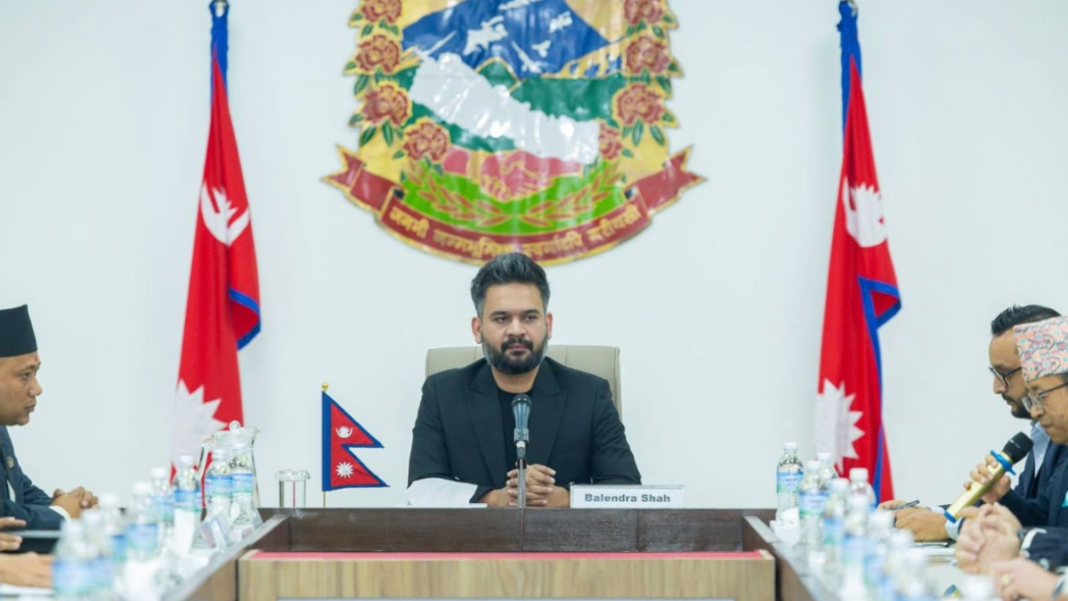
Public anger is mounting across Nepal against the newly elected government led by Prime Minister Balen Shah, less than a month after it assumed office, as protests spread from Kathmandu to major cities, including Birgunj and other border regions.
Demonstrations involving students, political groups and residents have intensified over a series of controversial decisions, with tensions now spilling into the streets outside Singha Durbar, the country’s administrative hub.
One of the key triggers for the unrest is the government’s strict enforcement of a customs duty on goods worth more than ₹100 (approx. NPR 160 or A$2) brought in from India. Although the rule is not new, authorities have recently begun applying it rigorously, including checks and confiscations at border points.
Residents in Nepal’s border areas have strongly criticised the move, saying it directly affects daily life in communities that depend heavily on cross-border markets for essential goods such as food, medicines, clothing and household items.

https://www.instagram.com/reel/DXdAmK5EjM4/?utm_source=ig_web_copy_link&igsh=NTc4MTIwNjQ2YQ==
Protesters have described the policy as an “unannounced blockade”, arguing it places an unfair financial burden on ordinary citizens and disrupts long-standing economic and social ties between border communities in Nepal and India.
Videos circulating on social media show heated exchanges between residents and border officials, including instances in which goods, such as small food items, were seized under the new enforcement measures.
Alongside the customs dispute, another source of unrest has emerged over the government’s decision to restrict or disband student unions affiliated with political parties. Student groups have accused authorities of acting without consultation, prompting large-scale demonstrations across schools and universities.
Thousands of students, many in uniform, have joined protests nationwide, highlighting growing youth discontent and concerns over civil liberties.
The political pressure has also been compounded by ministerial instability, with multiple resignations within weeks of the new government taking office. Critics say the developments are undermining the administration’s reformist image and its pledge to tackle corruption.
Public dissatisfaction has been further fuelled by rising inflation and fuel prices, adding to the economic stress already felt by households across the country.
Opposition parties and civil society groups have called for the withdrawal of the customs enforcement and greater consultation on policy decisions, warning that continued unrest could deepen political instability.
The government has defended the measures as necessary to curb revenue leakage, regulate imports, and protect domestic markets, but has not yet announced any revision of the enforcement policy.
As protests continue to grow, the Balen Shah administration is facing its first major political test, with public sentiment increasingly focused on the cost of living, governance transparency and cross-border economic ties with India.
Support our Journalism
No-nonsense journalism. No paywalls. Whether you’re in Australia, the UK, Canada, the USA, or India, you can support The Australia Today by taking a paid subscription via Patreon or donating via PayPal — and help keep honest, fearless journalism alive.
