

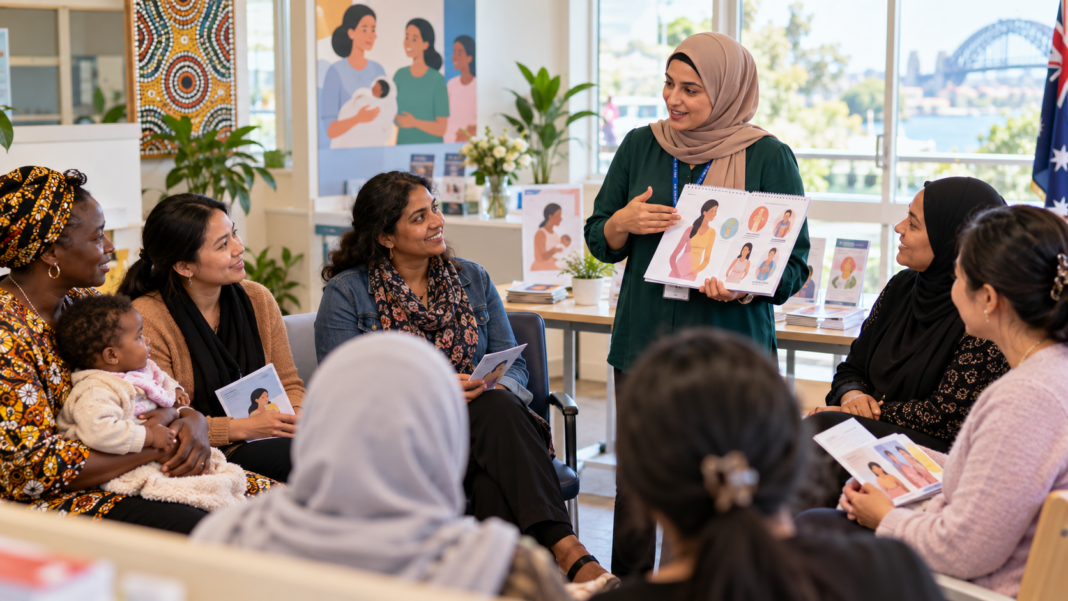
The Albanese Government is investing $10.8 million over two years to continue providing health information and support to migrant and refugee women in their own languages across Australia.
The Multicultural Centre for Women’s Health will continue leading the national Health in My Language Program in partnership with seven organisations across the country.
The program trains bilingual health educators to deliver free, culturally safe health education sessions in participants’ preferred languages, helping women overcome language barriers, improve health literacy and navigate Australia’s healthcare system.
Since the program began in 2022, the Government says around $35 million has been invested in the initiative, with more than 8,000 people from migrant and refugee communities participating in sessions delivered in more than 30 languages.
Minister for Multicultural Affairs Dr Anne Aly said language should not be a barrier to accessing healthcare.
“Language should never be a barrier to accessing important health information, support and services,” Aly said.
“This program ensures migrant and refugee women can receive trusted, culturally appropriate information in a language they understand.”
“By empowering women with knowledge and confidence, the Health in My Language Program is strengthening the health and wellbeing of individuals, families and communities across Australia.”
Assistant Minister White said the program’s approach was based on accessibility, cultural understanding and trusted community connections.
“Good health starts with having information that is accessible, relevant and delivered in a way that resonates with people’s experience,” White said.
“What makes this program so effective is that it is delivered by trusted bilingual health educators who understand the communities they work with and create safe spaces for women to ask questions, share experiences and learn from one another.”
White said evaluations showed the sessions were helping women better understand their health needs and feel more confident navigating the healthcare system.
“When women feel informed and supported, the benefits extend far beyond the individual to families and communities and future generations,” she said.
Participants have also described the impact of receiving health information in a familiar language.
One woman said she had previously felt “anxious and overwhelmed” when thinking about using the healthcare system because of language barriers.
“Today, I feel much more comfortable and confident when using health services,” she said.
“The knowledge I gained gave me the courage to overcome my past hesitations and encouraged me to go to the clinic.”
Another participant said a Health in My Language session on women’s health and cancer awareness encouraged her to discuss symptoms she had been worried about with a health educator.
The educator helped her arrange a GP appointment, where doctors organised further medical investigations. The woman said doctors subsequently identified changes requiring medical attention and early treatment.
The Government said the continued investment would help address gaps in culturally responsive health information and ensure more migrant and refugee women have the knowledge and confidence to access the services they need.
Support our Journalism
No-nonsense journalism. No paywalls. Whether you’re in Australia, the UK, Canada, the USA, or India, you can support The Australia Today by taking a paid subscription via Patreon or donating via PayPal — and help keep honest, fearless journalism alive.
