

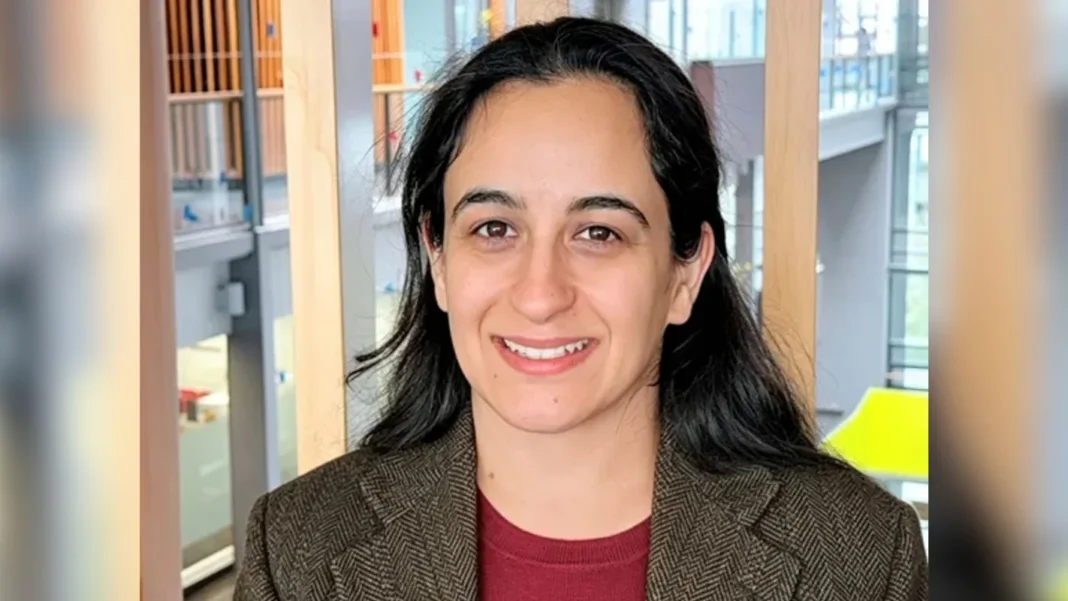
An Indian-origin researcher in New Zealand has secured nearly NZ$470,000 in funding to advance research into brain injuries affecting premature babies, with the work potentially paving the way for new treatments for brain bleeds.
Dr Simerdeep Dhillon, a senior research fellow at the University of Auckland, has been awarded a Senior Research Fellowship and a Project Grant from the Neurological Foundation.
The funding will support Dr Dhillon in establishing an independent research programme focused on improving outcomes for babies affected by brain injury, while the Project Grant will support research into new treatments for brain bleeds in premature infants.
“I was delighted and extremely grateful to receive the support of the Neurological Foundation,” Dr Dhillon told The Indian Weekender.
“Research of this scale relies on sustained funding support, and these grants provide an important opportunity to address questions that could improve outcomes for babies affected by brain injury.”
In New Zealand, about 173 babies born before 32 weeks of pregnancy are diagnosed with brain bleeds each year, according to Dr Dhillon.
Known medically as intraventricular haemorrhage (IVH), the condition occurs when fragile blood vessels in the developing brain rupture.
While some babies recover, brain bleeds can trigger secondary injury and inflammation, increasing the risk of lifelong neurological complications, including cerebral palsy and cognitive, motor, visual and hearing impairments.
“There are currently no treatments that directly protect the brain after IVH,” Dr Dhillon said.
“Our research aims to better understand how injury develops after a brain bleed and to investigate new approaches that may reduce that damage.”
One part of the research will examine whether a drug already used clinically to treat iron overload could help protect the developing brain.
When blood breaks down following a brain bleed, excess iron can accumulate in the brain and contribute to inflammation and secondary injury.
Dr Dhillon and her team will investigate whether removing this excess iron could reduce damage and improve recovery.
The researchers will also examine new physiological warning signs that could help clinicians identify brain bleeds and subsequent injury earlier, potentially allowing treatment to begin sooner.
The research will use a sheep model that closely reflects aspects of human infant development to test potential treatments, including strategies involving the reduction of harmful iron and the use of growth factors to support brain repair.
Dr Dhillon said preclinical research was an essential step before any potential treatment could be tested in babies.
“This step allows us to understand how brain injury develops, identify the best treatment timing, and gather the evidence needed before moving into clinical trials,” she said.
The three-year research programme will focus on establishing the safety and effectiveness of potential interventions and determining the most effective treatment window.
“Over the next three years, we will investigate whether this clinically available drug can safely reduce brain injury after a brain bleed and determine the most effective treatment window,” Dr Dhillon said.
“We will also examine early warning signs that may help clinicians detect these injuries sooner.”

Born and schooled in India, Dr Dhillon moved to New Zealand to pursue a Bachelor of Science and later a Master of Biomedical Science at the University of Auckland.
She subsequently completed her PhD at the university, researching how brain injuries develop and progress in the developing brain.
Dr Dhillon said her interest in science began during childhood, when her parents encouraged curiosity and learning.
“Curiosity and learning were always encouraged in our family. My parents were incredibly supportive of us exploring our interests and asking questions about the world around us,” she said.
Some of her strongest childhood memories involve family trips during which her parents taught her about the natural environment.
“They would explain why different tree and crop species were grown in different regions and encourage us to identify animal footprints on our farmland,” she recalled.
Those experiences helped develop her fascination with how living things adapt to their surroundings.
“Looking back, that curiosity and enjoyment of understanding how things work played an important role in shaping my interest in science and research,” she said.
Her later fascination with fetal physiology and neuroscience led her towards research focused on how babies respond to challenges before and around birth and how the developing brain can adapt and recover following injury.
Dr Dhillon completed her PhD under the mentorship of Professors Laura Bennet and Alistair Gunn and Associate Professor Joanne Davidson.
She said working alongside researchers who have made significant contributions to newborn health reinforced her commitment to the field.
Dr Dhillon said the possibility of improving outcomes for babies and families was a key motivation behind her work.
“The possibility of contributing even a small step towards better outcomes for these babies is what drives my research,” she said.
She also emphasised the importance of collaboration in scientific research.
“Scientific progress comes from teamwork, and I am grateful to be part of a collaborative environment where people are committed to tackling challenging and important problems together.”
Although any potential treatment could take years to reach clinical trials, the researchers say the current phase is critical for building the evidence required to establish safety, effectiveness and appropriate treatment timing.
The ultimate goal is to generate evidence that can support future clinical studies and, eventually, contribute to more effective treatments for premature babies affected by brain bleeds.
“By building a strong scientific foundation now, we hope to support the development of treatments that can improve outcomes for New Zealand families in the years ahead,” Dr Dhillon said.
Support our Journalism
No-nonsense journalism. No paywalls. Whether you’re in Australia, the UK, Canada, the USA, or India, you can support The Australia Today by taking a paid subscription via Patreon or donating via PayPal — and help keep honest, fearless journalism alive.
