

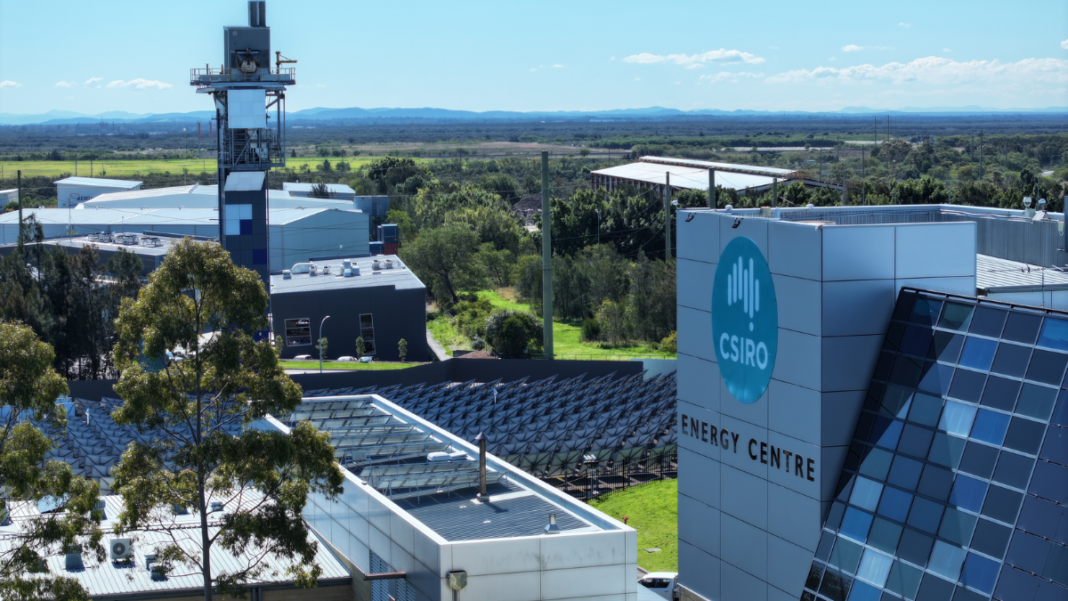
Australia’s push towards a cleaner, more reliable electricity system has received a significant boost, with CSIRO unveiling a $3 million expansion of its Renewable Energy Integration Facility in Newcastle.
Located at the agency’s Energy Centre, the upgraded Renewable Energy Integration Facility (REIF) dramatically expands the nation’s ability to test, validate and commercialise renewable and grid technologies before they are rolled out across the country.
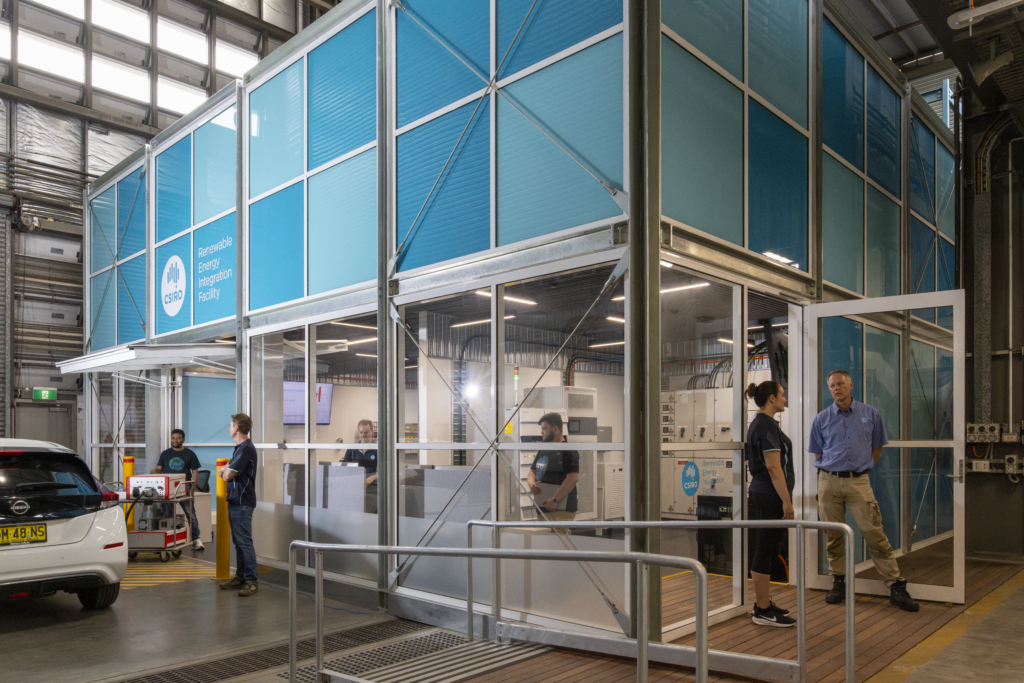
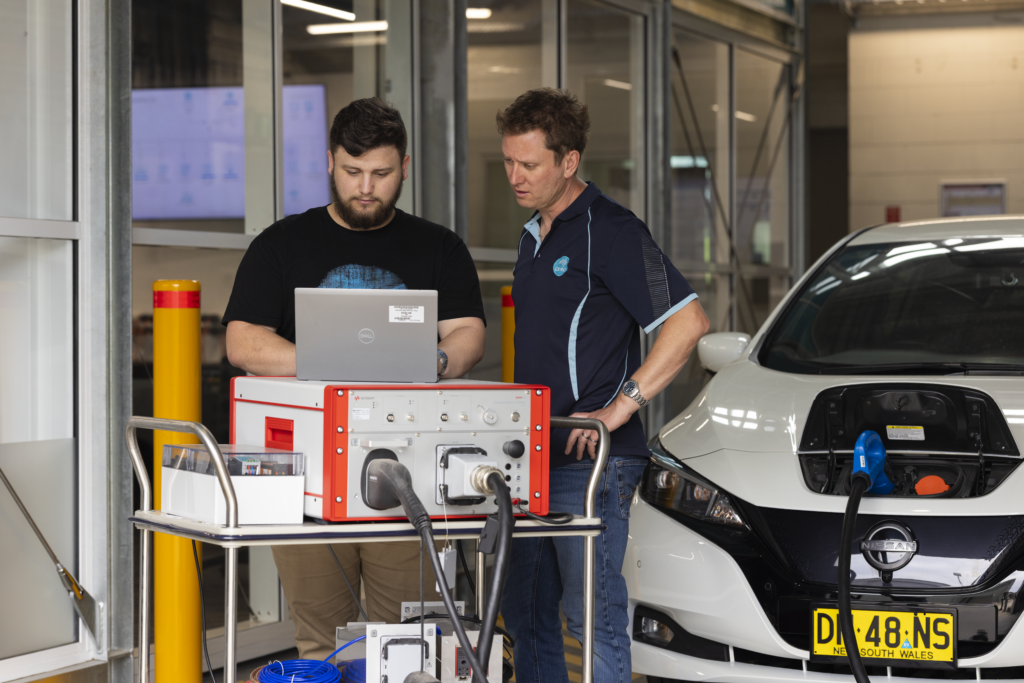
The enhanced laboratory can now simulate complex microgrids and grid faults, assess inverter performance under real-world conditions and conduct large-scale experiments combining solar panels, battery storage and electric vehicles.
A key highlight is vehicle-to-grid (V2G) technology, which enables electric vehicles to act as mobile batteries — storing excess solar power during the day and feeding it back into the grid during peak demand periods.
CSIRO Chief Executive Dr Doug Hilton said the investment delivers critical national capability at a time of rapid transformation in Australia’s energy mix.
“The Renewable Energy Integration Facility provides industry, researchers and system operators with an independent laboratory to test how technologies such as wind, solar, batteries and electric vehicles can integrate safely and reliably into the grid,” he said.
“As Australia transitions to a cleaner, more electrified economy, we need confidence that new energy technologies can operate safely and reliably across the system. This upgraded facility strengthens Australia’s capability to test exactly that.”
He added that improving the performance and coordination of distributed energy resources would help make better use of existing infrastructure, supporting more affordable power for households and businesses.
CSIRO Energy Systems Research Program Director Dr John Ward said the expanded lab would help address both local and global challenges emerging from the energy transition.
“The Renewable Energy Integration Facility allows us to simulate and stress-test real-world grid conditions, giving us deeper insight into how inverter-based technologies like solar and batteries perform as their share grows across the electricity system.”
Australia’s energy landscape presents unique pressures — from vast, remote distribution networks and world-leading levels of rooftop solar uptake, to increasingly volatile weather and growing demand from energy-intensive data centres.
Dr Ward said the facility enables researchers to collaborate directly with industry and market bodies to develop practical, scalable solutions. It also provides an independent testing ground for Australian start-ups and manufacturers seeking to validate new technologies before entering the market.
Established in 2009 and opened by former Prime Minister Kevin Rudd, the Newcastle-based centre is one of the largest renewable and grid integration testing facilities in the southern hemisphere.
The latest upgrade more than doubles its power testing capacity and introduces advanced grid and battery emulation tools, programmable inverters, improved high-resolution data capture and real-time hardware-in-the-loop simulation for large-scale experiments.
The facility has previously supported major innovation projects, including smart inverter development with Google X, virtual power station testing and trials focused on residential solar and storage aggregation.
Funded through the Department of Education’s Trailblazer Universities Program, the expanded facility is now open to external industry and research organisations for collaboration and commercialisation projects aimed at strengthening Australia’s clean energy future.
Support our Journalism
No-nonsense journalism. No paywalls. Whether you’re in Australia, the UK, Canada, the USA, or India, you can support The Australia Today by taking a paid subscription via Patreon or donating via PayPal — and help keep honest, fearless journalism alive.
