

Opposition Leader Angus Taylor has defended the Coalition’s approach to migration, citizenship and housing affordability, arguing that Australia’s migration program must be aligned with the nation’s ability to build homes and support long-term economic opportunity.
Speaking during a media briefing following his Budget Reply speech, Taylor said the Coalition remained strongly supportive of skilled migration but believed recent migration levels had outpaced housing construction, placing increasing pressure on renters, first-home buyers and new arrivals alike.
“A great immigrant nation” must also ensure migration remains sustainable, he said, arguing that population growth and housing supply need to move in tandem.

Taylor rejected suggestions that the Coalition was seeking to dramatically curtail migration, saying the party continued to support skilled migration as an important contributor to Australia’s economy. However, he argued that migration settings should be calibrated against housing availability and infrastructure capacity.
According to Taylor, Australia’s migration intake under Labor had risen significantly while housing construction had failed to keep pace, contributing to affordability pressures across major cities. He said future migration targets should be determined with reference to housing supply rather than fixed numerical caps.
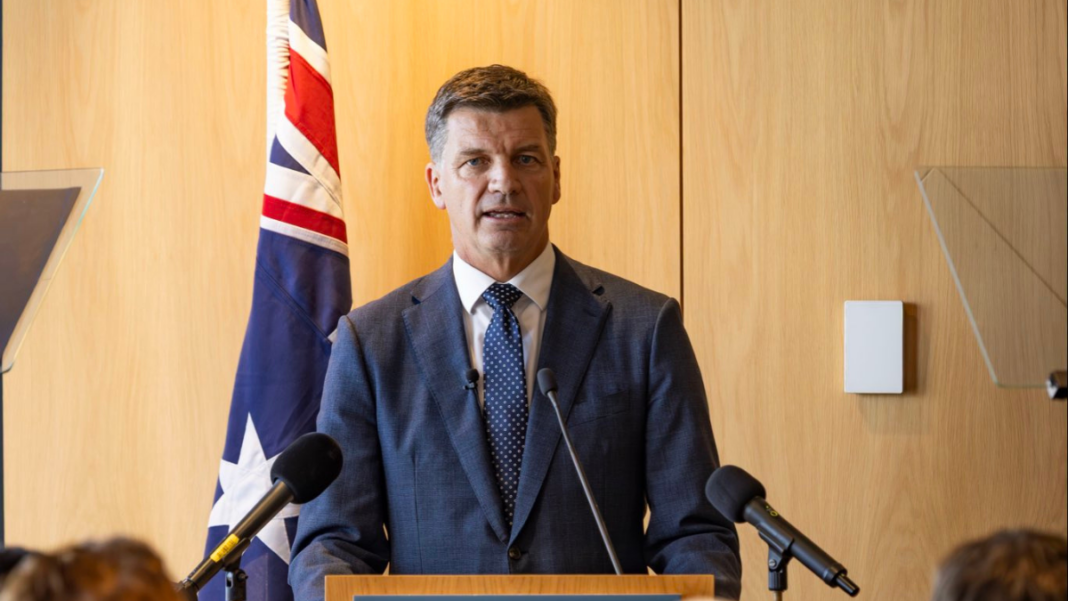
Leader of the Opposition Angus Taylor responds to a question from Pallavi Jain on housing affordability during the media briefing.
The Opposition Leader also emphasised the Coalition’s commitment to skilled migration, arguing that Australia’s immigration system should focus more closely on addressing genuine workforce shortages in sectors where skills are needed. He said previous governments had successfully filled skills gaps with migration levels substantially lower than those seen in recent years.
On housing affordability, Taylor described rising housing and rental costs as one of the country’s most pressing economic challenges. He argued that increasing housing supply must be the central policy response, citing the Coalition’s proposed $5 billion housing infrastructure fund aimed at accelerating the construction of roads, transport links, water and energy infrastructure needed to unlock new housing developments.
He also pledged to reduce regulatory burdens in the construction sector, claiming that elements of the National Construction Code had significantly increased building costs and contributed to affordability pressures.
Taylor criticised Labor’s proposed changes to negative gearing and capital gains tax arrangements, arguing they would discourage housing investment and reduce the number of homes built. He maintained that lower housing supply would ultimately place further upward pressure on rents and house prices.
The discussion also turned to permanent residents and access to welfare. Taylor sought to clarify the Coalition’s position, stating that any proposed welfare restrictions would apply prospectively rather than retrospectively. Existing permanent residents would not lose access to current arrangements, he said, and humanitarian entrants would continue to receive support.
He added that essential services such as healthcare, childcare and aged care would remain available regardless of migration status.
Taylor argued that while welfare access could be phased in over time for newly arrived skilled migrants, Australia already offered one of the fastest pathways to citizenship among comparable nations. Under current arrangements, migrants can become citizens after four years of residence, including one year as a permanent resident.
He encouraged permanent migrants intending to make Australia their long-term home to seriously consider citizenship, describing it as an important expression of commitment to the country.

At the same time, Taylor reaffirmed the Coalition’s support for dual citizenship, rejecting any suggestion that Australians holding citizenship in more than one country were less committed to Australia. He said dual citizens enjoyed the same rights and responsibilities as other Australians, with the exception of constitutional restrictions relating to parliamentary eligibility.
Throughout the discussion, Taylor repeatedly returned to the themes of aspiration, home ownership and economic opportunity. He argued that many Australians, including newer migrants, increasingly viewed home ownership and wealth creation as becoming out of reach.
His vision, he said, was for an Australia where families are once again able to build businesses, purchase homes and achieve long-term financial security — goals he believes have become more difficult amid rising housing costs, inflation and supply constraints.
Support our Journalism
No-nonsense journalism. No paywalls. Whether you’re in Australia, the UK, Canada, the USA, or India, you can support The Australia Today by taking a paid subscription via Patreon or donating via PayPal — and help keep honest, fearless journalism alive.
