
Omer Ghazi
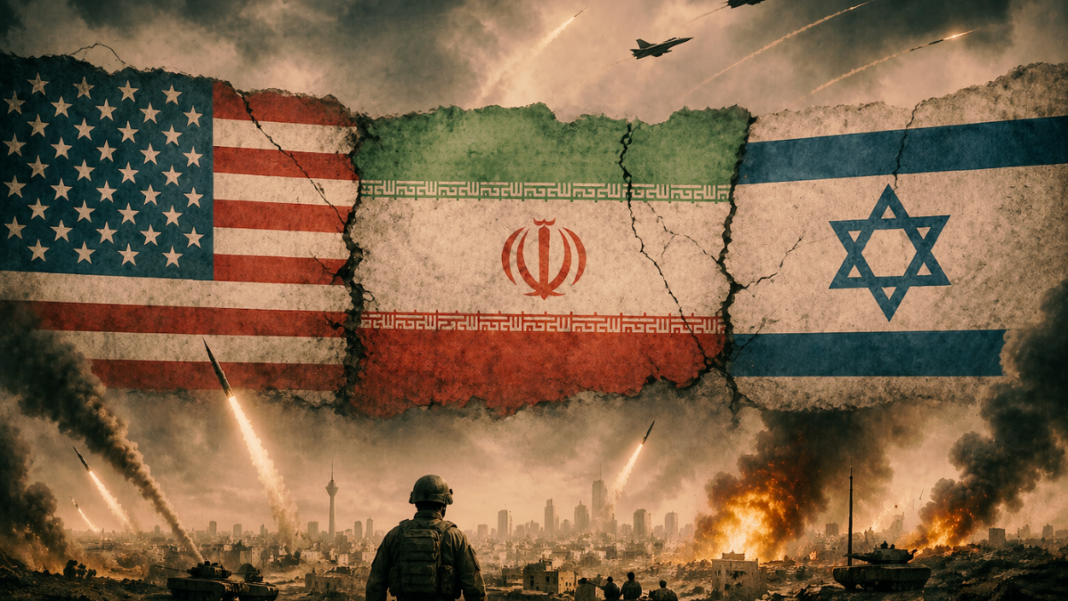
Hours after markets and diplomats began pricing in a fragile pause, President Donald Trump announced an extension to the Iran ceasefire while simultaneously maintaining a blockade of Iranian ports until Tehran submits a proposal for talks and negotiations are concluded “one way or the other.”
Tehran reacted sharply. Iranian Foreign Minister Abbas Araghchi called the blockade an act of war and a violation of the ceasefire, warning that Iran knows “how to resist bullying.” In effect, what was presented as a pause in hostilities now carries within it the seeds of the next confrontation.
The world watched in shock and awe when President Trump warned of the possible “end of a civilization,” in a Truth Social post two weeks ago, a phrase directed at Iran that instantly raised the spectre of a war whose consequences nobody could fully calculate. For a brief moment, West Asia appeared to stand at the edge of something far larger than another regional flare-up. Then came the dramatic turn: a ceasefire framework announced merely hours before the deadline, built around a set of Iranian demands that Trump described as a “workable basis on which to negotiate.”
What those words mean will eventually shape not just the trajectory of West Asia, but the stability of the global order itself. As of today, the supposed calm already looks paper-thin. The Strait of Hormuz is still contested, commercial traffic remains disrupted, and oil markets are once more pricing in panic rather than peace. What was sold as de-escalation now looks more like an intermission between crises.

One does not wish to be a pessimist, but there remains a structural gap between what Washington says has been agreed and what Tehran says is non-negotiable. Trump has triumphantly stated that Iran agreed to suspend its nuclear programme indefinitely and return enriched uranium, which he referred to as “nuclear dust” buried under sites hit by U.S. bombers. Iran’s reaction was immediate and blunt. Officials rejected the claim, declaring that enriched uranium is “sacred” national property and will not be handed over to the United States.
That single exchange captures the wider problem. Washington wants public rollback, symbolic capitulation, and unrestricted maritime passage. Tehran wants sanctions relief, strategic dignity, and retention of leverage. One side speaks the language of victory, the other the language of sovereignty. These are not minor negotiating differences that can be patched over with clever wording; they are fundamentally opposing political imaginations.
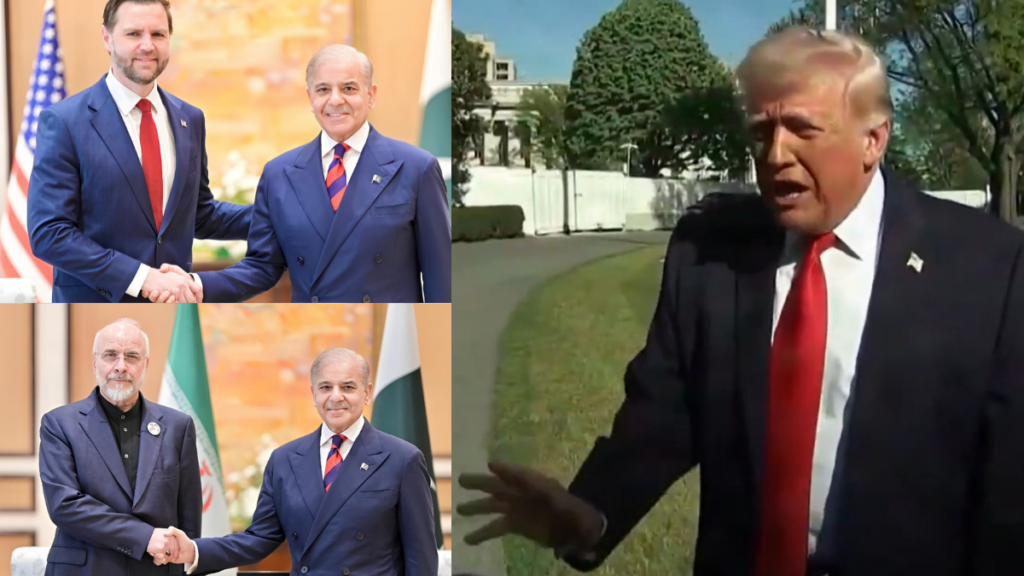
And then, because geopolitics occasionally descends into satire, the world was informed that Pakistan had somehow become central to the diplomatic choreography. President Trump’s mention of Shehbaz Sharif triggered immediate jubilation in Islamabad, calls for a Nobel Peace Prize, and even the commentary about Pakistan’s unmatched diplomatic genius from the usual suspects from within the Indian borders. It would all be amusing if the stakes were not so serious.
Anyone with two functioning brain cells understands that Pakistan holds little real leverage over either Washington or Tehran. It cannot stabilise its own economy without recurring bailouts, cannot secure its own internal order without military management, and certainly cannot compel strategic concessions from Iran or the United States. What it can do, however, is serve as a convenient placeholder: a country willing to host, relay, endorse, and amplify whatever script stronger powers need repeated. If Washington wanted a message carried without questions asked, it knew exactly where to look. That, in essence, is the story of Pakistan “mediating” this ceasefire.
Moreover, scratch beneath the surface, and this is less a war about ideology and more a race against time. For the United States, this is about locking in the next few decades of energy security while it still enjoys a window of military superiority over China. Control over chokepoints like the Strait of Hormuz is not just about oil flows, it is about maintaining the architecture of the petro-dollar that underwrites American global dominance.
China has so far stayed away from any overt military involvement, refusing to be dragged into a conflict on American terms even though it has close ties with Iran. But economically, it is attempting to redraw the rules. Iran’s push for transactions for a critical passage across the Strait of Hormuz to be conducted in Chinese Yuan is not a trivial detail; it is a direct challenge to the dollar’s monopoly over global energy trade. And Washington understands exactly what that implies. Strip away the rhetoric, and the urgency, even the occasional panic, in American actions begins to make sense. This is not just about Iran. It is about preventing a future where the rules of global trade, energy, and power are no longer written in dollars.
As it increasingly appears, the push for regime change in Iran was less about addressing the very real grievances of its people and more about securing long-term strategic interests. The anger on the streets of Iran—against economic hardship, social restrictions, and political repression—did exist, but it was, at best, a secondary consideration in a much larger geopolitical calculation.

That said, the internal discontent was not entirely irrelevant. Reports emerging from the ground suggested moments of visible relief and even celebration in certain pockets when Khamenei was taken down, pointing to the depth of frustration with the regime. There were also accounts of local Iranian citizens assisting in the rescue of a downed US pilot, an extraordinary signal of how sections of the population were willing to act against the establishment and the IRGC.
For India, this is not a distant geopolitical spectacle but an immediate strategic and humanitarian concern. With millions of Indian nationals living and working across Gulf countries, any escalation in the region directly threatens their safety and mobility.
The Gulf Cooperation Council (GCC) collectively remains India’s largest regional trading bloc, reflecting the deep economic interdependence between India and the Gulf. Among individual countries, the United Arab Emirates is consistently India’s third-largest trading partner, after the United States and China, and also ranks among India’s top export destination.
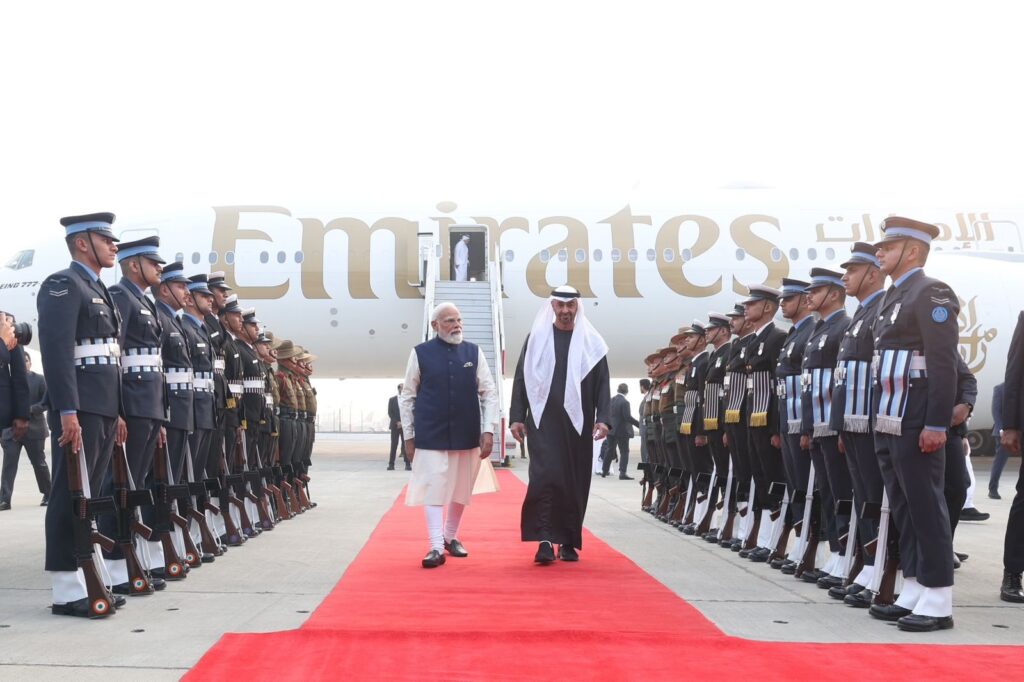
As a country that has positioned itself as a stabilising axis in global affairs, India cannot remain insulated from disruptions in West Asia. The challenge, therefore, is twofold: ensuring the safety of its diaspora while simultaneously managing the economic aftershocks of a conflict that, despite unfolding thousands of kilometres away, can leave a deep impact if not resolved soon.
Till when will this situation continue? That question takes us right back to the so-called ceasefire, which, even on paper, looked fragile, and on ground, has already begun to unravel. The Strait of Hormuz remains effectively contested, proxy groups remain active, and regional fault lines are very much alive. How long Gulf countries can continue to absorb this pressure and exercise restraint is anyone’s guess.
While the idea of liberating the Iranian people is morally appealing, and nobody is thrilled about Iran’s nuclear program, the United States is now discovering a far more inconvenient truth: Iran is not Venezuela, and West Asia is not a playground for quick regime-change experiments. The ceasefire, therefore, is not a resolution; it is a pause loaded with contradictions, where every actor is waiting, watching, and preparing for the next move. Ending a war in this region, with its layers of ideology, proxies, and strategic depth, is infinitely more difficult than starting one.
Contributing Author: Omer Ghazi is a proponent of religious reform and extensively writes on geo-politics, history and culture.
Disclaimer: The opinions expressed within this article are the author’s personal opinions. The Australia Today is not responsible for the accuracy, completeness, suitability, or validity of any information in this article. The information, facts, or opinions appearing in the article do not reflect the views of The Australia Today, and The Australia Today News does not assume any responsibility or liability for the same.
Support our Journalism
No-nonsense journalism. No paywalls. Whether you’re in Australia, the UK, Canada, the USA, or India, you can support The Australia Today by taking a paid subscription via Patreon or donating via PayPal — and help keep honest, fearless journalism alive.
