

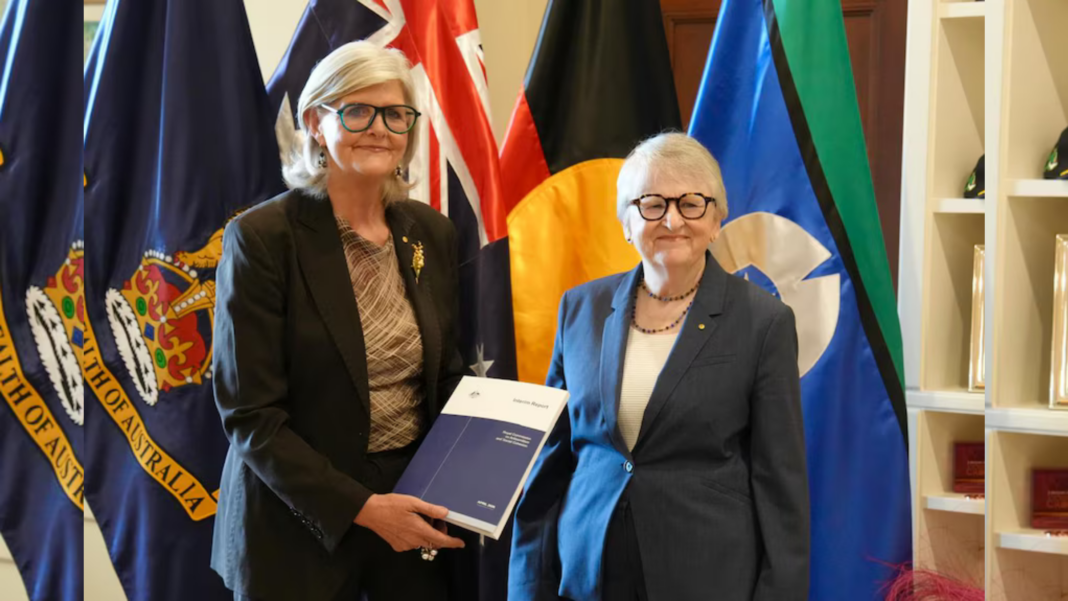
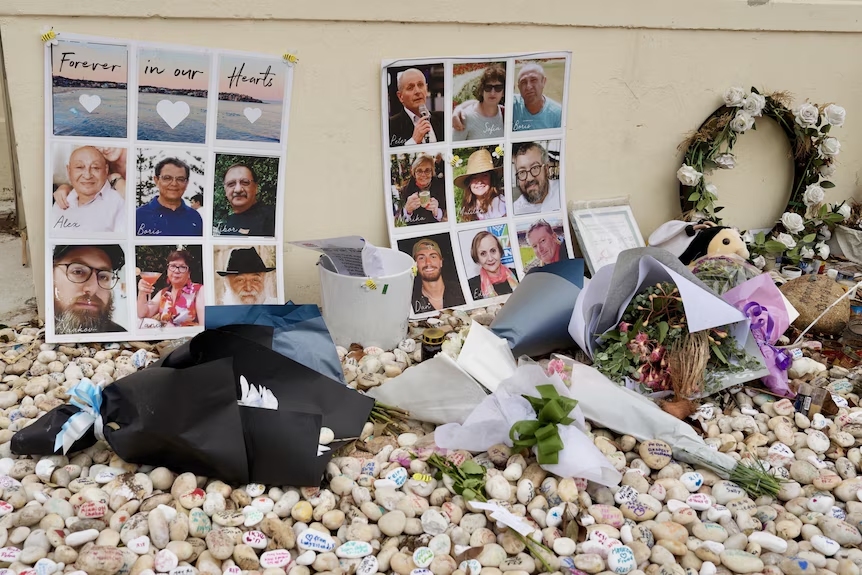
A royal commission examining the Bondi Beach massacre, in which 15 people were killed during a Jewish festival, has concluded the attack could not have been prevented under existing laws, but has raised serious concerns about how counter-terrorism intelligence is shared between police agencies.
An interim report released today identifies systemic weaknesses within the Joint Counter-Terrorism Team in New South Wales, particularly around information management and inter-agency communication. While no agency was found to have missed a specific legal gap that could have stopped the attack, the report said there was “room for improvement” in how intelligence is handled and shared.
The inquiry found that neither the Australian Federal Police nor NSW Police gave “unqualified support” for the current functioning of the joint counter-terrorism structure, with both agencies acknowledging operational and coordination issues.
The report also examined security arrangements for the Chanukah by the Sea event, where intelligence assessments had rated the threat to the Jewish community as “high” and warned that a terrorist attack was “likely”. Despite this, only limited police resources were deployed to the site, a matter that will be examined further in later hearings.
Concerns were also raised about the handling of intelligence during the Dural caravan incident in early 2025, when a member of the public reported a vehicle containing explosives and antisemitic material. The report described this case as an example of breakdowns in information sharing between agencies within the counter-terrorism framework.
The royal commission has issued 14 recommendations, including calls for a full review of Joint Counter-Terrorism Teams across Australia, stronger national coordination through updated counter-terrorism guidelines, and improved information-sharing systems. It also recommends considering full-time leadership for the Commonwealth Counter-Terrorism Coordinator role and regular updates to national counter-terrorism handbooks.
Other recommendations include a national counter-terrorism exercise involving senior ministers after federal elections, and renewed efforts to implement nationally consistent firearms laws and a national gun buyback scheme.
Fifteen people were killed in the Bondi Beach attack on December 14, which occurred during a Jewish festival. Accused gunman Naveed Akram is facing terrorism and murder charges, while his father, Sajid Akram, was shot dead at the scene.
Commissioner Virginia Bell said in her interim findings that while the legal and regulatory framework was broadly adequate and no immediate legislative gaps were identified, there remains a need to strengthen coordination between agencies and improve preparedness for high-risk events.
Responding to the report, Australian Jewish Association CEO Robert Gregory said the findings highlighted several serious concerns but also left key issues unaddressed.
“We welcome the release of the Royal Commission’s interim report. While limited in scope, it addresses some important issues in the lead-up to the Bondi massacre and contains several concerning findings,” he said.
Gregory noted that death threats made against AJA leaders were referenced in the report, which led to the first charges under AFP Operation Avalite, and described revelations about policing at the event as troubling.
“The revelation that police attending the Bondi Chanukah event were reportedly told there was no need to remain for the full duration is particularly troubling,” he said.
He also criticised what he described as a gap in the report’s analysis.
“However, the report’s credibility is undermined by its failure to address the issue of radical Islamist extremism. No serious analysis of the lead-up to the Bondi massacre can ignore this.”
Gregory raised concerns about the conclusion that no urgent legislative changes were required.
“It’s concerning that the report identifies no urgent legislative changes required. There were serious failings by multiple agencies. If the legislation is adequate, then these failings are inexplicable.”
He added that existing firearms laws may have limited security responses at the event.
“One glaring legislative constraint was the absence of armed security due to existing firearms laws. Whether different security settings could have changed the outcome is a matter that warrants urgent examination. If gaps remain, they represent a serious and ongoing security vulnerability.”
Further public hearings are scheduled in the coming weeks, with final findings expected ahead of the first anniversary of the attack.
Support our Journalism
No-nonsense journalism. No paywalls. Whether you’re in Australia, the UK, Canada, the USA, or India, you can support The Australia Today by taking a paid subscription via Patreon or donating via PayPal — and help keep honest, fearless journalism alive.
