

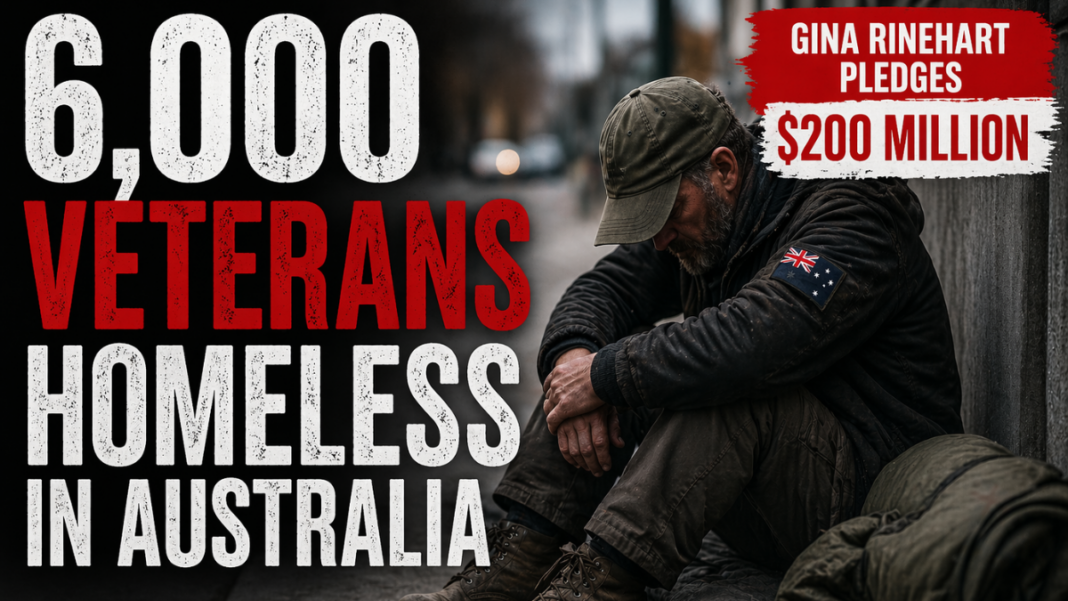
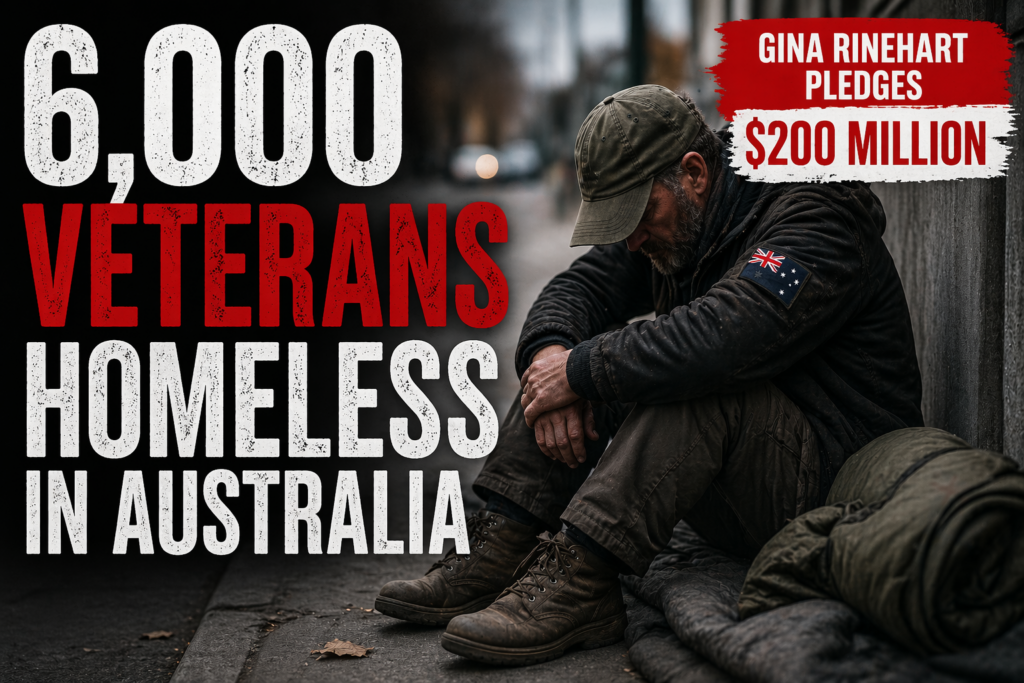
Australia prides itself on honouring those who served. Yet behind the ceremonies, medals and ANZAC traditions lies a stark reality: thousands of former service members do not have a stable place to live. Recent estimates suggest around 6,000 veterans are homeless, a figure that has shocked many and reignited debate about how the nation supports those who once defended it.
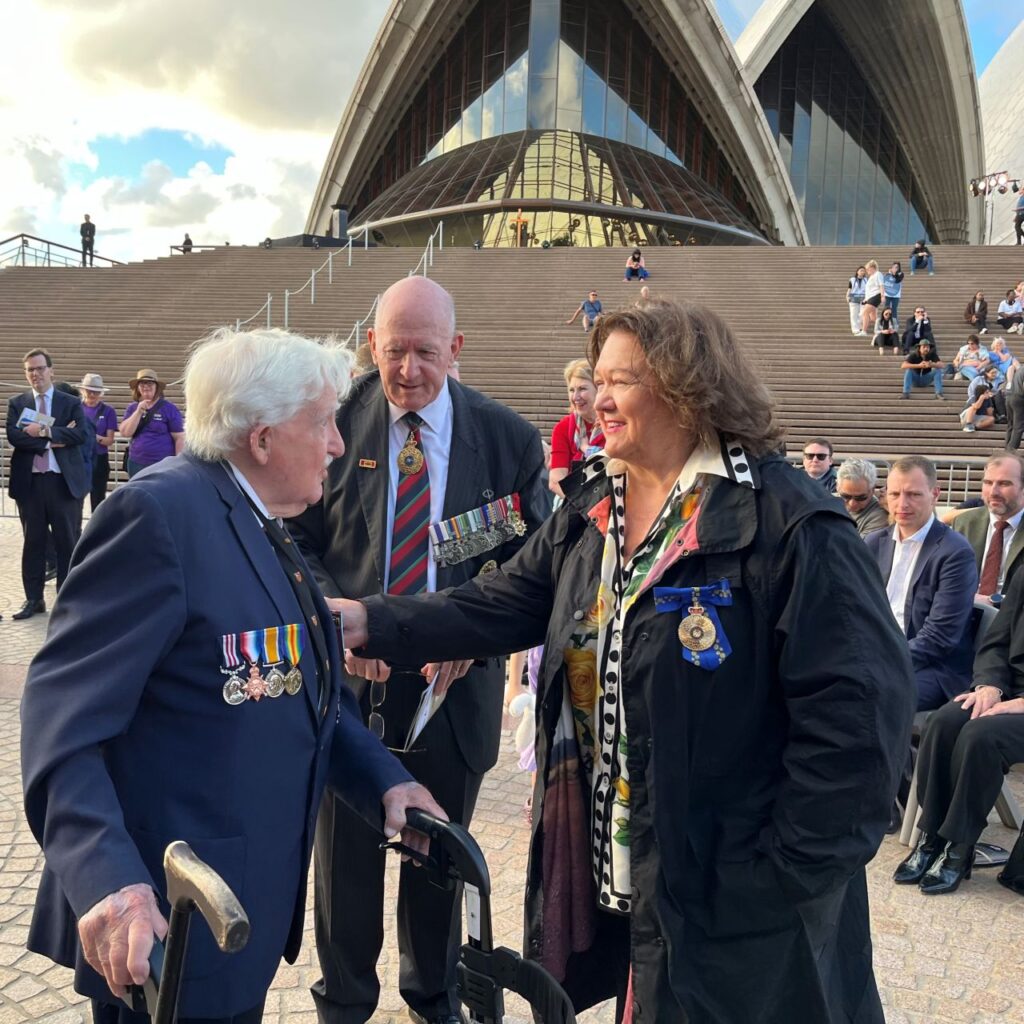
The scale of the problem has come into sharper focus following a major private pledge from mining magnate Gina Rinehart and her company Hancock Prospecting, which committed $200 million to help provide housing for homeless veterans. Veteran advocacy groups and the RSL Australia have described the donation as one of the largest private contributions ever made to veteran housing in the country.
The fact that such a massive private intervention is needed has prompted uncomfortable questions. Australia has deployed personnel to conflicts from Afghanistan and Iraq to peacekeeping operations across the globe. Yet many veterans return to face unemployment, mental health challenges, housing instability and difficulties transitioning to civilian life. For some, the shift from military structure to civilian uncertainty can be overwhelming, particularly when combined with injuries, trauma or financial strain.
Veteran homelessness is rarely visible in the way many imagine. It does not only mean sleeping rough. Many veterans are “couch surfing,” living in temporary accommodation, or moving frequently between short-term housing. This hidden homelessness makes the scale of the issue easy to underestimate and difficult to measure precisely, but the estimate of around 6,000 affected veterans highlights the depth of the challenge.
The $200 million pledge is intended to fund the purchase of homes and provide long-term housing solutions, offering stability for veterans who have struggled to secure a safe place to live. Support organisations say secure housing is often the first and most critical step toward rebuilding lives, enabling veterans to access healthcare, employment and community support.
While the donation has been widely welcomed, it has also intensified debate about responsibility. Many argue that the need for such a large private initiative raises broader questions about whether government systems are adequately supporting veterans after service. Advocates say the announcement should serve as a wake-up call and a reminder that honouring service must extend beyond remembrance ceremonies to long-term care and support.
The contrast is striking: a nation that publicly celebrates its veterans, yet thousands remain without a home. The hope now is that renewed attention, combined with significant funding, can begin to close that gap and ensure that those who served are not left behind.
Support our Journalism
No-nonsense journalism. No paywalls. Whether you’re in Australia, the UK, Canada, the USA, or India, you can support The Australia Today by taking a paid subscription via Patreon or donating via PayPal — and help keep honest, fearless journalism alive.
