

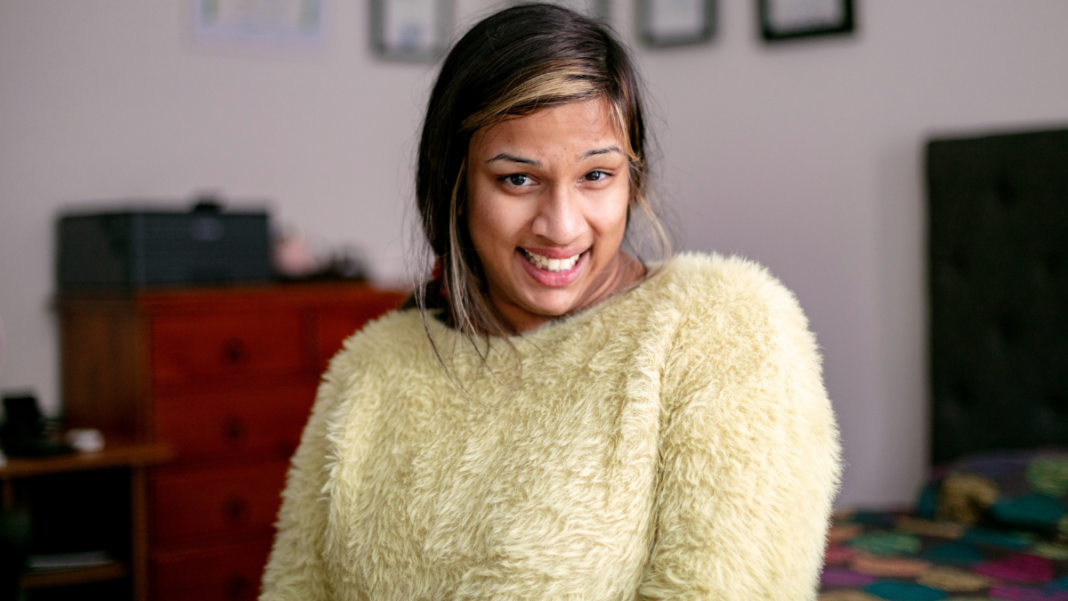
When Jerusha Mather turned 18, adulthood did not feel like a milestone. It felt like a sudden loss.
Until then, her life with cerebral palsy had been supported by a system built around children. There were specialist teams, coordinated appointments and healthcare workers who understood the condition. But as soon as she aged out of paediatric care, that structure began to fall away.
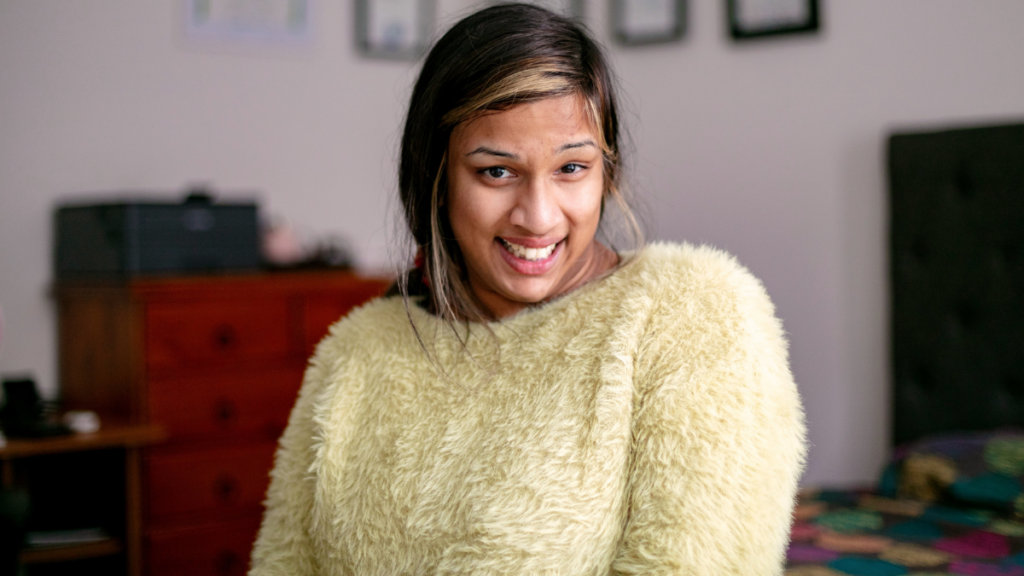
“Suddenly, I was told adult services were limited,” she says.
“It felt like the system expected my development to just stop.”
For Jerusha, that moment was not just deeply personal. It exposed a problem affecting thousands of Australians living with cerebral palsy.
Although adults now make up 58 per cent of Australians with CP, support systems and healthcare pathways remain heavily focused on childhood. Once young people turn 18, many are left to navigate a far more fragmented system, often with fewer specialist services, longer waits and limited support designed for the realities of adult life.
“Adulthood with CP is dynamic,” she says.
“We’re pursuing higher education, careers and independence. The healthcare system should reflect that.”
Rather than quietly accepting that gap, Jerusha chose to challenge it.
Now a PhD researcher at Monash University, she is investigating neuromodulation in adults with cerebral palsy. But her drive comes from somewhere more personal than academic interest.
Jerusha knows what it means to live inside the system she is studying.
That lived experience shapes the way she approaches research, especially in a field where disabled people have often been studied from the outside rather than leading the work themselves.
“In research, participants can sometimes be treated like data points,” she says.
“But they’re people managing work, study, fatigue and complex systems.”
Her contribution has already earned recognition. She has received the Bridge Create Change Award, joined the L’Oréal-UNESCO For Women in Science mentoring program, and been named by the Australian Academy of Science as a STEM changemaker. Her portrait also hangs in Questacon, recognising female role models in medicine.
But the barriers she studied did not disappear when she entered academia.
During postgraduate study, Jerusha found herself dealing with the same kind of bureaucratic strain many disabled students know too well. Different departments handled academic adjustments, disability services and funding support, but they did not work together. The burden of chasing each one, repeatedly explaining her needs and trying to make the pieces connect became exhausting.
“There were moments where the fragmentation felt overwhelming,” she says.
She says the Disability Gateway, a federal government service designed to provide a single starting point for disability information and support, helped cut through some of that confusion.
“It didn’t remove every barrier,” she says.
“But it reduced the overwhelm and gave me direction.”
Outside the lab, Jerusha’s life is far bigger than the narrow expectations systems often place on disabled people. She trains at the gym to manage her CP, writes poetry, stays grounded in her faith and works as a fashion model signed with inclusive agency Zebedee Talent.
Her poetry collection, Burnt Bones and Beautiful Butterflies, reflects on resilience, disability and identity. Her modelling work, too, is tied to a deeper purpose.
“For me, modelling isn’t just about imagery,” she says.
“It’s about representation and expanding the narrative of what strength and beauty look like.”
She has also spoken out on accessibility in everyday life, including inaccessible packaging that many people without disability rarely stop to think about. Her campaign on the issue attracted more than 13,000 signatures, tapping into a wider frustration over how ordinary design can shut people out.
Still, her long-term focus remains fixed on something bigger than individual advocacy. She wants a healthcare system that does not stop seeing possibilities once a disabled person becomes an adult.
Jerusha’s story is not simply about resilience. It is about what happens when people are forced to build futures that institutions never properly planned for. And it is also about what can change when those same people begin leading the conversation themselves.
For Australians with disability and their carers, support information is available through the Disability Gateway website or by calling 1800 643 787.
Support our Journalism
No-nonsense journalism. No paywalls. Whether you’re in Australia, the UK, Canada, the USA, or India, you can support The Australia Today by taking a paid subscription via Patreon or donating via PayPal — and help keep honest, fearless journalism alive.
