


By Omer Ghazi
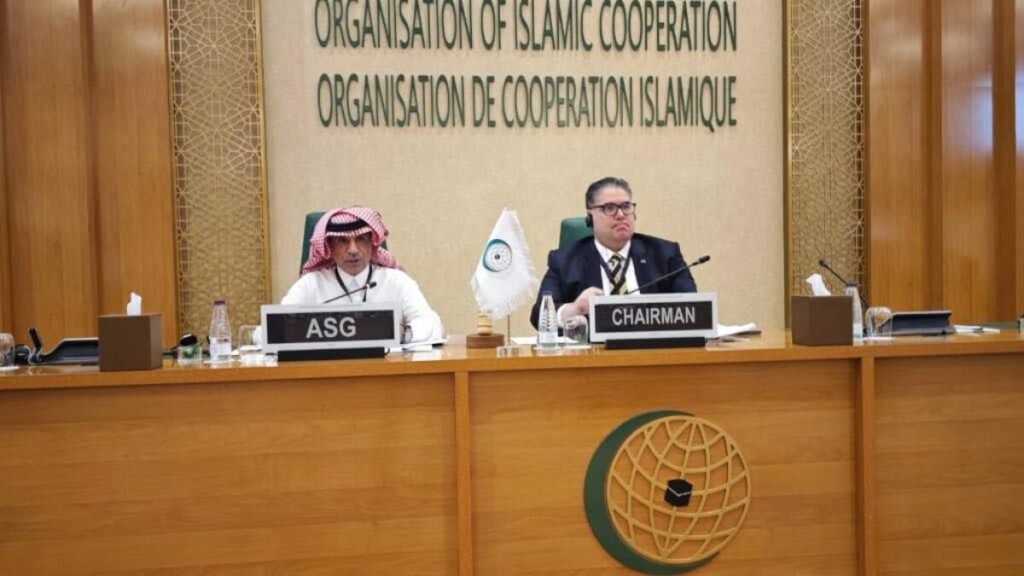
Every few months, the Organisation of Islamic Cooperation briefly stirs from its institutional slumber to issue a statement on the so-called “self-determination” of Kashmir, less to influence reality and more to reassure itself of its own relevance. The latest such intervention came on the anniversary of the United Nations Commission for India and Pakistan resolution of 5 January 1949, with the OIC predictably demanding a reversal of all “unilateral measures” taken on 5 August 2019. The ritualism of the exercise is by now familiar: selective invocation of international law, studied silence on inconvenient facts, and a performative concern that carefully avoids engaging with the legal, political, or historical substance of the issue.
Before examining why this unsolicited advice is both misplaced and unnecessary, it is worth recalling why the Organisation of Islamic Cooperation never acquired the relevance it once imagined for itself. The OIC’s foundational flaw lies in its attempt to institutionalise the abstract and largely imaginary notion of a monolithic ummah, a concept that history has repeatedly tested and discarded.
Time and again, the world has demonstrated that imagined unity under a single book or ideological banner cannot endure across divergent cultures, languages, ethnicities, and political realities. When confronted with real-world pressures, people do not organise themselves around distant abstractions, but around tangible bonds of nationhood, shared history, and lived cultural experience. A person’s primary allegiance, quite naturally, remains with the society they inhabit and the state that governs them, not with a far-removed collective defined only by theological or political symbolism. It is this fundamental misreading of how human societies actually function that has condemned the OIC to ritualistic posturing rather than meaningful relevance.

History offers ample evidence of the failure of such imagined solidarities, and the subcontinent itself provides the most instructive example. The creation of Bangladesh was a direct rejection of the notion that a shared religious identity could override language, culture, and political dignity. Bengali Muslims rose against Pakistani military rule not despite the idea of a common ummah, but precisely because linguistic imperialism and cultural erasure proved intolerable.
A similar pattern is visible in contemporary Iran, where sustained public protests have challenged a theological dictatorship for their cultural autonomy, personal freedom, and civilisational identity, all in defiance of an imposed religious uniformity. The impulse is neither new nor confined to Islam. Marxism once promised a transnational brotherhood cutting across nations, languages, and civilisations, united by class consciousness rather than faith. That experiment, too, failed miserably under the weight of cultural reality, as societies repeatedly chose national, cultural, and civilisational affiliations over abstract ideological universalism. The lesson, repeated across time and geography, is unmistakable: imagined collectives rarely survive contact with lived human experience.
This conceptual flaw explains why the Organisation of Islamic Cooperation has remained a chronically ineffective organisation despite boasting fifty-seven member states spread across four continents. In over five decades of existence, the OIC has failed to prevent wars between its own members, failed to protect Muslim populations from mass violence, and failed to deliver any tangible economic, political, or security integration. From Palestine to Syria, Yemen to Libya, and Rohingya Muslims in Myanmar to Uyghurs in China, the organisation has oscillated between silence and sterile statements, carefully calibrated to avoid offending powerful patrons. It possesses neither enforcement mechanisms nor internal cohesion, largely because its members are divided by competing national interests, rival alliances, and conflicting geopolitical priorities. The result is an institution that excels at issuing communiqués but is structurally incapable of action.
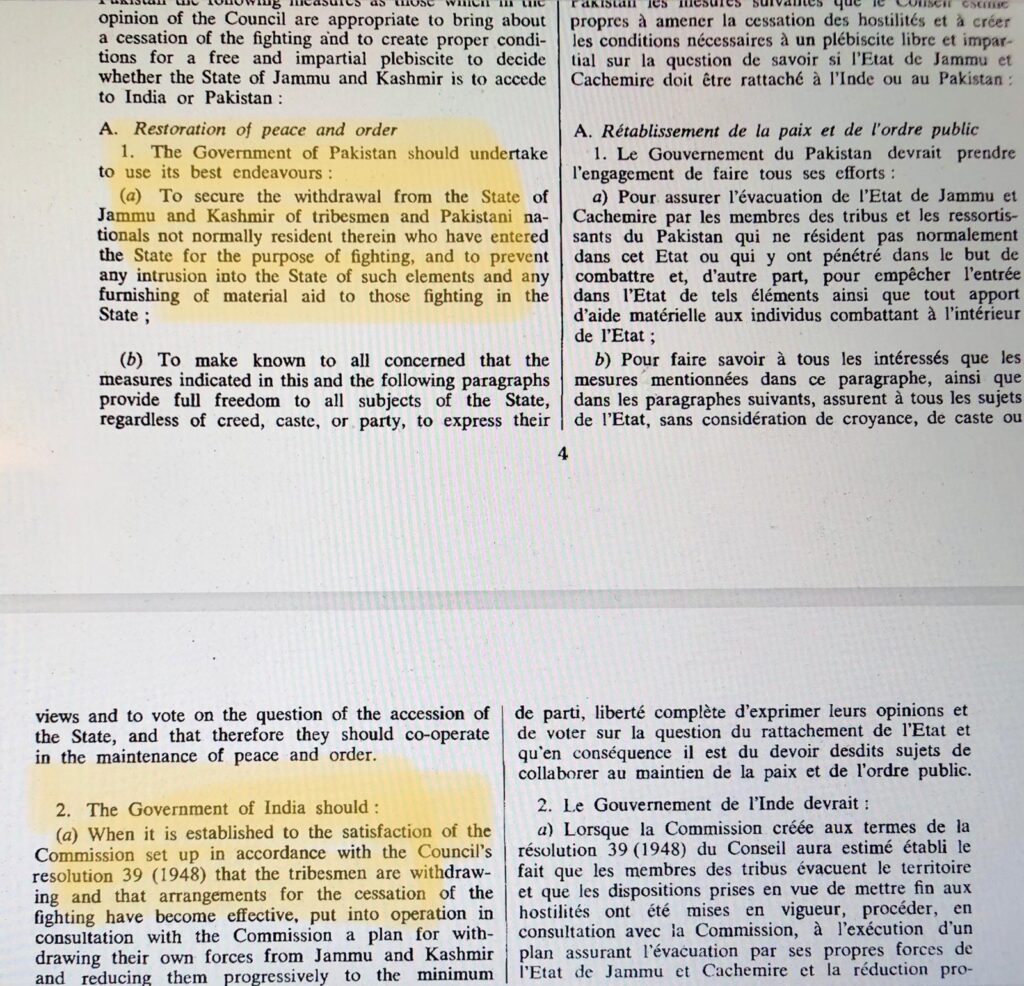
Yet, having failed to acquire relevance through action, the Organisation of Islamic Cooperation predictably seeks to justify its existence through periodic ritualism, raking up Kashmir every few months before retreating into silence. In its latest statement, the OIC chose to invoke the “unilateral measures of 5 August 2019,” but conspicuously avoided engaging with the very United Nations resolutions it claims to uphold. United Nations Security Council Resolution 47 is unambiguous in its sequencing: it places the primary obligation on Pakistan to secure the withdrawal of tribesmen and Pakistani nationals who entered Jammu and Kashmir for the purpose of fighting, and to prevent further intrusions or material support.

One is therefore compelled to ask whether the OIC has ever demanded that Pakistan withdraw its forces from Pakistan-occupied Kashmir, dismantle terror infrastructure, or comply with the prerequisites laid down by international law. Or is the organisation content with selectively quoting legality while functioning as a convenient echo chamber for a terror-sponsoring state, attempting to manufacture pressure on India without addressing the original and continuing violation that rendered the dispute intractable in the first place?
Moreover, even if one were to momentarily accept the Organisation of Islamic Cooperation as a self-appointed gatekeeper of Muslim rights worldwide, its record exposes a striking amnesia and blatant double standards. In Iran, a murderous regime has killed thousands of protesters demanding basic freedoms, from women asserting autonomy over their dress to young people calling for music, expression, and a secular democratic order; the overwhelming majority of those killed were Muslims, yet the OIC’s response has been conspicuously muted. In Pakistan, daily reports of enforced disappearances, extrajudicial killings, and collective punishment against Baloch fighters and civilians, who are themselves Muslims, elicit little more than silence.
The plight of Uyghur Muslims in China, subjected to mass detention, cultural erasure, and coercive re-education, is met with studied indifference. Even within member states, when leaders such as Recep Tayyip Erdogan carry out sustained crackdowns on journalists, academics, and activists, many of whom are Muslims, the OIC looks the other way. This selective outrage reveals the truth: the organisation’s interventions are not guided by principle or concern for Muslim lives, but by expediency, alliances, and the convenience of targeting India while ignoring abuses that demand genuine moral courage.
There is also a responsibility that comes with appointing oneself as a custodian of a global community. If an organisation claims the moral authority to speak on discrimination faced by Muslims, it must also demonstrate the courage to confront and unequivocally condemn the heinous crimes committed in the name of that very community.
Tens of thousands of Christians have been slaughtered in Nigeria and Sudan by Islamist militias over the past decade, often with little more than a passing murmur from the Organisation of Islamic Cooperation. Forced conversions, targeted killings, and systematic intimidation of Hindus in Pakistan and Bangladesh have similarly failed to elicit sustained outrage or institutional accountability. Most glaringly, massacres of Jews, from the October 7 pogrom to the killings at Bondi Beach, have not been met with the kind of categorical, unambiguous condemnation one would expect from a body that claims to stand against injustice.


Moral advocacy cannot be selective. One cannot demand global empathy while remaining silent, evasive, or apologetic when violence is perpetrated by those who claim to act in the name of the same faith. Without this willingness to own uncomfortable truths and condemn them loudly, the OIC’s claim to represent moral conscience rings hollow.
Therefore, the Organisation of Islamic Cooperation would do well to think a million times before raking up Kashmir, and especially before lecturing India on an issue where Kashmiris today enjoy a level of dignity, security, and civic life that remains conspicuously absent in Pakistan-occupied Kashmir. If the OIC seeks moral standing, it should begin by condemning the systematic atrocities inflicted on Muslims by murderous regimes in Iran and Pakistan, rather than selectively targeting democratic states. It should also summon the courage to unequivocally denounce crimes committed against non-Muslims in the name of Islam, without evasions or qualifiers. It is understandable that such a course correction would be almost impossible for an organization that has repeatedly demonstrated moral hollowness and institutional spinelessness; in that context, disbandment may well be the most honest option. A non-existent organisation is preferable to one that is half-alive, selectively outraged, and perpetually complicit through silence.
Contributing Author: Omer Ghazi is a proponent of religious reform and extensively writes on geo-politics, history and culture.
Disclaimer: The opinions expressed within this article are the author’s personal opinions. The Australia Today is not responsible for the accuracy, completeness, suitability, or validity of any information in this article. The information, facts, or opinions appearing in the article do not reflect the views of The Australia Today, and The Australia Today News does not assume any responsibility or liability for the same.
Support our Journalism
No-nonsense journalism. No paywalls. Whether you’re in Australia, the UK, Canada, the USA, or India, you can support The Australia Today by taking a paid subscription via Patreon or donating via PayPal — and help keep honest, fearless journalism alive.

