
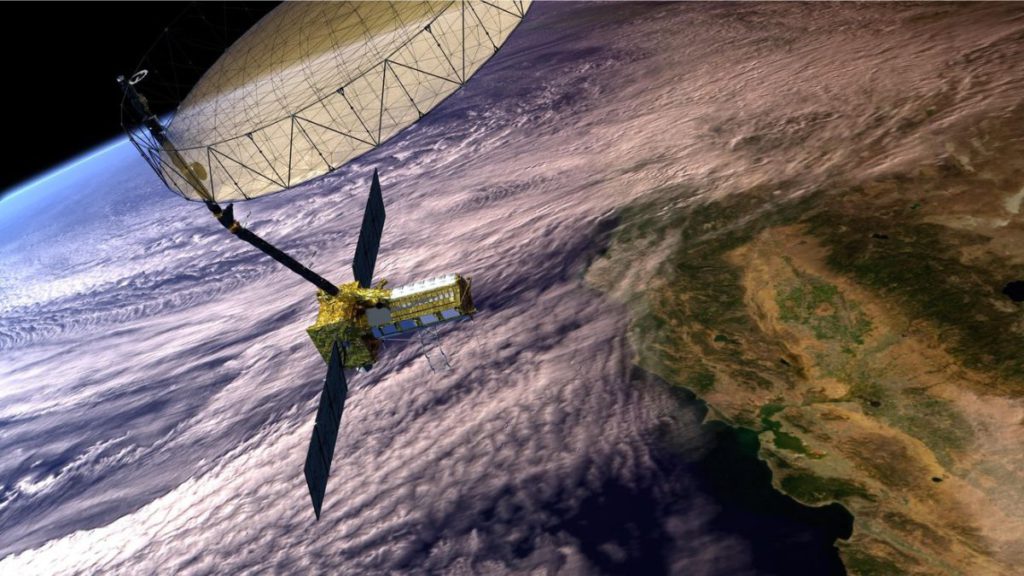
A groundbreaking Earth-observing satellite mission, jointly developed by NASA and the Indian Space Research Organisation (ISRO), is set to launch no earlier than late July from ISRO’s Satish Dhawan Space Centre in Sriharikota, India.
Named NISAR (NASA-ISRO Synthetic Aperture Radar), the mission marks the first-ever collaboration of its kind between the two space agencies and promises to deliver a dynamic, three-dimensional view of the planet with unparalleled precision.
Equipped with dual radar systems — an S-band provided by ISRO and an L-band developed by NASA — NISAR will use synthetic aperture radar (SAR) technology to scan almost all of Earth’s land and ice surfaces every 12 days.
The mission can detect ground movement down to the centimetre, offering vital insights into natural hazards such as earthquakes, volcanic eruptions, landslides, and land subsidence.
The satellite’s radar can even penetrate cloud cover, making it a critical tool for emergency responses during hurricanes, storm surges, and floods. In addition to monitoring sudden disasters, the data will help scientists track slow changes such as glacial retreat, deforestation, and shifting river courses.
Managed by NASA’s Jet Propulsion Laboratory (JPL), which provided several key instruments including the L-band radar, reflector antenna, and data systems, NISAR brings together the expertise of multiple ISRO centres. These include the Space Applications Centre, which developed the S-band radar, and the U R Rao Satellite Centre, which built the spacecraft bus. Launch services are being handled by the Vikram Sarabhai Space Centre and Satish Dhawan Space Centre, while mission operations and data management are spread across ISRO’s national infrastructure.
Support our Journalism
No-nonsense journalism. No paywalls. Whether you’re in Australia, the UK, Canada, the USA, or India, you can support The Australia Today by taking a paid subscription via Patreon or donating via PayPal — and help keep honest, fearless journalism alive.

