

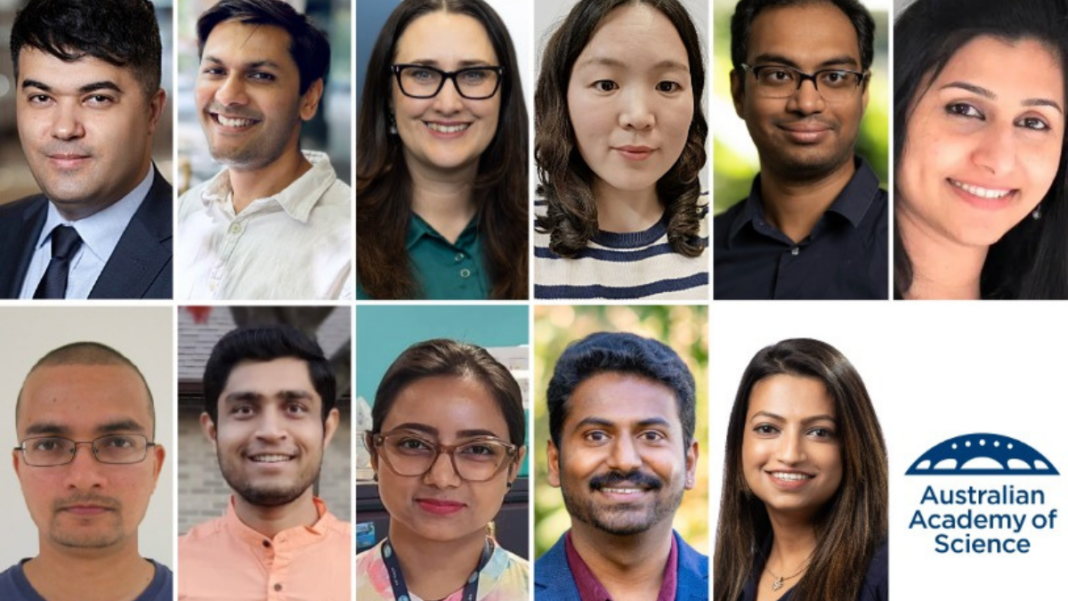
Twelve Australian researchers have been awarded fellowships to work with leading Indian institutions, thanks to the Australia-India Strategic Research Fund (AISRF) Early and Mid-Career Researcher (EMCR) Fellowships.
The 12 successful projects, collectively valued at just under $140,000, span topics from health monitoring technology to sustainable materials and social innovation.
Funded by the Department of Industry, Science and Resources, the AISRF marks its 20th anniversary in 2026. Since 2006, the program has supported more than 180 collaborative research projects, strengthening scientific ties between Australia and India.
This round’s projects highlight the diversity of the partnerships. Dr Krishna Manaswi Digumarti from Queensland University of Technology is developing a wearable device to detect breast cancer in younger women in collaboration with Associate Professor Vishal Toka at MNJ Institute of Oncology and Regional Cancer Centre. Meanwhile, Dr Alireza Jolfaei from Flinders University is working with Professor M. Tanveer at the Indian Institute of Technology Indore to create an AI assistant that helps smaller organisations detect cyberattacks early.
Other projects include co-designing occupational therapy solutions with marginalised women in India, creating battery-free wearable sensors to monitor health remotely, and developing sustainable energy storage materials.
This round’s project list also highlights the diversity of the partnerships:
- Dr Alireza Jolfaei (Flinders University) – Indian Institute of Technology Indore – Proactive threat hunting and predictive defence using agentic AI
- Dr Deval Mehta (Monash University) – Indian Institute of Technology Bombay – Advancing cross‑national digital health collaboration: Improving skincare through AI‑powered system for rural communities in Australia and India
- Associate Professor Emma George (University of Adelaide) – Indian Institute of Public Health Hyderabad and Good Shepherd Hyderabad – Co‑designing population approach occupational therapy research and practice with marginalised women in India
- Dr Jinshuo Zou (University of Adelaide) – Jawaharlal Nehru Centre for Advanced Scientific Research (JNCASR) – Integrated electrochemical urea synthesis system for concurrent carbon capture and conversion
- Dr Krishna Manaswi Digumarti (Queensland University of Technology) – MNJ Institute of Oncology and Regional Cancer Centre – Evaluating a wearable device for automated breast cancer detection
- Dr Lihong Su (University of Wollongong) – Indian Institute of Technology Hyderabad – Development of novel cost‑effective high‑entropy alloys with superior mechanical performance by additive manufacturing
- Dr Nisa Salim (Swinburne University of Technology) – Indian Institute of Space Science and Technology – 3D printing of multifunctional 2D materials for sustainable electrochemical energy storage
- Dr Pankaj Sharma (Flinders University) – Indian Institute of Science (IISc) Bangalore – Topological polarisation textures in twisted oxides
- Dr Rishabh More (Monash University) – Indian Institute of Technology Bombay – Data‑driven modelling of sedimentation dynamics of microplastics in aquatic environments
- Dr Saheli Biswas (CSIRO) – Indian Institute of Technology Hyderabad – Recycling of critical minerals from electrochemical devices
- Dr Shanmuga Sundar Dhanabalan (La Trobe University) – CIPET Chennai and BITS Pilani Hyderabad Campus – MXene‑polymer composites based battery‑free wearable platform for remote health monitoring
- Dr Sohinee Sarkar (Murdoch Children’s Research Institute) – Amity University – Developing live oral biotherapeutics for Helicobacter associated diseases
The full list of 2026 Round 5 recipients includes researchers from universities such as Monash, Adelaide, Wollongong, La Trobe, Swinburne, Flinders, and Murdoch Children’s Research Institute, partnering with premier Indian institutes like IIT Bombay, IIT Hyderabad, IISc Bangalore, and Amity University.
Round 6 of the AISRF EMCR Fellowships is set to open in May 2026, offering another opportunity for Australian researchers to strengthen international collaboration and tackle global challenges.
Support our Journalism
No-nonsense journalism. No paywalls. Whether you’re in Australia, the UK, Canada, the USA, or India, you can support The Australia Today by taking a paid subscription via Patreon or donating via PayPal — and help keep honest, fearless journalism alive.
