


Pakistani-origin MP Bisma Asif has condemned a racist rally held on 31 August, using her platform in Queensland Parliament to call for unity and highlight the strength of multicultural Australia.
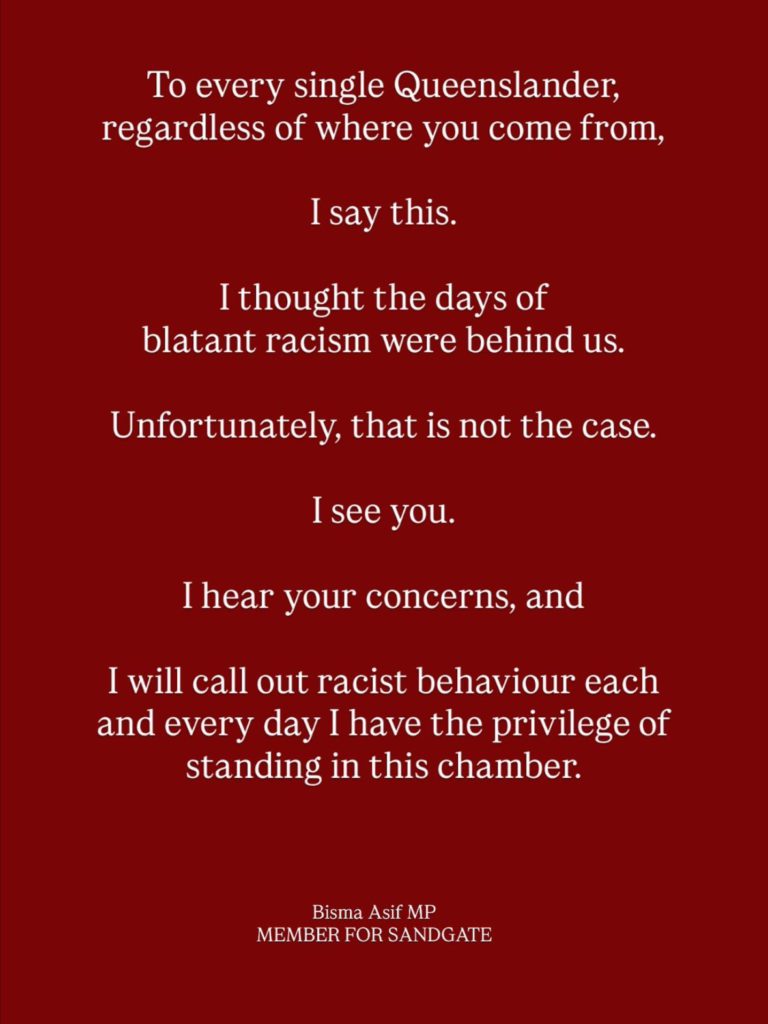
Asif, who arrived in Australia without speaking English, used Urdu to challenge divisive rhetoric and advocate for inclusion and unity.
In the parliament, Asif directly from the “March for Australia” flyer targeting Indians and urged the Premier David Crisafulli to act:
“David Crisafulli and his government must show leadership and condemn this rally which is making people across our communities feel unsafe.”

Earlier, speaking against the “March for Australia” rally, Asif told media:
“Most people in our community, regardless of background, embrace our multicultural Australia. While tomorrow’s rally must be called out, it’s important to remember that people with these extreme views are a fringe minority.”
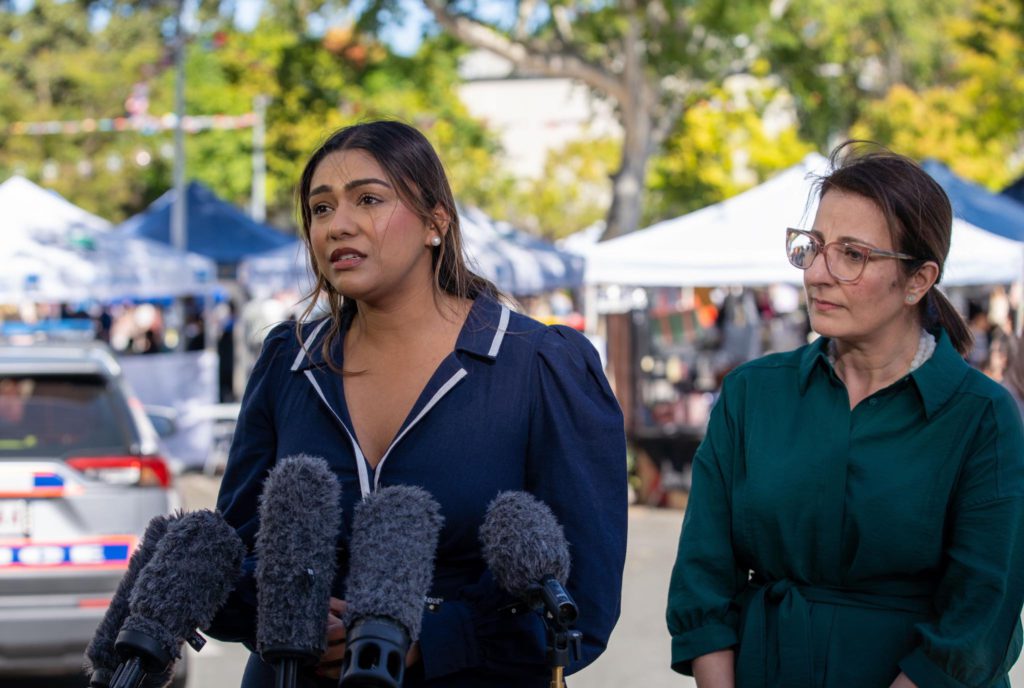
The 29-year-old Labor MP for Sandgate, who became the first Muslim elected to Queensland Parliament last year, spoke of her own migrant story and the values her family brought with them when they moved from Pakistan to Australia in 2004.
“My parents, Asif and Shabana, left everything they knew behind in search of a better life,” she said. “I was eight, and my sister Aamna was just four.”
Commenting on X, AusIntegrity said: “What is extremely troubling is that the use of a language other than English resulted in omission in capture or translation to Hansard. How dare the member engage in dog whistling in the highest office in Queensland.”
Many others who support migration also argued that such theatrics by elected members risk fuelling negative sentiment towards migrants. While Australians are expected to remain open and accepting of newcomers and their cultures, some contend that migrants should also make an effort to adopt their new home’s language, customs and way of life.
Support our Journalism
No-nonsense journalism. No paywalls. Whether you’re in Australia, the UK, Canada, the USA, or India, you can support The Australia Today by taking a paid subscription via Patreon or donating via PayPal — and help keep honest, fearless journalism alive.
