

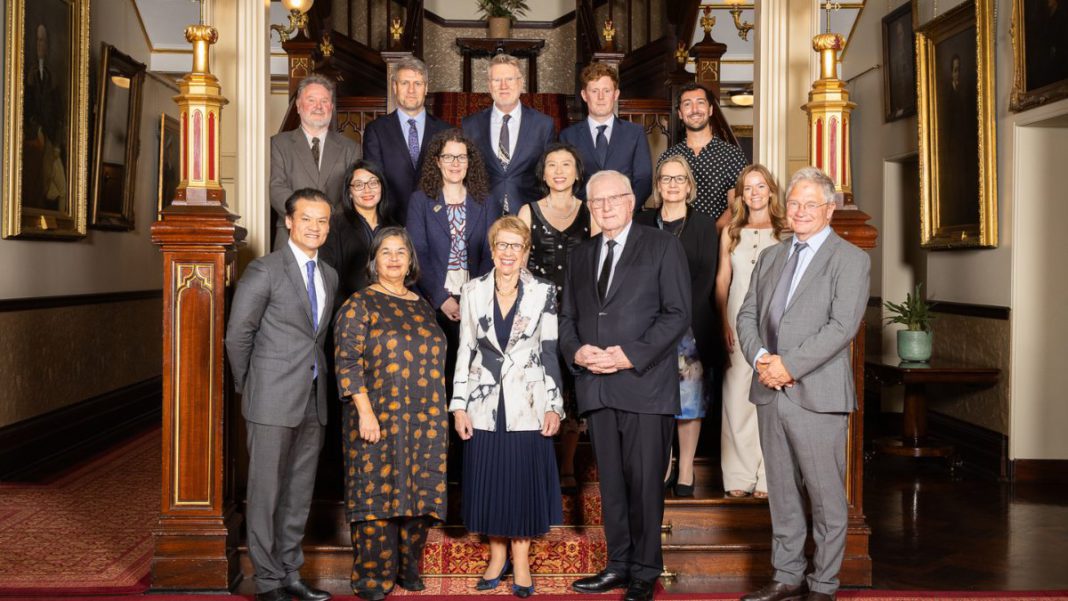
Professor Nalini Joshi AO from the University of Sydney has been named the 2025 NSW Scientist of the Year at the Premier’s Prizes for Science and Engineering, recognising her world-leading contributions to mathematics and their far-reaching real-world impact.
She was honoured at a ceremony at Government House, Sydney, alongside nine other outstanding researchers, innovators and educators.
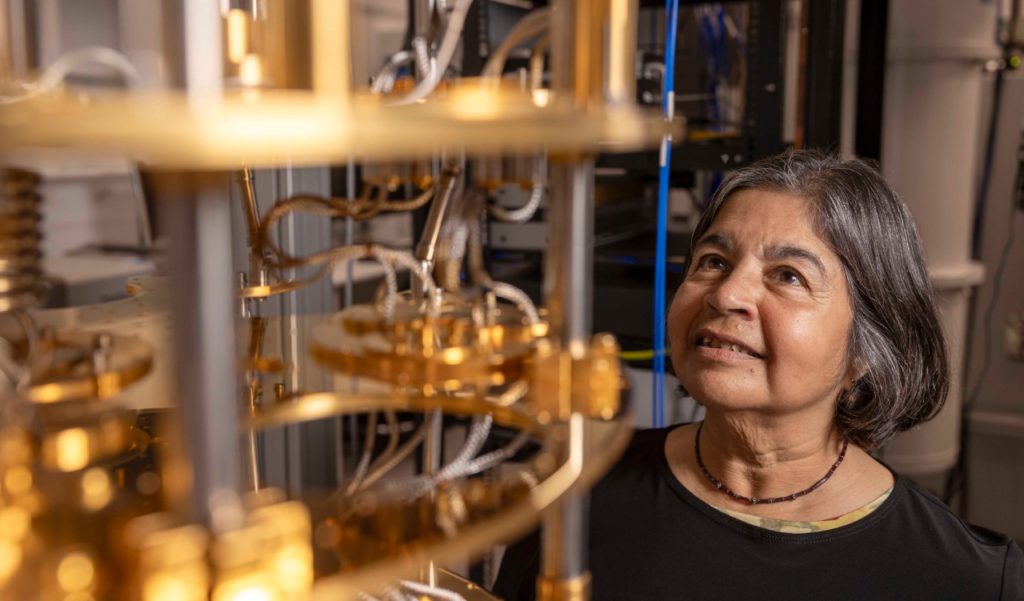
Professor Joshi’s transformational mathematical approaches have been applied to major scientific challenges, including explaining how light signals travel through optical fibres and how unpredictable rogue waves form in deep ocean waters.
Her work has strengthened modelling techniques used to understand changes in complex systems such as weather, climate, tides and ocean waves, and has also advanced knowledge crucial to the development of fibre-optic communications. She receives a trophy and $60,000 in prize money.
Other award recipients included Professor Anita Ho-Baillie (Excellence in Mathematics, Earth Sciences, Chemistry or Physics); Distinguished Professor Brajesh Singh (Excellence in Biological Sciences); Scientia Professor Kaarin Anstey (Excellence in Medical Biological Sciences); Distinguished Professor Vivian Tam (Excellence in Engineering or ICT); Dr Jennifer Matthews (NSW Early Career Researcher of the Year – Biological Sciences); Dr Felix Rizzuto (NSW Early Career Researcher of the Year – Physical Sciences); Professor Paul Keall (Leadership in Innovation in NSW); Dr Brad Law (Innovation in NSW Public Sector Science and Engineering); and Ryland O’Connell (Innovation in STEM Teaching). Each category winner received a trophy and $5,000.
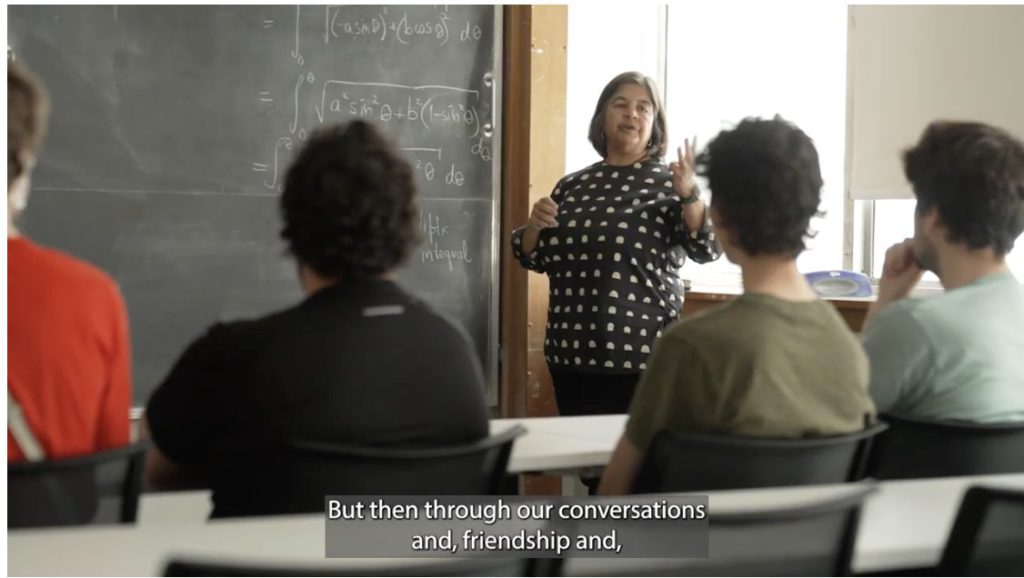
NSW Premier Chris Minns praised Professor Joshi’s achievements, saying her groundbreaking work “helps us make sense of nature’s big mysteries” while also offering solutions to complex technological challenges. He noted her role as an inspiring mentor for the next generation of mathematicians.
Minister for Innovation, Science and Technology Anoulack Chanthivong said the awards reflect a research and innovation sector that is “the envy of the world”, and thanked the winners for their contributions to the social, economic, environmental and health outcomes of the state.
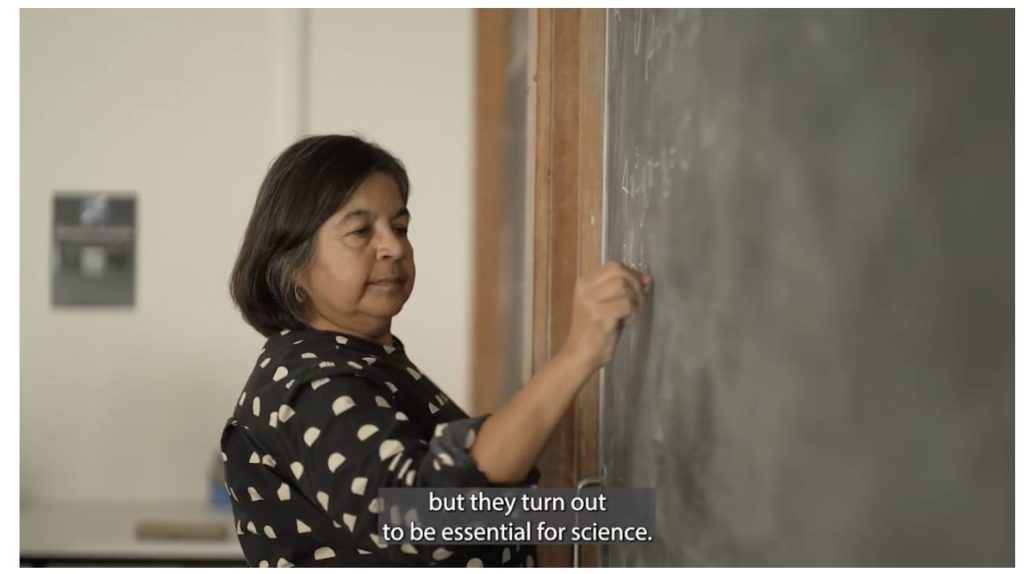
Professor Joshi said she was “deeply honoured and humbled” to receive the title, describing mathematics as a powerful tool for shedding light on scientific questions with hidden or nonlinear complexity. She encouraged young people not to be daunted by the future, emphasising that the clarity of mathematics can help unlock answers to the universe’s toughest puzzles.
NSW Chief Scientist and Engineer Professor Hugh Durrant-Whyte congratulated all recipients and described Professor Joshi’s work as highly impactful, noting the diverse fields celebrated this year — from dementia research to coral reef science and life-changing cancer technologies.
Professor Joshi is internationally recognised as a leader in integrable systems and for introducing geometric and asymptotic methods to study nonlinear mathematical models. Her research spans areas from subatomic particle collisions to transport operations and has shaped global understanding of both continuous and discrete systems.
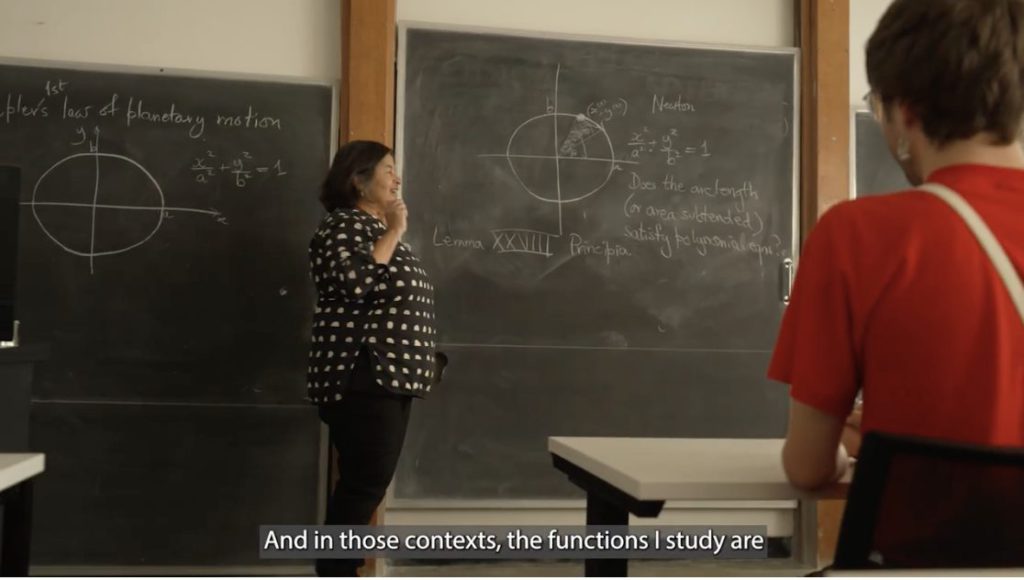
She was the first woman appointed Chair of Applied Mathematics at the University of Sydney, a past President of the Australian Mathematical Society and the first Australian to serve as Vice-President of the International Mathematical Union. A passionate advocate for women and minority groups in STEM, she helped establish the Science in Australia Gender Equity program and has mentored more than 30 researchers.
Born in Burma and raised in Australia, Professor Joshi completed her Bachelor of Science with honours at the University of Sydney and her PhD at Princeton University. Over her career, she has published more than 120 research papers and books and attracted more than $7 million in grant funding.
Her long list of honours spans the ARC Georgina Sweet Laureate Fellowship, the Australian Academy of Science Fellowship, the George Szekeres Medal and the Eureka Prize for Outstanding Mentor of Young Researchers, among many others.
Support our Journalism
No-nonsense journalism. No paywalls. Whether you’re in Australia, the UK, Canada, the USA, or India, you can support The Australia Today by taking a paid subscription via Patreon or donating via PayPal — and help keep honest, fearless journalism alive.
