

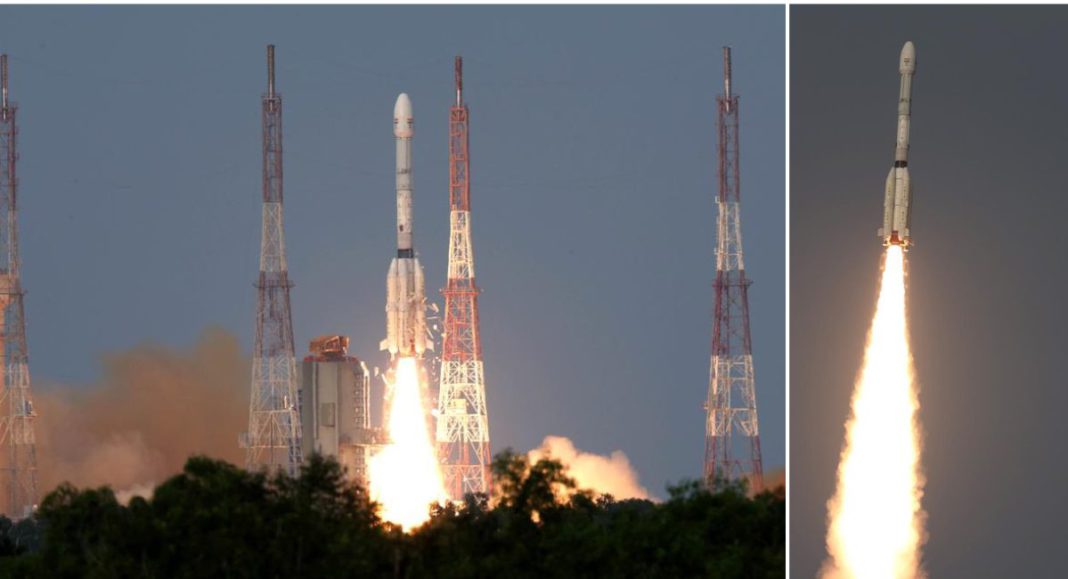
India and the United States marked a significant milestone in global space cooperation today with the successful launch of the NISAR satellite. Developed jointly by the Indian Space Research Organisation (ISRO) and the National Aeronautics and Space Administration (NASA), the satellite was launched from the Satish Dhawan Space Centre in Sriharikota, India on July 30, 2025, at 5:40 PM local time aboard ISRO’s GSLV-F16 rocket.
This mission is being hailed as one of the most advanced Earth observation efforts ever undertaken, and it symbolizes a deepening strategic and scientific partnership between the two countries. NISAR is also one of the most expensive civilian satellites in the world with the total cost estimated at be around US $1.5 billion.
NISAR, which stands for NASA-ISRO Synthetic Aperture Radar, is designed to observe and measure Earth’s surface changes with extraordinary precision. The satellite uses a unique combination of dual-frequency radar systems—NASA’s L-band and ISRO’s S-band—which enables it to detect even subtle shifts in the Earth’s crust, ice sheets, forests, and agricultural regions.
This capability is expected to benefit global efforts in climate science, natural disaster response, and environmental monitoring. Once fully operational, the satellite will map the entire globe every 12 days, capturing high-resolution data that can be used to track glacier movements, monitor deforestation, measure soil moisture, and detect early signs of earthquakes or landslides.
ISRO contributed the launch vehicle, satellite bus, and the S-band radar, while NASA provided the L-band radar system and additional support through its Jet Propulsion Laboratory. Over the next 90 days, the satellite will go through an initial commissioning phase during which all systems and instruments will be thoroughly tested. After this period, the data collected by NISAR will be made freely accessible to scientists, researchers, and policy makers worldwide.
The successful deployment of NISAR demonstrates how collaborative missions can serve the global scientific community. As the satellite begins its journey of orbiting the Earth and collecting crucial data, it stands as a testament to what international cooperation can achieve in addressing some of the planet’s most pressing challenges.
Support our Journalism
No-nonsense journalism. No paywalls. Whether you’re in Australia, the UK, Canada, the USA, or India, you can support The Australia Today by taking a paid subscription via Patreon or donating via PayPal — and help keep honest, fearless journalism alive.
