



A new regional research journal, Pacific Media, has officially launched today, bringing together a collection of papers examining the major challenges shaping the future of journalism across the Pacific.


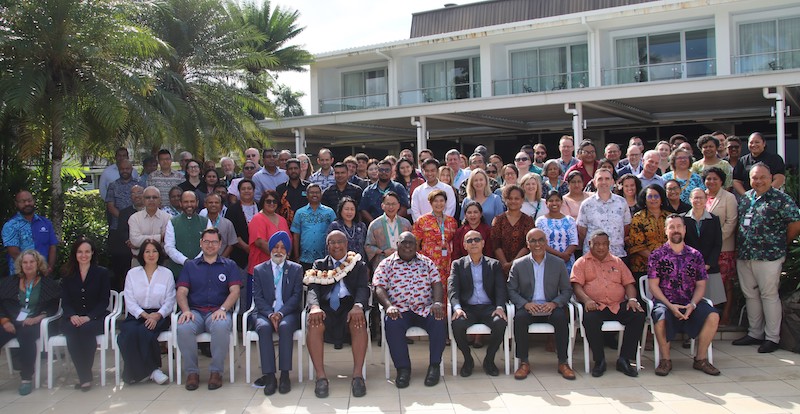
The journal draws on research presented at the first Pacific International Media Conference in 20 years, held at the University of the South Pacific (USP) in Suva in July last year.
“It was the first Pacific media conference of its kind in two decades, convened to address the unprecedented shifts and challenges facing the region’s media systems,” said conference coordinator and edition editor Dr Shailendra B. Singh, associate professor and head of journalism at USP.
“These include pressures arising from governance and political instability, intensifying geostrategic competition—particularly between China and the United States—climate change and environmental degradation, as well as the profound impacts of digital disruption and the COVID-19 pandemic.”
Dr Singh, who has three decades of experience in journalism, media education and Pacific media development, has researched widely on media freedom, regulation, conflict reporting and digital disruption. In 2020, he led a major survey of Pacific journalists across nine countries, helping fill long-standing gaps in global media scholarship.


The inaugural issue is co-edited by Dr Amit Sarwal, co-founder of The Australia Today and Adjunct Research Assoc. Prof. at Fiji National University (FNU). Dr Sarwal said the journal arrives at a crucial moment for Pacific media:
“Pacific Media aims to provide a platform where rigorous research and practical insights come together to address the complex challenges facing journalism in our region today.”
Topics in the inaugural issue range from how critical journalism can survive in the Pacific, to reporting the “nuclear Pacific”, behind-the-mic podcasting with Sashi Singh, the “coconut wireless” and community news in Hawai‘i, women’s political empowerment, partisan WhatsApp communication in Indonesia, and a major Pacific Islands News Association (PINA) project mapping the region’s media past and future.
Australian and New Zealand contributors add further depth, including an investigative journalism case study titled Blood on the tracks and an analysis of digital weather coverage in the Pacific.

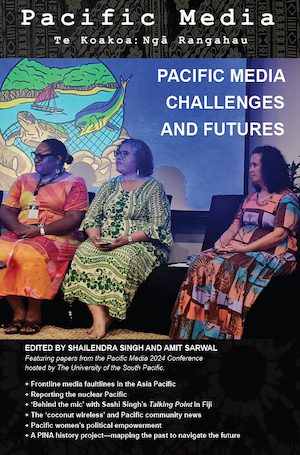
APMN managing editor Dr David Robie welcomed the launch, saying the new journal would “carry on the fine and innovative research mahi (work) established by the Pacific Journalism Review during a remarkable 30 years contributing to the region”. Although PJR ceased publication last year, it remains ranked as a Q2 journal by SCOPUS.

The publication is jointly produced by the USP Journalism Programme and the Asia Pacific Media Network (APMN) in New Zealand, with design by Del Abcede of Pacific Journalism Review (PJR).
Pacific Media also aims to increase opportunities for community participation, with both the PJR and Pacific Media archives freely accessible through the Tuwhera digital collection at Auckland University of Technology.
Support our Journalism
No-nonsense journalism. No paywalls. Whether you’re in Australia, the UK, Canada, the USA, or India, you can support The Australia Today by taking a paid subscription via Patreon or donating via PayPal — and help keep honest, fearless journalism alive.

