


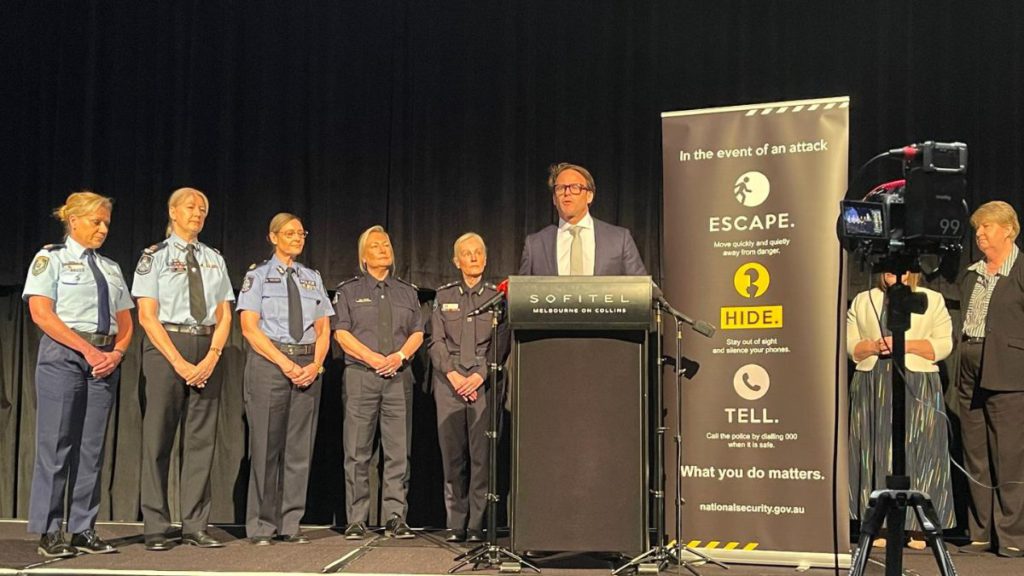
Australians are being urged to familiarise themselves with updated Escape. Hide. Tell. safety materials launched today, designed to ensure every member of the community knows how to respond in the unlikely event of an armed attack.
While Australia remains a safe country, authorities say preparedness is vital—particularly in crowded places such as shopping centres, stadiums and transport hubs. The refreshed campaign focuses on three simple, easy-to-remember actions that can save lives in a crisis:
• Escape: Move quickly and quietly away from danger, if it is safe to do so.
• Hide: Stay out of sight and silence your mobile phone.
• Tell: Call police on Triple Zero (000) when it is safe.

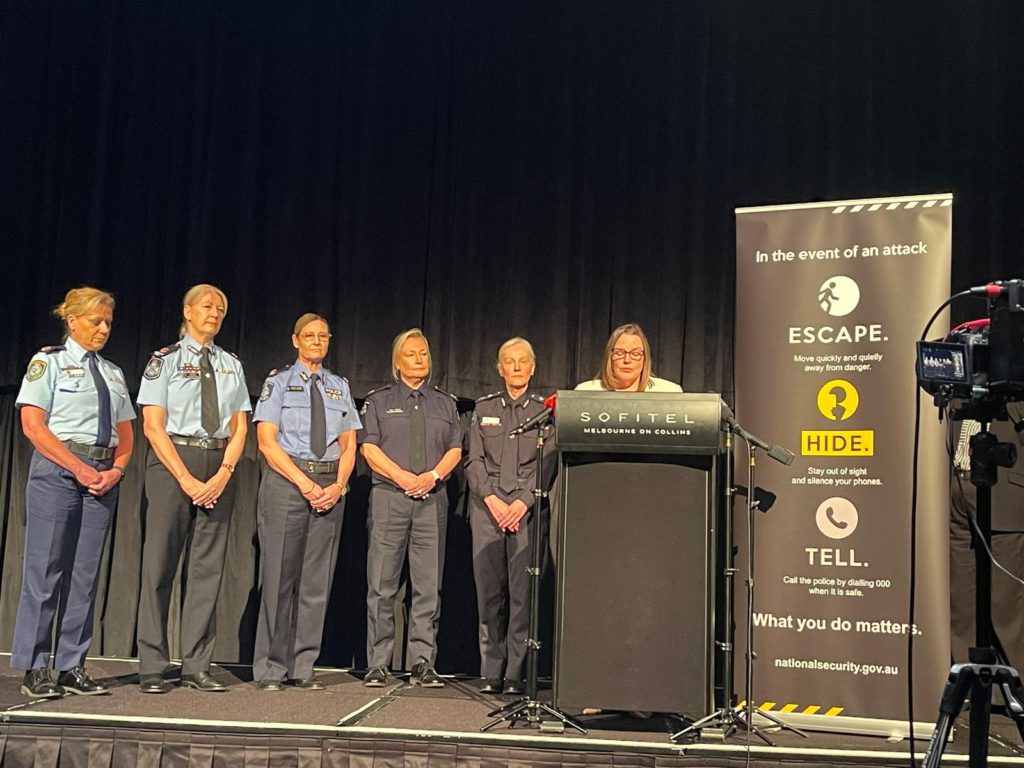
Deputy Secretary of the Department of Home Affairs Ciara Spencer said the new materials reflect the shared responsibility of government, police, and the community to keep Australians safe.
“The first priority of all Australian governments is to protect our community from people who seek to do us harm,” Spencer said.
“While there is no increase in the threat level, it’s important that every Australian has access to information that could help them in an emergency. Knowing how to respond in an armed attack could save your life or someone else’s.”
She emphasised that the campaign’s visibility is not cause for alarm but reassurance, “Australians should rest assured that although they may see increased Escape. Hide. Tell. messaging in public places, it’s there so we all know exactly what to do if something happens.”
“It does not mean that we have information to indicate an attack is imminent.”
The updated materials have been developed to reach all Australians, including culturally and linguistically diverse (CALD) communities, First Nations people, and people living with disability and their carers.
The enhancements include translations in multiple languages and new animated videos to ensure accessibility and understanding for everyone.
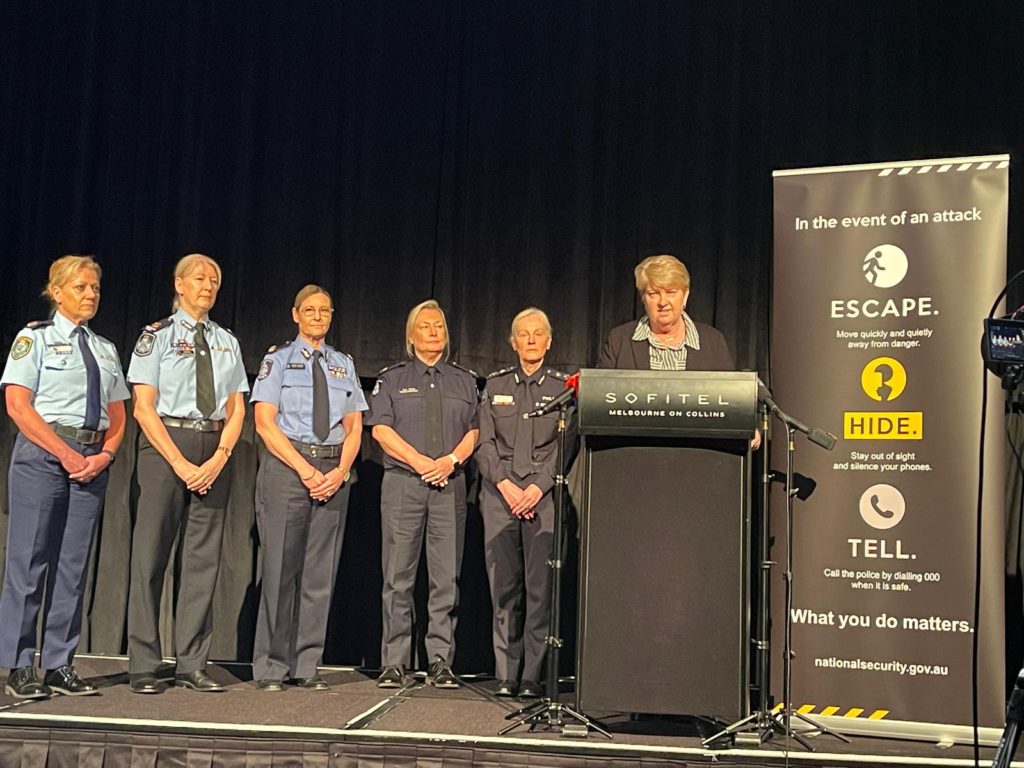
Deputy Commissioner of the Queensland Police Service and Chair of the ANZCTC Public Information Sub-Committee Cheryl Scanlon APM said public awareness during the first moments of an attack is crucial.
“The safety of the community is always our top priority. Police are trained to respond rapidly to armed threats, but the public also plays a vital role in keeping themselves and others safe,” she said.
“The Escape. Hide. Tell. materials help Australians understand how to respond in those critical first moments before police arrive. By making these resources available in more languages and accessible formats, we’re ensuring everyone, regardless of their background or ability, knows how to act in an emergency.”
Research underpinning the campaign shows that while most people instinctively try to move away from danger, fewer understand the importance of silencing their phone or calling Triple Zero (000) only when it’s safe to do so. Officials say exposure to the Escape. Hide. Tell. message can significantly improve awareness and confidence, helping people act calmly and decisively under pressure.
The refreshed campaign was unveiled at the Australia–New Zealand Counter-Terrorism Committee (ANZCTC) Business Advisory Group Forum, which includes major operators of crowded places such as shopping centres, stadiums, airports, transport hubs and universities.

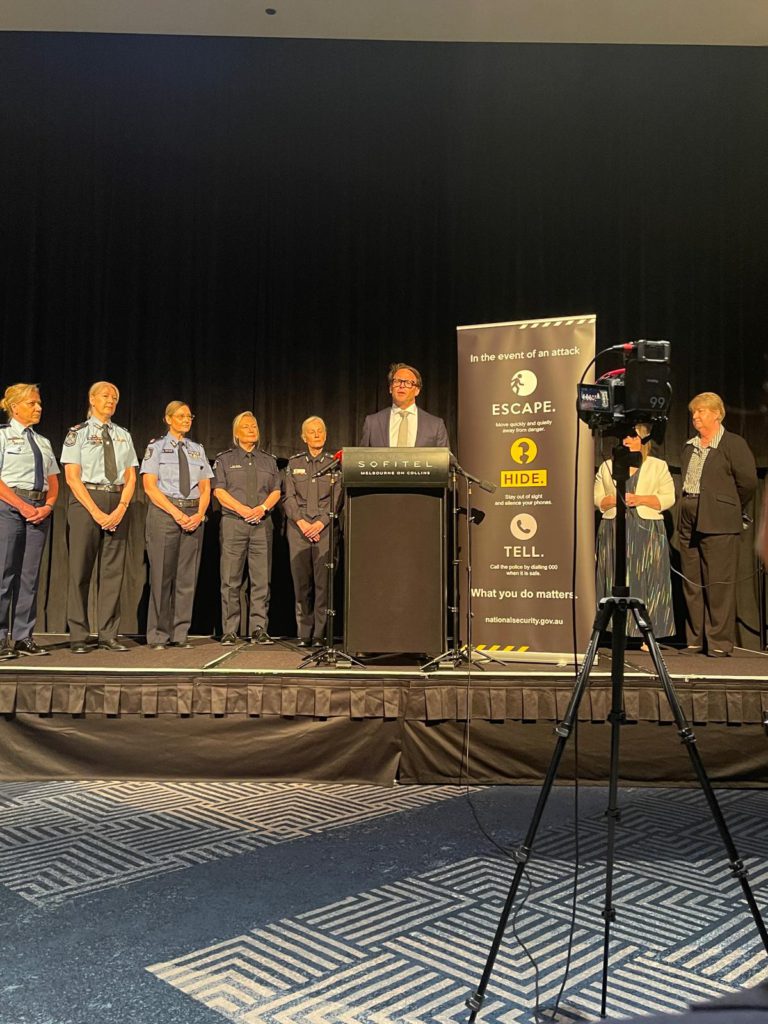
Chair of the ANZCTC Business Advisory Group Angus Nardi said the collaboration between government, police and industry reflects the shared commitment to public safety. “Australia’s crowded places welcome millions of visitors each week and take community safety incredibly seriously,” Nardi said.
“The Escape. Hide. Tell. message is an important component of protective security measures, and it’s a simple technique the public can use during a life-threatening incident. We encourage all venue operators to promote this message across their platforms and integrate it into their emergency procedures.”
Authorities stress that preparedness is about confidence, not fear. By understanding these steps, Australians can be ready to respond if something goes wrong.
Campaign materials are free and available on the National Security website: nationalsecurity.gov.au/what-can-i-do/what-to-do-in-an-attack
If you see something suspicious, contact the National Security Hotline on 1800 123 400.
If you are in immediate danger, call Triple Zero (000).
Support our Journalism
No-nonsense journalism. No paywalls. Whether you’re in Australia, the UK, Canada, the USA, or India, you can support The Australia Today by taking a paid subscription via Patreon or donating via PayPal — and help keep honest, fearless journalism alive.

