

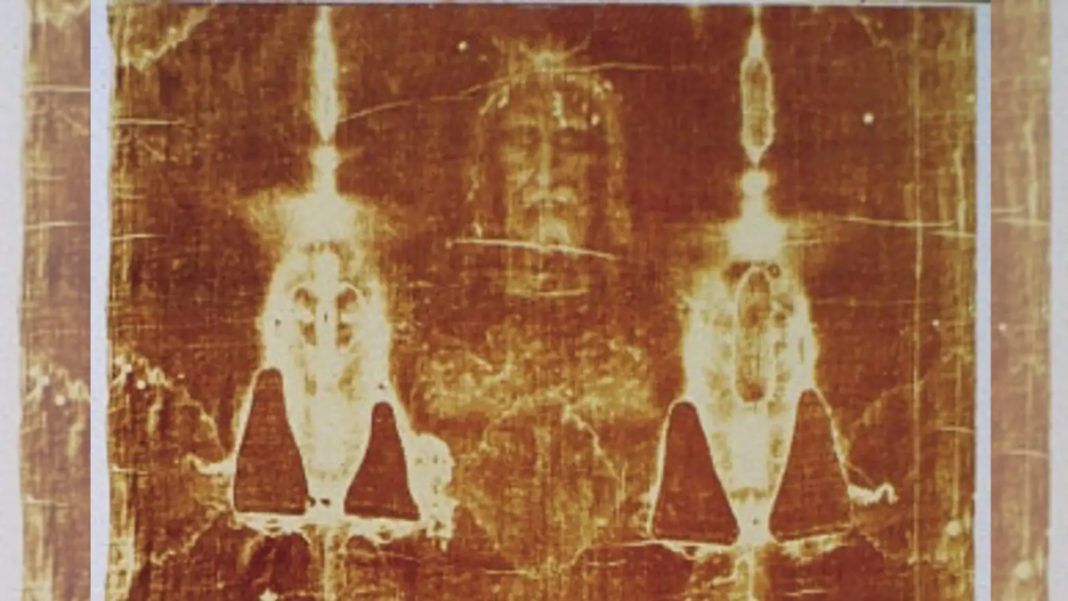
For centuries, the Shroud of Turin has stood at the crossroads of faith, science and controversy. Now, fresh DNA analysis is adding another unexpected layer to the mystery—suggesting the famous relic may carry genetic traces linked to India.
The linen cloth, believed by many to be the burial shroud of Jesus Christ, has been studied extensively for decades. But new findings reported by New Scientist indicate that nearly 40 per cent of the human DNA found on the fabric belongs to Indian lineages, raising questions about its historical journey.
The renewed attention comes at a deeply significant moment in the Christian calendar. Good Friday, marked on 3 April this year, commemorates the crucifixion, while Easter Monday follows the celebration of the resurrection. For many believers, the Shroud holds profound spiritual meaning during this period, believed to be directly connected to the events remembered over Easter, making the latest scientific findings particularly resonant.
Researchers from the University of Padova analysed samples originally collected in 1978, uncovering a complex genetic mix that reflects centuries of contact rather than a single origin. Italian geneticist Gianni Barcaccia, who first suggested possible Indian links in 2015, led the latest work confirming that the shroud contains a vast diversity of DNA from multiple sources—human, animal and environmental.
Alongside human genetic material, scientists identified traces from domestic animals such as cats and dogs, farm livestock, wild species including deer and rabbits, and even marine life like grey mullet and Atlantic cod. The findings highlight how the cloth has been handled, displayed and exposed to different environments over time, with researchers pointing to “extensive exposure” across the Mediterranean region.
The presence of Indian DNA has sparked renewed debate among historians and scientists. One theory suggests that the linen or yarn used to weave the shroud may have originated in the Indus Valley region, potentially reaching Europe through ancient Roman trade networks.
Another possibility is that individuals of Indian origin may have come into contact with the cloth over centuries, leaving behind genetic traces through handling, pilgrimage or preservation.
Measuring 4.4 metres long and 1.1 metres wide, the shroud remains one of Christianity’s most famous and debated artefacts. Its first recorded appearance dates back to 1354 in France, and for nearly 500 years it has been housed in the Cathedral of Saint John the Baptist in Turin, Italy.
Despite generations of scientific scrutiny—including carbon dating, forensic analysis and now genetic testing—the question of its authenticity remains unresolved. Yet as millions around the world mark Easter, the Shroud of Turin continues to sit at the intersection of belief and evidence, its fibres preserving not just an image, but a layered history of human contact, devotion and enduring mystery.
Support our Journalism
No-nonsense journalism. No paywalls. Whether you’re in Australia, the UK, Canada, the USA, or India, you can support The Australia Today by taking a paid subscription via Patreon or donating via PayPal — and help keep honest, fearless journalism alive.
