

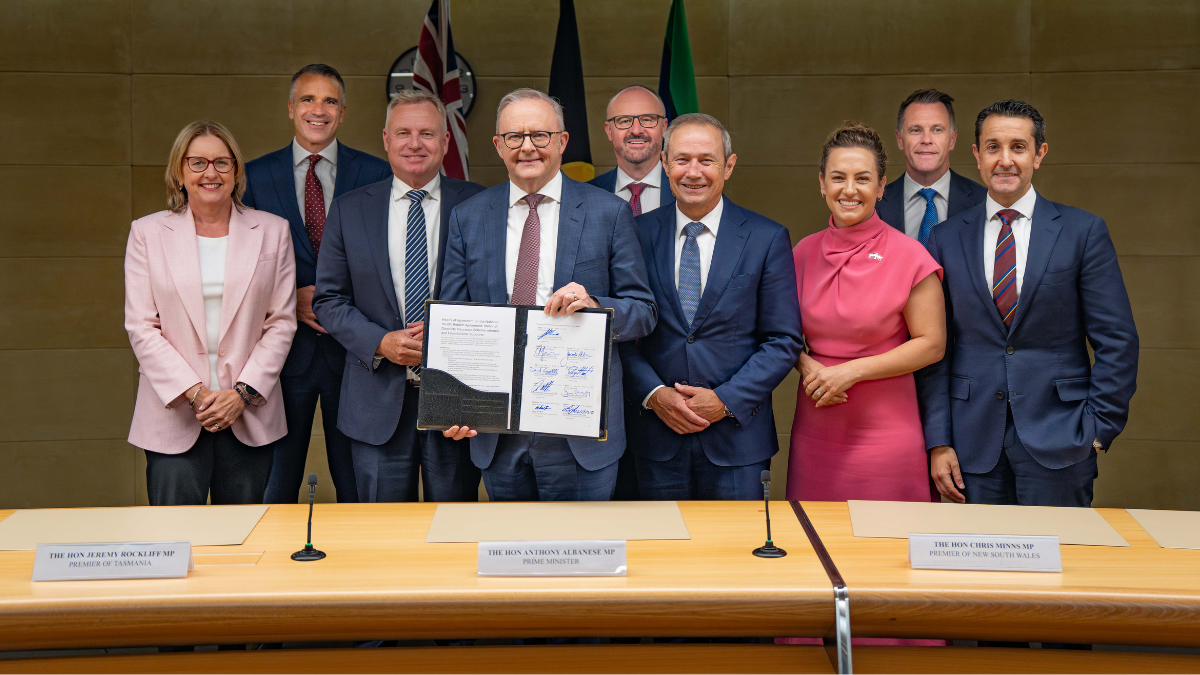
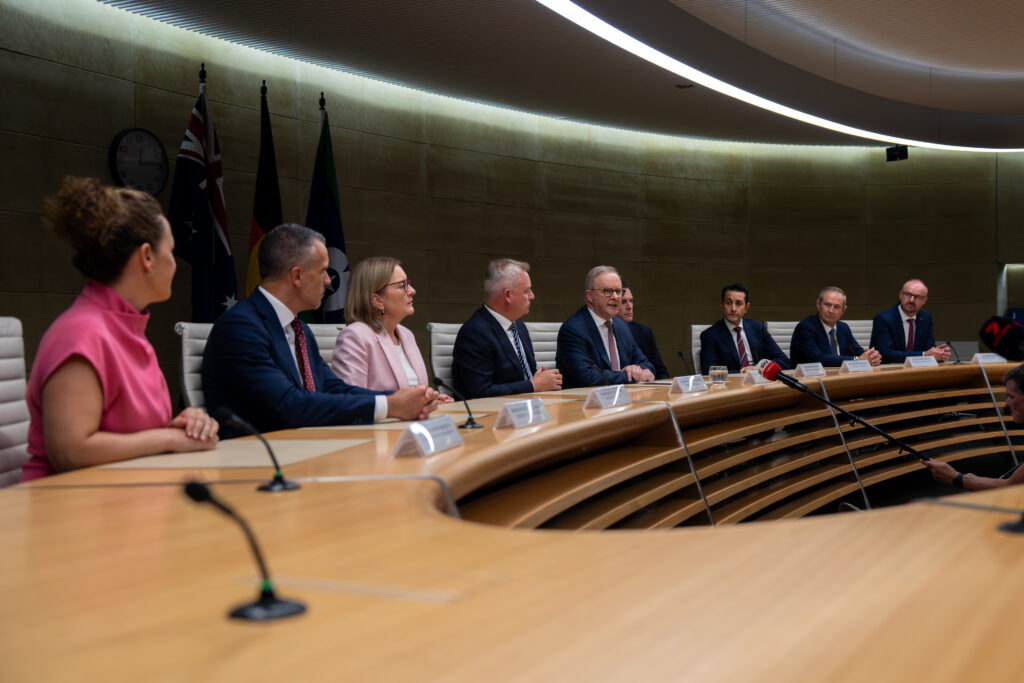
National Cabinet has reached a landmark agreement to deliver record funding for public hospitals and secure the long-term sustainability of the National Disability Insurance Scheme, following a meeting in Sydney today.
The agreement commits the Commonwealth to $25 billion in additional funding for public hospitals, alongside a suite of structural reforms aimed at easing pressure on state health systems and stabilising NDIS growth, as demand continues to rise across Australia.
Record hospital funding over five years
Under the new National Health Reform Agreement Addendum, Commonwealth funding for state-run public hospitals will reach a record $219.6 billion between 2026–27 and 2030–31.
The $25 billion uplift represents three times the additional hospital funding delivered under the previous five-year agreement, reflecting growing hospital demand driven by population growth, ageing demographics, workforce shortages and rising complexity of care.
The funding package includes:
- $24.4 billion in hospital-based funding linked to estimated hospital activity over the five years
- More than $600 million in additional Commonwealth investment is targeted at strengthening the public hospital system
While specific dollar amounts for each state and territory were not finalised at today’s meeting, funding will continue to be allocated under the existing activity-based funding model, which distributes Commonwealth contributions according to:
- Population size
- Hospital activity levels
- Case complexity and service demand
How funding is expected to flow by jurisdiction
Based on historical funding shares under the National Health Reform Agreement, the largest allocations will flow to states with the highest population and hospital activity, with indicative distribution patterns as follows:
- New South Wales – largest recipient due to population size and hospital throughput
- Victoria – second-largest share, reflecting metropolitan and regional demand
- Queensland – significant allocation tied to population growth and regional service delivery
- Western Australia – higher per-capita costs due to geography and remoteness
- South Australia and Tasmania – smaller absolute shares, but proportionally higher support per patient
- Australian Capital Territory and Northern Territory – funding adjusted for cross-border care and remote service delivery
Final state and territory funding envelopes will be settled through bilateral agreements once hospital activity estimates are confirmed.
Reducing pressure on hospitals
The Commonwealth said the hospital funding boost will be complemented by continued investment in primary and community care, aimed at keeping patients out of emergency departments.
This includes:
- 137 Medicare Urgent Care Clinics
- 92 Medicare Mental Health Clinics
- Expansion of bulk-billing incentives
- Cheaper medicines under the PBS
- Aged care reforms to reduce hospital admissions among older Australians
Major reforms to secure the future of the NDIS
National Cabinet also agreed on further reforms to stabilise the growth of the NDIS, acknowledging long-term cost pressures while reaffirming support for Australians with permanent and significant disability.
Key measures include:
- State and territory NDIS contribution increases capped at 8 per cent from 1 July 2028, aligned with actual scheme growth
- A national target to limit annual NDIS cost growth to between 5 and 6 per cent
- $2 billion for the “Thriving Kids” program, matched by states, to deliver the first phase of foundational supports for children
Of the $2 billion commitment, the Commonwealth will contribute $1.4 billion, with states and territories funding the remainder.
Changes to disability supports for children
Under the reforms:
- Children with permanent and significant disability, including those with high support needs related to developmental delay or autism, will remain eligible for the NDIS
- From 1 October 2026, children with developmental delay or autism with low to moderate support needs will begin transitioning to Thriving Kids
- Thriving Kids will be fully implemented by 1 January 2028
Children already in the NDIS before 1 January 2028 will continue under existing reassessment rules until that date.
The rollout timeline was extended following consultation with parents, clinicians, disability advocates, educators and state governments, to allow jurisdictions sufficient time to build services.
System-wide health reform
Beyond funding, the new agreement embeds reforms aimed at improving equity, efficiency and outcomes across Australia’s hospital and health system.
First Ministers said the combined health and disability reforms were necessary to ensure services remain accessible, high-quality and financially sustainable into the future.
Today’s outcomes statement has been agreed upon by all First Ministers and serves as the official record of decisions taken at the meeting.
Support our Journalism
No-nonsense journalism. No paywalls. Whether you’re in Australia, the UK, Canada, the USA, or India, you can support The Australia Today by taking a paid subscription via Patreon or donating via PayPal — and help keep honest, fearless journalism alive.
