

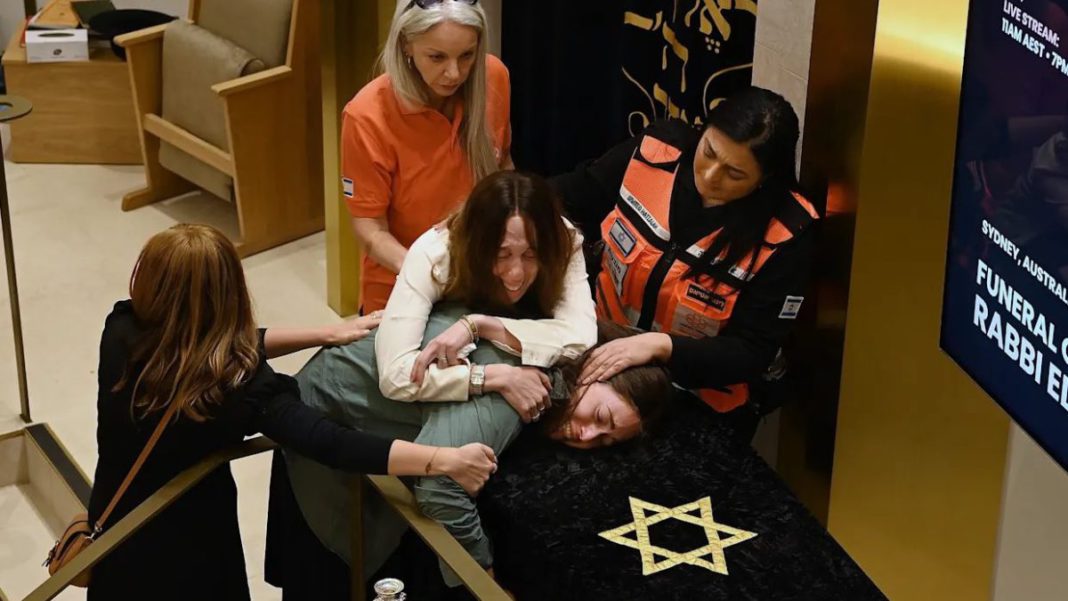
By Omer Ghazi
The Bondi Beach terror attack has shaken the conscience of society, not merely because of its violence, but because of the cold-blooded depravity with which it was carried out. The nature of the act leaves little room for euphemism or moral hesitation; it must be called by its rightful name: terrorism, antisemitism, and a crime against humanity.
What unfolded in Sydney is not an isolated eruption of madness, nor can it be dismissed as an aberration in an otherwise peaceful order; it is part of a disturbing and accelerating pattern of targeted attacks against the Jewish community worldwide, a pattern that brutally reasserted itself with the heinous October 7 massacre at the Nova Music Festival, where Jewish civilians were slaughtered with calculated intent. To view the Bondi attack in isolation is to miss the larger and far more unsettling reality that antisemitic violence has once again found ideological validation, operational confidence, and deadly momentum.
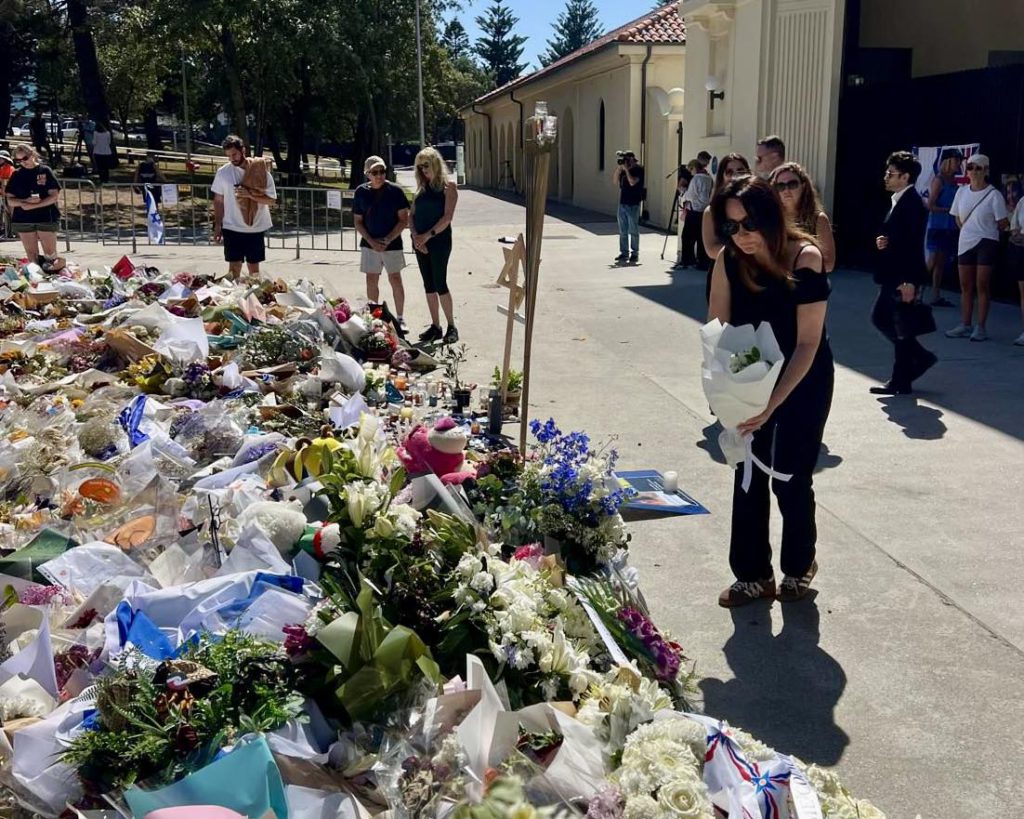
A father and son, identified as Sajid Akram and Naveed Akram, opened fire on a Jewish gathering that had assembled on the beach to celebrate Hanukkah with their families. While Sajid Akram is reported to be originally from Hyderabad, India, official records confirm that he had lived in Australia for nearly twenty-seven years and maintained only limited contact with his family in India during that period.
Senior Indian police officials have stated that there is no evidence of any operational or ideological link between his alleged radicalisation and India. More tellingly, two flags of the terror group Islamic State were recovered from the attackers’ vehicle. This categorically shows that it’s not a matter of individual pathology or social alienation; it is a clear manifestation of organised Islamist ideology translating into violence.
The Bondi attack also sits within a demonstrable surge in antisemitic violence over the last two years, with Jewish communities and synagogues increasingly treated as legitimate targets by extremists. In the United States, the Anti-Defamation League recorded 9,354 antisemitic incidents in 2024, the highest ever captured in its annual audit, reflecting sustained harassment, vandalism and physical assaults.
In the United Kingdom, the Community Security Trust recorded 3,528 antisemitic incidents in 2024, the second-highest annual figure on record, with London and Manchester again emerging as major pressure points for intimidation and attacks. France, too, saw nearly 1,600 antisemitic acts in 2024, even as authorities investigated high-profile attempts to attack synagogues, including the widely reported attempted arson incident at La Grande Motte in August 2024. Canada has witnessed the same pattern, with Jewish institutions in Montreal facing repeated firebombing attacks, prompting public calls for urgent action.
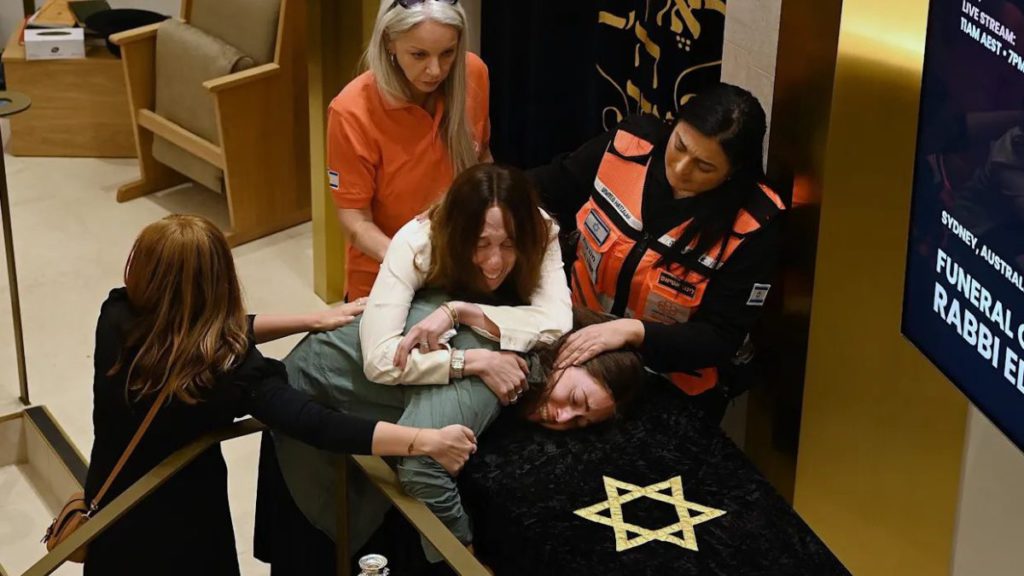
Australia has been no exception, with reporting pointing to a sharp rise in antisemitic incidents nationally alongside attacks such as the arson assault on a Melbourne synagogue, forcing authorities and community bodies to treat routine worship as a security event.
Apologists of radical antisemitism have attempted to obscure the moral depravity of such attacks by lazily attributing them to the ongoing Israel–Hamas war. This line of argument collapses under even minimal scrutiny. Wars, however tragic, are fought by soldiers on battlefields. The victims at Bondi Beach and the Nova Music Festival were innocent, unarmed civilians, and those who opened fire on them were not combatants but cowardly, radicalised, brainwashed, and suicidal extremists. Bondi Beach was not a battlefield, the Nova Music Festival was not a military installation, and rabbis praying in synagogues across the world are not participants in any war.
These facts expose the intellectual dishonesty behind slogans such as “anti-Zionism is not antisemitism,” which function less as principled distinctions and more as deliberate distractions from the ideological roots of the violence. In reality, the causal arrow points in the opposite direction. The Israel–Hamas war is not the source of rising antisemitism; rather, deeply entrenched antisemitism is what enables atrocities like October 7, which in turn ignite wider conflicts. To deny this is not nuance, but complicity through obfuscation.

To treat this ideological menace as anything less heinous or morally depraved than Nazism would be an act of profound dishonesty. Among those present at Bondi Beach were Alexander and Larisa Kleytman, both Holocaust survivors who had endured the horrors of Europe’s darkest chapter as children. They grew up under the shadow of extermination, displacement, and terror, with Alexander’s memories marked by the brutal conditions of Siberia, where he, his mother, and his younger brother fought simply to stay alive. Having survived genocide, rebuilt their lives, and found refuge in Australia, they should have been living their final years in peace.
Instead, Alexander Kleytman was killed while shielding his wife from gunfire, a final act of courage that tragically mirrors the resilience that once allowed him to survive Nazism itself. That a man who escaped the machinery of twentieth-century fascism was ultimately murdered by a new, radicalised incarnation of the same genocidal hatred is not a coincidence; it is a grim reminder that antisemitism, when left ideologically unchecked, does not evolve into something benign. It merely rebrands itself, waiting for another moment, another target, and another victim.

It must also be understood that an individual does not become a terrorist overnight; radicalisation is a cumulative process, sustained through years of ideological conditioning that slowly normalises violence and dehumanisation, often beginning in childhood, which in itself amounts to a grave form of child abuse. This reality places an unavoidable responsibility on governments to scrutinise the value systems being imparted to young minds, to exercise strict oversight over religious schools and madrasas, and to subject their curricula to rigorous review.
It also necessitates firmer intervention when individuals display clear and persistent signs of extremist alignment. In the Bondi Beach case, these warning signs were not absent. Australia’s intelligence agencies had previously investigated one of the alleged gunmen for links to the Islamic State, with the Australian Security Intelligence Organisation examining the son as early as 2019. Naveed Akram was reportedly closely connected to an Islamic State operative arrested and later convicted in July 2019 for preparing a terrorist act in Australia, and counter-terrorism officials believe the attackers had pledged allegiance to the group. These facts raise uncomfortable but necessary questions about gaps between intelligence awareness and preventive action.

Amid this bleak surge in antisemitic violence, acts of individual courage stand out precisely because they cut across the false civilisational binaries that extremists seek to impose. One such figure is Ahmed al Ahmed, who risked his life by physically tackling one of the attackers and wrestling the firearm from him, an intervention that almost certainly prevented further loss of life. Ahmed was subsequently shot by one of the gunmen, sustaining serious injuries in the process.
In the days that followed, thousands of people donated more than 1.4 million Australian dollars to a GoFundMe campaign established to support him through recovery and to honour what many rightly described as an act of extraordinary bravery. According to Australian officials, Ahmed’s parents had arrived in the country as refugees from Syria, a detail that exposes the moral bankruptcy of narratives that seek to conflate entire communities with extremist violence. His actions reaffirm a simple but often ignored truth: the line dividing barbarism and humanity does not run between religions or ethnicities, but between those who embrace murderous ideology and those who are willing to stand against it, even at the cost of their own lives.

Ultimately, the lesson from Bondi Beach is neither abstract nor negotiable. A society that hesitates to name ideological violence for what it is, that dilutes antisemitism through euphemism, or that treats radicalisation as a cultural inconvenience rather than a civilisational threat, only postpones the next atrocity.
The price of such hesitation is always paid by innocents going about ordinary life, celebrating faith, music, or family in places that should never require armed protection. Antisemitism, whether dressed up as grievance, geopolitics, or activism, is not a reaction to events; it is an animating ideology that seeks victims and waits for opportunity. If liberal democracies are serious about preserving pluralism, safety, and moral clarity, they must abandon denial, confront radicalisation at its roots, and enforce red lines without apology. Anything less is not tolerance, but abdication.
Contributing Author: Omer Ghazi is a proponent of religious reform and extensively writes on geo-politics, history and culture.
Disclaimer: The opinions expressed within this article are the author’s personal opinions. The Australia Today is not responsible for the accuracy, completeness, suitability, or validity of any information in this article. The information, facts, or opinions appearing in the article do not reflect the views of The Australia Today, and The Australia Today News does not assume any responsibility or liability for the same.
Support our Journalism
No-nonsense journalism. No paywalls. Whether you’re in Australia, the UK, Canada, the USA, or India, you can support The Australia Today by taking a paid subscription via Patreon or donating via PayPal — and help keep honest, fearless journalism alive.
