

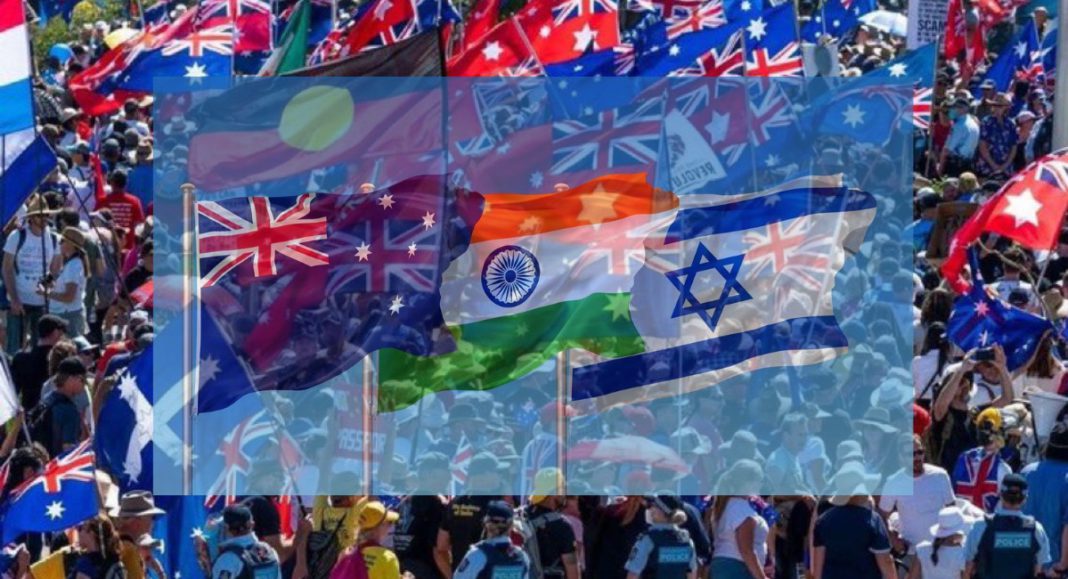
As a proud Indian-Australian, I find it disturbing to see forces undermining one of the world’s most peaceful and successful societies—Australia. Like many Western democracies, Australia today is caught between two extremes. On one side lies a leftist–Islamist alliance that seeks to undermine Western values from within, and on the other the racist far right, which blames migrants for the nation’s challenges.
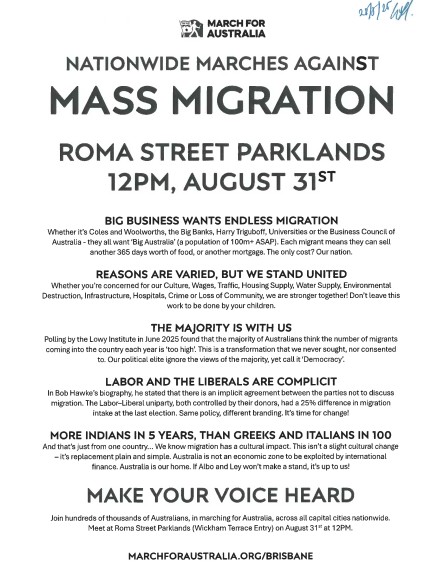
The protests on 31 August across Australian cities are an expression of this malaise. Demonstrators earlier singled out Indian migrants in their manifesto even when Indians are among the most educated, highest-taxpaying, and lowest-crime communities in the country.
To scapegoat the Indian diaspora is not only unfair but dangerous and counter-productive. In fact the largest diaspora in Australia remains the British, not the Indian or Chinese, but no one is framing British migration as a national problem.
The October 2023 protests at the Sydney Opera House revealed how entrenched the Islamist–leftist alliance has become. Just two days after Hamas’s brutal terrorist massacre in Israel, anti-Semitic, pro-Palestinian groups illegally demonstrated against the Opera House being illuminated in Israel’s colours.
At that time, Israel had not even launched its counter-offensive. For an Indian-Australian who cherishes democratic freedoms, rule of law and secular values, it was distressing to see so many rewarding terrorism and parroting distorted narratives shaped by sections of academia and media.
History matters here. Judaism is over 3,000 years old; Islam about 1,400. Over the past millennium, much of the Middle East and parts of Asia fell under Islamic conquest. This contributed to the annihilation of older civilisations such as Zoroastrian Persia, Hindu-Buddhist Afghanistan, and Byzantine Christianity. Constantinople—the Byzantine capital where much of the early Christian Bible was canonised—was renamed Istanbul after falling to the Ottomans in 1453. Millions perished or were forced into conversion in these waves of conquest. Yet this legacy is rarely confronted with the same urgency as European colonialism, though its impact was just as profound.
The consequences of this bloody history are visible even today. Islamist terrorism remains a global menace, from Boko Haram and Al-Shabab in Africa to Hamas, al-Qaeda, ISIS, Lashkar-e-Taiba, Jemaah Islamiyah and many others across the Middle East and Asia. Some of these groups receive open or tacit support from Islamic states such as Pakistan, Iran, and Qatar. Their violence is rooted in a doctrinal framework that divides the world into Dar al-Harb (“lands of war,” where Islam does not prevail) and Dar al-Islam (“lands under Muslim sovereignty”). The duty of jihad (holy war), in this interpretation, is to transform the former into the latter.
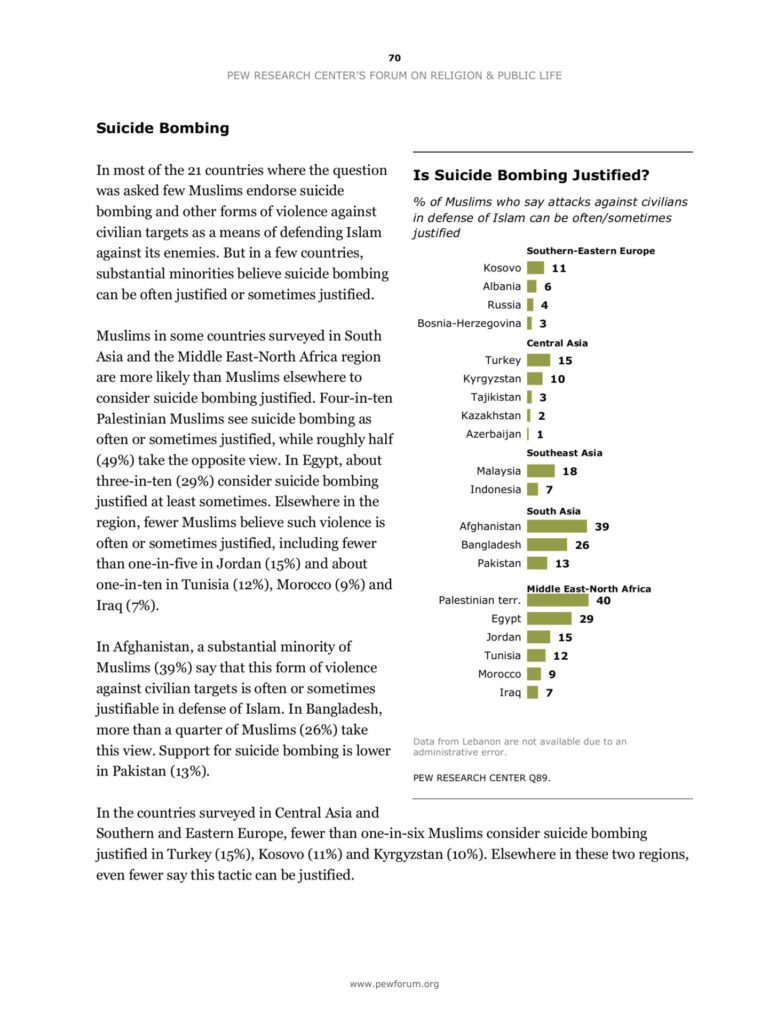
Not all Muslims endorse this ideology. Indeed, millions reject it. But surveys show a statistically significant number continue to support violence in the name of religion. For instance in a Pew survey in 2013 – 2014, on the question of justifying suicide bombing in defence of Islam, around 14% of Muslims surveyed across various countries said it can be justified. In absolute numbers that would mean over a 100 million Muslims worldwide.
The survey findings on apostasy, blasphemy, homosexuality, as well as the preference for Sharia law over secular laws rooted in gender and religious equality, are even more extreme and deeply troubling.
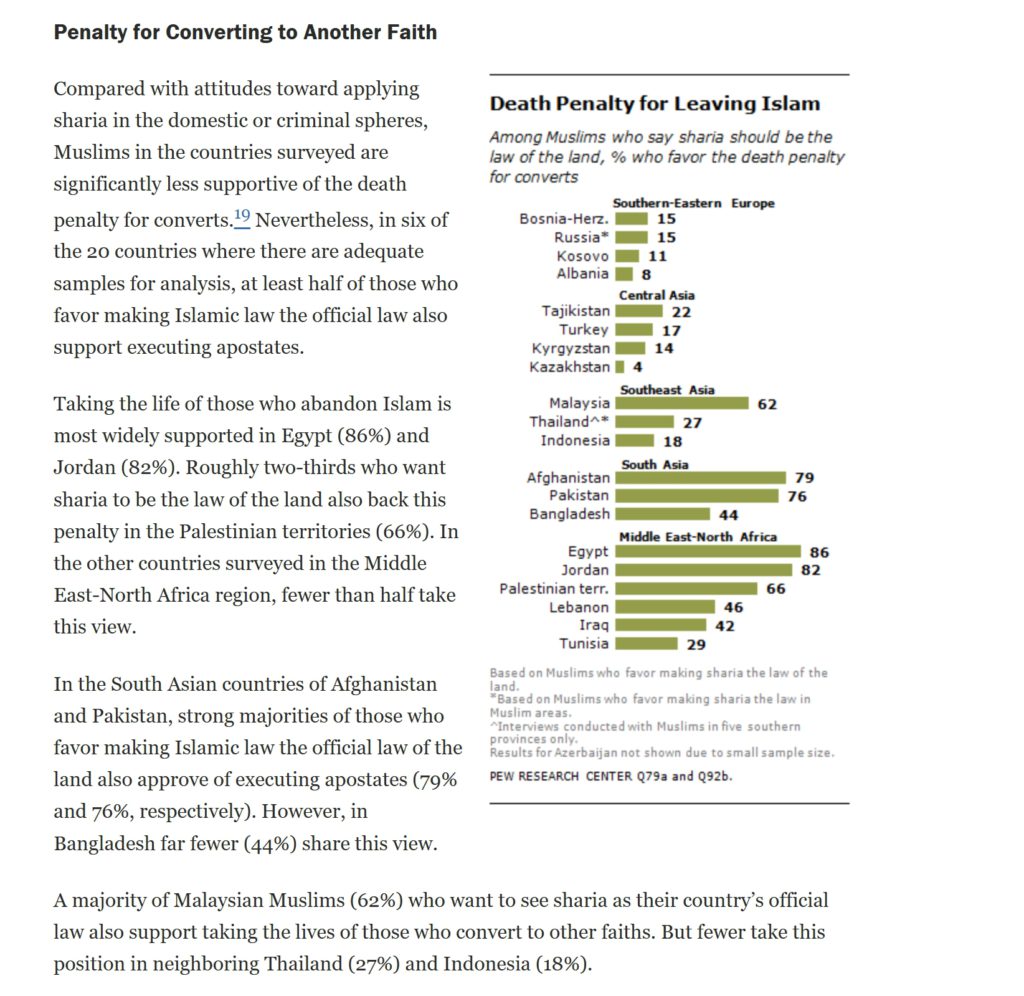
According to Pew (Surveys in 2013-2014, no comprehensive Pew survey has been done on these subjects since then) support for punishments such as the death penalty for apostasy ranges as high as 86% in Egypt and 78% in Afghanistan. Similarly, overwhelming majorities (often above 90%) in Muslim-majority countries consider homosexuality morally wrong, and in many regions, majorities favor Sharia law as official state law — frequently paired with support for stoning, flogging, or execution.
This is why we have seen genocide and ethnic cleansing in places such as Sudan and Afghanistan, and why countries from Somalia to Qatar maintain legal codes prescribing death for apostasy or blasphemy. Islamist terrorism has also fueled violence in countries where Muslims are a minority, including Thailand, the Philippines, Russia, India, France, Britain, Spain, Sweden, Germany, and Kenya.
And who can forget the 9/11 terror attacks in the US, whose mastermind Osama Bin Laden was found living next door to an Army cantonement in Abbottabad, Pakistan or the Lindt Cafe terror attack in Sydney. What is urgently needed is an Islamic reformation akin to the one that reshaped Christianity in Europe five centuries ago. Without it, extremist doctrines will continue to find new recruits.
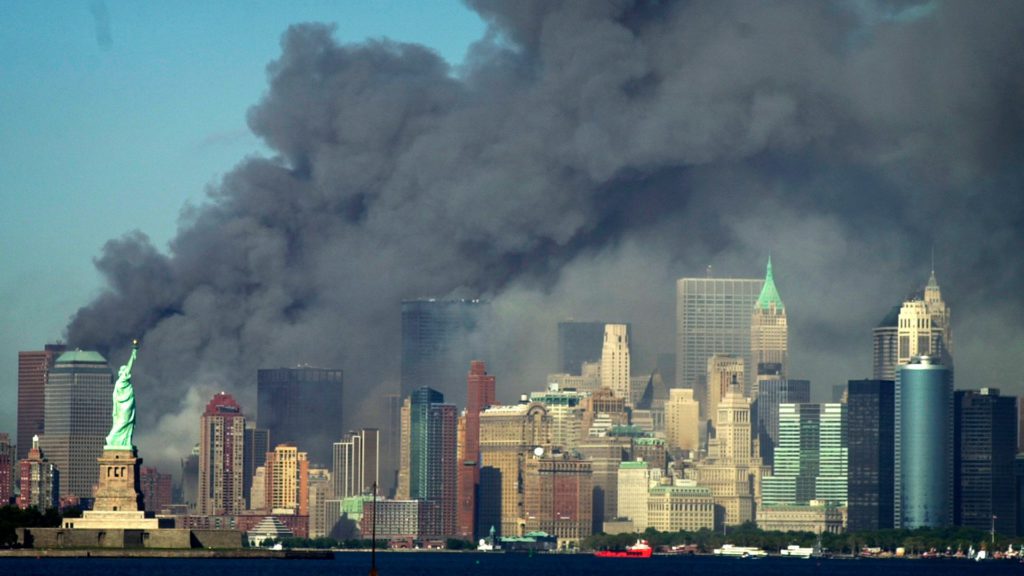
Unfortunately, many Western leftists—hungry for an “oppressor versus victim” narrative after the decline of class-based ideology—have aligned with Islamists. This explains why atrocities such as the Partition of India, which led to the genocide of Hindus and Sikhs in Pakistan, the Armenian genocide, or today’s Christian–Muslim conflict in Central African Republic rarely receive the attention they deserve.
To raise these issues is to risk being smeared as “Islamophobic” or racist. This intellectual dishonesty does not protect anyone. On the contrary it endangers the lives of millions including Muslims who do not subscribe to Islamist ideology.
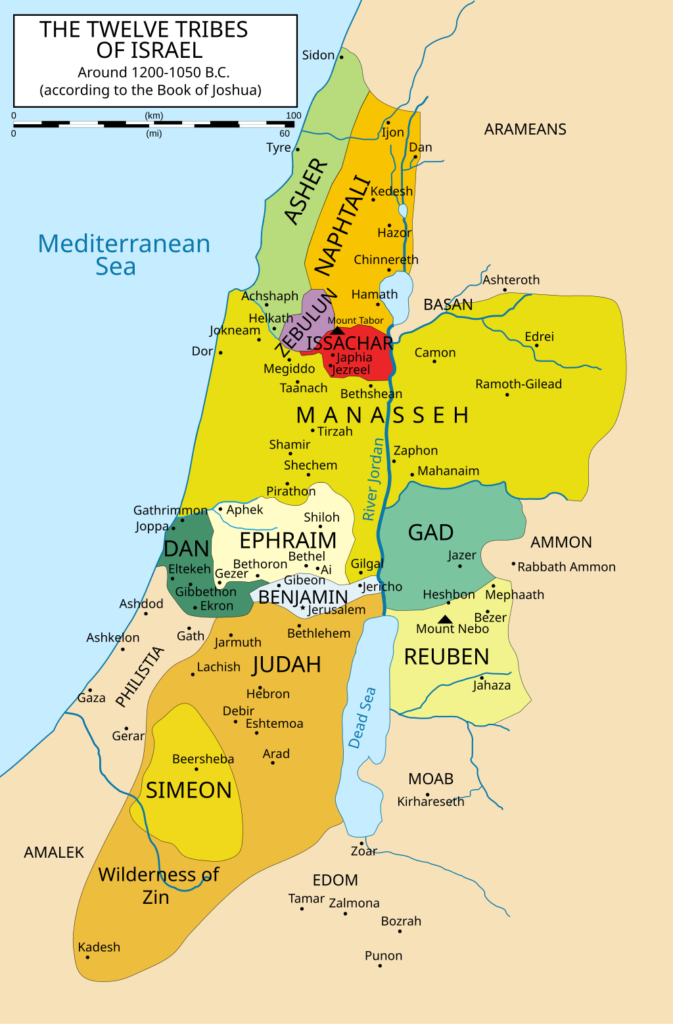
It is crucial, therefore, to remember facts. Jews made Jerusalem their capital around 1000 BCE under King David. Solomon built the First Temple, establishing the city as the spiritual heart of Judaism. Successive exiles followed due to attacks and invasions but Jews never abandoned their link to the land. Their claim to Israel is as deep and authentic as Indigenous Australians’ claim to this continent.


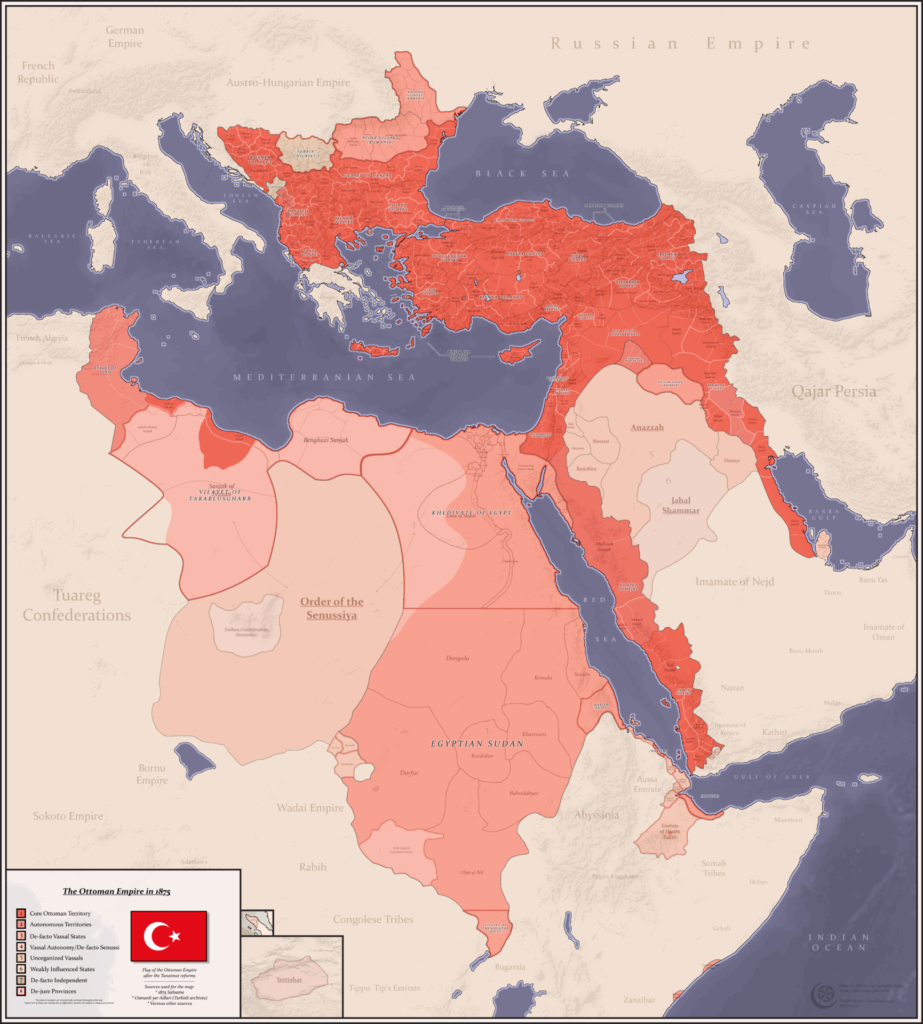
On the other hand, a sovereign state called ‘Palestine’ has never existed. The land was part of the Ottoman Empire until World War I, administered through districts such as Jerusalem, Beirut, and Damascus. After the Empire’s collapse with the defeat of the Central Powers, the Allies redrew boundaries and created new states. In 1922, the League of Nations established the British Mandate for Palestine—named after the Roman-era term long used by Europeans—which incorporated the Balfour Declaration, pledging a Jewish national home while safeguarding Arab rights.
In 1947, after the Holocaust and rising tensions, the UN proposed a two-state partition. Jewish leaders accepted; Arab leaders rejected it. That rejection and subsequent wars and terrorism against Israel, remain at the heart of today’s dispute. For context, about 21% of Israel’s citizens are Arabs (including Muslims, Christians and Druze), while Gaza has no Jewish population.
Hence the pro-Palestine rallies in Australia after the October 7, 2023 terror attacks, effectively rewarding terrorism, should be deeply troubling for anyone who cherishes Australian values. But instead of confronting the Islamist–leftist nexus honestly, some Australians choose to vent their anger against migrants, especially Indians.
This is misguided in the extreme. Indians bring with them the depth of a civilisation stretching back over 5,000 years and values that align with Australia’s own: respect for merit, hard work, scientific inquiry, democracy and secularism. To attack them is not only cowardly but self-defeating.
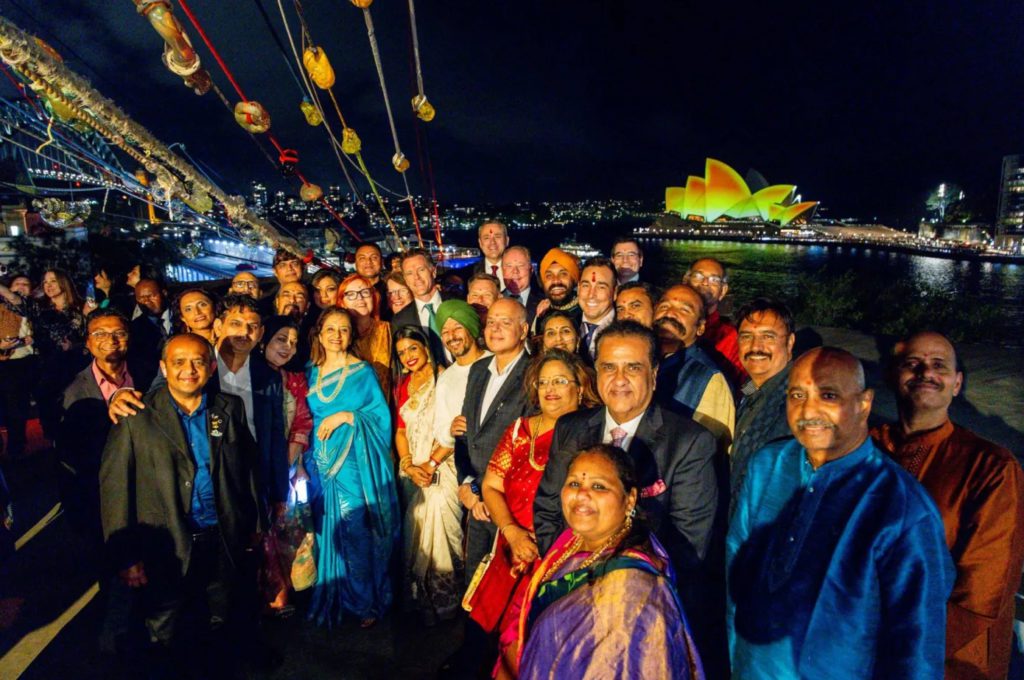
More than a decade ago I argued that Australia should pursue a balanced immigration policy: attracting the best global talent, whose values are aligned with Australia’s liberal democratic values, while keeping numbers socially, economically, and environmentally sustainable.
Multiculturalism can be a great strength, but it should never mean blind acceptance of harmful practices or a fear of criticising them in the name of political correctness. All cultures have good and bad elements but pretending they are all equally good and bad without accountibility is delusional.
The real goal should be to absorb the good and discard the bad in every culture. The ability to self-critique and evolve is the mark of great nations. Australia proves this—once bound by the White Australia Policy, it has grown into one of the world’s most successful multicultural societies.
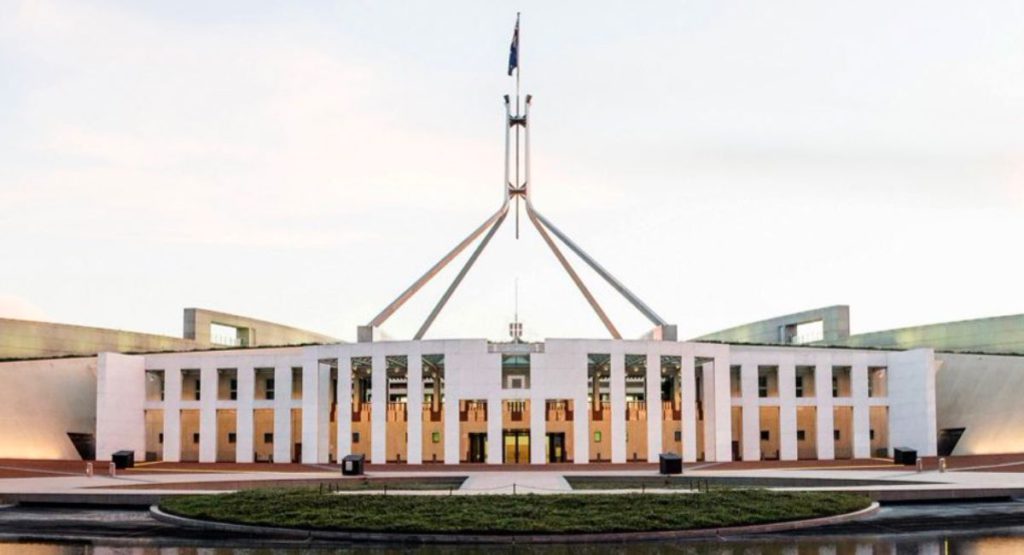
Australia remains one of the best countries in the world. But preserving its strengths requires vigilance. Extremists on both the left and the right must be resisted. The Islamist–leftist alliance must be called out for legitimising terror and historical distortions. The far right must be confronted for scapegoating migrants most of whom strengthen rather than weaken the country.
Australia’s future depends on protecting its values—secularism, democracy, freedom of speech, equality, and rule of law. These are too precious to surrender to extremists of any stripe.
Disclaimer: The opinions expressed within this article are the author’s personal opinions. The Australia Today is not responsible for the accuracy, completeness, suitability, or validity of any information in this article. The information, facts, or opinions appearing in the article do not reflect the views of The Australia Today, and The Australia Today News does not assume any responsibility or liability for the same.
Support our Journalism
No-nonsense journalism. No paywalls. Whether you’re in Australia, the UK, Canada, the USA, or India, you can support The Australia Today by taking a paid subscription via Patreon or donating via PayPal — and help keep honest, fearless journalism alive.
