

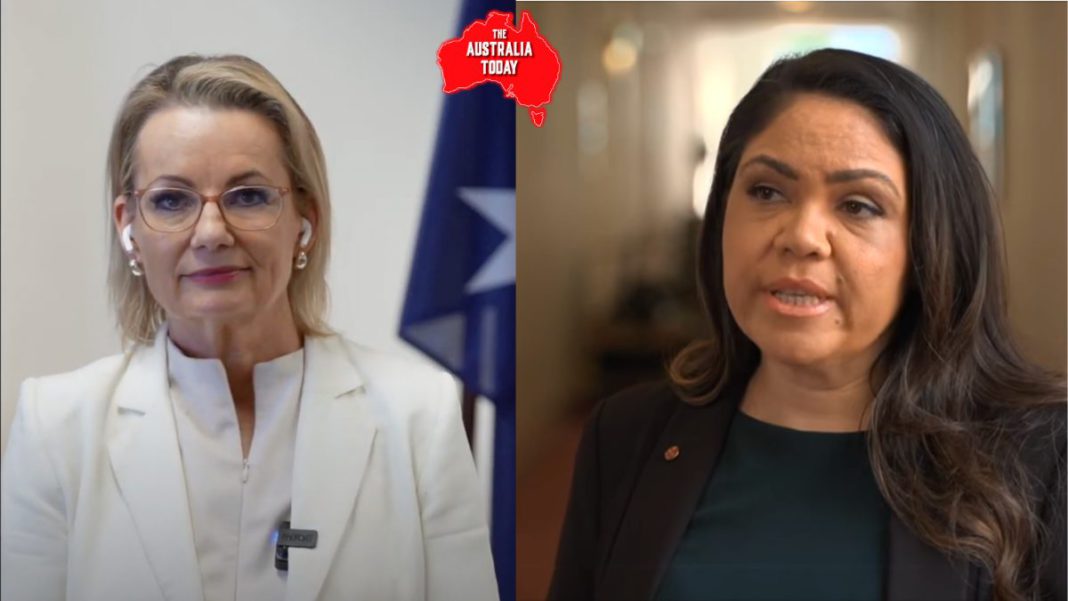
Opposition Leader Sussan Ley has removed Northern Territory Senator Jacinta Nampijinpa Price from the shadow ministry, ending a fractious week inside the Liberal Party sparked by Price’s comments about Indian migrants.
Senator Jacinta Nampijinpa Price says she has stepped down from the Coalition frontbench as shadow minister for defence industry at Opposition Leader Sussan Ley’s request, acknowledging she “regrets not being clearer” in remarks made on the ABC last week.
“While accepting the decision, she argued some colleagues ignored her central point about the “damaging impacts” of what she calls mass migration and instead “indulged agenda-driven media commentary.”
Price stressed she did not intend to disparage Indian Australians or any migrant community, saying her concern is the scale and pace of migration and the pressure it places on housing, infrastructure and essential services. She described the episode as disappointing for the Liberal Party, adding that she will learn from it and believes the party will emerge stronger.
Reflecting on her shortened tenure as shadow minister for defence industry and defence personnel, Price said it was an honour to engage with ADF graduates, defence manufacturers and the ambassadors of Israel and Ukraine. She thanked colleagues in the defence portfolio and supporters from the Indian community and beyond, and confirmed she will return to the backbench.
Price stressed she did not intend to disparage Indian Australians or any migrant community, saying her concern is the scale and pace of migration and the pressure it places on housing, infrastructure and essential services. She described the episode as disappointing for the Liberal Party, adding that she will learn from it and believes the party will emerge stronger.
Reflecting on her shortened tenure as shadow minister for defence industry and defence personnel, Price said it was an honour to engage with ADF graduates, defence manufacturers and the ambassadors of Israel and Ukraine. She thanked colleagues in the defence portfolio and supporters from the Indian community and beyond, and confirmed she will return to the backbench.
Price vowed to keep speaking on issues she considers in the national interest. She cited priorities across Indigenous affairs—criticising bureaucratic approaches and activist agendas—as well as policy debates on migration levels, Net Zero, education culture wars, economic direction and national security concerns about the Chinese Communist Party.
She framed the current period as a test of “courage, conviction and truth,” arguing the country must reverse decline and “advance Australia again.” She added that she regretted not expressing herself more clearly during her ABC interview last week, but stopped short of an apology.
The decision came hours after a six-minute media appearance in Perth in which Price described her earlier remarks as “clumsy” while insisting she would continue to speak about what she calls “mass migration” pressures. She thanked supporters and again declined to apologise.
Pressed repeatedly on whether she supported Ley’s leadership, Price refused to give a direct endorsement, saying leadership issues were a matter for the party room—an answer that further widened the rift with Ley and her centre-right allies, including factional leader Alex Hawke.
Last Wednesday, Senator Jacinta Nampijinpa Price, who represents the Northern Territory for the Liberal Party, sparked widespread backlash after suggesting that the Albanese government was selectively admitting migrants from “particular countries”—specifically pointing to Indian migrants—because they might vote for Labor.
She claimed this was part of a strategy to strengthen the party’s electoral prospects.
Facing immediate criticism, Price later called the remarks a “mistake” and reiterated that “Australia maintains a longstanding and bipartisan non-discriminatory migration policy”.  
Despite walking back the claim, Price stood her ground, insisting at a press conference that her comments—while “clumsy”—reflected legitimate concerns about mass migration pressures on housing, infrastructure, and social cohesion.
Political and Community Outcry
The fallout was swift:
• Prime Minister Anthony Albanese publicly demanded an apology, calling her comments “false” and hurtful to the Indian-Australian community. 
• NSW Liberal Leader Mark Speakman offered a formal apology on behalf of his state’s party to Indian-Australians. 
• NT Mayor Sid Vashist, the Northern Territory’s only Indian-born mayor, denounced Price’s remarks, calling her a “muppet” and decrying their divisiveness. 
• Prominent conservatives including Sarah Henderson, Matt Canavan, and Moira Deeming publicly backed Price and criticized what they viewed as politically motivated backlash. 
• Former Nationals leader Barnaby Joyce labelled the comment a “mistake” but defended Price’s broader focus on migration policy rather than racism. 
Meanwhile, figures like Sussan Ley and Shadow Attorney General Julian Leeser moved quickly to distance the party and reassure the Indian-Australian community, affirming that Australia’s migration policy is non-discriminatory. Leeser even issued an unreserved apology to Indian-Australians in his constituency—a significant contrast to Price’s refusal.     
This episode spotlights deep divisions within the Coalition:
• Cultural Sensitivity vs Political Survival: Price’s remarks and the subsequent responses reveal the tightrope politicians walk when addressing immigration and multicultural communities.
• Leadership Credibility: Price’s refusal to apologise or back her leader underscores rising tension within the Liberal Party’s ranks and questions about internal cohesion.
• Multicultural Community Trust: The Indian diaspora—the second-largest migrant group in Australia—feels targeted and unsafe, prompting political leaders to consider the longer-term implications of such rhetoric.   
As the Liberal Party navigates its internal divisions, party leadership and reconciliation with multicultural communities will remain pivotal. Pressure is mounting on the Party to engage in genuine outreach, while the broader debate over Australia’s migration strategy continues to simmer—one way or another—well beyond this controversy.
Support our Journalism
No-nonsense journalism. No paywalls. Whether you’re in Australia, the UK, Canada, the USA, or India, you can support The Australia Today by taking a paid subscription via Patreon or donating via PayPal — and help keep honest, fearless journalism alive.
