

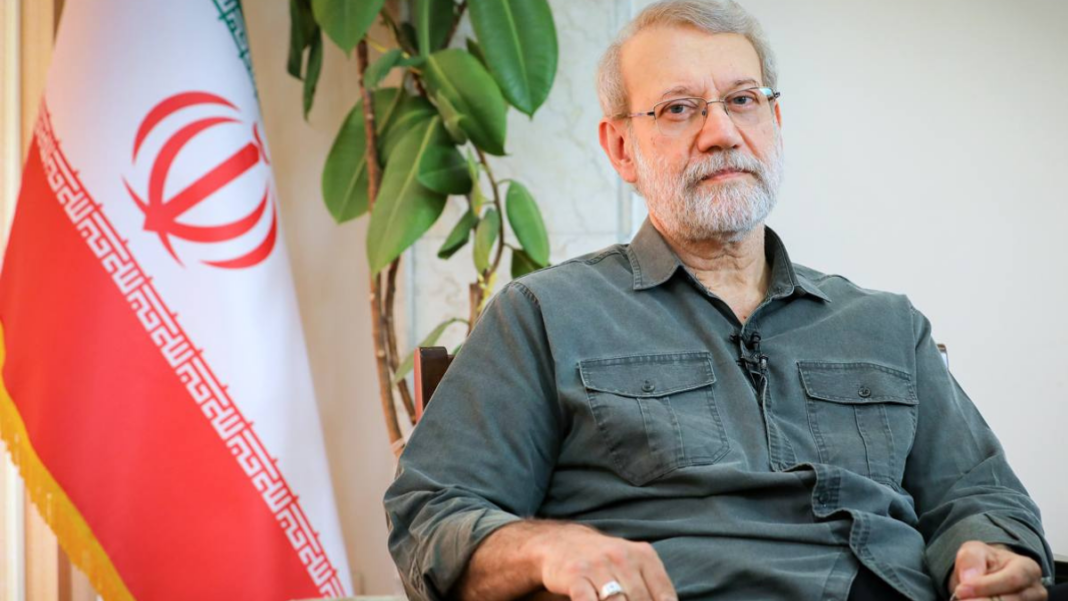
Ali Larijani, one of the Islamic Republic’s most influential political and security figures, has been killed in an Israeli strike, according to Iranian state media, marking the loss of another senior figure from Iran’s governing elite as the regional war deepens. He was 67.
Israel had earlier claimed Larijani was killed, with Defence Minister Israel Katz publicly announcing his death before Tehran issued confirmation. Reuters first reported that Israeli officials said Larijani had been targeted, and later reported Iranian media had confirmed the killing.
Larijani had become an even more important figure in Tehran after the death of Supreme Leader Ayatollah Ali Khamenei in an airstrike on 28 February, with international media and analysts describing him as one of the men effectively helping run Iran through the current crisis. Associated Press reported that Larijani was believed to have taken on a leading role in the country after Khamenei’s death, even though he was not eligible to become the supreme leader because he was not a cleric.
His death removes a veteran insider who had spent decades at the centre of the Iranian state. Born in Najaf in Iraq in 1958 into a prominent clerical family, Larijani rose through the system after the 1979 Islamic Revolution and held some of the country’s most powerful posts, including head of state broadcasting, secretary of the Supreme National Security Council, chief nuclear negotiator and speaker of parliament from 2008 to 2020. He was also later appointed a political adviser to Khamenei and a member of the Expediency Council.
Larijani was often viewed as a pragmatic conservative rather than an ideological firebrand, but he remained firmly committed to preserving Iran’s theocratic system and was central to major security and foreign policy decisions. Reuters described him as an “ultimate backroom powerbroker” who helped shape Tehran’s nuclear stance and broader strategic posture, including its relationships with Russia and China.
His career spanned both military and civilian arms of the state. He served with the Revolutionary Guards during the Iran-Iraq war, later ran Iran’s broadcasting monopoly, and became a key figure in nuclear diplomacy in the mid-2000s. Reuters noted he famously took a hard line in talks with the West, at one stage comparing European incentives to “a pearl for a candy bar”.
The strike that killed Larijani appears to be part of a broader Israeli effort to degrade Iran’s remaining command structure. Associated Press and Reuters both reported that General Gholam Reza Soleimani, head of the Basij volunteer militia, was also killed, or reported killed, in the same wave of attacks.
Larijani’s death comes as Iran’s new supreme leader, Ayatollah Mojtaba Khamenei, signals no interest in an immediate de-escalation. Reuters reported that, according to a senior Iranian official, Mojtaba Khamenei had rejected proposals passed through intermediaries to reduce tensions with the United States, saying it was not the right time for peace until the US and Israel were “brought to their knees”, accepted defeat and paid compensation.
That hardline stance reflects the increasingly dangerous phase of the conflict. Reuters said the war has entered its third week, with major disruption to energy markets and the Strait of Hormuz largely closed, while AP reported that Iranian and allied attacks, Israeli strikes and the wider escalation have already caused significant casualties across Iran, Lebanon, Israel and the Gulf.
Larijani had long been under Western sanctions. Reuters reported he was among senior Iranian figures targeted by recent US measures, including a reward offer of up to US$10 million for information, while Israeli Foreign Minister Gideon Saar said after the strike that both Larijani and Soleimani had been sanctioned and that Israel had acted without needing such incentives.
For Iran, the killing is both a strategic and symbolic blow. Larijani was not just a senior office-holder but one of the last major surviving figures from an older generation of politically connected conservatives who could move between parliament, national security, state media and the supreme leader’s inner circle. His removal leaves Tehran even more reliant on a narrower wartime leadership at a moment when the country is under intense military, political and economic pressure.
Support our Journalism
No-nonsense journalism. No paywalls. Whether you’re in Australia, the UK, Canada, the USA, or India, you can support The Australia Today by taking a paid subscription via Patreon or donating via PayPal — and help keep honest, fearless journalism alive.
