



Australia’s migration system could better meet labour shortages and support long-term economic growth if it focuses on skilled workers, according to a new report by The Australian National University (ANU).
On 2 September, the Australian Government announced key details of its 2025-26 Migration Program, maintaining the permanent migration cap at 185,000 people while prioritising skilled migration.
ANU Professor Alan Gamlen said temporary migrants, such as international students, graduates, and working holidaymakers, are already driving most growth in the skilled workforce.
“These groups now underpin high-skill occupations including managers, professionals, and trades.”
The report found that while only 12 per cent of permanent visa places currently go to offshore skilled entrants, temporary visa holders are contributing significantly to the country’s skill base.
Over the past three years, 84 per cent of growth in migrant skilled employment came from students, graduates, and working holidaymakers.

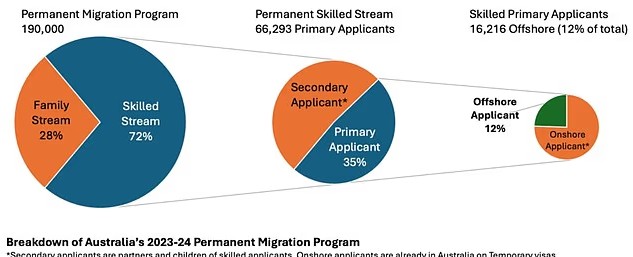
Prof. Gamlen and co-author Emeritus Prof. Peter McDonald argue that a shift in migration policy to focus on permanent skilled stream applicants would provide a steadier pipeline of talent, restore employer confidence, and strengthen Australia’s long-term workforce. Professor Gamlen said:
“A clear focus on skilled primary applicants, particularly through employer sponsorship, would sharpen policy purpose and address the country’s economic objectives.”
Earlier, Immigration Minister Tony Burke confirmed the permanent migration program would be maintained at 185,000 for 2025-26, with an emphasis on skilled migration, ensuring continuity for businesses and industries reliant on skilled workers.
The ANU report also highlighted the misperception that temporary visa holders only fill low-skill roles. Data show that more than half of graduate visa holders work in high-skill positions, with working holidaymakers increasingly taking on skilled roles.
Experts say the proposed reforms could clarify the purpose of permanent migration, separate family visas from the capped program, and better align Australia’s migration system with the country’s workforce needs.
Support our Journalism
No-nonsense journalism. No paywalls. Whether you’re in Australia, the UK, Canada, the USA, or India, you can support The Australia Today by taking a paid subscription via Patreon or donating via PayPal — and help keep honest, fearless journalism alive.

