

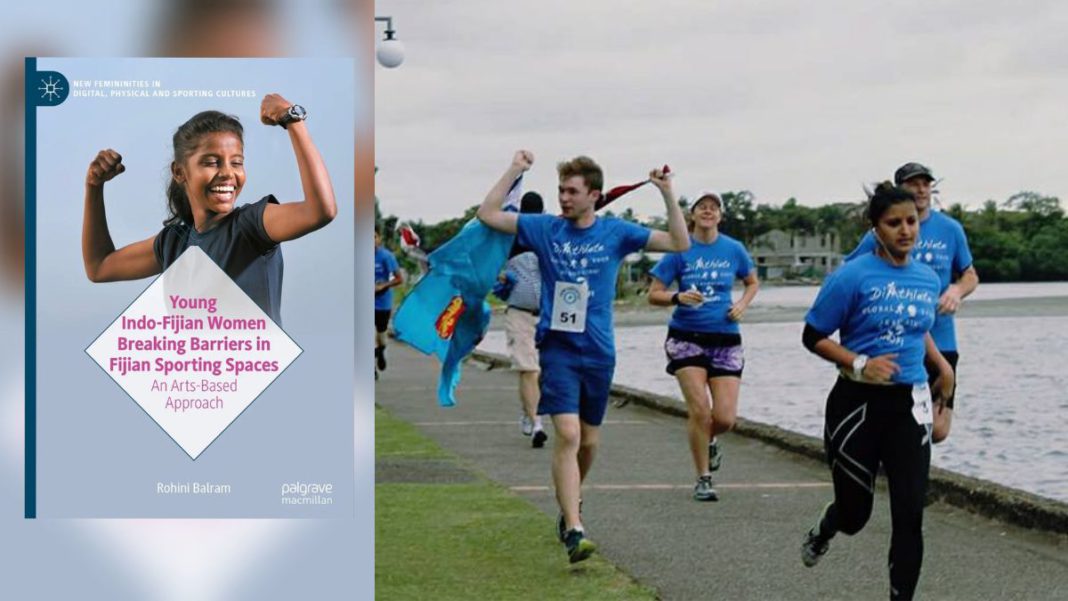
A groundbreaking new book by Indo-Fijian-Australian researcher and sports sociologist Dr Rohini Balram is shedding light on how young migrant women in Fiji are challenging gender and racial inequalities in sport through creativity and courage.
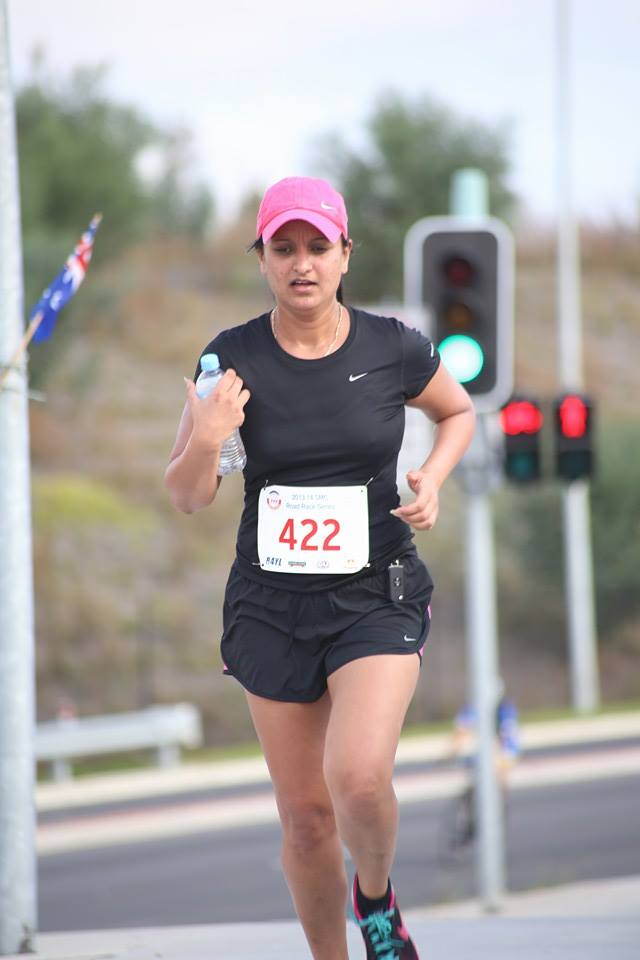
Titled Young Indo-Fijian Women Breaking Barriers in Fijian Sporting Spaces: An Arts-Based Approach, the book presents the lived sporting experiences of Brown migrant girls and women in Fiji. Drawing on innovative visual and arts-based research methods, Balram offers a fresh intersectional analysis of how Indo-Fijian women navigate—and resist—the overlapping forces of racism, sexism, and colonial legacy in Fijian sports culture.
Through carefully woven non-fiction creative pieces sourced from semi-structured interviews and reflexive ethnographic observations, the book centres the voices of these underrepresented athletes, demonstrating how they collectively challenge dominant masculine norms and demand space in traditionally male-dominated sports arenas. By engaging with critical theorists such as Gayatri Spivak, Nirmal Puwar, Raewyn Connell, and Judith Butler, Balram builds a layered understanding of marginality in postcolonial sporting spaces.
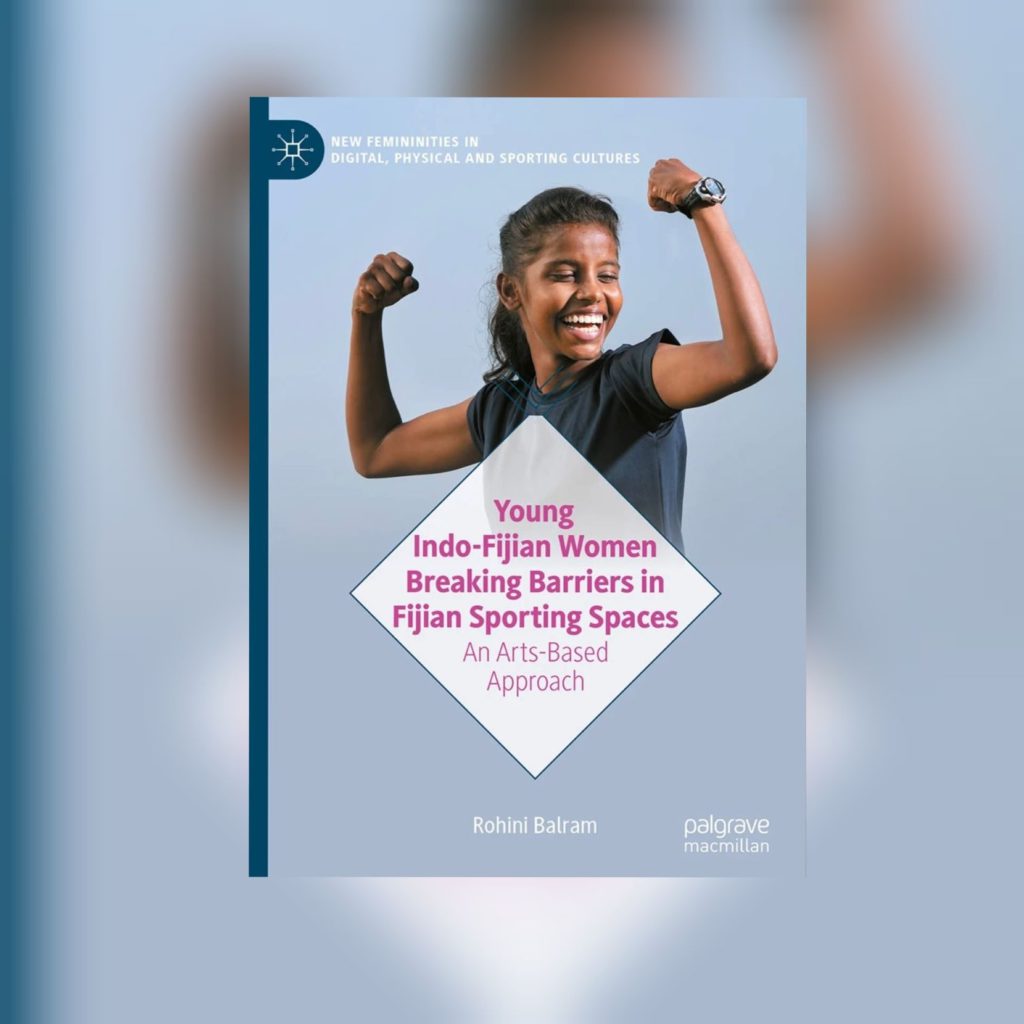
Dr Balram observes that at its core, however, is the assertion of agency—how young Indo-Fijian women are rewriting the rules of participation through athleticism, community, and art, “This book stems from my doctoral research (2023), inspired by a lifelong curiosity: Why are Indo-Fijian women nearly invisible in Fijian sports?”
“I was born in Suva, Fiji, in a Hindu family navigating poverty, tradition, and gendered restrictions. I’m a fourth-generation descendant of Indian indentured labourers brought to Fiji under colonial rule to work on sugarcane plantations. My early life was shaped by historical marginalisation, intergenerational trauma, and the legacy of colonial violence.”
Dr Balram reflects on her childhood love for sport and the obstacles she faced in participating: “Growing up, I loved sport. My childhood was filled with barefoot soccer games with my male cousins, where I moved from goalie to field player because of my speed. Yet, this joy didn’t translate into school sports. I was often placed on the reserve bench and excluded from team sports—dominated by iTaukei (Indigenous Fijian) girls. When I did try to join, I was looked down upon by both iTaukei peers and judged by Indo-Fijian girls for stepping outside cultural expectations.”
“It felt like I didn’t fully belong to either group, and being shy and reserved only made it harder. Fear of judgment—based on my race, gender, and body size—kept me from participating openly in school sports. Instead, I ran alone and secretly trained in martial arts after school.”
Dr Balram notes that even as a teacher, she observed similar patterns of exclusion.
“Later, as a teacher, I saw the same pattern—very few Indo-Fijian girls or women participating in sport—which echoed my own experiences of exclusion and invisibility.”
Moving to Australia allowed her to embrace physical culture more freely. “Long-distance running came naturally to me, built on years of solo road running back in Fiji. I also took up more serious weightlifting and became a certified gym instructor. Voluntarily, I began working at the community level to support older, racially marginalised women in achieving their health and fitness goals.”
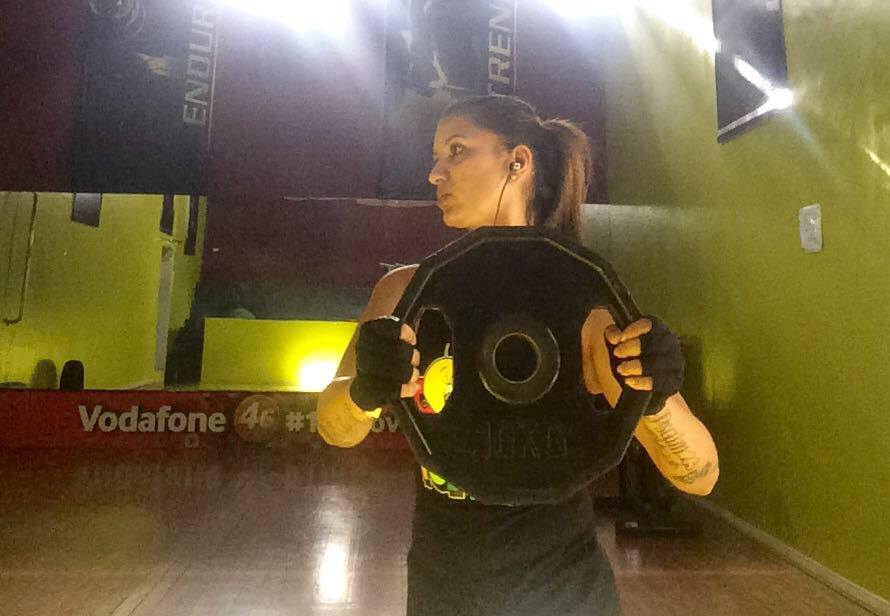
A pivotal moment came during a gym visit to Fiji in 2016: “While I was running on the treadmill at a gym, a male iTaukei (Indigenous Fijian) trainer, who had been observing me for a while, asked if I could do a chin-up. When I said I couldn’t, he bluntly told me my fitness level was ‘zero’.”
“His judgment overlooked the broader picture of fitness and revealed deeper stereotypes about gender, race, and what a ‘fit, athletic body’ should look or perform like. His comment reminded me, yet again, of the ongoing invisibility of Indo-Fijian girls and women in Fiji’s sporting landscape.”
This moment ultimately sparked her doctoral research and the book. “This autoethnography is not just a personal story—it’s a call to recognise the complex, intersectional realities that shape Indo-Fijian women’s relationships with sport. Our invisibility is not accidental but produced through layers of colonial history, gender expectations, displacement, and socio-economic constraints. This book aims to make those layers visible.”
Dr Balram’s decision to use arts-based and visual methods was both strategic and deeply personal. “My decision to use an arts-based and visual methodology was inspired by both personal and academic motivations,” she explains.
“Growing up in Fiji, I had an active and athletic childhood, yet I rarely found other Indo-Fijian girls—including my own sisters and cousins—with whom I could play sports or share a sporting life.”
“To answer these questions, I knew I needed more than traditional interviews—I needed approaches that would resonate with participants’ cultural practices, age, interests and communication styles. Having taught English for 7 years in Fijian high schools, I understood the young Indo-Fijian women’s strong connection to literature, visual culture, Bollywood cinema, and creative expression,” she adds.
“This led me to integrate photo elicitation, participant-written poetry/free verse, and reflexive field observations—methods that aligned with their interests and created space for emotional and cultural expression and individuality—Indo-Fijians—like any ethnic group—are not a homogenous community and teasing out the nuances was necessary.”
Dr Balram says the methods enabled participants to share “personal, nuanced and often sensitive experiences—about gender, race, menstruation, dating, poverty, and displacement—that may not have emerged through standard interviews alone.”
“Moreover, this methodology fostered a collaborative, respectful, and empowering research environment. Participants were not merely answering questions—they were actively producing the data.”
In analysing and presenting the data, Balram crafted nonfiction creative stories “based on participants’ words, poems, interview excerpts and field observations whilst they played a sport.” These narratives aim to make the research accessible to a wider audience—including policymakers, educators, and community leaders.
“I was inspired to use this innovative methodological combination because it gave voice to marginalised participants in ways that conventional research often cannot. It captured not just what was said, but how it was felt—and created space for Indo-Fijian women and girls to see themselves as active agents in Fiji’s physical culture.”
Balram also hopes the book will serve as a resource for policymakers and sporting institutions across the Global South and diaspora communities in the Global North. “I hope this book encourages policymakers and sporting institutions… to rethink and reimagine how sport is taught, structured, and promoted for marginalised girls and women, especially those from ethno-cultural minority backgrounds.”
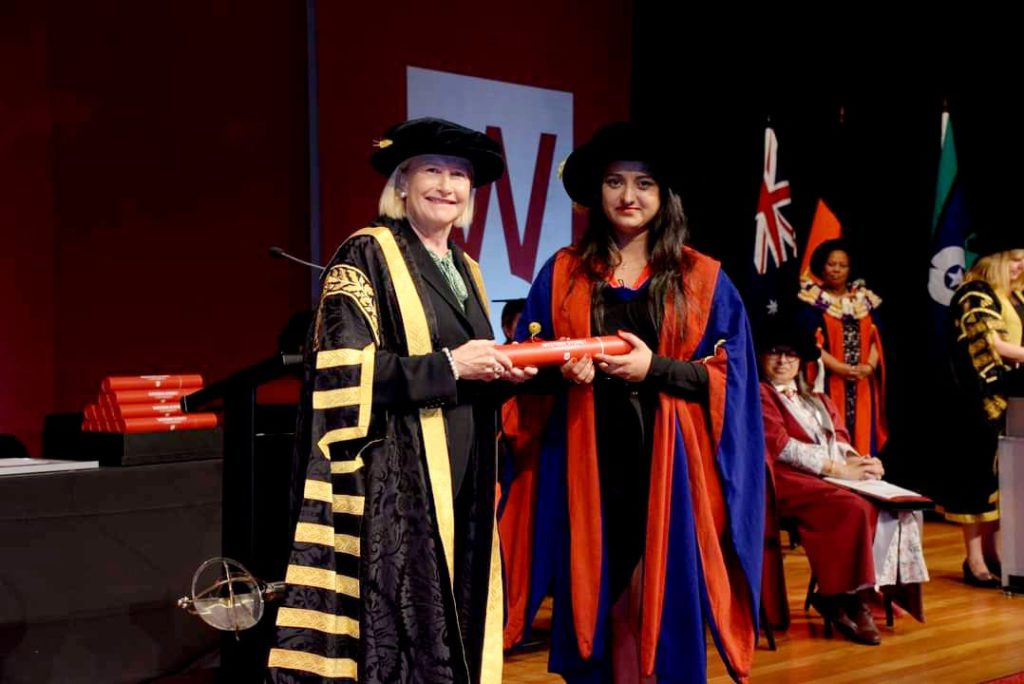
By centring Indo-Fijian women’s lived experiences, she calls for equity-driven, culturally responsive policies to dismantle barriers and expand access to physical activity in diverse forms—from minor sports like badminton to Bollywood dance and racquet sports.
Among her policy recommendations are: designing culturally responsive PE programs; equitable access to all sports including rugby; increasing media visibility and digital storytelling support for underrepresented athletes; creating inclusive sport career pathways; and transforming competitive-focused models to promote broader participation.
“These recommendations aim to foster a more inclusive, equitable, and culturally responsive sporting landscape in Fiji and across Asian diaspora communities in both the Global South and Global North—one that empowers all students, especially marginalised girls and women, to fully participate and thrive in physical culture,”
Dr Balram says, “Ultimately, this book seeks to decolonise sport and physical education by reimagining physical culture as inclusive, empowering, and reflective of the diverse lived realities of women from the Global South.”
“It calls on educators, coaches, policymakers, and researchers to move beyond token gestures and work toward meaningful structural change that allows ALL women and girls to flourish in sport.”
Support our Journalism
No-nonsense journalism. No paywalls. Whether you’re in Australia, the UK, Canada, the USA, or India, you can support The Australia Today by taking a paid subscription via Patreon or donating via PayPal — and help keep honest, fearless journalism alive.
