

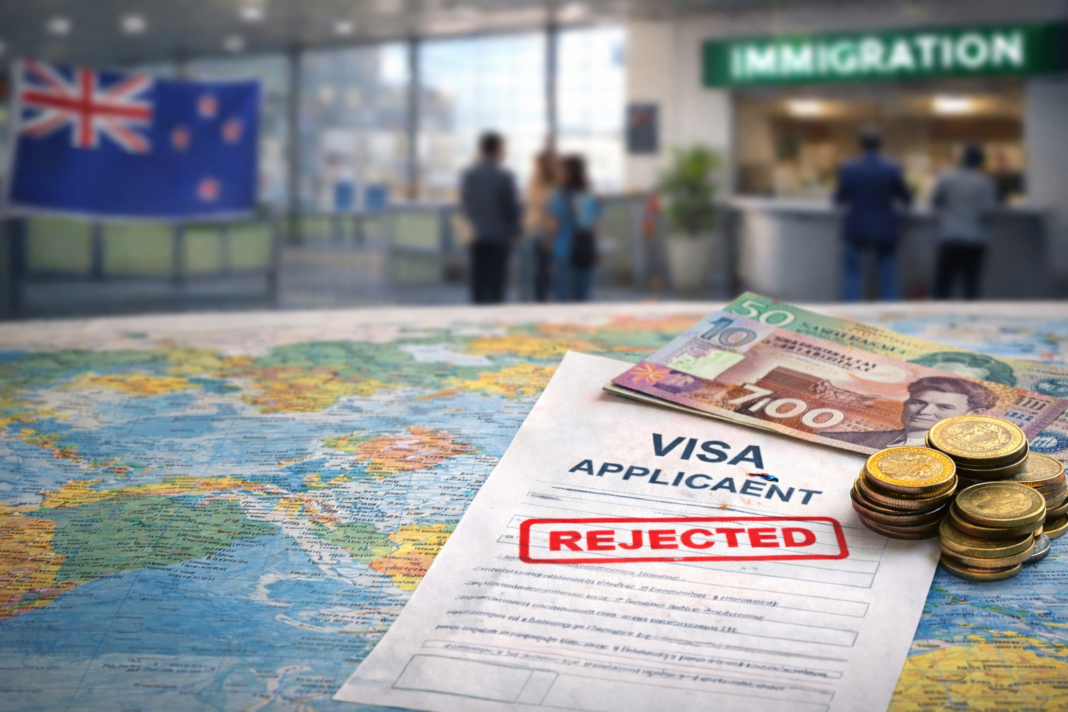
Immigration advisers and tourism industry figures are questioning the fairness of New Zealand retaining a $100 tourism levy from visitors whose visa applications are rejected.
The International Visitor Conservation and Tourism Levy (IVL) was introduced in July 2019 by the then-New Zealand Labour Party government at $35. It was increased to $100 in October 2024 under the coalition government.
The levy is paid upfront by most applicants seeking a visitor, student, working holiday or Electronic Travel Authority visa, along with some work visa categories. It applies to most international travellers except Australians and is valid for up to two years.
According to figures obtained by RNZ from the Ministry of Business, Innovation and Employment (MBIE), more than $300 million has been collected through the levy since its introduction. A further $190 million is forecast to be raised in 2025/26.
Immigration New Zealand states on its website that the IVL is a contribution towards maintaining the country’s natural environment and tourism infrastructure used by visitors. However, the payment is not refunded if a visa application is declined.
Since October 2024 and early February this year, about $5.7 million has been retained from more than 71,000 unsuccessful applicants, according to Immigration New Zealand’s director visa, Jock Gilray. Of the 71,565 people declined, 17,182 later reapplied for another visa — meaning they were required to pay the levy again.
Immigration adviser Jag Sidhu told RNZ that the policy placed an additional burden on applicants already facing significant visa charges.
“Immigration New Zealand should not charge this money in advance until a visa is approved,” he said, arguing the cumulative costs can be substantial, particularly for families.
Immigration lawyer Pooja Sundar of Dalley Sundar Barristers and Solicitors told RNZ that it was reasonable for visitors who entered New Zealand to contribute to conservation and infrastructure.
“But if you’ve applied for a visa and it’s declined, you haven’t created any cost by visiting New Zealand,” she said.
“Why are you paying $100?”
Other experts have questioned how the levy is presented to applicants. Using a general visitor visa as an example, experts note that the $341 visa fee plus the $100 levy may simply appear as a single $441 charge.
MBIE’s manager of tourism stewardship and systems, Tom Simcock, explained to RNZ that the government had agreed during the levy’s initial design that payment would be collected through the immigration system to streamline processing and reduce administrative costs.
He said the non-refundable nature of visa fees and levies is clearly outlined on Immigration New Zealand’s website and applicants are encouraged to ensure their information is complete to minimise the risk of refusal.
“There are significant administrative costs associated with establishing refund mechanisms that would impose increased costs on other users of the immigration system.”
He added that more than 1000 submissions were received during a public consultation in May 2024 on proposed changes to the levy, including the increase to $100, and none raised concerns about its non-refundable status.
Revenue from the IVL is split evenly between conservation and tourism initiatives, with funding directed towards infrastructure and biodiversity projects.
However, frustration is growing in key long-haul markets such as India, where travellers already face high costs. Industry observers warn that the non-refundable charge — even in cases of visa rejection — risks deterring potential visitors at a time when global competition for tourists remains intense.
Support our Journalism
No-nonsense journalism. No paywalls. Whether you’re in Australia, the UK, Canada, the USA, or India, you can support The Australia Today by taking a paid subscription via Patreon or donating via PayPal — and help keep honest, fearless journalism alive.
