


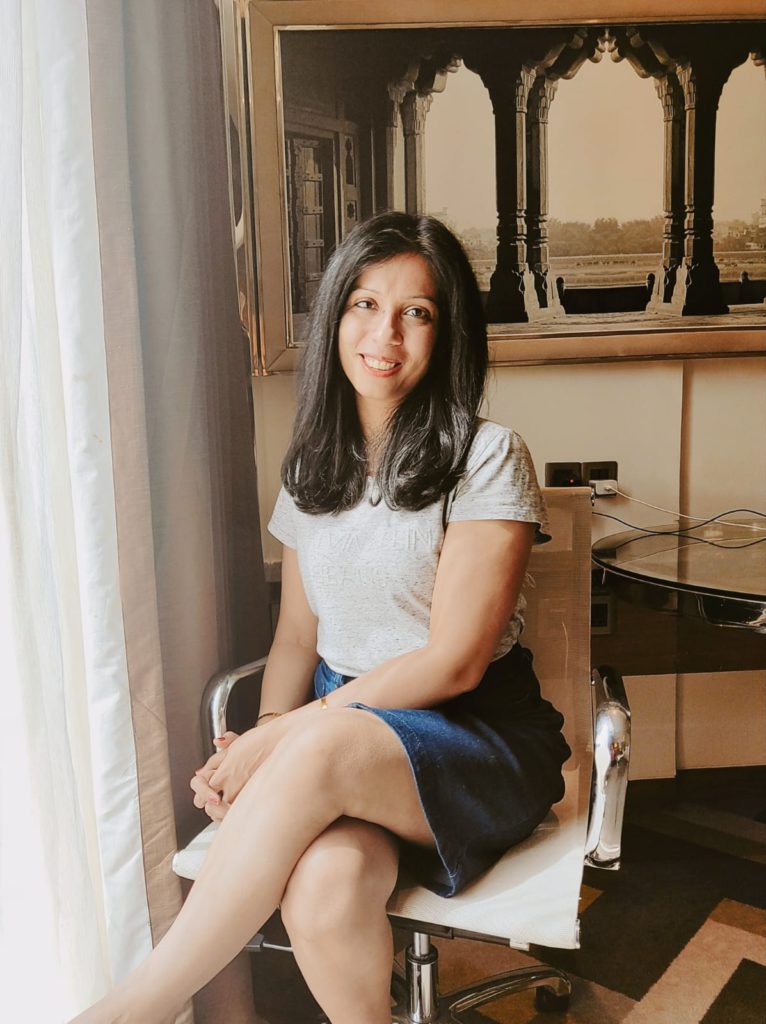
In her hauntingly tender debut collection What the Suitcase Still Holds, Melbourne-based poet Shilpa Taneja Wason gives voice to the invisible weight of migration — the kind of grief that doesn’t erupt at airports, but lingers in the margins of everyday life.
Born in India, Shilpa uses her 21 poems to explore the emotional terrain of migrant experience: the ache of distance, fractured identity, and the subtle, persistent pull of multiple homelands — all of which never feel fully like home. “This book is my ode to Hiraeth,” she says, referencing the untranslatable Welsh word that evokes deep homesickness for a place you can’t return to — or perhaps never truly belonged to.
“These poems were written from the in-between — the quiet ache of choosing a different life, one filled with opportunity, but also absence.”

Shilpa’s poems are steeped in memory and loss — livestreamed funerals, muted festivals, children growing up without their grandparents, and the ache of WhatsApp calls across time zones.
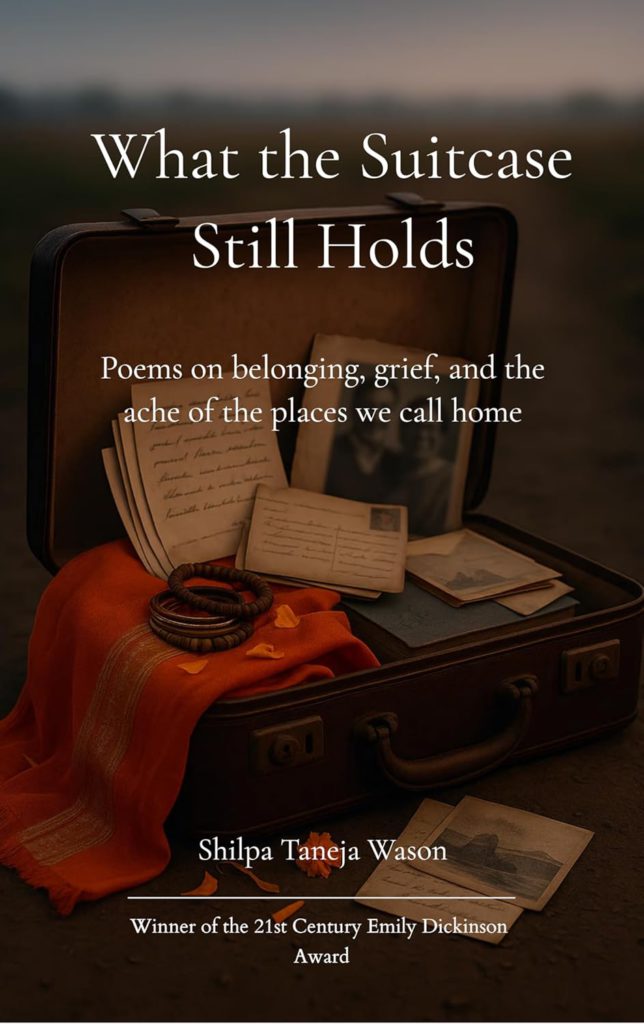
In the title poem What the Suitcase Still Holds, the suitcase becomes a powerful metaphor not only for items never unpacked, but for identities, rituals, and emotional truths too fragile to confront. Its zippered silence speaks to the paralysis of grief, a fear of feeling too much. Shilpa writes with evocative restraint — “the scent of my mother’s food,” “letters in a language I don’t write in now” — capturing the tension between preserving the past and surviving the present.
Other poems like I Did Not Get to Say Goodbye and To My Children — I’m Sorry explore the tenderness and guilt woven into ordinary moments: the scent of a lost homeland, the alien ring of your own name, or the heartbreak of lifting off from the tarmac of a country that still feels like yours.
In I Am Every Immigrant, Shilpa offers a lyrical litany that reads like a collective anthem of the displaced. With the refrain “I am,” she builds a rhythmic, aching portrait of identity in flux — spanning guilt, longing, resilience, and the deep cost of choice. The line “I am the victim of my own choice” lands like a quiet thunderclap, laying bare the emotional reckoning at the heart of migration.
Shilpa’s voice is raw, but never overwrought — grounded in resilience, yet open to vulnerability. In Homeless, she beautifully expresses the cultural dissonance many migrants face, particularly from the Indian subcontinent:
“Too foreign here,
too foreign there.
My accent shapeshifts
depending on the room.
I pause before pronouncing
my name.”

The Alien tackles not overt racism, but the softer, more insidious forms of exclusion. It’s a powerful poem about the emotional labour of assimilation — learning to decode AFL references, Google unfamiliar trivia answers, perfect your accent, or smile just enough to blend in. “Not racism, exactly— but a kind of quiet sorting,” Shilpa writes, distilling the discomfort of not quite fitting in. Her final line — “I always was— and still am— an alien” — lingers as a poignant reminder that Australian identity, for many migrants, remains conditional and elusive.
The collection closes with What I Know Now, a gentle yet profound reckoning with impermanence and multiplicity. Shilpa observes:
“Peace doesn’t look like joy.
It looks like getting through the day without an apology.”
Here, Shilpa captures the hard-won wisdom of the migrant journey — that home is not always a place but often a person; that grief sits beside us like an old friend; and that one can belong to many places and still feel homeless. In finding solace through spirituality, language, and silence, she offers quiet dignity to those who carry the burden of multiple selves.
Early readers have described What the Suitcase Still Holds as “a mirror” — a collection that holds and honours the stories of those navigating displacement, nostalgia, and intergenerational longing. It is deeply resonant for anyone who has left home, only to realise they’ve never fully arrived.
Shilpa, who works in technology marketing by day, writes from the liminal spaces of memory, identity, and belonging. Her heartfelt dedication reads:
“For my parents, Yash and Swaraj — whose love travelled with me,
even when I couldn’t return it in person.
And for all those
whose hearts ache from being torn
between the motherland
and the land you now call home.
May your heart always
find a way to belong.”
Support our Journalism
No-nonsense journalism. No paywalls. Whether you’re in Australia, the UK, Canada, the USA, or India, you can support The Australia Today by taking a paid subscription via Patreon or donating via PayPal — and help keep honest, fearless journalism alive.

