


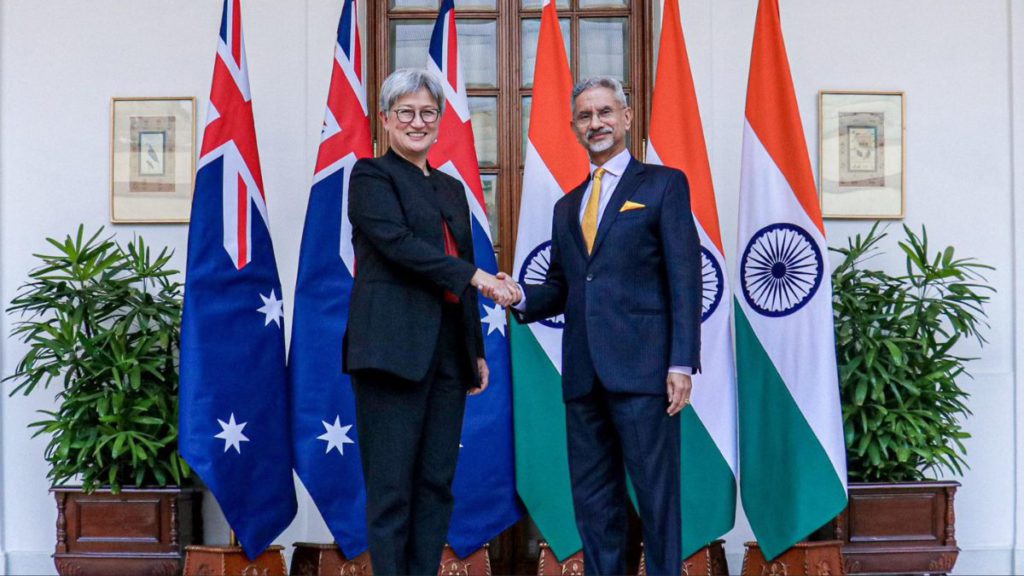
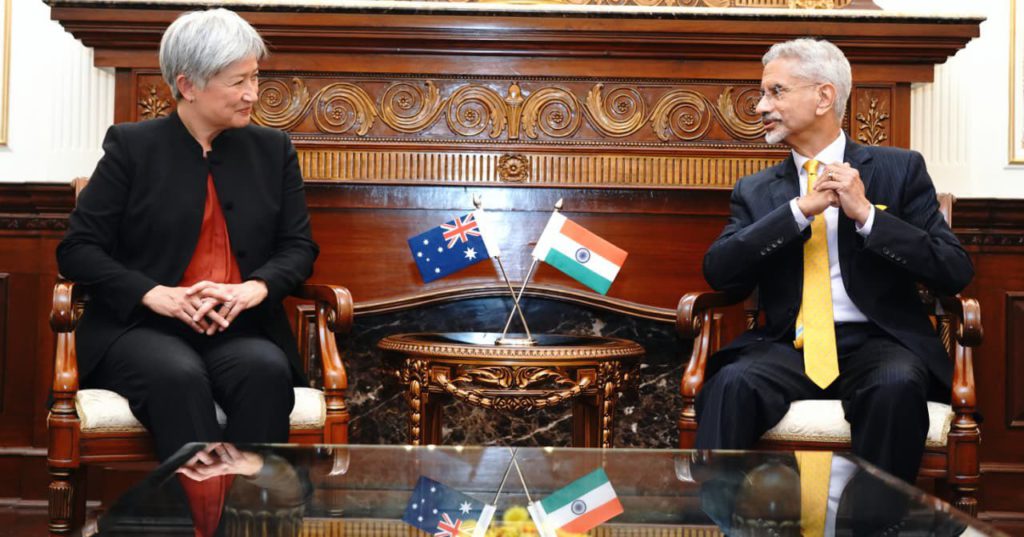
Foreign Minister Penny Wong met India’s External Affairs Minister Dr S Jaishankar in New Delhi on Thursday for the 16th India–Australia Foreign Ministers’ Framework Dialogue (FMFD), with both ministers reaffirming that the bilateral partnership has “never been closer nor more consequential” for the Indo-Pacific.
Wong’s official visit, which also included a meeting with National Security Advisor Ajit Doval, comes as India and Australia prepare to mark five years of their Comprehensive Strategic Partnership (CSP) in 2025.
The ministers reviewed progress across all pillars of the partnership and set priorities for the next phase of cooperation.

Deepening a Comprehensive Strategic Partnership
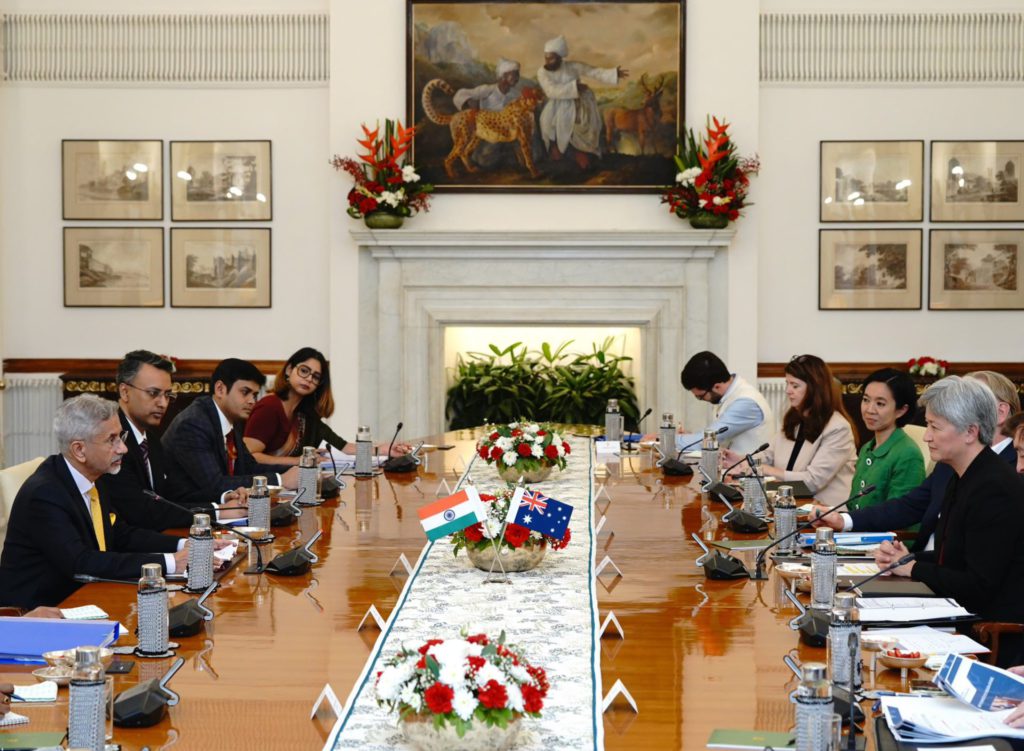
In its statement, India’s Ministry of External Affairs (MEA) said the FMFD covered trade and investment, defence and maritime security, critical minerals, education and skills, science and technology, space, energy cooperation, and people-to-people ties. This is the fourth FMFD co-chaired by Jaishankar and Wong.
Dr Jaishankar said the talks took “detailed stock” of the CSP and emphasised that both nations bear greater responsibility amid rising global uncertainty.

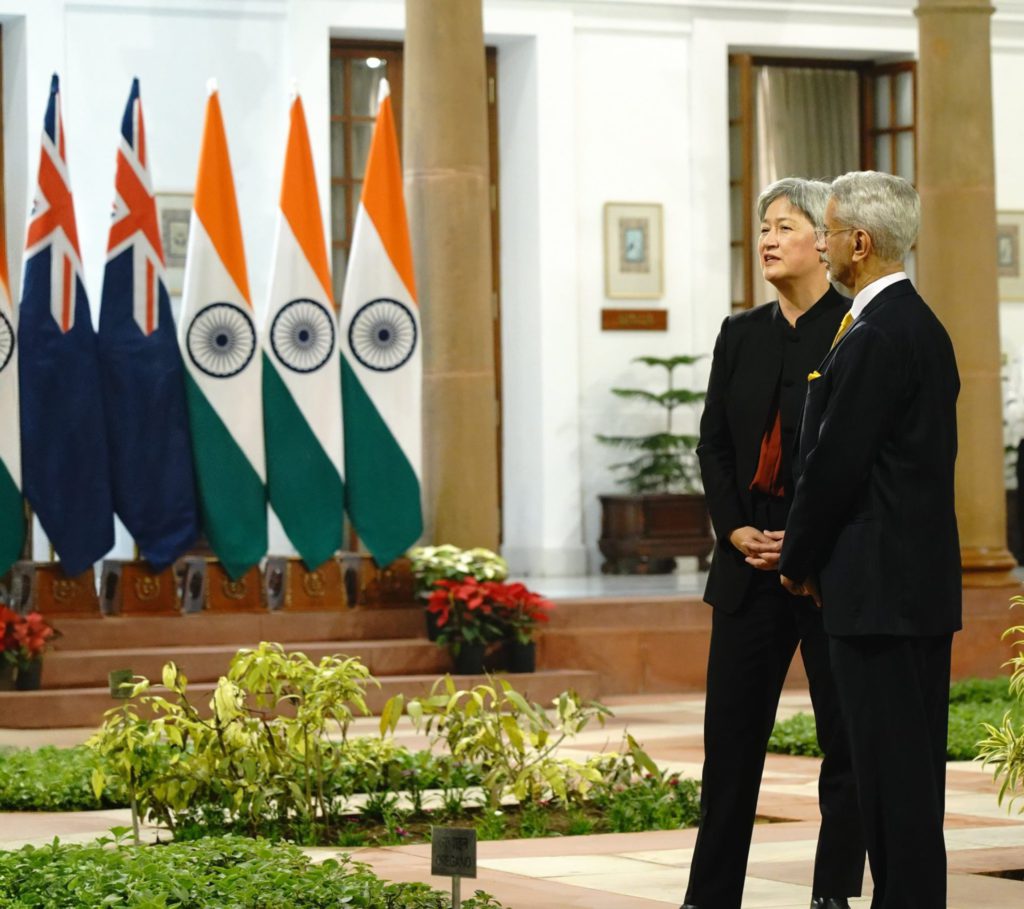
“Democracies like India and Australia carry greater responsibility,” he said.
“It is essential that we sustain strong momentum in our ties, deliver tangible outcomes, and work together through shared regional and global priorities.”
Wong echoed this view, calling India a “leading power” and describing Australia as India’s “reliable partner”.
“Our two nations have never been closer, and our partnership never more consequential,” she said.
“We want to leverage this partnership for both our peoples and for the region — using all tools available, including bilateral mechanisms, the Quad, and multilateral institutions.”

Indo-Pacific stability at the centre
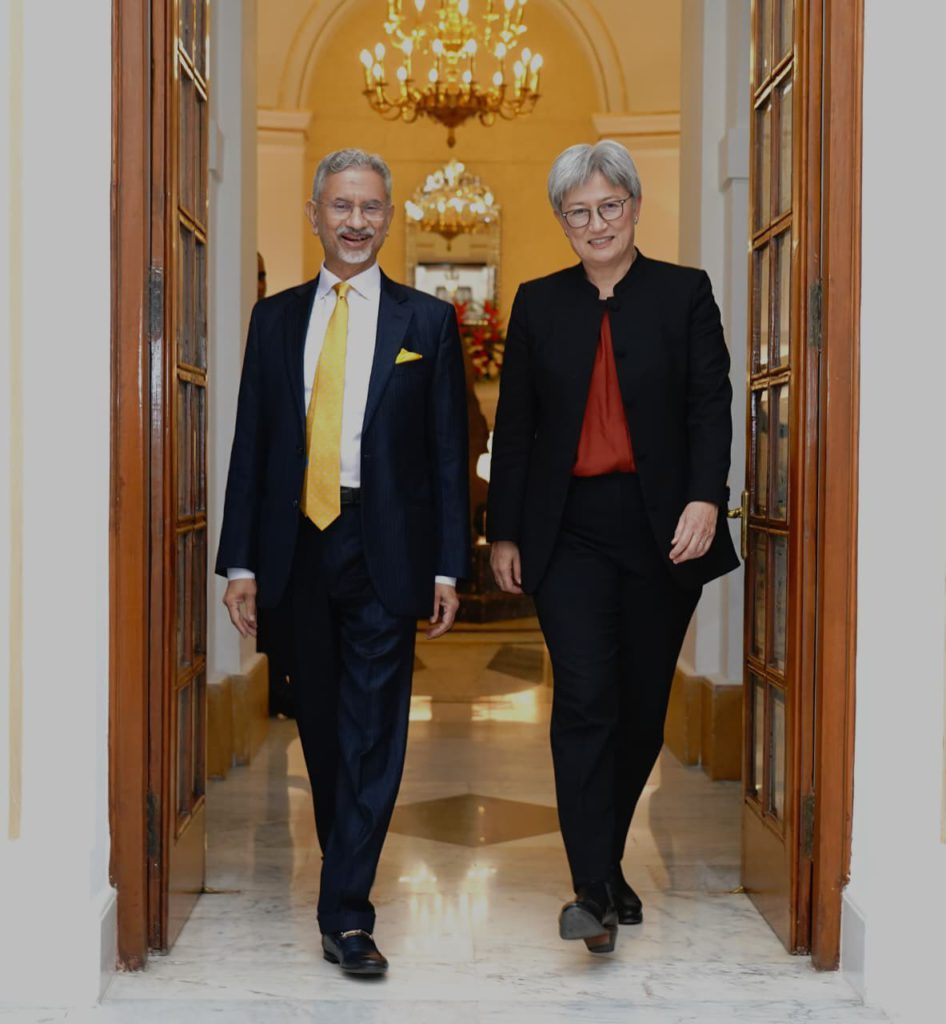
Both ministers reaffirmed their shared commitment to a free, open, secure, and prosperous Indo-Pacific. Discussions included maritime security, resilient supply chains, counter-terrorism, emerging technologies, and regional strategic dynamics.
Wong highlighted the need for “shared responses to shared challenges” in a “sharper and more competitive world”.
Trade, investment, critical minerals and economic architecture
Both sides reviewed the progress of the ongoing negotiations for a Comprehensive Economic Cooperation Agreement (CECA). Jaishankar noted that he is “confident” of concluding the agreement soon.
Australia and India also discussed cooperation on critical minerals, supply-chain resilience, and economic security — areas that have grown increasingly significant amid global shifts in manufacturing and strategic dependencies.
Education, universities and strong diaspora links
Education continues to be a major pillar of the relationship, with nearly 140,000 Indian students studying in Australia in 2024.
Wong highlighted the “exponential” growth in educational ties, noting that six Australian universities will have campuses in India.
She also praised Australia’s Indian community — the country’s fastest-growing diaspora — as a strength of bilateral ties.

Defence and security cooperation strengthens
The visit follows Defence Minister Rajnath Singh’s travel to Australia in October, during which the two countries reaffirmed their growing strategic alignment through joint military exercises and maritime cooperation.
Looking ahead: next FMFD to be held in Australia
Both countries agreed that the next FMFD will be held in Australia at a mutually convenient time, setting the direction for the next phase of the CSP.
Wong also met cybersecurity and technology experts at Australia’s High Commission in New Delhi, underscoring growing collaboration in strategic technologies.
In a message on X, she wrote:
“Australia and India’s partnership has never been closer nor more consequential… We covered strategic tech, defence, trade, people-to-people ties, and our shared vision for a peaceful, stable and prosperous region.”
Jaishankar, in his own post, said:
“As Indo-Pacific partners, we share the responsibility to maintain a free and open region… We discussed global developments, supply-chain resilience, economic uncertainties and cooperation on critical minerals.”
Five years of the Comprehensive Strategic Partnership
Since the CSP was signed in 2020, India and Australia have expanded cooperation in:
- Defence — more joint exercises, maritime cooperation
- Trade — ECTA in effect; CECA in progress
- Education — Australian campuses in India, student mobility
- Energy — joint Renewable Energy Partnership
- Science and technology — major R&D collaborations
- People-to-people ties — stronger diaspora links, cultural partnerships
As both nations navigate an increasingly competitive Indo-Pacific, the FMFD reaffirms that India and Australia see each other not just as partners — but as indispensable contributors to regional stability and shared prosperity.
Support our Journalism
No-nonsense journalism. No paywalls. Whether you’re in Australia, the UK, Canada, the USA, or India, you can support The Australia Today by taking a paid subscription via Patreon or donating via PayPal — and help keep honest, fearless journalism alive.

