


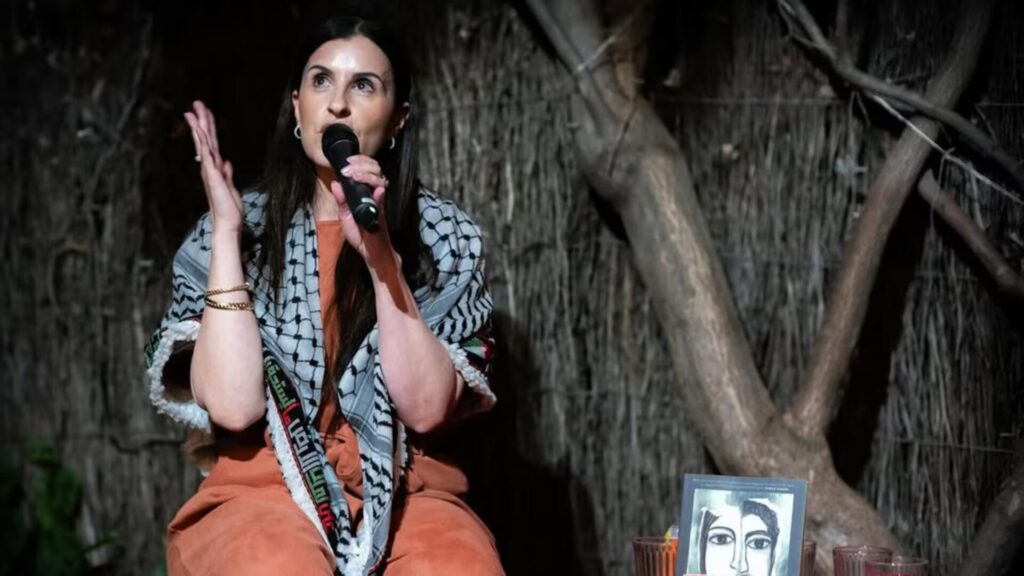
A fierce cultural and political debate has erupted around the 2026 Adelaide Writers’ Week after an author labelled her own removal from the festival “censorship” — while a 2024 push she co-signed to remove a Jewish writer from the same event has resurfaced, intensifying scrutiny over consistency and free speech.
The controversy centres on Palestinian-Australian author and academic Dr Randa Abdel-Fattah, whose scheduled appearance at this year’s Adelaide Writers’ Week was cancelled by the Adelaide Festival Board in early January on grounds of “cultural sensitivity” following the deadly Bondi Beach shooting in December 2025. The festival board said it would not be “culturally sensitive” to include her voice so soon after the tragedy, citing concerns about community tensions. Abdel-Fattah decried the decision as racism and censorship.
Past letter calling for Jewish author’s removal uncovered
Amid the backlash, a 2024 letter signed by Abdel-Fattah and other academics calling on the Adelaide Festival Board to rescind an invitation to Jewish New York Times columnist Thomas L. Friedman from the 2024 Adelaide Writers’ Week has resurfaced. The signatories criticised Friedman’s writings as dehumanising and hateful, urging the board to withdraw his appearance. Friedman ultimately did not participate in the 2024 event — the board later said this was due to scheduling issues, not cancellation.
Conservative commentators and some public figures have seized on the letter to label Abdel-Fattah a “hypocrite,” arguing that the criticism of her own removal is inconsistent with her past advocacy for removing another author from the festival.
Fallout and wider boycott
The decision to drop Abdel-Fattah has triggered a major boycott, with dozens of Australian and international authors — including high-profile names such as Zadie Smith, Peter Greste, Michelle de Kretser and others — withdrawing from Writers’ Week in protest. Many described the board’s action as censorship and an attack on free expression. The Australia Institute withdrew its sponsorship in response.
Former Adelaide Festival leaders have also criticised the board’s decision, arguing that literary festivals should be spaces for diverse dialogue rather than exclusion.
Institutional upheaval
The controversy has caused internal turmoil at the Adelaide Festival. The board chair and several members have resigned amid criticism of the handling of the Writers’ Week program, and questions have been raised about whether the board still meets legal requirements under the Adelaide Festival Corporation Act. Abdel-Fattah’s legal team has also demanded that the board disclose the reasons and materials that informed its decision to remove her.
Premier Peter Malinauskas has publicly supported the festival board’s authority to make programming decisions, asserting the need to balance cultural safety with artistic freedom, and referenced the 2024 instance involving a Jewish writer when discussing consistency.
Debate over censorship and cultural space
The unfolding dispute reflects broader tensions in Australia over how cultural institutions navigate political sensitivities — particularly on issues related to Israel and Palestine — while upholding open debate. Critics of the cancellations argue that excluding voices over past political views threatens freedom of expression, while supporters of the board’s actions assert a need for “cultural sensitivity” in fraught community contexts.
As the 2026 Adelaide Writers’ Week faces uncertainty, the controversy has ignited national discussion about how festivals can remain inclusive platforms for diverse perspectives without stifling debate.
Support our Journalism
No-nonsense journalism. No paywalls. Whether you’re in Australia, the UK, Canada, the USA, or India, you can support The Australia Today by taking a paid subscription via Patreon or donating via PayPal — and help keep honest, fearless journalism alive.

