

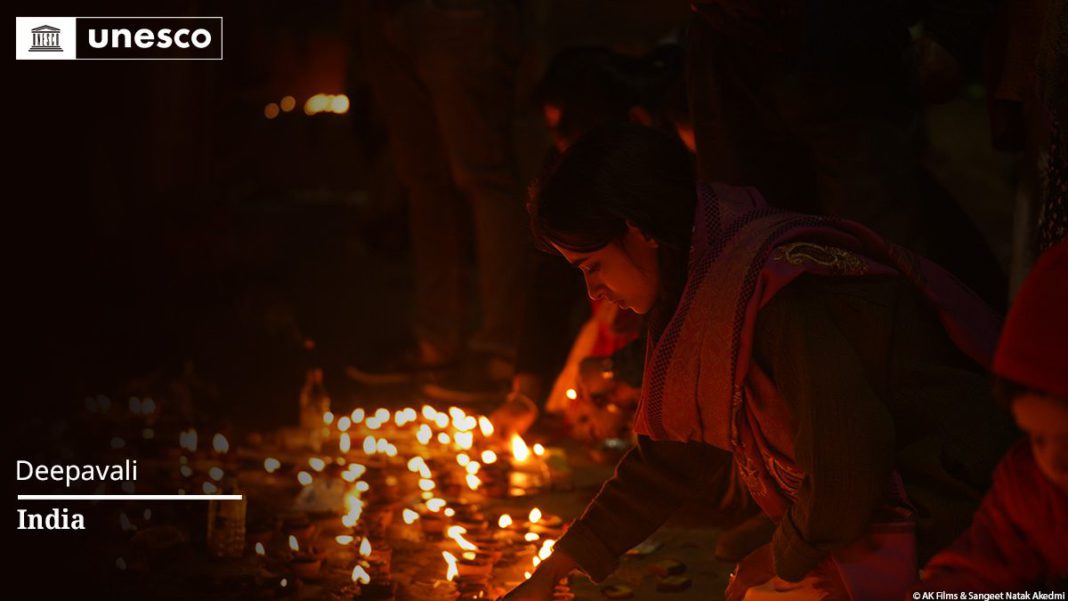
Deepavali, also known as Diwali, the Hindu festival of lights celebrated by millions across India and the world, has been officially inscribed on UNESCO’s Representative List of the Intangible Cultural Heritage of Humanity.
The announcement was made during the 20th session of UNESCO’s Intergovernmental Committee, hosted at Delhi’s historic Red Fort from 8–13 December.
The inscription marks a major cultural milestone for India, recognising Deepavali as a living tradition that supports social cohesion, strengthens community bonds, and carries deep spiritual, cultural, and social significance.
Prime Minister Narendra Modi welcomed the global recognition, saying the festival “personifies illumination and righteousness” and is “the soul of our civilisation”. He added that UNESCO’s decision would help “contribute to the festival’s global popularity even further”.
India’s Culture and Tourism Minister Gajendra Singh Shekhawat called the listing a proud moment for the nation.
“This UNESCO tag is also a responsibility; we must ensure Deepavali remains living heritage.”
Deepavali becomes the 16th Indian element on UNESCO’s intangible heritage list. India nominated the festival for the 2024–25 cycle, with the dossier highlighting its inclusive nature, diverse regional practices, connection to mythology, and its role in supporting traditional artisans, craftspeople and small businesses.
Deepavali is celebrated on Kartik Amavasya—usually in October or November—with homes, streets and temples illuminated by oil lamps symbolising the triumph of light over darkness. The five-day festival includes Dhanteras, Naraka Chaturdashi, Lakshmi Puja, Govardhan celebrations and Bhai Dooj, each carrying its own cultural and historical significance.
Its narratives span India’s major epics and traditions—from the return of Lord Rama to Ayodhya in the Ramayana, to Krishna’s victory over Narakasura, to Mahavira’s attainment of Nirvana, and the worship of Goddess Kali in eastern India.
Beyond its religious symbolism, Deepavali fuels India’s economic activity nationwide, with artisans, potters, sweet-makers, florists, textile workers and small traders relying on the festive season for livelihoods.
The festival’s emphasis on charity, community gatherings and public cleanliness also aligns with several UN Sustainable Development Goals. UNESCO noted that the nomination process for Deepavali was built on extensive community participation across India and the diaspora, making the inscription a “tribute to every home that has ever lit a diya”.
The festival was inscribed alongside other cultural elements from across the world, including Ghana’s highlife music and dance, Ethiopia’s Gifaataa New Year festival, Egypt’s koshary culinary tradition, Iceland’s swimming pool culture, Cyprus’s Commandaria wine tradition, and Yemen’s Hadrami Dan gatherings.
Support our Journalism
No-nonsense journalism. No paywalls. Whether you’re in Australia, the UK, Canada, the USA, or India, you can support The Australia Today by taking a paid subscription via Patreon or donating via PayPal — and help keep honest, fearless journalism alive.
