

When Giordano Bruno was burned at the stake in 1600 for challenging the biblical belief that the Earth sat at the centre of the universe, he could not have imagined a future in which the descendants of Europeans—whose civilisation was shaped by such sacrifices—would become so fearful, compromised, or morally confused that they would hesitate to even name radical Islam when Islamist terrorists murder civilians in cold blood.
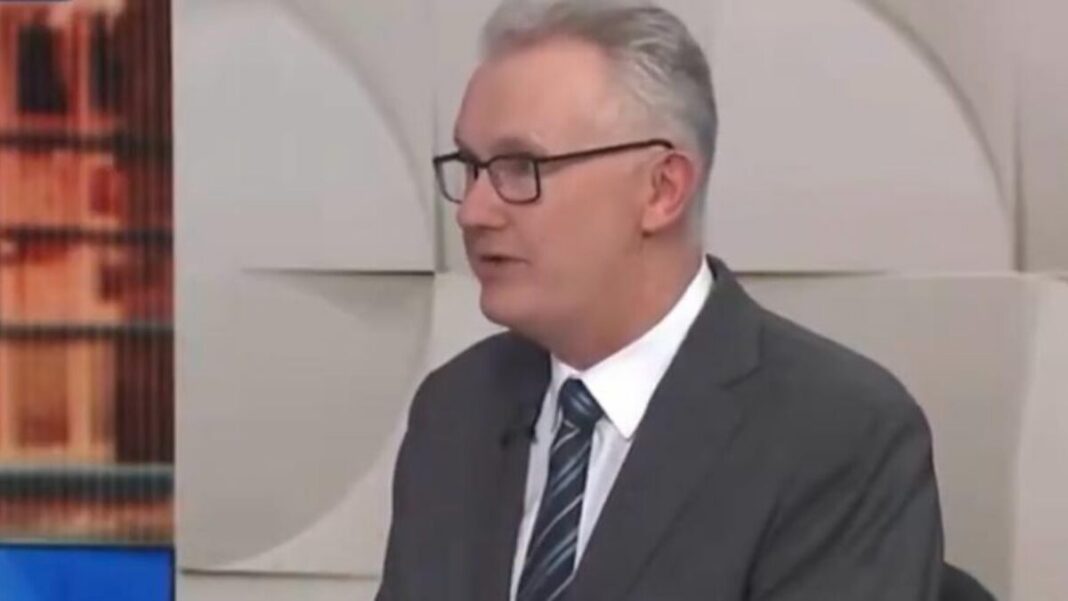
Yet that is precisely where we find ourselves. Many Australians were genuinely shocked to watch the country’s Home Affairs Minister, Tony Burke, decline in an interview to utter the words “radical Islam” when discussing Islamist-motivated violence in a recent interview on the ABC. The refusal was defended as a matter of sensitivity or community cohesion, but for many it symbolised something far more troubling: a political class so paralysed by fear or ideology that it cannot even name the problem it claims to be confronting.
That concern has not been confined to niche voices. Former prime minister Tony Abbott has openly accused the Albanese government of being “absolutely terrified” to confront radical Islam, particularly in the aftermath of the Bondi terror attack. He has warned that governments which refuse to name extremist ideology, or hold radical elements accountable, create the conditions in which antisemitism and political violence are allowed to metastasise under the cover of moral confusion.
Freedom of speech has been a cornerstone of Western civilisation. It is not merely an abstract ideal; it is the foundation upon which scientific inquiry, social reform, women’s rights, and liberal democracy were built—advances that have benefited the entire world. Today, that freedom is under serious threat in the West, including in Australia.
Freedom of speech is, at its core, the freedom to disagree—and yes, even to offend. Any person with a functioning brain understands a few basic distinctions that are now being deliberately blurred.
First, there is a clear and obvious difference between criticising ideas, ideologies, religions, gods, prophets, cultures, or traditions—which are not human beings—and harassing, threatening, or bullying individuals, which is never acceptable and should never be excused.
Second, there is an equally obvious difference between criticism and explicit calls for violence. Chanting slogans such as “death to the IDF,” “death to Zionists,” or “death to anyone” is not political critique; it is incitement. Pretending otherwise is intellectual dishonesty.
By the same standard, any verse or doctrine—whether found in religious texts or elsewhere—that incites violence against a particular community, including non-believers, cannot be exempt from scrutiny and must be treated no differently under the law.
Third, it is self-evident that when people criticise a particular ideology or movement, they are not referring to every individual associated with a broad community. When one speaks of white supremacists, no reasonable person demands repeated disclaimers that “not all white people” are being discussed. That understanding is taken for granted—yet it is selectively suspended when it comes to Islam.
It must also be said, plainly and without apology, that not all belief systems, cultures, or ideologies are equally good or equally bad. Civilised societies progress by keeping what is good and rejecting what is harmful. Moral relativism has never built a free society.
Secularism means the separation of religion and the state. In a secular country, people are free to practise whatever faith they choose—but they cannot expect others to automatically respect, revere, or refrain from criticising their gods, prophets, scriptures, or beliefs. That expectation is incompatible with a secular democracy.
The proper response to offensive ideas or even bigotry is not censorship, intimidation, or speech policing, but open debate, scrutiny, and argument. Suppressing discussion does not defeat extremism; it shields it from challenge.
Australia’s political leadership has already done significant damage by blurring the line between critical free speech and incitement to violence. It is time to reverse that damage.
The problem we face is not some vague or imagined prejudice, but radical Islam—an ideology that openly conflicts with liberal democratic values. The need of the hour is an Islamic reformation, something many Muslim reformers themselves have long argued for. Encouragingly, there are early signs of this in countries such as the UAE and even Saudi Arabia. But in the West, the truth has been so relentlessly obfuscated that even acknowledging the problem is treated as taboo.
Doing identity politics to protect a vote bank after a terror attack that shocked the nation is unacceptable. Moral clarity should not disappear the moment it becomes uncomfortable.
As reformist Muslim thinker Maajid Nawaz has rightly said:
“No people are beneath dignity, and no idea is beyond scrutiny.”
That principle is the very essence of a free society—and abandoning it would betray everything figures like Giordano Bruno died for.
Support our Journalism
No-nonsense journalism. No paywalls. Whether you’re in Australia, the UK, Canada, the USA, or India, you can support The Australia Today by taking a paid subscription via Patreon or donating via PayPal — and help keep honest, fearless journalism alive.
