

By Sarah Gates
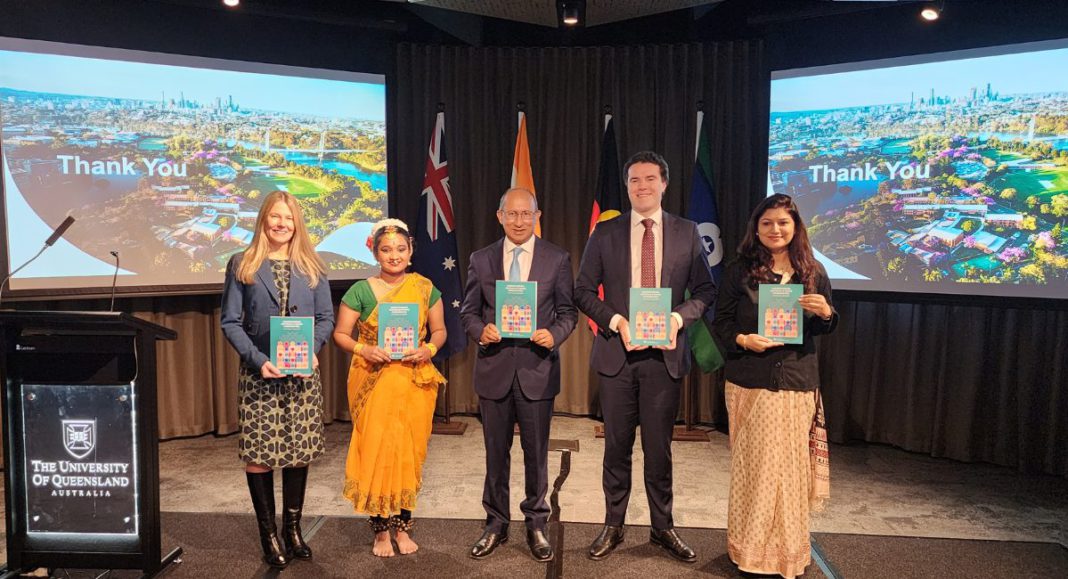
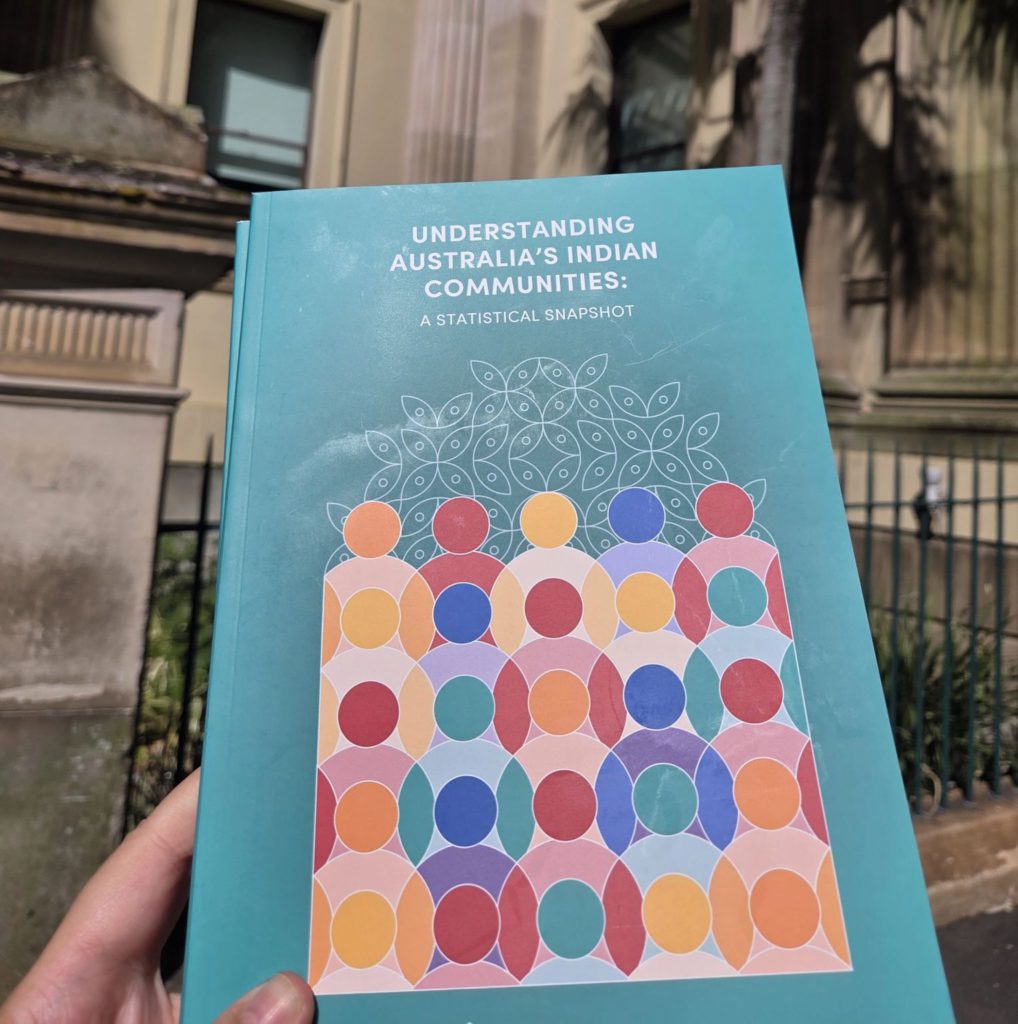
The University of Queensland has launched the most detailed statistical analysis of the Australian Indian diaspora to date. The report, produced by a team of eleven academics from UQ, Deakin, and Griffith University on behalf of the Department of Foreign Affairs and Trade (DFAT), presents a snapshot including generational trends for Indian origin Australians from data sets spanning 1987 to 2022.
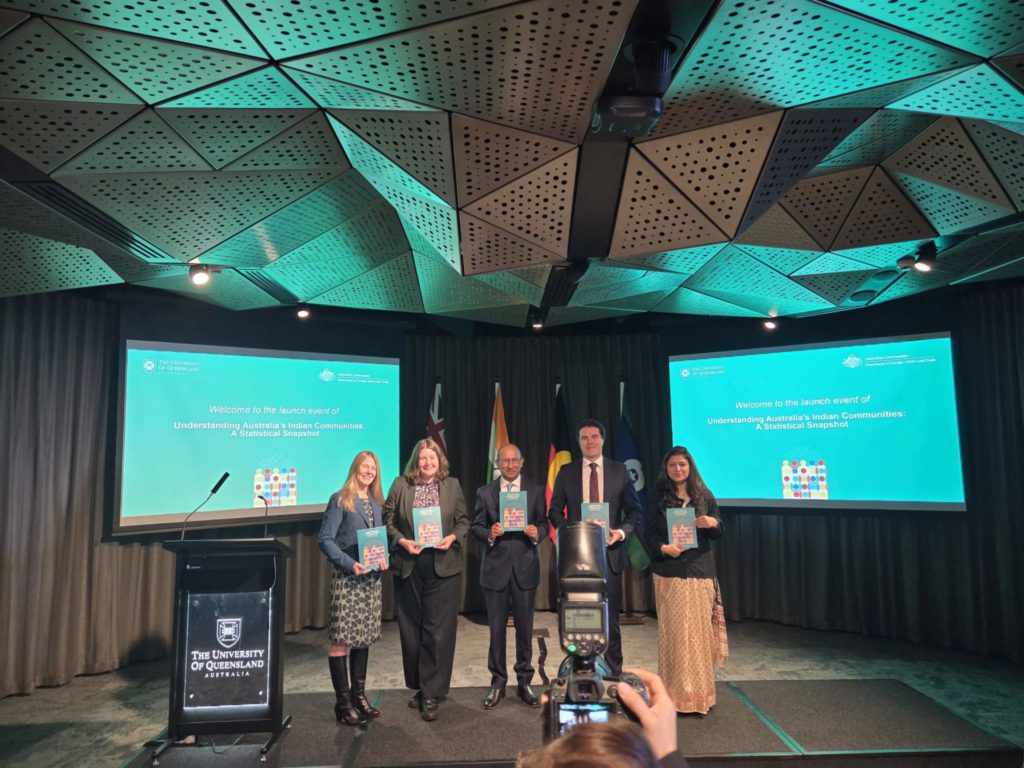
Pro Vice Chancellor (Global Partnerships) at UQ, Brett Lovegrove, introducing the report at Customs House Brisbane, highlighted its ability to “move beyond anecdote into insight,” to “better celebrate and support” the “vibrant diverse and deeply influential Indian community, which enriches every facet of Australian life.” Understanding Australia’s Indian Communities: A statistical snapshot will be available online in coming days.
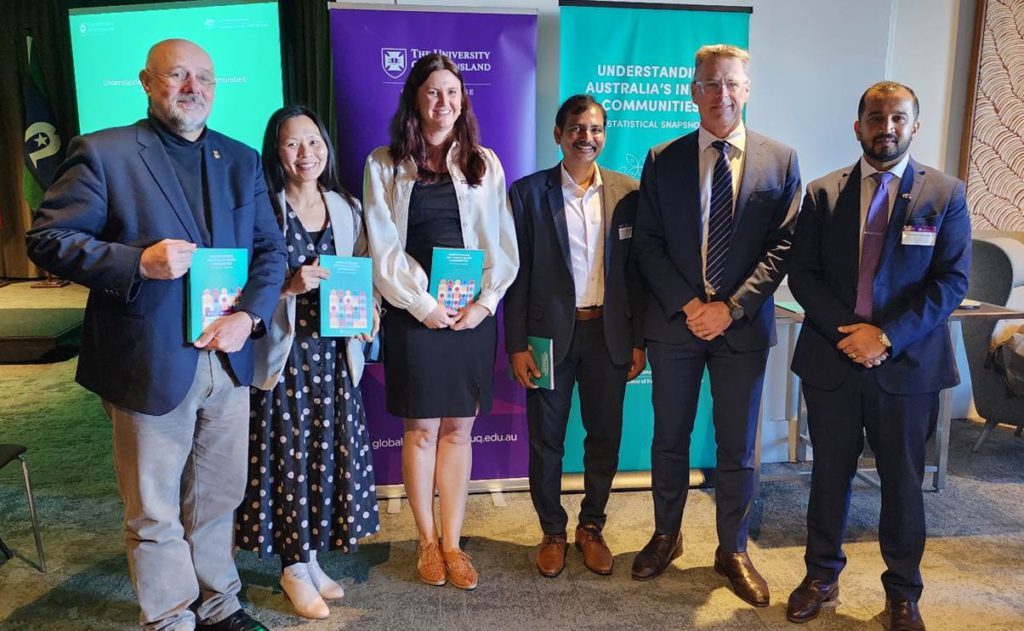
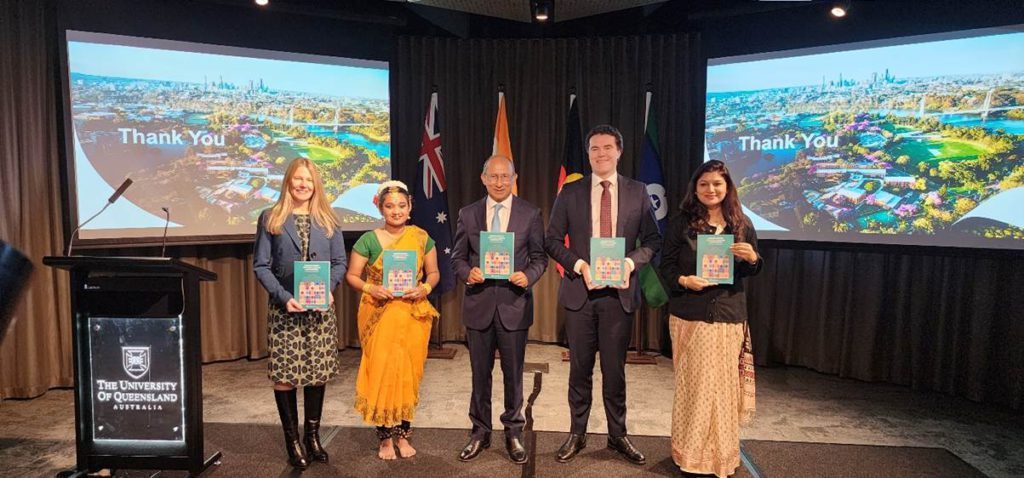
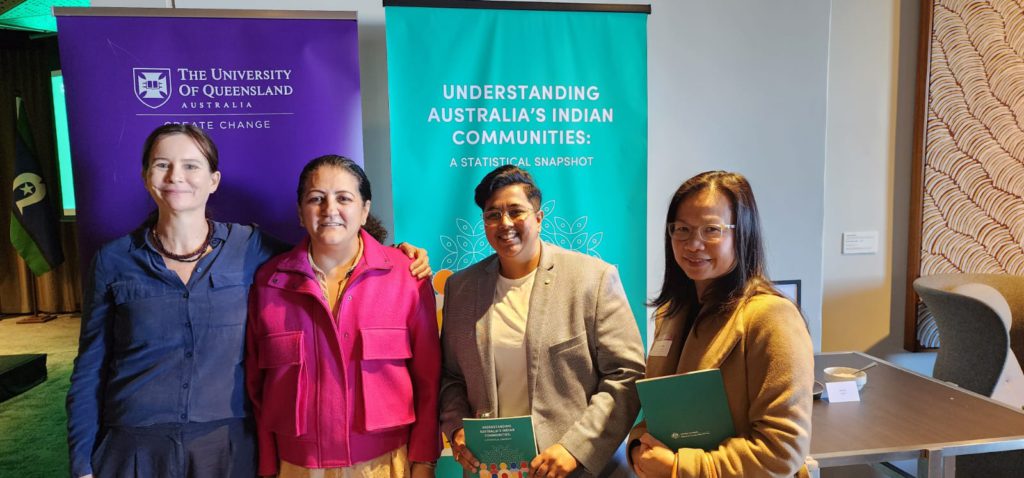
Distinguished guests included Neetu Bhagotia, Brisbane’s new Indian Consul General; Sarah Storey, the First Assistant Secretary of South and Central Asia (DFAT); Tim Watts, Special Envoy for Indian Ocean Affairs and UQ Chancellor, Peter Varghese (AO).
Chancellor Varghese called for greater Indian diaspora community engagement with foreign policy, public diplomacy and recognition of their weight as a national asset. He urged diaspora leaders to help tell the story of Australia, to break down outdated views in India, and present Australia as the “modern, sophisticated, multicultural society and economy that we think we are.”
Education, according to Varghese is the “flagship” sector for India-Australia relations and it is “central to the composition of the Indian diaspora,” with around half of new arrivals entering through education, and Indian research students being the second largest cohort of international candidates.
Research and development investment in innovative science will require India to “come to grips with the research agenda,” said Varghese, and this will advance India’s potential as a geostrategic power.
As a “tier one partner of Australia,” the relationship has to align on multiple layers, not only economic and defence, but requires deeper integration of the Indian diaspora, who “give texture” to the strategic partnership, building community to community ties between the two countries.
In his new role as Special Envoy for Indian Ocean Affairs, in the fifth year of Australia’s Comprehensive Strategic Partnership, Tim Watts, honoured the community as key to Australia’s success in building a “peaceful, stable and prosperous Indo Pacific.”
Watts noted the report’s appraisal of the Indian diaspora’s “sophisticated and pragmatic approach to electoral participation” combining “democratic faith and political scepticism” with a “willingness to switch votes over policy considerations,” making them “an important and discerning segment of the Australian electorate.”
Watts addressed the community as,
“a powerful strand in the bond between the land of your home, and the land of your heritage.”
“Whether it is in business, academia, the law, politics, government, civil society, the arts, science or on the sporting field, we celebrate what the Australian Indian diaspora brings to Australia Today,” added the Special Envoy for Indian Ocean Affairs.
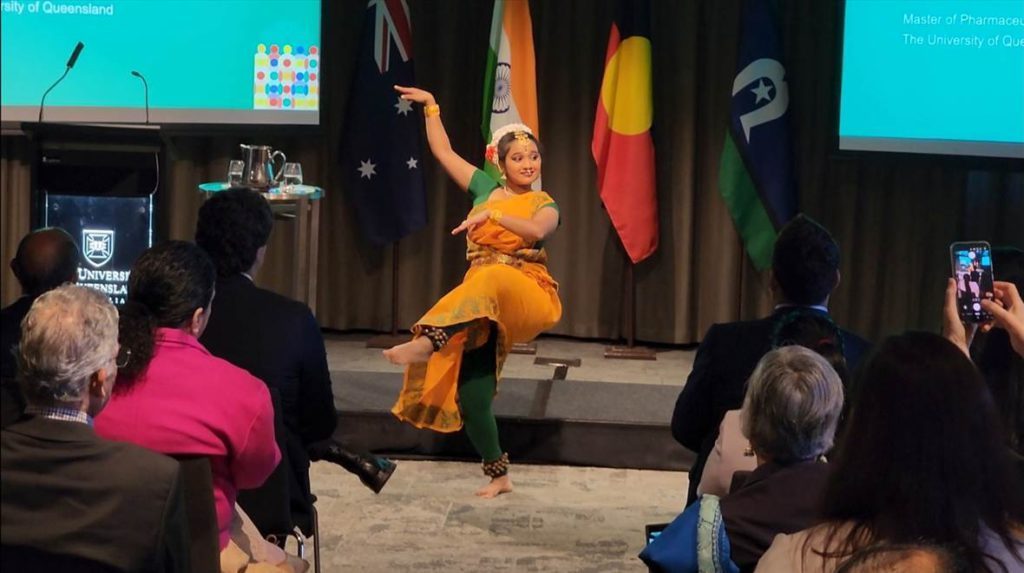
Likitha Rajashekhar, master’s student in the Pharmaceutical Industry Program at UQ, took time out to perform a South Indian dance before embarking on a six-month placement, building industry ties in India.
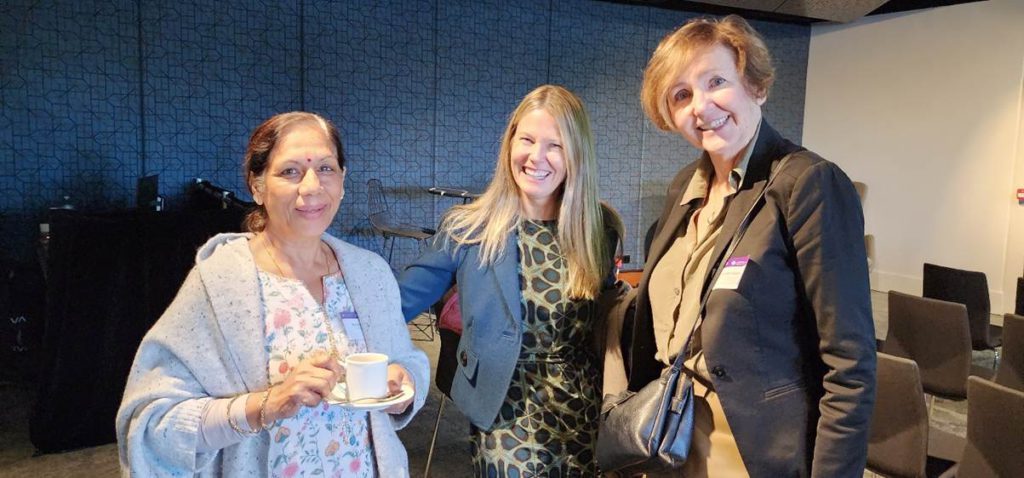
A stellar array of report authors, academics, diplomats, diaspora community figures, and students gathered to network after formalities over a light morning tea and refreshments.
Contributing Author: Sarah Gates has a background in Communication and Culture, with a PhD in Environmental Humanities and Cultural Studies.
Support our Journalism
No-nonsense journalism. No paywalls. Whether you’re in Australia, the UK, Canada, the USA, or India, you can support The Australia Today by taking a paid subscription via Patreon or donating via PayPal — and help keep honest, fearless journalism alive.
