


By Shailendra Malik
In October 2023, the Australian Department of Education took an important step forward by releasing the Australian Framework for Generative Artificial Intelligence in Schools. At the time, the framework was a timely move, positioning Australia ahead of many other nations in acknowledging the profound impact generative AI (GenAI) will have on education, society and the future workforce.
The framework was designed to give schools, colleges, and other educational bodies the flexibility to develop their own approaches for integrating GenAI into classrooms. This adaptability was meant to help educators adjust to the fast-evolving technological landscape while maintaining a clear set of national principles to ensure safe and effective use.
Almost two years later, however, it is time to reflect honestly on how well this head start has been leveraged — and whether the pace of implementation is keeping up with the rapid advancements in AI.
As a professional working in the AI and GenAI field, I am constantly amazed by the breakthroughs in model quality, accuracy, and the increasingly sophisticated ways businesses and industries are putting GenAI to work. Yet, as a parent, my excitement is tempered by a deep concern about whether Australia is doing enough to prepare the next generation for a dramatically different world of work — a world that is changing so quickly that even seasoned professionals struggle to keep up.


Earlier this year, Senator Tim Ayers, Australia’s Minister for Industry and Innovation and Minister for Science, addressed the urgency of this challenge in his keynote speech at the AFR AI Summit held in Sydney on 3 June 2025. In his remarks, Senator Ayers made it clear that Australia must not sit back as the AI revolution reshapes industries, societies, and global supply chains.
“Australia has to lean in, to secure a stake in global digital and AI development — to shape the digital future rather than have a future shaped for us at the end of global digital supply chains, with technology, norms, and infrastructure owned by increasingly narrow parts of the global economy.”
He went on to underscore that AI adoption is not a distant goal but an immediate task, fundamental to lifting productivity, boosting living standards, and safeguarding national security.
Yet, while this sense of urgency is echoed in policy discussions and business boardrooms, the situation on the ground — especially in our primary schools — suggests we are still moving too slowly where it matters most.
Across the globe, other countries are acting decisively. China, for example, has moved to embed AI literacy at an early age. From September this year, primary and secondary schools in Beijing will provide students with at least eight hours of AI education annually. Children as young as six will begin learning how to use chatbots responsibly and will be introduced to discussions about the ethics of AI — knowledge that will help them navigate a future where GenAI is part of daily life.
Closer to home, Singapore has also made bold strides. In 2023, its Ministry of Education launched the Transforming Education through Technology Masterplan 2030. Within a year, it produced a detailed AI education framework, finalised by mid-2024. From October 2024, Singaporean schools began rolling out “AI for Fun” elective modules in coding for primary and secondary students, which will be formally included in the 2025 curriculum.
India on the ither hand has huge diversity in play in form of languages and no national or link language available, has introduced a program called AI for ALL that has support in 11 Indian languages including English and facilitates education startups and State Govts to build apps with diverse lingual localisation.
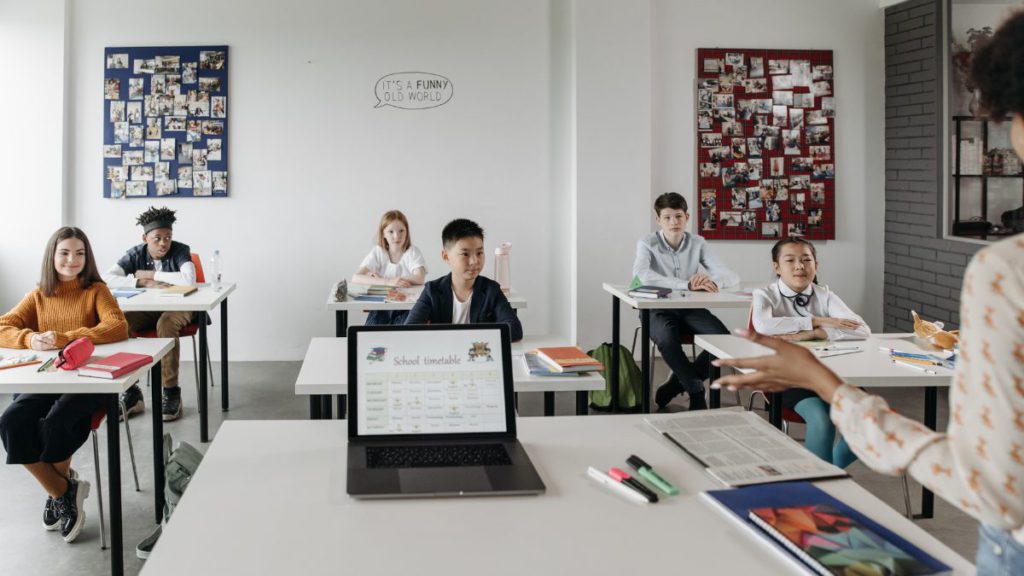
In contrast, Australia’s progress looks uneven. Over the past three months, I visited a range of schools — both primary and secondary — to observe firsthand how they are navigating GenAI’s arrival. Many schools have embraced aspects of AI, but the depth and consistency of adoption vary widely.
Secondary schools, armed with the national framework, generally have a clearer mandate to experiment and adapt. However, when it comes to primary schools — the very start of a child’s learning journey — there remains a lack of clear guidance and a lingering hesitancy about how far to go. Some primary schools, driven by proactive teachers or forward-thinking principals, have taken small steps to introduce GenAI concepts, but these efforts remain patchy and largely ad hoc.
At the same time, schools are grappling with valid concerns about misuse. Many teachers and principals I spoke with worry about students using GenAI tools like ChatGPT, Gemini, or Perplexity to cut corners on assignments. Rephrasing or paraphrasing existing content without proper understanding of originality or critical thinking remains a challenge. Schools are also contending with the broader question of how to manage children’s device dependence and balance meaningful GenAI exposure with healthy screen habits.
Despite these challenges, the message is clear: slowing down is not an option. If Australia wants to remain competitive and ensure its children are not left behind in a future shaped by AI, then the conversation must move beyond frameworks and policy speeches to concrete action — especially in our primary schools.
The next generation must not just be users of GenAI tools; they must become AI-literate citizens capable of understanding, questioning, and shaping the technologies they will inherit. This calls for structured national guidance on how primary educators can introduce GenAI concepts safely, creatively, and age-appropriately.
It also requires investment in teacher training, curriculum development, and resources that help educators navigate this new frontier with confidence. Australia’s early lead in publishing an AI framework was commendable — but maintaining that lead will demand far more than good intentions.
As a nation, we cannot afford to let our youngest learners fall behind while other countries set the pace. GenAI is not just the future of technology — it is the future of work, education, and social progress. Equipping every Australian child to thrive in that future must be a national priority.
Contributing Author: Shailendra Malik is a technology professional with over 20 years of global experience across Singapore, Saudi Arabia, India, and Australia. He has spent the past eight years specialising in AI, with a focus on generative AI in the banking and financial services sector since 2023. He contributes regularly to publications on AI and advocates for its ethical adoption.
Support our Journalism
No-nonsense journalism. No paywalls. Whether you’re in Australia, the UK, Canada, the USA, or India, you can support The Australia Today by taking a paid subscription via Patreon or donating via PayPal — and help keep honest, fearless journalism alive.

