

The Australian Museum has revealed the 59 finalists shortlisted for the prestigious 2025 Australian Museum Eureka Prizes, the nation’s leading science awards celebrating excellence in research, innovation, leadership, science engagement, and school science.
Entries from across Australia are competing in four main categories: Research and Innovation, Leadership, Science Engagement, and School Science. The awards recognise outstanding Australian achievements in scientific discovery, invention, communication, and practical solutions to global challenges.
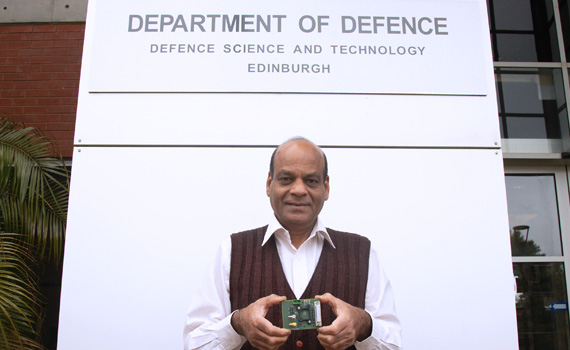
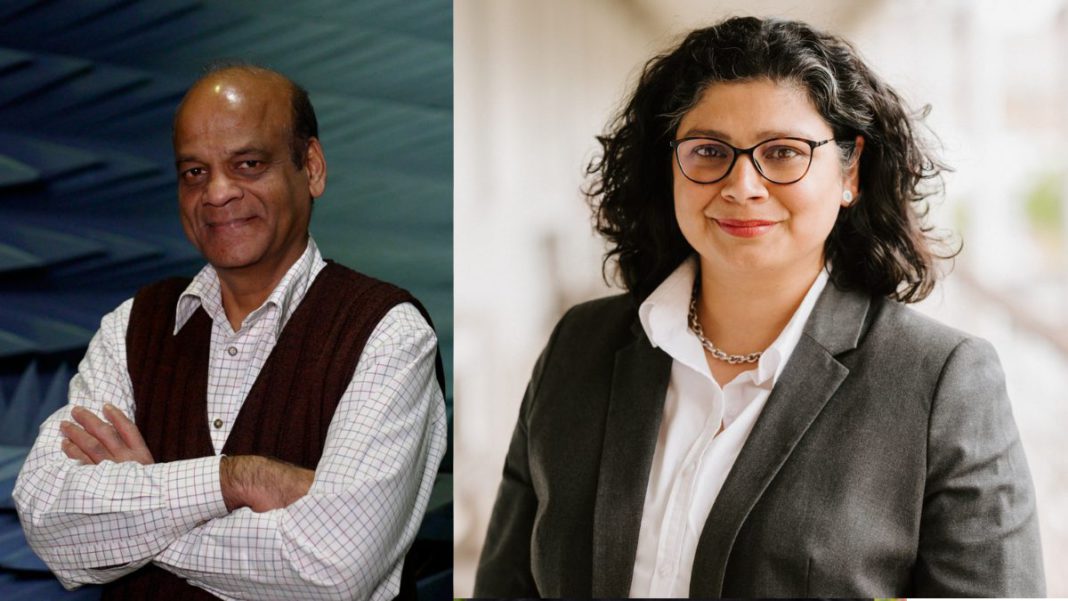
Among the finalists for the Department of Defence Eureka Prize for Outstanding Science in Safeguarding Australia are Defence Scientist Adjunct Dr Kamal Kant Gupta (Department of Defence) and Dr Jafar Shojaii (Macquarie University), alongside collaborators from the University of Melbourne and Swinburne University of Technology.
They have developed interference-resistant integrated circuit designs to protect Defence, satellite, and civilian electronic systems from electromagnetic and particle radiation, which pose risks in space and high-interference environments.
In the Australian Museum Eureka Prize for Science Journalism, the 14-part social media series Hysteria is a finalist. Created by Maddie Massy, Margie Bryant, Tejas Bhat, and Henry Zwartz, the series highlights the healthcare barriers women face in a system historically designed by and for men. The episodes feature insights from experts, politicians, and affected women, aiming to raise awareness and foster change.

The UNSW Eureka Prize for Societal Impact of Science finalists include the MINDSET team, led by Prof. Bianca Brijnath, Assoc. Prof. Jo Antoniades, and Research Assistant Nyssa Clarke from the School of Humanities and Social Sciences.
MINDSET co-designed and trialled online training for interpreters to improve dementia assessments for non-English speakers, with 865 interpreters nationwide completing the program. Now incorporated into Australia’s National Dementia Plan, MINDSET is also being implemented in seven European countries.
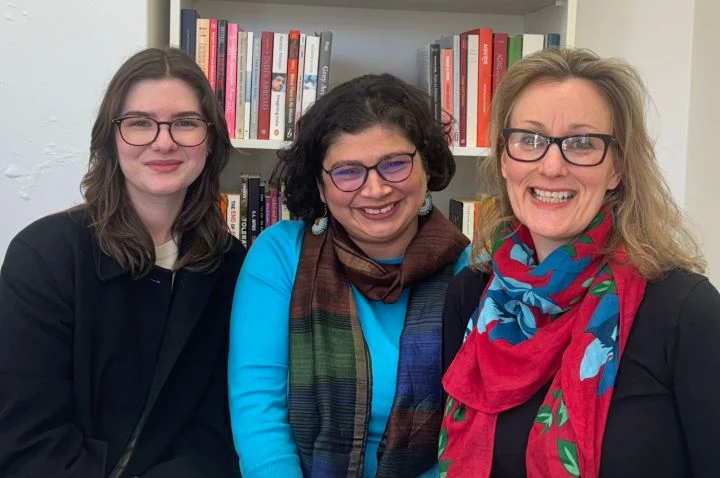
Prof. Brijnath explained that the training covered dementia’s effects on cognition and language, assessment tools, and interpreting strategies specific to cognitive evaluations. “To date, around 14 per cent of Australia’s active interpreter workforce has completed the MINDSET training, which has had a significant impact on timely dementia diagnosis in culturally diverse communities,” she said.
In the School Science category, Penrith Selective High School’s Dev P., Angadjot Singh, and Zarif W. earned a Highly Commended nod for their investigation Flame Tests: Electrons Moving Above and Below.
The 2025 Eureka Prizes finalists highlight Australia’s cutting-edge scientific talent and their vital contributions to society. The winners of the nation’s most prestigious science awards will be announced on Wednesday, 3 September, at a ceremony at Sydney Town Hall.
Support our Journalism
No-nonsense journalism. No paywalls. Whether you’re in Australia, the UK, Canada, the USA, or India, you can support The Australia Today by taking a paid subscription via Patreon or donating via PayPal — and help keep honest, fearless journalism alive.
