

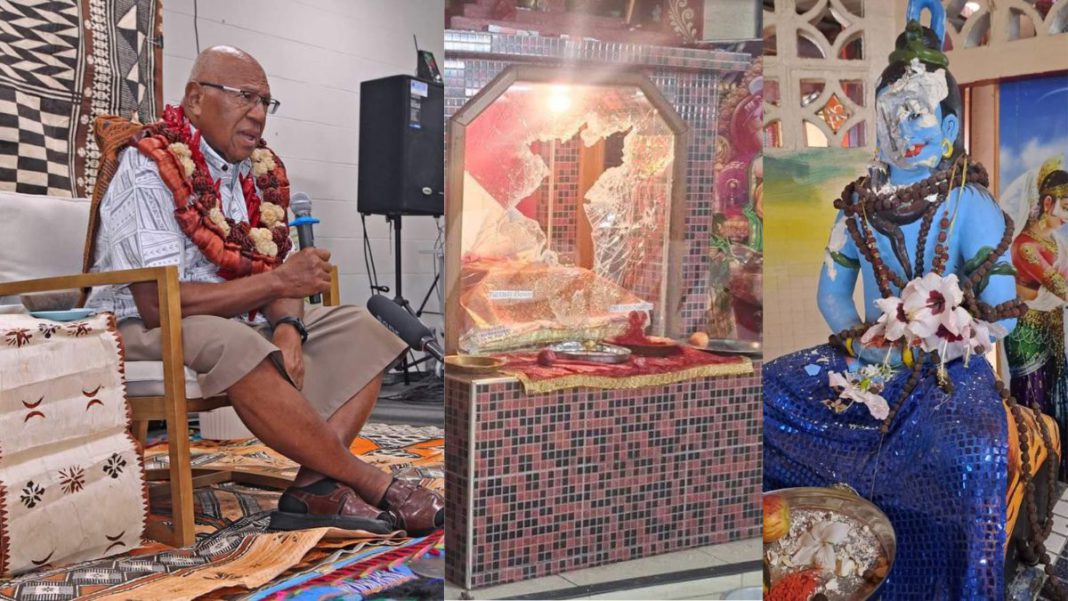
Fiji’s Prime Minister, Sitiveni Rabuka, has condemned the recent attack and desecration of the historic Samabula Shiv Mandir, calling it an act unworthy of a responsible citizen.
Speaking to Fijivillage News, Rabuka extended an apology to the Hindu community, saying the act was deeply disappointing and should never be accepted in a society built on respect and multicultural harmony.
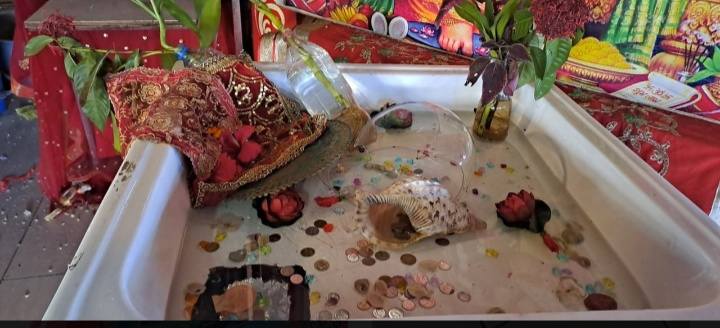
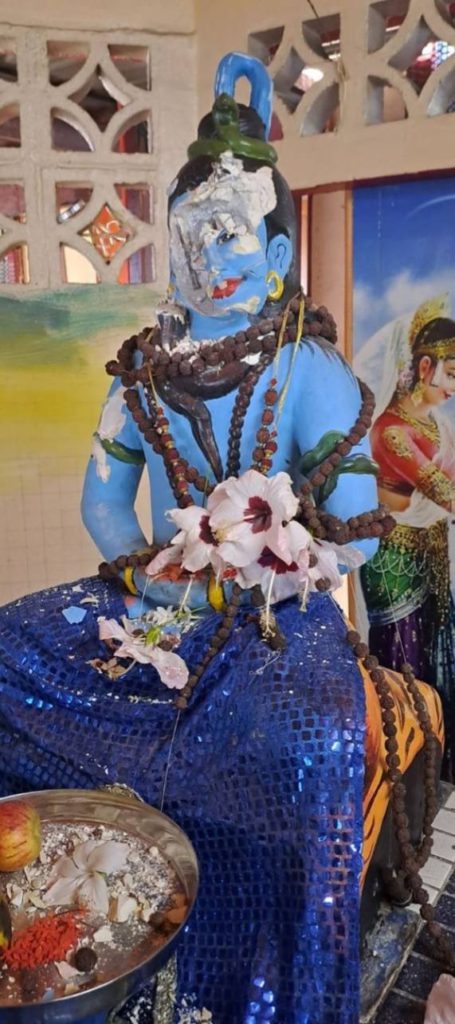
The attack took place around 2 PM on Friday, 11 July 2025, when a 28-year-old man allegedly entered the temple through a side entrance and used an iron rod to smash century-old idols of Lord Shiva and other deities.
The suspect was arrested on-site and has since been charged with one count of sacrilege and one count of throwing an object. He has also been referred to Saint Giles Hospital for psychiatric evaluation.
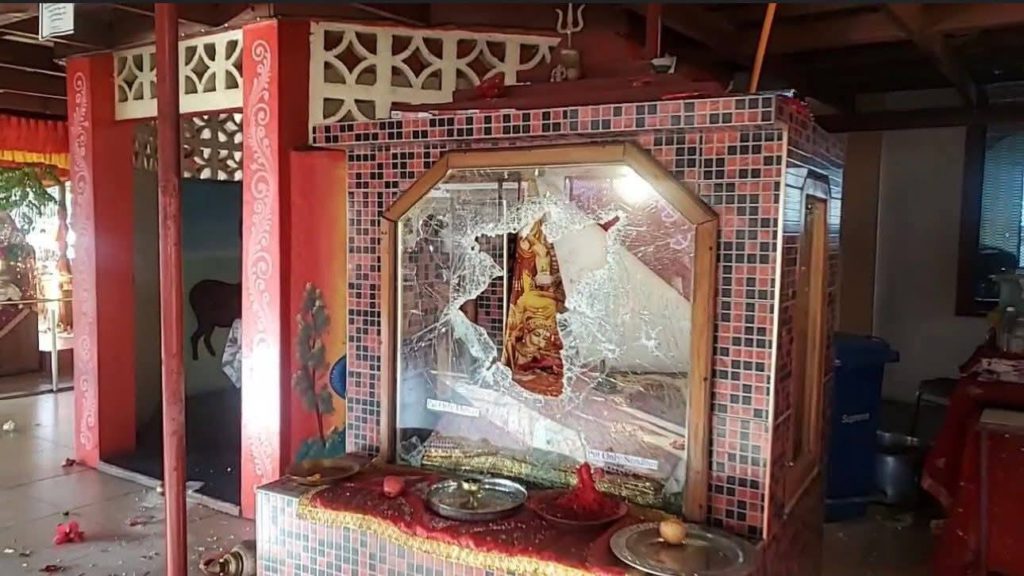
The crime has drawn widespread condemnation across Fiji’s political, religious, and civil society sectors.
Minister for Education Aseri Radrodro expressed sorrow over what he described as “uncalled for acts” by a youth. In a heartfelt Facebook post, he said,
“As a Christian, I am deeply concerned and saddened that someone decided to carry out such an act that negatively impacts race relations immediately.”
He called on all parents, guardians, and educators to promote tolerance and peaceful coexistence.
Deputy Prime Minister and National Federation Party (NFP) leader Professor Biman Prasad labelled the attack “absolutely disgusting” and “shameful.” He stressed,
“This is not just an attack on the Hindu community. It is an attack on all of us as Fijians who value harmony and respect between all faiths and cultures.”
Minister for Multi-Ethnic Affairs, Charan Jeath Singh, also condemned the act as a criminal assault on Fiji’s multicultural identity.
“We will not tolerate any form of religious intolerance or hatred. Our places of worship—of all faiths—must be protected and honoured.”
Opposition MP Alvick Maharaj described the destruction as “a dark and painful moment” for Fiji’s Hindu community.
“They weren’t just breaking idols; they were breaking something that means so much to us.”
Maharaj praised the police for their swift action and called for the full force of the law to be applied.
India’s High Commissioner to Fiji issued a statement of solidarity, saying,
“We condemn such despicable act. We urge the law enforcement authorities to take stringent action against those responsible and also ensure adequate security to places of worship.”
The Vishva Hindu Parishad Fiji also denounced the “heinous desecration” and urged the government to strengthen legal protections against sacrilege. National President Jay Dayaal said the act was not only a hate crime, but a direct affront to humanity, religious harmony, and national unity.
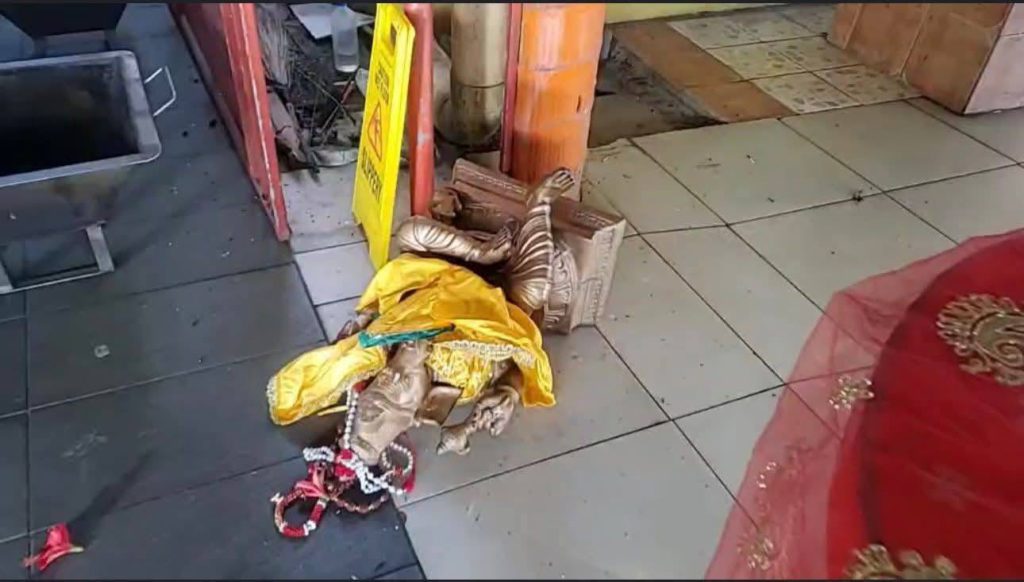
Prominent voices from civil society have echoed these concerns. Academic Sadhana Sen warned that repeated attacks on Hindu temples are fuelling fear and insecurity among Indo-Fijians, particularly in the lead-up to elections. Rajen Prasad called the act “a direct hit in the heart of Hindus of Fiji,” describing the damage to near-century-old idols as “beyond repair… a national shame.” Dialogue Fiji’s Nilesh Lal highlighted the danger of exclusive religious doctrines in a pluralistic society. “Religious scriptures that preach superiority, that label other forms of worship as false or evil, are dangerous in diverse societies. Believe what you want, but don’t weaponise it,” he said.
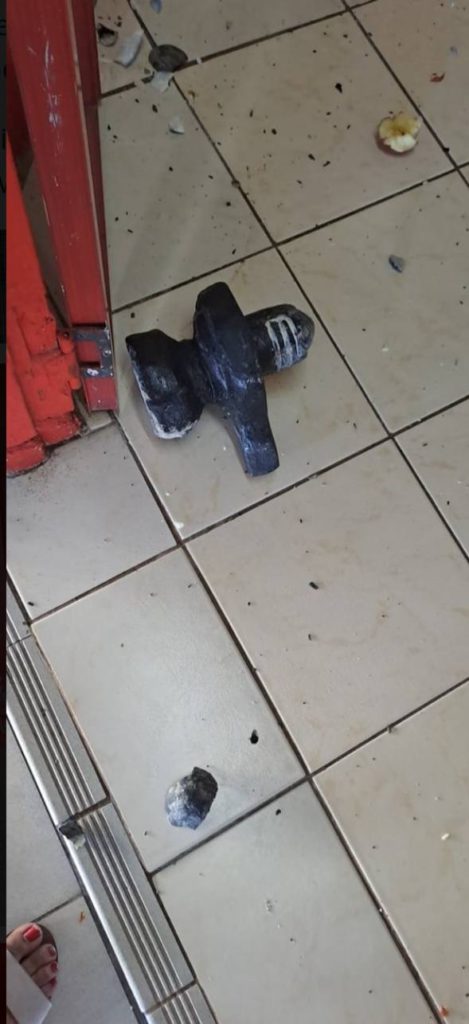
This is not the first such incident in Fiji. In April 2025, torn pages from the holy Ramayan were found scattered in the Vunicuicui Shiv Mandir in Labasa. Earlier desecrations occurred in 2018, 2006, 2004, and as far back as 1991, prompting ongoing calls for better protection of religious sites and tougher penalties.
While the police investigation into the Samabula attack continues, calls for peace, justice, and unity grow louder.
Support our Journalism
No-nonsense journalism. No paywalls. Whether you’re in Australia, the UK, Canada, the USA, or India, you can support The Australia Today by taking a paid subscription via Patreon or donating via PayPal — and help keep honest, fearless journalism alive.
