

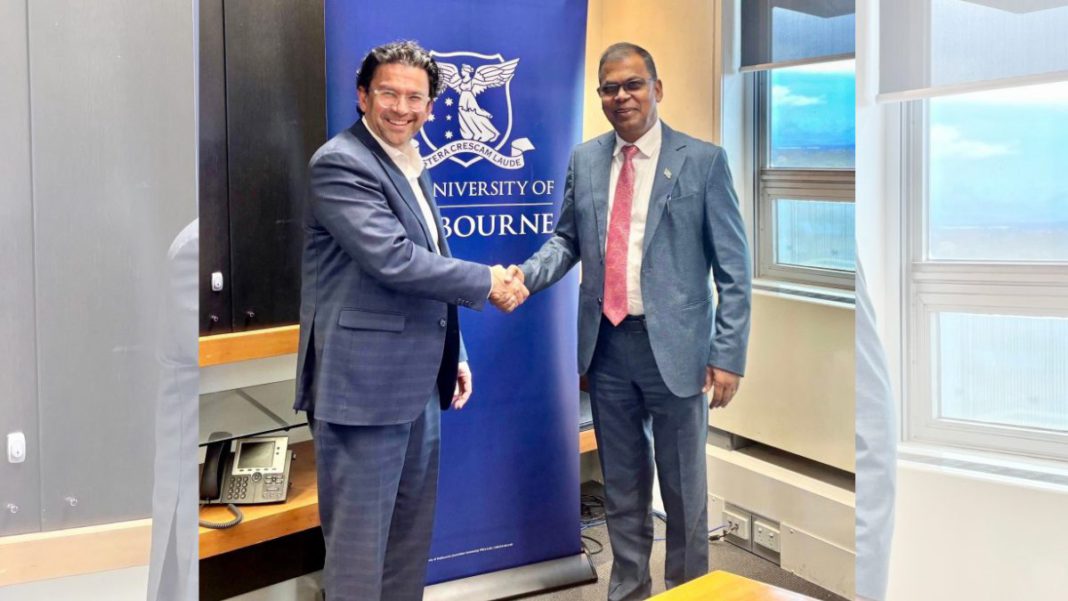
Fiji’s Deputy Prime Minister and Minister for Finance, Prof. Biman Prasad, has urged stronger educational, research, and policy ties between Australia and the Pacific during his visit to the University of Melbourne this week.
Prof. Prasad was the featured speaker at the University of Melbourne’s Oceania Institute inaugural Oceania Oration, titled “Securing and Sustaining Our Pacific – What Will This Take?”, held on 22 August 2025.
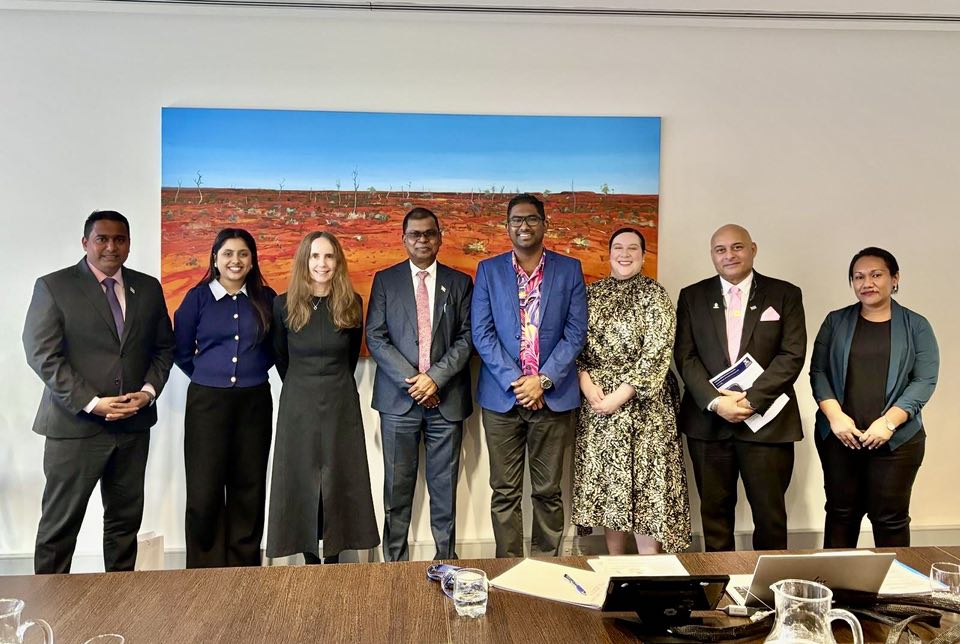
Addressing faculty, students, and Fijian scholars, Prof. Prasad praised the University’s Oceania Institute as “a key platform for regional engagement, bringing together nearly 200 staff and research students, and partnering with over 60 organisations across the Pacific.”
“We deeply value Australia’s contribution to education in Fiji,” Prof. Prasad said.
“Around 4,500 Fijian students are studying here. This is Australia’s century in the Pacific. Deeper and more meaningful regional integration will bring benefits to all of us.”
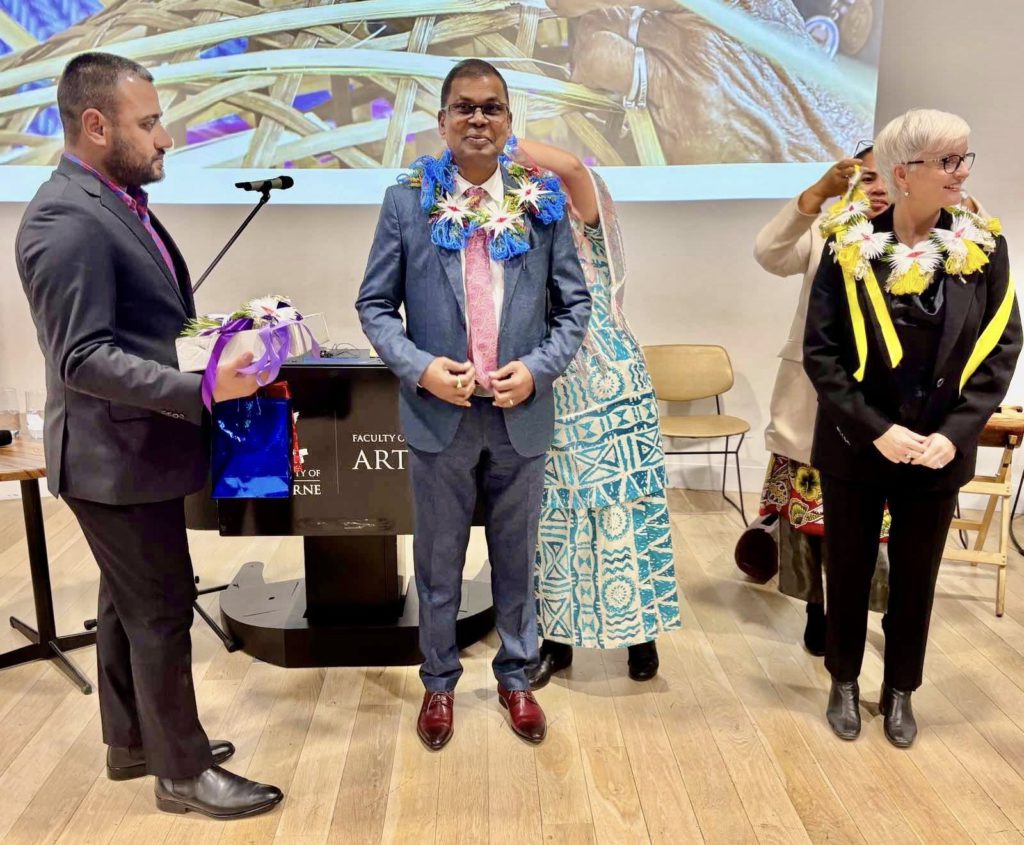
In his speech, Prof. Prasad reflected on the late Prof. Epeli Hau’ofa’s vision:
“If we look at the traditions and cosmologies of the peoples of Ocean, it becomes evident that they did not conceive of their world through a ‘perceived smallness’. Their world was anything but tiny… smallness is a state of mind.”
Prof. Prasad contrasted the outdated “Indo-Pacific” framing with the emerging concept of the “Blue Pacific,” saying it “reclaims our agency, re-states our collective stewardship over our geography, and places our identity and sovereignty at the heart of its framing.”
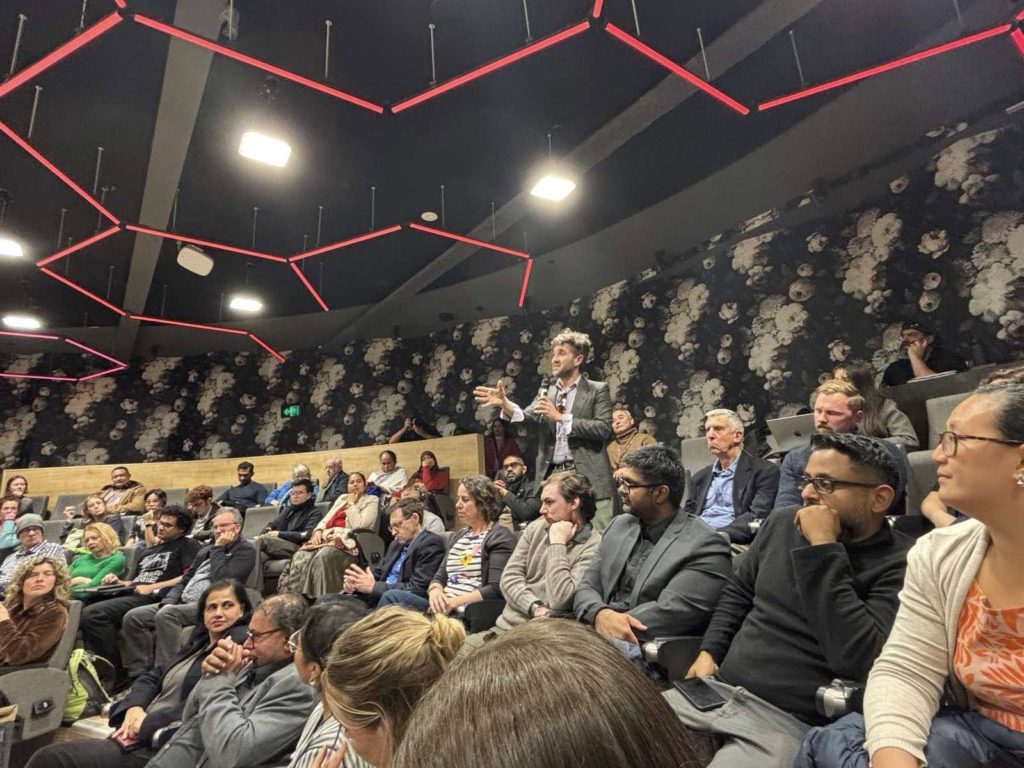
Highlighting the urgent climate threats facing the region, he warned:
“The world has delivered to the Blue Pacific one of the cruellest prognosis – a climate-changed Blue Pacific with existential consequences. We will not allow that to be our story. Ours is a story of resilience… our story of resilience will be scripted on peace.”
Prof. Prasad stressed the economic and social challenges confronting small island states:
“Between 2025 and 2030, the annual adaptation cost alone for the Blue Pacific will be around $5 billion AUD. Yet the total annual grant-based climate finance flows barely reach $250 million. That is less than five percent of what is needed.”
Prof. Prasad urged the international community to reform development finance to address the unique vulnerabilities of small island states, calling for debt relief, concessional funding, and significant investment in resilient infrastructure to counter the human development setbacks caused by repeated climate-related disasters.

Prof. Prasad expressed strong support for Australia hosting COP31, calling it a potential “circuit breaker moment” for the Pacific. He said success should include a fully funded Pacific Regional Infrastructure Facility, an operational Loss and Damage Fund, and global recognition of the Blue Pacific as an ocean of peace.
He also underscored the importance of Australia-Pacific collaboration: “Securing a stable and prosperous Blue Pacific may indeed be one of the single most important ways in which security of Australia can be advanced.”
“There is absolutely no contradiction between helping to reduce poverty in Suva and Moresby and strengthening security in Australia. None whatsoever.”
Looking to the future, Prof. Prasad outlined Fiji’s vision for an “Ocean of Peace” across the Pacific: “We are proposing an Ocean of Peace anchored in humility, quiet leadership, reconciliation and communication.”
“It is a vision that will enhance regional economic connectivity, protect our marine environment, and empower women and communities to lead and build peace.”
Prof. Prasad closed with a deeply personal reflection, thanking Australia for its investment in education and recalling how his own academic journey in Queensland and UNSW shaped his career. He concluded by emphasising the primacy of Pacific knowledge:
“We are not small islands in a vast ocean – we are the vastness itself. Reclaiming this primacy is reclaiming our vastness.”
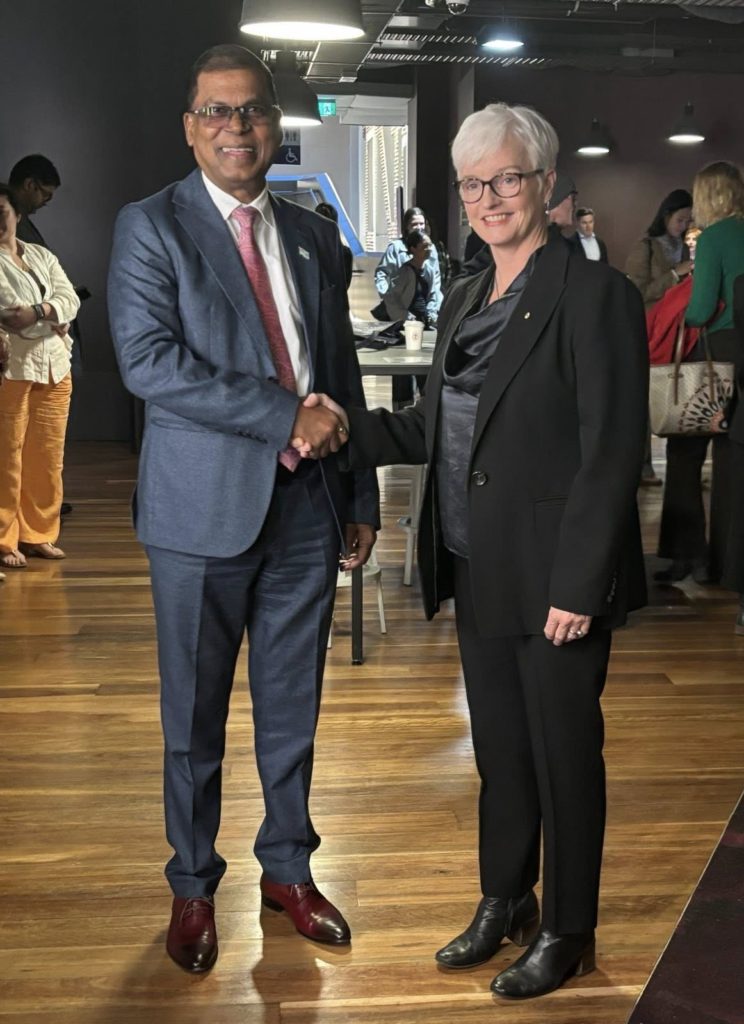
Established in 2024, the Oceania Institute fosters stronger connections in research, education, and innovation, bringing together institutions and communities across the Pacific. The University of Melbourne emphasised its commitment to partnerships across Oceania, recognising that shared futures depend on regional collaboration.
The University of Melbourne confirmed it would continue to strengthen engagement with Fiji and the broader Pacific, supporting joint research in areas including social protection, health economics, taxation, poverty alleviation, and climate change.
Support our Journalism
No-nonsense journalism. No paywalls. Whether you’re in Australia, the UK, Canada, the USA, or India, you can support The Australia Today by taking a paid subscription via Patreon or donating via PayPal — and help keep honest, fearless journalism alive.
