

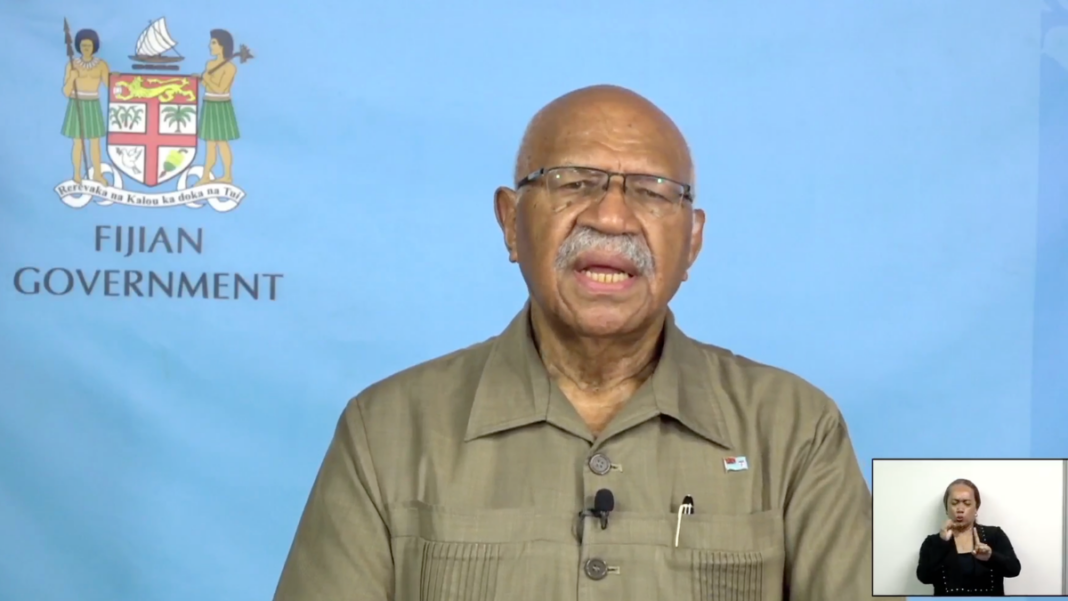
Fiji’s government has unveiled a sweeping package of relief measures to cushion households and businesses from the impact of a worsening global fuel crisis, with subsidies, welfare increases and proposed pay cuts for political leaders among the key steps.
Prime Minister Sitiveni Rabuka said the measures were designed to ease cost pressures, maintain essential services and prepare the country for potential disruptions linked to instability in the Middle East.
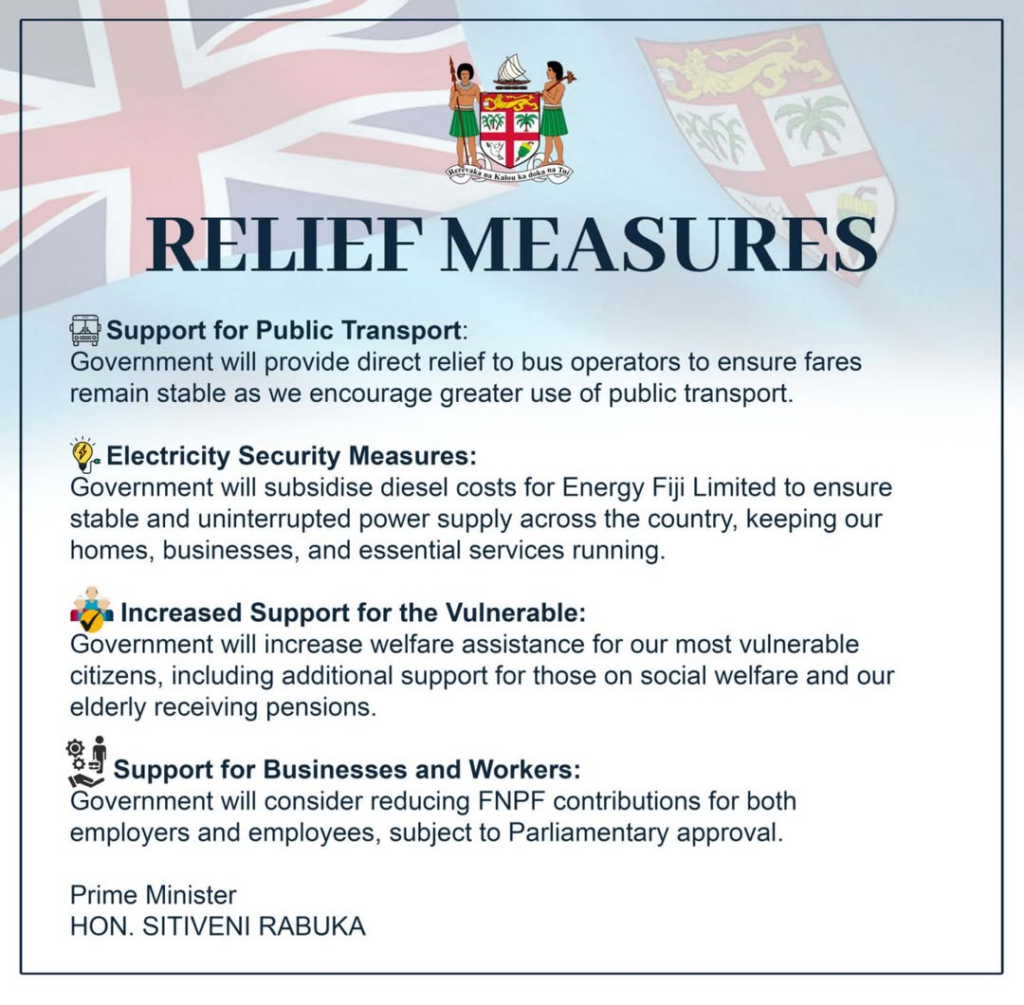
In a national address following meetings of the National Security Council and Cabinet, Rabuka confirmed the government would subsidise public transport operators to keep fares stable and provide financial support to Energy Fiji Limited to offset diesel costs and ensure a reliable electricity supply.
He said the government would also increase welfare payments for vulnerable groups, including those on social assistance and elderly pensioners, as part of broader efforts to support those most affected by rising living costs.
The Prime Minister indicated that a temporary reduction in Fiji National Provident Fund contributions for both employers and employees was under consideration, subject to parliamentary approval. He said the move could ease pressure on businesses while increasing take-home pay for workers during a difficult economic period.
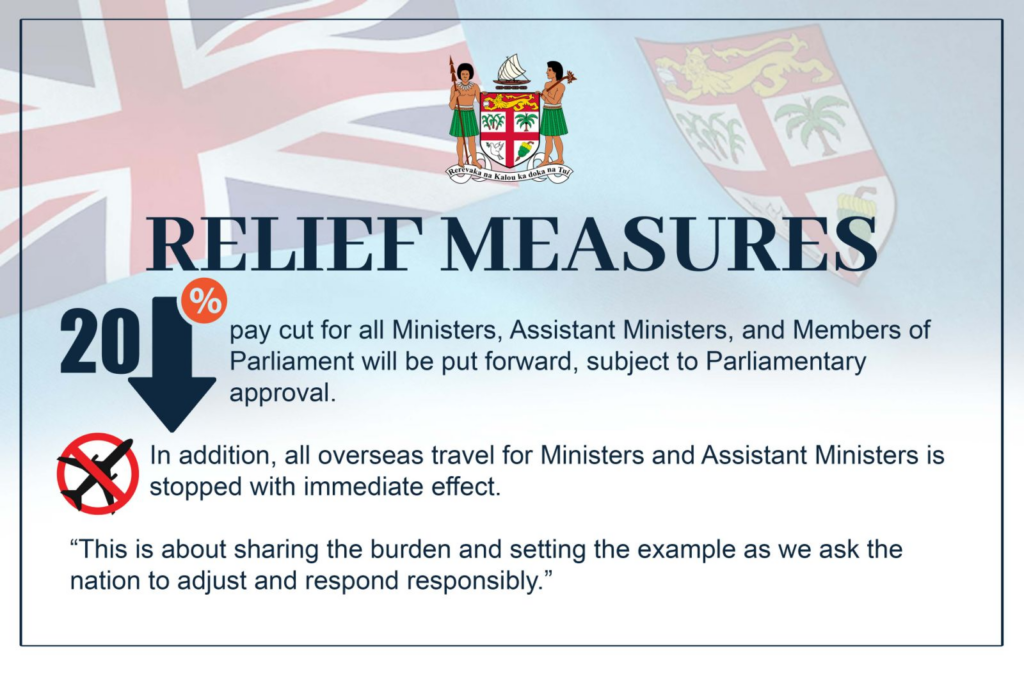
In a bid to demonstrate fiscal restraint, Rabuka announced a proposed 20 per cent pay cut for ministers, assistant ministers and members of parliament, also subject to approval. Overseas travel for ministers and senior officials has been largely suspended, with limited exceptions granted for fuel negotiations and humanitarian discussions.
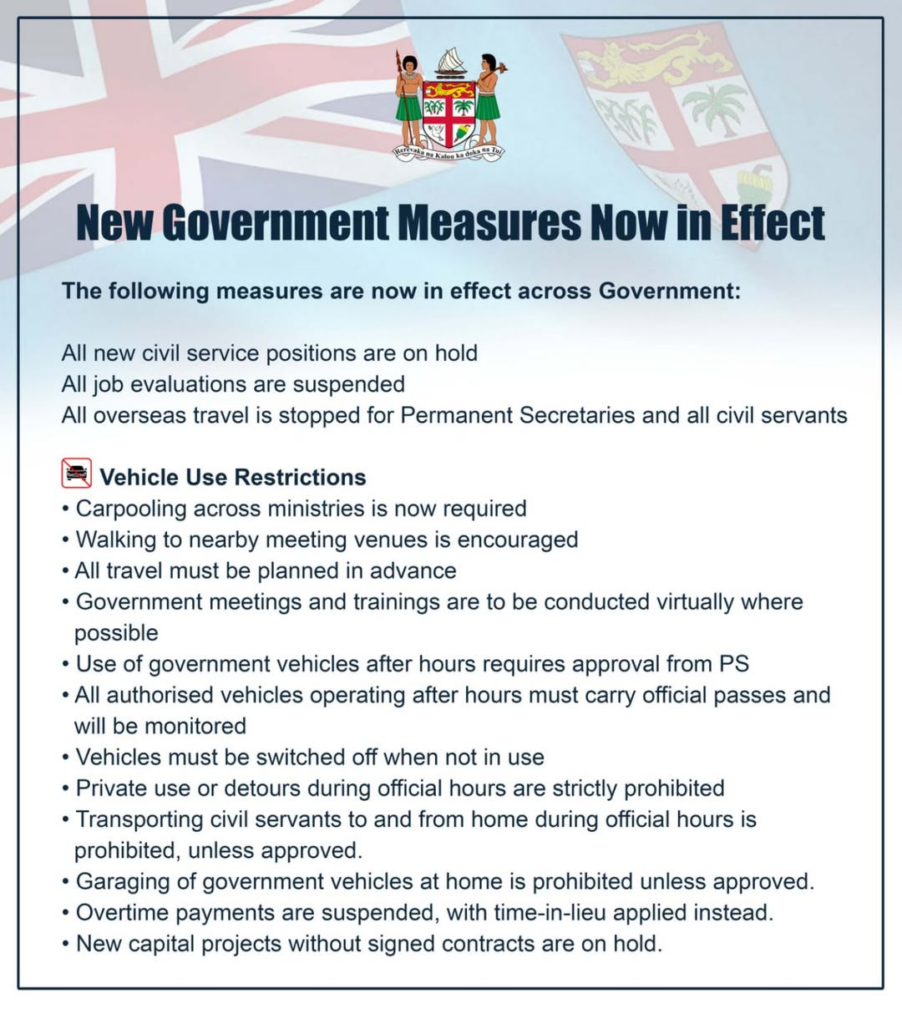
Additional cost-saving measures across the public service include a freeze on new positions, suspension of job evaluations, restrictions on government vehicle use and a shift towards virtual meetings. Overtime payments have also been halted, with time-in-lieu arrangements to apply instead, and new capital projects without signed contracts placed on hold.
Rabuka said the measures were necessary to reduce expenditure and redirect resources towards managing fuel supply risks. He stressed that fuel would be prioritised for critical sectors such as electricity generation, transport and key economic activities.
Fiji remains in what the government has described as “Phase One — Preparedness and Responsible Use”, meaning fuel supplies are currently stable but require careful management amid global uncertainty. Authorities warned that prices could rise further if international conditions deteriorate.
The government said it was working with international partners, including Australia, to secure fuel supplies and explore storage options. Engagements are also under way with countries in the Middle East.
Rabuka said about 682 Fijians currently in the Middle East had raised safety concerns, with nearly $2 million set aside for potential evacuations if required.
Officials said existing fuel shipments would sustain the country until the end of May, though supply beyond that point remains uncertain if global routes are disrupted.
The government also confirmed that foreign exchange reserves remain strong, covering an estimated 12 to 18 months, helping to maintain financial stability and avoid currency pressure.
Rabuka urged the public to conserve fuel and energy by reducing unnecessary travel, carpooling, using public transport and adopting alternative energy solutions where possible, including solar power.
He said Fiji had overcome past crises through collective effort and called for unity and discipline as the country navigates the current challenges.
Support our Journalism
No-nonsense journalism. No paywalls. Whether you’re in Australia, the UK, Canada, the USA, or India, you can support The Australia Today by taking a paid subscription via Patreon or donating via PayPal — and help keep honest, fearless journalism alive.
