

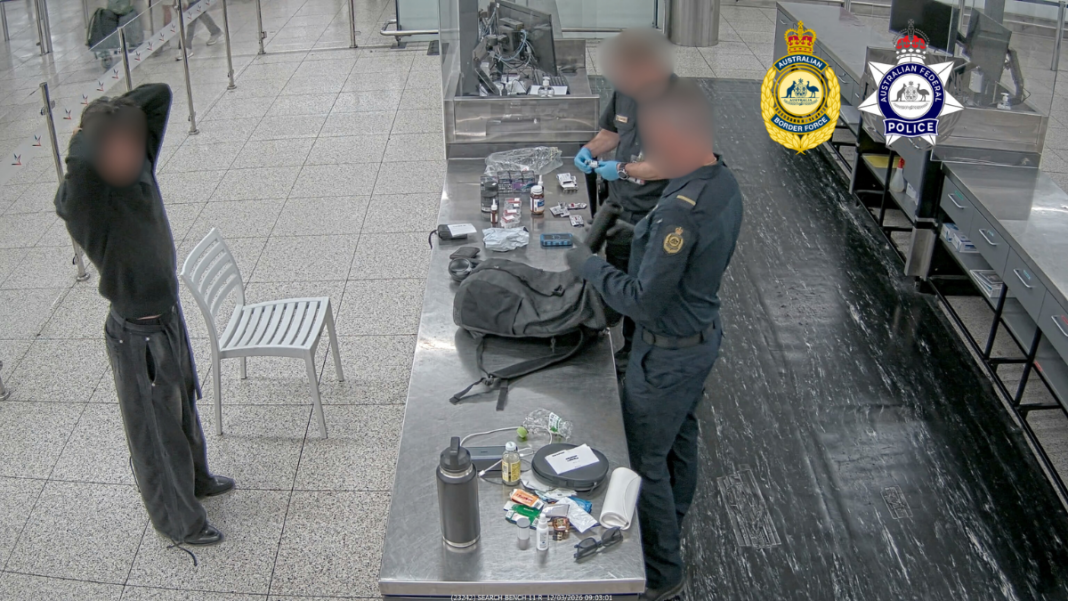
A 25-year-old man has appeared in court after Australian authorities allegedly discovered a sheet of LSD tabs printed with a Dr Seuss theme concealed inside his luggage at Perth Airport.
The man faced Perth Magistrates Court on Thursday after being charged with importing a border-controlled drug, following his arrival in Western Australia on an international flight on 12 March.
According to authorities, officers from the Australian Border Force (ABF) selected the traveller for a baggage inspection after he landed at the airport. During the search, officers allegedly found a sheet containing 80 tabs hidden inside a book. The tabs were reportedly decorated with images inspired by the works of children’s author Dr Seuss.
Preliminary testing conducted by officers allegedly indicated the substance was lysergic acid diethylamide (LSD), a powerful hallucinogenic drug.
During the same examination, officers also allegedly located 33 vials of peptides, a quantity of cigarettes, scales, syringes and a small plastic bottle with its label removed containing 54 tablets. Initial testing suggested the tablets were dexamphetamine, authorities said.
The ABF referred the matter to investigators from the Australian Federal Police (AFP), who subsequently charged the man with importing a border-controlled drug under section 307(3) of the Criminal Code (Cth), an offence that carries a maximum penalty of 10 years’ imprisonment.
Investigations into the other items seized during the luggage search are continuing.
Acting Inspector Gabby Adam of the AFP said the agency worked closely with border authorities to prevent illicit drugs entering the country. She said hallucinogenic substances such as LSD could have significant long-term health effects and that collaboration with the ABF helped detect such drugs before they reached the community.
ABF Inspector John Sweet said border officers were trained to identify suspicious behaviour and concealment methods used to transport illicit substances. He said even relatively small amounts of prohibited drugs could have serious impacts on individuals and the wider community, adding that authorities use targeted screening and specialist skills to detect attempts to bring them into Australia.
Support our Journalism
No-nonsense journalism. No paywalls. Whether you’re in Australia, the UK, Canada, the USA, or India, you can support The Australia Today by taking a paid subscription via Patreon or donating via PayPal — and help keep honest, fearless journalism alive.
