

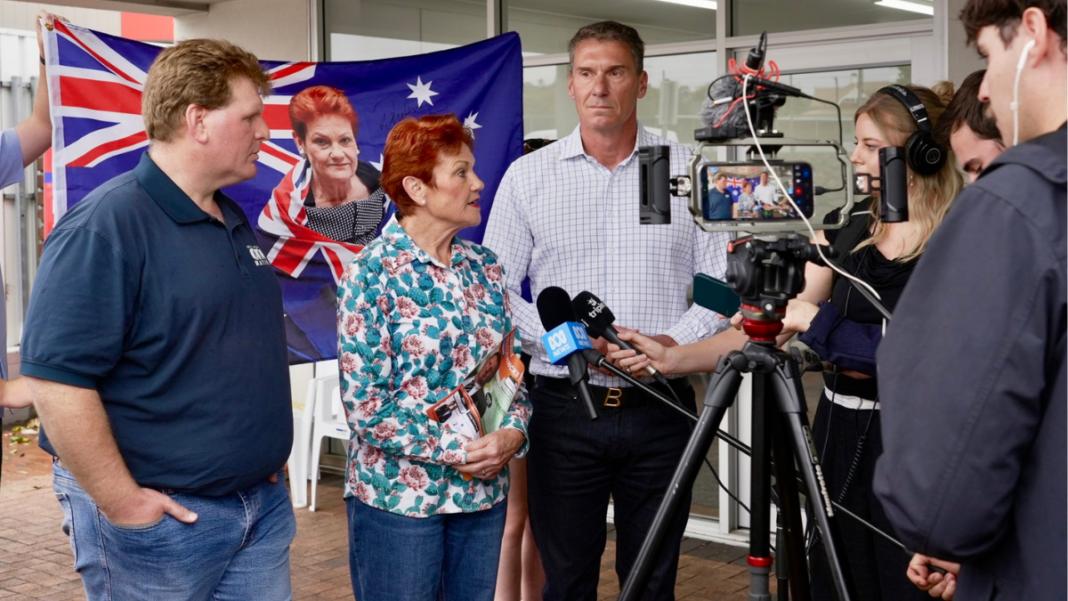
Support for Pauline Hanson’s One Nation has overtaken both Labor and the Coalition in Queensland, according to new quarterly Newspoll analysis, signalling a significant shift in voter sentiment amid mounting economic and political pressures.
The polling, covering January to mid-March, shows One Nation securing 30 per cent of the primary vote in Queensland, ahead of Labor on 27 per cent and the Liberal National Party on 23 per cent.
Nationally, the party now trails only Labor in primary vote share, outperforming the Coalition in every state except Victoria.
The surge comes during a period marked by the aftermath of the Bondi terror attack, leadership instability within the opposition, rising living costs, successive interest rate increases, and fuel supply disruptions linked to tensions involving US president Donald Trump.
Support for One Nation has broadened across several key demographics. Among voters aged 18 to 34, backing for the party rose sharply from 8 per cent in December to 19 per cent, making it the third most popular choice behind Labor and the Greens.
The party also recorded slightly higher support among women (26 per cent) than men (25 per cent), and gained ground among Christian voters, polling 31 per cent compared with Labor’s 28 per cent and the Coalition’s 24 per cent.
Notably, support among Australians who speak a language other than English at home has doubled to 19 per cent, placing One Nation level with the Coalition in that group, though both remain behind Labor’s 35 per cent.
The data also points to a substantial realignment among traditional Coalition voters, with 35 per cent of those who supported the Coalition at the last federal election indicating they would now back One Nation. A smaller shift was observed among Labor voters, with 9 per cent signalling a move to the minor party.
In New South Wales, One Nation’s primary vote has nearly doubled to 27 per cent, well ahead of the Coalition on 18 per cent, while in Victoria the party has risen to 21 per cent, just behind the Coalition on 22 per cent.
The results coincide with declining support for the Albanese government. Dissatisfaction with Prime Minister Anthony Albanese has increased across most demographics, with 55 per cent of women expressing dissatisfaction, up from 48 per cent. Overall approval of his performance stands at 41 per cent.
Despite this, PM Albanese continues to lead Opposition Leader Angus Taylor as preferred prime minister, by 44 per cent to 37 per cent, with a significant proportion of voters remaining undecided.
The Queensland figures are likely to raise concern within Labor ranks, particularly after the party secured 12 of the state’s 30 electorates at the last election, including several gains from the Coalition.
Analysts suggest One Nation’s growing support in regional and outer suburban areas could place some of those seats at risk if the trend continues.
Support our Journalism
No-nonsense journalism. No paywalls. Whether you’re in Australia, the UK, Canada, the USA, or India, you can support The Australia Today by taking a paid subscription via Patreon or donating via PayPal — and help keep honest, fearless journalism alive.
