

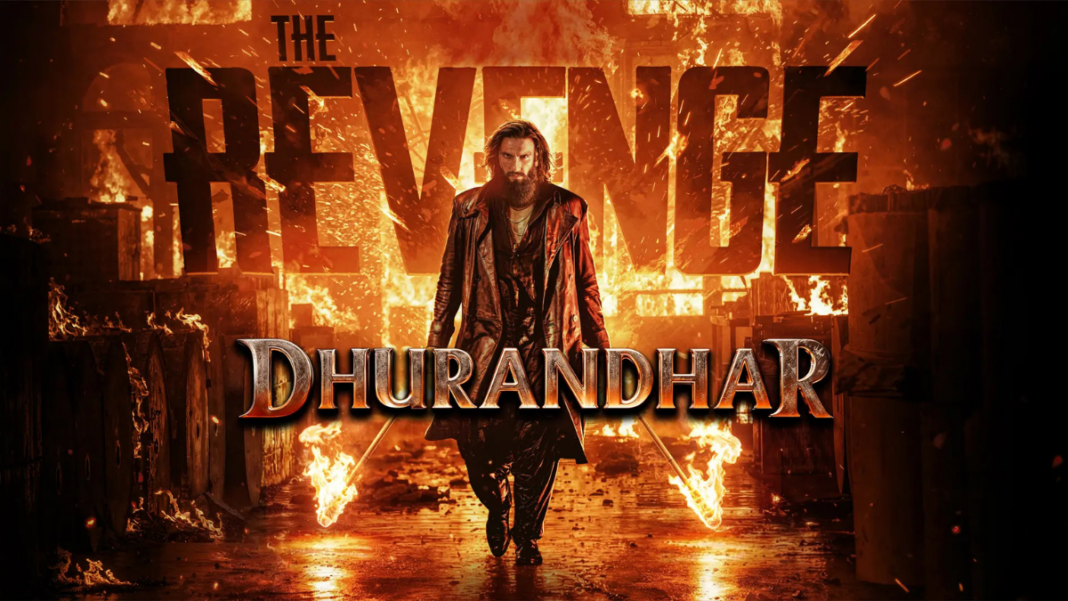
The controversy surrounding Dhurandhar is being framed as a debate about cinema. It is not. At its heart, this is a fight over narrative ownership — over who gets to assign morality, frame conflict, and determine what stories Indian audiences are permitted to see told on their own terms.
As analyst Utpal Kumar has noted in his recent piece entitled ‘When Bharat speaks, Left-‘liberals’ cry ‘propaganda,’ what is really being contested is not the quality of a film but the legitimacy of its perspective.
For decades, Hindi cinema operated within a loosely defined ideological comfort zone. Certain stories were encouraged, others softened, and some reframed over time. Films dealing with insurgency — Naxalism, Kashmir, the fault lines of the Indian state — tended to follow a recognisable pattern. The movement got the poetry. The state got the scrutiny.
Hazaaron Khwaishein Aisi filtered the Naxalite uprising through youthful idealism and personal longing. Chakravyuh, however layered, situated armed insurgency within a framework of systemic injustice that invited audience reflection. Haider rendered the Kashmir conflict in near-lyrical terms, foregrounding institutional excesses while leaving the question of militancy open to complex, sometimes ambiguous readings.
These are not bad films. Several are genuinely accomplished works of cinema. But they reflect a pattern — and patterns, in aggregate, become a default. The human cost of insurgency on civilian populations sometimes receded into the background, while the ideological motivations of those who took up arms were contextualised and humanised. A parallel strand of filmmaking explored minority and community identities, often with sincerity, though the critical lens applied was not always consistent across subjects.
The cumulative effect was a quiet set of narrative priorities — which stories invited interrogation, and which were more readily contextualised.
Dhurandhar steps outside that pattern.
It does not reach for moral relativism to soften its framing. It does not calibrate its perspective to fit an established template of mainstream storytelling. It engages with conflict through a national-security lens — the kind that Hindi cinema has, until recently, been hesitant to adopt without extensive qualification.
The response has been swift. Words like “propaganda” and “hyper-nationalism” have entered the discourse, often functioning as conversation-enders rather than starting points for genuine critical engagement.
Which makes it all the more notable when a voice with deep roots in the Indian left pushes back against that framing.
Piyush Mishra — actor, lyricist, playwright, and for much of his career a prominent voice associated with progressive cultural politics — has said plainly that Dhurandhar is cinema, not propaganda. It is a remark worth pausing over. Mishra is not a figure associated with nationalist politics. He spent decades working within the cultural milieu that shaped much of the ideological grammar described above. When someone of his standing and history draws that distinction, it carries weight that is difficult to set aside.
Then there is the matter of money — and this may be where a significant part of the discomfort lies.
Dhurandhar grossed over ₹1,350 crore worldwide — round AUD $248 million. Its sequel, Dhurandhar 2: The Revenge, released in March 2026, has moved even faster. By just its 16th day, the sequel had crossed the ₹1,500 crore mark worldwide, adding roughly another AUD $280 million to the franchise tally. The Dhurandhar franchise has become the first Bollywood series to cross the ₹2,200 crore mark in worldwide gross collections — with Dhurandhar 2 still running. Combined, the two films have grossed the equivalent of over AUD $525 million at the worldwide box office and counting.
That figure deserves to be read in context. The Indian spy thriller genre has for years served as a reliable vehicle for a certain kind of well-connected, studio-backed filmmaking — recognisable faces, substantial budgets, modest returns, and reviews that tended to land softly regardless of quality. Films like Pathaan, Tiger Zinda Hai and War were positioned as tentpole events and performed adequately, but none redrew the map of what Indian cinema could earn or mean. The Dhurandhar franchise has done exactly that — and it has done so from outside the traditional ecosystem of producers, directors and stars who have long exercised an informal hold over which projects get made, which get positioned as prestige, and which get the benefit of the doubt from critics.
When a franchise built on different creative and ideological foundations not only challenges that order but financially obliterates it, the reaction is unlikely to be purely about cinema. The pace at which Dhurandhar 2 broke records — becoming the fastest Indian film to reach the ₹1,500 crore milestone — leaves little room for the argument that audiences were somehow misled or manipulated. They turned up, in extraordinary numbers, of their own accord.
The broader double standard in how such films are discussed is also worth examining. Utpal Kumar points to Hollywood which has long produced films that reflect American geopolitical perspectives. Franchises like Rambo and James Bond construct heroes and adversaries in ways that reinforce a particular national self-image, and are rarely subjected to the same critical framing. The difference is not one of cinematic principle — it is one of whose perspective is considered the default, and whose is treated as requiring justification.
The Kashmir Files indicated that audiences were ready to engage with narratives that confronted difficult realities more directly. Dhurandhar builds on that shift. Such storytelling is no longer on the margins — it is entering the mainstream, both commercially and culturally.
The case for cinematic plurality must be applied consistently. If the medium is genuinely to be a space for diverse voices, it must also accommodate perspectives that challenge established storytelling preferences — not only those that confirm them.
The intensity of the reaction to Dhurandhar points to a deeper discomfort. It is not simply about the film’s content. It is about the breaking of an unspoken expectation: that certain stories, about certain conflicts, would always be told within a certain framework — and that certain people would always be the ones telling them.
That expectation is being tested. And the conversation it has opened is one Indian cinema will need to have honestly.
Support our Journalism
No-nonsense journalism. No paywalls. Whether you’re in Australia, the UK, Canada, the USA, or India, you can support The Australia Today by taking a paid subscription via Patreon or donating via PayPal — and help keep honest, fearless journalism alive.
