

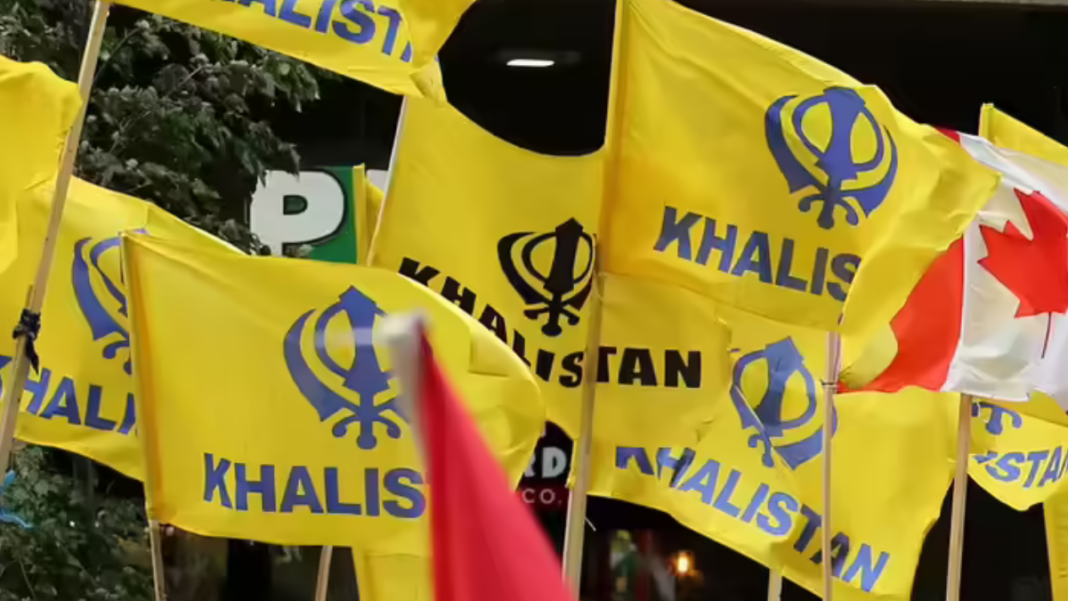
The murder of Nancy Grewal, an Indo-Canadian personal support worker and outspoken critic of the Khalistan movement, has renewed calls in Canada to formally classify Khalistani extremists as terrorists.
Grewal, 45, was brutally stabbed to death at a client’s home in LaSalle, Ontario, Canada, on 3 March 2026.
Police confirmed the homicide was “not a random act of violence” and is being investigated as “an intentional act against her,” but have not linked any individual or group to the attack.
The Hindu Canadian Foundation (HCF), which issued a statement condemning Grewal’s death, described her as “a courageous and outspoken critic of Khalistani extremists.”
The organisation said media reports suggest the killing may be connected to Canada-based Khalistani extremists (#CBKE), and urged the federal government to classify the groups as terrorist organisations.
“#CBKE poses a serious threat to all Canadians, and HCF has repeatedly warned authorities about this danger.”
Shuv Majumdar, Conservative Member of Parliament for Calgary Heritage, added that a social media account affiliated with Khalistan extremists had claimed responsibility for Grewal’s death.
“Canada cannot become a playground for violent extremists bringing conflict to our streets. Extremists must face the full weight of the law.”
The Coalition of Hindus of North America (CoHNA) also expressed outrage, calling the murder “heinous” and demanding a high-level government response.
“Ms. Grewal, a courageous Sikh woman known for her principled opposition to Khalistani extremism, was stabbed to death at her residence. We extend our deepest condolences to her family.”
Grewal had recently posted videos on social media expressing fear for her safety. In response to her death, the HCF declared 3 March as “Anti-Khalistan Day,” describing it as a movement “by Canadians united against homegrown terrorism.”
Dallas Brodie, leader of One BC, said politicians had ignored the influence of extremist networks.
“The first step of terrorism is to silence the good people who speak out, ensuring that no one else dares to find their voice.”
In 2024, the Canadian Security Intelligence Service (CSIS) identified Canada-based Khalistani extremists as an ongoing national security threat and a driver of foreign interference. Advocacy groups argue that official designation as a terrorist organisation is necessary to protect Canadians and prevent future violence.
The Indian government has repeatedly accused Canada of failing to address the reported harassment of Indian diplomats and officials by Khalistan extremists, an issue that has long been a source of tension between the two countries.
Last year, Former Canadian Prime Minister Stephen Harper has warned Canadian political parties to cut ties with Khalistani extremists. Harper issued a strong call for Canadian political parties — including his own former Conservative Party — to “sever” connections with those advocating for Khalistan, carved out of India. “Those who seek to bring the battles of India’s past to Canada have no place in our political discourse,” he said, referring to the extremist movement.
“Parties cannot hope to build a strong relationship with India while maintaining links with groups that aim to divide modern India.”
The HCF reiterated that “the fight against terrorists and their sympathisers has only just begun,” urging authorities to safeguard public safety and uphold Canada’s sovereignty.
Support our Journalism
No-nonsense journalism. No paywalls. Whether you’re in Australia, the UK, Canada, the USA, or India, you can support The Australia Today by taking a paid subscription via Patreon or donating via PayPal — and help keep honest, fearless journalism alive.
